RSS
 

Posts Tagged ‘HandsOn’

CES 2017: Hands-on with Nikon D5600

06 Jan

CES 2017: Hands-on with Nikon D5600

The D5600 was originally announced in Europe and Asia late last year, but now – surprise surprise – it’s coming to the USA. The D5600 sports a slimmed-down body compared to the D5500. We got our hands on it at CES.

CES 2017: Hands-on with Nikon D5600

In terms of specs, the D5600 offers only minor improvements over the D5500, but that’s not a bad thing. The D5500 was a very fully-featured, enjoyable camera to use. Key features include a 24MP APS-C format sensor, and 39-point phase-detection autofocus system. ISO sensitivity spans 100-25600 and the D5600 can shoot at a maximum frame-rate of 5 fps.

CES 2017: Hands-on with Nikon D5600

The D5600 lacks a front control dial (you’ll have to save up for a 7000-series body for that) but the rear control dial is large and well-placed for operation with your thumb. Control layout is typical Nikon, with a large exposure mode dial to the right of the pentaprism hump, and a toggle-style live view selection lever. 

CES 2017: Hands-on with Nikon D5600

The built-in flash is operated with a button just above the lens release, and when the flash is popped-up, this button doubles as a flash exposure compensation control, in concert with the rear control dial. This view also shows labeling for the D5600’s built-in Wi-Fi and Bluetooth features. The addition of Nikon’s ‘Snapbridge’ suite is one of the few additional features compared to the D5500. 

CES 2017: Hands-on with Nikon D5600

One of the major selling points of the D5000-series has always been the relatively small, lightweight camera bodies. The D5600 takes things even further in this direction, with a significantly downsized, monocoque body shell. 

CES 2017: Hands-on with Nikon D5600

It’s hard to really appreciate from looking at a picture, but the D5600 feels almost incredibly slim when compared to previous D5000-series DSLRs. The deeper grip and thinner body make a real difference to handling. I was reminded of the experience of picking up a D750 for the first time and comparing it to a D700.

CES 2017: Hands-on with Nikon D5600

This image shows off the D5600’s deep grip to good effect. The depth of the lens throat is fixed, but the body around it has been slimmed-down considerably. 

CES 2017: Hands-on with Nikon D5600

The D5600 offers a conventional rear control layout, with most buttons arranged to the right of the large 3.2″ LCD screen. The screen itself is touch-sensitive, and offers a resolution of 1.04 million dots. The ability to quickly scrub through images by touch is a nice addition, inherited from the pro-grade D500.

CES 2017: Hands-on with Nikon D5600

The D5000-series is the only place in Nikon’s DSLR lineup where you’ll find fully-articulated rear LCD screens, as befitting their role as hybrid stills and video cameras. Although the D5600 isn’t 4K-capable, its HD video feature set is solid, and well-suited to beginners and occasional videographers. HD footage can be captured at up to 60p.

The D5600 will be sold in several kits. It will be available body-only for $ 699, with the AF-P 18-55mm F3.5-5.6G lens for $ 799, with the 18-140mm F3.5-5.6G lens for $ 1199, and with the AF-P 18-55 and non-VR AF-P 70-300mm F4.5-6.3G lenses for $ 1149. All of these kits will be available this month.
Articles: Digital Photography Review (dpreview.com)

 
Comments Off on CES 2017: Hands-on with Nikon D5600

Posted in Uncategorized


Overview and Hands-On Reviews of the New Fuji X-T2 Mirrorless Camera

15 Nov

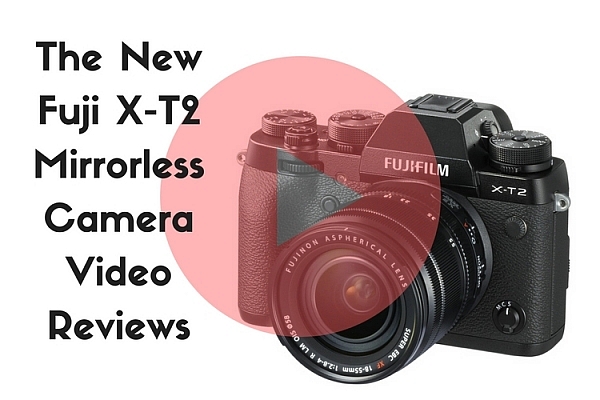
The newest Fuji camera on the market is the Fuji X-T2 mirrorless camera. It’s been available for a couple months now so there are a few reviews and tests out there already. I personally own and use the X-T1, so I am very interested to hear about its successor. Let’s see what a few sources have to say about the X-T2.

the-new-fuji-x-t2-mirrorless-camera

Check prices on the Fuji X-T2 on Amazon.com or B&H Photo. 

Tony and Chelsea Northrup thoughts

Tony and Chelsea tested out the X-T1 so they have a good comparison between it and the new Fuji X-T2 and talk about what’s new and improved in this video. They also mention a few things they would have liked to see added that weren’t.

Photography Concentrate – Lauren’s thoughts

Fuji loaned them an X-T2 to try out for a couple weeks. This is what Lauren thought of it overall. Some of the things she mentions as being “issues” I personally don’t have any problem with such as:

  • The aperture ring on the lens (I like it!)
  • That the camera gets quite warm on hot days. I have noticed that with the X-T1 also.
  • Play button in an odd place (no biggie you can program custom buttons)
  • Using the Smartphone app that you can’t see the RAW images. How I get around this with my X-T1 is that I process a few select images into JPG on the camera then pull them to my phone or iPad to play with in Snapseed. I haven’t found it an issue.

But overall she gives it a pretty good thumbs up and says she’s considering switching from Canon to use this camera for all her profession work. So that’s a pretty good endorsement.

The Camera Store guys

In this next video, the guys from the Camera Store give the Fuji X-T2 a good field test in New York City. They test both still and video which some of the other reviews don’t cover. Also mentioned in this video is the new Fuji speedlight which can handle high-speed sync.

The highly improve autofocus on the Fuji X-T2 is mentioned and that it’s a bit tricky to set up. There’s a link to the Fuji Guys channel where they’ll help you configure it if you decide to pick up this camera or already have.

Things I’m excited about:

Since I have the predecessor the X-T1, these are a few of the features that I’ve seen (and I’ve had a chance to handle the camera give it a really quick go) which I’m really excited about as improvements over the old design. They include:

  • YAY, you can open the battery compartment now without having to remove the tripod insert!! This is my biggest pet peeve of the X-T1.
  • The dial on top lock and unlock and they move a lot smoother now. Mine on the X-T1 stick and something both the top and bottom ones move together. I know I can send it back to get those fixed but I don’t want to be without the camera for several weeks so I put up with it.
  • Improved autofocus options and faster autofocus. From what I’ve seen the X-T2 is WAY better than the first generation X-T1. According to The Camera Store guys it actually rivals the Sony a6300 for fastest focus on the market currently. Impressive!!
  • Two memory card slots. I like the idea of shooting RAW on one and JPGS using the nice Fuji film profiles on the other.

Check prices on the Fuji X-T2 on Amazon.com or B&H Photo. 

Have you already ordered yours? Are you considering it? Have you had a chance to test drive one? I want to know. Tell me your thoughts in the comments below.

googletag.cmd.push(function() {
tablet_slots.push( googletag.defineSlot( “/1005424/_dPSv4_tab-all-article-bottom_(300×250)”, [300, 250], “pb-ad-78623” ).addService( googletag.pubads() ) ); } );

googletag.cmd.push(function() {
mobile_slots.push( googletag.defineSlot( “/1005424/_dPSv4_mob-all-article-bottom_(300×250)”, [300, 250], “pb-ad-78158” ).addService( googletag.pubads() ) ); } );

The post Overview and Hands-On Reviews of the New Fuji X-T2 Mirrorless Camera by Darlene Hildebrandt appeared first on Digital Photography School.


Digital Photography School

 
Comments Off on Overview and Hands-On Reviews of the New Fuji X-T2 Mirrorless Camera

Posted in Photography


Hands-on with Nikon AF-S Nikkor 70-200mm F2.8E and PC Nikkor 19mm

22 Oct

Hands-on with Nikon AF-S Nikkor 70-200mm F2.8E and PC Nikkor 19mm

Nikon just released two new lenses – the AF-S Nikkor 70-200mm F2.8E FL ED VR and PC Nikkor 19mm F4E ED. We’re at the Photo Plus show in New York, where we got our hands on them.

Hands-on with Nikon AF-S Nikkor 70-200mm F2.8E and PC Nikkor 19mm

The AF-S Nikkor 70-200mm F2.8E FL ED VR is the third iteration of Nikon’s modern 70-200mm F2.8 telezoom. Improvements over its predecessor include a complete optical redesign and fluorine coatings on the front and rear elements.

While the new lens is only around 100g lighter than the VR II, and a mere couple of millimeters slimmer, it makes a difference. The new lens definitely feels like less of a ‘lump’ than the older version, thanks partly to a shift in the center of gravity, with more weight moved towards the mount. 

Hands-on with Nikon AF-S Nikkor 70-200mm F2.8E and PC Nikkor 19mm

The new lens construction features 22 elements, including six ED, one fluorite and one high refractive index element. As we’d expect from a lens in Nikon’s professional F2.8 lineup, the body is weather-sealed, and includes a rubber flange around the mount to prevent dust and moisture from getting into the camera body when the lens is in use. 

Hands-on with Nikon AF-S Nikkor 70-200mm F2.8E and PC Nikkor 19mm

The ‘E’ in ‘2.8E’ denotes an electronic aperture actuator. Most Nikon lenses still feature a mechanical aperture actuator, but the benefit of electrical actuation (which is slowing being phased in to Nikon’s high-end lenses) is better precision, and stepless movement. The latter feature is especially important when shooting video. Minimum focus in the new lens has been reduced compared to its predecessor, to ~1.1 meters. 

Hands-on with Nikon AF-S Nikkor 70-200mm F2.8E and PC Nikkor 19mm

As usual with high-end telezoom lenses, the AF-S Nikkor 70-200mm F2.8 E features a focus limiter, to prevent hunting when working at longer subject distances. Alongside the usual VR and AF mode switches the new lens also offers an AF-L / Off / AF-ON switch, which allows the buttons on the lens barrel to either activate or lock AF (or be deactivated).

Hands-on with Nikon AF-S Nikkor 70-200mm F2.8E and PC Nikkor 19mm

According to Nikon, the new 70-200mm F2.8E features a refined vibration reduction (VR) system, offering the equivalent of up to four stops of correction. The  AF-S NIKKOR 70-200mm f/2.8E FL ED VR will be available next month for $ 2799.99.

Hands-on with Nikon AF-S Nikkor 70-200mm F2.8E and PC Nikkor 19mm

Next up, at the opposite end of the lineup is the PC Nikkor 19mm F4E ED. Nikon’s widest PC (perspective correction) lens, the 19mm F4E should appeal to architectural and real-estate photographers who need the ability to correct for perspective optically rather than digitally, in post-processing. 

Hands-on with Nikon AF-S Nikkor 70-200mm F2.8E and PC Nikkor 19mm

The 19mm F4E offers 97° of coverage and can shift ±12mm and tilt ±7.5°. Unlike the company’s existing PC-E designs, the mechanism for tilt can be rotated independently from the mechanism for shift, allowing the tilt to be set either parallel to or perpendicular to the shift.

Hands-on with Nikon AF-S Nikkor 70-200mm F2.8E and PC Nikkor 19mm

The new lens is distinguishable by its enormous bulbous front element. Optical construction includes three ED and two aspherical elements as well as Nano Crystal Coating.

Hands-on with Nikon AF-S Nikkor 70-200mm F2.8E and PC Nikkor 19mm

Minimum focus is around 25cm, and as we’d expect from a perspective correction lens, focusing is manual, via a large and well-damped focus ring. Unlike classic Nikon PC designs, aperture is electronically controlled from the camera body.

Hands-on with Nikon AF-S Nikkor 70-200mm F2.8E and PC Nikkor 19mm

Like the new 70-200mm F2.8E, the 19mm F4E is built to a very high standard, and includes a rubber flange to keep dust and moisture out of the camera body. 

Hands-on with Nikon AF-S Nikkor 70-200mm F2.8E and PC Nikkor 19mm

The PC Nikkor 19mm F4E ED will be available next month for $ 3,399.95.

Articles: Digital Photography Review (dpreview.com)

 
Comments Off on Hands-on with Nikon AF-S Nikkor 70-200mm F2.8E and PC Nikkor 19mm

Posted in Uncategorized


Hands-on with the Sony Cyber-shot RX100 V

07 Oct

Sony Cyber-shot RX100 V

Not surprisingly, the Mark V looks a whole lot like its predecessors. It continues to use a 1″-type 20.1MP sensor (more on that in a minute) and 24-70mm equiv. F1.8-2.8 lens, and sports the same pop-up viewfinder with 2.36M-dot OLED panel as the RX100 III and IV. The big improvements are all under the hood.

Phase-detection autofocus

The RX100 V’s sensor is of a similar stacked design to the Mark IV’s but gains 315 phase-detection AF points covering 65% of the frame. Combined with a front-end LSI chip, the RX100 V’s AF system is capable of acquiring focus in as little as 0.05 sec.

The main benefit of phase detection elements on the sensor is that they give the camera an understanding of the depth and where your subject exists in the scene. This not only means faster focus but should also allow more reliable subject tracking, since the camera has additional information to help it determine your subject and its location.

Deeper buffer

That on-sensor phase detection isn’t only useful for continuous shooting but it should come into its own when the continuous AF and continuous drive are used in conjunction with one another.

The camera can continue to use PDAF even at its top full-res burst speed of an impressive 24 fps. On top of this, its buffer is now deep enough that it can keep firing away for 150 shots, even with Raw.

PDAF plus 4K

The RX100 V’s 4K video mode certainly looks good on paper: the camera uses a 5028 x 2828 pixel region to create UHD video, meaning it oversamples by 1.3x in each dimension. And with faster sensor readout, there’s less rolling shutter to worry about.

The ability to use phase-detection autofocus while recording 4K video is a benefit, since it reduces the risk of the camera missing focus and having to hunt (and ruining your clips in the process). Sadly, without a touchscreen it’s not quite as useful as it could be.

There’s still plenty to make a video enthusiast happy: a 960 fps slow motion mode (that’s upscaled to 1080/30p) for up to 8 sec, 1080/120p and S-Log profiles are all here.

Look but don’t touch

On that note, here’s a look at the RX100 V’s LCD, and multi-tasking DPR staffer Carey Rose. The 3″ 1.3M-dot screen flips up to a selfie-friendly 180-degrees, and also tilts downward by 45 degrees. Like we said, it’s still not a touchscreen, and that’s a shame. 

Wi-Fi on board

Wi-Fi and NFC haven’t gone anywhere, but you’ll find a new way to initiate the connection between the camera and your mobile device: QR codes are available for those of us without NFC, or next-to-useless NFC (we’re looking at you, Apple.)

Battery life

All the advancements under the hood appear to have taken a toll on battery life: the RX100 V’s battery is CIPA-rated to 220 shots compared to the RX100 IV’s 280 shots. Most users will of course get much better performance than that in real world use (since the testing makes more use of flash and image review than most photographers). And there is good news – the RX100 V we’ve been using for initial shooting has performed way over the CIPA rating. Still, an spare battery wouldn’t be the worst idea with an RX100 V purchase.

New waterproof housing

Sony has also unveiled an underwater housing compatible with the entire RX100 series, called the MPK-URX100A for those keeping score at home. It’s rated to a depth of 40m/130ft and includes loads of control points to access settings with the camera locked safely inside. The housing will go on sale in November for $ 350.

Innovation doesn’t come cheap

A long feature list commands an equally impressive price tag – the Sony RX100 V will retail for $ 1000 when it goes on sale in October. For the moment that’s the same price as the Mark IV, but it seems highly likely that its price will come down before too long.

Look for more soon on the RX100 V as we put it to work, including a sample gallery.

Articles: Digital Photography Review (dpreview.com)

 
Comments Off on Hands-on with the Sony Cyber-shot RX100 V

Posted in Uncategorized


Hands-on and in-depth with the Sony a6500

07 Oct

Sony announces Alpha 6500

Sony has announced the a6500, its top of the line APS-C E-mount mirrorless camera. It may look a lot like the a6300 but it’s a higher spec (and more expensive) sister model.

It’s based around the same copper-wired 24MP CMOS sensor as the a6300 but it adds several key features: most notably in-body image stabilization and touchscreen control.

An even faster Alpha

The a6500 still features the same 425 on-sensor phase detection elements as the a6300 and still shoots at at same 11 frames per second maximum burst rate, but a deeper buffer and additional processor allow it to shoot over 300 JPEG frames in a burst (or 100 frames when shooting Raw + JPEG).

The buffer and additional processing power also allow faster image review after having shot a burst, the company promises, which should avoid the frustrating ‘camera busy’ warnings that previous Sonys have been prone to give.

The camera’s shutter mechanism has been updated and has now been tested to (though not necessarily guaranteed to) 200,000 cycles. Maximum shutter speed remains 1/4000th of a second.

5-axis in-body image stabilization

The a6500 manages to squeeze a five-axis image stabilization system into a camera that’s just 5mm deeper than the a6300. The system is rated as offering 5 stops of improvement when tested to CIPA standards using a 55mm lens.

This system recognizes the presence of Sony lenses with OSS stabilization and passes responsibility for correcting pitch and yaw to the lens. Sony does not claim any additional effectiveness for this approach but we’d expect it to help maintain the 5-stop figure when using long lenses, since lens correction is able to correct for a greater degree of movement than sensor shift stabilization can.

Touchscreen focus

One of the biggest additions to the a6500 over existing models is touchscreen control. Previously reserved for the company’s more point-and-shoot orientated models, the touchscreen makes it quicker to specify the AF point position (a significant frustration with the a6300).

The touchscreen is solely used to set the AF point with no option to control settings or navigate the menus.

This touch-to-focus ability extends to video mode and video focus speed can be adjusted to provide slow, smooth autofocus pulls. However, the camera won’t touch-and-track in video mode: only the older ‘Center Lock-On AF’ system that locks onto the subject at the center of the frame is available.

Touchpad AF

Like Panasonic cameras and the recent Canon EOS M5, the a6500’s touchscreen can still be used as a touchpad to specify the autofocus point when shooting through the camera’s electronic viewfinder. The control of the AF point is always relative, rather than absolute, so you swipe to move the AF point from its current position, rather than touching exactly where you want it to be.

The camera lets you select whether both the touchscreen and touchpad modes are available, letting you disengage the touch sensitivity if you only want to use it with the camera to your eye or only want it active when using the rear LCD.

There’s also the option to disable either the right or left-hand side of the touchscreen, to avoid accidental nose focus, depending on whether you shoot left or right eyed. The touchpad can again be set to disable when you turn the camera into the portrait orientation.

Revised menus

In addition to the touchscreen, Sony has made several other adjustments to the camera’s operation and control.

The menus have been rearranged to cluster related features together and are now color-coded to make it easier to recognize and remember where a setting lives.

In addition the camera gains a second custom button on the top plate, taking the total number of customizable function buttons to 10.

4K Video

The a6500 offers the same UHD 4K capabilities as the a6300. It can shoot 4K/25p and 24p from the full width of its sensor, meaning 1.56x oversampling in each dimension. This gives very highly detailed footage, compared to taking a ‘native’ crop from the sensor. 30p 4K is taken from a smaller crop.

Sony has said nothing about changes in thermal management, so it’s likely the camera won’t be able to shoot for the full 29 minutes in warm conditions or similarly long clips back-to-back. However, with the latest firmware, we haven’t encountered overheating as a problem if you’re shooting clips to edit together, so it’s only extended shooting that’s likely to be a problem.

We’re more concerned about any interaction between the camera’s fairly high levels of rolling shutter and the movement of its 5-axis image stabilization system. Stabilized 4K video could be a hugely valuable capability of the camera but we’ll wait to see the footage before getting too excited.

Video capabilities

Like the a6300, the a6500 has a built-in mic socket but no headphone port for audio monitoring.

It also continues to offer the in-depth ‘Picture Profile’ video response modes including ITU 709 and both S-Log2 and S-Log3 gamma curves. The camera records internally at up to 100Mbps for 4K recording and requires you us a U3-rated UHS-I card. It’s happy to record to either SDXC or SDHC cards.

Internal recording is 8-bit 4:2:0 while HDMI out is 8-bit 4:2:2.

In summary

The a6500 is a very well specced camera: 5-axis stabilization, 11 fps shooting with AF, 4K UHD video capture with S-Log options, a comprehensive AF tracking system, weather-sealed body…

There are still a few things missing, though. Although the camera includes two command dials (one on the shoulder, one on the rear face of the camera), it has the same drawbacks as the a6300: both need to be controlled with the thumb. Worse still, it’s likely that you’ll have to shift your grip on the camera to reach from one to the other.

Still, the addition of a touchscreen and an even greater level of customization over the controls should give quick access to most of the features you need to change in-the-moment.

There’s a price to be paid for these additional capabilities, though. The a6500 will sell for around $ 1400 or €1700 in Europe. As always, bear in mind the European price is likely to include VAT whereas the US price is usually quoted without sales tax. This makes it 40% more expensive than the a6300’s list price and over twice the launch price of the more modest a6000.

So, while the technologies and capabilities of these three models are very different, the visual similarities risk causing customer confusion.

Articles: Digital Photography Review (dpreview.com)

 
Comments Off on Hands-on and in-depth with the Sony a6500

Posted in Uncategorized


Photokina 2016: Hands-on with Hasselblad X1D

25 Sep

Photokina 2016: Hands-on with Hasselblad X1D

The star of Hasselblad’s booth at Photokina is the X1D – a compact, mirrorless medium-format camera with a 50MP sensor. Announced earlier this year, the X1D has yet to to start shipping, and the Swedish company’s booth was thronged with photographers eager to get their hands on the new camera.

Photokina 2016: Hands-on with Hasselblad X1D

Weighing just 750g without a lens, one of the main selling points of the X1D is its small size and weight compared to traditional medium-format digital products. The X1D (and Fujifilm’s just-announced GFX 50S) dispenses with a conventional mirror box, which allows the camera to be slimmer, and much lighter than DSLRs with equivalent-sized sensors.

Photokina 2016: Hands-on with Hasselblad X1D

The X1D is beautifully designed, with relatively few external controls. It’s a bit strange to see a mid-range DSLR-style exposure mode dial on a $ 10,000 camera, but in use, it’s very convenient. A neat ‘pop up to use, pop down to lock’ design means that the dial can be kept flush with the camera’s top-plate until you need to change exposure mode. 

Photokina 2016: Hands-on with Hasselblad X1D

We’re seeing more and more cameras being designed with a smartphone style ‘app tile’ interface, and the X1D makes good use of its large, 920k-dot rear touch-screen. The screen is nice and responsive, but this kind of resolution is low compared to the screens found on (for example) the Nikon D5 and D500, which boast 2.3 million dots and look sharper.

Photokina 2016: Hands-on with Hasselblad X1D

The X1D’s relatively low-resolution rear screen is partially mitigated by its excellent 2.36-million dot electronic viewfinder. This view also gives you a good idea of just how slim the X1D is, despite its large sensor. The hotshoe is compatible with Nikon flashguns. 

Photokina 2016: Hands-on with Hasselblad X1D

Here’s that large 50MP sensor, in all its glory. Hasselblad is calling this new lens-mount ‘XCD’ and as well as a new range of XCD lenses, the company is also offering an H lens adapter, which extends support to Hasselblad’s existing H lens system with full autofocus operation.

Photokina 2016: Hands-on with Hasselblad X1D

The X1D is a luxurious, pricey piece of equipment but as we’d expect from Hasselblad, its standard of construction and finish is exemplary. We’re looking forward to testing a shipping sample as soon as one becomes available. 

Photokina 2016: Hands-on with Hasselblad X1D

Hasselblad is also showing off an upcoming lens. The XCD 30mm F3.5 offers the same field of view as a 24mm on full-frame, and can focus down to 0.4M. No pricing or availability information has yet been given. 

Photokina 2016: Hands-on with Hasselblad X1D

If there’s one thing Hasselblad likes to do, it’s make special limited editions. This is the 4116 edition of the X1D, in matte black. We actually prefer the way this one looks, compared to the more traditional two-tone finish but at $ 12,995 with a 45mm lens, it’s a bit rich for our blood.

Photokina 2016: Hands-on with Hasselblad X1D

It does look nice though…

Photokina 2016: Hands-on with Hasselblad X1D

As well as the X1D, Hasselblad is also showing off a concept camera – the 75MP V1D 4116 Concept. There’s no word on whether or not this concept will ever become a reality, but it’s certainly a very attractive mockup.

Photokina 2016: Hands-on with Hasselblad X1D

The V1D 4116 Concept is built around a (presumably hypothetical) 75MP square-format sensor, and like the classic Hasselblad SLRs of old, it features a modular design.

Articles: Digital Photography Review (dpreview.com)

 
Comments Off on Photokina 2016: Hands-on with Hasselblad X1D

Posted in Uncategorized


Photokina 2016: Hands-on with Laowa 15mm F2 FE and 7.5mm F2 MFT

25 Sep

Photokina 2016: Hands-on with Laowa 15mm F2 FE and 7.5mm F2 MFT

Venus Optics is showing off two brand new lenses at Photokina – the Laowa 15mm F2 FE for Sony E-mount and 7.5mm F2 MFT for Micro Four Thirds.

Photokina 2016: Hands-on with Laowa 15mm F2 FE and 7.5mm F2 MFT

The 15mm F2 is being billed as the world’s widest F2 lens, and Venus Optics claims that it is virtually distortion-free. Designed for Sony’s full-frame FE-mount A7-series, the new 15mm could prove very attractive to videographers, as well as stills photographers.

Photokina 2016: Hands-on with Laowa 15mm F2 FE and 7.5mm F2 MFT

The mount is fully mechanical, so don’t expect to get automatic aperture indexing or focal length reporting. As such, metering is limited to the stop-down method. Videographers will be used to this way of working.

Photokina 2016: Hands-on with Laowa 15mm F2 FE and 7.5mm F2 MFT

Here’s the 15mm F2 attached to a Sony A7R II. As you can see, it’s not a small lens, but actually balances very nicely with the camera. At 500g in weight (~1.1lb) it is substantial without being too heavy, in normal use. 

Photokina 2016: Hands-on with Laowa 15mm F2 FE and 7.5mm F2 MFT

The minimum focusing distance of the 15mm F2 is around 6 inches, which equates to a maximum reproduction ratio of 0.25X. Pricing has yet to be announced but the lens should become available in early 2017.

Photokina 2016: Hands-on with Laowa 15mm F2 FE and 7.5mm F2 MFT

Next up is the 7.5mm F2 MFT, for Micro Four Thirds mirrorless cameras. Designed to appeal especially to drone photographers this lens is absolutely tiny. Offering an equivalent focal length of 15mm, it weighs 170g (~0.4lb).

Photokina 2016: Hands-on with Laowa 15mm F2 FE and 7.5mm F2 MFT

Again, this is a fully mechanical mount with no electrical contact between camera and lens. 

Photokina 2016: Hands-on with Laowa 15mm F2 FE and 7.5mm F2 MFT

Interestingly, despite its ultra-wide focal length, the 7.5mm F2 can be used with screw-in filters (49mm) which could prove very handy to videographers who want to work with ND filters.

Photokina 2016: Hands-on with Laowa 15mm F2 FE and 7.5mm F2 MFT

As with the 15mm F2, the 7.5mm F2 will be available in early 2017, and no pricing information has yet been released.

Articles: Digital Photography Review (dpreview.com)

 
Comments Off on Photokina 2016: Hands-on with Laowa 15mm F2 FE and 7.5mm F2 MFT

Posted in Uncategorized


Photokina 2016: Hands-on with Tamron’s SP 150-600mm F5-6.3 Di VC USD G2

22 Sep

Hands-on with Tamron SP 150-600mm F5-6.3 Di VC USD G2

Tamron’s new SP 150-600mm F5-6.3 Di VC USD G2 might look like little more than a refined version the previous 150-600mm, but the new version is actually a substantial redesign. 

Hands-on with Tamron SP 150-600mm F5-6.3 Di VC USD G2

The ‘G2’ in the name stands for second generation, reflecting several improvements to the design, including the now-standard SP level of build quality, and revamped Vibration Correction (VC) offering up to 4.5 stops of compensation. Optical construction comprises 21 elements in 13 groups, including three LD (Low Dispersion) lens elements.

Hands-on with Tamron SP 150-600mm F5-6.3 Di VC USD G2

Tamron’s ‘SP’ (Special Performance) designation is given only to the company’s highest-performing lenses, and the SP 150-600mm is the first zoom in Tamron’s new SP lineup. It is compatible with Tamron’s ‘TAP-in’ Console, which allows the lens to be customized to user preferences.

Hands-on with Tamron SP 150-600mm F5-6.3 Di VC USD G2

The 150-600mm has three VC settings, and one additional custom option (enabled via the Tap-In Console) activates Vibration Correction in video mode. This view also shows the rubber seal around the lens-mount, which keeps dust and moisture from getting into the camera. 

Hands-on with Tamron SP 150-600mm F5-6.3 Di VC USD G2

At full extension, the SP 150-600mm is a hefty lens, but the relatively small maximum aperture range keeps the deign relatively compact considering the telephoto reach. On an APS-C format camera, the effective focal length range increases to about 233-930mm equivalent. 

Hands-on with Tamron SP 150-600mm F5-6.3 Di VC USD G2

In addition to the main zoom lock, which prevents the zoom from extending beyond 150mm, a ‘Flex Zoom Lock’ mechanism has been added to keep the lens barrel fixed at any focal length of your choosing. 

Hands-on with Tamron SP 150-600mm F5-6.3 Di VC USD G2

The SP 150-600mm F5-6.3 Di VC USD G2 was launched alongside two new teleconverters. The 1.4X and 2X converters are moisture and dust-resistant, and turn the 150-600mm into a 210-840mm or 300-1200mm equivalent zoom on full-frame, respectively. 

Articles: Digital Photography Review (dpreview.com)

 
Comments Off on Photokina 2016: Hands-on with Tamron’s SP 150-600mm F5-6.3 Di VC USD G2

Posted in Uncategorized


Hands-on with Nikon’s latest kit at Photokina

21 Sep

AF-S Nikkor 105mm F1.4E ED

Nikon’s stand at Photokina is split fairly equally between displays of its DSLRs and demonstrations of its new KeyMission 360, 170 and 80 cameras. We took a look at everything they had to offer, starting with the Nikkor 105mm F1.4E ED. It’s as big as it is beautiful. At 106mm long and 95mm across, it’s quite a handful. That said, it didn’t feel disproportionate when mounted on a D5, despite its 985 g (2.17 lbs) weight.

AF-S Nikkor 105mm F1.4E ED

The ‘E’ in the lens’ name means it offers an electromagnetic diaphragm. This not only operates faster than apertures operated by mechanical coupling, which is ideal when shooting at high frame rates, but also means many recent Nikon cameras can control the aperture even when they’re in live view mode, which is great news for video shooters.

Nikon D3400

Also on show is Nikon’s D3400, the company’s latest entry-level DSLR. It looks a lot like the D3300 and shares many of its specifications, with it still being built around a 24MP APS-C sensor. Without AA filter, in this instance.

Nikon D3400

The big news with the D3400 is the inclusion of Bluetooth Low Energy, which it uses to stay constantly connected to a smartphone. The iOS version of the SnapBridge app is now available, to which the camera can upload images automatically. The camera also includes a significantly boosted battery life (1200 shots per charge), but some of this will stem from the use of a less powerful built-in flash.

KeyMission 360

Originally announced back at CES in January, the KeyMission 360 is about to become available. Nikon says the two >180 degree lenses that combine to give 360 degree coverage are one of the aspects of the company’s expertise that it can bring to the sector.

KeyMission 360

From the top, it’s apparent just how small the camera is. In part the lenses have to be mounted close to one another in order for them to provide an overlapping field of view.

KeyMission 170

A slightly more conventional action cam, the KeyMission 170 offers a wide-angle lens that provides the field of view that the name implies. Rather than needing a special housing, the camera is itself already waterproof and shockproof, though an additional accessory is available to allow the 170 to be submerged to much greater depths.

KeyMission 170

The KeyMission 170 includes a standard tripod thread but Nikon says it will offer an accessory to adapt this so the camera can be used with common mounts designed for GoPro cameras.

KeyMission 80

They KeyMission 80 is a wearable style camera with a (you guessed it) 80 degree field of view, and is designed to be used in a vertical orientation. On the front is a 12MP 1/2.3″ CMOS sensor that’s capable of 1080/30p video – no 4K here.

KeyMission 80

On the back there’s a rear-facing 4.9MP selfie camera and a 1.75″ touchscreen. The whole camera is waterproof to about 1m/3.2ft, shockproof to 1.8m/6 ft and freezeproof to 14 F/-10 degrees C.

Whither the DLs?

Despite looking high and low, we couldn’t find any sign of the much-anticipated DL compacts. Prototypes are not yet available, we were told. We’re still looking forward to them, though, and are hoping there’ll be more news at Photo Plus Expo next month.

Articles: Digital Photography Review (dpreview.com)

 
Comments Off on Hands-on with Nikon’s latest kit at Photokina

Posted in Uncategorized


Photokina 2016: Hands-on with Phase One 45mm F3.5 and 150mm F2.8 ‘Blue Ring’ lenses

20 Sep

Hands-on with Phase One 45mm F3.5 and 150mm F2.8

Phase One is showing off two new ‘Blue Ring’ lenses at this year’s Photokina tradeshow in Cologne, Germany. We visited the Phase One booth earlier and got our hands on them.

First up is the new 150mm LS F2.8 IF, which offers a focal length equivalent to 64mm on full-frame, making it a useful portrait prime. At first glance this is an enormous lens, but a lot of its apparent size is actually the detachable hood.

Hands-on with Phase One 45mm F3.5 and 150mm F2.8

F2.8 is fast for a medium-format lens, which should ensure nice shallow depth of field when used wide-open for portraits. Here’s a view straight down the front of the lens. See what we mean about that big hood?

Hands-on with Phase One 45mm F3.5 and 150mm F2.8

With the hood removed, the 150mm becomes a good deal smaller. The new lens can synchronize with flash at shutter speeds of up to 1/1000sec and can focus as close as 100cm/3.2ft. It uses 8 elements in 7 groups and accepts 105mm screw-in filters. It could be yours for only $ 6990/€5990.

Hands-on with Phase One 45mm F3.5 and 150mm F2.8

Next up is the 45mm LS F3.5, which Phase One tells us will offer extremely good edge-to-edge sharpness, even wide-open. Aimed at landscape photographers, the 45mm (and indeed the 150mm) offers a simple auto/manual focus clutch switch. Shifting to manual focus is as easy as pulling the focus ring towards the camera.

Hands-on with Phase One 45mm F3.5 and 150mm F2.8

Like the 150mm, the 45mm features a leaf shutter inside the lens itself, and it can synchronize with flash at shutter speeds of up to 1/1600sec. Construction comprises 10 elements in 7 groups.

Hands-on with Phase One 45mm F3.5 and 150mm F2.8

Equivalent to a 28mm field of view on full-frame, the new 45mm F3.5 has a closest focusing distance of 55cm/1.8ft. It is available now for $ 5990/€5290.

Hands-on with Phase One 45mm F3.5 and 150mm F2.8

This is Lau Norgaard, VP of R&D at Phase One. He’s pretty pleased with his new lenses – what do you think? Let us know in the comments.

Articles: Digital Photography Review (dpreview.com)

 
Comments Off on Photokina 2016: Hands-on with Phase One 45mm F3.5 and 150mm F2.8 ‘Blue Ring’ lenses

Posted in Uncategorized