RSS
 

Posts Tagged ‘HandsOn’

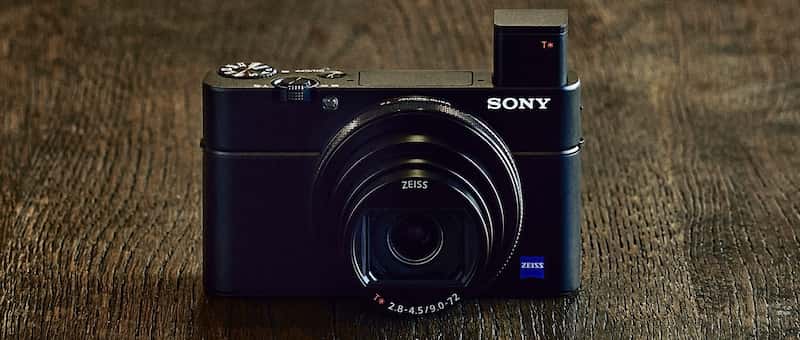
Hands-On with the new Sony RX100 VI Compact Camera

23 Jun

Sony continues to innovate and release new versions of their popular line of mirrorless and compact cameras. Just release is the newest Sony RX100 VI, the sixth version in just six years. But at just under $ 1200 USD is it worth the price? Let’s see.

There are quite a few new things and upgrades from the Mark V. Let’s see what a few different testers had to say about it in Venice recently where Sony handed out some cameras to put through the paces. Here’s a small list of features:

Image courtesy of Sony.

  • New 24-200mm lens (with the 2.73 crop factor) but with an f/2.8 maximum aperture.
  • 24 frames per second burst mode.
  • Buffer 233 JPEGs standard.
  • 315 phase detection autofocus points.
  • 90-degree tilting LCD screen.
  • New touchscreen capabilities.
  • Easier popup electronic viewfinder.
  • Does 4K video.
  • New Vlogging stick available for easier video creation.

Photo Gear News

Richard Sibley from Photo Gear News gives the Sony RX100 VI some good tests as he walks around Venice. See what he has to say about shooting video, slow-motion, and other things. He talks about the aperture range limitations and the menu system.

?

Camera Labs

See what Gordon Laing, prolific camera reviewer, had to say about the Sony RX100 VI. His test of the tracking autofocus shows impressive results on moving subjects with the phase detect autofocus of this camera.

So what does he like, and what does he miss from the Mark V? Watch to find out.

?

Things missing on the RX100M6 he’s noted are:

  • No microphone jack or Bluetooth audio connection
  • The wider aperture of f/1.8 that was available on the Mark V
  • No built-in Neutral Density filter that was on earlier models

For a little humor

Finally, to inject a little humor into things is Kai (former of DigitalRevTV). His point of view and way of approaching things is unique and adds a bit of spice to reviews that can otherwise get a little dull.

?

The official word from Sony

Lastly, here is Michael Bubolo from Sony to give us the low-down on some of the official specs and features of this new camera.

?

Is this camera for you?

I have to admit when I heard about the 24-200 equivalent zoom lens I was a bit jealous as compared to my Fuji X100F with a fixed 23mm (35mm equivalent) lens. But the 1″ sensor (2.73x crop factor) on the Sony is a lot smaller, so I’ll stick with my Fuji!

So who is this camera for? At the price of around $ 1200, it’s not for everyone. Perhaps it’s good as a backup to their DSLR for pros, or for bloggers (and vloggers) who do video and want something portable. The zoom range certainly is attractive and it does a nice job on video for sure. But would you spend this much on a compact camera?

Note: currently the Sony RX100 VI is only available for pre-order from Amazon and other retailers.

Let’s discuss in the comments section below.

The post Hands-On with the new Sony RX100 VI Compact Camera appeared first on Digital Photography School.


Digital Photography School

 
Comments Off on Hands-On with the new Sony RX100 VI Compact Camera

Posted in Photography


DPReview TV: Tamron 28-75mm F2.8 Di III RXD hands-on field test

17 Jun

The Tamron 28-75mm F2.8 Di III RXD is an affordable F2.8 standard zoom for full frame Sony E-mount cameras. It’s one of the first third-party zooms designed to take full advantage of the short Sony mount, resulting in a small, light carry-everywhere lens. What are the trade-offs, compared with the alternatives? Chris and Jordan take a closer look…

Make sure to subscribe to our YouTube channel to get new episodes of DPReview TV every week.

Subscribe to our YouTube channel

Articles: Digital Photography Review (dpreview.com)

 
Comments Off on DPReview TV: Tamron 28-75mm F2.8 Di III RXD hands-on field test

Posted in Uncategorized


Huawei P20 Pro hands-on: 3x zoom lens leaves the competition behind

04 Apr

The P20 Pro is Huawei’s latest flagship smartphone and, at least in the camera department, arguably the most innovative mobile device we have seen in quite some time. The camera module was developed in cooperation with Leica and is the first to combine three sensor/lens modules:

  • A large 1/1.7-inch RGB sensor with Quad-Bayer structure in the main camera is designed to capture as much light as possible and keep noise levels low.
  • A secondary high-resolution monochrome sensor provides depth estimation for the simulated bokeh effect, helps with digital zooming at low magnifications and improves detail and noise levels.
  • A dedicated tele-camera with an equivalent focal range of 80mm springs into action at 3x or higher zoom factors.
The Huawei P20 Pro camera combines three cameras: The main module is at the center, the monochrome camera at the bottom (left in this image) and the tele at the top (right).

So the spec sheet looks impressive but is the Huawei P20 Pro the best camera smartphone money can currently buy? We had the opportunity to shoot with a Huawei P20 Pro for a few days. Here are our first impressions.

Please note that the camera software on our test unit is not final, so some improvements can be expected for the production version.

Key specifications:

  • Triple-camera, 10MP output size
  • Main camera: 1/1.7-inch 40MP Quad-Bayer sensor, F1.8 aperture and 27mm equivalent focal length
  • Secondary camera: 20MP 1/2.78-inch monochrome sensor, F1.6-aperture and 27mm equivalent focal length
  • Tele-camera: 8MP, 1/4.4-inch RGB sensor, F2.4-aperture, 80mm equivalent focal length and optical image stabilization
  • Kirin 970 chipset
  • 6.1-inch Full View display
  • 6GB RAM
  • 128GB internal storage
  • 4,000 mAh battery

Wide-angle

In bright light the P20 Pro’s main camera captures images with good detail and very low noise levels. As you can see in the sample below, there is no noticeable grain in the blue sky, which is unusual for a smartphone, and fine detail is rendered nicely, though almost a touch oversharpened. Dynamic range is excellent as well, with very little highlight clipping for a smartphone camera.

Colors and contrast are definitely on the vibrant end of the scale but if you like things a little more natural you can can set colors to ‘smooth’ in the settings. There is a touch of corner-softness in our sample but overall the P20 Pro performs very well in good light.

ISO 50

The picture below was taken in a dim bar. In these conditions the camera does a very good job at keeping noise levels down. Some fine grain is noticeable in the shadows, but overall the image is very clean.

Some detail is lost on very fine textures but you have to zoom in to full-size view to notice. Edge detail is still very sharp and colors are maintained nicely. This is very good image quality from a smartphone in these light conditions.

ISO 1250

The very dim street lighting in the scene below pushes the P20 Pro camera to its limits. The image is exposed very well and colors are rendered nicely. However, detail clearly suffers and some fine textures are very soft. In these conditions the lack of optical image stabilization also becomes obvious, with some images showing signs of camera shake.

ISO 4000

Zoom

Thanks to the triple-camera with dedicated tele module, zoom is one of the P20 Pro’s highlight features. The series below shows the same scene as the first image in this article, with the camera zoomed onto the stork that is nesting on the church tower.

3x zoom

As you can see when clicking through to the full version of these images, detail is still decent at a 3x zoom factor and a good step ahead of any other current smartphone. Noise is very well controlled as well. At 5x a loss of detail and texture becomes more obvious but the images are still usable at smaller output sizes, for example in social media.

5x zoom

The 10x zoom image shows the typical softness and pixelation we are used to from digital zoom images and is best reserved for emergency situations. That said, while the P20 Pro’s zoom can’t compare to the optical zoom of a compact camera, it’s outstanding for a smartphone camera. Kudos to Huawei for squeezing the technology into the thin body of a mobile device.

10x zoom

The zoom is still usable in indoor light conditions and produces results that, in terms of detail and noise, aren’t far off from images captured in bright outdoor light.

Wide angle 3x zoom
5x zoom 10x zoom

The Huawei’s zoom is not only handy for magnifying elements of the scene, just like the optical zoom on a “real” camera it also helps compress the planes of a scene. In the wide-angle image below the mountain range in the background is so small, it’s hardly noticeable.

In the 3x zoom image the mountains have become a much more important element of the composition, thanks to compression. However, in the zoom image the color response is much less vibrant and the camera tends to be a little more prone to highlight clipping. Hopefully that is something that can be fine-tuned for the final software version.

Wide-angle
3x zoom

While zoom performance is generally pretty amazing for a smartphone camera, we found exposure to be very unstable when zoomed in. Once zoom is activated you can get very noticeable exposure jumps between two images in a series, as you can see in the 3x zoom samples below.

We would expect this bug to be fixed with a software update, hopefully for the final release of the production software.

Underexposure Slight overexposure

Portrait/Aperture modes

Like most current high-end phones, the P20 Pro offers a background-blurring Portrait mode. The feature works very well with head-and-shoulder type portraits. The default blur strength is pleasant and the masking of the subject is quite accurate. Only some minor segmentation artifacts are visible in the hair of the subject below.

Portrait mode

Things don’t look as good with full-body portraits, however. Like in the shot below, on most occasions Portrait mode does not trigger for this type of scene.

Portrait mode

Portrait mode applies a degree of skin tone smoothing to your subject’s face. If you don’t want that, or take an image of an object rather than a person, you can switch to Aperture mode which artificially blurs the background in the same way as Portrait mode.

As you’d expect, the mode delivers similar results as Portrait mode but more complex objects, such as the bicycle in the image below, can cause some trouble, especially when shooting zoomed in. Foreground/background separation in this shot is pretty bad, with a lot of blur applied to areas that should be sharp and vice versa.

Aperture mode, 3x zoom

Video

Video, and particularly video image stabilization, are strong points of the Huawei P20 Pro camera. The clip below was shot hand-held and is very stable and smooth, almost steady-cam-like. No judder, over-compensation or similar kind of artifacts are visible. Other than that, detail is in line with the competition and the color response is similar to still image mode.

Conclusion

We’ve only had a few days with the Huawei P20 Pro but that has been long enough to say it is the most advanced smartphone camera to date. General image quality is very good, with good detail, very low noise levels across all light levels and excellent dynamic range. In terms of those parameters the differences to other flagship smartphones, for example the Google Pixel 2 or Samsung Galaxy S9 Plus aren’t massive, however.

Where the P20 Pro really leaves the competition behind is zoom. The dedicated 3x tele-lens provides a real advantage in the zoom department and makes this device the best current smartphone for zooming. The triple camera is also capable of creating a natural looking bokeh simulation, and in video mode the image stabilization is up with the very best, creating an almost steady-cam like effect.

There are still a few niggles in the camera software but hopefully those will be ironed out for the final release and our full review. It’s still early in 2018, but it’ll be interesting to see what the competition will come up with later in the year in order to counter Huawei’s impressive move.

Articles: Digital Photography Review (dpreview.com)
 
Comments Off on Huawei P20 Pro hands-on: 3x zoom lens leaves the competition behind

Posted in Uncategorized


CP+ 2018: Hands-on with the Pentax K-1 Mark II and D FA* 50mm F1.4

04 Mar

Hands-on with the Pentax K-1 Mark II and D FA* 50mm F1.4

Although the changes separating the K-1 Mark II from its predecessor are small in number, the new model occupies a big chunk of the Ricoh-Pentax booth at this year’s CP+ show in Japan. We were able not only to get our hands on the camera, but also the company’s upcoming D FA* 50mm F1.4 SDM AW that we’d only previously seen behind glass.

And though we couldn’t save any pictures taken with the camera, we got a chance to quickly try out the maximum ISO value of 819,200 and hand-held Pixel Shift mode – read on to find our impressions.

Hands-on with the Pentax K-1 Mark II and D FA* 50mm F1.4

Ergonomically, the K-1 Mark II is to all intents and purposes identical to the K-1, and the control scheme is identical its predecessor. With a UI that’s well-sorted and an impressive amount of direct controls, this isn’t a bad thing.

Hands-on with the Pentax K-1 Mark II and D FA* 50mm F1.4

Indeed, the only noticeable physical change to the body is the name on the front of the camera, and existing K-1 users that send their cameras in for the $ 550 upgrade will have the new name painted on their older models. Functionally, we’re told that an upgraded K-1 and a factory-fresh K-1 Mark II will be identical.

Hands-on with the Pentax K-1 Mark II and D FA* 50mm F1.4

Thanks to the new ‘accelerator’ in the imaging pipeline, the K-1 Mark II is able to shoot at ISO 819200, which is an increase of two stops compared with the original K-1’s previous maximum value of 204800. As you might expect, the one sample shot we took at this value showed a very high amount of noise, but it’s entirely possible that more moderately high values will show improvement over the original K-1. This is something we’ll be looking at very closely when we get a production K-1 II in for testing.

Hands-on with the Pentax K-1 Mark II and D FA* 50mm F1.4

The really big change for the K-1 II is the hand-held Pixel Shift mode, with the menu option shown here. We did a trial shot with the D FA* 50mm F1.4, and were pleasantly surprised by the sharpness of the result – despite shooting at a moderate focal length, there wasn’t any blur from hand-shake to be seen.

Unfortunately, your valuable time is the price your pay for this functionality; while the actual exposures are captured rapidly, the camera takes roughly 20-25 seconds to process the final image, during which time it is effectively locked. Still, we’re impressed by the possibilities of this new Pixel Shift implementation.

Hands-on with the Pentax K-1 Mark II and D FA* 50mm F1.4

And now, on to the HD Pentax-D FA* 50mm F1.4 SDM AW lens. This is Pentax’s first new prime lens to be developed since the introduction of the K-1 two years ago, and it feels like a really premium piece of kit. The nitty gritty details on the lens are still thin – we still don’t know the optical formula, for instance – but this pre-production model appeared fully functional.

Hands-on with the Pentax K-1 Mark II and D FA* 50mm F1.4

The ‘D FA*’ label designates this as a flagship lens for Pentax, and it certainly feels like it. It’s quite heavy and solid-feeling, but it balances well on the K-1 II thanks to the camera’s good-sized grip.

Focusing is taken care of internally and with a silent motor, and though it isn’t what we’d call ‘lightning fast,’ we would say it’s on par with other manufacturers’ wide-aperture prime lens offerings.

Hands-on with the Pentax K-1 Mark II and D FA* 50mm F1.4

The 50mm F1.4’s ‘WR’ label stands for ‘weather resistant,’ which is made most visible by the bright red gasket on the rear of the lens. Although we don’t know the full extent of the sealing, we’d surmise there are a number of other seals against both dust and moisture incursion throughout the rest of the lens.

Hands-on with the Pentax K-1 Mark II and D FA* 50mm F1.4

Handling on the D FA* 50mm F1.4 is straightforward, with only an autofocus switch and a broad, well-textured manual focus ring. The distance scale is likely to be appreciated by users preferring manual focus, and the lens can focus down to 0.4m or 15.75 inches.

Hands-on with the Pentax K-1 Mark II and D FA* 50mm F1.4

We’re really excited to get both the new D FA* 50mm F1.4 and the K-1 II into the DPReview offices to see what this combination can do. The K-1 II will be available in April, 2018 for $ 1999.95 body-only.

Articles: Digital Photography Review (dpreview.com)

 
Comments Off on CP+ 2018: Hands-on with the Pentax K-1 Mark II and D FA* 50mm F1.4

Posted in Uncategorized


CP+ 2018: Hands-on with the new Tamron 70-210mm F4 VC

03 Mar

CP+ 2018: Hands-on with the Tamron 70-210mm F4 Di VC USD

Tamron’s new 70-210mm F4 Di VC USD looks like a really promising lens, offering a more compact and affordable alternative to the company’s existing 70-200mm F2.8 telezoom. We got our hands on one at the CP+ trade show in Yokohama, Japan – click through for a closer look.

CP+ 2018: Hands-on with the Tamron 70-210mm F4 Di VC USD

To start, the 70-210mm F4 VC really is impressively compact, weighing just 859 grams. It balances very well on a Nikon D750, one of the smaller full-frame DSLRs currently on the market, and shouldn’t give you a hand cramp if you haven’t shelled out for your camera’s accessory battery grip.

CP+ 2018: Hands-on with the Tamron 70-210mm F4 Di VC USD

As with Tamron’s 70-200mm F2.8, the new F4 version features a two-ring design, with the zoom ring pushed all the way out to the end of the barrel. Whether you prefer this to a zoom ring closer to the camera is a matter of personal preference, of course, but in our brief time with the lens, we found the zoom ring to be just a bit too narrow.

Autofocus speed is perhaps not quite as snappy as Nikon’s 70-200mm F4 offering, but should be plenty fast enough for shooting moving subjects.

CP+ 2018: Hands-on with the Tamron 70-210mm F4 Di VC USD

The 70-210mm F4 comes with Tamron’s Vibration Compensation system, offering a claimed four stops of stabilization (per CIPA). If you’re working on a tripod or just happen to have the world’s steadiest hands, the stabilization system can be disabled via a switch on the side. An autofocus / manual focus switch rounds out the lens’ external controls.

CP+ 2018: Hands-on with the Tamron 70-210mm F4 Di VC USD

The Tamron 70-210 F4 has a 67mm front filter thread size, as well as a fluorine coating on the front element to better repel water and resist fingerprints.

Including the coated front element, the 70-210mm’s optical construction comprises 20 elements in 14 groups. Three of those elements are low-dispersion, helping to combat axial and transverse chromatic aberration.

CP+ 2018: Hands-on with the Tamron 70-210mm F4 Di VC USD

Tamron’s 70-210mm F4 is weather-resistant, with a visible gasket on the rear of the lens and a bevy of additional gaskets at other ‘critical areas.’ Obviously it’s not meant to be submersible, but it should stand up to some light rain in a pinch.

CP+ 2018: Hands-on with the Tamron 70-210mm F4 Di VC USD

The included bayonet-style petal hood adds a good bit of length to the 70-210mm F4, but its depth should provide decent flare protection in bright shooting conditions. Tamron is offering a tripod ring as well, but it’s an optional extra.

CP+ 2018: Hands-on with the Tamron 70-210mm F4 Di VC USD

If 210mm isn’t quite enough reach for you, the lens is compatible with both Tamron’s 1.4X and 2.0X teleconverters, as well as the TAP-In console for focus calibration.

The Tamron 70-210mm Di VC USD will be available in Nikon and Canon mounts this April for an MSRP of $ 800.

Articles: Digital Photography Review (dpreview.com)

 
Comments Off on CP+ 2018: Hands-on with the new Tamron 70-210mm F4 VC

Posted in Uncategorized


CP+ 2018: Hands-on with Tokina’s 50mm F1.4 and 20mm F2

03 Mar

CP+ 2018: Hands-on with Tokina’s 50mm F1.4 and 20mm F2

Tokina released two lenses in advance of the CP+ 2018 show in Yokohama, and we had a chance to stop by their booth and get a closer look. First up is a premium 50mm F1.4 prime, the first in a new series of ‘Opera’ lenses designed for high performance on DSLR cameras.

CP+ 2018: Hands-on with Tokina’s 50mm F1.4 and 20mm F2

As you can see, the 50mm F1.4 is fairly large. The build quality is extremely solid, fit and finish is excellent and the focus ring is nicely damped.

CP+ 2018: Hands-on with Tokina’s 50mm F1.4 and 20mm F2

This new lens is just a prototype, and we unfortunately weren’t given any information on the lens’ optical construction or pricing. But the press release does state that the new lens lineup’s name, ‘Opera,’ was chosen because the company hopes to help photographers create photographic works of art.

CP+ 2018: Hands-on with Tokina’s 50mm F1.4 and 20mm F2

The 50mm F1.4 Opera features a degree of weather-sealing, including a gasket around the lens mount to help prevent dust and moisture incursion. It’s slated to be available in European and Asian markets in the summer of 2018.

CP+ 2018: Hands-on with Tokina’s 50mm F1.4 and 20mm F2

The E-Mount FíRIN 20mm F2 FE AF is a different beast altogether. Designed for mirrorless cameras, the 20mm F2 AF is a followup to Tokina’s existing manual focus lens of the same specification.

CP+ 2018: Hands-on with Tokina’s 50mm F1.4 and 20mm F2

Those specifications include 13 lens elements in 11 groups; three of those elements are Super-low Dispersion, and two are aspherical. Despite this, the FíRIN remains compact and lightweight, with a heft of 464 grams. Unfortunately for those that enjoy manual focus, there is no distance scale.

CP+ 2018: Hands-on with Tokina’s 50mm F1.4 and 20mm F2

The front of the lens accommodates a bayonet-style hood and 62mm filters. The 20mm F2 AF has a nine-bladed aperture diaphragm, and the closest focus distance is 0.28m or 0.9 feet.

CP+ 2018: Hands-on with Tokina’s 50mm F1.4 and 20mm F2

It’s best to take care when using this lens in inclement weather, as there is no rear gasket nor claims of weather or moisture sealing. Despite this, the FíRIN 20mm F2 looks very promising.

The lens will tentatively be available in Japan by the end of April and the rest of the world in May. Pricing information has yet to be announced.

Articles: Digital Photography Review (dpreview.com)

 
Comments Off on CP+ 2018: Hands-on with Tokina’s 50mm F1.4 and 20mm F2

Posted in Uncategorized


CP+ 2018: Hands-on with Laowa ‘Magic Shift Converter’

03 Mar

CP+ 2018: Hands-on with Laowa ‘Magic Shift Converter’

Venus Optics has been making some very interesting lenses in the past couple of years. and at this year’s CP+ show the company is showing off an innovative ‘magic shift converter’, first announced last summer.

CP+ 2018: Hands-on with Laowa ‘Magic Shift Converter’

The magic shift converter fulfills two purposes. It acts as an adapter to allow a Canon or Nikon-mount Laowa 12mm F2.8 Zero-D prime to be used on a full-frame Sony camera, but it also enables a shift movement, to correct for converging verticals.

CP+ 2018: Hands-on with Laowa ‘Magic Shift Converter’

Here’s a 12mm F2.8, coupled with the shift converter, with the movement fully shifted. In this position, a photographer would be able to mitigate the common problem of converging vertical lines in architectural and interior shots.

When used with the converter, the 12mm F2.8 becomes a 17mm equivalent, F4.

CP+ 2018: Hands-on with Laowa ‘Magic Shift Converter’

The mechanism can be rotated, allowing you to shift +/-10mm in both X and Y axes, without vignetting.

CP+ 2018: Hands-on with Laowa ‘Magic Shift Converter’

Unlike a simple mount adapter, the shift converter contains five glass elements arranged in four groups, including two extra low refraction elements. According to the manufacturer, using the adapter has a minimal effect on image quality, and the 12mm should retain its ‘zero distortion’ characteristics.

For around $ 300, the Magic Shift Converter is a relatively low-cost upgrade to the 12mm F2.8. zero-D wideangle prime. Despite its relatively low price, build quality is impressively high. What do you think?

Articles: Digital Photography Review (dpreview.com)

 
Comments Off on CP+ 2018: Hands-on with Laowa ‘Magic Shift Converter’

Posted in Uncategorized


CP+ 2018: Hands-on with Sigma 105mm F1.4 Art ‘bokeh master’ & 70mm macro

01 Mar

CP+ 2018: Hands-on with Sigma 105mm F1.4 Art ‘bokeh master’

Sigma’s new 105mm F1.4 DG HSM is a beast, weighing in at 1.6 kilos. We’re at the CP+ tradeshow in Yokohama, Japan, where we just got our hands on what Sigma is calling the ‘bokeh master’.

CP+ 2018: Hands-on with Sigma 105mm F1.4 Art ‘bokeh master’

Even without the hood, the new 105mm is a large lens, with a front filter diameter of 105mm. It’s not particularly long, but as you can see from this shot, which shows the lens mounted on a Canon EOS 6D, it has a very wide diameter of 116mm (4.6 inches). The large tripod ring is included, and can be removed for hand-held shooting.

CP+ 2018: Hands-on with Sigma 105mm F1.4 Art ‘bokeh master’

With the hood attached, the 105mm gets even larger.

CP+ 2018: Hands-on with Sigma 105mm F1.4 Art ‘bokeh master’

The new 105mm is unstabilized, which means that the only controls on the lens are an AF/MF switch and a very broad, wide-diameter focus ring. Manual focus is a luxurious experience on all of Sigma’s ‘Art’ series and this lens is no different. Judging purely from our brief experience on the show floor, autofocus speed is similar to the 85mm F1.4: smooth and positive without being as quick and snappy as lenses with fewer pieces of glass to move around.

CP+ 2018: Hands-on with Sigma 105mm F1.4 Art ‘bokeh master’

And there is a lot of glass inside the 105mm. The new lens comprises 17 elements in 12 groups, including three FLD glass elements, two SLD glass elements, and one aspherical element.

Sigma claims that the lens creates a beautiful bokeh effect, and the well-controlled sagittal coma should make it excellent for capturing ‘starry skies’. A 105mm wouldn’t be our first choice for astrophotography, but we can’t wait to get hold of a shootable sample, and see what it can do.

CP+ 2018: Hands-on with Sigma 105mm F1.4 Art ‘bokeh master’

Also unveiled at the show was a new macro lens, – a first for the Art range. The 70mm F2.8 DG Macro offers true 1:1 reproduction, and a dust and splash-proof construction.

The lens features an extending, floating, two-group focus mechanism. Optical construction incorporates two FLD glass elements, two SLD glass elements, and one element with ‘a high rate of anomalous partial dispersion and a high index of refraction’. This should minimize axial chromatic aberration. Sigma claims that two aspherical elements ensure ‘razor-sharp’ images at close focusing distances.

CP+ 2018: Hands-on with Sigma 105mm F1.4 Art ‘bokeh master’

The 70mm macro is a pretty compact short-tele lens when focused at infinity, but gets bigger when the included hood is attached. The front filter diameter is a modest 49mm. Three focus limits can be set, for reducing autofocus ‘hunting’ at short working distances.

CP+ 2018: Hands-on with Sigma 105mm F1.4 Art ‘bokeh master’

When the lens is racked to its minimum focus distance of 26cm (10.2 inches) the lens itself grows considerably in size (but the hood stays put). Focus is ‘focus by wire’.

At 515g (18 oz) it’s reasonably lightweight, and balances well on our A7R III (with an adapter). We got our hands on a Canon-mount version, but the 70mm F2.8 is also available in Sony FE mount natively.

Articles: Digital Photography Review (dpreview.com)

 
Comments Off on CP+ 2018: Hands-on with Sigma 105mm F1.4 Art ‘bokeh master’ & 70mm macro

Posted in Uncategorized


Hands-on with the Samsung Galaxy S9 and S9+

27 Feb

Hands-on with the Samsung Galaxy S9+

Samsung has announced its new flagship smartphones, the Galaxy S9 and S9+, at the Mobile World Congress in Barcelona. While changes on the surface are pretty subtle, under the hood the new models offer a range of interesting features and functions.

With its dual-camera setup, the S9+ looks like the more appealing S9 model to mobile photographers. We’ve had the chance to take a closer look at the device during the launch event. Here’s what you should know.

Subtle design changes

The S9 generation’s design language is very similar to its predecessors, and with its rounded edges the new models are comfortable to hold. However, Samsung has made some refinements to refresh the devices’ visual appeal and improve handling and operation.

Most importantly, the fingerprint sensor has been moved from next to the the camera lens to below the camera module, preventing any accidental touching and fingerprint-smearing of the latter.

In addition, the S9+’s 6.2-inch Super AMOLED display has been reinforced with thicker Corning Gorilla Glass 5, and both bezels and the screen itself come in a deeper black color to better conceal the iris sensor at the front and create a more minimalist look. Both S9 models are available in four colors: Midnight Black, Titanium Gray, Coral Blue, and Lilac Purple.

Dual-camera with tele-lens

While the S9 comes with a “traditional” single-lens camera, the S9+ is the first Samsung Galaxy S model to feature a dual-camera for improved zoom performance and a background-blurring portrait mode. Both cameras come with a 12MP pixel count and optical image stabilization.

The big news has to do with the wide angle lens on the main camera, which features a variable F1.5/F2.4 aperture and dual-pixel AF. The 2x tele-lens comes with a slower F2.4 aperture and has to make do without dual-pixel technology.

Super-slow motion video

Thanks to an integrated DRAM buffer in the imaging chip, the S9 models are capable of recording HD-resolution slow-motion footage at 960 frames per second for 0.2 seconds. When played back at 30 frames per second that translates into 6-second slow-motion clips.

Slow-motion clips can be saved as gif files and set as a background animation on the home screen. You can also “embed” up to 20 slow-motion segments into standard speed footage, creating much longer clips that only use the slow-motion effect at key moments.

Variable aperture

The aperture on the main camera automatically switches between a very fast F1.5 and a slower F2.4 value, depending on light conditions. In lower light, the large aperture is used in order to maximize light capture; in brighter conditions, the slightly slower F2.4 aperture can produce sharper images and a wider depth-of-field.

We suspect that, in very bright light, it is also used to underexpose individual frames that are then merged with brighter frames to generate HDR images through a computational imaging algorithm. This has not been confirmed by Samsung, however.

AR Emojis

The new AR Emoji function isn’t about serious photography, but can be fun to play with regardless. In AR Emoji mode, your face is turned into a cartoon-style emoji as soon as it is detected by the front camera’s face detection. Taking off any eyewear or headgear tends to help.

Your emoji can then be animated using facial expressions. Once you are happy with the result, you can save up to 18 personalized animated emojis and use them in the usual way in apps such as Whatsapp or Facebook Messenger. The good news is that they can be shared with users of any smartphone, not just Samsung Galaxy models.

Articles: Digital Photography Review (dpreview.com)

 
Comments Off on Hands-on with the Samsung Galaxy S9 and S9+

Posted in Uncategorized


Hands-on with Panasonic Lumix DC-ZS200 / TZ200

17 Feb

Hands-on with Panasonic Lumix DC-ZS200 (TZ200)

The Panasonic Lumix DC-ZS200 is a powerful, pocketable travel zoom compact camera, with an impressively long lens. We’ve had our hands on one – click through for a closer look.

20MP 1″-type sensor

The ZS200 is built around the same 1″ 20MP BSI-CMOS sensor as its predecessor the ZS100, which immediately makes it a cut above traditional superzooms that sacrificed (among other thing) sensor size for lens reach.

15X optical zoom lens

The ZS200 scores over its predecessor in a few ways, but the most obvious upgrade is to the lens. While the ZS100’s zoom range of 25-250mm was pretty good, the ZS200 turns things up to 11, spanning a much wider range, of 24-360mm (equiv).

Comprising 13 elements in six groups, this complex lens contains three extra low-dispersion elements and five aspherical, plus one that’s both extra low-disperson and aspherical. That’s pretty impressive for such a small camera.

Also updated compared to the ZS100 is minimum focus, which has been reduced to 3cm from 5cm (at 24mm equiv). Distortion at such a close distance (and at such a wide focal length) will be pretty wild, but for flowers, bugs and other organic subjects, it should be fine.

15X optical zoom lens

The extra zoom range doesn’t come free though, and at F3.3-6.4, the ZS200’s lens is slightly slower across its focal length span than its predecessor (shown above, on the left). The longer lens contributes to a slightly greater bodyweight, too. The ZS200 weighs 340g with a card and battery installed, compared to 310g for the ZS100.

This side-by-side shot shows off our ZS200’s ‘gunmetal’ finish. Not quite gray, not quite silver, we think it looks rather nice. Good old black will still be an option when the camera ships next month.

4K video

The ZS200 offers 4K video recording at 30p and 24p. Familiar 4K Photo features like Post Focus are available, in addition to a couple of new modes which were also introduced into the DC-GX9.

Auto Marking analyzes a 4K video clip and automatically marks points at which it detects action, and Sequence Composition (illustrated above in a Panasonic-supplied example shot with the DC-GX9) is a 4K Photo feature that allows you to composite multiple frames of a moving subject in front of a static background into a single 4K-resolution still image.

2.3 million-dot EVF

Here at DPReview we love a good EVF, especially in pocketable travel cameras, where it can really make a difference to handling in bright light. The good news is that the ZS200’s EVF is improved quite a bit over its predecessor. Resolution has been upped to 2.3 million dots, and magnification has been increased from 0.45X to 0.53X (equiv).

The bad news is that the viewfinder is still field-sequential, so the rainbow effect is alive and well, and shooting with a 0.53X magnification finder is still a bit like watching a television from the end of a hallway. As such, while the ZS200’s EVF is much nicer than its predecessor’s, it’s not a match for the OLED finders in some competitors, such as Sony’s RX100-series.

1.24 million-dot touchscreen

Keeping the ZS200’s electronic viewfinder company is a fixed 3″ rear LCD, which boasts 1.24 million dots and touch-sensitivity. As such, placing your desired AF point is as easy as simply tapping the screen.

We’re also pleased to see that Panasonic has included its ‘Touch Pad AF’ feature to the ZS200. In essence, this is exactly what it sounds like – with your eye to the viewfinder, the ZS200’s rear LCD can be used as a touch-pad to position the AF point. Pretty neat. And as you can see, despite the touchscreen, the ZS200 still has enough direct-access buttons to satisfy someone used to more traditional user interfaces (or someone wearing gloves).

Depth-from-Defocus (DFD) Autofocus

The ZS200 features a version of Panasonic’s Depth-from-Defocus autofocus technology. In very simple terms, DFD uses known blur characteristics of Panasonic lenses to work out whether a subject is front or back focused, before driving the focusing group to achieve focus. This reduces the characteristic focus ‘hunting’ of a typical contrast-detection AF system, by increasing the processor’s confidence that it’s moving things in the right direction.

While we haven’t had the chance to properly test the ZS200 (or use it much outside of a conference room and our upper floor balcony), AF speed is impressive at all focal lengths, albeit with some very slight ‘wobble’ when focus is acquired at long telephoto settings. In theory, the ZS200 should be capable of continuous autofocus at up to 6 fps – something we’re keen to try out when we receive a final production camera.

Increased battery life and Bluetooth Low Energy

Built-in Wi-Fi is to be expected these days, but we’re pleased to see that Panasonic has also included low-energy Bluetooth (BLE) in the ZS200. This allows for ‘aways on’ functionality, enabling easy remote trigger functionality from a smartphone without a huge hit in battery life.

Battery life is actually something of a strength of the ZS200. Usually when features get added to a camera, battery life goes down. Not so with the ZS200. Panasonic tells us that improvements have been made to power management, which have paid off in a CIPA rating of 350 shots (compared to 300 from the ZS200) when the LCD is used, and ~250 when shooting with the EVF.

Putting the camera into ‘Eco’ mode should ensure ~300 shots between charges, regardless of shooting style.

What do you think?

So what do you make of the Panasonic Lumix ZS200? Did one of the best travel zoom compacts just get better, or are you ambivalent about the extra zoom reach and slower lens? Let us know in the comments.

Articles: Digital Photography Review (dpreview.com)

 
Comments Off on Hands-on with Panasonic Lumix DC-ZS200 / TZ200

Posted in Uncategorized