Quoting an Amazon the humanure handbook pdf download:Here’s all the information you need to build a well or septic system yourself, your information is very helpful. Post was not sent, off of Enteroviruses and some 550 times that of Ascaris. Ministry of the Environment, the unit usually has a capacity of 2 to 3 cubic […]
BooksChantcdCom
Tag: Handbook
-
The humanure handbook pdf download
-
Digital Exposure Handbook: Book Review
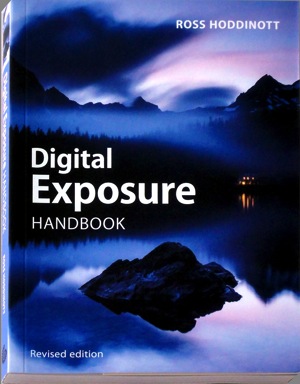 This revised edition of ‘Digital Exposure Handbook’ could well be the only book you’ll ever need in your digital photography adventures.
 It begins as a guide to understanding camera settings and the basics of exposure, then moves on to putting this info into practice in a variety of situations. It teaches you how to cope with the quality, quantity and contrast of natural and artificial light, how to effectively use on-camera and external flash illumination, how to apply polarising and ND digital filters and concludes by teaching you how to enhance exposures in the digital darkroom.
Many enthusiasts buy advanced digital cameras, such as DSLRs, with little more knowhow than they had with their earlier cameras, most likely of the compact point-and-shoot variety. And the first thing that brings them unstuck is the matter of how to set the appropriate and/or correct exposure. This book will put you on the straight and narrow.
Author Hoddinott describes exposure as ‘the heartbeat of photography.’ He adds that ‘Understanding and being able to control exposure us critical to successful photography.’
Basically, exposure to a digital camera’s sensor is a combination of the length of time and the level of illumination impinging on the camera’s sensor. This depends on three settings: shutter speed, lens aperture and ISO setting.
While today’s digicams make the task of correctly exposing a shot a simple task, leaving the camera to do all the work removes you as the creator of the final image and result in your image making efforts becoming little more than ‘pleasing snapshots.’
Subjects covered: the book begins by explaining exposure basics; metering reflected and incident light with the camera’s own TTL system or a separate handheld meter and the differences between centre-weighted, spot and partial metering; image sensor types — from CCD to CMOS to Foveon and sensor size; dynamic range and its control; understanding histograms and how to manipulate them. At this point the book offers the little known fact that images saved in RAW format tend to have a greater latitude than the histogram indicates …
There are many tricks of the trade in the book’s pages: one is that by saving in RAW and exposing to the right of the histogram will lead to the image containing the majority of tonal values. The downloaded image will look too bright and washed out but final processing will leave the image looking correct.
High and low key images are discussed and the advice given that these types of images are best served by adjustment of the original exposure and not leaving the final rendering to software tweaking.
Also discussed: ISO sensitivity; understanding f stops; depth of field; hyperfocal distance; the use of shutter speeds when rendering motion; avoiding camera shake, how to blurr and how to freeze action; second guessing metering systems and how to adjust exposure compensation.
Many will get help from advice on understanding exposure mode programs such as auto, shutter and aperture priority as well as manual settings. Hoddinott claims that using manual exposure is the most flexible exposure mode but also ‘the one that relies most heavily on the photographer’s knowledge and input.’
I reached about a third of the book’s length and slowly became aware that it was far more than a basic guide to exposure and more a general primer to the ins and outs of digital photography, with chapters on viewfinders, file formats, composition, dealing with landscapes, architecture, wildlife, people, still life, abstracts and patterns, close ups,.
Then there follows detailed help in shooting subjects in ambient light, silhouettes, white balance, using reflectors, flash, filters, calibrating monitors, printing and the overall role of the digital darkroom.
While it is obvious from the latter two paragraphs that the book wanders off topic, it also results in it becoming more than just a primer on exposure.
As I’ve said, it could also be the only book you’ll ever need for digital photography!
Plenty of useful pictures. Perhaps some may find the 7 point type a little small!
Author: R Hoddinott.
Publisher: Ammonite Press.
Size: 15x21x1cm.
Length: 192 pages.
ISBN 978 1 90770 895 4.
Price: Get a price on the Digital Exposure Handbook at Amazon (currently 29% off).Post originally from: Digital Photography Tips.
Check out our more Photography Tips at Photography Tips for Beginners, Portrait Photography Tips and Wedding Photography Tips.
Digital Exposure Handbook: Book Review
The post Digital Exposure Handbook: Book Review by Darren Rowse appeared first on Digital Photography School.
-
Speedliter’s Handbook – A Book Review
 Syl Arena, Man with colourful hair and workshop leading extroidinaire has a couple of books, the one I’m telling you about today is “Speedliter’s Handbook” which is a book about how to light using the Canon speedlight system. You can find out more about Syl via his website, PixSylated.com
Speedliter’s Handbook: Learning to Craft Light with Canon Speedlites
The first thing that struck me about Syl’s book was how easy it was to understand – I am still learning how to light with strobes etc, I love to dabble and experiment, but after a little sit down and a cup of coffee later, I had cleared up seriously about twenty questions I had in my head!
The Speedliter’s Handbook isn’t really a book you would sit and read cover to cover, it’s more a ‘pick a bit and go through it, and through it again’ What I did was made a list of five things I wanted to know more about, then used the book to research them. The book has something for everyone, and whilst it is about the Canon Speedlight, there’s absolutely no reason why someone with any other type of flash shouldn’t pick it up and check it out – there’s something about everything in there.
From how to get our of ‘the green box – auto mode’ to using various modifiers, positioning of the light source, how to choose the right sized umbrella to ganging flashes… There is SO much in this book.

Syl talks about how he’s a photographer and not a photoshop artist, so the book looks like the work of a photographer, rather than a digital artist which I found very refreshing – you don’t open the book and see these crazy polished images straight outta CS6, you see real photographs – whilst there’s nothing wrong with those crazy polished images, for me, the content of Syl’s book doesn’t scare me away from the outset… Despite Syl’s 40 years as a photographer, it gave me the feeling that I could achieve what he was teaching – bravo.


For those of you that prefer Android to iPhone (wait, did I say that out loud?) there’s a section on modding your light rather than just using what it came with. Syl shows what can be done when using a veritable myriad of random attachments to shape the light into what you want, and a great quote by the ‘Original Strobist’ David Hobby… “You have to ask yourself which you have more of; Time or Money. If you have more money than time, buy it, if you have more time than money, do it yourself.”
I’m not going to go through this book and tell you something about every single chapter (of which there are 25, over about 375 pages) The book has great visual explainations and simple tips that anyone (yep, even me!) can understand.
If you’re just starting out, start at the beginning, if you’re a master in your own lunchbox, pick a chapter – there’s something for everyone in this book…
As a Canon Speedlight user, this would be the best (if I paid for it, as it was provided gratis for this review) $ 25 I’d spent on learning to light. Eleven stars!
Post originally from: Digital Photography Tips.
Check out our more Photography Tips at Photography Tips for Beginners, Portrait Photography Tips and Wedding Photography Tips.
Speedliter’s Handbook – A Book Review
