RSS
 

Posts Tagged ‘Google’

Google Pixel XL camera review

21 Dec

$ (document).ready(function() { SampleGalleryV2({“containerId”:”embeddedSampleGallery_1207849172″,”galleryId”:”1207849172″,”isEmbeddedWidget”:true,”standalone”:false,”selectedImageIndex”:0,”startInCommentsView”:false,”isMobile”:false}) });

For its latest smartphone generation, Google has dropped the Nexus moniker of previous models and used Pixel branding borrowed from the company’s top-end Chromebooks and tablets. The Pixel XL is the larger of two models and comes with a 5.5″ QHD-screen that uses AMOLED technology. 

In terms of technical camera specifications, not much has changed compared to last year’s Nexus devices. A 1/2.3″ 12MP sensor is paired with an F2.0 aperture but offers no optical image stabilization. However, Google has flexed its muscles on the software side of things and added a new gyroscope-based video stabilization system that reads gyro data 200 times per second for smoother panning and shake-free handheld video recording.

Additionally, thanks to more powerful processing and zero shutter lag the excellent HDR+ mode is now on by default, using an image stacking approach to reduce noise, capture better detail and increase dynamic range. While the Pixel XL’s camera hardware looks promising, it is these innovative algorithms that make the Google device one of the most interesting smartphones for photography released this year. 

Key Photographic / Video Specifications

  • 1/2.3” 12MP CMOS sensor with 1.55µm pixels
  • F2.0 aperture
  • AF with on-sensor phase detection and laser-assistance
  • Dual-tone LED flash
  • 4K video at 30 fps
  • 1080p slow-motion at 120fps, 720p at 240fps
  • Manual controls and Raw-support with third-party camera apps
  • Gyroscope-based video stabilization
  • 8MP front camera, 1/3.2″ sensor, 1.4 µm pixels, F2.4, 1080p video
  • Unlimited cloud storage for full-resolution images and videos

Other Specifications

  • 5.5-inch Quad-HD AMOLED screen
  • Qualcomm Snapdragon 821 chipset
  • 4GB RAM
  • 32/128GB storage
  • 3,450mAh battery
  • Splash and dust resistant
  • Fingerprint reader

DPReview smartphone reviews are written with the needs of photographers in mind. We focus on camera features, performance, and image quality.

Articles: Digital Photography Review (dpreview.com)

 
Comments Off on Google Pixel XL camera review

Posted in Uncategorized


Google Sheep View: Creature-Mounted Cameras Map Rugged Faroe Islands

20 Dec

[ By WebUrbanist in Destinations & Sights & Travel. ]

mapping

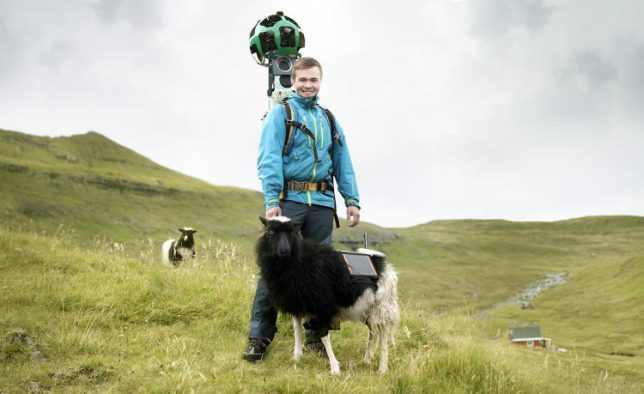
Powered by solar energy and mounted to the backs of sheep, 360-degree cameras are mapping out the Faroe Islands for Google Street View. Since Google was initially reluctant to send cars to the archipelago, locals took it upon themselves to get their own interactive images out into the world, raising awareness of the region’s uniquely beautiful landscapes. In the end, they not only attracted Google’s interest but managed to spawn a creative DIY approach to mapping rugged environments.

Sheep View 360 got its start when resident Durita Dahl Andreassen first strapped a camera to a sheep, let the animal roam free around the island then uploading the results to Google. “I gently placed a 360-degree camera powered by a solar panel on the back of a sheep that would take photographs as the animal freely grazed the open hillsides,” explains Andreassen.

google-sheep-view

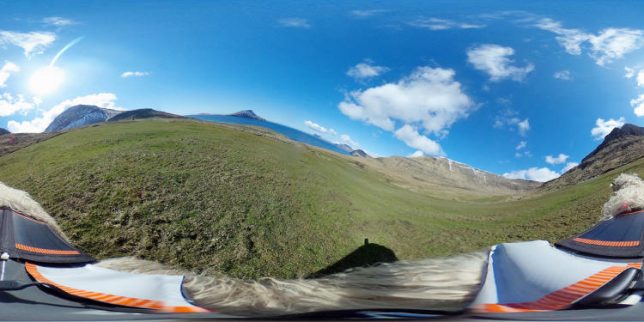
“Photos are then transmitted back to my mobile phone so that I can upload them to Google Street View myself, finally putting the Faroes on the map in a very unique way!” Indeed, some of the shots and perspectives would be unlikely or impossible for vehicles or even humans, taken as they are from the tops of roofs and sides of mountains.

sheep-view-mounted

This endeavor and an associated petition eventually did get Google’s attention, but by the time they showed up with vehicles the self-mapping system was well underway with sheep, bikers, backpackers, ships and even a wheelbarrow playing parts.

sheep-view-panoramic

Ultimately, folks from the Faroe Islands have made it a bit of an interactive game — anyone who wants to can come borrow a camera and start mapping the parts not yet uploaded to Google. This presents an interesting challenge for those who want to take it on: can you as a tourist cameraman visit the places most people and cars don’t go to or can’t reach?

sheep-view-hug

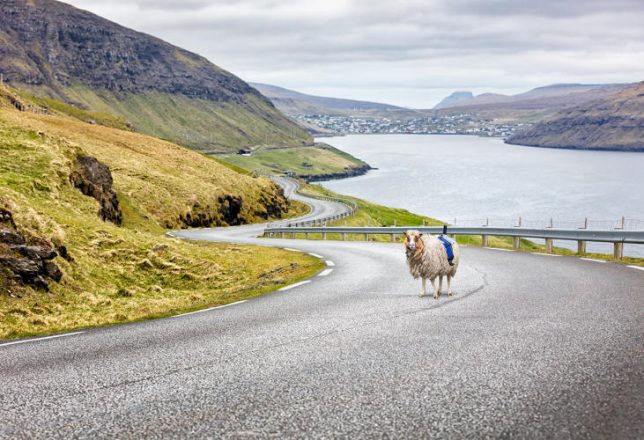
“The Faroe Islands have some of the most beautiful roads in the world. It is impossible to describe what it feels like driving through the green valleys and up the mountains, or alongside the ocean, surrounded by steep drops and tall cliffs. It’s an experience like no other.”

Share on Facebook


[ By WebUrbanist in Destinations & Sights & Travel. ]

[ WebUrbanist | Archives | Galleries | Privacy | TOS ]


WebUrbanist

 
Comments Off on Google Sheep View: Creature-Mounted Cameras Map Rugged Faroe Islands

Posted in Creativity


Google Pixel users reporting camera app issue

02 Dec

Google’s Pixel smartphones come with a range of innovative imaging technology and currently occupy the number one spot in the DxOMark smartphone ranking. However, shortly after the device launch some users reported a strong tendency of the Pixel camera to produce lens flare, and now it appears some devices are having trouble with the camera app, as well. 

In the Google Product Forum a number of users are reporting that their camera app is frequently crashing, sometimes showing pink and purple vertical lines. It appears the issue is mainly impacting international devices when the phone is in an area with poor signal reception. The error does not occur when flight mode is activated. 

Source: Google Product Forum

Google support staff has been instructing users who are experiencing the issue to clear the cache and data, and factory reset the device. However, none of these measures has solved the problem. It appears performing a soft reset by holding the volume down and power keys is currently the only way to get your device up and running again when the issue occurs.

We are currently testing the Google Pixel XL for our full review and, luckily, have so far not experienced the problem. That said, we hope Google can come up with a quick solution, possibly a software update, to help the affected users.

Articles: Digital Photography Review (dpreview.com)

 
Comments Off on Google Pixel users reporting camera app issue

Posted in Uncategorized


Google updates Earth Timelapse with petabytes of new data

30 Nov

Google has updated its interactive Earth Timelapse feature with better imagery and several years of new data. The massive update added petabytes of new data and brings it up to the current year. 

Detailing the update in a blog post, Google says updated images are sharper ‘with truer colors and fewer distracting artifacts.’ Earth Timelapse was introduced in 2013 and includes images recorded as early as 1984.

Basically, Google’s Earth Timelapse presents users with 33 interactive images of the entire planet, but creating those images was a feat – Google says it sifted through 3 quadrillion pixels to maximize image quality. The final product represents 25,000,000 overlapping global image tiles that users can zoom in, zoom out, play and replay to their heart’s content.

Check it out for yourself and see how the world has changed over the past three decades.

Articles: Digital Photography Review (dpreview.com)

 
Comments Off on Google updates Earth Timelapse with petabytes of new data

Posted in Uncategorized


Google updates Photos app with advanced editing features

17 Nov

Yesterday, Google introduced its pretty impressive new PhotoScan app and presented RAISR, an upsampling method that uses machine learning. You would think that was enough innovation in imaging for one day, but no, Google also implemented some pretty interesting upgrades to its Photos app that be found pre-installed on most Android smartphones and is also available for iOS devices and on the web.

A new auto enhance function balances exposure and saturation in order to maximize detail at the tap of a button. For those who prefer more manual input, advanced editing controls for light and color allow you to fine tune your images using a range of sliders for highlights, shadows and warmth among others. The Deep Blue parameter allows for partial adjustment of the blue tones in images of sea and sky and there is an equivalent slider for fine-tuning skin tones. 

In addition there are 12 new smart filters that Google calls looks. Looks use machine learning to analyze the contents of an image and then make edits based on brightness, darkness, warmth, or saturation before the final filter is applied. If you want to try the new features you won’t have to wait. The upgraded Google Photos app is rolling out today across Android, iOS and the web. 

Articles: Digital Photography Review (dpreview.com)

 
Comments Off on Google updates Photos app with advanced editing features

Posted in Uncategorized


Google RAISR uses machine learning for smarter upsampling

16 Nov
 Top: Original, Bottom: RAISR super-resolved 2x, Image: Google

Upsampling techniques to create larger versions of low-resolution images have been around for a long time – at least as long as TV detectives have been asking computers to ‘enhance’ images. Common linear methods fill in new pixels using simple and fixed combinations of nearby existing pixel values, but fail to increase image detail. The engineers at Google’s research lab have now created a new way of upsampling images that achieves noticeably better results than the previously existing methods.

RAISR (Rapid and Accurate Image Super-Resolution) uses machine learning to train an algorithm using pairs of images, one low-resolution, the other with a high pixel count. RAISR creates filters that can recreate image detail that is comparable to the original, when applied to each pixel of a low-resolution image. Filters are trained according to edge features that are found in specific small areas of images, including edge direction, edge strength and how directional the egde is. The training process with a database of 10000 image pairs takes approximately an hour. 

Once RAISR has been trained it is capable of selecting the most appropriate filter for each pixel in a given low-resolution image to fill in new pixels in order to create a higher-resolution version. RAISR can also remove aliasing artifacts, such as moiré patterns or jagged lines in the low-resolution images when creating the larger version, something that linear methods are not capable of doing.

Eventually, Google may be able to use the technology to upsample images that are sent at mobile bandwidth-friendly resolutions. More information on RAISR is available on the Google Research Blog.

 Left: Original, Right: RAISR super-resolved 3x, Image. Google

Articles: Digital Photography Review (dpreview.com)

 
Comments Off on Google RAISR uses machine learning for smarter upsampling

Posted in Uncategorized


Google Pixel XL real-world sample gallery

31 Oct

The Google Pixel XL landed in our office recently, and in addition to a trip to the studio, it’s been around the neighborhood for some real-world shooting. Take a look at how it handles a variety of situations, including some inexplicably sunny fall Seattle days.

See our Google Pixel XL
real-world sample gallery

Articles: Digital Photography Review (dpreview.com)

 
Comments Off on Google Pixel XL real-world sample gallery

Posted in Uncategorized


Google acknowledges lens flare issue on Pixel camera, promises software fix

27 Oct

Since the Google Pixel and Pixel XL smartphones have become available for purchase, there have been several reports about the camera of the devices, despite stellar scores in the DxOMark ranking, being very prone to lens flare with the sun at a certain angle to the camera lens. Now a group of affected Reddit users has described the problem in the Google Product Forum and got a quick reply from a Google employee:

‘First, for some background — flare is a property of ALL camera lenses. It comes in a ton of different shapes and sizes and can even be used for creative effect — good and bad :-). The shape, color, amount, etc. of flare is related to dozens of different parameters of the lens structure and inclement light. However, we have seen reports about this “halo/arc flare”. This is the specific kind of flare that appears as a bright/low-contrast arc in the corners of the frame.
 
You can expect a software update in the next few weeks that will improve the effects of this issue. We’re working on some algorithms that recognize the halo/arc flare, characterize it mathematically, and then subtract it from the image. 🙂 You will need to use HDR+ to see the benefits of this software.’
 
So it appears Google is planning to solve a hardware problem with a software solution and bake an algorithm, that mathematically removes the flare from the image, into the Pixel camera’s HDR mode. This means the measure will only be effective when shooting in this mode and it remains to be seen if there is any impact on noise and/or image detail in the affected areas of the image. We will certainly have a closer look at the Pixel’s flare behavior in our own test of the device.

Articles: Digital Photography Review (dpreview.com)

 
Comments Off on Google acknowledges lens flare issue on Pixel camera, promises software fix

Posted in Uncategorized


Google Pixel XL added to mobile studio test scene comparison

26 Oct

Google’s Pixel and Pixel XL have garnered plenty of interest for their imaging capabilities since they were launched in the beginning of October. They each offer a 12.3MP camera with an F2.0 lens and a 1/2.3″ sensor – the same size used in yesteryear’s compact cameras – sporting 1.55µm sized pixels. The Pixel phones also utilize gyroscope-based stabilization for some seriously smooth video recording.

We got our hands on a Pixel XL review unit, and while we wait for the clouds to part outside for some real-world samples, we put it in front of our studio test scene. Take a look below at its JPEG and Raw performance in daylight and low light. It’s quite impressive: the lens is relatively sharp across the frame, and our low light Raw shots show that despite receiving 1.33 EV less light than the iPhone 7, the Pixel shows only slightly more noise, meaning it comfortably outperforms the iPhone camera in low light.*

$ (document).ready(function() { ImageComparisonWidget({“containerId”:”reviewImageComparisonWidget-20506681″,”widgetId”:423,”initialStateId”:null}) })

Related: Google’s Pixel phones: what you need to know

*Multi-frame noise reduction – used in low light by both the Pixel and iPhone 7 – may skew results in either direction for either camera, providing better performance for static subjects, or potentially blurry images for moving ones.

Articles: Digital Photography Review (dpreview.com)

 
Comments Off on Google Pixel XL added to mobile studio test scene comparison

Posted in Uncategorized


Google shows off Pixel imaging capabilities in demo video

19 Oct

Nat and Lo is a YouTube Channel that started out as a ‘20% project’ within Google and has an objective to ‘demystify the technology in our everyday lives.’ Now the makers of the channel have published a video that was almost entirely shot with Google’s recently announced Pixel high-end smartphone.

The Pixel comes with a A 6-element lens with F2.0 aperture, a 1/2.3″ 12.3MP sensor with 1.55µm sized pixels, on-sensor phase detection with laser-assist and a gyroscope-based electronic video-stabilization system. The demo video shows off all of those capabilities and features, mixing 4K output of the front camera with 1080p Full HD footage from the front camera and some slow-motion sequences. A comparison shot shows the efficiency of the new video stabilization system and viewers can enjoy some nice still images and panorama shots of New York City. 

The video doesn’t really show anything that we would not have seen before on various other mobile devices but gives a good overview of the Pixel’s imaging capabilities. To judge for yourself watch the video at the top of this page and don’t forget to flick on the 4K switch on YouTube.

Articles: Digital Photography Review (dpreview.com)

 
Comments Off on Google shows off Pixel imaging capabilities in demo video

Posted in Uncategorized