Fotodiox’s new Pro Pronto AF adapter is finally available to pre-order. Announced a few months ago, the specialized adapter lets you autofocus Leica M-mount lenses with Fujifilm X series cameras.
The first adapter of this kind was the Techart Leica M-mount to Sony E-mount adapter released back in 2016. Fotodiox followed up with its own M-mount to E-mount adapter, but this is the first time we’ve seen one for Fujifilm X-mount cameras.
The adapter, which supports lenses up to 680g (1.5lbs), is constructed from brass and an aluminum alloy, and uses an integrated helicoid mechanism to extend and retract the lens using AF-S or AF-C contrast-detection autofocus.
Here’s a video of Fotodiox’s older Leica M-mount to Sony E-mount adapter in action:
The Fotodiox Pro Pronto AF adapter is available to pre-order now for $ 350. The Leica M-mount to Sony E-mount version is still available for $ 250.
The saying goes, ‘better late than never,’ but Fujifilm might be pushing the boundaries of the phrase with its new promotional video.
It’s been eight years since Fujifilm released its XF 35mm F1.4 R lens, but a new promo video showcasing the features of the lens has popped up on the Fujifilm X Series YouTube channel. Understandably, this new promo video has left some Fujifilm users confused and even disappointed, as an upgraded version of this lens is high on the request list of many Fujifilm users.
Unfortunately, this new four-minute video, which showcases numerous Fujifilm X-Photographers talking about the lens, isn’t a teaser for a new, upgraded ‘Mark II’ version or anything of the sort. It’s simply a self-described ‘ode’ to ‘one of the original X mount lenses [that] has captured countless numbers of precious moments over the years.’
The timing is curious, as is ‘The Original’ nomenclature, but the video links directly to a landing page for the XF 35mm F1.4 R, suggesting Fujifilm is still working hard to promote one of the first XF lenses.
Fujifilm has announced a new speedlight and wireless trigger for its X Series and GFX System cameras.
The Fujifilm EF-60 is a compact radio-controlled speedlight with a hot-shoe mount. It features 60 guide number at 200mm, has a 24mm to 200mm zoom range and features a built-in LED modeling light.
The flash can be controlled in 1/3 stop increments and when paired with Fujifilm’s new wireless trigger, all of these settings can be changed from the trigger. The speedlight is also compatible with the Nissin Air System (NAS).
The partnering product is the EF-W1 Wireless Commander, which appears to be a Nissin Air10s Remote trigger with some Fujifilm branding on top. The 2.4GHz trigger offers TTL, manual and FP High-Speed Sync modes. It can control the EF-60 and other NAS strobes. The remote can handle up to three groups and eight channels.
Both the EF-30 and EF-W1 are compatible with the GFX100, GFX 50S, GFX 50R, X-H1, X-Pro2, X-Pro3, X-T1, X-T2, X-T3, X-T4, X-T20, X-T30, X- E3, X100F and X100V.
Both the EF-30 and EF-W1 are compatible with the GFX100, GFX 50S, GFX 50R, X-H1, X-Pro2, X-Pro3, X-T1, X-T2, X-T3, X-T4, X-T20, X-T30, X- E3, X100F and X100V.
The EF-60 speedlight (Adorama, B&H) and EF-W1 wireless commander (Adorama, B&H) are currently available to pre-order for $ 400 and $ 200, respectively. The first units should be available in ‘late August 2020.’
The GF 30mm F3.5 R WR is a wide angle prime lens for Fujifilm’s medium format GFX system, with a focal length equivalent to 24mm on full frame. It offers impressive sharpness, but not without a few compromises. Watch our review to learn more.
Subscribe to our YouTube channel to get new episodes of DPReview TV every week.
Intro
Sample photos
Size and design
Chromatic aberration
Minimum focus
Flare control
Autofocus speed
More sample images!
Bokeh
Sharpness
Who's it for?
Sample gallery from this episode
$ (document).ready(function() { SampleGalleryV2({“containerId”:”embeddedSampleGallery_6872107241″,”galleryId”:”6872107241″,”isEmbeddedWidget”:true,”selectedImageIndex”:0,”isMobile”:false}) }); Articles: Digital Photography Review (dpreview.com)
The post Fujifilm X-T4 Review: The Best APS-C Camera on the Market (For a Price) appeared first on Digital Photography School. It was authored by Jaymes Dempsey.
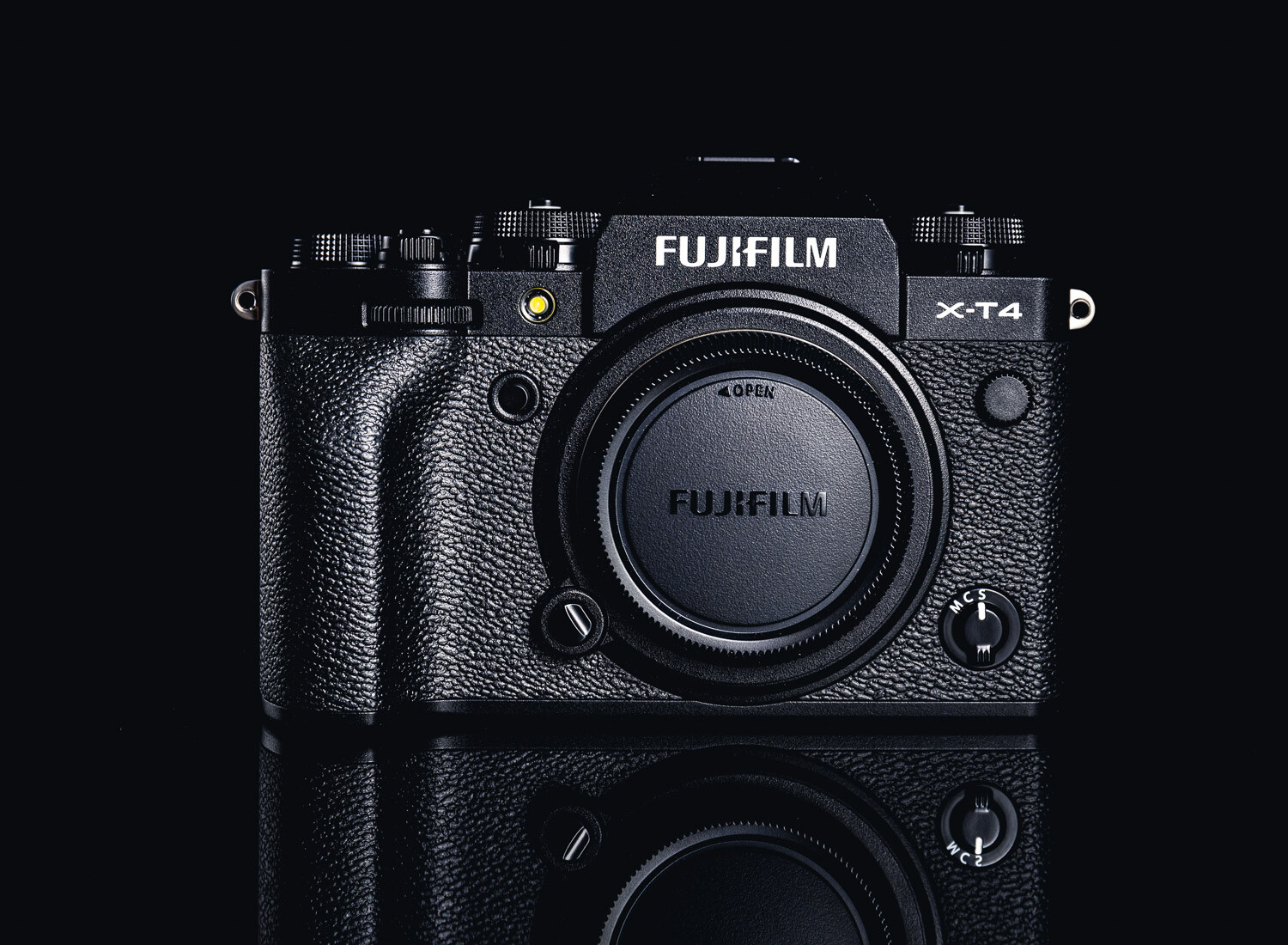
If you’re trying to decide whether the Fujifilm X-T4 is the right camera for you, then this comprehensive Fujifilm X-T4 review is exactly what you need.
For several weeks, I’ve been putting Fujifilm’s newest camera through its paces, with the goal of answering a few key questions:
What does the X-T4 offer over the X-T3?
How does the X-T4 compare to other options on the market?
And, ultimately, is the X-T4 worth the price?
All these questions, and more, will be answered in this review.
The Fujifilm X-T4 comes as the latest addition to Fujifilm’s flagship lineup, previously headed by the Fujifilm X-T3. Note that Fujifilm explicitly indicated that the X-T4 does not replace the X-T3, but enters the lineup as a sister model.
In many ways, the X-T3 and the X-T4 are the same; the ergonomics and aesthetics are exceedingly similar, plus you get 26 MP X-trans sensors, dual card slots, and 4K/60p video.
But there are also some fundamental differences. While there’s certainly still room for the X-T3 in a Fujifilm lover’s gear bag, the truth is, the X-T4 is the better camera (though significantly pricier!).
In fact, I’d go so far to say that the X-T4 is one of the absolute best cameras I’ve ever used, and certainly one of my favorites, thanks to its Fujifilm retro charm, as well as its generally strong performance across the board.
Fujifilm X-T4 | Fujifilm XF 16-80mm f/4 | 32.5 mm | 1/250s | f/8 | ISO 200
Fujifilm is in the business of making all-around cameras: Mirrorless models that can do pretty much anything at a high level, from action to landscape to video. The X-T4 is simply another level of this superb well-roundedness, giving a combination of top-notch handling, improved autofocus, blazing-fast continuous shooting speeds, high-powered video, and excellent image quality.
Here are a few key Fujifilm X-T4 specifications:
26 MP APS-C sensor
4K/60p video
Continuous shooting up to 20 fps with electronic shutter (15 fps with mechanical shutter)
3.68M-dot electronic viewfinder
500 shot-per-charge battery
Dual SD card slots
In-body image stabilization
Note that, in purchasing the X-T4, you also get access to Fujifilm’s very impressive array of lenses. Many of these are very reasonably priced, not to mention optically stellar, which is why I consider Fujifilm to be something of a dark horse in the photography world.
That said, there are some drawbacks to buying the X-T4.
While it’s a fantastic all-around camera, it has no particular specialties, which means that it’s probably not the right choice if you’re seeking to capture, say, high-level sports or nothing but detailed HDR landscape photos.
So to find out more about the X-T4, both the good and the bad, read on.
If you’re a long-time Fujifilm shooter, the design of the X-T4 will feel familiar to you. It’s very much in line with the X-T3’s thin, metallic form, though it’s gained a slight amount of bulk, presumably due to the inclusion of IBIS.
For non-Fujifilm shooters, however, holding the X-T4 for the first time may offer a bit of a shock.
First, it feels like a squashed brick; you get a very well-made body, compressed into a compact form. And while the X-T4 does offer a decent-sized handgrip, it’s not as large as what you might expect from a Nikon or Canon camera (and certainly not a Nikon or Canon DSLR), which might take some getting used to.
The Fujifilm X-T4 is weather-sealed, and it feels it; honestly, the whole body just screams durability, which means that you can feel comfortable taking the X-T4 in inclement weather (always important for serious outdoor and nature shooters).
I know I mentioned it above, but I really am a huge fan of the Fujifilm retro aesthetic, which somehow makes the X-T4 feel like less of a finely-crafted tool and more of a camera that works with you.
Handling
As with all Fujifilm cameras, handling is excellent, assuming you don’t mind the old-school dials and switches.
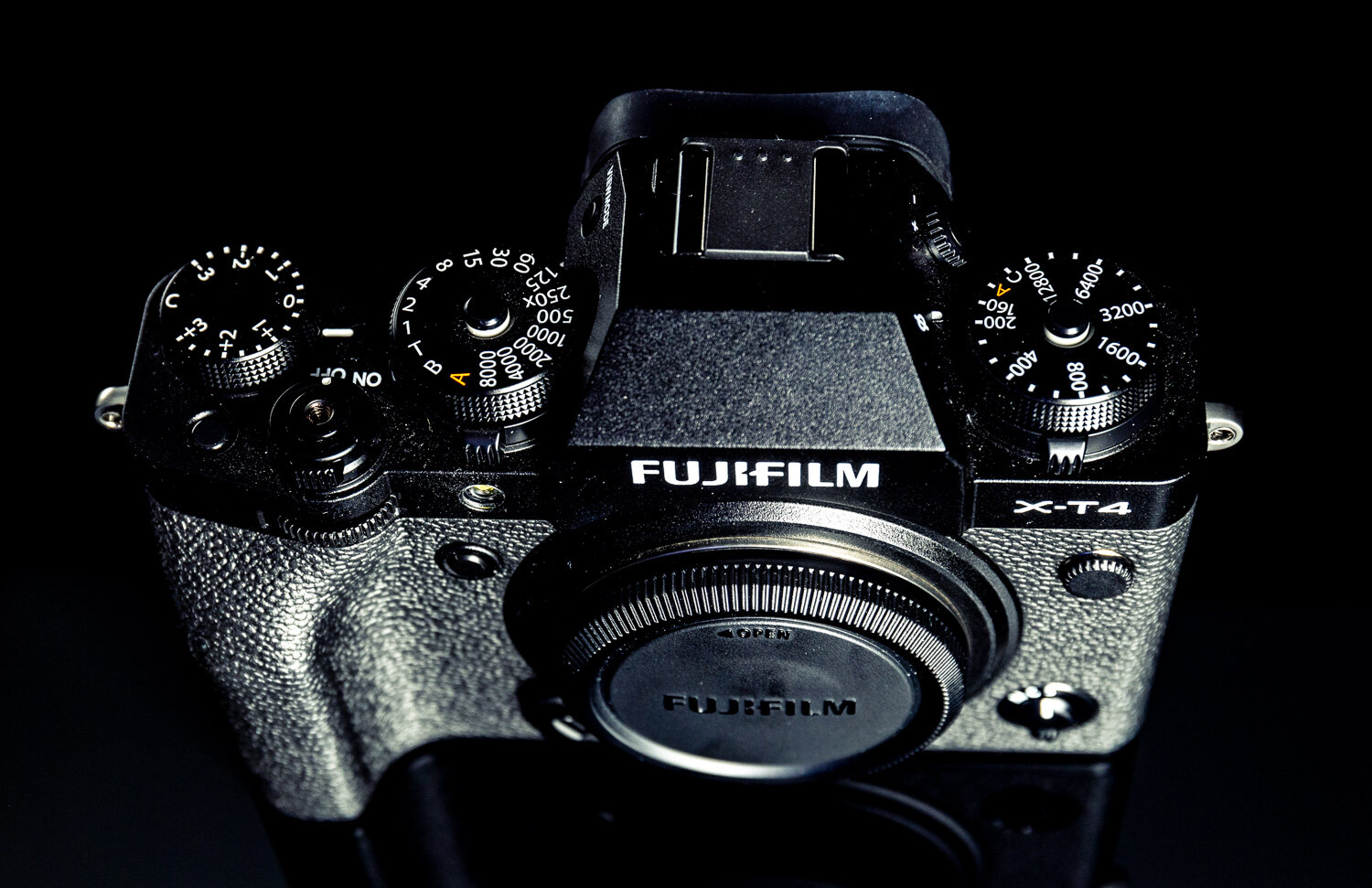
Note that this old-school aesthetic manifests in the form of a dedicated aperture ring on Fujifilm’s lenses, which means that you have to select the aperture by turning the ring on the lens rather than turning a dial on your camera. Also part of the old-school aesthetic is the dedicated ISO, exposure compensation, and shutter speed dials on the top of the X-T4.
I can see how this very external, dial-based handling would annoy some photographers. It’s certainly not built for speed and muscle memory in split-second action, but there’s something really wonderful about setting your shutter speed and ISO via dials on the top of the camera, as opposed to through your camera knobs or touchscreen.
The X-T4’s buttons are well-placed, and I like the focus mode dial on the front (also present on other Fujifilm models); it’s much easier to access in the heat of the moment.
A noticeable upgrade over the X-T3 here is the addition of in-body image stabilization, which allows you to get up to 6.5 extra stops of handholding. This is a huge deal for anyone who frequently shoots in low light, and is a fantastic addition to the X-T4 over the X-T3. In fact, if you haven’t used IBIS before, then you’re going to want to check the X-T4 out immediately. It’s a big help for handheld landscape photography, macro photography, walkaround photography, and much more, further increasing the X-T4’s versatility.
One last handling upgrade worth noting:
The X-T4 comes with a brand-new battery, one that’s rated at 500 images per charge. As with most battery ratings, this one seems to (happily!) undershoot reality. There were at least a few days when I shot over 500 images and still had significant charge left to work with.
For me, and for many shooters out there, this is a big deal. For one, if you’re shooting in adverse conditions, you want to swap batteries as infrequently as possible.
Plus, the better the battery life, the fewer batteries you need to take with you when traveling, for outdoor trips, etc.
The electronic viewfinder looks spectacularly life-like and features a 3.68M-dot resolution. Personally, I neither love nor hate EVFs (they can be great in some situations and terrible in others), but I do think that a minimum resolution of 3.68M-dots is required for good viewing, at least for me, personally, and the X-T4 brings that to the table.
There was never a time when I wished for an optical viewfinder while using the X-T4, and the clarity of the EVF was a huge benefit when working with Fujifilm’s Film Simulation modes (more on these later!).
You also get a fully-articulating rear LCD. This is useful for anyone who prefers to shoot without the EVF to their eye, but it’s especially important for macro photographers, architectural photographers, and landscape photographers in particular; basically, anyone who sets up their camera at odd angles.
With the X-T4’s articulating screen, you can get down-low perspective shots without having to get dirty (and without having to hurt your neck!).
Note that the X-T4’s screen does offer touch functionality, though it’s pretty much limited to setting the autofocus points. This is just fine in my book, because that’s really all I like to use touch screens for since it’s far faster than moving between points with the AF joystick.
Autofocus and Continuous Shooting
The Fujifilm X-T3 was a decent autofocus performer in its own right, but the X-T4 improves on this AF prowess, primarily in terms of tracking. Honestly, I’ve always been impressed by the X-T3’s focusing capabilities, which makes me all the more pleased with the X-T4.
Focusing on still subjects was extremely snappy, even in more difficult lighting situations.
In terms of tracking, I found the X-T4 able to follow predictably moving subjects with ease (e.g., cars), and while my keeper rate wasn’t 100 percent, I was very pleased with the results. Face and eye detection are a bit variable, especially in lower light, but are far from bad.
One of the great things about Fujifilm cameras is the continuous shooting speeds, which are blazing-fast by any metric. On the X-T4, you get 20 fps shooting using the electronic shutter, and this drops to a very respectable 15 fps using the mechanical shutter (up over the 11 fps mechanical shutter on the X-T3).
In fact, continuous shooting is one of the many reasons why the X-T4, and Fujifilm’s top cameras more generally, are such excellent all-around options. While they aren’t really designed as action cameras, you can certainly use them for fast-paced street photography, sports photography, and wildlife photography, assuming you can get the autofocus to work for you.
The X-T4 packs a 26 MP, APS-C sensor, and while it doesn’t offer many changes over the X-T3, it’s still pretty darn powerful.
I tend to be conservative in terms of my tolerance of noise levels, but I feel comfortable pushing the X-T4 to at least ISO 800. Really, noise doesn’t start to become noticeable until around ISO 1600, and images can remain usable through ISO 6400 or so, depending on your purpose.
This is a good performance, especially for an APS-C camera; to my eye, it’s around a half-stop better than the Sony a6600 and pretty much on par with the Nikon Z50. And while the X-T4 can’t quite compete with the full-frame heavy hitters, it’s still plenty useful for photographers seeking a camera that can handle itself in low light.
As mentioned above, one of the benefits of a Fujifilm camera is the film simulation modes, and here the X-T4 doesn’t disappoint. You get 12 high-quality options; it’s a lot of fun to toggle between them, just to see how the world will look with different types of film.
I find these modes to be especially useful for types of shooting where noticeable color grading is acceptable, such as street photography and portrait photography. However, you always have the option of experimenting with film simulation and making changes in post-processing if you’re not pleased.
At the time of writing, the Fujifilm X-T4 costs $ 1700 USD, which is $ 500 USD more than its X-T3 sibling, and is nearly $ 1000 USD more than the X-T30.
And this is where things get a little tricky because while the X-T4 does offer some serious upgrades over the X-T3, I’m just not sure it’s enough to justify $ 500. If I were trying to decide between the X-T3 and the X-T4, I’d feel more tempted by the X-T3, unless I desperately needed the IBIS or autofocus improvements.
Another issue with the X-T4’s price point is that it puts the camera on par with full-frame options such as the Nikon Z6, and only a few hundred dollars cheaper than the Sony a7 III. This isn’t going to make the X-T4 compelling for DSLR photographers looking to make the leap to mirrorless, or non-Fujifilm mirrorless shooters looking for a more powerful camera.
That said, if you’re already a Fujifilm shooter, or you’re a photographer who appreciates the unique design and all-around capabilities of the X-T4, the $ 1700 may be worth it.
But I’m an even bigger fan of the X-T4, mostly thanks to the addition of in-body image stabilization, which makes the camera even more impressive for low-light shooting. It’s the ultimate generalist camera for hobbyists and professionals, and it’s an excellent addition to any kit.
Is the X-T4 the best APS-C camera out there?
Truthfully, I think it is. You get excellent image quality, blazing-fast continuous shooting, great handling, dual card slots, good autofocus, and more.
My only reservation is the price, which feels a bit high compared to the X-T3. But you do get in-body image stabilization, as well as improved autofocus, so if you have the extra money to spend, go for it!
You won’t be disappointed.
?????
The post Fujifilm X-T4 Review: The Best APS-C Camera on the Market (For a Price) appeared first on Digital Photography School. It was authored by Jaymes Dempsey.
Fujifilm has released its Fujifilm X Webcam utility for macOS, making it possible to use compatible Fujifilm cameras as webcams on Apple computers.
As with the Windows version, the macOS version of Fujifilm X Webcam makes it so you can use the following cameras as webcams in compatible video conferencing and live broadcasting apps when plugged into your Apple computer via USB:
GFX 100
GFX 50S
GFX 50R
X-H1
X-Pro2
X-Pro3
X-T2
X-T3
X-T4
Fuji X Webcam version 1.0.0 is compatible with macOS 10.12 (Sierra) or later and is free to download on Fujifilm’s website. Fujifilm has published a user guide to help you get up and running.
When thinking about storage technology in 2020, one rarely thinks about tape media. However, magnetic tape media is critical to archiving data. As data demands continually increase, Fujifilm is working on a new technology that will be a massive breakthrough in linear tape-based storage, offering up to 400TB of storage in a single drive.
As PetaPixel notes, tape-based storage technology is primarily Linear Tape-Open (LTO). Currently, LTO is in its eighth generation, LTO-8, and has a maximum capacity of 12TB, far below the maximum capacity Fujifilm is developing. LTO-9, slated to arrive later this year, maxes out at ‘only’ 24TB. A 12TB (native) Fujifilm Ultrium LTO-8 drive is shown in the leading image of this article.
The driving force behind this potential leap in magnetic tape storage capacity to 400TB is due to a new coating on the tape. LTO-8, and upcoming LTO-9 drives, feature tape coated with Barium Ferrite (BaFe). Down the line, Fujifilm is intending to use Strontium Ferrite (SrFe) instead, due to its superior magnetic qualities. In a 2018 document on LTO, Fujifilm states ‘…the majority of the magnetic properties of SrFe are superior to those of BaFe, which will enable us to reach a higher level of performance whilst further reducing the size of the particles.’ With respect to reducing the size of particles, this is no easy feat. Fujifilm continues, ‘…it is extremely important to carry out a very precise control of the nucleation of the particles.’
In this image from a Fujifilm document about LTO development, you can see a comparison of particle sizes over time. On the left is an LTO-7 tape, using Barium Ferrite coating. In the middle, a tech demo from 2015 shows smaller particles using an improved BaFe coating. Finally, on the right, you can see the difference in particle sizes using Strontium Ferrite. Click on the image for a better view. Image credit: Fujifilm, 2018
In the same document, Fujifilm states that it began research on SrFe in 2012 and has performed research and development solely on their own. In 2015, Fujifilm achieved a 220TB coating on a single tape and as of 2018, believed they could further reduce the volume of particles by 40 percent. The technology is still quite far from retail availability, however, as Fujifilm has aimed to introduce SrFe LTO by 2027. As per Blocks & Files, Fujifilm’s SrFe tape media has achieved 224Gbit per square inch, which results in the 400TB capacity mentioned earlier.
It’s easy for many of us to ignore the importance and proliferation of magnetic tape storage. In a 2018 article by Bloomberg Businessweek, director of technology services for the data management firm Iron Mountain Inc., said magnetic tapes are “part of what’s keeping the world running.’ At that time, Iron Mountain had stored more than 85 million square tapes across 210 warehouses and old mines. The article continues, ‘Although the century-old technology has disappeared from most people’s daily view, magnetic tape lives on as the preferred medium for safely archiving critical cloud data.’ Even as our storage technology becomes more modern from a front-facing perspective, a fundamental foundation of it all remains magnetic tapes.
Availability, performance and the overall lack of traditional usability of LTO cassettes render the technology far outside the purview of most photographers and videographers. However, the technological advancements of Fujifilm, and the only other tape media producer, Sony, are critical for the long-term storage and safety of our data, especially data we want to be backed up to cloud servers around the world. It’s amazing how far a storage technology originating in the 1950s continues to be pushed over time.
Fujifilm has issued firmware updates to the GFX100 and GFX 50 models, with the 100MP camera gaining the most significant improvements.
The GFX100 will gain the ability to output a Raw video stream that can be encoded in Apple’s ProRes RAW format by an Atomos Ninja V recorder. This provides a much wider degree of processing latitude than the gamma-encoded, compressed files the camera saves internally.
In addition, the firmware expands the camera’s USB control protocol, giving more control over the camera’s settings when shooting tethered, and allowing remote control of various camera features when mounted on a drone or gimbal.
Face and eye detection AF is said to be improved, as is the performance of phase detection AF in low light. New focus bracketing options have also been added.
Finally, the GFX100 gains the Classic Neg and Eterna Bleach Bypass Film Simulations introduced since its launch.
GFX 50S and 50R users also gain Classic Neg, along with the original Eterna Film Simulation mode in an update to their cameras. This update also adds the subtle skin-smoothing feature from the GFX 100.
Fujifilm’s GF 30mm F3.5 R WR is a relatively compact, weather-resistant wide-angle prime lens for the company’s GFX medium-format cameras. It’s roughly equivalent to a 24mm F2.8 lens in full-frame terms, and in our shooting on both 50 and 100 Megapixel camera bodies, we’ve found it to be an impressive performer. From the Cascade foothills to Puget Sound, click through our gallery to see how it looks for yourself.
We’ve updated our Best cameras under $ 2000 buying guide, and the Fujifilm X-T4 is our top pick for those seeking a camera that excels and both stills and video shooting.