RSS
 

Posts Tagged ‘Front’

Get your pictures in front a NASA photo editor by entering Astronomy Photographer of the Year 2017

24 Feb
Serene Saturn Winner Planets, Comets & Asteroids 2016 © Damian Peach (UK)

The Insight Astronomy Photographer of the Year 2017 competition is set to open next week offering space photographers the chance to have their work judged by a picture editor from NASA as well as to win the top prize of £10,000. The competition is open to professional and amateur photographers who can choose from nine categories in which to enter their images. Entry is free but restricted to ten images in total all of which need to have been taken since January 1st 2016.

The winner of each category will receive a £1500 prize while those in runner-up positions get £500 and Commended images win £250. There are an additional two special awards for The Sir Patrick Moore Award Best Newcomer and for Robotic Scope Image of the Year – both of which earn the photographer £750.

Joining the judging panel this year is photographer Rebecca Roth, the Image Coordinator and Social Media Specialist at NASA’s Goddard Space Flight Center in Maryland. She will judge alongside a collection of astronomers and astro-photographers as well as presenters from the BBC Sky at Night TV program. Photographer Wolfgang Tillmans is also on the judging panel.

The competition is open for entries from Monday February 27th and closes on Friday April 7th. It is run by the Royal Observatory Greenwich in the UK along with the BBC’s Sky at Night magazine. The Royal Observatory is a charitable organization and has some terms regarding additional uses beyond the realms of the competition that entrants should acquaint themselves with before submitting their work.

For more information see the Royal Museums Greenwich website and the terms and conditions page.

Press release

INSIGHT ASTRONOMY PHOTOGRAPHER OF THE YEAR 2017 ANNOUNCES COMPETITION DATES AND WELCOMES REBECCA ROTH OF NASA TO THE JUDGING PANEL

The Royal Observatory Greenwich, in association with Insight Investment and BBC Sky at Night Magazine, announces the dates for the Insight Astronomy Photographer of the Year 2017 competition – its annual global search for the most beautiful and spectacular visions of the cosmos, whether they are striking pictures of vast galaxies millions of light years away, or dramatic images of the night sky much closer to home.

Now in its ninth year, the hugely popular competition will open to entrants on Monday 27 February giving them a chance of taking home the grand prize of £10,000. Entrants will have until Friday 7 April to enter up to ten images into the various categories of the competition via www.rmg.co.uk/astrophoto.

The competition also welcomes Rebecca Roth of NASA to the judging panel. Based in Washington D.C. Rebecca is a photographer, photo editor and social media specialist, currently working as the Image Coordinator and Social Media Specialist at NASA’s Goddard Space Flight Center. Rebecca has worked at NASA for nearly 8 years and is charged with sharing amazing images of our universe with the media and with the public through channels such as Instagram, Twitter and Facebook. Prior to working at NASA, Rebecca worked as a photojournalist and photo editor for outlets including National Geographic Television & Film, Roll Call Newspaper, and USA Weekend Magazine. Of her latest role as a judge for the Insight Astronomy Photographer of the Year 2017, Rebecca has said, “At NASA Goddard, we build spacecraft and instruments, and invent new technology to study the Earth, the sun, our solar system, and the universe – a favorite part of my job is sharing images of these spacecraft and the images they produce with the public. This will be an exciting and unique opportunity to see the spectacular images of space captured by the public themselves and discovering their photographic interpretations of the night sky and beyond.”

Insight Astronomy Photographer of the Year 2017 has nine main categories:

– Skyscapes: Landscape and cityscape images of twilight and the night sky featuring the Milky Way, star trails, meteor showers, comets, conjunctions, constellation rises, halos and noctilucent clouds alongside elements of earthly scenery.

– Aurorae: Photographs featuring auroral activity.

– People and Space: Photographs of the night sky including people or a human interest element.

– Our Sun: Solar images including solar eclipses and transits.

– Our Moon: Lunar images including lunar eclipses and occultation of planets.

– Planets, Comets and Asteroids: Everything else in our solar system, including planets and their satellites, comets, asteroids and other forms of zodiacal debris.

– Stars and Nebulae: Deep space objects within the Milky Way galaxy, including stars, star clusters, supernova remnants, nebulae and other intergalactic phenomena.

– Galaxies: Deep space objects beyond the Milky Way galaxy, including galaxies, galaxy clusters, and stellar associations.

– Young Astronomy Photographer of the Year: Pictures taken by budding astronomers under the age of 16 years old.

There are also two special prizes: The Sir Patrick Moore Prize for Best Newcomer is awarded to the best photo by an amateur astrophotographer who has taken up the hobby in the last year and who has not entered an image into the competition before, and Robotic Scope, acknowledges the best photo taken using one of the increasing number of computer-controlled telescopes at prime observing sites around the world which can be accessed over the internet by members of the public.

Entries to the competition must be submitted by 7 April 2017, and the winning images will be showcased in the annual free exhibition at the Royal Observatory Greenwich from 14 September 2017.

Photographers can enter online by visiting www.rmg.co.uk/astrophoto and each entrant may submit up to ten images to the competition.

Articles: Digital Photography Review (dpreview.com)

 
Comments Off on Get your pictures in front a NASA photo editor by entering Astronomy Photographer of the Year 2017

Posted in Uncategorized


Mesmerizing video shows every New York Times front page since 1852

22 Feb

Looking for a history lesson that’s less than a minute long? A video from self-described data artist Josh Begley is just that. It shows every New York Times front page, starting with 1852 and ending in present day. It’s a mesmerizing visual, but it’s also acts a timeline of the adoption of photography. Photos begin appearing more frequently around the halfway point in the video, and the transition to color photography happens around the 48 second mark.

The New York Times published its first issue on September 18, 1851. The first photos published by the paper appeared in a Sunday magazine in 1896. May 29, 1910 marks the first front page photographed published by the Times, an image of a daredevil flight from Albany to New York sponsored by the paper. The first color photograph appeared on the front page in 1997.

Articles: Digital Photography Review (dpreview.com)

 
Comments Off on Mesmerizing video shows every New York Times front page since 1852

Posted in Uncategorized


iPhone 8 front camera rumored to capture 3D images

22 Feb

Last week it was reported that Apple might be replacing the Touch ID fingerprint reader with 3D facial recognition on the top-of-the-line model of the upcoming iPhone 8 series. Now these rumors have become more substantiated by another report by Apple analyst KGI Ming-Chi Kuo which has been published today and obtained by 9to5Mac.

According to the report, the upcoming iPhone top model, which is also expected to feature an OLED display, will come with a technology that combines 2D images captured by the front camera with depth data from an infrared module to record 3D information. The application for this new front camera technology could include facial recognition, iris recognition, and 3D selfies. It could also be used in innovative games that allow for replacing a 3D-avatar’s head with the head of the phone’s user or for augmented reality purposes. 

If the report is correct, the infrared transmitter will use vertical-cavity surface-emitting laser technology from a company called Lumentum and the IR receiver will be manufactured by Foxconn/Sharp. The front camera will be supplied by Sony. The hardware will be controlled by algorithms developed by PrimeSense, a company that Apple acquired in 2013. The system works by emitting invisible IR light and then detecting the signals that are reflected by objects in the proximity using a 1.4 megapixel IR receiver. The resulting system will have much more advanced depth-sensing capabilities than the existing iPhone 7 Plus dual rear camera that uses the optical parallax offset of its two lenses to determine the distance to objects in the scene. 

As usual, there is no guarantee the rumored feature will actually materialize in the final product. That said, it certainly looks as if Apple is preparing something special for its 2017 iPhone generation. Unfortunately, another rumor is saying the flagship model might set you back upwards of $ 1000.

Articles: Digital Photography Review (dpreview.com)

 
Comments Off on iPhone 8 front camera rumored to capture 3D images

Posted in Uncategorized


CMRA band for Apple Watch features front and rear cameras

03 Nov

If you’re worried that having to pull your smartphone out of your pocket might make you miss the decisive moment, the CMRA band for the Apple Watch could be just what you’re waiting for. The watch band comes with not one but two built-in cameras. An upward-facing 2MP module is meant to be used for video calls, via a dedicated app, and the occasional selfie. The outward-facing camera captures 8MP images or HD-video clips right from your wrist.

To do so you have to tap a button that is built into the band or long-press it for video recording. A double-tap of the button switches between cameras. The makers of the CMRA claim you can capture ‘hundreds’ of images with one battery charge or record approximately 30 minutes of video footage. 

Recorded images and videos are accessible via Apple’s stock Photos app, so they can be easily sorted, edited and shared. In terms of storage the CMRA offers 8GB of built-in memory. The band comes with a dual-charging dock that charges Apple Watch and CMRA band at the same time.

The CMRA band is expected to launch in Spring 2017, but those interested can already put a pre-order in at an early bird price of $ 149 for either the 38mm or 42mm version. The estimated retail price after launch is $ 249. More information is available in the video below or on the CMRA website where you can also order the band.

Articles: Digital Photography Review (dpreview.com)

 
Comments Off on CMRA band for Apple Watch features front and rear cameras

Posted in Uncategorized


Sony Xperia XA Ultra comes with 16MP OIS front cam

19 May

Sony first announced its new Xperia X line of smartphones at MWC earlier this year. Now the Japanese manufacturer has added another model to the line in the shape of the Xperia XA Ultra. As the ‘Ultra’ moniker suggests the new device is larger than the standard XA model. The XA Ultra display measures 6 inches instead of 5 but retains the 1080p resolution and overall design. 

That said, the XA Ultra’s headline feature is its front camera. It comes with a 16MP Exmor R sensor, optical image stabilization and a front flash, making it a significant upgrade to the original XA’s front camera, which at 8MP is no slouch either. The wide 88 degree viewing angle should allow for group self-portraits without selfie-sticks or similar contraptions.  The main camera has been upgraded as well and features a 21.5MP Exmor RS sensor with Hybrid-AF, which sounds similar to the camera specification of the Xperia Z3+.

The rest of the specification arguably puts the XA Ultra into the mid-range bracket of the market. The Android 6.0 operating system is powered by a MediaTek MT6755 chipset and 3GB of RAM. 16GB of storage can be expanded via a microSD slot and Sony says the 2700 mAh battery is good for two days of use. Given the large screen, we’d take that statement with a pinch of salt though. The Sony Xperia XA Ultra will be available from July but no detail on pricing and regional availability has been released yet.

Articles: Digital Photography Review (dpreview.com)

 
Comments Off on Sony Xperia XA Ultra comes with 16MP OIS front cam

Posted in Uncategorized


HTC 10 is the first smartphone with OIS in front and rear cameras

13 Apr

Taiwanese smartphone maker HTC has today launched its latest flagship model, the HTC 10. While the predecessors we tested were frankly disappointing in the camera department, looking at its specs it seems like the 10 has the potential to turn things around for HTC. Read more

Articles: Digital Photography Review (dpreview.com)

 
Comments Off on HTC 10 is the first smartphone with OIS in front and rear cameras

Posted in Uncategorized


Xiaomi unveils Mi 4 high-end phone with 8MP front camera

23 Jul

Chinese device manufacturer Xiaomi unveiled its latest flagship smartphone, the Mi 4, today. With a metal frame and a distinctly iPhone-esque design the Mi 4 looks like a premium product and its specification sheet confirms this initial impression, boasting a Qualcomm Snapdragon 801 SoC and 3GB RAM. Main camera specs appear standard for current-generation Android phones, with a 13MP rear camera but an unusually high-resolution 8MP at the front. Click through for more details.

Articles: Digital Photography Review (dpreview.com)

 
Comments Off on Xiaomi unveils Mi 4 high-end phone with 8MP front camera

Posted in Uncategorized


Huawei launches ultra slim Ascend P7 with 8MP front camera

07 May

huaweiascendp7.jpg

The Chinese technology company Huawei has launched its latest flagship Android smartphone, the Ascend P7. At 6.4mm the new model is just a touch thicker than its predecessor, the Ascend P6, but it’s still one of the thinnest devices on the market. The Ascend P7 doesn’t come with 4K video recording but the front camera offers unusually high resolution at 8MP. Learn more

News: Digital Photography Review (dpreview.com)

 
Comments Off on Huawei launches ultra slim Ascend P7 with 8MP front camera

Posted in Uncategorized


Not in Kansas: Black House Lands in Front of Oz Museum

08 Mar

[ By Steph in Art & Installation & Sound. ]

Landed Installation Ian Strange 1

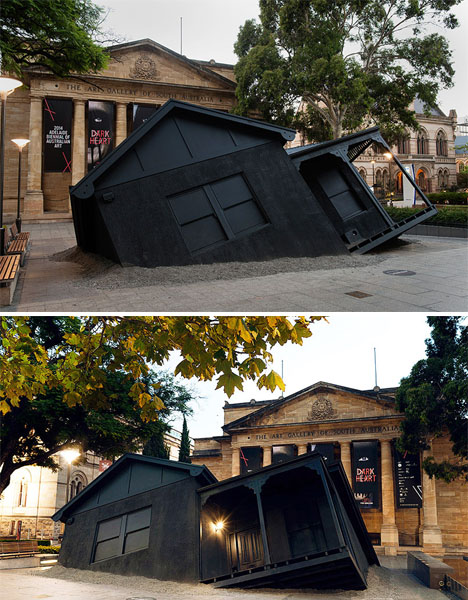
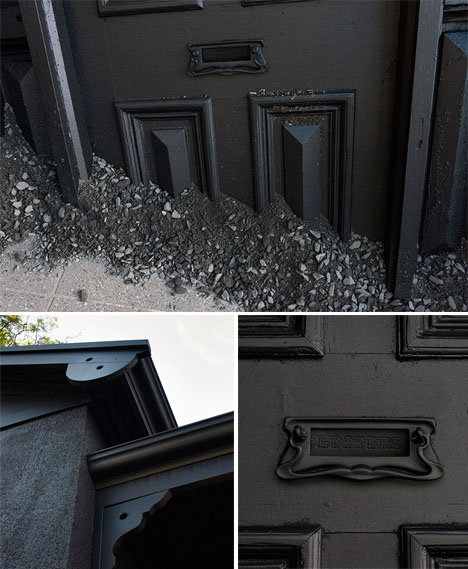
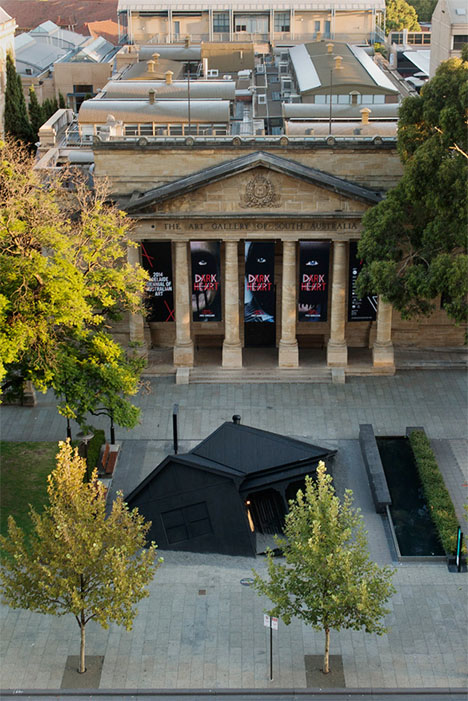
The childhood home of artist Ian Strange has literally landed right in front of the Art Gallery of South Australia as if it were picked up by a tornado and plunked there, Wizard of Oz style. The striking matte black structure is a detailed recreation of the 1920s suburban Australian home Strange grew up in, down to the scrolled ornamentation on the porch and a spigot clinging to one exterior wall.

Landed Installation Ian Strange 2

Installed for the 2014 Adelaide Biennial of Australian Art, the installation makes an intentional reference to Dorothy’s Kansas home and the jarring visual of it crashing in a place where it doesn’t belong.

Landed Installation Ian Strange 3

This visual is a nod to both the continued intrusion of Western pop culture into Australia, and the disconnected nature of suburbia, a recurring theme in Strange’s work.

Landed Installation Ian Strange 4

Strange previously explored the suburban house as a cultural icon in his series SUBURBAN, which involved drastically altering homes that were set for demolition and then burning the down, filming the entire process.

Share on Facebook


[ By Steph in Art & Installation & Sound. ]

[ WebUrbanist | Archives | Galleries | Privacy | TOS ]


WebUrbanist

 
Comments Off on Not in Kansas: Black House Lands in Front of Oz Museum

Posted in Creativity


How to Help Your Clients Feel Comfortable In Front of Your Camera

09 May

Introduction

This article is an excerpt from the newly released and critically acclaimed Natural Light Couples Photography Workshop by SLR Lounge. This 8 hour workshop on DVD has been designed from the ground up to teach photographers how to create professional portraiture using just a camera, reflector and their creative eye. Master planning, posing, lighting, shooting and post producing beautiful natural light portraiture in this gold standard workshop. Learn more by clicking on any of the links above, or at the end of this article.

Article Overview

If you have ever shot portraiture, then you probably know how difficult it can be to get your subjects to be comfortable when in front of the camera. Probably one of the biggest challenges in creating a great portrait is getting your subject to emote the types of expressions that you want for your imagery. It is a challenge that every portrait photographers will face virtually on every single shoot, which is why it is such a large area of focus in our workshop.

We have found that the majority of people have a hard time in front of your camera for two primary reasons. If you can address and resolve these two issues, then you will immediately find an improvement in the emotion you are capturing within your subjects and images.

So, let’s jump in and discuss these two issues and how we can resolve them.

Reason 1. Clients Lack Basic Posing Experience

Professional actors and models are comfortable with being in front of a camera because for the most part they know how to act/pose in front of a camera. But, let’s be honest, as portrait photographers, the majority of our clients are going to be people that aren’t professional actors and models.

Instead you will generally have clients with little or no experience at all in front of a camera. Due to this lack of experience, your subjects are naturally going to be nervous because they do not know how to pose or what looks good in front of a camera.

The beginning of every shoot for our studio, Lin & Jirsa Photography, starts the exact same way. We start each portrait session by teaching our clients several simple posing techniques. We refer to our posing system as “Foundation Posing Framework” and we teach it extensively on the Natural Light Couples Photography Workshop and all the images that we will be showing here are from the workshop.

Now, when we instruct clients, we are avoiding a lot of the details and technical explanations. What we are doing, is simply giving them a foundation of what to do in general when posing. This Foundation Posing Framework creates a simple and common set of posing vocabulary making it incredibly simple to communicate poses to your subjects.

When starting the instruction, I ask my clients, “Have you ever wondered why celebrities always look good when they pose on the red carpet? It’s cause they know the posing basics! Do these things, and all your friends will wonder why you guys are so photogenic in every photo you take.”

Before teaching them the basics, I generally will take a quick photo of them. Once they have learned the basics, I take another portrait simply with the intent of showing them how big of a difference the posing tips made, and how great they look in the photo. Virtually every time my clients see that first great looking shot, they immediately and visibly relax. They now know that look great, and that they can rely on you, as the professional, for posing instruction. At this point, I remind them that I will be helping pose them throughout the shoot, so they don’t need to feel like they have to remember everything they just learned.

01-lack-of-experience

Now this entire process only takes about 10 minutes. You will not only start capturing better photos and expressions from the start of your shoot, you will also find that about half way through a portrait session, your clients will start doing all the posing on their own! All you have to do is use keywords from the Foundation Posing Framework and say, “V-up and look at each other” and boom, they do it all by themselves!

02-lack-of-experience

Reason 2. Your Clients Don’t Know You Yet

The second reason reason why your clients will feel awkward during the photo shoot is really common sense. It is simply because they are not comfortable with you yet. Hence, they will be more reserved with their emotions, (especially if they have just barely met you for the first time!) making it difficult to capture natural and genuine expressions.

The bottom line is that you will have to connect with your clients in a personal way, as quickly as possible, and have more than just a surface level “photographer-subject” relationship.

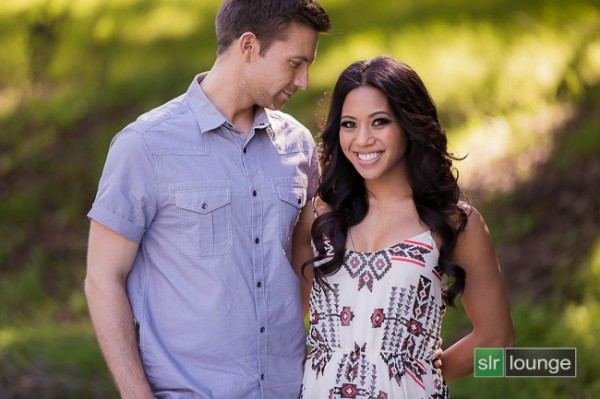
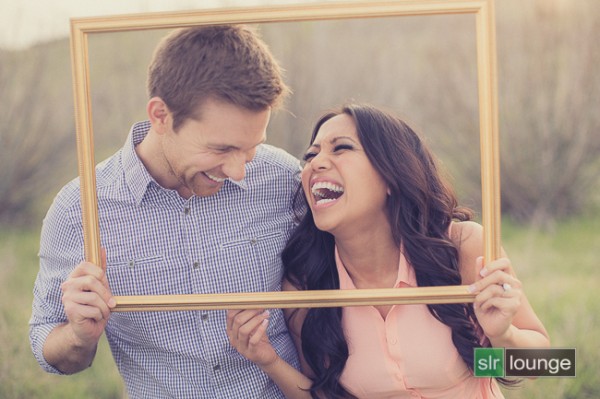
On the Natural Light Couples Photography Workshop, we show a lot of the interaction that I have with Ryan and Jackie. Ryan and Jackie are our actual clients, and this is my first time shooting them. So you can literally watch me build up this relationship during the shoot as I joke around and have fun with them.

Since each photographer has their own personality and shooting style, they will connect with their clients differently. I tend to joke around a lot with my clients, self-deprecate, poke fun, tell stories, etc. Anything I can to help them feel like I am their friend, not just their photographer.

Interestingly enough, I find that if I focus on the guy, making sure he is having a good time, the girl is quick to relax as well. This is because in general, we have found that guys generally are not into taking photos. Instead, the guy is going along with it essentially as a “favor” and the girl is constantly worrying about whether he is bored, having fun, acting natural, etc. So, once the guy is having a good time, the girl stops worrying about him and relaxes as well.

03-they-dont-know-you

04-they-dont-know-you

When Working with Solo Subjects Repeat Everything Above

The same rules still apply when shooting a subject solo, whether it is for portraiture, editorial or fashion. Prior to the photo shoot, we talk about everything except for photography with the client. Instead, get to know your client and just have a good time. This conversation before the shoot helps to break the ice and will make your client feel comfortable during the shoot since your client will look at you as more of a friend, a real person, and less as a photographer.

Once you start the shoot, remember to still coach your subject and show them some shots taken at the very beginning of the shoot. Seeing great photos of themselves right at the start of the shoot will again help them to realize they already look great, so they can relax and have a good time.  

If they point out something that they don’t like in your initial photos, you can keep that in mind throughout the rest of the shoot and maybe show them images again here and there to make sure they are happy with the photos.

Conclusion & Learn More!

If you are interested in learning more, join us on the Natural Light Couples Photography Workshop. This 8 hour workshop on DVD teaches photographers how to create professional portraiture using just a camera, reflector and their creative eye. We cover how to:

1. Plan and prepare a moodboard with clients
2. Pose and instruct clients using the Foundation Posing Framework
3. Modify and perfect the scene’s natural lighting with a simple reflector
4. Work through 5 different scenes and locations utilizing different set props and activities
5. Compose and shoot consistent, creative imagery
6. Post produce a professional final product

Learn more by Clicking Here.

Post originally from: Digital Photography Tips.

Check out our more Photography Tips at Photography Tips for Beginners, Portrait Photography Tips and Wedding Photography Tips.

How to Help Your Clients Feel Comfortable In Front of Your Camera


Digital Photography School

 
Comments Off on How to Help Your Clients Feel Comfortable In Front of Your Camera

Posted in Photography