RSS
 

Posts Tagged ‘from’

Beautiful photos from 1942 show the making of the New York Times

11 May

$ (document).ready(function() { SampleGalleryV2({“containerId”:”embeddedSampleGallery_4390151446″,”galleryId”:”4390151446″,”isEmbeddedWidget”:true,”standalone”:false,”selectedImageIndex”:0,”startInCommentsView”:false,”isMobile”:false}) });

Publishing has come a long way since the mid twentieth century. What was once a herculean task putting together each individual page of a newspaper has largely been replaced by click-and-save web publishing.

So when we came across a curated set of images on Mashable, pulled from the Library of Congress, we were instantly mesmerized by the beauty and complexity of a daily paper’s production. These images were all shot during the course of one night of production in the New York Times’ Manhattan office in the Fall of 1942. The photographer, Marjory Collins, worked for the War Information office.

What’s particularly interesting about these images, aside from the daunting physical labor required to publish, is the stories of the day. September 1942 was smack in the middle of World War II and news in that day’s paper focused on fighting in both Europe and the Pacific.

See all the full gallery of images here.

Articles: Digital Photography Review (dpreview.com)

 
Comments Off on Beautiful photos from 1942 show the making of the New York Times

Posted in Uncategorized


From the forums: Starry skies time-lapse

08 May

Longtime DPReview member Tanveer, whose username is tsk1979, created this beautiful time-lapse over the past two years, mostly with a Sony a7 mirrorless camera. The video includes the summer Milky Way, the winter Orion, Andromedia in the North and Sagittarius in the South.

So throw on a pair of headphones, dim the lights and take a few minutes out of your day to immerse yourself in the night sky. Also be sure to check out Tanveer’s image galleries and Facebook photography page.

Articles: Digital Photography Review (dpreview.com)

 
Comments Off on From the forums: Starry skies time-lapse

Posted in Uncategorized


Here’s how much it would actually cost a pro to switch from Canon to Sony

25 Apr
Read on for a non-scientific look at the cost of switching from Canon to Sony. Note: you’ll need a lot more cash than shown here.

The Sony a9 is here and with the ability to shoot 20 fps with AF-C, it’s likely to make a lot of sports photographers curious about switching to the Sony mirrorless system. We’re already impressed as heck. After all, it is meant to face off directly with the Canon 1DX II and Nikon D5. 

We’ve talked about the structural considerations that may prevent some working pros from switching systems. But let’s imagine that those logistical concerns aren’t a problem, or you’re a freelance photographer who isn’t working with an employer’s supply of lenses. What would it actually cost in dollars and cents to switch systems?

We surveyed four Seattle photojournalists and found out what equipment they consider essential on assignments. Interestingly, their kits all consisted of a lot of the same gear and all four shoot Canon. Once we got a sense of what goes into a pro’s bag, we estimated what kind of money that kit might fetch if it were to be flipped. Finally, using our grand total, we looked at how much kit they could replace if they went Sony.

Before diving in, it is worth noting that switching brands is never a cost-effective move. And someone truly considering making the move from Canon to Sony, or Nikon to Canon, or Nikon to Sony, can assume a loss going in. Also all pricing estimates are current as of publishing, but are subject to change with time.

In the bag: the ideal kit

Below we’ve listed out a sports photography kit based on our feedback from working photojournalists. All four photographers shoot with two bodies minimum, and occasionally use a third. Interestingly, none have upgraded to the Canon EOS-1D X Mark II or 5D Mark IV, though for the ‘Value if purchased new,’ column we used the price of the latest version of each camera, since that’s what they’d likely buy, if anything needed replacing.

We look to used camera retailer KEH for pricing estimates. Note: selling used gear is not an exact science – you might be able to get more or less depending where you sell – but KEH tends to be a good industry standard. And for the sake of simplicity, we assumed all gear is in well-used but working condition (KEH calls this category ‘Excellent,’ just below ‘Excellent Plus’ and ‘Like new minus’). Below we’ve broken down the payout for the whole haul of gear, plus the cost if purchased new for comparison.

  Estimated value on KEH (w/ accessories) Value if purchased new
Canon 1DX (x2)  $ 2000 x2 $ 6000* x2 (1DX II)
Canon 5D Mark III   $ 1200 $ 3500* (5D IV)
Canon 35mm F2 IS  $ 275 $ 550 
Canon 85mm F1.8  $ 200 $ 350
Canon 135mm F2  $ 500 $ 1000
Canon 16-35mm F2.8 III  $ 1030 $ 2000
Canon 24-70mm F2.8  $ 435 $ 1700* (version II)
Canon 70-200 L IS II $ 1030 $ 1900
Canon 300mm F2.8 IS II  $ 2950 $ 6100
Canon 580 EX II  $ 140 $ 480* (600EX)
Canon LP-E6N battery (3)  $ 0 $ 65 x3
Canon LP-E4N (2)  $ 30 x2 $ 165 x2
Grand total:  $ 11,820 $ 30,105

*This number reflects the price of upgrading to the latest version of each piece of gear 

Wowza that’s a lot of kit. For the most part we’re looking recouping less than half the new value for each lens sold used (ouch!). So with $ 11,820 in pocket, how much kit could be bought back in Sony gear? Read on…

Making the switch

It isn’t completely fair to price it out what previously was used equipment against brand new Sony gear. So to make things more even, we’ve included new and used prices where applicable.

“There is no exact replacement for each
piece of kit.”

Also important: the Sony FE system is nowhere near as vast as the Canon EF lens family and as such, there are not exact replacements for each piece of kit, something you can read more about in our recent article Sony a9: Why being better might not be enough.

One example of this: all four photographers mentioned using a prime tele – either a 300mm F2.8 or 400mm F2.8 (we used the former in our example). Sony does not yet have a 300mm F2.8 – the closest lens they make is the new 100-40mm F4.5-5.6, which is far from a perfect substitute. We’ve included it in our chart below, but this lack of long primes is certainly something that may keep sports shooters from switching.

 Equivalent Sony gear  Estimated price new Estimated price used if applicable
Sony a9 (x2)  $ 4500 x2  n/a
Sony a7II  $ 1550 $ 1200 (Ebay)
Sony 35mm F2.8  $ 800 $ 620 (KEH)
Sony 85mm F1.8  $ 600  n/a
Sony Zeiss Batis 135mm F2.8 $ 2000  n/a
Sony 16-35mm F4 ZA OSS $ 1350  $ 790
Sony 24-70mm F2.8 GM  $ 2200  $ 2000 (KEH)
Sony 70-200mm F2.8 GM  $ 2600 n/a
Sony 100-400mm GM  $ 2500  n/a
Sony HVL-F60M flash  $ 550  n/a
Sony a9 vertical grip  $ 350 x2  n/a
Sony NPFW50 battery (3)  $ 50 x3  n/a
Sony a9 battery (2)  $ 80 x2  n/a
Grand total:  $ 24,160  $ 22,870

Full system switch

Using our example, the cheapest one could go full-on Sony, with most of the same kit is $ 22,870. After applying the $ 11,820 discount from having sold off all the Canon equipment, a photojournalist would still have to cough up about $ 11,050 to make the switch. Or they could simply take that $ 11,820 and buy a couple of a9 bodies and maybe a lens.

“A photojournalist would still have to cough up about $ 11,050 to make the switch.”

But wait…

Although there’s a drop in performance and features when using Canon glass on a Sony a9 with adapter, for some photographers this lower performance level may still be sufficient (at least in the short term). In that case our photojournalists would only need to switch their cameras, batteries and flashguns.

Just swap the bodies

Two Sony a9 bodies with grips, and a used a7 II with batteries and flash would cost about $ 11,760 plus another $ 800 for two metabones adapters bringing the grand total to: $ 12,560. If our photojournalists were to sell their Canon bodies and accessories to KEH, it would put $ 5,400 in their pocket, meaning they’d have to shell out about $ 7,160 to make the switch. This doesn’t sound quite so bad. Another option would be to simply switch one body for the Sony a9 to get the fast burst rate, and hang onto the rest of the gear.

“Another option would be to simply switch one body for the Sony a9 to get the fast burst rate, and hang onto the rest of the gear.”

On the other hand, if or when our photojournalist upgrades to the latest versions of their camera bodies – having sold their current models and used the cash to step up – it would cost $ 10,300 to make the upgrade to two 1DX II and a 5D IV, so that cost is probably waiting for them at some point down the line.

Notably, if they were starting fresh with a new system, the cost of entry is somewhat similar: $ 30,105 for the full kit in Canon and $ 24,160 for the kit in Sony. However, these numbers are skewed by the fact that we are comparing a $ 6100 Canon tele prime to a $ 2500 Sony tele zoom. If we ignore those two, the price difference is even closer: $ 24,005 for the Canon sports kit and $ 21,660 for the Sony.

The takeaway

Switching systems is a headache and sports photography gear is crazy expensive. Like cars, cameras lose a lot of value as soon as they go from ‘new’ to ‘used’ condition – essentially, as soon as you take them home from the store. Not for nothing are most pro photographers familiar with the concept of depreciation from their tax returns.

It’s hard to say whether sports photographers or publications out there are considering making a switch to the Sony system with the introduction of the a9. The four photojournalists we spoke with all seemed intrigued by what it offers, though. Whether they’d actually considering switching is another story.

“Switching systems is a headache and sports photography gear is crazy expensive.”

One thing is for certain: Sony is pushing deep into territory previously only inhabited by Canon and Nikon and it is only a matter of time before making the switch to mirrorless doesn’t seem so crazy – even for pro sports shooters. Then again, the camera is only one part of the equation. A 20 fps bursts with continuous AF and no black out seems nice, but if you don’t have the right glass for the job, that spec won’t get you far.

Articles: Digital Photography Review (dpreview.com)

 
Comments Off on Here’s how much it would actually cost a pro to switch from Canon to Sony

Posted in Uncategorized


Personal Photo Gifts for Mom from Parabo Press

24 Apr

Turn your photos into amazing Mother’s Day gifts, that will certainly make you the golden child in your mother’s eyes.

With our Parabo Press app, it’s easy to order up the perfect Mom’s Day surprise made with the photos right there on your phone.

Organize your photos on your compy? No sweat. Order up a gift from the Parabo website.

Either way, Mom will love it!

Plus, you’ll save 20% on your gift with the coupon PJMOM, now through Parabo’s standard shipping Mother’s Day order deadline 5/3.
(…)
Read the rest of Personal Photo Gifts for Mom from Parabo Press (22 words)


© laurel for Photojojo, 2017. |
Permalink |
No comment |
Add to
del.icio.us

Post tags:


Photojojo

 
Comments Off on Personal Photo Gifts for Mom from Parabo Press

Posted in Equipment


National Geographic and NASA celebrate National Parks with images from space

22 Apr

$ (document).ready(function() { SampleGalleryV2({“containerId”:”embeddedSampleGallery_5505857540″,”galleryId”:”5505857540″,”isEmbeddedWidget”:true,”standalone”:false,”selectedImageIndex”:0,”startInCommentsView”:false,”isMobile”:false}) });

If you’re unable to take advantage of free National Park entry this weekend, you can still enjoy the grandeur of some of the US’s best-loved National Parks thanks to National Geographic and NASA. To celebrate National Parks week they’ve published some of their favorite photos of parks – from space.

We were pleased to discover that Grand Prismatic looks just as colorful from space as it does from the ground. Maybe we can keep it that way if we don’t trample all over it, hmm?

Take a look at a few of the images above and see more over at National Geographic Travel.

Articles: Digital Photography Review (dpreview.com)

 
Comments Off on National Geographic and NASA celebrate National Parks with images from space

Posted in Uncategorized


Nikon D7500: Should I upgrade from my D7200?

17 Apr

D7500 vs D7200

The D7500 is Nikon’s latest enthusiast DSLR that gains a handful of components and refinements from the higher-end D500. However, it’s also a model that loses a couple of features in order to leave a more decisive gap between the two models.

So where does that leave existing D7200 owners? It’s fairly unusual for successive models to offer enough of a change to provide a significant upgrade, so does the D7500 do that? For that matter, should would-be buyers try to pick up the last of the D7200s, while they’re cheap?

Image quality

For all the hoopla about better image quality, we’ve seen little significant difference between this 20MP chip (when it appeared in the D500) compared with the 24MP sensor in the D7200. The differences that do exist become visible in side-by-side comparison at extremely high ISO settings, but don’t expect a significant uptick in noise or dynamic range performance in return for the slight cut in resolution.

The D7500’s highest native ISO rises by 1EV and its extension settings keep going to a dizzying Hi 5, which is equivalent to ISO 1.6 million (I’m not going to speculate about how Nikon’s engineers celebrated when they achieved this milestone), but the main benefits of this chip appear to be readout speed, rather than significant differences in image quality.

Autofocus improvements

For us, one of the most significant factors will be how closely the D7500 can match the D500’s autofocus. It gains the much higher resolution metering sensor used for subject tracking, along with nominally the same processing (though Nikon’s Expeed naming system doesn’t necessarily mean they have the same chip).

However, the D7500 doesn’t gain the AF module from the D500, which means it can only offer 51 AF points (15 of which are cross-type), rather than 153 points, 99 of which are cross-type. This also means it misses out on the incredibly broad AF coverage that the D500 offers.

Even so, the processing and meter module should ensure the autofocus and, in particular, the subject tracking, works better than the already rather good D7200. It remains to be seen whether it can match the uncannily good performance of the D500.

Autofocus auto fine-tune

One of the nice features to make its way down to the D7500 is the Auto AF fine-tune system. This allows you to set the focus precisely in live view such that the camera can then check this against the results of its separate phase detection AF module. Any difference is captured as a correction value.

This is a useful addition since it allows the user of the camera to calibrate their lenses without the considerable degree of trial and error required with the D7200’s AF fine-tune system (which essentially required that you guess and check a correction value).

The autofocus fine-tune system isn’t a panacea: it applies a single correction value for all focus points, so will not necessarily improve the performance of off-center focus points, which tend to be less reliable, particularly with lenses that exhibit spherical aberration.

High-speed shooting

Obviously the biggest change with the D7500 is the move from six frame per second to eight frame per second shooting. This isn’t a match for the D500’s 10 fps shooting but it’s likely to be enough for a lot of people. Hell, this is around the level of performance that the world’s best sports shooters used around 2005.

As well as 8 fps shooting, the D7500 has a buffer nearly three times deeper than the D7200’s. 50 uncompressed 14-bit Raws in a burst is likely to be enough for all but the most demanding action shooters.

4K Video

The D7500 brings 4K UHD video recording and, assuming it looks like the D500’s output, it’s pretty good. It’s taken from a 1.5x crop of the sensor, meaning it’s using sub-Four Thirds sized sensor region, which means you won’t get the ‘Super 35’ style noise or depth-of-field characteristics that other APS-C cameras can offer. The significant crop also means your lenses will offer a significantly less wide field of view when shooting. A standard Nikon 18-something DX zoom will start at a fairly restrictive 40mm equivalent field of view.

Just as significantly as the addition of 4K is the gain of power aperture, which means you can change aperture in live view mode on the D7500. On the 7200 it’s a dance of dropping out of live view, changing the aperture and then jumping back in again, with no way at all to change it once you’ve hit REC.

Backwards compatibility takes a step backwards

The D7500 also loses a little in the way of backwards compatibility. Nikon has tried to keep its F mount as backwards compatible as possible, even as it’s added more modern features. The D7X00 series has, for some time now, been the lowest level of Nikon to retain a screw drive for older AF-D lenses but the D7500 sees another small element of compatibility chipped away. Specifically, the tab that checks what aperture old ‘AI’ lenses are set to (pictured, center) has been removed, meaning the camera can only use manual exposure mode with these lenses, with no aperture priority option.

For most users, this is likely to be irrelevant (manual focusing using the viewfinder focusing screen of a DX DSLR isn’t the most life affirming process), but it does mean anyone with an older lens collection will need to think about the D500 as their next step, and it’ll be another factor to consider when scouring eBay.

SnapBridge

The D7500 gains the SnapBridge system that uses a constant Bluetooth LE connection to auto-transfer 2MP images or keep the hailing frequencies open for when you want to use Wi-Fi.

We remain unconvinced by SnapBridge, especially in terms of what it offers the higher-end, more shutter-button-happy user, but it’s not necessarily worse than the D7200’s system. That may sound like damning with faint praise but, until Nikon develops more distinct ways of using SnapBridge, we feel it’s better suited to the D5600 user than it is to the more demanding enthusiast user of the D7500.

Still, the D7500 does gain a batch in-camera Raw conversion system, which we’re hoping will work well in conjunction with SnapBridge to provide an effective Raw + Wi-Fi workflow. Time will tell.

Flip-up touchscreen

The D7500 gains a flip-up/down touchscreen. The flip screen is likely to be handy for video shooting but, with underwhelming video autofocus and no sign of the D5600’s ability to use the rear panel as an AF point touchpad, we don’t think the touch sensitivity of the screen is less exciting. Sure, the D5600’s touchpad implementation only really worked for photographers who put their right eye to the viewfinder, but that at least made it a major benefit for those users.

The LCD panel itself has also changed, but don’t read too much into the lower dot count. The new panel may only be 922k dots, rather than 1.2 million, but the difference is that there is no longer a white ‘dot’ making up each pixel: they’re both displaying 640 x 480 pixels.

Battery life/battery type

The D7500’s battery life rating has fallen 15%, compared with the D7200, presumably as a result of the demands of the faster processor and possibly less energy-efficient screen.

It uses a new version of the EN-EL15 battery called the EN-EL15a. Other than coming in a lighter grey plastic case, Nikon was unable to give specifics about what’s changed. Our assumption is that it’s just Nikon making it easier to distinguish between the newest versions of the EN-EL15 and the older ones which don’t seem to get on with its newest cameras.

However, this is where you see another attempt to put more clear water between the D7500 and the D500: the 7500 no longer has a port for connecting to a battery grip. So you’ll need to stick with your D7200 or jump to the D500 if you regularly shoot beyond the capacity of a single battery or appreciate the improved ergonomics for portrait orientation shooting.

Is this really the D7200 replacement?

Yes. Absolutely.

While it’s true that the D7500 isn’t a step up from the D7200 in every last respect, it follows the D7X00 pattern in every way that matters. Twin dials, screw drive, large prism viewfinder and comparable price point. Nikon will, naturally, say that the D7200 and D7500 will sit alongside one another, but that’s what manufacturers say to avoid devaluing any stock left in retail channels.

However, it’s important to bear in mind that when the D7200 was launched, it sat at the top of Nikon’s DX lineup, whereas the D7500 has to slot in beneath the D500. Inevitably that means some users will be better served by stepping up a tier, but we don’t think it’ll inconvenience a significant number of users. 64, 128 or 256GB cards offer plenty of capacity and card errors are rare enough that a second card slot isn’t a vital feature. The D7500 is still a camera that shoots faster and for longer, and can capture better video than its predecessor, so it’s not like Nikon’s evil marketing department has left would-be D7X00 users out in the cold.

Should I upgrade?

To a large extent, the degree to which we’d recommend upgrading from the D7200 to the D7500 will depend on how its new AF system performs. If you’ve already been thinking about a camera with faster performance, though, then take a look at our D500 vs D7500 comparison: the D500 will give you a bigger performance boost.

If your needs are less action driven, it’s a much harder call and, unless the AF performance turns out to be great, the answer has to be that it’s probably not worth it. However, if you own a D7000 or even a D7100 that’s starting to show its age, the D7500 offers a host of benefits, not least better dynamic range, faster shooting and a much deeper buffer.

Overall, then the D7500 isn’t better than the D7200 in every respect, but it’s at least a little better in most of the ways that will matter to most people. But, while the last of the D7200s are available at end-of-life prices, it’s worth thinking about how much the extra features are worth, to you.

Articles: Digital Photography Review (dpreview.com)

 
Comments Off on Nikon D7500: Should I upgrade from my D7200?

Posted in Uncategorized


Ultra large and custom film sizes now on order from Ilford Photo

06 Apr

UK black and white film manufacturer Harman Technology has announced that its annual large format and custom film ordering scheme is open from now until May 26th. The scheme allows users of cameras that take unusual film formats to order certain Ilford emulsions within a set window so the company can set aside factory time to bulk-produce formats it wouldn’t otherwise be able to make financially viable.

As was the case last year Ilford FP4 Plus, HP5 Plus and Delta 100 emulsions will be available to order in sheet sizes from 2.25 x 3.25in to 20 x 24in. Rolls are also on offer for 127 film and formats 9cm wide, as well as 50 foot rolls of 20in film. Not all emulsions can be ordered in all formats but most of the more popular formats are covered. 120 backing paper can be ordered in 100ft lengths.

Harman says there are minimum order quantities that need to be reached before manufacturing can go ahead, but in the case of the sheet films usually a single order of a box of 25 sheets is enough. Roll films though need between 2 and 15 orders to make them practical to cut.

The company lists retailers across the world with which orders can be placed and the sizes/emulsions on offer. Prices will need to be checked with those retailers. Shipping to distributors will begin in August 2017. For more information see the Ilford Photo website.

Press release

ILFORD PHOTO ULF, CUSTOM & SPECIALIST FILM MANUFACTURE 2017

Buoyed by ongoing global resurgence in photographic film use, HARMAN technology Limited is delighted to be offering film photographers the opportunity to place orders for a range of specialist film products and formats for the 12th consecutive year.

To enable this film photography revival, it is vital that a wide range of film formats are available including film for ultra large format and collectable cameras.

By consolidating orders HARMAN technology can supply products that would not normally be viable to manufacture.

“This program enables us to further support film photographers who use and value our conventional products” said Giles Branthwaite, Director of Sales and Marketing at Harman technology. “Through running the ULF program each year, we are able to satisfy the strong demand for specialist film formats. Whilst manufacture is not easy, we have been rewarded by high demand ensuring we will continue to address and care for this market.”

Films available for this year are ILFORD FP4 PLUS, HP5 PLUS, and DELTA 100 PROFESSIONAL. Not all films are available in all formats.

For a full list of the 2017 items and participating dealers visit:
http://www.ilfordphoto.com/ulf

The options available reflect what has been asked for over the past 12 years. HARMAN technology is happy to consider any other size suggestions but do not guarantee to make them available.

For sheet sizes an order for just one single box can be made, but for roll sizes this is not possible due to potentially excessive waste. Please see the minimums and multiples required next to the appropriate roll size.

Note:
Orders must be placed with the listed ULF reseller partners no later than Friday 26th May.

The UK factory will start to ship orders to Distributors during August and end users should check with the local ULF reseller for expected arrival dates.

Articles: Digital Photography Review (dpreview.com)

 
Comments Off on Ultra large and custom film sizes now on order from Ilford Photo

Posted in Uncategorized


The ‘Crapinon’ is a 135mm lens made from discarded parts

04 Apr

You know what they say about one man’s trash. Well, lens enthusiast and freelance video producer Mathieu Stern took the phrase to heart when he found an old lens tube at his local flea market. It was in a box of unsold items destined for the trash when he rescued it and gave it a new life. With the addition of an ND M42 to NEX adapter, M42 tubes and a couple of rubber bands, the ‘Crapinon 135mm’ was born. 

$ (document).ready(function() { SampleGalleryV2({“containerId”:”embeddedSampleGallery_8949319656″,”galleryId”:”8949319656″,”isEmbeddedWidget”:true,”standalone”:false,”selectedImageIndex”:0,”startInCommentsView”:false,”isMobile”:false}) });

Stern admits that the lens isn’t too sharp, as you’d expect, but it does work. See some of his sample images above. You can see more of his work at his YouTube channel and his website.

Articles: Digital Photography Review (dpreview.com)

 
Comments Off on The ‘Crapinon’ is a 135mm lens made from discarded parts

Posted in Uncategorized


Nikon centralizes optical engineering departments from across the business

04 Apr

Nikon Corporation has announced that it is to bring all of its optical engineering facilities under one roof with the establishment of a single division to service the needs of the whole organization. The plan aims to centralize the company’s optical skills from each of its business units so information, technology and knowledge can be shared to make the whole company more effective. The Optical Engineering Division will be under the control of the main Nikon company, Tochigi Nikon Corporation.

The creation of the new division is part of Nikon’s restructuring plan that has seen concerted efforts to streamline the business after its previous restructure didn’t produce the results it needed. Nikon says that optics are its principle strength and this reorganization will help it to make the most of its resources. There is also a suggestion that having all the optical engineering in one place will help the company respond to variances in demand for certain products, which may help to elevate shortages of new releases.

Press release

Establishment of the Optical Engineering Division, aggregating all optical engineering functions to create new value

Nikon Corporation (Kazuo Ushida, President, Tokyo) announced today that the establishment of the Optical Engineering Division on April 1, 2017. Aggregating all the optical engineering functions distributed in each division is intended to create a synergistic effect and enhance multifunctionality, as well as enabling flexible deployment of resources to the area as necessary so as not to miss any business opportunity.

This new Optical Engineering Division is an organization that aggregates lens, mechanical and system engineering functions related to optical equipment and optical solutions. Superior technology and knowledge with respect to optical engineering maintained in each division will now be accumulated and evolved in the Optical Engineering Division to develop optical products that create new value.

In our restructuring plan, announced in November 2016, we decided to restructure our group companies to enhance manufacturing technology of optical components that are our core competence and a differentiator from our competitors. All the functions related to the manufacturing technology of optical components, which were previously owned by Nikon Corporation and our group companies, have now been brought together at Tochigi Nikon Corporation, our consolidated subsidiary, which started operation on February 1, 2017.

In addition to these advances for manufacturing technology of optical components, the newly established Optical Engineering Division will further improve our greatest strength, optical technology, by aggregating optical engineering functions, thereby helping to maximize our products’ competitiveness.

Articles: Digital Photography Review (dpreview.com)

 
Comments Off on Nikon centralizes optical engineering departments from across the business

Posted in Uncategorized


Taking Competition to New Heights: This Skyscraper Dangles from an Asteroid

30 Mar

[ By SA Rogers in Conceptual & Futuristic & Technology. ]

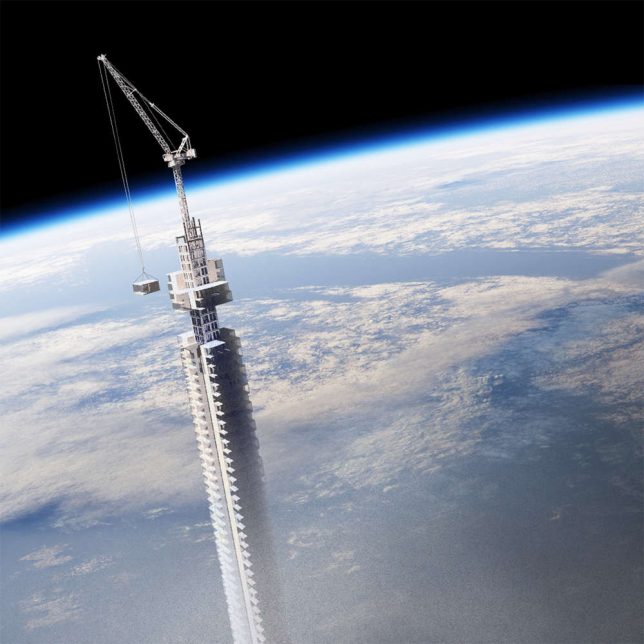
dangling skyscraper 1

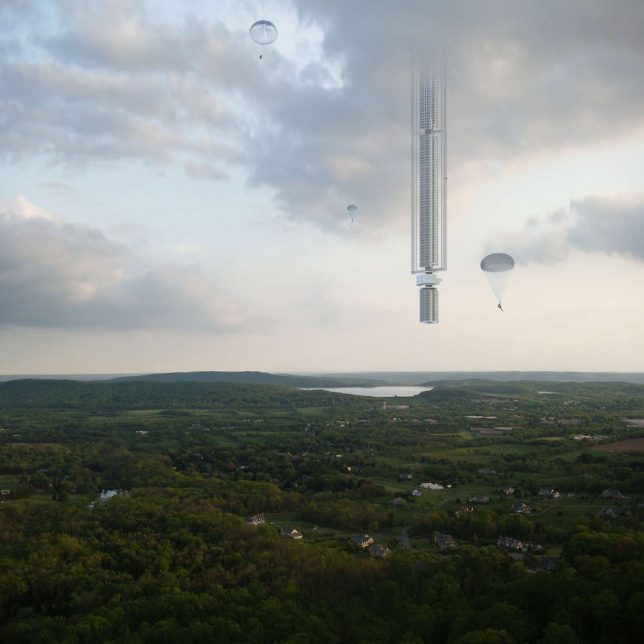
That tongue-in-cheek ‘world’s longest skyscraper’ design we highlighted last week seems totally reasonable compared to a new proposal taking the competition for the world’s tallest structure to absurd heights: The Analemma Tower literally dangles a skyscraper from an asteroid. An actual asteroid, orbiting the Earth. The design is firmly in sci-fi territory, with the renderings resembling matte paintings made for ‘70s and ‘80s movies set in space, but the architects offer details as to how this could actually work.

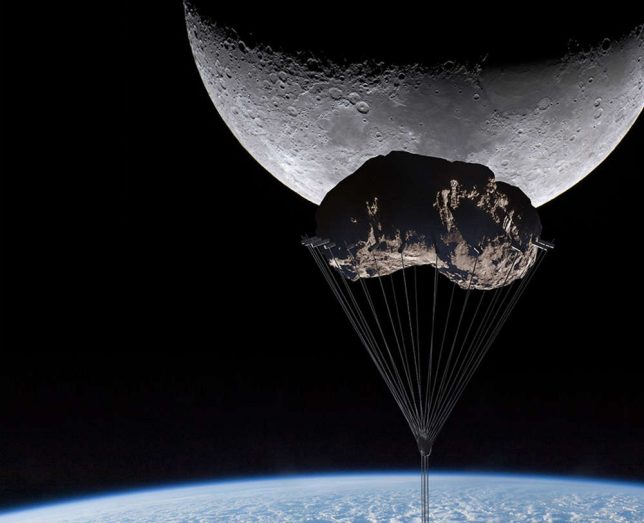
dangling skyscraper 2

Clouds architecture Office envisions a space-based supporting foundation, noting that NASA has planned a 2021 mission to capture and redirect an asteroid. Of course, NASA’s budget is up in the air right now, and who knows what’ll happen to the United States’ space-related endeavors by then. The asteroid would be located about 31,000 miles above the Earth’s surface, with the tower using what the firm calls the Universal Orbital Support System (UOSS) to hang the multi-use tower via super-strong cables.

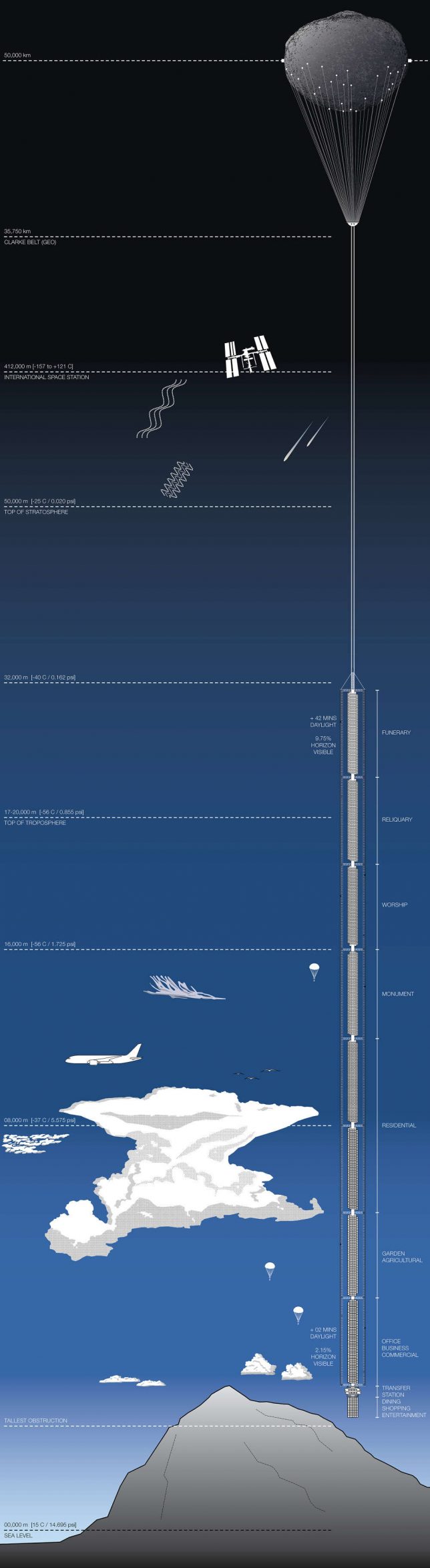
dangling skyscraper 4

The portion of the tower that sticks up above the Earth’s atmosphere will host an extraterrestrial cemetery, with the three sections below it designated for ‘devotional activities.’ The architects say these portions of the tower wouldn’t be attractive to live in due to “extreme conditions,” though they’d benefit from an extra 45 minutes of daylight each day. The residential area is fairly small in comparison, set just above the garden and agricultural section, an area for offices and business activities, and a transfer station with dining, shopping and entertainment options.

dangling skyscraper 5

Analemma would get its power from space-based solar panels, with water filtered and recycled in a semi-closed loop system and replenished with condensation captured from clouds and rain. It could be placed in an orbit allowing it to travel between the northern and southern hemispheres on a daily loop, with its slowest trajectory occurring over New York City so people can get on and off. They go into some detail on these technicalities on their website.

dangling skyscraper 3

“Manipulating asteroids is no longer relegated to science fiction. In 2015 the European Space Agency sparked a new round of investment in asteroid mining concerns by proving with its Rosetta mission that it’s possible to rendezvous and land on a spinning comet. NASA has scheduled an asteroid retrieval mission for 2021 which aims to prove the feasability of capturing and relocating an asteroid…”

“Analemma Tower is a proposal for the world’s tallest building ever. Harnessing the power of planetary design thinking, it taps into the desire for extreme height, seclusion and constant mobility. If the recent boom in residential towers proves that sales price per square foot rises with floor elevation, then Analemma Tower will command record prices, justifying its high cost of construction.”

Share on Facebook


[ By SA Rogers in Conceptual & Futuristic & Technology. ]

[ WebUrbanist | Archives | Galleries | Privacy | TOS ]


WebUrbanist

 
Comments Off on Taking Competition to New Heights: This Skyscraper Dangles from an Asteroid

Posted in Creativity