RSS
 

Posts Tagged ‘Frame’

Tamron officially launches 28-300mm F3.5-6.3 full frame superzoom

20 Jun

28-300-520news2.png

Tamron has officially launched its 28-300mm F/3.5-6.3 Di VC PZD superzoom lens (Model A010) for full frame SLRs. A near-twin of the 16-300mm F3.5-6.3 for APS-C, it’s distinguished from the previous model by featuring an ultrasonic-type ‘Piezo Drive’ autofocus motor, splashproof construction and more-compact design with a 67mm filter thread. It’ll be available in Canon and Nikon mounts on June 26th for $ 849.

News: Digital Photography Review (dpreview.com)

 
Comments Off on Tamron officially launches 28-300mm F3.5-6.3 full frame superzoom

Posted in Uncategorized


Lightweight ‘Airbeams’ Frame Inflatable Geodesic Dome Tent

02 Jun

[ By WebUrbanist in Design & Products & Packaging. ]

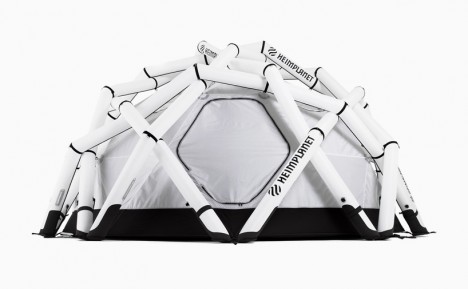
geodesic inflatable tent

Derived from crystal structure of diamonds and geodesic domes of Buckminster Fuller, these all-weather structures are astonishingly strong but incredibly light at the same time.

wedge cave maverick

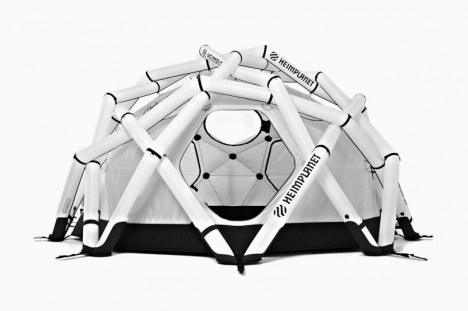
inflatable tent poles design

Created by Heimplanet, the Maverick grew out of a previous iteration, The Cave, which was similarly structured, eschewing solid poles in favor of an impressive custom airbeam system.

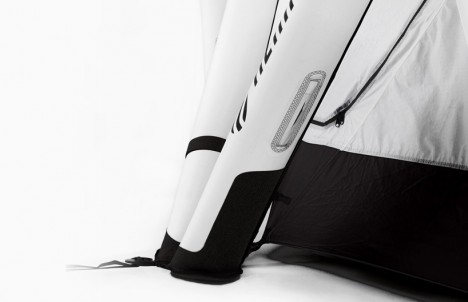
inflatable tent design detail

Made to withstand winds of over 100 miles per hour, each section of the all-weather Maverick can be separated from the next chamber when deployed. As a result, the entire structure can be inflated at once but a failure in one segment does not cause the deflation of the whole.

inflatable tent interior

inflatable tent side tubes

inflatable tent door openin

More about the materials: “The airbeams are built with a resistant double-layer construction: an extra airtight TPU (thermoplastic urethane) bladder keeps the air inside for a long time. An outer jacket made of a high-tenacity polyester fabric ensures extra stability, protection and durability.”

Share on Facebook


[ By WebUrbanist in Design & Products & Packaging. ]

[ WebUrbanist | Archives | Galleries | Privacy | TOS ]


WebUrbanist

 
Comments Off on Lightweight ‘Airbeams’ Frame Inflatable Geodesic Dome Tent

Posted in Creativity


Famatic connects generations through digital picture frame

26 Apr

Screen_Shot_2014-04-23_at_3.41.10_PM.png

A new Kickstarter project is aiming to make digital images more accessible to those without social media accounts. Famatic is a digital picture frame that connects to Facebook and Instagram – or you can email pictures as well. The idea is to place Famatic on your parents’ or grandparents’ mantelpiece and send them images of their grandkids and family events straight to the frame. Learn more

News: Digital Photography Review (dpreview.com)

 
Comments Off on Famatic connects generations through digital picture frame

Posted in Uncategorized


A first look at the Sony Alpha 7S 12MP full frame with 4K output

07 Apr

DSC07571_1_.png

Sony has just announced a 12MP full frame addition to its Alpha 7 series, designed to output 4K footage over HDMI. We’ve just got back from Sony’s press conference at the NAB show in Las Vegas, where we got a chance to see the camera. We hope to get more hands-on in the coming days, but for now, here’s some more details of the Sony Alpha 7S.

News: Digital Photography Review (dpreview.com)

 
Comments Off on A first look at the Sony Alpha 7S 12MP full frame with 4K output

Posted in Uncategorized


Sony announces Alpha 7S full frame mirrorless with 4:2:2 4k video output

07 Apr

ILCE-7S.png

Sony has announced the Alpha 7S, a 12MP full-frame mirrorless camera designed for both stills and video. The camera can read out its entire sensor fast enough to output 8-bit 4:2:2 4k video over HDMI at up to 30p, without line skipping or pixel binning. This also promises higher quality for the 1080p video (at up to 60p) it can record internally. Unlike the a7 and a7R, the latest model is not constrained by the AVCHD standard, also offering the XAVC S system, with bitrates of up to 50Mbps. Details are still being announced: more to follow.

News: Digital Photography Review (dpreview.com)

 
Comments Off on Sony announces Alpha 7S full frame mirrorless with 4:2:2 4k video output

Posted in Uncategorized


Is Full Frame Still the Best?

12 Feb
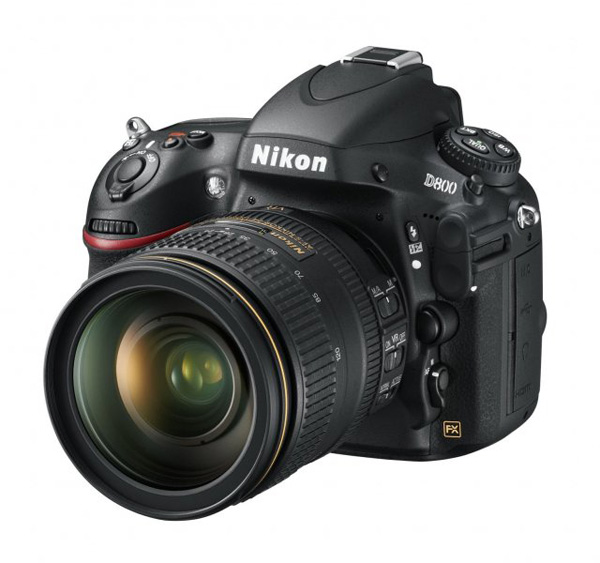
Nikon D800

The Nikon D800, a 36.3 megapixel full frame camera.

For many years photographers have accepted that, when it comes to image quality, a full frame camera beats one with a smaller sensor every time. Let’s look at some of the reasons why.

Advantages of full frame cameras

  • Full frame camera sensors have larger pixels. This means they create images with less noise and all-round better image quality.
  • Full frame cameras usually have more megapixels. While this doesn’t matter to most photographers, it may be useful if your client demands large images or you want to make large prints.
  • There are more wide-angle primes available. If you prefer prime lenses to zooms, you have more choice at shorter focal lengths with a full frame camera.
  • Legacy lenses can be used as intended. If you own a 24mm prime lens that you used with a 35mm film camera, you can use it exactly the same way on a full frame camera. On a camera with a smaller sensor the crop factor means you are effectively using a longer focal length.
  • There is less depth-of-field at any given aperture, and focal length setting, than there is with the equivalent focal length on an APS-C camera. For example, a photo taken at f/2.8 with an 85mm lens on a full frame camera has less depth-of-field than one taken at f2.8 on with a 50mm lens on an APS-C camera even though the field-of-view of both lenses is approximately the same. This is a benefit if you like to create photos with bokeh.
  • The top cameras in a manufacturer’s range are usually full frame. Let’s say you want to buy a durable, weatherproofed, Canon EOS camera, designed to handle everything a professional photographer could possibly throw at it – then you need the EOS-1D X. An APS-C (cropped sensor) version of this camera does not exist.

Portrait taken with EOS 5D Mark II

This portrait was taken with an EOS 5D Mark II. Using a full frame camera helped obtain the out of focus background.

Disadvantages of full frame cameras

Full frame cameras have some disadvantages too:

  • They cost more money than cropped sensor cameras. Larger sensors are more expensive to manufacture, therefore full frame cameras will always cost more than similar models with smaller sensors.
  • Size and weight. Full frame cameras are larger and heavier – they have to be to fit the larger sensor. However, the new Sony A7 and A7R cameras go against this trend.
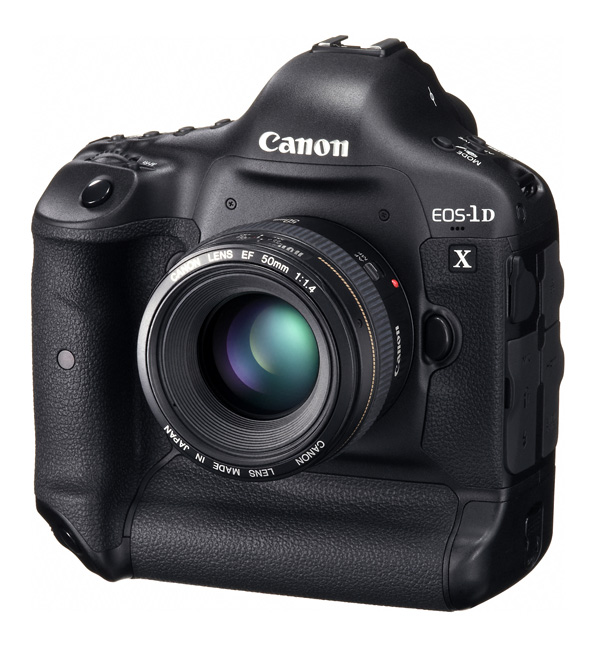
EOS 1D X

The EOS-1D X – Canon’s largest and most expensive full frame camera, designed for professional use. It’s an amazing, high precision camera for the most demanding photographer. But it also shows the main disadvantages of full frame cameras: size, weight and expense.

The rise of the mirrorless camera

If you’re an aspiring pro, you may feel that you need a full frame camera to be taken seriously. In fact, this has never been completely true. There are plenty of professional photographers who use crop sensor cameras. The quality is more than good enough, and if you’re a sports or wildlife photographer you may also appreciate the extra reach that an APS-C camera gives you with telephoto lenses.

So far most of these points apply mainly to digital SLR cameras. But over the last few years we have seen the rise in popularity of mirrorless camera systems (sometimes called compact camera systems). It is easy to see why these are popular. Their small size and unobtrusive design means they are easy to carry while travelling, and less likely to draw attention if you in an area where the locals are sensitive to photographers. Mitchell Kanashkevich has written an excellent article on this topic: Istanbul and My Review of Fuji X100S as has our own Valerie Jardin using the same camera.

Furthermore, the new Fujifilm cameras such as the X-Pro 1 and X100S have garnered a lot of praise for their high image quality, with some reviewers saying it is on a par with that of full frame digital SLR cameras (there is more information on the science behind it here).

Fujifilm X100S

The Fujifilm X100S. This camera has had some very positive reviews. Some photographers are moving away from full frame digital SLRs and towards smaller, mirrorless camera systems.

A new question

It seems to me the question has shifted. We used to ask ‘what camera gives you the best image quality?’ and the answer was inevitably – full frame. Now the question has become ‘which camera is best for me?’ Image quality is only part of the equation, and has become less important as the gap between full frame and crop sensor cameras has narrowed. So if you’re in the market for a new camera here are the things you might want to consider before making a purchase:

  • Budget – this is important for fairly obvious reasons. Don’t be afraid to buy a crop sensor camera if your budget doesn’t stretch to full frame.
  • Existing lens compatibility – If you’re staying within the same camera system, how do your current lenses work with the new camera? Some lenses are designed for crop sensor cameras and won’t work with full frame. Does upgrading to full frame mean that you will also have to spend money on new lenses?
  • Total cost with accessories –  If you’re moving to a new camera system, how much will you need to spend on lenses and other accessories? For example, there are a lot of photographers praising the merits of Fujifilm cameras and writing about making the switch from their current system. But bear in mind these guys make a living from photography and expect to spend a certain amount on camera gear each year. Cameras are tax deductible expenses and this is effectively a discount on new equipment that hobbyists don’t receive.
  • Size and weight – These are important factors if you like to travel with your cameras, but maybe not so important if you take most of your photos locally. Despite the advances in mirrorless cameras the digital SLR design is still the best for most types of photography. The trade-off is size and weight, as digital SLRs are bigger and heavier than other types of camera.
  • Alternative lens options – Do you want to use lenses from other manufacturers or old lenses on your camera? If you’d like to experiment in this area then think about a mirrorless camera system, as most of them have lens adapters that let you use them with a variety of different lenses. This can be a lot of fun and source of experimentation in itself.
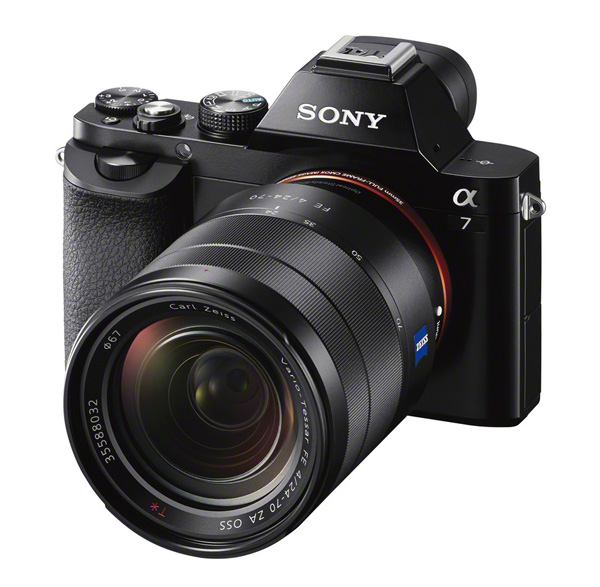
Sony A7

The Sony A7 (pictured) and A7R are the world’s smallest full frame digital cameras with interchangeable lenses.

What do you think?

What are your thoughts on the full frame versus crop sensor debate? Share your thoughts and experiences in the comments below.

More reading on this topic here:

  • Review: Comparison Canon 5D MarkIII vs the Canon 6D
  • The Best and Worst Cameras, Lenses and Video Cameras of 2013
  • All about Gear [Best of dPS 2013]

Mastering Photography
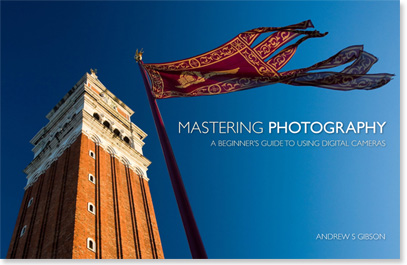
Mastering Photography ebook

My ebook Mastering Photography: A Beginner’s Guide to Using Digital Cameras introduces you to photography and helps you make the most out of your digital camera, no matter which one you own. It covers concepts such as lighting and composition as well as the camera settings you need to take beautiful photos like the one in this article.

The post Is Full Frame Still the Best? by Andrew S. Gibson appeared first on Digital Photography School.


Digital Photography School

 
Comments Off on Is Full Frame Still the Best?

Posted in Photography


Tamron to make new 28-300mm F3.5-6.3 superzoom for full frame SLRs

07 Feb

28-300_news520.png

Tamron has announced that it’s developing a new 28-300mm F/3.5-6.3 Di VC PZD superzoom lens for full frame SLRs. A near-twin of the co-announced 16-300mm F3.5-6.3 for APS-C, it’s distinguished from the current model by featuring an ultrasonic-type ‘Piezo Drive’ autofocus motor, splashproof construction and more-compact design with a 67mm filter thread. It’ll be made in Canon, Nikon and Sony mounts; pricing and availability are to be confirmed. Learn more

News: Digital Photography Review (dpreview.com)

 
Comments Off on Tamron to make new 28-300mm F3.5-6.3 superzoom for full frame SLRs

Posted in Uncategorized


18 December, 2013 – The Full Frame Myth

18 Dec

Given the advances in sensor technology over the past few years, is Full Frame really necessary? Up until recently I might have said "Maybe not…". The latest generation of smaller sensor cameras have gotten so good, and the appeal of smaller and lighter bodies and lenses is so great, that in many parts of the world DSLR sales are being trumped by Compact System Cameras.

But now with Sony’s new A7 and A7r Full Frame cameras, which are actually smaller than some MFT models, which way are things going to go? Find out more.


New Travel Video Online for Subscribers

Subscribers will find that there is a new travel video online as of today. It is titled The Palouse: A Washington State Photo Trip. You’ll find it in your Video Library of your device, or it can be viewed online in your browser.


You can win an all-expenses paid photographic expedition to Antarctica, along with air fare from anywhere in the world. The value of this prize is $ 15,000.

The Luminous Landscape wants you to try any of our more than 60 training or travel videos and our new free video player. Each purchase is an entry, and an annual subscription that includes all previous as well as new videos counts as six entries. The winner of a free lifetime subscription is also chosen from each month’s entries.

FIND OUT MORE 


The Luminous Landscape – What’s New

 
Comments Off on 18 December, 2013 – The Full Frame Myth

Posted in News


Samyang says five of its full frame lenses now available in Sony E mount

17 Dec

ts24-news.png

Samyang has announced that, as promised in October, five of its full frame lenses are now available in Sony E-mount, and are therefore the first third-party optics with native mounts for the Sony A7 and A7R. The lenses are the 14mm F2.8, 24mm F1.4, 24mm F3.5 tilt-and-shift, 35mm F1.4, and 85mm F1.4. All feature manual focus and aperture operation and, because they’re essentially SLR lenses with an adapter tube added, all are considerably more bulky than their Alpha mount counterparts. Click through for more information and images of the E-mount lenses.

News: Digital Photography Review (dpreview.com)

 
Comments Off on Samyang says five of its full frame lenses now available in Sony E mount

Posted in Uncategorized


Tennessee in full frame: Sony Alpha 7 real-world samples

31 Oct

Rugged-chap.jpg

The Alpha 7 is Sony’s latest full-frame E-mount mirrorless camera. It’s identical to the A7R in almost every respect. The key difference: a 24 megapixel CMOS sensor with on-chip phase detection. We recently got our hands on a production model Alpha 7 and shot some real-world samples using the Sony FE 24-70mm F3.5-5.6 OSS, 35mm F2.8 ZA and FE 55mm F1.8 ZA lenses. See gallery

News: Digital Photography Review (dpreview.com)

 
Comments Off on Tennessee in full frame: Sony Alpha 7 real-world samples

Posted in Uncategorized