RSS
 

Posts Tagged ‘Food’

Ghost Food: A Conceptual Taste of the Future of Eating

28 Sep

[ By Delana in Conceptual & Futuristic & Technology. ]
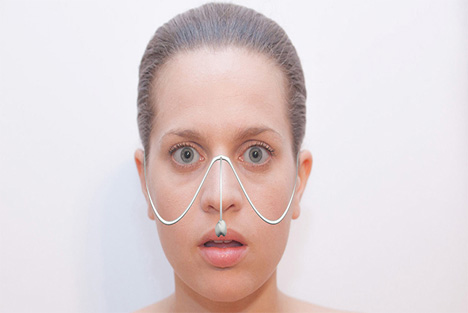
smell and texture analog for extinct foods

Drive around any mid-size to large city and you’re destined to find a number of food trucks. In recent years they’ve become almost as ubiquitous as traditional stationary restaurants. A truck called GhostFood is throwing a very unusual hat into the ring by offering their customers not real food, but the experience of food.
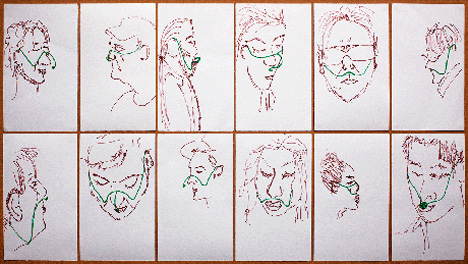
ghostfood facial apparatus

GhostFood, a “participatory performance” from Miriam Simun and Miriam Songster (yup, a double-Miriam team) is meant to simulate the experience of eating foods that could soon be extinct. A 3D printed headpiece attaches to a visitor’s face just like glasses and replicates the olfactory profile of certain foods. A substitute edible substance with a texture identical to the “ghost food” is provided. The scent and texture combined trick the mind into believing that the actual food is being consumed.
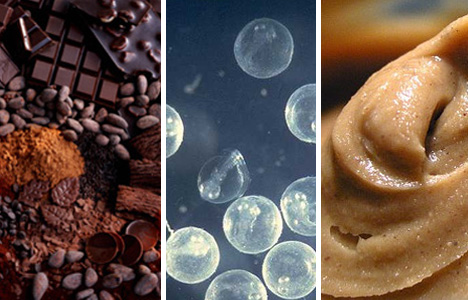
endangered foods

The project is meant to increase awareness of the possible future of food. The GhostFood truck will serve up the experiences of eating cod eggs, peanut butter, and chocolate – all of which face the possibility of disappearance due to climate change. In the case of cod eggs, changing seawater salinity is increasingly causing them to sink rather than float, making them both inaccessible to humans and unable to hatch and form the next generation of cod.
foods in danger of becoming extinct

Peanuts are affected in multiple ways by climate change. Drier growing periods mean that it’s more difficult to harvest the peanuts, and shortened winters cause a mold called aflatoxin. The mold doesn’t actually harm the peanuts themselves, but it is toxic to humans. Chocolate is in a delicate situation thanks to drought, deforestation, and changing global temperatures. Although the artists are drawing attention to the unstable futures of these foods, they aren’t trying to educate or preach a certain ideology. Their goal is simply to demonstrate what our eating experiences might be like in the future when our favorite foods are no longer available on supermarket shelves.

(via: Edible Geography)

Share on Facebook


[ By Delana in Conceptual & Futuristic & Technology. ]

[ WebUrbanist | Archives | Galleries | Privacy | TOS ]


WebUrbanist

 
Comments Off on Ghost Food: A Conceptual Taste of the Future of Eating

Posted in Creativity


How I Shot It: Food Photography

15 Sep

A post by freelance commercial and editorial photographer, food stylist & writer -Andrew Scrivani – one of the course presenters at next weeks Creative Live Photo Week.

8C5A4826

In food photography, most of the time, the art direction we receive is pretty straightforward. I like to start by discussing the color palette of the piece. The season of the year can certainly influence how I approach the shoot. A regional theme or ethnicity that needs to shine through the images may also drive the selection of the propping, table surfaces, linen, and extra food items that may appear on the set. These are the sort of discussions I have when shooting food photos that tell the story of a particular recipe, a certain ingredient, an event, or the style of a particular chef.

I have said in the past that food photography has two concurrent compositions. The first is the food itself. What the food is, where it comes from, and how it is prepared and plated is the first part of the equation. The other is the frame that you put that food in: propping, setting, and scene. The combination of these two should allow you tell the story that you intended to tell.

8C5A5179 1

Occasionally, I get asked to flex a little mental muscle and make food pictures that go above and beyond these traditional elements. The images I am focusing on here did not begin with a food story, so to speak. They started with an abstract concept, an idea of how to illustrate the crossroads between food and beauty. We needed to illustrate how certain foods are part of your “beauty tool kit” — like make-up brushes, tweezers, eyelash curlers, etc.

8C5A4879 1

The art director and I sat at a table with a pad and pencil and started to scribble notes and sketches on what we could do with pomegranates, tweezers, raw fish, makeup brushes, coconut water, edamame, eyelash curlers, and “grass fed” beef. Several of these came together in flashes and ‘aha’ moments as we paired a tweezer with an open pomegranate and placed the soy bean pod in an eyelash curler.

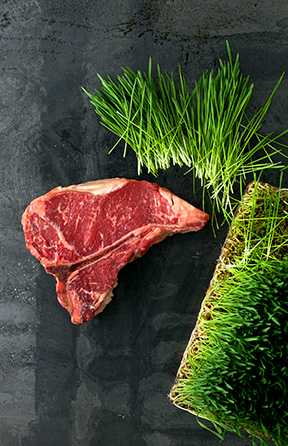
The fanned-out tails of the fish and the makeup brushes made for a natural juxtaposition that was really pleasing to the eye and avoided reminding you of a dead fish. We also felt really confident that we could show a beautiful Porterhouse on a bed of grass to underscore to its grass-fed origin.

IMG 4719

We hit a stumbling block with one of the items that was essential to the story but exceptionally hard to fit into our established theme. We had to show that coconut water was part of this “tool kit.” Coconut water, having no real color or texture, was difficult to pair with any of the beauty items. So, since we had maintained a consistency with the rest of the images by using a piece of hot-rolled steel as our table surface to give a little nod to the industrial notion of “tools” we felt that the thread was strong enough to not include an actual tool. The second part was trying to avoid shooting any packaging of a commercially available coconut water and not doing the obligatory “coconut-with-a-straw shot.”

8C5A5162

The final result was arrived upon in this shot where after draining off the water from a fresh coconut, I smashed the shell with a hammer and used the shards as design elements in an overhead shot. The idea here was to show a dramatic and striking composition that really hit home the idea that these foods, included in your beauty regimen, are powerful partners in looking and feeling your best.

The overall message here is that whether you are trying to tell an obvious story, or one that requires a little bit of imagination, every single visual detail should contribute to the story the photos convey. The reader shouldn’t have to read a single word to understand the story the photos are telling.

For more food photography tips, check out my blog and my upcoming creativeLIVE course during Photo Week which starts on Monday.

Photoweek logo

Andrew Scrivani is a New York based freelance commercial and editorial photographer, food stylist & writer. Andrew’s work has been seen in magazines and newspapers worldwide including, The New York Times, Eating Well Magazine, La Cucina Italiana, The Wall Street Journal and Newsweek. His work is also currently featured in international advertising campaigns by Red Lobster and Sargento Cheese.

Post originally from: Digital Photography Tips.

Check out our more Photography Tips at Photography Tips for Beginners, Portrait Photography Tips and Wedding Photography Tips.

How I Shot It: Food Photography


Digital Photography School

 
Comments Off on How I Shot It: Food Photography

Posted in Photography


Playing with food: Stephanie Gonot’s colorful culinary photography

08 Sep

food_5.jpg

Photographer Stéphanie Godot’s food photos aren’t the stylized, sexy kind you’d see on the cover of magazines like Bon Appetit. Images in her ‘Fad Diets’ series are frightening visual documents of some of the weirder diets out there, while also being striking experiments in color and texture. Gonot’s work may not make your mouth water, but it’s a lot of fun, and might just make you reconsider that crash diet…

News: Digital Photography Review (dpreview.com)

 
Comments Off on Playing with food: Stephanie Gonot’s colorful culinary photography

Posted in Uncategorized


Make Rad Abstract Photos From Milk and Food Coloring

18 Jul

Extra photos for bloggers: 1, 2, 3

Picasso had his paint brush, Michelangelo had his marble, Escher had his sketchbook, and now you have a milk carton?

Strange as it may sound, you can make twisted tie-dye swirls and churning volcanos of color by simply mixing milk, soap, and a little food coloring.

This is the stuff of dreams if you are one of those photographic Jackson Pollocks who gets their jollies from abstract snaps.

Plus, you don’t need any fancy gear and all it costs is lunch money.

Poke your head in the pantry, swing by the fridge, check under the sink, and in minutes you’ll be making your own Moona Lisa.

Make a Modern Milksterpiece

p.s. We’re hiring for an amazing opening at Photojojo. We’re looking to re-invent what/how/where we publish online, and we’re seeking one amazing somebody to lead the charge. Learn more and apply for our Editorial & Community Lead.

Why It’s Cool:

Your fifth grade baking soda volcano may not have turned out so well, but take our word for it this experiment is an easy and fun way to make abstract art!

You never know what creations will come out of this churning rainbow wonderland and it’s good times for everyone from kids to Great Aunt Edna.

And although it’s quick and easy to clean up, it won’t be short on the wow factor.

Milk swirls in Action from Photojojo loves you on Vimeo.

The Ingredients:

  • Whole or 2% milk
  • Dinner Plate
  • Food coloring (red, blue, green, yellow)
  • Dish-washing soap (Dawn seems to work well)
  • Q-tips

STEP 1: Pour the Milk

beforeSet your dinner plate somewhere level and safe from getting knocked over, and then pour in a layer of milk.

A thin coat will do, you don’t need to go overboard.

STEP 2: Add a Dash of Color

beforeGrab your droppers of food coloring and add a few drops of each color to the center of your plate of milk.

The food coloring will allow you to see the reaction that happens in the next step so feel free to experiment with the placement of your dye drops for different effects.

STEP 3: Get Soapy

beforeApply a good dollop of dish soap to one end of a clean Q-tip.

Twirl the soap around a bit to make sure the whole cotton swab is coated.

STEP 4: Dip Your Q-Tip

beforeDab your soapy swab into your milk and dye mixture and watch the colorful explosion!

You can keep dipping your Q-tip and reapplying soap to create new shapes, colors, and textures.

STEP 5: Capture the Color

beforeGrab a phone, compact, or DSLR and start snapping.

We found that increasing the saturation, contrast, and sharpening, helps to get pictures that really pop.

If you are using a phone, you can do this after the fact with an app like Photoshop Express or Pixlr.

Try using a macro lens with your phone or DSLR for super close ups.

Also, using a fast shutter speed will help prevent the moving colors from blurring.

You can experiment with new color combinations, try using a different type of milk, drop colors around at random, use two or three Q-tips at once, or anything else you can think of to spice up your pics.

Taking It Further

  • Setup your milk and dye in a glass dish and shine a bright light through the bottom for an illuminating effect.
  • See what other experiments you can turn into works of art like steel wool lightpaninting, create photos using plants, or develope film with coffee!
  • Try photographing your food coloring dropped into water for some fantasticly abstract results.

Many thanks to Casetofoane for use of their song ’90′ in our video!

Related posts:

  1. How to Create Coloring Book Pages Using Your Very Own Photos! Extra photos for bloggers: 1, 2 Imagine a world where…
  2. Coloring Pages from Your Photos in 3 Easy Steps So we were walking around Toys R Us the other…
  3. Photo Food Tags: A Thanksgiving DIY Project Extra photos for bloggers: 1, 2, 3 Thanksgiving at your…


Photojojo

 
Comments Off on Make Rad Abstract Photos From Milk and Food Coloring

Posted in Equipment


Futuristic Food: Edible Wonders of the 3D-Printed Revolution

03 Jun

[ By Steph in Gadgets & Geekery & Technology. ]

3D Printed Food Main

In the future, maybe we’ll all be pressing buttons on countertop machines that will squeeze various food pastes into the creative shapes of our choice. The 3D printing revolution isn’t limited to fashion, pretty objects, guns or even architecture – it’s edible, too. A combination of scans, special digital files and machines that extrude materials into complex forms might just make food more of an art form than ever before, if these 14 examples are a preview of what’s to come.

Infinity Bacon

3D Printed Food Infinity bacon

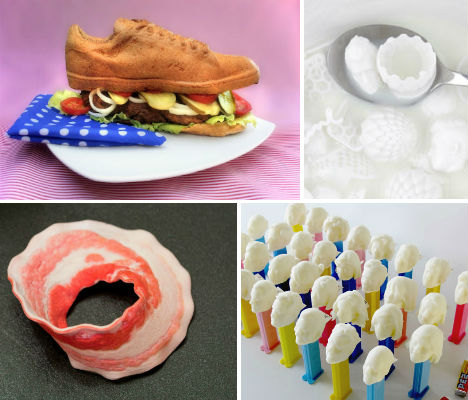
In a possibly Freudian typo, Shapeways describes this Bacon Mobius Strip as “not delicious but also vegan and kosher-friendly.” You can order one of your very own to keep forever as a bizarre conversation piece on the mantel, or recurring breakfast gag.

3D Printed Sculptural Sugar

3D Printed Food Sugar

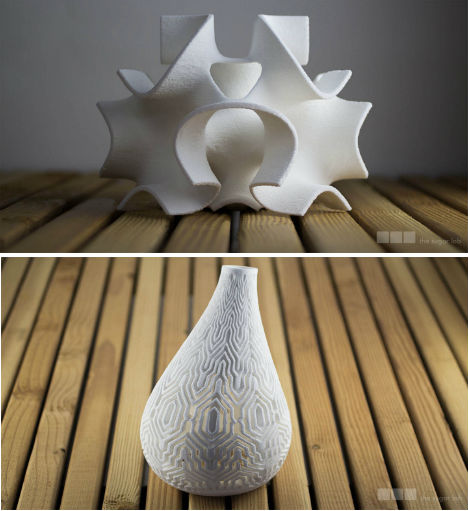
Amazingly intricate sculptures of sugar are 3D printed by The Sugar Lab, a husband-and-wife team of architectural designers. “With our background in architecture and our penchant for complex geometry, we’re bringing 3D printing technology to the genre of mega-cool cakes. 3D printing represents a paradigm shift for confections, transforming sugar into a dimensional, structural medium.”

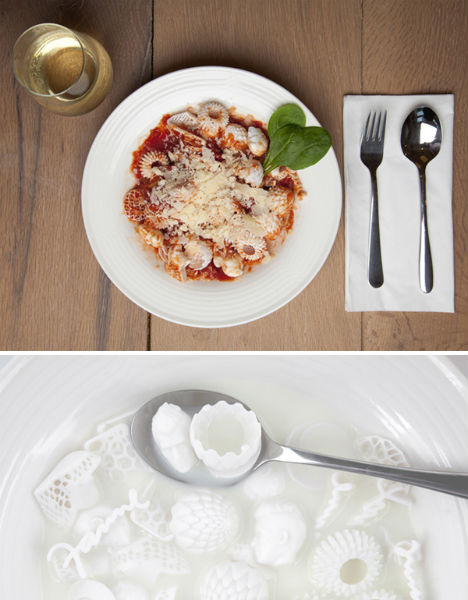
Pasta, Cereal and Burgers by Freedom of Creation

3D Printed Food Pasta Cereal

How will 3D printing technology be applied to the home of the future? Designer Janne Kytannen of Freedom of Creation envisions our own little countertop printing machines capable of producing pasta, cereal, burgers and more. Kytannen believes that as the ability to design our own food becomes more accessible, the items we choose to eat will become far more creative and complex.

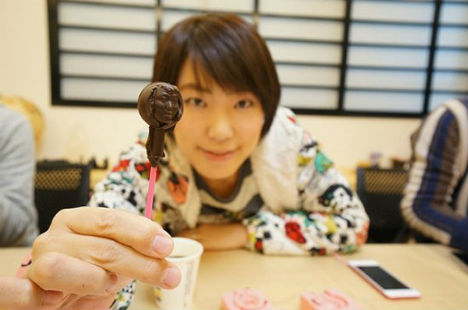
Eat Your Own Chocolate Face

3D Printed Food Chocolate Face

A 3D printing workshop in Tokyo produced miniature chocolate versions of the creators’ faces. Each person went into a small room to get a full body scan, and a 3D printed mold was made of their heads. Now, they can make chocolates and other confections in the shape of their own faces again and again. Tokyo’s FabCafe sells the molds for $ 65 each.

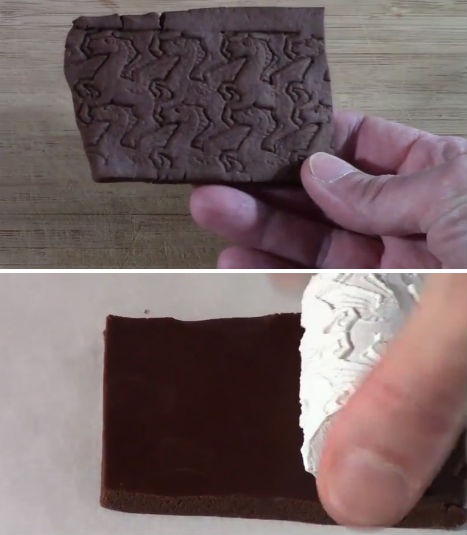
Escher Cookies Made with 3D Printed Rollers

3D Printed Food Escher Cookies

A slab of ordinary cookie dough was made into Escher-inspired cookies using a 3D-printed roller. George W. Hart converts patterns into 3D-printed rollers using a MakerBot; you can download the software and files to make your own at his website.

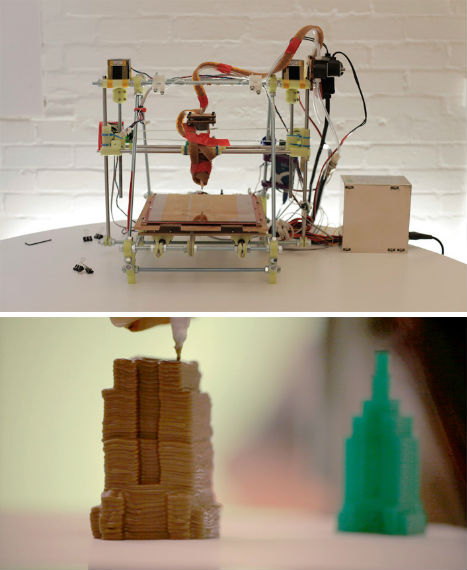
High-Resolution 3D Printed Chocolates

3D Printed Food Chocolates

Deemed the world’s highest-resolution 3D-printed chocolates, these sugary confections from Moving Brands started out as a fun project and turned into a learning process about the intricacies of 3D printing with various materials. “We had to think about the physical properties of molten plastic and the structural integrity of layers… We had to become conversant with how the machine was put together and even how it sounded and smelled,” explained the project technical lead, Daniel Soltis.

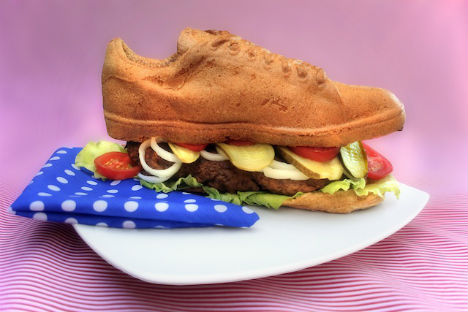
Shoe Burger

3D Food Shoe Burger

A shoe isn’t typically the most delicious-looking object, but Tristan Bethe managed to make one look pretty good in both burger bun and chocolate form. Tristan 3D-scanned his own shoe, made a food-safe silicone mold and poured in the mix for both items.

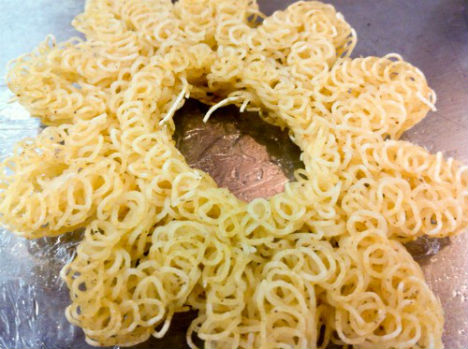
Ramen Noodles

3D Printed Food Ramen Noodles

Cornell University’s Fab@Home program has provided designers with 3D printers equipped with syringes that squeeze out pastes of various kinds, including pasta dough. Dave Arnold of Cooking Issues used his to make noodles in cool shapes. “I find that whole idea, which removes ourselves even further from the way our food is made, horrifying. Dinner from a series of homogeneous pastes?” says Arnold; but ultimately, the noodles he created were so delicious he could barely capture them on camera before they disappeared.

Next Page:
Futuristic Food 3d Printed

Share on Facebook


[ By Steph in Gadgets & Geekery & Technology. ]

[ WebUrbanist | Archives | Galleries | Privacy | TOS ]


WebUrbanist

 
Comments Off on Futuristic Food: Edible Wonders of the 3D-Printed Revolution

Posted in Creativity


Four tasty mobile apps for food photography

01 May

TS520x0~cms_posts_1304999600_hipstamatic2.JPG

The mobile food photography phenomenon has been cooking up alongside our affinity for our always-with-us smartphones. Foodies flock to tap, snap and share the trendiest new treats on the culinary circuit, their camera phones now making it possible to document nearly every morsel. But what apps are best for snapping and sharing food photography? We take a look at connect.dpreview.com. 

News: Digital Photography Review (dpreview.com)

 
Comments Off on Four tasty mobile apps for food photography

Posted in Uncategorized


10 Tips to Improve Your Food Photography Styling

27 Apr

This is a guest post by Jules Clancy of Stonesoup.

While portrait photographers need to be skilled in the art of getting their subjects to relax in front of the camera to get a great shot, we food photographers have things a little easier. At least our subjects (mostly) can’t talk.

image1guest.jpg

But that doesn’t mean you should forget to apply a little charm in the food styling department.

The more time spent making the food attractive as possible, the easier things are when it comes to taking the shot.

So here are 10 tips to help you improve your food styling, naturally.

1. Use less food than you normally would

While it may seem more generous to serve plates piled high with food, an over crowded plate can look less appealing than a minimalist spread. Think about how you can use the white space of the plate to frame your dish.

image2guest.jpg

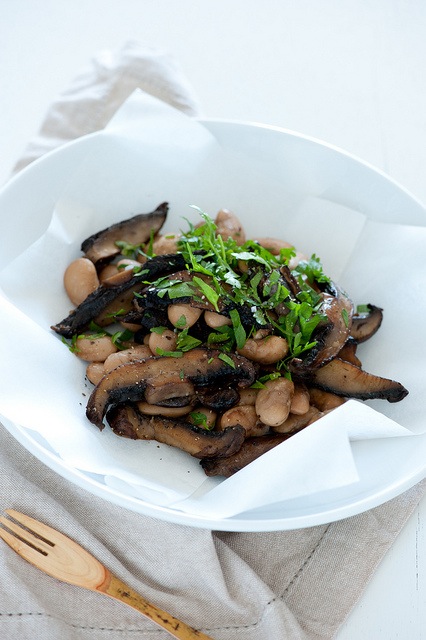
2. Use paper to add texture to plates

Lining plates with parchment or baking paper helps to add visual interest and soften the lines of your plates.

3. Look for contrast with backgrounds

While there are times when all white on white can be visually striking, I find I get better shots if I go for contrast. So a pale coloured food and plate gets a dark background where as a vibrantly coloured dish tends to be best with a simple white background.

image3guest.jpg

4. Allow food to spill over naturally

Getting a bit messy really helps to add movement and life to your photographs, rather than having everything confined to plates and bowls.

5. Choose simple crockery and tableware

While highly decorative China and napery are beautiful on their own, they can detract from the visual impact of the food. Plain plates, especially classic white allow the food to be the star.

image4guest.jpg

6. Emphasise the natural beauty of the food

Try and think about what it is that makes a particular dish look delicious and then serve it in a way to flaunt it.

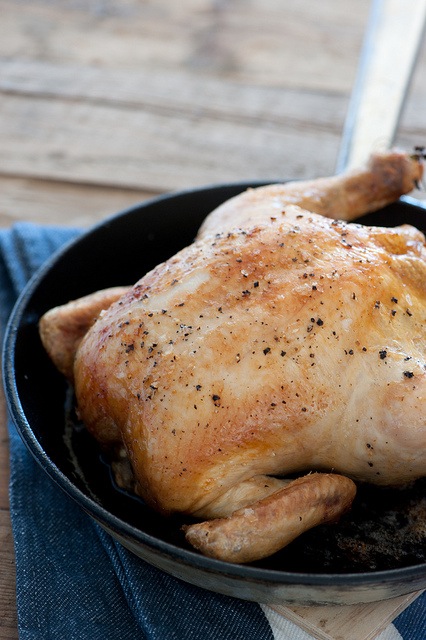
For example, I love the golden, cripsy skin of a well roasted chicken. Rather than carve the chook into individual slices with tiny slivers of skin visible, the whole bird tends to look best.

7. Get some work-in-progress shots

It can be easy to focus on getting the final plated-up food shot and miss out on some great opportunities along the way. Try taking a few shots during the preparation and cooking process.

image5guest.jpg

8. Try and capture the ‘yum’ factor

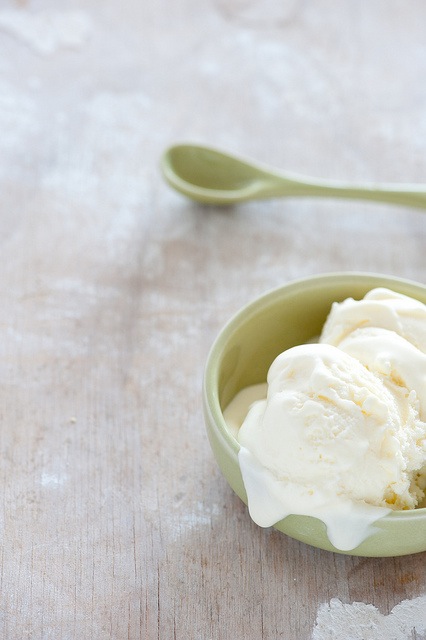
Think about what makes your subject really delicious and then aim to highlight this characteristic in your shot. Ice cream is a great example. It’s all about smooth creaminess and licking drips from the sides of your cone or bowl.

9. Always be on the lookout for ideas

Inspiration can strike from anywhere. When you’re eating out or even just flicking through your favourite food mag, take note of what looks appealing and what doesn’t.

image6guest.jpg

10. Dig in and reshoot

Once you have a shot of the whole food that you love, eat or serve some out and then take another shot. Often a half finished plate is more appetizing than the original whole.

A few great food photography blogs:

  • What Katie Ate
  • Wrightfood
  • Souvlaki for the Soul

For more tips on improving your food photography see:

  • Food Photography – An Introduction
  • 11 Great Camera Angles for Food Photography
  • 7 Tips for Aspiring Food Pornographers
  • Food Photography Tips and Techniques
  • 10 Tips for Mouth Watering Food Photography
  • A Basic Food Photography Kit

Also check out our Snapn Food Guide to food photography.

Jules Clancy is a qualified Food Scientist, and self-taught food photographer. She blogs about her commitment to cooking recipes with no more than 5 ingredients over at Stonesoup.

Post originally from: Digital Photography Tips.

Check out our more Photography Tips at Photography Tips for Beginners, Portrait Photography Tips and Wedding Photography Tips.

10 Tips to Improve Your Food Photography Styling


Digital Photography School

 
Comments Off on 10 Tips to Improve Your Food Photography Styling

Posted in Photography


Grab our Food Photography Guide for just $7 [24 Hours Only]

10 Apr

snapnfood3 weeks ago we released a brand new mini-guide to Food Photography over at our sister site – SnapnGuides.

The guide was released with a 30% off early bird discount (bringing the price down to just $ 7) and today I just wanted to let dPS readers know that that discount ends in just on 24 hours time.

This ‘http://www.snapnguides.com/’ guide will:

  • break down all the important aspects of photographing food
  • give you practical advice on what gear to use
  • show you how to leverage available light
  • teach you how to use simple props to great effect
  • illustrate how to use different composition techniques and shooting angles to take great food images
  • help you to develop your own style of taking delicious photos of the food you make and eat

If you were thinking about grabbing a copy here’s the link to save 30% for the very last time.

In 24 hours the price will go up.

Post originally from: Digital Photography Tips.

Check out our more Photography Tips at Photography Tips for Beginners, Portrait Photography Tips and Wedding Photography Tips.

Grab our Food Photography Guide for just $ 7 [24 Hours Only]


Digital Photography School

 
Comments Off on Grab our Food Photography Guide for just $7 [24 Hours Only]

Posted in Photography


Snap Up our Food Photography Guide for just $7 [Early Bird Special]

20 Mar

snapnfoodToday I’m excited to announce the launch of our brand new Guide to Photographing Food over at SnapnGuides.

This mini-guide is all about helping you to learn how to mouth-watering photo of food and today it is just $ 7 (30% off for early birds).

If you’ve ever looked at other people’s pictures of food and thought to yourself, “Why don’t mine look like that?” then this is the guide for you.

Snapn Food will:

  • break down all the important aspects of photographing food
  • give you practical advice on what gear to use
  • show you how to leverage available light
  • teach you how to use simple props to great effect
  • illustrate how to use different composition techniques and shooting angles to take great food images
  • help you to develop your own style of taking delicious photos of the food you make and eat

The guide doesn’t overcomplicate things with technical jargon – everything is explained in a way that everyone can follow and understand.

It is also written in a way that is accessible to people using all kinds of cameras – from a camera phone through to higher end DSLRs.

Grab Your Copy for Just $ 7

Ready to improve the quality of your food photography? Grab this brand new SnapnGuide here for just $ 7 before the price goes up.

Post originally from: Digital Photography Tips.

Check out our more Photography Tips at Photography Tips for Beginners, Portrait Photography Tips and Wedding Photography Tips.

Snap Up our Food Photography Guide for just $ 7 [Early Bird Special]


Digital Photography School

 
Comments Off on Snap Up our Food Photography Guide for just $7 [Early Bird Special]

Posted in Photography


Algaculture: Symbiosis Suit Produces Food from Breath

19 Mar

[ By Steph in Conceptual & Futuristic & Technology. ]

Agaculture Symbiosis Suit 1

Inspired by ‘plantimals’, photosynthetic organisms like lichen, sea slugs and salamanders that welcome algae into their bodies in order to thrive, the Algaculture Symbiosis Suit aims to enhance humans with new, partially artificial bodily organs. The suit designs a new symbiotic relationship between us and algae, letting us become more plant-like by gaining food from light.

Exploring alternative ways in which we could sustain ourselves in the future, designers Michiko Nitta and Michael Burton propose suits made of plastic tubes that wrap and wind around the body, looking a bit like an artificial exoskeleton.

Agaculture Symbiosis Suit 2

Essentially, the algae inside the tubes is fed both by sunlight and by the carbon dioxide in the wearer’s breath, and is then consumed by the human wearing the suit. In this way, our own breath is helping to produce the nutrients that we take in. “As such, we will be symbionts (meaning that both entities entirely depend on each other for survival), entering into a mutually beneficial relationship with the algae,” say the designers.

Agaculture Symbiosis Suit 3

Algaculture Symbiosis Suit 4

One of the suits was used in The Algae Opera, another project by Nitta and Burton that used the extraordinarily large lung capacity of a professional opera singer to produce the highest quality algae-product possible, enriching its taste. “So in the age of biotechnology not only can the audience listen to her talent but they can also savor her unique blend of algae that are enriched by her song.”

Via CollabCubed

Share on Facebook


[ By Steph in Conceptual & Futuristic & Technology. ]

[ WebUrbanist | Archives | Galleries | Privacy | TOS ]


WebUrbanist

 
Comments Off on Algaculture: Symbiosis Suit Produces Food from Breath

Posted in Creativity