RSS
 

Posts Tagged ‘Flashlight’

Challenge: Shooting portraits using just an iPhone, a flashlight, and a Big Mac box

30 Aug

Great gear can make a big difference when it comes to the quality of your photographs, but we all know that good gear does not a great photographer make. What’s more, a great photographer can do amazing things using really mediocre equipment.

Case in point: watch portrait photographer Philippe Echaroux take on what he’s calling “Big Mac Portrait Challenge.”

Usually Echaroux uses Hasselblad digital cameras, Elinchrom lights and other expensive (for a reason) equipment to capture his professional portrait work. But he was recently asked to make due without any of that; instead, he would be using an iPhone for shooting and retouching, a small flashlight, and a Big Mac box from McDonald’s. Yeah… seriously.

The final shots benefit from a lot of post-processing, of course. In all, Echaroux used VSCO, Photoshop Fix, and Lightroom Mobile to tease out something that looks a lot more professional than you’d expect from his meager setup. But The basic gear and lighting was all the same: iPhone, flashlight, Big Mac box.

Whether you’re shooting an astronaut in a darkened Soyuz capsule with a 10-year-old DSLR and an iPhone flashlight, or taking the so-called Big Mac Portrait Challenge, don’t let lack of gear intimidate you. If nothing else, it might lead to a cool story or creative video.

Articles: Digital Photography Review (dpreview.com)

 
Comments Off on Challenge: Shooting portraits using just an iPhone, a flashlight, and a Big Mac box

Posted in Uncategorized


This Nat Geo cover was shot with a 10-year-old DSLR and an iPhone flashlight

24 Jul
European astronaut Paolo Nespoli sitting in a Soyuz launch module simulator, illuminated by a single iPhone flashlight. Photo © Alessandro Barteletti.

Photographer Alessandro Barteletti has spent the last year creating a photo essay for National Geographic, in which he tells the story of 60-year-old European astronaut Paolo Nespoli. The project has taken him all over the world with Paolo, but it’s the photo above that stuck with him, and that Nat Geo in fact picked for the cover of the July issue of National Geographic Italia.

For this project, Barteletti received access to the training centers in Europe, the US, and Russia, trailing Paolo and capturing photos honoring the astronaut as the first 60-year-old ever to be enrolled in a 6-month-long mission.

Behind the scenes with Barteletti, shooting Paolo Nespoli for National Geographic. Photo © Alessandro Vona

The memorable cover photo was captured in Star City, Russia, while Paolo sat inside the Soyuz launch module simulator.

“I came into the Soyuz with my Nikon D3 and a wide angle lens, ready to shoot Paolo when, suddenly, something unbelievable happened: all lights off, everything was dark and from the outside they started knocking on the door telling me I had only one minute left,” Barteletti tells DPReview. “I didn’t know what to do: that was the perfect setting for THE PHOTO, probably one of the best ones ever. Outside I had some led lights but if I had come out the module, they wouldn’t have let me come in once again.”

Paolo agreed that leaving the module wasn’t an option, and so they tried to come up with some way to capture the shot in the next 60 seconds… with no professional lighting anywhere in sight.

“I had an idea, one of those crazy ideas that only come to you when you are desperate,” says Barteletti. “I took my iPhone—the only electronic device I had with me—I turned on the torch, and I put it between two panels behind the astronaut.”

As it turns out, his idea worked perfectly. “The module was so small, less than 2 meters of diameter, that the torch was enough to properly light the setting,” he told us. “I had only the time for two landscape shots and two portrait ones, just a few seconds before I was literally obliged to leave the module.”

In the end, Barteletti was right: it was THE PHOTO. National Geographic chose this shot for the cover. Barteletti still can’t quite believe they chose a photo “shot with a ten-year-old Nikon D3 and lit with an iPhone torch.”

To learn more about Alessandro or see more of his work, visit his website by clicking here.

Articles: Digital Photography Review (dpreview.com)

 
Comments Off on This Nat Geo cover was shot with a 10-year-old DSLR and an iPhone flashlight

Posted in Uncategorized


How to Create Gorgeous Flower Images using a Flashlight and a Reflector

31 May

1-Light-painting-flowers-orchid

In this tutorial, I’m going to share with you some simple and inexpensive ways to create beautiful flower images. You will learn to add light by using a flashlight and a reflector. If you add in some imagination and patience, you will soon be creating gorgeous flower images of your own.

In addition, you will gain insight about seeing light, and how and recreate it on your own.

The techniques I am going to share are reminiscent of light painting and burning (from film days printing negatives), but in this tutorial we are going to take advantage of the ambient light, combined with light from flashlights to create some great effects.

Setting up

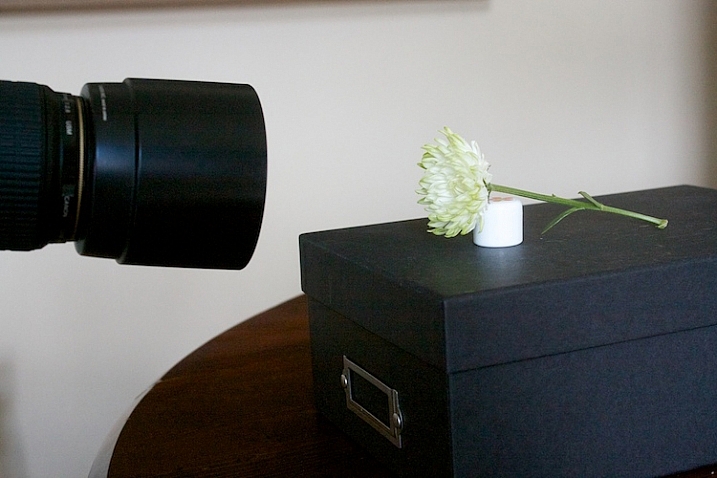
You will need to put your camera on a tripod, and find a nice surface near some window light to photograph your flower. Set up to shoot using a shutter speed slower than 1/15th of a second, and it’s much easier if you use a cable release or use your camera’s self-timer feature.
1s-Light-Painting-Flowers-2016-05-19at13-10-21-behind-scene

Here’s my set up, above. I chose an easy location, perpendicular to a window, providing some nice light. I used a prop to hold the flower up.
2s-Light-Painting-Flowers-2016-05-19at13-30-24

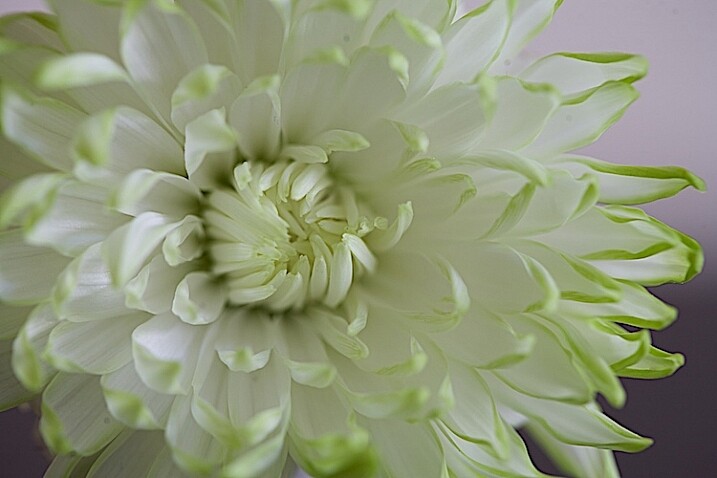
Window light only. Exposure was f/4 at 1/4.

I did a test shot, above, to determine my exposure using just ambient light. I slowed the shutter speed down just a little bit to see what results I would get.
2.s-Light-Painting-Flowers-2016-05-19at13-29-53

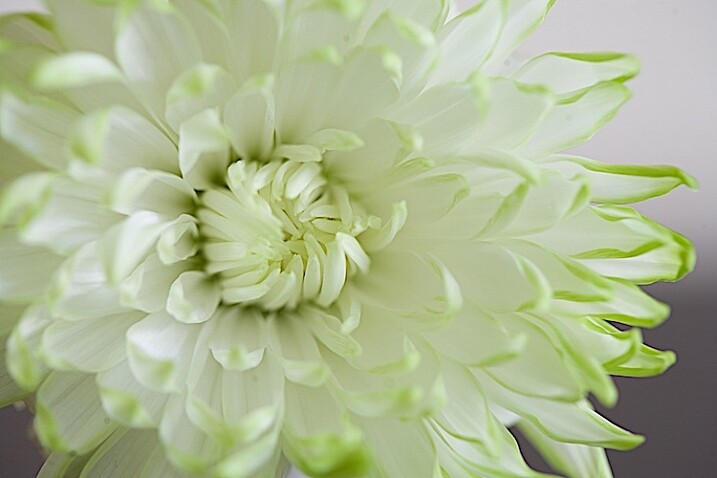
Window light only. Exposure f/4 at 0.40 seconds.

Add a reflector

It’s a little brighter at this exposure, but notice that the shadows are still quite strong.
3s-Light-Painting-Flowers-2016-05-19at13-15-39-behind-scene

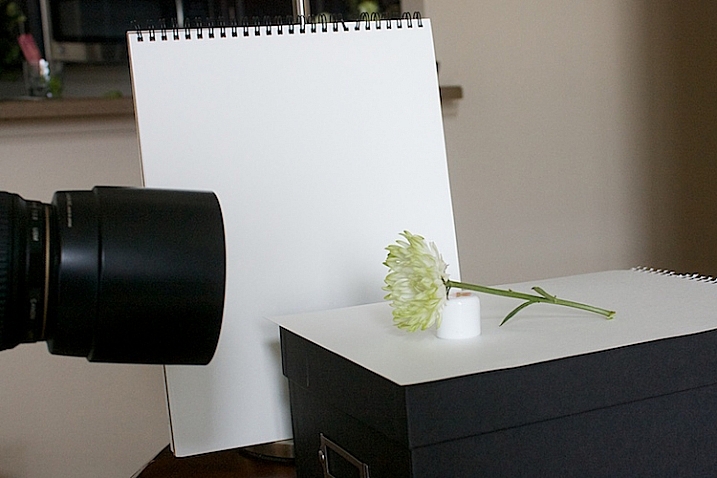
To soften the light, I added a white fill card below, and to the side of the flower. It’s also called a reflector. Almost anything white can be used as a reflector. The idea is to fill in the shadows, and to make the light feel softer.
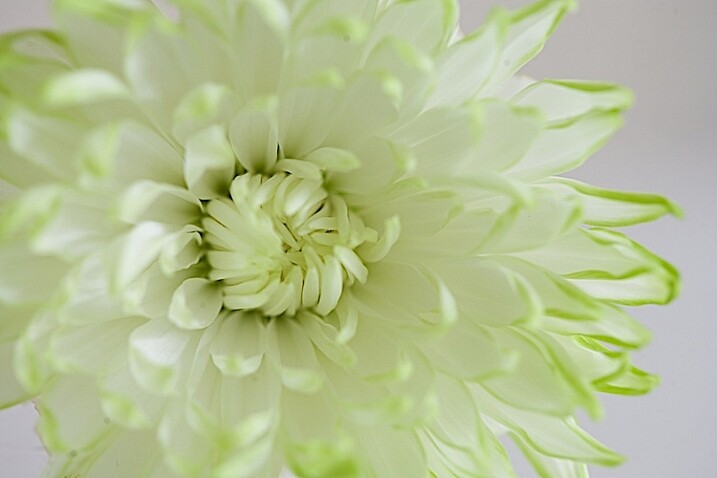
4s-Light-Painting-Flowers-2016-05-19at13-36-59

Window light with fill card. Exposure f/4 at 1/4.

This exposure above was taken with the fill cards in place. Compare it with the two above, and notice that the lightness/darkness is similar to the longer exposure. It’s pretty amazing how much light can be added to a photo just by using reflectors.

More importantly, note the quality of light. By that I mean, notice how the shadows are still present to the left of the center of the flower but are not as prominent. Also be aware of how  nicely the shadows are filled in from the bottom.

Create a feeling that matches your subject

Flowers are soft. They are feminine. When we tell stories about our subject, we want to convey that feeling. One of the ways we convey feelings in photographs is in how we use light. Notice how the feel is different in the photos with the fill card and without. The second exposure feels softer and more feminine, and thus, supports the story of a feminine flower.

Add light from a flashlight for more drama

Now, to add a backlight with a flashlight. Make sure to position the flashlight in such a way that it doesn’t cause lens flare (the light isn’t hitting the lens directly). Make sure the light is pointing entirely at the flower, and not reaching your camera lens.
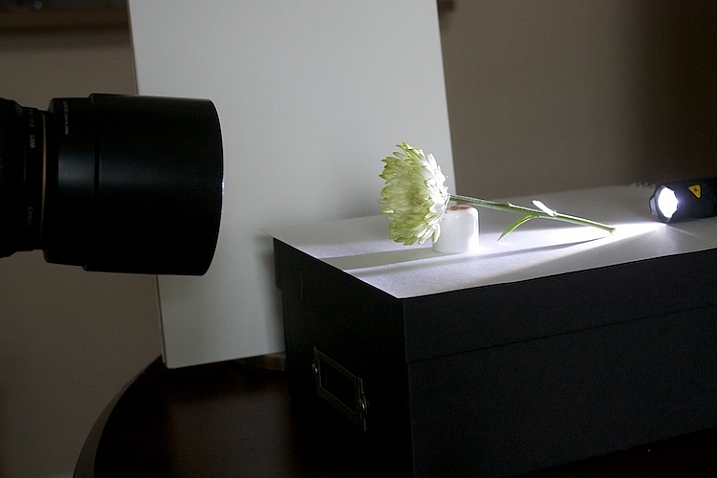
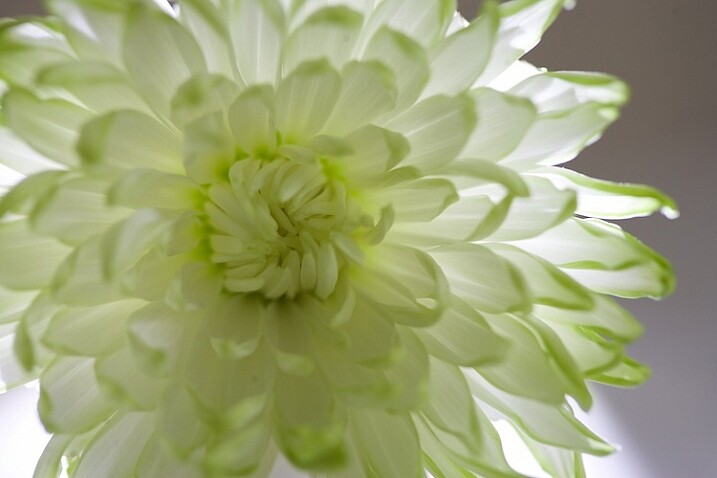
5s-Light-Painting-Flowers-2016-05-19at13-18-08-behind-scene

5bs-Light-Painting-Flowers-2016-05-19at13-51-46

Flashlight with backlight, no fill cards or reflectors. Exposure f/4 at 1/4.

This is with a strong backlight. Notice how dark the center of the flower seems.
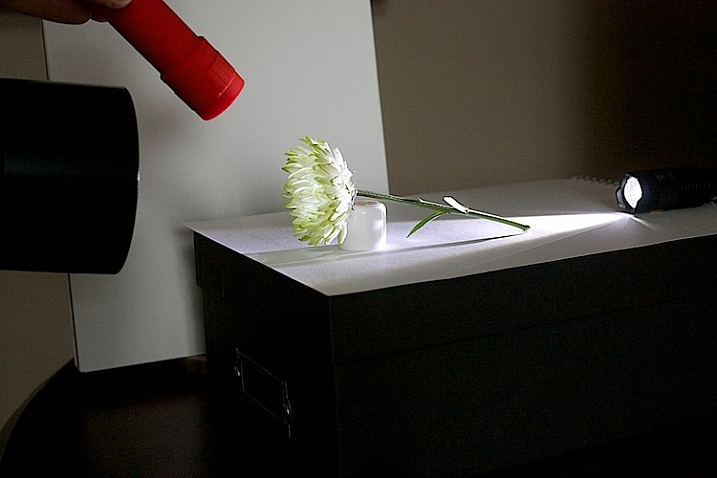
6s-Light-Painting-Flowers-2016-05-19at13-41-23-behind-scene

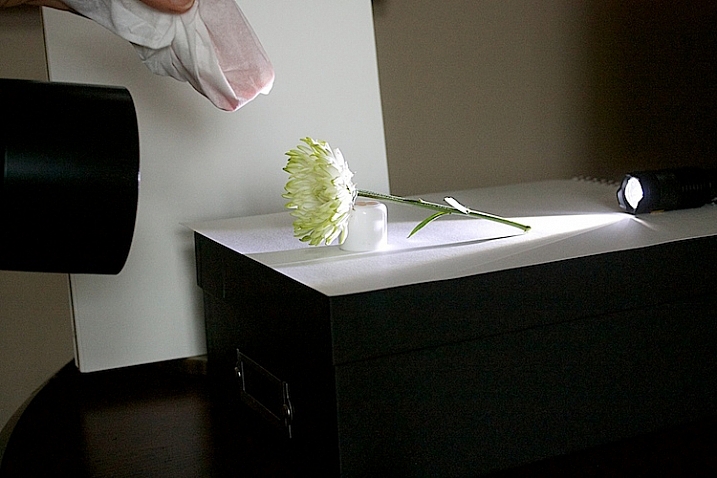
We can use a second light to fill in the center of the flower. I recommend using a slower shutter speed, 1/15th or less, and moving the flashlight while the exposure is made. If you don’t move the light, it will appear too strong and create harsh shadows.
7s-Light-Painting-Flowers-2016-05-19at13-41-03-behind-scene

If the light appears too strong and too direct, use a diffuser over your flashlight. I used a kleenex to soften the light.
8s-Light-Painting-Flowers-2016-05-19at13-38-27

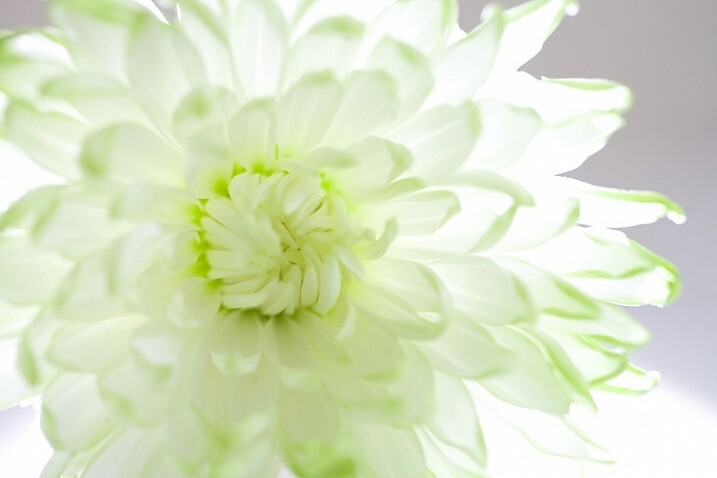
Flashlight as a backlight, with a second flashlight as a fill light in the front. Exposure f/4 at 1/4.

How does this feel to you now? Notice how I brought the exposure of center of the flower up, just by doing a little light painting. If you ever worked in a darkroom, you will notice this is similar to manipulating an image in an enlarger called, burning, but we are doing it live at the capture stage.
9s-Light-Painting-Flowers-2016-05-19at13-20-12-behind-scene

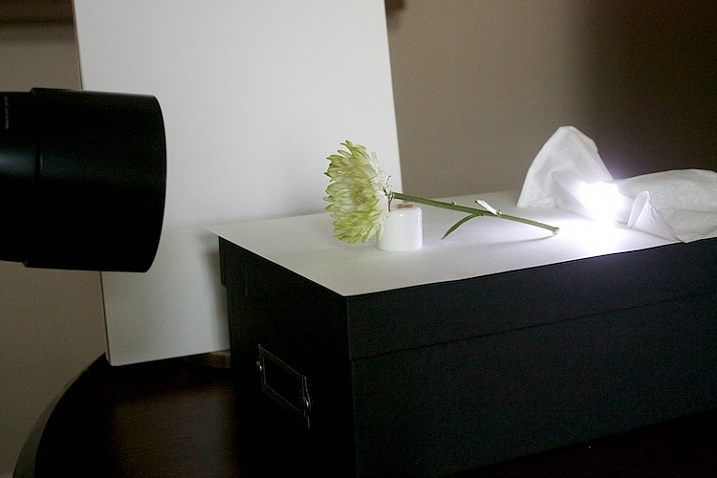
Let’s see what our flower looks like with a backlight that isn’t as strong. I used a kleenex diffuser on the flashlight in the back.
10s-Light-Painting-Flowers-2016-05-19at13-41-36

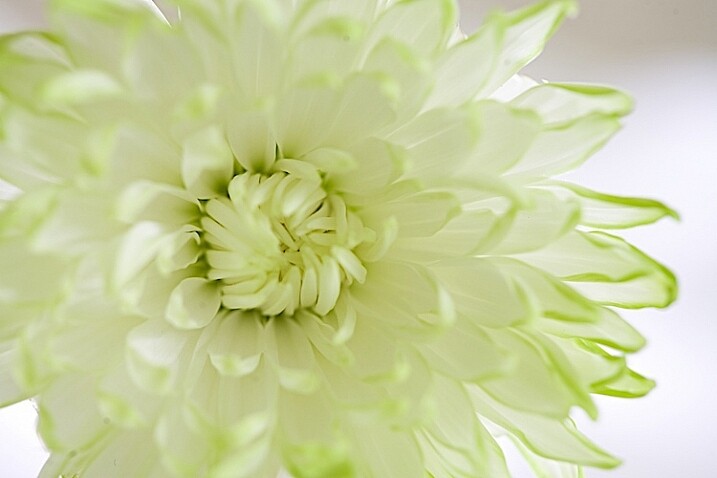
Using a softer backlight by diffusing with tissue.

Can you see how much softer the backlight is?
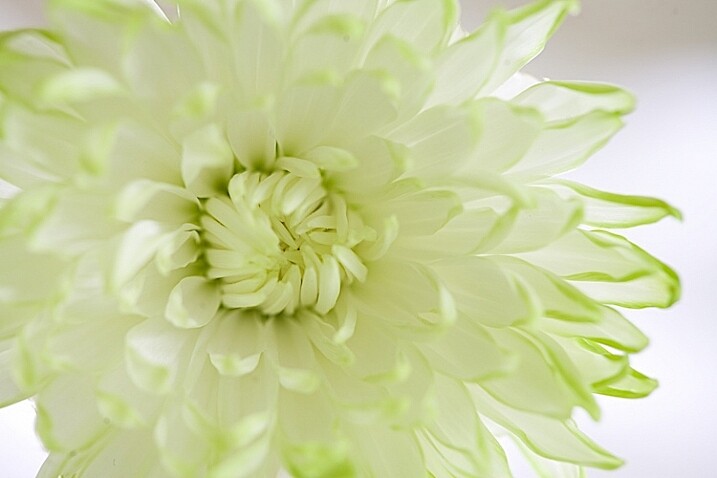
11sLight-Painting-Flowers-2016-05-19at13-42-54

In this image, I added a little bit of fill with a flashlight and kleenex diffuser.

This is very, very subtle. But move your eye back and forth between the two. Can you see the one directly above is a little bit softer? The difference isn’t huge on a computer screen, but makes a big difference in a large print.

Get creative with light and composition
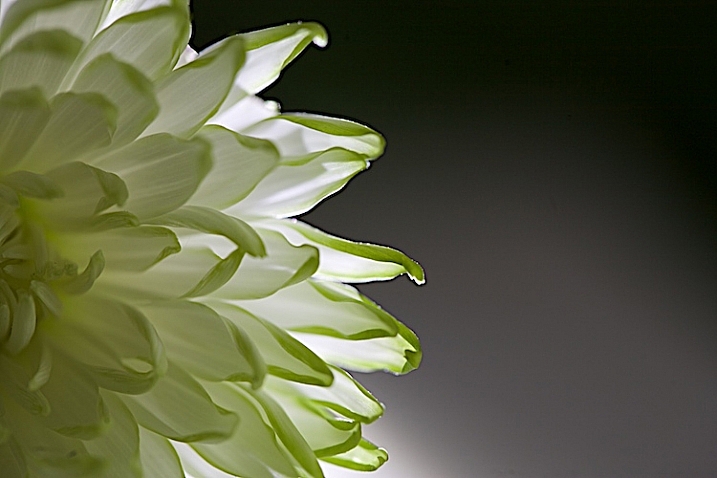
11s-Light-Painting-Flowers-2016-05-19at14-07-29

At this point, it’s time to get creative with your framing and play with light.

In composition, you want to decide what your center of interest is in the photograph, and draw the eye to that point. Notice how dark the center of the flower is in the top image, so let’s add some fill.
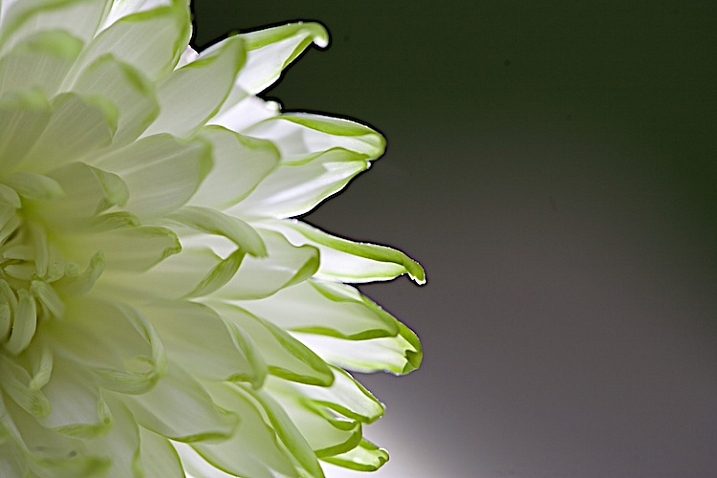
12s-Light-Painting-Flowers-2016-05-19at14-06-32

The center of the flower is lighter now (above). Which image do you like better?
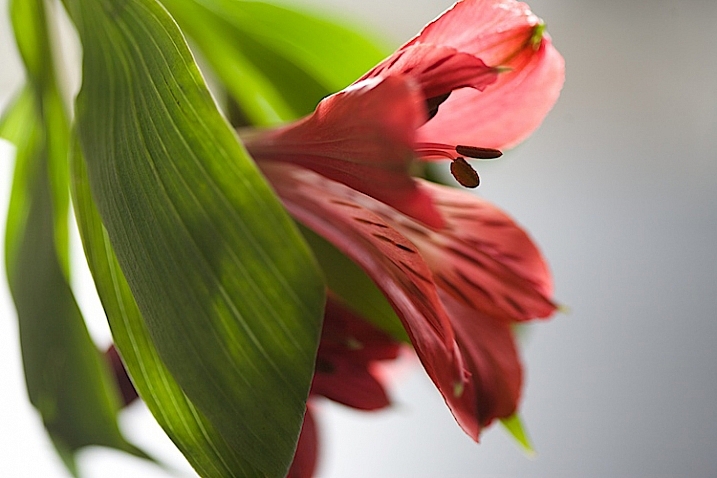
20.s-Light-Painting-Flowers-2016-05-19at16-10-27

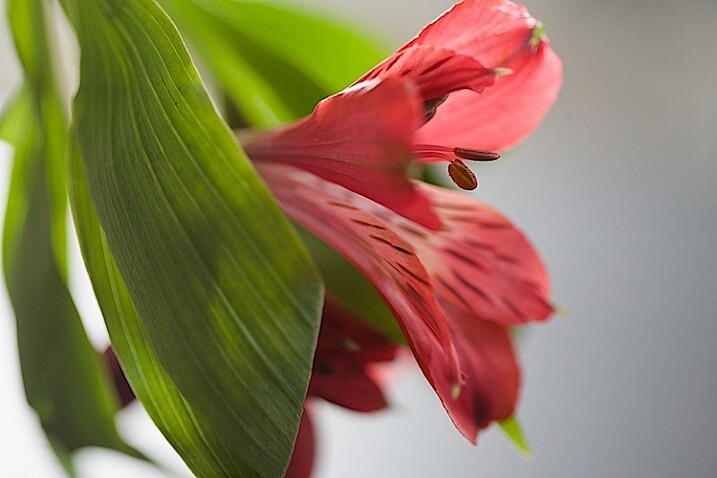
Notice the stamen of the flower above. Can you see it’s just a black blob? What happens when we add just a little bit of fill with a flashlight?
21.s-Light-Painting-Flowers-2016-05-19at16-11-21

The center of interest becomes more pronounced.

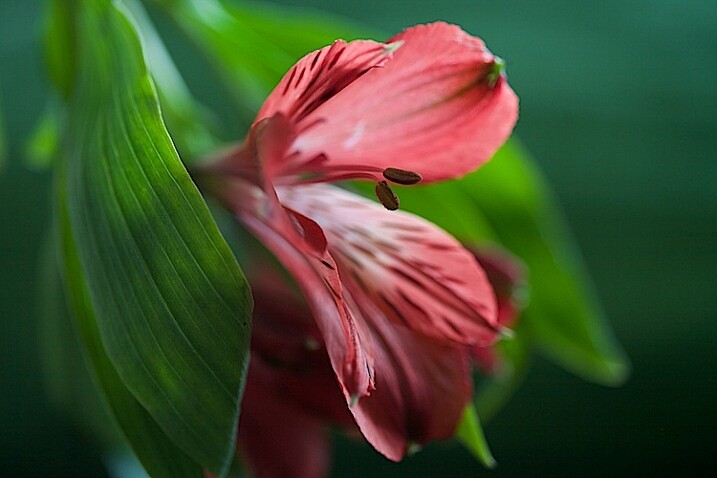
Let’s try another one.
22.s-Light-Painting-Flowers-2016-05-19at16-30-03

Dark stamen.

23.s-Light-Painting-Flowers-2016-05-19at16-29-04

A little bit of fill.

25.s-Light-Painting-Flowers-2016-05-19at16-33-56

A new angle with no fill.

26.s-Light-Painting-Flowers-2016-05-19at16-36-40

A little bit of fill light, highlighting the center of interest.

A few more examples

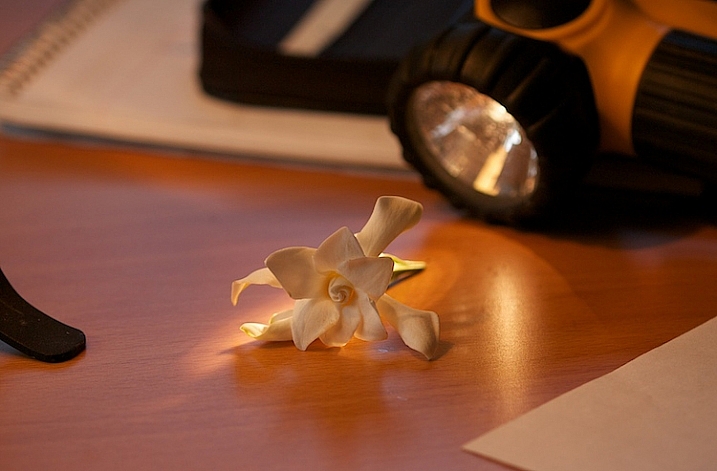
Let’s go back to this simple lighting setup.
2-Light-painting-flowers-gardenia-1

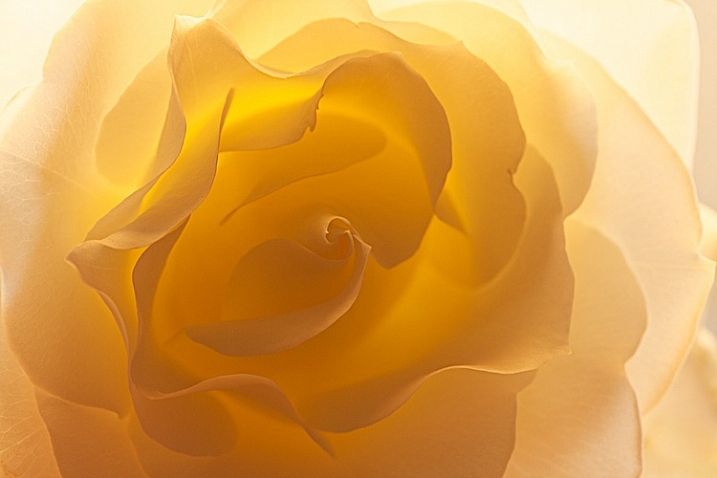
I used this setup on several different kinds of flower and I likde this white rose the best.
3-Light-painting-flowers-White-Rose-no-fill

Can you see the beautiful light and how translucent the rose looks?

I like the overall feel to the image, however, there is a lot of contrast between the center of the flower and the outer petals. You want your viewer’s eye to go toward the center of interest, which is the middle of the flower, so I placed a reflector right in front of the flower.
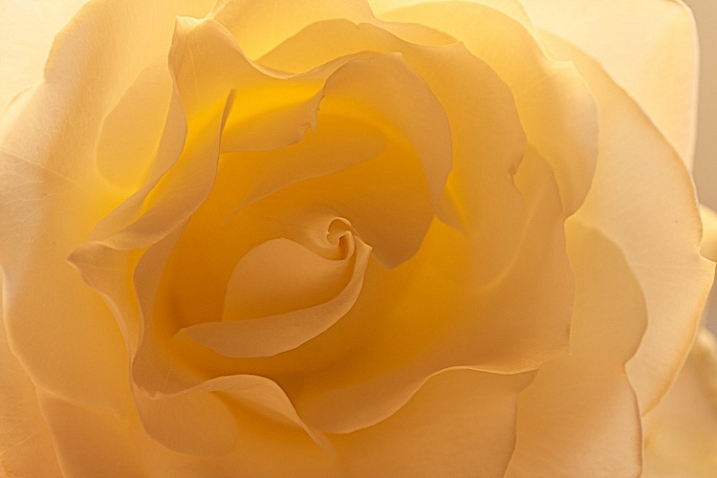
4-Light-painting-flowers-White-Rose-fill

You can see how the light reflects back in, and brightens up center of the flower. I also like this frame better because it feels softer.

This technique can work outdoors, too. Just use your reflector and your flashlight, and see what works.
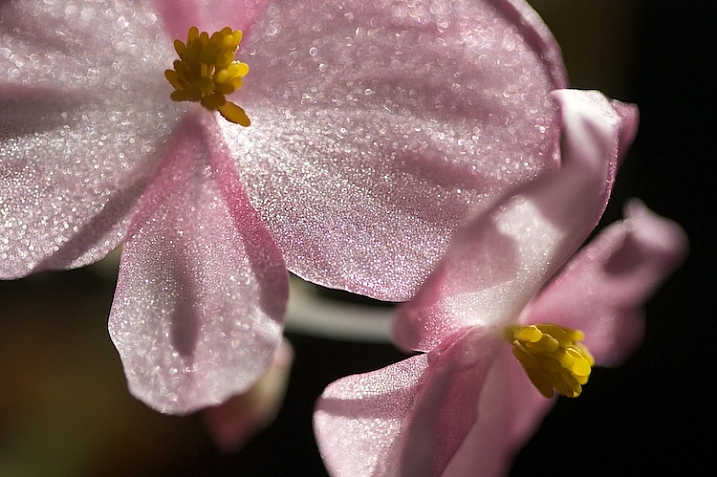
7-Light-painting-flowers-no-fill-pink-3

There is no right or wrong when deciding where to put your light, but it’s usually best not to shine your main light from the camera angle. In this photo, the light is to the right and it feels to harsh to me. There are strong shadows on the flower that don’t add to the feel of the photograph. I moved myself in order to move the position of the light source, the sun.
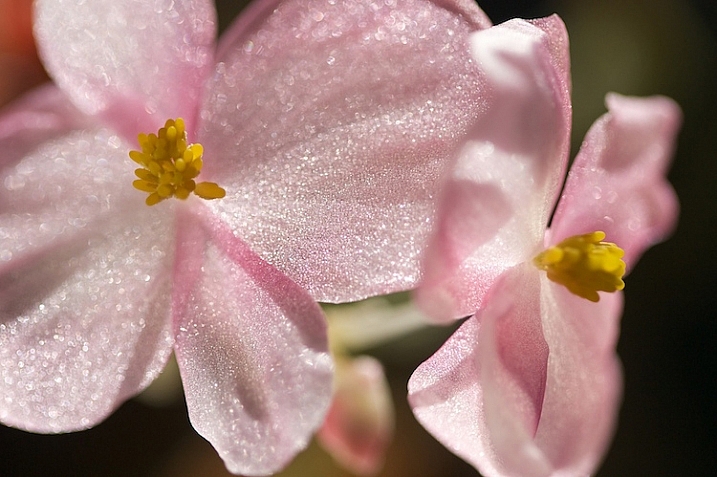
8-Light-painting-flowers-fill-pink-3

I added a fill card, and see how the stamen starts to stand out. This is much better, but I decided to play with camera angles to see what that would look like.
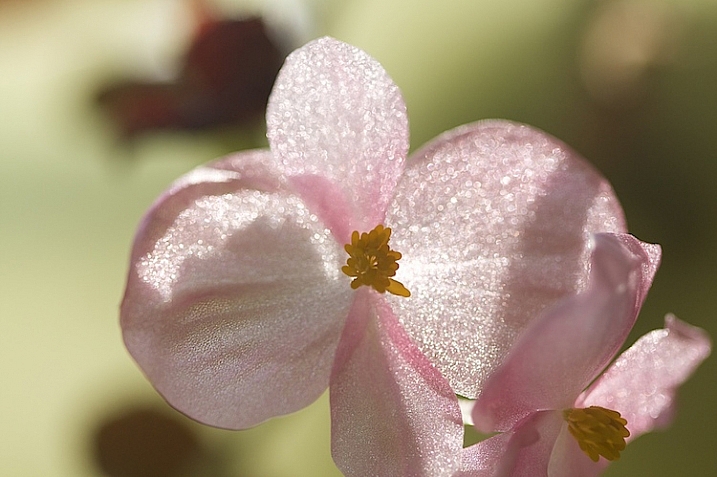
11-Light-painting-flowers-no-fill-pink-2

I liked this better, especially how the light created patterns on the petals of the flower, but I wanted my interest in the center of the flower. It still just seemed to dark.
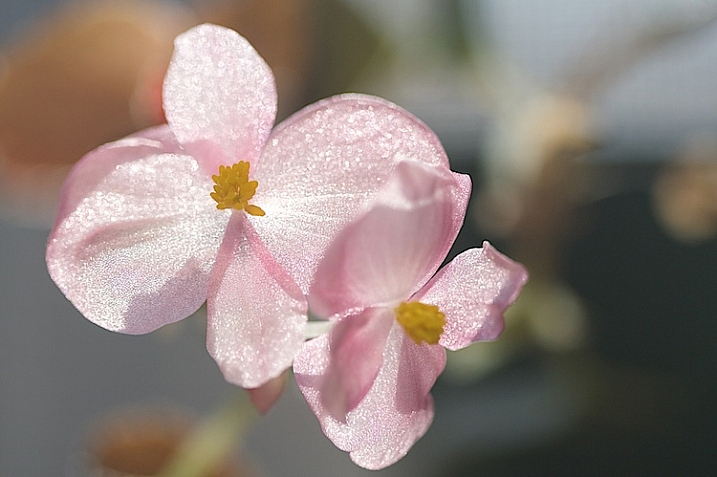
10-Light-painting-flowers-fill-pink-2

In the photo above, I used a reflector to fill in the shadows and used my flashlight to add a little bit of light.
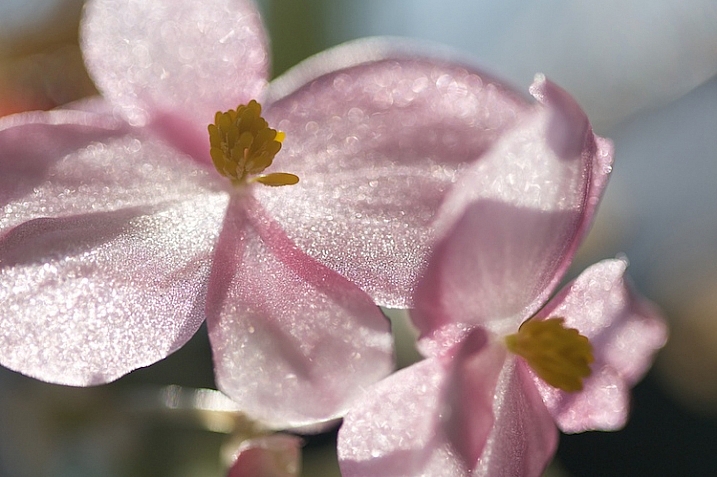
5-Light-painting-flowers-no-fill-pink

Then, I changed the angle just a little bit. This is with no fill (above).
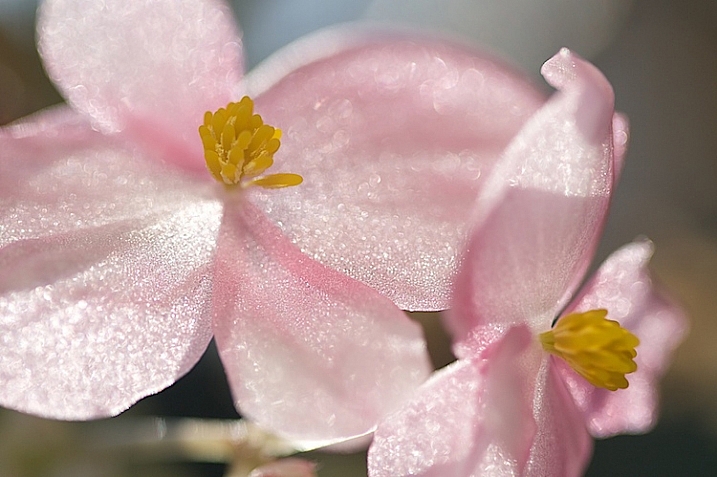
6-Light-painting-flowers-fill-pink

Here is the same flower with a reflector and flashlight filling in the dark areas.

There is no science to this. It’s all about playing to see what works. Here are a few more example that I shot, these images have no corrections. They are straight from the camera to help you see my process better.
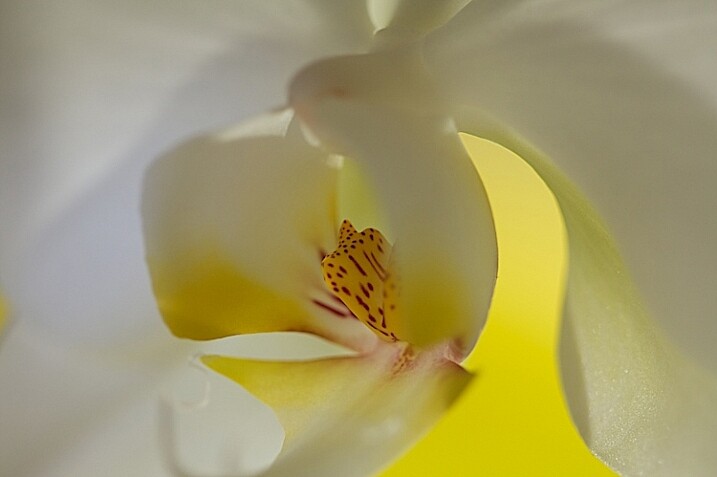
16Light-painting-flowers-no-fill-orchid

Without a fill.

17-Light-painting-flowers-fill-orchid

With a fill.

1-Light-painting-flowers-orchid

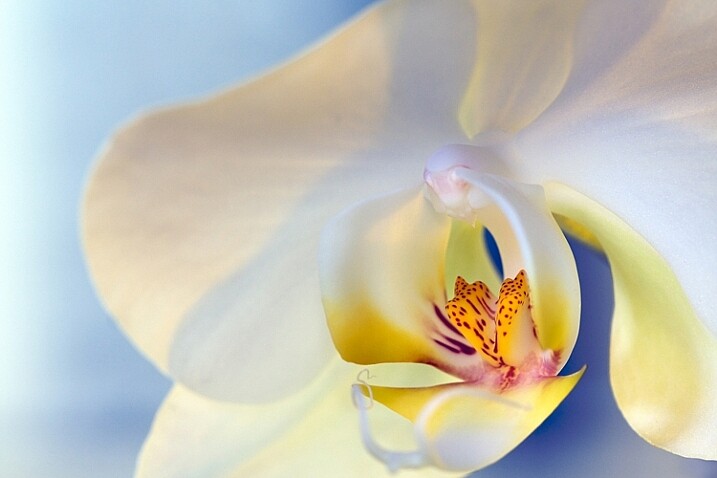
This final photo used several reflectors, as well as using a flashlight in the center of the flower.

Now you have some great tips, and inspiration to create a gorgeous floral photo of your own. You’ve seen how you can use simple fill cards to add light and soften an image. You’ve learned how light impacts the story you are telling, and you’ve learned how a simple flashlight or two, plus a kleenex, can take your photos to a new level.

Let’s see your floral photos, please share in the comments below.

googletag.cmd.push(function() {
tablet_slots.push( googletag.defineSlot( “/1005424/_dPSv4_tab-all-article-bottom_(300×250)”, [300, 250], “pb-ad-78623” ).addService( googletag.pubads() ) ); } );

googletag.cmd.push(function() {
mobile_slots.push( googletag.defineSlot( “/1005424/_dPSv4_mob-all-article-bottom_(300×250)”, [300, 250], “pb-ad-78158” ).addService( googletag.pubads() ) ); } );

The post How to Create Gorgeous Flower Images using a Flashlight and a Reflector by Vickie Lewis appeared first on Digital Photography School.


Digital Photography School

 
Comments Off on How to Create Gorgeous Flower Images using a Flashlight and a Reflector

Posted in Photography


World’s Brightest Flashlight: Brilliant 1000-Watt DIY Lantern

16 Dec

[ By WebUrbanist in Gadgets & Geekery & Technology. ]

highyieldledlight

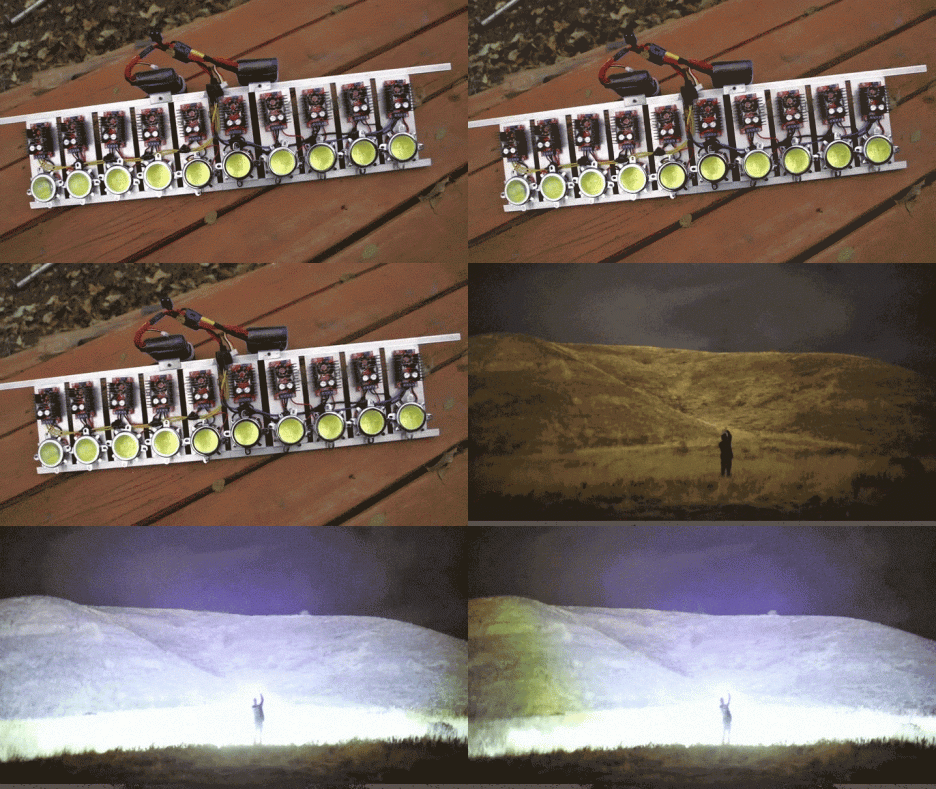
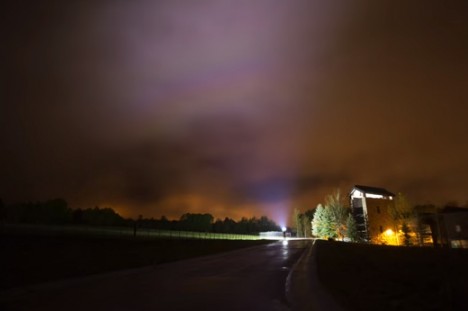
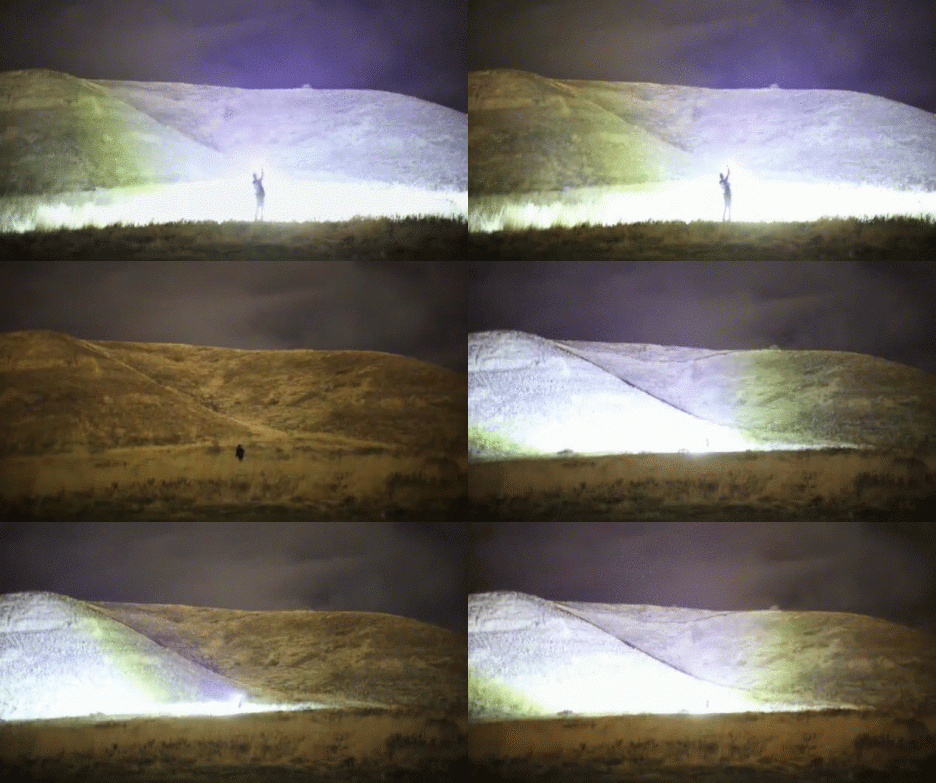
Lighting up the night sky like artificial lightning, this incredible homemade lamp boasts a 90,000-lumen output (over 100 times that of a typical Maglite) that would put the flashiest high-beams on dark roads to shame, making nighttime scenes look uncannily daylit.

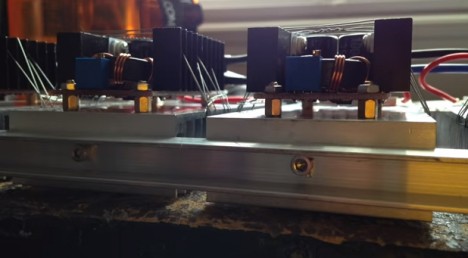
Constructed by RCTestFlight and published on YouTube, the project consists of ten 100-watt LEDs mounted on a heatsink and powered by twin 8 amp-hour, lithium-polymer batteries (about the equivalent energy of 10 mobile phones).

night bright light

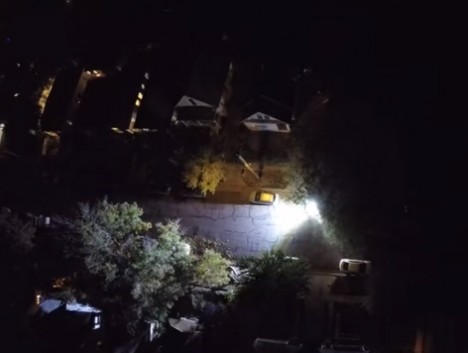
In the embedded video, you can see comparisons between car lights, streetlights, other handheld lamps and this flashlight, as well as demonstrations of lighting up clouds and mountains at a distance. Even the short-exposure shots reveal an incredible degree of brightness.

night handheld led flashlight

The rig uses ten 100-watt LED chips in a row, each connected to a large heatsink with bolts and thermal grease to help the heat transfer, each component tied to its own driver. Each LED has its own lens focusing light projection at around 60 degrees.

night flashlight worlds brightest

Made to burn fast and bright, the projection lifespan is accordingly limited: it can only run for about ten minutes and gets hot even faster than that. Cooling fans would be useful if longer blasts were needed, but for short bursts the system holds up just fine.

blindinglight

It shines bright in part due to LEDs trumping halogens, but also the various engineering details that help optimize for power and heat. The device can turn well-lit rooms into sun-bright spaces and even outdoors, at closer than 100 feet, it is basically blinding.

Share on Facebook


[ By WebUrbanist in Gadgets & Geekery & Technology. ]

[ WebUrbanist | Archives | Galleries | Privacy | TOS ]


WebUrbanist

 
Comments Off on World’s Brightest Flashlight: Brilliant 1000-Watt DIY Lantern

Posted in Creativity