RSS
 

Posts Tagged ‘Face’

Instagram gets Snapchat-style face filters and the transformation is practically complete

17 May

One update after another has given Instagram, the Facebook-owned image sharing app, a look that resembles Snapchat. And here we are, the day we knew was coming: the day that silly augmented reality filters arrive on Instagram. Instagram version 10.21 for iOS and Android enables a set of eight face filters for the front and rear cameras. The ability to adorn photos with hashtag ‘stickers’ is new as well. Like it or not, it’s just a matter of time before you see someone wearing adorable bunny ears in your Instagram feed.

Articles: Digital Photography Review (dpreview.com)

 
Comments Off on Instagram gets Snapchat-style face filters and the transformation is practically complete

Posted in Uncategorized


Fashionable Facades: 15 Buildings That Put On An Artistic Face

17 Nov

[ By SA Rogers in Architecture & Cities & Urbanism. ]

artistic-facade

Instead of wearing the architectural equivalent of jeans and a t-shirt, these buildings treat their facades like high fashion to stand out from the crowd and make a visual statement. Artistic exterior treatments can give structures a bold makeover, offer multiple functions like built-in courtyards and benches, and engage with the city in ways that ordinary buildings simply don’t.

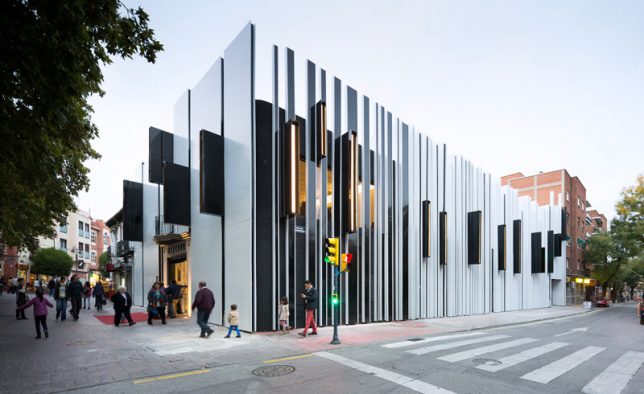
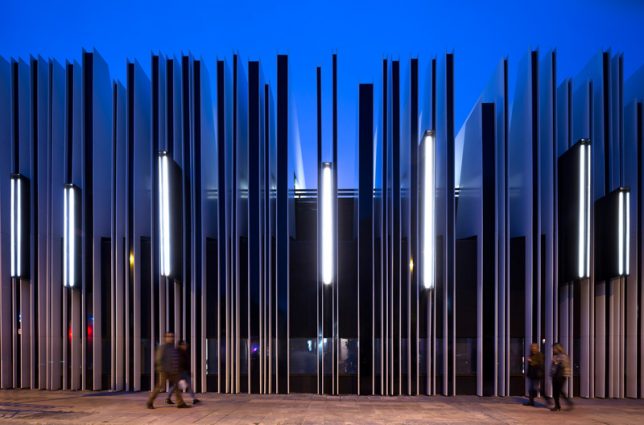
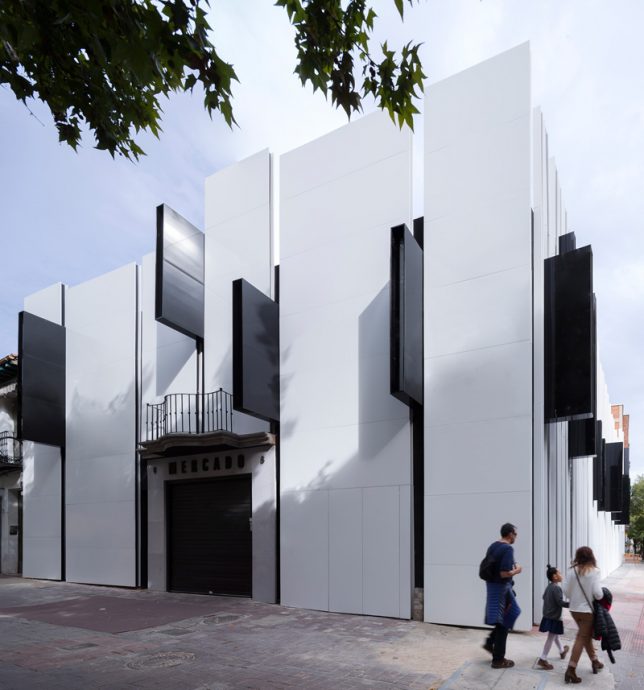
Mercado de Getafe by A-cero, Madrid, Spain

facades-acero-1

facades-acero-2

facades-acero-3

An ordinary brick building suddenly becomes extraordinary with the addition of a wrap-around facade by A-cero. The architects created a black envelope for the structure and added aluminum ribs and oversized lighting that protrudes to stick out over the sidewalk.

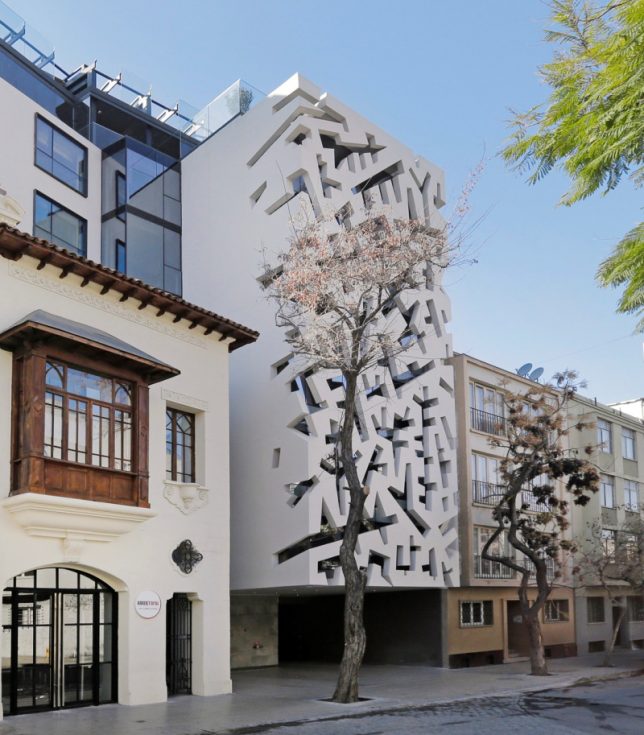
Hotel Cumbres Lastarria by Rodrigo Errazuriz, Santiago, Chile

facades-cumbres-1

facades-cumbres-2

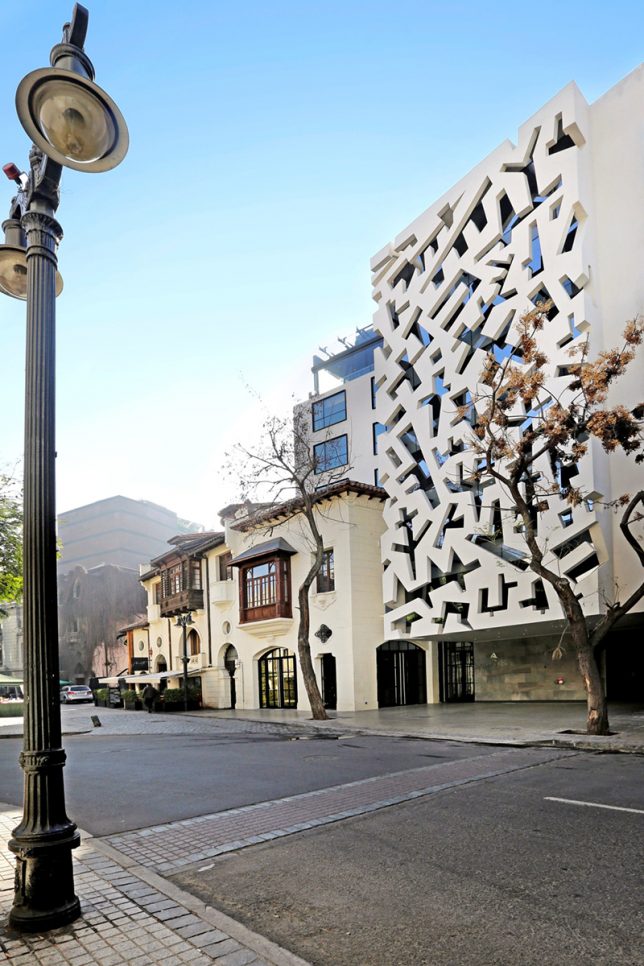
The white facade of this hotel by Rodrigo Errazuriz wraps around the glazed front of the building, turning rectilinear windows into a pattern of abstract shapes.

Izumono Sakaba by Area Connection, Izumo City, Japan

facades-sakaba-1

facades-sakaba-2

Architecture firm Area Connection took inspiration from the traditional details on the Izumo Taisha Shrine for this wooden latticework affixed to the facade of a nearby restaurant.

Frankfurter Kunstverein by Joko Avian, Germany

facades-frankfurter-1

facades-frankfurter-3

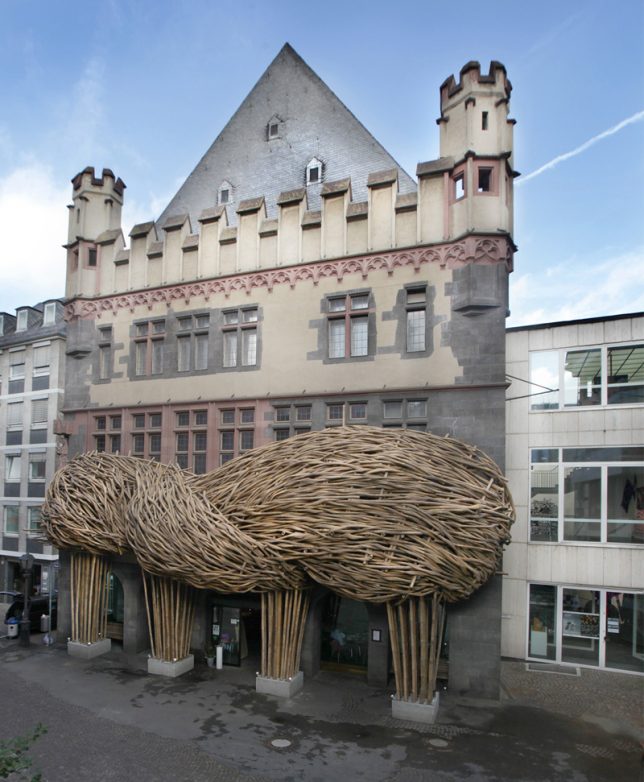
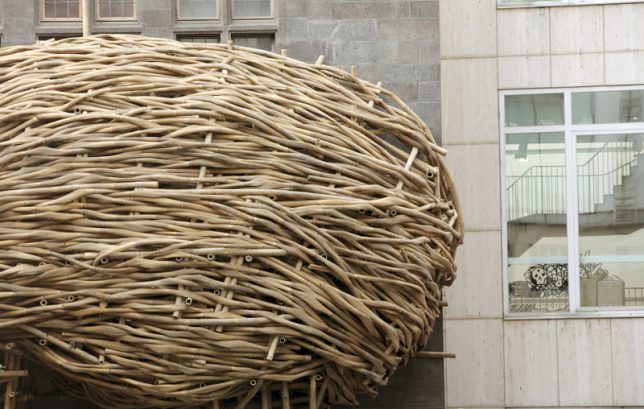
It’s too bad this cloud-shaped woven bamboo facade installation by artist Joko Avianto was only temporary, as it adds a beautiful new dimension to the exterior of the Frankfurter Kunstverein art museum.

Hotel WZ Jardins by Estudio Guto Requena, Sao Paulo, Brazil

facades-jardins-1

facades-jardins-2

facades-jardin-3

facades-jardin-5

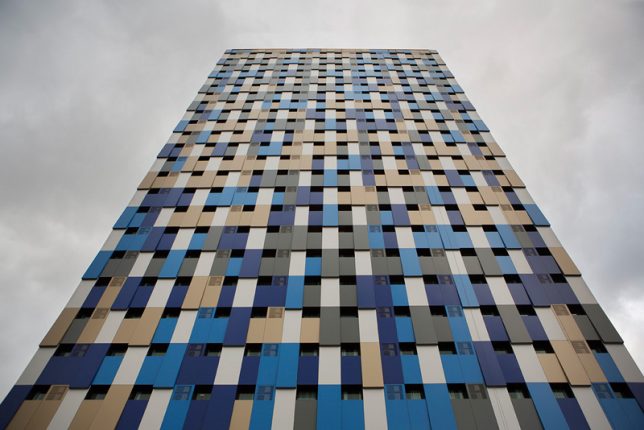
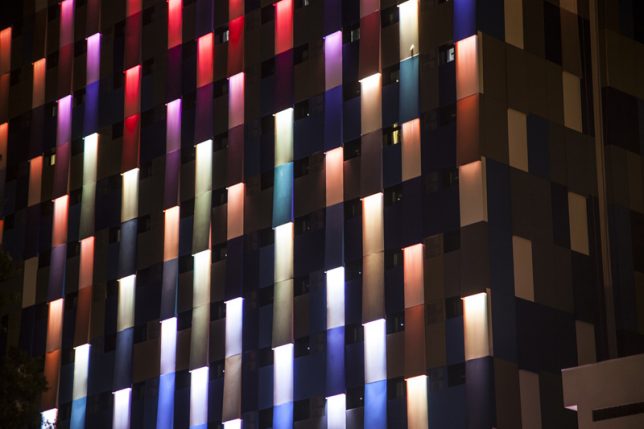
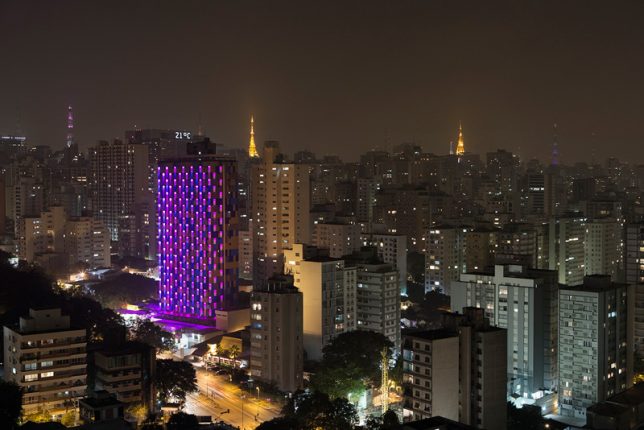
Exploring the concept of a ‘hacked city,’ the new facade of the Hotel WZ Jardins by Studio Guto Requena is covered in an ‘urban camouflage’ metal skin that lights up at night in interactive patterns, reacting in real time from sensors on the building that collect data on air quality. Passersby can also influence its patterns by logging onto a mobile app and using finger taps or voice commands.

Next Page – Click Below to Read More:
Fashionable Facades 15 Buildings That Put On An Artistic Face

Share on Facebook


[ By SA Rogers in Architecture & Cities & Urbanism. ]

[ WebUrbanist | Archives | Galleries | Privacy | TOS ]


WebUrbanist

 
Comments Off on Fashionable Facades: 15 Buildings That Put On An Artistic Face

Posted in Creativity


The Changing Face Of Photopreneurialism

26 May

For a while at least, photography enthusiasts who wanted to make a little money from their photos, had it easy. Or at least they had it easier than they used to have it. Not only had the prices of professional-quality digital cameras fallen to an affordable level but at the same time, photo-sharing sites made showing those images easy, websites created a whole new demand and microstock sites popped up to deliver those images to buyers. Suddenly anyone who knew their aperture from their elbow had an opportunity to shoot pictures that made money. But Flickr is now nearly ten years old and iStock, the first microstock site, will soon enter its fifteenth year. Both are now owned by large parent companies and the ease with which either could be used to make money has fallen significantly. While there is still demand for images, the methods used to sell them and promote them has changed—and they continue to change.

For most microstock contributors, sales and profits are harder to come by. Once, contributors like Shutterstock founder Jon Oringer could get away with images as poor and as cheap to produce as these. Today, they’re more likely to be professionally shot in a studio, using paid models and high expenses. But they’re also less likely to win the sales necessary to cover the costs of producing them. With nearly 80,000 contributors on iStockPhoto and just under half that number on Shutterstock, keywords are saturated and the number of sales generated by each image has fallen. Even Yuri Arcurs, the market’s leading producer, has now signed an exclusive deal with iStockPhoto ensuring that he receives the higher rates offered by exclusivity—and the premium he would have negotiated.

That’s likely to continue. While top contributors take up exclusivity, more occasional shooters can expect to see falling revenues that only produce profits if they disregard costs.

Single-Use Licenses For Microstock

But there may be an alternative route for contributors. One of the big stories of 2013 was Getty’s decision to ban Sean Locke for criticizing the company’s decision to license images for free use on Google Drive. Canva, a new graphic design tool that now employs Lee Torrens of Microstock Diaries, takes a similar approach but with a significant difference. Like Google, Canva allows producers—in this case designers—to access microstock imagery at the point of use. But while Google has paid a small amount in advance for the images so that users can access them for free, Canva charges a fee for each use.

Users of Canva pay a dollar to use the image once and Canva pays the photographer a commission of 35 percent. While those are still small amounts, they’re higher than the commissions received by many microstock photographers for a much less restricted license.

It’s possible that as WYSIWYG editors like Wix for website owners increase, we’ll see a rise in single-use licenses bought at point of use. Canva launched with a million photos. Whether that will mean better deals for part-time photographers looking for sales remains to be seen.

While microstock battles to stay relevant to small producers, other opportunities are rising. The growth of social media initially meant better marketing for event photographers on Facebook and better networking with other photographers on Twitter. Instagram, though, has changed all that. Build up a large following on the mobile photo-sharing site and photographers can find that they’re being approached by brands who want to put pictures of their products in their timelines.

Klouts Perks have brought the same opportunities to users of Twitter and Facebook. Companies can identify key influencers based on their Klout score and expertise, and offer them benefits in return for their ability to reach large numbers of followers. Perks have included a shooting trip to Vail and two new Sony cameras.

It’s not something you can depend on. But for photographers who are active on social media and who manage to build up large followings, the chances that they’ll receive attention and rewards from large firms has increased.

Chances Go Mobile

And photographers who like to shoot on their mobile phones have also seen new opportunities. When Bruce Livingstone launched iStockPhoto, smartphones with strong lenses were still a glint in Steve Jobs’ eye. The iPhone didn’t launch until 2007 and even then it only had a 2 megapixel camera set to f/2.8. Now apps like Scoopshot send announcements of wanted images directly to phones and sell shots of news, accidents and extreme weather uploaded by its users. Those sorts of photos might not be the artistic, beautiful photography enthusiasts like to produce but they still require some photographic skill—and they’re opportunities that weren’t available previously.

And for photographers who are more artistic, an old opportunity may be returning, doubled. Flickr has been refurbished and still has an agreement with Getty which provides an easy way for buyers to license the images they find on the site. Its younger rival 500px pushes fine art photography prints—with help from the photographers who produce it.

For both the sites, the number of contributors have grown as well as the number of images they offer but because Facebook has siphoned off many of the social images which use to crowd Flickr (and for which the site was originally intended) the quality of the images left behind has also improved.

The bottom line for photography enthusiasts trying to sell images today is that the market continues to change. Microstock has got tighter but may open up again in new and different ways. Social media now offers a way to reward popularity directly as well as market and network. Mobile technology has opened markets for occasional photojournalists, and photo-sharing platforms that specialize in fine art photography continue to grow and develop.

The photography business has always changed, and it will continue to do so. The opportunities available five years ago are not the same as the opportunities available now. But if you can take great photos and are willing to put the effort into matching them to buyers, opportunities are still there.


Photopreneur – Make Money Selling Your Photos

 
Comments Off on The Changing Face Of Photopreneurialism

Posted in Equipment


Saving Face: ‘Ghost Facade’ Preservation Worse Than Demolition?

12 Feb

[ By WebUrbanist in Architecture & Cities & Urbanism. ]

ghastly grafted facade example

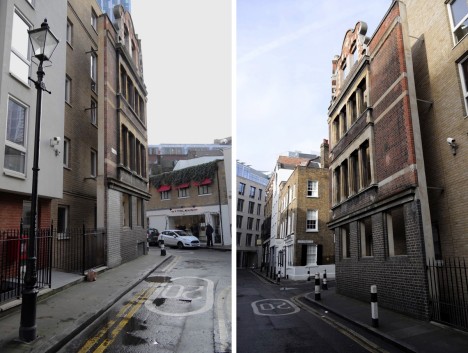
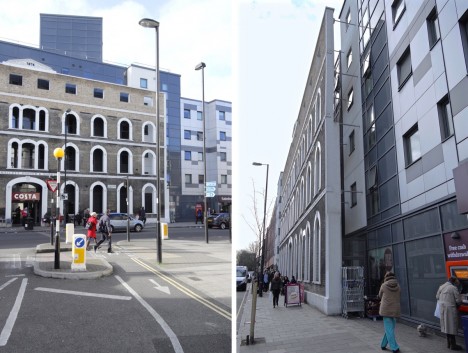
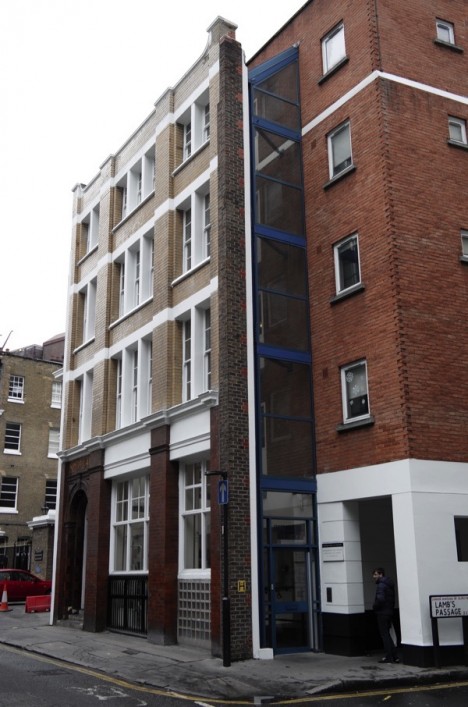
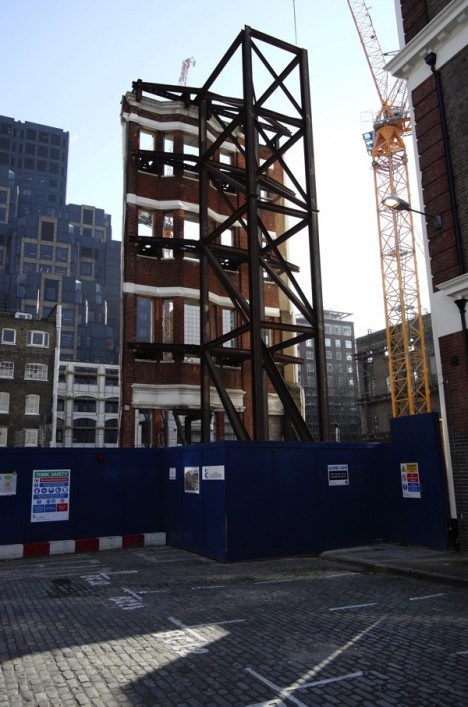
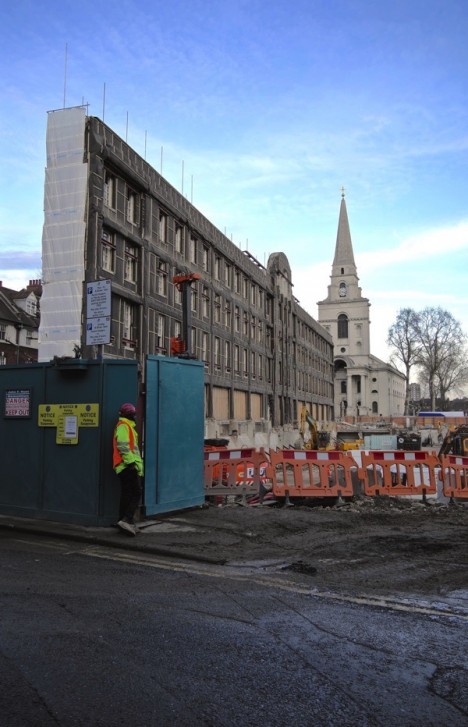
London is filled with grafted facades, nearly two-dimensional artifacts held in place while updated buildings are constructed behind them; many seem to haphazardly half-disguise the boring new structures on which they are grafted. While other cities have done similar, the sheer volume of them in this East End neighborhood is astonishing.

facade combination abomination

The writer behind Spitalfields Life, a web publication, does not mince words in reacting to this partial approach to preservation, which “threatens to turn the city into the back lot of an abandoned movie studio …. As if I were being poked repeatedly in the eye with a blunt stick, I cannot avoid becoming increasingly aware of a painfully cynical trend in London architecture.”

facade ghost grafting

In further criticisms, The Gentle Author bemoans the results as a compromise between “cowed planning authorities” and “architects … humiliated into creating passive-aggressive structures.” Perhaps this gives insufficient credit to architects, some of whom also fall guilty to facadism at times, and have been known to prioritize the exterior over the plan, skin over skeleton, form over function.

facade stabilized new structure

It is dangerous to suppose that preservation is necessarily binary. Compromises are almost inevitably made over time to keep architectural functional, through essential electrical and plumbing retrofits to more debatable code-related upgrades and updates. There is also a case to be made that the streets are a public room of which buildings are the walls, so preserving facades (properly, at least) can maintain the public’s experience of a place.

facadism preservation

Nonetheless, whether you approve of the general approach or cannot see the apologist’s point of view, it is hard to argue against the examples: the executions documented by The Gentle Author range from mediocre to outright terrible. In short: there may be a right way to approach preserving facades as part of new structures, but many architects are doing it wrong.

Share on Facebook


[ By WebUrbanist in Architecture & Cities & Urbanism. ]

[ WebUrbanist | Archives | Galleries | Privacy | TOS ]


WebUrbanist

 
Comments Off on Saving Face: ‘Ghost Facade’ Preservation Worse Than Demolition?

Posted in Creativity


Face Hacking: Transformations via 3D Projection Mapping

22 Jan

[ By Steph in Conceptual & Futuristic & Technology. ]

face hacking 1

Actors gain access to thousands of different faces instantaneously as their facial topography is scanned and altered in real-time using 3D projection mapping. Japanese artist Nobumichi Asai collaborates with makeup artist Hiroto Kuwahara and French digital image engineer Paul Lacroix to create transfixing transformations that track the actor’s movements to keep their ‘new faces’ in place.

Screen shot 2015-01-21 at 7.50.42 PM

Screen shot 2015-01-21 at 7.51.31 PM

Screen shot 2015-01-21 at 7.52.41 PM

The Facehacking and Omote projects consist of real-time face tracking and projection mapping to ‘re-write’ the actors’ faces in a virtually endless variety of ways. As the actors turn their heads, animations are projected onto the surface of their skin.

Screen shot 2015-01-21 at 7.53.14 PM

Screen shot 2015-01-21 at 7.54.30 PM

facehacking 2

The effect can be quite creepy, especially when these new characters open their eyes as if they have suddenly inhabited the bodies of their hosts. The result looks like especially detailed stage makeup, but changes on demand. While it could certainly be used in film, it’s especially intriguing as a possible element of live performances.

Share on Facebook


[ By Steph in Conceptual & Futuristic & Technology. ]

[ WebUrbanist | Archives | Galleries | Privacy | TOS ]


WebUrbanist

 
Comments Off on Face Hacking: Transformations via 3D Projection Mapping

Posted in Creativity


[MODIFIED] Google Gmail – Add a Smiling Face or other Emoji (Emoticon)

06 Apr

Brighten up your email with emoticons such as smiling faces, weather symbols, and food items.

Need another way to express yourself when sending e-mail via Google Gmail, and changing the text color just won’t do?

You can insert all sorts of emoji / emoticons, such as smilies, stars, exclamation points, and mini clip-art of objects such as a computer, cell phone, or baseball. Some even animate such as laughing faces, dancing hearts, and ringing bells! Inserting emoticons is simple:…

Read more at MalekTips.
New Computer and Technology Help and Tips – MalekTips.Com

 
Comments Off on [MODIFIED] Google Gmail – Add a Smiling Face or other Emoji (Emoticon)

Posted in Technology


900MP portraits show human face in extreme detail

20 Mar

megaportrait.jpg

‘Facial cartography’ is an apt description of Swiss photographer Daniel Boschung’s portraits. Folds, crevices and pores that are often invisible under normal viewing conditions are shown in extreme detail in his 900MP images. Each of his photographs is comprised of about 600 images captured by an ABB robot with a Canon 5D Mark II and a 180mm macro lens. Learn more

News: Digital Photography Review (dpreview.com)

 
Comments Off on 900MP portraits show human face in extreme detail

Posted in Uncategorized


Face to GIF — The Fastest Way to Make a GIF on Your Laptop!

05 Jul

We’re avid Tumblr GIF-ers. We’ve done it all. Time-lapse GIFs, film scanner GIFs, wiggle GIFs.

So you can trust us when we say Face to GIF is the quickest way to make a GIF of your face.

It all happens in your browser. All you do is hit the “make a GIF” button, and it’ll record you via your computer’s webcam. Almost instantly, it’ll deliver a GIF of your face sitting behind the screen.

Now that you have the power of instant GIF-ing, you can shoot reaction GIFs (for forum and commenting fun), show Tumblr your pop n’ lock moves, and maybe even sit your favorite cat in front of the camera.

Life’s too short to not be making GIFs of your face… or pets, so have a blast.

Make a GIF of Your Face [via The Verge]

Related posts:

  1. Make Some Guy Draw Your Face   This Photojojo made possible by…   If you send…
  2. What Might You Look Like if You Were Black? or White? or Old? The Face Transformer Shows All Ever wonder what life might be like if you were…
  3. Be a Socialist Hero! Your Photographed Face as Mao’s Special Helper ~Our advertisers come back over andover and over again. Find…


Photojojo

 
Comments Off on Face to GIF — The Fastest Way to Make a GIF on Your Laptop!

Posted in Equipment


Type Face: Monumental Figurative Sculptures Made of Text

25 Jun

[ By Steph in Art & Sculpture & Craft. ]

Jaume Plensa Typeface Sculptures 1

Giant human figures made of jumbled steel letters loom over public spaces in a series of monumental typographic sculptures by artist Jaume Plensa. The contemplative seated figures seem to watch over the landscapes and city squares where they have been installed around the world, from London to Rio de Janeiro.

Jaume Plensa Typeface Sculptures 3

(images via: chris huggins, jaume plensa)

Jaume Plensa Typographic Sculpture 2

(images via: terry madeley)

The text seems to wrap around invisible human forms, looking at times as if it is incomplete. Plensa’s work is not just thought-provoking, it is about thought itself and how words can shape our world and the way we interact with it.

Jaume Plensa Typeface Sculptures 4

(images via: terry madeley, jw sherman, anders sandberg)

Plensa has borrowed paragraphs from biblical texts, classic literature like Dante’s Divine Comedy, and poetry by William Blake. Stand beneath or inside one of these massive sculptures and you likely won’t be able to read much of the text – but that’s not the point.

Jaume Plensa Typeface Sculptures 5

Jaume Plensa Typeface Sculptures 6

(images via: tim green, lorraine 1 + 2, liza31337)

Conceptual dualities, like the play between negative and positive space, are intended to stimulate intellectual engagement, connecting the sculptures with the viewers on an intuitive level. The pieces often include ‘doorways’ so viewers can interact with the work, temporarily becoming a part of it.

Share on Facebook


[ By Steph in Art & Sculpture & Craft. ]

[ WebUrbanist | Archives | Galleries | Privacy | TOS ]


WebUrbanist

 
Comments Off on Type Face: Monumental Figurative Sculptures Made of Text

Posted in Creativity


? Dead Rising 2: Off The Record – Walkthrough Part 19 – Laser Face

21 Jan

See The Full Dead Rising 2: Off The Record Show Here!!! ? goo.gl ? Dead Rising 2: Off The Record – Walkthrough Part 19 – Laser Face In this episode Chris Jay takes you on a journey to find some survivors, some zombrex and even a laser face. =-=-=-=-= Director =-=-=-=-= By Chris Jay: goo.gl =-=-=-=-=-=-=-=-=-=-=-=-=-= ?Dead Rising 2: Off The Record ? At Captivate 2011, Capcom’s annual press show, the company announced that it was releasing Dead Rising 2: Off the Record, as a reinterpretation of the game with Frank West from the original Dead Rising as the main character. The game was released for the same consoles on October 11 in North America, October 13 in Japan, and October 14 in Europe for a discount retail price. Off the Record is intended as a complete reimagining of Dead Rising 2, with new missions, cutscenes, environments, enemies, and weapons. The photography mechanic from the first Dead Rising is also included. There are technical and system upgrades, such as optimization of loading times and improved network performance. Off the Record also features a new sandbox mode. This allows players to explore Fortune City without the obstacle of time. Off The Record has received mostly positive reviews, with the changes and additions both praised and panned. Developer ? Capcom, Blue Castle Games Publisher ? Capcom Genre ? action-adventure horror-comedy Release Date ? October 11th, 2011 Platforms ? Xbox 360, PS3, Microsoft Windows
Video Rating: 5 / 5