RSS
 

Posts Tagged ‘f/2.8’

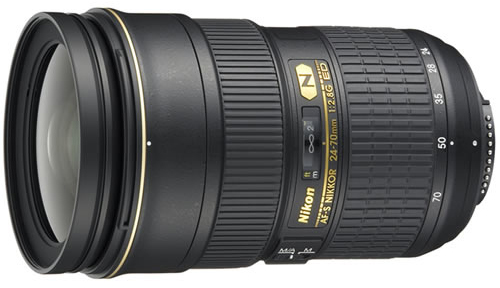
A Practical Review of the Nikon 24-70mm f/2.8 lens

27 Nov
The Nikon 24-70mm F2.8 Lens

The Nikon 24-70mm F2.8 Lens

You will hear this from many photographers – “invest in your lenses”. Camera bodies will come and go, but a good lens can last a very long time. This was the advice that I first received when I started taking my photography seriously. Initially, I thought it was a bit hyped. I bought a cheap 70-300mm lens and used it at the first wedding I shot. I thought the images were fantastic until I bought a better lens a year later. I then realized how much difference a good lens can make.

This review is not going to be a technical review of the lens. You want to know how this lens performs, what the strong points are and what the weak points are – I will cover that. You will see images taken with the lens, many will be edited in Photoshop, some will be straight out of the camera, I will point out to you which are which.

About this lens

This lens is regularly praised as the best midrange zoom lens that Nikon has ever made. That sounds like a crazy statement, but when you look at the image results from this lens you can understand why. The lens is a high spec lens with a maximum aperture of f/2.8 and a minimum of f/22. Here is a quick look at the technical specs:

Focal Length: 24-70mm
Format: Full Frame – 35mm, can be used on a DX body, but will be cropped
Maximum aperture: f/2.8
Minimum aperture: f/22
Dimensions: 83mm (diameter) x 133mm (length)
Weight: 900g
Zoom ratio: 2.9X
Minimum focusing distance: 38cm

This lens is a perfect “all rounder” lens. You may find that you keep the lens on your camera most of the time. It has a really good focal range for everyday photography. It is a good travel lens too. Many photographers have said that this lens was the only lens they went on vacation with and it worked really well.

Photographic Genres that it can be used for:

1. Landscape Photography

This is not considered a super wide angle lens, but at 24mm on a full frame sensor, you will get a viewing angle of of 84 degrees which gives a pretty wide angle of view. This lens can be used for landscape photography for a few reasons. Firstly, it has really good glass elements that handle light beautifully. There is some distortion at 24mm, but this is easily corrected in Photoshop. Secondly the lens is really sharp, it makes an image seem almost too sharp. You may find that you won’t need to sharpen your image as much if you use a tripod and are properly focused. The colour rendition on this lens is really good too, colours are true and vibrant. This lens is good for landscapes, not necessarily as a dedicated landscape photography lens (you may want to look at some wide angle lenses) but it can certainly perform well for this type of photography.

This seascape image was shot at 24mm. The clarity and colour was amazing, this has been edited in Photoshop

This seascape image was shot at 24mm. The clarity and colour was amazing, this has been edited in Photoshop

2. People Photography

This lens can work well for people photography as well which can encompass portraiture, weddings, and even street photography. This lens will do a really good job in any of these genres. In people photography, you will want to have a lens with minimal distortion. If you are using the 24-70mm for people photography, you will want to be shooting at 50mm and upwards. With a wide open aperture at f/2.8 you will be able to isolate your subject easily and have a soft out of focus background. The bokeh on this lens is good, but more on this later.

A scene in a coffee shop, taken at 24mm. Converted to B&W and edited in Photoshop

A scene in a coffee shop, taken at 24mm. Converted to B&W and edited in Photoshop

3. Close-up and Macro Photography

While the 24-70mm is not a macro lens, it has a 37 cm (14.5″) minimum focusing distance. That sounds like a long way, but at 70mm you can get pretty close to your subject. If you are shooting on a high resolution sensor (16 megapixels and above) you will be able to crop in quite a bit and so you will be able to get some good close up images. Bear in mind, this is not a macro lens, but if you want to get in close to a subject, really nice and close, this lens can do that. The sharpness and clarity is amazing, and it is good to have this ability on this lens.

This badge on the hood of a car was taken at 70mm and handheld. The clarity and sharpness is good and the close up shot isolates the badge

This badge on the hood of a car was taken at 70mm and handheld. The clarity and sharpness is good and the close-up shot isolates the badge

4. Street Photography

Most street photographers will traditionally use a prime lens for their work. You will often find a 50mm f/1.8 or and 85mm f/2.8 on their cameras. Sometimes though, it is good to have a little more flexibility and the 24-70mm is perfect for this. You can shoot at 35mm, 50mm, or 70mm and you will get great results. Based on your creative desire, you can shoot at f/2.8 or up to f/8 depending on your scene. The beauty of the lens is that it can focus really quickly and easily. It has a SWM (Silent Wave Motor) which means the autofocus is quick and quiet, really useful in street photography. There is some vignetting when the lens is wide open at f/2.8, but this adds some depth and contrast to street photography images.

This lens gives you flexibility when shooting street photography.

This lens gives you flexibility when shooting street photography.

5. Travel Photography

When you are planning to travel, there is always the consideration of what lenses to pack. Weight is always a challenge and of course, space. Many photographers have found that the 24-70mm is a prefect travel lens. At the low end, you can capture some great images of wide open spaces and the interiors of  churches and cathedrals easily. Zoom in and you can get pretty close to your subject, step in closer and you can do some wonderful cameo and detail shots. The 24-70mm is almost designed for travel photography. Yes, it lacks a little in the zoom category, 70mm is not a huge zoom, but you will come home with bright, sharp, colour-filled images.

The magnificent Peyto Lake in the Canadian Rockies, made with the 24-70mm lens

The magnificent Peyto Lake in the Canadian Rockies, made with the 24-70mm lens

Performance

The Nikon 24-70mm has amazing optics. It is sharp throughout the zoom range and has a fixed aperture of f/2.8 which means you can get a very shallow depth of field throughout the entire range.

1. Autofocus

This lens focuses quickly and accurately. I use it on a Nikon D800 and it works really well on that camera. You can of course manually focus, but I would only suggest doing that when you are shooting landscapes or close-up photography. If you have a subject that is moving, autofocus is necessary.

2. Colour rendition

The lens produces good colour, which is vibrant and rich.

3. Distortion

If the lens is zoomed out to 24mm you will see some barrel distortion. Once you zoom in though, the distortion goes away, so be aware of the distortion when shooting at 24mm. It is easily fixed in Photoshop or Lightrooom, so don’t be too overly concerned about that.

4. Handling

The lens is quite large and heavy, mostly because the lens has all glass elements and the body of the lens is metal. It is a hardy lens and can take some rough handling, but be careful with it as it is an expensive lens and you wouldn’t want to repair it unnecessarily. When mounted on a Nikon D800 without a battery back, the combined weight of the lens and camera body will be at least 2 kilograms (4.4 pounds). Thats a fair amount of weight to carry around at the end of your hand, so be aware if you plan to buy this lens.

5. Bokeh

Many lenses are judged not only on how sharp they are, but how smooth and creamy are the out of focus areas (bokeh) of the image. In this area, the 24-70mm does okay. The bokeh on this lens is not a wow, but it is smooth and soft. On a lens that offers so much, the bokeh is not perfect, but it is acceptable.

Overall Conclusion

This lens has been praised as one of the best lenses Nikon has ever made. It is a great addition to any photography bag. You will find that you may keep it on your camera most of the time. It really is a sharp lens and is a perfect “all-round” everyday lens. Its specifications make it a “pro-spec” lens which means it’s not cheap (just under $ 2000). Remember though, it is recommended to invest in your lenses. Generally they will outlast your camera bodies and you will have them for many years if you look after them. This is one of those types of lenses, it will last well and produce great images for many years.

The post A Practical Review of the Nikon 24-70mm f/2.8 lens by Barry J Brady appeared first on Digital Photography School.

Digital Photography School

 
Comments Off on A Practical Review of the Nikon 24-70mm f/2.8 lens

Posted in Photography


Going Wide With the Tokina 11-16mm f/2.8

29 Oct

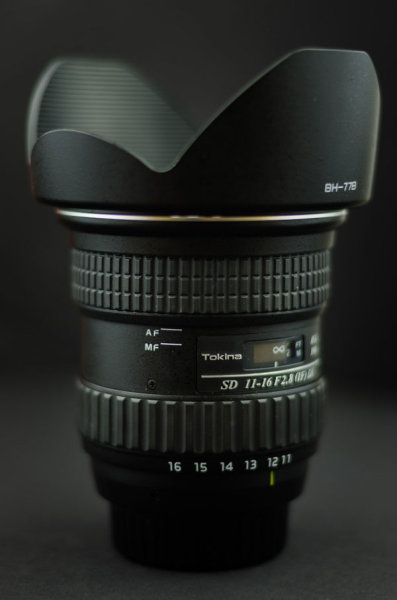
The Tokina 11-16mm f/2.8 APS-C sensor lens is without a doubt my favorite lens in my camera bag and it also has some great reviews throughout the photography community. But is this lens for you? What are its strengths and weaknesses? Ultimately, what kind of photographs can you take with it?

tokinalens

Who is the Tokina 11-16mm f/2.8 for?

On the surface this wide angle crop sensor lens is going to appeal to just about any landscape photographer using an APS-C sensor DSLR and particularly those who are on tighter budgets, as it can be found (at the time of this writing) for around $ 500 making it quite affordable for its quality.

The main strengths

The Tokina 11-16mm has been a popular lens for a few years with good reason. It is sharp throughout its focal range and has limited distortion and artifacts which can be easily corrected inside Lightroom or other post-production software.

The lens is built like a tank and can really take a beating in the wild.

The constant f/2.8 aperture is a great benefit if you plan on photographing in low light situations – for example – taking photos of the night sky.

Its weaknesses?

Of course, with every set of strengths, comes a set of weaknesses and the Tokina 11-16mm has a couple that are worth mentioning here.

The small focal length range does at times feel a bit limiting. You’re always going to be at a wide angle shot, whereas something like the Nikon 10-24 will get you closer to your subject without swapping lenses.

As I mentioned the Tokina is built like a tank, and as such, is quite large (550g) which does make it cumbersome to take with you on longer hikes. Not saying that it’s not doable, just that smaller is better when you’re packing for a trek and it’s worth considering.

Overall I haven’t noticed too many problems with the lens, but the one I have, does get a little finicky when trying to focus in low light situations. It’s not always a problem, and by no means a deal breaker for me, but it is something to be aware of.

So what kind of photographs can you take with this lens?

As with any lens the photographs you make are only limited by your creativity when it comes to subject matter. That said, dramatic sunset photographs, or dynamic seascape scenes are the bread and butter for this lens.

lazyphotographer

ISO 100 | f/14 | 11mm | 2.5 seconds

improve-photography-self-critic-5

ISO 100 | f/11 | 11mm | 6 seconds

On top of these, if you’ve wanted to capture a silky smooth waterfall photograph, this lens will certainly get it done, and I’ve used it many times photographing the numerous waterfalls of New England.

show and tell-6

ISO 100 | f/14 | 16mm | 3 seconds

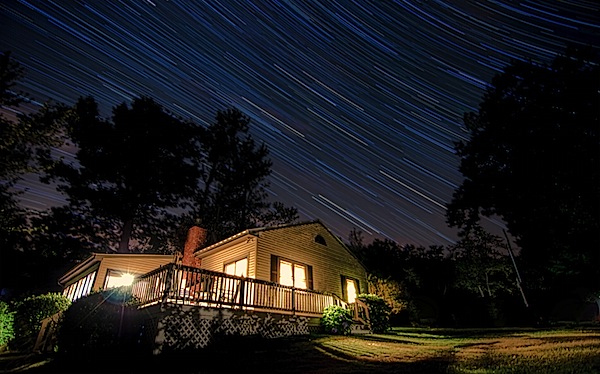
As mentioned above, having that constant f/2.8 aperture gives you the ability to capture great night sky photography. Pair it with a modern DSLR capable of shooting at relatively high ISOs and you’ll be able to capture some great shots of the stars, or create star-trails if that’s more your thing.

p2077635047-4

ISO 800 | f/2.8 | 11mm | 30 seconds

startrailphoto

ISO 800 | f/2.8 | 11mm | 30 seconds (~150 exposures)

Finally, even though this is a wide angle lens, you don’t have to get caught up in capturing these massive scenes to get something out of it. Sometimes you can make it work for a subject as simple as a dragonfly watching the sunset. So it really is limited only by your creativity.

Dragonfly-Watching-Sunset-518x650

ISO 3200 | f2.8 | 16mm | 1/1250

Do you already own the Tokina 11-16mm f/2.8?

Tell us your own thoughts on the lens and share some of your favorite shots taken with it in the comments below. Do you have a different favorite lens? See what dPS writer Andrew S. Gibson considers his favorite here.

The post Going Wide With the Tokina 11-16mm f/2.8 by John Davenport appeared first on Digital Photography School.


Digital Photography School

 
Comments Off on Going Wide With the Tokina 11-16mm f/2.8

Posted in Photography


Photokina 2014: Hands on with new Tamron lenses – including 15-30mm F2.8

19 Sep

We caught up with Tamron at Photokina 2014 to get a peek at the new 15-30mm F2.8 ultra-wide angle zoom. It’s designed to cover a full frame sensor and was shown to us in a late prototype form, though its official launch date is unconfirmed. We also got some hands-on time with the manufacturer’s latest all-in-one zoom lenses as well as the always-impressively-huge 150-600mm F5-6.3. Read more

Articles: Digital Photography Review (dpreview.com)

 
Comments Off on Photokina 2014: Hands on with new Tamron lenses – including 15-30mm F2.8

Posted in Uncategorized


Olympus unveils weather-resistant M.Zuiko ED 40-150mm F2.8 Pro

15 Sep

Olympus has announced the M.Zuiko ED 40-150mm F2.8 Pro lens. Built to withstand the elements, this dust, splash and freezeproof telephoto zoom covers a range equivalent to 80-300mm. Also announced is a 1.4x teleconverter, which when used with the 40-150mm boosts the equivalent telephoto reach to 420mm. Read more

Articles: Digital Photography Review (dpreview.com)

 
Comments Off on Olympus unveils weather-resistant M.Zuiko ED 40-150mm F2.8 Pro

Posted in Uncategorized


Tamron develops full-frame 15-30 f/2.8 ultra-wide zoom with vibration correction

12 Sep

Tamron has announced the development of its new SP 15-30mm f/2.8 DI VC USD ultra-wide zoom lens. This full-frame lens is the first in its class to offer image stabilization according to Tamron. The lens has an ultrasonic focusing motor, ‘eBAND’ and fluorine coatings, and a 9-blade diaphragm. The lens will be available for Canon, Nikon, and Sony mounts and will be displayed at Photokina next week. 

Articles: Digital Photography Review (dpreview.com)

 
Comments Off on Tamron develops full-frame 15-30 f/2.8 ultra-wide zoom with vibration correction

Posted in Uncategorized


Fujifilm announces weather-resistant XF 50-140mm F2.8

10 Sep

Fujifilm has announced its second weather-resistant X-series zoom lens, the Fujinon XF 50-140mm F2.8 R LM OIS WR. Designed to accompany the water- and dust-resistant Fujifilm X-T1, the lens offers an equivalent 76-213mm range on Fuji’s X-series interchangeable lens cameras – essentially equivalent to a popular 70-200mm telephoto zoom on full frame. Read more

Articles: Digital Photography Review (dpreview.com)

 
Comments Off on Fujifilm announces weather-resistant XF 50-140mm F2.8

Posted in Uncategorized


Lens Review Tamron 24-70 mm f/2.8 Di VC USD

08 Jun
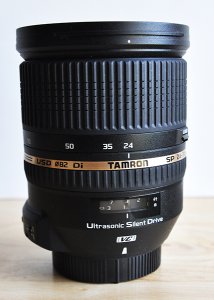
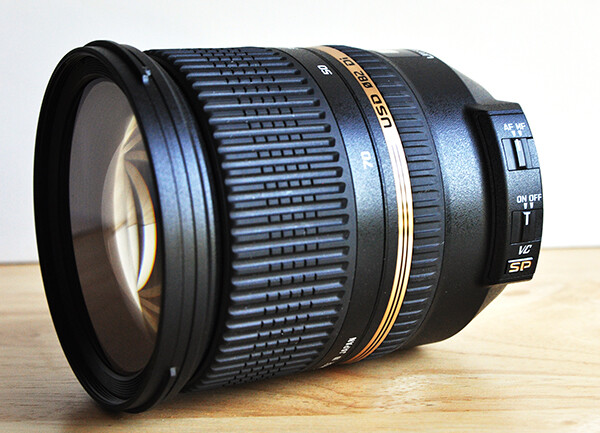
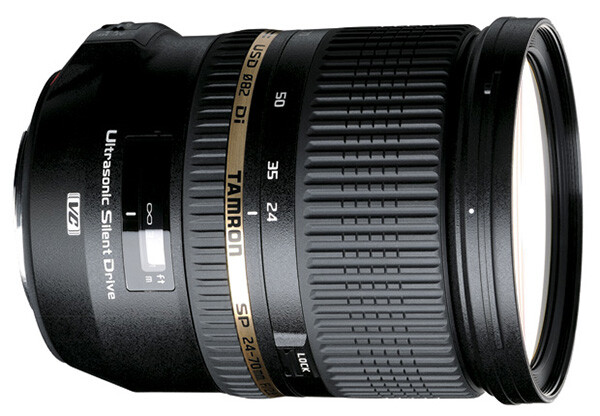
The Tamron 24-70mm f/2.8 Di VC USD is a great lens choice for both professionals and enthusiasts.

The Tamron 24-70mm f/2.8 Di VC USD is a great lens choice for both professionals and enthusiasts.

I won’t make you wait until the end of the review for the verdict– this lens absolutely rocks. Plain and simple. Despite what I consider to be a huge and unfortunate misconception among many professional photographers, there are some truly amazing, high-quality lenses being designed and produced by companies other than Nikon and Canon. Dismissing them as being somehow inferior simply because their logos don’t match up with those on the camera would be a big mistake. The Tamron SP 24-70mm f/2.8 Di VC USD is just such a lens. I recently had the opportunity to put it through its paces, and this is where the test drive took me.

The Specs

Let me start with deciphering the alphabet soup. Designed for digital (Di), this lens includes Tamron’s proprietary Vibration Compensation (VC) for less camera shake and smoother image stabilization, as well as its Ultra Silent Drive (USD) motor, ensuring fast, virtually silent auto focusing. This Super Performance series (SP) lens includes 17 elements in 12 groups, which vastly reduces chromatic aberration.

  • Focal Length:  24-70mm
  • Maximum Aperture:  f/2.8
  • Lens Construction:  17 elements in 12 groups
  • Minimum Focal Distance:  0.38m (15.0 inches)
  • Maximum Magnification Ratio:  1.5 on APS-C sensor cameras
  • Filter Size:  ø82mm (3.2 inches)
  • Length:  108.5mm (4.3 inches)
  • Extended Length:    116.9mm (4.6 inches)
  • Diameter:  ø88.2mm (3.5 inches)
  • Weight:  825g (29.1 oz)
  • Diaphragm Blades:  9 (rounded diaphragm)
  • Standard Accessories:  Lens Hood
  • Cost:  $ 1,224 (USD), compared with $ 1,887 (Nikon) and $ 2,299 (Canon L Series)
  • Compatible Mounts:    Nikon, Canon, Sony (NOTE: The Sony version of this lens does not include the vibration compensation feature, since Sony DSLR bodies already have this functionality).

First Impressions

In some ways, I was sold on this lens before I even put it on a camera. Taking it out of the box for the first time, I was immediately impressed with the feel of it. It’s obvious that this lens was both designed and constructed with high-quality materials and great attention to detail. A common complaint among photographers about “off-brand lenses” (a term I hate, by the way), is that they just don’t have the same feel or build quality as lenses coming from Nikon or Canon. I’ve used several Tamron lenses over the years (the 28-75mm f/2.8 being among my favorites), and I can tell you that you’d be hard-pressed to find any flaws in the construction and build of this lens. As a matter of fact, this is Tamron’s first lens to include extra seals for moisture-resistant construction.

tamron-lens-review-digital-photography-school-002

Lens Creep

Lens creep is a fairly common problem with zoom lenses of lower quality. If you have ever zoomed a lens all the way out, only to have it slowly slide back down on you when trying to shoot at a sharp, upward angle, you know what I’m talking about. The opposite can also happen, where a poorly crafted zoom can start sliding out all on its own when pointed at a downward angle. While lens creep usually manifests itself more readily with longer, heavier zooms, it can be an issue on shorter lenses also. I experienced no lens creep at all on this lens, regardless of where I was along the zoom range.

Focus

As noted in the specs above, this lens is equipped with Tamron’s Ultra Silent Drive (USD) motor, which is supposed to help ensure fast, virtually silent autofocus. This is particularly useful for wedding and event photographers who are trying to be as unobtrusive as possible. One of the things that helps me hide in plain sight is quiet autofocus. One word of caution is worth mentioning. While the USD is virtually silent on the outside of the camera, it is possible that additional noise might be picked up when shooting video.

Autofocus was fast, accurate, and, as mentioned, quiet. There might have been a slight bit of focus lag in extremely low light situations, but I would expect that from just about any lens in dark conditions. My only complaint regarding the manual focus on this lens is the size of the rubber focus ring. I think it’s a little too small, even for average hands. Add my big Chewbacca hands into the mix, and manual focus ends up taking a little more concentration that it should actually need. As far as the actual manual focus mechanics, however, I have no complaints at all. There was no lag whatsoever on the ring, making it smooth, accurate and responsive.

tamron-lens-review-digital-photography-school-009

Chromatic Aberration

Forgive me for a minute or two while I geek out on the science end of things. Chromatic aberration is a type of distortion in which the lens fails to focus on all colors to the same convergence point. It is also a type of distortion which appears more frequently in lower quality lenses. It occurs because different lenses have different refractive indices for different wavelengths of light. Before your eyes glass over too much, let me just say that chromatic aberration becomes visible as fringes of color along boundaries separating light and dark parts of the image (i.e., contrast). As a general rule, chromatic aberration is mainly an issue at the combination of a lens’ shortest focal length and its widest aperture. This particular lens was designed specifically to minimize chromatic aberration and those efforts appear to be successful. While the laws of physics make it practically impossible to completely eliminate chromatic aberration, this lens exhibited it so slightly that I actually had trouble finding it. To that end, I’d say that any chromatic aberration actually created by this lens is inconsequential.

As long as we’re on the subject, let me offer one additional point regarding chromatic aberration that has nothing to do with this review. Colored fringes (often purple) around image highlights can be due to lens flare and have nothing at all to do with chromatic aberration.

Sharpness, Vignetting and Distortion

I found this lens to be very sharp in the center at all focal lengths and apertures. While stopping down a lens (moving to a smaller aperture) can sometimes result in an increase in sharpness and resolution, there was virtually no change in this lens between 24mm and 35mm. It wasn’t until I got between 50mm and 70mm that I think I might have noticed a very slight improvement by stopping down, but it was too slight to be of any real concern to me.

On a full frame Nikon D800, the corners are slightly less sharp than the center–a fairly common issue in lenses of this focal length. Having said that, however, corner image quality improves at all focal lengths as the lens is stopped down. I found the optimum aperture for the corners to be around f/8. Taking both center and corner sharpness into account, I’d put the “sweet spot” for this lens to be around f/5.6, but don’t let this keep you from capturing great “wide open” shots at f/2.8. The big surprise for me came when I compared corner sharpness on the Tamron with a Nikkor 24-70 f/2.8 and found corner sharpness on the Tamron to be better than the Nikkor.

While there is some visible distortion at the wider end of the lens, it does drop off quite quickly as you zoom in from 24mm. This is of most concern when shooting portraits. Making sure that faces are not distorted is an obviously valid concern, and is easily addressed by zooming the lens all the way in to 70mm.

Putting it to the Real Test

It’s easy to get passionate about lenses, regardless of brand name. It’s also easy, however, to get lost in the details. Look hard enough and you’ll find issues relating to chromatic aberration, sharpness, vignetting, and distortion in any, and every, lens you try. As pointed out earlier, we’re dealing with the laws of physics. That’s why the ultimate test of any lens has to be how it performs in everyday shooting conditions.

The first thing I want to know about any lens is what it’s going to do for me. Like many photographers, I make a living capturing a wide variety of subject matter. Since most of us don’t have unlimited gear budgets, the best purchases are those that are going to fill more than just one function. This is one of those lenses that does a great job, regardless of whether I am shooting portraits, food, or architecture. The fact that it does a great job as an all-around, everyday lens for personal photography is a bonus for the professional and a necessity for the enthusiast.

First came outdoor portraits. This first image was taken in the shade with no direct sunlight. There was a single off-camera strobe in a softbox to the left of the camera, approximately three feet from the subject. I was impressed with the speed of the autofocus, as well as how this lens captured the fine details. As noted, the wrong focal length can sometimes distort a subject. Zooming a 24-70mm all the way in to 70mm, like I did here can prevent that.

tamron-lens-review-digital-photography-school-003

1/125, f/8, ISO 200, 70mm, off-camera flash.

I was in the middle of a cookbook shoot when this lens arrived, and I was curious to see how it would do in an all natural light scenario. When we shoot food in the studio, we generally use a single natural light source (big window) to backlight or sidelight the dish, along with a bounce card for fill. Shooting from the shadow side of the food can sometimes pose a challenge for auto-focus, but this lens had no problems at all, even when I selected a focus point in the darkest part of the frame.

tamron-lens-review-digital-photography-school-004

1/80, f/5.6, ISO 400, 70mm, natural light.

But let’s take low light a step further. Really low light. In the images below, the photo on the right was taken with only ambient light in order to show how the autofocus performs in very low light situations. For purposes of the test, I placed my focal point on the subject’s left eye- the one in shadow. The photo on the left was taken at the same settings, with a single speedlight in a softbox to the left of the camera. The autofocus obviously had to work a little harder than it might have in broad daylight, but not so much that it became a problem on the shoot.

tamron-lens-review-digital-photography-school-006

1/60, f/5.6, ISO 640, 70mm, off-camera flash.

If you read my article on How to Shoot Flowers, you know I spend a lot of time capturing flowers and their delicate details. Obviously,  I was excited to see how the lens would perform with flowers. Other than the crop, this image is straight out of the camera. The edges and textures are all very sharp. While not specifically a macro lens, it’s nice to know it can still capture fine details with precision.

1/500, f/2.8, iSO 100, ambient light.

1/500, f/2.8, iSO 100, ambient light.

While attending Photoshop World in Atlanta last month, I stopped by the Westcott expo booth, where models and lights were set up for the Westcott Shootout Contest. Since studio lights were already set for optimal conditions, it seemed like a great opportunity to test the lens for indoor portraits. Other than the black and white conversion, this image is straight out of the camera. The lens performed really well while trying to capture the glam look of 1940s Hollywood.

tamron-lens-review-digital-photography-school-005

1/200, f/5.6, ISO 1600, 70mm, constant LED studio lighting.

The lens had performed extremely well with portraits, food, and flowers, so I decided to see how it would do on an architectural interior shoot before I had to box it up and send it back. I was thrilled with how it captured the color and contrast.

1/160, f/10, 28mm, ISO 200, ambient light.

1/160, f/10, 28mm, ISO 200, ambient light.

Wrap-Up and Recommendations

Like I said at the very beginning — this lens rocks. It performed flawlessly in a variety of lighting and shooting situations. While I didn’t have time to take it out on a landscape shoot, there was absolutely nothing about my experience with this lens to indicate that nature and landscape results would have been any different. An excellent lens for either full-frame or APS-C sensor cameras, if you’re looking for a really great lens that can handle just about any assignment, the Tamron 24-70 f/2.8 should be at or near the top of your list of choices. The only down side to this lens was returning it to Tamron when I was done.

The post Lens Review Tamron 24-70 mm f/2.8 Di VC USD by Jeff Guyer appeared first on Digital Photography School.


Digital Photography School

 
Comments Off on Lens Review Tamron 24-70 mm f/2.8 Di VC USD

Posted in Photography


Nikon announces updated 400mm F2.8 telephoto and 1.4x teleconverter

14 May

400e-news.png

Nikon has announced updated versions of its 400mm F2.8 telephoto lens and 1.4x teleconverter. The AF-S Nikkor 400mm f/2.8E FL ED VR promises improved autofocus, exposure accuracy and speed, while being 816g (nearly 2lb) lighter than its predecessor. Meanwhile the AF-S Teleconverter TC-14E III  features revised optics, and a redesigned barrel for increased moisture and dust resistance. Both will be available in August 2014, with RRPs of $ 11,999.95 and $ 499.95 respectively. Learn more

News: Digital Photography Review (dpreview.com)

 
Comments Off on Nikon announces updated 400mm F2.8 telephoto and 1.4x teleconverter

Posted in Uncategorized


Sony FE 35mm F2.8 ZA Carl Zeiss Sonnar T* lab test report

18 Feb

lensreview-thingsmall1.png

The Sony FE 35mm F2.8 ZA Carl Zeiss Sonnar T* is one of the first lenses for Sony’s fledgling full frame mirrorless system, offering a classic moderate wideangle view. It’s a small lens that nicely complements the Alpha 7 and 7R, but at around $ 800 / £680 it’s distinctly pricey for a relatively slow prime. So is it worth the money? Click through for the lens test data and our analysis.

News: Digital Photography Review (dpreview.com)

 
Comments Off on Sony FE 35mm F2.8 ZA Carl Zeiss Sonnar T* lab test report

Posted in Uncategorized


Olympus developing 7-14mm F2.8 and 300mm F4 ‘Pro’ lenses

12 Feb

7-14.png

When Olympus announced the high-end OM-D E-M1, it promised that it would be making a wideangle zoom and super-telephoto prime in its matching ‘PRO’ line of lenses. Now it’s given a few more details for those products. The M.Zuiko Digital ED 7-14mm 1:2.8 PRO shares many design features with the current 12-40mm 1:2.8 PRO, while the M.Zuiko Digital ED 300mm 1:4 PRO offers a 600mm equivalent angle of view. Both lenses are dust- and splash-proof, and will be available next year. Click through for more details and pictures of the lenses

News: Digital Photography Review (dpreview.com)

 
Comments Off on Olympus developing 7-14mm F2.8 and 300mm F4 ‘Pro’ lenses

Posted in Uncategorized