RSS
 

Posts Tagged ‘f/2.8’

Tamron announces 70-200mm F2.8 and 10-24mm F3.5-4.5 updates

07 Feb

$ (document).ready(function() { SampleGalleryV2({“containerId”:”embeddedSampleGallery_8028434815″,”galleryId”:”8028434815″,”isEmbeddedWidget”:true,”standalone”:false,”selectedImageIndex”:0,”startInCommentsView”:false,”isMobile”:false}) });

Tamron has announced updates to two of its zoom lenses. The full-frame Tamron SP 70-200mm F2.8 Di VC USD G2 improves on its predecessor with faster autofocus and better stabilization. Tamron claims its boosted Vibration Correction provides 5 stops of stabilization. The lens is moisture and dust-resistant, and has received a thorough overhaul of optical and mechanical designs. The new optical design consists of 23 elements in 17 groups, and includes extra low dispersion and low dispersion elements to reduce chromatic aberrations. Tamron claims the inclusion of two microcomputers and a new AF algorithm has improved focus speed and accuracy. Minimum focus distance is also improved, reduced to 37.4in from the previous model’s 50.7in. The 70-200 also supports Tamron’s 1.4x and 2x teleconverters/

Meanwhile, the Tamron 10-24mm F3.5-4.5 Di II VC HLD adds stabilization and refined optics to the company’s wide-angle zoom for APS-C introduced in 2008. It features LD, XLD, aspherical and hybrid aspherical elements, as well as a Broad-Band Anti-Reflection coating. Tamron was able to add Vibration Correction without increasing the size of the lens, and the company claims up to 4 stops of shake reduction. It also uses a new HLD (high/low torque-modulated drive) motor that allow for smooth control over the lens’ heavy elements. The lens is sealed against moisture and has a fluorine coating to keep oil and water off of the front elements.

Both of the new lenses use electromagnetic diaphragm control on Nikon mounts.

The Tamron 70-200mm F2.8 Di VC USD G2 is expected to arrive in March for $ 1299. The Tamron 10-24mm F3.5-4.5 Di II VC HLD is slated for availability this spring for $ 499.

Press releases:

TAMRON REDEFINES THE FAST TELEPHOTO ZOOM CATEGORY WITH THE INTRODUCTION OF THE NEXT GENERATION 70-200MM F/2.8 ZOOM

All-new optical design delivers a dramatically faster autofocus speed and image stabilization performance of 5 stops

SP 70-200mm F/2.8 Di VC USD G2 (Model A025) 

February 6, 2017, Commack, NY – Tamron, a leading manufacturer of optics for diverse applications, announces the launch of SP 70-200mm F/2.8 Di VC USD G2 (Model A025), a new telephoto zoom lens product for full-frame and APS-C DSLR cameras. Model A025 was developed by substantially enhancing the features of its predecessor.

These include a thorough review of the optical, mechanical and electronic designs to increase autofocus speed and precision, reinforce VC (Vibration Compensation) functions and to shorten the MOD. New features include eBAND Coating, Moisture-Proof and Dust-Resistant Construction, Fluorine Coating and compatibility with teleconverters. The lens design features a metal-based barrel for improved handling and ease-of-use. The result of this dramatic evolution is Model A025, a high-speed telephoto lens that widens the scope of expression for photography in a broad range of genres, such as portraits, landscapes, sports and photojournalism. The lens is expected to be available in the U.S. in March at $ 1299.

PRODUCT HIGHLIGHTS 

  1. Outstanding resolution and contrast reproduction performance, beautiful bokeh and full compatibility with Tamron teleconverters

Based on the current model (A009), the optical design has been revised and improved. Both the resolution and contrast reproduction performance far exceed the present levels. Bokeh has been enhanced and expanded to deliver outstanding background effects across the entire zoom range. Use of a circular diaphragm with nine blades further improves bokeh. The optical design of the new A025 consists of 23 elements in 17 groups. Optimum deployment of XLD (eXtra Low Dispersion) and LD (Low Dispersion) glass elements thoroughly eliminate chromatic aberrations, which tend to become particularly prominent in high-speed telephoto lenses, across the entire zoom range, while ensuring uniform, high-level image quality even on the periphery of the image plane.

The new lens is also fully compatible with the TELECONVERTER 1.4x (Model TC-X14) and TELECONVERTER 2.0x (Model TC-X20)1, which increase the focal length of the lens to 1.4 times and 2 times the original, respectively. Both teleconverters are carefully designed and constructed to provide outstanding high quality.

Changes in zoom range when used with SP 70-200 mm F/2.8 Di VC USD G2 (Model A025)


Mounted on full-frame DSLR camera

Mounted on APS-C format DSLR camera

Without tele converter

70-200mm

Approx. 109-310mm

With 1.4x tele converter*2

98-280mm

Approx. 152-434mm

With 2.0x tele converter*2

140-400mm

Approx. 217-620mm 

Changes in magnification ratio when used with SP 70-200mm F/2.8 Di VC USD G2 (Model A025)


Maximum Magnification Ratio

Without tele converter

1:6.1

With 1.4x tele converter

1:4

With 2.0x tele converter

1:3

Available focusing mode when used with SP 70-200mm F/2.8 Di VC USD G2 (Model A025)


When using viewfinder

When using live view mode

With 1.4x teleconverter

AF Possible

AF*2 Possible

With 2.0x teleconverter

AF Possible

AF*3 Possible 

  1. Improved VC system provides highest Vibration Compensation ability in its class3 (5 stops using CIPA standard compliant) and offers three situation-specific VC modes

Utilizing Tamron’s original VC (Vibration Compensation) system, which uses a moving coil mechanism, further reinforcement of the drive system power and control performance has now achieved the highest VC level in its class, with an image stabilization performance of 5 stops according to the CIPA standard (using VC Mode 3). 

Also, the VC system of Model A025 offers three VC modes, including one mode exclusively for panning. Photographers can freely choose between the different VC modes according to their shooting conditions. Even when telephoto shooting in low light, which tends to be severely affected by camera shake, photographers can now enjoy jitter-free handheld shooting with much greater flexibility. 

  • VC MODE 1 is the standard mode that strikes a great balance between the stability of the viewfinder image and the stabilization effects.
  • VC MODE 2 is exclusively used for panning.
  • VC MODE 3 prioritizes the stabilization of the captured images and forgoes the stabilization of the viewfinder image.

With the optional accessory TAMRON TAP-in ConsoleTM, you can customize the configuration of VC MODE 1. Choose the viewfinder view of either standard or image priority.

  1. Demonstratively improved autofocus speed and responsiveness

Model A025 is equipped with a USD (Ultrasonic Silent Drive) ring-type ultrasonic motor, whose outstanding responsiveness and control ensures accurate high-speed focusing. Incorporating two advanced, high-performance microcomputers and optimizing the algorithm has improved both the focusing speed and accuracy compared with SP 70-200mm (Model A009). Additionally, thanks to the Full-time Manual Focus override mechanism, photographers shooting with AF can instantaneously make fine focusing adjustments using MF without wasting time by switching the AF-MF mode back and forth.

  1. Focuses closer (shorter Minimum Object Distance, or MOD) for greater versatility

Improvements made to the focus cam and zoom cam inside the lens barrel have reduced the MOD from 50.7 inches in the older Model A009 to 37.4 inches for Model A025, which has a maximum magnification ratio of 1:6.1. The shorter MOD, coupled with the excellent optical performance of the SP 70-200mm (Model A025), allows photographers to further broaden their range of expression.

  1. Optimized and exclusively designed eBAND Coating

The new A025 features Tamron’s original eBAND (Extended Bandwidth & Angular-Dependency) Coating, a technology that combines a nano-structured layer with an extremely low refractive index with the conventional multiple-layer coatings. Optimized and exclusively designed for this new zoom, the eBAND Coating provides superior anti-reflection performance, effectively reducing any flare and ghosting. Even when taking backlit portraits, the new lens delivers flawless, crystal clear images. 

  1. Moisture-Proof and Dust-Resistant Construction

Ideal for use in outdoor photography, the new 70-200mm telephoto zoom has moisture-resistant construction because special sealants that are dust-resistant and moisture-resistant are used at every joint and seam. The sealant material helps to prevent the intrusion of any dirt, dust or water droplets, compared to conventional Moisture-Resistant Construction. 

  1. Fluorine Coating for greater protection

The front surface of the lens element is coated with a protective fluorine compound that is water- and oil-repellant. The lens surface is easier to wipe clean and less vulnerable to the damaging effects of dirt, dust, moisture and fingerprints.

  1. Electromagnetic diaphragm system now used also for Nikon-mount lenses

An electromagnetic diaphragm system, which has been a standard feature for Canon-mount lenses, is now available for Nikon-mount lenses4. More precise diaphragm and aperture control is possible because the diaphragm blades are driven and controlled by the motor through electronic pulse signals.

  1. Lightweight and easy-to-hold tripod mount is compatible with Arca-Swiss style quick release plates

A new textured grip and Arca-Swiss style tripod interface enhances both speed and utility. Because the tripod mount is made of lightweight magnesium, it is much easier to carry.

  1. Compatible with TAMRON TAP-in ConsoleTM, an optional accessory product

The optional TAP-in Console provides a USB connection to a personal computer, enabling users to easily update the lens firmware as well as customize features, including fine adjustments to the AF and VC. 

  1. Based on the rigorous quality standards worthy of the SP series, this new lens is manufactured with a thorough attention to details

For the SP series products in particular, Tamron has established rigorous design and quality standards. These standards apply to the optical design, mechanical design and the cosmetic appearance, as well as to such wide-ranging areas as the product’s robustness and improvements in the various individual functions. Tamron thoroughly reviews all of the design and manufacturing processes in order to offer products to customers with even-higher levels of precision and quality.

For the SP 70-200mm G2 (Model A025), the optical design was refreshed, mechanical parts were improved and a new exterior design was adopted. To maximize the optical performance intrinsic to this product, Tamron improved the accuracy of the component parts and increased the precision of the overall zooming mechanism.

1. For more detailed information about teleconverters, please refer to the Tamron website.

2. Subjects with low contrast and/or luminosity values can sometimes result in out-of-focus images.

3. Among 70-200mm F/2.8 interchangeable lenses for full-frame DSLR cameras (as of January, 2017; Tamron)

4. Available only with cameras compatible with the electromagnetic diaphragm (D3100, D3200, D3300, D3400, D5000, D5100, D5200, D5300, D5500, D5600, D7000, D7100, D7200, D300, D300s, D600, D610, D700, D750, D800, D800E, D810, D810A, D3x, D3s, D4, D4s, Df, D500, D5). (As of January, 2017; Tamron)

TAMRON INTRODUCES ULTRA-WIDEANGLE ZOOM WITH VIBRATION COMPENSATION

Compact, high-performance lens boasts the largest focal length range in its class

10-24mm F/3.5-4.5 Di II VC HLD (Model B023) 

February 6, 2017, Commack, NY – Tamron, a leading manufacturer of optics for diverse applications, announces the launch of 10-24mm F/3.5-4.5 Di II VC HLD (Model B023), a new ultra-wideangle zoom lens for APS-C DSLR cameras. The lens is expected to be available in the U.S. this Spring at $ 499.

Model B023 is a wideangle zoom lens that covers an exceptionally large range—the largest focal length range in its class1 (35mm equivalent is 16mm to 37mm). The lens is ideal for street photography, landscapes, group photos and casual everyday scenes. In 2008, Tamron launched the SP AF 10-24mm F/3.5-4.5 Di II LD Aspherical [IF] (Model B001) that provided an unprecedented focal length range in its class. Building on that lens’s popularity, the successor Model B023 has improved optical performance and new features. It embodies Tamron’s most advanced technologies, including the VC (Vibration Compensation) system, Moisture-Resistant Construction and Fluorine Coating, and the first implementation of Tamron’s new HLD (High/Low torque modulated Drive). Additionally, the Model B023 has a refreshing new design derived from the design of the new product lineup in the SP series.

PRODUCT HIGHLIGHTS 

  1. Inheriting the broadest focal length range in its class of ultra-wideangle zoom lenses

The new Model B023 achieves a broad focal length range of 10-24mm, the largest range among ultra-wideangle zoom lenses for APS-C DSLR cameras. This is the 35mm equivalent of covering a very wideangle of view, from 16mm ultra-wideangle to 37mm semi-wideangle. A photographer can enjoy diverse wideangle expressions with just this one lens, from dynamic landscapes far beyond the normal human field of vision to simple, casual snapshots. 

  1. Improved optical performance across the entire zoom range

The optical design of the new Model B023 consists of 16 lens elements in 11 groups. Special lens elements are utilized in an optimum configuration of one LD (Low Dispersion) lens element, one XLD glass element, one molded glass aspherical element, and one hybrid aspherical lens. While curbing an increase in the size of the optical system, the new lens very effectively compensates for a wide variety of aberrations in the entire zoom range, including transverse chromatic aberration, comatic aberration and distortions that tend to become more prominent with a wideangle lens.

Tamron’s highly regarded BBAR (Broad-Band Anti-Reflection) Coating and the optical design paying close attention to internal reflections in the lens barrel also curb the effects of harmful light rays that tend to occur with a wideangle lens, achieving excellent resistance against ghosting and flare seen in backlighting situations.

  1. 4-Stop Vibration Compensation that is especially useful in low light conditions

In response to the requests of many customers who have asked the company to equip a wideangle lens with image stabilization, we have now installed Tamron’s acclaimed VC (Vibration Compensation) on the new Model B023. Optimizing the actuator and the control algorithm has made it possible to incorporate the VC, while maintaining the compact design of the previous Model B001. The VC especially enhances the photographer’s freedom in handheld shooting at dusk or in a dimly lit room, and under other relatively low light conditions, as the mechanism proves particularly effective in the shooting conditions with slower shutter speeds.

  1. Equipped for the first time with the new HLD with outstanding driving power and stability

Tamron’s new HLD (High/Low torque modulated Drive) has been developed for use as the AF drive system for Model B023. With its outstanding driving power and stability, the HLD is capable of smoothly controlling the AF mechanism of the new Model B023 that is actually equipped with large focusing lens elements. When shooting in AF mode, the Full-time Manual Focus override allows you to instantly make fine focusing adjustments manually, without having to switch between modes.

  1. Compressed into a compact body with structural ingenuity

While enhancing image quality, adding new functions and substantially improving the basic performance, Model B023’s space-saving design has ensured an optimum configuration for components such as the VC and AF unit, thus successfully reducing overall length compared to the previous Model B001. The lightweight and compact body with outstanding ease of use will prove to be very well-balanced when attached to an APS-C DSLR camera.

  1. An even more user-friendly lens with Fluorine Coating and Moisture-Resistant Construction

The front surface of the foremost lens element is coated with a protective fluorine compound that is water- and oil-repellant. The lens surface is easier to wipe clean and is less vulnerable to the damaging effects of dirt, dust, moisture and fingerprints, allowing for much easier maintenance. For greater protection when shooting outdoors, leak-proof seals throughout the lens barrel help protect your equipment.

  1. Electromagnetic diaphragm system now used also for Nikon-mount lenses

An electromagnetic diaphragm system, which has been a standard feature for Canon-mount lenses, is now employed in Nikon-mount lenses2. More precise diaphragm and aperture control is possible because the diaphragm blades are driven and controlled by a motor through electronic pulse signals.

  1. Compatible with TAMRON TAP-in ConsoleTM, an optional accessory product

The optional TAP-in Console provides a USB connection to your personal computer, enabling you to easily update your lens’s firmware as well as customize features including fine adjustments to the AF and VC.

  1. External design placing importance on functionality and ease of use

While inheriting the design that makes use of a lot of organic curves and the delicately polished form down to fine details that characterize the SP lens series, the new Model B023 comes with a highly sophisticated design that also places much importance on the lens’s functionality and ease of use, featuring an overall form that faithfully encompasses the internal structures within, a slim Luminous Gold brand ring, the switch shape and the distance-scale window design.

1. Among ultra-wideangle zoom lenses for APS-C DSLR cameras (As of January, 2017; Tamron)

2. Available only with cameras compatible with the electromagnetic diaphragm (D3100, D3200, D3300, D3400, D5000, D5100, D5200, D5300, D5500, D5600, D7000, D7100, D7200, D300, D300s) (As of January, 2017; Tamron)

Specifications

  Tamron SP 70-200mm 2.8 Di VC USD G2 Tamron 10-24mm F3.5-4.5 Di II VC HLD
Principal specifications
Lens type Zoom lens
Max Format size 35mm FF APS-C / DX
Focal length 70–200 mm 10–24 mm
Image stabilization Yes (5 stops) Yes (4 stops)
Lens mount Canon EF, Nikon F (FX) Canon EF-S, Nikon F (DX)
Aperture
Maximum aperture F2.8–22 F3.5–22
Minimum aperture F2.8–22 F4.5–29
Aperture ring No
Number of diaphragm blades 9 7
Optics
Elements 23 16
Groups 17 11
Special elements / coatings eBAND and fluorine coatings
XLD, LD elements
Broad-band Anti-reflection & fluorine coatings
LD, XLD, aspherical, and hybrid aspherical elements.
Focus
Minimum focus 0.95 m (37.4) 0.24 m (9.45)
Maximum magnification 0.16× 0.19×
Autofocus Yes
Motor type Ring-type ultrasonic
Full time manual Yes
Focus method Internal
Distance scale Yes No
DoF scale No
Focus distance limiter Yes
Physical
Weight 1500 g (3.31 lb) 440 g (0.97 lb)
Diameter 88 mm (3.46) 84 mm (3.29)
Length 194 mm (7.63) 85 mm (3.33)
Sealing Yes
Colour Black
Zoom method Rotary (extending)
Power zoom No
Zoom lock Yes No
Filter thread 77.0 mm
Hood supplied Yes
Tripod collar Yes No

Articles: Digital Photography Review (dpreview.com)

 
Comments Off on Tamron announces 70-200mm F2.8 and 10-24mm F3.5-4.5 updates

Posted in Uncategorized


Updating a classic: Canon 16-35mm F2.8 III lens review

20 Dec

The Canon 16-35mm F2.8L II has been one of the most coveted lenses amongst landscape photographers for a fairly long time. The infamous sunstar was one of the major selling points of the lens and it was one of the major characteristics that really separated the Canon lens from the rest of the field.

When we first heard that Canon was going to release an updated version of the lens we were pretty darn excited. The Mark II was a fantastic piece of glass, but struggled in terms of corner sharpness and control of chromatic aberration along the edges and in the corners of the frame. The upgraded version of the Canon lens promised to correct a number of those issues while still holding onto some of the characteristics of the previous version that made it so appealing to landscape shooters around the world.

With that said, the real question is; how does the updated Canon lens compare to its predecessor? The previous iteration of this lens had a number of issues that we will discuss in this review while we compare and contrast the two versions. The fundamental questions that we will be addressing in this review is; if the upgrade warrants the price increase and if the performance from the new design is convincing enough to justify the upgrade.

APS-C

With an equivalent focal length of 25.6-56mm and an equivalent aperture of F4.5 there are better wide-angle APS-C options on the market such as the Tokina 11-16mm F2.8 AT-X116 Pro DX II Lens or the Sigma 18-35mm F1.8 Art DC HSM that can really take advantage of a fast aperture for a fraction of the price. For this reason we’re not going to consider this lens for use on the APS-C platform in this review.

Canon 16-35mm F2.8L III USM Headline Features

  • Fully weather-sealed construction
  • F2.8 maximum aperture
  • 16-35mm focal range
  • Sub-wavelength Coatings (SWC) and Air Sphere Coatings (ASC) to eliminate lens flare and ghosting
  • Two large-diameter double-surface GMo lenses plus a ground aspherical lens to help decrease distortion, curvature of field and astigmatism
  • Two UD lenses help to reduce chromatic aberration

Specifications Compared

  Canon 16-35mm F2.8L II USM Canon 16-35mm F.28L III USM
MSRP $ 1599.00 $ 2199.00
Lens Type Wide-Angle Zoom Wide-Angle Zoom
Focal Length  16-35mm 16-35mm

Filter Thread 

82.0mm 82.0mm
Image Stabilization  No No
Lens Mount Canon EF Canon EF
Aperture Ring No No
Maximum Aperture  F2.8 F2.8
Minimum Aperture F22 F22
Minimum Focus  0.28m (11.02″) 0.28m (11.02?)
Diaphragm Blades 7 (rounded)  9 (rounded)
Elements  16 16
Groups  12 11
Special Elements/Coatings 2-Ultra-low dispersion glass lenses, 3 high-precision aspherical lens elements; ground, replica and GMo, Super Spectra lens coatings 2 large-diameter double-surface GMo lenses and a ground aspherical lens, Sub-wavelength Coatings (SWC) and Air Sphere Coatings (ASC)
Autofocus  Yes Yes
Motor Type Ring-type Ultrasonic Ring-type Ultrasonic
Full Time Manual  Yes Yes
Focus Method Internal Internal
Distance Scale  Yes Yes 
DoF Scale No No
Full Weather Sealing Yes Yes
Zoom method  Rotary (internal) Rotary (internal)
Weight  635 g (1.4 lb) 790 g (1.74 lb)
Dimensions

111.6mm (4.39″) x 88.5mm (3.48″)

128 mm (5.02?) x 89 mm (3.48?)
Hood Included (EW-88D) Included (EW-88D)

Articles: Digital Photography Review (dpreview.com)

 
Comments Off on Updating a classic: Canon 16-35mm F2.8 III lens review

Posted in Uncategorized


Sony FE 50mm F2.8 Macro Sample Gallery

16 Dec

$ (document).ready(function() { SampleGalleryV2({“containerId”:”embeddedSampleGallery_4532720281″,”galleryId”:”4532720281″,”isEmbeddedWidget”:true,”standalone”:false,”selectedImageIndex”:0,”startInCommentsView”:false,”isMobile”:false}) });

The Sony FE 50mm F2.8 Macro offers 1:1 magnification for a relatively minimal investment. We took it to our local conservatory and around the neighborhood to see how well it performs when getting extremely close to our subject. Click any of the images above to open them in our gallery viewer.

Articles: Digital Photography Review (dpreview.com)

 
Comments Off on Sony FE 50mm F2.8 Macro Sample Gallery

Posted in Uncategorized


Gear of the Year: Tamron 90mm F2.8 Di VC USD Macro F017

06 Dec

Regular readers of the site have seen more photos from this lens than they might realize.

The new Tamron 90mm arrived on our doorstep at some point in the early spring. I admit at first I wasn’t very excited, it just seemed like a run-of-the-mill ‘check that box’ lens for Tamron to round out their SP lineup. I also wasn’t excited because its EF mount meant getting out a beast: the Canon EOS 5DS R.

I took it along for my first trip to the Skagit Valley Tulip festival. Part of me was excited for this as-close-to-Holland-as-you-can-get-in-the-USA experience, but I wasn’t very happy about the fact that I was going to be doing tripod work.

In public.

With families around.

I’m a bit of a grump.

This isn’t to say I don’t see the value in using a tripod. Believe me, I do. However, most units readily available to me aren’t exactly easy to use when it comes to getting way down low to flower level. Most of them stood slightly taller than a tulip when at their shortest, and the tripods with the ability to turn the center column sideways to get low don’t work well with geared heads (my preference).

So, I was going in to battle with damaged morale, cumbersome equipment and a bit of apathy towards the entire scenario.

My opinions shifted as the day progressed.

Turns out, I really like 1:1 macro lenses, and the latest Tamron 90mm was the first to really help me realize that. Image stabilization, which isn’t new for this type of lens, was a huge assist for handheld shooting, especially with a camera that loves to highlight when you get it wrong.

Autofocus also worked better than I’m used to with macro lenses. The lens’ AF motor is quite quick, even at the closer focal lengths. Moving from minimum focus distance to infinity happens quick enough that it isn’t the end of the world if the lens suddenly decides to do a full hunt – although I rarely encountered that problem with the 5DS R. In fact, I took quite a few shots through the OVF and they came out perfectly sharp, which isn’t always the case when using the 5DS R.

Okay, so I shot tulips with it, who cares?

Sometimes in our articles you’ll see what we call ‘beauty’ shots of cameras headlining pages of our reviews. These images are typically shot outside somewhere pretty around the office, done by various members of the team.

After my positive experience shooting the Tulip Festival with the Tamron 90mm Macro, I started grabbing the lens and the 5DS R any time I went outdoors for product photography. From then on until we had to return the lens, I ended up bringing it with me any time I went to take beauty shots.

The focal length and focus capabilities are great for photographing all cameras, and the VC system means I can stop down for greater depth of field while still shooting handheld. It made the task quick and easy, allowing me to experiment and be creative.

So when I say you’ve seen more images from the Tamron 90mm than you might think, it’s because they’ve been hero images, or ‘beauty’ shots as they’re affectionately called in the office, for our reviews. Professional results, moderate price tag. That is what we’ve seen a few times now in Tamron’s SP series, and the 90 is no exception.

To see our beauty shots without any retouching check out our sample gallery.

$ (document).ready(function() { SampleGalleryV2({“containerId”:”embeddedSampleGallery_5004187909″,”galleryId”:”5004187909″,”isEmbeddedWidget”:true,”standalone”:false,”selectedImageIndex”:0,”startInCommentsView”:false,”isMobile”:false}) });
Articles: Digital Photography Review (dpreview.com)

 
Comments Off on Gear of the Year: Tamron 90mm F2.8 Di VC USD Macro F017

Posted in Uncategorized


Venus Laowa 12mm F2.8 Zero-D sample gallery

30 Nov

Chinese optics company Venus caused a stir when it announced a 12mm F2.8 lens with claims of almost zero rectilinear distortion. The lens is comparably small in its super wide-angle class, and its claims of little barrel distortion are pretty tantalizing. Senior DPR contributor Damien Demolder spent some time getting to know it – check out his images below.

See our Venus Laowa 12mm F2.8
sample gallery

Articles: Digital Photography Review (dpreview.com)

 
Comments Off on Venus Laowa 12mm F2.8 Zero-D sample gallery

Posted in Uncategorized


LensRentals tests the Nikon 70-200mm F2.8 FL ED

22 Nov
Sarah McAlexander, Lensrentals.com, 2016

Our friends at LensRentals have acquired a supply of Nikon’s new 70-200mm F2.8E FL ED AF-S VR. Nikon’s PR department has been making big claims about this third generation of its workhorse zoom, so Roger Cicala et al. have done us all a kindness by putting it on their optical bench and publishing the results. 

While he finds a bit of sharpness gained at the wide and long end of the range, Cicala is most impressed with performance at 135mm, calling it ‘night and day’ compared to its predecessor. 

Take a look at the full blog post for all of the test results, and yes – even a comparison against Canon’s 70-200mm F2.8L IS II USM.

Articles: Digital Photography Review (dpreview.com)

 
Comments Off on LensRentals tests the Nikon 70-200mm F2.8 FL ED

Posted in Uncategorized


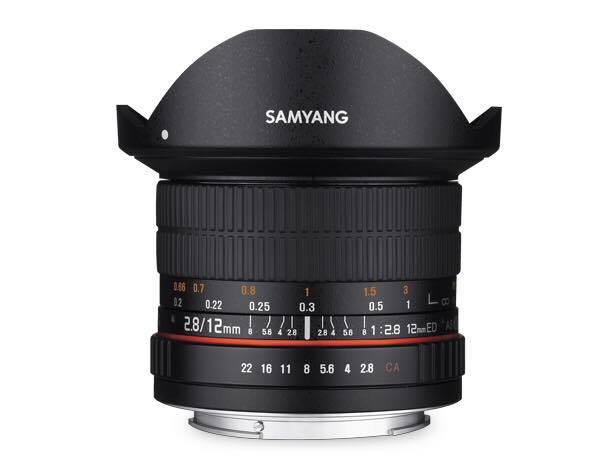
Overview of the Samyang 12mm F2.8 ED AS NCS Fisheye Lens

09 Nov

There is nothing quite like seeing the world through a fisheye lens. The way it bends straight lines and creates curves where there were none. You get to see more of the world through it than you can with your own eyes, well that is unless you turn your head. Recently I was loaned the Samyang 12mm F2.8 ED AS NCS Fisheye lens to play with and I have been having a lot of fun seeing what it can do.

leannecole-samyang-12mm-fisheye-30

Samyang 12mm F2.8 ED AS NCS Fisheye lens

Price out this lens on Amazon and B&H Photo.

Fisheye lenses have been around for a long time. But for most of us, they have not been something that we thought would be worth spending all that money on. However, the 12mm fisheye from Samyang is affordable and can give your photography a new look.

How wide is it?

There is nothing like using a wide angle for the first time and having objects fit into your frame like never before. This lens is very much like that. The first reaction most people have when they look through the viewfinder for the first time is “wow”. It is incredible what you can fit into it.

You get an 180-degree view with it. It really does fill the frame with all that you can see, including your periphery vision. While this is a good thing, there is also a downside. You can end up with unwanted distractions in the image. If you point the lens down too far you may end up with your feet in the image. Or if your camera bag on the ground is not behind you, it too will be included. Going out with friends to take photos means constantly asking them to step back behind you. If they are good friends, they won’t mind.

leannecole-samyang-12mm-fisheye-38

Melbourne from across the river.

This lens won’t break the bank

When you consider how much other lenses with an f/2.8 aperture cost, you would think this one would also be very expensive, a thousand bucks or so. But it retails for around USD$ 500 (less if you have a mirrorless system) so it makes it a lot more affordable than the top brand fisheye lenses. It is a good quality lens and is a great alternative for those that can’t afford the pricier top brand ones.

leannecole-samyang-12mm-fisheye-33

One of the rides at the Royal Melbourne Show

This lens is fun!

Without a doubt, this is a fun lens. It can have real uses, but in the end, I dare anyone to put the lens on their camera and not have a great time seeing what they can get with it. It is amazing to watch how the world is transformed through it.

I was first loaned the lens one day while in the city and I wouldn’t take it off my camera. I really enjoyed seeing what it could do and how much I could see with it. It was a challenge to see how I can make the world make sense with it. In the end you have to let that go and just take photos.

leannecole-samyang-12mm-fisheye-32

One of the rides at the Royal Melbourne Show.

It is small

For a fisheye, it is very small which is great because it means it’s easy to carry around with you. You would expect a fisheye to be a large bulky lens with big bulbous glass on the front. The Samyang fisheye is a lot smaller and not much bigger than a normal 50mm lens. Don’t let the size fool you, as it still takes a great image.

Full frame lens

Surprisingly for the cost, it is a lens for a full frame camera. It seems that many lenses for these are usually a lot more expensive. You are going to get much wider images with the full frame, and if you put the lens on a cropped sensor that aspect will suffer and you won’t get as wide an angle (about like an 18mm), though you should still get the fisheye effect.

First time mounting the lens

When you first put the lens on your camera you can get some strange numbers coming up on your camera display. If that happens you need to change the aperture ring on the lens. Turn it all the way around until you can see the aperture on your camera.

leannecole-samyang-12mm-fisheye-35

Looking at the city through the Seafarers Bridge.

It distorts the world around

For many the distortions may be too much and maybe the lens won’t be for them. The first time I posted a few photos I took with it, some people pointed out that I could get rid of the weird curves. My first thought was why would I, isn’t that the reason for using a fisheye in the first place?

It is a manual focus lens

For many people, the manual focusing for the lens is a negative. We have gotten used to autofocus, and having to go back to do it manually again can seem too hard. However, it is amazing how quickly you can adapt to it. The more you do it the easier it really does get. I seem to be using a lot of lenses lately that are manual focus and I don’t have an issue with it now.

One of the benefits with the Samyang fisheye is that for most subjects they are going to be several feet or meters from you so you can put the focus ring on infinity and just click away. It is rare than anything you shoot will be too close for that. Obviously if something is close you will need to focus the lens, but for the most part you can put it on infinity and just go for it. Just remember that it is on that setting and don’t forget to keep checking that the image is focused (zoom in on the image playback).

leannecole-samyang-12mm-fisheye-31

Fireworks at the Royal Melbourne Show.

Conclusions

Working with the lens

If you have purchased the fisheye then it would seem you are looking for more than just a wide angle lens. The lens is known for its distortions, so work with that. Find subjects that will be enhanced due to the curve of the lens. If you are somewhere like in a city, try different compositions to see which will work the best.

If you want something to appear straight, like the bridge, if you put that more in the centre of the image the distortion is far less. The same is true for the horizon. If you put the horizon line in the center of the frame then it will stay straight, but if you move it up or down it will get a curve to it. That can be really effective as well.

leannecole-samyang-12mm-fisheye-34

Looking down a pier into the night sky at Sorrento. See the horizon is almost straight as it is closer to the middle of the image.

Applications

The lens is perfect for astrophotography and that is mainly where it is used. You can get a lot of sky into a fisheye image and the distortions wouldn’t matter so much. You can get brilliant shots of the Milky Way, or great star trails. Samyang Australia tends to market it to aurora hunters too, but it has other uses as well.

Architecture is a great subject for this lens. It does give many of the lines a curved shape, and in people’s minds they know they are meant to be straight. But you can use those distortions to create unique images.

leannecole-samyang-12mm-fisheye-36

Some of the new architecture down at Docklands.

Many sports photographers could also find it useful. Not for everything, but for some special images. Cycling photographer Graham Watson often uses a fisheye for unique views of races like the Tour de France. With cycling ,you can get very close to the cyclists. So the fisheye would be perfect for some races, especially for a criterium when they are going around corners.

As the lens is so wide, there are many types of photography that it is not well suited for. Landscapes could work, but you need to have something in the foreground, otherwise everything would be too far away. The use of leading lines is important for that type of photography.

leannecole-samyang-12mm-fisheye-37

The full curve of the Webb Bridge in the Docklands.

Who is this lens for?

The most obvious answer to this would be astrophotographers and aurora hunters, but there are others who would also benefit from it as well, like sports and architectural photographers. Perhaps others who want to add something unique or different to their images. For the price and size, it could be a great addition to any photographer’s kit.

If you are looking for a challenge in your photography, or perhaps you want to start looking at the world in a different way, I would highly recommend the Samyang 12mm F2.8 ED AS NCS Fisheye lens. It’s a fun and not too expensive piece of kit. While you may not use it a lot, you will get it out and take photos with it from time to time. We all have lenses that we don’t use a lot, but enjoy using them when we do.

Price out this lens on Amazon and B&H Photo.

googletag.cmd.push(function() {
tablet_slots.push( googletag.defineSlot( “/1005424/_dPSv4_tab-all-article-bottom_(300×250)”, [300, 250], “pb-ad-78623” ).addService( googletag.pubads() ) ); } );

googletag.cmd.push(function() {
mobile_slots.push( googletag.defineSlot( “/1005424/_dPSv4_mob-all-article-bottom_(300×250)”, [300, 250], “pb-ad-78158” ).addService( googletag.pubads() ) ); } );

The post Overview of the Samyang 12mm F2.8 ED AS NCS Fisheye Lens by Leanne Cole appeared first on Digital Photography School.


Digital Photography School

 
Comments Off on Overview of the Samyang 12mm F2.8 ED AS NCS Fisheye Lens

Posted in Photography


Redesigned Nikon 70-200 F2.8 arrives with improved optics, electromagnetic diaphragm

19 Oct

$ (document).ready(function() { SampleGalleryV2({“containerId”:”embeddedSampleGallery_0289055049″,”galleryId”:”0289055049″,”isEmbeddedWidget”:true,”standalone”:false,”selectedImageIndex”:0,”startInCommentsView”:false,”isMobile”:false}) });

Nikon has released the latest iteration of its workhorse 70-200mm F2.8 lens. The AF-S Nikkor 70-200mm F2.8E FL ED VR, as it is known, has a new optical design, improved Vibration Reduction as well as an electromagnetic diaphragm.

The lens has a total of 22 elements, with 6 ED, 1 fluorite and 1 high refractive index element. A Nano Crystal Coat reduces flare and ghosting while fluorine coatings on the front and rear class helps prevent smudging. Vibration Reduction has been improved, now reducing shake by 4 stops (vs 3.5). The electromagnetic diaphragm allows for responsive adjustment and the ability to adjust the aperture in live view and movie mode on all camera bodies.

You’ll be able to pick up this 1.4 kg (3 lb) beast next month for $ 2799.95.

Press Release:

MASTER YOUR PERSPECTIVE WITH OPTICAL EXCELLENCE: NIKON ADDS TWO PRO-GRADE FX-FORMAT LENSES TO CELEBRATED NIKKOR LENS LINEUP

Extraordinary Next-Generation AF-S NIKKOR 70-200mm f/2.8E FL ED VR Sets a New Standard for Pro Telephoto Workhorse Lenses, While New PC NIKKOR 19mm f/4E ED is Nikon’s Widest Ever Tilt-Shift NIKKOR Offering

MELVILLE, NY (October 19, 2016 at 12:01 A.M. EDT) – Today, Nikon Inc. has announced two exciting FX-format additions to the storied NIKKOR lens lineup, designed to achieve amazing optical performance for the most demanding professional and enthusiast photographers. An evolution of one of Nikon’s most versatile and popular pro-zoom lenses, the newly redesigned AF-S NIKKOR 70-200mm f/2.8E FL ED VR sports an updated optical formula capable of amazing image quality, while optimized for high-speed shooting. Also introduced today is Nikon’s widest perspective control lens to date, the PC NIKKOR 19mm f/4E ED tilt-shift lens, which helps photographers effortlessly control perspective when capturing architecture, interiors, fine art, product photography and landscapes.

“Nikon continues to raise the bar of optical excellence, and our newest FX-format NIKKOR offerings provide experienced photographers with powerful tools to help ensure brilliantly sharp images, whether capturing a high-speed photo finish or creatively framing an architectural marvel,” said Kosuke Kawaura, Director of Marketing and Planning, Nikon Inc. “While the new AF-S NIKKOR 70-200mm f/2.8E FL ED VR builds upon the success of its predecessors to offer a true all-around NIKKOR optic, the PC NIKKOR 19mm f/4E ED will provide fantastic perspective control for a variety of challenging wide-angle applications.”

The Ultimate Workhorse Lens for Seasoned Photographers

Long considered an essential lens in the bag of professional photographers, this updated AF-S NIKKOR 70-200mm f/2.8E FL ED VR sets a new benchmark for fast telephoto zoom lenses, taking image quality and handling to the next level. An indispensable and powerful tool for nearly any photographic scenario, the NIKKOR 70-200mm remains the professional’s choice with a wide f/2.8 constant aperture that is ideal for capturing sports, weddings, stunning portraits and more, even in low-light.

The next generation design of the lens helps ensure the very best in image quality, speed and low-light performance, while offering balance and handling that is nothing short of superb. Nikon’s new 70-200mm provides up to four stops1 of Vibration Reduction (VR) image stabilization, an improvement from its predecessor that helps users to eliminate blur and camera shake even when shooting handheld or in challenging light. During burst shooting, the lens takes advantage of an electromagnetic diaphragm for consistent auto-exposure control. Additionally, a Silent Wave Motor (SWM) enables ultra-fast and quiet AF operation with seamless manual focus override. Discerning photographers will also appreciate assignable function buttons on the lens barrel that offer customization, perfect for engaging pre-set autofocus or other focusing options.

A new optical formula consisting of six ED elements, one Fluorite element, a high refractive element and Nano Crystal Coat helps make for a lighter and more versatile lens, while reducing chromatic aberration and helping to all but eliminate distortion, ghosting and flare. Ready for even the most rugged of assignments, the magnesium alloy lens barrel features superior weather-sealing that achieves anti-dust and waterdrop-resistance, while Fluorine coating on both the front and rear glass facilitates easy cleaning. Whether shooting with a camera like the Nikon D5, D810, D750 or D500, capturing sports or weddings, the AF-S NIKKOR 70-200mm f/2.8E FL ED VR is a fantastic lens choice for experienced photographers.

Seamlessly Control Perspective with the New Super-Wide PC NIKKOR Lens

Also new from Nikon is the latest perspective control lens (designated PC) in the NIKKOR lens lineup, the PC NIKKOR 19mm f/4E ED, a tilt-shift offering that will help photographers master perspective and depth-of-field. For storytellers who yearn to capture optically-challenging subjects like cityscapes and architecture, interiors or unique landscapes, this lens offers 97° of coverage – the widest focal length of any PC lens in the NIKKOR family. Tilt the lens to sharpen focus throughout a scene or create a miniature effect, or shift2 to adjust perspective in-camera, create panoramas or eliminate converging lines. For the first time with a NIKKOR PC lens, the direction of tilt operation can be made parallel or perpendicular to shift, offering users nearly unprecedented ability to control perspective, focus and depth-of-field, without having to lock and unlock to make adjustments.

Sporting a super-wide 19mm focal length, the lens provides a unique perspective ideal for shooting horizontal or vertical panoramas, or even filmmaking. With this ultra-wide angle in mind, the latest FX-format NIKKOR offering was crafted with three ED and two aspherical elements that help combat distortion and glare, while virtually eliminating chromatic aberration and coma, even at the widest aperture settings. The lens also features core NIKKOR technologies such as Nano Crystal Coat to combat ghosting and flare, an electromagnetic diaphragm for fast auto-exposure control, as well as a Fluorine coat that helps resist dirt, water spots and smudges. Ready for a variety of challenging ultra-wide applications, the PC NIKKOR 19mm f/4E ED is a powerful tool for discerning photographers looking for full creative and perspective control. It joins three other Gold Ring Series PC lenses in Nikon’s line-up; the PC-E NIKKOR 24mm F3.5D ED, PC-E Micro NIKKOR 45mm f/2.8D ED and the PC-E Micro NIKKOR 85mm f/2.8D.

Price and Availability

Both the AF-S NIKKOR 70-200mm f/2.8E FL ED VR and PC NIKKOR 19mm f/4E ED will be available starting in November 2016 for suggested retail prices (SRP) of $ 2,799.95* and $ 3,399.95*, respectively. For more information on these new Nikon products and pricing for optional accessories, please visit www.nikonusa.com.

1 Based on CIPA Standard. This value is achieved when FX-format compatible lenses are attached to a FX-format digital SLR camera and zoom lenses are set at the maximum telephoto position.

2 Depending on combination of shift and rotation, operation may be restricted by mechanical interference between the lens and camera when used with certain Nikon cameras.

  • Models that can be used without any limitation: D5, D4 series, D3 series, D810 Series, D500
  • Models that can be used with some limitations: Df, D800 series, D750, D610, D600, D300 series, D7200, D7100, D5500, D5300, D5200, D5100, D5000, D3400, D3300, D3200, D3100
  • Models that are not compatible with PC NIKKOR 19mm f/4E ED: D2 series, D1 series, D200, D100, D90, D80, D70 series, D3000, D60, D50, D40 series, film cameras, Nikon 1 series with FT-1

*SRP (Suggested Retail Price) listed only as a suggestion. Actual prices are set by dealers and are subject to change at any time.

Nikon AF-S Nikkor 70-200 F2.8E FL ED VR specifications

Principal specifications
Lens type Zoom lens
Max Format size 35mm FF
Focal length 70–200 mm
Image stabilization Yes (4 stops)
Lens mount Nikon F (FX)
Aperture
Maximum aperture F2.8
Minimum aperture F22
Aperture ring No
Number of diaphragm blades 9
Optics
Elements 22
Groups 18
Special elements / coatings 6 ED, 1 Fluorite, 1 HRI element + Nano Crystal & Fluorine coatings
Focus
Minimum focus 1.10 m (43.31)
Maximum magnification 0.21×
Autofocus Yes
Motor type Ring-type ultrasonic
Full time manual Yes
Focus method Internal
Distance scale Yes
DoF scale No
Focus distance limiter Yes
Physical
Weight 1430 g (3.15 lb)
Diameter 89 mm (3.48)
Length 203 mm (7.97)
Materials Magnesium alloy
Sealing Yes
Zoom method Rotary (extending)
Power zoom No
Zoom lock Yes
Filter thread 77.0 mm
Hood supplied Yes
Tripod collar Yes

Articles: Digital Photography Review (dpreview.com)

 
Comments Off on Redesigned Nikon 70-200 F2.8 arrives with improved optics, electromagnetic diaphragm

Posted in Uncategorized


Sony FE 70-200mm F2.8 GM galleries: Roller derby and daylight base ISO samples

14 Oct

Our friend James McDaniel recently put Sony’s premium stabilized telezoom to the test, first in low light shooting roller derby WFTDA Playoff action and later in daylight, shooting at base ISO. This lens features built-in image stabilization and uses a linear motor to acquire focus quickly and silently, which could be real benefits to all kinds of photographers. We’ll be adding to the base ISO gallery as soon as we catch a break from the rainy Seattle weather. Until then, enjoy the two galleries below:

Articles: Digital Photography Review (dpreview.com)

 
Comments Off on Sony FE 70-200mm F2.8 GM galleries: Roller derby and daylight base ISO samples

Posted in Uncategorized


Sony announces price and release date for FE 70-200mm F2.8 GM OSS

28 Sep

Sony has released information regarding the availability and price of its delayed 70-200mm GM lens for its E-mount system. The FE 70-200mm F2.8 GM OSS was originally supposed to arrive in June or July this year, but the company announced it would be delayed until this month. The good news is that the lens will become available for sale on September 30th, but the bad news is that those orders could take up to three months to fulfill as Sony expects the lens to popular and that demand will out-strip supply for some time.

Sony has also said that the 2x converter that goes with the lens will be on sale at the same time, while the 1.4x model can be ordered at the end of October.

The company displays prices of 330,000 yen (approx $ 3300) for the lens and 70,000 yen (approx $ 700) for the 2x and 1.4x converter, though retailers are advertising the lens for the $ 2600/£2500 originally quoted.

For more information see the Sony website or see the translated version of the announcement.

Articles: Digital Photography Review (dpreview.com)

 
Comments Off on Sony announces price and release date for FE 70-200mm F2.8 GM OSS

Posted in Uncategorized