RSS
 

Posts Tagged ‘F1.8’

Sigma announces 14mm F1.8, 24-70mm F2.8 and 135mm F1.8 Art lenses

21 Feb

$ (document).ready(function() { SampleGalleryV2({“containerId”:”embeddedSampleGallery_7013646430″,”galleryId”:”7013646430″,”isEmbeddedWidget”:true,”standalone”:false,”selectedImageIndex”:0,”startInCommentsView”:false,”isMobile”:false}) });

Sigma has released a trio of its high-end ‘Art’ lenses: two primes and one zoom. All three are designed for full-frame Canon, Nikon and Sigma bodies.

The first is the ultra-wide 14mm F1.8 DG HSM, which Sigma claims is the ‘world’s first and only F1.8 ultra-wide-angle lens.’  The lens has 16 elements, three of which are FLD (low dispersion) and four are SLD (super-low-dispersion). It also has a large (80mm) aspherical front element to reduce distortion and ‘deliver outstanding image quality from the center to the edges.’ The 14mm F1.8 has 9 rounded aperture blades, a minimum focus distance of 27cm/11in and a ring-type ultrasonic (HSM) focus motor.

Next up is the Sigma 24-70mm F2.8 DG OS HSM Art. This lens features three SLD and four aspherical, nine rounded aperture blades and optical image stabilization. The lens is weather-sealed and made of a combination of metal and ‘thermally stable composite’ material. The minimum focus distance of the 24-70 is 37cm/1.5in and it uses 82mm filters.

Last, but certainly not least, is the 135mm F1.8 DG HSM telephoto prime. Sigma says that this lens ‘offers the […] resolution required for 50MP or higher ultra-high-megapixel DSLRs.’ It has a hypersonic (ring-type ultrasonic) focus motor that delivers fast (and ‘exceptionally stable’) focus speeds, while an acceleration sensor ‘detects the orientation of the lens’ so the AF system can respond to ‘varying loads on the focusing group due to gravity.’

The lens has 9 rounded aperture blades, dust and splashproof construction, and a weight of 1130g/40.2oz.

Pricing and availability for all three lenses will be announced at a date to be determined.

Press Releases:

SIGMA 14mm F1.8 DG HSM
Introducing the world’s first and only* F1.8 ultra-wide-angle lens

A true high-speed lens that delivers a new dimension of visual experience

*Among interchangeable lens for digital SLRs as of February 2017

  1. 14mm ultra-wide angle of view and F1.8 brightness deliver a new dimension of visual experience
  2. Seventh 35mm full-frame prime lens to join the Art line
  3. Other features 

A true high-speed lens that delivers a new dimension of visual experience

In taking photographs of starry skies or other celestial scenes at night, or of the seashore with a wide perspective, a large-diameter lens is a strong ally, since it allows the capture of a moving subject by adjusting shutter speed without relying on ISO sensitivity. With its full-frame 35mm coverage, 14mm focal length for an ultra-wide angle of view, F2 barrier-breaking F1.8, the SIGMA 14mm F1.8 DG HSM | Art is the true high-speed ultra-wide-angle lens for which so many photographers have been waiting. Although some zoom lenses are available that can cover 14mm, the large diameter delivering F1.8 brightness is a singular advantage. Going beyond fast shutter speed, this lens can capture a swarm of fireflies with crystal clarity, a beautiful bokeh effect, and outstanding control of light streaking.
?Key features?

  1. 14mm ultra-wide angle of view and F1.8 brightness deliver a new dimension of visual experience

By leveraging its extreme angle of view and the dramatic perspective this creates, an ultra-wide-angle lens can get up close and personal with a subject while at the same time taking in a vast background—an example of photography going beyond normal human vision.

SIGMA 14mm F1.8 DG HSM | Art combines the extremely deep depth of field that comes from an ultra-wide angle of view with the extremely shallow depth of field that comes from F1.8 brightness. The result is a sharply captured subject set against a vast background dramatically blurred with a beautiful bokeh effect. It is a highly impressive mode of photographic expression that until now simply has not existed.
  • Minimized chromatic aberrations

Three FLD (“F” Low Dispersion) glass elements and four SLD (Super Low Dispersion) glass elements help minimize transverse chromatic aberration, which tends to be noticeable in shots taken with ultra-wide-angle lenses. The result is outstanding image quality from the center of the image to the edges.

  • Featuring a large-diameter aspherical lens element

The SIGMA 12-24mmF4 DG HSM | Art was the first SIGMA lens to feature a large ?80mm aspherical lens element. Building on the expertise derived from this success, the new lens features a large ?80mm precision-molded glass aspherical lens as its front element. This technology has made possible the 14mm F1.8 specification—the first of its kind.

  • Minimized distortion

Serving as the front lens element, the large ?80mm precision-molded glass aspherical lens effectively minimizes distortion. Offering excellent peripheral brightness, this lens delivers outstanding image quality from the center to the edges.

  • Distinctive bokeh effect

Even at the 14mm ultra-wide-angle of view, F1.8 brightness makes possible a very shallow depth of field with the subject standing out dramatically against a bokeh background. It’s the unique mode of expression that only a large-diameter lens can deliver. 

  1. Seventh 35mm full-frame prime lens to join the Art line

Launched in 2012, the SIGMA 35mm F1.4 DG HSM | Art was the first lens in the Art line. Since then, SIGMA has developed a wide variety of lenses for the line, and the SIGMA 14mm F1.8 DG HSM | Art is the seventh prime lens in the line to offer 35mm full-frame coverage. Now even stronger, the Art line sets the new standard for prime lenses in the ultra-high-megapixel era.

  1. Other features
  • Fast AF with full-time manual override

Note: The operation of full-time MF may vary based on mount type

  • Compatible with Mount Converter MC-11
  • Available SIGMA USB DOCK (Makes customization and flexible adjustment possible)
  • Available Mount Conversion Service (Allows use with another camera body)
  • Rounded diaphragm
  • Designed to minimize flare and ghosting
  • High-precision, durable brass bayonet mount
  • Evaluation with SIGMA’s own MTF measuring system “A1”
  • Made in Japan (With outstanding craftsmanship)
  • The lens barrel is engraved with the year of release

SIGMA 24-70mm F2.8 DG OS HSM
Top-level performance optimized for the era of ultra-high-megapixel cameras

  1. The large-diameter standard zoom ideal for today’s ultra-high-megapixel digital cameras
  2. OS functionality and newly designed HSM for success on any shoot
  3. Lens barrel designed for high rigidity
  4. Other features?

The definitive large-diameter standard zoom lens for any shoot

What photographers demand from the 24-70mm F2.8 specification is much more than outstanding image quality. They want all the features that make this a go-to lens for a wide range of photographic opportunities, including optical design ideal for the latest ultra-high-megapixel digital cameras, hypersonic motor (HSM) for high-speed autofocus, optical stabilizer (OS) with powerful stabilization effect, dust- and splash-proof mount with rubber sealing, and a metal barrel for a stable, rigid feel. This all-new 24-70mm F2.8 lens from SIGMA delivers the performance and functionality that help pros succeed in news, nature, and many other fields of photography.

?Key features?

  1. The large-diameter standard zoom ideal for today’s ultra-high-megapixel digital cameras 
  • Outstanding optical performance

Three SLD (Special Low Dispersion) glass lens elements and four aspherical lens elements help minimize optical aberrations. To ensure outstanding image quality from the center to the edges of the photograph, the optical system minimizes coma, which causes points of light to streak, and transverse chromatic aberration, which cannot be corrected via aperture control, The optical system also minimizes distortion, which can be particularly evident in wide-angle shots, resulting in excellent optical performance throughout the zoom range.

  • A 24-70mm F2.8 lens that meets the high standards of the Art line

SIGMA has continuously pioneered 24-70mm F2.8 lenses that are a step ahead of the times. The first model of this specification, SIGMA 24-70mm F2.8 EX DG ASPHERICAL DF, launched in 2001. Representing the fourth generation of the family, the new SIGMA 24-70mm F2.8 DG OS HSM | Art accomplishes a challenging feat in optical design: incorporating optical stabilizer functionality in a large-diameter standard zoom. By leveraging all of its design and manufacturing expertise, SIGMA has ensured that this new lens fulfills the uncompromising requirements of the Art line for image and build quality.

  • Bokeh that is a cut above

At wide-open aperture, this lens offers outstanding photographic expression. The area in focus is extremely sharp, while the background exhibits a beautiful bokeh effect with only slight spherical aberration. Since large-diameter zoom lenses are often used at wide-open aperture, SIGMA has paid close attention to the shape of the bokeh, aiming for perfect circularity. 

  • Incorporating advanced aspherical lens processing technology

Aspherical lenses necessitate refined expertise in the design and manufacturing of advanced, high-performance lenses. SIGMA’s first products to feature this technology were the SIGMA 12-24mm F4 DG HSM | Art and SIGMA 14mm F1.8 DG HSM | Art, which both incorporated a large ?80mm aspherical lens as their front lens element. Building on the success of these predecessors, the SIGMA 24-70mm F2.8 DG HSM | Art incorporates an aspherical lens element that helps achieve extremely high resolution. This element is much thicker at the center than the edges, and forming its unusual shape is a feat of manufacturing technology. Moreover, SIGMA processes the surface of this aspherical lens element with ultra-precise tolerances that are measured in hundredths of a micrometer. This extremely fine surface allows the SIGMA 24-70mm F2.8 DG HSM | Art to deliver a very natural and smooth bokeh effect, without the visible concentric rings that afflict typical aspherical lens elements.

  1. OS functionality and newly designed HSM for success on any shoot

Designed for advanced utility in a wide variety of situations, the optical stabilizer (OS) offers a powerful stabilization effect. The newly designed large hypersonic motor (HSM) offers 1.3 times the torque of its predecessor and exceptionally stable performance even at lower speeds.

* Based on CIPA’s guideline. Measuring at telephoto end, when it is attached to the camera with 35mm image sensor.

  1. Lens barrel designed for high rigidity

Since large-diameter standard zoom lenses tend to serve as a go-to lens and see frequent use, the SIGMA 24-70mm F2.8 DG HSM | Art is designed to stand up to the challenging shooting environments that pros encounter. To this end, the lens barrel contains a large amount of metal, while the external moving parts feature thermally stable composite (TSC), which is resistant to thermal expansion and contraction. This structure contributes not only to the outstanding optical performance of the lens but also to its high rigidity and confidence-inspiring build quality.

  1. Other features
  • Mount with dust- and splash-proof design

Since the area of the lens most vulnerable to dust and other foreign bodies is the mount, rubber sealing helps provide peace of mind. In addition, the front lens element features a water- and oil-repellent coating that helps the lens perform well in the rain, near water, and in other challenging conditions.

  • Nikon electromagnetic diaphragm mechanism included

The Nikon mount version of this lens includes an electromagnetic diaphragm mechanism that allows it to receive the appropriate signals from the camera body. This feature ensures precision diaphragm control and stable Auto Exposure (AE) performance during continuous shooting.

Note: Functionality may be limited on some camera bodies.

  • Fast AF with full-time manual focus
  • Compatible with Mount Converter MC-11
  • Available SIGMA USB DOCK (Makes customization and flexible adjustment possible)
  • Available Mount Conversion Service (Allows use with another camera body)
  • Rounded diaphragm
  • Designed to minimize flare and ghosting
  • High-precision, durable brass bayonet mount
  • Evaluation with SIGMA’s own MTF measuring system “A1”
  • Made in Japan (With outstanding craftsmanship)
  • The lens barrel is engraved with the year of release

SIGMA 135mm F1.8 DG HSM
With F1.8 brightness, this telephoto lens for full-frame cameras further strengthens the Art line’s prime options

  1. The ultimate 135mm telephoto designed to prioritize optical performance
  2. Fast and nimble autofocus photography
  3. Sixth 35mm full-frame prime lens to join the Art line
  4. Other features? 

Introducing the ultimate 135mm telephoto featuring top-level performance

135mm telephoto lenses are often categorized as the foundational telephoto, the first one to add to a lens collection. This focal length delivers a strong perspective compression effect, while the large diameter with F1.8 brightness provides a dramatic bokeh effect. By minimizing axial chromatic aberration, the SIGMA 135mm F1.8 DG HSM | Art makes this bokeh effect not only impressive but also beautiful while delivering superb contrast and sharp image quality in every shot. It offers the outstanding resolution required for 50MP or higher ultra-high-megapixel DSLRs. By incorporating its latest innovations in design and optical glass and rethinking every aspect of the lens, SIGMA has ensured outstanding image quality all the way to the edges, establishing the new standard in 135mm telephoto lenses.

With resolution so crystal-clear that individual hairs can be discerned in a portrait, this large-diameter lens also delivers a beautiful bokeh effect, giving photographers everything they need. It is ideal for close-ups and full-body shots, with subjects standing out against a pleasantly blurred background. In addition to standard portraits, including bridal shots, this lens is a top performer for live events, with its super-fast autofocus capturing subjects with ease.

?Key features?

  1. The ultimate 135mm telephoto designed to prioritize optical performance
  • Image quality optimal for ultra-high-megapixel DSLRs

To deliver the ultra-high resolution that brings the best out of 50MP or higher ultra-high-megapixel DSLRs, the focus mechanism features SIGMA’s floating system. No matter what the distance from the subject, this lens offers top performance from the center to the edges of the image. By minimizing distortion as well, the lens delivers impeccable image quality—no need for digital adjustment during image processing.

  • Ideal for portraits requiring a dramatic bokeh effect

The 135mm focal length delivers a stunning compression effect: even fairly close to the subject, the telephoto ring allows the photographer to establish a variety of dramatic perspectives. The compression effect truly shines in both close-ups and full-length portraits, making composition easy. Moreover, the large diameter with F1.8 brightness makes possible a body shot with an impressive bokeh background. In sum, this lens puts a full menu of compositional options at the photographer’s fingertips.

  1. Fast and nimble autofocus photography

The large hypersonic motor (HSM) offers two benefits. It delivers ample torque to the focusing group for outstanding speed, ensuring exceptionally stable performance even at lower speeds. The acceleration sensor detects the orientation of the lens, allowing the autofocus system to respond to varying loads on the focusing group due to gravity. Along with the optimized AF algorithm, these features deliver fast autofocus photography. In addition, the focus limiter makes AF highly responsive to distance from the subject for even more nimble performance.

  1. Sixth 35mm full-frame prime lens to join the Art line

Launched in 2012, the SIGMA 35mm F1.4 DG HSM | Art was the first lens in the Art line. Since then, SIGMA has developed a wide variety of lenses for the line, and the SIGMA 135mm F1.8 DG HSM?Art is the sixth prime lens in the line to offer 35mm full-frame coverage. Now even stronger, the Art line sets the new standard for prime lenses in the ultra-high-megapixel era.

  1. Other features 
  • Fast AF with full-time manual override

Note: The operation of full-time MF may vary based on mount type

  • Compatible with Mount Converter MC-11
  • Mount with dust- and splash-proof construction
  • Nikon electromagnetic diaphragm mechanism included
  • Available SIGMA USB DOCK (Makes customization and flexible adjustment possible)
  • Available Mount Conversion Service (Allows use with another camera body)
  • Rounded diaphragm
  • Designed to minimize flare and ghosting
  • High-precision, durable brass bayonet mount
  • Evaluation with SIGMA’s own MTF measuring system “A1”
  • Made in Japan (With outstanding craftsmanship)
  • The lens barrel is engraved with the year of release

Sigma 14mm F1.8 DG HSM / 135mm F1.8 DG HSM specifications

  Sigma 14mm F1.8 DG HSM Art Sigma 135mm F1.8 DG HSM Art
Principal specifications
Lens type Prime lens
Max Format size 35mm FF
Focal length 14 mm 135 mm
Image stabilization No
Lens mount Canon EF, Nikon F (FX), Sigma SA Bayonet
Aperture
Maximum aperture F1.8
Minimum aperture F16
Aperture ring No
Number of diaphragm blades 9
Optics
Elements 16 13
Groups 11 10
Special elements / coatings Three FLD and four SLD elements
Focus
Minimum focus 0.27 m (10.63) 0.88 m (34.65)
Maximum magnification 0.1× 0.2×
Autofocus Yes
Motor type Ring-type ultrasonic
Full time manual Yes
Focus method Internal
Focus notes Floating focus mechanism
Distance scale Yes
DoF scale No
Focus distance limiter No Yes
Physical
Weight 1170 g (2.58 lb) 1130 g (2.49 lb)
Diameter 95 mm (3.76) 91 mm (3.6)
Length 126 mm (4.96) 115 mm (4.52)
Sealing Yes
Colour Black
Filter thread 82.0 mm
Hood supplied Yes
Tripod collar No

Sigma 24-70mm F2.8 DG OS HSM specifications

Principal specifications
Lens type Zoom lens
Max Format size 35mm FF
Focal length 24–70 mm
Image stabilization Yes
Lens mount Canon EF, Nikon F (FX), Sigma SA Bayonet
Aperture
Maximum aperture F2.8
Minimum aperture F22
Aperture ring No
Number of diaphragm blades 9
Optics
Elements 19
Groups 14
Special elements / coatings Three HLD and four aspherical elements
Focus
Minimum focus 0.37 m (14.57)
Maximum magnification 0.21×
Autofocus Yes
Motor type Ring-type ultrasonic
Full time manual Yes
Focus method Internal
Distance scale Yes
DoF scale No
Physical
Diameter 88 mm (3.46)
Length 108 mm (4.24)
Materials Metal
Sealing Yes
Colour Black
Zoom method Rotary (extending)
Power zoom No
Zoom lock No
Filter thread 82.0 mm
Hood supplied Yes
Hood product code LH876-04
Tripod collar No

Articles: Digital Photography Review (dpreview.com)

 
Comments Off on Sigma announces 14mm F1.8, 24-70mm F2.8 and 135mm F1.8 Art lenses

Posted in Uncategorized


Yongnuo YN 85mm F1.8 lens now available

18 Feb

Yongnuo has announces its full-frame 85mm F1.8 lens, for Canon and (eventually) Nikon mounts. This budget-friendly lens, which closely resembles Canon’s 85mm F1.8, first surfaced a couple of months ago. It features 9 elements in 6 groups, as well as a 0.85m minimum focusing distance, a 58mm filter diameter, and an overall weight of about 460g/16oz. It’s offered Canon EF mount now, with reports pointing to a Nikon version coming soon.

Yongnuo announced the launch on its Facebook page, where it is also giving away three lenses for testing. The lens features an AF/MF switch and according to its B&H listing, gold-plated contacts. The new lens is priced at $ 177 at B&H, but is currently backordered.

Via: PhotoRumors

Articles: Digital Photography Review (dpreview.com)

 
Comments Off on Yongnuo YN 85mm F1.8 lens now available

Posted in Uncategorized


Hands-on with Sony 100mm F2.8 STF G Master and FE 85mm F1.8 lenses

09 Feb

Hands-on with Sony 100mm F2.8 STF G Master and FE 85mm F1.8 lenses

Sony announced a pair of short telephoto prime lenses at this year’s WPPI show in Las Vegas – the FE 100mm F2.8 STF GM OSS and the FE 85mm F1.8, both intended for use on the company’s a7-series mirrorless interchangeable lens cameras.

Here’s the FE 100mm F2.8 STF GM OSS, which joins Sony’s growing ‘G Master’ lineup, as one of the company’s flagship lenses. 

Hands-on with Sony 100mm F2.8 STF G Master and FE 85mm F1.8 lenses

The 100mm F2.8 has a complex optical design, featuring 14 elements in 10 groups, including ED and aspherical elements. Somewhat unusually, this lens is a ‘Smooth Trans Focus’ (STF) design, which incorporates an APD (apodization) element. The APD element acts as a radial gradient filter, which – in simple terms – improves the quality of out of focus areas, by diffusing bokeh circles. Traditionally, we’ve seen APD elements in lenses specifically aimed at portraiture, for obvious reasons.

Unlike the Minolta-designed 135mm F2.8 [T4.5] STF lens that Sony still offers for A-mount cameras, the 100mm F2.8 STF is an autofocus lens.

A ‘macro’ switch enables the lens to be focused down to 0.57 meters (a little under 2 feet), and built-in stabilization should enhance its usefulness when hand-held.

Hands-on with Sony 100mm F2.8 STF G Master and FE 85mm F1.8 lenses

Eleven aperture blades means an almost perfectly circular aperture even when the 100mm F2.8 is stopped down. This isn’t the sole determinant of bokeh quality but it goes towards ensuring out-of-focus highlights remain circular.

Hands-on with Sony 100mm F2.8 STF G Master and FE 85mm F1.8 lenses

The FE 100mm F2.8 features a ‘manual’ aperture ring. It’s not mechanically linked, and offers an ‘A’ position to transfer aperture control to the camera body. The ring can operate either as a conventional ‘clicked’ dial with third-stop detents, or ‘declicked’ for smooth, stepless operation. For video work, ‘declicking’ allows for much more practical brightness adjustment during shooting. 

Hands-on with Sony 100mm F2.8 STF G Master and FE 85mm F1.8 lenses

Like all of Sony’s G Master lenses, the 100mm F2.8 is built to a very high standard, and features dust and moisture sealing. A rubber grommet runs around the circumference of the lens-mount, to help maintain the seal between camera and lens. Despite the complex optical construction and high standard of build, the lens is relatively lightweight, weighing in at 700 g (1.54 lb).

Hands-on with Sony 100mm F2.8 STF G Master and FE 85mm F1.8 lenses

Much lighter though, is the new FE 85mm F1.8, a budget short telephoto prime aimed at enthusiast Sony FE shooters who don’t need (or can’t quite justify) the GM 85mm F1.4. This affordable prime weighs in at 371 g (0.82 lb).

Hands-on with Sony 100mm F2.8 STF G Master and FE 85mm F1.8 lenses

The optical design of the FE 85mm F1.8 is much simpler in comparison with the 100mm F2.8, comprising 9 elements in 8 groups. The button above the AF/MF switch can be customized and assigned together with functions in the camera body. On most bodies it’s a focus hold control by default, but you could for instance assign it to EyeAF.

Hands-on with Sony 100mm F2.8 STF G Master and FE 85mm F1.8 lenses

Sony makes life easy for camera journalists by writing some key spec directly onto the lenses. Here, we can see that the filter ring is 67mm and minimum focus distance is 0.8m (2.6ft). Compared to the 100mm F2.8 this isn’t great (it’s pretty standard for a short tele prime) but it’s fine for mid-length portraiture, of the kind that lenses of this type are ideally suited to.

In contrast to the more expensive Zeiss Batis 85mm F1.8, the Sony isn’t stabilized. However, unlike the similarly unstabilized 85mm F1.8s from Canon and Nikon, the Sony FE 85mm F1.8 can be used with the second-generation a7 series cameras, which offer in-body stabilization.

Hands-on with Sony 100mm F2.8 STF G Master and FE 85mm F1.8 lenses

Despite its lower cost and lack of ‘GM’ designation, the FE 85mm F1.8 is also dust and moisture sealed, although we don’t know whether the amount of sealing is equivalent to Sony’s high-end lenses. Like the FE 100mm F2.8, the 85mm features a rubber grommet around its mount, to help keep dirt and moisture out of the lens throat. 

Both lenses are expected to ship in March. The FE 100mm F2.8 STF GM OSS will cost $ 1500, while the FE 85mm F1.8 will sell for around $ 600.

Articles: Digital Photography Review (dpreview.com)

 
Comments Off on Hands-on with Sony 100mm F2.8 STF G Master and FE 85mm F1.8 lenses

Posted in Uncategorized


Sony announces 100mm F2.8 STF G Master and FE 85mm F1.8 lenses

07 Feb

$ (document).ready(function() { SampleGalleryV2({“containerId”:”embeddedSampleGallery_4333384997″,”galleryId”:”4333384997″,”isEmbeddedWidget”:true,”standalone”:false,”selectedImageIndex”:0,”startInCommentsView”:false,”isMobile”:false}) });

Sony has taken the wraps off of two full-frame new mid-telephoto prime lenses. The company is making big claims about bokeh produced by the FE 100mm F2.8 STF OSS GM, which it says is improved by the use of an apodization (APD) element. The optical design is said to minimize vignetting, and the lens offers an 11-blade aperture. A macro switching ring engages the lens’ close focus capabilities for shooting subjects as near as 0.57m/1.87ft (0.25x magnification). The lens includes Sony’s built-in optical stabilization, and like other G Master lenses, it’s dust- and weather-resistant.

100mm F2.8 GM MTF chart via Sony. Lens configuration via Sony.

Also new is the non-G-Master FE 85mm F1.8, a relatively compact and lightweight portrait prime for the E-mount system. It uses a 9-blade circular aperture, ‘double linear motor system,’ and is also dust- and moisture-resistant. The lens does not offer built-in stabilization.

85mm MTF chart via Sony. Lens configuration via Sony.

Both lenses are expected to ship in March. The FE 100mm F2.8 STF GM OSS will cost $ 1500, while the FE 85mm F1.8 will sell for $ 600.

Press Release

Sony Introduces 100mm F2.8 STF G Master™ with Highest Ever Quality Bokeh for an ? Lens

New Full-frame 85mm F1.8 Mid-telephoto prime lens and Compact Radio-Controlled Flash announced as well

LAS VEGAS, Feb. 7, 2017 – Sony Electronics, a worldwide leader in digital imaging and the world’s largest image sensor manufacturer, has today introduced two new lenses for their popular line of E-mount interchangeable lens cameras.

Sony’s new lenses include one of their flagship G Master Series – an FE 100mm F2.81 STF GM OSS mid- telephoto prime lens (model SEL100F28GM) built to deliver breathtaking bokeh with a unique STF™ (Smooth Trans Focus) design, and a new compact, lightweight FE 85mm F1.8 mid-telephoto prime lens (model SEL85F18) that is a welcome addition to the bag of any hobbyist or enthusiast photographer looking to create amazing portraits.

They have also introduced a new powerful, compact flash (model HVL-F45RM) with radio-controlled wireless communication that is ideal for professional shooting with Sony’s lineup of ?7 full-frame cameras.

FE 100mm F2.81 STF GM OSS Telephoto Prime Lens

A specially designed mid-telephoto, full-frame prime lens, the new 100mm STF is built to produce truly unique, magnificent and beautiful bokeh while maintaining the exceptional standard of resolution that is showcased by Sony’s entire line of flagship G Master series lenses, making it a powerful photographic tool for any portrait, fashion, nature or wedding photographer.

These impressive defocus capabilities are made possible by the lens’ advanced optical structure, as it features a newly designed 11-bladed aperture and a unique optical apodization lens element. Similar to a neutral density filter that increases in density towards the edges, the apodization element creates beautiful transitions of in-focus to out-of-focus areas within an image, making for exceptionally soft, smooth bokeh that adds depth and dimensionality. This allows the subjects to stand out against beautifully defocused elements in both the foreground and background, producing an image that is naturally pleasing to the eye. The design of the lens also ensures that vignetting is kept to an absolute minimum, ensuring optimum image quality.

Additionally, the new 100mm lens supports both contrast AF and focal-plane phase detection AF2, and has a high-precision, quiet direct drive SSM (Super Sonic Motor) system that ensures exceptionally fast and accurate AF performance. The SEL100F28GM also offers up to 0.25x close-up capabilities with a built-in macro switching ring, built-in Optical SteadyShot™ image stabilization, a customizable focus hold button, AF/MF switch, aperture ring and more. It is dust and moisture resistant as well3.

FE 85mm F1.8 Telephoto Prime Lens

The new 85mm F1.8 mid-telephoto prime lens offers an extremely versatile, lightweight and compact telephoto prime lens solution for a variety of Sony camera owners ranging from working professionals to emerging enthusiasts that have stepped up to full-frame or APS-C cameras for the first time. With its wide F1.8 aperture, it can produce impressive, exceptionally sharp portraits with soft background defocus that take advantage of its 85mm focal length and wide F1.8 maximum aperture.

The new prime lens features a 9-bladed circular aperture mechanism that ensures smooth, natural looking bokeh, and a double linear motor system to allow for fast, precise and quiet focusing. It also has a focus hold button that can be customized and assigned together with functions in the camera body like the popular Eye AF feature. There is a smooth, responsive focus ring and AF/MF switch as well, and the lens is also dust and moisture resistant 3.

New Compact Radio-controlled Flash

Sony’s new HVL-F45RM flash enhances the radio-controlled lighting system capabilities of their growing system, offering a compact professional shooting solution when combined with the currently available wireless remote controller FA-WRC1M and receiver FA-WRR1.

The new flash, which is designed to complement the compact bodies of Sony’s E-mount camera lineup including full-frame ?7 models, produces a maximum lighting output as expansive as GN45 4. This ensures sufficient illumination even when shooting with bounce lighting or high-speed-sync (HSS) flash. The radio capabilities of the HVL-F45RM allow it to be used as a transmitter or a receiver at up to 30m (approx. 98 feet5), making it an ideal fit for creative lighting with multiple flashes. Additionally, unlike optical flash systems, radio-control flashes do not require a direct line-of-sight between components to function properly, while also minimizing any impact that bright sunlight has on signal transmission and control.

The HVL-F45RM flash has an impressive battery life of up to 210 bursts, and can tilt up to 150o vertically, a complete 360o horizontally and up to 8o downward to maximize versatility. Usability has been maximized with a new large, bright and highly visible LCD display, an LED light, dust and moisture resistant design3 and a revamped menu system that mimics those of Sony’s newest camera systems.

Pricing and Availability

Both of the new lenses and the new flash unit will ship to authorized dealers throughout North America.

The new FE 100mm F2.8 STF OSS GM Telephoto Prime Lens will ship this March for about $ 1,500 US and $ 2,050 CA.

The new FE 85mm F1.8 Mid-Telephoto Prime Lens will ship this March for about $ 600 US and $ 800 CA.

Replacement lens hoods for each of the new models will also be available for purchase as well.

The new HVL-F45RM flash will ship this May for about $ 400 US and $ 550 CA.

Articles: Digital Photography Review (dpreview.com)

 
Comments Off on Sony announces 100mm F2.8 STF G Master and FE 85mm F1.8 lenses

Posted in Uncategorized


Rokinon 20mm F1.8 and Cine DS 20mm T1.9 Full Frame Super Wide Angle lenses now available

30 Dec

Rokinon has announced the launch of its new Rokinon Digital Photo 20mm F1.8 and Cine DS 20mm T1.9 Full Frame Super Wide Angle lenses. Both lenses are made from high-strength aluminum alloy and feature a super-wide 94.8-degree view, a non-rotating 77mm filter mount, Rokinon’s Ultra Multi-Coating, and a quiet, smooth focusing control.

These prime lenses, say Rokinon, offer both fast aperture and ‘the full frame perspective of 20mm,’ offering a solution that falls between the maker’s similar 14mm and 24mm models. These 20mm lenses have a 7.9in / 0.20m minimum focusing distance, 13 elements in 12 groups, three extra-low dispersion elements, and a pair of aspherical elements.

In addition to the ‘common’ features shared between the lenses, the Cine DS lens features geared aperture and controls, a de-clicked aperture control ring, and dual right/left side distance and t-stop scales. 

The Digital Photo lens is available for Canon, Nikon AE, Sony E, Micro Four Thirds, Pentax K, and Fuji X mounts (MSRP $ 599), while the Cine DS lens ($ 799 on B&H Photo) is available for Canon, Nikon, Sony E, and Micro Four Thirds mounts.

Articles: Digital Photography Review (dpreview.com)

 
Comments Off on Rokinon 20mm F1.8 and Cine DS 20mm T1.9 Full Frame Super Wide Angle lenses now available

Posted in Uncategorized


Canon advisory warns of counterfeit EF 50mm F1.8 II lenses

17 Dec

Canon has issued a service notice advising users of counterfeit Canon EF 50mm F1.8 II DSLR lenses that ‘fraudulently display the Canon logo’ and company trademarks. Canon became aware of these counterfeit lenses after customers began bringing them into company service centers seeking repairs.

According to the service notice, Canon was not involved in the design or manufacturing of these fraudulent lenses, which can be identified based on the ‘Canon Inc’ company name molded into the mount. Genuine Canon lenses feature a space between the words ‘Canon’ and ‘Inc’ while the counterfeit lenses do not feature this space.

The counterfeit EF 50mm lenses are made using electric circuits and parts on the interior, Canon warns, which fail to meet safety standards in multiple countries. Canon further advises that it isn’t liable for any issues that could result from using these fake lenses.

Via: Canon USA

Articles: Digital Photography Review (dpreview.com)

 
Comments Off on Canon advisory warns of counterfeit EF 50mm F1.8 II lenses

Posted in Uncategorized


Lens Review: Sigma 18-35mm f/1.8 DC HSM Art Lens

21 Sep

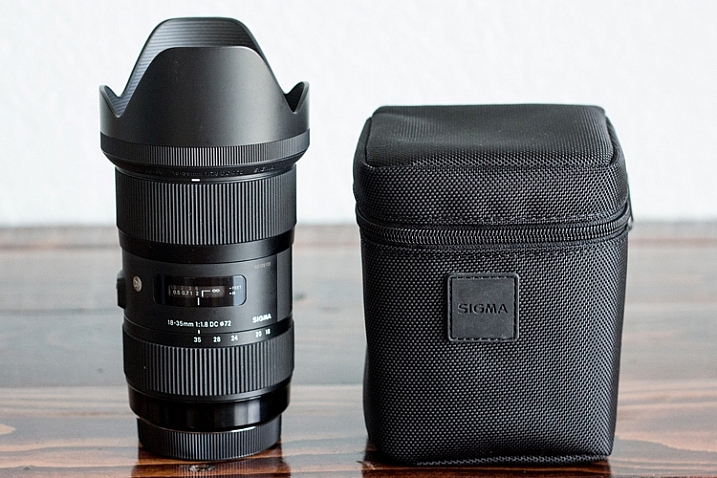
In the world of photography, there are several different schools of thought when it comes to third party lenses. Some photographers love them, some photographers choose to only purchase lenses made by their camera manufacturer. Personally, I have never had a problem with third party lenses, and they make up about half of my current camera bag. So when I had the chance to try out the Sigma 18-35mm f/1.8 DC HSM lens for APS-C cameras for about a month, I happily jumped on the opportunity to put it to good use!

sigma-lens-review-8

Lens Features and Build

Right out of the box, it was evident that this lens is something special. Sigma 18-35mm f/1.8 Art Lens offers a focal range that makes it useful for a number of different genres of photography such as weddings, portraits, and family photography. As an added bonus, it offers a fast constant aperture (f/1.8) that’s practically unheard of in similar zoom lenses.

Sigma’s Art line has been getting a lot of buzz over the past couple of years for being high-quality lenses at an affordable price point, and this one certainly did not disappoint. Some third party lenses can have the tendency to feel plastic-y, but this lens is made of Thermally Composite Material, which both looks and feels sturdy and professional.

sigma-lens-review-9

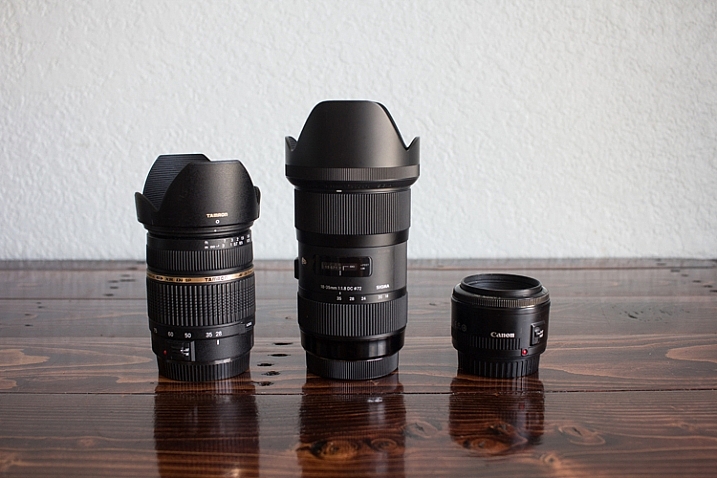
For size comparison: Left: the Tamron 28-75mm f/2.8 | Center: the Sigma 18-35mm f/1.8 | Right: the Canon 50mm f/1.8

This particular lens was physically larger than I expected based on other lenses in my bag, and it felt quite a bit heavier than I imagined as well. One weekend I took this lens to an RC air show, and several people commented to me that they wished they’d brought a telephoto lens like I had! It definitely isn’t a particularly small and compact lens. In terms of functionality, the zoom was heads above any other lens I own in terms of smoothness, and the auto-focus is fast and silent.

Sharpness Test

In order to test edge-to-edge sharpness of this lens, I used a tripod to photograph a brick wall at different focal lengths and apertures. Then I zoomed in and compared the top left-hand corner of each image to check for sharpness and vignetting.

Clockwise from Upper Left: 18mm at f/1.8, 18mm at f/16, 35mm at f/16, 35 mm at f/1.8. I cropped to include only the upper left hand corner of each image to check for edge to edge sharpness.

Clockwise from upper left: 18mm at f/1.8; 18mm at f/16; 35mm at f/16; 35 mm at f/1.8. I cropped to include only the upper left-hand corner of each image to check for edge-to-edge sharpness.

When shooting wide open, some consumer lenses have a tendency towards vignetting and/or have a loss of sharpness towards the edge of the image that can be very frustrating as a photographer. In this case, I noticed no discernible difference in sharpness along the edge of the image whether I was shooting at f/1.8 or f/16, even when zooming in significantly on the image. I also didn’t notice any vignetting even when shooting at small apertures. In fact, any vignetting that you see on any of the images in this article was added in the post-processing phase.

I was really pleased with the performance of this lens, and had no issues with its edge-to-edge sharpness, vignetting, or lens creep, in the month that I tested it out.

In the Field: People Photography

sigma-lens-review-1

Newborn photography

I’m primarily a child and family portrait photographer, so those genres were the first places that I put the Sigma 18-35mm f/1.8 to the test. In terms of newborn photography, I typically shoot on location in the client’s home for newborn sessions. While I find this works very well for the comfort of both mom and baby, the one variable that can sometimes be difficult is the available natural light. In the case of photographing newborns in unpredictable lighting situations, having a zoom lens with such a fast aperture is a huge asset.

sigma-lens-review-2

Kids photography

Next, I took the lens to the park with my kids, my nieces, and my nephew. Half of these kiddos were just about to move across the US, and so I wanted to be sure to take a few photos of them all together for our family. The Sigma 18-35mm stayed on my camera nearly the entire time we were at the park because it transitioned from a few semi-posed portraits to candid images of the kids playing together so seamlessly.

sigma-lens-review-3

Single portraits

Though I typically prefer using a 50mm lens on the 60D for portraits (which is closer to 85mm when considering the crop factor), I was surprised at how useful the 18-35mm lens was for single-person portraits as well. The thing that I really loved about this lens was that with my kids, I often have to choose whether I want to photograph an event with a portrait bent, or a photojournalism one because sometimes there’s just not enough time to do both.

If we head to the fire station with the girls, I can capture portraits of them in the fire gear with my 50mm lens, or I can capture pullbacks of them with the trucks with my 24mm lens. I could have taken my zoom lens, but it doesn’t have the ability to shoot as wide open as I often prefer in portraits. The Sigma 18-35mm lens is the best of all worlds–it’s wide enough to shoot pullbacks with the firetrucks and offers the functionality to zoom in and shoot portraits with a beautiful smooth bokeh at the aperture that I prefer.

Overall, this is a really fantastic and functional lens for people photography. Whether you’re interested in portraits or weddings, this lens can handle nearly any people photography situation absolutely beautifully.

In the Field: Nature and Landscapes

sigma-les-review-10

Though my real passion is in people photography, there are lots of other genres of photography that I enjoy as a hobbyist. I figured that in reviewing this lens, it only made sense to put it through some of those paces as well.

Whether photographing wide landscapes or flower blooms up close, this lens didn’t disappoint. I should mention that this lens features a maximum aperture of f/16, which may or may not be sufficient for someone who specializes primarily in landscapes. For me, as someone who shoots people photography but occasionally wants to be able to photograph a beautiful sunset or landmark, a maximum aperture of f/16 is more than sufficient.

sigma-lens-review-7

I did notice that even when shooting during the golden hour, this lens doesn’t tend towards large sun flares. Rather, it tends towards smaller sunbursts or small flares, which I find to be a benefit for both nature photography and for photographing people during the golden hour.

sigma-lens-review-5

Astrophotography

Lastly, I decided to use this lens to try out astrophotography. I’ve dabbled with photographing the moon before. But I haven’t had much success photographing stars because I just didn’t have the right lens that offered both a fairly wide angle and a fast aperture.

I was really pleased with the results of shooting the Sigma at 18mm, f/2.2, and 1600 ISO. Though I did notice some minor lens coma, it was far less noticeable than any other lens I’ve ever tried at similar settings. Again, astrophotography is not my specialty. However, it is something that I’ve enjoyed experimenting with on occasion, and it’s a bonus to me that a lens I’d primarily use for photographing people could also be used in this way as well!

sigma-lens-review-4

Overall Impressions

This is a really fantastic lens. If I owned it, I’m certain that it would get a ton of use. I could absolutely envision it as being my “walking around” lens that is attached to my camera most of the time.

That said, the one thing that would prevent me from purchasing it is that at $ 799, it’s more than I typically like to spend for a lens that only works for APS-C cameras. My photography budget is definitely not unlimited, so I think long and hard before I make any new purchases. When I do make a purchase, I typically try to choose lenses and other equipment that will serve me now, while also being good investments as I look to the future. I love my Canon 60D, and it currently suits all of my photographic needs just fine. However, I can’t say with 100% certainty that I would never eventually upgrade to a full-frame camera.  So I would be hesitant to invest this significantly in a lens that would not be able to transition with me.

All that said, this is where it is absolutely crucial that you consider your own approach to photography. Not every photographer in the world needs or wants a full-frame camera, and that is perfectly fine. If you are fairly certain that you don’t have plans to transition to full-frame in the near future, then I really cannot recommend this lens highly enough. It is well-made, high quality, and useful in so many different situations. Kudos to Sigma for producing a really extraordinary product with the Sigma 18-35mm f/1.8 DC HSM Art Lens!

googletag.cmd.push(function() {
tablet_slots.push( googletag.defineSlot( “/1005424/_dPSv4_tab-all-article-bottom_(300×250)”, [300, 250], “pb-ad-78623” ).addService( googletag.pubads() ) ); } );

googletag.cmd.push(function() {
mobile_slots.push( googletag.defineSlot( “/1005424/_dPSv4_mob-all-article-bottom_(300×250)”, [300, 250], “pb-ad-78158” ).addService( googletag.pubads() ) ); } );

The post Lens Review: Sigma 18-35mm f/1.8 DC HSM Art Lens by Meredith Clark appeared first on Digital Photography School.


Digital Photography School

 
Comments Off on Lens Review: Sigma 18-35mm f/1.8 DC HSM Art Lens

Posted in Photography


Review of the Tamron 85mm F1.8 Di VC USD Lens

15 Aug

There has been, and likely always will be, a lingering debate among professional photographers and amateur photo enthusiasts, about whether or not a third party lens can be every bit as good as the native glass produced by your camera’s manufacturer.

There is often a margin of compromise between cost and quality. Over the last five years or so, that margin has become increasingly slim. It’s become so small in fact, that we find ourselves living in an incredible time when these third party lenses are equalling the performance of high end lenses, in terms of optical performance and build quality.

Lens 7

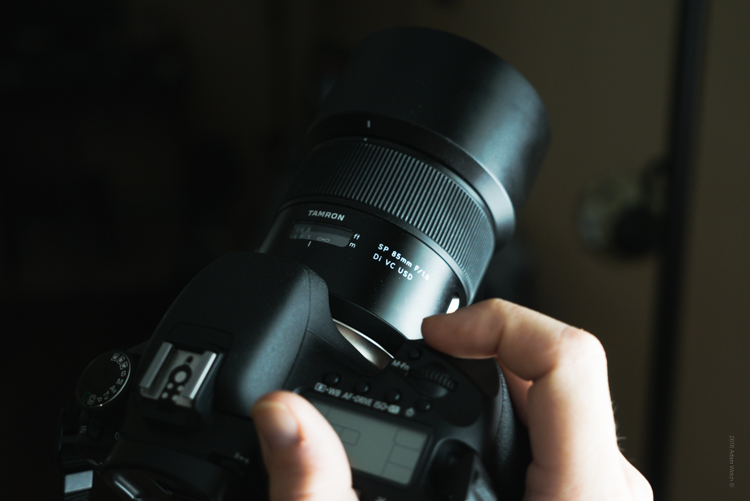
To date, very few lenses I have evaluated have exemplified this coming of age of lens manufacturing, more so than the Tamron 85mm F1.8 Di VC USD. It is intended to be used with full-frame dSLR’s, as well as APS-C bodies (it becomes 136mm equivalent). This lens embodies what could be called a levelling of the playing field, in terms of cost versus performance. Recently, Tamron announced their intentions to re-energize, and improve their lens offerings with increased image quality, and more reliable build. During this review I was amazed at just how much punch Tamron has been able to deliver with their 85mm f/1.8.

First Impressions

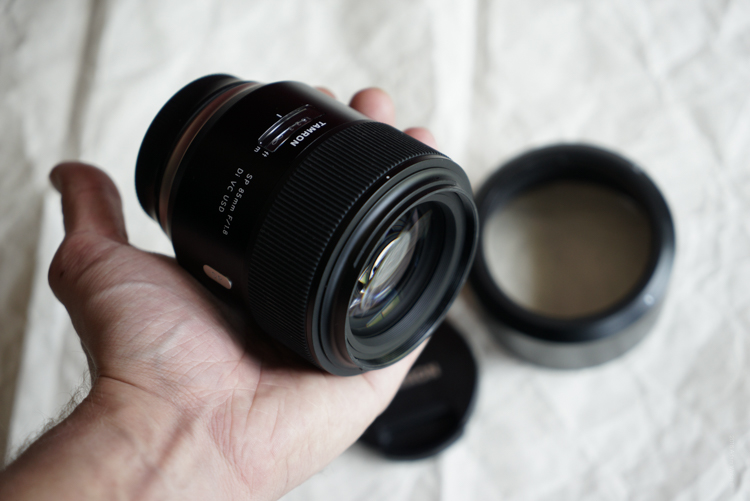
After breaking open the box I found the lens, along with hood, to be very well cradled in its packaging.

Lens 1

Lens 3

Lens 5

At first feel, the Tamron 85mm f/1.8 seemed hefty, with a solid weight. Not overly heavy at 24.7 ounces (700 g), but certainly not light either. You will definitely know this lens is on your camera. The look of the lens is clean and classic.

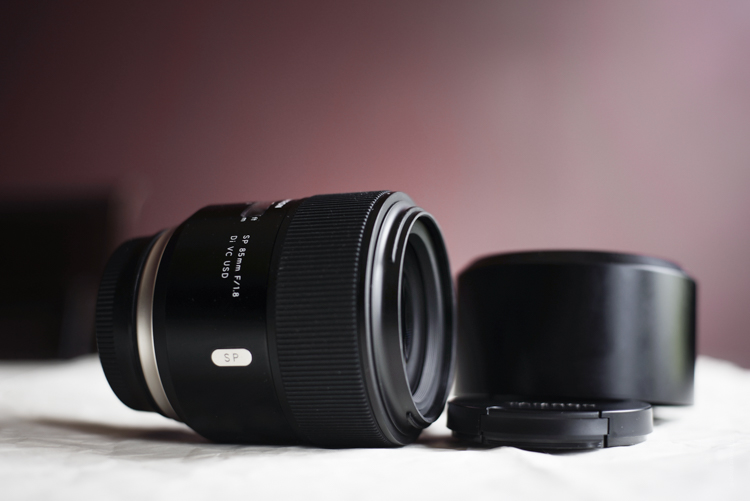
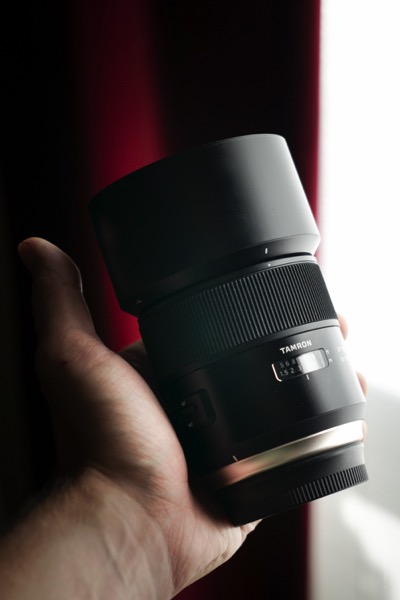
The lens body itself is nicely finished in matte black, while Tamron has added some silver-toned accents; most notably of which is the new metallic ring at the base of the body around the mount. The focus ring is pleasantly rubberized, and feels very comfortable to the touch. There is also a voucher for a free download of SilkyPix, Tamron’s post processing software, included with the lens purchase.

Build Quality

As I said, the most noticeable physical aspect of this lens is its weight. Which isn’t a bad thing, and it strikes a balance when compared to other similar lenses: the Canon EF 85mm f/1.8 and the Canon EF 85mm f/1.2 L which come in weighing 14.99 oz (425 g) and 36.16 oz (1.025 kg) respectively. Keep in mind that neither of those two lenses sports image stabilization(more on this feature later). Overall, the Tamron just feels serviceably solid. The focus ring is firm and extremely smooth when turning. All the markings and accents are very well executed and the focus indicator window is nicely done.

Lens 2

Lens 4

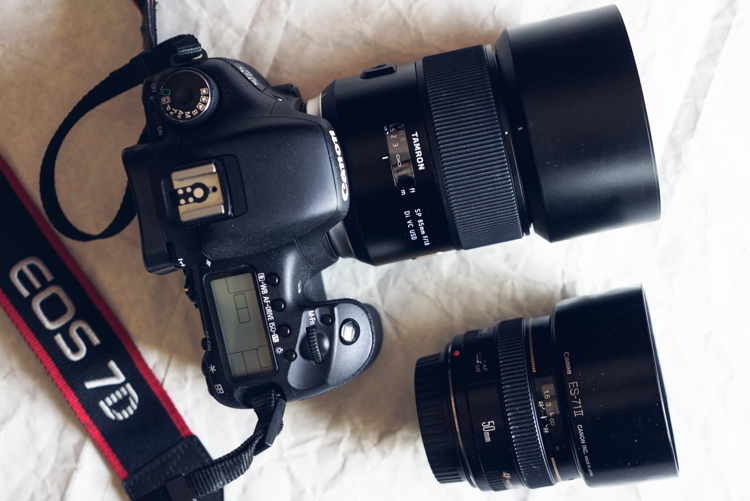
Here are the Tamron 85mm F1.8 mounted to a Canon 7D Mk1 alongside another excellent prime, the Canon EF 50mm F1.4 (below) for a size comparison.

85 and 50

The VR( image stabilization) and AF/MF switches are well placed for easy operation, and they switch on/off firmly. The included barrel-type lens hood looks great without screaming “Hey! Look at me!” and locks on securely with ease.

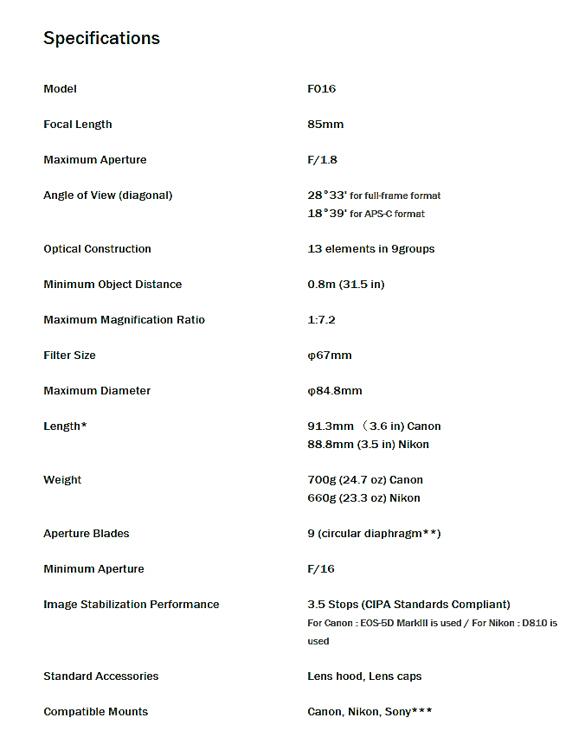
Here’s the official specification sheet from Tamron

Spec Sheet

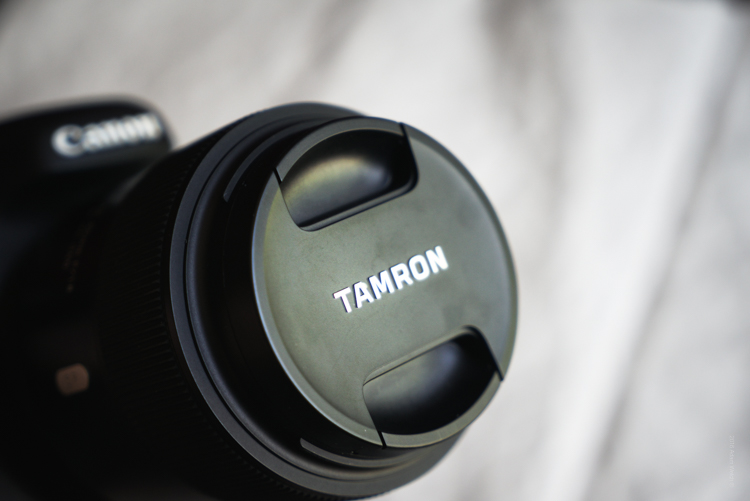
One thing which I’ve always found so pleasing about Tamron, albeit a small detail, is their attention to their lens cap ergonomics. I know, I know – it’s just a lens cap. But it’s a very important element of any lens that is intended to be used extensively. I mention it due to the fact that Tamron lens caps have a very deeply recessed front pinch.

Cap

Very much of my work centers around adventure and outdoor photography, where the elements aren’t always cooperative. Being able to take the lens cap on and off without fear of dropping (even with gloved hands) is a huge advantage in those kinds of situations. Small detail? Yes. An important detail? Very much so. It’s a feature that my fellow landscapers and outdoor photographers will greatly appreciate.

Now, back to your regularly scheduled review.

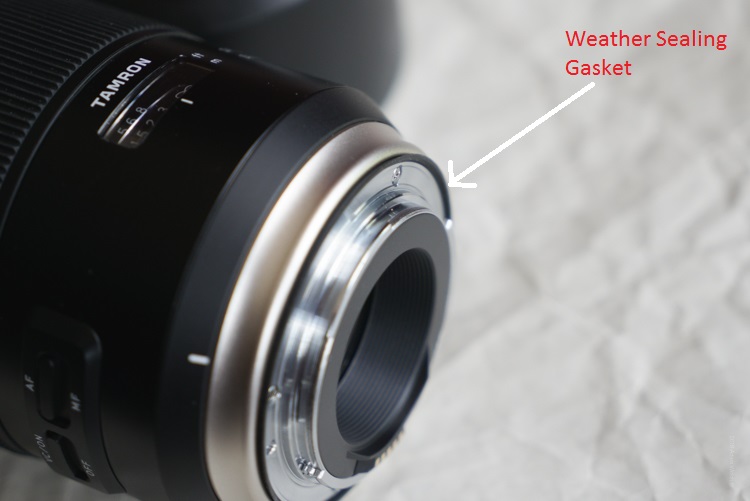
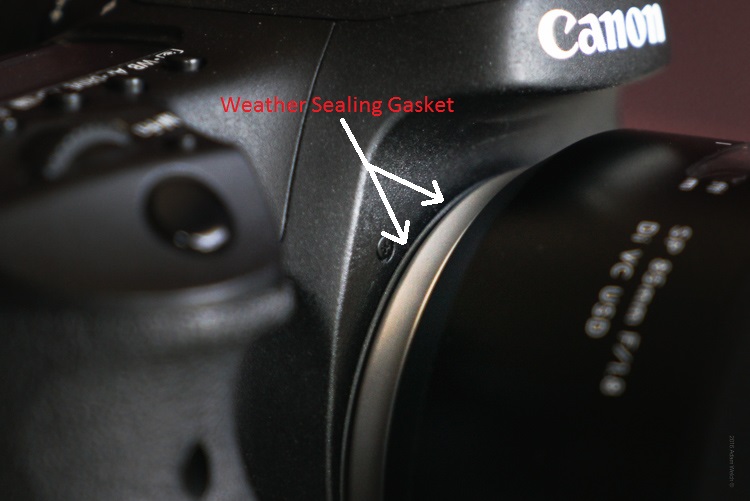
If you look closely at the lens you might notice a small black rubber gasket at the area of the lens mount.

Seal 1

Seal 2

This is part of the advanced steps Tamron has made to improve the resistance of their lenses to the elements. Though not as readily visible as the seal on the lens mount, the entire lens design has incorporated increased weather sealing on the areas between the focus ring and lens barrel. This means better long term service and protection from the grit and grime, often found when making photographs in the outdoors, where dust and moisture make themselves an unwelcome nuisance.

Image Quality

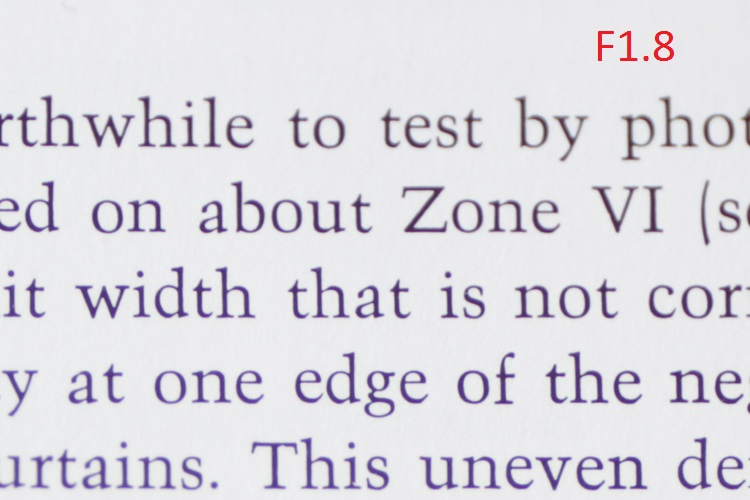
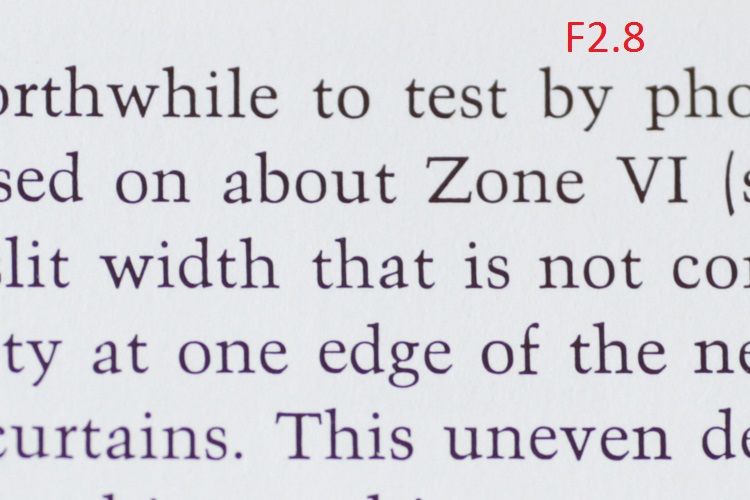
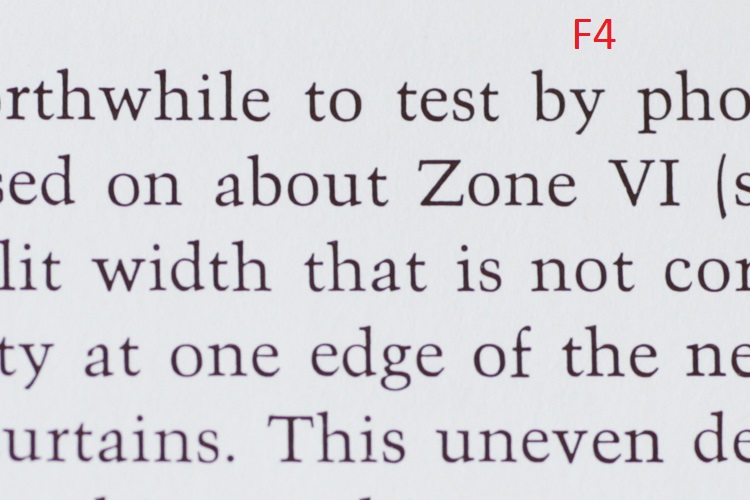
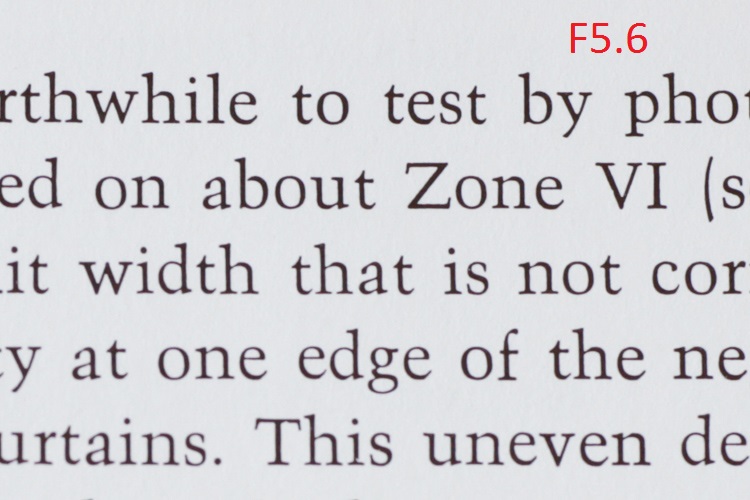
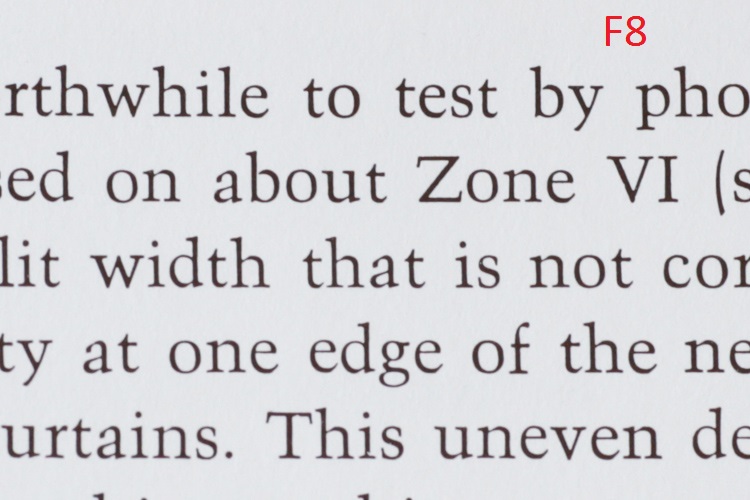
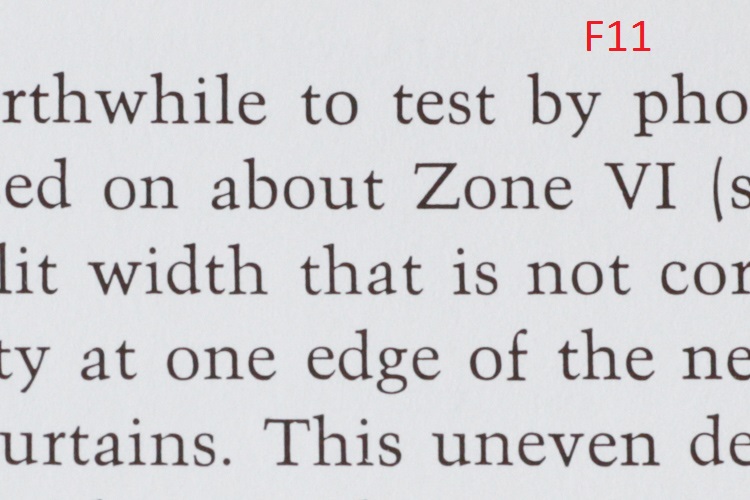
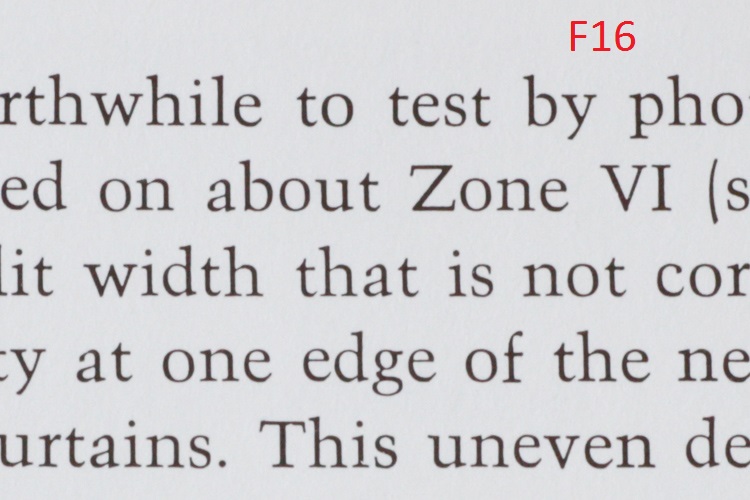
The 85mm F1.8 is intended to be a medium telephoto lens, that offers decent compression for portrait work, as well as true to life color rendition. In all these things, Tamron has excelled. I was excited to see that the lens performed very well, and was very sharp through the complete f/1.8 to f/16 aperture range. The corners were a little soft at f/1.8 but became crisp at f/4 and beyond. Overall sharpness was best observed from f/4 to f.8, with f/5.6 seeming to be the sweet spot of this review model.

Admittedly, I was very impressed with the sharpness, but the color performance is a point where this lens truly shines. Colors come through well saturated, with only moderate chromatic aberrations at wide apertures (past f/2.2 becomes very good) and contrast is wonderfully bold.

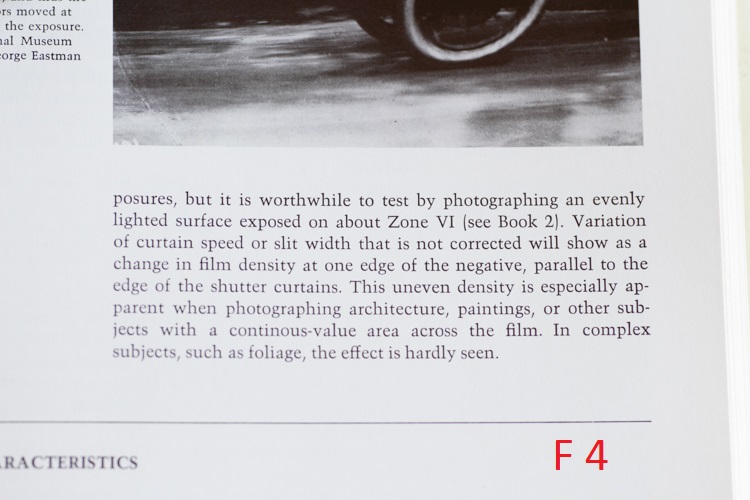
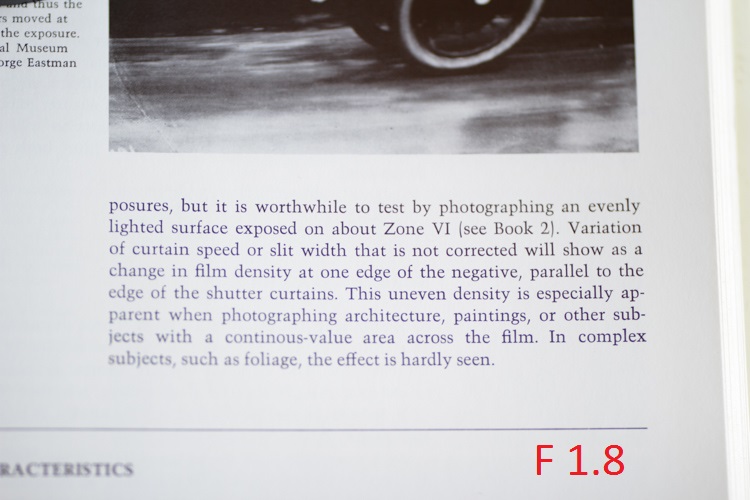
This is a series of uncropped images, showing the performance across common apertures from f1.8 through f/16.

F1 8

F2 8

F4

F5 6

F8

F11

F16

Now, have a look at that same set after being cropped to approximately 1:1.

F1 8 Zoom

F2 8 Zoom

F4 Zoom

F5 6 Zoom

F8 Zoom

F11 Zoom

F16 Zoom

The nine curved aperture blades produce a creamy bokeh, which portrait shooters will love. I especially loved the bokeh produced at the largest aperture of f/1.8. In some situations it even hinted at a faint swirling effect, reminiscent of the selectively loved/hated Helios 44-2.

In any case, you will no doubt be pleased with the background blur of your images. Taken alongside the great color and contrast, the 85mm f/1.8 will consistently produce quality images with good sharpness, in a wide range of situations.

Here are some additional sample images made with the Tamron 85mm F1.8.

Hand

Leaf

Coffee

Clouds

Lime

Swing

Autofocus and Image Stabilization Performance

This is the part of the review that I could not wait to write about in regard to the 85mm F1.8. The autofocus of this lens is fast, accurate, and quiet. The ultrasonic motor drive produced very little vibration during autofocusing, which was great. I’m a big time fan of having the final say with my focusing. Tamron has included a full-time manual override capability, which definitely allows greater control for pinpoint adjustments when needed, without having to switch the AF/MF switch to manual.

The autofocus tracked very accurately when shooting moving subjects as well. Overall, the AF performance of the lens is top notch.

The image stabilizer on this lens is an absolute marvel. In most cases, vibration reduction technology is useful, but for me, it’s never been a make or break selling point when I shop for lenses. With the 85mm – I must say that I am thoroughly impressed. The image stabilization performance of the lens is one of, if not the best, I have ever encountered. Tamron states that the 85mm F1.8 was the first 85mm fast-prime to include the technology (as of January 2016). The VR (vibration reduction) makes shooting at what might be considered impractically slow shutter speeds in sub-optimal light, very possible. This is great for street photographers, and really anyone who finds themselves needing to keep their ISO in check, who also frequently encounters low light conditions.

VR Off

This is an image shot handheld at 1/10 second with VR turned off.

VR On

Here we see the almost magical impact of the image stabilizer once the VR is switched on.

Generally, I base the majority of my exposures around the Reciprocal Rule (1/focal length) so at 85mm I wouldn’t normally go slower than 1/80th of a second, or 1/60th on a good day. The fact that I was able to pull off this measure of sharpness at 1/10th of second, means that the image could have been made with an even slower shutter speed, while still maintaining acceptable clarity. This means a lower ISO can be used in situations when it would previously not have been possible. Tamron has hit the VR out of the park with the 85mm F1.8.

Final Verdict

What you’ll like:

  • Outstanding sharpness through entire aperture range.
  • Great color and contrast performance.
  • Build quality is great.
  • Improved weather sealing helps control moisture and dirt problems< ./li>
  • The VR performance is outstanding. Image stabilization level: Jedi.

What you might not like:

Well, it’s difficult to list anything here. An extremely scrutinous shooter might mention the weight and moderate chromatic aberrations at f/1.8 as drawbacks, but both fall very safely in the range of what would be considered acceptable for most uses.

Closing Thoughts

It’s difficult for a lens to leave a reviewer without having any real negatives. Still, the Tamron 85mm F1.8 appears to have done just that. There were no issues encountered that would warrant inclusion. The fact is that the optically quality is superb, and the build is very solid.

Taking into consideration the fast autofocus, and the incredible image stabilization, it truly is a tough lens to beat at this price (around $ 749 USD). Add in the beefed up weather protection, and you are left with a beast of a mid-range telephoto lens, which will excel at portraiture and street photography, while holding its own during adverse shooting conditions in the outdoors.

4.5 out of 5 Stars

googletag.cmd.push(function() {
tablet_slots.push( googletag.defineSlot( “/1005424/_dPSv4_tab-all-article-bottom_(300×250)”, [300, 250], “pb-ad-78623” ).addService( googletag.pubads() ) ); } );

googletag.cmd.push(function() {
mobile_slots.push( googletag.defineSlot( “/1005424/_dPSv4_mob-all-article-bottom_(300×250)”, [300, 250], “pb-ad-78158” ).addService( googletag.pubads() ) ); } );

The post Review of the Tamron 85mm F1.8 Di VC USD Lens by Adam Welch appeared first on Digital Photography School.


Digital Photography School

 
Comments Off on Review of the Tamron 85mm F1.8 Di VC USD Lens

Posted in Photography


Samyang introduces full-frame 20mm F1.8 ED AS UMC

08 Aug

Samyang’s summer lens party continues with the announcement of a 20mm F1.8 full-frame prime. The manual focus lens offers seven aperture blades and a minimum focus distance of 0.2m/0.6ft. Two aspherical lenses and three extra-low dispersion elements are included in the lens’ 13 elements in 12 groups. The 20mm F1.8 will be offered in ten mounts:

  • Canon EOS
  • Nikon AE
  • Pentax K
  • Sony Alpha
  • Canon M
  • Fujifilm X
  • Samsung NX
  • Sony E
  • Four Thirds
  • Micro Four Thirds

A cinema version is also introduced: the 20mm T1.9 ED AS UMC.

The 20mm F1.8 photo lens will cost €499, and the 20mm T1.9 cine lens will cost €549.

Articles: Digital Photography Review (dpreview.com)

 
Comments Off on Samyang introduces full-frame 20mm F1.8 ED AS UMC

Posted in Uncategorized


Comparison Review: Sony FE 50mm F1.4 ZA vs 55mm F1.8 ZA

20 Jul

Sony has announced a high-end ‘normal’ prime for its Alpha E-mount line of cameras: the Planar T* 50mm F1.4 ZA lens. As the third normal prime for the system, we wanted to know what it offers over the already excellent FE 55mm F1.8 ZA, so we set about performing some benchmark tests.

We’ll take a look at sharpness on this page, and bokeh, coma, and longitudinal chromatic aberration on the next.

Sharpness

Below, you’ll see a series of aperture progressions for the 50mm F1.4 ZA and 55mm F1.8 ZA. Have a look around the scene at various apertures to get an idea of the capabilities of these two lenses – with the caveat that this performance is only representative of our single copy of each lens.

$ (document).ready(function() { ImageComparisonWidget({“containerId”:”reviewImageComparisonWidget-27965628″,”widgetId”:381,”initialStateId”:null}) })

Wide-open, the 55/1.8 is slightly sharper than the 50/1.4, both centrally$ (document).ready(function() { $ (“#imageComparisonLink2690”).click(function() { ImageComparisonWidgetLink(2690); }); }) and peripherally$ (document).ready(function() { $ (“#imageComparisonLink2691”).click(function() { ImageComparisonWidgetLink(2691); }); }) (the advantage is retained on the left side$ (document).ready(function() { $ (“#imageComparisonLink2692”).click(function() { ImageComparisonWidgetLink(2692); }); }) of the frame as well, despite the fact that our 55/1.8 is slightly decentered and has poorer left side performance). But none of this should be too surprising, since sharpness at F1.4 is far more challenging than at F1.8. In fact, the 50/1.4 holds up very well considering the 2/3 EV disparity in f-stop.

Comparing both lenses at F1.8 (a more level playing field), the 50/1.4 catches up to the 55/1.8 in terms of center sharpness$ (document).ready(function() { $ (“#imageComparisonLink2695”).click(function() { ImageComparisonWidgetLink(2695); }); }), but still lags in peripheral sharpness on the left$ (document).ready(function() { $ (“#imageComparisonLink2693”).click(function() { ImageComparisonWidgetLink(2693); }); }) and right$ (document).ready(function() { $ (“#imageComparisonLink2694”).click(function() { ImageComparisonWidgetLink(2694); }); }) sides of the frame. By F2, though, the 50/1.4 just surpasses$ (document).ready(function() { $ (“#imageComparisonLink2701”).click(function() { ImageComparisonWidgetLink(2701); }); }) the 55/1.8 in central sharpness, though off-center it still lags a bit$ (document).ready(function() { $ (“#imageComparisonLink2702”).click(function() { ImageComparisonWidgetLink(2702); }); }). By F2.8 though, the 50/1.4 pulls ahead$ (document).ready(function() { $ (“#imageComparisonLink2703”).click(function() { ImageComparisonWidgetLink(2703); }); }) of the 55/1.8 even here off-center, and particularly at center$ (document).ready(function() { $ (“#imageComparisonLink2696”).click(function() { ImageComparisonWidgetLink(2696); }); }) where it pulls and stays ahead at higher F- numbers. Peripherally, though, the 50/1.4 never quite catches up to the 55/1.8, not at F2.8$ (document).ready(function() { $ (“#imageComparisonLink2697”).click(function() { ImageComparisonWidgetLink(2697); }); }), and not even by F5.6$ (document).ready(function() { $ (“#imageComparisonLink2698”).click(function() { ImageComparisonWidgetLink(2698); }); }) (the lenses are a bit more even on the left side at F2.8$ (document).ready(function() { $ (“#imageComparisonLink2699”).click(function() { ImageComparisonWidgetLink(2699); }); }) and F5.6$ (document).ready(function() { $ (“#imageComparisonLink2700”).click(function() { ImageComparisonWidgetLink(2700); }); }) due to the weaker performance of our 55/1.8 on the left but, technically, the F1.4 is still a little bit behind).

What does this mean?

The new 50/1.4 ZA displays impressive sharpness and contrast at F1.4. Not quite as much as the venerable 55/1.8 wide open, but a respectable amount considering the 2/3 stop light and depth-of-field advantage. These new lens designs deliver sharp and punchy images wide open, instead of the soft and hazy images you may be used to getting if you slap on old F1.4 designs on such high resolution sensors (remember that we’re using the unforgiving 42MP a7R II for this test).

That said, the new 50/1.4 does not retain this sharpness across the field as well as the 55/1.8, which offers better field uniformity at all apertures. By F2, though, the new 50/1.4 ZA matches the 55/1.8 in central sharpness, and surpasses it at all smaller apertures. Considering the high bar set by the 55/1.8 ZA, this is very impressive. However, you give up off-center sharpness at the widest apertures. If we were forced to pick an overall winner here in terms of sharpness, we’d probably go with the 55/1.8, but really there isn’t a huge difference between the two.

Roger Cicala over at LensRentals found the Sony 50mm F1.4 lens to be the sharpest centrally of any 50mm prime, outperforming the 55mm F1.8 ZA. However, peripherally, the 50/1.4 takes a plunge in terms of resolution, and the 55mm F1.8 pulls ahead. In fact, just 4mm out from center in the image circle, tangential resolution (which we assess by considering the highest frequency MTF trace: 50 lp/mm) drops below that of the 55/1.8 (solid purple line). Source: LensRentals Blog

It’s worth noting that Roger Cicala at LensRentals found the central sharpness wide open of the 50/1.4 to exceed the 55/1.8 (see MTF traces above), while our visual results don’t show the 50/1.4 to exceed the 55/1.8 until F2.8. We can’t rule out the possibility that our copy of the 50/1.4 slightly under-performed relative to the average, perhaps due to decentering; however, it’s reassuring that he found the 55/1.8 to offer greater uniformity. This difference in peripheral sharpness may be the reason for the apparent discrepancy in our results.

Below, we show our infinity scene overlaid with red and blue rings representing image heights of 4mm and 16mm, respectively: the two points where the 50 lp/mm MTF traces of the two lenses intersect. Between these rings, Roger’s 50/1.4 sagittal 50 lp/mm trace falls well below the 55/1.8. Hence, our visual shootout seems to agree with Roger’s results: aside from a very small region in the center, the 55/1.8 does outperform the 50/1.4 wide open (though we don’t see the improvement towards the edges of the 50/1.4: our 55/1.8 remains better). 

Our infinity scene with red and blue rings that represent 4mm and 16mm image heights (distance from center in the image circle). Between these regions, Roger’s own MTF data indicate a dip in sagittal resolution. It’s likely only the small region in the center (within the red circle) where the 50/1.4 resolves more than the 55/1.8 wide open, which would explain the apparent discrepancy between Roger’s results and ours. 

All that said, sharpness isn’t everything. How does the new 50/1.4 fare in terms of bokeh, coma, and purple/green fringing? Let’s take a look on the next page.

Articles: Digital Photography Review (dpreview.com)

 
Comments Off on Comparison Review: Sony FE 50mm F1.4 ZA vs 55mm F1.8 ZA

Posted in Uncategorized