When I first started in journalism a few lifetimes and two careers ago, a writer had three things to worry about: writing a solid story, getting it in on time, and keeping your editor happy. That was basically it. Today, that list of concerns has grown to include things like keywords, meta tags, headings, titles, internal links, externals links, and– of course– images. It’s almost enough to make someone who typed NBC news copy in the early 80s on a manual typewriter shake his head and abandon all hope of reaching any kind of audience.
Since I’m not that fresh-out-of-college journalist anymore, writing for online photography magazines requires a pretty firm grasp of search engine optimization (SEO)– that is if I hope for anything resembling a decent-sized audience to read my ramblings once I click the “publish” button. If you write your own blog or are responsible for any kind of website content, SEO should be at the top of your list of priorities, too. By now, most people understand the idea and importance of keywords in their web content. A search engine’s basic function is to match your website or blog with peoples’ searches in order of relevance. It accomplishes this task, in part, based on keywords and text from throughout your site. You may think you have a fantastic headline for a post, for instance, but it may not be enough to drive traffic to your site if the language doesn’t match up with typical searches. While sensational headlines may attract print readers, it might be the boring, just-the-facts-ma’am headline that attracts web readers through effective SEO. Had I named this article “Finding a Needle in a Haystack,” nobody researching photography SEO would ever be able to find it.
Since we are photographers, though, making sure our text is SEO-friendly is only half the battle. Yes, we want people to read our blogs or find our professional websites, but we have an added hurdle to cross. We need people to find our photos as well. Think about the millions upon millions of websites dancing around on the web in all of their binary glory. Our SEO choices help search engines like Google understand what is on our websites, hopefully drawing the distinctions that will place our sites above the competition’s in the results list. In order for photographers to do that effectively, however, we also have to be careful about how we name our images.
Search engines primarily work from text and links. Words. That makes it difficult– but not impossible– for them to differentiate between photographs. Think about the last time you searched Google Images and wondered by something totally unrelated to your search popped up in the results. It was, in all likelihood, a result of poorly named images. Since the name may contain the only words associated with an image, it is vital that you give it a name which is optimized for search engines. Let’s face it– IMG_2468.jpg isn’t going to cut it. There is absolutely nothing unique about it, and chances are there a lot of other images out there with the same ineffective name. Even if you rename your photos for your own archival purposes, their new names aren’t going to be much more helpful. When you stop to think about how many searches take place on the internet every day– and how many of them are for images only– you might as well do what you can to make sure they find you and not somebody else.
While this is not an exact science, there are some tried-and-true steps you can take to help your images get the notice they deserve, and– by extension– help direct the traffic to your website that will hopefully lead to more business.
What’s in a Name?
Like I said, DSC_0042.jpg is not your friend. This is, unfortunately, not one of those situations where less is more. When it comes to optimizing your photos for the web, more is more. You have to give each image on your site a unique name which is specific for its intended use. Since DSC_0042.jpg doesn’t tell Google anything about the photo’s content, I have to name it in such a way that the search engine knows (1) something about the content, (2) that I took it, and (3) where it can be found on the web. Suddenly, a simple cookbook photo is no longer DSC_0042.jpg, but has assumed its new identity as “guyer-photography-atlanta-food-photographer-polenta-recipe,” or something similar. Even rearranging the words can have an impact. Choose your words and their order carefully.

Word Separators: Hyphen/Dash v. Underscore.
Word separators help make sure that search engines know what you are trying to tell them. Obviously, we type our searches with spaces between words. The problem is that search engines don’t really know what to do with spaces, so they close them. That’s why things like URLs and image titles (which get linked to URLs) need a dash/hyphen between words. So “food photography” becomes “food-photography,” rather than foodphotography. Until last year, there had been a debate over whether dashes/hyphens were preferable over underscores. In 2012, however, Google definitively answered the question, stating that their search engines treated underscores like spaces, turning “food_photography” into the spaceless “foodphotography.” While it does not have a huge impact on search results, it does have one, so it obviously makes a difference. This, apparently, is one of the few SEO debates that truly does have a right or wrong answer.
Alt Text
Sites like WordPress, and other platforms with visual editors allow you to insert Alt Text into your photos. You should use this field to attach key words, helping to ensure that your images pop up when people search for those words or phrases.
Talk About the Photo on the Page Where it Appears.
Search engines pull data not only from the image URL itself, but also from surrounding text. This is why you may have a better chance of your blog images finding their way to a higher ranking on a search than portfolio or gallery images. If you’re blogging about them you’re talking about them, adding more information for the search to find, rather than gallery images which have no accompanying text.
Size Does Matter.
This is one of those areas where bigger is better. Larger images rate higher in search engine rankings than thumbnails. You should have a good working knowledge of how your site displays images, as well as what its optimum pixel dimensions are. Besides taking full advantage of your site’s ability to display images at their best, you want to make sure you are doing all you can to promote your photos.
Don’t Forget About Social Media.
If you are managing your social media presence properly, it should be a natural extension of your website. Before Facebook, someone looking for a photographer sat down at the computer and used a search engine. While that is still true today, just as many people begin their search on social media, quite often not getting to a photographer’s website until after they’ve checked out their Facebook page. Make sure that you’re not only discussing your photos on social media, but make sure that it points back to the original images on your website as well.
Google Changes Things Up.
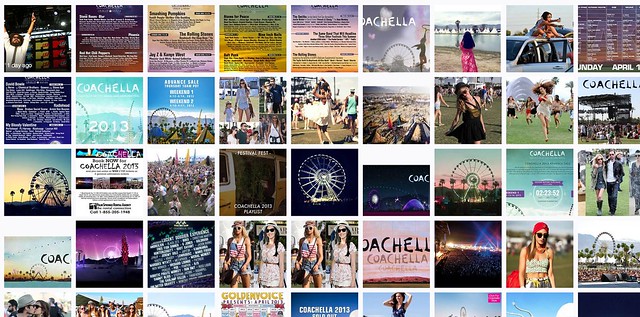
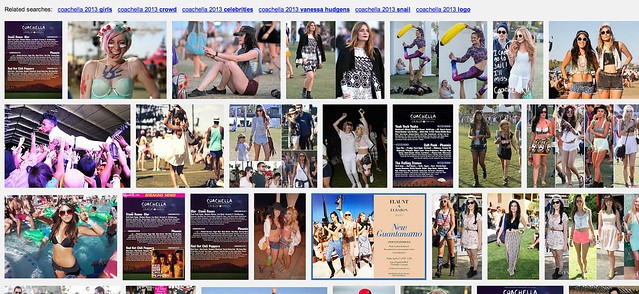
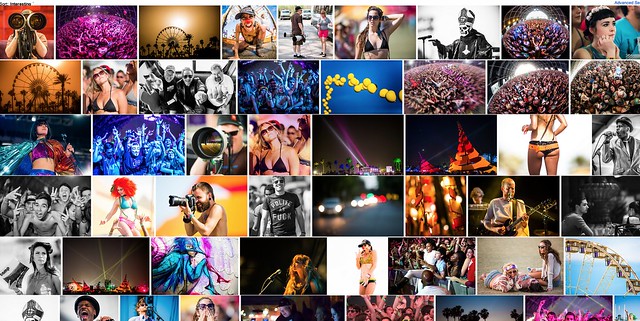
Do you remember how in January of this year Google changed how it displays images in it search results? Suddenly, we went from low-res thumbnails that took you straight to the web pages on which they appeared, to sleek grids of high-quality thumbnails. Gone are the embedded links that automatically launch the pages that host and license the images, offering the best of both world to photographers and the people looking for them. Now, in an effort to make things easier for the person typing in the search, clicking on an image search result opens a second window that gives the choice of whether to click through to the full site. While this might make things easier for people searching for images, it adds another layer of necessity for the photographer to make sure that images are properly optimized for search. If not, the potential client may never click through to the main site.
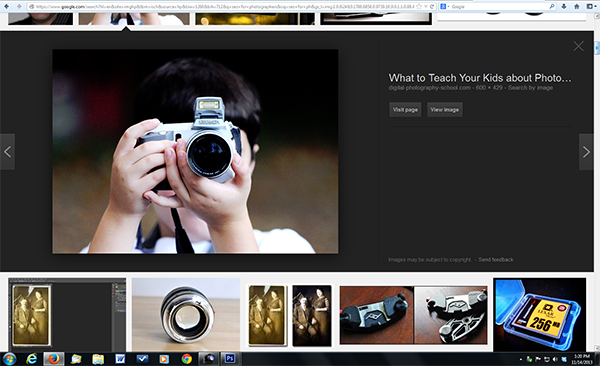
Google Images’ new layout adds another hurdle to cross for effective photo SEO.
Wrap-Up
If you’ve ever asked a photographer to pick their favorite photo from their archives, you probably got some reply along the lines of, “That would be like picking my favorite child.” We can debate the accuracy of the metaphor, but it carries a lot of weight. We protect our photos with copyright laws. yet we are so proud of them that we want to share them with the world. It’s a great goal, but one that has to be approached with an eye towards making sure they are properly optimized to show up in the very searches that can meet– and hopefully exceed– the goal. Optimize photos on your site and you should see a marked difference in where you rank on search engine results.
Post originally from: Digital Photography Tips.
Check out our more Photography Tips at Photography Tips for Beginners, Portrait Photography Tips and Wedding Photography Tips.
How to Optimize Photos for Search Engines
The post How to Optimize Photos for Search Engines by Jeff Guyer appeared first on Digital Photography School.

Digital Photography School