RSS
 

Posts Tagged ‘done’

iFixit discovers camera repairs for iPhone 12 models can’t be done by third-parties

03 Nov

Repair site iFixit has discovered that repairing the cameras inside Apple’s new iPhone 12 smartphones will not be able to be, at least easily, done by third parties, as removing the cameras requires access to a proprietary tool that only authorized Apple technicians will have access to.

While trying to swap the camera modules inside two iPhone 12 devices, iFixit suspected something was up. After ‘exhaustive testing, comparing notes with multiple repair technicians, and reviewing leaked Apple training documents,’ iFixit discovered ‘the iPhone 12 camera is entirely unreliable when swapped between iPhones.’

Image credit: iFixit

Below is a video from YouTuber Taylor Dixon, who also discovered this while attempting to swap cameras inside iPhone 12 devices:

This, of course, means any DIY fixes or even those by unauthorized third-party phone repair shops won’t be happening. The graphic below is a leaked chart from Apple that shows iPhone 12 models require an authorized technician to run ‘System Configuration’ to replace a camera module (or a display). Previously, these limitations were only in place for batteries.

Articles: Digital Photography Review (dpreview.com)

 
Comments Off on iFixit discovers camera repairs for iPhone 12 models can’t be done by third-parties

Posted in Uncategorized


Sigma has done more for enthusiast APS-C than Nikon, Canon and Sony combined

16 Feb
There’s no reason APS-C can’t be a good enthusiast format, with the right lenses.

Full-frame is being touted as the future of enthusiast as well as professional photography. But I’d argue that APS-C is still a highly capable format and one that makes sense for a lot of people. That could be true for an even broader group if it was properly supported as an enthusiast format. And, I’d contest, one company has consistently done more to support the big brand’s users than the camera makers themselves.

The past few years have seen a wave of full-frame launches and, from the original EOS 5D through to the Sony a7 series and EOS RP, the falling prices of full-frame cameras have made them accessible to an ever-wider number of people. This focus on relatively profitable models (and lenses) is only likely to continue as the camera market contracts back to catering for a core of dedicated photographers, rather than trying to sell to everyone. But what does this mean for APS-C?

While all the buzz is around full-frame, the industry still sells more APS-C cameras and there are many, many times more of the smaller-chipped cameras in circulation than there are full-framers. Should these countless millions of cameras be seen as a temporary aberration, now being corrected, or can APS-C still be a good fit for enthusiasts?

The aberrant puny stepchild camera

Sony’s new a6400 camera has an APS-C sensor and some of the best autofocus performance around. It’s also got a decent lens on it in this photo, but it’s a lens that costs just as much as the camera itself.

There’s an argument that APS-C is simply a quirk of history: that camera makers only embraced it because it was the largest format they could manufacture affordably enough to actually sell, and that they were always going to revert to ‘full-frame’ as soon as it became cost-effective. But, while much of this is true, it that doesn’t mean that APS-C is too small or can only be a stop-gap. After all, there’s nothing intrinsically optimal about full-frame*.

After all, there’s nothing intrinsically optimal about full frame

You could equally make the opposite argument: that full-frame is an arbitrary reference point for comparisons that remained in the imagination because of the popularity of the film format it’s based on, not any inherent ‘rightness’ of it. But, I’d argue, it’s also because the SLR makers didn’t want to give up on all the money they’d invested in designing extensive lineups of lenses for film, so never really committed to APS-C as a serious format.

Serious support?

Way back, photographers could get a Nikon 17-55mm F2.8 ‘pro’ lens for APS-C cameras like the D80. Today, users can get the same lens or newer and more ambitious offerings from Sigma. (And the 35mm F1.8 DX seen here is one of only four DX primes Nikon has ever released.)

To make the most of any format, you need bright lenses. And that will mean different things to different photographers. I’m going to argue that what you really need is a choice of bright primes and F2.8 (or faster) zooms if you’re going to make a format useful to a range of enthusiasts.

Look across the ranges of Nikon and Canon and you’ll see a smattering of APS-C-specific lenses: a pro-grade 17-55 F2.8, a wide-angle zoom with a moderate maximum aperture and perhaps a macro or two. That’s often the extent of the support for enthusiasts. Sure there’ll be countless kit-zooms, maybe a mid-market 18-one-hundred-and-something and an 18-200mm for the all-in-one crowd. But look for a decent prime and chances are your options are limited to full-frame lenses.

To make the most of APS-C you really need
a choice of bright primes and
F2.8 (or faster) zooms

Want an 85-90mm equiv portrait lens? Shush! Buy a 50mm and learn not to frame so tight, or accept that you’ll have to use something longer, buy an 85mm and SPEAK UP A BIT so your subject can here you. Looking for a 24mm equiv prime (hardly the most exotic request)? Well, sorry about that.

And it’s this lack of lens support, rather than any shortcoming of the format that I’d argue has always undermined it. Which is odd, as Nikon has, with the D300/D500 and D7000 series cameras, made some very nice enthusiast models. Likewise Canon with its EOS X0D models. But the net effect is the implication that full-frame is the ideal end-point and that APS-C isn’t suitable for enthusiasts: it’s purely a stepping-stone.

S for sufficient?

What’s that? An 85mm F1.8 equivalent prime? Fujifilm’s lens lineup lets you get ‘full-frame image quality’ when you need it, without having to lug full frame lenses round all the time.

But APS-C can be a highly capable format. Like Micro Four Thirds, it can be small and affordable when you want it to be, but you can extend its capability considerably if you add a bright lens where you need it. Image sensors have improved to an amazing extent over the lifespan of APS-C, with technology improving to push both low light performance and dynamic range to new limits. And, while full-frame chips have gotten better by a similar amount, there’s no reason to think that people’s needs and expectations have become more demanding at the same rate.

APS-C can be a highly capable format. Like Micro Four Thirds, it can be small and affordable when you want it to be, but you can extend its capability considerably if you add a bright lens where you need it

If APS-C has exceeded ‘good enough’ for a lot of applications, then what does it matter that full-frame has gotten even better? (I’ll concede that reviews can contribute to this: we can show which camera is better, but can’t tell you whether you, personally, need that improvement). Finally, it’s worth nothing that in the era of mirrorless, there’s no direct connection between sensor size and viewfinder size/brightness, so there are fewer downsides than ever to APS-C.

Sigma to the rescue

Lenses like the Sigma 56mm F1.4 give you great low light performance and subject separation on crop-sensor cameras like Sony’s a6500.
ISO 1000 | 1/100 sec | F1.4

But in the end, you just need lens support. And I’d argue that Sigma has done more to support APS-C as an enthusiast format than the big camera makers have. Fujifilm should get some recognition: having picked APS-C as its enthusiast format, it’s built the most comprehensive lineup there’s ever been (and perhaps Canon’s 32mm F1.4 for EF-M is the beginning of something interesting for that system) but Sigma deserves credit not just for its commitment but also for its innovation.

Fujifilm has built the most comprehensive APS-C lineup there’s ever been

As a third-party lens maker, Sigma offered some affordable alternatives to the camera makers’ own, such as its 17-50mm F2.8, but it also branched-out to offer lenses that neither of the big two made. Its 50-150mm F2.8 remains one of my favorite lenses of the period: it offered the coverage of a 70-200mm had on film, but was smaller, lighter and cheaper, giving it a real advantage over an actual 70-200. (Pentax also deserves credit for its 50-135mm F2.8, part of the most complete own-brand APS-C lens lineups for DSLR).

But in recent years, Sigma’s commitment to APS-C has been redoubled: creating lenses that extend what you can expect the format to do. The 18-35mm F1.8 is a lens that lets APS-C cameras match the depth-of-field and low-light performance of a full-frame camera with a 27-52mm F2.8 zoom, obviating the need to upgrade, perhaps. On top of this, it’s made a 50-100mm F1.8, letting APS-C match a full-framer with a 75-150mm F2.8. Again, this lets an enthusiast who likes to dabble in sports gain ‘full-frame image quality’ for their sports shooting, without having to bear the weight and cost of full-frame when they’re shooting other subjects.

And onward

Sigma’s 16mm F1.4 is a fantastic lens for Sony E-Mount (and, of course, Micro Four Thirds)

Sigma’s continued this trend into the mirrorless space. Sony started its E-mount system with a 16mm F2.8 prime: exactly the sort of lens I was saying was always missing from the DSLR lineups (even if that particular lens is a case of ‘be careful what you wish for’). It’s produced a couple of interesting primes since then but now seems to have totally shifted its attention to full-frame. This again risking the door being closed on APS-C as an enthusiast format. But, again, Sigma has stepped in.

Not only has Sigma made a F1.4 16mm for Sony’s APS-C E-mount, it’s also created a 30mm and a 56mm F1.4. It hasn’t made any fast zooms for mirrorless, but this trio of primes again allows APS-C shooters to squeeze the most out IQ of their cameras, if they don’t need full-frame performance all the time. Something worth considering if you’re thinking about switching systems.

Another thing to consider might be that the standout lenses for the fledgling full-frame mirrorless cameras are often the 24-105mm and 24-70mm F4s: lenses that could be matched in capability by a 16-70mm F2.8 on APS-C. If anyone feels like making one. Hint, hint.


*Anyone saying it allows an ideal compromise between image quality and lens/camera size clearly hasn’t been keeping track of the increasing bulk of the lenses for the latest mirrorless full-frame cameras.

Articles: Digital Photography Review (dpreview.com)

 
Comments Off on Sigma has done more for enthusiast APS-C than Nikon, Canon and Sony combined

Posted in Uncategorized


Review: Rylo is a 360º camera done right

06 Jan
The Rylo camera captures a 360º spherical image. Its companion mobile app makes it possible to export standard HD video from anywhere in the image.

Over the past couple of years I’ve tried quite a few consumer-oriented 360º cameras, and while I’m generally excited about the future prospects of 360º photo and video, I’ve also been of the opinion that applications and technology need to improve before it really gets traction with consumers.

Part of my ambivalence towards 360º video stems from the fact that few of the cameras I’ve tried really do anything unique. Almost universally, they capture spherical video that requires a VR headset to view, or which requires the viewer to drag around an image to find the part of the scene they care about.

The Rylo Camera ($ 499) takes a different approach. Although it captures 360º photos and video, it does so with the idea that you can later select a region of the image from which to create a standard 16:9 HD video. It’s basically like an action cam that lets you decide where to point the camera after you’ve shot your footage.

It’s basically like an action cam that lets you decide where to point the camera after you’ve shot your footage.

On the hardware side of things, the Rylo looks much like any other VR or action camera. It has two fisheye lenses and records 4K spherical video or 6K spherical photos. The body is aluminum and feels very solid – much more so than most action cameras I’ve used. A small door provides access to the MicroSD card and battery, and a small display shows remaining battery and recording time.

However, it’s the software that makes the Rylo really interesting. Video is copied to your mobile device via the included cable, and the camera’s companion app provides numerous opportunities for getting creative.

Before you even begin working with your footage, the app applies automatic horizon leveling and image stabilization. You don’t even notice how effectively this works until you turn these features off, but once you do so it becomes apparent that this correction is really good.

This video shows the same clip with the Rylo’s image stabilization and horizon correction turned on (left) and turned off (right). It works very effectively.
Video by Dale Baskin

To begin editing a video, you simply open a clip and select your desired framing within the app. You could export your HD video at that point, but you would be ignoring the software’s best feature: the ability to direct the camera after the fact.

One way to do this is to tap and hold the screen, then select the option to ‘Look Here’. Doing so locks the camera at that position and creates a keyframe. It’s possible to create multiple keyframes at different locations throughout your clip, and the software will virtually tilt and pan as needed to transition between them.

Even better, you can let the software do the work for you. In addition to ‘Look Here’, there’s also a ‘Follow This’ option that locks onto a subject and tracks it, smoothly panning and tilting like a virtual camera on a gimbal. I found this feature surprisingly effective, and it produced very natural looking footage.

My friend Stu West offered to take the Rylo skiing with his family for a day. In this video we used the app’s Follow Me feature to track the skier down the hill. Stu pointed the camera straight ahead through the entire run; most of the camera movement is the result of virtual panning by the Rylo app.
Video by Stu West

If you want to see the world a bit differently, there’s also a ‘Tiny Planet’ view that shrinks the entirety of your world down into a small sphere.

In addition to motion control, the software also includes the ability to trim clips and perform basic corrections including highlights, shadows, vibrance, and tone (WB). It’s fairly basic, but enough that you can generally adjust the footage to your taste.

The biggest challenge I ran into when shooting video was adjusting my own behavior. I had a tendency to point the camera at my subject as it moved around, much like you would do with an action cam. That actually made editing a bit more difficult, so I had to learn to hold the camera still, then virtually change my camera direction later using the app.

This clip shows an example of the Rylo’s Tiny Planet mode. (Note: the camera records sound in this mode, but we chose not to include it.)
Video by Stu West

The Rylo can also be used for still photos, but I found the experience less satisfying. There’s no way to remotely trigger the shutter from your phone; instead, you have to physically press the shutter button, meaning that your hand is guaranteed to cover much of the photo. As with video, you can select your framing after the fact, but the largest image size is 1080p video resolution, though in practice resolution appears to be somewhat lower than that.

Of course, the Rylo is also a 360º camera that can be used to export spherical images or video. In that sense, it doubles as a VR cam if you want to share a VR experience.

Battery life is respectable. Rylo claims 60 minutes of continuous recording using the interchangeable battery, which is just about enough to fill a 64GB memory card, and based on my experience that seems about right.

The Rylo captures 6K spherical VR photos. It’s possible to export framed images at resolutions up to 1920×1080 pixels.
Photo by Dale Baskin

Speaking of memory, one thing you’ll need is a lot of free space on your mobile device. At its high quality setting, the camera records at a rate of approximately 1GB/minute, and your phone will need enough free space to copy all the footage.

As much as I enjoyed using the Rylo, it’s not perfect. The 1080p video files it exports are, in reality, somewhat lower resolution. That’s not surprising considering that total resolution for the entire spherical file is 4K. That said, it looks very good on a smartphone screen, so if you’re sharing to social media where people are likely to watch on a mobile device it will look fine.

…the camera records at a rate of approximately 1GB/minute, and your phone will need enough free space to copy all the footage.

It would also be nice if the camera were waterproof. The included ‘Everyday Case’ with handle is well designed and very effective, but if you want more protection you’ll need to spring for the ‘Adventure Case’ ($ 69).

The Rylo is a great example of a 360º camera done right. Rather than just capturing spherical video and expecting your audience to view it as such, it provides a set of tools that allow you focus in on telling your story, as well to share that story in a way that’s comfortable and familiar to most people. Sure, I wish the video quality were a bit better, but I’d likely choose the Rylo over many action cameras because it provides such an easy way to direct the action after the fact.

It’s also a reminder that there’s a lot of potential opportunity for 360º cameras if manufacturers are willing to think outside the box. Or, maybe I should say outside the sphere.

Articles: Digital Photography Review (dpreview.com)

 
Comments Off on Review: Rylo is a 360º camera done right

Posted in Uncategorized


Well, Done: 10 Past-Their-Prime Abandoned Steakhouses

17 May

[ By Steve in Abandoned Places & Architecture. ]

abandoned steakhouse cowpuncher buckeye
These abandoned steakhouses once served up prime cuts of beef to steely-eyed dealmakers wielding steely knives. It’s enough to drive a Mad Men man mad!

abandoned steakhouse cowpuncher buckeye 0

Mad Men may be coming to an end but classic steakhouses – those dimly-lit sanctuaries swathed in musky leather and red velour – have already ridden into the sunset. Did it help that besides doling out the most non-hipster fare imaginable, roadside steakhouses made most of their profits on overpriced, watered-down cocktails? No, no it did not.

abandoned steakhouse Texas steakhouse saloon 1a

abandoned steakhouse Texas steakhouse saloon 1b

abandoned steakhouse Texas steakhouse saloon 1c

abandoned steakhouse Texas steakhouse saloon 1d

Flickr user Ryan (RetailByRyan95) photo-documents one such misteak-house, as it were, at the Jefferson Commons plaza in Newport News, VA. Perhaps the fad for all things Texan faded out along with the late and unlamented Urban Cowboy fashion trend, or might it be that the Texas Steakhouse & Saloon’s steaks had all the consistency of a grilled cowboy boot?

Steaks & Ladders

abandoned steakhouse Trinidad Colorado 2

“I wish I was in, Tijuana, eating barbecued iguana”... A decades-old Wall Of Voodoo tune could have been the inspiration for the above abandoned steakhouse’s decor – and possibly the menu as well. Only Flickr user Phillippe Reichert visited this unnamed abandoned steakhouse in Trinidad, CO on July 11th of 2013 where he captured the mystifying image above.

Oh The Irony

abandoned steakhouse Iron Horse 3a

abandoned steakhouse Iron Horse 3b

Time was even a two-horse town like Brantford, Ontario had at least one steakhouse. They now have one less since The Iron Horse picked up its cowcatcher and went to the big sizzling grille in the sky. According to the hopeful-sounding copy on the For Lease sign outside, the building has a bar area, a banquet room for 100, and “Many Other Possible Uses”. It would seem “Steakhouse” is no longer one of them.

Next Page – Click Below to Read More:
Well Done 10 Past Their Prime Abandoned Steakhouses

Share on Facebook


[ By Steve in Abandoned Places & Architecture. ]

[ WebUrbanist | Archives | Galleries | Privacy | TOS ]


WebUrbanist

 
Comments Off on Well, Done: 10 Past-Their-Prime Abandoned Steakhouses

Posted in Creativity


Medium well done: Two takes on the Pentax 645Z

09 Dec

The Pentax 645Z is a highly sought-after camera, offering 50MP resolution from its medium-format CMOS sensor, and a range of features closer to those of a 35mm DSLR than a traditional digital MF camera. We’ve been working with the 645Z for a little while, running it though our studio tests to see what it’s capable of. As part of this process we handed the camera off to David Wentworth, a local Seattle studio photographer, for his opinion. Our very own Sam Spencer – DPReview studio manager – provides another perspective. Click through to read more

Articles: Digital Photography Review (dpreview.com)

 
Comments Off on Medium well done: Two takes on the Pentax 645Z

Posted in Uncategorized


How the Shot was Done: SNK Police Cosplay

23 Jan

Cosplay-shoot-first-shot

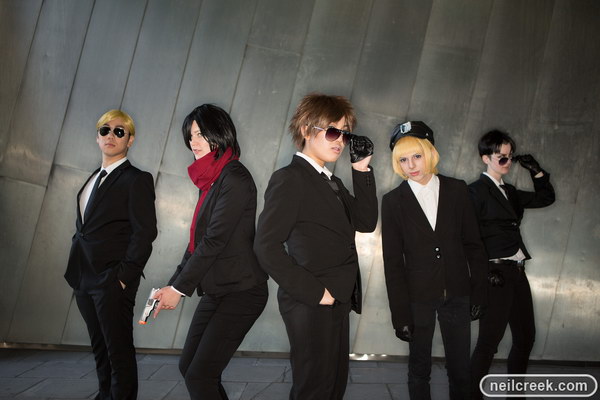
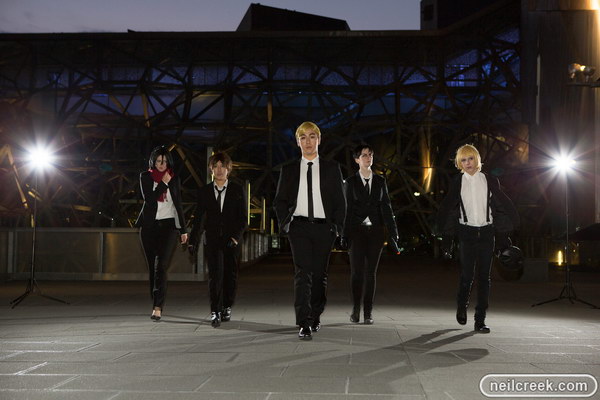
I do a lot of cosplay (short for costume play) photography with friends, and I was asked by some to do a cosplay crossover photo shot (Shingeki no Kyojin / Psycho Pass) with them. They sent me some reference shots from which I decided to create a slightly futuristic, detective movie kind of look. I also thought I’d experiment with shooting to fit a wide movie crop to suit the look of the shoot. In this article I’ll show you how I set up, shot and processed two photos from the shoot, including the one above. If you’d like to see more photos from the shoot, you can do so here.

So on to how the shot was done . . .

The right location

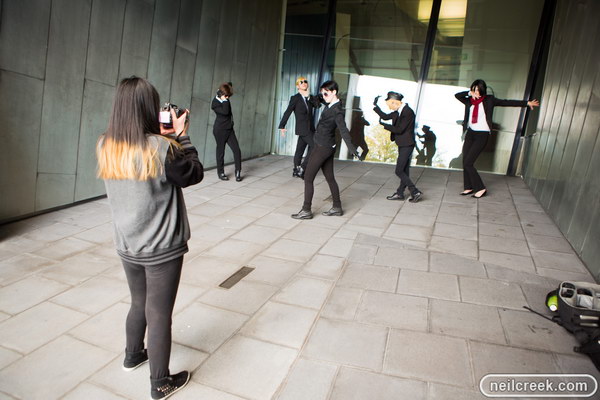
Our location for the shoot was the rear of Federation Square in Melbourne, Australia. It’s a futuristic looking building with lots of metal, glass and interesting angles in its construction. For the shot above I wanted to take advantage of these textures to accentuate the futuristic look, so we first went to the alcove depicted below in this behind the scenes photo.

Cosplay-shoot-first-shot-BTS

Lighting the shot

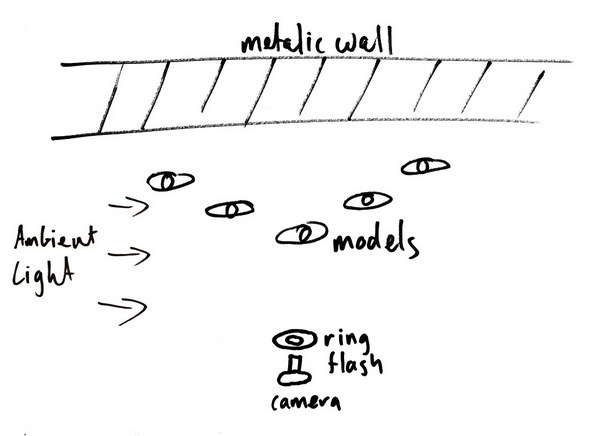
It was dusk so there was little light getting into the alcove from what became camera left. I wanted to keep that light in the shot as a fill, but my key light was going to be a ring flash – my Orbis ring flash. This kind of light gives a dramatic look with almost no shadow. It’s stark and flat but works well with this kind of scene. In my first test shot I noticed a fantastic unexpected effect of the brushed metal backdrop: anistropic reflection. This created a bright diagonal streak across the back of the shot.

To get the right balance of fill to key, I set the camera to 1/125sec f/2.8 ISO160 and adjusted the power on the flash to get the right brightness for the shot. This ended up being towards the bottom end of the flash power. Following is a lighting diagram and the photo as it came out of camera:

Cosplay-shoot-first-shot-diagram

Cosplay-shoot-first-shot-raw

Processing the image

In post processing the major changes I made were to increase the contrast and clarity, as well as a significant temperature move towards blue, and tint shift to green. With a movie aspect ratio crop and heavy vignette, plus a few small tweaks to the exposure settings, I ended up with this final photo (below).

Cosplay-shoot-first-shot

The second location shoot

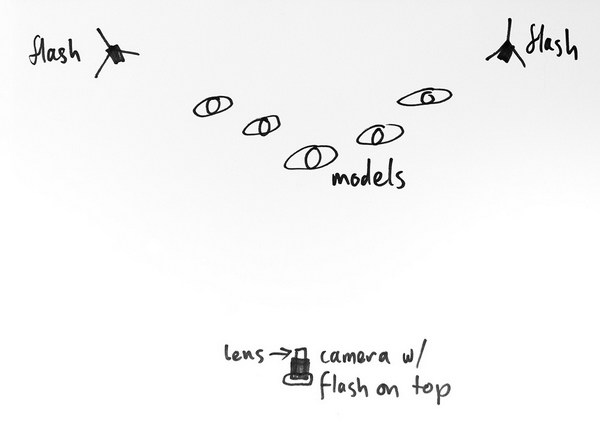
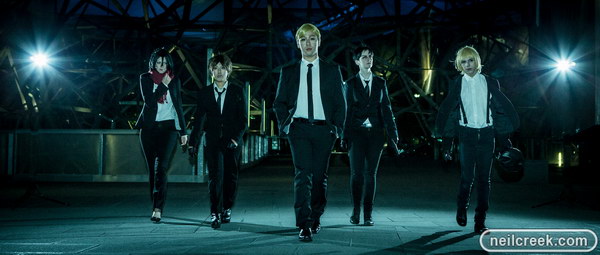
I love the self-conscious, melodramatic, slow motion walking scenes in movies, and these guys’ outfits were perfect for a shot like that. I wanted to keep a consistent look with the first shot, but give this one its own twist. To do this I took the group out into an area with more space and a cool geometric glass patterned wall as the backdrop. I added a pair of flashes behind the group for some rim lighting, but I deliberately chose to keep them in view for some dramatic lens flares. I replaced the ring flash with an on-camera flash and balanced that to be under the exposure from the rim lighting. This gave me a low key dramatic look (drama was the theme of the night!). Again I set the camera exposure to just give a hint of the background – 1/40sec f/4.5 ISO500 – and dialed the power of the flash to get the balance I was after.

Rather than try and pose the shot, which would look too forced, I got them into a staggered starting position and simply asked them all to walk toward the camera. To get them in an appropriate mood and make them feel badass, I played this tune (which I consider to be the best slow walking music ever) on my phone and it totally did the trick.

Following is a lighting diagram and the photo straight out of the camera.

Cosplay-shoot-second-shot-diagram

Cosplay-shoot-second-shot-raw

I processed this photo in essentially the same way as the previous shot, to get a consistent look and feel between it and the rest of the photos in the shoot. Please visit this gallery to see all the images at a decent size.

Cosplay-shoot-second-shot

I really love cosplay photography because I get to go crazy and pull out all the creative stops, to make over the top photos, that suit the over the top characters and plot from anime. I’m fortunate to have fun, creative and energetic friends to work with to create these shots. If you’d like to see more of my cosplay and other photo shoots, you should like my Facebook page where I post photos regularly, and occasionally discuss how they were made.

Which of the two shots is your favourite, and why?

Models featured in these photos:

  • Ettelle
  • Jase Lube-Sama
  • KnRai
  • Kobito Cosplay
  • Mei at Play

The post How the Shot was Done: SNK Police Cosplay by Neil Creek appeared first on Digital Photography School.


Digital Photography School

 
Comments Off on How the Shot was Done: SNK Police Cosplay

Posted in Photography


How it was Done – Zooming the Exposure

13 Nov

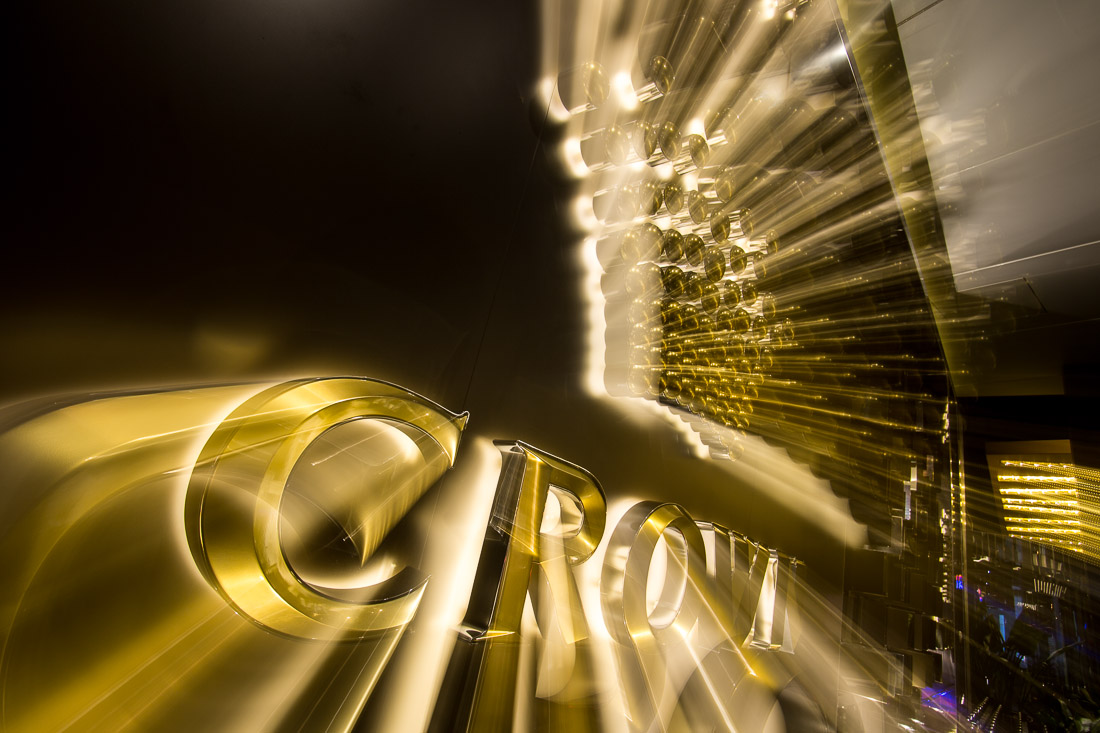
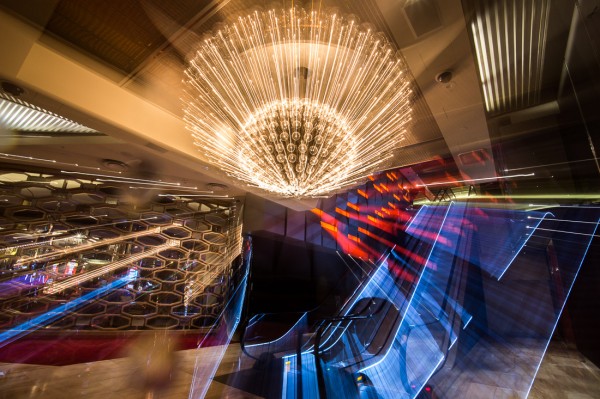
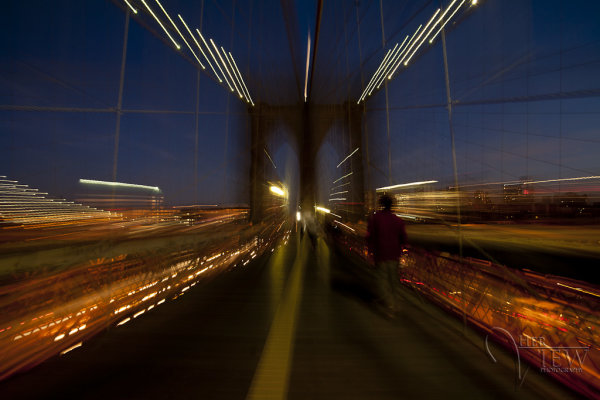
This is a technique I learned years ago in photography school and have been having fun with lately. Hope you have as much fun playing with it as I do!

zoom-exposure2

Zooming during a long exposure tips

  • Works well on night scenes and ones with many light sources
  • Set up your camera on a tripod with a remote trigger or release
  • Set your camera to Manual mode
  • Set your focus by zooming in all the way, then lock the focus (using either back button focus or focus using Auto-focus and then switch it off to Manual focus)
  • Zoom out so you can see the whole image as you want it framed
  • Then start your exposure and zoom your lens out while the shutter is opened (you may need to practice a few times to make it go smoothly)
  • Experiment with different zooming speeds and timing, as example: if you exposure is 5 seconds do one with 3-4 seconds at the beginning, then zoom at the end; then do another when you zoom immediately and do most of the exposure at the end
  • Exposure must be 2 seconds or longer to make this work, otherwise it becomes really tricky to zoom
  • If it is too bright to get a 2 second exposure, make sure your ISO is as low as your camera goes and your aperture is set to your smallest setting (f/22 or f/32). If it is still too bright you may need to use a Neutral density filter to cut down the amount of light coming through the lens

Here are a few examples done using this technique.

SanFran-2012-1039-blog1100zoom-exposure1

zooming-3

ACTION PLAN

I encourage you to experiment and play around with technique and other similar variations. Share your images in the comments below and if you have other tips please tell us!

Post originally from: Digital Photography Tips.

Check out our more Photography Tips at Photography Tips for Beginners, Portrait Photography Tips and Wedding Photography Tips.

How it was Done – Zooming the Exposure

The post How it was Done – Zooming the Exposure by Darlene Hildebrandt appeared first on Digital Photography School.


Digital Photography School

 
Comments Off on How it was Done – Zooming the Exposure

Posted in Photography


Nikon Df First Impressions Review: Is this retro done right?

05 Nov

backtofrontv1.jpg

The widely rumored and much-leaked Nikon Df is here. The Df is a 16MP, full-frame DSLR with the sensor from the flagship D4 sensor and the 39-point AF system from the D610 packaged in a body inspired by film cameras from the 1970s. The Nikon Df can’t shoot video, but it will accept 50 year-old non-Ai lenses. A lot of Nikon users have been asking for a ‘digital FM2’ for years. Is the Df that camera? Click through for our first-impressions.

News: Digital Photography Review (dpreview.com)

 
Comments Off on Nikon Df First Impressions Review: Is this retro done right?

Posted in Uncategorized


Episode 18, Tabletop Studio Photography done with mirrors

06 Feb

For comments and questions visit prophotolife.com and search for video episode 18. A gallery of the still images from this video are available from the website.
Video Rating: 4 / 5

 
Comments Off on Episode 18, Tabletop Studio Photography done with mirrors

Posted in Photography Videos