RSS
 

Posts Tagged ‘Discovery’

Astronomers warn SpaceX Starlink satellites may hinder scientific observation and discovery

28 Aug

SpaceX plans to launch thousands of satellites into space for the firm’s Starlink high-speed satellite internet network. While the Starlink service aims to bring high-speed internet to locations where it is otherwise unavailable or prohibitively expensive, Independent is reporting that hundreds of astronomers have expressed concerns that Starlink’s satellite array will have an impact on astronomy and slow down scientific discoveries.

A report by the Satellite Constellations 1 (SATCON1) workshop stated that constellations of satellites in the night sky are problematic for ground-based observations, including those utilizing optical and infrared technologies. The research underpinning the workshop’s report included input from ‘more than 250 astronomers, satellite operators and dark-sky advocates.’

SATCON1 co-chair Connie Walker from the National Science Foundation’s (NSF) NOIRLab said of the report, ‘Recent technology developments for astronomical research – especially cameras with wide fields of view on large optical-infrared telescopes – are happening at the same time as the rapid deployment of many thousands of low-Earth-orbiting satellites (LEOsats) by companies rolling out new space-based communication technologies.’

Not to scale. Illustration courtesy of NOIRLab / NSF / AURA / P. Marenfeld

The report concludes that large satellite constellations will impact astronomical research and the general human experience of the night sky, although they find that the impact will range from ‘negligible’ to ‘extreme.’ When Starlink’s first 60 communication satellites launched in May 2019, the impact was felt immediately by astronomers and the satellites were ‘brighter than anyone expected.’ It is not fiscally or scientifically feasible to stop utilizing ground-based astronomy.

While the impact of LEOsats may be negative for astronomers, the introduction of communication services to underserved areas is undoubtedly positive for potential users. The SATCON1 workshop is trying to work with satellite operators to find a solution. In the report, there are two main findings. One is that LEOsats ‘disproportionately affect science programs that require twilight observations, such as searches for Earth-threatening asteroids and comets, outer solar system objects, and visible-light counterparts of fleeting gravitational-wave sources.’ The second finding is that there are at least a half dozen ways to reduce the harm caused to astronomy by large satellite constellations.

From the SATCON1 workshop report: ‘A wide-field image (2.3 degrees across) from the Dark Energy Camera on the Víctor M. Blanco 4-m telescope at the Cerro Tololo InterAmerican Observatory, on 18 November 2019. Several Starlink satellites crossed the field of view. Image credit DECam DELVE Survey/CTIO/AURA/NSF.’ For many more visual examples of the impact of Starlink satellites on astronomical observations, read the full SATCON1 technical report.

One of these six ways is to launch fewer or no LEOsats, which is of course an impractical and unlikely solution. More realistically, the workshop found that the impact of LEOsats can be reduced if they are deployed at orbital altitudes no higher than 600 km, satellites are darkened or include sunshades, or are carefully oriented in space to reduce reflections. There may also be ways to reduce the impact of satellite trails with improvements to processing techniques for astronomical images. Further, if satellite owners provide astronomers with accurate orbital information, observers may be able to avoid satellites with their telescopes.

NOIRLab director Patrick McCarthy says of the report’s findings and recommendations that he hopes that they ‘will serve as guidelines for observatories and satellite operators alike as we work towards a more detailed understanding of the impacts and mitigations and we learn to share the sky, one of nature’s priceless treasures.’

The next workshop, SATCON2, will aim to tackle the issues of policy and regulation when it meets in early to mid-2021.

Image credit: SpaceX / Starlink

SpaceX plans to launch more than 30,000 Starlink satellites. This represents approximately a doubling of space-based moving objects visible to the naked eye during twilight, according to the SATCON1 report.

Despite there being only about 500 Starlink satellites currently in orbit, the program’s impact has already been felt during significant astronomical events. For example, the comet Neowise made an appearance this summer, something possible only once every 6,800 years, and Starlink satellites disrupted observation for many.

Image credit: SpaceX / Starlink

Thus far, SpaceX has taken steps to reduce the impact of its satellites. The space exploration firm has utilized a twisting technique to make the solar panels on the satellites less reflective. It has also explored painting reflective surfaces black and using sunshades. SpaceX has worked with the American Astronomical Society (AAS), National Radio Astronomy Observatory (NORAF) and the Green Bank Observatory (GBO) in pursuit of a solution to the issue of LEOsat visibility.

SpaceX stated ‘We’ve taken an experimental and iterative approach to reduce the brightness of the Starlink satellites. Orbital brightness is an extremely difficult problem to tackle analytically.’

For astronomers, the SATCON2 workshop cannot come soon enough. Professor Tony Tyson of the University of California, Davis, says that ‘…no combination of mitigations can completely avoid the impacts of satellite trails on the science programs of the coming generation of optical astronomy facilities.’
Articles: Digital Photography Review (dpreview.com)

 
Comments Off on Astronomers warn SpaceX Starlink satellites may hinder scientific observation and discovery

Posted in Uncategorized


MIT Museum exhibition ‘Images of Discovery’ highlights science photography

25 Jun

$ (document).ready(function() { SampleGalleryV2({“containerId”:”embeddedSampleGallery_3889188396″,”galleryId”:”3889188396″,”isEmbeddedWidget”:true,”standalone”:false,”selectedImageIndex”:0,”startInCommentsView”:false,”isMobile”:false}) });

MIT Museum has opened a photography exhibition called ‘Images of Discovery: Communicating Science through Photography,’ running through January 2017. The exhibition showcases photographs from Berenice Abbott, Felice Frankel and Harold ‘Doc’ Edgerton, all three of whom ‘explored a range of scientific questions’ through their photography while working at the university.

All three aforementioned photographers spent time working at MIT; Frankel is a research scientist and science photographer in the MIT Center for Materials Science and Engineering; Edgerton was an MIT Professor of Electrical Engineering and is known, among other things, for his Milk Drop photograph; and Abbot worked for MIT in the late 1950s, contributing images for a physics curriculum.

Speaking about the exhibition, MIT Museum Director John Durant said:

“Wherever you look in science, you see the historical importance of finding new ways of visualizing things, leading to greater understanding of the world. From Galileo’s use of his own hand-built telescope to explain the movements of the earth and other planets, to the latest imaging technologies in everything from nanotechnology to neuroscience, the making of images remains central to our ability to make new discoveries.”

The exhibition includes half a dozen ‘Image Making Stations’ that give visitors the opportunity to better understand and make their own similar science photographs. Image Making Stations including ‘Water Drop,’ ‘Capture Movement,’ ‘A Bouncing Ball,’ ‘Water Waves in a Ripple Tank,’ ‘Photographing Ferrofluid,’ and ‘Zoom Scanner.’

The MIT Museum is located at 265 Massachusetts Ave, Building N51, Cambridge, MA 02139.

Via: wbur

Articles: Digital Photography Review (dpreview.com)

 
Comments Off on MIT Museum exhibition ‘Images of Discovery’ highlights science photography

Posted in Uncategorized


Creative Discovery Through Mistakes

29 Oct

One of the great things about creativity is that it can germinate from a mistake. The trick for photographers is to develop an awareness and eye to see mistakes as creative opportunity so as explore them until they become a crafted photograph. It is very easy to feel that we have to be in control of the creative process from beginning to end and that is not required. Sometimes taking an extended look at a mistake can yield new ideas that would never have come to mind otherwise. Working a scene and trying new angles, settings, focal lengths, etc. is one way to hone your final product through “seeing,” and other times “seeing” happens after the fact when photo editing (see Always Check Your Seconds). The trick to “seeing” after the fact is to not become so absorbed in your initial idea of what you had wanted to accomplish and to be open to new viewpoints and possibilities.

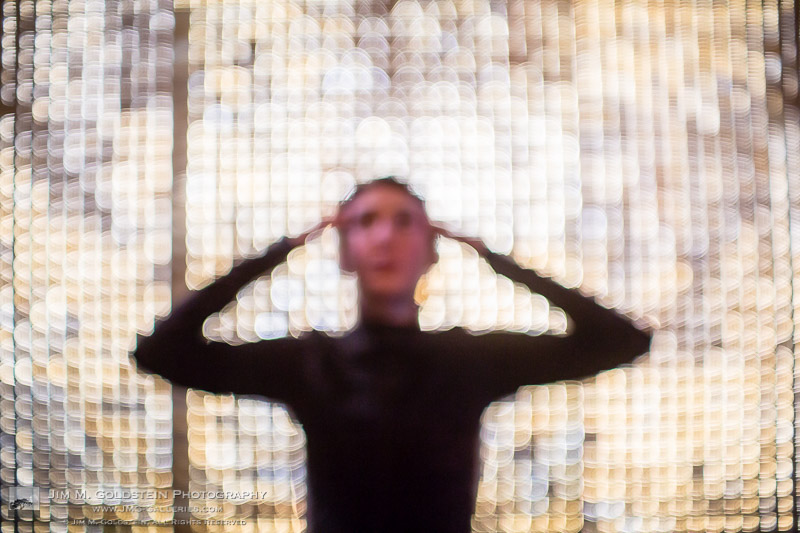
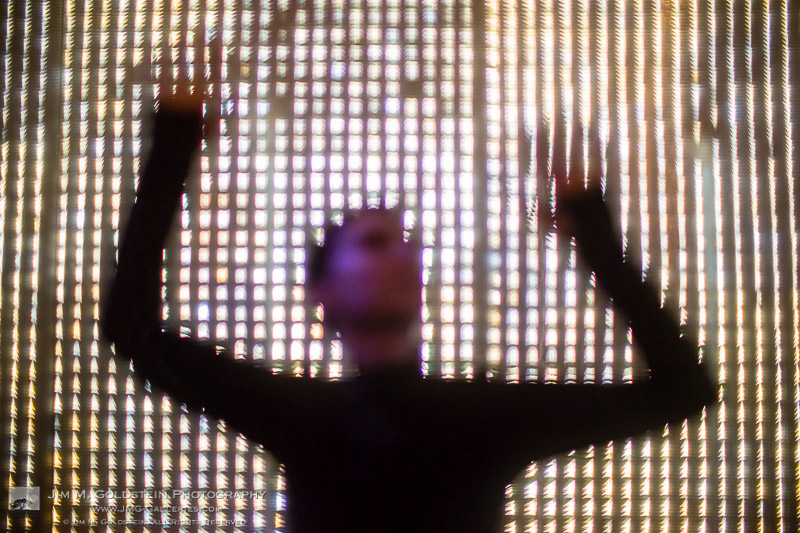
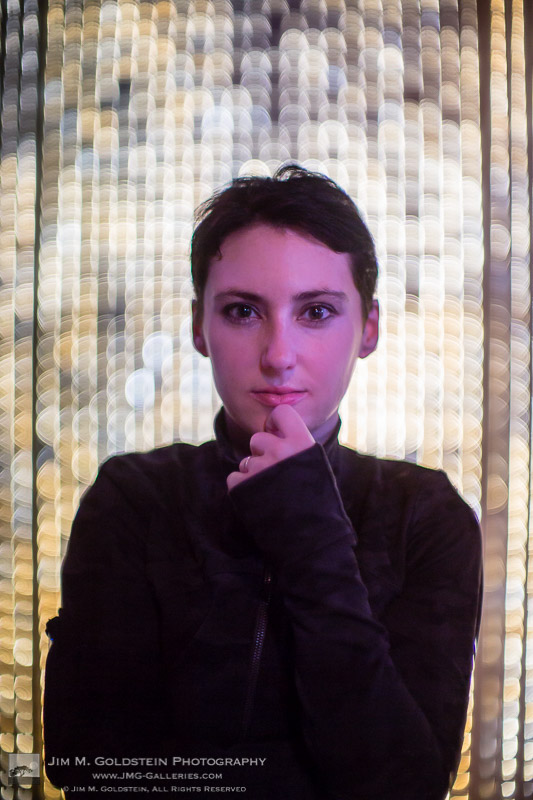
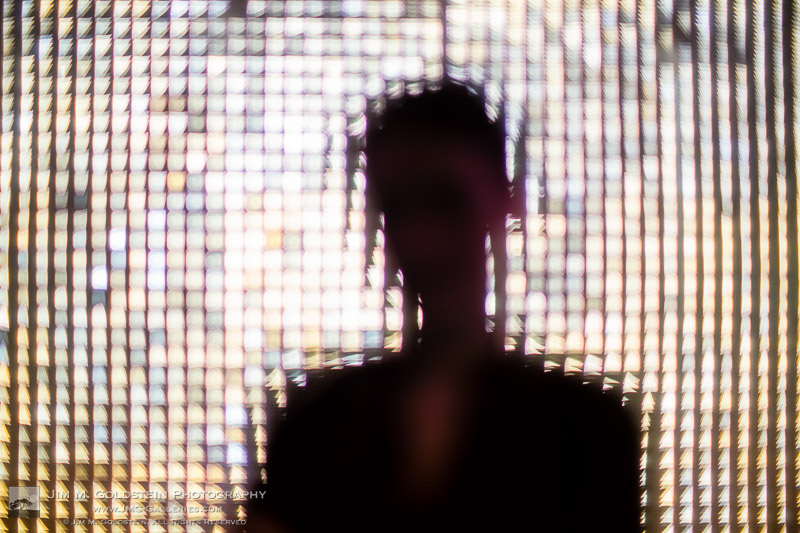
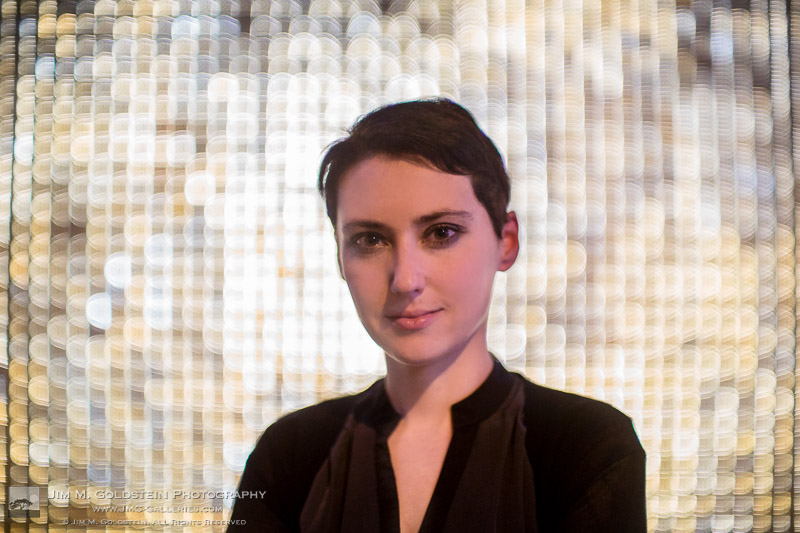
Sometimes mistakes present themselves in an obvious fashion as was the case while I was taking example photos with a new Petzval lens. My aim was to photograph a model and leverage the optics of the lens to capture it’s iconic swirled bokeh in the background. The output as seen below was exactly what I had intended, but in the process a mis-shot was captured and I didn’t notice it’s potential until I was photo editing. Granted the intended shot was perfectly fine; I found the mistake photo fascinating. I instantly saw the opportunity to create something new that I’d never seen before. Inspired I went back out to replicate the optical aberration with a Canon 50mm f/1.0 which lacked the swirled bokeh.

The intended outcome of my shoot.

The accident that sparked an idea

The reshoot of my model with a new lens and similar settings yielded the results I had envisioned (see below). Granted the end results are not for everyone, but given the spooky nature of how my model turned out I thought it made for a great Halloween styled photo set. My mistake yielded a new technique I’m eager to continue to perfect.

Experimental Portrait – The Normal One

Behind the Scenes - Experimental Portraits

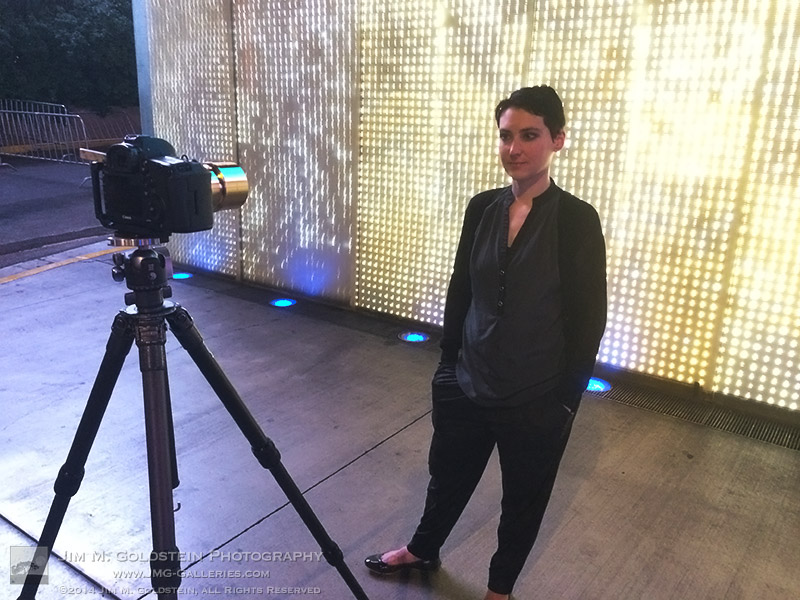
Behind the Scenes – Experimental Portraits


Copyright Jim M. Goldstein, All Rights Reserved

Creative Discovery Through Mistakes

The post Creative Discovery Through Mistakes appeared first on JMG-Galleries – Landscape, Nature & Travel Photography.


Related Stories

  • Creative Discovery Through Mistakes – Enclosure
  • Best Photos of 2013 by Jim M. Goldstein
  • Best Photos of 2013 by Jim M. Goldstein – Enclosure
Feed Ads by FeedBlitz
powered by ad choices


JMG-Galleries

 
Comments Off on Creative Discovery Through Mistakes

Posted in Equipment


Neanderthal Episode 1 (Discovery Channel) Part 1/4 HD

23 Sep

Please Subscribe To The WhyEvolutionIsTrue Youtube Channel. www.youtube.com Discovery Channel Documentary List: tinyurl.com Broadcast (2001) Neanderthal was the story of the rise and fall of one of the most successful human species that ever lived. A species that survived for over a quarter of a million years, living through and adapting to the most violent extremes of climate. A species that thrived – until modern man came along. This revealing two-part drama documentary combined the latest scientific research with a stunning mixture of drama and cutting edge 3D animation to reconstruct the lives of these remarkable early humans. In the second part, the advanced Cro-Magnons arrive and a new Ice Age is dawning. Cro-Magnons and Neanderthals coexisted on Earth until competition drove one of them to extinction. This program, set in the southwest of France 35000 years ago, uses re-creations of cinematic proportions to reconstruct life in the Neanderthal world at the time Cro-Magnons first entered the scene. All aspects of Neanderthal clan life are examined, including tool- and weapon-making, hunting and gathering, health and healing, childbirth, rituals, and making fire. Footage of skeletal remains and the scholarly research of eminent paleontologist Chris Stringer and Oxford University’s Paul Pettitt support the documentary.
Video Rating: 4 / 5