RSS
 

Posts Tagged ‘Desert’

Roadside Renaissance: Art Of The Painted Desert Project

21 Mar

[ By Steve in Art & Street Art & Graffiti. ]

painted-desert-project-0
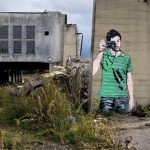
Conceived by photographer/activist Chip Thomas, The Painted Desert Project connects urban street artists with communities in the southwest‘s Navajo Nation.

painted-desert-project-1a

painted-desert-project-1b

painted-desert-project-1c

Chip Thomas (above) first set foot in Navajo Nation over 25 years ago when, as a newly-minted doctor, he decided the best way to repay his National Health Service Corps scholarship was by volunteering to serve a community with limited access to healthcare. Decades later, his roots are set deep into the stony desert soil.

painted-desert-project-9a

painted-desert-project-9b

Somewhat of a Renaissance Man, Dr. Thomas displays a very different skill set when he “becomes” Jetsonorama – a street artist whose favored medium is blown-up black-and-white photos applied to a range of outdoor structures.

painted-desert-project-11a

painted-desert-project-11b

painted-desert-project-11c

painted-desert-project-11d

Being as his home base is the Western Agency of the Navajo Nation in Arizona, Thomas’s subjects are the Navajo people and their traditional symbolism. “I’m just trying to reflect the positivity I have been allowed to experience from the people for the past 25 years,” explains Thomas. “It’s like I’m holding a mirror up and saying, ‘Thank you for letting me experience all this.’ And to the youth I’m saying, ‘Learn from this!’” Not corny at all, actually.

Next Page – Click Below to Read More:
Roadside Renaissance Art Of The Painted Desert Project

Share on Facebook


[ By Steve in Art & Street Art & Graffiti. ]

[ WebUrbanist | Archives | Galleries | Privacy | TOS ]


WebUrbanist

 
Comments Off on Roadside Renaissance: Art Of The Painted Desert Project

Posted in Creativity


Nikon D7200 Field Test: Desert dance photo shoot

10 Sep

Nikon’s flagship APS-C DSLR is a real workhorse. Offering a 24.2MP CMOS sensor, the D7200 provides a 51-point AF system sensitive to -3EV, an increased buffer depth with 6 fps continuous shooting and 1080 HD video at 60p. We tagged along with pro photographer Gabe Bienczycki on a desert photo shoot to push the D7200 to its limits. Read more

Articles: Digital Photography Review (dpreview.com)

 
Comments Off on Nikon D7200 Field Test: Desert dance photo shoot

Posted in Uncategorized


Desert Cities: Modular Nodal Network Idea for the Middle East

30 Jan

[ By WebUrbanist in Architecture & Cities & Urbanism. ]

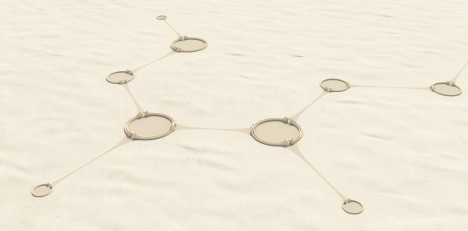
desert city social organization

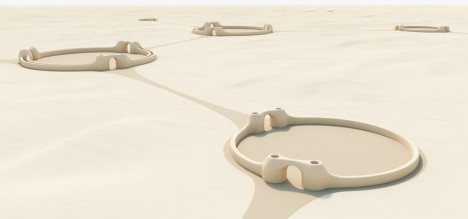
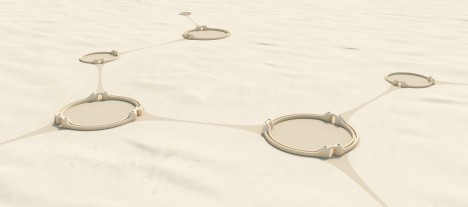
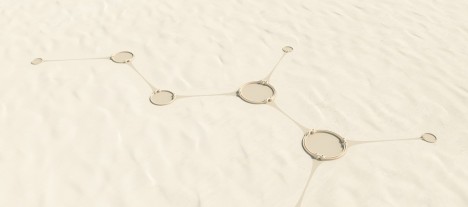
A combination of contemporary regionalism and sustainable urbanism, this design strategy proposed by an Italian architecture firm involves a series of modules for living, working and interacting at different scales. Notably different from most models of urban design is the intentional lack of density, raising the question: is the premise that good urban strategies revolve around dense centers a universally valid one?

desert city expanse

desert city different scales

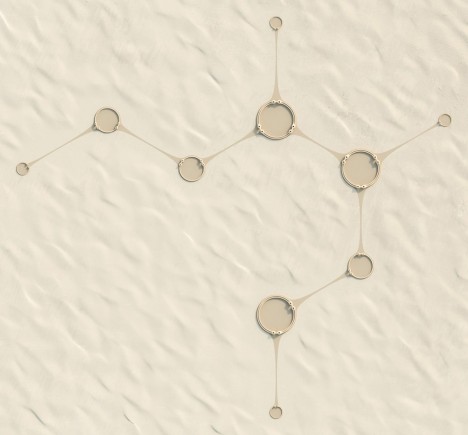
desert cities node network

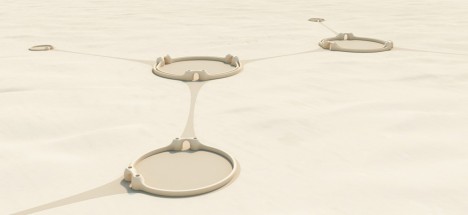
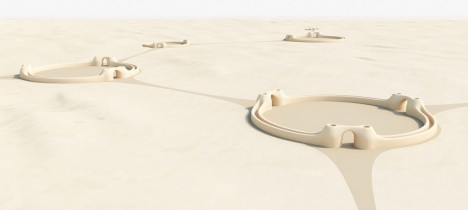
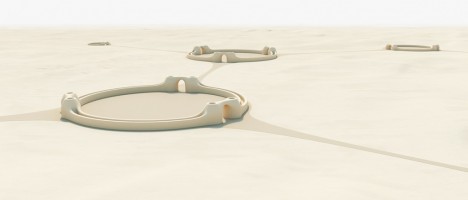
Connected by lines that serve as both dividers and connectors, the smallest modules are family-sized units, the mid-sized variants working as cultural, research and service centers and the largest operating as micro-cities with more complex communities.

desert city concept rendering

desert city individual community

By spreading these out, maximum use can be made of minimal rainfall (water capture) as well as sun exposure (solar power), rendering each unit relatively or entirely self-sufficient. Internally, composing, recycling and other sustainable strategies would be employed as well.

desert city design urban

desert city layout strategy

desert city streets connectors

desert city angled view

Luca Curci Architects describes the approach as follows: “The project-plane is made by a series of identity-places with symbiotic interconnections among them which create an organic and articulated system. The identity-places can be divided in 3 macro architectural types, different for dimension, function and inhabitants. Each identity-place is developed following residential and architectural solutions which respect the environment’s tradition, climatic condition and resources.”

Share on Facebook


[ By WebUrbanist in Architecture & Cities & Urbanism. ]

[ WebUrbanist | Archives | Galleries | Privacy | TOS ]


WebUrbanist

 
Comments Off on Desert Cities: Modular Nodal Network Idea for the Middle East

Posted in Creativity


Tiger Desert With Dean McClelland

14 Jul

Dean McClelland's Summer image depicting a tiger dessert wins Photo of the Week on Fashion Photography Blog (FashionPhotographyBlog.com)FashionPhotographyBlog.com caught up with Photo of The Week winner, Canadian artist, Dean McClelland who won, what could be described as one of the most intense rounds of Photo of the Week to date. There were over 200 votes that were counted that week and about fifty percent of the votes were for Deans winning photo, “Summer” with second place only merely a handful of votes away. The week was truly represented the week’s theme – “Savage Survivor”.

Based near the Rocky Mountain’s in Calgary, Alberta, Dean, coincidentally, was celebrating his birthday that week so winning Photo of the Week was an added surprise.  I sat down with Dean and asked him about his winning image and how did he find his way into the world of photography.

So how did Dean’s photography journey began? The photographed revealed that, “2003 was the year of exploration of a new media for me. (Lord Of The Rings) Return of the King just came out in theatres and having watched the making of the last two movies I was intrigued in colour processing. Peter Jackson revolutionized how we view movies with digital colour pallets. His story telling was enhanced because of it. Adobe Photoshop became affordable and had the tool set I was looking for to explore this area of colour and storytelling through a single image.

Buying my first digital camera allowed me to jump into the world of photography and experience a creative work flow that had endless potential. The learning curve was steep but I quickly became acquainted with a small tool set that made my photos stand apart from other photographers. I found that conceptual and digital photo composite fine art best suit my interest and my style.”

Dean’s unique artistic style reflects his family’s heritage from his mother’s side. You see, his grandfather was a vaudeville magician and his brother carries on the tradition as the photographer explained “My interest in fashion photography harks back to the lifestyle of the vaudeville era – a time when people were drawn to sideshows, midways and vaudeville shows by the smells of candy floss and corn dogs and the chance to see oddities and performances that fuelled the imagination.

My grandfather owned such a show and when he retired all of his equipment to his backyard my brother, cousins and I would play on the old midway rides. The magic of that era led my brother to develop his own magic and illusion show, which fascinated me and led to my own interest in the era. The advent of the digital age made it easier to access the tools, like Photoshop, that allowed me to develop my own approach to photography. I would classify my art as conceptual with a focus on character and storytelling. You will find whimsy and a touch of dark humour in my work.”

Growing up with these oddities around him, he found the pieces to create his style through observation and study of his brother’s art of sideshow. Dean’s work embodies a sense of whimsy, humor, and a quirkiness to his photography which is fused with an essense that not all is right in this world as seen in Dean’s winning image. So what inspired this piece, depicting a sultry woman in a shawl standing her ground beside to a tiger in a parched desert? The photographer mentioned that “I had a hair stylist take a liking to my photography and we went into discussions on doing a photo shoot with the theme of summer, spring, fall, and winter. The picture show cased here was of our summer theme.”

To create this shoot Dean has provided a list of the specific equipment he used to created this shoot that includes:

Camera: 5D Mark 2
Lighting: Elinchrom ranger pack, Elinchrom EL- Skyport
Lighting: 100 cm soft box
Lens: Canon 24 mm prime
Photoshop CS Extended
Lightroom

For more information about Dean McClelland’s work you can find his work submitted to Flickr and 500px. Just plug his name in their search bar and you will find him :). Ending the interview, Dean shared, as a takeaway for our readers, what he thought were the most important elements that a photographer should know to become successful in fashion photography, these being, “Know your client well, create a photo that reflects the client’s objectives, and enjoy what you do.”

Currently, we have another round of Photo Of The Week running. To participate in the voting, make sure you “like” our Facebook page here and vote for your favorite photographer‘s photo out of the finalists in the comments section of the post. The photo with the most vote’s by the end of the week at Sunday midnight will win Photo of the Week and win the great prizes on offer.

Since FashionPhotographyBlog.com is Google’s #1 site on fashion photography in the world, you might be interested in entering our Photo of The Week competition. This could be your entry to some great exposure if you submit your photo and win. To find out more details on how to enter, make sure you join our mailing list. We will send you the entry details via your email. As a reminder, voting ends at the end of the week so make sure you get voting our Facebook page here.

What do you think of Dean’s winning photo? We want to know what you think. Tell us in the comments below, do you agree with how this week’s voting outcome? What is your critique on this photo? We want to hear from you!


Fashion Photography Blog

 
Comments Off on Tiger Desert With Dean McClelland

Posted in Uncategorized


No Mirage: Unlock a Secret Pool Hidden in the Mojave Desert

07 Jul

[ By WebUrbanist in Art & Installation & Sound. ]

desert pool installation project

An art installation with a side of rugged adventure, the Social Pool is a project open to the public but locked and with a location only revealed via coordinates that lead visitors on a long trek to its discovery.

desert secret hidden pool

Seekers must first travel to the MAK Center for Art and Architecture in West Hollywood and retrieve one of four keys that open the pool, and will be tasked with taking one gallon water to help refill it as well. Los Angeles area travelers do not stumble upon it by accident – it is not on any road, trail or path.

social pool uncovered sand

Keys are to be returned within 24 hours, whether or not you find the secret spot and uncover the cool pool of filtered water, powered by solar panels. You cannot reserve a key in advance – you must show up and see if one is available. Uncertainty is part of the experience, like it or not.

social pool remote desert

Designed by Austrian artist Alfredo Barsugli, LAist describes it as something “meant to reflect on the lengths humans would go to in the pursuit of luxury,” but also as a good excuse to spend some time exploring an amazing desert landscape.

underground beauty resort installation

underground desert spa sand

Barsugli is not new to strange desert installations – a previous piece, the Oderfla Beauty Resort, featured a spa building semi-submerged in desert sand.

social pool art installation

It is also worth stocking up on gas, food and water and watching out for snakes, lizards and hares along the way. Hint: the pool is not close to the MAK. Its position is only given broadly to the public: somewhere in the southern Mojave Desert between Joshua Tree and Apple Valley. Images by Alfredo Barsugli and Juliet Bennett Rylah of LAist.

Share on Facebook


[ By WebUrbanist in Art & Installation & Sound. ]

[ WebUrbanist | Archives | Galleries | Privacy | TOS ]


WebUrbanist

 
Comments Off on No Mirage: Unlock a Secret Pool Hidden in the Mojave Desert

Posted in Creativity


Cracked-Earth Desert Canopy Shelters Underground Oasis

25 Apr

[ By WebUrbanist in Architecture & Public & Institutional. ]

underground park abu dhabi

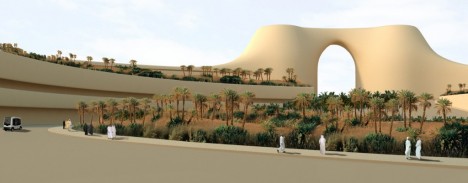
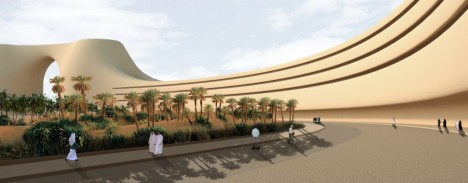
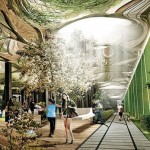
Splitting at the seams like sections of sun-baked desert, this expansive park opens to the sky between a network of gaps and provides shade for people and plant life below. A sunken oasis designed by Thomas Heatherwick Studios, this massive Al Fayah Park will span over 1.3 million square feet and feature play and picnic areas, performance spaces and festival venues, vegetable gardens and native flowers amid rivers and other water features.

cracked desert underground retreat

Anyone familiar with places like Black Rock City, Nevada will recognize the shape driving the design concept, but these are more than just an architect’s affectation. Beyond its naturalistic source of visual inspiration, the landscaping strategy speaks to climactic conditions in the United Arab Emirates – the sheltering dome of leaf-like decks keeps things cool below, but also helps prevent moisture loss.

subterrean people plants water

From the designers: “By creating partial shade for plants, the canopy reduces the amount of water lost to evaporation, improving the park’s energy efficiency and sustainability. Whilst providing shade in the daytime, the elevated plates also become a network of unique meeting places in the cooler evening hours.”

underground park panoramic viw

underground park water features

‘This sunken oasis becomes a landscape of plants, mature trees and a cluster of public recreational spaces. The 20-metre-high shaded garden is conceived as a place for families to gather and picnic, as well as a place for learning and festivals.”

desert sand subterranean space

For those potential critics who still see the structure as somewhat too literal, it is worth noting the wide-ranging appeal of something so iconic to potential international tourists. Whether the shapes seem striking or trite to a given person’s tastes, part of the purpose of the design is to be recognizable and ultimately draw in visitors from around the world. One question still worth raising, though, might be its fit in the site context – will it blend into the surrounding ground or stand out in the city?

Share on Facebook


[ By WebUrbanist in Architecture & Public & Institutional. ]

[ WebUrbanist | Archives | Galleries | Privacy | TOS ]


WebUrbanist

 
Comments Off on Cracked-Earth Desert Canopy Shelters Underground Oasis

Posted in Creativity


End of the World Cinema Abandoned in the Egyptian Desert

15 Mar

[ By Steph in Destinations & Places & Travel. ]

Abandoned Theater Egypt Desert 1

In the middle of Egypt’s inhospitable Sinai Desert, stacked on a rocky hillside overlooking a pile of sticks, row after row of worn wooden movie theater seats sit eerily empty. Why would anyone have built a cinema out here, especially when Egyptian authorities forbid desert visits that aren’t part of an officially sanctioned tour? According to Estonian photographer Kaupo Kikkas, who captured these images, the answer involves a wealthy Frenchman and “some puffs of a magic smoke.”

Abandoned Theater Egypt Desert 2

On a trip to this remote desert location circa the year 2000, the visiting Frenchman looked around at the unlikely setting and somehow thought to himself, “Why aren’t there any movie theaters in the desert?” So he went back to Cairo, bought original seats and projection equipment from an old cinema, and lugged it back out to create the End of the World Cinema.

Abandoned Theater Egypt Desert 3

Abandoned Theater Egypt Desert 4

Never mind the fact that there aren’t exactly hordes of tourists and locals waiting to descend upon this sandy spot to view a film under the hot desert sun – the project was bound to fail anyway, because Egyptian authorities don’t take kindly to this sort of ‘enterprising spirit.’  A number of things ‘accidentally’ went wrong at the premiere, and not a single movie was ever shown.

Abandoned Theater Egypt Desert 5

The theater was quickly abandoned and has sat like this ever since, the building created to house the generator already crumbling. These modern ruins are far from the only ones of their kind in Africa – the remains of the Tattooine set from Star Wars Episode IV can still be found in Tunisia, among many other fascinating abandonments. 

Share on Facebook


[ By Steph in Destinations & Places & Travel. ]

[ WebUrbanist | Archives | Galleries | Privacy | TOS ]


WebUrbanist

 
Comments Off on End of the World Cinema Abandoned in the Egyptian Desert

Posted in Creativity


Half Invisible: Deserted Desert Cabin Remixed with Mirrors

05 Dec

[ By WebUrbanist in Art & Installation & Sound. ]

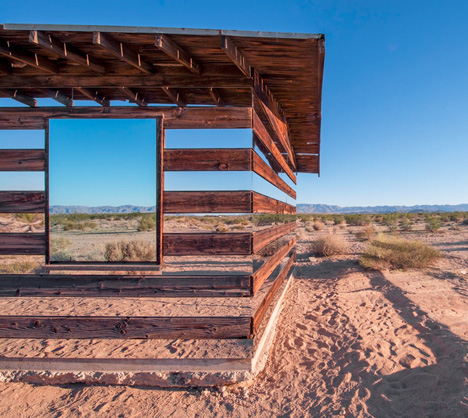
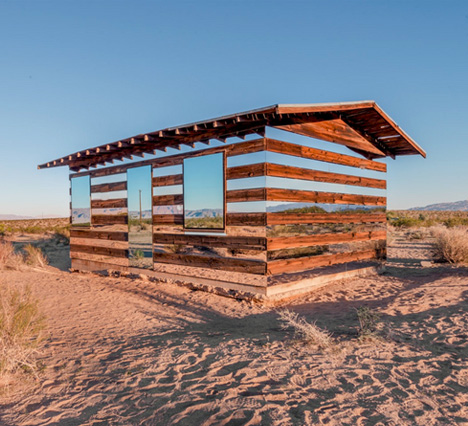
see through cabin

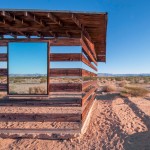
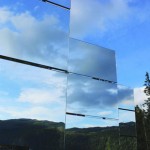
Unlike a mirage on the horizon, this quaint little abode is entirely real, even if it seems to half-disappear through alternating wood and (seemingly) see-through slats.

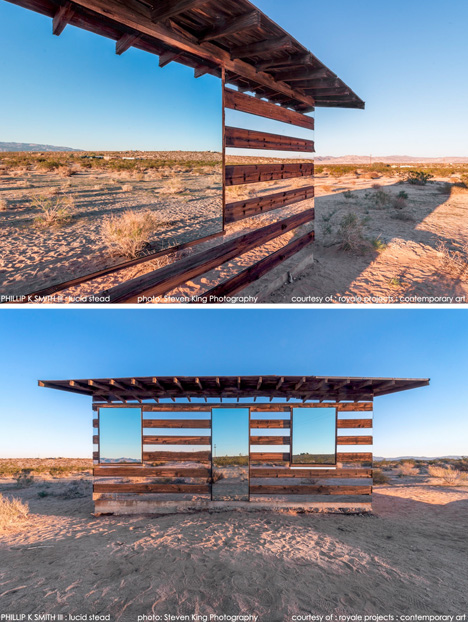
see through

A project by Phillip K Smith III (images by Stephen King Photography and Lance Gerber), Lucid Stead modifies an existing abandoned home shape that is straightforward and familiar.

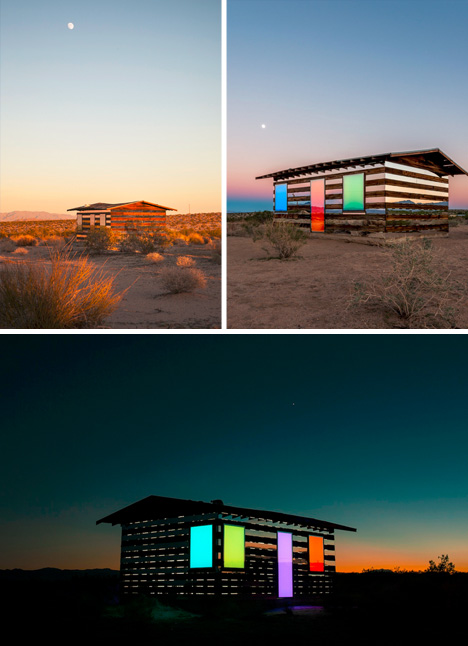
see through night light

Through its materials, however, the artist makes the building interact with the landscape in mind-bending ways, reflecting its surroundings via long horizontal siding and framed rectangular (faux) windows that slowly light up at night. The effect is a strange partial vanishing of the structure.

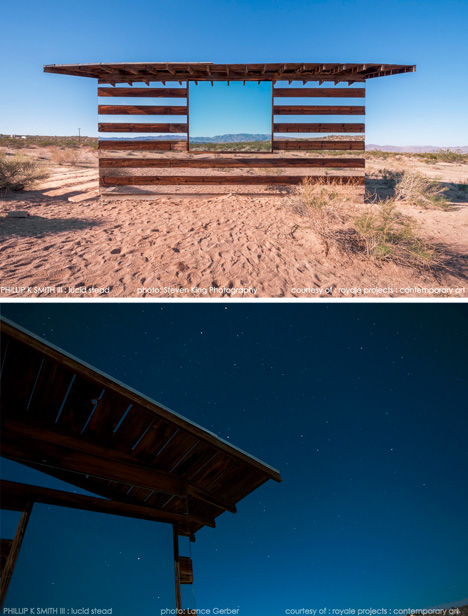
see through house art

Of the work, the artist writes: “Lucid Stead is about tapping into the quiet and the pace of change of the desert. When you slow down and align yourself with the desert, the project begins to unfold before you. It reveals that it is about light and shadow, reflected light, projected light, and change.”

see through day stars

From the portfolio page: “Composed of mirror, LED lighting, custom built electronic equipment and Arduino programming amalgamated with a preexisting structure, this architectural intervention, at first, seems alien in context to the bleak landscape.  In daylight the 70 year old homesteader shack, that serves as the armature of the piece, reflects and refracts the surrounding terrain like a mirage or an hallucination. As the sun tucks behind the mountains, slowly shifting, geometric color fields emerge until they hover in the desolate darkness.” 

Share on Facebook


[ By WebUrbanist in Art & Installation & Sound. ]

[ WebUrbanist | Archives | Galleries | Privacy | TOS ]


WebUrbanist

 
Comments Off on Half Invisible: Deserted Desert Cabin Remixed with Mirrors

Posted in Creativity


How I Got The Shot: Desert Road

20 Mar
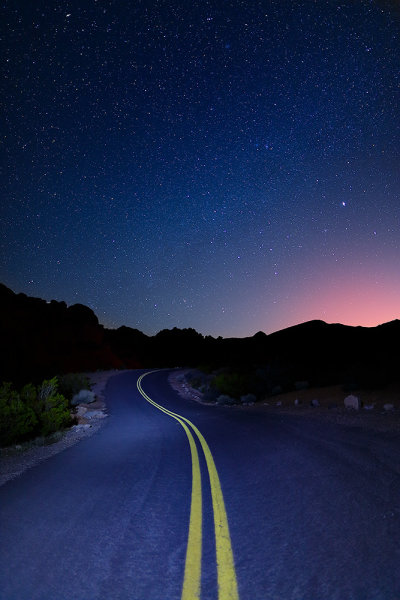
This is the final image I created from a single shot, processed twice.  Taken with the Canon EOS-1D X, EF 24mm f/1.4L II.  Exposure 15 seconds, f/1.4, ISO 800.

This is the final image I created from a single shot, processed twice. Taken with the Canon EOS-1D X, EF 24mm f/1.4L II. Exposure 15 seconds, f/1.4, ISO 800.

Some exposure situations become difficult to handle in-camera without a little post processing later on.  A perfect example is this shot of a desert road in Valley of Fire State Park, Nevada, that I took a week or so ago.  There was no moon, which made it a great night for capturing the stars, but an awful night for capturing the road surface in the foreground.

First, I needed an exposure for the stars.  I started with my usual base exposure for that, 15 seconds, ISO 800, f/1.4.  That gave me exactly what I wanted on the stars, but the foreground was too dark.  I was prepared for this, having brought an LED flashlight with me to “paint” the foreground.  So, during the next 15 second exposure, I held the flashlight on for five seconds, shining it indirectly down the road.  I did not aim it straight at the road, I simply aimed it down the road, allowing the light to skim along the road.  This avoided any hot spots. The 5 second exposure with the flashlight was the result of some experimentation with time. The entire 15 seconds created overexposure on the foreground, so I scaled it back to 5 seconds, and was pretty happy with that.

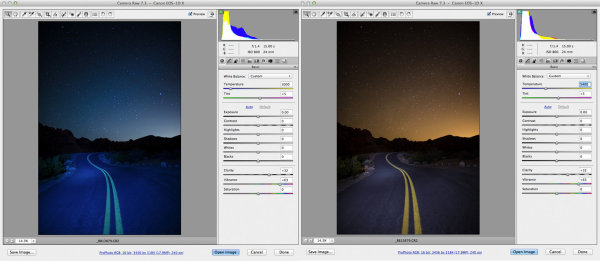
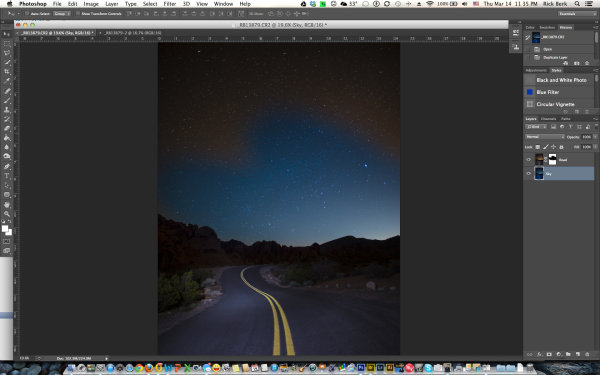
In the screen shot on the left, I adjusted the white balance to render the sky the way I wanted it- that deep indigo we normally see.  In the shot on the right, I adjusted the white balance so the road looked the way I remembered it.

In the screen shot on the left, I adjusted the white balance to render the sky the way I wanted it- that deep indigo we normally see. To do this, I simply adjusted the color temperature to 3000°K. In the shot on the right, I adjusted the white balance so the road looked the way I remembered it. Again, I used the color temperature setting and adjusted it to 5400°K.

I always shoot RAW when shooting landscapes.  There are several reasons for that, but one of the biggest for me is that I can adjust my white balance for creative purposes in post processing.  As you can see, if I tried to adjust for the sky, correcting that yellow cast that came from the glow of a distant city, the road became a deep blue area.  But if I corrected for the road, the sky became this garish orange.

There are two ways this could have been fixed. The first one could have been done in camera.  By taking a color correction gel, commonly called a CTO gel (Color to Orange), I could have warmed up the light on the road and then as I adjusted the white balance for the sky, the road would have fallen into place.  However, I did not have a CTO gel handy.  So I made the adjustments in Photoshop ACR.

When I adjust the white balance like this, during RAW processing, I tend to avoid the presets such as “Daylight” or “Shadow” or “Tungsten”.  I find I have much finer control by using the color temperature slider, which allows me very fine control over the color tone of the image.  I opened the file in Adobe Camera Raw, and adjusted the white balance for the sky, as shown above on the left, to 3000°K.   Then I opened that image in Photoshop.  I then reopened the image in ACR, and adjusted the white balance again, but this time for the road, as shown above on the right, to 5400°K.  I then duplicated the layer of the properly white balanced road, onto the layer with the properly white balanced sky.  I created a layer mask on the top layer, of the road, and masked out the orange sky, allowing the blue sky to show through.  The distant mountains silhouetted against the sky gave a perfect delineation for the layer mask, making it an easy blend.  After I got the layers the way I wanted them, I simply flattened them, did a few saturation and contrast adjustments, and had my final image.

This image shows the two layers stacked, with the layer mask.  The mask has only partially been painted in.  After adding the layer mask to the layer, you use black or white and paint over the layer.  Black hides the layer, while white reveals the layer.

This image shows the two layers stacked, with the layer mask. The mask has only partially been painted in. After adding the layer mask to the layer, you use black or white and paint over the layer. Black hides the layer, while white reveals the layer.

Post originally from: Digital Photography Tips.

Check out our more Photography Tips at Photography Tips for Beginners, Portrait Photography Tips and Wedding Photography Tips.

How I Got The Shot: Desert Road


Digital Photography School

 
Comments Off on How I Got The Shot: Desert Road

Posted in Photography


Instant Abandonment: Faux Desert City Built to be Bombed

01 Feb

[ By WebUrbanist in Architecture & Cities & Urbanism. ]

military city

Normally, urban design is done with death and destruction in mind – but prevention, rather than facilitation, is the focus. This unique mini-city was made to be destroyed, pummeled into the dust by repeated drills by armed forces.

military fake desert city

Built by the United States military in the remote Nevada desert, the Urban Target Complex (R-2301-West aka “Yodaville”) is the target of strafing, sniping, rocketing and bombing (above image by Lance Cpl. Zac Scanlon).

military missile run example

The terrain has a realistic layout patterned after settlements in the Middle East, and the structures themselves – mainly constructed from shipping containers – are stacked up to four stories high.

As Ed Darack writes for Air & Space Magazine, from his experience following troops into the faux action, ”The artillery and mortars started firing, troops advanced toward the target complex, and aircraft of all types—carefully controlled by students on the mountain top—mounted one attack run after another. At one point so much smoke and dust filled the air above the “enemy” that nothing could be seen of the target—just one of the real-world problems the students had to learn to cope with that day.”

military training grounds town

BldgBlog asks what we should make of mysterious military architecture, often hidden from public view and thus veiled from scrutiny or critique. “So what, for instance, might something like a Yodaville National Park, or Urban Target Complex National Monument, look like? How would it be managed, touristed, explored, mapped, and understood? What sorts of trails and interpretive centers might it host?”

Share on Facebook


[ By WebUrbanist in Architecture & Cities & Urbanism. ]

[ WebUrbanist | Archives | Galleries | Privacy | TOS ]


WebUrbanist

 
Comments Off on Instant Abandonment: Faux Desert City Built to be Bombed

Posted in Creativity