RSS
 

Posts Tagged ‘creation.’

Concept To Creation: How Professional Photographers Do It

16 Jul

Examples of Concept to Creation from Working Fashion Photographers


Hey FashionPhotographyBlog.com readers.


Thanks for joining us on our “Concept to Creation” series where we walk you through the process of taking an idea into an image. If you were with us last time, we discussed how to turn your inspiration into a concept. Today, we’re going to dive a little further. I’ll help you out with some examples of how working fashion editorial photographers pull their inspiration and translating them into concepts.


Miles Aldridge for Vogue Italia:

Sure, there is a concept in the styling: spring time flowy dresses. There’s continuity between the images because of the bold use of color. But anyone that knows Miles Aldridge’s work knows that’s his style. What ties all these images together? Cats! Without the cats, none of the images would appear to be from the same editorial.

miles-aldridge-vogue-italia-cat-story

miles-aldridge-vogue-italia-cat-story

miles-aldridge-vogue-italia-cat-story

Mert & Marcus for W Magazine:

All the images are shot in the same room. A room that has been flooded. Bingo! There’s your concept.

Mert-&-Marcus-for-W-Magazine

Mert-&-Marcus-for-W-Magazine

Knowing that these guys often pull inspiration from artwork, I wouldn’t be surprised if they were inspired by Pre-Raphaeliate “Ophelia” paintings. I especially wouldn’t be surprised if a big piece of their inspiration came from photographer Gregory Crewdson’s interpretation of these Ophelia images.

ophelia-by-john-everett-millais

Ophelia by John Everett Millais

Ophelia-by-Gregory-Crewdson

Ophelia by Gregory Crewdson


Granted, these examples are more on the extreme end of the spectrum. However, I think it drives the idea across. These images aren’t united because of what the model is wearing. They’re not united because of a dominant color (although, it helps). They’re united because of an idea which brings them together. It takes them out of the real world and brings them into a fantasy land.


This is extremely hard to do on a limited budget. That’s okay! No one is expecting someone with no budget to pull off a shoot like the ones pictured above. Just because you don’t have funds doesn’t mean you cant create a concept on a low/no budget that ties everything together.


Melissa Rodwell for Kurv Magazine:


Not something that would require an extravagant budget like the images pictured above. However, they’re all united in their lighting, clothing, hair, makeup, location and way in which they’re shot. Melissa brings you into this whimsical, etherial world with a simple concept. White.


I know, I know, I’ve said it shouldn’t just be a color that holds your images together. But In these images, it works! Melissa brings you beyond the color white and creates a fantasy world out of it.


melissa-rodwell-kurv-magazinemelissa-rodwell-kurv-magazine

Concept – crucial to binding your images together. You’ll find that any high end magazine only published editorials that has a concept holding the story together.


Hope you all enjoyed the examples of working fashion photographers and their thought processes behind turning inspiration into concepts. Stay tuned because next time, we’ll be discussing the difference between editorial and campaign shoots and how these relate to your shoot concepts.

Until then –


Alana


IMAGE SOURCE:


Feature image: Mert & Marcus for W Magazine

Images 1-3: Miles Aldridge for Vogue Italia

Images 4 & 5: Mert & Marcus for W Magazine

Image 6: John Everett Millais

Image 7: Gregory Crewdson

Images 8-10: Melissa Rodwell for Kurv Magazine


Fashion Photography Blog

 
Comments Off on Concept To Creation: How Professional Photographers Do It

Posted in Uncategorized


Concept To Creation: Editorial Versus Campaign

15 Jul

Editorial vs. Campaign


Hey FashionPhotographyBlog.com readers.


Thanks for joining us on our “Concept to Creation” series where we walk you through the process of taking an idea into an image. If you were here with us last time, we investigated examples of how working fashion photographers in the industry turn their inspirations into a concepts.


Concept – crucial to binding your images together. You’ll find that any high end magazine only published editorials that has a concept holding the story together so today we are going discuss the difference between editorial and campaign images and how these can affect the concept for your shoots.


There’s a bit of a formula to it all. A set of rules that can, and are, broken.. But for the most part hold true to all editorials and campaigns you see.


Campaigns


Typical, successful campaigns do a few things. Obviously, they showcase the clothing. If you can’t see the clothing, you’re not getting paid. In fashion, clothing is king. It comes before all else.


You’ll notice that campaigns shot on location tend to stick to one area. If you’re on a sofa in a house- you’re on that sofa, in that house, for all of the images. A lot of campaign images tend to look the same. That’s a job well done! It’s this repetition that makes you remember “Oh, the girl on the blue couch with a million men is that Brian Atwood campaign.” So every time you see a girl on a blue couch with a million men, what do you think? That’s right! Subconsciously you recall Brian Atwood’s name!


Brian Atwood’s Fall 2012 Campaign by Mert & Marcus:


Notice all the images have the same general perspective, are in the same place, and are essentially the same image (with variations).

brian-atwood-fall-2012-campaign-by-mert-and-marcusbrian-atwood-fall-2012-campaign-by-mert-and-marcusbrian-atwood-fall-2012-campaign-by-mert-and-marcus


Louis Vuitton Spring 2012 by Steven Meisel

Notice a pattern?
louis-vuitton-2012-by-steven-meisellouis-vuitton-2012-by-steven-meisel

EDITORIALS


With an editorial, you have more freedom! You’re not glued to one location, you can play with lighting (it should be relatively consistent but doesn’t necessarily have to be exactly the same in every shot), you can play with angles, etc.


As long as all the images are tied together via concept, have some fun with it. Editorials do showcase clothing however you can be a bit more liberal and artistic with how it’s shown. And one day, if you have enough power in the fashion world like Steven Meisel or Steven Klein, you can sometimes get away with having the dress you’re supposed to feature laying on the floor or hardly showing. (This only applies to the big players in the fashion photography industry.. don’t get any ideas!)


Steven Klein for Interview Magazine


Observe that there is a definite concept. However, unlike a campaign, there is more variation between the shots.

steven-klein-for-interview-magazinesteven-klein-for-interview-magazinesteven-klein-for-interview-magazinesteven-klein-for-interview-magazine 

Tim Walker (& Tim Burton!) for Harper’s Bazaar


tim-walker-and-tim-burton-for-harpers-bazaartim-walker-and-tim-burton-for-harpers-bazaartim-walker-and-tim-burton-for-harpers-bazaartim-walker-and-tim-burton-for-harpers-bazaar

I hope you all enjoyed discovering the difference between editorial and campaign images. It’s definitely something you want to keep in mind when you’re translating your inspirations into concepts. With a better understanding of the concept to creation process, you’ll be able to turn your shoot ideas into reality.

As always, if you have any questions, feel free to shoot over an email!


Alana


IMAGE SOURCE:

Feature image & images 1-3: Mert & Marcus for Brian Atwood’s Fall 2012 Campaign

Images 4 & 5: Steven Meisel for Louis Vuitton Spring 2012 by Steven Meisel

Images 6-9: Steven Klein for Interview Magazine

Images 10-13: Tim Walker (& Tim Burton!) for Harper’s Bazaar


Fashion Photography Blog

 
Comments Off on Concept To Creation: Editorial Versus Campaign

Posted in Uncategorized


Concept To Creation: How Professional Photographers Do It

15 Jul

Examples of Concept to Creation from Working Fashion Photographers


Hey FashionPhotographyBlog.com readers.


Thanks for joining us on our “Concept to Creation” series where we walk you through the process of taking an idea into an image. If you were with us last time, we discussed how to turn your inspiration into a concept. Today, we’re going to dive a little further. I’ll help you out with some examples of how working fashion editorial photographers pull their inspiration and translating them into concepts.


Miles Aldridge for Vogue Italia:

Sure, there is a concept in the styling: spring time flowy dresses. There’s continuity between the images because of the bold use of color. But anyone that knows Miles Aldridge’s work knows that’s his style. What ties all these images together? Cats! Without the cats, none of the images would appear to be from the same editorial.

miles-aldridge-vogue-italia-cat-story

miles-aldridge-vogue-italia-cat-story

miles-aldridge-vogue-italia-cat-story

Mert & Marcus for W Magazine:

All the images are shot in the same room. A room that has been flooded. Bingo! There’s your concept.

Mert-&-Marcus-for-W-Magazine

Mert-&-Marcus-for-W-Magazine

Knowing that these guys often pull inspiration from artwork, I wouldn’t be surprised if they were inspired by Pre-Raphaeliate “Ophelia” paintings. I especially wouldn’t be surprised if a big piece of their inspiration came from photographer Gregory Crewdson’s interpretation of these Ophelia images.

ophelia-by-john-everett-millais

Ophelia by John Everett Millais

Ophelia-by-Gregory-Crewdson

Ophelia by Gregory Crewdson


Granted, these examples are more on the extreme end of the spectrum. However, I think it drives the idea across. These images aren’t united because of what the model is wearing. They’re not united because of a dominant color (although, it helps). They’re united because of an idea which brings them together. It takes them out of the real world and brings them into a fantasy land.


This is extremely hard to do on a limited budget. That’s okay! No one is expecting someone with no budget to pull off a shoot like the ones pictured above. Just because you don’t have funds doesn’t mean you cant create a concept on a low/no budget that ties everything together.


Melissa Rodwell for Kurv Magazine:


Not something that would require an extravagant budget like the images pictured above. However, they’re all united in their lighting, clothing, hair, makeup, location and way in which they’re shot. Melissa brings you into this whimsical, etherial world with a simple concept. White.


I know, I know, I’ve said it shouldn’t just be a color that holds your images together. But In these images, it works! Melissa brings you beyond the color white and creates a fantasy world out of it.


melissa-rodwell-kurv-magazinemelissa-rodwell-kurv-magazine

Concept – crucial to binding your images together. You’ll find that any high end magazine only published editorials that has a concept holding the story together.


Hope you all enjoyed the examples of working fashion photographers and their thought processes behind turning inspiration into concepts. Stay tuned because next time, we’ll be discussing the difference between editorial and campaign shoots and how these relate to your shoot concepts.

Until then –


Alana


IMAGE SOURCE:


Feature image: Mert & Marcus for W Magazine

Images 1-3: Miles Aldridge for Vogue Italia

Images 4 & 5: Mert & Marcus for W Magazine

Image 6: John Everett Millais

Image 7: Gregory Crewdson

Images 8-10: Melissa Rodwell for Kurv Magazine


Fashion Photography Blog

 
Comments Off on Concept To Creation: How Professional Photographers Do It

Posted in Uncategorized


Concept To Creation: Finding Inspiration

15 Jul

Hey FashionPhotographyBlog.com readers.


This time around, we’re going to look at something a bit more conceptual. I can give advice and guide you, but ultimately it’s your job to really dig in and put it all together. That being said.. This post we’re going to briefly explore “Concept to Creation.” How to take an idea and turn it into an editorial or, if you’re lucky enough, an advertising campaign. Granted this post (hell- this whole blog) is geared more toward fashion photography, but the same principles apply for all walks of photography.


One of the biggest things I didn’t understand when first starting out was what an editorial really is. Sure, it’s a “story.” It’s a group of images that go together. Easy enough. So what was I doing wrong that I couldn’t get any of my “stories” published? They were good pictures but I lacked concept and intrigue.


When planning a shoot, there is no precise way to tell you how to get from initial inspiration to final image. However, we can look at developing an idea and the unwritten rules behind the images we see.


Inspiration


Let’s start at the beginning. First off, find some inspiration.


Many people ask where to find inspiration. There’s no right or wrong answer. For some people it’s reading a book, watching a movie or going to a museum. For others it’s found walking around town or listening to new music. Everyone gets inspired differently. The hardest part is finding out how you’re inspired and taking it from there. Are you stimulated visually? Auditorily?


The best piece of advice I could give you is to NOT look at fashion photographers work when trying to get inspired. Sounds silly, I know. Look at fashion photographers work all the time! Knock yourself out. But when it comes to initially conceiving an idea and you’re looking at the work of other fashion photographers, you’ll run into a few problems.


1) You’re most likely going to steal a bit of their idea/image subconsciously

2) If you’re looking at the work of masters such as Guy Bourdin or Steven Meisel, you’ll drive yourself mad! There is no way your work can stack up against these guys.


Let your ideas come organically. Bounce ideas off friends. Watch a movie. Go to the Met. (Can’t get to NYC? No sweat! The Met has their collections catalogued online, so does the MoMA


Browsing online and see something you like? Create an inspiration folder on your desktop to keep images for later reference.


francis-bacon-pope

Francis Bacon’s work often focuses on how the face distorts as one screams. I used this as inspiration for some personal images I shot.


alana-tyler-slutsky-personal-work-lighting

Image I shot studying how the face can be manipulated through distortion and lighting. As you can see, Bacon’s work was a big inspiration for this set of images.


We’ll dive a little further into turning inspiration into concept next time.

Until then –


Alana


IMAGE SOURCE:


Image 1: Francis Bacon

Image 2: Alana Tyler Slutsky


Fashion Photography Blog

 
Comments Off on Concept To Creation: Finding Inspiration

Posted in Uncategorized


Concept To Creation: Turn Inspiration Into Concept

15 Jul


Turning Inspiration Into A Concept

miles-aldridge-vogue-italia-cat-story

Hey FashionPhotographyBlog.com readers.


Thanks for joining us on our Concept to Creation series where we walk you through the process of taking an idea into an image. If you were with us last time, we talked about talked about how to find inspiration for your shoots. On today’s we’re going to jump into discussing how to turn your inspiration into a concept.


Now, this right here is the most important step. You have an idea, great. How do you turn that idea into a set of images? Can it be turned into a picture narrative/story? Now that you have your base idea, it’s time to do some research! Doing an editorial based on the color red? What does the color red evoke? How have people pulled off red editorials in the past? While researching, plan your shoot. Is it in studio? Is it on location? One model or two? Blonde, brunette or redhead? Take this laundry list of ideas and findings and start turning it into a picture in your head.


For some people, it helps to sketch things out. For others, it helps to collage. I tend to collect images while I sit on an idea and then go straight into creating a moodboard.


Look at an editorial or a campaign, you’ll see that there is one main thing that binds all the images together – a concept. When flipping through the pages of a magazine, you can determine when one story ends and another beings purely based on the concept behind the images. You won’t find an editorial that consists of different girls wearing different types of clothing in locations that aren’t relevant to each other. That’s just not how it works.


A concept is what will bind your story together. And the way in which you handle it shows a bit of your voice. A concept goes further than “my model is wearing red in all the images”. That’s purely a way of styling the model. Put some imagination into it.


Hope you all enjoyed this dive into the thought process behind translating an inspiration into a concept. To help explain the points raised in this post further, the next article I’m posting, we’ll dive a little further by showing you some examples of how working fashion editorial photographers pull their inspiration and translating them into concepts.


Until then –

Alana


IMAGE SOURCE:

Feature image & image 1: Miles Aldridge for Vogue Italia


Fashion Photography Blog

 
Comments Off on Concept To Creation: Turn Inspiration Into Concept

Posted in Uncategorized


LucidCam stereoscopic 3D camera brings VR content creation to the masses

14 Nov

California-based startup LucidVR recently showcased its consumer-level camera for creating virtual reality content, LucidCam. The camera, which is nearing mass production, is one of the first to enable anyone to create VR content, something that has thus far been limited to those with expensive VR camera rigs. Read more

Articles: Digital Photography Review (dpreview.com)

 
Comments Off on LucidCam stereoscopic 3D camera brings VR content creation to the masses

Posted in Uncategorized


Social Structure: Apartment Tower Fosters Community Creation

24 Aug

[ By WebUrbanist in Architecture & Houses & Residential. ]

social apartment complex balconies

Tall residential complexes often share very little common space, leading to a relatively solitary living experience despite the density of dwellings – this design aims to change that paradigm dramatically.

social interaction building

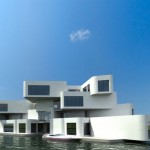
Indeed, helping people get to know their neighbors the driving concept behind this building in Antwerp, Belgium, where similar units are clustered around shared balconies and gardens.

social structure community interactions

Communal dining, rooftop deck, bike repair and indoor green spaces also encourage further interaction, increasing opportunities for chance encounters. As Black Swan author Nassim Nicholas Taleb writes, “This makes living in big cities invaluable because you increase the odds of serendipitous encounters — you gain exposure to the envelope of serendipity”

social housing site plan

Designed by C.F. Møller Architects and Brut Architecture and Urban Design, the idea is to increase interactions both within smaller sets of apartments and throughout the complex.

social building site section

All of this is meant to help residents form bonds more quickly, beyond the one-off greetings in elevators and periodic meetings in one-per-building community rooms.

social urban design strategy

The conceptual intent is also cleverly legible on the exterior of the building, with a facade that is broken down into different sections to create a series of scales showing small individual units and collections thereof within the framework of the larger structure.

Share on Facebook


[ By WebUrbanist in Architecture & Houses & Residential. ]

[ WebUrbanist | Archives | Galleries | Privacy | TOS ]


WebUrbanist

 
Comments Off on Social Structure: Apartment Tower Fosters Community Creation

Posted in Creativity


Mastering the Art of Depth Creation

12 Apr

In the simplest terms, photography is a method of duplicating reality. While you cannot change reality, you can present it in the best way possible. Though you are duplicating reality, you can present your subjects in a way that tells a story — you can make the everyday seem ordinary or fantastic, by using simple photographic techniques. No matter what Continue Reading

The post Mastering the Art of Depth Creation appeared first on Photodoto.


Photodoto

 
Comments Off on Mastering the Art of Depth Creation

Posted in Photography


From Concept to Creation, presented by Captain Kimo

02 Jan

Get the best out of your concept, creation and enhancement process with professional photographer and photo blogger Kim Seng, better known as Captain Kimo from captainkimo.com. Kim will explore the use of Topaz plugins while developing and creating the initial concept he had for his imagery. Kim is a photo blogger and photography teacher who’s main focus is Florida wildlife and landscape photographs. Kim’s expertise is in the field of HDR Photography and his photos have been published and exhibited many times.
Video Rating: 4 / 5


3D Photo Creation Nishika N8000 Part 1

22 Nov

This is the first video in my four part tutorial on creating 3D photos using the Nishika N8000. Check out my new site at www.3D-Dallas.com
Video Rating: 4 / 5

 
Comments Off on 3D Photo Creation Nishika N8000 Part 1

Posted in 3D Videos