RSS
 

Posts Tagged ‘Contemporary’

Sigma 30mm F1.4 DC DN Contemporary for Sony E-mount lens review

13 Sep

The Sigma 30mm F1.4 DN DC Contemporary was announced in February 2016, and sits atop Sigma’s line of DN mirrorless lenses, with a two-stop advantage over their previous 30mm F2.8 offering. It’s currently the only APS-C F1.4 autofocus lens currently available for the Sony E-mount and has an MSRP of $ 339.00.

With F1.4 and a 45mm equivalent field of view, this lens on paper appears to be a good choice for a ‘walkaround’ normal prime lens. The bright aperture will satisfy low light shooters and bokeh fanatics, and the near 50mm field of view puts it right inside the versatile ‘normal’ lens range. While it won’t replace a dedicated macro lens with its magnification ratio of 1:7, it still is able to focus down to a working distance of 30cm (less than a foot).

The relatively low price, especially for an E-mount lens, means it’s also accessible to beginners and enthusiasts alike, making it sound like an ideal prime lens that may never leave the front of the camera once it’s mounted.

Within the E-mount system this lens has one natural competitor: the Sony 35mm F1.8 OSS. Let’s look at how the two stack up on paper:

  Sony E 35mm F1.8 OSS Sigma 30mm F1.4 DC DN | C
MSRP $ 448 $ 339
Image Stabilization Yes No
Max Aperture F1.8 F1.4
Minimum Aperture F22 F16
Aperture Ring No No
Diaphragm Blades 7 9
Number of elements 8 9
Number of groups 6 7
Special elements/coatings 2 aspherical elements 1 aspherical and 1 double-sided aspherical
Minimum Focus 0.30 m (11.81?) 0.30 m (11.81?)
Maximum Magnification 0.15x 0.14x
Motor Type Stepper motor Stepper motor
Full Time Manual No No
Weight 155 g (0.34 lb) 265 g (0.58 lb)
Dimensions (DxL) 63 x 45 mm (2.5 x 1.8 in.) 65 x 73mm (2.6 x 2.9 in.)
Sealing None None
Filter Thread 49mm 52mm

In terms of just spec we see a couple of major differences. First, while the Sony is 2/3 of a stop slower than the Sigma, it does include optical image stabilization. That alone gives it a better chance at being the preferred lens for video, although when shooting 4K the slightly wider FOV of the Sigma might fare better on any body that gives an additional crop.

In stills terms, though, there’s little real-world difference between the Sigma’s 45mm equivalent view and the 52.5mm equivalent of the Sony. The difference between them doesn’t suddenly open one up to a type of photography that couldn’t be achieved with the other.

Build quality between the Sigma and the Sony is fairly similar. They both use a machined metal chassis with plastic internals. Compared to older Sigma DN lenses, the 30mm F1.4 doesn’t let its focus elements rattle about when unmounted, which is a very welcome change. The focus ring is also an improvement, and a step above the Sony. The rubber grip turns smoothly and easily with minimal effort, making the Sony feel a bit stiff. The only downfall in terms of build is the Sigma’s lens hood, which doesn’t seem to confidently click in to place, and is made of rather fragile feeling plastic.

The long barrel of the Sigma, and even longer overall dimensions do make it quite large in comparison to APS-C Sony Alpha cameras, but the weight isn’t entirely off-balance. While heavier and much bigger, it is less expensive and brighter than the Sony 35 F1.8. The question is, does the extra weight and lack of OSS keep it from topping the Sony as the ideal ‘normal’ for APS-C E-mount shooters?

Articles: Digital Photography Review (dpreview.com)

 
Comments Off on Sigma 30mm F1.4 DC DN Contemporary for Sony E-mount lens review

Posted in Uncategorized


Review of the Sigma 150-600mm Contemporary Lens Plus TC-1401 Teleconverter Bundle

31 May

One of my favorite subjects to photograph is wildlife, so when asked to review the Sigma 150-600mm lens, I was excited about the opportunity to see how its results compared to my Tamron 150-600mm.
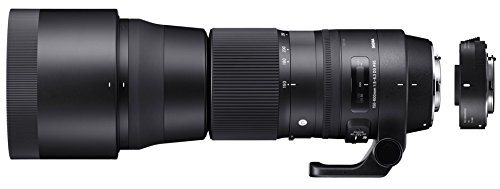
Sigma 150-600mm

In addition, Sigma recently began offering a bundle for their 150-600mm with a 1.4x teleconverter. Since I shoot mainly with a Nikon D750 full frame, the lens bundled with a 1.4x TC interested me very much. The 1.4x TC makes the 600mm, an 840mm on a full frame camera, so in theory this allows my full frame camera to shoot wildlife with nearly the same zoom factor as a crop sensor. (Nikon crop sensors are 1.5 and Canon, 1.6)

There are two things to consider when looking at a new lens:

  1. First is its ease of use
  2. Second is the quality of its optics.

In this article I’ll be applying both of these considerations as I review Sigma’s new bundle, and make comparisons between the Sigma and Tamron lenses. All images in this article were captured with the Sigma 150-600mm with the 1.4x TC.

sigma-150-600-4

Focusing

The Tamron features a larger, thicker focusing ring than the Sigma, which makes it easier to manually focus the lens. As for the Sigma, it has an extra setting on the autofocus switch for manual override (MO) which combines autofocus with an option to manually focus. I did not notice any major difference in the focusing responsiveness between the two lenses. Both did a fair job when grabbing focus, though neither lens is going to focus as quickly as a much more costly 600mm prime lens. The minimum focusing distance on the Tamron is just slightly less than the Sigma – not a game changer, but nevertheless a plus for the Tamron.

Focus Limiter switch

While both lenses have a focus limiter switch, with settings between Full and 10m (Sigma) or 15m (Tamron) to infinity, the Sigma features a third option on the limiter switch for 10m to 2.8m. In my testing, this third option proved very useful and was easy to locate and use, in order to focus on closer objects much quicker.

Customization

A feature the Sigma lens offers that the Tamron does not is an extra customization switch, which provides for an optional USB docking station (purchased separately). This allows a photographer to create two customized setting for OS (Optical Stabilization), AF, and focus-distance limits, and can also be used to download firmware updates directly to the lens.

sigma-150-600-5

Zoom Lock

Both the Tamron and the Sigma have a locking switch to prevent zoom creep at 150mm. However, the Sigma can also lock at several other focal settings, and what is even better, a quick twist of the zoom ring will unlock the it, without having to fumble around to find the switch. (In some cases this might be the difference between capturing and missing a killer shot!)

I found that my Tamron lens crept more than the Sigma, but this could be caused by the fact that it is an older lens with more use. Still, the lock switch on the Sigma is a great feature, especially since one can “soft lock” at many focal lengths.

Image Stabilization

Both lenses have their own image stabilization systems: Tamron’s VC (Vibration Compensation) and Sigma’s OS (Optical Stabilization). The Tamron has a simple on and off for the VC, while the Sigma has two settings: #1 is the standard setting for normal lens movement, and setting #2 is used for hand-held panning on a vertical plane, which will correct for up and down movement in subjects, such as birds in flight.

sigma-150-600-3

Zoom Ring

The zoom ring on the Sigma turns counter clock-wise, which is no big deal for Canon shooters. But for Nikon users, this is opposite from the normal zoom rotation on most Nikon lenses. It’s not a big deal, but does take some getting used to.

Tripod Collar

Both lens come standard with a tripod collar, but the foot on the Sigma collar is much smaller than the Tamron’s. This is only a minor problem, but I found a solution for it. I added a 5 inch quick release plate to the foot, which makes a great handle to carry the Sigma lens, as well as a plate to connect to a tripod.
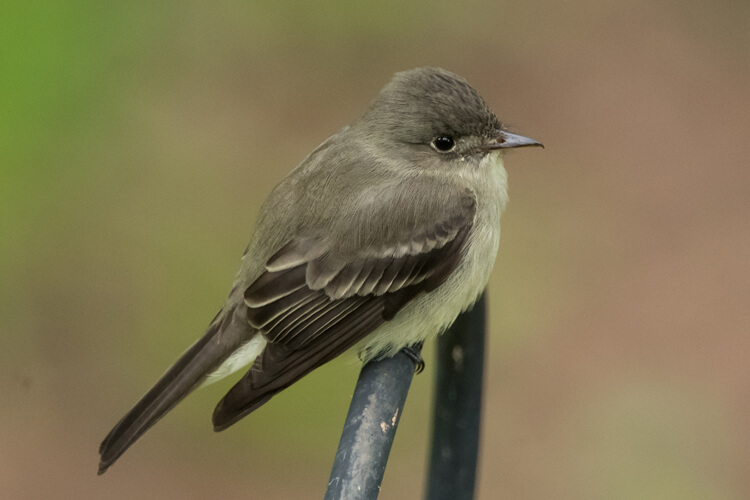
sigma-150-600-1

Image Quality

Here is where the comparison gets tougher, as both lenses are much sharper at the shorter focal lengths, and both are softer at the longer focal lengths. Both are sharper when stopped down to f/8 or f/9, than wide open. In my opinion, the difference in image quality between the two is negligible. There is no clear winner here, both having areas where they are slightly better than the other.

The addition of the 1.4x TC to the Sigma when stopped down, doesn’t seem to affect the image quality. The Sigma seems to have a clear advantage when it comes to chromatic aberration (CA), and even using the 1.4x TC there was noticeably less fringing in high contrast areas, when compared to the Tamron. Of course, CA is very easily corrected in Camera RAW or Lightroom when shooting in RAW.


sigma-150-600-7

sigma-150-600-6

Warranty

The advantage for warranty goes to Tamron, which offers a 6 year one, compared to 4 years with the Sigma. Still, in my opinion, both lenses are well constructed, and I am not convinced how much of an advantage that is, as most warranty issues show up early on.

1.4x Teleconverter

Adding the bundle of the 1.4x TC, and the 150-600mm Sigma can get your full frame camera back in the field when it comes to wildlife photography. While adding the teleconverter seems to slow the autofocus a bit, I shot with this bundle on both my crop sensor and full frame sensor cameras, and I believe the autofocus was more responsive on the full frame.

NOTE: Before purchasing the 1.4x TC, make sure the camera will autofocus at f/8. Many entry model DSLRs will not autofocus above f/5.6, so while this bundle may fit those cameras, manual focus will be necessary. Other models may only autofocus on the center focus point, and still others may have a limited number of focus points with the 1.4x TC.

Adding the 1.4x TC did seem to give a softer image when the lens was extended to 600mm (840mm), but if you stop down to f/10 to f/11 the images are nearly as sharp as at 600mm without the TC. Of course, stopping down means either using a slower shutter speed or a higher ISO, which may add some blur or noise to an image. I did find that the OS on the Sigma did a nice job of reducing camera shake, when hand holding at slower shutter speeds.
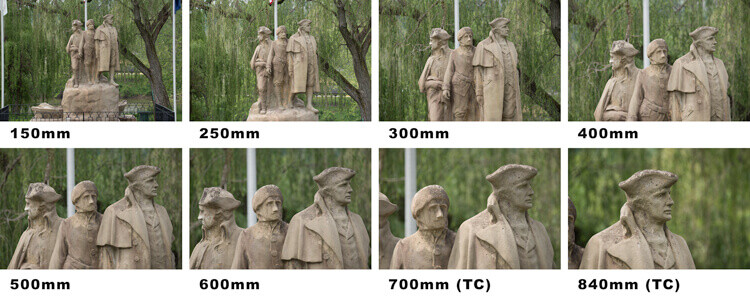
The above images show the range and extra reach of the Sigma 150-600mm with the last 2 images having the 1.4 TC added for an extra 240mm of reach.

The above images show the range and extra reach of the Sigma 150-600mm with the last two images having the 1.4x TC added for an extra 240mm of reach.

Tips

The rule of thumb when shooting with long focal lengths is to set the shutter speed equal to, or greater than the focal length, so remember that when by adding the 1.4x TC to a 600mm, one is now shooting at 840mm on a full frame, and 1260 mm on a crop sensor. For sharp images, a shutter speed over 1/1000th of a second is a must.

When carrying your camera with a large lens such as these 150-600mm lenses, it’s best to hold them by the lens rather than your camera. These lenses weigh much more than your camera and can put a lot of stress on the lens mount if carried by the camera. Likewise, when mounting on a tripod, always use the tripod collar to reduce stress on your camera’s lens mount (it is better balanced using the collar and won’t be front heavy).

Conclusion

Both the Tamron and Sigma lenses are well designed, and for the price range are great equipment investments. As mentioned earlier, I feel the image quality compared very closely. The Sigma does offer some useful extra features, out-weighing the issues of the smaller focusing ring and the counter-clockwise turning of the zoom ring for a Nikon shooter.

If you currently have a Tamron it may not be worth making a switch. But with the addition of the 1.4x TC, the Sigma bundle offers a great setup for full frame cameras, as well as crop sensors for some extra reach. So if you are looking for some extra reach (and we all are) the addition of the 1.4 TC to the Sigma may be a game changer. It was for me!

As a result of my review of the Sigma bundle for this article, I sold my Tamron 150-600mm, and purchased the Sigma 150-600mm bundled with the 1.4 TC, to extend the usage of my full frame Nikon D750, especially for photographing wildlife.

googletag.cmd.push(function() {
tablet_slots.push( googletag.defineSlot( “/1005424/_dPSv4_tab-all-article-bottom_(300×250)”, [300, 250], “pb-ad-78623” ).addService( googletag.pubads() ) ); } );

googletag.cmd.push(function() {
mobile_slots.push( googletag.defineSlot( “/1005424/_dPSv4_mob-all-article-bottom_(300×250)”, [300, 250], “pb-ad-78158” ).addService( googletag.pubads() ) ); } );

The post Review of the Sigma 150-600mm Contemporary Lens Plus TC-1401 Teleconverter Bundle by Bruce Wunderlich appeared first on Digital Photography School.


Digital Photography School

 
Comments Off on Review of the Sigma 150-600mm Contemporary Lens Plus TC-1401 Teleconverter Bundle

Posted in Photography


Sigma 30mm F1.4 DC DN Contemporary real-world sample gallery

09 Mar

Among all its releases at CP+ 2016, Sigma’s 30mm F1.4 DC DN Contemporary lens is the smallest in size, but its wide aperture should help it pack an image quality punch. Designed for Micro Four Thirds cameras and Sony E-Mount, the Sigma 30mm F1.4 uses a stepping motor for quiet autofocus, weighs in at a feathery 265g (9.3oz), and will retail for $ 339 when it’s released later this month.

During a visit to the Sigma factory in Aizu, Japan, we had a chance to test it out in a snowy winter wonderland. The lens is a pre-production sample, and the images were shot on a Sony a7R II in crop mode. We’ve included JPEGs processed from Raw using Adobe Camera Raw (some with and without manual distortion correction), and original Raw files as well, for your viewing pleasure. Check them out and see how the lens stacks up.

Articles: Digital Photography Review (dpreview.com)

 
Comments Off on Sigma 30mm F1.4 DC DN Contemporary real-world sample gallery

Posted in Uncategorized


Behind the Camera: Sue Bryce’s contemporary portraiture

17 Jan

If there’s been a theme to Sue Bryce’s career, it might be one of evolution. She started making portraits when she was 18 with a Hasselblad film camera, and with grit and sheer determination she built and marketed her own business. Classifying her work as contemporary fashion portrait photography, she’s evolved through decades in a shifting industry, and in addition to running her highly successful studio now offers online workshops for newcomers. We sat down with her recently to learn more about her work, vision and history with photography. 

Articles: Digital Photography Review (dpreview.com)

 
Comments Off on Behind the Camera: Sue Bryce’s contemporary portraiture

Posted in Uncategorized


Subway Angels: Painted Figures Spliced into Contemporary Cities

11 Nov

[ By WebUrbanist in Art & Drawing & Digital. ]

historic bored bus scene

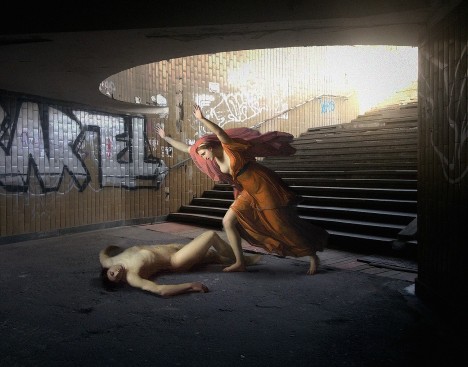
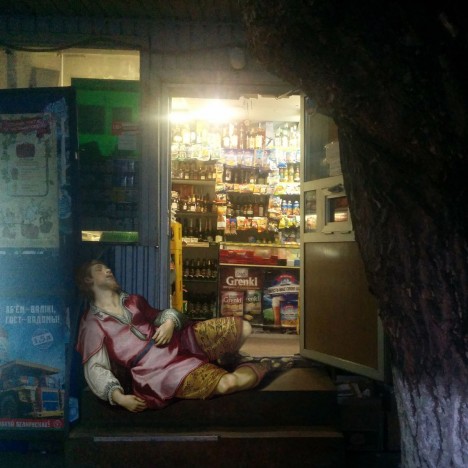
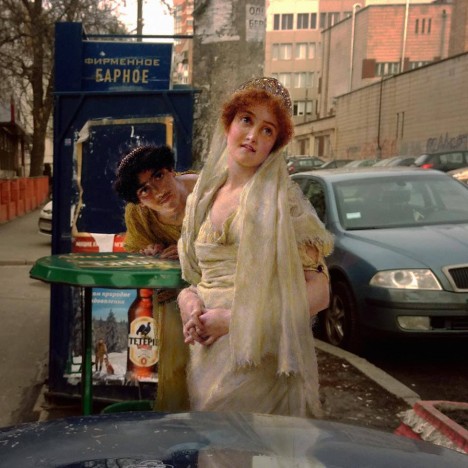
Gods, angels, cherubs and human mortals from famous historical artworks can be found browsing the beverage display at the corner store, passed out in front of the liquor shop, or riding the bus with an aptly bored expression in these clever remixes.

historic shopping corner store

historical attack subway setting

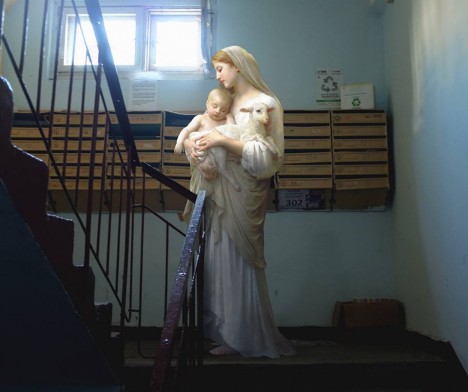
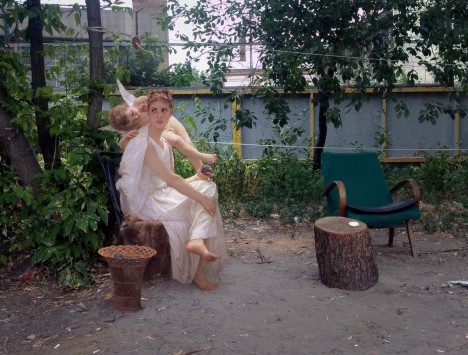
In his ongoing series Art History in Contemporary Life, Ukrainian artist Alexey Kondakov continues to document a fictional world in which ancient figures find themselves transplanted into modern cityscapes.

subway nude

historic mother child lamb

historical drunk liquor store

Among his hacks: Cesar van Everdingen’s Bacchus, Caravaggio’s David and Goliath and William-Adolphe Bouguereau’s Nymphs and Satyr, all hacked to fit into new times and places.

historical park cherub sitting

historical streetscape sidewalk scene

historical painting modern city

The scenes are so expertly edited it is left to the figures themselves to stand out from each setting through their actions or attire. Madonna, child and lamb are, for instance, a bit of a strange find in an old apartment staircase and cherubs generally aren’t seen on the Earthly plane, at least by ordinary people.

Share on Facebook


[ By WebUrbanist in Art & Drawing & Digital. ]

[ WebUrbanist | Archives | Galleries | Privacy | TOS ]


WebUrbanist

 
Comments Off on Subway Angels: Painted Figures Spliced into Contemporary Cities

Posted in Creativity


28 March, 2014 – A Redux Critique Of Contemporary Camera Design

29 Mar

Luminous-Landscape has spent a lot of time lately looking at the camera industry and camera design.  While we were doing this Richard Sexton, well know fine art photographer shared with us an article he wrote – A Redux Critique Of Contemporary Camera Design.  Richard’s article goes quite in depth regarding his opinions of cameras and lenses today.  It’s a follow up article to the one he wrote in May, 2012.  

William Neill well know photographer and author for Outdoor Photographer has just posted an article Antarctica Dreams on the Outdoor Photographer web site.  William was an instructor on our recent trip to Antarctica.  He shares his experience of this trip in the article.

Luminous-Landscape announces The Palouse Photography Workshop.  In cooperation with Phase One, Luminous-Landscape will host a PODAS workshop in the beautiful area of Southeast Washington known as the Palouse.  This is an amazing region of rolling hills and rich soil.  The workshop will be held during the harvest and will provide unique images as the primary crop – wheat is harvested.  Sign-uo today and receive a LuLa Video Subscription as a bonus (expires April 10, 2014).  Each attendee will be provided the latest Phase One camera system for the duration of the workshop.  This is your chance not only to photograph a beautiful part of the US, but also an opportunity to experience what medium format photography can do for your photography.  More information can be found HERE.

Looking for the ultimate summer photography vacation.  We still have a few berths lefts on our Svalbard – Land Of The Polar Bears workshops this July.  This is a small boat cruise into the ice pack to photograph Polar Bears as well as numerous excursions around Svalbard for other wildlife photography and landscapes. This will be an unforgettable trip with a maximum of only 11 participants.


The Luminous Landscape – What’s New

 
Comments Off on 28 March, 2014 – A Redux Critique Of Contemporary Camera Design

Posted in News


Contemporary House Inserted into Crumbling Castle Ruins

25 Jul

[ By Steph in Architecture & Houses & Residential. ]

Modern Castle Renovation Home 1

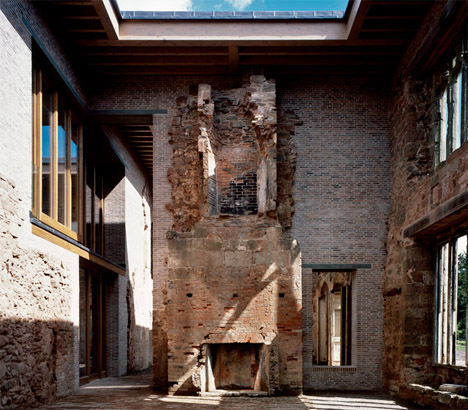
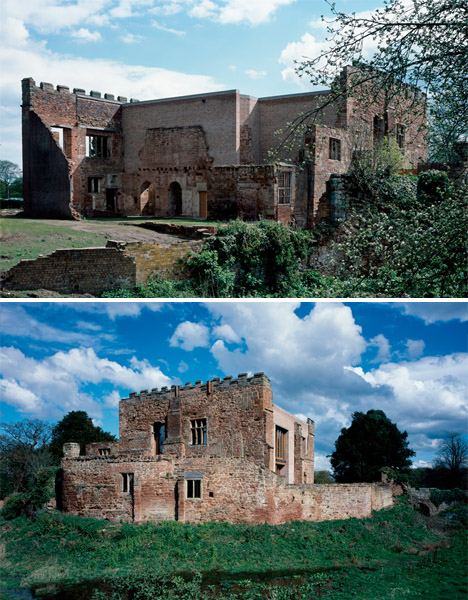
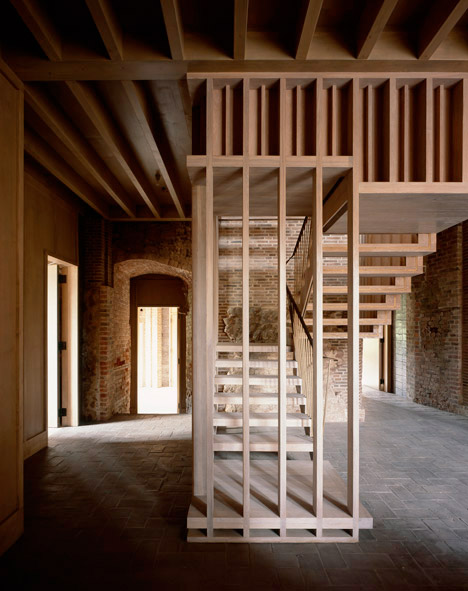
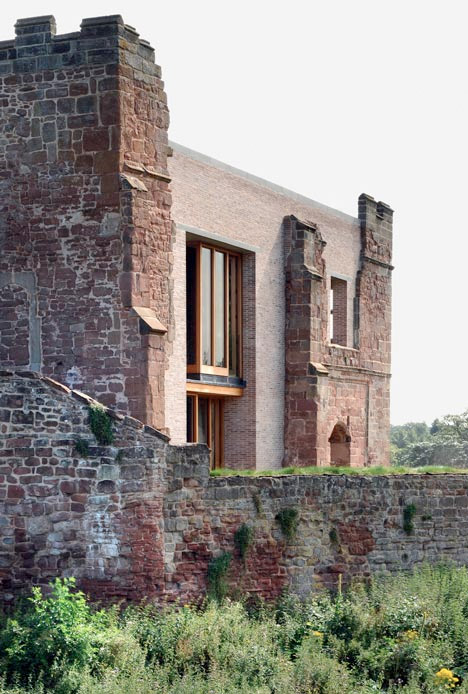
A ruined 12th-century castle serves as a stunning historic shell for a contemporary residence in a renovation by Witherford Watson Mann architects. The medieval Astley Castle has been in ruins since the 1970s, when a fire destroyed the hotel that occupied it at the time. Now, it’s preserved as an integral part of a two-story holiday house, the crumbling areas of its sandstone walls filled in with clay brickwork.

Modern Castle Renovation Home 2

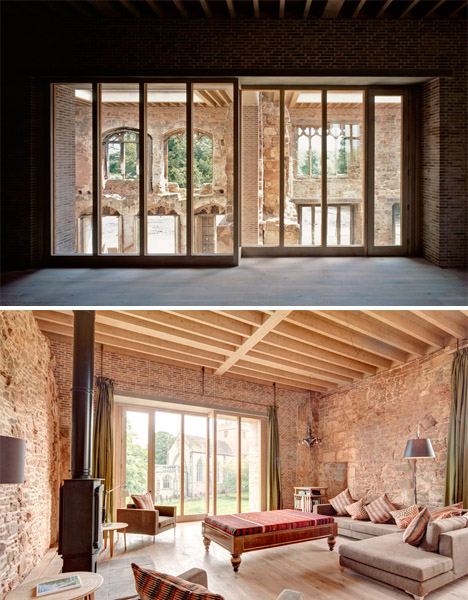
The architects blended the new elements of the structure with the old, yet made sure that there is a clear distinction between the two. It’s harmonious, but allows the historic castle to be seen as it was before it was altered. The modern home is nestled within the walls, with the historic bricks still visible throughout the interior.

Modern Castle Renovation Home 3

Extensions added to the castle in the sixteenth and eighteenth centuries were topped with a roof and massive skylight, but left open to the elements through the arched windows and doorways to create a sunny courtyard. Laminated wooden beams separate the structure into individual living spaces and bedrooms.

Modern Castle Renovation Home 4

Modern Castle Renovation Home 5

The home features four bedrooms on the ground floor, and a second-floor living room with large windows looking out onto the English countryside. Witherford Watson Mann won a competition held by architectural charity The Landmark Trust to design the home, and their renovation is one of six projects nominated for the prestigious 2013 Stirling Prize.

Share on Facebook


[ By Steph in Architecture & Houses & Residential. ]

[ WebUrbanist | Archives | Galleries | Privacy | TOS ]


WebUrbanist

 
Comments Off on Contemporary House Inserted into Crumbling Castle Ruins

Posted in Creativity


Traditional to Contemporary: 6 Cool Custom Bedroom Lofts
29 Mar

[ By WebUrbanist in Design & Fixtures & Interiors. ]

loft rooms

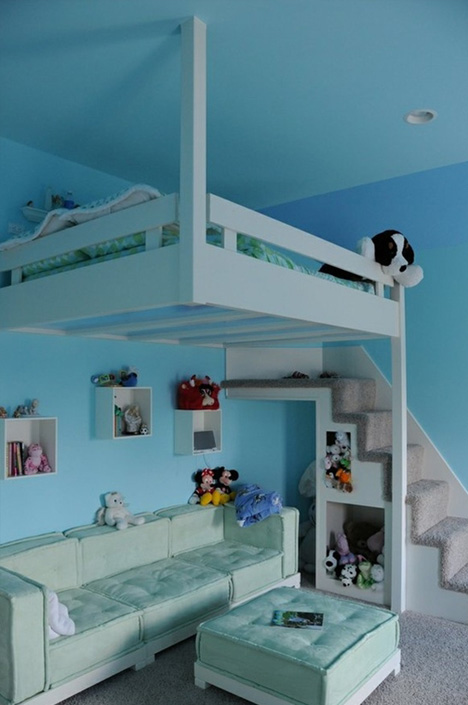
Sometimes you have nowhere to build … but up. And really, there is something nice and relaxing about removing oneself from the main floor of a home – which can be done at times even in a one-story dwelling, as these lovely lofts illustrate.

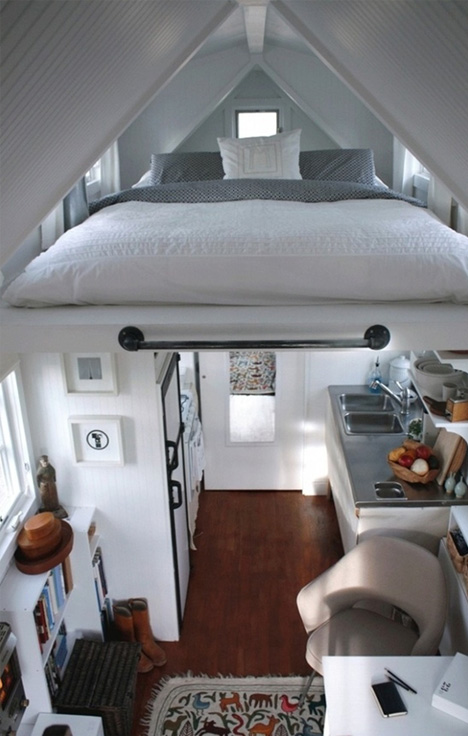
loft bedroom manhattan skylight

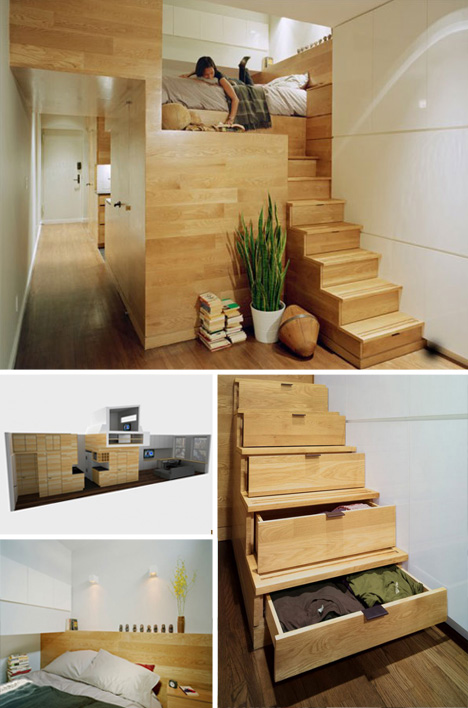
Long and narrow is the name of the game in most of Manhattan, including the East Village where this condo by JPDA Architects is located. Taking advantage of a unique pop-up opportunity at the roof level, this stellar little bedroom manages to be bright and spacious while being tucked away at the top of a slim staircase (which doubles as drawers).

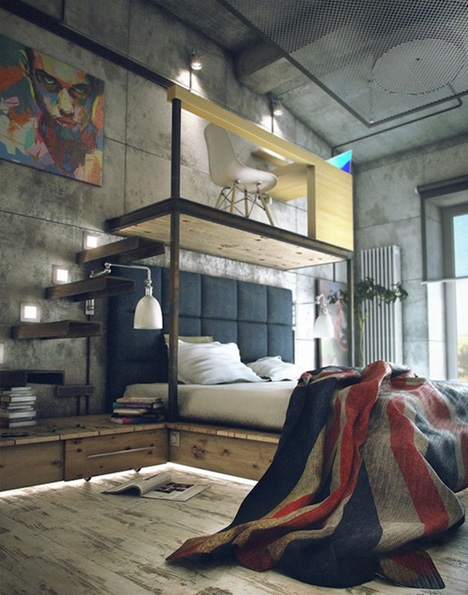
loft industrial bedroom study

Switching styles and approaches for a moment, consider this lofted space by Maxim Zhukov. Instead of lofting the bed, this industrial space lofts a little study above the bed instead, taking advantage of the vertical opportunity in a totally unexpected way.

loft a frame bed

loft bunk bed examples

lofted kids bedroom design

rustic cabin loft bedroom

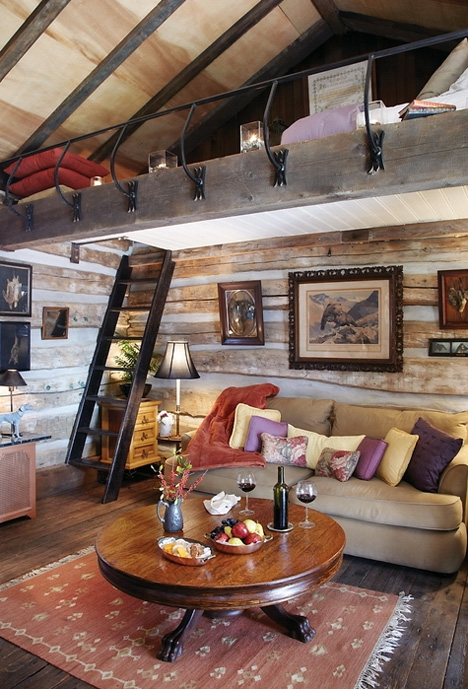
For some greater stylistic variety, here is some (P)inspiration – a few Pinterest finds to pique your interest in other built-in and add-on ways to use existing or create new upper-level spaces for everyday occupation by kids or adults.

Share on Facebook


[ By WebUrbanist in Design & Fixtures & Interiors. ]

[ WebUrbanist | Archives | Galleries | Privacy | TOS ]


WebUrbanist

 
Comments Off on Traditional to Contemporary: 6 Cool Custom Bedroom Lofts
Posted in Creativity


Dublin Contemporary 2011 – Iveagh Gardens In Dublin

28 Nov

Some cool visual art images:
Dublin Contemporary 2011 – Iveagh Gardens In Dublin
visual art
Image by infomatique
A NEW VISUAL arts exhibition has opened in Dublin which features over 90 artists from five continents.

A major exhibition called The Office of Non-Compliance is housed in Earlsfort Terrace and I hope to publish some photographs later this week. The Iveagh Gardens are being transformed into a sculpture garden throughout the six-week event and I took the opportunity to photograph some go them. I assume that more are to be added, I will check on a regular basis.

Theme

The title and theme of Dublin Contemporary 2011 is Terrible Beauty—Art, Crisis, Change & The Office of Non-Compliance. Taken from William Butler Yeats’ famous poem “Easter, 1916”, the exhibition’s title borrows from the Irish writer’s seminal response to turn-of-the-century political events to site art’s underused potential for commenting symbolically on the world’s societal, cultural and economic triumphs and ills.

The second part of the exhibition’s title underscores Dublin Contemporary 2011’s emphasis on art that captures the spirit of the present time, while introducing the exhibition’s chief organizational engine: The Office of Non-Compliance. Headed up by Dublin Contemporary 2011 lead curators Jota Castro (artist/curator) and Christian Viveros-Fauné (critic/curator), The Office of Non-Compliance will function as a collaborative agency within Dublin Contemporary 2011, establishing creative solutions for real or symbolic problems that stretch the bounds of conventional art experience.

Venues and Programme

The main exhibition hub at Earlsfort Terrace, former home of University College Dublin, will provide a range of unusual spaces for mini solo exhibitions that range from large-scale installations to smaller intimate hangings. The Office of Non-Compliance, located within the Earlsfort Terrace exhibition site, will function as a promoter of ideas around a laundry list of non-conformist art proposals. This element of the exhibition will include ad-hoc, accessible structures for discourse around art and its place in society.

Extending its reach across the city, Dublin Contemporary 2011 will partner with four important Dublin galleries: The Douglas Hyde Gallery, Dublin City Gallery The Hugh Lane, The National Gallery of Ireland and The Royal Hibernian Academy.

Dublin City Gallery The Hugh Lane will present a retrospective of the work of renowned Irish artist Willie Doherty. An exhibition of American painter Alice Neel’s striking, psychologically penetrating portraits will take place at The Douglas Hyde Gallery.

The National Gallery of Ireland will host works by a number of international artists as well as a new commission by the distinguished Irish artist Brian O’Doherty. The Royal Hibernian Academy will host an exhibition of works by American painter Lisa Yuskavage and a new commission by Irish artist James Coleman.

Dublin Contemporary 2011 – Iveagh Gardens In Dublin
visual art
Image by infomatique
A NEW VISUAL arts exhibition has opened in Dublin which features over 90 artists from five continents.

A major exhibition called The Office of Non-Compliance is housed in Earlsfort Terrace and I hope to publish some photographs later this week. The Iveagh Gardens are being transformed into a sculpture garden throughout the six-week event and I took the opportunity to photograph some go them. I assume that more are to be added, I will check on a regular basis.

Theme

The title and theme of Dublin Contemporary 2011 is Terrible Beauty—Art, Crisis, Change & The Office of Non-Compliance. Taken from William Butler Yeats’ famous poem “Easter, 1916”, the exhibition’s title borrows from the Irish writer’s seminal response to turn-of-the-century political events to site art’s underused potential for commenting symbolically on the world’s societal, cultural and economic triumphs and ills.

The second part of the exhibition’s title underscores Dublin Contemporary 2011’s emphasis on art that captures the spirit of the present time, while introducing the exhibition’s chief organizational engine: The Office of Non-Compliance. Headed up by Dublin Contemporary 2011 lead curators Jota Castro (artist/curator) and Christian Viveros-Fauné (critic/curator), The Office of Non-Compliance will function as a collaborative agency within Dublin Contemporary 2011, establishing creative solutions for real or symbolic problems that stretch the bounds of conventional art experience.

Venues and Programme

The main exhibition hub at Earlsfort Terrace, former home of University College Dublin, will provide a range of unusual spaces for mini solo exhibitions that range from large-scale installations to smaller intimate hangings. The Office of Non-Compliance, located within the Earlsfort Terrace exhibition site, will function as a promoter of ideas around a laundry list of non-conformist art proposals. This element of the exhibition will include ad-hoc, accessible structures for discourse around art and its place in society.

Extending its reach across the city, Dublin Contemporary 2011 will partner with four important Dublin galleries: The Douglas Hyde Gallery, Dublin City Gallery The Hugh Lane, The National Gallery of Ireland and The Royal Hibernian Academy.

Dublin City Gallery The Hugh Lane will present a retrospective of the work of renowned Irish artist Willie Doherty. An exhibition of American painter Alice Neel’s striking, psychologically penetrating portraits will take place at The Douglas Hyde Gallery.

The National Gallery of Ireland will host works by a number of international artists as well as a new commission by the distinguished Irish artist Brian O’Doherty. The Royal Hibernian Academy will host an exhibition of works by American painter Lisa Yuskavage and a new commission by Irish artist James Coleman.

 
Comments Off on Dublin Contemporary 2011 – Iveagh Gardens In Dublin

Posted in Photographs


NYC – Chelsea: Carolina Nitsch Contemporary Art – In Direction

28 Nov

A few nice visual art images I found:

NYC – Chelsea: Carolina Nitsch Contemporary Art – In Direction
visual art
Image by wallyg
In Direction, an installation by Richard Dupont, was the first exhbition of the artist at the Carolina Nitsch Contemporary Art Gallery, at 534 West 22nd Streeet.

The installation consists of three large figures cast in polyurethane surrounded by mirrored panels which transform the exhibition space into a quasi-virtual, interactive environment. Presented in the storefront Project Room, the installation suggests a staged experience, albeit an inverted one, with the activity of the street outside brought inside, and the room itself expanded into a four dimensional spatial riddle.

Standing just over life size, the three figures appear to be liquefying when seen from certain angles or camouflaged from others. Like a number of Dupont’s installations since 2005, they are based on a three dimensional digital scan of the artist’s body. Before being molded and cast in resin, the body model has been distorted using visual computer effects. Once translated into three dimensional sculptures, the figures appear to be shifting shape as the viewer moves around them.

Visual Insurgence – Selling Revolution
visual art
Image by vandalog

John Andrews Arnett, An Inquiry into the Nature and Form of the Books of the Ancients: With a History of the Art of Book Binding
visual art
Image by Library Company of Philadelphia
John Andrews Arnett, An Inquiry into the Nature and Form of the Books of the Ancients: With a History of the Art of Book Binding (London: R. Groombridge, 1837).

 
Comments Off on NYC – Chelsea: Carolina Nitsch Contemporary Art – In Direction

Posted in Photographs