RSS
 

Posts Tagged ‘Cities’

Japan-ized Cities: Surrealistic “Worldwide Tokyo-lization Project”

01 Aug

[ By WebUrbanist in Art & Drawing & Digital. ]

tokyolization

A team of designers has taken iconic images of major global cities and added a “rich graphic language and vibrant visual effects” to blend each one with elements of Japanese infrastructure and visual culture.

tokyo buenos aires

Presenting their work at the Venice Architecture Biennale, this strange art series from Daigo Ishii + Future-Scape Architects aims to question our ideas of locality and our sense of civic imagery and identity.

tokyo denmark

What happens, they ask, when a familiar underlying environment gets an overlay, sending mixed signals to observers? Is it the underlying shape and form of a place that make it what it is, or those other visual cues that lend familiarity?

tokyo paris

The firm set their cities on cities including New York, Buenos Aires, Copenhagen and La Paz, each time pulling in distinctively Japanese elements, from neon signage to cherry trees.

tokyo bolivia

In each case, the result is a surreal hybrid, playing off cues in source photographs shot in the United States, Argentina, Denmark, France, Bolivia and Italy, becoming something that is neither here nor there, original or artificial.

“The project seeks to present an amalgamation between traditional architectural studies and surprising artistic elements.” The display in Venice consists of “a video work shown on a large-scale monitor, with six surrounding boards displaying the final scenery of each city after ‘Tokyo-lization’ has taken place.”

Share on Facebook


[ By WebUrbanist in Art & Drawing & Digital. ]

[ WebUrbanist | Archives | Galleries | Privacy | TOS ]

WebUrbanist

 
Comments Off on Japan-ized Cities: Surrealistic “Worldwide Tokyo-lization Project”

Posted in Creativity


Urban Dystopia: 11 Short Sci-Fi Films Set in Future Cities

14 Jul

[ By SA Rogers in Drawing & Digital. ]

LIMA

The science fiction of the past thirty years has evolved beyond the midcentury’s optimistic space-age visions into a darker, grittier place, where technology is out of control and resources are running out. Whether you think these imagined dystopian futures are overly dramatic or prescient of harder times to come, their depiction of our downfall can be absolutely riveting, and worth watching for the urban scenery alone. Short films offer an ideal medium for filmmakers of all skill levels to explore these concepts, including architecture that’s taken on a life of its own and high-tech surveillance societies.

In fact, if you want to know what sci-fi films might be coming out in the next few years, keep an eye on the digital shorts that are proliferating across the internet, as many of them get snapped up by major studios to become full-length features.

Spatial Bodies by AUJIK

OSAKA 1

OSAKA 2

OSAKA 3

OSAKA 4

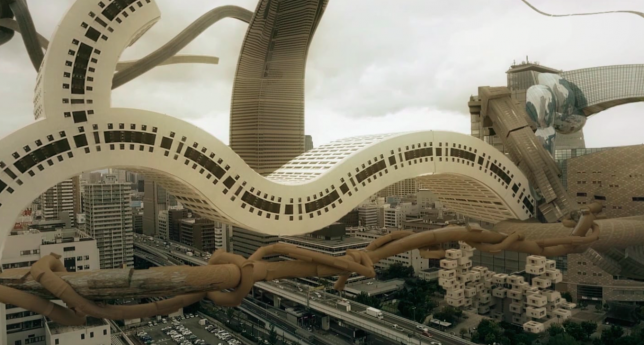
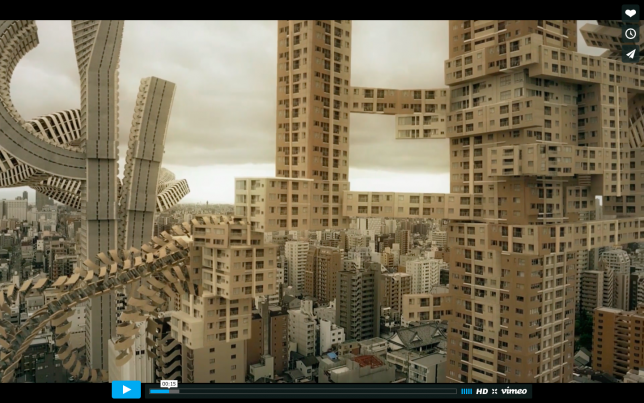
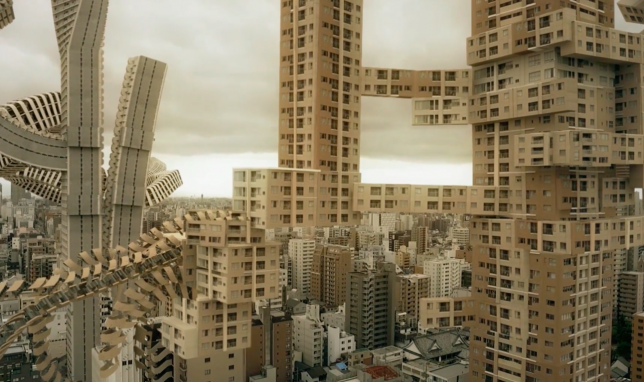
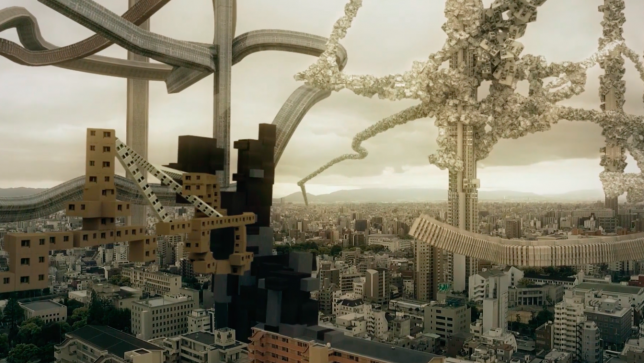
Architecture in Osaka, Japan takes on a life of its own and begins to grow organically like vines and trees in the short ‘Spatial Bodies’ by AUJIK. “Spatial Bodies depicts the urban landscape and architectural bodies as an autonomous living and self replicating organism. Domesticated and cultivated only by its own nature. A vast concrete vegetation, oscillating between order and chaos,” say the creators, a collective referring to itself as a ‘mysterious nature/tech cult.’

Megalomania by Factory Fifteen

factory fifteen 1

factory fifteen 2

factory fifteen 3

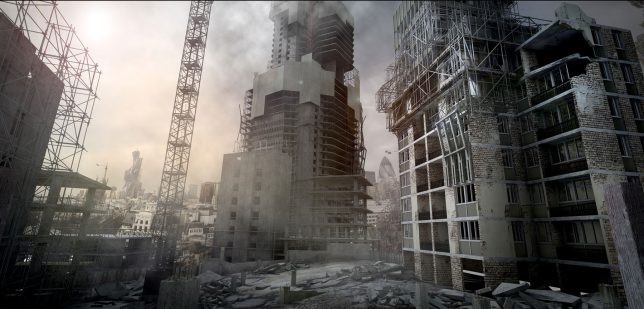
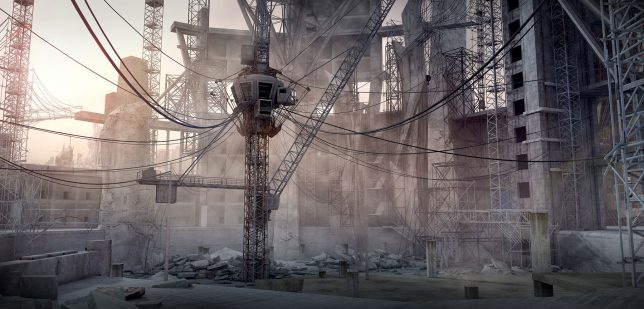
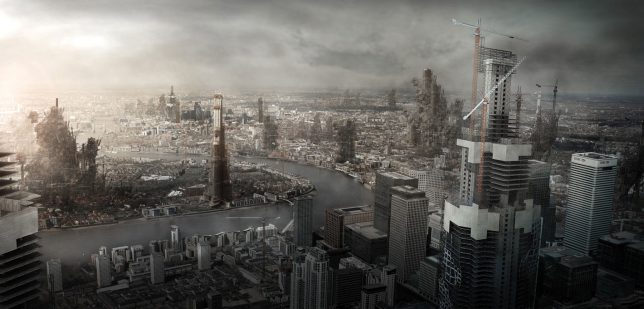
From digital film studio Factory Fifteen, which has produced a number of striking shorts set in the future, Megalomania imagines a world in which cities are constantly in active construction mode. “The built environment is explored as a labyrinth of architecture that is either unfinished, incomplete or broken. Megalomania is a response to the state of infrastructure and capital, evolving the appearance of progress into the sublime.”

TEARS OF STEEL by Ian Hubert/Blender Institute

Tears of Steel

Tears of Steel 2

Tears of Steel 3

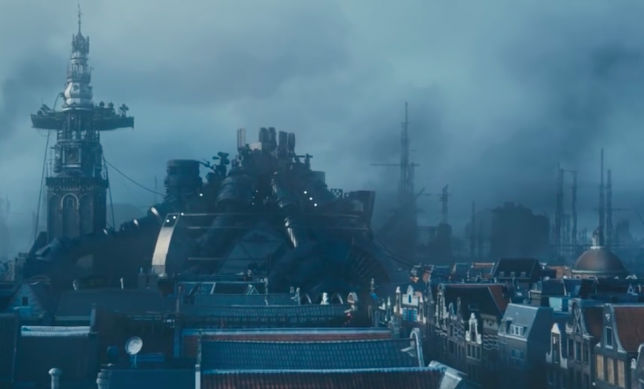
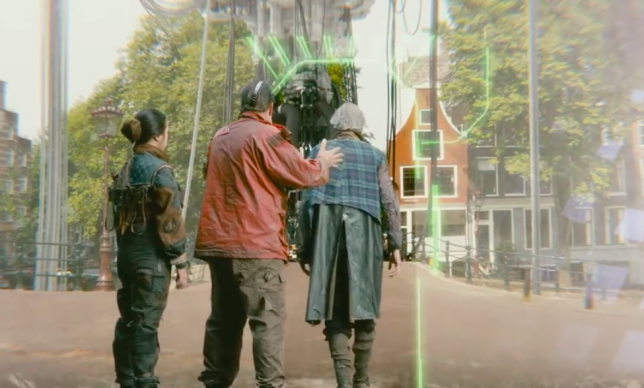
This Creative Commons-licensed short made entirely with free and open source software was made in the Netherlands by the Blender Institute, which crowd-sources funding in online communities of 3D artists and animators. In ‘Tears of Steel,’ a group of warriors and scientists gathered at Amsterdam’s Oude Kerk attempt to stage a crucial event from the past in a desperate attempt to rescue the world from destructive robots.

The Sand Storm by Jason Wishnow and Christopher Doyle

Sand Storm 3

Sand Storm

Sand Storm 2

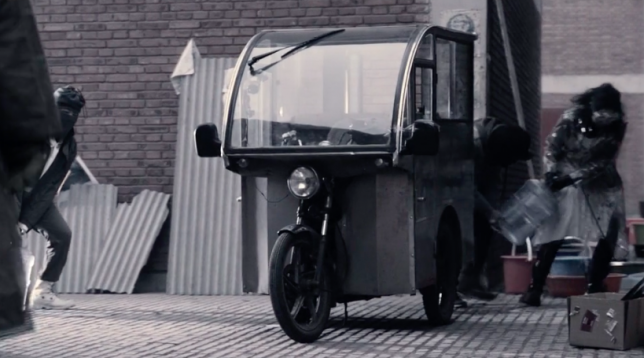
Starring Chinese dissident and artist Ai Weiwei, ‘The Sand Storm’ by Hong Kong-based cinematographer Christopher Doyle and director Jason Wishnow examines a dystopian future that’s not so far away, where society is facing water shortages and technology is not as helpful as we might hope.

Next Page – Click Below to Read More:
Urban Dystopia 11 Short Sci Fi Films Set In Future Cities

Share on Facebook


[ By SA Rogers in Drawing & Digital. ]

[ WebUrbanist | Archives | Galleries | Privacy | TOS ]


WebUrbanist

 
Comments Off on Urban Dystopia: 11 Short Sci-Fi Films Set in Future Cities

Posted in Creativity


Cities of Bone: Organic Future Skyscrapers Free of Concrete & Steel

06 Jul

[ By WebUrbanist in Architecture & Cities & Urbanism. ]

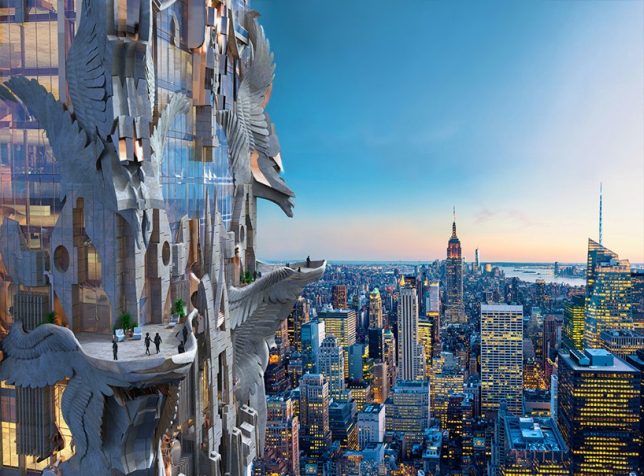
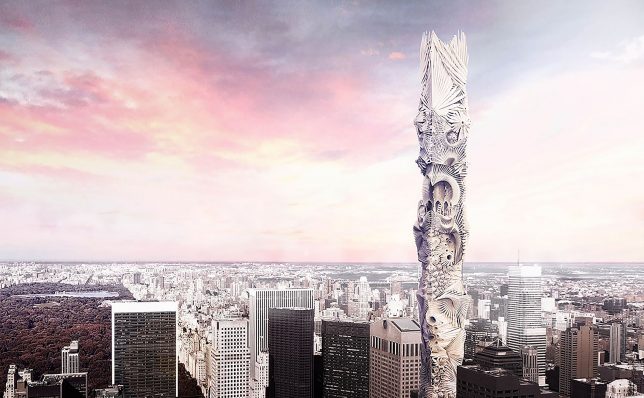
building of bone

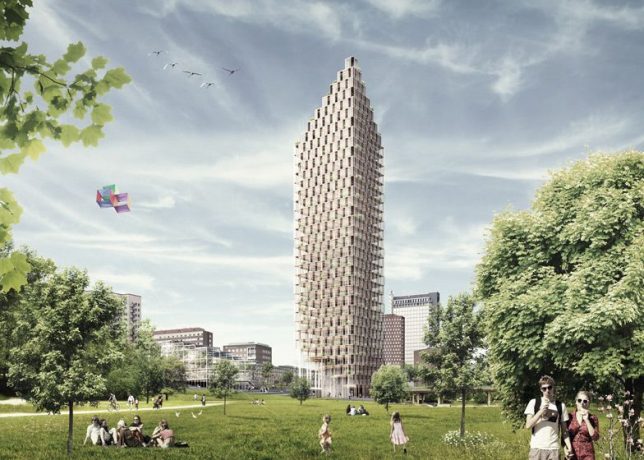
Our cities have grown up thanks to concrete and steel, but these materials are far from sustainable, leading architects and researchers to explore new (and old) materials, from wood to eggshell and even bone.

Steel and concrete account for 10% of global carbon emissions, polluting close to as much as the entire transportation industry. Bioengineer Doctor Michelle Oyen of Cambridge’s Department of Engineering builds structures in her lab from artificial bone and eggshell. These can be used for medical implants, but could also scaled up to create low-carbon building materials.

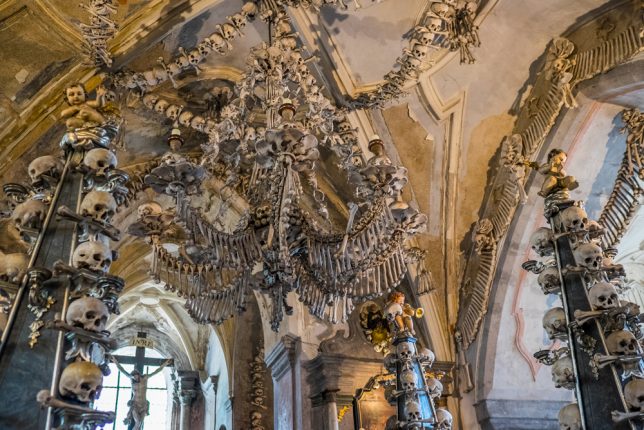
ossuary

Funded in part by the US Army Corps of Engineers, Oyen’s creations are composites of proteins and minerals, the former providing toughness and fracture resistance and the latter lending stiffness and hardness to the mix. These currently come from natural (animal) sources, but she is investigating whether a “non-animal-derived or even synthetic protein or polymer could be used instead of natural collagen.”

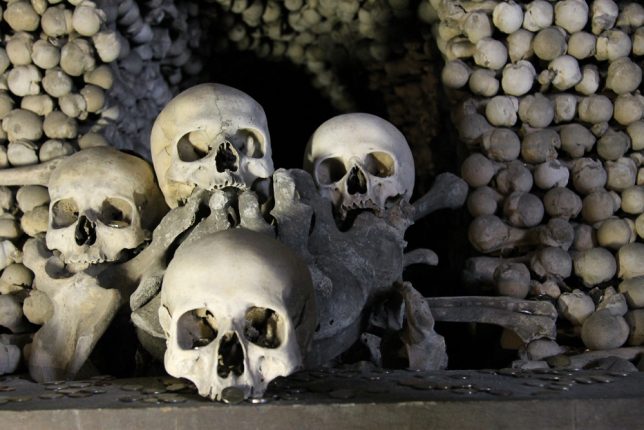
0758-11

In theory, her biomimetic creations could even become self-healing, in the same vein as concrete designed to repair itself. For the construction industry to adopt such radical new technologies at scale remains one of the biggest challenges for future organic and semi-organic materials – for decades, building codes have been framed around the use of concrete and steel.

Cities and skyscrapers of today already represent a good first step to long-term sustainability, packing lots of people into dense areas and vertical structures requiring less land. Still, a shift to renewable, organic and reusable materials would make them more future-proof and environmentally friendly.

wood skyscrapers

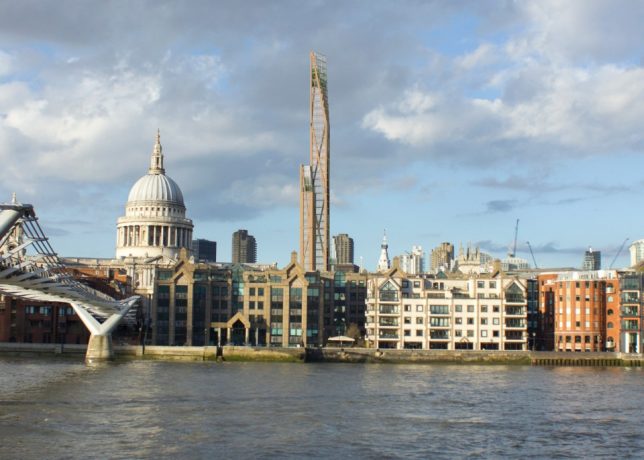
Wood is another natural building material gaining increased attention from the built environment community, a renewable resource that is strong, durable and recyclable. “Future cities may not look a whole lot different – you may not know immediately if you are in a timber, steel or concrete building,” says Doctor Michael Ramage from the Cambridge Department of Architecture.

wood skyscraper design

And “cities might be a whole lot quieter, as most timber buildings are built off site, and then just assembled on site, and use roughly a fifth as much truck traffic as equivalent concrete buildings. In other words, what needs to be delivered in five trucks for a concrete building can be delivered in one truck for a timber building. That’s an incredible advantage, for cost, for environment, for traffic and for cyclists” (Bone Church image by Davis Staedtler and Ossuary by jockrutherford).

Share on Facebook


[ By WebUrbanist in Architecture & Cities & Urbanism. ]

[ WebUrbanist | Archives | Galleries | Privacy | TOS ]


WebUrbanist

 
Comments Off on Cities of Bone: Organic Future Skyscrapers Free of Concrete & Steel

Posted in Creativity


Urban Human Habitats: 13 Compact Concepts for Growing Cities

07 Jun

[ By SA Rogers in Architecture & Cities & Urbanism. ]

compact cities coastal cliffs 1


How will various cities around the world adapt to rapid population growth while maintaining quality of life and responding to their unique environments and cultural context? In some cases, new ideas for maximizing urban density require building new cities from the ground up, while others reclaim industrial areas and depressed suburbs or simply keep building higher and higher into the sky. These proposals – some fanciful, others currently under construction or completed – represent a diverse variety of urban growth solutions, each with its own pros and cons.

Lush Pedestrian-Oriented Vision for Singapore

PARKROYALonPickering_Ext-ViewofSkyTerraceFromClubLounge02_(c)PatrickBingham-Hall

ParkRoyal_Dwg-GardenDown_(c)WOHA


PARKROYALonPickering_Ext-DistanceStreetViewFromAcrossUrbanPark_(c)PatrickBingham-Hall

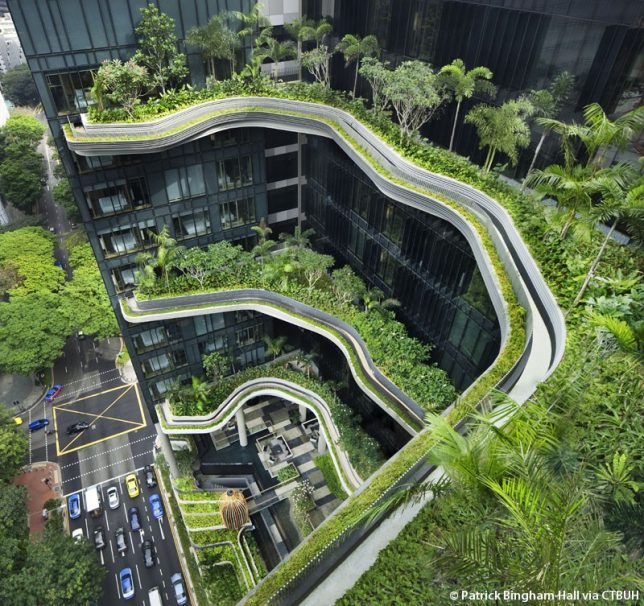
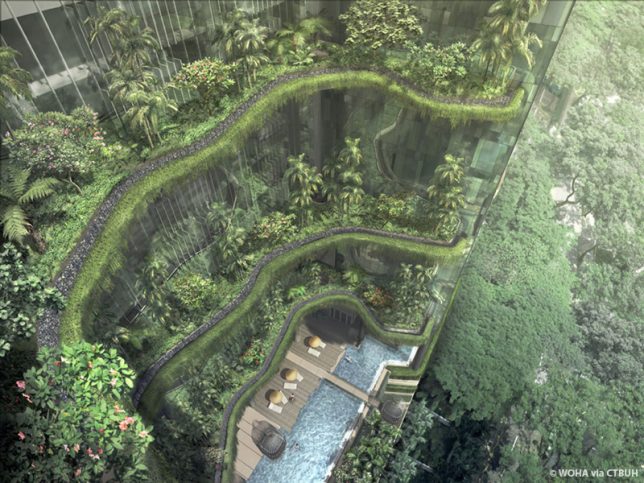
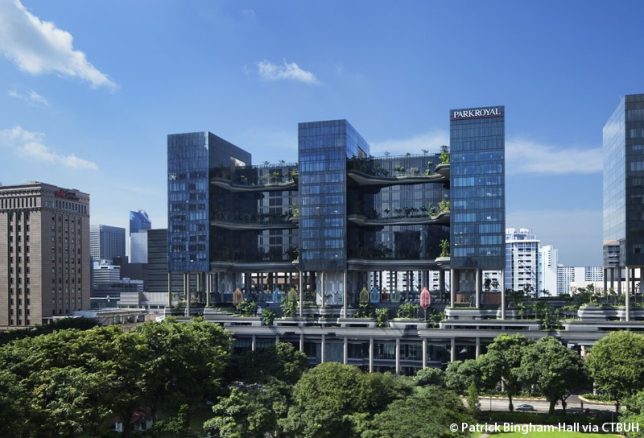
The ‘PARKROYAL on Pickering’ is a pedestrian-oriented elevated neighborhood for Singapore with lush greenery planted on nearly every level and a porous layout encouraging daylight, cross-breezes and free circulation between the various elements of the structure. The 2015 winner of the Urban Habitat Award by the Council on Tall Buildings and Urban Habitat (CTBUH), the Parkroyal was praised for being “intelligently influenced by both its environmental and cultural context.” A contoured podium draws inspiration from terraced landscapes like rice paddies, and a series of columns resembling trees makes the entire building seem to hover above the street, establishing a shaded pedestrian thoroughfare on the ground level. By stretching upward, the building design with all of its integrated greenery adds 215% new green space to the plot area, proving that increasing density in cities doesn’t have to mean losing parks and gardens.

Cities Carved Into Coastal Cliffs

compact cities coastal cliffs 1

compact cities coastal cliffs 2

copact cities coastal cliffs 3

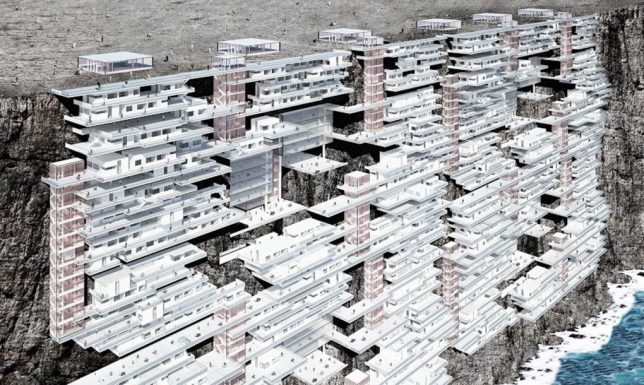
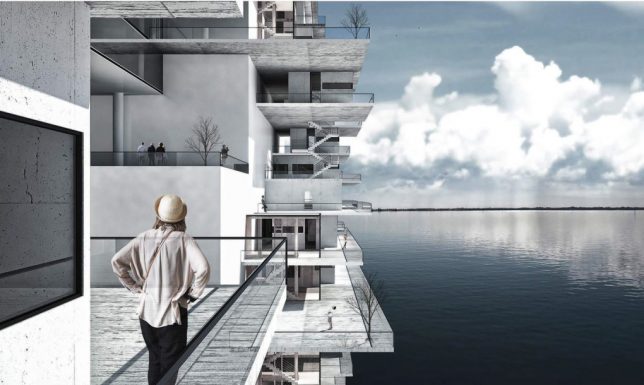
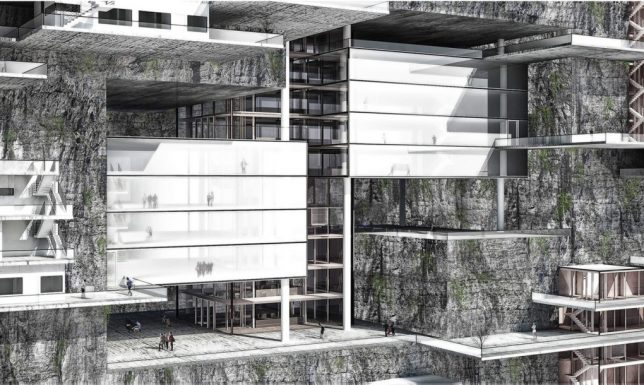
The ‘Living on the Edge’ project imagines building new cities right into coastal cliffs around the world, forming new urban environments. While it would seem like expanding human developments into areas that are currently in their natural state isn’t exactly desirable (not to mention the threat of rising seas), the designers contend that making use of these spaces high above the water level would be better than allowing currently-existing cities to keep sprawling outside their urban boundaries into surrounding forests and agricultural land.

Shop-Top Neighborhood in Beverly Hills

compact cities MAD 1

compact cities MAD 2

compact cities MAD 3

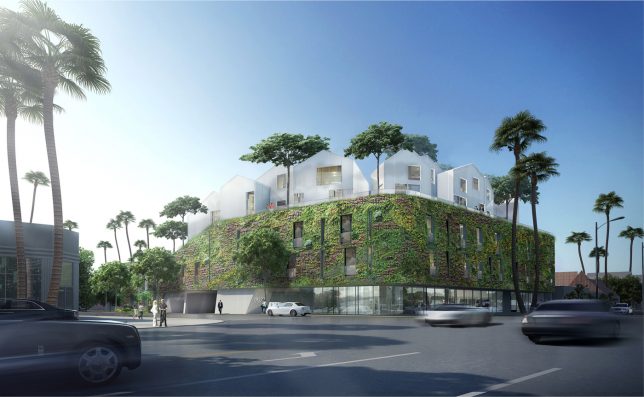
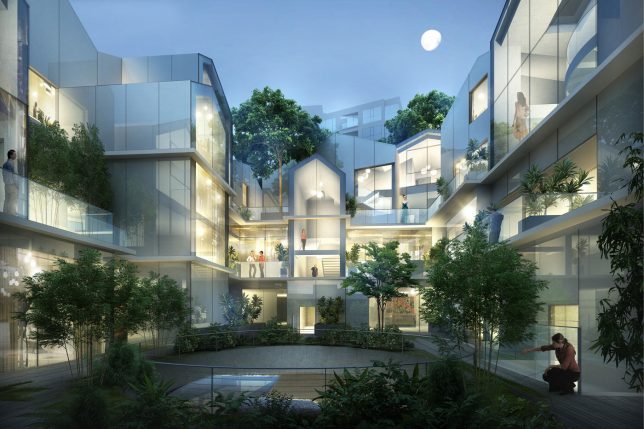
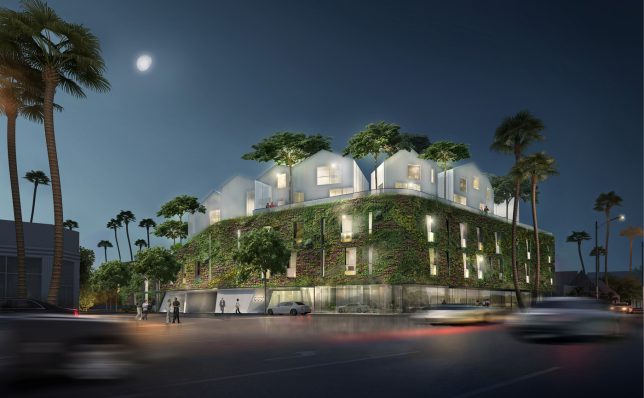
As multiple functions compete for space in crowded cities, the answer is often to build tall structures full of apartments that sacrifice the classic suburban neighborhood feel for density and walkability. But what if we could have both? 8600 Wilshire by MAD Architects places a relatively traditional neighborhood complete with green spaces and trees right on top of a retail block in Beverly Hills. The clustered white glass villas offer 18 residential units in the form of a ‘hillside village,’ with the houses appearing opaque from the street but facing the inner courtyard with transparent facades.

High-Density Urban Development Inspired by Chinese Mountains

compact cities shanshui 1

compact cities shanshui 2

compact cities shanshui 3

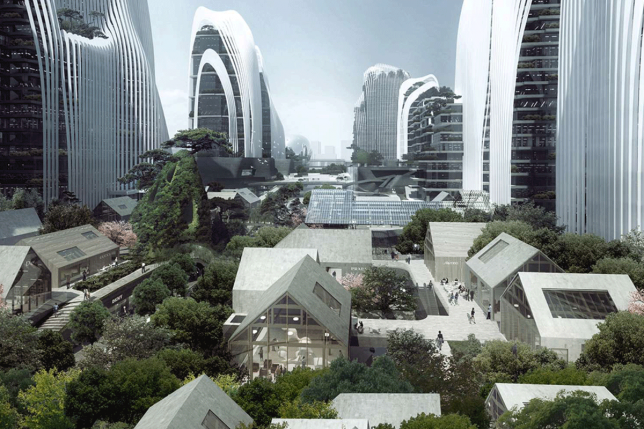
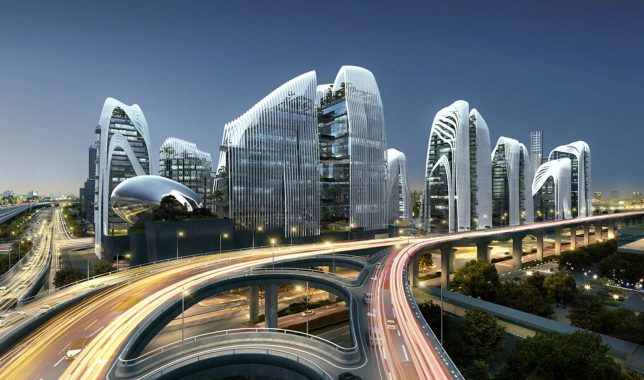
Another MAD project “treats architecture as a landscape,” integrating waterfalls, trees and gardens into a high-density urban development with curvaceous structures mimicking traditional Chinese paintings of mountain ranges. ‘Shan-shui City’ is a concept that can be applied to all sorts of building projects, and MAD aims to make use of it in both all-new construction projects in China and as supplements to existing cities. They will apply it to a mixed-use urban development that’s half a million square meters in size, and new plaza development in Beijing’s central business district.

Next Page – Click Below to Read More:
Urban Human Habitats 13 Compact Concepts For Growing Cities

Share on Facebook


[ By SA Rogers in Architecture & Cities & Urbanism. ]

[ WebUrbanist | Archives | Galleries | Privacy | TOS ]


WebUrbanist

 
Comments Off on Urban Human Habitats: 13 Compact Concepts for Growing Cities

Posted in Creativity


Gritty Cities: Oil Painter Captures Cityscapes at Dusk & Dawn

04 May

[ By WebUrbanist in Art & Drawing & Digital. ]

construction

Artist Jeremy Mann works in early in the day or evening, and it shows in the dark, smudged and ultimately riveting way in which he captures streetscapes of major cities from New York to San Francisco.

urban rooftops

Wiping, smoothing and layering oil paints with rollers, sponges and brushes, his works, like urban environments, are executions of complex and chaotic addition, evocative yet forever incomplete pictures of a place. He often applies broad marks with an ink brayer and wipes sections away with solvents. Getting increasingly experimental, he has even tried applying and moving paints with doorstops, window wipers and liquor bottles.

urban street

“Even that banana which turned out to actually be a good blending tool, painting with lettuce, though, I can tell you might be useless,” said the artist in an interview. “In this process of experimenting with tools, an artist inevitably discovers new techniques as a result of accidents and learning how to recognize those accidents as worthy or not, and then harness them or bury them.”

urban street shot

His paintings are as much about capturing the spirit of a place as its details. Rather than appearing as normal paintings, the pieces start to blend and blur, looking more like photographs shot on a rainy day with all the reflections of puddles, drips, and reflections enhanced. If anything, his recent works also seem to be growing more obscured and abstract over time, perhaps in part as his pallete of artistic tools expands.

oil complex painting

As art writer Christopher Jobson explains: “Mann applies and wipes away areas of the canvas to recreate these hazy environments, adding layers of paint back on top of the slightly smeared works with more detailed strokes. This layered effects makes the works appear like double exposed images, two scenes gently blurring into one. The resulting paintings are dark and atmospheric, urban streets seemingly drenched in rain and mystery.”

oil urban landscape

Mann’s work goes beyond just urban landscapes, and some of his pieces can be seen come June in the John Pence Gallery (you can also see more of his work on Instagram and Facebook).

Share on Facebook


[ By WebUrbanist in Art & Drawing & Digital. ]

[ WebUrbanist | Archives | Galleries | Privacy | TOS ]

WebUrbanist

 
Comments Off on Gritty Cities: Oil Painter Captures Cityscapes at Dusk & Dawn

Posted in Creativity


Secrets Beneath Cities: Sculptures Inspired by Nintendo Games

12 Mar

[ By Steph in Art & Sculpture & Craft. ]

secrets beneath cities 1

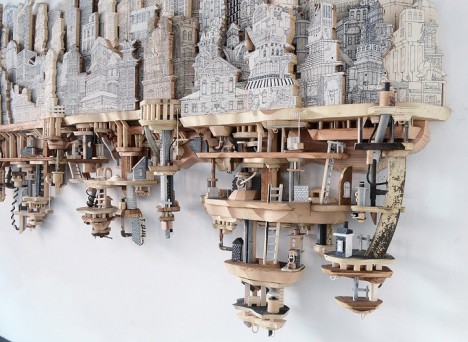
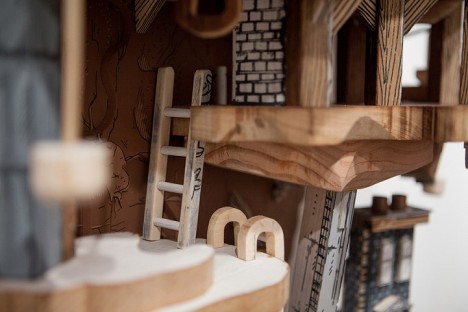
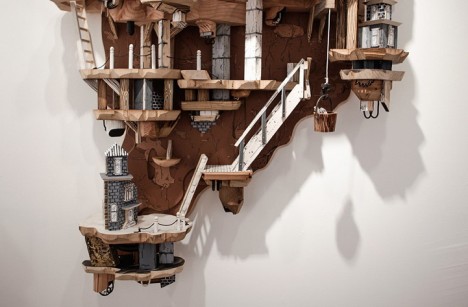
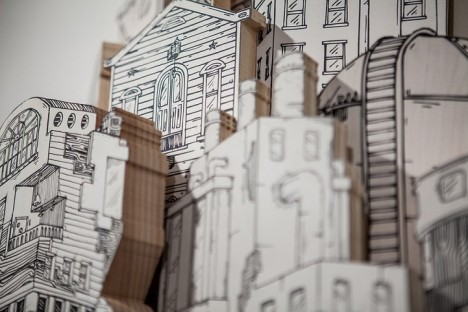
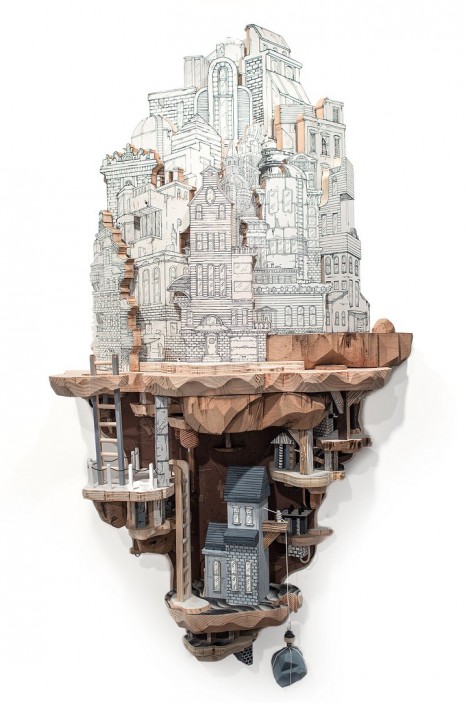
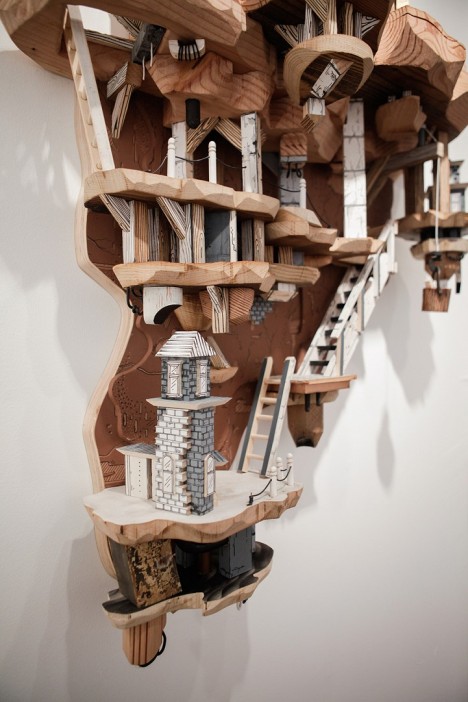
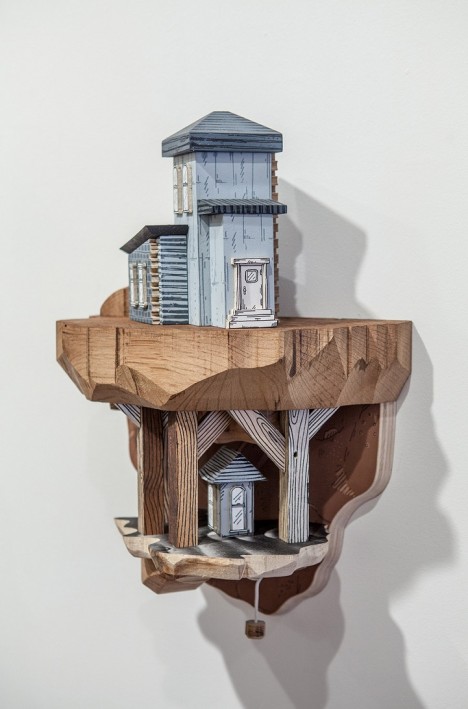
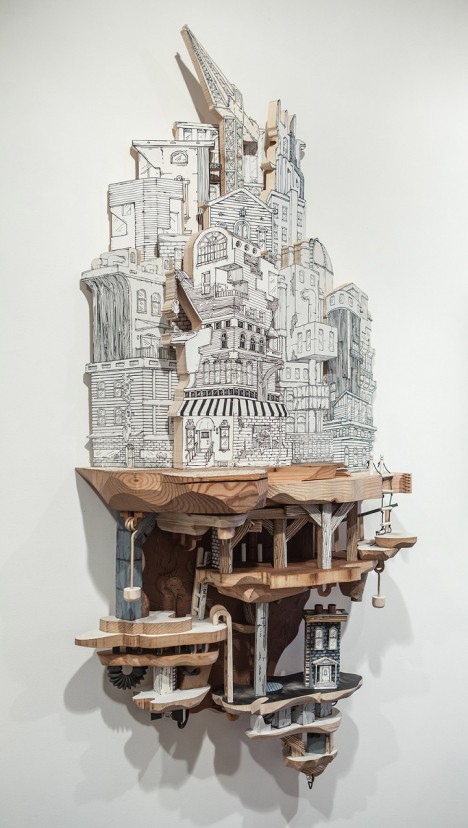
“The underworld is more fun,” says Luke O’Sullivan, the artist who painstakingly crafts stunning cityscape sculptures with intricate subterranean sections inspired by the seemingly never-ending underground worlds in early Nintendo games like Super Mario Bros. Working primarily in wood and salvaged materials, O’Sullivan creates surreal multi-level spaces with platforms , trapdoors, buckets and ladders. It’s easy to imagine Mario jumping from one area to the next inside, popping out of tunnels, racking up mushrooms and avoiding goombas.

secrets beneath cities 15

secrets beneath cities 13

secrets beneath cities 8

secrets beneath cities 9

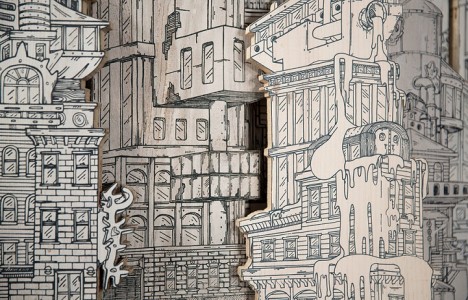
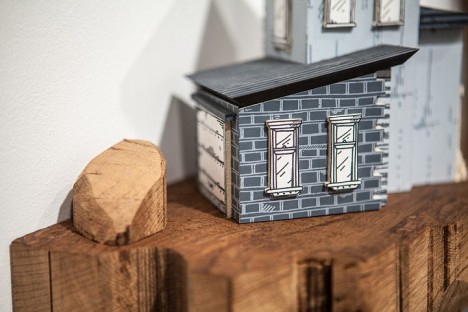
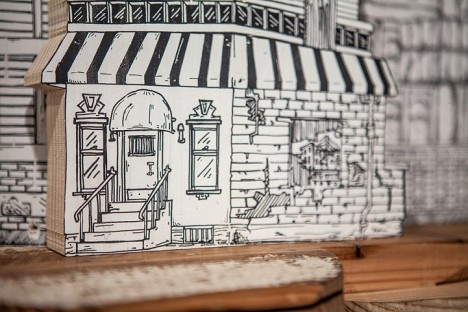
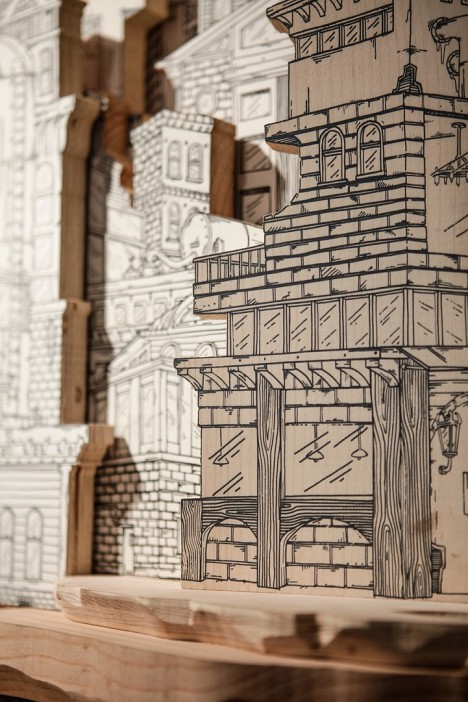
“My work is about the intersection of built environments and subterranean systems,” says O’Sullivan in his artist statement. “Through the application of screen-printed drawings on wood, metal and other flat surfaces, I create architecturally based sculptures. Often inspired by dystopian and science fiction films, I combine recognizable architectural forms and impossible buildings to create diorama-esque works.”

secrets beneath cities 2

secrets beneath cities 3

secrets beneath cities 4

secrets beneath cities 5

secrets beneath cities 6

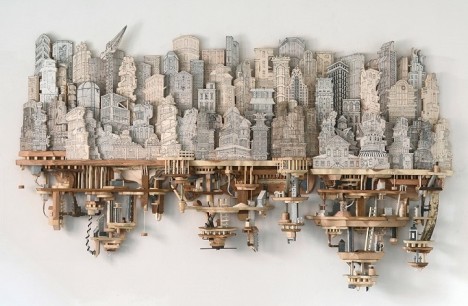
The largest piece he’s completed, “Industry, Entropy,” measures ten feet long and took over three years to complete. The artist describes it as a “milestone piece.” This one is wider than it is tall, but others are like individual islands of towering structures that rise high above the surface and plunge deep below it.

secrets beneath cities 10

secrets beneath cities 11

secrets beneath cities 12

secrets beneath cities 17

Working in a restrained color palette, O’Sullivan keeps the above-ground sections of the cities relatively two-dimensional, hinting that the more detailed and literally well-rounded world beneath it is what’s really important. These subterranean areas seem full of secret functions, each one brimming with mysteries and begging to be explored. If only we could shrink ourselves down to climb around in them ourselves. See more on Instagram.

Share on Facebook


[ By Steph in Art & Sculpture & Craft. ]

[ WebUrbanist | Archives | Galleries | Privacy | TOS ]

WebUrbanist

 
Comments Off on Secrets Beneath Cities: Sculptures Inspired by Nintendo Games

Posted in Creativity


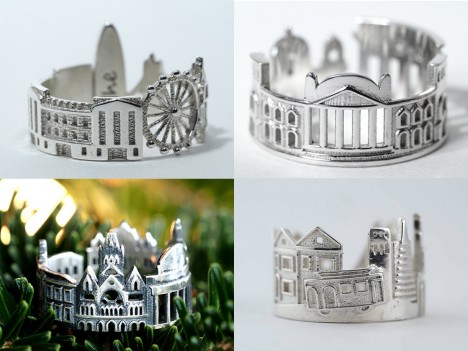
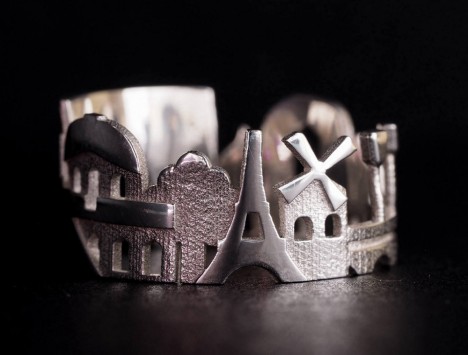
Wearable Skylines: Architectural Rings Wrap Up Global Cities

05 Feb

[ By WebUrbanist in Art & Sculpture & Craft. ]

architecture wrapping cityscapes

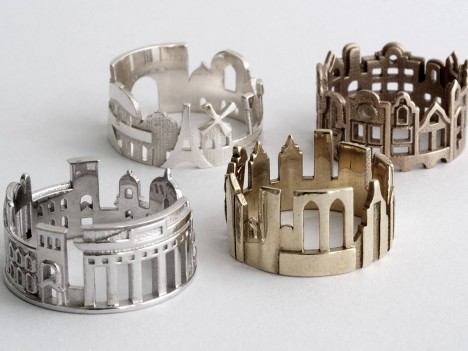
Jewelry for urbanists has taken a new turn with these silver, gold and platinum cityscapes, each featuring iconic buildings, monuments and landmarks from major metropolitan centers around the world.

architectural ring collection

Ola Shekhtman, a goldsmith from North Carolina, has crafted rings around cities including San Francisco, Boston, New York City, Paris, Amsterdam, Stockholm, Berlin and Hong Kong, selling them online via Etsy.

architecture finger jewelry

Growing up in Siberia, Ola wanted to travel the world, eventually visiting London and San Francisco before moving to New York.

architecture silver gold rings

With the help of 3D-modeling software, she created this series to capture the spirit of places she has been and those she yet wishes to visit. Buyers can likewise decide whether to pick places they live, favorite past points of travel or goal-oriented rings for desired future destinations.

Share on Facebook


[ By WebUrbanist in Art & Sculpture & Craft. ]

[ WebUrbanist | Archives | Galleries | Privacy | TOS ]

WebUrbanist

 
Comments Off on Wearable Skylines: Architectural Rings Wrap Up Global Cities

Posted in Creativity


Seascraper: Lush 3D-Printed Self-Sustaining Floating Cities

05 Jan

[ By Steph in Architecture & Cities & Urbanism. ]

seascraper 1

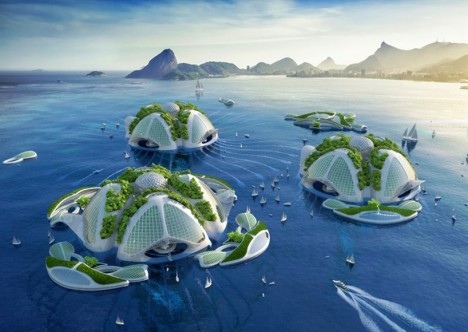
In the not-so-distant future, once we land-dwelling humans have exhausted all of our resources and trashed the climate-change-ravaged continents we live on, a new civilization will inhabit a floating 7th continent made up of self-sustaining 3D-printed cities. Architect Vincent Callebaut has unveiled a new vision encapsulating his hope for humanity’s kinder, gentler post-disaster future in the form of ‘Aequorea,’ an underwater farm recycling ocean pollution into building materials.

seascraper 9

seascraper 6

seascraper 3

Taking inspiration from a variety of sea creatures, the structure self-builds its own exoskeleton via natural calcification like sea shells, and is named for a bioluminescent jellyfish. Shaped like a Klein bottle, each structure is largely made up of petroleum-based waste recovered from the ocean gyres, mixed with a gelling algae and extruded by 3D printers. These ‘sea scrapers’ would recycle all of their own waste, generate energy through ocean turbines, filter sea water into freshwater and grow their own food. Each one houses 20,000 so-called ‘aquanauts.’

seascraper 2

seascraper 4

seascraper 5

In classic Vincent Callebaut fashion, the architect released information about the design by way of a dramatized letter from the future, addressed to ‘People of the Land’ and written by a fictional resident of Aequorea: “My name is Océane. I’m 15 years old. I’m an aquanaut teen. I was born in immersion in 2050 in an underwater farm called ‘Aequorea’ off the coast of Rio de Janeiro… When my grandfather tells me about his terrestrial way of life of the time, it seems totally preposterous today. The People of the Land, those supposedly, self-proclaimed Homo Sapiens, took two centuries to understand that they were living on finite territory with limited natural resources. They were consuming the city like a commodity, rather than a common good that should be nurtured in symbiosis with nature.”

seascraper 7

seascraper 8

“They were suffocating from inhaling urban smogs, the infamous photochemical clouds caused by pollution. Without knowing it, they were ingesting plastic infesting the food chain. And because of overfishing, they had almost emptied the supply of fish in the oceans. In this December month of 2065, it’s still hard for me to believe how carelessly the Pople of the Land mortgaged the fate of future generations.”

seascraper 10

seascraper 11

“…faced with climate change and the rise of water levels, a new civilization emerged: the People of the Seas. Once their lands and islands were underwater and salinize, a large portion of the 250 million climate refugees got involved with interdependent NGOs like the ones my grandparents created. Together, they invented new underwater urbanization processes that were energy self-sufficient, recycled all waste, and fought ocean acidification.”

Share on Facebook


[ By Steph in Architecture & Cities & Urbanism. ]

[ WebUrbanist | Archives | Galleries | Privacy | TOS ]

WebUrbanist

 
Comments Off on Seascraper: Lush 3D-Printed Self-Sustaining Floating Cities

Posted in Creativity


Car-Free Cities: 12 Pedestrian-Only Places from Venice to NYC

22 Dec

[ By Steph in Architecture & Cities & Urbanism. ]

car free 42 3

It’s funny how the idea of a purpose-built, car-free city where everything you need is easily accessible on foot seems so modern, yet it’s actually a return to our roots. To some, banning automobiles from densely populated urban centers is a radical concept, but European cities like Venice and Brussels are giving architects and urban planners fresh inspiration for contemporary equivalents. Here’s a mix of historic car-free places around the world, and pedestrian-only proposals for cities like New York, Los Angeles and Philadelphia.

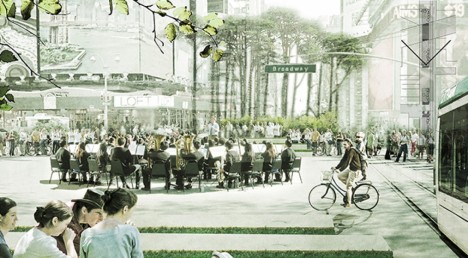
NYC’s Broadway as a Pedestrian-Only Park
car free broadway

car free broadway 2

car free broadway 3

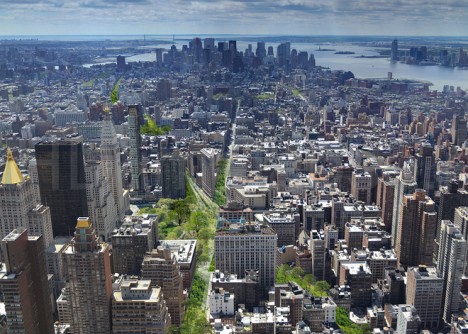
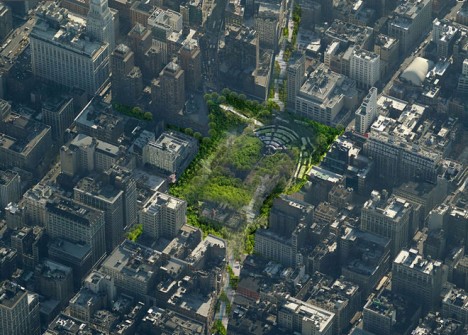
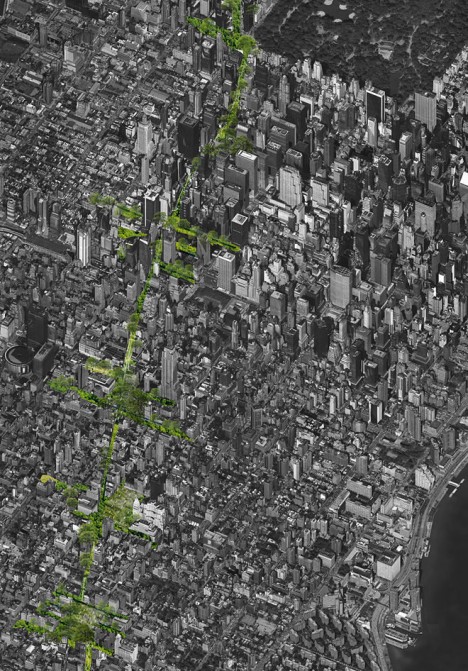
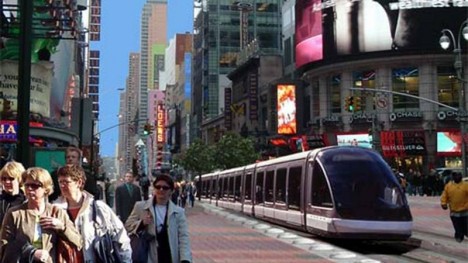
One of New York City’s best-known yet least-busy streets could transform into a pedestrian-only park, eliminating cars and trucks and providing green pathways to and from major public spaces like Times Square and Madison Square Park. The difference between converting a section of the city to a park and creating a car-free section is access to all of the businesses and public services residents need on a daily basis, so depending on how it’s handled, this could be a major, positive change to the way the city functions. The proposal, by Perkins Eastman, would also help Manhattan manage its drainage system, allowing water to be absorbed into the soil.

A Prime Pedestrian-Friendly Example: Venice, Italy
car free venice 1

car free venice 2

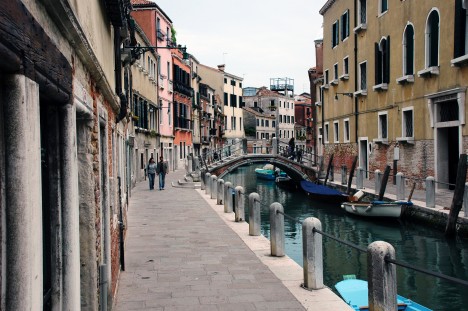
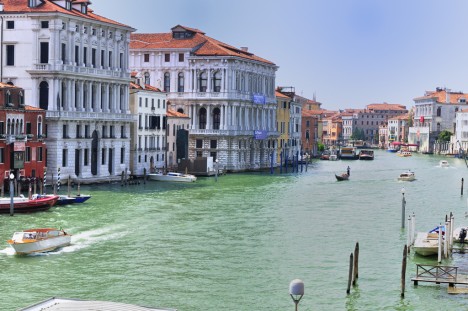
Quite simply the greatest pedestrian city in the world, Venice’s very walkable web of streets forbids almost all motor vehicle traffic, with dense buildings clustered around charming promenades and tranquil canals. Home to 70,000 residents and temporarily hosting many thousands more tourists year-round, Venice offers the same modes of transportation now as it did centuries ago, with its 118 small islands connected by over 400 bridges and accessible by boat.

Great City: China’s Car-Free Dream Oasis
car free china

car free china 2
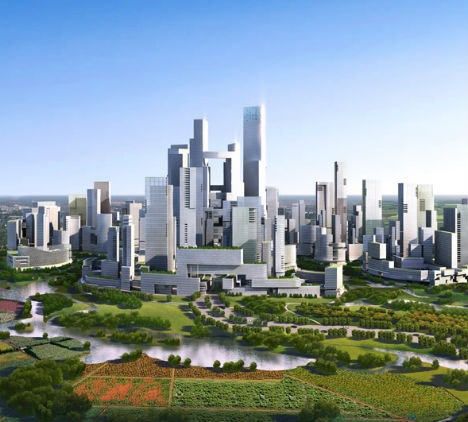
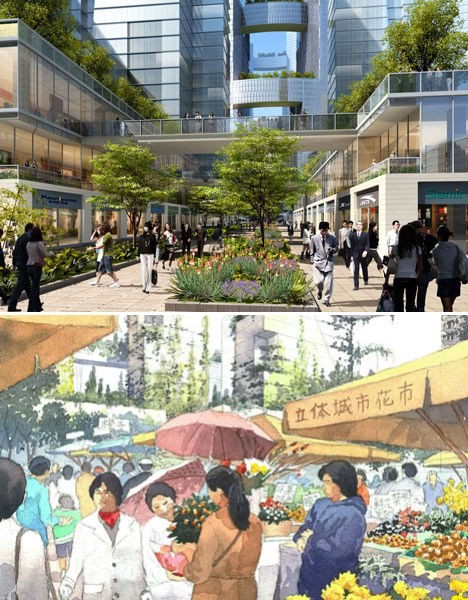
Will China’s ‘Great City’ ever become a reality? There’s been no word on this project for a few years, but perhaps this entirely walkable city of 80,000 planned for a rural area outside Chengdu could still someday be built. The development bans motorized vehicles other than a mass transit system, and is organized around a series of high-rise towers surrounded by green public spaces. Walking from the center of the city to the parks takes just ten minutes.

Vision42: A New 42nd Street
car free 42

car free 42 2

car free 42 3

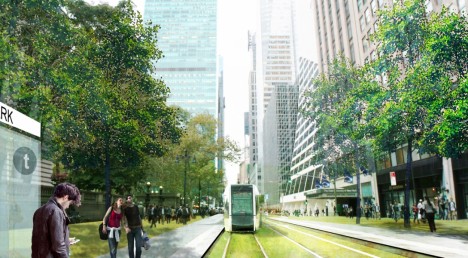
Citizens of Manhattan have come together to propose a reimagined and upgraded version of 42nd street in Midtown, adding a low-floor light rail system that travels through a landscaped pedestrian boulevard. Vision42 “welcomes pedestrians with space, greenery, and amenities, combined with speedy and efficient river-to-river travel, via a modern, at-grade, low-floor light rail line” adoptable within four years. The photos are downright utopian – imagine being able to navigate Manhattan on foot without the sound of honking horns and screaming cabbies.

Next Page – Click Below to Read More:
Car Free Cities 12 Pedestrian Only Places From Venice To Nyc

Share on Facebook


[ By Steph in Architecture & Cities & Urbanism. ]

[ WebUrbanist | Archives | Galleries | Privacy | TOS ]

WebUrbanist

 
Comments Off on Car-Free Cities: 12 Pedestrian-Only Places from Venice to NYC

Posted in Creativity


Sci-Fi Skyscrapers: 14 Futuristic Visions for Vertical Cities

10 Dec

[ By Steph in Architecture & Cities & Urbanism. ]

Screen Shot 2015-12-09 at 9.03.30 AM

As the global population grows and the world’s largest metropolises evolve into mega-cities, skyscrapers stretching higher than ever before could hold our transit hubs, parking garages, parks, museums and even food production systems. Some of these concept designs seem feasible for the near future while others could serve as the settings for science fiction.

Light Park Floating Skyscraper
towers light park

This concept for a floating skyscraper takes a similar tack, reacting to the infrastructure problems caused by rapid, unchecked urbanization by literally having no earthly footprint at all. The Light Park features a helium-filled cap and solar-powered propellers keeping it looming over Beijing like a ghost ship, and it contains parks, sports fields, green houses, restaurants and other public facilities.

Alternative Car Park Tower
tower car park 1

towers car park 2

With all of its spiraling open levels, this parking garage tower envisioned for Hong Kong seems chaotic and unstructured, but it’s actually a well-thought-out automatic system that automatically sweeps cars from the ground floor to parking spots surrounding a central atrium.

Flex Towers for NYC
towers flex 1

towers flex 2

An overflowing, overpopulated New York City could be in dire need of new technology to meet energy needs by the year 2040, as designer Paolo Venturella imagines with his ‘Flex Tower.’ This moving skyscraper tilts and rotates itself to follow the sun to perfectly position its envelope of solar panels at all times of the day.

The Tall Tower by Project Hieroglyph
towers heiroglyph

Sci-fi author Neal Stephenson, known for cyberpunk classics like ‘Snow Crash’ and ‘Quicksilver,’ has teamed up with the Center for Science and Imagination to design an incredible 12.4-mile-tall tower capable of launching rockets into space. 24 times the height of the Burj Khalifa, which is currently the world’s tallest building, Tall Tower would scrape the bottom of the stratosphere.

Twin Taiwan Towers
towers taiwan 1

towers taiwan 2

towers taiwan 3

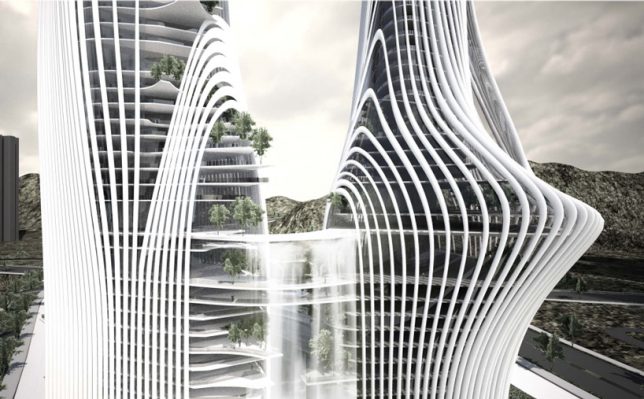
Tangled with lush greenery, these tall, narrow twin towers stretch up to an observatory and sky park looking down over Taiwan. The base is inhabited by a set of museums focusing on the nation’s past, present and future, while the stems contain four different kinds of hanging gardens as well as high-end residences.

Next Page – Click Below to Read More:
Sci Fi Skyscrapers 15 Futuristic Visions For Vertical Cities

Share on Facebook


[ By Steph in Architecture & Cities & Urbanism. ]

[ WebUrbanist | Archives | Galleries | Privacy | TOS ]

WebUrbanist

 
Comments Off on Sci-Fi Skyscrapers: 14 Futuristic Visions for Vertical Cities

Posted in Creativity