RSS
 

Posts Tagged ‘Canon’

Hands-on with the Canon EOS Rebel T7i / EOS 800D

15 Feb

Hands-on with Canon EOS Rebel T7i

The Canon EOS Rebel T7i replaces the T6i (which will continue to exist), making it the top model in the compact Rebel lineup. (The new EOS 77D is essentially the replacement of the Rebel T6s.) Weighing in at under a pound, the T7i is designed to be as small and portable as possible, while still packing in a fairly impressive feature set including a 24MP sensor and a revamped autofocus system, made up of 45 all-cross-type AF points. The AF system should be operable down to -3EV with an F2.8 or faster lens. 

Hands-on with Canon EOS Rebel T7i

The T7i will be sold with a new kit lens: the Canon EF-S 18-55mm F4-5.6 IS STM. This new zoom is 20% smaller than its predecessors and a little slower, but in terms of handling, it suits the equally diminutive camera quite well. According to Canon, image stabilization should produce up to four stops of shake reduction. 

Hands-on with Canon EOS Rebel T7i

The T7i is Canon’s first Rebel class DSLR to feature Dual Pixel autofocus, which means Servo AF in both live view and movie modes. We’ve come to hugely appreciate this feature in Canon’s higher-end DSLRs. The T7i can shoot Full HD video at up to 60p. In stills mode, the T7i can capture images at up to 6 fps, which is pretty good for an entry-level DSLR.

Battery life is rated at 600 shots per charge (CIPA) when using the optical viewfinder and 270 with live view. 

Hands-on with Canon EOS Rebel T7i

On the top, the T7i is a fairly standard Rebel class EOS DSLR. Main controls are clustered on the right of the top-plate, and a dedicated ISO button is always nice to see, at the 2 o-clock position relative to the main exposure mode dial. This dial provides access to the standard ‘PASM’ exposure modes and also seven scene modes and ten creative effect filters.

On the left of the top-plate you can see the tiny LED light which indicates when the camera’s built-in Wi-Fi is active. Speaking of Wi-Fi, the T7i has that plus NFC for easy pairing with Android devices and Bluetooth LE for instant photo transfer to a compatible smartphone. It’s also compatible with Canon’s new BR-E1 Bluetooth remote control.

Hands-on with Canon EOS Rebel T7i

A brand new user interface guides beginner photographers through the process of choosing the right exposure modes and settings to get the shots they want. This looks similar to the ‘Guide’ mode found on lower-end Nikon DSLRs. A more traditional UI is available for more experienced users.

For photographers that want to dive a little deeper, the T7i offers 15 Custom Functions with 44 settings in total.

Hands-on with Canon EOS Rebel T7i

A fully-articulating 3″, 1.04 million-dot touch-sensitive LCD makes video shooting easy. In live view and video modes, focus can be set by touch. For video shooters, a 3.5mm diameter stereo mini jack is available for recording sound via an external microphone.

A new ‘Group Photo’ mode resurrects Canon’s defunct ‘A-Dep’ feature, but uses face recognition. The system identifies the closest and furthest faces in the scene, then sets the aperture and focal length to ensure that this entire region is in focus. Smart. 

Hands-on with Canon EOS Rebel T7i

The T7i will be available in April for $ 750 body-only, $ 900 with the new EF-S 18-55mm F4-5.6 IS STM or $ 1300 with EF-S 18-135mm F3.5-5.6 IS STM.

Articles: Digital Photography Review (dpreview.com)

 
Comments Off on Hands-on with the Canon EOS Rebel T7i / EOS 800D

Posted in Uncategorized


Hands-on with the Canon EOS 77D

15 Feb

Hands-on with the Canon EOS 77D

The new EOS 77D (EOS 9000D in some regions) slots in-between the Rebel T7i (EOS 800D) and the EOS 80D, and incorporates a lot of the same features as the latter at a lower price-point: $ 900 body-only compared to $ 1100. Based around the same 24MP sensor, the 77D also features the same 45-point AF system, but incorporates an updated Digic 7 processor (compared to Digic 6 in the 80D).

Hands-on with the Canon EOS 77D

In terms of size and weight, the 77D is less bulky than the 80D, weighing in at barely a pound (499g) compared to 1.4 pounds (650g) for the higher-end model. Aimed at hobbyists and people upgrading from a Rebel-class (or type) product, the 77D offers greater speed and slightly more involved control layout than the simultaneously-released Rebel T7i.

Hands-on with the Canon EOS 77D

One of the main UI differences between the EOS 77D and the T7i is an LCD screen, on the right of the camera’s top plate. Arguably, the necessity for a display in this place has been mitigated by today’s large rear screens, but it remains a differentiator of ‘enthusiast’ DSLRs, especially. 

Hands-on with the Canon EOS 77D

The lockable rear ‘quick control dial’ is another feature reserved for Canon’s mid-range and high-end DSLRs, and compared to the Rebel class, makes it easier to take full control over exposure.

The 3″, 1.04 million-dot touch-sensitive rear LCD works in concert with a generous suite of physical control points to allow control over every aspect of the 77D’s operation. In live view and movie modes, the screen can also be used to set focus point by touch. Dual Pixel autofocus means that like the EOS 80D, servo AF can be used in these modes, too. 

By default, the 77D uses Canon’s standard UI, but it can be switched to the more beginner-friendly graphic UI also found in the new T7i (shown above) if desired. 

Hands-on with the Canon EOS 77D

Unlike Canon’s Rebel-class DSLRs, live view is enabled via a dedicated button, just to the right of the camera’s viewfinder. This button can also be used to initiate movie recording. The EOS 77D offers a fairly standard HD video feature set, and can record up to 1080/60p. A microphone port is available for recording higher quality audio. 

A built-in interval timer is a handy feature, and again, not something found on Canon’s lower-end Rebel-series models.

Hands-on with the Canon EOS 77D

Another feature not found on the Rebel T7i is an eye sensor (visible here above the viewfinder eyecup) which automatically turns off the rear LCD when the camera is raised to your eye.

Quoted battery life is exactly the same as the new Rebel T7i: 600 shots per charge (CIPA standard) using the optical viewfinder and 270 shots with live view.

Hands-on with the Canon EOS 77D

The 77D features built-in Wi-Fi and Bluetooth, using the same BT ‘LE’ connection as the EOS M5. It also has NFC, for easy pairing with Android devices. Canon has promised a major update to its Camera Connect app, which will offer a more intuitive user interface.

Alongside the 77D and T7i, Canon is releasing a Bluetooth wireless remote. The Wireless Remote Control BR-E1 ($ 50) can trigger exposure from up to 16 feet away. This remote can also control the PZ1 zoom adapter, which was released with the current version of the 18-135mm STM kit zoom.

The Canon EOS 77D will be available in April for $ 900 body-only, $ 1050 with the new EF-S 18-55mm F4-5.6 IS STM or $ 1500 with EF-S 18-135mm F3.5-5.6 IS USM.

Articles: Digital Photography Review (dpreview.com)

 
Comments Off on Hands-on with the Canon EOS 77D

Posted in Uncategorized


dPS Writer’s Favorite Lens – the Canon 100-400mm f/4.5-5.6 L-Series Lens

13 Feb

Last August I bought the Canon 100-400mm f/4.5-5.6L IS II USM L-series lens for myself as a birthday gift. Since then it’s been in almost constant use as I’ve photographed horses and wildlife in Arizona, Florida, Georgia, Illinois, Nevada, and Utah. I’ve made more than 14,000 images with it in the last five months! Read on to learn more about why I love this lens so much.
Favorite Lens Canon 100-400mm

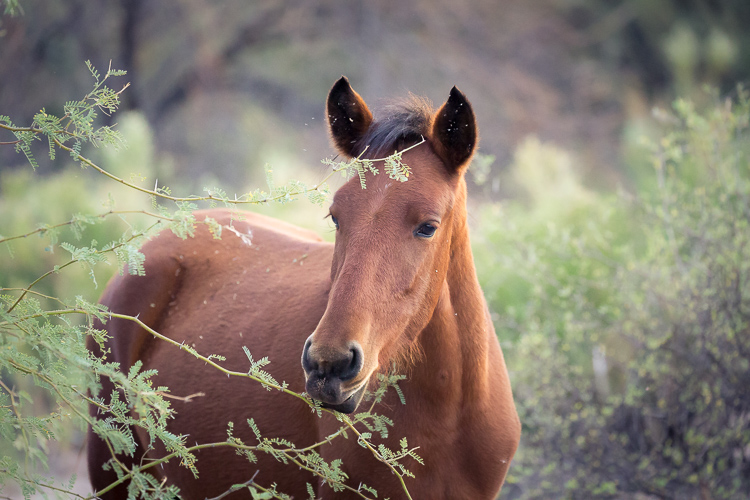
Salt River wild horse yearling with ferns – 5D Mark III, Canon 100-400mm @ 248mm, 1/350th, f/5.6, ISO 8000.

Canon 100-400mm f/4.5-5.6L IS II USM technical specs:
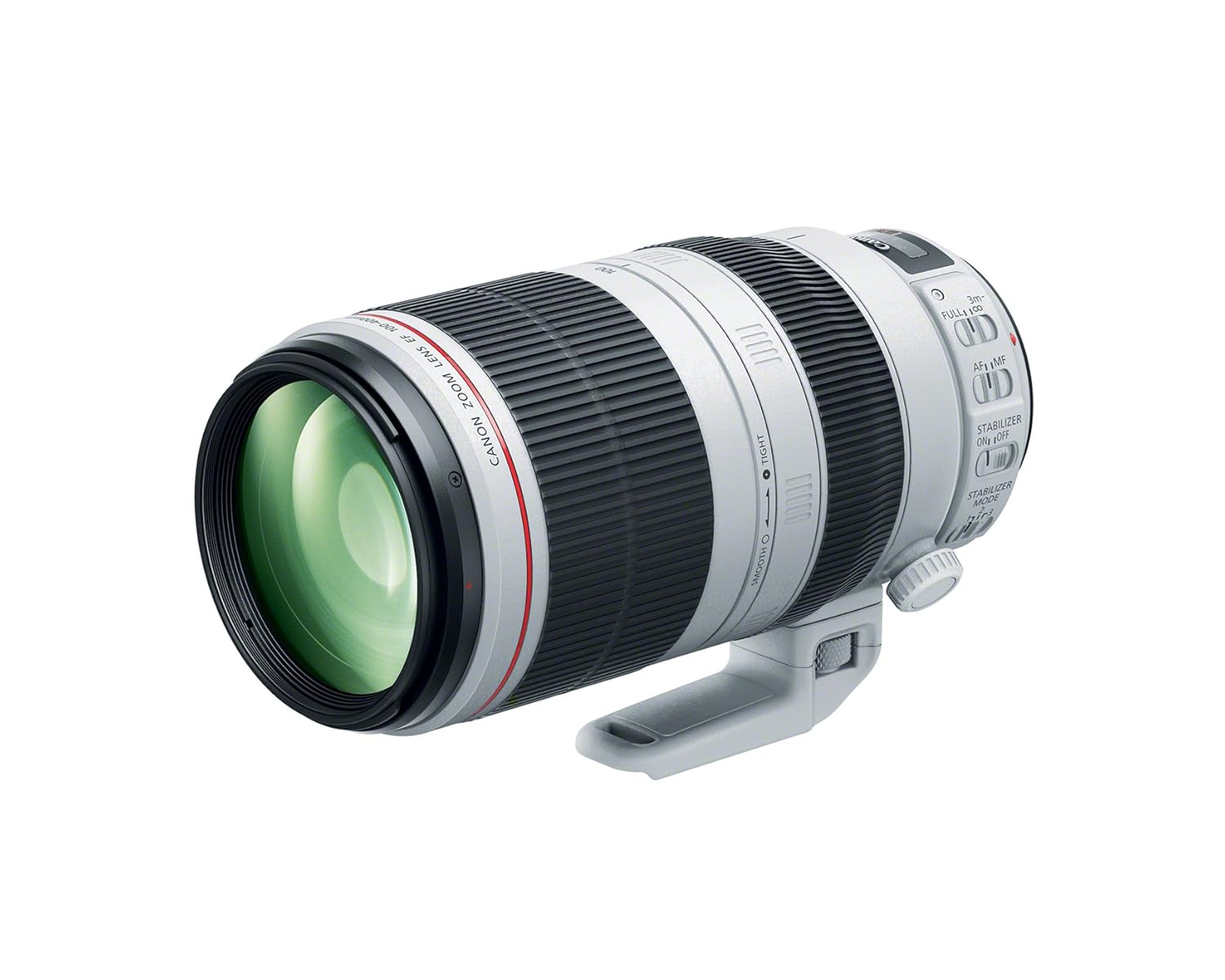
  • Focal Length: 100-400mm
  • Maximum Aperture: f/4.5-5.6, variable
  • Minimum Focusing Distance: 3.2 feet (0.98m)
  • Zoom: Rotation
  • Filter Size: 77mm
  • Weight: 3.62 pounds (1.64kg)
  • Price: $ 2,049.00 USD (at the time of writing this article)

Compared to the Canon 200-400mm

Compared to other lenses of similar focal length the Canon 100-400mm is a bargain, especially since there’s no sacrifice to image quality. Compare it to the Canon flagship telephoto lens, the 200-400mm f/4 which is a whopping $ 10,999. The 100-400mm lens is a moderate $ 2,049. Of course, the 100-400mm is one to two stops slower than the 200-400mm but for an $ 8,800 price reduction, I can handle the loss. I think you probably can too.
Favorite Lens Canon 100-400mm

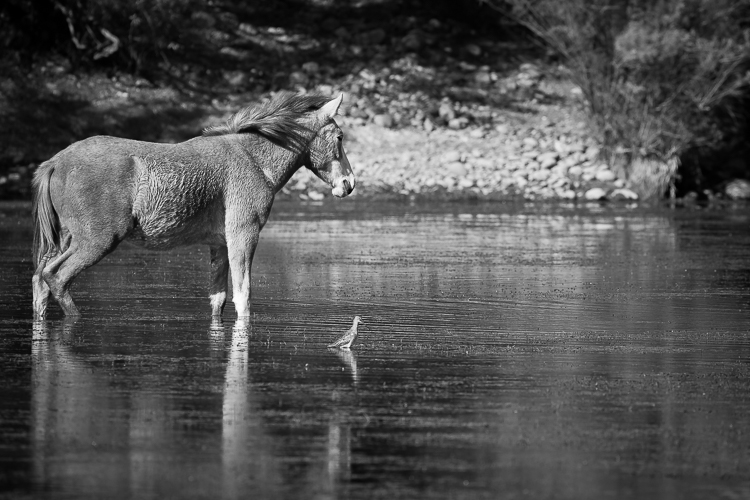
Salt River wild horse with bird, monochrome – Canon 5D Mark III, 100-400mm lens @ 400mm, 1/1000th, f/8, ISO 500.

Those of you who know long lenses also know that the 200-400mm has a built-in 1.4x extender. Sold separately, those are about $ 500 so if you invest in one (and you should) your savings between the two lenses is now $ 8,300. In other words, you still save a small fortune by shooting with the 100-400mm lens instead of the 200-400mm.

Lastly, the 200-400mm weighs in at almost 8 pounds (3.63 kg). By shooting with the 100-400mm, you also save your back, neck, hands, and shoulders from a lot of wear and tear. I personally can’t hand hold an 8-pound lens, which means to use the 200-400mm I’d also have to carry a heavy monopod with a gimbal head. My always-aching upper body thanked me for buying the 100-400mm instead.
Favorite Lens Canon 100-400mm

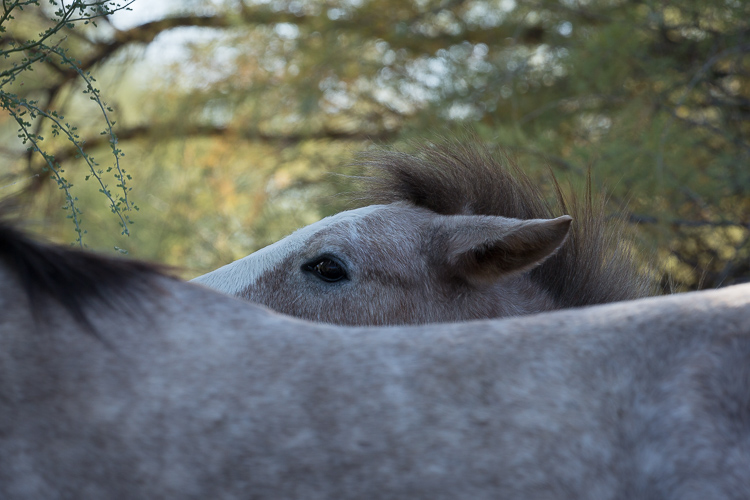
Peeking Salt River wild foal – Canon 5D Mark III, 100-400mm lens @ 340mm, 1/350th, f/8, ISO 500.

Practical size

For a telephoto lens of its focal length, the 100-400mm is a relatively compact, hand-holdable, and practical lens. I can attach it to my Canon 7DII or Canon 5DIII camera bodies and shoot with it all day long without using a monopod or tripod. The combination with either camera weighs in at about 6 pounds (2.72 kg). Note that that’s a whole 2 pounds (907g) less than just the weight alone of the 200-400mm lens. It’s a lot of focal length, in a fairly small package.
Favorite Lens Canon 100-400mm

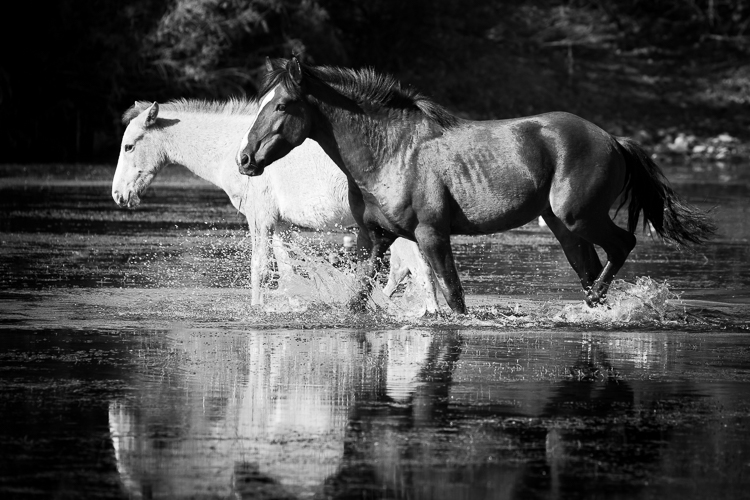
Splashing Salt River wild stallion, monochrome – Canon 5D Mark III, 100-400mm lens @ 278mm, 1/750th, f/6.7, ISO 500.

The 100-400mm lens also easily fits into my Kata backpack (now manufactured by Manfrotto). When I pack for an equine and wildlife photography trip, I cram the 100-400mm, 70-200mm, 24-105mm, extender, both my camera bodies, laptop, hard drives and a slew of accessories into this bag. Yes, it’s a great bag and holds a lot for its size but the point is, the 100-400mm fits in it. Larger lenses like the 200-400mm would not.
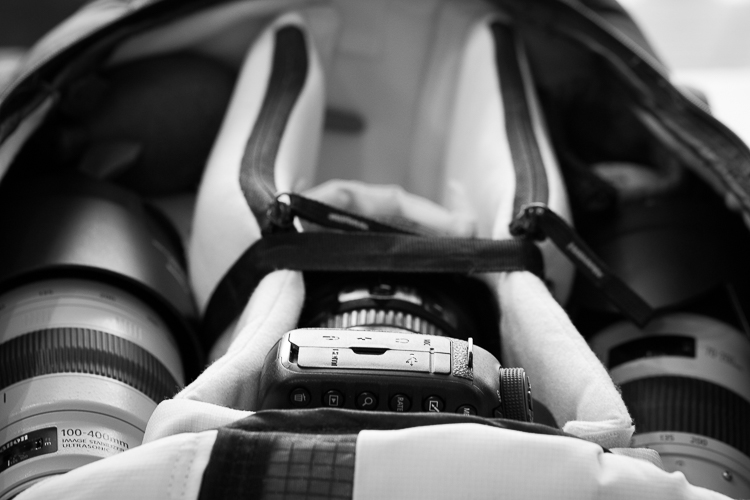
The 100-400mm is on the left; accessories like batteries, cards, and a rocket blower fit in the same divider, tucked in at the top of the bag. 7DII is in the middle with 24-105mm attached, the open divider is for the 5DIII camera body (which I used to take the pic). 70-200mm lens is on the right; 1.4x extender fits in the same divider in its own little case, tucked in at the top of the bag.
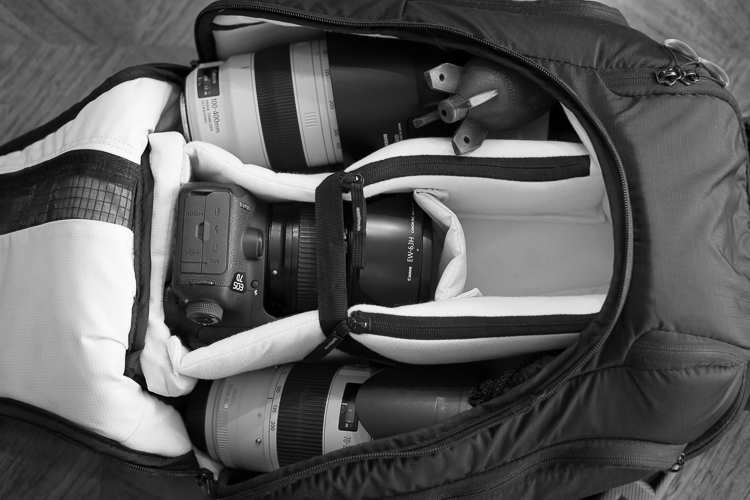
Same arrangement, top view.
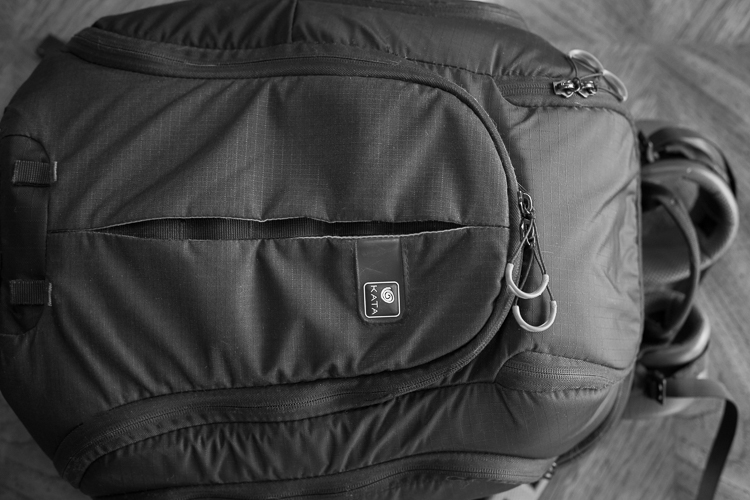
Bag zips!

Features of the Mark II version

If you’ve shot with the original 100-400mm lens, the Mark II has some great new features and I’d recommend upgrading. The original was more of a pumping action when you extended it. The Mark II extends with a twisting action. Twisting to extend is faster and easier to use than the original mechanism. There’s also a ring that you can tighten or loosen, increasing or decreasing the torque on the twisting mechanism. In other words, if you want to rapidly zoom in and out, you loosen the ring to reduce the torque. If you want to keep the lens zoomed at a specific focal length, or locked into its most compact position, you can tighten the ring and increase the torque.

It’s a very intuitive motion. As you use the lens, you’ll find your hand easily moves from the rubber grip used to adjust the focus to the grip used to extend the focal length and to the adjustment ring.
Favorite Lens Canon 100-400mm

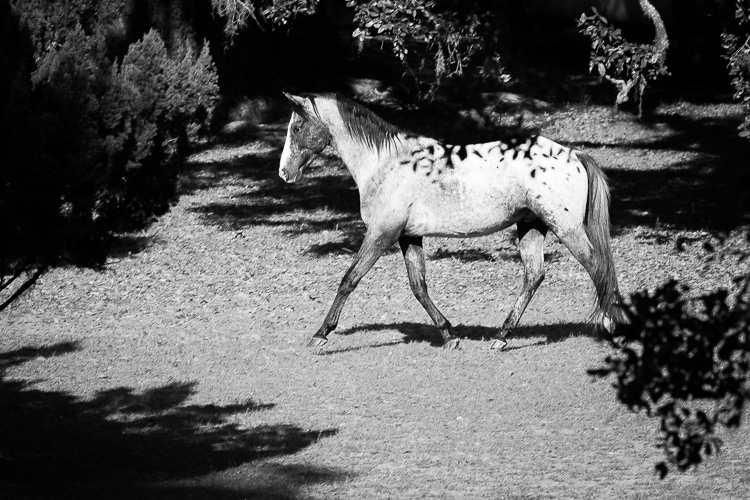
Cumberland Island wild horse in the live oak shadows, monochrome – Canon 5D Mark III, 100-400mm lens @ 400mm, 1/350th, f/9.5, ISO 320.

Built to last

The Canon 100-400mm lens is also built to last. The metal, weather-sealed build is why I always invest in original, L-series Canon lenses. I trip, I fall, I drop things. It’s just part of who I am. When I invest in a lens that I plan to use all the time, it can’t be a fragile little thing that needs to be babied. It has to be able to withstand my clumsiness plus dusty, desert winds, and driving snowstorms.
Favorite Lens Canon 100-400mm

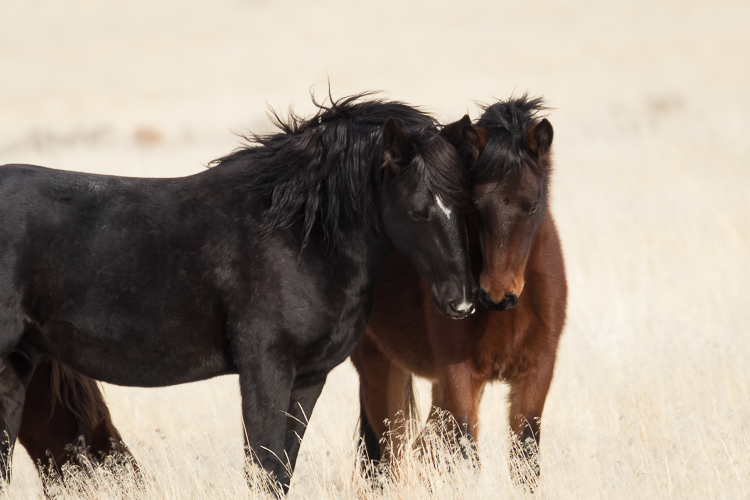
Antelope Valley wild horse snuggles – Canon 7D Mark II, 100-400mm lens with 1.4x III extender @ 560mm, 1/200th, f/8, ISO 200.

Just a few weeks ago I was shooting in very snowy, wet, conditions in Nevada. When I made it back to the car, I was soaked. My camera and lens were also dripping with melting snow. I toweled everything off and had a moment of panic when the inside of the lens fogged just a tiny bit. Happily, 15 minutes later, the slight condensation dissipated. If the lens hadn’t had such excellent weather sealing, that snow storm might have ended my shoot. A lens with a cheaper build may have been out of commission for days.
Favorite Lens Canon 100-400mm

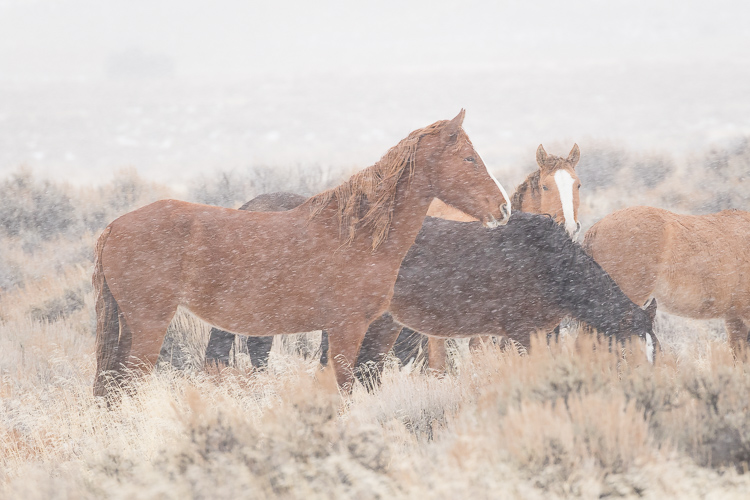
Wild horse blizzard in Antelope Valley – Canon 7D Mark II, 100-400 @ 400mm, 1/250th, f/9, ISO 800.

Superfast autofocus

This lens focuses quickly, especially on my 7DII. I rarely miss a fleeting moment. I’ve actually captured images other people in my group are surprised to see. I credit that both to the fast focusing ability and the maneuverability of the 100-400mm lens.
Favorite Lens Canon 100-400mm

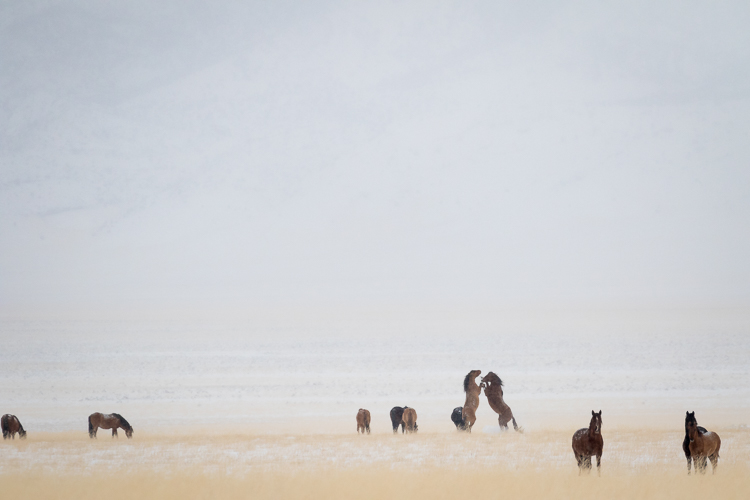
Antelope Valley wild horses snow globe – Canon 7D Mark II, 100-400mm with 1.4x III extender @ 560mm, 1/4000th, f/8, ISO 1000.

On occasion, I do have trouble focusing due to low contrast. Let’s face it, that happens to all of us. With this lens, I pull back a bit to 200mm or 300mm, grab the manual focus ring and dial in until I start to feel like I have an edge. Once I do, I use back-button focus to lock in sharpness. Once I’m focused, I zoom back to 400mm. The focus holds through this transition and I grab the shot. It’s quick and magical. None of the other long lenses I’ve used have quite the same intuitive feel for focusing.
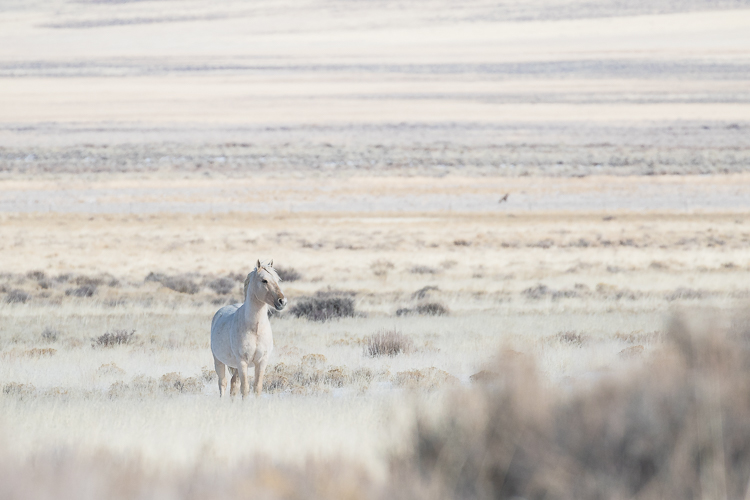
Favorite Lens Canon 100-400mm

Antelope Valley winter white wild stallion – Canon 7D Mark II, 100-400 @ 400mm, 1/4000th, f/5.6, ISO 500.

Flexibility

One of my favorite aspects of this lens is its flexibility. I use all focal lengths and apertures of this lens without hesitation. For a standard 100-400mm, I attach it to my full frame 5DIII. For a little extra reach, I attach it to my crop sensor 7DII.

On a crop sensor, the effective focal length of the 100-400mm increases to 160-640mm (1.6x). If I need even more reach, I add the Canon 1.4x Extender and the effective focal length on my 7DII increases to 224-896mm. The extender also increases the total weight by about 8 ounces, but I don’t even notice it.

Note: For Canon crop sensor cameras, multiply the focal length by the 1.6x crop factor to determine the effective focal length. Read more here: Crop Factor Explained.

With the Canon 1.4x Extender
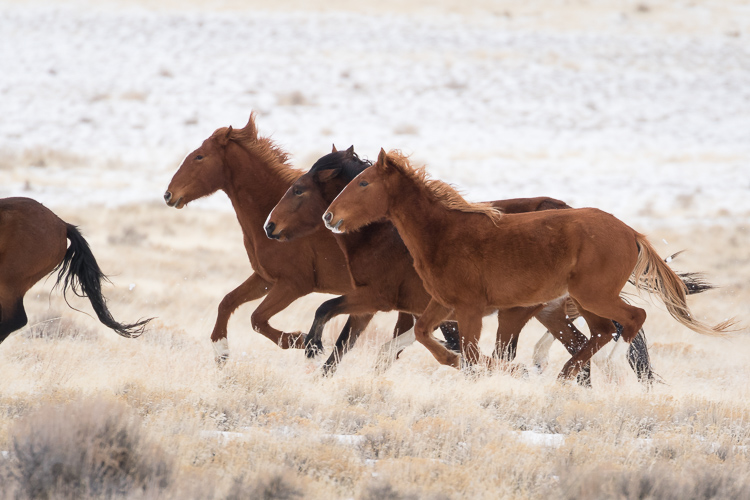
Favorite Lens Canon 100-400mm

Antelope Valley band of wild horses running in the snow – Canon 7D Mark II, 100-400mm with 1.4x III extender @ 560mm, 1/1000th, f/8, ISO 1000.

I love using an extender with this lens. At 400mm, the minimum aperture is f/8, which is my preferred wildlife setting anyway. Autofocus is still blazing fast, although it is limited to the center focus point when the extender is attached. I haven’t seen a significant loss of quality or sharpness with the extender. Since I can still handhold this combination, even if there was a slight loss, I’d be more than okay with it. A slight loss of sharpness is always preferred (in my book at least) to missing a shot because you were fiddling with your tripod or just didn’t have the reach you needed.

Note: Read more about extenders here: The Pros and Cons of Using Teleconverters (Extenders) on your DSLR.

Stability
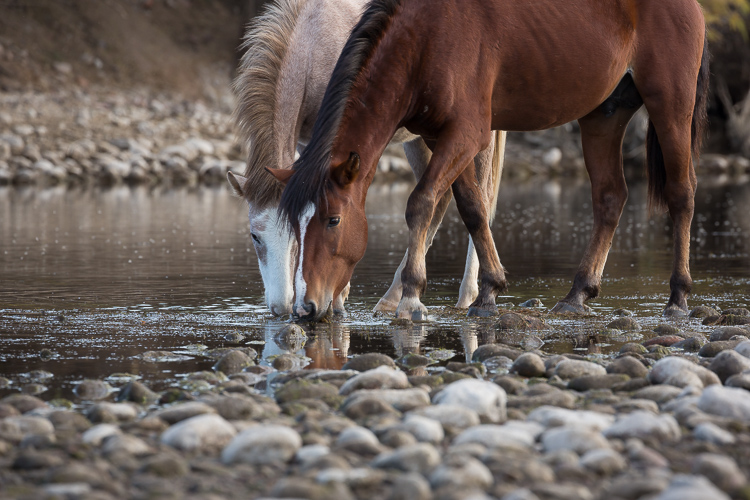
Favorite Lens Canon 100-400mm

Salt River stallion and son eating eel grass in the river – Canon 5D Mark III, 100-400mm @ 400mm, f/9.5, 1/125th, ISO 320.

My job as a photographer is to put myself in the right place at the right time, to find the beauty once I’ve put myself in that place, and to understand the light and compose my image. My gear gives me the technical boost I need to pull all that off.

I’m going to be honest here, I’ve rarely shot with third-party lenses. I can’t compare Canon lens IS (Image Stabilization) to other brands. But, what I can tell you is that when I find myself shooting at 400mm with a 1.4 extender at a relatively slow shutter speed of 1/250th, it’s not my steady hands ensuring that my shot is in focus – it’s Canon’s. Their IS in this lens is like a super power. It is exactly the technical boost I need to make the images I want to make.

Even works for panoramas
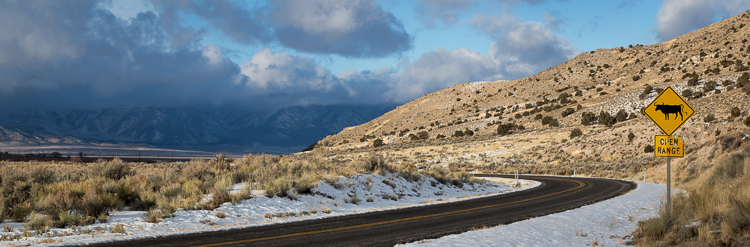
Favorite Lens Canon 100-400mm

Ely County Nevada Open Range, panorama – Canon 7D Mark II, 100-400mm @ 100, 1/320th, f/11, ISO 250.

I’ve even used this lens to create panoramas – handheld, no less. If I’m using the 100-400mm and I see a gorgeous vista, I set the lens to 100mm. I create a very secure hold by pressing together my elbows and locking them into my chest. Then I slowly click my way through the scene. Lightroom or Photoshop both do an amazing job of stitching and correcting perspective issues. If you’re a landscape photographer you might be horrified at this method but if you’re a wildlife photographer, it’s truly another practical tool in your photographic arsenal.

Image quality
Favorite Lens Canon 100-400mm

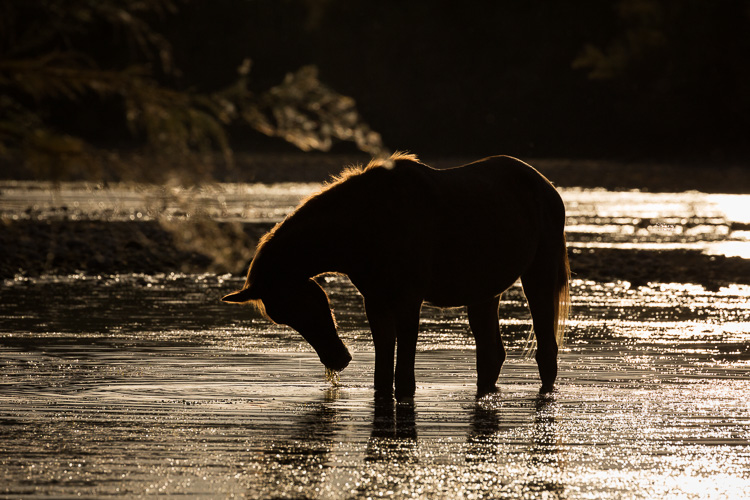
Salt River wild mare silhouette at sunset – Canon 5D Mark III, 100-400mm lens @ 400mm, 1/8000th, f/11, ISO 600.

With all this technical talk, you might be wondering why I haven’t said all that much about image quality. I’ve included over a dozen images here and I hope that speaks for itself. Details render crisply. I haven’t discovered any artifacts or unusual aberration in any of the 14,000+ images I’ve shot with this lens.

In wildlife images, I prefer a creamy blurred background rather than a bubbly bokeh background since I find that big, bokeh circles detract from my subject. This lens renders the sort of backgrounds that I prefer.
Favorite Lens Canon 100-400mm

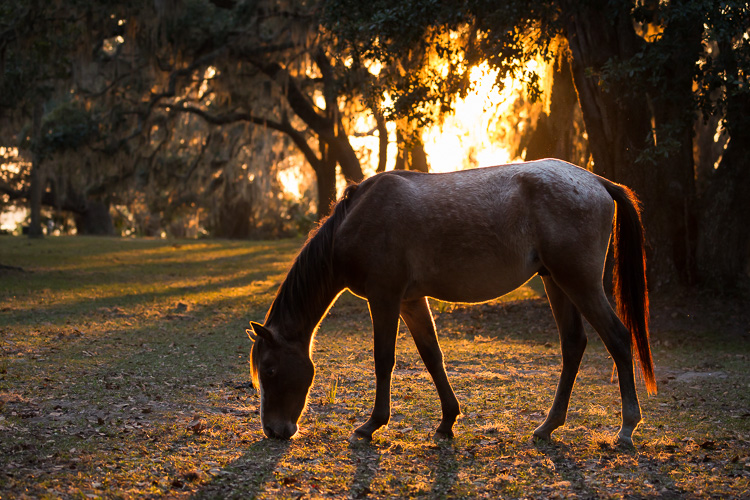
Backlit Cumberland Island wild horse at sunset – Canon 5D Mark III, 100-400mm lens @ 100mm, 1/500th, f/4.5, ISO 2000.

Shooting into the sun for a backlit image produces just the right amount of lens flair. Shooting with the sun at my back or off to my side produces just the right amount of contrast. With bright overcast skies, the lens still shapes the light beautifully.

The Canon 100-400mm lens renders color in a very neutral way. While it’s fun that some lenses render brighter or more vivid colors, I prefer to have a more neutral starting point when I begin to edit my RAW images.

Over to you

In all, this is the absolute best birthday gift I’ve ever given myself. I even wish I’d bought it before I upgraded my 70-200mm.

What about you? Have you used either the original or Mark II version of the Canon 100-400mm lens? Or do you have another favorite telephoto zoom lens? Share your feedback on your favorite lens with the dPS community in the comments below.

Shop for the Canon 100-400mm lens here:
  • Amazon.com
  • B&H photo.com
Favorite Lens Canon 100-400mm

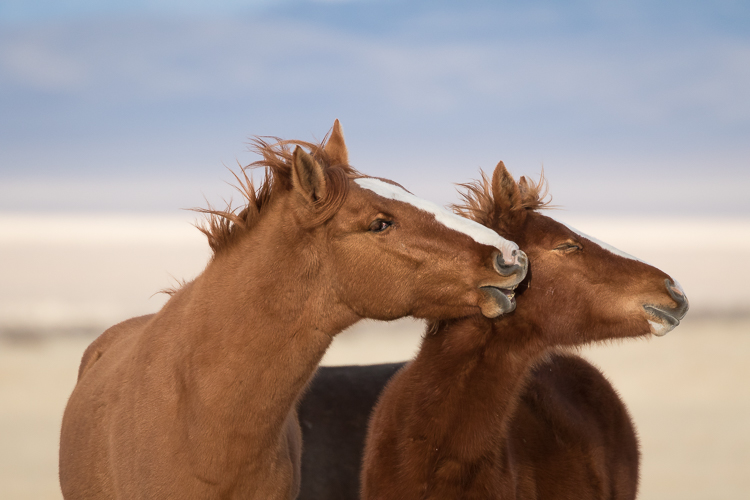
Mom!! – Canon 7D Mark II, 100-400mm lens with 1.4x III extender @ 560mm, 1/1250th, f/8 ISO 800.

googletag.cmd.push(function() {
tablet_slots.push( googletag.defineSlot( “/1005424/_dPSv4_tab-all-article-bottom_(300×250)”, [300, 250], “pb-ad-78623” ).addService( googletag.pubads() ) ); } );

googletag.cmd.push(function() {
mobile_slots.push( googletag.defineSlot( “/1005424/_dPSv4_mob-all-article-bottom_(300×250)”, [300, 250], “pb-ad-78158” ).addService( googletag.pubads() ) ); } );

The post dPS Writer’s Favorite Lens – the Canon 100-400mm f/4.5-5.6 L-Series Lens by Lara Joy Brynildssen appeared first on Digital Photography School.


Digital Photography School

 
Comments Off on dPS Writer’s Favorite Lens – the Canon 100-400mm f/4.5-5.6 L-Series Lens

Posted in Photography


Canon EF 70-300mm F4-5.6 IS II USM sample gallery update

10 Feb

The Canon EF 70-300mm F4-5.6 IS II USM is a full-frame lens, but this budget-friendly, stabilized tele-zoom will likely appeal to owners of APS-C bodies too. So we’ve updated our initial sample gallery, shot on the Canon EOS 5D Mark IV, with some more images captured with the EOS 80D. Check out the full gallery by clicking the link below; to see everything that’s new in a glance, hit the grid view and use the options on the right to filter the gallery by camera body.

See our updated Canon EF 70-300mm
F4-5.6 IS II USM sample gallery

Articles: Digital Photography Review (dpreview.com)

 
Comments Off on Canon EF 70-300mm F4-5.6 IS II USM sample gallery update

Posted in Uncategorized


Adorama introduces Canon RT radio controlled TTL studio head and hotshoe flash

02 Feb

$ (document).ready(function() { SampleGalleryV2({“containerId”:”embeddedSampleGallery_9533390039″,”galleryId”:”9533390039″,”isEmbeddedWidget”:true,”standalone”:false,”selectedImageIndex”:0,”startInCommentsView”:false,”isMobile”:false}) });

Camera store Adorama has announced that it is to introduce a new line of monoblock studio heads that are designed to work directly with Canon’s RT radio TTL flash system. The company claims that the Orlit Rovelight RT 610 TTL Wireless Monolight, with its RT system built-in, is the first of its kind. The head can also be used with all Canon and Nikon DSLRs using the Orlit TR-611C and TR-612N TTL Transceivers that have been launched alongside the head. These transceivers allow TTL control of the head even with Nikon cameras.

The Orilt Rovelight RT 610 TTL is a 600Ws head with a guide number of 201ft/61m @ ISO 100 that features modes for Canon’s ETTL and Nikon’s iTTL metering systems. It is powered by a rechargeable 6000mAh lithium ion battery pack that Adorama claims is good for 450 full-power flashes per charge. The longest recycle time will be 2.5 seconds at full power, but the head offers output settings down to 1/256th in 1/3EV steps across the nine-stop range. There is said to be a variance of only 150 K across the output range from the standard color temperature of 5500 K, and a high speed sync mode allows for shutter speeds of up to 1/8000sec. The modeling bulb is a 20W LED that has a 3200 K tungsten color balance and three brightness levels.

The head accepts Bowens S-type modifiers and has an integrated umbrella shaft slot. The flash control system can be divided into five groups, while 16 channels are provided to avoid interference with other systems in the vicinity.

The new studio head can also be controlled by or work alongside the company’s Orlit RT-600C TTL Speedlite. This new flash unit can sit in the camera’s hotshoe to act as a master or it can join a group of other RT flashes as a slave. The unit has a guide number of 160ft/48m @ ISO 100.

The new studio head, flash unit and transceivers will ship later this month but can be ordered now on the Adorama website.

  • Orlit Rovelight RT 610 TTL Wireless Monolight – $ 699.95
  • Orlit RT-600C TTL Speedlite – $ 169.95
  • Orlit TR-611C Transceiver – $ 69.95
  • TR-612N TTL Transceiver – $ 69.95

Press release

Adorama Announces Orlit, and “The First Canon RT Wireless Compatible Monolight”

Adorama, one of the world’s largest photography, video, audio, imaging and electronics retailers, has announced Orlit, the brand new line of TTL flash solutions for photographers. Available exclusively at Adorama, the line consists of the Orlit Rovelight RT 610 TTL Wireless Monolight, the first monolight to ship with the Canon RT radio system built in; the Orlit RT-600C TTL Speedlight for Canon, ideal for Canon users who want to use the unique Canon 600EX-RT wireless radio system; and the Orlit TR-611C and TR-612N TTL Transceivers, which enable shooters to achieve a more extensive and powerful lighting solution with wireless control for Orlit Canon and Nikon systems.

Optimized for exceptional, true TTL performance, the all-new Orlit flash lighting line is now available for pre-order, exclusively from Adorama, and will begin shipping in February 2017. The Orlit product line-up includes:

Orlit Rovelight RT 610 TTL Wireless Monolight: The only 600ws wireless TTL monolight that breaks the Canon RT radio barrier and also works with Nikon wireless systems. The Orlit RT610 TTL brings additional professional radio-based and infrared remote flash options to loyal Canon RT users, who can now use the Canon 600EX-RT as a master and the Orlit RT610 as the slave.

With an outstanding Guide Number of 201 (ft. at ISO 100), and manual levels from full to 1/256 power with fine 0.1 stop graduations, this monolight from Orlit boasts a bright 20 watt LED modeling lamp with a tungsten 3200K color temperature. The HSS Mode allows sync shutter speeds up to 1/8000, while Freeze Mode achieves an additional reach of 1/19000 to capture split second moments.

The Orlit Rovelight RT 610 user interface features a large, full-color LCD display, simplified menu system, and a generous power and function control dial. Future technologies and camera sync are firmware updated through the USB port.

The Orlit Rovelight RT 610 TTL Wireless Monolight is now available for preorder and retails for $ 699.95 USD.

Orlit RT-600C TTL Speedlite for Canon:

This versatile Canon RT/ETTL wireless radio-compatible speedlight, which transmits both the Canon RT radio and optical systems, can act as a master to up to five independent groups or slave unit for remote power control. A Guide Number of 160 (ft. @ ISO 100, at 200mm zoom) in combination with the compact and lightweight design of the flash makes the Orlit Speedlite a top choice for professional Canon shooters.

Using the Orlit Speedlite for Canon is a breeze, with a flash head that rotates 180 degrees in any direction and tilts over 90 degrees for any type of bounce or modifier use. The head zooms automatically or manually from 20-200mm, ensuring the necessary coverage without light spill. The Orlit RT-600C also has a holder to place color balancing gels before the flash head. Like the Orlit Rovelight, the Orlit RT 600C user interface features a clear LCD display with a simplified but extensive menu system, with future technologies incorporated via firmware updates.

The Orlit RT-600C TTL Speedlite for Canon is now available for preorder and retails for $ 169.95 USD.

Orlit TR-611C TTL Transceiver & Orlit TR-612N TTL Transceivers:

Designed for Canon and Nikon cameras, respectively, adding 980ft/300m of remote lighting freedom. Using an Orlit transceiver on the camera’s hot shoe, Canon and Nikon photographers can easily adjust the exposure for the Orlit Rovelight RT610 TTL Monolight, while the Canon TR-611C adds control to the Orlit RT600C Speedlite.

This TTL wireless flash transmitter from Orlit can trigger one or more receivers for studio flash and speedlights. Featuring direct group access, multi-group triggering, stable signal transmission, and sensitive reaction, photographers can achieve wide flexibility and control over their strobist setups. And with the Orlit TTL Transceivers, high speed synchronization is available for most Orlit camera flashes, with a max speed up to 1/8000s.

The Orlit TR-611C & TR-612N TTL Transceivers are now available for preorder and will each retail for $ 69.95 USD.

Designed with Users in Mind
The Orlit TR-611C and TR-612N Transceivers feature an efficiently designed user interface with a clear LCD display, simplified but extensive menu system, and are graced by soft menu touch control buttons for all options. Future technologies are firmware updated through the USB port.

The Future of TTL Flash is Now
Coming soon, the Orlit smartphone app seamlessly integrates the latest in wireless command into studio life. A rich array of screens give touch control to the myriad of Orlit features without going near the set, from the convenience of a smartphone.

Articles: Digital Photography Review (dpreview.com)

 
Comments Off on Adorama introduces Canon RT radio controlled TTL studio head and hotshoe flash

Posted in Uncategorized


Canon releases downloadable EOS-1D X Mark II AF Setting Guidebook

01 Feb

Canon has released a downloadable 100MB PDF guide book for the EOS-1D X Mark II camera’s AF system. According to the company, this guide ‘will clarify many of the details about’ this AF system, including menu settings, the effect of various AF Cases, and more.

Canon goes on to point out that most of the information found in this guide is also applicable to the Canon EOS 5D Mark IV camera’s 61-point AF system, which features the same AF sensor as the EOS-1D X Mark II. Canon says of the guide ‘We’re confident having access to this file, on your computer or in a mobile device will answer many of the questions which may arise as you use either of these cameras.’

The PDF can be downloaded directly here.

Via: CanonRumors

Articles: Digital Photography Review (dpreview.com)

 
Comments Off on Canon releases downloadable EOS-1D X Mark II AF Setting Guidebook

Posted in Uncategorized


Croatia in 4K: travel photographer Max Lowe on location with Canon EOS 5D IV

24 Jan

The Canon EOS 5D Mark IV is Canon’s latest full-frame DSLR, aimed at enthusiast and professional photographers. As well as 30MP stills, the 5D IV can also capture HD and 4K video, at up to 60p. 

Late last year, we joined travel photographer Max Lowe on location in Croatia. Over the course of several days, Max documented the people and beautiful scenery of the Dalmatian Coast, while we filmed the experience entirely using the EOS 5D Mark IV.

Read our in-depth review of the Canon EOS 5D Mark IV


This is sponsored content, created in partnership with Canon. What does this mean?

Articles: Digital Photography Review (dpreview.com)

 
Comments Off on Croatia in 4K: travel photographer Max Lowe on location with Canon EOS 5D IV

Posted in Uncategorized


Got focal range? Canon 24-105mm F4L II Sample Gallery

17 Jan

We took the updated Canon 24-105mm F4L II out into the elements to put the lens to the test. With a wide focal range, this lens has the potential to be the ultimate walk-around workhorse for many photographers. With that said, the real question is does the update warrant an upgrade for current owners of the previous version? Check out our sample gallery to see for yourself.

See our Canon 24-105mm F4L II
sample gallery

Articles: Digital Photography Review (dpreview.com)

 
Comments Off on Got focal range? Canon 24-105mm F4L II Sample Gallery

Posted in Uncategorized


Canon granted third most US patents in 2016

17 Jan

Apple, Google and Intel are considered some of the world’s most innovative companies, but you might be surprised to learn that in 2016 camera maker Canon was granted more United States patents than all those technology giants. With a total of 3,665 patents, Canon placed itself third on the annual IFI Claims ranking, just behind IBM and Samsung. Google, Intel, LG, and Microsoft occupied positions five through eight and, with just over 2,000 patents Apple is 11th. Ricoh ranked 21st and Fujifilm 48th.

‘The first critical element towards developing remarkable solutions that move the needle for consumers and business industries alike is research and development,” said Seymour Liebman, executive vice president, chief administrative officer and general counsel, Canon U.S.A. Inc. “This strong showing of patents granted year after year allow us to build intelligent products and solutions for the future, turning great ideas into reality.’

2016 is also the the 31st consecutive year that Canon is among the top five U.S. patent holders and for the 12th year in a row it is ranking first among Japanese companies for U.S. patents granted. The Canon patents likely include technologies from the company’s printing, medical and other non-camera divisions but those are still impressive numbers, showing that the Japanese company remains one of the drivers of innovation in the industry.

Articles: Digital Photography Review (dpreview.com)

 
Comments Off on Canon granted third most US patents in 2016

Posted in Uncategorized


Canon EF-M 18-150mm F3.5-6.3 IS STM gallery updated

14 Jan

$ (document).ready(function() { SampleGalleryV2({“containerId”:”embeddedSampleGallery_7490072589″,”galleryId”:”7490072589″,”isEmbeddedWidget”:true,”standalone”:false,”selectedImageIndex”:0,”startInCommentsView”:false,”isMobile”:false}) });

We’ve added additional photos, most taken at 150mm, to our Canon EF-M 18-150mm F3.5-6.3 IS STM gallery. This lens, equivalent to 28.8-240mm when mounted to one of Canon’s EOS M mirrorless cameras, sounds like a good choice for travel photography. Click the link below to see for yourself.

View Canon EF-M 18-150 IS STM sample gallery

Articles: Digital Photography Review (dpreview.com)

 
Comments Off on Canon EF-M 18-150mm F3.5-6.3 IS STM gallery updated

Posted in Uncategorized