Swedish medium format camera manufacturer Hasselblad has launched its 2016 Hasselblad Masters competition, and will be giving away a total of ten cameras as prizes to winners. Open to ‘active professionals’ using film or digital cameras that have at least 16MP, the competition features 10 categories including a new street/urban section that seems angled at more positive images of city life. A category called Project//21 is open to all photographers under the age of 21. Learn more
Tag: Cameras
-
A Beginner’s Guide to Mirrorless Cameras
Micro four-thirds cameras, otherwise known as mirrorless cameras, have been around for a little while now. And during the time they’ve been on the market, the companies that make them have been steadily improving on these pint-sized wonders. Many professional photographers in different fields are beginning to make the switch to mirrorless cameras, opting for something smaller than bulky DSLRs. Continue Reading
The post A Beginner’s Guide to Mirrorless Cameras appeared first on Photodoto.
-
Are Mirrorless Cameras Here to Stay?
In the late 2000s a new segment formed in the photography industry. This segment goes by many names, but the most common nowadays is “Mirrorless”. These cameras fall between the generic point and shoot cameras and the professional full frame DSLR systems.

By Zhao !
So what is Mirrorless all about?
The first mirrorless cameras came out with a traditional rangefinder design. They were small, had many manual settings, and were geared more towards street photographers who wanted great image quality in a small body. From these first cameras it became evident that a smaller camera with great image quality, professional grade, could be very useful. Soon there were several manufacturers developing mini-DSLR looking cameras, more rangefinder designs, and adding more and more features that are found in very high-end cameras. Along with these smaller bodies and variety of sensor sizes new lenses were engineered to take full advantage of the mirrorless design. Some of these manufacturers include Leica, Sony, Panasonic, Olympus, Fuji, Canon, Nikon.
First impressions
When these cameras hit the market they were sought after by photojournalists, and street photographers as well as the techie part of the industry. Some thought it was just a trendy segment while others laughed at their size and functionality, forever comparing with full frame DSLRs (this is due to the fact that many mirrorless cameras don’t use a full frame sensor). Even after many articles had come out talking about the benefits of these cameras, many looked passed them and considered them amateur gear. But, manufacturers continued to produce new cameras with more features and better performance.
What really sets Mirrorless apart?

As the segment continues to gain traction several key features are really starting to turn heads.
EVF: Electronic Viewfinder
Unlike traditional viewfinders which show you what is reflected via the mirror you actually see a small built-in display in the viewfinder showing you what the sensor sees. Try to picture a mini-tv monitor inside the viewfinder showing you what the camera sees.
This might seem strange, but there are tons of benefits to having it set up this way. You see what the sensor sees. So, you can point the camera into the sun and not get blinded. Or you can set the camera to black and white mode and you’ll see everything in black and white. On some cameras you can access your full camera menu through the viewfinder without having to look at the screen on the back. Also, you can fully customize the information you see in the viewfinder. What you see is what you get.
Ergonomics
 Mirrorless cameras are small, compact, and very well built. They are made with high grade materials, and just by holding them you know you’re not using a generic point and shoot. To some photographers this is a huge selling point as they look to get away from their heavy camera gear. It also makes it easier to blend into the background without a big DSLR pointed at someone. Some of these cameras are even fully weather sealed, or have a flip out display, and just about all of them have a hot shoe for an external flash.
But, it goes further. The button layouts and menu systems are designed to be easy to use for even the most demanding of photographers. Unlike point and shoot cameras all the main controls are easily accessible. Some of these design cues come from professional full frame cameras while others look towards old film cameras for inspiration. With all this variety there is system for everyone.
Image quality
As each new generation comes out there has been an improvement in sensors, autofocus, and even better lenses. All of these things have caught the eye of the whole industry. The mirrorless segment is maturing at a rapid pace and it shows! Unlike the large DSLR companies who are fighting the megapixel race, the mirrorless segment is working on improving image quality in low light situations, fast moving subjects and lens quality. They have found ways to make it easier to take photos with manual focusing lenses as well. Image quality is a very important part of the development of the mirrorless segment.
The future of mirrorless – predictions
The mirrorless segment of the industry has really caught fire in the last few years. All major manufacturers have jumped on board, which means there are lots of options for anyone interested in giving them a try. New adapters have come out so you can use your existing lenses on your new mirrorless camera. Improvement on sensors, auto focus, weather sealing, range of lenses, and options, are attracting more and more people to mirrorless. Fujifilm as well as others are already developing a huge loyal customer base. Firmware updates seem to be the big game changer regarding loyalty. The constant updates and improvements are much more useful than what we’ve seen from most DSLR manufacturers.

This segment will continue to grow and get better at a much faster rate than other segments. Although still young, mirrorless is here to stay. There is something for everyone. Even the most traditional photographers are getting excited about the possibilities of the Electronic Viewfinder as it keeps getting better and better. At the lower price point, much smaller form factor and close to equal image quality to the very large and expensive DSLRs means that it makes sense that more and more photographers will look to add, or replace, their gear with a shiny new mirrorless system.

By Zhao !
What are your thoughts? Where do you stand?
googletag.cmd.push(function() {
tablet_slots.push( googletag.defineSlot( “/1005424/_dPSv4_tab-all-article-bottom_(300×250)”, [300, 250], “pb-ad-78623” ).addService( googletag.pubads() ) ); } );googletag.cmd.push(function() {
mobile_slots.push( googletag.defineSlot( “/1005424/_dPSv4_mob-all-article-bottom_(300×250)”, [300, 250], “pb-ad-78158” ).addService( googletag.pubads() ) ); } );The post Are Mirrorless Cameras Here to Stay? by Tomas Haran appeared first on Digital Photography School.
-
Panasonic offers up pair of slightly updated rugged cameras
Panasonic has released a pair of rugged cameras that have very small changes compared to their predecessors. The top-end model is the Lumix DMC-TS6 (FT6 outside of the US), which offers minor cosmetic changes versus the TS5. The budget-friendly DMC-TS30 (FT30) can dive a meter deeper than the TS20 that came before it and also has more onboard memory. Dive in for more
-
How to Learn Your Camera’s Light Meter and Master Manual Mode
Most cameras have a few different shooting modes such as Automatic, Aperture Priority (A or Av), Shutter Priority (S or Tv), and Program. It’s not uncommon for people to take a majority of their photos in Automatic mode since it generally does a good job of getting decent results, though more advanced photographers will often use Aperture or Shutter Priority. Shooting in Manual, however, might seem intimidating and highly complex but once you understand a few basics it starts to make a lot more sense. Certainly you should have a working understanding of the three components of the exposure triangle: shutter, aperture, and ISO.
But in order to get the most out of your camera you will need to know how to use a simple, but incredibly powerful, tool that functions as the glue that binds everything together: the light meter.
Nestled quietly at the bottom of your camera’s viewfinder or Live View display is a small block of lines or bullets accompanied by a few numbers. You might also have noticed a little triangle moving back and forth, or some vertical hash marks appearing and disappearing from time to time, in a fashion that seems nonsensical or completely random. If these numbers and symbols make no sense at all, don’t worry, you are not alone. It can be a bit confusing to understand the light meter at first. But once you get the fundamentals you will probably find yourself growing much more confident in understanding how photography works. Maybe you’ll even venture out of Automatic and into Manual for the sheer amount of control you are able to have over your photos.
Before I get into the nitty gritty of the light meter itself, I want you to take a look at it in relation to the other data shown in your camera’s viewfinder. Note that this diagram is highly simplified and your viewfinder might look slightly different, or include other information, but all cameras (except some point-and-shoots) include the elements shown here.
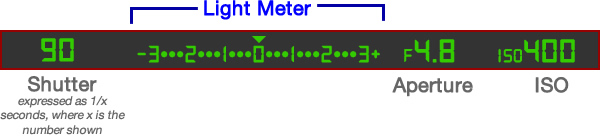
In this example the camera’s shutter is set at 1/90 of a second, the lens aperture is f/4.8, and the ISO is 400. The light meter is a readout that shows whether these values are going to result in a photo that is properly exposed – that is, a photo that is neither too light or too dark. The small triangle hovering over the zero in the light meter shows that the exposure is correct, and when the shutter button is pressed the picture will look fine. But, I’ll show you a few pictures to see what happens as the camera’s exposure settings are changed. If you want to try this yourself you will need to have your camera in Manual mode, and I would recommend reading the rest of this article with your camera at your side so you can do a bit of experimenting on your own.
For my first shot, I’ll show you a photo that is underexposed and then illustrate how the camera settings can be adjusted to get the proper exposure. The values shown on these images are exactly what I used in my camera to get these shots, and nothing has been edited or retouched in Photoshop.
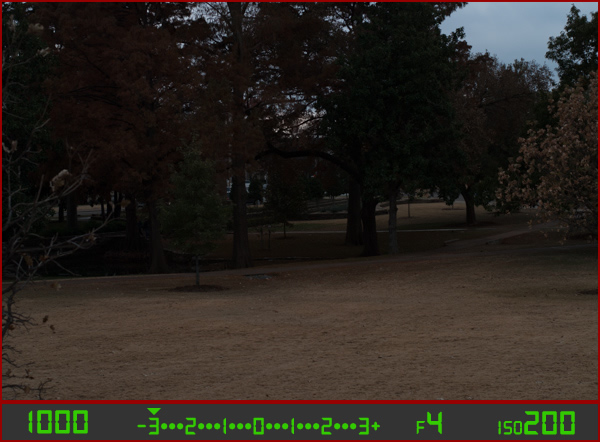
Here you can see that the shutter speed is 1/1000 of a second, the aperture of the lens is f/4, and the ISO is 200. The camera’s viewfinder displays this information along with the light meter, and note how the triangle has moved all the way over to -3 EV. (EV stands for Exposure Value, and technically this image is underexposed by three stops. Don’t worry about the technical jargon though! For now just follow along with the examples to see what happens when the exposure values are altered.
To get a properly exposed photo you are essentially trying to re-create what your eye already sees, but right now the light meter tells us that the photo will be way too dark. And indeed, the resulting photo turned out just how the light meter predicted: it’s so dark it looks like it was taken at night instead of mid-afternoon.
So what can be done to fix this? By adjusting the aperture, shutter, or ISO you can change the exposure settings with the goal of getting that little triangle to hover above the zero. Watch what happens when I change the shutter speed but I leave the aperture and ISO fixed at their present values:
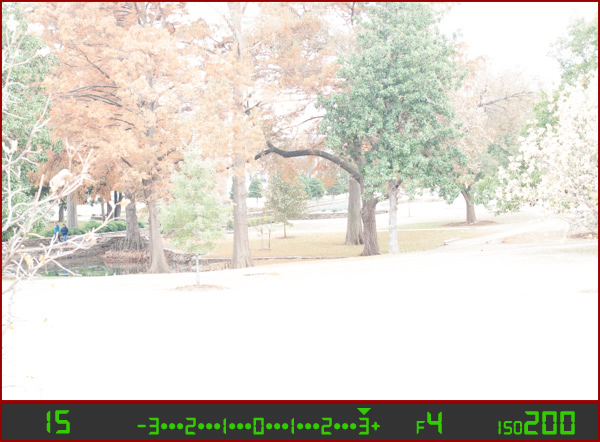
By altering the shutter speed from 1/1000 of a second to 1/15 of a second, the photo is now too bright – exactly as the light meter said it would. It is overexposed by three stops, and the image is virtually unusable. Because the viewfinder itself does not change as the aperture, shutter, and ISO are adjusted, you have to rely on your light meter to tell you how bright or dark the image will be. And sure enough, the triangle is hovering above the +3, which tells us the photo will be too bright. Here is what a properly exposed photo looks like.
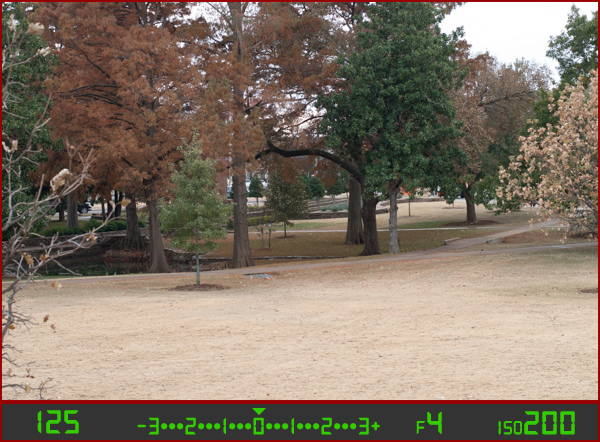
Finally, a good picture! By adjusting the shutter speed to 1/125 of a second, I was able to get the triangle to hover above the zero, which means the photo would be properly exposed. Note that there is no one correct way to do this, and a proper exposure could have also been obtained by changing the aperture or ISO instead of the shutter speed, or a combination of all three. For instance, I could have left the shutter at 1/1000 and increased the ISO to get the same result.
Why bother with all this?
At this point you might be wondering why you would want to go to all this trouble when you can put your camera in Automatic mode and it will just take care of everything. The answer lies in the fact that you, not your camera, know exactly what kind of photo you want to take. Your camera does not know whether you are shooting landscapes, portraits, sports, starry nights, kids, pets, or anything else. All it sees is how much light is coming in, and it tries to adjust the shutter, aperture, and ISO to get that triangle to hover above the zero. But if you know how to control those values yourself, you can open up vast new areas of photographic creativity that Automatic mode can never do for you.
As another example, here is a picture of some berries, but again notice how it is underexposed by three stops.
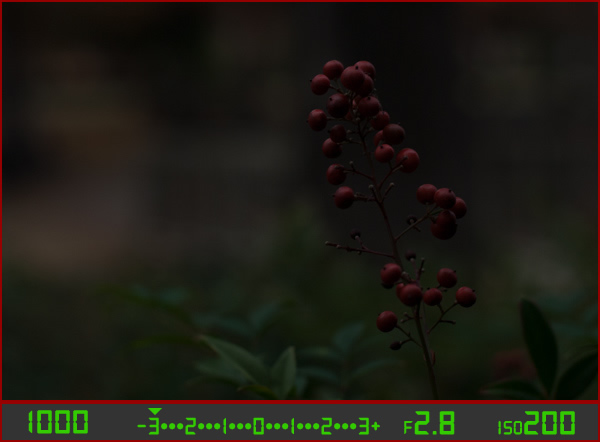
There are several settings I could adjust in order to fix this, or I could just put the camera in Automatic mode. The problem with Automatic in this case is the camera does not know that I am looking at berries. It just sees light, and would attempt to adjust the shutter, aperture, and ISO to get a proper exposure even though it might not end up with the exact type of picture I want to take.
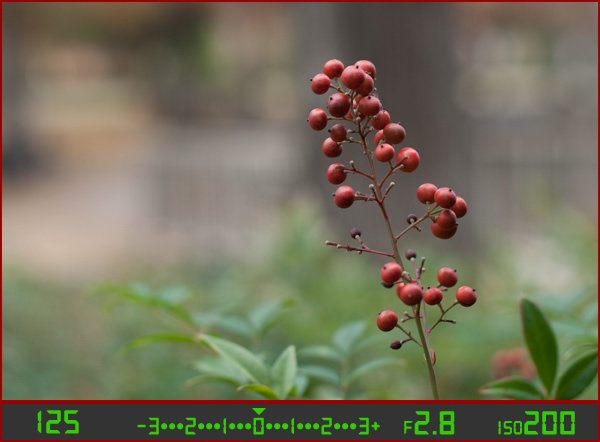
Because I shot in manual using the light meter as my guide I was able to get precisely the shot I was looking for. I knew that I wanted a shallow depth of field, which meant I should use a large aperture of f/2.8. I knew that an aperture of f/1.8 would be too wide for my taste, and a smaller value like f/4 or f/8 would not give me the nice blurry background I was hoping for. By leaving the aperture at f/2.8 and changing the shutter speed I got a properly exposed photo with a nice smooth background as you can see here:
But what if I had changed the other values instead? Look what happened when I left the aperture and shutter at their original values from the underexposed photo (f/2.8 and 1/1000), and raised the ISO instead:
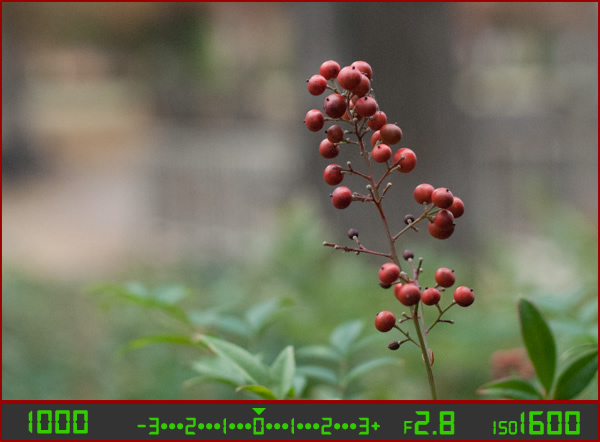
The end result is almost the same: a properly exposed photo (just like our light meter told us it would be, with the triangle hovering above the zero), but this image has much more noise and grain than the previous one. Notice how the tree in the background just behind the berries looks speckled and grainy instead of silky smooth, which is what usually happens at high ISO values. Thus, raising the ISO might not be the best way to get the image I want even though the photo itself is properly exposed.
So what about changing the aperture instead?
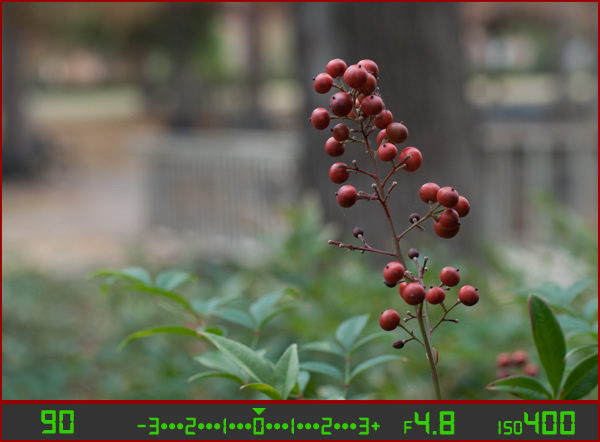
Once again the result is a photo that is properly exposed, but the depth of field is much wider – see how the background is not quite as smooth and blurry as before? Also, because the aperture was smaller I had to leave the shutter open longer at 1/90 of a second and even raise the ISO a bit in order to maintain a proper exposure.
Get the exact shot you envision
Shooting in manual and using the light meter as your guide is a good way to ensure that the image you see in your mind is exactly what you end up with when you click the shutter. If you are shooting fast-moving subjects like cars or sports, you would want to start with a fast shutter speed and adjust the other settings until you get that little triangle to hover above the zero. If you are taking portraits and want a shallow depth of field with nice blurry backgrounds, keep the aperture wide and change the shutter and ISO until the exposure is correct. It’s all about giving control back to you, the photographer, instead of letting your camera make the creative decisions for you.
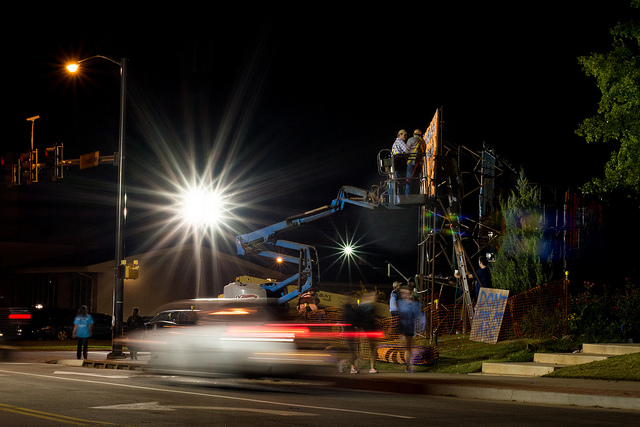
Shooting in manual was the only way to capture this photo. By reading the light meter while carefully adjusting my exposure settings I got precisely the shot I was aiming for. Camera settings: f/16, 1/3 second, ISO 800
Understanding the basics of the light meter is really just scratching the surface, though. Additional settings like your camera’s metering mode and the Exposure Lock function are even more tools you can use to take control over your photography and unlock your true artistic potential. Using manual mode and reading the light meter might seem like a complicated way to take photos, but remember that you know better than your camera what kind of picture you want to take. Once you know how to read your light meter and adjust your camera’s settings accordingly, you can open up a whole new world of creativity that has been right in front of you just waiting to be discovered.
Practice time
So now it’s your turn: grab your camera, put it in Manual mode, and hold the viewfinder up to your eye. Now start changing the aperture, shutter, and ISO values and watch what happens to the light meter. Is your image going to be overexposed? Lower the ISO, raise your shutter, tighten the aperture, or try a combination of all three. Is your image going to be underexposed? Do the exact opposite. The more practice you get, the easier it will be and soon you will feel much more comfortable shooting in a mode that might have seemed hopelessly confusing before.
Do you shoot in manual? If so, how did you get yourself off Automatic mode? Or do you actually prefer Automatic? Share your thoughts and experiences in the comments below.
googletag.cmd.push(function() {
tablet_slots.push( googletag.defineSlot( “/1005424/_dPSv4_tab-all-article-bottom_(300×250)”, [300, 250], “pb-ad-78623” ).addService( googletag.pubads() ) ); } );googletag.cmd.push(function() {
mobile_slots.push( googletag.defineSlot( “/1005424/_dPSv4_mob-all-article-bottom_(300×250)”, [300, 250], “pb-ad-78158” ).addService( googletag.pubads() ) ); } );The post How to Learn Your Camera’s Light Meter and Master Manual Mode by Simon Ringsmuth appeared first on Digital Photography School.
-
Studio update: Cameras added to our comparison tool that you may have missed
It’s been a busy few weeks around the DPReview office. Alongside full-length reviews, we’ve been busy making sure our camera roundups are up to date as well as preparing seasonal content like our holiday gift guides. We know you’ve been busy too, and you might have missed some of the most recent additions to our studio test scene. Read more
-
Phase One and Alpa release official details and pricing of A-Series medium format cameras
Phase One has announced official details of its new A-Series medium format cameras after information about the new pairing of the company’s digital backs with an Alpa body and lenses was leaked in November. As was reported at the time, the series will comprise Phase One 50MP, 60MP and 80MP backs, combined with the Alpa 12 TC body and a choice of three lenses – the Alpagon 5.6/23mm, Alpar 4.0/35mm and the Alpagon 5.6/70mm. Read more
-
Huawei Honor 6 Plus offers three 8MP cameras
Huawei has announced the Honor 6 Plus with not one, not two, but three 8MP cameras. One serves as a selfie-capture unit at the front while the other two are lined up side-by-side on the rear of the device. As on the HTC One M8 the dual lens setup allows for refocusing of already captured images. Read more
-
Old Glass: How to Use Old Film Lenses with New DSLR Cameras
Do you want a sharp and well built lens? Of course you do. Everyone does. Think you can’t afford great glass? Think again. You may not be looking in the right place.
If you’re like me, browsing through latest high-end lenses can be a little depressing. The cost of luxury grade glass can easily peak in the thousands of dollars. What if I told you that you could have excellent lenses without breaking the bank?
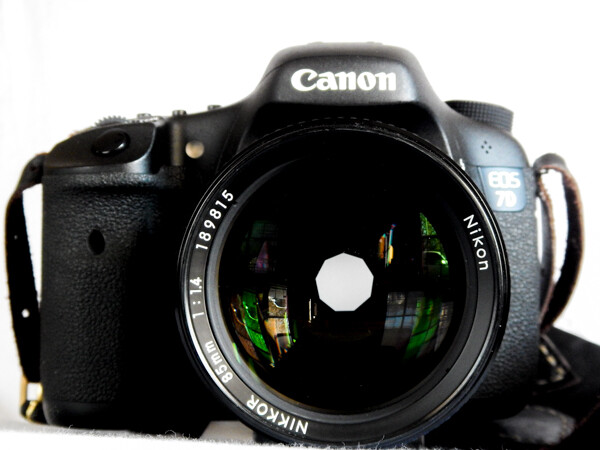
Recently I learned about a method for retrofitting older film lenses to function with our modern cameras. The possible bad news is that these are mostly manual focus prime lenses so your autofocus and metering won’t work (with one exception we’ll talk about later). The great news is that the majority of these lenses are built like photographic tanks and possess extremely capable optics. These lenses are also readily available and affordable on most any budget.
So how is it done? How can you make a twenty, thirty, or even forty year old piece of gear work with today’s advanced camera bodies? Believe it or not, the answer is deceptively simple. For virtually every lens and camera combination there is an adapter that will enable you to use any lens with any camera – regardless of manufacturer. Here’s an example:
I have an old analog Nikon F3 that was given to me by my father along with a couple of lenses: a Nikkor 85mm f/1.4 and a Nikkor 50mm f/1.8.

The entire kit remained mostly forgotten in a camera bag, and in storage for years. One day I stumbled across some information about how a few photographers were using old M42 Zeiss screw-mount lenses with their DSLR’s using adapter rings and producing outstanding photographs. That got me thinking – if it were possible to find adapters for these old M42 lenses, could there also be manufacturers who produced similar adapters for other lens types? Almost instantly the old Nikon leaped from some distant corner of my memory. My main shooting body is a Canon 7D MkI. Could I possibly use those thirty year old Nikkor film lenses on my 7D Canon? Shockingly, the answer was yes! All I needed were these unassuming aluminium adapter rings which I sourced on eBay for about $ 12 USD each.
One side of the ring matches the Nikkor mount.

The other mates with the Canon body.

The entire process is very simple; the adapter simply snaps onto the lens.

Without the adapter.
With the Canon adapter.Then it’s business as usual attaching the adapted lens to the camera. Just line up the indicator dot with the mounting dot on your camera body.

You’re done.

The adapters are also removable if you choose to do so later by depressing a small spring catch (most brands have these).
As I said earlier, these are completely manual lenses. Meaning that you adjust your aperture by hand as well as focusing the lens.

Personally, I enjoy the deliberateness this action forces. You have to think about your composition so much more, and you get to experience the effects of aperture adjustment literally first hand.

The impressive aperture blades on this beautiful Nikkor 85mm.Don’t worry if this manual operation doesn’t appeal to you. The exception concerning the adapter rings I spoke of is that some are now being made with focus indicator chips built into the adapter. While this chip doesn’t enable you to use autofocus, it does allow the lens to communicate to the camera when the selected point of focus has been obtained. This is complete personal preference. I opted for the non-autofocus indication adapters because I wasn’t comfortable using aftermarket electronics of that type with my camera. Again, this is a completely subjective.
Please Note: Neither the author nor Digital Photography School are responsible for any damages to your camera or lens as a result of using aftermarket devices. Please be an informed photographer prior to attempting any modifications to your precious gear!
Now, here are some images produced through a little Frankensteinish innovation.


googletag.cmd.push(function() {
tablet_slots.push( googletag.defineSlot( “/1005424/_dPSv4_tab-all-article-bottom_(300×250)”, [300, 250], “pb-ad-78623” ).addService( googletag.pubads() ) ); } );googletag.cmd.push(function() {
mobile_slots.push( googletag.defineSlot( “/1005424/_dPSv4_mob-all-article-bottom_(300×250)”, [300, 250], “pb-ad-78158” ).addService( googletag.pubads() ) ); } );The post Old Glass: How to Use Old Film Lenses with New DSLR Cameras by Adam Welch appeared first on Digital Photography School.
-
Most Popular Compact System and Mirrorless Cameras with Our Readers
Earlier in the week we revealed the DSLRs that were best selling among our readers over the last few months. While DSLRs are still the most popular type of readers among our readers this last quarter has seen a big rise in the number of you using compact system cameras.

In fact if we combined the two lists we’d now see compact system cameras in the top 20 cameras bought by our readers with the Sony Alpha a6000 and the Sony Alpha a7II both making that list.
What is remarkable about this is that the newly announced Sony Alpha a7II is not even released yet and it makes the list purely based upon pre-order levels!
Also an indication of the growth of sales in the compact system camera class of camera is that today we’re listing 19 of them while last time we created this list we only saw enough sales to justify making it a list of 9 cameras.
Here are the most popular compact system cameras among our readers!
Note: we’ve only included cameras with interchangeable lenses in this list. While other cameras like Fujifilms X100 series are sometimes classified in this way we’ll include them on a future list with other fixed lens cameras.
1. Sony Alpha a6000
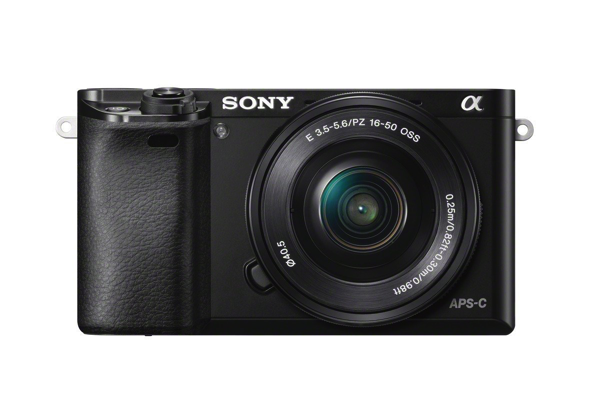
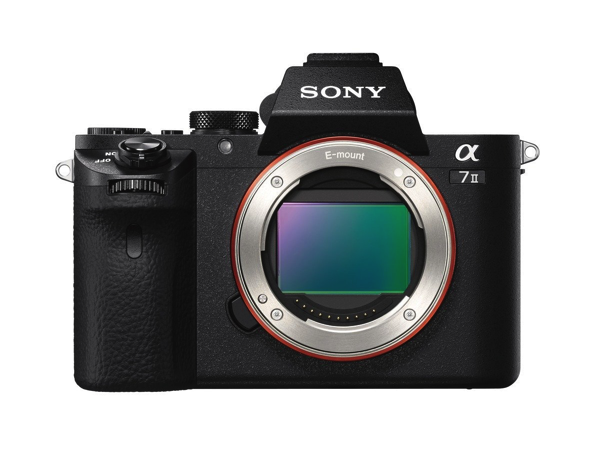
2. Sony Alpha a7II (available for pre-order)
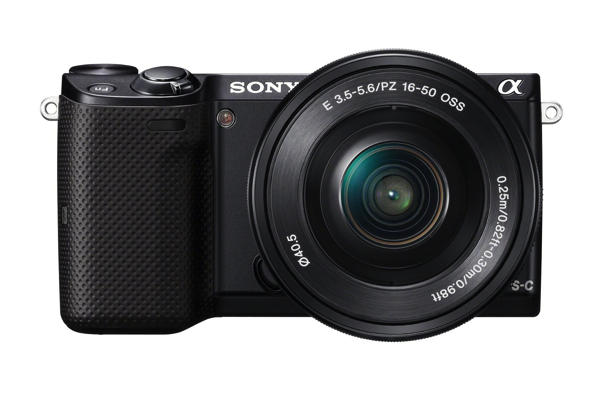
3. Sony NEX-5TL
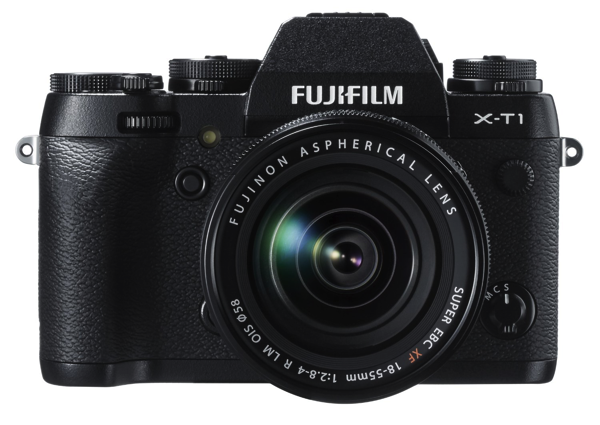
4. Fujifilm X-T1
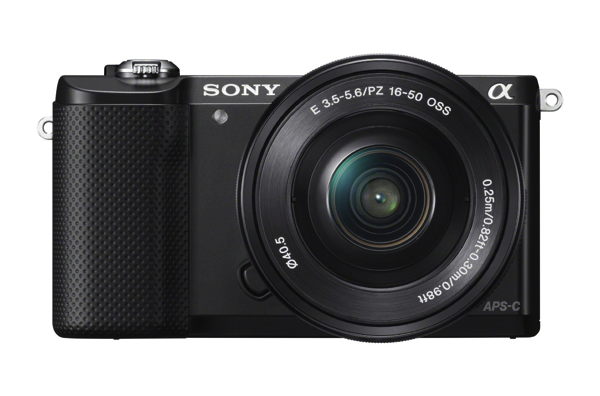
5. Sony Alpha a5000
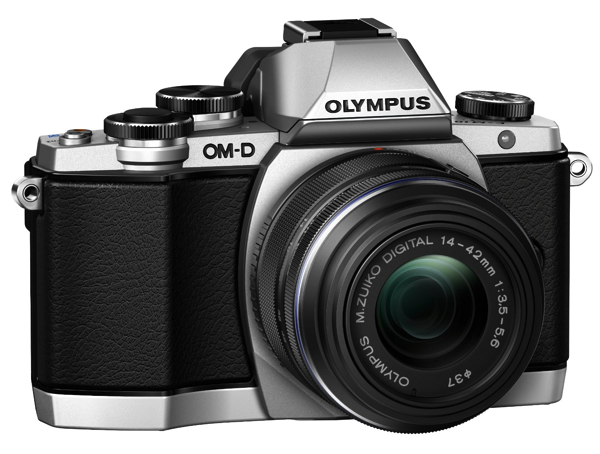
6. Olympus OM-D E-M10
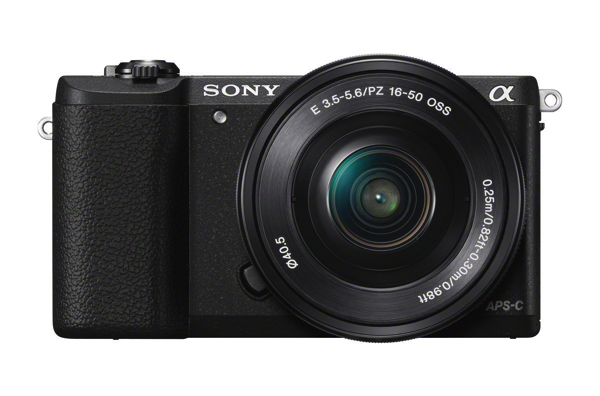
7. Sony a5100
8. Samsung NX300

9. Samsung NX30

10. Sony Alpha a7S

That’s our top 10 – here are the next 9 most popular compact camera systems.
- Panasonic Lumix DMC-GF3KK
- Sony NEX-6L/B
- Panasonic DMC-GF6KK
- Sony a7R
- Olympus OM-D E-M5
- Nikon 1 J1
- Olympus E-PL7
- Fujifilm X-M1
- Olympus OM-D E-M1
*Note: this list was compiled from reports supplied to us from Amazon.com where we are affiliates. One of the ways dPS is able to cover its costs and be a sustainable business is that we earn a small commission when readers make a purchase from Amazon after clicking on our links (including those above). While no personal details are passed on we do get an overall report from Amazon about what was bought and are able to create this list.
googletag.cmd.push(function() {
tablet_slots.push( googletag.defineSlot( “/1005424/_dPSv4_tab-all-article-bottom_(300×250)”, [300, 250], “pb-ad-78623” ).addService( googletag.pubads() ) );
} );googletag.cmd.push(function() {
mobile_slots.push( googletag.defineSlot( “/1005424/_dPSv4_mob-all-article-bottom_(300×250)”, [300, 250], “pb-ad-78158” ).addService( googletag.pubads() ) );
} );The post Most Popular Compact System and Mirrorless Cameras with Our Readers by Darren Rowse appeared first on Digital Photography School.