RSS
 

Posts Tagged ‘Cameras’

Macphun updates Tonality with batch processing and Raw support for more cameras

09 Apr

Software manufacturer Macphun has announced an update to its Tonality application that introduces batch processing, free preset packs, as well as Raw support for a wider range of cameras.

The black and white image manipulation package designed for the Mac platform already offers 160 ready-made manipulation and effects settings, but will now offer between one to three extra settings per month, created by a band of professional photographers. The company has four contributing professionals at the moment and will add a new one each month to enlarge the collection of settings users can download for free. Users can, of course, create their own presets using the tools and controls provided and can then share these amoung themselves. Further pre-sets are available to purchase.

The update also brings raw support for owners of Canon PowerShot G1 X Mark II, Fujifilm FinePix HS50 EXR, Leica Q (Typ 116), Leica SL (Typ 601), Leica M Monochrom (Typ 246), Nikon D300S, Panasonic DMC-G7, Sony DSLR-A700, Sony DSC-RX100M3 and Sony DSC-RX10M2 cameras.

The company has also added a link to the 500px image sharing website to smooth the uploading of pictures directly from the program, and has also made it easier to export files to Adobe’s Photoshop and Lightroom applications.

The program is available in three forms, as a standalone application that is priced £15 (though £7.99 until 14th April), as part of the Tonality Complete Kit you get the Pro Version for £48.99, or as part of Creative Kit 2016 with five other Macphun applications for £89.99.

For more information see the Macphun website.

New Tonality updates brings amateur photographers closer to professionals

Ability to add free preset packs created by worldfamous photographers, 500px export integration, batch processing, new cameras support, and special discounts at Mac App Store

Macphun Software, a leading innovative photography app developer with over 30 million users worldwide, have today launched a major update to Tonality, their awardwinning black and white photo editor for Mac.
To celebrate the update, Macphun are offering a 50% discount and a free batch processing in the MAS version of Tonality for one week only (7th14th April) .

What are the key highlights of the update to Tonality?

Preset Packs from WorldFamous Photographers

Tonality users will now have access to a free preset library, created by professional photographers from around the world. To access the library, users simply need to click “Get more presets” from inside the software.

Macphun have enlisted the expertise of professional photographers, including Serge Ramelli, John Batdorff, Dan Hughes, Andy Krucezk and others to create exciting new preset packs exclusive to Tonality, which can be found at macphun.com/tonalitypresets.

Statistics show that since August 2014 (when the software was launched) Tonality users have processed over 7 million images , and applied over 50 million presets to their photos. Current favourite preset packs include Portrait, Architecture, and Dramatic.

500px Support plus 3month FREE membership

Macphun have teamed up with 500px to allow users to easily export images directly from Tonality to the global online photography community. Macphun are also excited to offer a 3month 500px membership for free as a bonus to Tonality.

More cameras supported

RAW file support has been improved and extended so RAW image files can now be opened from a variety of new cameras: Canon PowerShot G1 X Mark II, Fujifilm FinePix HS50EXR 100, LEICA Q (Typ 116), LEICA SL (Typ 601), LEICA M MONOCHROM (Typ 246), NIKON D300S, Panasonic DMCG7, Sony DSLRA700,
Sony DSCRX100M3, Sony DSCRX10M2.

What other new features and improvements can be expected?

Other improvements include ability to export images from Tonality to Aurora HDR, improved Lightroom and Photoshop export, improved language translation quality, and improved stability.

Standard version of Tonality (available on the Mac App Store)
In addition to all the updates listed above, the Mac App Store version of Tonality now includes batch processing as an InApp purchase. The batch processing inapp will be available for free between 7th and 14th April. Batch in Tonality allows users to process, rename and resize dozens of photos at the same time.

What is Tonality?
Tonality is a compelling black and white photo editor. It combines the authenticity of the
monochrome analog era and the cuttingedge colour technologies of the digital age. Reimagine your monochrome image editing with hundreds of presets, layers, unique digital controls, authentic grain and more.

Pricing and Availability:

Tonality is available as a standard version through the Mac App Store, a standalone Pro version direct from https://macphun.com/tonality , or as part of Creative Kit 2016 at macphun.com/creativekit . The standard version of Tonality is available via the Mac App Store at the 50% discount: £7.99 from 7th-14th April: https://itunes.apple.com/gb/app/tonality/id892581529?mt=12

Tonality CK standalone is available direct from https://macphun.com/tonality at £48.99. Creative Kit 2016, featuring Tonality and five other incredible Macphun apps, is available direct from macphun.com/creativekit at £89.99.
Articles: Digital Photography Review (dpreview.com)

 
Comments Off on Macphun updates Tonality with batch processing and Raw support for more cameras

Posted in Uncategorized


3 Reasons Why Mirrorless Cameras are Better than Digital SLRs for Focusing

30 Mar

Mirrorless cameras and focusing

A lot has been written about the drawbacks of autofocus performance from mirrorless cameras. Most of this focuses on the tracking of moving subjects – an area where the phase detection autofocus found in digital SLRs is still superior (although the gap is closing).

But when it comes to focusing on still subjects, the mirrorless camera is a better tool. Surprised? If you’ve never used a mirrorless camera, you may be. Let’s take a look at the reasons why.

1. Phase detection versus contrast detect autofocus

Mirrorless cameras have a different autofocus system than digital SLRs.

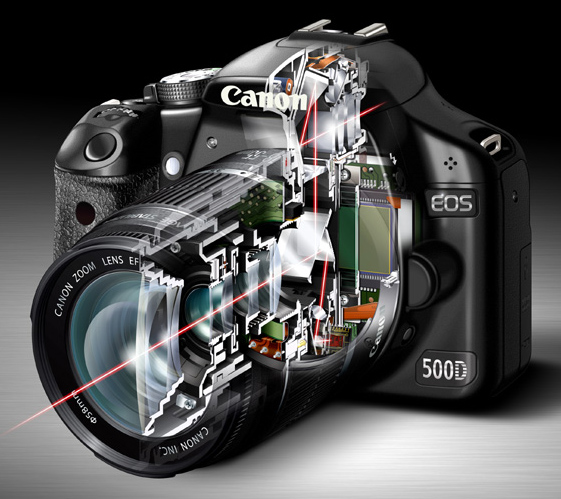
In a digital SLR most of the light coming through the lens is reflected up by the mirror, into the pentaprism and through the viewfinder. A small part is deflected downwards to a dedicated autofocus sensor. It uses a system called phase detection autofocus to calculate the camera to subject distance, and tell the lens where to focus.

Mirrorless cameras and focusing

The red lines in this diagram show the path that light takes through an SLR camera with the mirror in the down position. Most of the light is reflected into the pentaprism and the viewfinder. Part of it is reflected downwards towards the autofocus sensor.

The advantage of phase detection autofocus is that it’s fast (generally speaking – but it also depends on which camera you have) and very good at tracking moving subjects. It’s the best system anyone has managed to come up with for an SLR camera.

However, phase detection autofocus has a significant weakness – lack of accuracy.

There are two main reasons for this. The first is that most digital SLRs have a combination of cross-type and single line autofocus points. Cross-type autofocus points are the most accurate, and should always be used when focus is critical (for example, when using a prime lens at its widest aperture), otherwise the camera may not focus where it is supposed to. Your camera’s manual will tell you which of its AF points are cross-type.

Whenever you use a non cross-type autofocus point, you cannot rely on the camera to focus accurately. This is fine when using small apertures, which give you plenty of margin for error, but not when focus and accuracy is critical.

The second reason is to do with camera and lens calibration. Even when you use a cross-type autofocus point your camera may not focus exactly where it is supposed to. For accurate focus, every part of your camera setup – from the autofocus sensor, to lens and autofocus motors that tell the lens where to focus – must be working in perfect harmony. It only takes a small degree of misalignment to throw the accuracy of the system out.

Most of the time you won’t notice, because there is sufficient depth-of-field to make the focusing inaccuracies irrelevant. But if you use a wide aperture, especially with a telephoto lens, then depth-of-field is measured in millimetres, and accurate focus is essential.

For example, if you are taking a portrait then it is conventional to focus on the model’s eyes. If you miss focus, and her eyes are soft, then people will notice and the portrait will lose its impact.

Mirrorless cameras and focusing

I made this portrait with an EOS 5D Mark II and 85mm lens set to f1.8. With this camera it is necessary to measure and calibrate the autofocus system to ensure accurate focus at wide apertures.

Most mid-range and high-end digital SLRs have a feature that allows you to measure and compensate for inaccurate focusing. Manufacturers have different names for this – Canon and Sony use the term Autofocus micro-adjustment, Nikon calls it Autofocus fine tune, Pentax uses the term Autofocus adjustment and Olympus Autofocus focus adjust. It’s bit of a long winded process – you have to test your lenses by focusing on a ruler, or a purpose made scale, to see if the focus is accurate, and make adjustments if it isn’t.

You can also get your camera and lenses calibrated at a service centre. This is the only way to calibrate an SLR camera that doesn’t have the above feature built-in.

That was bit of a long explanation, but crucial if you are to understand why phase detection autofocus is not as accurate as it should be.

How are mirrorless cameras different?

So, how do mirrorless cameras differ? As they don’t have a mirror, there is no way of deflecting light to a dedicated autofocus sensor. The solution is to take a reading from the sensor. The camera looks at the point on the sensor which is meant to be in focus, and adjusts the lens until maximum contrast is achieved. This is called contrast detect autofocus.

This system is slower, because the camera has to move the lens first one way, then the other, to find the sharpest point. But, it is much more accurate (for still subjects).

With a mirrorless camera autofocus micro-adjustment is redundant. You don’t need it, and you will never have to measure or calibrate the camera’s autofocus system. It also doesn’t matter which autofocus point you use, as they all work equally well. That is why, for still subjects, autofocus in mirrorless cameras is superior to that of digital SLRs.

Mirrorless cameras and focusing

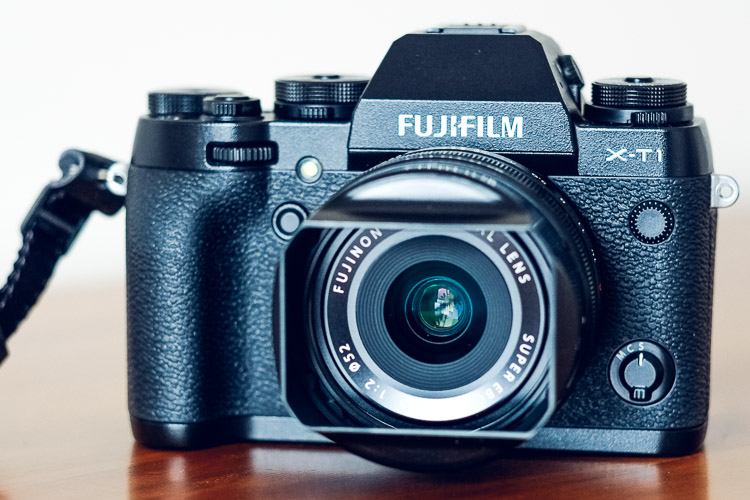
I made this portrait with a 56mm lens at f/1.2 with my Fujifilm X-T1 mirrorless camera. With this camera it is easy to focus on the model’s eye. There is no need to calibrate the camera’s autofocus system.

2. Manual focusing

Mirrorless cameras are also a better tool for utilizing manual focus lenses.

Modern digital SLRs are not designed to be helpful with manual focus lenses. The split prism focusing screens of the past are gone, and assistance is limited to a light that comes in the viewfinder when the subject underneath the selected AF point comes into focus.

Mirrorless cameras are different. They have a tool called focus peaking, which is specifically designed to help you manually focus a lens. The camera highlights the parts of the scene that are in focus, so that you can see which areas are sharp. You can also magnify the image at the touch of the button, making it even easier to see whether the subject is sharply focused.

This feature works best when using lenses at wide apertures. Both tools take advantage of the camera’s electronic viewfinder, a feature that most digital SLRs don’t have.

Mirrorless cameras and focusing

This mock up shows how focus peaking works. I made the portrait with a Helios 58mm manual focus lens at its widest aperture setting of f/2. The red lines indicate how focus peaking shows you what is in focus.

3. Hyperfocal distance

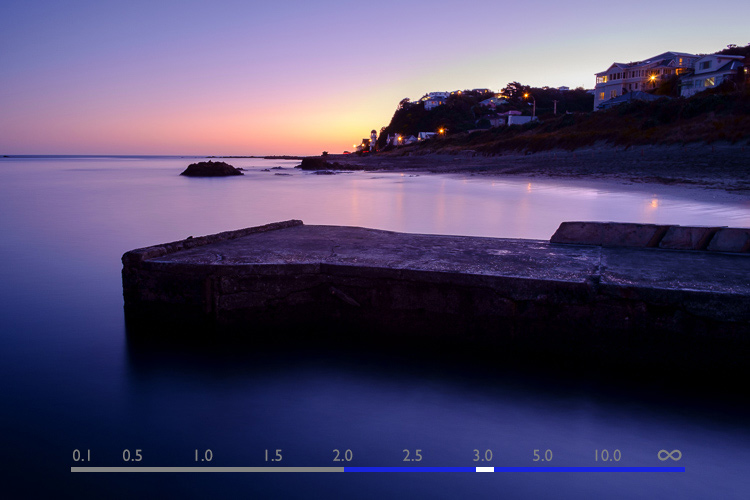
Fujifilm cameras have another tool that will be of interest to landscape photographers as it helps you instantly find the hyperfocal distance without referring to tables or smartphone apps.

The viewfinder has a depth-of-field scale that shows you the point you are focused on and the area in focus on either side, according to the selected aperture. If you move the focusing ring until the depth-of-field scale touches the infinity mark at one end, you have found the hyperfocal distance point. It’s quick and easy.

To be honest, I don’t know if this feature is available in any brand of mirrorless camera other than Fujifilm. I’d be grateful if Sony/Olympus/Panasonic, etc., owners would let us know.

Mirrorless cameras and focusing

This diagram shows how the depth-of-field scale works. The bar shows the point the lens is focused on (white), and how much of the scene is in focus (blue). The lens is focused on the hyperfocal point in this made-up example.

Since buying my first Fujifilm camera a little over 18 months ago, I’ve been pleasantly surprised by what a great tool mirrorless cameras are for photography. They are much better than my old digital SLR for focusing on still subjects, or for using manual focus lenses.

The difference is so great that I predict that one day most photographers will use mirrorless cameras, and digital SLRs will be a niche item built for photographing sports and wildlife.

But what do you think? Please share your thoughts, or ask any questions about focusing, in the comments below.


Mastering Lenses

If you want to know more about lenses and autofocus check out my ebook Mastering Lenses: A Photographer’s Guide to Creating Beautiful Photos With Any Lens.

googletag.cmd.push(function() {
tablet_slots.push( googletag.defineSlot( “/1005424/_dPSv4_tab-all-article-bottom_(300×250)”, [300, 250], “pb-ad-78623” ).addService( googletag.pubads() ) ); } );

googletag.cmd.push(function() {
mobile_slots.push( googletag.defineSlot( “/1005424/_dPSv4_mob-all-article-bottom_(300×250)”, [300, 250], “pb-ad-78158” ).addService( googletag.pubads() ) ); } );

The post 3 Reasons Why Mirrorless Cameras are Better than Digital SLRs for Focusing by Andrew S. Gibson appeared first on Digital Photography School.


Digital Photography School

 
Comments Off on 3 Reasons Why Mirrorless Cameras are Better than Digital SLRs for Focusing

Posted in Photography


MediaTek launches Imagiq ISP for dual cameras

23 Mar

Smartphones bearing dual cameras are on the rise, and MediaTek’s new Imagiq image signal processor is prepared to take advantage of them. Read more

Articles: Digital Photography Review (dpreview.com)

 
Comments Off on MediaTek launches Imagiq ISP for dual cameras

Posted in Uncategorized


Sony firmware update 3.10 for a7 cameras, a6000, a5100 now available

16 Mar

Sony has released firmware update 3.10 for the a7R II, a7R, a7S, a7 II, a7, a6000 and a5100 camera models. The update primarily brings new lens support and is available to download now from Sony’s support website.

All updates bring the ability to use AF with the Sony FE 85mm F1.4 GM while recording movies. The changelogs for the a6000, a7, a7 II, a5100, and a7R II all mention ‘Phase-detection AF is supported,’ which we’ve asked Sony for some clarification on. Additionally, updates for all but the a7R II enable the correct lens data to be recorded in EXIF. 

Articles: Digital Photography Review (dpreview.com)

 
Comments Off on Sony firmware update 3.10 for a7 cameras, a6000, a5100 now available

Posted in Uncategorized


DxO ONE update enables framing assist via the camera’s OLED monitor

11 Mar

A recent update for the DxO ONE has introduced framing assistance via the camera’s built-in OLED when the device is used in standalone shooting mode. A monochrome live image preview is displayed on the camera’s small, rear screen to improve the experience of using the camera without connection to an iPhone. The camera is also offered at a lower $ 499 price point, without software bundled. 

Firmware 1.3 also introduces a motion blur alert feature, as well as a modified interface for selecting white balance, metering and focus mode. When sharing photos, you’ll now see a visual confirmation of a successful upload, and JPEG compression level can be specified. 

The app update is available now for free through the App Store, and camera firmware can be updated through the camera itself. The DxO ONE is available now for $ 499.


Press release:

DxO ONE now features a dramatically enhanced stand-alone experience

DxO unbundles desktop software to make the camera available at a new low price of just $ 499

Press release:

PARIS, March 2, 2016 /PRNewswire/ — DxO announced today the immediate availability of yet another ground-breaking update to the award-winning DxO ONE professional quality connected camera for iPhone® and iPad®. The version 1.3 update, available for free via the iTunes App Store, introduces several new features that further extend the use of the DxO ONE, including the ability to use the OLED display as a novel framing assistant to help quickly compose while operating the camera with one hand. Additionally, DxO has unbundled their desktop software from the package (DxO FilmPack and DxO OpticsPro now sold separately), enabling even more photographers to get their hands on the revolutionary DxO ONE camera at a new low price of just $ 499.

“That is one trippy amazing viewfinder — love it!” said award-winning photographer, John Stanmeyer. “Even more wonderful, in very low light, the ONE handled all the complexities of ISO, focus, etc., instantly. Amazing. Perfectly fine for those rapid moments when you want to make an image, a RAW high res file, in any lighting conditions we’re placed in.”

Version 1.3, the second major upgrade to date, enables the DxO ONE to be used as a miniaturized pro-quality camera that is smaller, easier, and faster to shoot than any other camera on the market. To quickly capture life’s fleeting moments, simply pull the DxO ONE out of your pocket or purse, and in one movement, slide the lens cover open, compose the scene using the OLED display as a framing assistant, then depress the two-stage physical shutter button to lock focus and grab the shot. In stand-alone mode, the DxO ONE provides a fun, retro-style of photographing without “chimping,” and makes browsing newly captured images a surprising and delightful experience.

Best of all, when using the DxO ONE in stand-alone mode, all of your preferred camera settings for aperture, shutter speed, ISO, metering, white balance, etc. are preserved, exactly as you set them in the iOS app. For example, if you prefer to capture portraits at f/1.8, the camera will always be ready at f/1.8 when you pull it out of your pocket. And because the DxO ONE has a physical shutter button, it works even if you’re wearing gloves. So when you’re on the slopes, set the camera to 1/4000s (or higher), then when you pull the camera out of your ski jacket the DxO ONE is immediately ready to freeze fast action.

“During an assignment for Rolls-Royce Motor Cars I had the misfortune of seriously injuring myself during a biking accident,” said Robert Leslie, professional photographer and amateur cyclist. “Much to my client’s surprise I was able to complete the studio session and capture some incredible images while using the DxO ONE in the new stand-alone mode. Now what other camera in the world lets you do a professional shoot whilst your arm is in a sling with a broken collar bone?”

Version 1.3 also introduces a host of other features including motion blur alert, and an elegant new way to dial in white balance, metering and focus modes, which can also be viewed as overlays in the viewfinder along with your iPhone battery level. Browsing photos is faster than ever, with the gallery now sorted in the same order as in iOS Photos. You can be sure your images were successfully shared thanks to a new visual confirmation message, and you can set a preferred JPEG compression level for photos, and bitrate for videos. Of note, an innovative Message Center now provides a direct connection to DxO, with in-app access to current information designed to help you get the most out of your DxO ONE.

DxO ONE owners are invited to download and install version 1.3, which is available as a free update via the iTunes App Store. New firmware, also immediately available, can be downloaded to the iPhone and installed on the DxO ONE with a simple tap.

Pricing & Availability

The DxO ONE Miniaturized Pro Quality Camera™ for iPhone® and iPad® is available for purchase at dxo.com, Amazon, Apple online and select Apple stores in the US, B&H and other respected photo retailers for the new low price of $ 499.

The DxO ONE iOS app and companion Apple Watch app are both available for free via the iTunes App Store. Every purchase of a DxO ONE camera also includes free access to simple, but powerful desktop processing software — DxO Connect for Mac and PC, and the new DxO OpticsPro for OS X Photos. DxO FilmPack and DxO OpticsPro are available for purchase separately.

Articles: Digital Photography Review (dpreview.com)

 
Comments Off on DxO ONE update enables framing assist via the camera’s OLED monitor

Posted in Uncategorized


Tamrac Goblin gear pouches protect lenses, cameras and memory cards

01 Mar

Tamrac has a new line of Goblin gear pouches designed for individual lenses and cameras, as well as a couple larger accessory pouches for storing multiple items together. The product line includes half a dozen lens pouches, all with drawstring enclosures, three body pouches, two accessory pouches and one memory card wallet. 

The Goblin pouches feature ripstop nylon exteriors and quilted interiors. The lens pouches span bag models 0.3 to 2.4, with the smallest model (0.3) having an interior space of 6 x 8cm/2.25 x 3 in, and the largest (2.4) having an interior space measuring 12 x 21cm/4.75 x 8 in. The camera body pouches are similar, with the smallest model (0.4) offering 3 x 5.5 x 2 in/8 x 14 x 5 cm of interior space, and the largest model (1.4) offering 4.25 x 5 x 3.5 in/11 x 13 x 9 cm of interior space.

Unlike the lens and body pouches, the two accessory pouches, models 1.0 and 1.7, feature YKK zippers and mesh windows to offer a view of what’s in the bag while it’s closed. The Goblin line is rounded out with a memory card wallet with a micro mesh window and three difference size options, one that fits 6 SD cards, another that fits 4 Compact Flash cards, and a third option that fits all ten cards at once.

The Goblin line of pouches is available now through Tamrac’s website. Prices start at $ 12.95.

Via: Fstoppers

Articles: Digital Photography Review (dpreview.com)

 
Comments Off on Tamrac Goblin gear pouches protect lenses, cameras and memory cards

Posted in Uncategorized


Nikon announces trio of long-zoom Coolpix cameras, two of which support 4K capture

26 Feb

$ (document).ready(function() { SampleGalleryV2({“containerId”:”embeddedSampleGallery_2887748447″,”galleryId”:”2887748447″,”isEmbeddedWidget”:true,”standalone”:false,”selectedImageIndex”:0,”startInCommentsView”:false,”isMobile”:false}) });

Nikon has announced a trio of new superzooms, two of which support 4K/UHD video capture. All three have a new naming scheme, with the A-series replacing the ‘L’ cameras and the B-series taking over for the ‘P’ models.

All three cameras offer what Nikon calls SnapBridge, which combines Wi-Fi (with NFC) and Bluetooth. By using a low energy version of Bluetooth, your phone can maintain a constant connection with the camera, meaning that you don’t have to re-pair every time you want to share photos.

The compact Coolpix A900, which offers a 20MP BSI CMOS sensor, 35X (24-840mm equiv.) F3.4-6.9 lens, 3″ tilting LCD and 4K video capture at 30p. It will be available in silver and black at a price of $ 399.

Next is the Coolpix B500, which loses 4K capture but uses four AA batteries for power – a real rarity these days. It sports a 40X (22.5-900mm equiv.) F3.0-6.5 lens, 16MP BSI CMOS sensor, tilting 3″ LCD and 1080/30p video recording. Your color choices for this model are black and red and the estimated selling price is $ 299.

The B700 has the most zoom of the bunch, with a 60X (24-1440mm equiv.) F3.3-6.5 lens, 20MP BSI CMOS sensor, fully articulating, touch-enabled 3″ LCD, a 921k-dot electronic viewfinder and 4K video capture. You can pick one up for $ 499 in black only.

All three models will be available later this spring.

GET CLOSER TO WHAT MATTERS: NIKON’S NEWEST LONG-ZOOM COOLPIX CAMERAS OFFER OUTSTANDING IMAGE QUALITY AND PERFORMANCE TO CREATIVELY CAPTURE FROM AFAR

With Nikon’s New SnapBridge, The New COOLPIX B700, B500 and A900 Provide a Simplified Way to Share and Transfer Images Easily

MELVILLE, NY (Monday, February 22, 2016 at 11:01 P.M. EST) – Today, Nikon Inc. announced three new COOLPIX cameras, the latest additions to its compact zoom camera lineup. Designed to capture stunning images, 4K UHD (in select models) and HD video from up close or far away, these new COOLPIX cameras boast super-long zoom lenses and superior performance while also offering Nikon SnapBridge for easy sharing of photos. Providing outstanding zoom capabilities ranging from 60x and 40x respectively, the COOLPIX B700 and COOLPIX B500 allow users to explore their creative freedom regardless of the distance. With a powerful 35x zoom lens, the COOLPIX A900 is a compact, stylish and feature-packed camera that fits comfortably in a pocket. 

All of these COOLPIX cameras offer a new way to share photos wirelessly through the new Nikon SnapBridge. SnapBridge creates an “always on” Bluetooth® supported connection between the camera and compatible mobile device, making automatic upload and sharing of images possible. 

“Nikon’s latest COOLPIX cameras are exciting options for creative photographers seeking a compact camera that is easy-to-use, yet features incredible zoom capabilities, superior performance and stunning image quality,” said Masahiro Horie, Director of Marketing and Planning, Nikon Inc. “The COOLPIX B700, B500 and A900 provide the lens power needed to get closer to subjects and capture sharp images and HD video.”

Easily Share and Transfer Images: The New Nikon SnapBridge

With more images being shared than ever before, Nikon has developed the new Nikon SnapBridge to help consumers automatically transfer images via Bluetooth®1 low energy (BLE) directly to a compatible smartphone2 or tablet, establishing an “always on” connection, making it easier than ever to share amazing images with the world. The Nikon SnapBridge app allows users to document the time and location images were taken, embed copyright or photographer information on any image, as well as operate the camera remotely, which is great for capturing group shots. Built-in Wi-Fi3 and NFC are also available to further increase connectivity and promote sharing great images.

Additionally, SnapBridge users can take advantage of Nikon’s free image storing service, Nikon Image Space, to store up to 20 GB of images and an unlimited number of thumbnail images (up to 2MB) to the cloud, while the application will also send registered users firmware updates directly to their smart device.

COOLPIX B700

The COOLPIX B700 is a compact superzoom camera that offers incredible range and outstanding image quality. Whether trying to capture birds in-flight or the star player from the sidelines, images captured will be rendered in amazing quality thanks to the camera’s impressive 20.3-megapixel BSI CMOS sensor, even when shooting in low-light. The B700 can capture impressive portraits or landscapes with a phenomenal 60x optical zoom NIKKOR ED glass lens (120x with Dynamic Fine Zoom4) that expands from wide-angle to telephoto zoom for accuracy and precision in every shot. Capable of shooting at 5 frames per second (fps), fast motion is captured with ease, while a 3-inch Vari-angle LCD display helps compose unique perspectives at any angle. Other user-friendly features include a myriad of Creative Modes, RAW (NRW) shooting support, new 4K UHD video capability (30p) and Nikon SnapBridge for seamless sharing of amazing images with friends and family. 

COOLPIX B500

Another superzoom option from Nikon, the COOLPIX B500 is an ergonomically designed zoom camera powered by AA batteries for added convenience. A 16-megapixel BSI CMOS sensor alongside an impressive 40x optical zoom NIKKOR glass lens (up to 80x with Dynamic Fine Zoom), lets users capture high quality images from near or far. The camera also offers hybrid VR to combat camera shake when shooting on-the-go. To complement still images captured, the B500 can record full 1080p HD video, while framing every shot is made easy using the high resolution tilting 920k-dot 3-inch LCD screen that helps capture images at any angle. Users can easily upload their creations to social media via Nikon SnapBridge using any compatible smartphone or tablet.

COOLPIX A900

Ideal for travel, the COOLPIX A900 is a slim long zoom compact camera that fits comfortably into any user’s pocket. While the A900 may be small, it packs an amazing 35x Optical Zoom NIKKOR glass lens (70x with Dynamic Fine Zoom) that helps reach far away subjects. Supported by a 20-megapixel BSI CMOS sensor that renders amazing quality and detail, users can also capture 4K UHD video at 30p; an impressive feature set for such a lightweight and pocketable compact camera. A 3-inch tilting high resolution 920k-dot LCD display helps frame an image at any angle and easily navigate through numerous creative options at the user’s disposal. The A900 also makes it easy to share incredible images and video using Nikon SnapBridge.

Price and Availability

The Nikon COOLPIX B700, COOLPIX B500 and COOLPIX A900 will be available in Spring 2016 with suggested retail prices (SRP*) of $ 499.95, $ 299.95 and $ 399.95, respectively. The B700 will be available in Black, the B500 in Black and Red and the A900 in Silver and Black.

1 The Bluetooth® word mark and logos are registered trademarks owned by Bluetooth SIG, Inc. and any use of such marks by Nikon Corporation is under license. 

2 WI-FI COMPATIBILITY

This camera’s built-in Wi-Fi® capability can only be used with a compatible iPhone®, iPad®, and/or iPod touch® or smart devices running on the Android™ operating system. The Nikon SnapBridge application must be installed on the device before it can be used with this camera. The SnapBridge app is not yet available (coming soon Spring 2016).

3 Wi-Fi and the Wi-Fi logo are trademarks or registered trademarks of the Wi-Fi Alliance. N-Mark is a trademark or registered trademark of NFC Forum, Inc., in the United States and/or other countries.

4 Dynamic Fine Zoom magnification is calculated from the full-wide end of optical zoom

Nikon Coolpix A900 specifications

Price
MSRP $ 399
Body type
Body type Compact
Sensor
Max resolution 5184 x 3888
Image ratio w:h 4:3
Effective pixels 20 megapixels
Sensor photo detectors 21 megapixels
Sensor size 1/2.3" (6.17 x 4.55 mm)
Sensor type BSI-CMOS
Color space sRGB
Color filter array Primary color filter
Image
ISO Auto, 80-3200
White balance presets 5
Custom white balance Yes
Image stabilization Optical
Uncompressed format No
File format
  • JPEG (Exif v2.3)
Optics & Focus
Focal length (equiv.) 24–840 mm
Optical zoom 35×
Maximum aperture F3.4 – F6.9
Autofocus
  • Contrast Detect (sensor)
  • Multi-area
  • Center
  • Selective single-point
  • Tracking
  • Single
  • Continuous
  • Face Detection
  • Live View
Autofocus assist lamp Yes
Digital zoom Yes (4x)
Manual focus No
Normal focus range 50 cm (19.69)
Macro focus range 1 cm (0.39)
Screen / viewfinder
Articulated LCD Tilting
Screen size 3
Screen dots 921,000
Touch screen No
Screen type TFT LCD
Live view Yes
Viewfinder type None
Photography features
Minimum shutter speed 8 sec
Maximum shutter speed 1/4000 sec
Exposure modes
  • Program AE
  • Aperture priority
  • Shutter priority
  • Manual
Scene modes
  • Backlighting
  • Beach
  • Close-up
  • Dusk/Dawn
  • Easy Panorama
  • Fireworks Show
  • Food
  • Multiple Exposure Lighten
  • Night Landscape
  • Night Portrait
  • Party/Indoor
  • Pet Portrait
  • Portrait
  • Scene Auto Selector
  • Snow
  • Sports
  • Sunset
  • Superlapse Movie
Built-in flash Yes
Flash range 6.00 m (at Auto ISO)
External flash No
Drive modes
  • Single
  • Continuous H
  • Continuous L
  • Continuous H (120/60)
  • Pre-shooting cache
Continuous drive 7.0 fps
Self-timer Yes (2, 5, 10 secs)
Metering modes
  • Multi
  • Center-weighted
  • Spot
Exposure compensation ±2 (at 1/3 EV steps)
Videography features
Resolutions 3840 x 2160 (30p, 25p), 1920 x 1080 (60p, 50p, 30p, 25p), 1280 x 720 (60p, 30p, 25p)
Format MPEG-4, H.264
Videography notes High speed modes: 1080/15p and 480/120p
Microphone Stereo
Speaker Mono
Storage
Storage types SD/SDHC/SDXC
Connectivity
USB USB 2.0 (480 Mbit/sec)
HDMI Yes (micro-HDMI)
Microphone port No
Headphone port No
Wireless Built-In
Wireless notes Has 'always on' Bluetooth to maintain connection
Remote control Yes (via smartphone)
Physical
Environmentally sealed No
Battery Battery Pack
Battery description EN-EL12 lithium-ion battery & charger
Battery Life (CIPA) 300
Weight (inc. batteries) 289 g (0.64 lb / 10.19 oz)
Dimensions 113 x 67 x 40 mm (4.45 x 2.64 x 1.57)
Other features
Orientation sensor Yes
GPS None

Nikon Coolpix B500 / B700 specifications

  Nikon Coolpix B500 Nikon Coolpix B700
Price
MSRP $ 299 $ 499
Body type
Body type SLR-like (bridge)
Sensor
Max resolution 4608 x 3456 5184 x 3888
Image ratio w:h 4:3
Effective pixels 16 megapixels 20 megapixels
Sensor photo detectors 17 megapixels 21 megapixels
Sensor size 1/2.3" (6.17 x 4.55 mm)
Sensor type BSI-CMOS
Color space sRGB
Color filter array Primary color filter
Image
ISO Auto, 80-3200 Auto, 100-3200
White balance presets 5
Custom white balance Yes
Image stabilization Optical
Uncompressed format No
File format
  • JPEG (Exif v2.3)
Optics & Focus
Focal length (equiv.) 23–900 mm 24–1440 mm
Optical zoom 40× 60×
Maximum aperture F3.0 – F6.5 F3.3 – F6.5
Autofocus
  • Contrast Detect (sensor)
  • Multi-area
  • Center
  • Selective single-point
  • Tracking
  • Single
  • Continuous
  • Face Detection
  • Live View
Autofocus assist lamp Yes
Digital zoom Yes (4x)
Manual focus No
Normal focus range 30 cm (11.81) 50 cm (19.69)
Macro focus range 1 cm (0.39)
Screen / viewfinder
Articulated LCD Tilting Fully articulated
Screen size 3
Screen dots 921,000
Touch screen No
Screen type TFT LCD
Live view Yes
Viewfinder type None Electronic
Viewfinder coverage 100%
Viewfinder resolution 921,000
Photography features
Minimum shutter speed 1 sec 15 sec
Maximum shutter speed 1/4000 sec
Exposure modes
  • Auto
  • Scene
  • Scene Auto Selector
  • Smart Portrait
  • Special Effects
  • Program AE
  • Aperture priority
  • Shutter priority
  • Manual
Scene modes
  • Backlighting
  • Beach
  • Bird-watching
  • Close-up
  • Dusk/Dawn
  • Easy Panorama
  • Fireworks Show
  • Food
  • Landscape
  • Moon
  • Night Landscape
  • Night Portrait
  • Party/Indoor
  • Pet Portrait
  • Portrait
  • Scene Auto Selector
  • Short Movie Show
  • Snow
  • Sports
  • Sunset
  • Backlighting
  • Beach
  • Close-up
  • Dusk/Dawn
  • Easy Panorama
  • Fireworks Show
  • Food
  • Multiple Exposure Lighten
  • Night Landscape
  • Night Portrait
  • Party/Indoor
  • Pet Portrait
  • Portrait
  • Scene Auto Selector
  • Snow
  • Sports
  • Sunset
  • Superlapse Movie
Built-in flash Yes
Flash range 6.90 m (at Auto ISO) 7.50 m (at Auto ISO)
External flash No
Drive modes
  • Single
  • Continuous H
  • Continuous L
  • Continuous H (120/60)
  • Pre-shooting cache
  • Single
  • Continuous H
  • Continuous L
  • Continuous H (120/60)
  • Pre-shooting cache
  • Interval timer
Continuous drive 7.4 fps 5.0 fps
Self-timer Yes (2, 5, 10 secs)
Metering modes
  • Multi
  • Center-weighted
  • Spot
Exposure compensation ±2 (at 1/3 EV steps)
Videography features
Resolutions 1920 x 1080 (60i, 50i, 30p, 25p), 1280 x 720 (60p, 50p, 30p, 25p), 640 x 480 (30p, 25p) 3840 x 2160 (30p, 25p), 1920 x 1080 (60p, 50p, 30p, 25p), 1280 x 720 (60p, 30p, 25p)
Format MPEG-4, H.264
Videography notes High speed modes: 1080/15p and 12.5p, 480/100p and 125p High speed modes: 1080/15p and 12.5p, 720/60p and 50p, 480/120p and 100p
Microphone Stereo
Speaker Mono
Storage
Storage types SD/SDHC/SDXC
Storage included 20MB
Connectivity
USB USB 2.0 (480 Mbit/sec)
HDMI Yes (micro-HDMI)
Microphone port No
Headphone port No
Wireless Built-In
Wireless notes Has 'always on' Bluetooth to maintain connection
Remote control Yes (via smartphone)
Physical
Environmentally sealed No
Battery AA Battery Pack
Battery description Four AA batteries (alkaline, lithium, NiMH) EN-EL23 lithium-ion battery & charger
Battery Life (CIPA) 600 350
Weight (inc. batteries) 541 g (1.19 lb / 19.08 oz) 565 g (1.25 lb / 19.93 oz)
Dimensions 114 x 78 x 95 mm (4.49 x 3.07 x 3.74) 125 x 85 x 107 mm (4.92 x 3.35 x 4.21)
Other features
Orientation sensor Yes
Timelapse recording Yes
GPS None

Articles: Digital Photography Review (dpreview.com)

 
Comments Off on Nikon announces trio of long-zoom Coolpix cameras, two of which support 4K capture

Posted in Uncategorized


Tether Tools’ Case Relay provides continuous power for many DSLR and mirrorless cameras

26 Feb

$ (document).ready(function() { SampleGalleryV2({“containerId”:”embeddedSampleGallery_2699575917″,”galleryId”:”2699575917″,”isEmbeddedWidget”:true,”standalone”:false,”selectedImageIndex”:0,”startInCommentsView”:false,”isMobile”:false}) });

The Case Relay Camera Power System from Tether Tools offers ‘infinite camera power’ for most DSLR and mirrorless cameras from Canon, Nikon, Sony and Panasonic. The system works via a DC coupler that plugs into both the camera’s battery port and the Case Relay. The Relay plugs into either a 5V USB external battery or a wall outlet.

Tether Tools says Case Relay, which includes a secondary 1200mAh battery, is a solution for time-lapse photography and other tasks that require uninterrupted, long-lasting power. External battery packs can be swapped without interrupting power, as the Relay’s battery will continue to power the camera while the external source is unplugged. 

The Relay Camera Coupler is available from $ 29.99 to $ 34.99, depending on camera, and the Case Relay is available now for $ 99.99. Tether Tools also offers an external 5V USB battery for $ 49.99 USD. Many Nikon and Canon DSLRs are compatible, as well as mirrorless models from Fujifilm, Sony, Olympus and Panasonic. For a full list of compatible cameras check tethertools.com/relay.

Via: PetaPixel

Articles: Digital Photography Review (dpreview.com)

 
Comments Off on Tether Tools’ Case Relay provides continuous power for many DSLR and mirrorless cameras

Posted in Uncategorized


CP+ 2016: Hands-on with new Sigma SD cameras and lenses

25 Feb

CP+ 2016: Firing up the Quattro – Hands-on with new Sigma SD cameras and lenses

Sigma announced several new products at CP+ 2016, including two new cameras. The interchangeable lens SD Quattro And SD Quattro H represent a new departure for the company in two senses – both are mirrorless cameras, and the ‘H’ features an APS-H format sensor. More conventional are a new 50-100mm F1.8 DC HSM Art zoom and 30mm F1.4 DC DN Contemporary prime for mirrorless cameras.

CP+ 2016: Firing up the Quattro – Hands-on with new Sigma SD cameras and lenses

Ergonomically, the new SD Quattro and Quattro H are far more conventional than the DP-series compact cameras in Sigma’s lineup. But both still handle very differently to most other mirrorless interchangeable lens cameras. They’re boxier, for one thing, with a distinctive body shape, and a viewfinder that’s much further to the right than the majority of DSLRs and EVF-equipped mirrorless models. 

The 2.3MP viewfinders in Sigma’s new cameras are sharp and detailed, although our preliminary impressions of the cameras’ hybrid autofocus systems aren’t terribly encouraging. We’re hoping that the slow, hesitant AF that we experienced is a symptom of these early, pre-production cameras because in most other respects the new models handle very well. 

CP+ 2016: Firing up the Quattro – Hands-on with new Sigma SD cameras and lenses

That being said, the cameras are comfortable to hold, and feel like ‘premium’ products, as we’d expect from Sigma at this point. This view highlights the unusually deep lens throat, which protrudes a good inch or so from the front of the main camera body. Here, we’ve attached a (Sigma mount, of course) 50mm F1.4 ‘Art’, and the total package handles (and balances) very well. 

Ergonomically, the SD Quattro and SD Quattro H are identical. The only difference is the size of their sensors. Sigma claims that the Foveon sensors inside the SD Quattro and SD Quattro H offer resolutions equivalent to 39 and 51MP respectively, in conventional Bayer terms. 

CP+ 2016: Firing up the Quattro – Hands-on with new Sigma SD cameras and lenses

The new cameras are being launched alongside a new flash – the EF-630. Compatible with ‘with most well-known digital SLR cameras’ (and the Sigma SD Quattro / H) the EF-630 has a guide number of 63, and the articulating head can zoom to cover focal lengths from 24-200mm. 

CP+ 2016: Firing up the Quattro – Hands-on with new Sigma SD cameras and lenses

We don’t normally get too excited by flashguns but the EF-630 is an unusually solid-feeling, well-made unit. As well as on-camera use it can also be triggered wirelessly.

CP+ 2016: Firing up the Quattro – Hands-on with new Sigma SD cameras and lenses

As well as a new flash, the SD also gets a new dedicated grip. The grip adds duplicated vertical controls and can incorporate two batteries. It also converts the SD Quattro’s unconventional body shape into a more traditional flat-sided form. Booooring…

CP+ 2016: Firing up the Quattro – Hands-on with new Sigma SD cameras and lenses

Not at all boring is the new 50-100mm F1.8 DC HSM Art, which provides a 75-150mm focal length range on the APS-C format DSLRs for which it’s designed. Offering a fast maximum aperture and standard ‘Art’-series construction quality the 50-100mm is solid, heavy and luxuriously engineered. 

CP+ 2016: Firing up the Quattro – Hands-on with new Sigma SD cameras and lenses

With enthusiast APS-C format DSLRs enjoying something of a resurgence in the past couple of years, we suspect there are a lot of Canon EOS 7D Mark II and prospective Nikon D500 owners who will be very excited by this lens. The 50-100mm features three FLD (F Low Dispersion) glass elements, one SLD (Special Low Dispersion) glass element, and one high-refractive index, high-dispersion glass element. We expect this lens to deliver great results and we’re keen to see how it performs. 

CP+ 2016: Firing up the Quattro – Hands-on with new Sigma SD cameras and lenses

At the other end of the size and weight scale is he 30mm F1.4 DC DN Contemporary. A small, lightweight prime for mirrorless cameras, the 30mm F1.4 is available in two versions – one for Micro Four Thirds (shown here) and another for Sigma’s APS-C mirrorless E-mount cameras. We were able to use both versions briefly at CP+ and we’re especially impressed by how fast the lens can focus. Eventually, we’d love to see Sigma make a version for full-frame mirrorless (you’ll get heavy vignetting if you put the E-mount version on an A7-series camera). 

The 30mm F1.4 will ship in mid-March at an MSRP of $ 339, while the 50-100mm F1.8 is expected in late April priced at $ 1099.

CP+ 2016: Firing up the Quattro – Hands-on with new Sigma SD cameras and lenses

Sigma’s final CP+ announcement was the Mount Converter MC-11, which lets you attach Sigma’s most recent lenses (in either Canon or Sigma mount) on full-frame or APS-C E-mount bodies. The MC-11 adapter is able to support phase detection AF with adapted lenses, and makes use of both camera and lens stabilization when present.

Effectively an own-brand version of Metabones Canon EF to FE adapters, the MC-11 (sort of) answers a long-standing complaint of Sony A7-series owners about the lack of full-frame Sigma lenses for their chosen platform. Pricing and availability has yet to be announced. 

Articles: Digital Photography Review (dpreview.com)

 
Comments Off on CP+ 2016: Hands-on with new Sigma SD cameras and lenses

Posted in Uncategorized


Sigma announces sd Quattro and sd Quattro H Foveon mirrorless cameras

24 Feb

$ (document).ready(function() { SampleGalleryV2({“containerId”:”embeddedSampleGallery_6087587295″,”galleryId”:”6087587295″,”isEmbeddedWidget”:true,”standalone”:false,”selectedImageIndex”:0,”startInCommentsView”:false,”isMobile”:false}) });

Sigma has announced two mirrorless ILCs: the Sigma sd Quattro and the sd Quattro H. Both cameras use the company’s full-depth SA lens mount as used in its SLRs, and are built around APS-C and APS-H sized sensors, respectively. The cameras share a body design with a built-in viewfinder that, while unusual, appears more ergonomically conventional than the recent DP Quattro series of large-sensor compacts.

Both cameras feature on-sensor phase detection as part of a hybrid AF system, which should mean they work effectively with existing SA-mount lenses. The down-side is that it reduces the range of lenses that could be added via adapter.

Both cameras use the latest, ‘Quattro’ version of Sigma’s Foveon technology, which measures different color information based on how deeply into the sensor it is able to penetrate. The Quattro design features full resolution at the top (predominantly blue-sensing) layer but then 1/4 of that resolution for the two deeper layers used to interpret information about red and green color components.

The APS-H sensor features 25.5MP in its top layer, which the company considers equivalent to the capture of a 51 megapixel sensor using the conventional Bayer design. This 26.6 x 17.9mm sensor is around 30% larger than the more common APS-C size, but it’s currently unclear what proportion of Sigma’s ‘DC’ lenses designed for APS-C offer a large enough image circle for use with the camera.

The APS-C version uses a phase-detection capable variant of the sensor used in the existing DP Quattros, offering 19.6MP on its top layer. Sigma says this should offer a level of detail comparable with a 39MP Bayer chip. (Foveon explained the logic of these claims when we spoke to them a few years ago).

The cameras feature two rear screens, one of which displays the camera’s current settings. They also feature USB 3.0 interfaces. A vertical/battery grip will be available.


Press Release:

Sigma Announces Two New Mirrorless Cameras: Sigma sd Quattro and sd Quattro H

Interchangeable lens APS-C and APS-H Foveon Quattro sensors in state-of-the-art camera systems

KANAGAWA, JAPAN — February 23, 2016 — Sigma Corporation of America, a leading camera, DSLR lens, flash and accessories manufacturer, today announced the new high-performance, compact Sigma sd Quattro and Sigma sd Quattro H mirrorless camera systems with Foveon Quattro sensors. The Sigma sd Quattro features an APS-C sized sensor and the Sigma sd Quattro H touting a larger APS-H sized sensor for even greater image quality. Thanks to the mirrorless aspect of the cameras, both the sd Quattro and sd Quattro H are designed to take full advantage of all Sigma Global Vision lenses.

“With the introduction of these two new cameras, Sigma continues its rich history of innovation. The Foveon sensor is renowned for its imaging characteristics, and the mirrorless interchangeable format offers photographers the full line of Sigma Global Vision lenses to help realize their creative visions,” stated Mark Amir-Hamzeh, President of Sigma Corporation of America. “The sharpness of detail and nuanced color tone captured by the Foveon sensors is a key component of Sigma Global Vision. The sd Quattro, and the sd Quattro H, with the newly announced Foveon Quattro APS-H sensor, will be greatly appreciated by photographers who demand the utmost in imaging purity, with the added benefit of portability for both in-studio and on-location photography.”

Both the sd Quattro and sd Quattro H feature similar design aspects with a compact form consistent with the dp Quattro line, making them highly portable and utilizing the Foveon Quattro sensor for exceptional imaging quality and fast processing. A magnesium alloy body makes the sd Quattro and sd Quattro H durable and rugged, while a dust- and splash-proof design makes it ideal for photographers facing harsh conditions. In addition to the new body design, both cameras boast a list of useful advancements. These include a two-mode Autofocus detection that combines Phase Detection for focus speed and Contrast Detection for focus accuracy. The focus settings have also been enhanced with such modes as Movement Prediction, Face Detection, Free Movement, Focus Peaking and a variety of others. The new 2.3 megapixel viewfinder displays close to 100% of the field of view and when placed in “Auto” will toggle between the viewfinder when the user has the camera to their eye and then to the LCD when the user lowers the camera. A new “Super-Fine Detail” mode brings out the full potential of the Quattro sensor by capturing seven different exposures with one shot and merging them for exceptional dynamic range (images can be extracted individually as well). Meanwhile an updated algorithm for the Auto White Balance allows for greater accuracy, even with multiple light sources.

While the sd Quattro and sd Quattro H are similar in physical design details, they stand apart when their Foveon sensors are compared. The sd Quattro utilizes the same sensor found in the dp Quattro line and produces image quality comparable to that of a 39 megapixel Bayer-pattern sensor on resolution testing. The stacked silicon Foveon Direct Imaging sensor captures all detail information on the top 19.6 megapixel layer along with all color information for the Blue channel, while the two five-megapixel layers below capture Red and Green color information, all without the need for a low pass filter. Merged together they create incredible image quality that is comparable to medium format files. The sd Quattro H boasts a larger APS-H sensor (26.6×17.9mm) than the sd Quattro and can produce images equivalent to that of a 51-megapixel Bayer-pattern sensor camera on resolution testing. The sensor structure is similar to that of the sd Quattro but uses a 25.5 megapixels on the top layer of the sensor that captures the detail information. Both cameras use the latest Dual TRUE III image processor and take full advantage of the Art, Contemporary and Sport line Global Vision lenses that are made for high megapixel cameras. Like all Sigma Cameras, RAW (X3F) data can processed via Sigma Photo Pro, which offers editing options, including Monochrome mode to take advantage of the incredible monochrome images the Foveon sensor captures.

Sigma sd Quattro specifications

Articles: Digital Photography Review (dpreview.com)

 
Comments Off on Sigma announces sd Quattro and sd Quattro H Foveon mirrorless cameras

Posted in Uncategorized