RSS
 

Posts Tagged ‘Cameras’

Brides Magazine suggests professional photographers use ‘Cannon or Nikon’ cameras

29 Dec

An article recently published in Brides magazine offered soon-to-be newlyweds some questionable advice on how to find a professional wedding photographer. Though it has since been edited, the original version of ‘Essential Questions You Need to Ask Your Wedding Photographer’ included a paragraph suggesting consumers should only hire a photographer who uses a ‘Cannon [sic] or Nikon’ camera.

The article aims to provide advice on choosing a professional wedding photographer, however, it previously contained the following paragraph regarding questions the client should ask a prospective photographer:

What kind of equipment do you use?

“They should say either Cannon [sic] or Nikon, which are the most readily available professional cameras available,” says Tiffani. “However, there are professional and amateur cameras in both brands. A professional camera should be a ‘full format’ camera. This will ensure that you can print large-scale prints easily.”

Brides has since updated the article without an editor’s note to simply read, “Ideally, your photographer would use a readily available professional camera, Matsuura advises.” 

Via: PetaPixel

Articles: Digital Photography Review (dpreview.com)

 
Comments Off on Brides Magazine suggests professional photographers use ‘Cannon or Nikon’ cameras

Posted in Uncategorized


Throwback Thursday: Apple QuickTake cameras, pioneers of consumer digital photography

28 Dec
Apple QuickTake 100. Photo by Carl Berkeley

While Apple Inc. is known for being a pioneer in the world of computers and smartphones, it also produced some of the first consumer digital cameras. The QuickTake 100, built by Kodak and priced at $ 750, had a unique binocular-like design and captured images at a whopping 640 x 480. It wasn’t designed for a day of shooting. In fact, the internal memory filled up after just eight shots. An RS-232C port was used to transfer photos (in QuickTake or PICT format) to your Mac.

Apple QuickTake 100. Photo by Carl Berkeley

The QuickTake 100 had a fixed 50mm equivalent F2 lens, an optical viewfinder and an LCD info display on which to adjust settings. As you can see, there was no way to review photos on the camera – you needed a computer for that.

The successor to the 100 – the QuickTake 150 – came about 15 months later. This model, priced at about $ 700, looked identical to its predecessor, but offered twice the storage and support for more image formats (even PCX, for those who remember it). It included a macro conversion lens and also supported Windows PCs. Not wanting to leave original QT 100 owners out in the cold, Apple released a firmware update that essentially converted it into a QT 150.

QuickTake 200. Photo by Jared C. Benedict.

Apple and Kodak parted ways after the QuickTake 150, with 1997’s follow-up, the QuickTake 200, being built by Fujifilm. In fact, Fujifilm sold a nearly identical camera itself – the DS-7. The QuickTake 200 had a more traditional design and had a 48mm equivalent F2.2 lens. 

QuickTake 200. Photo by Jared C. Benedict.

By far the most important addition to the QT200 was a 1.8″ LCD display. Finally, there was a way to preview and review your photos without having to get out a serial cable. For those seeking an optical viewfinder, Apple included one which you could clip onto the camera. Other new features on the QuickTake 200 were a mode dial, limited aperture and focus adjustment, and a SmartMedia card slot.

While they were some of the first consumer digital cameras, the QuickTake cameras didn’t take off as the ‘big names’ got into the business. When Steve Jobs returned to Apple in 1997, the QuickTakes, along with the LaserWriter and ahead-of-its-time Newton PDA were unceremoniously killed off.

Articles: Digital Photography Review (dpreview.com)

 
Comments Off on Throwback Thursday: Apple QuickTake cameras, pioneers of consumer digital photography

Posted in Uncategorized


Google Sheep View: Creature-Mounted Cameras Map Rugged Faroe Islands

20 Dec

[ By WebUrbanist in Destinations & Sights & Travel. ]

mapping

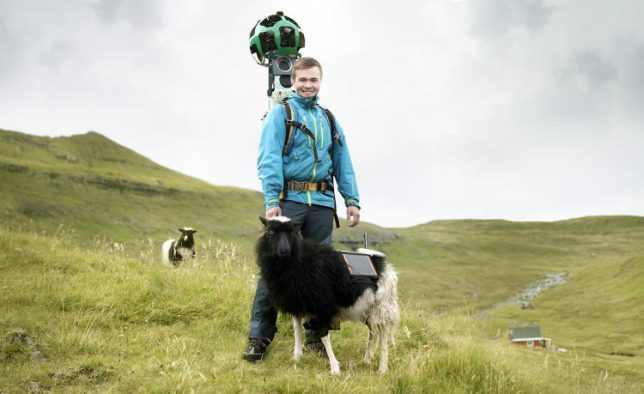
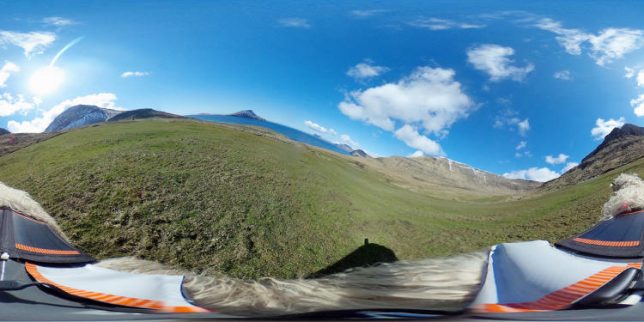
Powered by solar energy and mounted to the backs of sheep, 360-degree cameras are mapping out the Faroe Islands for Google Street View. Since Google was initially reluctant to send cars to the archipelago, locals took it upon themselves to get their own interactive images out into the world, raising awareness of the region’s uniquely beautiful landscapes. In the end, they not only attracted Google’s interest but managed to spawn a creative DIY approach to mapping rugged environments.

Sheep View 360 got its start when resident Durita Dahl Andreassen first strapped a camera to a sheep, let the animal roam free around the island then uploading the results to Google. “I gently placed a 360-degree camera powered by a solar panel on the back of a sheep that would take photographs as the animal freely grazed the open hillsides,” explains Andreassen.

google-sheep-view

“Photos are then transmitted back to my mobile phone so that I can upload them to Google Street View myself, finally putting the Faroes on the map in a very unique way!” Indeed, some of the shots and perspectives would be unlikely or impossible for vehicles or even humans, taken as they are from the tops of roofs and sides of mountains.

sheep-view-mounted

This endeavor and an associated petition eventually did get Google’s attention, but by the time they showed up with vehicles the self-mapping system was well underway with sheep, bikers, backpackers, ships and even a wheelbarrow playing parts.

sheep-view-panoramic

Ultimately, folks from the Faroe Islands have made it a bit of an interactive game — anyone who wants to can come borrow a camera and start mapping the parts not yet uploaded to Google. This presents an interesting challenge for those who want to take it on: can you as a tourist cameraman visit the places most people and cars don’t go to or can’t reach?

sheep-view-hug

“The Faroe Islands have some of the most beautiful roads in the world. It is impossible to describe what it feels like driving through the green valleys and up the mountains, or alongside the ocean, surrounded by steep drops and tall cliffs. It’s an experience like no other.”

Share on Facebook


[ By WebUrbanist in Destinations & Sights & Travel. ]

[ WebUrbanist | Archives | Galleries | Privacy | TOS ]


WebUrbanist

 
Comments Off on Google Sheep View: Creature-Mounted Cameras Map Rugged Faroe Islands

Posted in Creativity


GoPro HERO cameras undergo torture test: a dip in liquid nitrogen

20 Dec

Industrious YouTube user Grant Thompson recently subjected the GoPro HERO5 Session and HERO5 Black cameras to a chilly torture test: dunks in liquid nitrogen. He first tested the experiment with an older Session camera, hoping to avoid the destruction of two perfectly good new cameras if death proved swift. However, the older Session held up surprisingly well, and so he put the two new cameras to the test, literally freezing them solid. See the results in the video above.

Via: PetaPixel

Articles: Digital Photography Review (dpreview.com)

 
Comments Off on GoPro HERO cameras undergo torture test: a dip in liquid nitrogen

Posted in Uncategorized


Take an entertaining look back at the cameras that came before SD cards

13 Dec

Looks like we’re not alone in our love of cameras from the early days of digital photography: YouTuber The 8-Bit Guy has published a thoroughly entertaining look back at cameras that used floppy disks and other memory media that preceded the humble SD card. He revisits the Sony Mavica FD-7, Mavica FD-85, Panasonic SD4090 and the Mavica CD-350. Take a look at the video and see if it sparks any memories of cameras from your past, and then head over to our Throwback Thursday feature on the floppy-disk-using Mavica FD-91.

Articles: Digital Photography Review (dpreview.com)

 
Comments Off on Take an entertaining look back at the cameras that came before SD cards

Posted in Uncategorized


Elinchrom extends Skyport radio transmitter compatibility to Panasonic Lumix cameras

24 Nov

Flash manufacturer Elinchrom has released new firmware for its EL-Skyport Transmitter Plus HS for Olympus so that the device will be able to work with Panasonic Lumix cameras as well as Olympus OM-D models. The transmitter, which is already compatible with all OM-D and Pen models, as well as the E-5 and E-410, will now work with Lumix models as far back as the G7, including the LX100 compact and the FZ1000 bridge camera.

Compatibility with the system means that the listed cameras can be used with a Skyport transmitter to trigger and control the output of a host of Elinchrom flash heads. Elinchrom products that can be used range from portable battery-powered heads to units designed for studio use. Photographers can use the Skyport transmitter to control four groups of heads via 40 channels, and a high speed sync mode allows shutter speeds as short as 1/8000sec. Elinchrom says that the system has an operating range of 200m, and that the 2.4GHz radio communication signals can pass through walls.

The Skyport transmitter costs $ 249/€249/£199. For more information visit the Elinchrom website.

EL-Skyport Plus HS for Olympus and Panasonic compatibiliy table with Firmware V.1.1

Olympus Panasonic
 E-M1  G7
 E-M5 Mark II  GX85
 E-M5  GX8
 E-M10 Mark II  GH4
 E-M10  LX100
 PEN-F  FZ300
 E-P5  FZ1000
E-PL7   
 E-PL6  
 E-PL5  
 E-PM2  
 E-5  
 E-410  

Articles: Digital Photography Review (dpreview.com)

 
Comments Off on Elinchrom extends Skyport radio transmitter compatibility to Panasonic Lumix cameras

Posted in Uncategorized


Godox launches mini radio flash unit for Sony mirrorless cameras

23 Nov

Flash and accessory manufacturer Godox has announced a new small flash unit that it says is designed to go with the Sony mirrorless range of cameras. The Godox TT350S features 2.4GHz radio control and TTL exposure metering, and offers a guide number of 36m@ISO 100. The company says that the unit is compatible with the Sony a7R II, a7R, as well as the a58 and a77ll SLT cameras. Some RX models are also able to pair with the unit.

The radio controlled system allows the TT350S to work alongside other Godox radio flash units and studio heads, and the flash can operate as a master or slave in multiple-head set-ups. Three groups are programmed into the control system along with 16 channels, while the maximum working range is said to be 30m. High speed sync is provided via an HSS mode that can work with shutter speeds of up to 1/8000 sec, and the unit can be switched from TTL to manual operation to make use of 22 output levels from 1/128th power. An automatically zooming head covers focal lengths of 24-105mm, and a hinge allows the head to tilt but not to swivel.

The TT350S is powered by two AA batteries which the company claims should be good for 210 full power bursts. There is no official pricing yet, but one UK ebay seller is offering pre-orders for £73 and says delivery is expected early January.

For more information about the TT350S visit the Godox website.

Articles: Digital Photography Review (dpreview.com)

 
Comments Off on Godox launches mini radio flash unit for Sony mirrorless cameras

Posted in Uncategorized


2016 Roundup: Interchangeable Lens Cameras $900-1200

11 Nov

These days, many (if not most) consumers are likely to shop based on price and capability, rather than according to whether a certain model contains a mirror, or not. We think this is a good thing; with all the increased competition, cameras are improving more and at a faster rate than ever before. From the gear perspective, it’s certainly an exciting time to be a photographer.

In this category, you’ll find both mirrorless and DSLR cameras that are highly capable under a variety of shooting situations, offer built-in high-spec viewfinders – either optical and electronic – and an extensive array of external controls. The biggest differences in performance tend to come down to autofocus sophistication and video capability, but neither of those is dictated by the presence or lack of mirror.

The contenders are:

  • Canon EOS 80D
  • Canon EOS M5
  • Canon EOS Rebel T6s
  • Nikon D7200
  • Olympus OM-D E-M5 II
  • Panasonic Lumix DMC-G85
  • Panasonic Lumix DMC-GX8
  • Pentax K-3 II
  • Sony Alpha a77 II
  • Sony Alpha a6300

Most of the cameras in this roundup are built around either Four Thirds or APS-C sensors. Sensor size plays a large part in determining the image quality a camera is ultimately capable of and, in general, the larger a camera’s sensor, the better the image quality and the more control you have over depth-of-field. APS-C sensors are larger than Four Thirds chips, but the differences are rarely huge.

Of course, the sensor sizes and image quality of these cameras are not the only thing that varies; the feature sets and performance of each camera are also quite different across the board. Within this category you’ll find weather-sealed cameras, cameras that can capture 4K video, cameras that can shoot bursts at incredibly high speeds with autofocus, and cameras that are simply well-balanced all-rounders. Which one should you buy? Read on to find out…

Articles: Digital Photography Review (dpreview.com)

 
Comments Off on 2016 Roundup: Interchangeable Lens Cameras $900-1200

Posted in Uncategorized


2016 Roundup: Interchangeable Lens Cameras $500-900

10 Nov

The $ 500-900 category (based roughly on US MSRP) features quite a few strong offerings, some of which should satisfy first-time camera buyers with easy-to-use interfaces and point-and-shoot style functionality. Others are aimed more at seasoned-enthusiasts, offering direct manual controls and high-end features.

At this price point, all of the cameras use either Four Thirds or larger APS-C-sized sensors and all can shoot Raw. And while a larger sensor can mean the potential for better image quality and more control over depth-of-field, the difference in size between APS-C and Four Thirds is not enormous. As such, small differences notwithstanding, the vast majority of cameras in this roundup have what we would consider to be very good image quality.

All of the cameras in this selection are reasonably small in size (compared to pricier ILCs), but the number and arrangement of control points, grip size, build quality and weight all vary quite a bit. As do the inclusion of features like like 4K video capture and in-body image stabilization.

Let’s take a look at the currently available interchangeable lens cameras that fall into the $ 500-900 price range (give or take).

  • Canon EOS M3
  • Canon EOS Rebel T6i
  • Fujifilm X-E2S
  • Fujifilm X-T10
  • Nikon D5500
  • Olympus OM-D E-M10 II
  • Panasonic Lumix DMC-GX85
  • Pentax K-70
  • Sony Alpha a6000

Articles: Digital Photography Review (dpreview.com)

 
Comments Off on 2016 Roundup: Interchangeable Lens Cameras $500-900

Posted in Uncategorized


CMRA band for Apple Watch features front and rear cameras

03 Nov

If you’re worried that having to pull your smartphone out of your pocket might make you miss the decisive moment, the CMRA band for the Apple Watch could be just what you’re waiting for. The watch band comes with not one but two built-in cameras. An upward-facing 2MP module is meant to be used for video calls, via a dedicated app, and the occasional selfie. The outward-facing camera captures 8MP images or HD-video clips right from your wrist.

To do so you have to tap a button that is built into the band or long-press it for video recording. A double-tap of the button switches between cameras. The makers of the CMRA claim you can capture ‘hundreds’ of images with one battery charge or record approximately 30 minutes of video footage. 

Recorded images and videos are accessible via Apple’s stock Photos app, so they can be easily sorted, edited and shared. In terms of storage the CMRA offers 8GB of built-in memory. The band comes with a dual-charging dock that charges Apple Watch and CMRA band at the same time.

The CMRA band is expected to launch in Spring 2017, but those interested can already put a pre-order in at an early bird price of $ 149 for either the 38mm or 42mm version. The estimated retail price after launch is $ 249. More information is available in the video below or on the CMRA website where you can also order the band.

Articles: Digital Photography Review (dpreview.com)

 
Comments Off on CMRA band for Apple Watch features front and rear cameras

Posted in Uncategorized