RSS
 

Posts Tagged ‘Camera’

Outex launches clear, universal underwater camera housing

04 Nov

Outex has launched a clear version of its rubber underwater camera ‘housing’ via Kickstarter, where it is seeking $ 35k in funding to bring the product to market and help even more people get into underwater photography without breaking the bank.

This clear version joins the company’s original rubber sleeve, which features a solid blueish color with the exception of the lens cover. The clear design, according to Outex, makes it easier to adjust camera settings after putting the camera in the sleeve. And while the Kickstarter doesn’t mention it explicitly, we assume this version features the same IP08 rated waterproof design as the blue version, which can withstand depths up to 10 meters or about 33 feet.

Unlike most camera housings, which are made of rigid materials and designed to fit a specific camera, Outex’s rubber sleeve stretches to accommodate a variety of camera and lens shapes and sizes. Additionally, Outex says its new model has an “improved material composition” that makes both installation and removal easier by offering increased malleability and elasticity.

Finally, Outex says the housing covers also have better longevity thanks to a reformulated compound design and better manufacturing process.

As of this writing, Outex is about $ 10,000 of the way to its $ 35K goal with 31 days to go, but if the Kickstarter campaign brings in enough funds to meet certain stretch goals, Outex will also launch covers for mirrorless and compact cameras ($ 75k goal), large-body cameras ($ 150k goal), and even covers that can accommodate pistol grips and tripods ($ 175k goal).

The Kickstarter campaign is offering backers one clear cover for pledges of at least $ 100. Assuming the funding goal is met and everything goes according to plan (NEVER a guarantee), backers will receive their products in January 2018.

Articles: Digital Photography Review (dpreview.com)

 
Comments Off on Outex launches clear, universal underwater camera housing

Posted in Uncategorized


HTC U11+ combines U11 camera specs with large 6-inch display

03 Nov

HTC has launched the HTC U11+ which shares many characteristics with its smaller cousin U11. Both phones are powered by a Snapdragon 835 chipset and come with, depending on region, 4 or 6GB of RAM. They also share the same camera specifications that made the U11 one of the best camera phones in 2017.

On the back, you’ll find a 12MP sensor with large 1.4µm pixels that is combined with optical image stabilization and a fast F1.7 aperture. In video mode the U11+ can record 1080p footage at 120fps, and 4K clips with Hi-Res audio. At 8MP, the front camera pixel count has been reduced compared to the U11’s 16MP sensor. The front module also offers an 85-degree field-of-view, an F2.0 aperture and 1080p video recording.

The big difference between U11 and U11+ is the latter’s almost bezel-less LCD display with 18:9 format and a 1440×2880 pixel resolution. It means there are now no physical controls on the front and the fingerprint reader was moved to the back. The body is IP68-certified and comes in Ceramic Black, Amazing Silver and Translucent color options. There’s also a microSD card slot and the 3,930mAh battery offers support for Qualcomm Quick Charge 3.0.

In Europe, the HTC U11+ will be available for €800 (approximately $ 930). For now a launch in North America is not planned.

Articles: Digital Photography Review (dpreview.com)

 
Comments Off on HTC U11+ combines U11 camera specs with large 6-inch display

Posted in Uncategorized


Mevo Plus is a pro-tier livestreaming 4K camera for Vimeo Live

02 Nov

Following the finalization of its Livestream acquisition earlier this month, Vimeo has announced a new camera for Vimeo Live called Mevo Plus. This hardware joins the original Mevo camera and is compatible with Vimeo Live, the company’s livestreaming platform. The original Mevo camera will be phased out, according to Venture Beat, as the improved Mevo Plus becomes the main camera product for Vimeo Live.

Vimeo Live was announced in late September as a livestreaming platform, “specifically meant to address the needs of professional event creators.” Now, those same professional event creators have a dedicated camera that is integrated with this service, although the Mevo Plus also works with Periscope, Livestream, Facebook Live, Twitter, and YouTube.

Mevo Plus features a 150 f/2.8 glass lens, 12.4MP Sony 4K sensor with a 3840 x 2160 capture resolution, 16:9 aspect ratio, and 30fps frame rate. Video content can be recorded to the device or can be streamed using Ethernet, WiFi, and LTE. Other features include a six-axis motion sensor, forward-facing speaker, magnetic base, 150-degree FOV, and a built-in battery able to power the camera for up to an hour. The full list of tech specs are available here.

Mevo Plus is priced at $ 500, and the original Mevo model is now discounted to $ 300 as the remaining inventory is sold off.

In addition to offering Mevo Plus by itself, the company is also offering a Mevo Plus Pro Bundle for $ 800, a $ 100 discount over the bundle’s regular price. The bundle includes the Mevo stand, case, Mevo Boost accessory device, and a tripod. Click here to find out more or order one for yourself.

Articles: Digital Photography Review (dpreview.com)

 
Comments Off on Mevo Plus is a pro-tier livestreaming 4K camera for Vimeo Live

Posted in Uncategorized


Rylo 4K 360° camera uses a one-tap app to produce cinematic videos

02 Nov

Launched today by a company of the same name, Rylo is a 360-degree camera that uses some nifty software to produce “beautiful, cinematic video” that is “impossibly smooth.” You just focus on shooting, and Rylo can just about handle the rest.

Rylo relies heavily on companion software that makes it possible to transform the raw 360-degree content into smooth videos, including ones that follow specific points of interest or that track a specific object. The camera can also be used to generate stabilized, moving time-lapse videos.

The portable little camera features integrated horizon leveling and stabilization to produce smooth videos in the absence of a stabilization rig, something possible “no matter the conditions,” according to the company. To capture the raw 360° video it uses a pair of lenses—one on the front and the other on the back—both with a 208-degree FOV and fixed F2.8 aperture. Content is captured as 4K 360° 30fps footage and can be output in a variety of ways: from 6K 360 panoramic photos, to 4K 360° video, to standard 1080p.

Rylo includes a 16GB microSD card for storage, but supports cards with capacities up to 256GB. Other features include an anodized aluminum alloy body, small OLED display, and a single button for both powering on the device and recording. The internal rechargeable battery supports about 60 minutes of continuous recording.

But the specs aren’t the key thing here; Rylo really shines when coupled with its related software and all of the features it enables.

The company bills its product as a way for anyone to shoot and produce cinematic video. “The combination of Rylo’s hardware and software gives anyone the confidence and creative freedom to get the perfect shot every time,” company CEO Alex Karpenko explained in a press release.

After capturing footage, the user plugs the camera into the smartphone where the companion mobile app automatically offers one-tap options to edit the video. This process reduces the editing time from hours to minutes, according to the company. Whether that final footage is as good as the footage “hours” would have produced is, of course, dependent on your skill as a video editor.

Here’s a quick intro that shows you how this impressive little camera works:

Rylo is only available through the Rylo website in the US for now, but will arrive soon on Amazon. The camera costs $ 500 USD and will start shipping next month.

Articles: Digital Photography Review (dpreview.com)

 
Comments Off on Rylo 4K 360° camera uses a one-tap app to produce cinematic videos

Posted in Uncategorized


YI releases much-needed firmware update for Yi-M1 mirrorless camera

02 Nov

When we got our hands on Chinese camera maker YI’s first mirrorless camera, the YI-M1, we didn’t have a lot of positive things to say. Despite a great sensor, the camera was… unrefined. But the company just released a new firmware version for the M1 that promises to smooth out some of its rougher edges.

Key updates include (much-needed) improved AF speed, the addition of a RAW+JPG shooting option, exposure control in P, A, S and M modes when shooting video, AF/MF control during video capture, and the addition of a histogram in live view while shooting both stills and video.

We’ve updated our review model to the latest firmware and are taking it for another spin to possibly update our review, but in the meantime, check out the release notes below to see what all YI has improved and fixed on the M1 with this newest update.

Release Notes

{PressRelease}

Firmware Version 3.0-int Update Logs

New

  1. Added exposure control in the mode P/A/S/M for video capture
  2. Added AF/MF control for video capture.
  3. Added RAW+JPG format for still capture
  4. Added still image option in Time Lapse
  5. Added the option to shoot 1-3 images when using the self-timer function with an initial 2 second or 10 second timer settings
  6. Added a histogram in live view mode for both still and video capture
  7. Added new focus viewing modes with improved image quality including: 6x, 8x and 10x magnification in MF mode
  8. Added 2 ways to show the Metering mode in the UI
  9. Added the user guide (Restoring factory settings to view)
  10. Added multiple selection of images for deletion.
  11. Added 2 new options for the display grid
  12. AE algorithm optimization
  13. Master Guide template display logic optimized
  14. Improved AF speed

Fixed

Fixed some known bugs, and improved the overall stability of the system.

Changed

Change the thumbnails in each screen from 9 to 12 images.

{/PressRelease}

Articles: Digital Photography Review (dpreview.com)

 
Comments Off on YI releases much-needed firmware update for Yi-M1 mirrorless camera

Posted in Uncategorized


Leica Q in Silver brings a new look to the compact camera

01 Nov

$ (document).ready(function() { SampleGalleryV2({“containerId”:”embeddedSampleGallery_5886797949″,”galleryId”:”5886797949″,”isEmbeddedWidget”:true,”standalone”:false,”selectedImageIndex”:0,”startInCommentsView”:false,”isMobile”:false}) });

Leica has announced a new silver version of the Leica Q camera, giving customers the option of buying a model featuring a silver top plate, baseplate, and silver lens. The back of the new Leica Q Silver model is black, giving the camera what Leica describes as a ‘modern take’ on the two-tone color arrangement.

This rendition of the Leica Q features control elements that have been given the silver touch, while the lens sports red engraved focal length numbers and distance scale. All of this is rounded out by the same high-grip pattern found on the regular model’s black leather trim. The Leica Q in Silver is otherwise identical to the standard model, including its 24MP full-frame sensor.

Leica stores, boutiques and dealers will begin offering the Leica Q in Silver late next month for $ 4,495 (the all-black Leica Q retails for $ 4,250).

Press Release

Leica Camera Announces the Leica Q in Silver

A new look for the ground-breaking compact camera complements its innovation and classically elegant style

Leica Camera reimagined the photographer’s everyday camera with the Leica Q, featuring a trailblazing design, full-frame sensor, the fastest lens in its class, and an interface for easy and intuitive handling. Today, Leica Camera announces a new style for the same innovative technology that many photographers now call their favorite Leica camera yet – the Leica Q (Typ 116) Silver Anodized.

DESIGN

A silver top plate, silver baseplate and silver lens create a striking appearance for this new version of the Leica Q, while the rear of the camera is a sleek and refined black – achieving a modern take on the classic silver and black two-tone look. The characteristic, high-grip pattern of the standard Leica Q black leather trim has been maintained, while the control elements are redesigned with a silver finish. Red engravings of the distance (feet) scale and the focal length numbers on the lens add a colorful accent to the classic look of the camera.

Functional elements within the Leica Q are designed clearly and logistically, for optimum efficiency. For example, the Leica Q control menu provides rapid access to all essential controls and enables users to program personalized settings.

TECHNICAL SPECIFICATIONS

The technical specifications of the silver Leica Q are identical to those of the standard black model. Its incredibly fast lens (the Leica Summilux 28 mm f/1.7 ASPH.) and full-frame sensor (24 megapixels) make the Leica Q a perfect tool for street photography and low light, as well as architecture and landscape shots. An integrated high resolution electronic viewfinder (3.68 megapixels) offers photographers reliable control of their composition. These features, full HD video capabilities, Wi-Fi integration and more ensure that even the finest details of every subject are captured in a snap, and easily accessible at all times.

The Leica Q in Silver will be available at Leica boutiques, stores, and dealers at the end of November 2017.

Articles: Digital Photography Review (dpreview.com)

 
Comments Off on Leica Q in Silver brings a new look to the compact camera

Posted in Uncategorized


How to Make the Most of Your Camera Gear and Skills

01 Nov

Several years ago as I was just getting serious about photography, my only pieces of gear were a Nikon D200 and a 50mm lens. I was instantly enamored with the lens and almost overnight I stopped taking photos of my family and friends with a pocket camera. Instead, I preferred to bring my large DSLR setup with me everywhere because the resulting images were so good.

However, the more I used it the more I became aware of its limitations and I once told my friend Ryan, one of two people who were instrumental in getting me started on my path as a photographer, that I liked the lens but it wasn’t very well suited to wildlife photography.

He took umbrage with that assessment, and quite rightly so because that lens can be ideal for wildlife photography!

How to Make the Most of Your Camera Gear and Skills

As I slowly reversed my position over the years I started to realize that the same principle holds true for all sorts of photography types. The camera gear you have, combined with the skills you possess, can work just fine if you simply adjust your perspective a bit.

Whether you like to shoot portraits, sports, wildlife, astrophotography, nature, still life, or any other kind of images you can probably find a way to make it happen with the gear already on your shelf. The first steps involve some mental adjustments that can be somewhat difficult to wrap your head around but make all the difference in the end.

Here are some tips to help you.

Define your terms

When I made that regretful statement about a 50mm lens not being suited for wildlife photography it was partly out of ignorance because I was a new photographer. But mostly it was because I didn’t understand what was meant by the term wildlife photography.

What I had in mind were images of lions, tigers, and bears set against sweeping African vistas. There was simply no way I could get shots like that with a 50mm lens while living in a small town in the middle of Oklahoma. What I realized over the years was that wildlife photography can mean many things, and I didn’t need to put that term in such a small, limiting box.

How to Make the Most of Your Camera Gear and Skills

Would you consider a turtle sitting on a rock at the edge of a college campus pond to be wildlife? At first, I did not, but now I most certainly do.

Instead, I decided to expand it to include animals I would encounter in my normal everyday routine and even bugs and insects that were literally in my very own backyard. The simple act of re-defining what I considered to be wildlife photography made all the difference in the world to me and has helped me get shots of which I am quite proud and now find great joy in pursuing.

What does it mean to you?

The question for other photographers in a similar situation then becomes: what does [insert type of photography] mean to you? If you want to start photographing people do you mean close-up headshots? Full-body pictures? Street photography? Parties and weddings?

You can even break this down further by looking at sub-genres and defining those terms to be what you want. When you think of a headshot your first mental image might be that of a magazine cover. But headshots can be any number of things and people can be photographed in infinite ways.

The same thing goes for other types of photography as well. You might think sports photography means prize-winning shots of soccer players scoring a goal. But it might also mean shooting an archery competition or even a chess match. And those require very different skills and equipment compared to a football match.

In short, don’t let your pursuit of a specific type of photography be defined by what you think it should mean or, even worse, what other people say. Let it be what you want it to be, then go out and pursue it.

How to Make the Most of Your Camera Gear and Skills

Can wildlife photography mean shooting a spider on the side of your house? Of course! There’s no rule that says it can’t.

Know what you’re working with

Along with knowledge of your own perceptions of a certain type of photography, it helps to have a solid understanding of the gear you own and the skills you possess. That way you can play to the strengths of what is available to you while also understanding areas in which you could improve.

As I started using my 50mm lens for more wildlife photography I developed a much clearer idea of what the lens could do and its limitations. That helped me understand the types of animal images I could get with it.

For example, instead of zooming in on animals that were far away I learned to be patient and find ways of physically getting closer to animals. That wasn’t always an easy task, but it taught me a lot about myself and my willingness to get the shot I wanted. It also helped me understand that my humble little 50mm lens was capable of a lot more than I initially gave it credit for.

How to Make the Most of Your Camera Gear and Skills

The best camera is the one you have with you

Every now and then I would get lucky and have an animal cross my path. Then almost as if it were aware of what I was doing, it would pause and wait for a picture. Of course, this type of scenario is only possible if you have your camera with you instead of sitting on a shelf at home.

No matter what type of pictures you are pursuing, by not practicing and not having your camera with you it will not help you advance. I also learned to conquer some of my fears and do what it takes to get the shot even if it makes me uncomfortable.

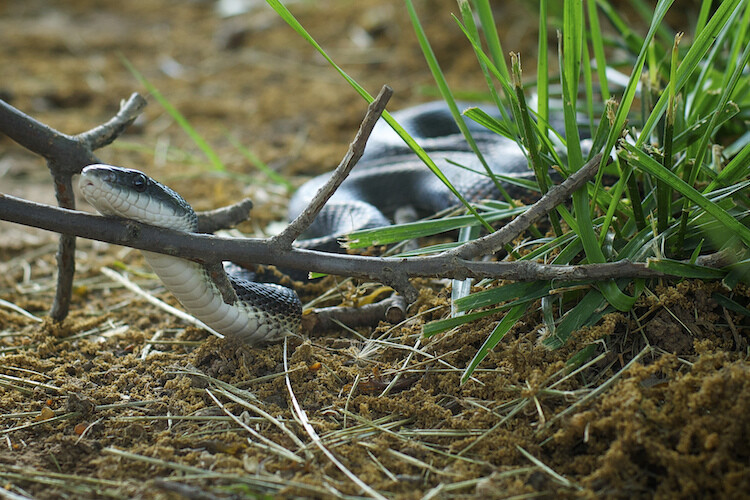
I made this image of a snake after seeing it crawl across the street and into my front yard. Not knowing whether the snake was venomous or not (turns out it wasn’t) I made sure to keep my distance and have an escape plan ready. But I wasn’t about to let an interesting photo opportunity pass me by.
How to Make the Most of Your Camera Gear and Skills

You’ll learn what gear you need

Several years ago I took the following picture of a spider outside my house and thought it was decent. But it was not nearly as good as it could have been because my lens would not focus any closer. (Are you seeing a theme here? You don’t need to go far to take wildlife photos!)

There were also problems with the picture from a compositional standpoint: the light is too harsh, the subject is somewhat unclear, and it’s not all that obvious exactly what is happening.

How to Make the Most of Your Camera Gear and Skills

One of my earlier photos of a spider eating on an evening snack. Much like the grasshopper, this picture clearly has some problems.

As I learned more about my gear while refining my skills I realized that I simply didn’t have what I needed to take close-up shots of bugs and insects. So I bought a set of close-up filters for about $ 35 that allowed me and 50mm lens to get much closer to subjects than before.

I also spent time studying light, composition, mood, emotion, and other principles of photography because I knew I had a lot to learn in those areas. The result is a similar image that I took recently which, in my opinion, is far superior to its earlier counterpart.

How to Make the Most of Your Camera Gear and Skills

It took several years and hundreds of shots before I was able to get a photo I was happy with.

Use what you have to its potential

The lesson here is that you don’t necessarily need to buy new equipment to get the kinds of shots you want. But you do need to know how to use what you’ve got and what you know.

Are you shooting with the kit lens that came with your camera? That’s fine! Those lenses are great for wide-angle shots and short telephoto images, and you can get fantastic shots especially if you have plenty of light.

Your camera might even have features you don’t know about, like fast autofocus or good high ISO capabilities that would make it well suited for sports or nighttime photography. The more you learn about what you have, the more photographic possibilities you will see open up right in front of your eyes.

Manage your expectations

No matter what type of photography you want to pursue it is essential that you have your expectations in line with the reality of what you are attempting to do.

If you want to take amazing poster-worthy images of basketball players going for a slam dunk, by all means, go for it! Are you looking to capture some brilliant wedding photos and fun memories from the reception afterward? Or maybe you want to do like I did and get into photographing animals and wildlife.

Have patience

Whatever type of photography you want to pursue, know that you won’t get from here to there overnight. Getting the pictures you want takes years of practice, education, and an intimate knowledge of what your photography gear can and can’t do.

Pursuing those photos is certainly a lofty and admirable goal and one that is obtainable given enough time and effort. But when you start out your photos will almost certainly not look like what you might be picturing in your mind.

How to Make the Most of Your Camera Gear and Skills

Be like this cottonwood borer beetle and reach for the stars! Just know that it might take a little while to get there.

Even if you can clearly define what you mean by portrait, sports, wedding, wildlife, landscape, real estate, or family photography and you have a solid understanding of your camera gear and your own abilities, your initial pictures will probably fall short of your expectations.

That’s perfectly fine, and it’s all part of the process of growing as a photographer. As long as you don’t let your initial shots get you down. Go into it with an understanding that you have time and room to grow. In the meantime, don’t let anyone tell you your pictures aren’t good enough, you don’t have the right gear, or you aren’t as skilled as you need to be.

This photo represents my White Whale: a goal I have been pursuing but always seems out of reach. I always seem to end up with images like this which are almost there…but not quite. Someday I would really like to get a shot of a bee drinking nectar from a flower, and I will keep at it until I finally get it.

Conclusion

What are some of your photography goals, and what are you doing to make those goals happen? Is there a type or style of photography you have always wanted to try but never thought you could do? Leave your thoughts in the comments below–I’d love to hear from the DPS community on this and hopefully help others find some encouragement and inspiration on their photographic journey.

The post How to Make the Most of Your Camera Gear and Skills by Simon Ringsmuth appeared first on Digital Photography School.


Digital Photography School

 
Comments Off on How to Make the Most of Your Camera Gear and Skills

Posted in Photography


Nikon shuts down camera factory in China, blames ‘the rise of smartphones’

31 Oct

Earlier today, the Nikon board of directors announced plans to close Nikon Imaging (China) Co., LTD (NIC)—a subsidiary based in Wuxi City, Jiangsu, China, where NIC employed some 2,500 workers at a factory that produced compact digital cameras and DSLR lenses. The closure, says Nikon, is due to “the rise of smartphones” and the “rapidly shrinking” compact camera market.

Nikon’s announcement of the closure lays the blame for this cut squarely on the shoulders of the smartphone revolution.

In recent years […] due to the rise of smartphones, the compact digital camera market has been shrinking rapidly, leading to a significant decrease in operating rate at NIC and creating a difficult business environment. In this context, the Company conducted rounds of thorough reviews and discussions on the global manufacturing structure optimization measures stated in the company-wide restructuring plan announced by the Company in November 2016. The Company has decided to discontinue operations of NIC.

Nikon says expenses related to the closure of the factory and “discontinued operations of the consolidated subsidiary” are expected to reach about 7 Billion Yen (~$ 62 million USD).

Of course, the end of Nikon Imaging (China) doesn’t mean the end of Nikon cameras in China. According to Nikkei, Nikon controls 30% of the digital camera market there, and Nikon itself says it will “continue proactively developing business and services in China.” This move is simply in keeping with a harsh if unsurprising (and “old news”) reality: the smartphone has killed the entry-level compact.

Articles: Digital Photography Review (dpreview.com)

 
Comments Off on Nikon shuts down camera factory in China, blames ‘the rise of smartphones’

Posted in Uncategorized


iOS apps can secretly record and take pictures once you’ve given them camera permission

31 Oct

If you want to be sure nobody is spying on you through your laptop’s webcam, the best thing you can do is cover the lens—but the same might actually be true for the camera on your Apple smartphone.

Felix Krause, a developer at Google, has found that any iOS app could secretly use the iPhone’s camera to record images and video of the user, once given permission to access the camera at all. Krause developed an app for demonstration purposes that shows how an app could use either front or rear cameras to capture images and video in the background. The resulting footage or images could be directly transferred to cloud servers without the user being aware or receiving any notifications.

The camera could also be used to run real-time face recognition, possibly even identifying the user.

The good news is that Krause’s app is not approved for distribution through the iTunes App Store; hopefully such malicious behavior would be picked up during Apple’s pretty strict review process. However, if you want to be entirely certain you’re not being spied on, the best options seem to be covering the lens or not granting camera access to any app you don’t 100 percent trust.

For a better idea of the issue, watch the video below that shows Krause’s proof-of-concept app in action, or read the full report on his website.

Articles: Digital Photography Review (dpreview.com)

 
Comments Off on iOS apps can secretly record and take pictures once you’ve given them camera permission

Posted in Uncategorized


The medium format Hasselblad X1D is the highest rated camera on DxOMark

26 Oct

After the Nikon D850 became the highest rated camera on DxOMark with a score of 100, the sensor testing and software company promised to start reviewing medium format cameras again very soon. Today, they fulfilled that promise and unseated the former-champion Nikon D850 all in one fell swoop.

The new DxOMark champion is the mirrorless medium-format Hasselblad X1D-50c, which came “crashing through the 100-point barrier” with an overall sensor score of 102.

“The X1D-50c excels in all three of our measurement categories, achieving either the top-ranked or a podium position result in each,” explains DxOMark. In fact, the camera received the highest Low-Light ISO score DxO has ever doled out, and it ties for 1st place with the Nikon D850 in the Color Depth category.

You can read the full review and dive into the results on the DxOMark website, but here’s a snippet from the Conclusion for you TL;DR types:

Image quality on the Hasselblad X1D-50c is outstanding, crashing through the 100-point barrier to become the highest-scoring commercially-available sensor we’ve tested. At 102 points overall, it also achieves either the best, or very close to the best results for both color depth and dynamic range. Combine that with its 50Mp resolution and mirrorless design, all packaged at a more realistic price tag, the X1D-50c starts to look like a tantalizing prospect.

Articles: Digital Photography Review (dpreview.com)

 
Comments Off on The medium format Hasselblad X1D is the highest rated camera on DxOMark

Posted in Uncategorized