Hasselblad has announced the general availability of its 907X 50C medium format camera kit, as well as the accessory grip and optical viewfinder. The camera was introduced over a year ago, and up until now a limited edition Moon Landing kit was the only way to get one – but those sold out pretty quickly.
The standard production 907X body with the CFV II 50C back will cost €6590 / £5990 / CNY¥48000 including tax / $ 6399 excluding sales tax and will ship at the end of August. The 907X Control Grip will be of €749 / £679 / CNY¥5990 / $ 729 (no US tax) and the optical finder €499 / £459 / CNY¥3990 / $ 499. The limited edition Moon-Landing kit that came in a matt black finish with black trim cost $ 7500/ €7475/ £6990.
The 907X camera body accepts lenses from the XCD range designed for the X1D series cameras, but can also use the HC/HCD, V system and XPan lenses via adapters. The CFV II 50C back features a 50MP sensor, dual SD card slots, USB-C and Wi-Fi as well as the ability to record 2.7K video. For more information see the Hasselblad website.
Press release:
Press information – For immediate release Gothenburg, Sweden 12 August 2020
HASSELBLAD 907 X 50 C NOW AVAILABLE
COMBINING OUR LEGACY WITH YOUR FUTURE A UNIQUE PHOTOGRAPHIC EXPERIENCE WITH FULL SYSTEM MODULARITY
Introduced as a concept in June 2019 and now available to purchase, the 907X 50C mirrorless medium format digital camera is comprised of the modernised CFV II 50C digital back and the brand new 907X camera body, connecting Hasselblad’s photographic legacy and future into one system.
With an outstanding medium format 50-megapixel CMOS sensor (43.8 x 32.9 mm), the CFV II 50C digital back enables use with most V System cameras made from 1957 and onwards in addition to third party technical or view cameras. The CFV II 50C features a brilliant 3.2in 2.36K dot tilting rear display with full touch support and Hasselblad’s renowned user interface for settings, image review, and menu naviga- tion. Users of previous CFV digital backs will appreciate the new fully integrated battery design, the same used on the X System, which reduces overall size and with the option to recharge in-camera via the USB-C port. Combining its iconic aesthetics with a chrome edge body finish in addition to modern tech- nology, the CFV II 50C gives a nod to Hasselblad’s history combined with the brand’s world-renowned image quality.
Coupling the CFV II 50C with the 907X, Hasselblad’s smallest medium format camera body ever, creates a highly compact package. This combination offers a truly distinct photographic experience, including the classic waist-level shooting style of the V System enabled by the CFV II 50C’s tilt screen. With the 907X, the photographer gains access to all of the high-quality X System Lenses in addition to a vast range of Hasselblad optics via adapters, including the H System, V System, and XPan Lenses. In addition, the 907X enables compatibility with a wide range of third-party adapters and lenses. Accessories that beautifully complement the combination include the 907X Control Grip and 907X Optical Viewfinder.
Key features for the 907X 50C: • Large medium format 50MP 43.8 x 32.9 mm CMOS sensor • 14 stops of dynamic range • Hasselblad HNCS • Captures 16-bit RAW images and full resolution JPEGs • High-resolution 3.2-inch 2.36K dot touch and tilt screen • Smooth live view experience with a high frame rate of 60fps • Video: 2.7k (2720 x 1530) and Full HD (1920 x 1080) / Video covers full sensor width in a 16:9 ratio • Intuitive user interface with swipe and pinch touch controls • Internal battery slot with the option to recharge in-camera via the USB-C port (same battery used on the X System) • Compatibility with most V System cameras made from 1957 and onwards in addition to third party technical or view cameras • Full compatibility with all XCD Lenses • Full compatibility with HC/HCD Lenses including AF with optional XH Lens Adapter (manual focus only with HC 120 Macro and HC 120 Macro II) • Compatibility with V System Lenses, XPan Lenses, and third-party lenses using XV, XPan and third- party lens adapters, respectively • Dual UHS-II SD card slots • Audio in/out connectors • Flash in/out connectors • Integrated Wi-Fi connectivity and USB-C connection, enabling tethered shooting • Portable workflow with Phocus Mobile 2 support* • Optional accessories, including chrome finished 907X Control Grip for quick access to main image functions and 907X Optical Viewfinder for convenient eye-level shooting • 907X ultra-thin and light weight body converts CFV II 50C digital back into digital SWC • 907X 50C weight: 740 g (CFV II 50C: 540 g / 907X Camera Body: 200 g)
The 907X 50C has an MSRP of €6590 / £5990 / CNY¥48000 including VAT and $ 6399 excluding sales tax.
The 907X Control Grip has an MSRP of €749 / £679 / CNY¥5990 including VAT and $ 729 excluding sales tax.
The 907X Optical Viewfinder has an MSRP of €499 / £459 / CNY¥3990 including VAT and $ 499 excluding sales tax.
All products are available to order today, and shipping will begin from the end of August. Visit www.hasselblad.com/cfv-ii-50c-907x/ to see more about the 907X 50C.
*Update for Phocus Mobile 2 for iPad and a brand new Phocus Mobile 2 for iPhone to be released soon. This update for Phocus Mobile 2 will enable Live View, allowing for Focus Peaking, control of Depth-of- Field, setting AF area positioning and the ability to simulate exposure, all from the Live View screen in Phocus Mobile 2.
Nikon has announced an introductory trade-in offer for photographers interested in Nikon’s new entry-level full-frame mirrorless Z5 camera. From now through one month following the Z5’s August 27, 2020 release date, customers will be able to trade-in any working camera from any brand and save $ 100 USD on the Z5, in addition to the trade-in value of their camera. This deal is available retroactively as well, ensuring that those who already preordered through Nikon directly or through an authorized reseller can still get in on this new deal.
The basics of the deal are as follows. You visit Nikon’s dedicated trade-in website to get a quote for your camera. You then purchase a new Z5 (or Z50, Z6 or Z7, albeit without the $ 100 USD bonus). Next, you send Nikon your old camera, with Nikon covering the cost of ground shipping. Once the camera has been received and checked over, Nikon will send you a refund.
As an example, let’s consider the (plausible) case of a Nikon D750 owner wishing to trade-up to a new mirrorless camera, while still being able to use their existing full-frame F-mount lenses via Nikon’s FTZ adapter. Further, let’s assume that the camera is in excellent condition, meaning it shows minimal wear and functions properly. In this case, Nikon will offer $ 495 trade-in value, plus an additional $ 100 with the ongoing promotion. ‘Good’ and ‘poor’ conditions are also available to select, although all three conditions require the camera to function properly. You cannot trade-in a camera that is not functional.
If Nikon determines that the quality of the camera is less than you stated during the trade-in quote process, you will be eligible to return the Z5. However, you will otherwise forfeit the $ 100 bonus if you, for any other reason, return the camera. As expected, there additional terms and conditions to consider, the full list of which can be viewed here.
To participate in the trade-in program, you must have the Z camera shipped to a valid US address. You can trade-in multiple cameras when purchasing multiple Z cameras, but only a single trade-in can be applied per camera, so there is no way to combine $ 100 bonuses on a single Z5 purchase.
Nikon has published a Frequently Asked Questions list for their Z camera trade-in program as well. Before participating in the program, it is highly recommended reading. There is included information worth highlighting.
You can trade in any camera in working condition, not just a digital camera nor only an interchangeable lens camera. Cameras not listed as trade-in options are eligible and Nikon will send a quote within 1-2 business days of receiving your submitted information, in most cases. You cannot trade standalone lenses in as part of the promotion, however, some kit lenses are included in the promotion, such as a Nikon D3000 and accompanying 18-55mm VR kit lens, for example. If you are worried about being without a camera, fret not as Nikon will ship your new Z camera with free two-day shipping and you aren’t required to send in your trade-in camera until your new Z camera has arrived.
If you would like to learn more about the Nikon Z5, which was recently announced on July 21, you can read our detailed overview here. If you’d like a quick hit piece on what you need to know about the Nikon Z5, we have that too. New cameras aren’t released in a vacuum; click here to learn how the Z5 compares to the Sony A7 II and Canon EOS RP.
Your average consumers use — almost exclusively — the cameras inside their smartphones for picture taking these days. Professionals use big black cameras with even bigger lenses. Or, at least that’s the perception most us have when thinking about camera use. But is this actually true?
The analysts at Suite48Analytics have conducted a survey among a total of 881 professional photographers from North America and Europe to find out and published the results in a report titled Pro Photographers and their Camera Use’.
The report covers camera use in general but puts some emphasis on ‘stand-alone cameras’ versus smartphones. The results aren’t entirely surprising. Most photographs for business purposes are still captured with a dedicated camera of some sorts. However, 11 percent of the surveyed photographers use a smartphone camera for approximately 50 percent of their pro images. Smartphone use for professional images is also on the rise, with 31 percent saying they use the smartphone more now than they did 12 months ago.
As one would assume, smartphone use is higher for personal photography. 29 percent take 50 percent of their non-work photos with a smartphone. 36 percent take even more than half of their personal pictures with a phone.
Despite Android phone makers putting a lot of emphasis on their devices’ camera capabilities, the iPhone is still the clear favorite among pro professionals, with 86 percent using an Apple model.
So for what type of work do pro photographers use their smartphone camera? Interestingly smartphones are mostly used in situations that don’t involve a client present at the scene. 58 percent use the smartphone to take photos that support their own business, for example, website photos or social media posts. 20 percent use phones for behind the scenes type of work.
In those situations when professional photographers do use a dedicated camera the trusty DSLR is still the most popular choice with 53 percent, but at 30 percent mirrorless full-frame cameras are getting closer. Medium format cameras get some use, too, but all other types of cameras are represented in a fairly minor way.
Professionals who use smartphones do so predominantly because they have less gear to carry and the phone allows you to ‘catch moments’ because it is always within reach. On the other hand, phone use is still much lower than it could otherwise be because professional photographers have concerns about the optical quality of smartphone cameras, even those on high-end models, but also client perception. It seems in some people’s minds it’s still the camera that makes the pro and that also has an impact on gear choice among professionals.
You can find a summary and the full (paid) report for download on the Suite48Analytics website.
Using an ultra-slow-motion camera that records at 24,000 frame-per-second, researchers with the Swiss Federal Institute of Technology in Lausanne (EPLF) were able to capture a pulse of light as it bounced between a series of aligned mirrors.
According to EPFL School of Engineering’s Advanced Quantum Architecture Laboratory head Edoardo Charbon, the MegaX camera behind this new video is the by-product of around 15 years of single-photon avalanche diodes (SPADs) research.
Ordinarily speaking, light is not visible during flight, but the photons do shed particles into the air that, using the right hardware and software, can be captured as in the video shown above. The light was recorded using MegaX, a camera that can produce 3D representations and ‘perform in-depth segmentation of those representations,’ EPFL explains.
The camera likewise has a very fast shutter speed — up to 3.8 nanoseconds — plus it has a very large dynamic range. As well, the pixel size offered by the MegaX is around 10 times larger than a standard digital camera’s pixel size at 9 µm — though the team is working to reduce this size down to 2.2 µm.
When talking about MegaX earlier this year, Charbon explained that the camera works by converting photons into electrical signals. Of note, this camera is able to measure how long it takes a photon to strike its sensor, giving it distance information; this feature is commonly known as time-of-flight.
By combining the typical three dimensions with time-of-flight, MegaX is something of a 4D camera, giving it capabilities beyond that of the average camera.
A new study published on July 18 builds upon this past research, detailing the first time scientists have captured 4D light-in-flight imagery using the time-gated megapixel SPAD camera technology. This is in contrast to 3D light-in-flight capture, which has been achieved using different varieties of camera hardware.
The study explains that to capture the bouncing pulse of light, a machine learning technique took the place of other functions that may have otherwise been utilized, such as dark noise subtraction and interpolation. The process involved using time-of-flight and trajectory data combined with machine learning algorithms to plot the 3D path of the light.
Charbon recently explained to Digital Trends that this new study details the use of machine learning and the 4D data to reconstruct the position of the light pulses. Though this may be something of a novelty to the average person, the technology could eventually be utilized in everything from robotic vision to physics and virtual reality systems.
Of note, the researcher explained that all of the processes involved in capturing the bouncing light pulse were done on the MegaX camera. An abstract of the study is available here; the public can also access the full PDF of the study here.
Canon has published its second-quarter (Q2) financial results, which covers from the beginning April 2020 through the end of June 2020, and, as you would expect in these difficult times, the camera division isn’t looking all that great.
Canon made it clear in its first quarter (Q1) results that things would get worse before they got better; and Q2 numbers are the first concrete evidence of just how much the COVID-19 pandemic has hurt the camera division in an already-declining market.
Across all of its divisions, Canon reported a loss of ¥8.8 billion ($ 83.3M), marking the first time in its 82 year history the company has been in the red on a quarterly basis. Canon says in its investor presentation that the ‘impact of global economic stagnation [due to the COVID-19 pandemic] was inevitable as we faced rapid drops in actual demand in various businesses and were confronted with limited business activity.’
As for the imaging division, Canon reported net sales of ¥141.7B ($ 1.35B) and an operating profit of just ¥800M ($ 7.65M). While seeing any operating profit is good news in this environment, the numbers are still a stark contrast to Q2 2019. Net sales were down 30.8% and operating profit was down 93.9% year-over-year (YoY).
In the Imaging System breakdown, Canon attributes the decline in net sales to there being ‘fewer image capturing opportunities, such as travel and other events.’ due to COVID-19. Canon says it ‘will take time for sales to recover as cameras are considered a luxury item,’ but it’s projecting the entire market to be down 40% to just 5.4M units and its own unit sales down by the same proportion, to 2.5M.
In addition to Canon elaborating on its cameras being used as webcams for video conferencing and communication, Canon also says it plans to ‘enhance’ its concept camera initiative, with new models expected to be out before the end of the year.
Despite the big fall in Q2, Canon is expecting operating profit to only fall 66% for the full year, and sales by value only 20%. This suggests it expects models such as the R5 and R6 to make up for some of the poor Q2 performance. The company says these models and the RF lenses will ‘solidify our position in the full-frame camera market.’
Compared to Canon’s end-of-2019 projections, which anticipated total sales of ¥787B and an operating profit of ¥53.7 for the 2020 fiscal year, its new Q2 2020 projection for total sales of ¥643.9B and operating profit of ¥16.1B is a drop of 19% and 70%, respectively.
As for how it intends to handle the direction of its camera division post-COVID-19, Canon says it will ‘accelerate measures to streamline operations’ and ‘expand business areas that utilize optical technology.’ Specifically, Canon says it will ‘work to facilitate our aim of switching business domains, leveraging the optical technology we have cultivated so far, and reallocating resources to new fields such as automobiles and industrial-use sensors.’
Although acknowledging that the camera market has declined faster than anticipated (pre-COVID-19), Canon emphasizes that its position – that ‘sooner or later the market will settle down and consist solely of users that are particular about imaging’– has not changed.
Summed up, the numbers are down across the board, but they aren’t all that surprising considering the current state of the camera (and global) market. Canon expects to further expand the use of its sensor and optics technology to industrial and automotive use, but still plans to streamline its operations to make the most of its ILC and compact camera products.
You can read all of the financial results by visiting Canon’s investor relations webpage.
Nikkei Asian Review Deputy Editor, Masamichi Hoshi, has written an article that outlines a grim picture for the future of the Japanese camera business in the aftermath of Olympus’ recent sale to private equity firm, Japan Industrial Partners (JIP).
The usual suspects are mentioned in Masamichi’s overview: the rise of smartphones and the ongoing COVID-19 pandemic. ‘Japan’s digital camera industry was once considered on par with the country’s auto sector in terms of international competitiveness,’ says Masamichi. ‘But smartphones have driven camera makers to the brink of extinction, and this year the novel coronavirus slammed the already hobbled industry.’
More fundamentally, Masamichi believes the camera industry itself is to blame, as ‘excessive competition’ has created a fast-moving, unsustainable market that will inevitably lead to camera manufacturers paying the ultimate price:
‘Smartphones are not the only reason Japanese camera makers, who had established an oligopoly nearly everywhere around the world, have come to this point. Japanese industry, which has a penchant for competing against its own products, can also blame itself.’
Masamichi references an unsourced quote he says was shared 11 years ago by Hiroshi Hamada, the former Chief Operating Officer of Hoya, who had acquired Pentax around the time of his tenure:
‘Digital camera companies intend to strangle their rivals through excessive competition, but in the end they’ll strangle themselves’
A Canon assembly line Meister (her badge tells us she’s been a Meister for 17 years) works on the front assembly of a telephoto prime lens inside Canon’s Utsunomiya lens factory.
Pricing and shortened product cycles, in particular, are to blame, according to Masamichi. While the near-annual 10% price drops in camera products (roughly a decade ago) and shortened product cycles due to fast-paced technological advancements were beneficial to consumers, Masamichi says it also ‘reduces manufacturers’ investment capacity.’ As a result, the ability to invest in research and development — as well as the ability to stash away savings for dire times — has decreased dramatically. Or, at the very least, started to affect the bottom-line of Japanese camera manufacturers.
Citing Camera and Imaging Products Association (CIPA) figures, Masamichi highlights that 2020 camera sales are on track to be roughly 1/10th what they were back in 2010, when digital camera sales peaked at 121 million units.’
As dire as the numbers are and outlook is, there’s no hope in only dwelling on the negatives of the inevitable. Instead, Masamichi asks ‘where do these iconic brands go from here?’
Lens testing taking place at Panasonic’s Yamagata lens factory.
There is no one-size-fits-all solution, but Masamichi quotes a senior executive at an unnamed investment bank as well as unnamed analysts, who all seem to agree that reform and restructuring is going to be necessary if the Japanese camera industry is to survive:
‘With the market shrinking at such speed, companies are at great risk of falling into a fixed-costs crisis1. Some analysts believe the entire industry will collapse unless companies undertake major reforms, like splitting design and development from manufacturing, and consolidating production.’
The aforementioned investment banker executive specifically said ‘a camera foundry model is one option,’ suggesting the outsourcing of parts and components to third-party factories could help cut manufacturing costs. This method is currently seen in the imaging sensor side of photography, as multiple manufacturers use Sony sensors in their cameras, but further outsourcing of production could help cut overhead even more.
There is likely to be much change ahead; whether it be acquisitions of smaller manufacturers or outright departures from the market, there could be other casualties beyond Olympus. But, if the transition from film to digital taught us anything, it’s that people will keep on taking pictures, and as long as there are photographers out there still in need of a camera and lens, there will be manufacturers vying for their money.
1 Fixed costs in this context are the expenses that companies have incurred throughout the ongoing pandemic, which – as sales have slowed around the world – have not been offset by revenue.
The Associated Press (AP) has announced it’s partnering with Sony to make the Japanese electronics manufacturer the sole supplier of photo and video equipment for its visual journalists around the globe.
This massive undertaking will see visual journalists in more than 250 locations across 100 countries supplied with Sony cameras, lenses and accessories to capture the more than 3,000 photos and 200 videos submitted every day. AP says ‘A wide variety of Sony’s imaging solutions products will begin delivery immediately, including the full-frame mirrorless Alpha cameras, FS series professional video cameras and an assortment of Sony’s 57 E-mount lenses including G Master models.’
To find out more about the collaboration, we had a conversation with AP’s Director of Photography, J. David Ake. In the interview, he explains why the partnership happened now, how long it’s taken to get this collaboration together and what it means for the hundreds of AP visual journalists around the world.
Our interview with AP’s Director of Photography
Press release:
AP to Equip all Visual Journalists Globally with Sony Imaging Products
Sony Electronics to become AP’s exclusive global imaging provider for photo and video journalism
July 23, 2020 – SAN DIEGO, CA – Sony Electronics Inc. a global leader in imaging, and The Associated Press, the trusted global news organization, announced today a new collaboration that will make Sony the exclusive imaging products and support provider for AP news photographers and video journalists around the world.
With journalists in nearly 250 locations in 100 countries, AP provides factual, compelling journalism in all formats, including 3,000 photos and 200 videos each day. The news agency has a distinguished history of powerful visual journalism, winning the 2020 Pulitzer Prize for Feature Photography — AP’s 54th Pulitzer and 32nd for photography — and garnering recognition from the Royal Television Society for excellence in video.
A wide variety of Sony’s imaging solutions products will begin delivery immediately, including the full-frame mirrorless Alpha™ cameras, FS series professional video cameras and an assortment of Sony’s 57 E-mount lenses including G Master™ models.
“We are extremely honored to announce this collaboration with The Associated Press, an organization with an incredible history in journalism that continues to raise the bar for global news reporting and delivery,” said Neal Manowitz, deputy president for Imaging Products and Solutions Americas at Sony Electronics. “The Associated Press is a universally trusted brand for news information in the world. We are honored to equip AP’s journalists with our technology and support, giving them the opportunity to capture, transmit and deliver imagery in ways they never could before.”
“Sony’s history of innovation aligns well with AP’s, and with our vision for the future of visual journalism,” said Derl McCrudden, AP deputy managing editor for visual and digital journalism. “AP is committed to providing the best imagery to our member news organizations and customers across the globe. Adopting Sony’s cutting-edge equipment and technology allows us to do that, by enabling our photographers and video journalists to be faster and more flexible, ultimately creating better visual journalism.”
When the transition to Sony is complete, AP’s video journalists and photographers will for the first time be equipped with the same brand of cameras, allowing for seamless collaboration among the news agency’s journalists as they tell the world’s stories in whatever medium is right for the moment.
AP visual journalists will be able to share Sony cameras and lenses, as well as the images they capture, to produce a news report unhindered by technical limitations.
“The new mirrorless technology in Sony’s cameras allows for a completely silent operation, meaning our photojournalists can work in environments without interrupting the scene around them,” said AP Director of Photography J. David Ake. “This is a huge leap forward in photojournalism.”
In addition to delivery of product, AP and Sony will work together to improve workflow and efficiency of field operations, including testing of 5G capabilities.
Sony offers 5G through its Xperia™ product line, which uses technology from its professional monitors, cameras and audio devices.
Nikon has announced the Z5, an entry-level full-frame camera that uses the Z-mount. The Z5 has much in common with the Z6 (priced $ 600 higher), including its in-body image stabilizer, autofocus system, and a lot of design aspects.
The Z5 has a 24MP FX-format CMOS sensor – not the BSI variant used in the Z6 – but features the same Expeed 6 processor. The Z5 has in-body image stabilization that can reduce shake by up to five stops (per CIPA).
While the Z6 features an all magnesium-alloy chassis, the Z5 employs polycarbonate for its rear and base plates, but remains sealed against dust and moisture, to the same level as the higher-end models. The top plate has been simplified, with a traditional mode dial in place of the Z6/7’s status screen. The Z5 is the same size and exact weight as the Z6, at 675 grams (1.5 pounds).
The Z5 features a large OLED viewfinder with 3.69 million dots as well as a tilting 3.2″ touchscreen. Unlike the Z6/7 it offers dual SD card slots that support UHS-II speeds. It uses a new EN-EL15C battery, which offers 470 shots per charge using the LCD and 390 shots with the viewfinder. The camera is backward compatible with other EN-EL15 batteries: just expect fewer shots per charge. The Z5 can use the same MB-N10 battery grip as the Z6 and Z7. The camera supports USB Power Delivery for charging and powering the camera during operation.
Video is less of a focus on the Z5. It can capture 4K/30p video, though there’s a 1.7x crop to contend with. Video recorded at 1080 uses the full width of the sensor. Nikon did not include any high speed video modes on the Z5. The camera has both headphone and mic sockets.
The Nikon Z5 will be available in three kits: body only for $ 1399, with the new 24-50mm F4-6.3 lens for $ 1699, and with the versatile 24-200 F4-6.3 VR for $ 2199.
EMBARK ON THE FULL-FRAME MIRRORLESS JOURNEY: NIKON UNVEILS THE Z 5, AN INNOVATIVE AND FEATURE-RICH MIRRORLESS FX-FORMAT CAMERA FOR EMERGING CREATORS
Nikon Expands the NIKKOR Z Lens Lineup with the Addition of the Extremely Compact and Versatile NIKKOR Z 24-50mm f/4-6.3 as well as the new Z TELECONVERTER TC-2.0X and TC-1.4X; Nikon Also Announces Free Webcam Utility
MELVILLE, NY (July 21, 2020) – Today, Nikon Inc. announced the Z 5, the new full-frame (FX-format) entry-point into its award-winning lineup of Z series mirrorless cameras. The Nikon Z 5 combines sophisticated features inherited from the Z 7 and Z 6 with the benefits of Nikon’s next generation Z mount at an unprecedented value. For those new to mirrorless or creators looking to push the limits of their craft with the power of full-frame, the compact Z 5 will exceed expectations. With an incredibly robust feature set, including in-camera vibration reduction (VR) image stabilization (IBIS) and the perfect balance of seamless automation and full manual control, creators can effortlessly share their artistic passions, travel adventures and so much more.
Nikon also unveiled the new NIKKOR Z 24-50mm f/4-6.3, the shortest, lightest and most affordable full-frame zoom lens in the NIKKOR Z lineup. Designed for on-the-go creators, the 24-50mm lens is the ideal companion for Z series users who want to capture it all – from vast landscapes and cityscapes, to street photography and striking portraits.
“The Nikon Z 5 offers the next generation of creators a gateway into the full-frame Z series lineup, opening the door to the limitless possibilities of mirrorless photo and video capture, while providing the means to share their creativity with others,” said Jay Vannatter, Executive Vice President, Nikon Inc. “With the addition of the NIKKOR Z 24-50mm f/4-6.3, Nikon is introducing the smallest full-frame NIKKOR Z lens to date, providing an extremely lightweight, versatile option to help users pursue all creative endeavors, regardless of which Z series camera they use.”
Nikon Z 5: The Full-Frame Journey Starts Here As the new entry point to Nikon’s full-frame mirrorless lineup, the Nikon Z 5 offers a lot of power and capabilities at an attractive price, empowering the next generation to begin their journey with the confidence to learn and grow as creators.
Incredible Image Quality: Featuring a powerful FX-format 24.3-megapixel CMOS sensor, the Z 5 is the gateway to the benefits of full-frame, helping creators to capture intensely detailed images, ultra-shallow depth of field and clean low-light shots with unrivaled consistency. From portraits that flatter, nighttime landscapes that astound and street shots that impress, the gorgeous tones, faithful colors, minimal noise, and revered Nikon color science all play a part to help users capture images that are true to their vision.
High Speed Performance and Processing: Engineered with the EXPEED 6, Nikon’s fastest image processor to date, the Z 5 is a dependable, high-performance tool designed for content creation. EXPEED 6 allows for a boost in processing power and energy efficiency while rendering subtle textures and small details with amazing results.
Stellar Low-Light Performance: With an ISO range up to 51,200 (expandable to 102,400), the camera effectively reduces noise, maintaining both high sensitivity and resolution to excel in low-light situations, making it ideal for shooting everything from low-light events to an all-nighter under the Milky Way.
Capture with Speed: With shutter speeds up to 1/8000, the Z 5 can capture fast-moving subjects with clarity including fast-action sports and wildlife. This higher maximum shutter speed enables photographers to better tame even the brightest mid-day light to unleash the potential of fast-aperture NIKKOR glass. When the moment strikes, the camera can also capture full resolution bursts at 4.5 fps with full AF/AE.
Silent and Smooth: The combination of the camera’s silent photography mode and In-Body 5-Axis VR stabilization provides quiet, stable shooting to document sensitive moments without distractions.
Vast Lens Selection: Whether shooting glamorous portraits from a studio on the sidewalk, long-distance wildlife, epic wide landscapes in the field or street photography, the growing lineup of NIKKOR Z lenses provides Z 5 users the versatility to capture incredible shots with sharpness across the frame and superior light gathering in any situation. For even more flexibility, the vast array of traditional F-mount NIKKOR lenses can be used via the Mount Adapter FTZ to enhance images with a unique focal length or beautiful bokeh, while gaining the benefits of in-body stabilization.
Dual UHS-II SD Card Slots: Equipped with two UHS-II card slots for overflow, backup or separating RAW and JPEG photos, the Z 5 enables photographers to shoot with extreme confidence when using widely available consumer SD cards.
Simple Yet Sophisticated for Expanding Creativity A great option for emerging creators getting started, the Nikon Z 5 is packed with powerful tools and user-friendly controls to help users explore and capture their artistry with ease.
Focus Anywhere: The Z 5 boasts 273[1] on-sensor AF points, to quickly and accurately track subjects throughout the frame, while Eye-Detection AF capabilities help precisely capture the eyes of humans and animals. The wide array of AF points covers nearly the entire frame, and multiple AF modes allows the user to have pinpoint control or fully automatic assurance to easily lock onto a subject.
Easily Shift Gears: The Nikon Z 5 offers the ability to effortlessly switch between manual mode for the ultimate in control, as well as a large variety of automatic creative modes to help mirrorless users capture truly distinct images and video.
Creativity Built-in: Equipped with 20 Creative Picture Controls, and advanced features like Focus Shift Shooting and multiple exposure mode, users can compose unique images, produce extraordinary depth of field, or combine several shots and layer images on top of each other with the in-camera image overlay function.
Advanced Video Capture: The Z 5 makes it easy to document any creative vision in 4K UHD/30p[2] or in 1080/60p (full-frame). When recording video, the PDAF system is rapid to react, allowing users to quickly lock critical focus on subjects, and is fully customizable to fit any production style. In-camera VR image stabilization and electronic VR reliably eliminate the shake when shooting video, plus users get the added benefit of focus peaking and the ability to capture stills while recording.
Flexible Recording Modes: In addition to the traditional interval timer and in-camera time-lapse modes, the Nikon Z 5 is equipped with a new Time-Lapse Movie mode that gives users the best of both worlds for more streamlined movie making – the ability to use images from interval timer mode and create a time-lapse in-camera.
Unique Lighting Options: For enhanced creative control, the camera features a hot shoe, and is fully compatible with the Nikon Speedlight wireless lighting system.
Get Connected: The Nikon SnapBridge[3] app makes it easy to remotely control the Z 5 or seamlessly transfer and share content to a smartphone, tablet, Mac, or PC thanks to built-in Wi-Fi[4] and Bluetooth[5] connectivity.
Rugged Reliability and Engineered for Versatility In addition to providing high-quality imaging capabilities, the Nikon Z 5 is compact and comfortable in-hand while promising the rugged reliability as well as innovative features and controls that Nikon is known for.
Legendary Nikon Build: Designed with a durable, weather-sealed exterior for worry-free use, the Z 5 employs the same magnesium alloy shell and robustness as the Z 6 and Z 7. Both the camera and NIKKOR Z 24-50mm f/4-6.3 lens are built with consideration for dust and drip resistance and are ready to tackle the next adventure.
Functional Operability: The camera sports a powerful, high-resolution 3.2-inch LCD monitor with the capabilities to tilt, touch, tap, swipe, and pinch for an intuitive and flexible user-experience. Meanwhile, the 3.6M-dot Quad-VGA EVF ensures users can see exposure, ISO, white balance and creative picture controls in real time, making the transition from optical viewfinders seamless for new mirrorless shooters.
Packed with Power: Powered by the new EN-EL15c battery, the Z 5 offers significant advancements in the number of shots per charge and is the first Nikon camera to enable constant power through the USB port, even with select portable USB power banks[6]. For added power and grip, the camera is also compatible with the MB-N10 hot-swappable battery pack.
Webcam Ready: When connected via the USB-C cord, the Z 5 can be used as a webcam, making the camera a great option for modern vloggers, influencers and gamers looking to improve their livestreaming capabilities.
NIKKOR Z 24-50mm f/4-6.3: Portable, Yet Powerful The NIKKOR Z 24-50mm f/4-6.3 is the latest addition to the rapidly expanding lineup of NIKKOR Z lenses and is the smallest FX-format NIKKOR Z lens yet. Optically designed to take advantage of the advancements of the wide Z mount, this lens delivers sharpness across the entire frame and a versatile zoom range for everyday use. The 24-50mm is less than three inches long when retracted, making it the perfect lens for shooters seeking a versatile yet compact option for lightweight travel and street photography. When used together, the Z 5 and 24-50mm lens are the ideal discrete travel kit that can easily be packed and carried for all-day adventures. This compact NIKKOR Z lens is also an enticing option for Z 6 and Z 7 users who want a small all-around lens for portraits, landscapes, and street photography.
New Z Teleconverters Take NIKKOR Z Lenses to New Lengths Designed for photographers and videographers who need more telephoto reach in their kit, the new Z TELECONVERTER TC-1.4X and Z TELECONVERTER TC-2.0X bring added versatility with 1.4x and 2.0x magnification to select NIKKOR Z lenses. These lightweight teleconverters are great tools for those photographing sports, wildlife and aviation, reducing the need to crop images and allowing for tighter compositions with maximum resolution.
The new TC-1.4X and TC-2.0X teleconverters maintain superior rendering performance and minimize various lens aberrations, while retaining focusing speed, VR functionality and minimum focusing distance. As an added benefit, the new teleconverters allow Nikon Z series cameras to retain functionality on all focus points up to f/11, making it easy to focus on and track subjects throughout the entire frame. Featuring the same robust construction as NIKKOR Z lenses, the teleconverters are designed with a fluorine coating on the front and rear elements to resist dirt and smudges, and offer a durable, weather-sealed body to protect against the elements.
When the teleconverters are used with the NIKKOR Z 70-200mm f/2.8 VR S (availability scheduled for late August), the focal length on the telephoto end is extended to 280mm (1.4x) or 400mm (2.0x) producing a significant expansion of this telephoto lens’ shooting range. These new teleconverters will also be compatible with applicable interchangeable lenses for Nikon Z mount mirrorless cameras that Nikon will release in the future.
New Webcam Utility Software for Nikon Cameras In August, Nikon will release a beta version of the Webcam Utility software for many Nikon DSLR and Z series mirrorless cameras, including the new Z 5. Initially available for Windows 10, the free software will allow compatible Nikon cameras to be used as webcams. When connected via USB, this free software will provide users with incredible sharpness, clarity and flattering depth of field for all of their livestreaming needs including teleconferencing and gaming.
For more information on how to use your Nikon camera as a webcam, please visit https://www.nikonusa.com/en/learn-and-explore/live-streaming-with-nikon-cameras.page
Pricing and Availability The Nikon Z 5 will be available in August in several configurations, including body-only for a suggested retail price (SRP) of $ 1,399.95*, a one-lens kit with the new NIKKOR Z 24-50mm f/4-6.3 for an SRP of $ 1,699.95* and a one-lens kit with the NIKKOR Z 24-200mm f/4-6.3 VR lens for an SRP of $ 2,199.95* for those seeking extra reach when photographing wildlife or travel adventures. Also available in August, the NIKKOR Z 24-50mm f/4-6.3 lens can be purchased separately for an SRP of $ 399.95*. The new Z TELECONVERTER TC-1.4X and TC-2.0X will have an SRP of $ 549.95 and $ 599.95 respectively and will be available in late August.
For more information on the latest Nikon products, including the new Z 5 and NIKKOR Z 24-50mm f/4-6.3 lens, as well as the full Nikon Z mount system, please visit?www.nikonusa.com.
Specifications, equipment, and release dates are subject to change without any notice or obligation on the part of the manufacturer.
*SRP (Suggested Retail Price) listed only as a suggestion. Actual prices are set by dealers and are subject to change at any time.
1. With recording of still images using the FX-format image area and single-point AF. 231 focus points with movie recording.
2. When using this mode, the frame is cropped approx. ×1.7.
3. Using the SnapBridge App System Requirements:
a. Android 5.0 or later or 6.0.1 or later b. A device with Bluetooth 4.0 or later (i.e., a device that supports Bluetooth Smart Ready/Low Energy) is required. c. The SnapBridge app is available for compatible iPhone®, iPad® and/or iPod touch®, and for smart devices running the AndroidTM operating system. The app can be downloaded free of charge from Apple’s App Store® and GooglePlayTM. SnapBridge can be used only with compatible cameras.
4. This camera’s built-in Wi-Fi® capability can only be used with a compatible iPhone®, iPad®, and/or iPod touch® or smart devices running on the Android™ operating system. The Nikon SnapBridge application must be installed on the device before it can be used with this camera.
5. The camera’s built-in Bluetooth® capability can only be used to connect the camera to a compatible smart device running the SnapBridge app, and to take advantage of SnapBridge features.
6. Anker PowerCore+ 26800 PD 45W is the recommended portable charger. Use a USB cable with two Type-C connectors supplied with the portable charger. For more information about the portable charger, please visit the manufacturer’s website: Anker.com/support
The post Fujifilm X-T4 Review: The Best APS-C Camera on the Market (For a Price) appeared first on Digital Photography School. It was authored by Jaymes Dempsey.
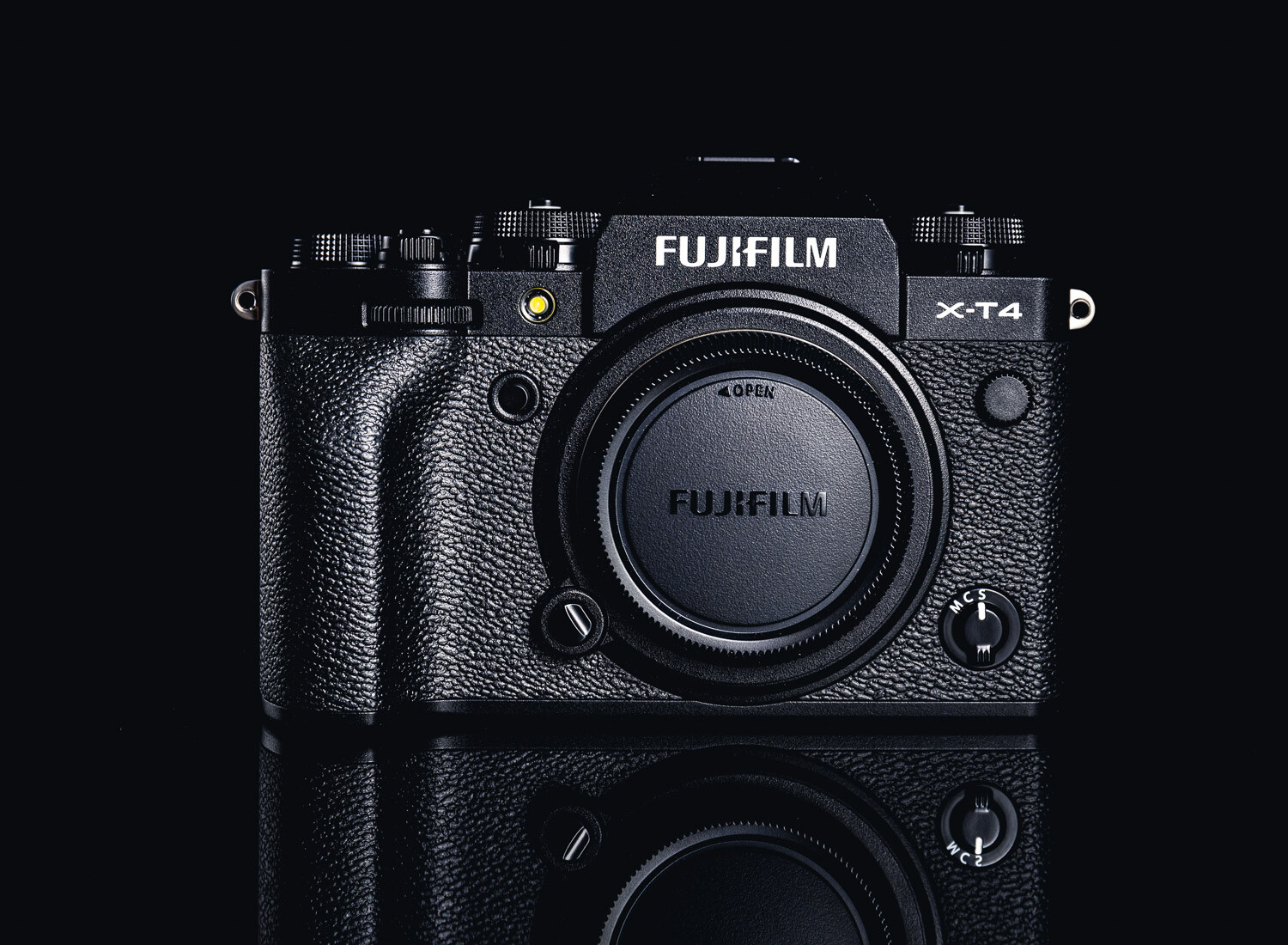
If you’re trying to decide whether the Fujifilm X-T4 is the right camera for you, then this comprehensive Fujifilm X-T4 review is exactly what you need.
For several weeks, I’ve been putting Fujifilm’s newest camera through its paces, with the goal of answering a few key questions:
What does the X-T4 offer over the X-T3?
How does the X-T4 compare to other options on the market?
And, ultimately, is the X-T4 worth the price?
All these questions, and more, will be answered in this review.
The Fujifilm X-T4 comes as the latest addition to Fujifilm’s flagship lineup, previously headed by the Fujifilm X-T3. Note that Fujifilm explicitly indicated that the X-T4 does not replace the X-T3, but enters the lineup as a sister model.
In many ways, the X-T3 and the X-T4 are the same; the ergonomics and aesthetics are exceedingly similar, plus you get 26 MP X-trans sensors, dual card slots, and 4K/60p video.
But there are also some fundamental differences. While there’s certainly still room for the X-T3 in a Fujifilm lover’s gear bag, the truth is, the X-T4 is the better camera (though significantly pricier!).
In fact, I’d go so far to say that the X-T4 is one of the absolute best cameras I’ve ever used, and certainly one of my favorites, thanks to its Fujifilm retro charm, as well as its generally strong performance across the board.
Fujifilm X-T4 | Fujifilm XF 16-80mm f/4 | 32.5 mm | 1/250s | f/8 | ISO 200
Fujifilm is in the business of making all-around cameras: Mirrorless models that can do pretty much anything at a high level, from action to landscape to video. The X-T4 is simply another level of this superb well-roundedness, giving a combination of top-notch handling, improved autofocus, blazing-fast continuous shooting speeds, high-powered video, and excellent image quality.
Here are a few key Fujifilm X-T4 specifications:
26 MP APS-C sensor
4K/60p video
Continuous shooting up to 20 fps with electronic shutter (15 fps with mechanical shutter)
3.68M-dot electronic viewfinder
500 shot-per-charge battery
Dual SD card slots
In-body image stabilization
Note that, in purchasing the X-T4, you also get access to Fujifilm’s very impressive array of lenses. Many of these are very reasonably priced, not to mention optically stellar, which is why I consider Fujifilm to be something of a dark horse in the photography world.
That said, there are some drawbacks to buying the X-T4.
While it’s a fantastic all-around camera, it has no particular specialties, which means that it’s probably not the right choice if you’re seeking to capture, say, high-level sports or nothing but detailed HDR landscape photos.
So to find out more about the X-T4, both the good and the bad, read on.
If you’re a long-time Fujifilm shooter, the design of the X-T4 will feel familiar to you. It’s very much in line with the X-T3’s thin, metallic form, though it’s gained a slight amount of bulk, presumably due to the inclusion of IBIS.
For non-Fujifilm shooters, however, holding the X-T4 for the first time may offer a bit of a shock.
First, it feels like a squashed brick; you get a very well-made body, compressed into a compact form. And while the X-T4 does offer a decent-sized handgrip, it’s not as large as what you might expect from a Nikon or Canon camera (and certainly not a Nikon or Canon DSLR), which might take some getting used to.
The Fujifilm X-T4 is weather-sealed, and it feels it; honestly, the whole body just screams durability, which means that you can feel comfortable taking the X-T4 in inclement weather (always important for serious outdoor and nature shooters).
I know I mentioned it above, but I really am a huge fan of the Fujifilm retro aesthetic, which somehow makes the X-T4 feel like less of a finely-crafted tool and more of a camera that works with you.
Handling
As with all Fujifilm cameras, handling is excellent, assuming you don’t mind the old-school dials and switches.
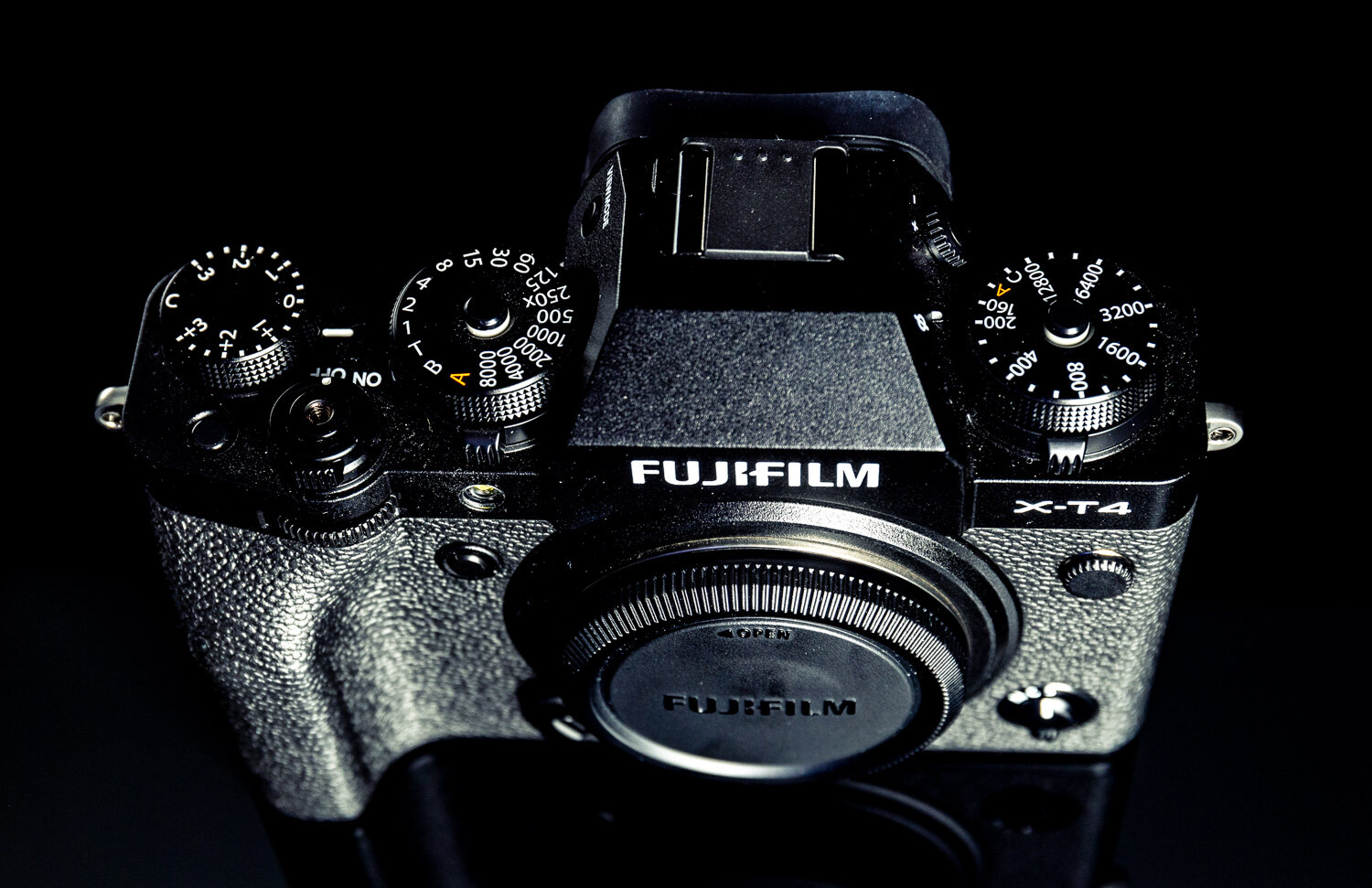
Note that this old-school aesthetic manifests in the form of a dedicated aperture ring on Fujifilm’s lenses, which means that you have to select the aperture by turning the ring on the lens rather than turning a dial on your camera. Also part of the old-school aesthetic is the dedicated ISO, exposure compensation, and shutter speed dials on the top of the X-T4.
I can see how this very external, dial-based handling would annoy some photographers. It’s certainly not built for speed and muscle memory in split-second action, but there’s something really wonderful about setting your shutter speed and ISO via dials on the top of the camera, as opposed to through your camera knobs or touchscreen.
The X-T4’s buttons are well-placed, and I like the focus mode dial on the front (also present on other Fujifilm models); it’s much easier to access in the heat of the moment.
A noticeable upgrade over the X-T3 here is the addition of in-body image stabilization, which allows you to get up to 6.5 extra stops of handholding. This is a huge deal for anyone who frequently shoots in low light, and is a fantastic addition to the X-T4 over the X-T3. In fact, if you haven’t used IBIS before, then you’re going to want to check the X-T4 out immediately. It’s a big help for handheld landscape photography, macro photography, walkaround photography, and much more, further increasing the X-T4’s versatility.
One last handling upgrade worth noting:
The X-T4 comes with a brand-new battery, one that’s rated at 500 images per charge. As with most battery ratings, this one seems to (happily!) undershoot reality. There were at least a few days when I shot over 500 images and still had significant charge left to work with.
For me, and for many shooters out there, this is a big deal. For one, if you’re shooting in adverse conditions, you want to swap batteries as infrequently as possible.
Plus, the better the battery life, the fewer batteries you need to take with you when traveling, for outdoor trips, etc.
The electronic viewfinder looks spectacularly life-like and features a 3.68M-dot resolution. Personally, I neither love nor hate EVFs (they can be great in some situations and terrible in others), but I do think that a minimum resolution of 3.68M-dots is required for good viewing, at least for me, personally, and the X-T4 brings that to the table.
There was never a time when I wished for an optical viewfinder while using the X-T4, and the clarity of the EVF was a huge benefit when working with Fujifilm’s Film Simulation modes (more on these later!).
You also get a fully-articulating rear LCD. This is useful for anyone who prefers to shoot without the EVF to their eye, but it’s especially important for macro photographers, architectural photographers, and landscape photographers in particular; basically, anyone who sets up their camera at odd angles.
With the X-T4’s articulating screen, you can get down-low perspective shots without having to get dirty (and without having to hurt your neck!).
Note that the X-T4’s screen does offer touch functionality, though it’s pretty much limited to setting the autofocus points. This is just fine in my book, because that’s really all I like to use touch screens for since it’s far faster than moving between points with the AF joystick.
Autofocus and Continuous Shooting
The Fujifilm X-T3 was a decent autofocus performer in its own right, but the X-T4 improves on this AF prowess, primarily in terms of tracking. Honestly, I’ve always been impressed by the X-T3’s focusing capabilities, which makes me all the more pleased with the X-T4.
Focusing on still subjects was extremely snappy, even in more difficult lighting situations.
In terms of tracking, I found the X-T4 able to follow predictably moving subjects with ease (e.g., cars), and while my keeper rate wasn’t 100 percent, I was very pleased with the results. Face and eye detection are a bit variable, especially in lower light, but are far from bad.
One of the great things about Fujifilm cameras is the continuous shooting speeds, which are blazing-fast by any metric. On the X-T4, you get 20 fps shooting using the electronic shutter, and this drops to a very respectable 15 fps using the mechanical shutter (up over the 11 fps mechanical shutter on the X-T3).
In fact, continuous shooting is one of the many reasons why the X-T4, and Fujifilm’s top cameras more generally, are such excellent all-around options. While they aren’t really designed as action cameras, you can certainly use them for fast-paced street photography, sports photography, and wildlife photography, assuming you can get the autofocus to work for you.
The X-T4 packs a 26 MP, APS-C sensor, and while it doesn’t offer many changes over the X-T3, it’s still pretty darn powerful.
I tend to be conservative in terms of my tolerance of noise levels, but I feel comfortable pushing the X-T4 to at least ISO 800. Really, noise doesn’t start to become noticeable until around ISO 1600, and images can remain usable through ISO 6400 or so, depending on your purpose.
This is a good performance, especially for an APS-C camera; to my eye, it’s around a half-stop better than the Sony a6600 and pretty much on par with the Nikon Z50. And while the X-T4 can’t quite compete with the full-frame heavy hitters, it’s still plenty useful for photographers seeking a camera that can handle itself in low light.
As mentioned above, one of the benefits of a Fujifilm camera is the film simulation modes, and here the X-T4 doesn’t disappoint. You get 12 high-quality options; it’s a lot of fun to toggle between them, just to see how the world will look with different types of film.
I find these modes to be especially useful for types of shooting where noticeable color grading is acceptable, such as street photography and portrait photography. However, you always have the option of experimenting with film simulation and making changes in post-processing if you’re not pleased.
At the time of writing, the Fujifilm X-T4 costs $ 1700 USD, which is $ 500 USD more than its X-T3 sibling, and is nearly $ 1000 USD more than the X-T30.
And this is where things get a little tricky because while the X-T4 does offer some serious upgrades over the X-T3, I’m just not sure it’s enough to justify $ 500. If I were trying to decide between the X-T3 and the X-T4, I’d feel more tempted by the X-T3, unless I desperately needed the IBIS or autofocus improvements.
Another issue with the X-T4’s price point is that it puts the camera on par with full-frame options such as the Nikon Z6, and only a few hundred dollars cheaper than the Sony a7 III. This isn’t going to make the X-T4 compelling for DSLR photographers looking to make the leap to mirrorless, or non-Fujifilm mirrorless shooters looking for a more powerful camera.
That said, if you’re already a Fujifilm shooter, or you’re a photographer who appreciates the unique design and all-around capabilities of the X-T4, the $ 1700 may be worth it.
But I’m an even bigger fan of the X-T4, mostly thanks to the addition of in-body image stabilization, which makes the camera even more impressive for low-light shooting. It’s the ultimate generalist camera for hobbyists and professionals, and it’s an excellent addition to any kit.
Is the X-T4 the best APS-C camera out there?
Truthfully, I think it is. You get excellent image quality, blazing-fast continuous shooting, great handling, dual card slots, good autofocus, and more.
My only reservation is the price, which feels a bit high compared to the X-T3. But you do get in-body image stabilization, as well as improved autofocus, so if you have the extra money to spend, go for it!
You won’t be disappointed.
?????
The post Fujifilm X-T4 Review: The Best APS-C Camera on the Market (For a Price) appeared first on Digital Photography School. It was authored by Jaymes Dempsey.
Researchers at the University of Washington have developed a tiny camera that can ride aboard a beetle, offering us a distinct and new view of the world. The lightweight wireless camera can stream video to a connected smartphone at 1 to 5 frames per second and can even pivot up to 60 degrees.
The small camera, which has been used in the real world on Pinacante and death-feigning beetles, records black-and-white images and can even be used in very low light. While an impressive achievement, the specs of the camera itself are nothing to write home about. The monochrome camera streams images that are 160 x 120 pixels.
The device communicates with a smartphone via Bluetooth from up to 120 meters away. In addition to viewing footage, researchers can also remotely control the mechanical arm attached to the camera via an electrical charge. When a high voltage is applied, the material used for the arm bends to the desired position. After the voltage is reduced or altogether removed, the arm will relax back to its original position, like how a human can only keep their head turned for a limited amount of time before needing to return to a natural resting position.
Co-lead author Vikram Iyer, a UW doctoral student in electrical and computer engineering. Image credit: Mark Stone/University of Washington
The tiny camera is a huge feat of engineering; the entire camera system, including the mount, arm and necessary electronic components, weighs about 250 milligrams, which is roughly half the weight the subject beetles can carry naturally. Fortunately, the camera has been designed in such a way that it doesn’t limit the mobility of the beetles or harm them.
At this point, you may be wondering what scientific applications there are for attaching a camera to a beetle. The first-person view from a beetle has allowed researchers to better understand how the subject responds to various stimuli and how it uses vision to approach its environment.
Further, by leveraging its incredibly small camera system, the team also built the world’s smallest terrestrial power-autonomous robot with wireless vision. The robot is ‘insect-sized’ and uses vibrations to move. The team hopes that future versions of the autonomous robot camera could be made without a battery or be solar-powered.
The world’s smallest terrestrial power-autonomous robot with wireless vision. Image credit: Mark Stone/University of Washington
Unsurprisingly, with a such small device, finding a way to power it proved challenging. Researchers turned to the world of insects for inspiration. Flies, for example, dedicate 10 to 20 percent of their total resting energy to power their brains, which are primarily busy with visual processing. In order to efficiently use its limited energy, a fly has a small portion of their overall vision area which sees with high fidelity. In order to see different areas with good detail, a fly must move its head.
This is where the researchers got the inspiration for a movable arm for their tiny beetle camera. Co-lead author of the study, University of Washington doctoral student in electrical and computer engineering, Vikram Iyer, said the following: ‘One advantage to being able to move the camera is that you can get a wide-angle view of what’s happening without consuming a huge amount of power. We can track a moving object without having to spend the energy to move a whole robot.’ To further conserve energy of the system, the camera system includes an accelerometer, which allows the camera to only record images when the beetle moves. In the end, battery life is between 6 and 10 hours.
For more information, members of the American Association for the Advancement of Science can view the full article in the latest volume of Science Robotics. If you’re interested in other electronics-equipped insects, researchers at the University of Washington attached sensors to bees in 2018.