RSS
 

Posts Tagged ‘Camera’

Monterey Bay Aquarium uses GoPro to create new open source research camera

27 Jan

The Monterey Bay Aquarium Research Institute has created an open source camera system for use underwater to aid in research projects. The rig is composed of a GoPro camera and other easily sourced components, and is cheaper than commercially available oceanographic camera systems. Learn more

Articles: Digital Photography Review (dpreview.com)

 
Comments Off on Monterey Bay Aquarium uses GoPro to create new open source research camera

Posted in Uncategorized


Understanding the Basic Sliders in Adobe Camera Raw

26 Jan

In this short video tutorial by Tuts+ you can get a quick overview of how the basic sliders work in Adobe Camera Raw. It has a great demonstration using a white to black grayscale image which shows what each slider does, and which parts of your image each are affecting. There is also a good indicator of why you want to be shooting RAW format instead of JPG, showing the same corrections done on both formats and the difference the the larger RAW file makes.

Enjoy the video:

For more Photoshop tips check out our post-processing section. The Basic sliders in Lightroom do pretty much the same thing, but they have slightly different names. Give it a try yourself and see if this helps make sense of the basic panel.

googletag.cmd.push(function() {
tablet_slots.push( googletag.defineSlot( “/1005424/_dPSv4_tab-all-article-bottom_(300×250)”, [300, 250], “pb-ad-78623” ).addService( googletag.pubads() ) ); } );

googletag.cmd.push(function() {
mobile_slots.push( googletag.defineSlot( “/1005424/_dPSv4_mob-all-article-bottom_(300×250)”, [300, 250], “pb-ad-78158” ).addService( googletag.pubads() ) ); } );

The post Understanding the Basic Sliders in Adobe Camera Raw by Darlene Hildebrandt appeared first on Digital Photography School.


Digital Photography School

 
Comments Off on Understanding the Basic Sliders in Adobe Camera Raw

Posted in Photography


Manfrotto launches Off Road camera gear

20 Jan

Manfrotto has introduced a new lineup of backpacks in its Off Road collection designed for outdoor photographers. The backpacks allow for both personal items and camera gear to be toted around, including the new walking sticks and tripods the company has also launched. Read more

Articles: Digital Photography Review (dpreview.com)

 
Comments Off on Manfrotto launches Off Road camera gear

Posted in Uncategorized


Apple overtakes Nikon for 2nd spot in most-owned camera rankings of Flickr users

17 Jan

Photo sharing website Flickr has published tables of its members’ most used cameras and brands, in which Apple has overtaken Nikon for the first time. Canon remains the most popular brand used, according to Flickr’s calculations, but in 2014 Apple knocked Nikon into third place, with Samsung moving ahead of Sony to take fourth. Read more

Articles: Digital Photography Review (dpreview.com)

 
Comments Off on Apple overtakes Nikon for 2nd spot in most-owned camera rankings of Flickr users

Posted in Uncategorized


Gary Fong launches virtual camera tutorial service

15 Jan

Gary Fong has launched a new online instructional service, giving photographers a way to become proficient with select camera models in a unique way. Rather than providing a rote list of video tutorials, users are presented with a virtual version of a camera model that is fully interactive: buttons can be pressed, switches can be toggled, and menus can be explored. Read more

Articles: Digital Photography Review (dpreview.com)

 
Comments Off on Gary Fong launches virtual camera tutorial service

Posted in Uncategorized


Vanguard Vojo 25 Camera Bag Review

14 Jan

Vanguard Vojo 25 camera bag review

Earlier this year I bought a couple of mirrorless cameras. The camera bodies and lenses are smaller than those of my digital SLR system, so I also needed a new, smaller, camera bag to put them in. The one I chose is the Vanguard Vojo 25. I’m really happy with the purchase so I thought I’d share my experience for those of you in the market for a similar bag.

Why I like this camera bag

It’s light

Shoulder bags soon weigh down on your shoulder no matter how well they are designed. If the bag is heavier than it should be, then that adds to the weight of your gear, and reduces the time you can comfortably use the bag. I learned this the hard way when I bought a Retrospective 10 shoulder bag for my dSLR. The bag is too heavy and, to be honest, I hate it. The Vojo 25 is much better.

The Vojo 25 weights 920 grams (a little over two pounds).

Vanguard Vojo 25 camera bag review

The padded shoulder strap eases the weight of the bag on your shoulder.

The design is well thought out

This bag is really cleverly made. The shoulder strap is padded, so it doesn’t cut into your shoulder (something that should be standard on all shoulder bags). The flap that covers the bag is secured by both velcro and clips. There’s a zip in the top of the bag that you can leave undone for quick access to your gear, or keep closed for protection and security.

Vanguard Vojo 25 camera bag review

A zip in the top of the bag provides quick access to your gear.

The padded insert is removable

The insert that holds your gear is attached to the inside of the bag using velcro. It’s designed to be easy to remove so that you can use the bag for something other than holding your cameras. If you pull the straps on the side (the ones with the clips holding the flap in place) the bag is squeezed closed so it looks more like a satchel than a camera bag. The green version of the bag doesn’t look much like a camera bag, and does excellent double duty as a casual bag when required.

Vanguard Vojo 25 camera bag review

The removeable padded insert. You can zip it shut, making it ideal for storing your gear elsewhere while you are using the bag for something else, or even putting into another bag.

Vanguard Vojo 25 camera bag review

The side buckle that holds the bag’s flap shut.

Vanguard Vojo 25 camera bag review

If you take out the removeable insert and pull the side buckles tight the bag compresses into a satchel type bag, ideal for casual use.

It has a waterproof cover

Very important for those times when you’re caught out in a surprise rain shower. The cover protects both your bag and your equipment from the elements.

There’s space for a tablet or a kindle

The camera bag has a padded slot at the side that’s large enough for an iPad, or any tablet or kindle device the same size, or smaller.

There are several Vojo bags to choose from

If the Vojo 25 is too big or too small for you, there are several others in the range to choose from. The Vojo 28 is larger, and the Vojo 22 is smaller. The Vojo 13, Vojo 10 and Vojo 8 are much smaller, but even these mini versions come with a raincover and may be of interest if you just have one small camera to carry around.

Vanguard Vojo 25 camera bag review

The Vanguard Vojo 25 camera bag with a digital SLR, spare lens and iPad.

Capacity

The Vojo 25 can comfortably carry two mirrorless camera bodies with small to medium size lenses attached in the removable insert, a single mirrorless body and lens plus an extra lens or two, or a digital SLR with a small lens attached plus a second lens.

The removable insert isn’t quite as big as the bag, leaving a gap at the side. That space is for the raincover plus any additional accessories you want to keep there.

Vanguard Vojo 25 camera bag review

The Vanguard Vojo 25 camera bag with two mirrorless cameras and iPad. The raincover is visible in the gap on the left-hand side.

There’s also another padded slot at the front (ideal for a mobile phone), a small zipped compartment at the front (very tight, intended for small items such as lens cleaning cloths or lens caps) plus another small zipped compartment in the flap (again, suitable for small items like lens cloths and lens caps).

Conclusion

After two months of use I have to say I’m very happy with this camera bag and happily recommend it. I use it most of the day with a lightweight setup (one or two mirrorless bodies, a lens or two, plus a small water bottle). It’s ideal for photographers using mirrorless bodies or a single dSLR with small lenses (look at the Vojo 28 if you need more space). It’s a well-made bag that does exactly what it’s supposed to – protect my gear while simultaneously providing easy access.

googletag.cmd.push(function() {
tablet_slots.push( googletag.defineSlot( “/1005424/_dPSv4_tab-all-article-bottom_(300×250)”, [300, 250], “pb-ad-78623” ).addService( googletag.pubads() ) ); } );

googletag.cmd.push(function() {
mobile_slots.push( googletag.defineSlot( “/1005424/_dPSv4_mob-all-article-bottom_(300×250)”, [300, 250], “pb-ad-78158” ).addService( googletag.pubads() ) ); } );

The post Vanguard Vojo 25 Camera Bag Review by Andrew S. Gibson appeared first on Digital Photography School.


Digital Photography School

 
Comments Off on Vanguard Vojo 25 Camera Bag Review

Posted in Photography


Canon to move camera production back to Japan

13 Jan

Canon wants to increase its domestic production over the next few years, something spurred by the falling value of the yen. According to Reuters, Canon is looking to increase its production in Japan from 40 percent of its overall output to 60 percent. Read more

Articles: Digital Photography Review (dpreview.com)

 
Comments Off on Canon to move camera production back to Japan

Posted in Uncategorized


Gear Envy: Five Things to Consider Before Buying Your First Camera

07 Jan

GearEnvy 1

1. The Ol’ Gear versus Photographer Chestnut

What’s the best camera and lens you can buy when you’re starting out?

  • Anything by Nikon
  • Anything by Canon
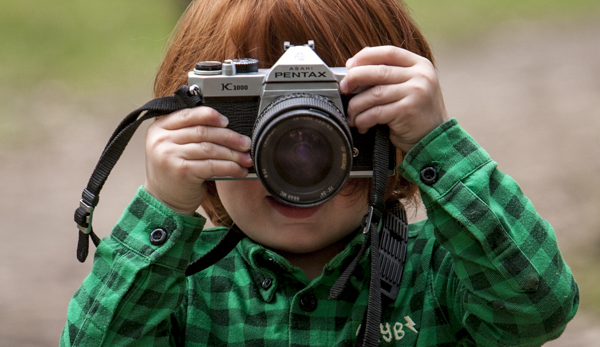
  • Nikon and Canon are overrated; Pentax is what all the cool kids are using
  • Do the best you can with what you can afford right now

A photographer went to a socialite party in New York. As he entered the front door, the host said “I love your pictures – they’re wonderful; you must have a fantastic camera.” He said nothing until dinner was finished, then: “That was a wonderful dinner; you must have a terrific stove.” – Sam Haskins

Believing a great camera will make you a great photographer is like thinking Roger Federer’s tennis racquet will make you a world champion tennis player. Um, it won’t – I’ve tried. I’ve also worn the same jeans as Gisele Bundchen and they didn’t make me a supermodel. Cooking with Wolfgang Puck’s saucepans didn’t make me a master chef either.

Great gear won’t make you a great photographer. Great lenses, however, can improve the sharpness of your images, and great lights and accessories can improve their quality. But all of that can be undone with poorly executed or sloppily composed images.

Just because something’s technically perfect doesn’t necessarily make it great or even good. A good photo should inspire an emotional reaction, and no camera or lens available today can achieve that for you.

I’m blown away daily by evocative photos on Instagram, 500px, and Flickr. Eighty percent or more of these images are taken with smart phones or entry-level cameras with kit lenses. When I share my images online, I get just as big a response from images taken with my iPhone as I do from images taken with pro gear. Because of the Internet, there’s never been a greater time in history to have your work seen and loved, or to inspire a reaction.

The best first camera you can buy is the one you can afford right now.

2. What are you shooting?
GearEnvy 2

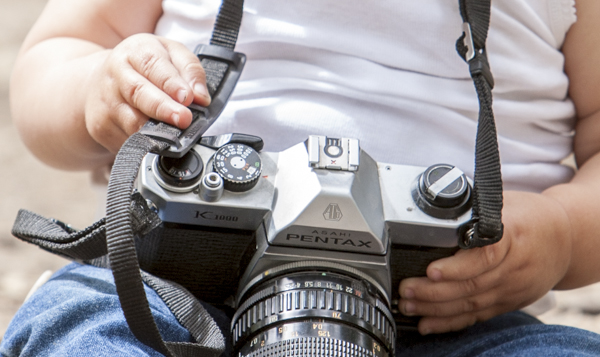
Next, you should ask yourself what your your gear is for? Where will you use it and how often?

  1. I only take my camera to church on Sundays.
  2. I’m going to document my trek to the summit of Mount Everest, rodeo rides and my next Tough Mudder event.
  3. I photograph sixty weddings a year.
  4. I’m still learning, but I love to take photographs every opportunity I get.

Are you planning on taking your camera to rugged subzero locations? Will you be shooting thousands of images a day or only taking photos on special occasions? This is the first question to consider before purchasing any new gear – what will you use it for?

If your answer is #2 or similar, you may want to consider a heavy duty pro body that’s built to take rough and tumble handling and extreme weather conditions; a cheaper lightweight camera may not withstand the wear and tear or hold up to the elements.

If you plan on taking thousands of frames daily or weekly, it may be more cost effective to invest in a mid-range camera that’s built to shoot more frames. The shutter on a cheap camera usually rolls over and dies after about 100,000 frames, so spending a few hundred extra may give you more longevity.

The subject matter you’ll be shooting will also influence your choice of lens. For example, if you’re planning on shooting a lot of portraits and head shots, many fashion and portrait photographers use long fixed focal lenses or zoom lenses. If you’ll be doing a lot of weddings, professionals stock their kits with wide and long lenses and lenses that are somewhere in-between. If you’ll be shooting a lot of scenery, landscape photographers get more use out of wider lenses. And lastly, if you plan on shooting a lot of food or products, you may want to consider adding a macro lens to your kit.

3. Brand loyalty. Which brand should you buy and why?

With cameras there’s no definitive answer to this question. Nikon appears to have a slight edge over all the other SLR brands, but there are advantages and disadvantages to each.

I spent the first 15 years of my career shooting with Nikon because both my brother and my first mentor used them. I loved my Nikon and never dreamt of swapping over. I initially invested in secondhand bodies and prime lenses and after I had saved enough coin to buy new, I stayed loyal to Nikon. Later when I switched over to digital, I continued my Nikon love affair.

The decision to convert to Canon was made for me by the lack of decent Nikon upgrades on the market in 2004-2005 and by the fact that Canon’s 1DS MKII blew anything Nikon made that year out of the water. I switched to Canon and invested in two new camera bodies, new lenses, speedlights and accessories.

Fast forward 10 years and you could argue that Nikon now makes better bodies than Canon, and that Canon makes slightly better lenses. For better or worse, I’ve made a commitment to Canon, and I’m sticking to that – for now. I still suffer the occasional bout of gear envy, but hey, I’m only human.

My advice is to test out each camera on offer in your price range. You’ll find that some cameras are more comfortable to use than others. Also factor in the warranty, general after-sales service, and how easy it is to have the brand you’re looking at serviced or repaired in your area. Another good indication of quality is the camera’s resale value. If your potential camera is flooding the low-end of the secondhand market, it may be a good indication you’re about to buy a lemon. Finally, check out camera reviews and look up discussions about the model you want to buy on forums. The photography community is incredibly thorough and generous with information.

4. Holy crop! Does size matter?

GearEnvy 3

I bought my first digital Nikon 13 years ago and paid $ 17,000 AUD (approx. $ 14,000 USD) just for the body. It took 256 MB memory cards and produced raw image files that were around 6 MB. I used that camera to shoot hundreds of covers, poster shots, magazine spreads and advertising campaigns, and nobody ever questioned the file size.

Today my iPhone takes 8 MB photos. So, does that mean my iPhone camera is better? Umm – no. It’s not the quantity of the megapixels that count; it’s the quality of the megapixels and the size of the sensor. Cramming lots of megapixels onto a tiny sensor decreases image quality, making grainier looking files.

So how big are the sensors in the various cameras on the market today? A camera phone sensor is the size of a tic tac, a compact camera sensor is the size of an M&M, an entry-level SLR sensor is the size of postage stamp, and a pro level camera sensor is the size of a 35mm film frame.

So how many megapixels are enough and what’s the best size sensor for you? Well again, the answer comes down to what the output is going to be.

If you plan on shooting images that are going to end up on billboards or really large wall prints, then a full frame sensor that produces raw image files that are larger than 20 MB is ideal. An entry-level camera can produce large enough files to create billboard size images; they just won’t look anywhere near as good.

If you plan on printing midsize images — A4 (8.5×11″) or smaller — then an entry-level to mid-range camera will achieve really good results.

Finally, if you’re mostly going to share your images online, you can get away with a smart phone or compact camera, but any of the above will do the job, as well.

5. Physical size and weight
GearEnvy 4

Does this camera make my bum look big?

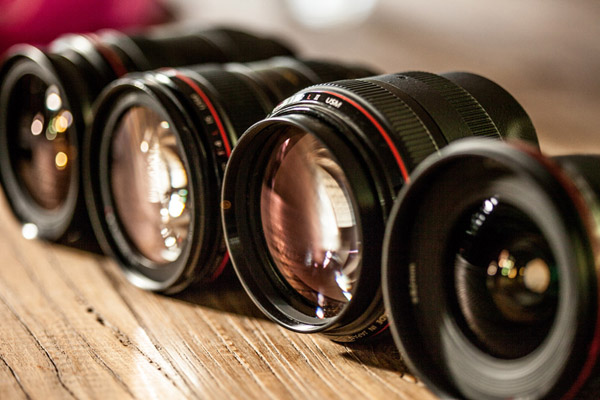
This factor is often overlooked until you get home and pull your new camera out of the box and use it a few times. You may think you want the biggest, heaviest camera and the longest lens, but four hours into an eight-hour mountain hike, you may change your mind.

I currently use two different bodies: the 1DS MKIII and the 5D MKIII. My 1DSIII weighs twice as much as my 5D and produces better quality images, but I’m prepared to take a hit in quality when I’m travelling because I know I’ll shoot more if I’m carrying a lighter camera. Having to schlepp a heavy camera around makes me think twice about bringing it out in the first place.

A good camera should feel comfortable and be like a natural extension of your body. Test out how easy it is to change settings with one hand; believe me, this will get frustrating if it’s a difficult process.

Have I missed anything you feel is worth considering? Do you have anything to add to the discussion or have any questions? I’d love to hear from you.

googletag.cmd.push(function() {
tablet_slots.push( googletag.defineSlot( “/1005424/_dPSv4_tab-all-article-bottom_(300×250)”, [300, 250], “pb-ad-78623” ).addService( googletag.pubads() ) ); } );

googletag.cmd.push(function() {
mobile_slots.push( googletag.defineSlot( “/1005424/_dPSv4_mob-all-article-bottom_(300×250)”, [300, 250], “pb-ad-78158” ).addService( googletag.pubads() ) ); } );

The post Gear Envy: Five Things to Consider Before Buying Your First Camera by Gina Milicia appeared first on Digital Photography School.


Digital Photography School

 
Comments Off on Gear Envy: Five Things to Consider Before Buying Your First Camera

Posted in Photography


Motorola Moto X (2014) camera review

19 Dec

Despite using the same name as its predecessor, the new Moto X is a very different device. Its 5.2-inch 1080p OLED screen, thin bezels and aluminum body give it a premium feel. In the camera department it offers a 13MP sensor and F2.25 aperture, 4K-video and a dual-LED ring flash. We put it through our comprehensive testing – see if the 2014 edition is a better choice for mobile photographers than the original Moto X. Read review

Articles: Digital Photography Review (dpreview.com)

 
Comments Off on Motorola Moto X (2014) camera review

Posted in Uncategorized


Entry-Level Mirrorless Camera Roundup (2014)

17 Dec

Entry-level mirrorless cameras provide a nice middle ground between fixed-lens point-and-shoots and lower-end DSLRs. It’s an ever-growing category with options for photographers of varying skill level and intentions. The common factors in this class are the huge step up in image quality over most compacts and smartphone cameras and the friendly interfaces. In this roundup, we’ll talk you through the current crop of entry-level mirrorless cameras. Click through to read more

Articles: Digital Photography Review (dpreview.com)

 
Comments Off on Entry-Level Mirrorless Camera Roundup (2014)

Posted in Uncategorized