RSS
 

Posts Tagged ‘Camera’

Collector’s item: Nikon’s 87th F SLR camera up for auction on eBay

02 Jul

$ (document).ready(function() { SampleGalleryV2({“containerId”:”embeddedSampleGallery_4189097372″,”galleryId”:”4189097372″,”isEmbeddedWidget”:true,”standalone”:false,”selectedImageIndex”:0,”startInCommentsView”:false,”isMobile”:false}) });

A rare Nikon F SLR camera with the original cloth-type shutter and a Nippon Kogaku Tokyo Japan 1:1.4 F = 50mm lens has surfaced in an eBay auction. Per the listing and product photos, this camera was the 87th unit to come off the production line; it was originally owned by the seller’s deceased grandfather who is said to have collected hundreds of cameras during his lifetime.

The Nikon F SLR was developed by Nippon Kogaku in the late 1950s and launched in 1959. The very first models off the production line used the same cloth shutter curtains as the Nikon SP. Nikon switched to using much more durable titanium shutter curtains in all subsequent F bodies, and it is estimated that Nikon produced only around 100 Nikon F SLR units with a cloth shutter before switching to titanium.

The seller started the auction at 99 cents without a ‘reserve’ price, and it currently sits with a bid of $ 4,050. The auction ends this upcoming Sunday.

Articles: Digital Photography Review (dpreview.com)

 
Comments Off on Collector’s item: Nikon’s 87th F SLR camera up for auction on eBay

Posted in Uncategorized


Sony announces camera shipment delays due to Kumamoto earthquake

29 Jun

The earthquake that hit Japan’s Kumamoto prefecture in April affected multiple camera companies with facilities in the region, including Sony. In its most recent statement about the matter, Sony revealed several camera models that will be delayed getting to customers.

The following models are mentioned in Sony’s statement: 

  • a7
  • a7R
  • a7S
  • a5100
  • a77 II
  • a99

It’s interesting to note that the delays primarily affect older models, suggesting the company is concentrating its supplies and efforts on its most popular models. Sony also states that other models not specifically mentioned above might be delayed as well.

Via: Sony

Articles: Digital Photography Review (dpreview.com)

 
Comments Off on Sony announces camera shipment delays due to Kumamoto earthquake

Posted in Uncategorized


Sony a6300 Mirrorless Camera – Thoughts and Field Test

29 Jun

Sony has spent recent years charging full steam ahead into the full-frame mirrorless camera market. But they have also managed to satisfy the desires of APS-C shooters, mainly through their widely-popular a6000 mid-range mirrorless camera. In March 2016, just two years after the debut of the a6000, Sony released the a6300 with improved features, that still retain many of the characteristics of the older model.

To be clear, Sony doesn’t intend for the a6300 to be a replacement for the a6000, meaning the older camera is still in production and can be purchased at a very attractive price point (around $ 549.00 for the body only).
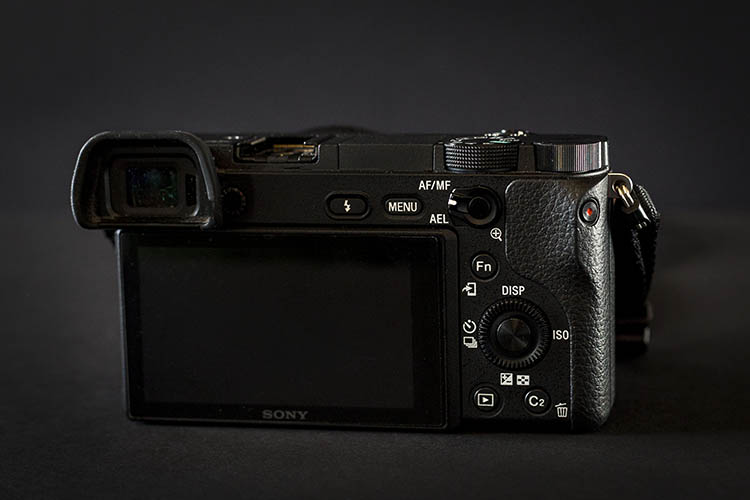
Sony a6300 Mirrorless Camera

My Camera Background

Before diving into this review, I want to clarify my digital camera experiences to make my perspective more apparent. The Sony a6300 is the very first mirrorless camera I’ve owned, besides my very brief experiment with the a6000 for comparison purposes. Until recently, I’ve shot almost exclusively with Canon DSLRs, namely the 5D Mark III and 6D. As a result, many of the a6300’s features such as its pop-out LCD screen and electronic viewfinder might seem like standard features to other mirrorless shooters, but for a Canon DSLR user like myself, these are newfound novelties that turned my world upside down. With that being said, let’s move on to the a6300’s specs.

Key Features of the Sony a6300
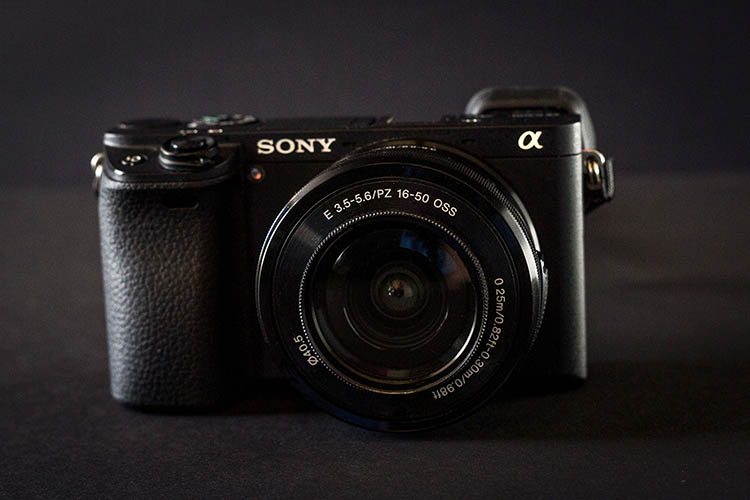
Sony a6300 Mirrorless Camera

The main improvement with the Sony a6300 is a newly developed sensor with a pixel count of 24MP (same as the a6000) that is packed with a whopping 425 phase-detection AF points, which is significantly higher than the a6000’s 179 AF points. According to Sony, the a6300 has the greatest number of phase-detection points to date, on an interchangeable-lens camera ,and makes the a6300 the camera with the world’s fastest autofocus.

Video is another aspect that Sony upgraded on the a6300, with the inclusion of 4k video recording capabilities, the addition of a mic socket, and the ability to record time code. Besides the autofocus and video systems, the a6300 sees an OLED 2.36M-dot viewfinder, an improvement from the a6000’s OLED 1.44M-dot viewfinder. Battery life is also slightly improved at 400 shots versus 360 shots.

Physically, the a6300 is only 2 ounces heavier than its predecessor, although it feels much more solid with its weather-sealed magnesium alloy build, that was lacking on the a6000. An AEL button with an AF/MF switch has also been conveniently added to the back of the camera, which sports and action shooters should find handy. Other than these few additions, the Sony a6300 doesn’t look or feel much different than the a6000.

Overall, these added features of the a6300 clearly appeal to shooters looking to focus on action, sports, and video.
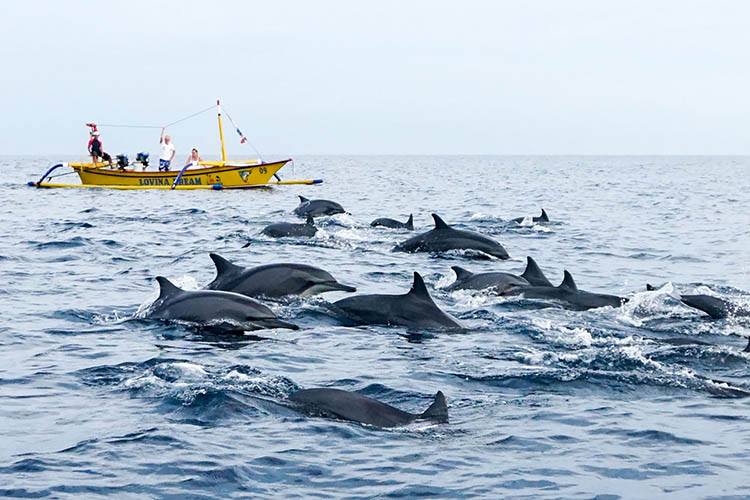
Sony a6300 Mirrorless Camera

Sample action shot with a Sony 16-50mm f/3.5-5.6 kit lens.

Pros of the a6300

While discussing the pros and cons of the a6300, it should be noted that many of the same features are also available on the a6000.

Extremely compact

As a DSLR shooter, the a6300’s compact size was particularly appealing. While testing the Sony a6300, I used both the kit 16-50mm f/3.5-5.6 retractable zoom lens, and the Sony 20mm f/2.0 pancake lens, and was amazed that both were incredibly lightweight and basically the same size. There is of course, the trade-off of both lenses being made of plastic and not feeling as robust as say a Fujifilm lens, but they both perform very well and weigh close to nothing. Pairing either lens with the a6300 makes for a very compact, low-profile camera system that is perfect for travel.

Sony a6300 Mirrorless Camera

An informal food photo taken at a restaurant table moments before consumption. Shot with a Sony 20mm f/2.8.

Silent Shutter

While many DSLRs offer a Silent Shutter that is still quite noisy, the a6300’s silent shutter feature makes the camera so quiet you wouldn’t even know a photo was being taken. It’s a great feature for undercover or candid photography moments when you truly want no sound associated with taking a photo. With that said, non-silent shooting on the a63000 produces a very crisp shutter snap, especially when firing away at the camera’s highest shutter speed of 11 frames per second.

Panoramic shooting feature that actually works (most of the time)

After consistently trying, and failing, to take advantage of panoramic shooting on a variety of devices from point and shoots to cell phone cameras, I was beginning to think that on-the-go panoramic shooting was a myth, until I tried it with the a6300. Unlike other devices, the a6300 will shoot and stitch together a near-perfect horizontal or vertical panorama even when your manual panning isn’t spot on. There were a few times when the camera insisted that I wasn’t panning straight enough to make a clear pano shot, but most of the time even my wobbly panning techniques were good enough for the a6300 to make sense of.

Sony a6300 Mirrorless Camera

Sample panorama shot with a Sony 16-50mm f/3.5-5.6 kit lens.

Focus Modes + Face Recognition

Easily two of the best features of the a6300 are the Face Registration and Eye AF (autofocus) features, which do pretty much what their names imply. Activating Face Registration allows you to program the a6300 to recognize and prioritize up to eight faces. This feature is incredibly handy when shooting a crowd of people, and the a6300’s accuracy of picking out the correct face is astounding. Eye AF works very similarly, but without the need to register (program them in) the eyes. Simply enable Eye AF on the a6300 and the camera will automatically search for your subject’s eyes and track them using continuous autofocus. This feature is so spot-on that the a6300 will even lock onto artistic renderings of eyes, such as a painted portrait.

Sony a6300 Mirrorless Camera

Sample portrait shot with a Sony 20mm f/2.8 lens.

Quick Wi-Fi connection

Like most newer digital cameras today, the a6300 has Wi-Fi and NFC, to connect with smartphones and tablets for remote camera shooting, and wireless image transfer via Sony’s PlayMemories Mobile app. Setting up Wi-Fi on the camera is very quick and intuitive, and Sony’s accompanying app also includes an array of other options that can further enhance your shooting experience, such as time-lapse and multiple exposure apps, among many others.

Built-in flexible flash
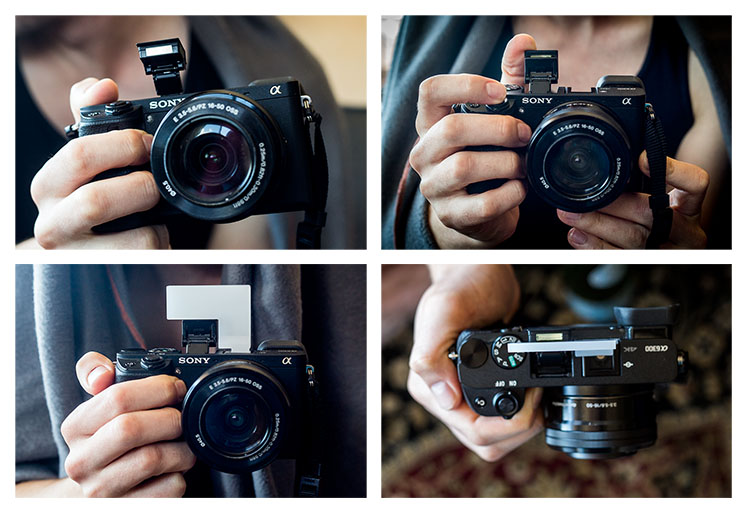
Sony a6300 flash

Thankfully, Sony kept one of the a6000’s best features on the a6300: a built-in pop-up flash. Extremely compact and flexible, the little flash can bend 45 degrees to tilt upwards, allowing for bouncing the flash off the ceiling.  Next to the pop-up flash is a hot shoe mount that can fire Canon or Nikon Speedlight flashes when used with an adapter.

One accessory that can help fully utilize the pop-up flash are plastic bounce cards which attach to the a6300 via the hot-shoe mount, and hold the flash in an upright position.

Sony a6300 Mirrorless Camera

Sample night shot with a Sony 20mm f/2.8 lens.

Sony Lens Options

Currently, there are over 70 Sony lenses that you can purchase to go along with your new a6300 body. Options range from compact, low-priced primes and larger, higher-priced zoom lenses. Cheaper prime options include the 16mm f/2.8, 20mm f/2.8, 28mm f/2, 30mm f/3.5 macro, 35mm f/1.8, and 50mm f/1.8, all ranging in price from $ 249.99-$ 449.99. Wide-range zoom lenses, without a fixed f-stop, are also somewhat affordable, such as the 18-200mm f/3.5-6.3 ($ 749.99) or the 24-240mm f/3.5-6.3 ($ 998.99)

Sony 18-200mm f/3.5-6.3 ($ 749.99)

However, Sony’s higher-quality lenses are much higher in price, which may be difficult to swallow if you’re converting from a DSLR kit. Larger, high-quality Sony primes such as the 24mm f/2 and 35mm f/1.4, prices are upwards of $ 1,200.00 and more. The same is true for Sony’s versions of traditional DSLR lenses such as the 16-35mm f/2.8 ($ 2,248.99), 24-70mm f/2.8 ($ 2,098.00), and 70-200mm f/2.8 ($ 2,999.99). If you’re a DSLR shooter with an array of lenses, you can always invest in a converter to use your DSLR lenses with your Sony camera body, but at the expense of slower autofocus.

When you purchase either the Sony a6000 or a6300, you have the option of buying it body-only, or with a 16-55mm f/3.5-5.6 E-mount retractable zoom kit lens, which is valued at approximately $ 260.99 if purchased separately. For its size, range, and overall performance, the kit lens, plus a Sony prime lens, aren’t a bad starter combination, especially if you’re looking to keep your gear compact and lightweight, and aren’t quite ready to invest in higher-priced Sony E-mount lenses yet.

ISO Performance

Sony opted to improve the a6300’s high-ISO performance by including a native ISO range of 100-25,600 with the possibility of extending that ISO to 51,200. While the ability to shoot at higher ISO is great in theory, I found that ISO 6400 was the highest I could comfortably push the a6300 in darker environments, without sacrificing too much image quality. Even my RAW photos shot at ISO 6400 were a little too grainy for my taste, no matter how much noise-reduction I did in post-processing.

Sony a6300 high ISO2

Cons of the a6300

Sony’s bloated camera menu

A common complaint among Sony shooters, that I have to agree with, is that the camera menu is very difficult to navigate. It truly seems like Sony outfitted the a6300 with so many features, and tried to stuff them all into a menu, that it can take weeks for new Sony shooters to get used to using the camera.

This could be easily solved if Sony allowed users to customize the menu a bit more, so that frequently-used features can be quickly accessed. As it stands, Sony only allows assigning custom functions to the camera’s physical buttons, and there aren’t nearly enough of those.

With that being said, the trick to making sense of Sony’s menus is to customize as much of the camera’s settings as possible. Presently, I’ve customized the buttons and settings on the a6300 set to shoot almost identically to the way I shoot with my Canon 5D Mark III, making it easier to switch from one system to another.

Sony a6300 Mirrorless Camera

Sample action shot with a Sony 16-50mm f/3.5-5.6 kit lens.

LCD screen sometimes blanks out

When it comes to the a6300’s LCD screen, I was grateful for its pop-out rotating feature, something that has been sorely lacking on Canon DSLRs. Some other reviewers complained about the a6300 lacking a touch screen LCD, but again, this is something I’ve never had on a camera, so the fact that it’s missing doesn’t bother me.

One feature of the a6300’s LCD that was troublesome, was its occasional blackouts, which usually occurred right after rotating the screen. Oftentimes, the only way to get the LCD working again was to turn the camera off and on. With that said, using the electronic viewfinder (EVF) always worked without fail, even when the LCD blanked out.

Over to you

Do you already shoot with the Sony a6300, or are you considering making the move? What do you love about it, or what hesitations remain? Let me know your thoughts in the comments below.

googletag.cmd.push(function() {
tablet_slots.push( googletag.defineSlot( “/1005424/_dPSv4_tab-all-article-bottom_(300×250)”, [300, 250], “pb-ad-78623” ).addService( googletag.pubads() ) ); } );

googletag.cmd.push(function() {
mobile_slots.push( googletag.defineSlot( “/1005424/_dPSv4_mob-all-article-bottom_(300×250)”, [300, 250], “pb-ad-78158” ).addService( googletag.pubads() ) ); } );

The post Sony a6300 Mirrorless Camera – Thoughts and Field Test by Suzi Pratt appeared first on Digital Photography School.


Digital Photography School

 
Comments Off on Sony a6300 Mirrorless Camera – Thoughts and Field Test

Posted in Photography


Samsung Gear 360 camera costs $350 in US with limited availability at VidCon

23 Jun

Samsung has announced a limited launch of its Gear 360 camera, which was first revealed earlier this year at Mobile World Congress in Barcelona. The camera is available in the United States for $ 349.99 at VidCon, an online video convention in Anaheim, California; it will be available on a wider basis ‘later in the year,’ but Samsung did not provide a specific date.

The Samsung Gear 360 camera features a pair of 15MP cameras with F2.0 lenses housed in a round body. When used together, the cameras record 360-degree videos at 3840 x 1920 pixels, as well as spherical still images. The camera also allows users to record content with only one camera for 180-degree content. For now at least, the Gear 360 camera only works with the latest Samsung mobile devices, including the Galaxy S7 and S7 edge, Galaxy S6, S6 edge, and S6 edge+, and the Galaxy Note 5.

In addition, the company has renamed Samsung Milk VR app for viewing 360-degree content to simply ‘Samsung VR,’ and has opened up the platform to user-generated content. Finally, Samsung has unveiled a new initiative called Samsung Creators. Under the initiative, Samsung is working with indie filmmakers and others to develop 360-degree content for its own virtual reality platform. Samsung Creators has a competition planned for July in which ten winners will be selected for their VR content spanning ten categories: Music, Auto, Science and Tech, Gaming, Travel, Fashion, Culinary, Cause-related, 4D and Sports.


Press release:

NEW YORK – June 22, 2016 – Today Samsung Electronics America, Inc. launched Samsung Creators, a new initiative that empowers storytellers, partnering with them to generate content across a variety of audiences and channels to show everyday creators what’s possible with Samsung VR technology.

“We want to bring the power of VR technology directly to the people,” said Samsung Electronics America’s Chief Marketing Officer Marc Mathieu. “To help creators learn and perfect the art of VR storytelling, we’ve built an entire VR ecosystem that pushes beyond the frame and empowers them to develop unforgettable, immersive stories, and inspires us all to do the same.”

At VidCon—and, beyond—Samsung Creators will provide seminars and classes, putting VR capabilities in the hands of filmmakers and influencers, further accelerating this new medium. Leading into VidCon, Samsung Creators is working with Casey Neistat to spotlight emerging creators from YouTube and push the creative boundaries of 360 video storytelling. This special curation of content will premiere at VidCon.

In July, Samsung Creators will launch a competition, challenging aspiring, indie filmmakers and creators to develop VR / 360 content, using Samsung’s VR products. Ten winners will be chosen, one from each of the following ten categories: Music, Auto, Science and tech, Gaming, Travel, Fashion, Culinary, Cause-related, 4D and Sports.

For more information about Samsung Creators, please visit www.samsungcreators.com.

Samsung VR and Samsung Gear 360 Updates

In addition, today Samsung launched Samsung VR– formerly known as Samsung Milk VR – which now supports user generated content. Creators can load their own 360-degree videos to the Samsung VR platform for sharing and for the first time view them in Samsung Gear VR. For more information about uploading content to Samsung VR, please visit https://samsungvr.com.

Samsung Gear 360 also launched in the U.S. today, an affordable, high-resolution camera developed for storytellers to create their own 360-degree videos for mobile viewing and VR content for Samsung Gear VR, powered by Oculus. The Gear 360 is priced at $ 349.99 in the United States and will be available for purchase on a limited basis during VidCon in Anaheim, California. Details about additional availability will follow later in the year. For more information about Gear 360, please visit www.samsung.com/gear360.

With these announcements, Samsung delivers the first end-to-end VR ecosystem that enables creators to shoot, stitch and share like never before.

About Samsung Electronics America, Inc.
Headquartered in Ridgefield Park, NJ, Samsung Electronics America, Inc. (SEA), is a recognized innovation leader in consumer electronics design and technology. A wholly owned subsidiary of Samsung Electronics Co., Ltd., SEA delivers a broad range of digital consumer electronics, IT and home appliance products. Samsung is the market leader for HDTVs in the U.S and one of America’s fastest growing home appliance brands. To discover more of the award-winning products you love with Samsung, please visit www.samsung.com and for the latest Samsung news, please visit news.samsung.com/us and follow on Twitter @SamsungNewsUS.

About Samsung Electronics Co., Ltd.
Samsung Electronics Co., Ltd. inspires the world and shapes the future with transformative ideas and technologies. The company is redefining the worlds of TVs, smartphones, wearable devices, tablets, cameras, digital appliances, printers, medical equipment, network systems, and semiconductor and LED solutions. For the latest news, please visit the Samsung Newsroom at news.samsung.com.

Articles: Digital Photography Review (dpreview.com)

 
Comments Off on Samsung Gear 360 camera costs $350 in US with limited availability at VidCon

Posted in Uncategorized


Patents hint at camera on future Apple Watch

18 Jun

A patent filed by Apple suggests it could include a camera on a future version of the Apple Watch. Patent application number 14774642, filed in 2013, covers a range of ideas, including a camera for selfies or scanning QR codes, and the possibility of fixed focal length and zoom lenses.

The key phrase to note in the patent is: ‘Zero, one, or more cameras can be provided, depending on implementation,’ making clear that the company is casting its net as widely as possible, to allow it to include all, some or none of these ideas in future watches.

The block diagram from the patent clearly shows that Apple has considered including a camera as part of the watch’s user interface. The patent suggests cameras could be included along the sides or on the front of the watch’s face.

The patent covers the idea of a camera mounted on the side or top edge of the device for taking photographs or scanning QR codes. Another implementation suggests a camera that faces towards the user, allowing the shooting of selfies (or, though it’s not mentioned, streaming video for Facetime communication).

The patent is careful to include both the idea of having a fixed focal length lens and of including a zoom lens with autofocus. As always with patents, none of this means Apple will include a camera in the next or future generations of watches, just that they want to protect the idea of doing so and want to protect all the possible implementations it has thought of.

Articles: Digital Photography Review (dpreview.com)

 
Comments Off on Patents hint at camera on future Apple Watch

Posted in Uncategorized


Serious spec: HTC 10 camera review

17 Jun

$ (document).ready(function() { SampleGalleryV2({“containerId”:”embeddedSampleGallery_0316148631″,”galleryId”:”0316148631″,”isEmbeddedWidget”:true,”standalone”:false,”selectedImageIndex”:0,”startInCommentsView”:false,”isMobile”:false}) });

DPReview smartphone reviews are written with the needs of photographers in mind. We focus on camera features, performance, and image quality.

The 10 is HTC’s latest flagship model, and while its predecessors that we tested were frankly disappointing in the camera department, the new model’s imaging specs show the 10 has potential to turn things around for the Taiwanese manufacturer.

The main camera specification is centered around the same 1/2.3-inch 12MP sensor that we have seen on several recent top-end smartphones. Light is captured through a very fast F1.8 aperture and an optical image stabilization system keeps things steady in low light. The AF uses both contrast detection and a laser that measures the distance to the subject and for those who like optimizing images in post production the camera offers a 12-bit Raw mode. In video mode footage can be recorded in 4K resolution and the front camera is the first of its kind to come with optical image stabilization. At 1.34µm it also offers unusually large pixels and again a fast F1.8 aperture. 

All other specifications, including the 5.2-inch Quad-HD display and Snapdragon 820 chipset are in line with the current crop of flagship devices, making the HTC 10 a possible mobile photography alternative to devices like the Samsung Galaxy S7 or LG G5. Read the full review to find out how it performed in our test.  

Key Photographic / Video Specifications

  • 12MP 1/2.3-inch sensor with 1.55µm pixels
  • F1.8 aperture
  • OIS
  • 12-bit Raw
  • 4K video
  • 720p, 120fps slow-motion video
  • 5MP front camera with OIS, F1.8 aperture and 1.34µm pixel size

Other Specifications

  • 5.2-inch QHD screen
  • Qualcomm Snapdragon 820 chipset
  • 4GB RAM
  • 32 or 64GB storage
  • microSD slot
  • 3,000mAh battery with Quick Charge 3.0
  • Hi-Res audio

Articles: Digital Photography Review (dpreview.com)

 
Comments Off on Serious spec: HTC 10 camera review

Posted in Uncategorized


OnePlus 3 announced with 16MP stabilized camera

17 Jun

$ (document).ready(function() { SampleGalleryV2({“containerId”:”embeddedSampleGallery_3587897861″,”galleryId”:”3587897861″,”isEmbeddedWidget”:true,”standalone”:false,”selectedImageIndex”:0,”startInCommentsView”:false,”isMobile”:false}) });

Chinese startup OnePlus has announced its latest high-end device, the OnePlus 3. Like previous models the 3 offers flagship-level specifications and features at a mid-range price point. It is also the first OnePlus device that doesn’t require an invitation to purchase. It can be ordered now on the OnePlus website for $ 399.

The main camera module is centered around a Sony IMX298 16MP sensor with on-sensor phase detection. The chip comes in the 1/2.8″ format and has a pixel size of 1.12-micron. The lens has a fast F2.0 aperture and optical image stabilization. The system is capable of recording Raw image data, 4K video and 720p slow-motion footage. At the front an 8MP Sony IMX179 sensor with 1.4-micron pixel size and F2.0 aperture is capable of recording digitally stabilized 1080p Full-HD video in addition to self-portraits.

The rest of the specification reads very nicely as well, especially considering the 3’s price point. Images can be viewed and composed on a 5.5″ 1080p AMOLED display that is protected by Gorilla Glass 4. Android 6 is powered by a Qualcomm Snapdragon 820 chipset and a generous 6GB of RAM. There are 64GB of internal storage which unfortunately is not expandable. A fingerprint reader, dual-SIM connectivity and NFC are on board as well. The 3,000 mAh battery supports quick charging and all the technology is wrapped up in an anodized aluminum body that is available in Graphite and Soft Gold colors.

Articles: Digital Photography Review (dpreview.com)

 
Comments Off on OnePlus 3 announced with 16MP stabilized camera

Posted in Uncategorized


KitSplit is a peer-to-peer rental service for camera equipment

15 Jun

KitSplit is a peer-to-peer rental network for camera gear and is best described as the ‘AirBnB’ of the camera world. Photographers who need equipment at a specific location are put in touch with owners who are willing to rent their gear out, while KitSplit takes care of vetting, insurance and the logistics. The company was founded about a year ago in New York by photographers who were unhappy with equipment rental options and by now has approximately 5000 members, both individuals and companies, and $ 40 million worth of equipment available to rent.

The latter includes not only traditional cameras, but also drones and virtual reality gear. KitSplit says its services have been used by companies such as Condé Nast Entertainment, Hearst and NBC. After rapid growth in the New York area, KitSplit has now launched its first geographical expansion, to the Greater DC area, Philadelphia and Boston.

Social sharing has taken off in recent years, especially in the accommodation and car rental sectors, so it only makes sense to apply the same principles to camera and imaging equipment. We’ll be interested how the company develops in the nearer future. More information about how KitSplit works can be found on the website.

Would you use a service like Kitsplit? Let us know in the comments.

Articles: Digital Photography Review (dpreview.com)

 
Comments Off on KitSplit is a peer-to-peer rental service for camera equipment

Posted in Uncategorized


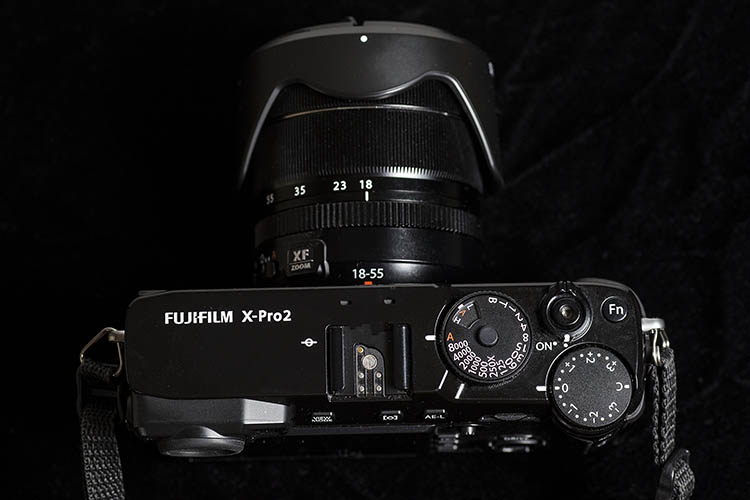
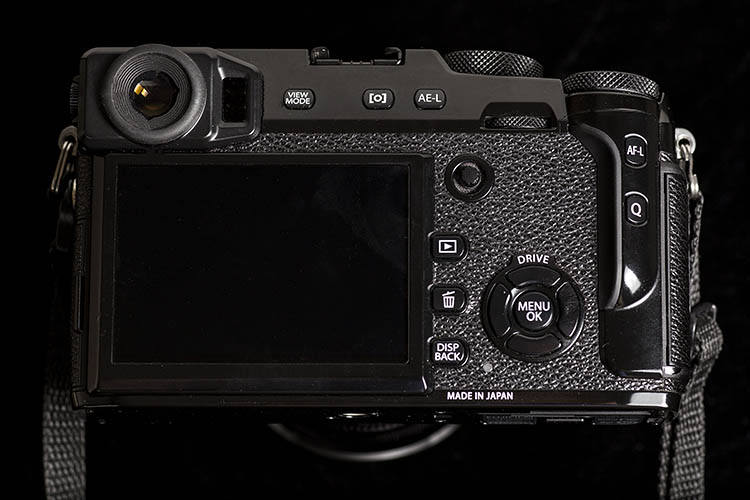
Review: Fujifilm X-Pro2 Mirrorless Camera

15 Jun

Ever since Fujifilm unveiled their debut consumer camera in late 2010, the fixed-lens x100, the brand has become a favorite for professionals, and enthusiasts who seek an advanced digital camera experience, that still retains much of the look and quality of the classic film era.

Fujifilm’s very first mirrorless interchangeable-lens camera, the X-Pro1, was released in March 2012 to much praise from critics and users, and was recently replaced with its successor, the X-Pro2. Given the four year gap between camera models, there are many upgrades and improvements in the new X-Pro2, all achieved without adding significant weight or bulk to the camera. Prices are clearly a big differentiator at this point, with the older X-Pro1 going for as little as $ 799, and the X-Pro2 currently set at $ 1,699. But pricetag aside, just how many more features are packed into the X-Pro2, and is it worth it?

Fujifilm X-Pro2 Review

What’s in the Box

The Fuji X-Pro2 can be purchased body-only for $ 1,699; this basic kit comes with the following accessories in the box:

  • NP-W126 Li-Ion Battery Pack
  • BC-W126 Battery Charger
  • Body Cap
  • Shoulder Strap
  • Strap Clip
  • Clip Attaching Tool
  • Protective Cover

Recommended Accessories

While the X-Pro2 has a slightly better battery life than its predecessor, it’s still on the low side. As a result, it doesn’t hurt to have a spare NP-W126 Li-Ion Battery, or two, on you for longer shoots. Since the X-Pro2 has dual SD card slots, having one or two memory cards is also handy, although in testing I never fully maxed out a single 32GB SD card.

In terms of lenses, this X-Pro2 was tested specifically with the Fujifilm 35mm f/2 WR, a beautiful prime lens that equates to about 56mm on a crop sensor, and the Fujifilm 18-55mm f/2.8-4, a compact mid-range zoom that’s about 28-88mm on a crop sensor. Both lenses are relatively affordable ($ 399 and $ 699 respectively) and together made for a solid, compact, travel photography kit. Lens preference will, of course, depend on your shooting style, and Fujifilm has many other lens choices available.

Fujifilm X-Pro2 Review

Technical Specs

Sensor and Image Capture

First, let’s review the X-Pro2’s specs, which are vastly improved over its predecessor.

  • The X-Pro2 has an upgraded 24.3MP CMOS III APS-C sensor, giving it a significantly higher pixel count compared to the X-Pro1’s 16.3MP CMOS I sensor.
  • The processor is also the new X Processor Pro.
  • Native ISO range has also increased from 200-12800 (or 100-51200 in expanded mode).
  • Continuous shooting on the X-Pro2 is also slightly faster at 8fps, up from 6fps on the X-Pro1, and a continuous high buffer of up to 83 JPEG frames compared to 21 frames on the X-Pro1.
  • Metering is still 256 zone TTL, but besides Multi, Spot, and Average metering, the X-Pro2 adds Center-Weighted metering, which was absent on the X-Pro1.
Fujifilm X-Pro2 Review

Sample image shot at sunset. No tripod or extra lens filters.

Perhaps one of the biggest feature additions on the X-Pro2 is a shutter that allows for both mechanical and electronic capture; the latter allows for more flexibility. The mechanical shutter speed has increased to as high as 1/8000th, compared to 1/4000th on the X-Pro1. The X-Pro2 also enables the use of an electronic shutter speed with an even wider range of one second to 1/32,000. The X-Pro2 also includes Face and Eye Detection, meaning it will seek out faces and eyes when shooting. This is a very handy feature for photographing people, and it proved to be highly accurate during test shots.

Viewfinder and LCD

While both viewfinder and LCD sizes really didn’t change much in terms of physical size, both received a bump in resolution, and an updated User Interface in the X-Pro2. The viewfinder also finally allows for diopter adjustment, and the electronic viewfinder (EVF) has a wicked fast refresh rate of 85 frames per second. Still absent is a pop-out LCD screen.

Fujifilm X-Pro2 Review

Sample image. Shot handheld without a tripod.

Autofocus

The X-Pro2 has made some pretty giant leaps in the realm of autofocus. This camera now has 273 autofocus points, which is quite a bit more than 49 on X-Pro1. It also includes single, zone, wide/tracking autofocus modes, all of which were lacking on the X-Pro1. Finally, the X-Pro2 adds a physical feature that Canon DSLR users will find familiar: a mini joystick button which Fujifilm calls the focus lever. Besides acting as a button, the focus lever enables quick selection for all 273 autofocus points, and also helps you navigate through the menu.

Body and Handling

When it comes to the X-Pro2’s build, it is still comprised of a sleek, half matte black body, with a distinctly retro look. However, the build material is now magnesium-alloy versus aluminum for the X-Pro1. Despite using lighter material, the X-Pro2 is still slightly heavier than its predecessor, weighing in at 495 grams (17.5 oz.) versus 453 grams (16 oz.). In terms of dimensions, the X-Pro2 is a tiny bit wider and deeper, but it still looks about the same size as the X-Pro1.

The battery life on the X-Pro2 has been slightly improved, up to 380 frames, versus 300 frames on the X-Pro1. That’s still on the low side, so carrying a spare battery or two certainly won’t hurt. Camera startup time is a hair faster at 0.4 seconds, compared to 0.5 seconds. Also, the X-Pro2 now has dual SD card slots, which will certainly help with the increased size 24.3MP files. A built-in flash is still not included, but flash sync speed is now at 1/250 of a second, up from 1/180.

WiFi has been added to the X-Pro2 allowing for geotagging, wireless image transfer, and remote camera control. Finally, the X-Pro2 comes with improved weather sealing with 61 points of dust, water, and cold resistance. This doesn’t make the X-Pro2 waterproof, but it does allow for shooting in more diverse conditions.

Fujifilm X-Pro2 Review

Sample image shot with the Fujifilm 35mm f/2, handheld without a tripod.

Is It Worth It?

This is a difficult question to answer, given the plethora of vastly different digital camera options available today. Whether you go for the X-Pro2 or not, will really come down to your personal preferences and budget.

Personally, I loved the image quality of the X-Pro2, as well as its retro buttons and controls. With that said, the retro controls are unique to Fujifilm digital cameras, and can take some getting used to if you’ve been using a point and shoot, DSLR, or another brand of mirrorless camera. It’s also worth noting that while the X-Pro2 is definitely not as bulky and heavy as a professional DSLR, it’s not as compact and lightweight as other mirrorless cameras such as the Sony a6300, which has very similar technical specs, packed into a much smaller body.

Fujifilm X-Pro2 Review

Sample image shot outdoors, handheld with no extra filters.

Overall Thoughts

With higher shutter speeds of 1/8,000 or even 1/32,000 using the electronic viewfinder, higher ISO ranges, vastly improved autofocus, and enhanced weather sealing, the X-Pro2 has officially become a serious contender for professional photographers. If you’re looking to invest in a Fujifilm mirrorless interchangeable camera, it’s hard to go wrong with the X-Pro2. While deals can certainly be had with the older X-Pro1 model, the significant upgrades in the X-Pro2 make it a worthy investment if you have the money to spare.

googletag.cmd.push(function() {
tablet_slots.push( googletag.defineSlot( “/1005424/_dPSv4_tab-all-article-bottom_(300×250)”, [300, 250], “pb-ad-78623” ).addService( googletag.pubads() ) ); } );

googletag.cmd.push(function() {
mobile_slots.push( googletag.defineSlot( “/1005424/_dPSv4_mob-all-article-bottom_(300×250)”, [300, 250], “pb-ad-78158” ).addService( googletag.pubads() ) ); } );

The post Review: Fujifilm X-Pro2 Mirrorless Camera by Suzi Pratt appeared first on Digital Photography School.


Digital Photography School

 
Comments Off on Review: Fujifilm X-Pro2 Mirrorless Camera

Posted in Photography


SUN-SNIPER introduceds new Rotaball ultra-strong camera straps

11 Jun

German company SUN-SNIPER has introduced a new line of camera straps called Rotaball, and each of the seven straps within it feature both the maker’s Rotaball Connector and Blokker hardware. In addition, SUN-SNIPER has improved the shock absorber used with the new camera straps, added an integrated anti-theft steel cable, an underarm ‘Pitt’ strap feature that keeps the shoulder pad from sliding, and an anti-camera swing feature called ‘Limiter.’

The Rotaball connector allows the camera to swing around its bearing, reducing stress on the tripod socket attachment point.

The Rotaball Connector (see exploded view, above) is a stainless steel mono-multiball bearing featuring a single large ball that turns within an array of 32 smaller balls. The Blokker, meanwhile, is a pin developed to prevent the camera from being unscrewed and stolen. For added security, SUN-SNIPER has also included a steel cable in five of the seven models, each of which includes a 1,000 Euro insurance against camera theft, should someone succeed in cutting through the strap and stealing your camera.

Rotaball Pro features

1: ‘Rotaball’ Connector
2: ‘Blokker’ to prevent tampering
3: Shock-absorber
4: Steel-reinforced strap
5: Shoulder pad
7: Swing limiter
8: ‘Pitt’ underarm strap

The Rotaball camera strap lineup is composed of the Rotaball Pro (89 EUR), Rotaball One (59 EUR), Rotaball Traveler (79 EUR), Rotaball DPH (149 EUR), Rotaball TPH (229 EUR), Rotaball Surf (59 EUR), and Rotaball BPS (49 EUR). All seven models are available now through SUN-SNIPER’s website.

Press Release:

RELAUNCH THE NEXT GENERATION: THE NEW SUN-SNIPER ROTABALL CAMERA STRAPS

Egestorf, June 7, 2016. SUN-SNIPER revolutionizes the camera strap and introduces new features. SUN-SNIPER is already well know for its innovative product design, providing the greatest professionalism, comfort and safety, and being ready to shoot in a flash. And now the company is enhancing its SNIPER-STRAP system with new developments. Each of the seven ROTABALL models now has a ROTABALL CONNECTOR and a BLOKKER. The stainless steel mono-multi ball bearing (a large ball turning in 32 small balls) allows the camera to pivot freely and without obstruction. The rubber washer with its SNAKESKIN structure provides the safest connection to the strap. And even more security is ensured by the BLOKKER: a newly developed pin that blocks the connector at the camera to prevent the camera from being unscrewed by anyone not authorized to do so.

“As an innovative leader in the industry, we place great emphasis on ensuring that our products are state-of-the-art, utilizing all the new technology available. This is why we continue to develop new features and improve the existing functions of our straps, providing photographers with the most comfortable and secure straps for carrying their cameras,” explains Peter Geller, owner and CEO of SUN-SNIPER.

SEVEN MODELS, FIVE NEW FEATURES?

The seven ROTABALL straps are designed to meet the most varied needs of professional and amateur photographers. In addition to the new ROTABALL CONNECTOR and the BLOKKER, the integrated SHOCK ABSORBER has also been improved. And the LIMITER feature prevents the camera from swinging back, while PITT ensures that the shoulder pad fits snugly and does not slide around.

WORLDWIDE INNOVATION – INTEGRATED STEEL CABLE INCLUDING UNIQUE INSURANCE

The steel cable is invisibly woven into five of the ROTABALL models (PRO, TRAVELER, DPH, TPH and BPS). New: The steel cable runs completely through the rubbery SHOCK ABSORBER as well. This safety tool protects from theft caused by cutting, burning or melting the straps. But if despite these precautions a thief should still prove successful, the SUN-SNIPER insurance will cover up to 1000.00 EURO of the loss. (Additional information on the insurance can be found under http://www.sun-sniper.com)

“I have ridden at least 2500 km on horseback through Africa, Australia and Europe, with my M + SL + S Leicas on the SUN-SNIPER strap, ready to shoot the next picture,” says Florian Wagner, wildlife and outdoor sports photographer. He always has the camera close by, hanging safely by his body and ready for the next shot. The adventurer has been using SUN-SNIPER straps for his reports as seen from atop a horse. “The reliability, strain relief and especially the security of the SUN-SNIPER straps are essential to my survival.”

STRESS TEST PASSED WITH FLYING COLORS

?ROTABALL straps can bear loads of up to five kilos in camera and lens weight. “Our camera straps of course also pass tougher tests, e.g. applying loads up to 80 kg. But then we cannot guarantee the stability of the camera bodies,” adds Peter Geller. “When performing the stress test, we focused particularly on the fact that the weight of the camera multiplies significantly due to the up-and-down motion caused by running, even with the SHOCK ABSORBER providing compensation.”

ABOUT SUN-SNIPER

?After founding SUNBOUNCE, a company specializing exclusively in reflector systems for photography and film, over 20 years ago, Peter Geller in 2009 started SUN-SNIPER, producing revolutionary camera straps for photographers. Peter Geller’s aim is to make photographers’ work easier with his products. After all, he knows all about what the pros need: He was the last German photographer to win the “World Press Photo Award,” and that was 45 years ago. And he won it twice.

Via: PhotographyBlog

Articles: Digital Photography Review (dpreview.com)

 
Comments Off on SUN-SNIPER introduceds new Rotaball ultra-strong camera straps

Posted in Uncategorized