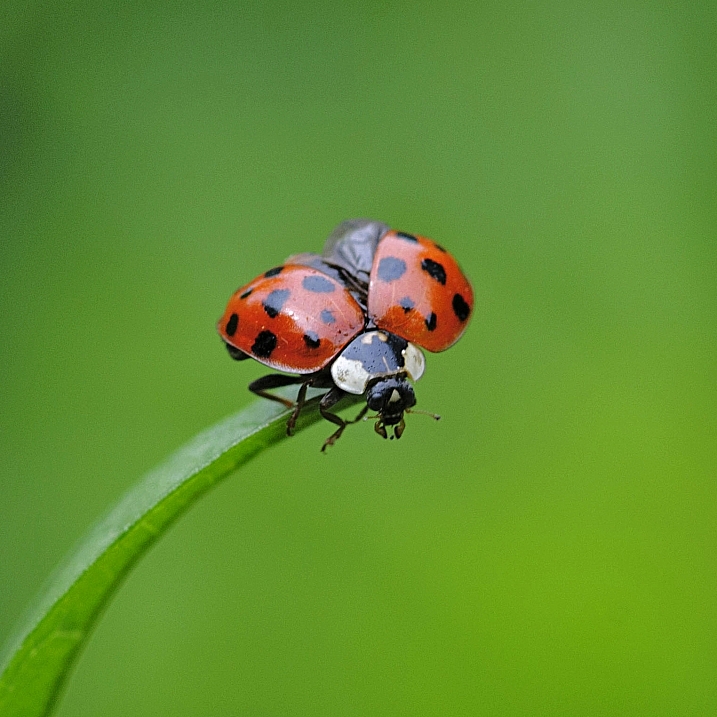
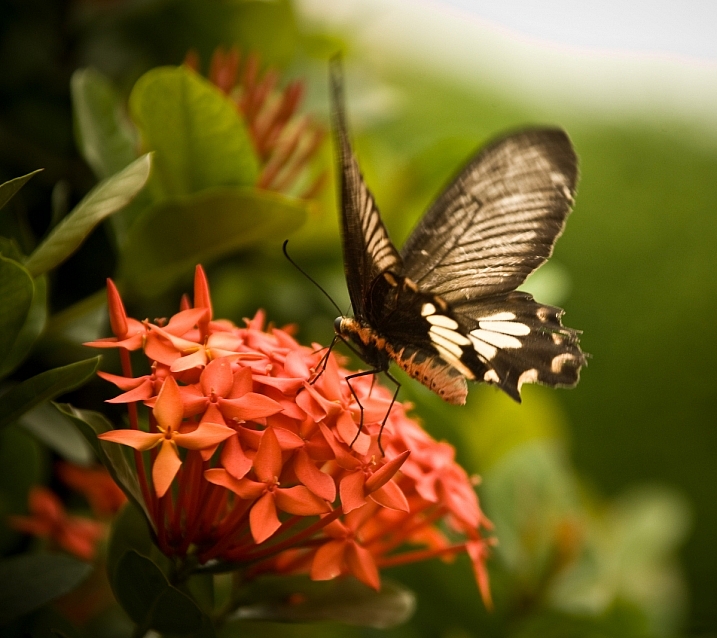
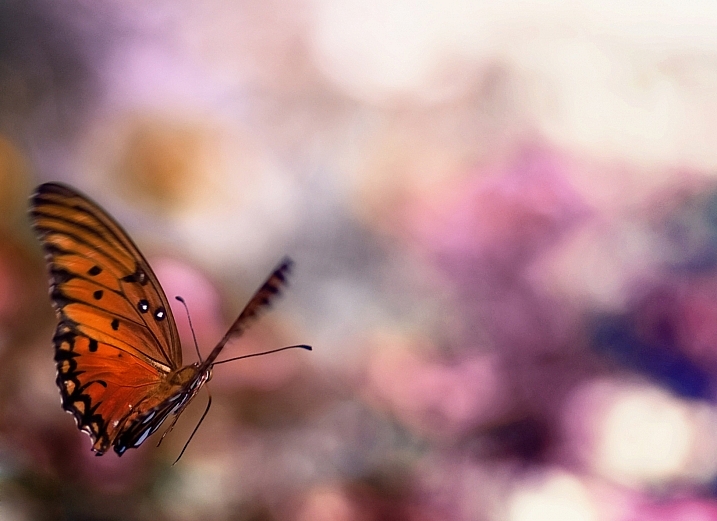
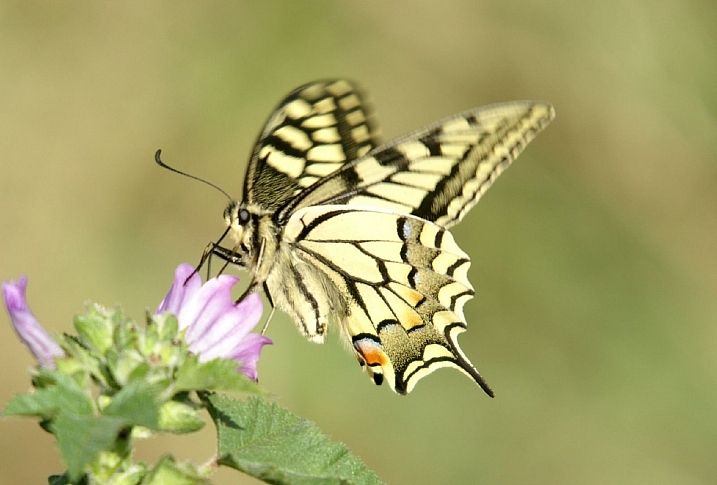
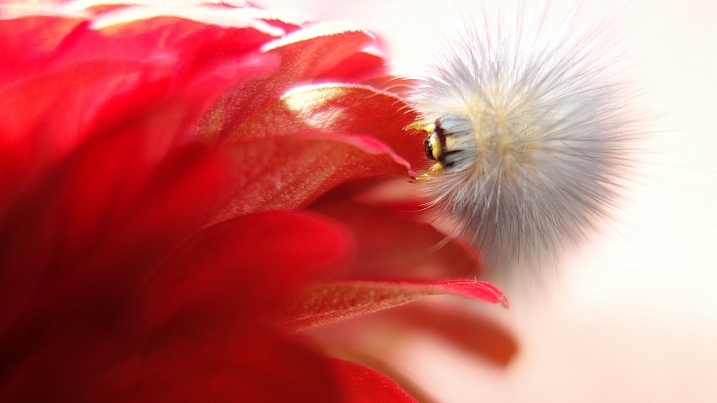
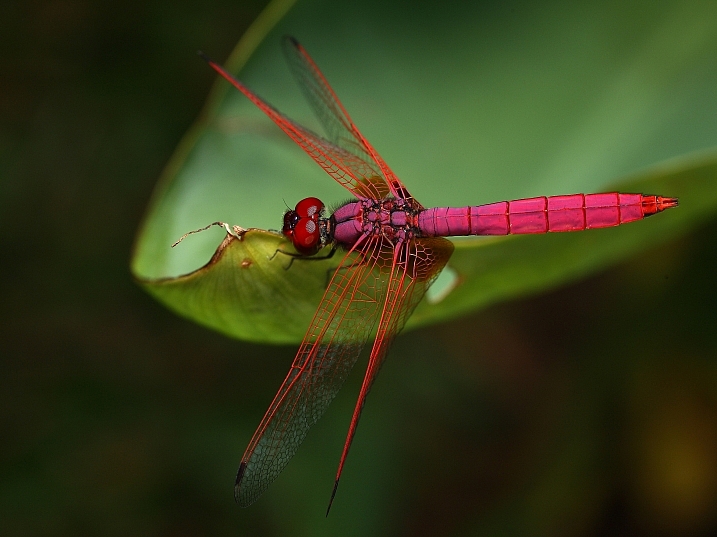
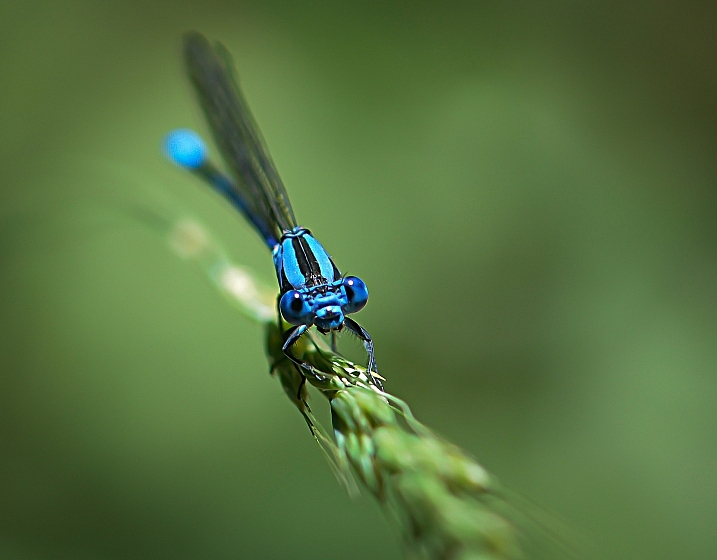
Butterflies can provide a colorful and fun way to explore the macro world, and the basic techniques are easy to master with a little patience and practice.
Just because butterflies are fast movers, doesn’t mean you have to be! If you watch carefully, you will notice that each species tends to visit the same variety of flower. If you miss a photo opportunity, wait a couple of minutes and the chances are that the butterfly will soon be back again to the same flower, or to a neighboring one. When approaching, avoid unnecessary vibrations and be careful not to cast a shadow over the butterfly.

Lens choice
Although a macro lens is an advantage, almost any lens can be used. A wide angle lens will help show context, whilst lenses with a longer focal length will isolate the butterfly from the background and will also ensure that it is not physically disturbed.
Camera settings
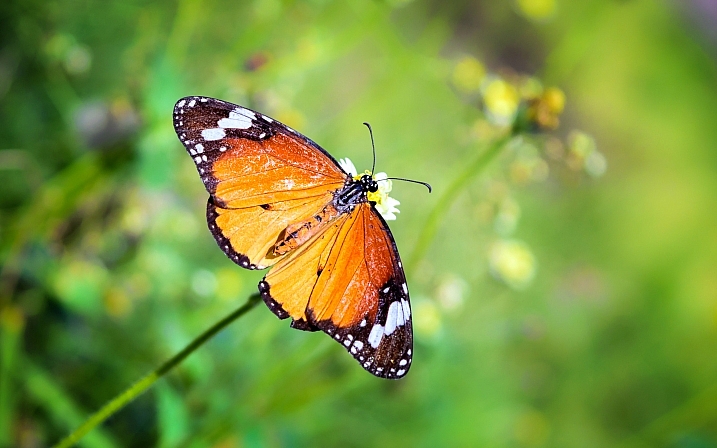
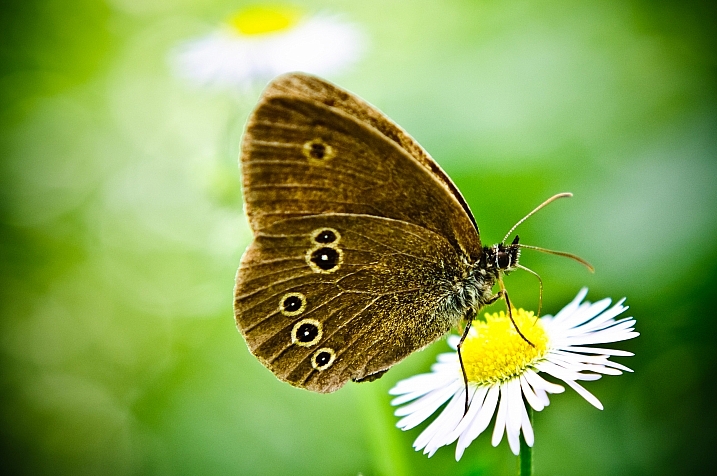
As in all macro photography, the background is as important as the subject and using the right aperture can make or break the photo. Use Aperture Priority mode and choose a fairly wide aperture (a small f-number). A good starting point is somewhere between f/3.5 and f/5.6, which will help separate the butterfly from the flowers or branches behind.
Of course, a wide aperture will also reduce depth-of-field, so your final choice will often depend on the position of the butterfly. If its wings are closed for example, and you are parallel to its body a wide aperture will be fine. If not, you may need to try something smaller such as f/8 or f/11.
Sometimes you will be lucky enough to find a butterfly who is feeding and poses beautifully for the camera, but most of the time they are in constant motion. Using a fast shutter speed of 1/800th and upwards will help reduce your quota of blurry photos.
Ideally, your ISO will be set to either 200 or 400, although you may need to increase this depending on available light.
Focus
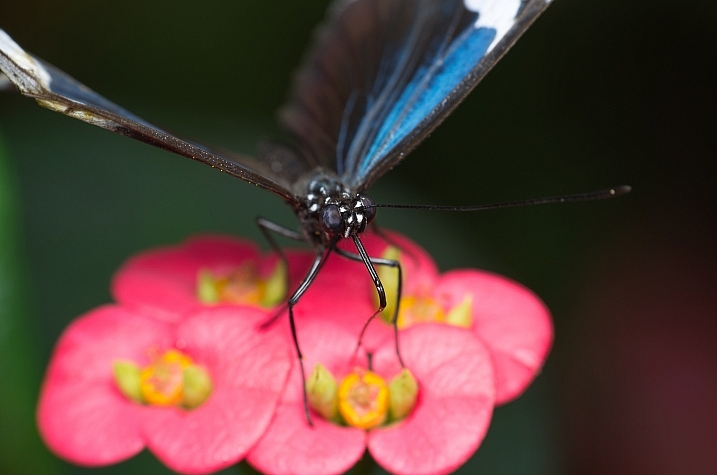
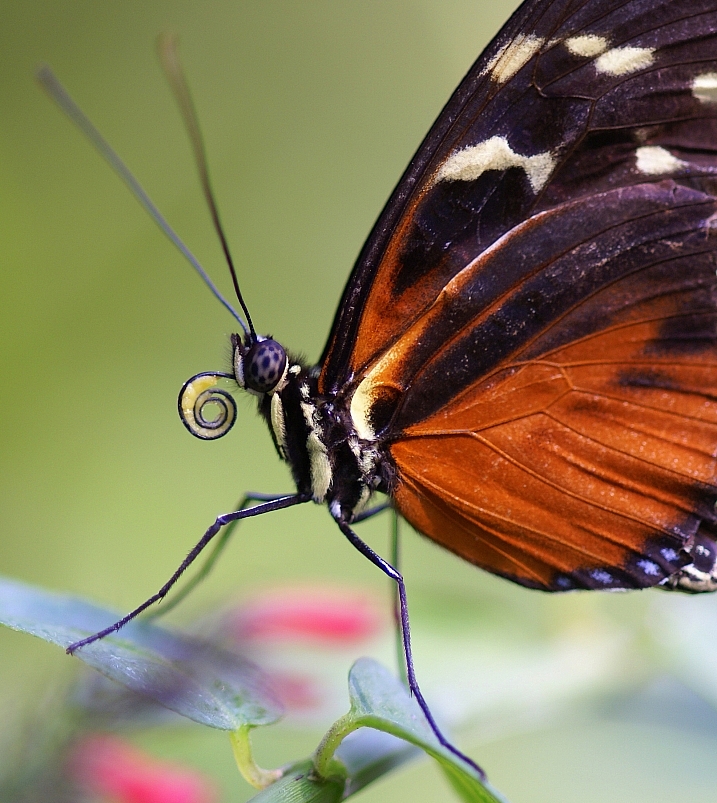
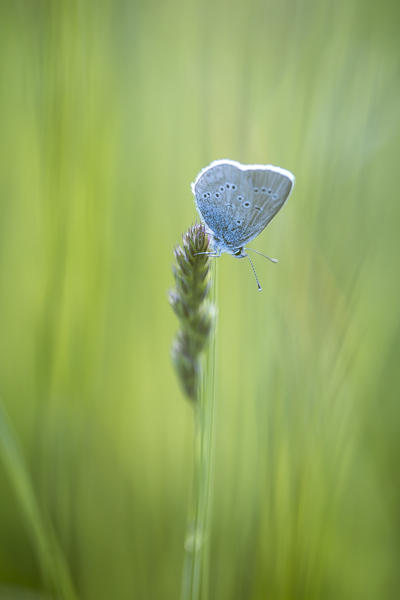
If your butterfly is part of a larger scene, you may get away with autofocus. For close-ups, there is only one way to focus, and that’s manually! Autofocus rarely puts the focus exactly where you want it, and with butterflies you are aiming at their eyes. If they are visible, the eyes are the key to the image and they need to be sharp.
If you are wondering how to manually focus on the microscopic eyes of a tiny, moving creature, don’t worry. Try pre-focusing on a flower so that when the occupant arrives you only have to make minor adjustments. Good focusing can be a bit hit and miss, so take plenty of photos to increase your chances of having a few sharp images.

Lighting
As for most photography, avoid the harsh light of the middle of the day. Early morning provides great light and slower moving butterflies, but late afternoon on a sunny day is often the best option. The butterflies are active and the sun is low in the sky.
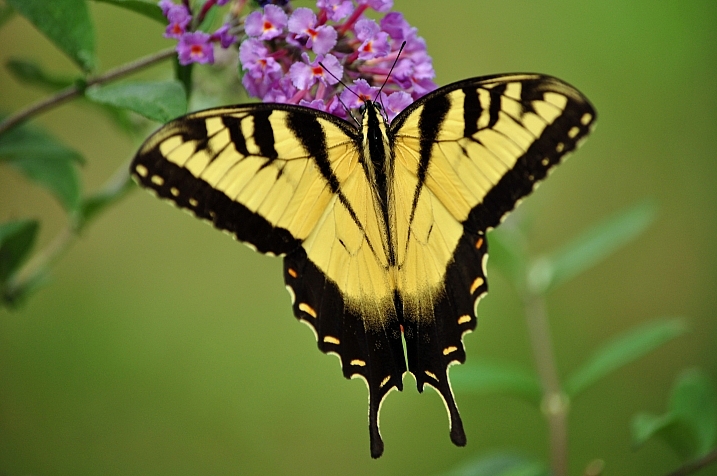
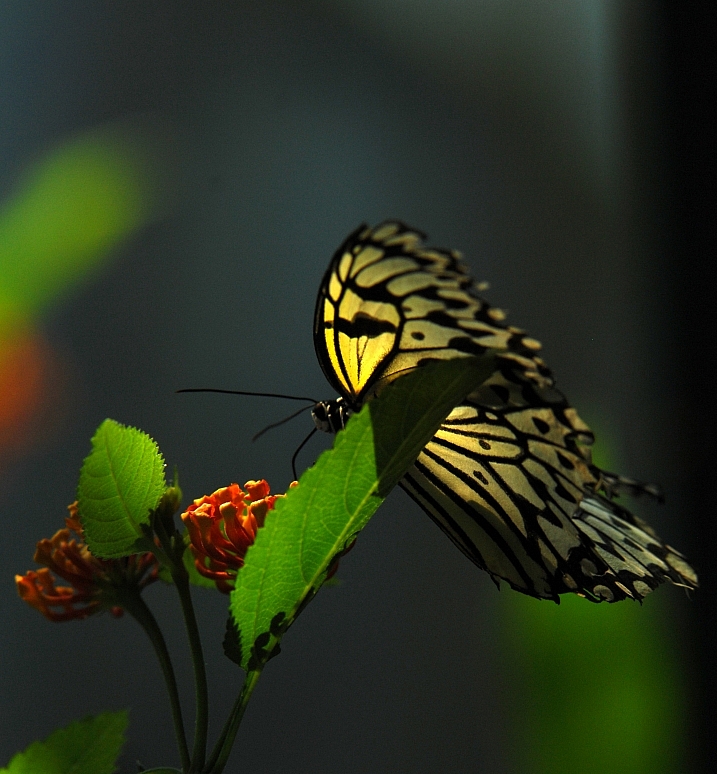
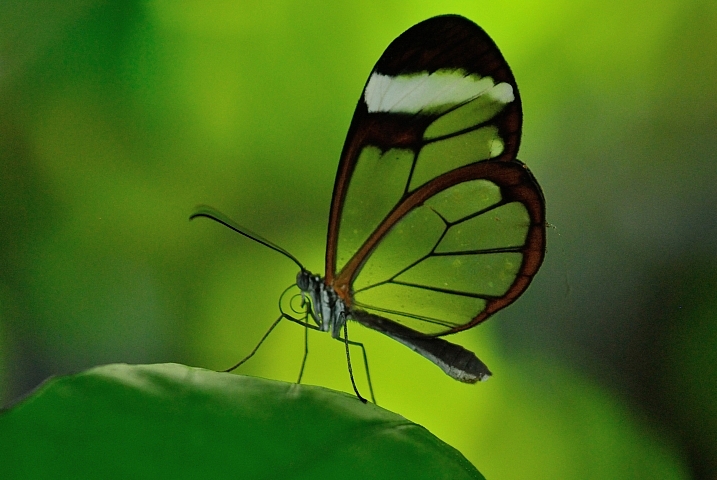
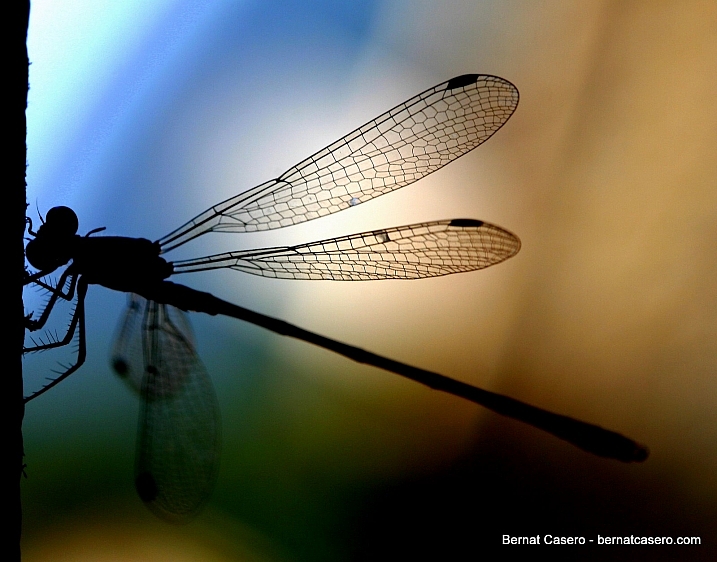
Once you feel comfortable with the more classical front and side-lighting, have a go at back-lighting. This can be achieved by positioning the butterfly between yourself and the sun. Avoiding lens flare can be a bit tricky, but this type of lighting will really show off the details of the wings and put a beautiful rim of light around the butterfly.
If your back-lit photos are on the dark side, you may need to over-expose slightly. Dial in some exposure compensation until the butterfly is correctly exposed.

Composition
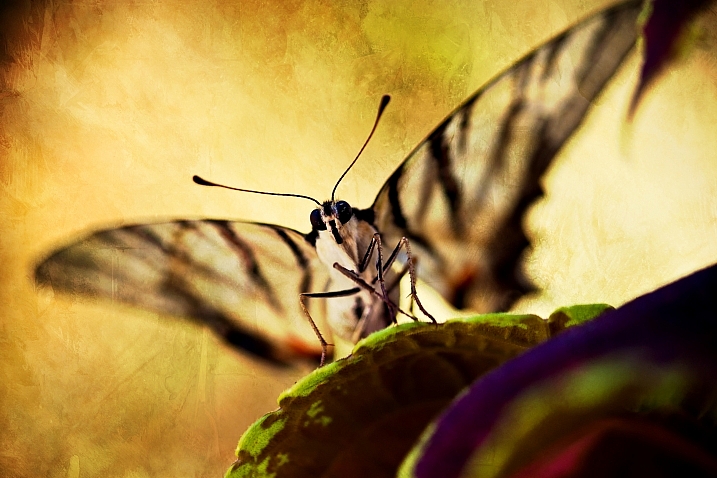
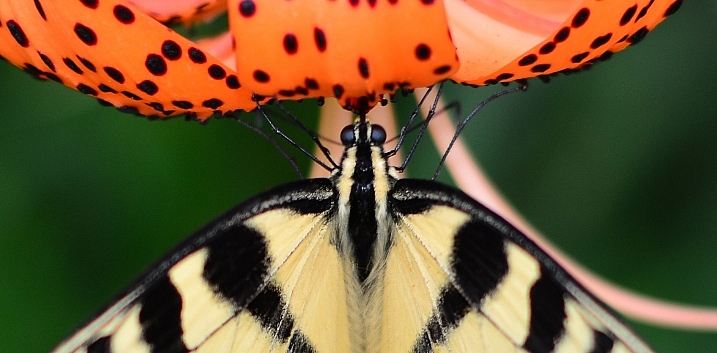
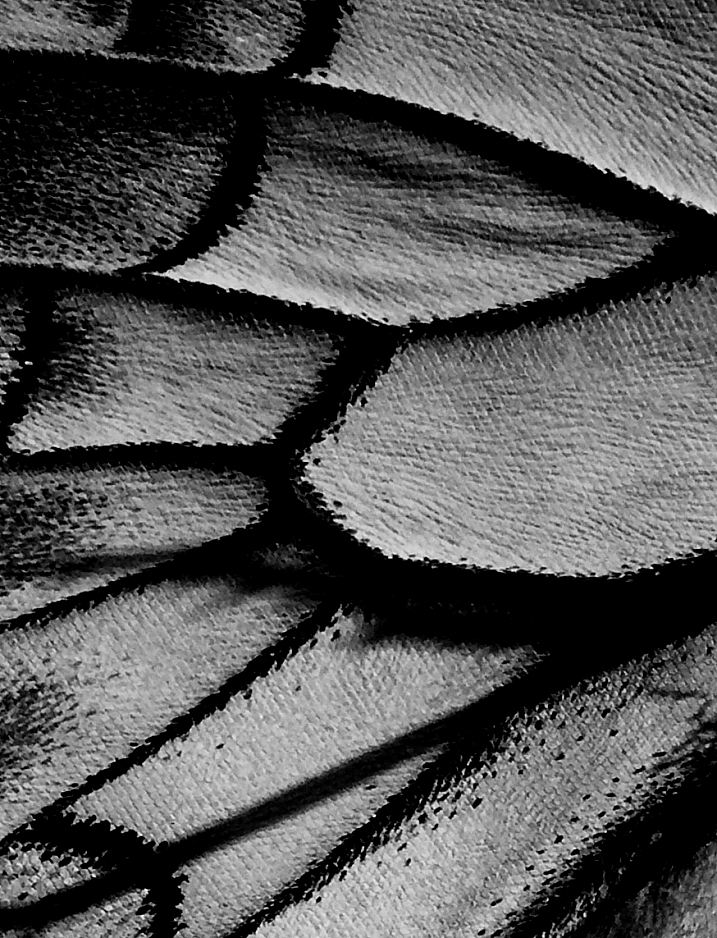
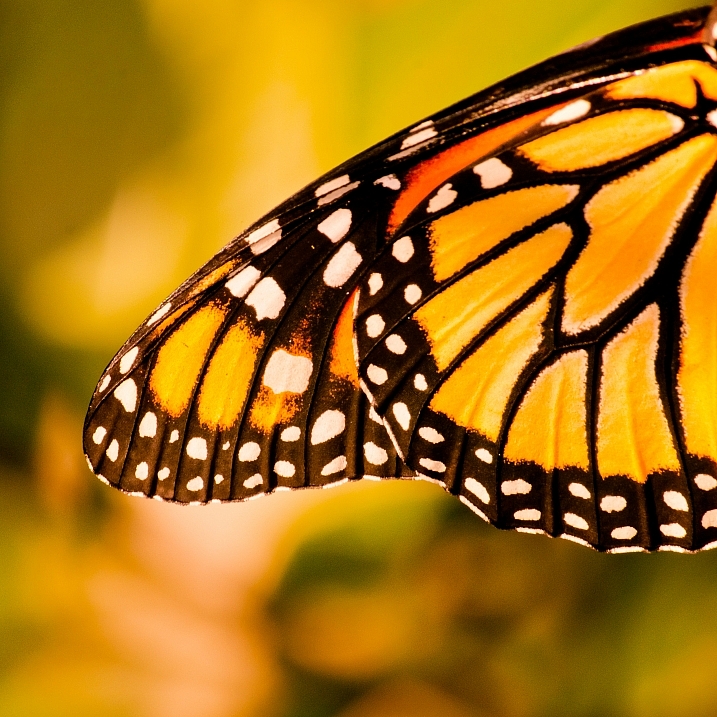
Photographing a butterfly from above, will showcase the patterns and colours of its wings. Getting down to eye level however, will give your photos much more impact and intimacy (especially if those eyes are sharp). Vary your perspective, move around, and show the butterfly from angles that are rarely seen.
As well as close-up shots, you may also want to consider the larger picture and show the butterfly in its natural surroundings.

Tripod
Whether you use a tripod or not is a personal choice. A tripod will bring you an element of stability and will help with composition and focus. The down side is that it is cumbersome and will severely restrict your movements when photographing these fast moving, and somewhat erratic subjects.
As for finding butterflies, you shouldn’t have to go far. Your garden will probably reveal several passers-by, and others can be found in local parks, fields and woodlands. Butterfly houses also provide great photographic opportunities with nice, even lighting and many species under one roof.

With a bit of perseverance you will soon develop your own technique for photographing these little beauties. Be warned though, chasing butterflies can become highly addictive!
Kathy Samuel is a natural light photographer with a passion for the outdoors and the world of macro photography. She is English, but now lives in the southern French Alps where there is no shortage of tiny subjects for her camera. You can visit her at Kathy Samuel Photography.
googletag.cmd.push(function() {
tablet_slots.push( googletag.defineSlot( “/1005424/_dPSv4_tab-all-article-bottom_(300×250)”, [300, 250], “pb-ad-78623” ).addService( googletag.pubads() ) ); } );
googletag.cmd.push(function() {
mobile_slots.push( googletag.defineSlot( “/1005424/_dPSv4_mob-all-article-bottom_(300×250)”, [300, 250], “pb-ad-78158” ).addService( googletag.pubads() ) ); } );
The post Tips for Photographing Butterflies by Kathy Samuel appeared first on Digital Photography School.

Digital Photography School