RSS
 

Posts Tagged ‘Blue’

A Set of Cool Blue Images to Enjoy

15 Aug

This week it’s been hot where I live, almost unbearable so. Therefore I thought some blue images in nice cool tones would help chill things off a bit.

So continuing on my series of colors we’ve already done Golden and Green . . .

A set of cool blue images for you to enjoy!

Photograph Bokeh by Joel Ericsson on 500px

Bokeh by Joel Ericsson on 500px

Photograph Blue by Boris van Berkel on 500px

Blue by Boris van Berkel on 500px

Photograph Blue by Suehana Suzie on 500px

Blue by Suehana Suzie on 500px

Photograph blue by olaus magnus on 500px

blue by olaus magnus on 500px

Photograph The Squareness by Joe@Plasmatico  on 500px

The Squareness by Joe@Plasmatico on 500px

Photograph Blue Quasar ? 5D/M51 by Josep Sumalla on 500px

Blue Quasar ? 5D/M51 by Josep Sumalla on 500px

Photograph Forest in blue by Valerie Anne Kelly on 500px

Forest in blue by Valerie Anne Kelly on 500px

Photograph Flurry. by  Chung on 500px

Flurry. by Chung on 500px

Photograph Midnight Blue by Margaret Morgan on 500px

Midnight Blue by Margaret Morgan on 500px

Photograph Flower of deep sea by Shihya Kowatari on 500px

Flower of deep sea by Shihya Kowatari on 500px

Photograph The night is coming by Cenzo Photography on 500px

The night is coming by Cenzo Photography on 500px

Photograph Flight.. by Atif Saeed on 500px

Flight.. by Atif Saeed on 500px

Photograph Rajan by Jody MacDonald on 500px

Rajan by Jody MacDonald on 500px

Photograph And I Am Off !!!! by Judylynn Malloch on 500px

And I Am Off !!!! by Judylynn Malloch on 500px

Photograph Blue City by Woosra Kim on 500px

Blue City by Woosra Kim on 500px

Photograph NEO OSAKA by Yoshihiko Wada on 500px

NEO OSAKA by Yoshihiko Wada on 500px

Photograph IronMan MK II by Suradej Chuephanich on 500px

IronMan MK II by Suradej Chuephanich on 500px

Photograph Blue by Mike Busby on 500px

Blue by Mike Busby on 500px

Photograph Hpnotiq by James Brown on 500px

Hpnotiq by James Brown on 500px

Photograph To Each His Own by Juan Osorio on 500px

To Each His Own by Juan Osorio on 500px

Photograph Story Time by Adrian Murray on 500px

Story Time by Adrian Murray on 500px

Photograph smile by Eszter Virt on 500px

smile by Eszter Virt on 500px

Photograph Blue Eyes by Rasif Babayev on 500px

Blue Eyes by Rasif Babayev on 500px

Photograph Alone in the dark by AtomicZen : ) on 500px

Alone in the dark by AtomicZen : ) on 500px

Photograph Blue Syndrome by Lafugue Logos   on 500px

Blue Syndrome by Lafugue Logos on 500px

Photograph Hold hands by YUYU Photography on 500px

Hold hands by YUYU Photography on 500px

Photograph ?????????? ? ????????? by Natalia Lisovskaya on 500px

?????????? ? ????????? by Natalia Lisovskaya on 500px

Photograph Summer Berry Waffles by MARJA SCHWARTZ on 500px

Summer Berry Waffles by MARJA SCHWARTZ on 500px

Photograph Peacock by strassguetlralf on 500px

Peacock by strassguetlralf on 500px

Photograph Follow the jellyfish... by Ilias  Varelas on 500px

Follow the jellyfish… by Ilias Varelas on 500px

Photograph Blue by Andres Restrepo on 500px

Blue by Andres Restrepo on 500px

Photograph A Friendly Berber Man by Brad Hammonds on 500px

A Friendly Berber Man by Brad Hammonds on 500px

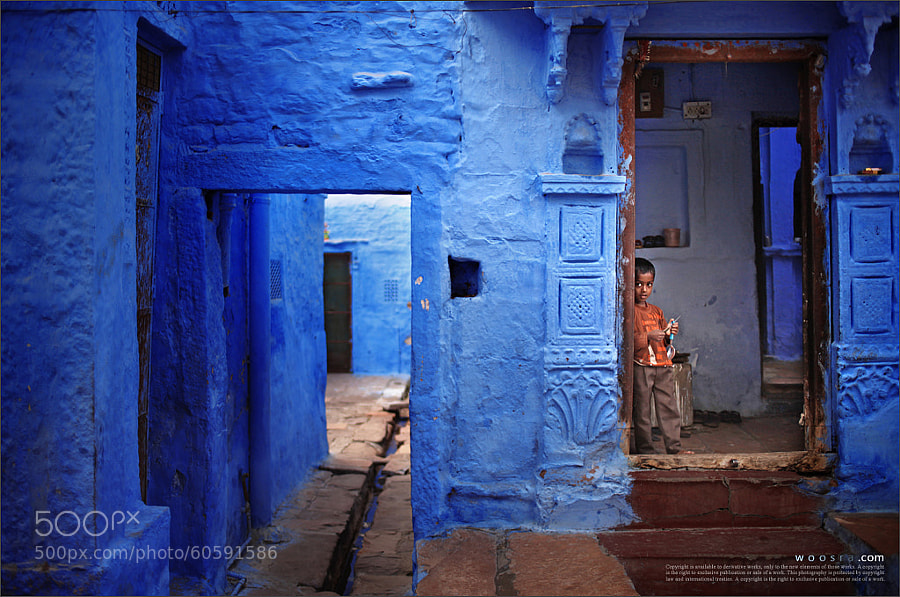
Photograph Jodhpur by Mahesh Balasubramanian on 500px

Jodhpur by Mahesh Balasubramanian on 500px

Photograph JODHPUR-BLUE CITY by Harsh Chaudhary on 500px

JODHPUR-BLUE CITY by Harsh Chaudhary on 500px

Photograph Blue Cave by Roger Sharp on 500px

Blue Cave by Roger Sharp on 500px

Photograph Blue Impulse by K Yonekura on 500px

Blue Impulse by K Yonekura on 500px

Photograph Swimmer by Daniel Stefan on 500px

Swimmer by Daniel Stefan on 500px

The post A Set of Cool Blue Images to Enjoy by Darlene Hildebrandt appeared first on Digital Photography School.


Digital Photography School

 
Comments Off on A Set of Cool Blue Images to Enjoy

Posted in Photography


New Photographer’s Guide to Blue Hour

14 Aug

Among the many tips and tricks new photographers get with regards to lighting, the time of day is an essential concept, which for getting some shots of landscapes and some dynamic shots of natural light and artificial light, is the time at dusk or dawn. This time is just before the appearance of the sun or just after it, when the light is soft enough to emphasize most of the dark of the scene, and yet not so dark that it necessitates the use of additional light source. This is a guide to Blue Hour, that natural time frame which is so poplar among photographers.

Blue hour 03

What is Blue Hour?

Blue Hour can be defined as the period of the day when the colour of the sky ranges from blue to dark blue, followed by black sky or vice versa depending upon the time of day it is being considered (i.e. for sunrise or sunset). It is termed as BLUE HOUR based on the consideration that the blue hue in the sky lasts for about an hour. In reality it lasts between 30 to 40 minutes approximately. Its duration also depends upon the geographical location and the season.

Rule of Thumb for Blue Hour times

The rule of thumb for Blue Hour is when exactly it starts and ends:

  • Sunrise: during this part of the day the Blue Hour starts around 30 minutes prior to sunrise. The peak of it can be 10 minutes before the sunrise. During sunrise, the blue hour diminishes very fast towards the sun rising on the horizon.
  • Sunset: during the sunset the Blue Hour roughly starts 10 to 15 minutes after the sun has set. I personally prefer to capture Blue Hour during the sunset as it gives me added time to setup my equipment, or change my location before the actual Blue Hour starts.
  • There are websites available where one can find out the approximate blue hour duration at any location so that you can plan your trip accordingly.
  • If the sky is overcast then the duration of Blue Hour will shorten and in some instances the clouds can be too dense soas to wash out the complete Blue Hour.

What to capture during Blue Hour

Blue hour 04

Blue Hour is best to capture cityscapes, landscapes and scenic beaches. The shots require long exposure or slow shutter speed thus making it difficult for taking pictures of people or moving bodies, as a slight movement can make the picture blurry but yet the light is optimum to bring out the vibrance of the landscapes.

Why to capture Blue Hour pictures

#1 Creativity in capturing motion

Since, Blue Hour photography requires long exposures or fairly slow shutter speed, depending upon the scenario the long exposure can be creatively used to capture motion. The best part about Blue Hour is to capture light trails of vehicles while also capturing cityscapes, and if it is partially cloudy then the movements of the clouds can be used to create a drag effect. When capturing scenic beaches the movement of water appears to be dreamy. All of these effects add to the dynamics of the photograph.

#2 Easy control of parameters in dim light

I personally find capturing shots during Blue Hour fairly easy and interesting as compared to bright light conditions. With the availability of the right gear (e.g. tripod, remote trigger or shutter release) it’s easy to control various parameters to compose your shots. In comparison to this during a bright sunny day there are chances of getting overexposed images or burnt spots if there is no proper control of the light source with regards to the subject. However, every photography technique has its own pros and cons.

Blue hour 05

List of Equipment for Blue Hour

The following are the essentials which can be considered as a must for Blue Hour photography:

  • DLSR – a must for taking any pictures. The better the DSLR, the better will be the noise performance for long exposures.
  • A rigid tripod – this as a must and the reason being long exposure/slow shutter speed during blue hour. So handheld shots maximize the chances of blurry images.
  • A cable or wireless remote shutter release – this is also one of the essential items which can help you in avoiding camera shake. An alternative to this is self-timer mode but at times you may need to use Bulb (exposures longer than 30 seconds) mode to capture the surroundings (for multiple layer blending) when shooting Blue Hour.
  • A handy flash light – to look around the surrounding areas when setting up your tripod in case the place is a bit dark.
  • A stop watch – this is now available in most of mobile phones, and comes very handy when you need to monitor the duration of shutter release in case your DSLR or remote doesn’t do that.
  • A wide angle zoom lens or lens suitable for composition – not a must but a wide angle zoom lens will help you in composing your frame properly as you can zoom in and out depending upon what you need to see in your picture.
  • Lens cleaning cloth and blower – this is one of the essentials to keep the lens clean in case of fingerprints or dirt. Although this isn’t specifically a Blue hour essential, it is a photography essential nevertheless.
  • Miscellaneous bits – these things can be handy and will make your photography comfortable. If you are setting up your camera around grass then a bug repellent will be useful and also if the weather is hot don’t forget to carry a small towel to wipe off the sweat rather than dripping onto your DSLR or lens.

Blue hour 02

How to capture Blue Hour

Step one: Setting up your equipment

The first and foremost is to setup your camera on a tripod, on firm ground, to avoid any camera shake. Place the tripod on the ground and give a firm press against it, to make sure it is set in position. Place your camera on the tripod and make sure it is properly locked on. Take a look from the viewfinder and compose your frame, and also make sure that the camera is properly aligned using a bubble level or electronic level (if available in your camera). Do make sure that you are not directly under a source of bright light, which can make lens flare.

Connect the remote to the DSLR if it’s a wired one, or keep a wireless remote ready to be used. Looking into the viewfinder, try and use the autofocus to lock focus on any of the bright objects in your frame. Once the focus has been locked put the focusing switch on your lens to Manual Focus in order to avoid any re-focusing and lost focus.

Try capturing picture in RAW format, rather than JPEG, as it gives us more flexibility and details when post-processing the image. Double check that your focus is covering the complete frame properly by taking a couple of test shots. I always try and make sure that I am there well before Blue Hour so that I can take my sweet time to setup my equipment and be ready to take pictures.

Blue hour 01

Step two: Taking multiple exposures

Once your equipment has been setup, and the lens has been focused properly, set the aperture between f/8 and f/16 to make sure you have a good depth of field. My personal preference is that I keep a balance of ISO and shutter speed to control the noise in the picture. The preferred setting for ISO is between 100-200, and the rest I leave to the shutter speed which ranges from five seconds to over a minute, depending upon the foreground details or any light show I need to capture. I prefer shooting in full manual mode so that I can control all the parameters.

If you have set a frame of the shot which contains trees and grass, try and capture couple of exposure in well lit condition so that you may use those during the post-processing. This will also give you an idea of what shutter speed you will need to capture the sky.

Keep taking shots at different intervals during the Blue Hour in order to use the best exposure during the post-processing of the image. If your composition contains any light shows or any other architecture which has a lot of light, you can adjust the shutter speed to suit, and prevent it from being overexposed. At the same time you should keep reviewing your shots to make sure they are correctly exposed for post-processing.

Post-processing of exposures

This can be a separate article on “Multiple Layer Blending in Adobe Photoshop” but I will give a brief description about it here.

I use Adobe Photoshop for multiple layer blending of my photographs of Blue Hour. If the picture is a RAW file format then you can change the basic parameters like Exposure, Clarity, Vibrance, Temperature, etc., when you open the file. Once you have done that, the actual image opens up in Adobe Photoshop. Select and open multiple images on the basis of exposure of sky, foreground, etc. Select one image that has the best Blue Hour exposure and create a blank “New Layer” to copy the other image which has good exposure of the foreground.

Layer blending

Arrange the different layers as per the priority of coverage in the example image the layer having a major section of the sky to be set as top layer followed by the foreground layer. Use the Erase tool to remove the underexposed areas from the top layer to reveal the correctly exposed layer for the foreground (you can also use a layer mask). Adjust the parameters like Selective Colour, Shadow/Highlights, Contrast, etc., of every layer to have an even colour effect. Merge these layers to form a single layer upon completion and you have got your final image ready.

I personally don’t merge the layers which gives me the flexibility to alter any of the layers if required in future.

Feel free to drop your suggestions and comments, if you have any, as I am always eager to learn more and more.

The post New Photographer’s Guide to Blue Hour by Ausaaf Ahmad appeared first on Digital Photography School.


Digital Photography School

 
Comments Off on New Photographer’s Guide to Blue Hour

Posted in Photography


Sweeten Your Photos by Shooting During the Blue Hour

09 May
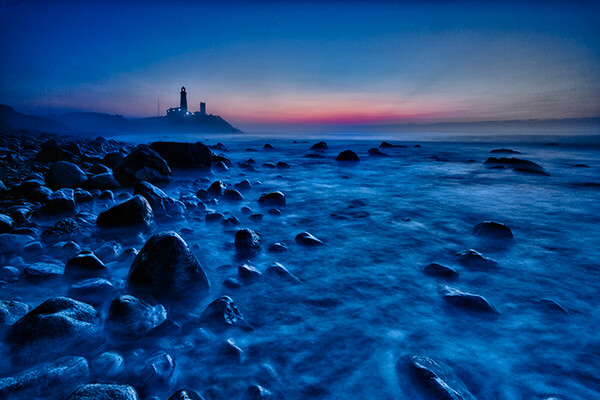
Montauk Point, NY. EOS 5D Mark II with EF 17-40 f/4L. 15 seconds at f/11, ISO 800.

Montauk Point, NY. EOS 5D Mark II with EF 17-40 f/4L. 15 seconds at f/11, ISO 800.

There is a period of time each day, just before sunrise and just after sunset, when the sun is below the horizon, when the light is known as “sweet light.” This period of time is known as “The Blue Hour.” This is a period of time each morning and evening when there is neither full daylight, nor full darkness. The light is almost ethereal, with a soft blue glow bathing the scene. The Blue Hour happens in tandem with the Golden Hour, making the beginning and end of the day exceptional for photography, providing two very different types of light within a single time span.

Equipment and settings

The Blue Hour is a prime time for landscape photography. Subjects that have their own lighting, such as city buildings or lighthouses, tend to look especially good, as the yellow glow of their lights cuts through the blue.  A tripod will be necessary to capture these scenes, unless you’re willing to raise your ISO to the point you can hand hold your exposures.  Setting a proper white balance is one of the keys to Blue Hour photography.  When set to AWB (auto white balance), the camera will try to correct for the blue tone the light has, which can result in flattening your image. If you shoot RAW, you can correct for this in pos- processing, to get just the right white balance for your taste. If you’re a JPEG shooter, you may want to try setting a custom white balance, or you can use your camera’s Live View setting to preview what different white balance settings will do to the scene.

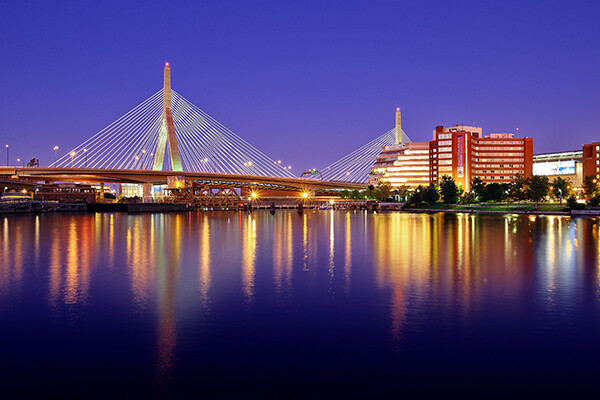
Boston's Zakim Bridge. EOS-1D Mark III with EF 24-105 f/4L IS. 30 seconds, f/11, ISO 100.

Boston’s Zakim Bridge. EOS-1D Mark III with EF 24-105 f/4L IS. 30 seconds, f/11, ISO 100.

I prefer the time during the Blue Hour when the sun is close enough to the horizon that there is a soft orange glow along the horizon. This adds an extra quality to the image, especially when you consider that orange is blue’s complementary color.  You may want to bracket your exposures, as this will vary the intensity of any light in the image, be it the orange glow remaining from the sun, or artificial lighting on buildings.  Blending exposures for HDR images may not be necessary, but it will be possible if you use a tripod and decide to try some HDR.

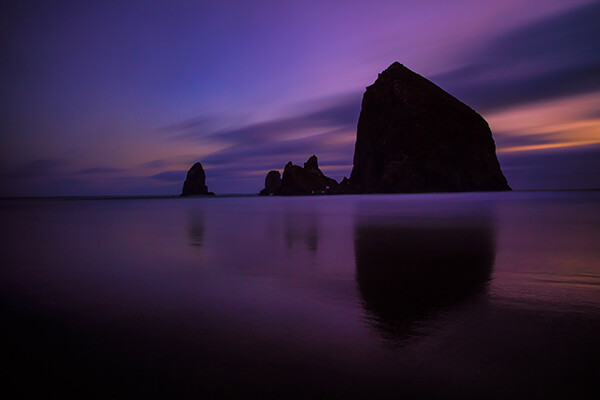
Cannon Beach, Oregon. EOS 5D Mark III with EF 24-70 f/2.8L II. !20 seconds, f/11, ISO 640.

Cannon Beach, Oregon. EOS 5D Mark III with EF 24-70 f/2.8L II. !20 seconds, f/11, ISO 640.

The window of opportunity for Blue Hour shooting is small, and probably much shorter than during the Golden Hour. You’ll want to be at your spot ready to go well in advance of the Blue Hour. To plan your time, you can visit The Blue Hour Site to find out when the Blue Hour starts and ends at your location.  If you don’t have access to the internet, a good rule of thumb is that the Blue Hour starts about 15 minutes after sunset, and ends around an hour after sunset.  For sunrise, it will start roughly an hour before sunrise and end 15 minutes before sunrise.  When I plan to shoot landscapes, be it at sunrise or sunset, I always plan to shoot both the Golden Hour and the Blue Hour.  I tend to get a lot of variety due to the change in light, and it makes the time spent that much more worthwhile.

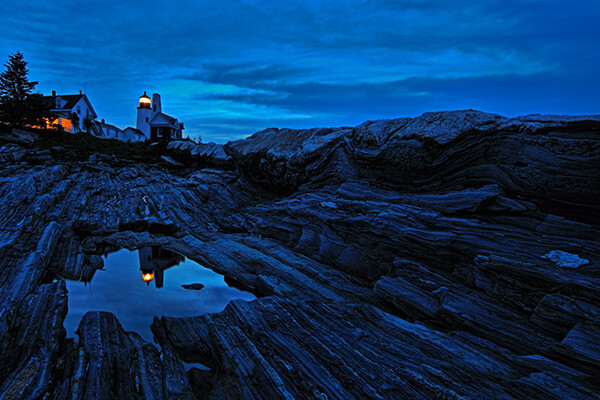
Pemaquid Point, Maine. EOS 5D Mark II with TS-E 17mm f/4L. 8 seconds, f/11, ISO 400.

Pemaquid Point, Maine. EOS 5D Mark II with TS-E 17mm f/4L. 8 seconds, f/11, ISO 400.

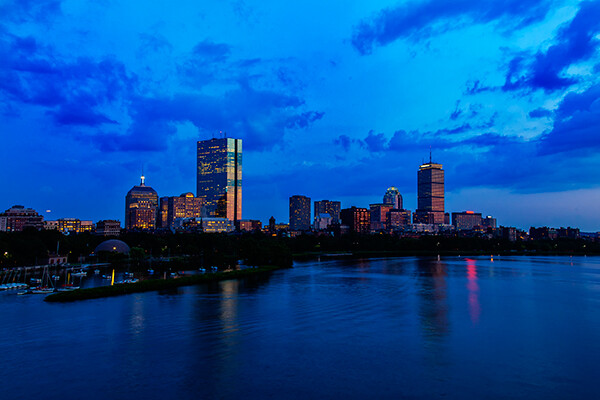
Boston Skyline. EOS 5D Mark II with EF 24-105 f/4L IS. 1 second, f/11, ISO 100.

Boston Skyline. EOS 5D Mark II with EF 24-105 f/4L IS. 1 second, f/11, ISO 100.

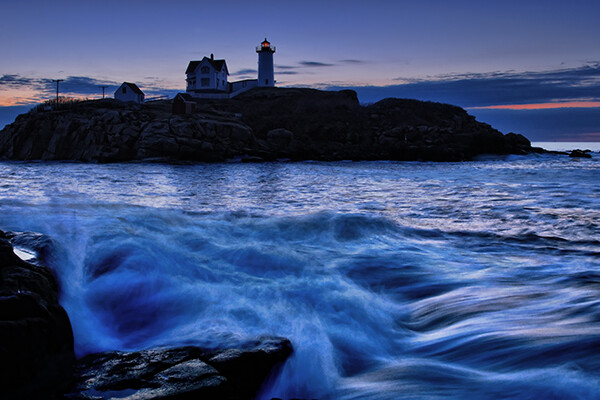
Cape Neddick, Maine. EOS-1D Mark III with EF 17-40 f/4L. 0.4 seconds, f/8, ISO 400.

Cape Neddick, Maine. EOS-1D Mark III with EF 17-40 f/4L. 0.4 seconds, f/8, ISO 400.

_MG_0306

Please share your Blue Hour photos and comments below.

The post Sweeten Your Photos by Shooting During the Blue Hour by Rick Berk appeared first on Digital Photography School.


Digital Photography School

 
Comments Off on Sweeten Your Photos by Shooting During the Blue Hour

Posted in Photography


Juxtapositions: Luxury Skyscrapers in Seas of Blue Shanties

12 Feb

[ By WebUrbanist in Architecture & Cities & Urbanism. ]

skyscraper next to squatters

In some cities the slums run vertical while the rich build mansions on the precious ground, but in Mumbai, India, high-rise housing is considered premium real estate while the poor cobble together shelters below.

scryscraper slum backdrop mumbai

Alicja Dobrucka is the Polish photographer behind this photo series titled Life on a New High. Many of the photos were shot from a sufficiently high elevation to capture tall buildings on the backdrop of the surrounding urban landscape.

skyscraper foreground shelter view

The residential towers stand in stark contrast to the sprawling ad hoc homes below, topped with a kind of (unfortunately) iconic patchwork of blue tarps.

skyscraper urban luxury tower

Thousands of mid-rise-and-higher structures have been or are being built in Mumbai, often without regard for any overarching city plan. Some (like the famous one above) house single families on multiple floors, often with space for dozens of servants (in this case, reportedly, as many as 200).

skyscraper no urban planning

skyscraper new construction india

skyscraper being built mumbai

Dobrucka also calls attention to the marketing slogans used to promote these structures. These catchy phrases are as seemingly out of touch with a their surroundings as the European-style architectural follies they are attached to: “You don’t just invite friends over, you invite awe”, ”Ask yourself, how much envy can you endure? Neither wealth nor influence will bring them back again”, ”If your tastes match with the President of France, we have just the right home for you”, ”Other homes have works of art. Yours is one” and “Rooftop pool. Rooftop Jacuzzi. Rooftop lawn. As for the moon consider it complimentary”

Share on Facebook


[ By WebUrbanist in Architecture & Cities & Urbanism. ]

[ WebUrbanist | Archives | Galleries | Privacy | TOS ]


WebUrbanist

 
Comments Off on Juxtapositions: Luxury Skyscrapers in Seas of Blue Shanties

Posted in Creativity


Lake Tahoe Blue

31 Jul
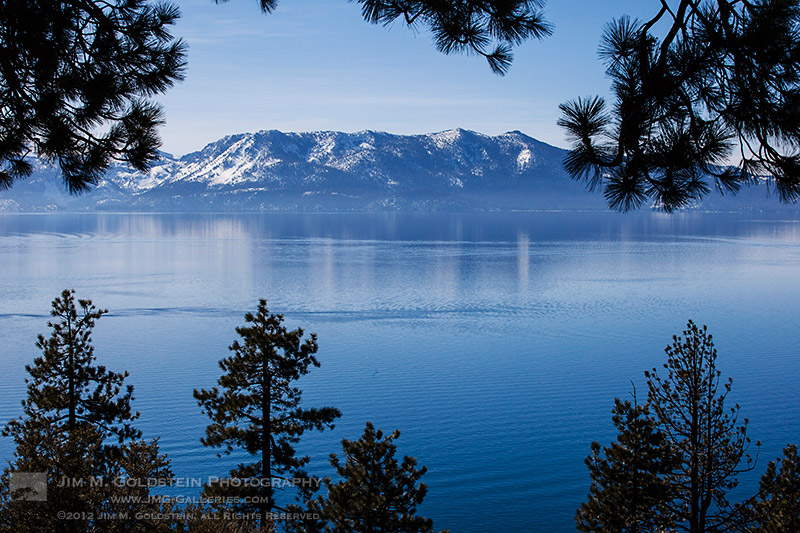
Lake Tahoe Blue

Blue waters of Lake Tahoe, California on a cool winter day

Lake Tahoe, the largest alpine lake in California and North America, is also the second deepest behind Crater Lake in Oregon. The depth of the water is what provides its iconic deep blue color.  Adding to the beauty of the lake is its crown of peaks surrounding it. Personally I find Lake Tahoe to be even more beautiful with snow on the ground.

Lake Tahoe and Crater Lake are both amazing locations simply because the blue color of the lake is insanely intense. The bluer the sky the bluer the water. It’s an amazing thing to witness and a fascinating phenomenon tied to such incredibly deep alpine lakes.

Copyright Jim M. Goldstein, All Rights Reserved

Lake Tahoe Blue

The post Lake Tahoe Blue appeared first on JMG-Galleries – Landscape, Nature & Travel Photography.


Comments

  • Very nice Jim. I hope to make my first visit to Tahoe this year. by Richard Wong
  • nice colours!!…. the trees made a natural window for the … by Ideas_R_Bulletproof

Related Stories

  • Lake Tahoe Blue – Enclosure
  • Primitive Coast IV
  • Primitive Coast IV – Enclosure
Feed Ads by FeedBlitz
powered by ad choices


JMG-Galleries

 
Comments Off on Lake Tahoe Blue

Posted in Equipment


Pentax unveils blue and white K-01 in Japan

04 Jul

blue-K01-s.png

Pentax Japan has unveiled a new colour variation of its Marc Newson-designed K-01 mirrorless camera, with a white body shell, blue grip covering, and black accents. There are no spec changes or updates compared to the existing K-01, which was announced early in 2012 and available in black, silver, or yellow. So the camera sports a 16MP APS-C CMOS sensor, in-body image stabilisation, 3″ 912k dot LCD, and the same K-mount as the company’s SLRs. It comes with the ultra-slim smc PENTAX-DA 40mm F2.8 XS pancake lens, and will go on sale in July.

News: Digital Photography Review (dpreview.com)

 
Comments Off on Pentax unveils blue and white K-01 in Japan

Posted in Uncategorized


Colour Contrast: Making the Most of Orange and Blue

29 Jun

Colour contrast: using orange and blue

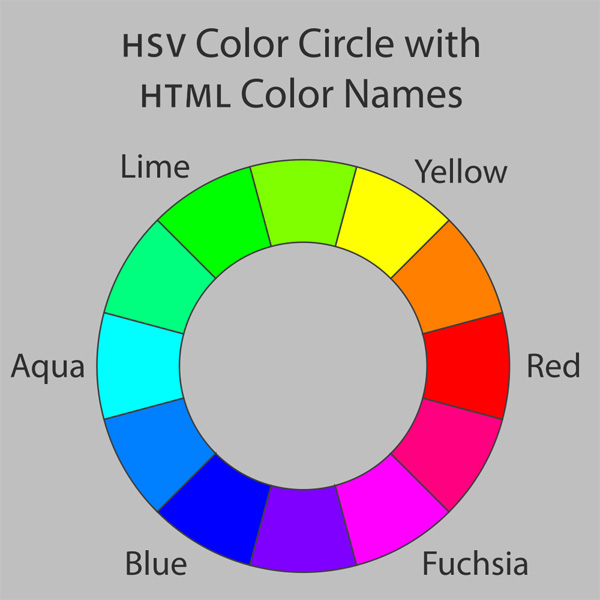
One of the principles behind using colour in photography is that of using contrasting colours. To understand the concept we need to look at a colour wheel – a type of diagram used by designers to show the relationships between colours:
Colour contrast: using orange and blue

Diagram by Wikipedia contributor Jacobolus

Contrasting colours are those that appear on opposite sides of the colour wheel. Today I’m going to look at two specific colours, orange and blue.

Why these two? They happen to be very useful colours to work with because they appear a lot in nature (even though you might not be aware of it). It’s all to do with the colour of the ambient light, which ranges from cool blue to warm orange, depending on the light source.

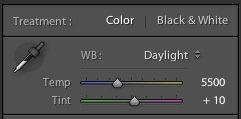
Incidentally, this is reflected by the colour temperature slider in Lightroom. One end is blue, and the other is orange:
Colour contrast: using orange and blue

Blue light

In low light, in fog or rain, or at twilight the natural colour of the light is blue. In these conditions, any photo you take has a blue colour cast.

The easiest way to see a colour cast in your photo is to set white balance to daylight. If the colour of the light is blue, then it will come out blue in your photo.

If you use auto white balance the camera will warm the photo up to compensate for the blue colour cast of the light. That’s useful sometimes, but it’s not desirable if you want to create a moody image.

Blue light is atmospheric. That’s because some colours evoke an emotional response, and blue is one of them. It is a cold colour – it connotes cold, misery, bad weather, even depression.
Colour contrast: using orange and blue

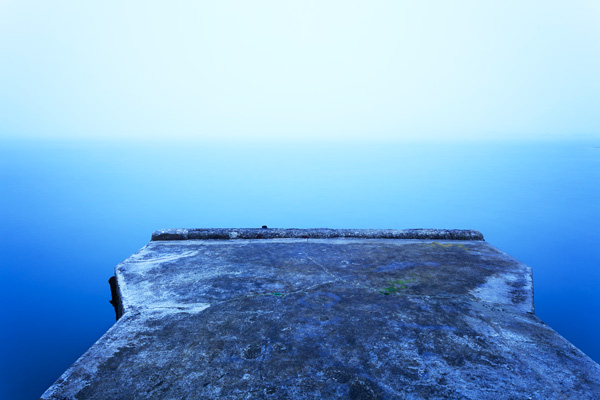
I took this photo in thick fog.The natural colour of the light is blue. The blue colour cast in this photo creates mood.

Orange light

Orange coloured light also occurs naturally. Light originating from the sun in the late afternoon, early evening or at sunset has an orange colour cast. So does light emitted by tungsten bulbs and burning flames.

Anything lit by these light sources will have a warm orange colour cast. Again, you will see it clearly if you set white balance to daylight.

Orange is another colour that evokes emotion. It is the colour of warmth and energy. It reminds us of things like the heat of summer or emotional warmth. Like blue, the psychological effect can be quite powerful.
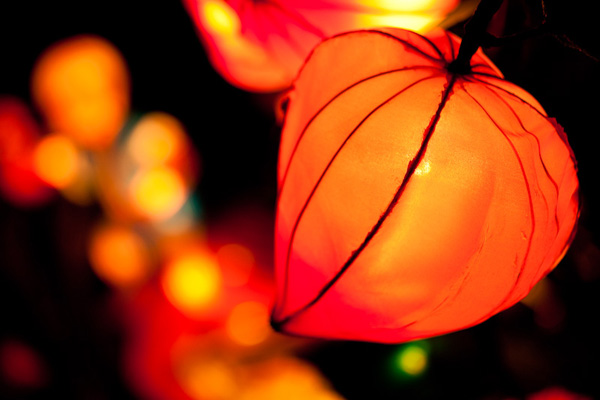
Colour contrast: using orange and blue

The light source in this photo is the tungsten bulbs inside the lanterns. The natural colour of this light is orange.

You can see that blue and orange are opposites in many respects. They are opposites on the colour wheel, and also in the emotions and feelings that they represent.

Combining blue and orange

One way to show contrast between two things is to place them together. There is a famous photo by Annie Leibovitz of a jockey and a basketball player, side by side (you can see it here). Placing both sportsmen side by side emphasises their respective height, and the difference in stature between them.

It’s the same with blue and orange. Include both in the same image to add to the power of this colour combination. The coldness of the blue tones emphasises the warmth of the orange ones, and vice versa. Here are a few examples:
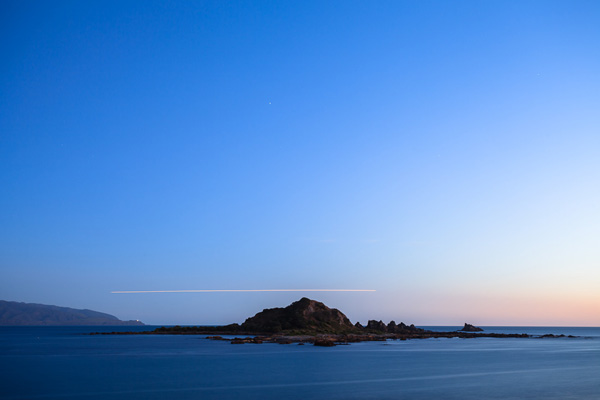
Colour contrast: using orange and blue

Most of the scene is lit by fading daylight, which has a natural blue colour. There is some warm light coming from the right, where the sun has set. The orange streak of light over the horizon comes from a plane flying by during the exposure.
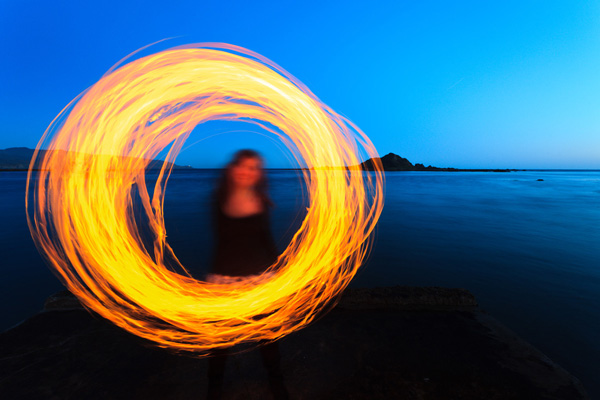
Colour contrast: using orange and blue

This photo was taken when it was nearly dark. The landscape is lit by the fading light, which has a natural blue colour. My model is whirling a burning object around. The light from the fire is orange.
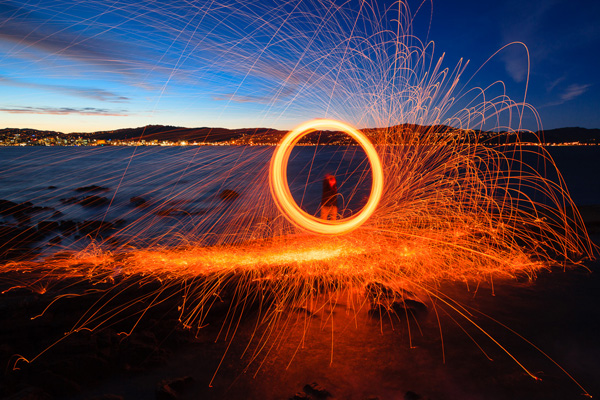
Colour contrast: using orange and blue

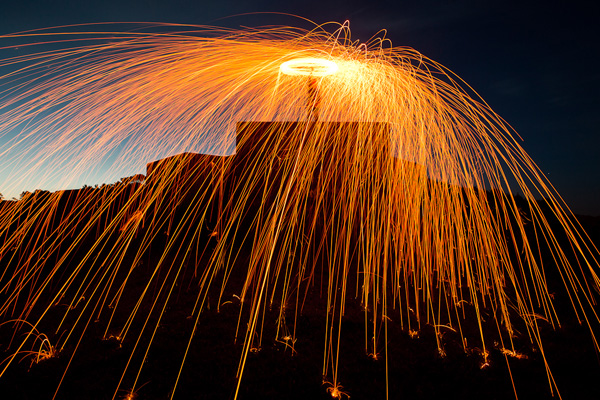
Finally, here is a photo created using the steel wool spinning technique. It’s taken at dusk, and the landscape is lit by the blue coloured light of the fading daylight. The light from the burning steel wool is orange, and so are the lights from the distant city buildings over the water.

If you want to try steel wool spinning yourself, click the link to read an article I wrote about it on my website. Please pay attention to the safety instructions in the article – steel wool spinning is potentially dangerous.

Mastering Photography
Colour contrast: using orange and blue

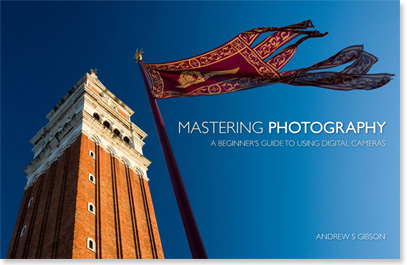
My latest ebook, Mastering Photography: A Beginner’s Guide to Using Digital Cameras introduces you to digital photography and helps you make the most out of your digital cameras. It covers concepts such as lighting and composition as well as the camera settings you need to master to take photos like the ones in this article.

By the way, the cover photo is another great example of using the orange and blue colour contrast. The building and flag are lit by the setting sun, so they have an orange colour cast. The summer sky is deep blue. You can take this sort of photo just about anywhere during the golden hour at the end of the day.

Post originally from: Digital Photography Tips.

Check out our more Photography Tips at Photography Tips for Beginners, Portrait Photography Tips and Wedding Photography Tips.

Colour Contrast: Making the Most of Orange and Blue


Digital Photography School

 
Comments Off on Colour Contrast: Making the Most of Orange and Blue

Posted in Photography


Blue Snowball Microphone Unboxing

12 Feb

I recently bought my self a Blue Snowball Microphone. It’s amazing, review is on the way! (Finals week may restrict me a bit, but I’ll get one!) Flickr: www.flickr.com

Check out the first time Mr. Hitler was not happy here: www.youtube.com This time he is really upset!! This is a parody. Go watch the movie “Downfall”. It’s amazing
Video Rating: 4 / 5


Blue Doodle #98

08 Feb

A bluesy little tune I put together while watching my pup play. Guitar is a 1988 Guild D-60SB. Pup is a 2006 Goldendoodle. Transcription available at dharmastrum.net
Video Rating: 0 / 5


Blue shell pattern design

19 Jan

A few nice visual art images I found:

Blue shell pattern design
visual art
Image by Rebekah Leigh
A pattern created from shell drawings done using felt tip, this pattern has a really nice feel to it, I love the visual look that using felt tip pens gives you, it looks great when scanned in and made into patterns. Rebekah Leigh Marshall 2010

You can also view my pattern designs here:
www.spoonflower.com/profiles/rebekahleigh

Ashmolean Museum, Oxford
visual art
Image by Martin Beek
Detail of painting by Camille Pissarro (10 July 1830 – 13 November 1903) was a French Impressionist painter. His importance resides not only in his visual contributions to Impressionism and Post-Impressionism, but also in his patriarchal standing among his colleagues, particularly Paul Cézanne and Paul Gauguin.

Union_Sq_Zoetrope_1
visual art
Image by MTAPhotos
MTA Arts for Transit in Sept. 2011 unveiled "Union Square in Motion," a temporary interactive art installation in which the movement of passersby animates a digital visual display depicting nine sets of abstract and organic-themed images created by nine student artists. The display is a digital zoetrope, a series of still images that differ from one another in slight ways and create the appearance of animation when viewed in succession. The artwork’s creators describe it as the world’s largest digital linear zoetrope. More: bit.ly/rfb22z Photo by Metropolitan Transportation Authority / Rob Wilson.

 
Comments Off on Blue shell pattern design

Posted in Photographs