Tag: Birds

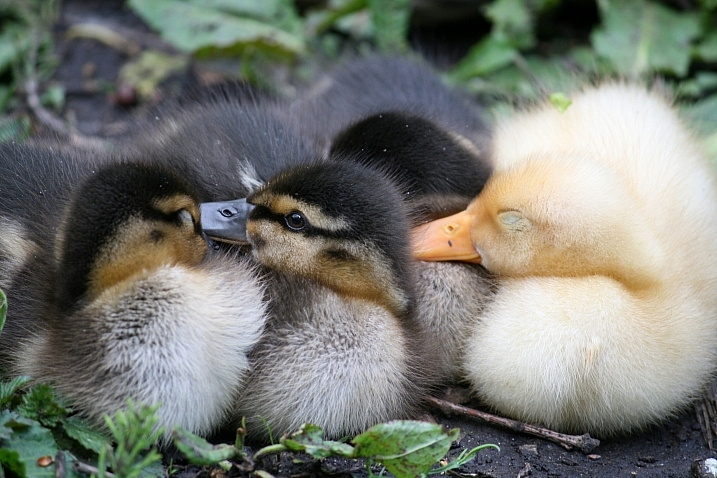
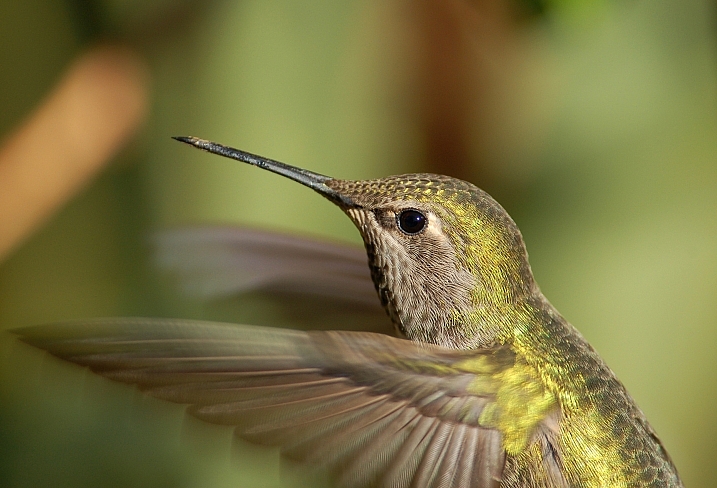
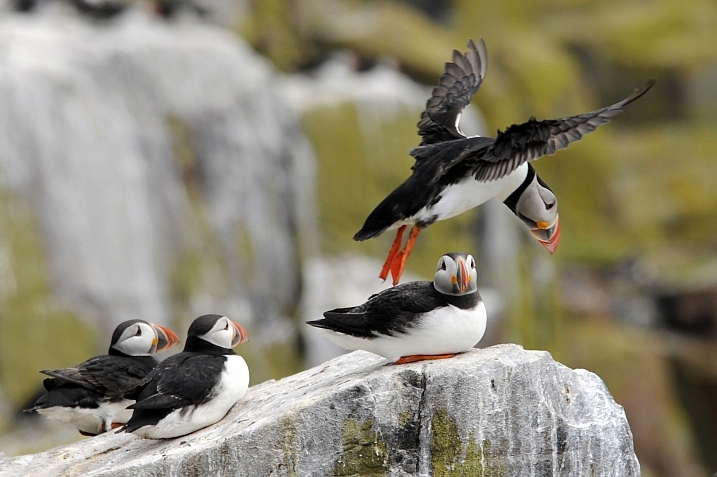
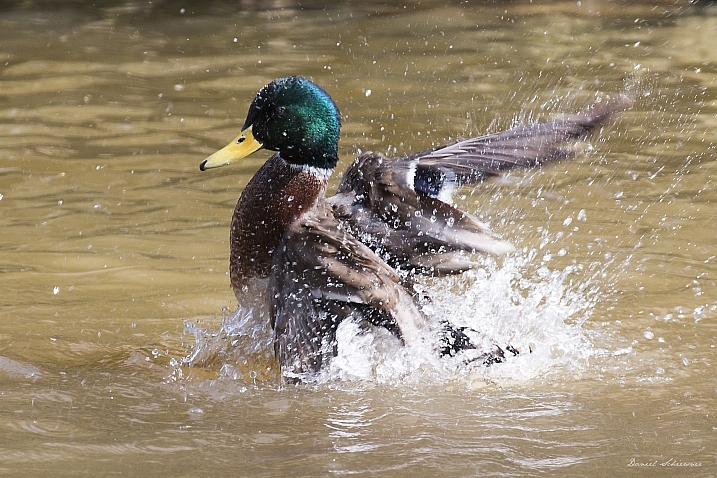
  • 24 Fantastic Photos of our Fine Feathered Friends – Birds

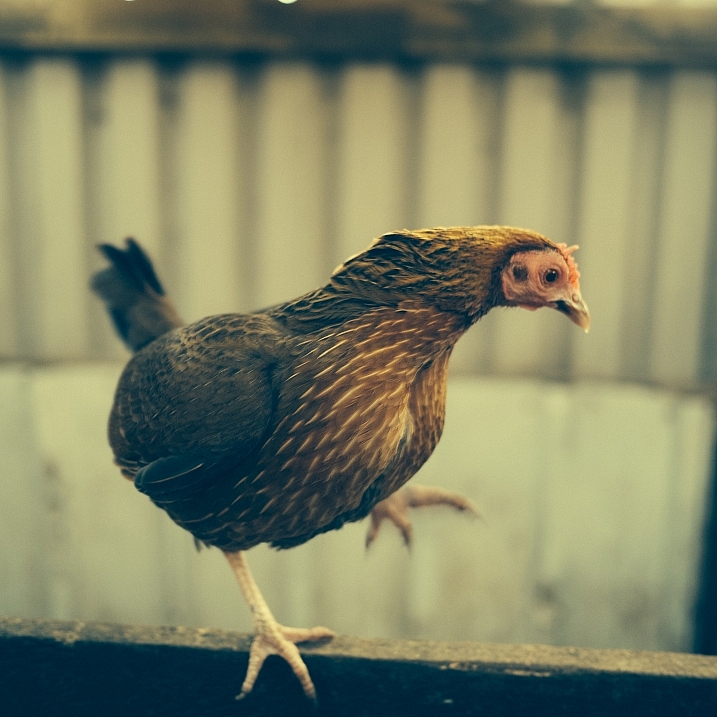
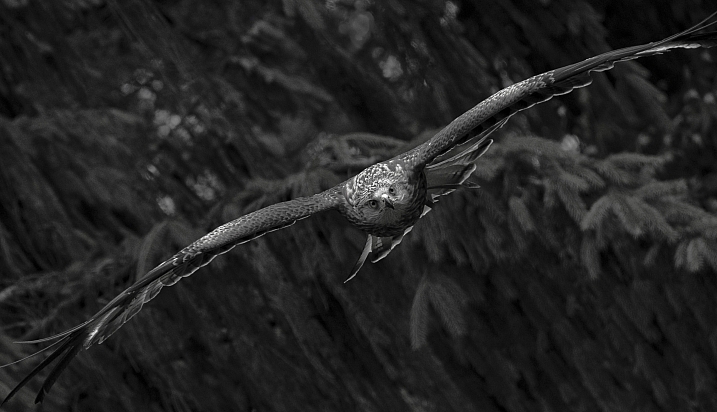
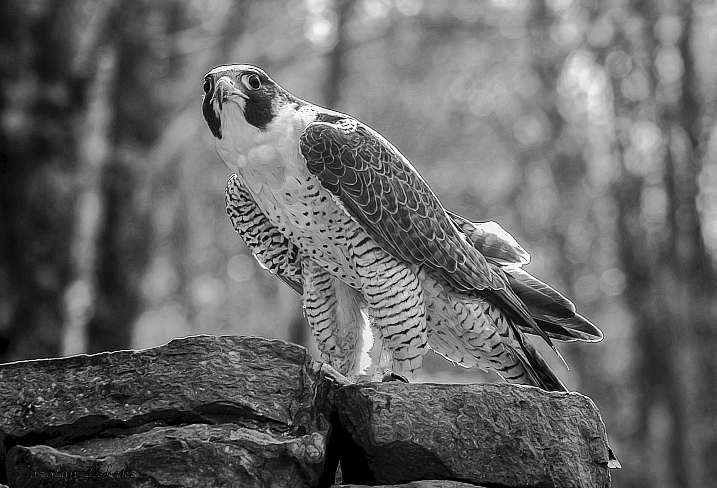
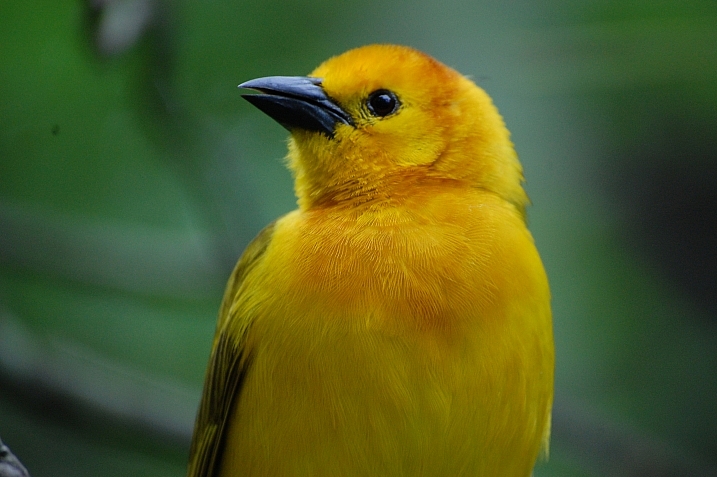
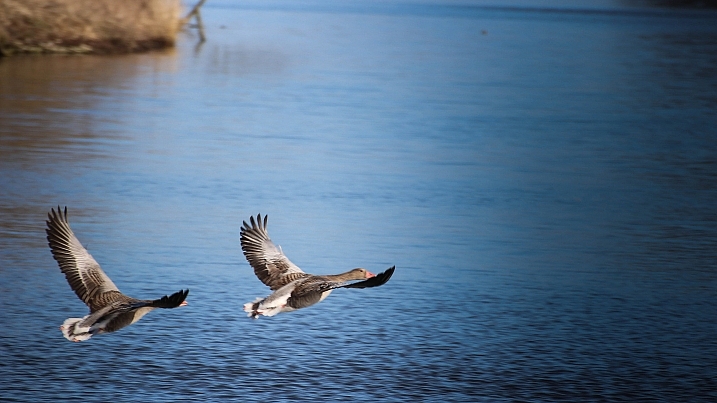
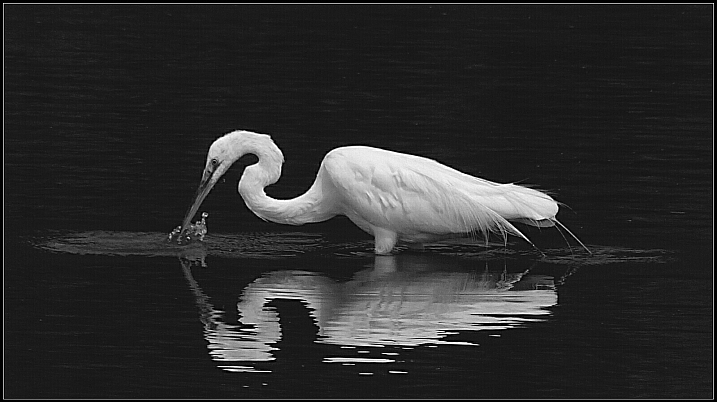
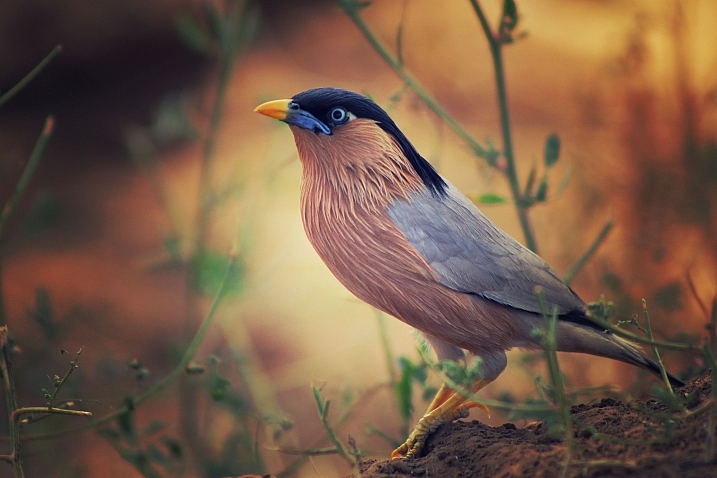
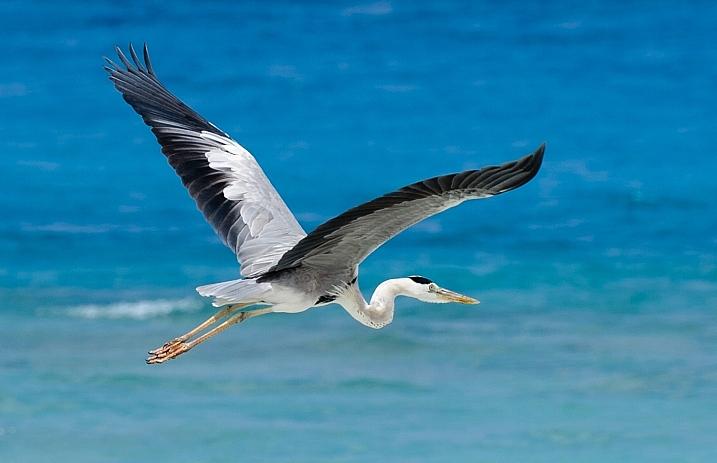
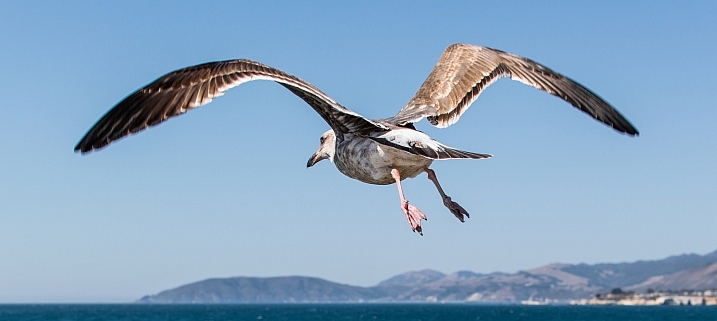
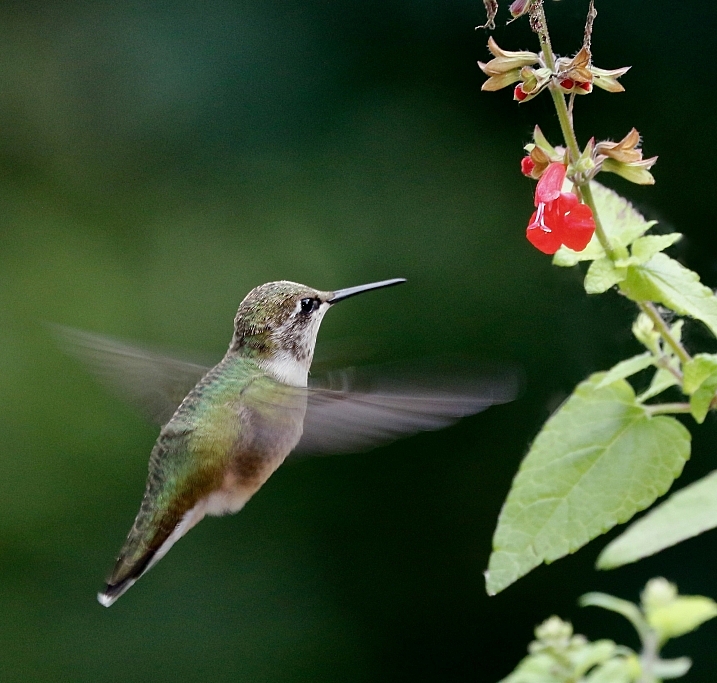
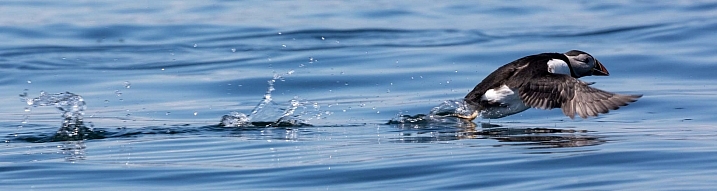
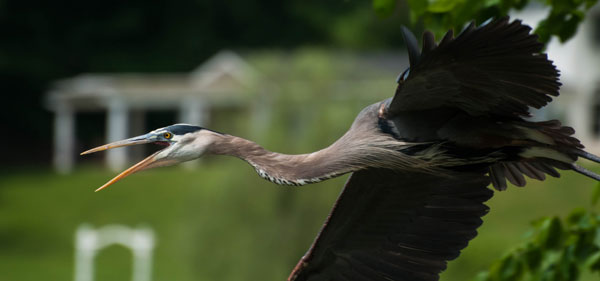
    As we just wrapped up a week of nature photography related articles I wanted to round it out with a few images of our feathered friends, the birds.

    Birds are incredibly hard to photograph when in motion, luckily some stick to the ground or are slower than others. Let’s see some fantastic examples of bird photography (I’ll even throw in a few of my images) – enjoy!

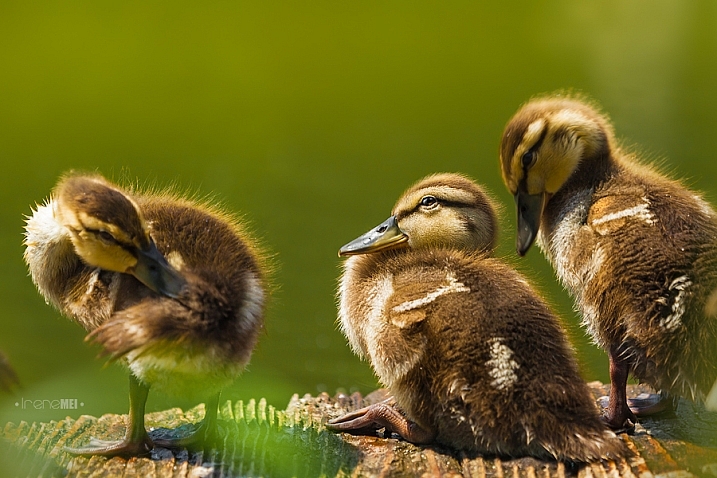
    Irene Mei

    By Irene Mei

    Darlene Hildebrandt

    By Darlene Hildebrandt

    Darlene Hildebrandt

    By Darlene Hildebrandt

    Deven Dadbhawala

    By Deven Dadbhawala

    Amro

    By Amro

    Glasseyes View

    By glasseyes view

    Carolyn Lehrke

    By Carolyn Lehrke

    Sadie Hart

    By Sadie Hart

    Susanne Nilsson

    By Susanne Nilsson

    Ken Mattison

    By Ken Mattison

    Vikramdeep Sidhu

    By Vikramdeep Sidhu

    Alessandro Caproni

    By Alessandro Caproni

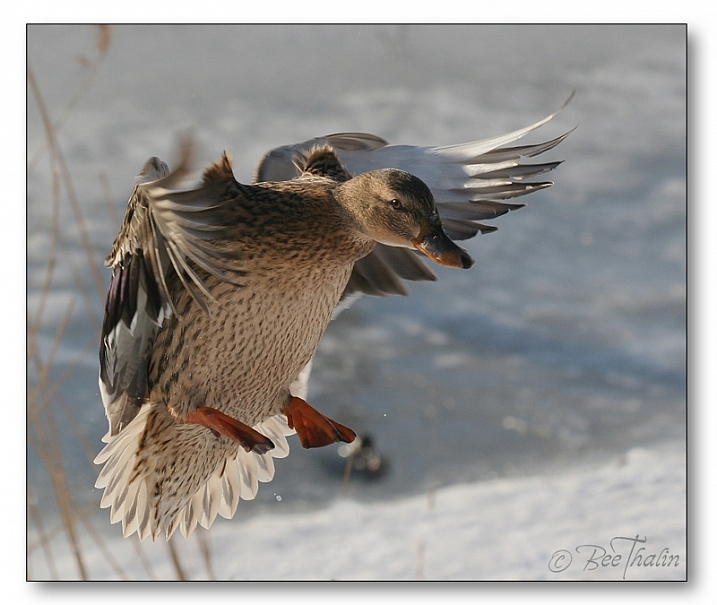
    Bee Thalin

    By Bee Thalin

    Rosanne Haaland

    By Rosanne Haaland

    Zach Stern

    By Zach Stern

    Christopher Michel

    By Christopher Michel

    Ian McMorran

    By Ian McMorran

    Teddy Llovet

    By Teddy Llovet

    Irene Mei

    By Irene Mei

    Smudge 9000

    By Smudge 9000

    Jon Dunne

    By Jon Dunne

    Matt Knoth

    By matt knoth

    RayMorris1

    By RayMorris1

    Daniel Schiersner

    By Daniel Schiersner

    googletag.cmd.push(function() {
    tablet_slots.push( googletag.defineSlot( “/1005424/_dPSv4_tab-all-article-bottom_(300×250)”, [300, 250], “pb-ad-78623” ).addService( googletag.pubads() ) ); } );

    googletag.cmd.push(function() {
    mobile_slots.push( googletag.defineSlot( “/1005424/_dPSv4_mob-all-article-bottom_(300×250)”, [300, 250], “pb-ad-78158” ).addService( googletag.pubads() ) ); } );

    The post 24 Fantastic Photos of our Fine Feathered Friends – Birds by Darlene Hildebrandt appeared first on Digital Photography School.


    Digital Photography School

  • Weekly Photography Challenge – Birds

    Don’t we all wish we could be a free and fly away like a bird? Well we can’t, but we can photograph them!

    See: 24 Fantastic Photos of our Fine Feathered Friends – Birds

    Dennis Skley

    By Dennis Skley

    Weekly Photography Challenge – Birds

    Whether in flight or on the ground, your challenge this week is to get out and photograph a bird or some birds. Here are some articles to help you:

    • 10 Surefire Tips for Photographing Birds in Flight
    • 8 Tips For Photographing Birds
    • How to Take Better Wildlife Photos: Be a Naturalist First
    • 10 Common Bird Photography Mistakes and Their Solutions
    • Bird Photography Tips for Beginners
    • Bird Photography Tips – How to Make Your Bird Photographs Stand Out
    Matthew Paulson

    By Matthew Paulson

    Bill Gracey

    By Bill Gracey

    Howard Ignatius

    By Howard Ignatius

    Tjarko Busink

    By Tjarko Busink

    Vi Neves

    By Vi Neves

    Eyesplash - Summer Was A Blast, For 6 Million View

    By Eyesplash – Summer was a blast, for 6 million view

    Share your images below:

    Simply upload your shot into the comment field (look for the little camera icon in the Disqus comments section) and they’ll get embedded for us all to see or if you’d prefer upload them to your favourite photo sharing site and leave the link to them. Show me your best images in this week’s challenge. Sometimes it takes a while for an image to appear so be patient and try not to post the same image twice.

    Steven

    By Steven

    googletag.cmd.push(function() {
    tablet_slots.push( googletag.defineSlot( “/1005424/_dPSv4_tab-all-article-bottom_(300×250)”, [300, 250], “pb-ad-78623” ).addService( googletag.pubads() ) ); } );

    googletag.cmd.push(function() {
    mobile_slots.push( googletag.defineSlot( “/1005424/_dPSv4_mob-all-article-bottom_(300×250)”, [300, 250], “pb-ad-78158” ).addService( googletag.pubads() ) ); } );

    The post Weekly Photography Challenge – Birds by Darlene Hildebrandt appeared first on Digital Photography School.


    Digital Photography School

  • Largest Mural in Paris: 15,000 Origami Birds Adorn Condemned Building

    [ By WebUrbanist in Art & Street Art & Graffiti. ]

    lunar building

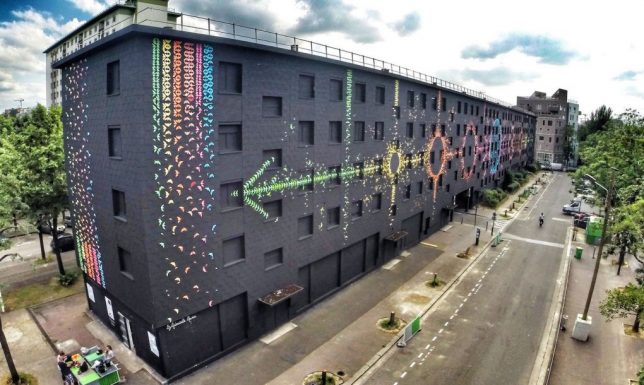
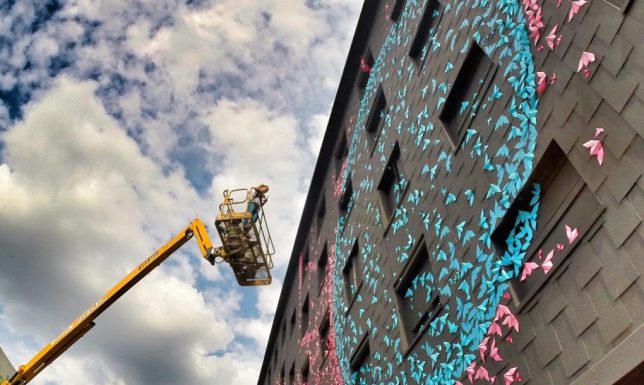
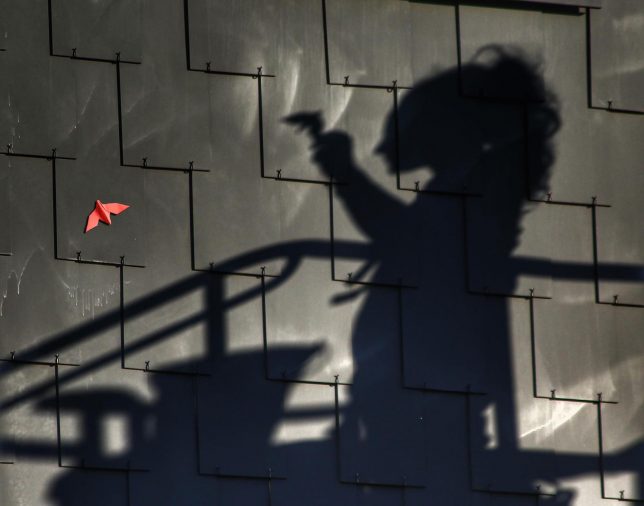
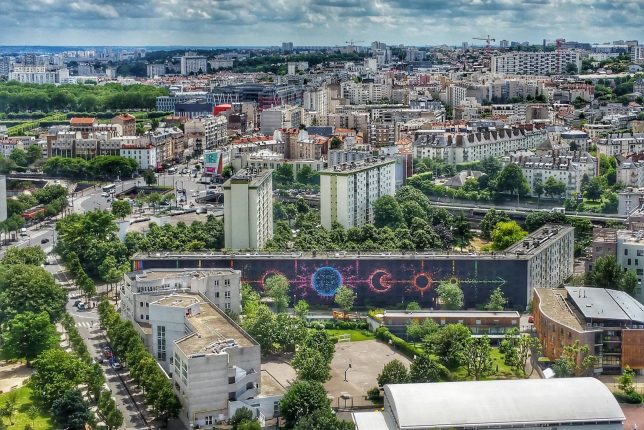
    Lunar Cycles is a massive site-specific installation featuring 15,000 paper-crafted birds in the 13th arrondissement of France’s capital city, requiring (non-paper) cranes to hang the elaborate avian collage.

    bird art crane

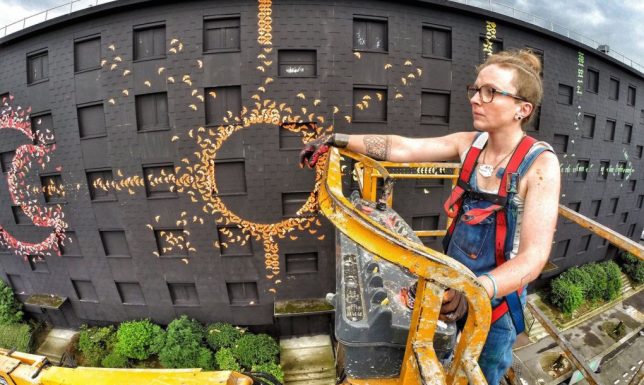
    Created by French street artist Mademoiselle Maurice in collaboration with Mathgoth Gallery, the work represents the biggest mural Paris has ever seen, a massive flight of birds landing on a 20,000-square-foot wall.

    lunar art bird origami

    birds on cranes

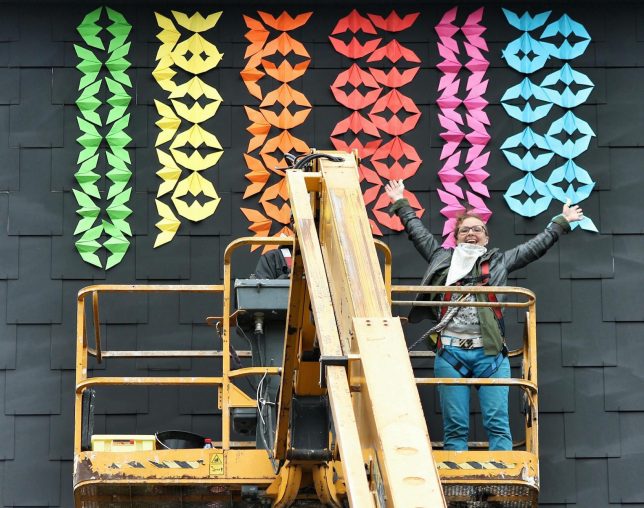
    The artwork was installed on a condemned building, allowing the artist to first apply a layer of black paint as a backdrop for the colorful array of geometric paper birds added to the wall. She also painted on a series of two-dimensional origamic patterns to bridge between the physical papers and flat surface.

    painted bird art

    bird crane aerial view

    The artist notes that the neighborhood contributed to the design, including those most impacted but the upcoming demolition of this long-standing structural pillar of the community. Previous projects from Maurice have featured similar themes in other settings, from birds and other geometric origami shapes gracing the walls of city streets and ancient castles alike. This work will be up through August.

    Share on Facebook


    [ By WebUrbanist in Art & Street Art & Graffiti. ]

    [ WebUrbanist | Archives | Galleries | Privacy | TOS ]


    WebUrbanist

  • Pigeons on Patrol: Birds with Backpacks Monitor London Air Pollution

    [ By Steph in Gadgets & Geekery & Technology. ]

    Screen Shot 2016-05-09 at 5.31.38 PM

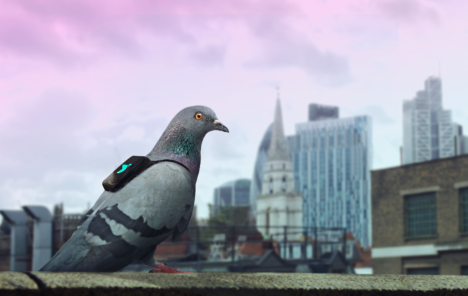
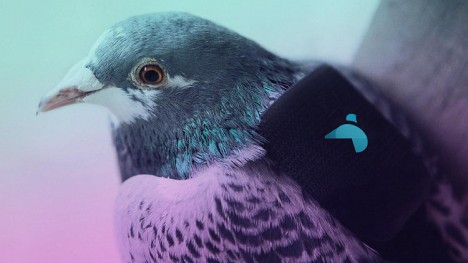
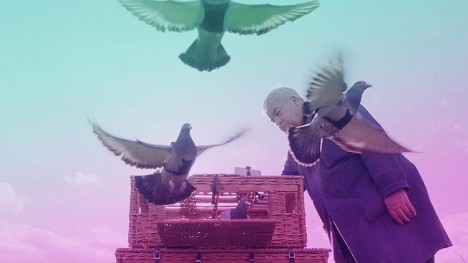
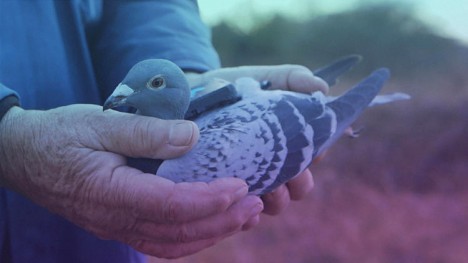
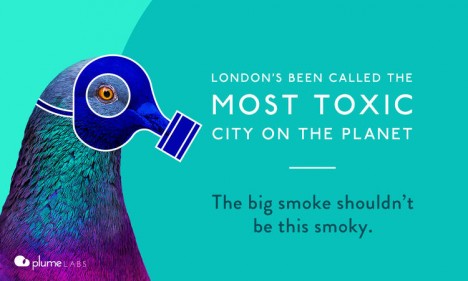
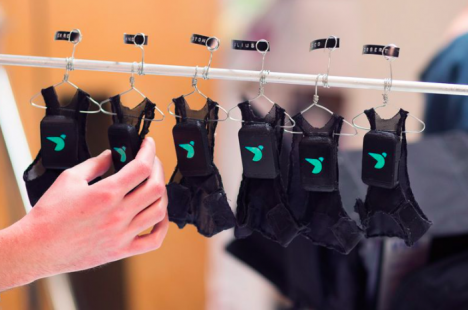
    Not all pigeons are rats with wings. Some of them actually strap on tiny backpacks and go to their jobs every day, just like the rest of us. In fact, a flock of pigeons in London play a central role in monitoring the air pollution in the city, their little black fashion accessories equipped with lightweight sensors that test the levels of nitrogen dioxide and ozone gases, reporting the results on Twitter. Londoners who tweet their locations to @PigeonAir get an instant response from one of the pigeons with the level of air pollution in their area.

    pigeon patrol 2

    pigeon patrol 4

    Paris-based tech company Plume Labs developed an app that gives residents access to information and advice about pollution in the city, and an interactive live map on the project’s website provides more neighborhood-specific details. A well-known pigeon expert named Brian Woodhouse provided a flock of racing pigeons, which are healthier and hardier than street pigeons, for the mission.

    pigeon patrol 3

    pigeon patrol 5

    The project was only in action for three days during March, and the pigeons are now taking a break, but the novelty of the miniature backpacks got thousands of city residents talking about air pollution, which kills nearly 9,500 Londoners each year. Now, Plume Labs has turned to human Londoners for assistance, asking them to wear their own sensors to crowdsource detailed readings of air pollution in virtually every corner of the city.

    Screen Shot 2016-05-09 at 5.34.45 PM

    You have to admit, no matter what you think of the pesky birds, the sight of those tiny mesh suits on tiny hangers labeled with each pigeon’s name are ridiculously cute.

    Share on Facebook


    [ By Steph in Gadgets & Geekery & Technology. ]

    [ WebUrbanist | Archives | Galleries | Privacy | TOS ]


    WebUrbanist

  • Bird’s eye view: Photographing Cherry Blossoms with the DJI Phantom 4

    The cherry blossoms at the University of Washington are a hugely popular attraction every spring in Seattle. Weekends during the peak of the blossom bring in crowds of people to the Quad, all hoping to capture the blooms with everything from professional cameras to tablets and selfie sticks. Rather than trying to avoid the mass of people, photographer and DPR reader Dale Johnson embraced the scene and found a new perspective by shooting from above. Find out how he’s adopted aerial photography and what went into capturing this shot.

    By Dale Johnson

    Trying to find unique perspectives of familiar places is becoming harder and harder, as everyone and their mother has a camera (mostly built into their phones) and hundreds of thousands of images are uploaded to social media every day. A camera attached to an aerial platform is a fairly new concept, but it’s a category that’s growing rapidly. Adding a drone to my photography kit has provided opportunities to find new ways to see things. In addition to the new perspective, I’m finding that I love to have the element of movement in the scene, which the video and smooth and stable platform allows.

    I started experimenting with drone photography last summer with the DJI Phantom 3 Professional. I’m not much of an early adopter, tending to wait until the technology has matured before jumping in. I have been following the development of drones for some time since I bought one of the early remote helicopters several years ago. I tried to learn how to fly it around my living room, though not very well I must say. The Phantom 3 is a joy to fly and incredibly simple to control. I have loved flying it around Seattle. 

    Having purchased the new DJI Phantom 4 quadcopter the day it was released, I’d been on the lookout for a place to fly it. The cold, wet, grey days of our Seattle winter have been slowly improving into a beautiful spring and I was eager to get it in the air. I was a student at the University of Washington many years ago, and remember how the ‘quad’, with all its cherry trees, would explode in full bloom each spring. It seemed like the perfect place to fly and get a shot that I had not seen before. 

    I first went to the quad just after sunrise on Friday morning to catch the warm light with fewer people around. I was able to get a few decent shots, but the sunlight blew out the highlights a bit and even though I was shooting in Raw, the small sensor on the built in camera didn’t give me the latitude for corrections that my DSLR would. I decided to go back on Saturday afternoon as it was mostly overcast with more even contrast. This time the quad was buzzing. The symmetry of the scene made for an easy composition with the cherry trees framed by the buildings, and the crisscrossing red brick paths added diagonal elements to the image. I also like how all the people give the image a sense of scale and contrast.

    A quick word about drones and flying within the city. There are a lot of negative feelings out there about drones and people concerned about privacy issues, or collisions with airplanes. The FAA (in the US) has a new requirement to have drone operators register with the FAA (which I have) and some rules for flying. I followed all the FAA requirements during this flight and found after a quick check with the University of Washington Police that there are no restrictions for flying on campus, except over stadium events.

    This new vantage point of the world looking down from above has inspired me all over again to look for unique views on familiar places.

    DPReview encourages responsible, legal and safe use of drones. Check local regulations before flying any unmanned aerial vehicle.


    Dale Johnson has been taking pictures for over 30 years after receiving a Nikon camera as a graduation present from high school. He now has a day job that has him traveling the world, giving him the opportunity to see and experience people and cultures that he would not otherwise visit (56 countries and counting!). Travel photography has become his new passion. You can see more of Dale’s work at:

    500px: https://500px.com/drjhnsn

    SmugMug: https://dalejohnson.smugmug.com

    Instagram: https://www.instagram.com/dalejohnsonphoto/

    Youtube: http://www.youtube.com/c/dalejohnsonphoto

    Articles: Digital Photography Review (dpreview.com)

  • 10 Surefire Tips for Photographing Birds in Flight

    Recently an internal survey in my blog revealed that photographing birds in flight is the most sought after topic.
    It didn’t come as a surprise though, because that’s the specialty of birds. They defy gravity and rise up into the sky. How wonderful it is!

    Here I have listed 10 surefire tips that will help you to make better photographs of birds in flight. The more you practice, the better your photographs will turn out.

    1. Learn Flight Behaviour of the Birds
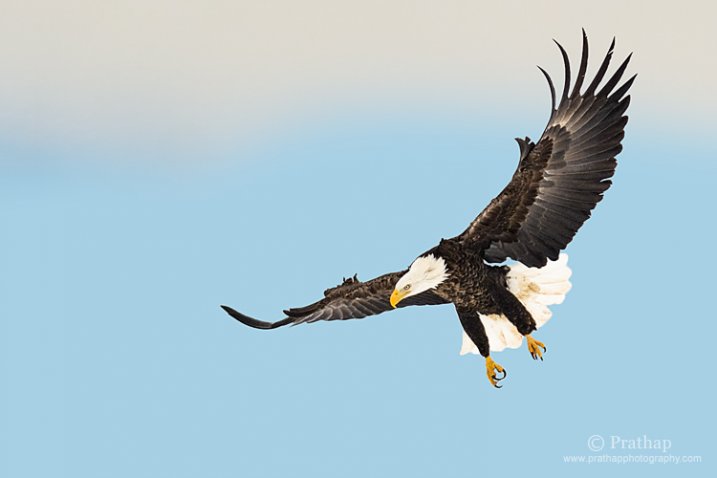
    Birds in Flight Photography

    Birds normally have the predictable flight behaviour. It requires observation. The more you observe them more you understand about their behaviour.

    Why is it important to learn bird flight behaviour?

    Tracking the bird as it flies is the trickiest part of birds in flight photography. If you know the flight behaviour of the bird, then you will be able to predict the next move and wait for the right moment to get best photographs.

    2. Point of View Matters the Most

    Generally the difference between good and bad photographs is the point of view. Photographing a bird in flight right above your head gives a different impact than a bird flying across.

    A photograph of a bird flying towards you will have a greater impact than a bird flying away from you.
    Taking an eye-level shot of a flying bird would yield an intimate result.
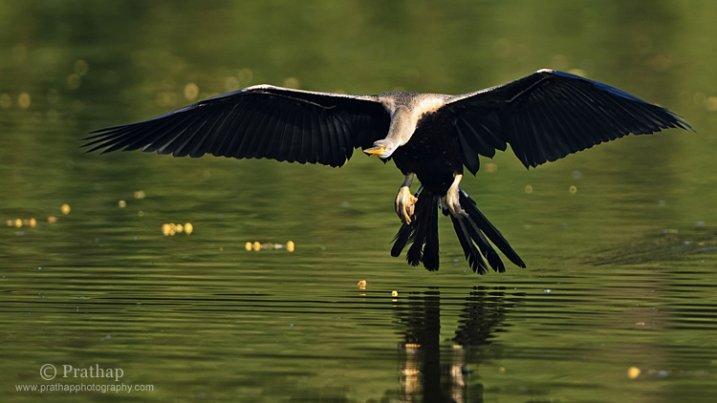
    Birds in Flight Photography

    3. Start with Slow Flying Birds

    It can often lead to frustrating results if you choose to photograph birds in flight without really having an understanding of proper techniques.

    Proper hand-holding and focusing techniques doesn’t come easy. There is no substitute to hard work when it comes to practicing these techniques. Best way to master them is to start with slow flying birds like Egrets and Herons.

    Great White Egret in Flight in Bharatpur Bird Sanctuary or Keoladeo National Park in Bharatpur, Rajastan

    Great White Egret in flight in Bharatpur Bird Sanctuary or Keoladeo National Park in Bharatpur, Rajastan

    Egrets and herons are in abundance and it is not tough to put all 10 tips into practice, just with these birds, and become a better photographer.

    4. Use the Right Camera Settings

    Make your life easy with these settings:

    • Aperture Priority mode
    • Matrix/Evaluative metering
    • Auto ISO settings up to whatever ISO settings you are comfortable with for your camera
    • Shutter Speed of at least 1/500th of a second or faster
    • AF-C focus mode for Nikon users and AI-Servo mode for Canon
    • Highest frames per second burst mode setting
    • 9-point or 21-point zone focus or 3-D tracking

    If you are unable to get decent shutter speeds of 1/500th of a second or more while hand-holding the lens, then wait for the proper light. No point taking high noise or poorly exposed photographs.
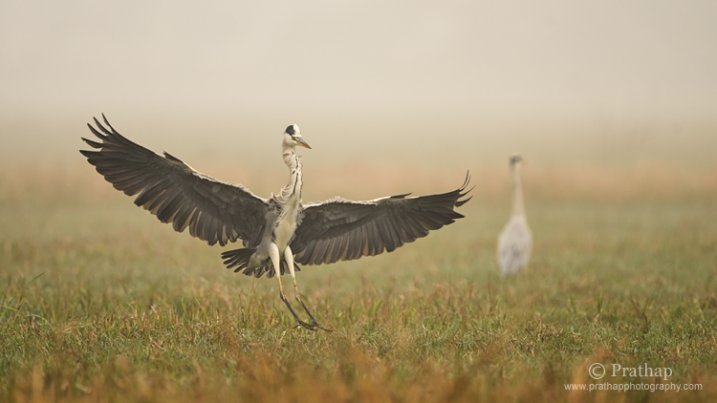
    Grey Heron Landing on a Misty Morning in Bharatpur Bird Sanctuary in Bharatpur, Rajastan

    Grey Heron landing on a misty morning in Bharatpur Bird Sanctuary in Bharatpur, Rajastan

    If you are using a sturdy tripod and a gimbal type tripod head, then you would be able to make some creative shots like motion blur or panning shots with slower shutter speeds.

    5. Choose the Proper Focus Points

    Choosing the right number of focus points is critical to making successful flight photographs. Most cameras provide a selection of multiple focus points which is often referred to as zone focus.

    I often select 9-point or 21-point zone focus out of 51-points. The idea is to use less, but enough auto focusing points, to make it easier for the auto focusing system and also for you to compose it in the field. If you do not have zone focusing then you might have to resort to using all focusing points. Also, with newer DSLRs, the 3-D tracking seems to have been improved considerably. You might want to try it too (consult your camera manual).

    Birds in Flight Photography

    6. Track Before You Photograph

    Most often it is our tendency to start photographing the moment we see the bird taking off or flying away. That’s natural but wrong.

    Photographing birds in flight takes patience. After waiting for a very long time you wouldn’t want to lose the opportunity. When you see a bird in flight, track the bird until the autofocusing system gets enough time to lock the focus. Once it is locked, you can fire off as many shots as you want without losing the focus.

    Tip number 1 and 7 coupled with this tip will help you to make successful flight photographs.

    Birds in Flight Photography

    7. Wait till You Get the Best or Contrasting Background

    Okay, assume that you are tracking the bird to get the focus to lock, but your lens is hunting for focus. If you understand how focusing systems work, then you will have better control over your photographs. Remember that the focusing system needs good enough contrast between the subject and the background. It is generally very easy for the autofocusing system to lock the focus when the bird is flying against a clean background like a blue sky.

    With practice, you will discover the capabilities of your camera’s autofocusing system which will in turn enable you to make better flight photographs.

    Birds in Flight Photography

    8. Take-off and Landing Shots

    Most birds often defecate before they take-off to lighten their load. This is a very important clue to get fantastic take-off shots. Of course, it also depends on your position and the light direction to get the most of the situation.

    Wind direction plays a major role in getting better take-off and landing shots since birds often fly into the wind while taking off and landing. It is wise to stand with your back facing the wind, very similar to the way you would face your back to the sun.

    Purple Heron Landing in Bharatpur Bird Sanctuary or Keoladeo Nationa Park in Rajastan

    Purple Heron landing in Bharatpur Bird Sanctuary or Keoladeo Nationa Park in Rajastan

    9. Get Creative with Silhouettes

    Photographing silhouettes of birds in flight is much easier than you might imagine.

    The brighter sky, to which you would expose, gives you a good enough shutter speed and also provides very good contrast for autofocus system to lock the focus.

    What is more important in the silhouette shot is the definitive shape of the bird. Because the bird is going to be dark or featureless, you have to get the shape of the bird properly. If the shape is not defined then you won’t be able to make it work, no matter how beautiful the sky is.
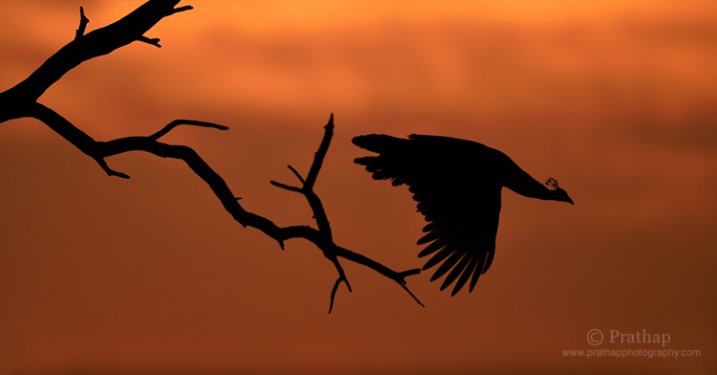
    Birds in Flight Photography

    10. Pay Attention to the Composition

    It is probably not as tough as you may think to get the decent composition in the field for birds in flight photographs. You just have to follow the Rule of Thirds guidelines so that you have enough breathing space, or room for the bird to fly in its direction.

    It makes sense to use Rule of Thirds because you would want to keep the bird in the left of the frame if it is flying towards your right so that you do not clip its wings and vice versa.

    Perfect Reflection of a Seagull Taking off during  Sunset in a Lake in Grayslake, IL, US. I love the reflection in this slightly frozen lake and the white plumage of the Seagull contrasting against the dark background.

    Perfect reflection of a seagull taking off during sunset in a lake in Grayslake, IL, US. I love the reflection in this slightly frozen lake and the white plumage of the seagull contrasting against the dark background.

    If the bird is taking off from ground level then you would want to keep the bird in the lower third position of the frame so that it takes off upwards. Keep the bird in the upper third position if it takes off downwards.

    Conclusion

    If you practice these 10 tips while photographing birds in flight, you will make better photographs for sure. It takes time to practice and make them your second nature, but it is worth a try.

    If you like my photographs of birds in flight, they are the result of my 7+ years of photography. Very important thing to remember is, no photographer gets fantastic photographs every time he/she presses the shutter. There will be hundreds, or even thousands, of hopeless photographs before getting one photograph that is worth sharing.

    You have got to have patience!

    googletag.cmd.push(function() {
    tablet_slots.push( googletag.defineSlot( “/1005424/_dPSv4_tab-all-article-bottom_(300×250)”, [300, 250], “pb-ad-78623” ).addService( googletag.pubads() ) ); } );

    googletag.cmd.push(function() {
    mobile_slots.push( googletag.defineSlot( “/1005424/_dPSv4_mob-all-article-bottom_(300×250)”, [300, 250], “pb-ad-78158” ).addService( googletag.pubads() ) ); } );

    The post 10 Surefire Tips for Photographing Birds in Flight by Prathap DK appeared first on Digital Photography School.


    Digital Photography School
  • Weekly Photography Challenge Bird’s Eye View

    Earlier I shared a collection of photos shot from above using a bird’s eye view. In the photography challenge last week you were assigned to photograph from a worm’s eye view or low down. This week you will be looking down, using the bird’s eye view to create your images.

    Bird’s eye view

    Bird’s are usually flying overhead or sitting up high on a wire looking down on us. So try something to get that kind of perspective in your image this week. Get up high and look down. That could mean:

    • Climb to a roof or the top of a hill and look down
    • Stand on a chair to photograph something on the floor
    • Just simply being aware of what is below your eye level and shoot that
    • If you really want to go for it take a hot air balloon, fly a quadcopter or GoPro, or even take a gondola ride

    You get the idea right? Get up – and look down!

    Share your bird’s eye view images here:

    Simply upload your shot into the comment field (look for the little camera icon in the Disqus comments section) and they’ll get embedded for us all to see or if you’d prefer upload them to your favourite photo sharing site and leave the link to them. Show me your best images in this week’s challenge.

    Here are some more  images to give you ideas:

    Farrukh

    By Farrukh

    Cnemil

    By cnemil

    William Cho

    By William Cho 

    Svenwerk

    By svenwerk

    Peggy2012CREATIVELENZ

    By Peggy2012CREATIVELENZ

    Mgstanton

    By mgstanton

    Adam Baker

    By Adam Baker

    Thomas Hawk

    By Thomas Hawk

    Faisal Akram

    By Faisal Akram

    Jason Mrachina

    By Jason Mrachina

    John Chandler

    By John Chandler

    Ed Suominen

    By Ed Suominen

    The post Weekly Photography Challenge Bird’s Eye View by Darlene Hildebrandt appeared first on Digital Photography School.


    Digital Photography School
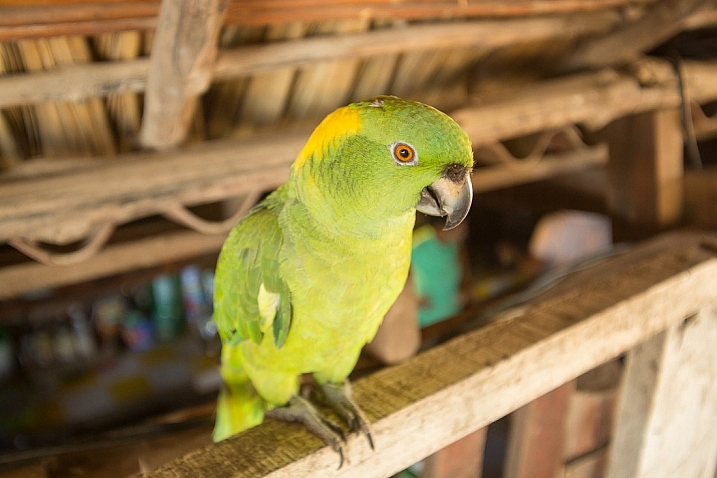
  • 34 Vertigo Inducing Bird’s Eye View Photos

    Last week I rounded up a bunch of worm’s eye view images so this week we’re going the other way and taking the high road with bird’s eye view photos. Angle of view and perspective use is a great way to make more interesting images. As you might suspect bird’s eye view photos are taken from above, look down on the subject. That could mean standing on a chair, climbing a ladder, shooting from a rooftop or even a mountain top.

    Enjoy these bird’s eye view photos and allow them to inspire you:

    Photograph Conical Lifestyle by Drew Hopper on 500px

    Conical Lifestyle by Drew Hopper on 500px

    Photograph Socializing by Edwin Leung on 500px

    Socializing by Edwin Leung on 500px

    Photograph Birds eye view by Ann Weis on 500px

    Birds eye view by Ann Weis on 500px

    Photograph bird eye view by Anake Seenadee on 500px

    bird eye view by Anake Seenadee on 500px

    Photograph My Little Photography Buddy by Danny  on 500px

    My Little Photography Buddy by Danny on 500px

    Photograph Oxbow River by Graham Taylor on 500px

    Oxbow River by Graham Taylor on 500px

    Photograph Birds Eye View by Paul Byrne on 500px

    Birds Eye View by Paul Byrne on 500px

    Photograph Abstract night view by 24NOVEMBERS  on 500px

    Abstract night view by 24NOVEMBERS on 500px

    Photograph Golden Gate Bridge, Birds Eye View by Raj Patel on 500px

    Golden Gate Bridge, Birds Eye View by Raj Patel on 500px

    Photograph Zebra - Birds Eye View by George Wheelhouse on 500px

    Zebra – Birds Eye View by George Wheelhouse on 500px

    Photograph Hunting Island Lighthouse by Spiro Mandylor on 500px

    Hunting Island Lighthouse by Spiro Mandylor on 500px

    Photograph Untitled by Glenn Greathouse on 500px

    Untitled by Glenn Greathouse on 500px

    Photograph Pull up a chair at the table of life by Stuart Duffy on 500px

    Pull up a chair at the table of life by Stuart Duffy on 500px

    Photograph Birds Eye View. by Volodymyr Zinchenko on 500px

    Birds Eye View. by Volodymyr Zinchenko on 500px

    Photograph Birds Eye View by James  Cray on 500px

    Birds Eye View by James Cray on 500px

    Photograph Daffodog by Sam Spilsbury on 500px

    Daffodog by Sam Spilsbury on 500px

    Photograph Brett 1 by Stephen Caissie on 500px

    Brett 1 by Stephen Caissie on 500px

    Photograph Musician by Lene Vold on 500px

    Musician by Lene Vold on 500px

    Photograph Oh What Fun it is to be Young by Gil Folk on 500px

    Oh What Fun it is to be Young by Gil Folk on 500px

    Photograph Look Above by Jerry Low on 500px

    Look Above by Jerry Low on 500px

    Photograph Se acabó la cerveza / We ran out of beer by Cristina Hernandez on 500px

    Se acabó la cerveza / We ran out of beer by Cristina Hernandez on 500px

    Photograph Untitled by Erik Hecht on 500px

    Untitled by Erik Hecht on 500px

    Photograph Birds Eye View by pascal steffens on 500px

    Birds Eye View by pascal steffens on 500px

    Photograph Untitled by Luke Ekblad on 500px

    Untitled by Luke Ekblad on 500px

    Photograph Singapore 2014 by Edward Tian on 500px

    Singapore 2014 by Edward Tian on 500px

    Photograph above blue typewriter by Sean Gladwell on 500px

    above blue typewriter by Sean Gladwell on 500px

    Photograph From Above... by Jacques Szymanski on 500px

    From Above… by Jacques Szymanski on 500px

    Photograph Ice Hockey - Birds Eye View by Alex Wolf on 500px

    Ice Hockey – Birds Eye View by Alex Wolf on 500px

    Photograph Floor 999 by Yousef Farki on 500px

    Floor 999 by Yousef Farki on 500px

    Photograph Burj Khalifa: Looking Down on Dubai by Declan Keane on 500px

    Burj Khalifa: Looking Down on Dubai by Declan Keane on 500px

    Photograph Perspective  by Abdullah Rhwanjy on 500px

    Perspective by Abdullah Rhwanjy on 500px

    Photograph steel staircase by Sean Gladwell on 500px

    steel staircase by Sean Gladwell on 500px

    Photograph Beneath by Ian Smith on 500px

    Beneath by Ian Smith on 500px

    Photograph A View from above by Sebastian Patron on 500px

    A View from above by Sebastian Patron on 500px

    The post 34 Vertigo Inducing Bird’s Eye View Photos by Darlene Hildebrandt appeared first on Digital Photography School.


    Digital Photography School
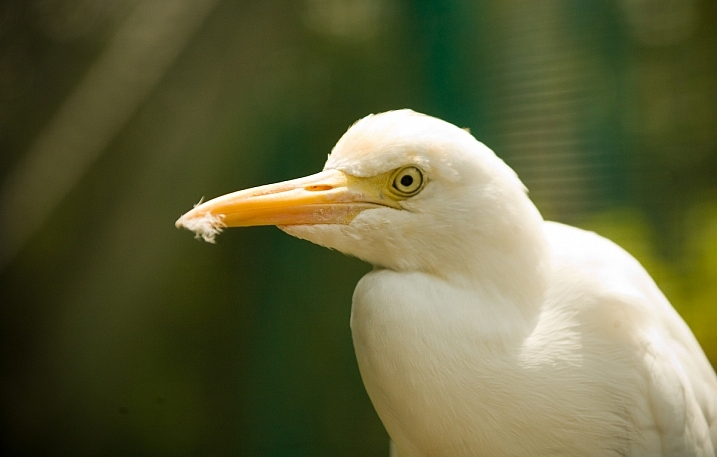
  • A Collection of Stunning Photos of Birds

    Birds are a tricky subject to photograph. They move to fast and erratically, getting sharp images of them in flight is a challenge. But the large birds so majestic looking, and the tiny ones so delicate even shots of them in a flock or sitting still can be great.

    So let’s have a look at some photographers that are doing it right, and some stunning photos of birds in this week’s image collection.

    The Birds

    Photograph HELP !! by Henrik Nilsson on 500px

    HELP !! by Henrik Nilsson on 500px

    Photograph Look at me! by Marco Redaelli on 500px

    Look at me! by Marco Redaelli on 500px

    Photograph Flying Kiss 14 by Marco Redaelli on 500px

    Flying Kiss 14 by Marco Redaelli on 500px

    Photograph Phantom of the Opera by Max Rinaldi on 500px

    Phantom of the Opera by Max Rinaldi on 500px

    Photograph Sunrise Journey by Mostafa Ammar on 500px

    Sunrise Journey by Mostafa Ammar on 500px

    Photograph Taiwan blue magpie flying by FuYi Chen on 500px

    Taiwan blue magpie flying by FuYi Chen on 500px

    Photograph Carry Out by NHLinh on 500px

    Carry Out by NHLinh on 500px

    Photograph To The Moon by cherylorraine smith on 500px

    To The Moon by cherylorraine smith on 500px

    Photograph Eyes on You.. by Phoo (mallardg500) Chan on 500px

    Eyes on You.. by Phoo (mallardg500) Chan on 500px

    Photograph 73A2325 Follow The Leader by David Orias on 500px

    73A2325 Follow The Leader by David Orias on 500px

    Photograph Dove Love by Jon Rista on 500px

    Dove Love by Jon Rista on 500px

    Photograph Bath by Michaela Smidova on 500px

    Bath by Michaela Smidova on 500px

    Photograph Bathing Blackbird by Csilla Zelko on 500px

    Bathing Blackbird by Csilla Zelko on 500px

    Photograph Refreshment by Geoff Powell on 500px

    Refreshment by Geoff Powell on 500px

    Photograph Cooling down by Ronald Kamphuis on 500px

    Cooling down by Ronald Kamphuis on 500px

    Photograph An angry little bird by Jan M. on 500px

    An angry little bird by Jan M. on 500px

    Photograph Portrait by Ben Canavaggio on 500px

    Portrait by Ben Canavaggio on 500px

    Photograph Wrong way by John Purchase on 500px

    Wrong way by John Purchase on 500px

    Photograph tree and birds by ahmet  harmanc? on 500px

    tree and birds by ahmet harmanc? on 500px

    Photograph butter up >.< by Matcenbox  on 500px

    butter up >.< by Matcenbox on 500px

    Photograph Bird :) by Alexander Lazarov on 500px

    Bird :) by Alexander Lazarov on 500px

    Photograph siblings! by Itamar Campos on 500px

    siblings! by Itamar Campos on 500px

    Photograph Discussing!  by Itamar Campos on 500px

    Discussing! by Itamar Campos on 500px

    Photograph barn owl by Detlef Knapp on 500px

    barn owl by Detlef Knapp on 500px

    Photograph Mirror. by Geir Magne  Sætre on 500px

    Mirror. by Geir Magne Sætre on 500px

    Photograph Kussharo Swans 1 by Jon Cornforth ? Cornforth Images on 500px

    Kussharo Swans 1 by Jon Cornforth ? Cornforth Images on 500px

    Photograph Me! Me! by Sue Hsu on 500px

    Me! Me! by Sue Hsu on 500px

    Photograph We're Going On An Adventure by Justin Lo on 500px

    We're Going On An Adventure by Justin Lo on 500px

    Photograph oo00o by Prachit Punyapor on 500px

    oo00o by Prachit Punyapor on 500px

    Photograph Feeding Time by Chris Lue Shing on 500px

    Feeding Time by Chris Lue Shing on 500px

    Photograph Mom! Timmy won't move over! by Jim Cumming on 500px

    Mom! Timmy won't move over! by Jim Cumming on 500px

    Photograph I believe i can fly! by Remco van Daalen on 500px

    I believe i can fly! by Remco van Daalen on 500px

    Photograph Parents Love by Anneliese & Claus Possberg on 500px

    Parents Love by Anneliese & Claus Possberg on 500px

    Photograph Rockhopper Showering by Will Burrard-Lucas on 500px

    Rockhopper Showering by Will Burrard-Lucas on 500px

    Photograph Dippy on Compton Bay by Jeremy Cangialosi on 500px

    Dippy on Compton Bay by Jeremy Cangialosi on 500px

    Photograph Is this pose fine?? by Samrat  Mukhopadhyay on 500px

    Is this pose fine?? by Samrat Mukhopadhyay on 500px

    Photograph 3 Part Harmony by Ben Page on 500px

    3 Part Harmony by Ben Page on 500px

    Photograph Puffin with Sandeels by Ian Schofield on 500px

    Puffin with Sandeels by Ian Schofield on 500px

    Photograph Harmony by Photosequence  on 500px

    Harmony by Photosequence on 500px

    Photograph Left outside by Gilad Hazan on 500px

    Left outside by Gilad Hazan on 500px

    Okay so that ended up being a lot of photos. I like birds, what can I say?!

    The post A Collection of Stunning Photos of Birds by Darlene Hildebrandt appeared first on Digital Photography School.


    Digital Photography School
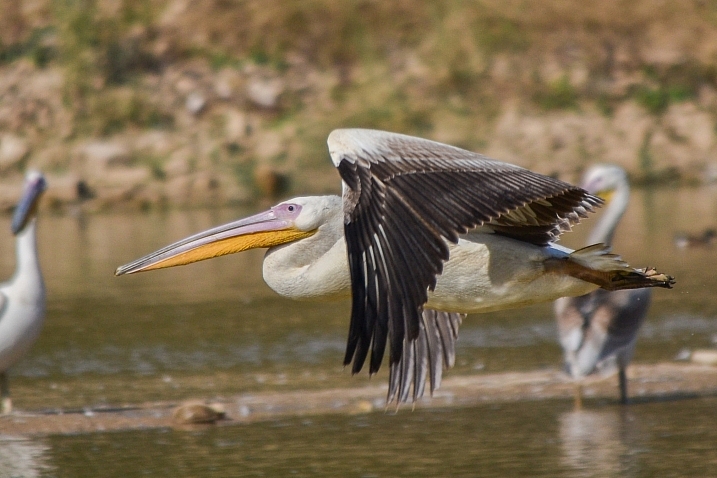
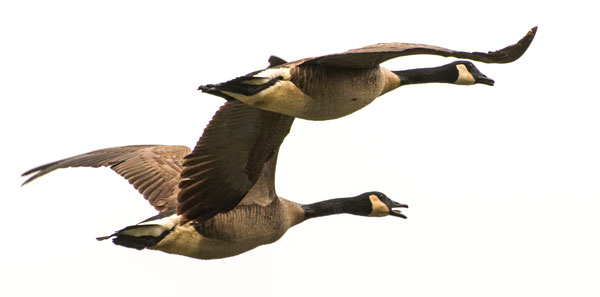
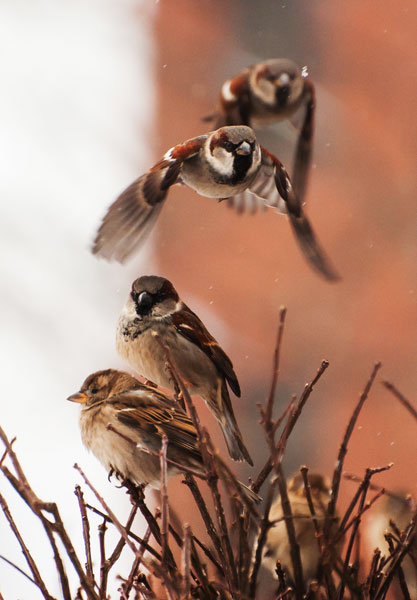
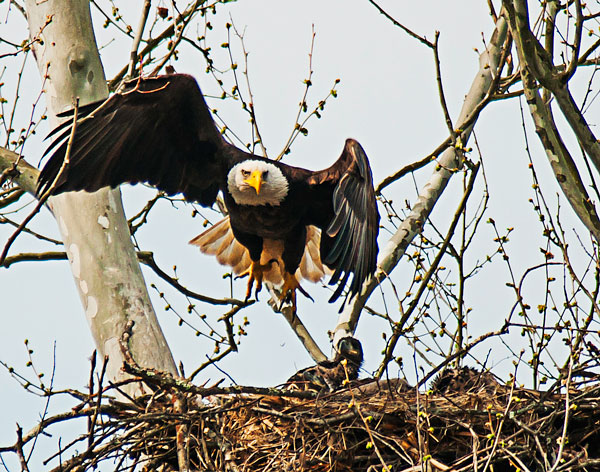
  • Tips for Photographing Birds in Flight

    This article introduces some key concepts to photographing birds in flight. One of the most necessary ingredients is patience; you may often photograph an entire day and not get one usable image. In most cases there is some luck involved to being in the right place at the right time. Hopefully this article will provide some information to help you improve your luck.

    heron3

    Choosing a Location

    Let’s begin with choosing the best location for your birds in flight shoot. Near rivers or lakes are great locations, because of the abundant food sources for the birds. Find a position on a hill that will put you at eye level with the birds.  Check out the position of the sun, because you should not be shooting into it. Light coming from behind you or from the left or the right of your position is preferred. Also, birds will generally take off and land into the wind, so knowing the wind direction of your location will help you predict the flight direction of the birds you are photographing.

    canadians

    Lighting

    Good lighting plays an important part in successful birds in flight photography. As in any other kind of outdoor photography, the golden light of morning and evening are best; however, because you are shooting at birds in the sky, these times can be extended and still have nice lighting on your subject.

    Make Yourself Invisible

    Some birds will not venture near a human presence, so you need to make yourself the least visible as possible.  In some cases it might be as simple as not wearing brightly colored clothing, but avid bird photographers may also want to set up some kind of blind. These can be purchased inexpensively from most hunting stores. Also, sitting will make you less noticeable to the birds than if you are standing.

    Study Your Subject

    Study the birds you enjoy photographing to learn their habits. This can help you predict their movements. For instance, many birds, especially the larger species like herons or eagles, will relieve themselves just before they fly. Knowing this can help you be ready to shoot when they take off.

    fall-heron

    Lens

    Choosing your lens can be a challenge so be advised that you should use the fastest and largest mm lens you can afford. For your best chance at a great shot, you would want at least a 300mm lens, but a 500mm to 600mm prime lens is preferable. Unfortunately, these lenses don’t come cheap.

    Tripods

    A great tripod head for birds in flight, especially if you are using a large lens, is the Gimbal head. It balances your camera and lens and requires very little force to pan left and right, and up and down. A less expensive option is a Pan head, which also allows for movement in all directions on two different axes. The more common Ball head can be used with effect for birds in flight photography, but is not a very stable solution for very large lenses.

    sparrows

    Exposure

    When you consider setting up your camera to shoot birds in flight, keep in mind how  the “exposure triangle” of shutter speed, aperture, and ISO each play an important part in the getting the perfect exposure.

    • Shutter speed – You need the shutter speed to be fast enough to “freeze” the bird’s wings in your photo. While small birds’ wings may flap approximately 40 beats per second, larger birds like herons and eagles flap around 2 beats per second. Many species of duck are fairly fast flappers at around 5 to 10 beats per second. So the question remains, how fast should you set your shutter speed to freeze the wing motion? Go for at least 1/1000th of a second to 1/2000th of a second. Even faster is better, if possible!
    • Aperture – In order to gain as much depth of field as possible, you want to use the smallest aperture possible. Select your F-Stop (the aperture number) based on your lens’s sweet spot (where your lens focuses most clearly), probably around f/8.
    • ISO – You want to keep your ISO setting as low as possible to avoid digital noise (graininess) in your photos, although most of the latest models of digital SLR cameras these days do a decent job with higher ISO allowing very little noise.

    heron2

    So how do you bring all three elements of your exposure triangle together to find the best exposure? You may consider simply using your camera’s Shutter Priority Mode feature in which you set the shutter speed and the camera sets the aperture (and ISO on some models) but try this alternative method.

    1. Set your camera on Aperture Priority
    2. Set your aperture to f/8 (the sweet spot) to capture the sharpest image for your lens
    3. Next, using your camera’s light meter, check the exposures in the space you hope to photograph your birds in flight. You will probably find that you have some areas that are darker than others.
    4. Using the exposure you get in the darkest area, adjust your ISO to bring your shutter speed up to at least 1/1000. It follows that when your bird flies by and you are panning your camera into a lighter area, your shutter speed will increase to above 1/1000, and when your subject is in the darker area your exposure will still be appropriate.

    Now, one final step to tweak your exposure. Have you ever noticed how when photographing birds in flight your image will seem dark and missing detail, especially to those dark feathers? To bring out more detail in those dark areas, change your EV (exposure compensation) setting to +0.3 to add a little more light. Depending on the lighting, you may need to add more. On the other hand, what if you are photographing a white bird, perhaps a swan? The white bird’s image will tend to get “blown out”, also missing  detail, so adjust your EV value to -1.0 to -2.0 to pick up the detail in those white feathered birds. (If you are thinking your background will be underexposed, well, yes, it will be, but you are photographing the swan, not the background.)

    Focusing

    To keep your flying bird in focus, set your camera’s focusing mode to continuous focus. In this mode, as long as you have the shutter button depressed halfway and are focused on the bird, the camera will continuously focus with the movement of the bird. Canon calls this function “Al Servo”, while Nikon calls it “Continuous Servo” or AF-C. Also both Nikon and Cannon will allow expanding your focal points to look at adjacent points for movement to help you keep the moving subject in focus. Nikon also offers two additional options of Auto Focus – Area Modes that might work for birds in flight. Its 51-point Dynamic Area Auto Focus and 3D Tracking Mode will both search at all 51 focal points looking for the movement of your subject, though these methods may be a little too slow in focusing.

    eagle-nest

    Composition

    Composition can sometimes be the most difficult aspect of photographing birds in flight. Not only are you occupied with keeping your bird in sharp focus, you are also trying to make a pleasing composition. All the rules of composition applying to any photo remain valid here. You always want to have more space in front of the bird than behind; a good rule is to have a least two to three times the space in front of the bird. One practice that helps maintain this space is to place your focus point in the center and try to keep it on the bird’s eye. This method works really well on large beaked birds like the heron. While most birds in flight images are just one bird, look for those occasions where you may capture two or three birds for a great image.

    gull

    Technique

    As the bird is flying toward you, quickly get your focus lock. When the subject is close and in the position you like, fire away and keep panning even after you have stopped shooting. This follow-through motion will keep your last image in focus better than an abrupt stop. While panning as the bird flies by, you want to match your panning speed to that of the bird, and depending on your shutter speed, this will help keep the bird in focus while the background may be blurred.

    It’s a wildlife photography principle that you want to keep the bird’s eye in focus and sharp. If you are handholding your camera, try to keep your left hand under the barrel of your lens and your elbows close to your body, as this will help you maneuver the camera as steadily as possible. If you are standing, keep your legs spread out to give you a good sturdy base. If you are planning to hold your location and position for a time, using a tripod is recommended to help keep you steady, especially if you are using a very heavy lens.

    duck

    So stay alert, and look for opportunities to capture great birds in flight images. It will take lots of practice to get that perfect image, but when you do you will be hooked.

    Have you tried bird photography before? Want more bird tips, try these:

    • 10 Incredible Bird Photography Tips for Beginners
    • A Turn of the Head – Creating More Compelling Bird Portraits
    • An Introduction to Bird photography


    The post Tips for Photographing Birds in Flight by Bruce Wunderlich appeared first on Digital Photography School.


    Digital Photography School