RSS
 

Posts Tagged ‘Bird’

10 Incredible Bird Photography Tips for Beginners

26 Feb

What is the most important factor in getting your bird photographs noticed by a large audience? Is it the camera or the lens or the bird?
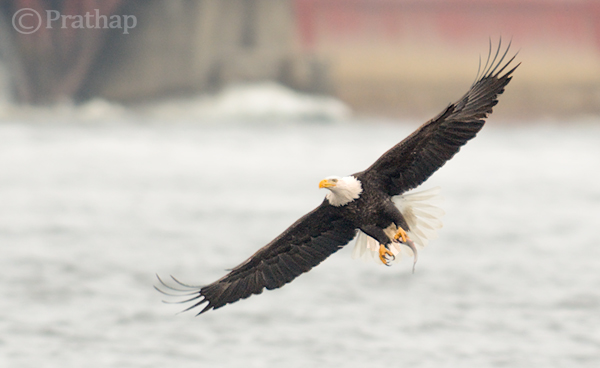
Bald Eagle Flying Away With A Catch

Imagine you have a Canon 1DX or Nikon D4 and 800mm lens. You have been to a place to photograph the magnificent Bald Eagles. Everything seems perfect! Isn’t it?

But, what if you do not know what makes a good bird photograph? Do you think just by shooting a burst of photographs will give you the best photographs? Definitely not…you may get snapshots but not photographs.

“There is nothing worse than a sharp image of a fuzzy concept.” – Ansel Adams

Today you will learn some of the core principles of Bird Photography that will give you an understanding of what makes a good bird photograph.

1. You Don’t Need Expensive Lenses for Great Bird Photography

A great bird photograph does need several factors such as:

  • Quality and Direction of the light
  • Composition
  • Knowledge about the bird and its activities
  • Background
  • Knowledge about the gear you are using
  • Proper Settings
  • Proper Exposure
  • Your position
  • 3 + 1 Ps (Patience, Perseverance, Practice + Passion)

You see, it takes a lot more to become a good bird photographer. A decent APS-C or DX format camera body with telephoto lens of up to 300mm is more than sufficient to really get great bird photographs.

It is important to realize that bird photography is much more than just the camera or the lens. There is no denial of the fact that the longer the lens, the easier it is to photograph birds which are skittish. But, the lens itself cannot make a great bird photograph.

But, if you do not have a longer telephoto lens, nothing stops you from taking a great photograph of birds like Mallard ducks, geese, gulls, and herons that are easily approachable. If you cannot take a close-up of a Bald Eagle, nothing stops you from taking a unique photograph of a Bald Eagle in its habitat.

Everything boils down to how you view the situation. “Is the glass half empty or half full?”

2. Light and Composition
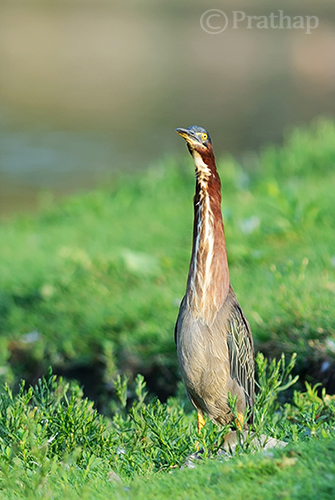
Green Heron Standing TallPhotography is all about light. Light has few characteristics that will make a photograph wonderful.

Early morning and late afternoon light is usually the best time for bird photography. The light during these times is soft. As a bonus, the birds are very active as well.

Soft light has some wonderful characteristics like:

  • It does not cast harsh shadows on the bird
  • It brings out a glow to the bird’s plumage
  • It gives the catch light in bird’s eye

Composing a bird photograph helps you to convey your message in the best possible way. Bird Photography composition is generally very simple. Following a few basic composition principles will help you make a difference:

  • Use rule of thirds composition to place the bird off-center
  • Use color contrast by aiming for complementary background
  • Fill the frame with the bird
  • Use a clean background

3. Transport the Viewer into the Bird’s World

We see our world at 5 to 6 feet high, but birds see the world in few inches to few feet. To get a feeling of the bird’s world, then you need to get down to their level!

Go Low and Go Slow…

Always try to photograph the birds from their eye level, except the birds in flight of course. It has greater benefits that will overshadow any of your complaints like I can’t bend down, lie down etc. Some of the obvious benefits are:

  • You get more intimate photographs of birds since you will get an eye contact
  • You will get pleasing blur both in the foreground and background
  • You make the bird less scared since you can hardly move
  • You will transport the viewer into the bird’s world
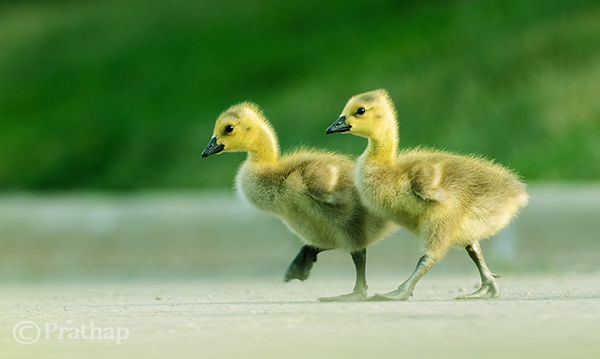
Goslings Crossing the Road

4. It’s all in the Eye

Take a look at any photograph of a bird. What is the first thing you want to see? It’s the eye…right?

We tend to make an eye connection with any living being. It is no different with birds. The eyes are the windows to the soul. If there is no light in the eyes, then they look dull or lifeless. Birds look lively when there is light in their eye.

This light in the eye is called a catch light.
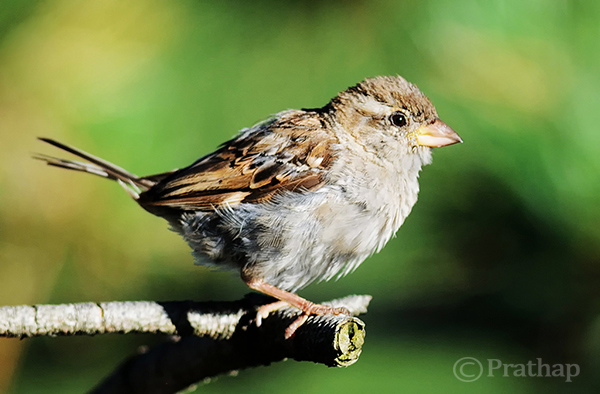
Sparrow perching on a tree branch

By following few guidelines you can easily get better bird photographs:

  • Always keep the bird’s eye in sharp focus
  • Check for a catch light in the bird’s eye (easy to get if the bird is front lit)
  • Make sure to photograph from bird’s eye level

5. Fill the Frame

In bird photography, mostly we photograph an individual bird. While photographing individual birds, it is always a good idea to fill the frame with the bird.

Advantages of filling the frame with the bird are:

  • It is easy to focus on the bird
  • It is easy to achieve a pleasing blur or bokeh effect in the background
  • It is easy to properly expose for the bird
  • It is easy to compose in the field

Juvenile Blue Heron Close Up

6. Tell a Story

Storytelling in bird photography should not be confused with the stories that run for pages. Storytelling is a way to express the time of the day, mood, place or activity of the bird in one photograph. Viewers should be able to picture themselves in the scene.

Simply put, a photograph with bird and its surrounding will give a better sense of story than just the bird filling the frame. Though, it may not always be true.
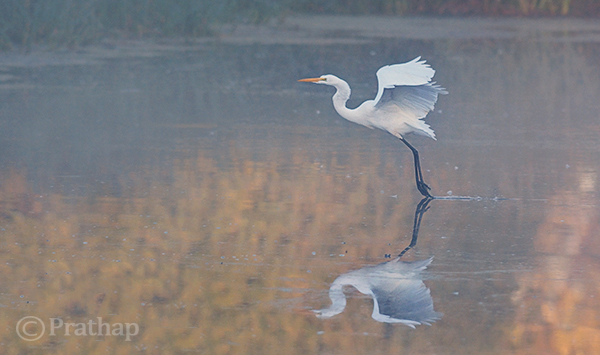
Great Egret in Misty Morning

Here are few tips you can follow while you photograph a bird in its habitat:

  • Make the bird an integral part of the photograph by including its natural habitat
  • Show the interaction of birds if there is more than one bird in the photograph
  • Indicate the weather conditions by including either snow, rain or mist
  • Take photographs during sunrise and sunset
  • Show season by including flowers in bloom, autumn colors, or snow

7. Capture their Action and Behaviour

Birds are always in action. They hardly sit idle. Capturing birds in action involves more effort and patience compared to photographing perched birds.

Here are few tips to capturing birds in action:

  • Photograph early in the morning or late in the afternoon when birds are very active
  • Use burst shot mode to take several photographs during the action
  • Track the bird until focus is locked before pressing the shutter
  • Learn to anticipate the action either by observing or reading about them
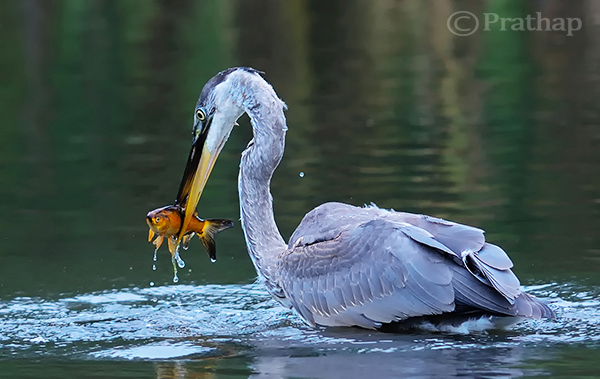
Juvenile Blue Heron with a Fish

Birds tend to ignore you when they are very hungry. It is very easy to photograph them in action during these times. But, care should be taken not to disturb them and maintain considerable distance.

Capturing bird’s behaviour is much tougher than any other aspect. Generally because birds become alert the moment you are in their sight.

The alert bird is always trying to fly away and rarely will you see its behaviour. You can observe actual behaviours of a bird when it is comfortable. There are few ways to make the bird comfortable:

  • Use a natural place to hide, like a bush or tree or something that obscures you
  • Wait patiently until the bird ignores you
  • Visit the location several days in a row, until the bird becomes comfortable with your presence or you get the right opportunity
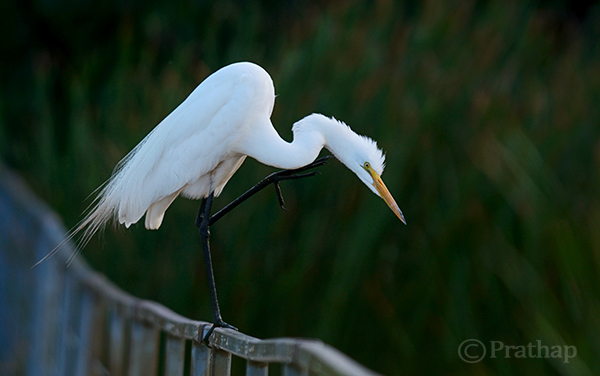
Juvenile Great Egret Behavior

Remember to research and learn everything about the bird you are photographing. This will definitely make you a better bird photographer and also you will enjoy knowing about the bird.

8. Capture their Magnificent Flight

The most interesting part of bird photography is capturing their magnificent flight. This is a very tricky aspect for beginners and pros alike. It is not easy to take flight photographs that will wow viewers.

The success with birds in flight photography largely depends on the bird as well as the technique that one employs. Smaller birds are generally very erratic in their flight and also a bit difficult to track since they are generally too small in the frame. But the larger birds are slightly less swift and are not as difficult to track.

If you want to be successful with flight photography, start with the larger, slower moving birds. Learn all the field techniques to capture the perfect photographs of these birds.
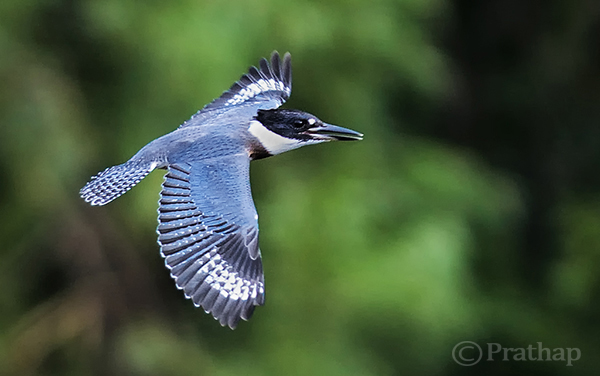
Belted Kingfisher in Flight

Here are simple tips that will help you capture those magnificent flight photographs:

  • Learn about the bird’s flight patterns
  • Know their landing and taking off patterns
  • If there is more than one bird, it is almost always the case that if one flies, the rest will follow the suit
  • Track the bird for a while and let the camera achieve focus before pressing the shutter
  • Use Aperture Priority so that you do not have to worry much about the changing light conditions

9. The Background Makes the Picture

This is one of my favourite topics which I repeat often. What are your thoughts on this? – Is it the background or the bird which makes the picture?

Go through all your favourite bird photographs and see it for yourself. Let me know what you think, in the comments below.

Except extreme close-up portraits of birds, every other type of bird photograph will look great when the background is clean and complementing the bird.
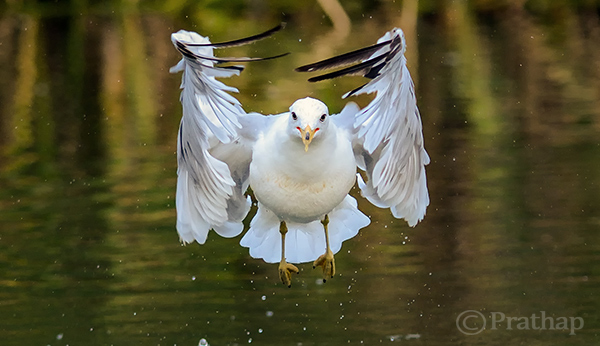
Seagull the Eagle

It is very important to keep a check on the background while taking bird photographs. Just follow these simple tips:

  • Avoid taking bird photographs when the background is too distracting
  • Avoid taking bird photographs when the background is plain and boring
  • Wait for the bird to assume a good position or you change your position to get an interesting background
  • Choose maximum aperture values to throw the background completely, or slightly out of focus

10. Practice with Common Birds

I urge you to practice with common birds. You might have understood by now that the techniques are not dependent on camera, lens or the bird. I was using 18-200mm lens for first 4 years. I learned and practiced most of my birding techniques with common birds like seagulls, Mallard ducks, geese and herons.

I spend most of my time photographing these common birds, and I gave myself a challenge to make some unique photographs of them, that has fuelled my passion so long. I put more importance on learning and practicing photography, than whatever gear I possess. I am very glad to say that I learned most of the photography basics here at Digital Photography School.

I hope my story so far is an inspiration to you to embrace the beauty of these common birds.

Wrap up
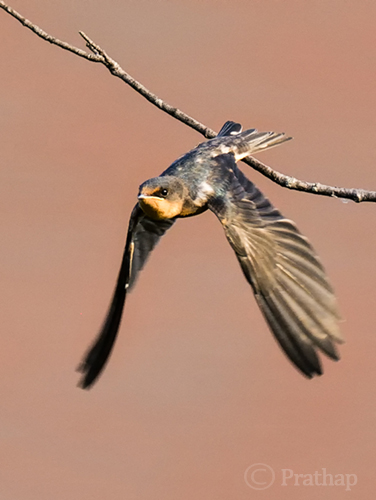
Barn Swallow Taking OffFocus your time and energy in learning all the core principles outlined above. Prove it to yourself that you have so much passion to go out and photograph the birds every day, or as often as you can.

Remember that proper techniques will always outsmart equipment. Make every attempt to make amazing photographs of the common birds. Enjoy photographing birds. That is the secret to success.

Share your experience with us. Do you go out very often to photograph birds? Do you think technique outsmarts the equipment? I would be glad to answer any questions you have. Do let us know if you have any other suggestions on bird photography.

The post 10 Incredible Bird Photography Tips for Beginners by Prathap DK appeared first on Digital Photography School.
Digital Photography School

 
Comments Off on 10 Incredible Bird Photography Tips for Beginners

Posted in Photography


A Turn of the Head – Creating More Compelling Bird Portraits

09 Dec

The last time I counted, there were about seventy two quadrillion photos of birds on the internet. Therefore, if you’re dedicating your time to try to stand out as a bird photographer, there is a ton of competition out there. However, there is one thing that you can try to incorporate in your photos that will at least have them stand out a little bit.

Creating More Compelling Bird Portraits

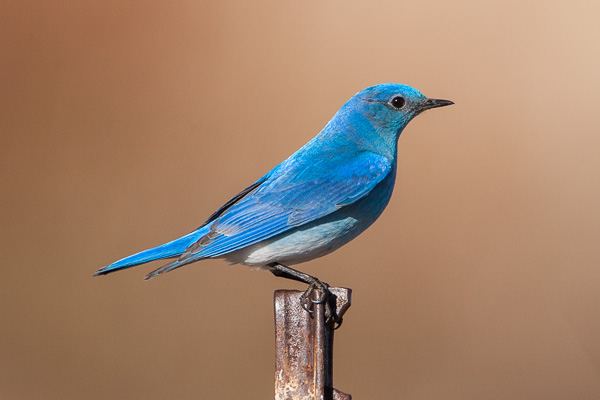
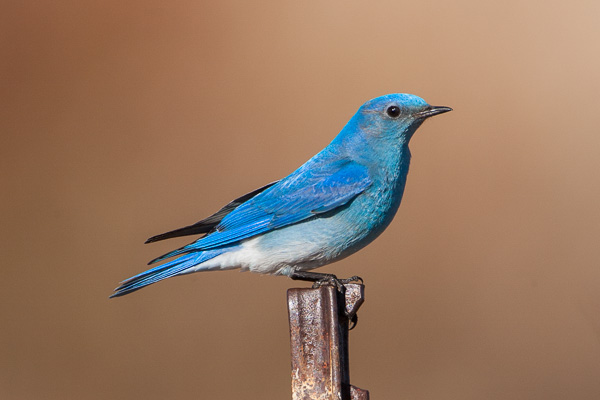
Wait for the turn of the head. Sounds pretty simple doesn’t it? It sounds simple, but achieving it is often a bit trickier. Many bird species have their eyes placed on opposite sides of their heads. When photographing birds without their heads slightly angled towards the viewer, the images tend to lack a bit of intimacy. Consider the following two images of a Mountain Bluebird. In the first image, the bird’s head is angled away from the viewer, while the second image features the bird’s head angled just slightly towards the viewer.

Mountain Bluebird looking away from the viewer

Mountain Bluebird looking away from the viewer

Mountain Bluebird looking toward the viewer

Mountain Bluebird looking toward the viewer

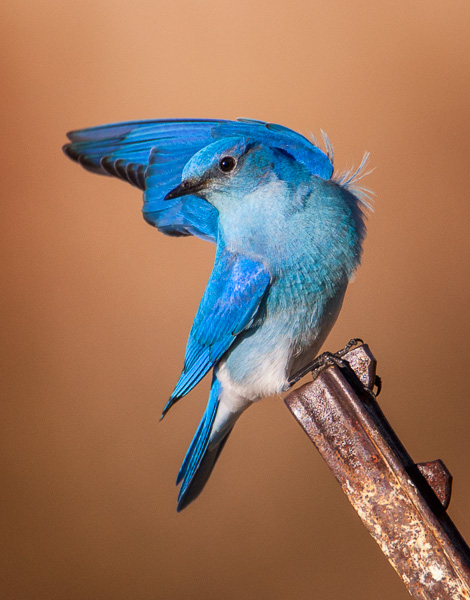
I’ll bet that for most of you, the second image is more compelling just because of that eye contact. Sure the perch is somewhat ugly (it’s the post used to mount the bird box above the ground), but even with an ugly perch, the second image is more compelling. Then if you’re patient, even with an ugly perch, you can still get a compelling image out of it, slight head turn included.

Mountain Bluebird posing pretty

Mountain Bluebird posing pretty

What to look for – subtle differences are huge

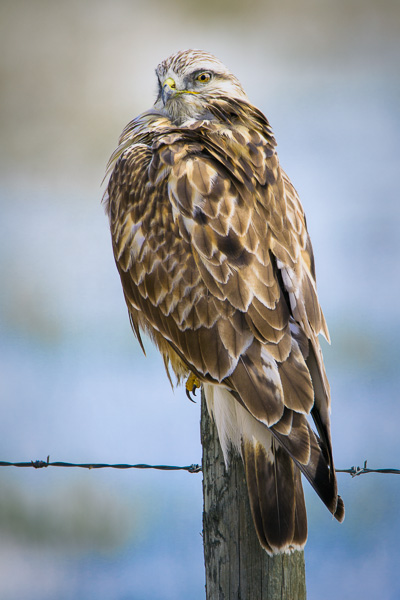
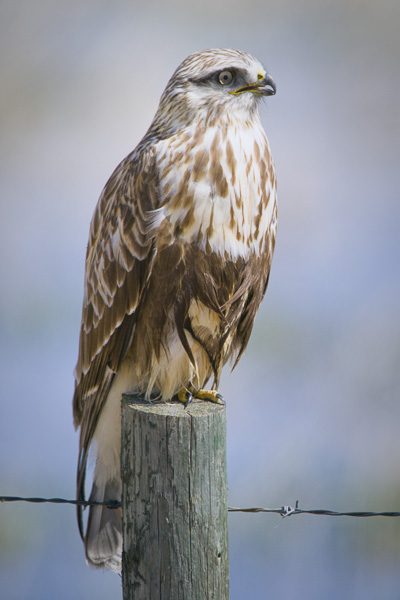
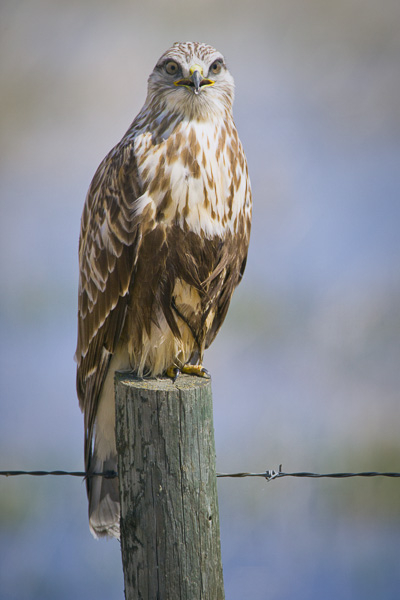
Consider the following three photos of a Rough-legged Hawk.

Rough-legged Hawk looking away from the viewer

Rough-legged Hawk looking away from the viewer

© Paul Burwell Photography - Rough-legged Hawk looking directly at the viewer

Rough-legged Hawk looking directly at the viewer

© Paul Burwell Photography - Rough-legged Hawk with the sexy over the shoulder look towards the viewer

Rough-legged Hawk with the sexy over the shoulder look towards the viewer

In the first image, the bird is looking away from the viewer. In the second, he is looking straight on to the viewer, while the third image has my preferred head-turn. In my opinion, in terms of a compelling image, it isn’t even a close comparison. The perch still isn’t ideal (although this is the typical place we find these birds where I live), but the third pose with the head-turn makes that image into a keeper for me.

Patience or initiative gets the head turn

So, is it just a matter of patience and waiting for the preferred head-turn? Sometimes that is true. Other times I try to “encourage” my subject to look my way. How do I accomplish this? I imitate the squeak of a mouse. I purse my lips together and suck in air through my teeth to produce an irritating squeaking sound. Sometimes, not always, but some times, the bird is curious enough to look my direction.

I know of some photographers who prefer to use the “machine gun” approach where they just hammer-down on the shutter button, essentially shooting a slow frame-rate movie.  Occasionally they’ll catch the bird with its head in the preferred position.  I personally don’t favour that approach, but would rather just wait for the appropriate moment and cut down on my post-processing work once I get home.

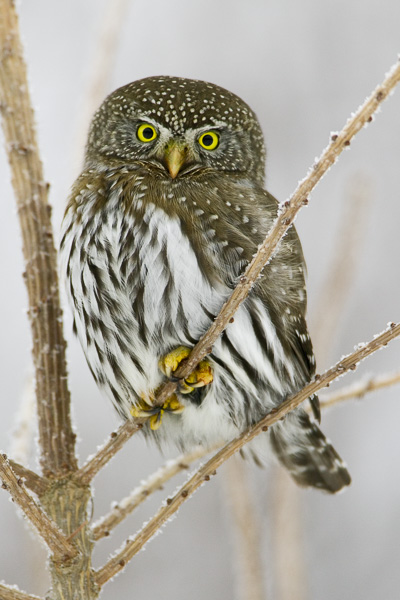
In terms of the bird looking head-on into the camera, that can occasionally work, but for most birds it just isn’t their best angle. There are definitely exceptions to that and owls are the first bird that springs to mind. Consider this image of the tiny Northern Pygmy Owl for example.

© Paul Burwell Photography - Northern-Pygmy Owl looking frosty

Northern-Pygmy Owl looking frosty

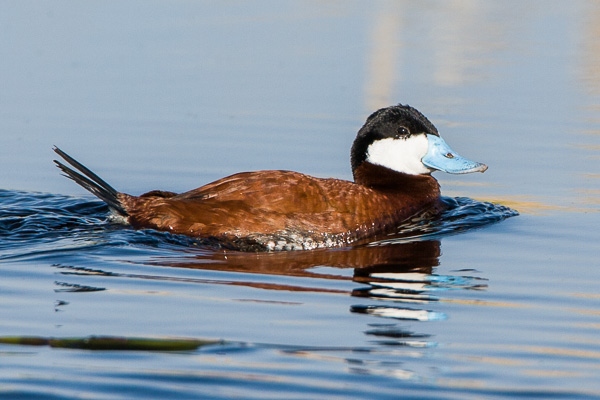
Here are a couple more images to consider:

© Paul Burwell Photography - www.bsop.ca

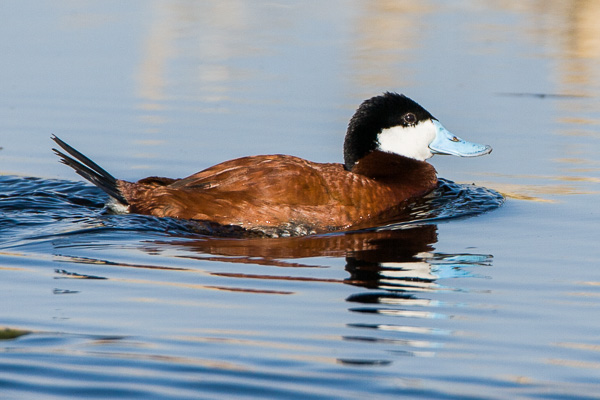
Ruddy Duck Drake looking towards the viewer

© Paul Burwell Photography - www.bsop.ca

Ruddy Duck Drake looking away from the viewer

I made these two images of the Ruddy Duck just seconds apart. In the first image, the bird looked my way due to my incredible squeaking ability, while in the second, his patience expired and he was off to find his girl friend.

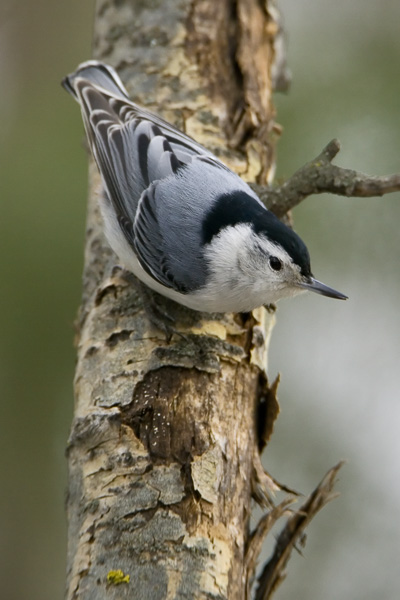
The following two images of a White Breasted Nuthatch also illustrate the point. In both images, the birds are in their traditional upside-down pose on the side of a tree. The difference between the images is that in the first the bird is looking slightly away from the viewer while in the second exhibits that classic slight head-turn towards the viewer that I strongly favour.

© Paul Burwell Photography - www.bsop.ca

White-breasted Nuthatch looking away from the viewer

© Paul Burwell Photography - www.bsop.ca

White-breasted Nuthatch looking towards the viewer

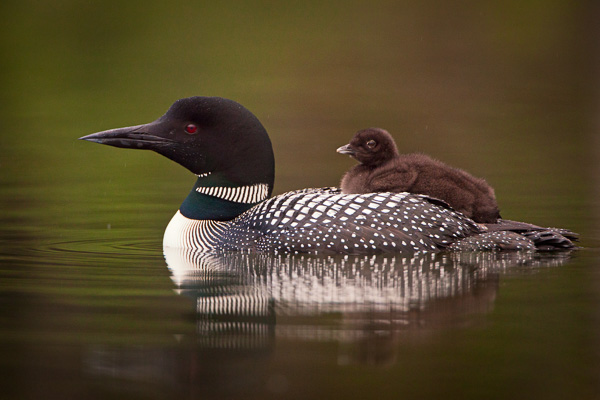
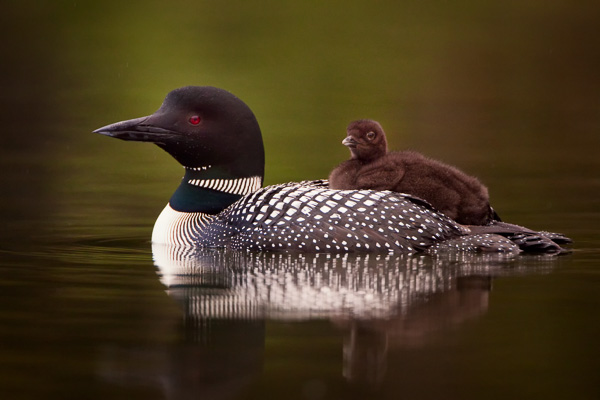
The last two images I present for your consideration are these two images of a Common Loon carrying a chick on its back.

© Paul Burwell Photography - www.bsop.ca

Common Loon carrying a chick on its back with both birds looking away from the viewer

© Paul Burwell Photography - www.bsop.ca

Common Loon carrying a chick on its back with both birds looking towards the viewer

In the first image, both adult and baby are looking away from the viewer. It’s a nice image but lacks a bit of intimacy.  Whereas the second image features both birds looking towards the viewer. The second image is a result of the large goofy photographer, with his lens perilously positioned inches above the water, from an unstable boat squeaking his heart out. For me, there is no comparison between the two images; the second wins easily.

Therefore, the next time you’re out in pursuit of some bird images that might rank in the top thirty-six quadrillion instead of the bottom, look for the opportunity to capture those birds with their heads slightly turned towards you. Whether you achieve it through patience or “the squeak”, I’ll bet you’ll find your images a bit more compelling.

Post originally from: Digital Photography Tips.

Check out our more Photography Tips at Photography Tips for Beginners, Portrait Photography Tips and Wedding Photography Tips.

A Turn of the Head – Creating More Compelling Bird Portraits

The post A Turn of the Head – Creating More Compelling Bird Portraits by Paul Burwell appeared first on Digital Photography School.

Digital Photography School

 
Comments Off on A Turn of the Head – Creating More Compelling Bird Portraits

Posted in Photography


57 Fabulous Bird Images

13 Nov

By John&Fish

Birds provide a wonderful opportunity for photographers to practice their skills. So today we thought we’d put together a bit of an image collection that feature them in the hope of inspiring some of you to get out and photograph some of our feathered friends (if you do take some great bird photos please share them in comments below). Click each image to find out more about the author and see it at full resolution.

By John&Fish

Looking for a little instruction in bird photography? Check out these tutorials in our archives:

  • 8 Tips for Photographing Birds
  • Backyard Bird Photography Tips
  • An Introduction to Bird Photography
  • How to Photograph Birds
  • Bird Photography Near Feeders
  • Introduction to Bird Photography

By Vinoth Chandar

By John&Fish

By John&Fish

By Keith Williams

By Pörrö

By Isidro Vila Verde

By Valerie

By John&Fish

By John&Fish

By John&Fish

By David

By Jes

By Art G.

By StormPetrel1

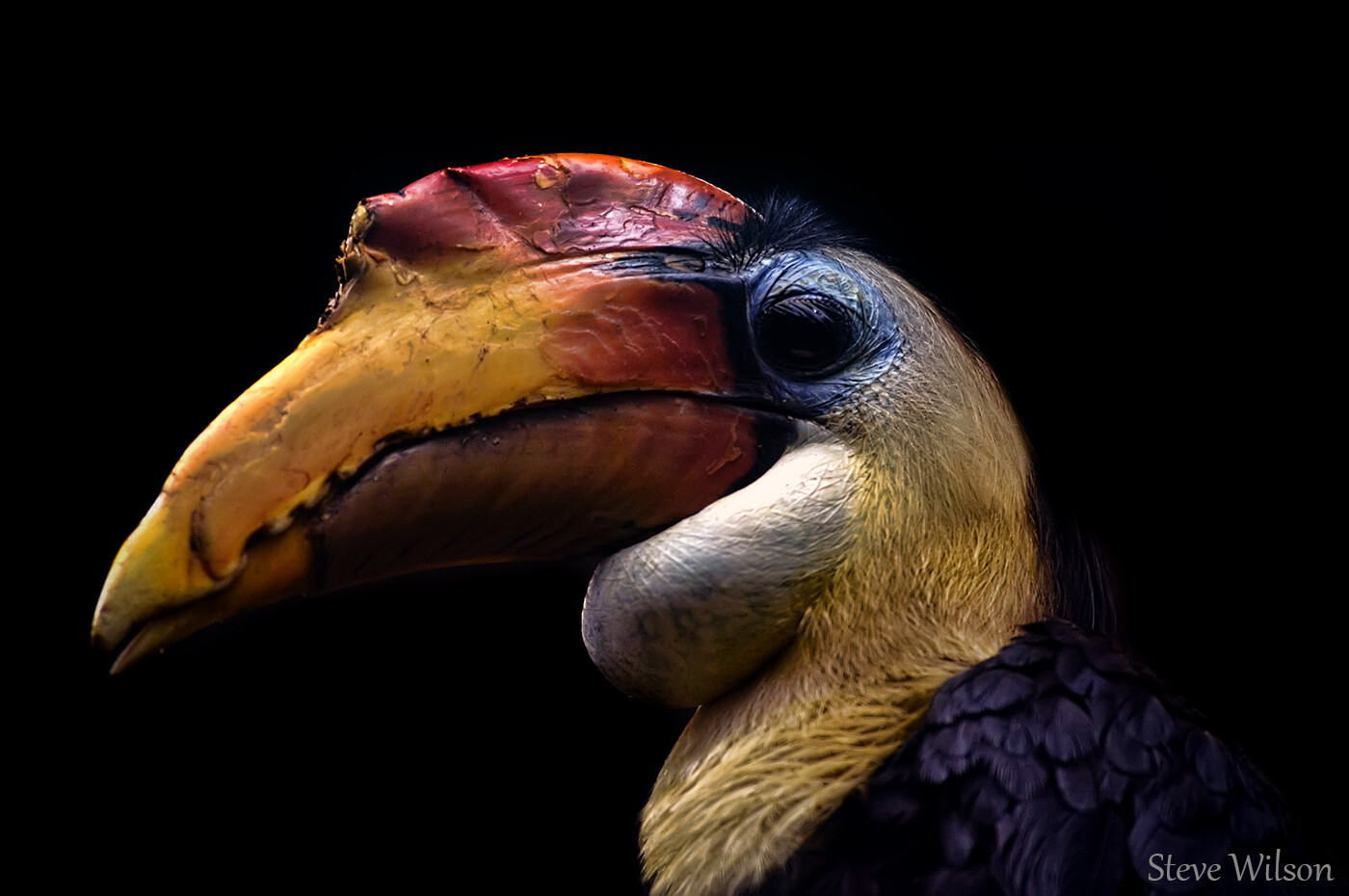
By Steve Wilson – over 2 million views Thanks !!

By Victor Alvarez

By Tambako The Jaguar

By Hamed Saber

By Matthew Paulson

By Ian Kirk

By David Cook

By Pedro Szekely

By John&Fish

By Anne Fröhlich

By Danny Perez Photography

By Dario Sanches

By Gonzalo G. Useta

By Steve Wilson – over 2 million views Thanks !!

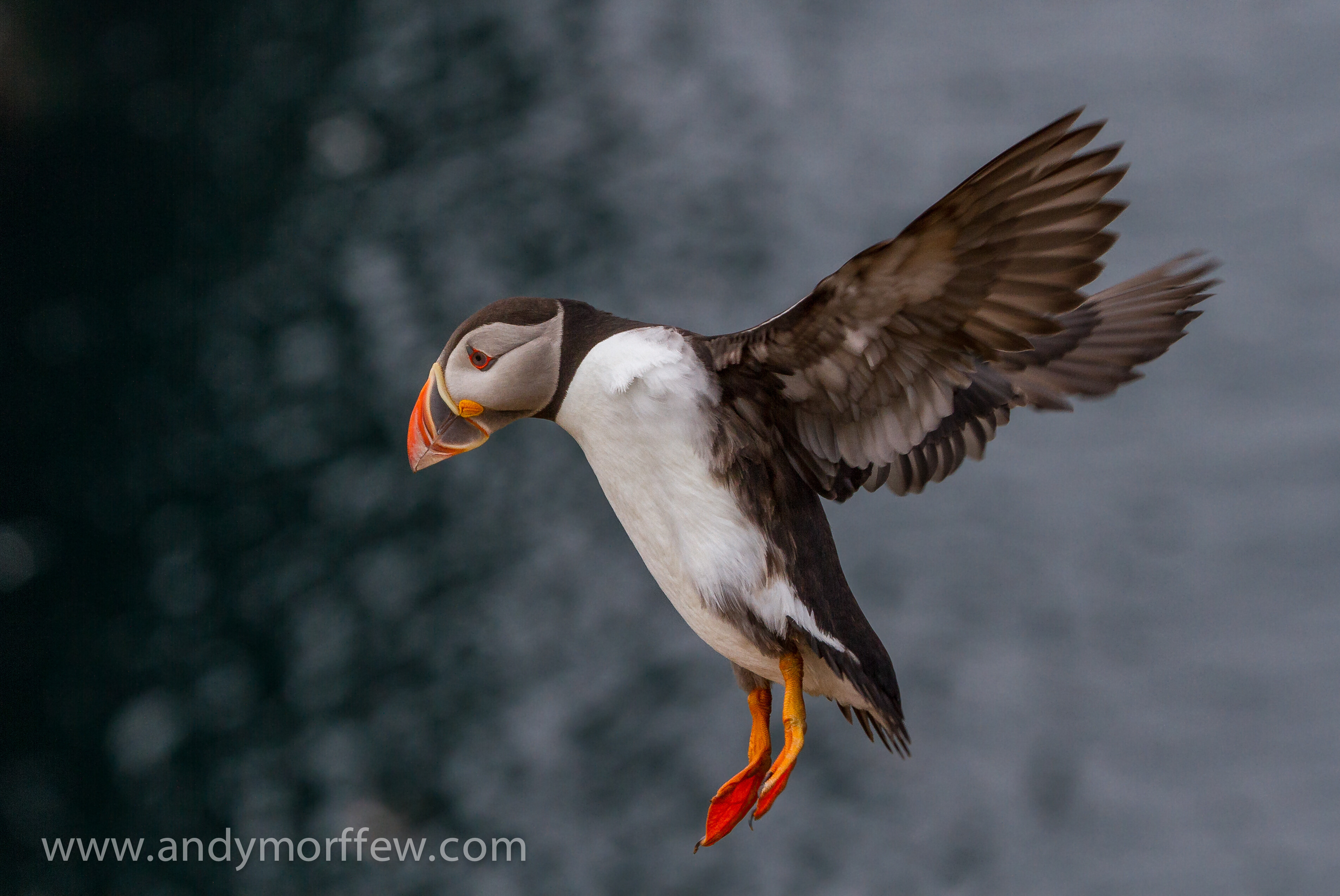
By Andy Morffew

By John&Fish

By John&Fish

By dogwatcher

By John&Fish

By Takashi Hososhima

By Christopher Michel

By Tambako The Jaguar

By Dawn Vornholt

By Dario Sanches

By Dario Sanches

By John&Fish

By John&Fish

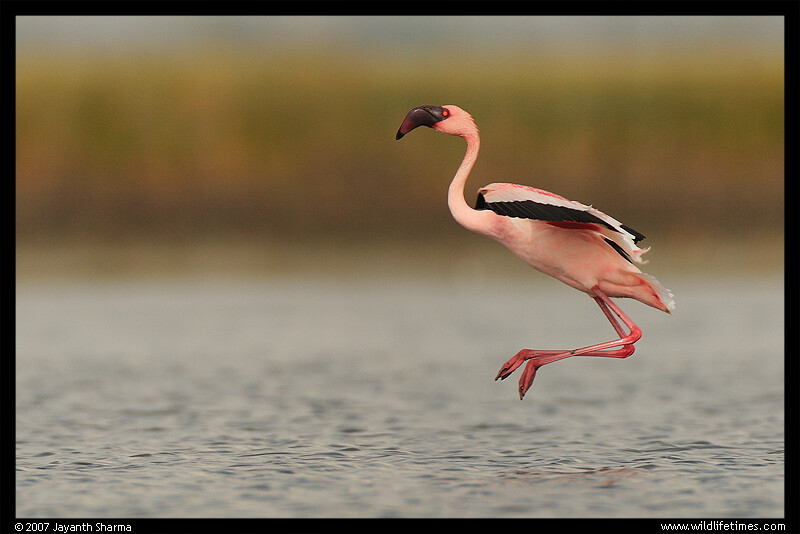
By Jayanth Sharma

By Englishpointers (Hate Sleep Apneoa)

By Eduardo Amorim

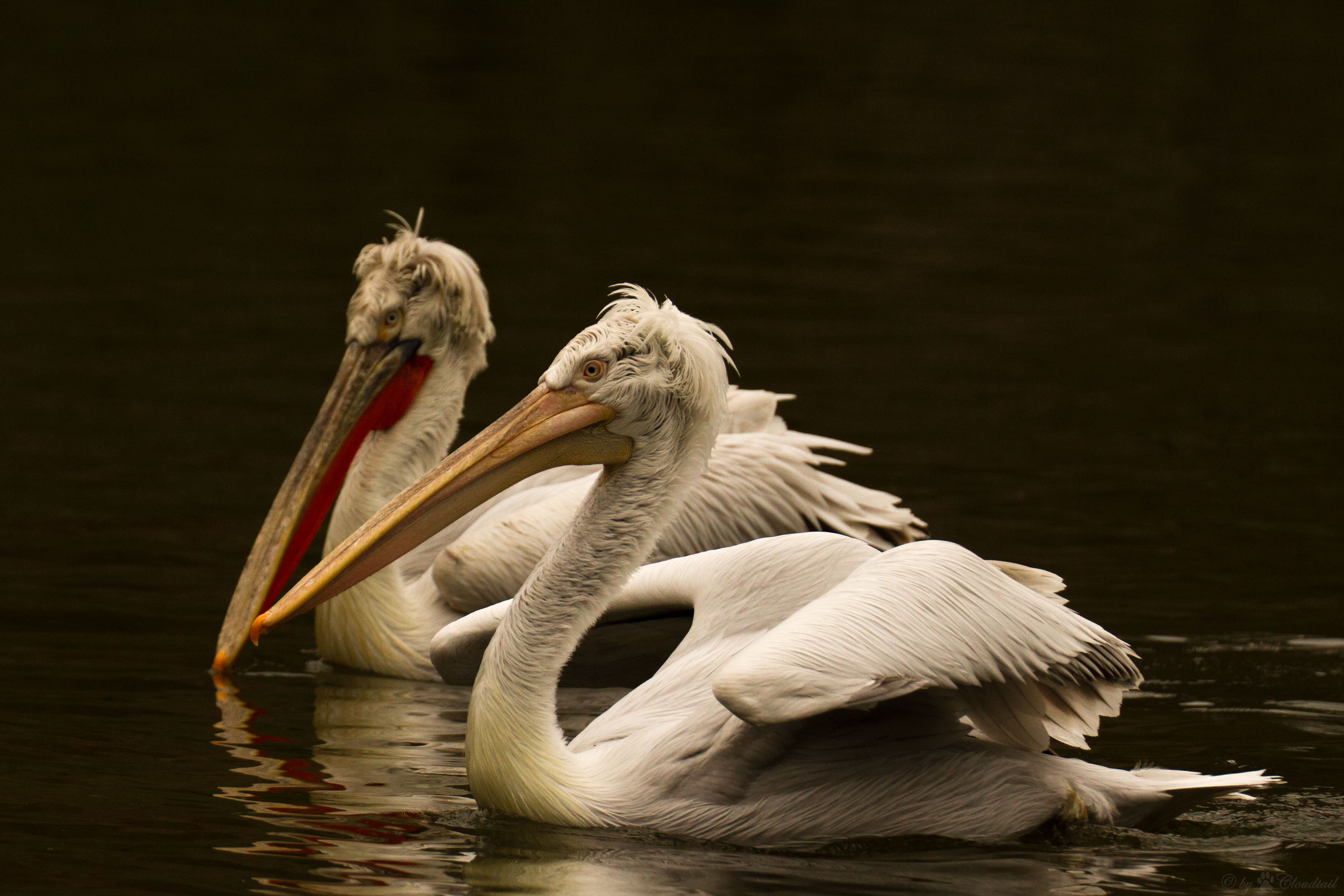
By Cloudtail

By Zanthia


By Tarique Sani


By John&Fish

By Isidro Vila Verde

By John&Fish

By Ibrahim Iujaz

By Lip Kee

By Krystian Olszanski

By Valerie

By Stuart Williams

Inspired? Check out these tutorials on photographing birds:

  • 8 Tips for Photographing Birds
  • Backyard Bird Photography Tips
  • An Introduction to Bird Photography
  • How to Photograph Birds
  • Bird Photography Near Feeders
  • Introduction to Bird Photography

Post originally from: Digital Photography Tips.

Check out our more Photography Tips at Photography Tips for Beginners, Portrait Photography Tips and Wedding Photography Tips.

57 Fabulous Bird Images

The post 57 Fabulous Bird Images by Darren Rowse appeared first on Digital Photography School.

Digital Photography School

 
Comments Off on 57 Fabulous Bird Images

Posted in Photography


Place Vendome in Venice Gets Giant Bird Nest Tree Huts

24 Oct

[ By Steph in Art & Installation & Sound. ]

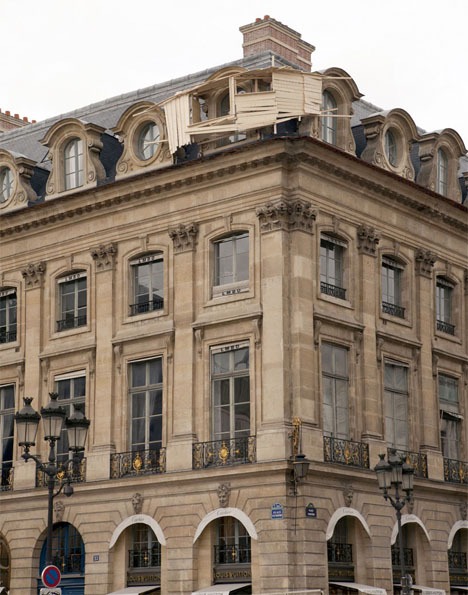
Place Vendome Bird Nest Installations 1

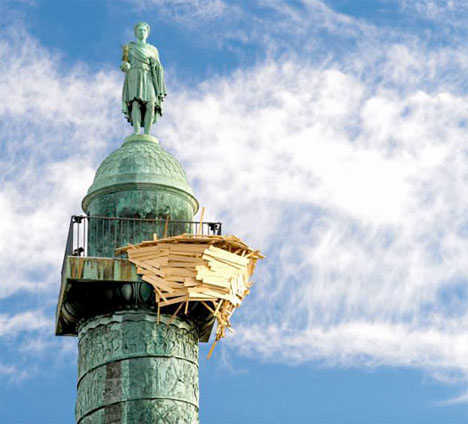
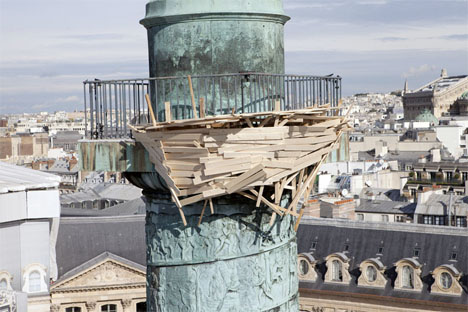
Upon the centuries-old architecture of Place Vendome in Paris, nest-like structures of head-scratching proportions have appeared; messy wooden lean-to huts clinging to verdigris pillars and posh old buildings. It seems as if giant birds have descended upon the city and made it their home.

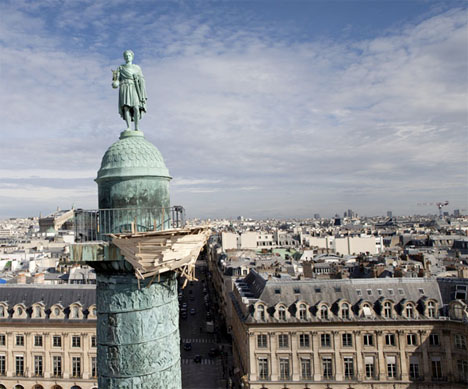
Place Vendome Bird Nest Installation 3

The parasitic structures are the ‘tree huts’ of Japanese artist Tadashi Kawamata, a continuation of a series that has taken him around the globe.

Place Vendome Bird Nest Installation 4

Five small cabins have been installed in key places in the Place Vendome, including the Vendome column, built in 1702 as a monument to the armies of Louis XIV.

Place Vendome Nest Installation 2

The confusion of wooden slats draws the curiosity of onlookers, wondering who – or what – could be inside. The structures will be up for a month as part of FIAC 2013, an art festival in Paris. Among the other places in which Tadashi’s parasitic architecture has been installed are New York’s Madison Square Garden, Florence and Switzerland.

Share on Facebook


[ By Steph in Art & Installation & Sound. ]

[ WebUrbanist | Archives | Galleries | Privacy | TOS ]


WebUrbanist

 
Comments Off on Place Vendome in Venice Gets Giant Bird Nest Tree Huts

Posted in Creativity


An Introduction to Bird photography

09 Jun

A Guest Post by Lithuanian Photographer Tadas Naujokaitis.

Birds are very interesting creatures, but it’s not so easy to photograph them. Wild birds usually don’t pose where you want and, moreover, it’s often difficult to get close enough to take quality pictures. But if you know some basics of bird photography, it becomes much easier to capture amazing moments of the birds’ life.

Equipment

It’s not necessary to have an expensive camera of lens, however the proper equipment lets to take bird photos easier.

Lens
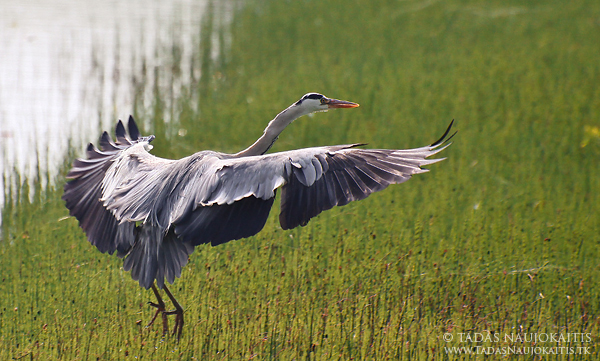
Most birds are quite shy, so you need at least 200mm (300mm is better) to take pictures of them. Longer focal length not only lets to photograph birds from larger distance, it also gives more blurred background. However more millimeters (or larger aperture) means more expensive, larger and heavier lens. Knowing all that, I think that 400mm f/5.6 lens is the best, if you want to have as much millimeters as possible, not too small aperture and still want to be mobile. Of course, you can make magnificent bird images with 100mm or less, just you should find more courageous birds or compose them to landscape.

Grey Heron is landing far enough where it feels safe, but with 400mm it’s possible to capture it with all the details.

Camera
In bird photography, almost all DSLR’s will make a good job. However, if you’re planning to photograph birds in flight, pay attention to fps (frames per second), high ISO results and AF (autofocus) system’s accuracy. If you don’t have a DSLR camera, then bird photography becomes a bit more difficult (especially due to slow AF), but don’t give up – a good photographer, I believe, will make better bird photos with mobile phone than a poor one with the most expensive equipment.

Tripod, monopod, flash, even remote control sometimes help much, but usually aren’t necessary.

Camera settings

It’s very important to know what settings to choose in certain situation to get most from your camera.

Exposure
In bird photography lens with long focal length are usually used, so it’s very important to set not too long exposure, if you don’t want that camera shake would cause blurry pictures. The rule is to set expose not longer than focal length of your lens. For example, if your lens focal length is 400mm, you need to set at least 1/400 exposure to get sharp images. However, it is valid only if you have a full-frame camera. If your have a DSLR with smaller sensor (e.g. APS-C DSLR – with 1.6 crop factor), you need to multiply millimeters of your lens from the crop factor. This time that would be (400 x 1.6 = 640) 1/640 exposure. If you don’t have a DSLR, you usually won’t need to multiply anything – the focal length, written on your camera lens, usually already is multiplied (actually it’s 35mm equivalent). Today, most lens or cameras have image stabilization (IS, VR…), and that helps much in low light conditions. Using it, you can set as many steps longer exposure, as you find in your lens/camera specifications, and get sharp images. For instance, if there is a 2 steps 400mm lens stabilizer, you can set 2 steps longer exposure (1/400-1/200-1/100, with APS-C camera: 1/640-1/320-1/160). When using tripod, of course, these rules to minimize camera shake are not so important.

If you want so freeze action, set 1/1000 or shorter exposure, if you would like to show movement, use 1/60 or longer.

Aperture
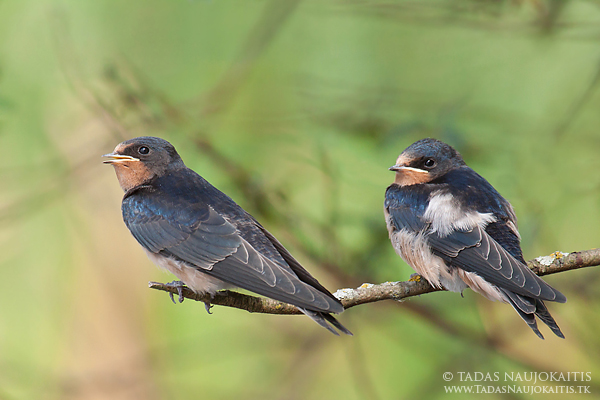
As you may already knew, aperture controls DOF (depth of field). That means, if you want a more blurred background, set the largest aperture (the smallest number). However, when using telephoto lens, some parts of bird’s body may appear out of focus, so pay attention where exactly you are focusing (that usually is the bird’s eye). If necessary, close aperture a bit.

When photographing these young Swallows I needed to set f/8 aperture to get both birds in focus.

ISO
In bird photography, as in anywhere else, the lower ISO speed, the better. However, it’s much better to set ISO 800 or 1600 and get a sharp picture, than ISO 200, and get the blurry one.

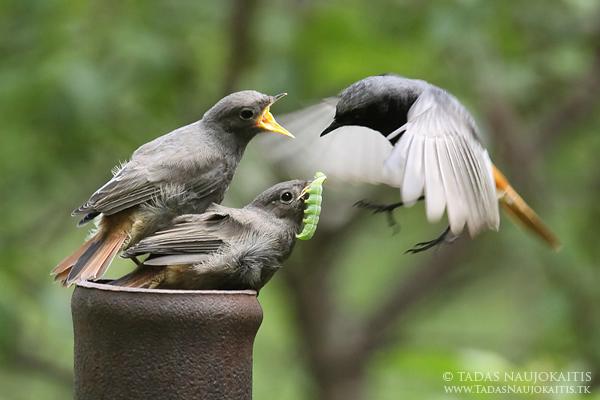
This photo of Black Redstart was made with ISO 2000, because there wasn’t much light, and I believe it was worth it.

Some other notes
When photographing birds, three modes work the best. If you want to control aperture (depth of field), choose Av (aperture priority) mode. For shutter speed controlling (especially useful when photographing birds in flight) use Tv (shutter priority) mode. If you exactly know what settings you need, choose M (manual) mode.

If you photograph dark bird in light background or want to get more details from dark areas, set the positive exposure compensation value, if you want to avoid overexposed areas, set the negative one.
I recommend you to always shoot in RAW, if possible, because later you can easily fix such things as WB (white balance) with computer.

Ways to photograph birds

The next step is to learn, how to get to the birds closer, so then you will be able to take quality pictures of them.

So you can:

Don’t do anything exceptional
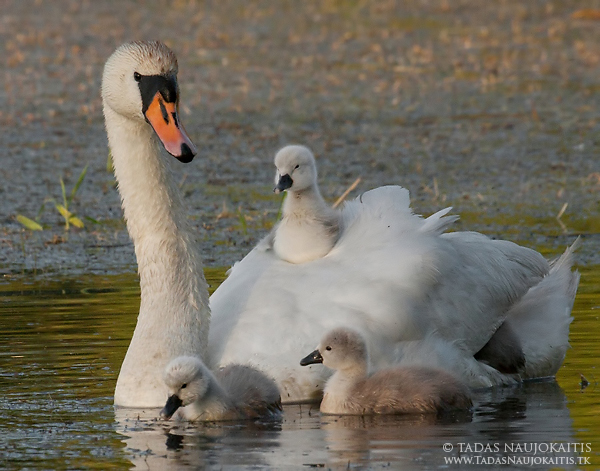
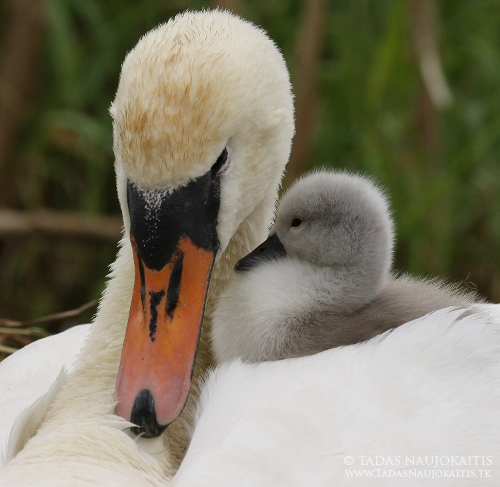
Some birds are courageous and let you to come close enough. The best example is Mute Swans.

Move carefully
Many birds let you to come close enough if you simply don’t make any sudden movements.

Stalk
Sometimes this really works, just make sure that bird doesn’t see you when you are getting close and then, very carefully, take picture.

Lie without any movements
Birds sometimes come surprisingly close, when you lie. Just find a good place or put some food and be patient!

Hide
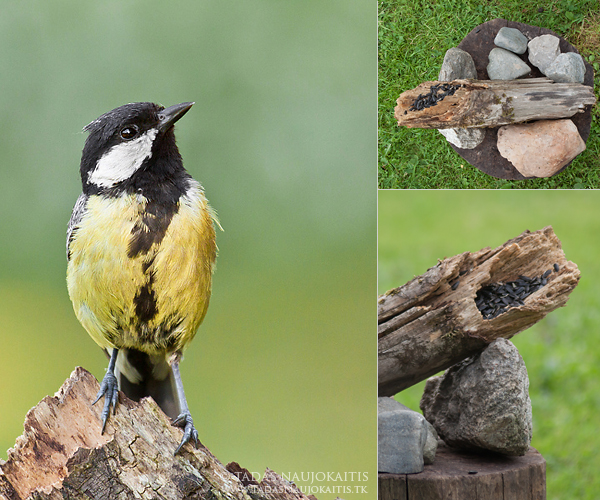
When photographing a shy bird or wanting a small bird to come very close for a quality photo this is the best technique. You can hide using hunting blind, camouflage net or the blind you made yourself from surrounding materials. The lower is blind, the more courageous birds feel. If you use surrounding materials to camouflage the blind or to hide yourself, that is another advantage. You can hide near various objects, which attracts birds. Also, you can put some food where you want for birds to come. Sunflower’s seeds are the best food in most cases. If you want that bird would sit on the twig or something similar before taking food, put that twig above the food.
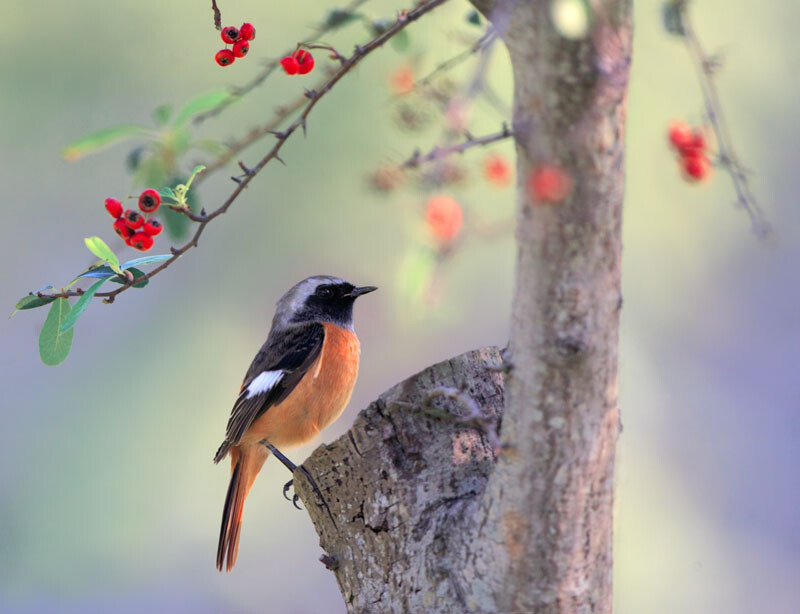
Here you can see the photo of Great Tit and how it was made.

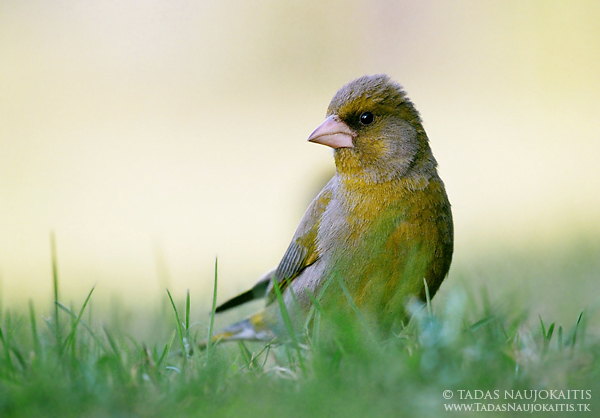
Sometimes it’s enough to put some sunflower’s seeds on the grass! And this is the result.

It doesn’t matter which way you choose, be patient. Don’t wander from one bird (birds) to other (others), if you didn’t succeeded from the first time. Sometimes it’s a good idea to go back next day and try again.

The Image

Now, lets talk about the image itself. We know what equipment we need, what camera settings to choose, how to get to the bird closer, now it’s time to find out how to make the image of the bird look attractive.

The light
Everything starts with a good light. The best time for photography is morning or evening because the light is soft and has a pleasant hue, shadows are not so distinct, it’s easier to get details from very bright and dark areas.

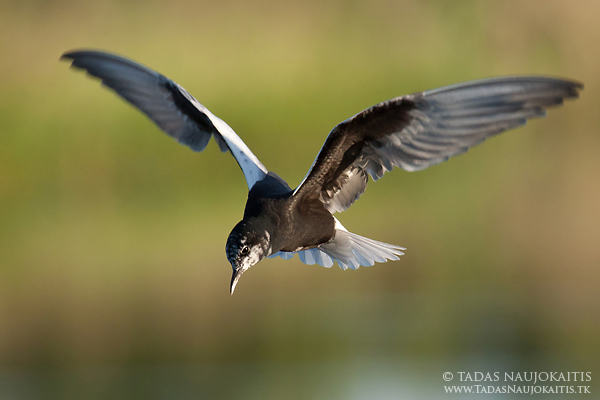
In this example you can see that this White-winged Tern has both black and white feathers, but because it was photographed in the evening, there are no pure white or black areas.

Composition
It is usual to leave some space in the direction the bird is looking or flying. Rule of thirds sometimes helps too. Simply try some different framing to see when you get the best result. In addition, try to avoid any distracting elements, when you are taking the picture. And one more thing to mention: when you are taking the photo of the bird, try to be in it’s eye level.

The bird’s sitting place and the background
It’s the best, when the place, where the bird sits, shows bird’s natural habitat. It can be almost anything because birds live in very different habitats. The background shouldn’t be distracting and usually it looks better when it isn’t the sky (but not always!).

Capture something more

Ethics of bird photography

Birds are wonderful creatures. When you are taking photos, don’t harm them. I strongly advice you not to photograph birds near nests (except when the distance is large and bird isn’t sensitive to disturbance – there are only very few such species). Even if you don’t harm birds, you can show the place of the nest for predators. The life of bird is more important than a photo.

Conclusion

Bird photography is exciting and full of adventures. I hope after this article it will be easier for you to take beautiful bird photos.

About the Author: Tadas Naujokaitis lives in Lithuania. See more of his work at www.tadasnaujokaitis.tk and connect with him on his Facebook page.

Post originally from: Digital Photography Tips.

Check out our more Photography Tips at Photography Tips for Beginners, Portrait Photography Tips and Wedding Photography Tips.

An Introduction to Bird photography


Digital Photography School

 
Comments Off on An Introduction to Bird photography

Posted in Photography


Snap Up our Food Photography Guide for just $7 [Early Bird Special]

20 Mar

snapnfoodToday I’m excited to announce the launch of our brand new Guide to Photographing Food over at SnapnGuides.

This mini-guide is all about helping you to learn how to mouth-watering photo of food and today it is just $ 7 (30% off for early birds).

If you’ve ever looked at other people’s pictures of food and thought to yourself, “Why don’t mine look like that?” then this is the guide for you.

Snapn Food will:

  • break down all the important aspects of photographing food
  • give you practical advice on what gear to use
  • show you how to leverage available light
  • teach you how to use simple props to great effect
  • illustrate how to use different composition techniques and shooting angles to take great food images
  • help you to develop your own style of taking delicious photos of the food you make and eat

The guide doesn’t overcomplicate things with technical jargon – everything is explained in a way that everyone can follow and understand.

It is also written in a way that is accessible to people using all kinds of cameras – from a camera phone through to higher end DSLRs.

Grab Your Copy for Just $ 7

Ready to improve the quality of your food photography? Grab this brand new SnapnGuide here for just $ 7 before the price goes up.

Post originally from: Digital Photography Tips.

Check out our more Photography Tips at Photography Tips for Beginners, Portrait Photography Tips and Wedding Photography Tips.

Snap Up our Food Photography Guide for just $ 7 [Early Bird Special]


Digital Photography School

 
Comments Off on Snap Up our Food Photography Guide for just $7 [Early Bird Special]

Posted in Photography


Bird photography and video with the Canon SX30 and Panasonic Lumix FZ100 cameras

17 Dec

With the 834mm 35mm equivalent focal length of the canon sx30 would this camera be a worthwhile addition to the bird photographer rather than a dslr, long (aka expensive) telephoto lens and the need for a monopod/tripod. This demo video shows some of the issues with the canon sx30 when used for this purpose. The fz100 can’t match the optical zoom of the canon and even with cropping the image is no where near as good as the canon image. for this purpose of long lens photography the Fz100 has to be dismissed. The only question remaining is the shortfalls I point out within this video. If it’s just stills your after then this might fit your needs and for simple video again the results are pretty good for most users, although you need to be aware of all the issues when deciding. I wish the FZ100 had better zoom as the camera features are excellent with total control in manual mode, maybe an additional teleconvertor may give enough resolution? Filmed at heaton Park in Manchester, edited with canopus edius 5 and rendered as WMV file.
Video Rating: 5 / 5

For more, like fb.com and SUBSCRIBE! Buy the book with 3 HOURS of video: amzn.to .49 eBook or .99 paperback: bit.ly OR, get the video eBook in your Kindle, iBooks, Google Play, or Nook stores. All versions include 3 hours of video, free lifetime updates, and free support. Questions? Add a comment and I’ll reply. My camera gear: * Best beginner camera: amzn.to * Canon 5D Mark II: amzn.to * Canon 5D Mark III: amzn.to * Canon 24-105 f/4 L IS: amzn.to * Canon 70-200 f/2.8 L IS MkII: amzn.to * Canon 500mm f/4 L IS: amzn.to * Sigma 150mm macro: amzn.to * Rokinon fisheye: amzn.to * YongNuo 568EX Flash: amzn.to Book links: * Paperback (Amazon): amzn.to * Paperback (discounted): amzn.to * iPad (recommended): bit.ly (“Tony Northrup” in iBooks) * Windows PCs: amzn.to (install amzn.to * Macs: amzn.to (install amzn.to * iPhone: bit.ly (“Tony Northrup” in iBooks) * iPod: bit.ly (“Tony Northrup” in iBooks) * Kindle: amzn.to * Android: amzn.to (install Kindle app) * Android: goo.gl (using Google Play) * BlackBerry: amzn.to (install Kindle app) * Windows Phone: amzn.to (install Kindle app) * Nook: bit.ly This video was recorded live in Berlin, Germany, and shows how to create High Dynamic Range (HDR) photos in Photomatix Pro and how to stitch photos together into a panorama using Microsoft ICE.


How Bird Wings Work (Compared to Airplane Wings) – Smarter Every Day 62

12 Nov

To learn more click here — bit.ly — To take a DEEP DIVE into how wings work! Click here to tweet DeepDive2 bit.ly I hope you never look at a bird in flight the same way again. I know I won’t! Artist Info: Sarah Xu, a student at the Vancouver Film School made the awesome introduction Drawing. captainpillow.blogspot.ca Gordon, the guy in charge of “Scary Parrot Monsters” at the end of the video wrote this song. It’s called “Black Rhino”… and is available for download online: ashellinthepit.bandcamp.com ~~~~~~~~~~~~~~~~~~~~~~~~~~~ How to get there yourself!: I coordinated the travel with Rainforest Expeditions www.perunature.com Tell them Destin sent you. You can checkout what they do on their Facebook page: www.facebook.com/Rainforest.Expeditions They ran me up and down the river in a boat, gave me lenses, a clean bed, awesome food etc. It was pretty amazing! See the research project’s website here: macawproject.org The project is led by Dr. Don Brightsmith Schubot Exotic Bird Health Center Department of Veterinary Pathobiology College of Veterinary Medicine Jeff Cremer was my hook-up for all things photography once I got on site. He’s very good at technical photography and is more than capable of handling anything you can throw at him. Check out his chops and tell him Destin sent you: bit.ly ~~~~~~~~~~~~~~~~~~~~~~~~~~~~~~~~~~ SMARTER EVERY DAY – DEEP DIVE #2 How Bird Wings Work – Smarter Every Day bit.ly How Wings Work — A reference for creature props bit.ly How do

 
Comments Off on How Bird Wings Work (Compared to Airplane Wings) – Smarter Every Day 62

Posted in Photography Videos


Bird Photography Near Feeders

30 Oct

A Guest Post by Lithuanian Photographer Tadas Naujokaitis.

Bird photography is quite difficult because birds don’t do what a photographer wants. Moreover, it’s often hard to get close to them. And when you have more experience in photography, you realize that it’s even more difficult to take a good bird photo, because you need a good background and a beautiful environment. However, there are a number of ways you can improve the bird photos you take. In this article, I’ll explain some tips on photographing birds near feeders.

The place

The place is the first thing you need to consider. You need to decide what bird species you want to photograph, and work out where you’ll find that kind of bird.

Depending on your location, even your backyard can be a great place for a feeder to attract the species you’re after. I wanted to photograph forest birds, so I chose a local forest. I searched for the exact place in that forest quite a long time—mainly, I needed to consider the background, and the amount and direction of the light that reached the feeder.

Ideally, your location will have a smooth background (when I search for a background, I use manual focusing at ~4m and take many test shots) and enough light. I’ve found it’s best when the sunshine reaches the feeder in early morning. Also, be sure to ask for a permission to feed and photograph the birds if you are not the land owner.

The hide

Once you’ve worked out the exact place where you’ll put your feeder, you need a hide. I recommend using a permanent hide, because birds will understand it as a part of environment, and you won’t need to set it up and then wait while the birds get used to it each time you decide to take photos.

You can build the hide from whatever you like—even an old door can be very useful. I built my hide from the branches I found in the area. It required a bit more work, and it isn’t waterproof, but I didn’t want to use expensive materials because there is always the risk that your hide can be damaged by other people if you don’t build it in your own backyard.

One more thing to note: the hide should be large enough for you to stay in it comfortably, because you may spend many hours in it. This is how my hide looks:

2-birdphotography.jpg

The feeder and food

The construction of the feeder itself isn’t very important. I prefer the platform feeder because, if you like, you can put many decorations on it when you’re photographing birds.

However, the food is very important. I recommend using sunflower seeds, peanuts, and suet cakes. Other similar products should be fine, too, but be sure the food you choose won’t harm the birds you’re photographing. The food must not be tainted, salted or smoked. And if you feed birds in the colder seasons of the year, you must feed them constantly until the weather becomes warm and the snow melts—otherwise many birds can die. Be prepared to spend some money on food. As am example, you may need even more than 100kg of sunflower seeds for one winter if you use them as the main food.

3-birdphotography.jpg

The perch

If the birds have already found the food, you can start shooting. Find a beautiful perch, twig or rotten stump and put them on the feeder or near it. If you’d like, find some decorations to add to the scene—berries, for example. They will make the composition of your shots more lively.

Be creative: try using various perches, or put the food in such place that you don’t see it though the lens. You can use holes in the feeder, put the food on the side of the perch that isn’t visible, or simply place it below the perch on which the bird will sit.

The food can also be put in such location that the perch becomes an intermediate stop for birds moving towards the food. Often it’s difficult to photograph the bird without food in its bill. If this is your goal, try to hide some food so the bird will need to search for it. You can also take some pictures of birds without food, when the food has just run out, but you won’t have much time to shoot before the birds realise that there’s no more food and fly away.

My recommendation, however, is to always have plenty of food in the feeder, which will attract more visitors to the feeder, and be ready to quickly take a photo before the birds take any food.

4-birdphotography.jpg

Equipment

You should get good results with any DSLR and a 100-200mm lens. However, with longer focal length, you’ll get a better background. A tripod is usually necessary, too.

5-birdphotography.jpg

Camera settings

Exposure: 1/50-1/500 or even shorter, depending on how fast the birds are (faster birds need a shorter exposure), and how much light you have (if there isn’t much light, you may need to set longer exposure if you don’t want to use high ISO settings).

Aperture: if you don’t have enough light and want the best possible background, select the largest aperture (the smallest number). If it’s difficult to get the whole bird in focus, close the aperture a bit.

ISO: use as low an ISO speed as possible. However, if you don’t have much light, it’s better to set ISO 800 and get sharp pictures than ISO 200 and take blurry ones.

The light

The best time for photography is morning or evening because the light is soft and has a pleasant hue, shadows are not so distinct, and it’s easier to get details from very bright and dark areas. Overcast days are better than sunny ones because the shadows are less distinct. However the midday sun can be your friend if its rays are diffused by trees.

6-birdphotography.jpg

Composition

It’s usual to leave some space in the direction in which the bird is looking or flying. Try using the rule of thirds in your composition. Avoid any distracting elements and take the picture at the bird’s eye level. Don’t always try to fill the frame with a bird: remember that birds are very fast creatures, so they need space. Even in the photo!

7-birdphotography.jpg

Conclusion

The best part of bird photography near feeders for me is that I have a great time. It’s usually hard to believe that 10 hours have already passed – I always wish I had more time. I hope you will have a good time photographing birds near feeders, too.

8-birdphotography.jpg

About the Author:

Tadas Naujokaitis lives in Lithuania. See more of his work at www.tadasnaujokaitis.tk and connect with him on his Facebook page.

Post originally from: Digital Photography Tips.

Check out our more Photography Tips at Photography Tips for Beginners, Portrait Photography Tips and Wedding Photography Tips.

Bird Photography Near Feeders


Digital Photography School

 
Comments Off on Bird Photography Near Feeders

Posted in Photography


Bird Photography Workshops by Glenn Bartley – Adobe Photoshop Workflow – Part 1.wmv

25 Oct

Adobe Photoshop workflow lesson by Glenn Bartley. Learn a basic workflow in Adobe Photoshop from RAW conversion to final Tif image. For more info visit – www.glennbartley.com

 
Comments Off on Bird Photography Workshops by Glenn Bartley – Adobe Photoshop Workflow – Part 1.wmv

Posted in Retouching in Photoshop