RSS
 

Posts Tagged ‘Better’

5 Tips for Better Travel Photography

04 Aug

In this article, I will share with you some tips about travel photography.

After spending a year doing travel photography in India, I discovered that it isn’t about traveling physically, it’s about making the viewer travel virtually to your images. Travel image need to have sense of place and time. You can achieve this by shooting in your own city, street, or neighborhood.

Gurudwara Bangla Sahib Delhi - 5 Tips for Travel Photography

If I were from Delhi and shot some images of the Taj Mahal in Agra, or if I were from Agra itself and I shot images of the Taj Mahal, both of those will be considered travel images if they have sense of place or time. Just try to compose an photo so the viewer visually travels to your image. Make him feel that he already went to this place through your image or that he wants to go there in real life.

You don’t need to get an airline ticket to another country to make travel photography. You don’t need to take a train to another city to do, travel photography. But of course when you do travel to another country or city, your energy and passion increase because of the diverse culture and tradition and the fact that your eye is impressed by the new subjects.

#1 Avoiding cliché shots

Lake Pichola Udaipur Rajasthan - 5 Tips for Travel Photography

It’s important to avoid cliché shots in travel photography. Before buying my flight ticket to India, I decided to avoid all popular cliché images of India which are pictures of the Taj Mahal, a train window, Holi Festival, camels of Pushkar, Rajasthani portraits, and portraits of people with wrinkles. I wanted to shoot something different, I wanted to come back to my country with new frames that aren’t common to viewers eyes.

#2 Approaching people

Being a foreign travel photographer means that half of the people you will meet will welcome you and be kind because they appreciate and like foreigners. The other half won’t allow you to photograph them because they won’t be sure about how you will use their images.

Himalaya Nyingmapa Buddhist Temple Himachal Pradesh India - 5 Tips for Travel Photography

There are several ways to approach people abroad:

If you know the local language, it will be very easy for you to up go to your subject, introduce yourself, explain why you want to photograph them and how you will use the photos.

If you only speak English, you can have a guide or translator with you. I don’t recommend this because it will attract attention of people and some may feel that there is something serious in taking their image and they may refuse.

Jagdish Temple Udaipur Rajasthan - 5 Tips for Travel Photography

You can shoot candids and never make direct eye contact with your subject. Do not give an alert that you are photographing, and hide yourself behind the camera.

You can shoot without permission in a candid way with making direct eye contact, and smile to the subject and after taking the picture. Show them the image and tell them that they are beautiful and ask them to smile. Your eye contact and smile can be the permission. This is the best way!

Gurudwara Bangla Sahib Delhi 2 - 5 Tips for Travel Photography

When you take portraits, make sure you have some of your images printed to show to your subject to help explain what are you doing and how they will look in your photographs.

Click one image and show them the pictures on your camera. They will be pleased because many people don’t know that their image can appear in camera.

#3 Enter the culture

Jagdish Temple Udaipur Rajasthan 2

  • Wear local clothes to seem local and attract less attention and to show appreciation for the culture of the country.
  • Learn the greeting gesture if they have one.
  • Learn basics words of the language like; hello, please and thank you. People will be happy that you appreciate their language.
  • If you will visit the place again, try to print their image and give it to them as souvenir, it will be a valuable gift.
  • Smaller cameras and lenses will be make you more invisible as a photographer and you will look more like an amateur.
  • Remember that when you photograph someone, you take part of his soul (many believe this), so you need to appreciate the people you photograph and be kind to them.

Old Town Udaipur Rajasthan - travel photography

#4 Researching

I believe that the step of research is as important as the shooting itself.

Research where are you going. For example, if you will travel to Delhi, you need to know everything about Delhi.

  • What are the most famous places for tourism in Delhi?
  • What are the most famous places for photography in Delhi?
  • Learn about the lesser known places for photography in Delhi by asking local photographers.

Vishwa Shanti Stupa Delhi - travel photography

This will help you explore new places because in every city you will discover places that have never been photographed before.

You need to know about the famous iconic places before visiting your destination. Then you need to research how photographers normally shoot them, so you are able to compose a shot in a different way and be creative.

Jal Mahal Jaipur Rajasthan

#5 Manage your time

Don’t waste any hour without shooting, even in the harsh sun, you can take good images using light and shadow!

Wake up early during your journey, there are many scenes you will never catch except in the early morning.

Old Town Udaipur Rajasthan 2

Visit places twice if you have time because when you visit new place for the first time, you will be shocked and impressed as a tourist. Then when you visit again, your eyes will be adjusted to the scene so you will be able to capture images using your vision not using tourists’ eyes.

Conclusion

Hopefully these 5 travel photography tips will help you come home with great images from you next trip. Please share any others you have and your travel images in the comments below.

The post 5 Tips for Better Travel Photography by Yasser Alaa Mobarak appeared first on Digital Photography School.


Digital Photography School

 
Comments Off on 5 Tips for Better Travel Photography

Posted in Photography


I made a book of pictures of my cat, and I think it’s going to make me a better photographer

29 Jul

Hear me out.

Many years ago I made a Blurb photo book that was beautiful, but required hours and hours of my time to get it all just right. It was an enjoyable process really, but I just don’t find I have that kind of time or patience anymore. But I love a nice photo book – what better way to get photos off your phone or hard drive and make them into something tangible?

Whatever your level of interest and
time commitment, there’s a photo book
service for you

In the years since I made my first book, options for would-be photo book makers have exploded. They range from time-intensive to almost totally automated. Whatever your level of interest and time commitment, there’s a photo book service for you.

The other part of this story is that I’ve been struggling with finding inspiration for my personal photography lately. It’s hard to find a reason to bring a dedicated camera when I know I can get usable snapshots with my phone. Above all, I don’t end up doing anything with the photos I do take. I post the stray photo to Instagram or Facebook, but that’s as far as they go.

But recently, I downloaded Mosaic, an app from Mixbook that creates incredibly simple photo books out of 20 of your photos – no more, no less. You pick the photos from your camera roll, Facebook or Instagram account, put them in an order you like – and that’s about it.

The photos are arranged into a mosaic (see what they did there) for your front cover, which you can ‘shuffle’ to re-organize, but you can’t manually select how the images are arranged. Text can be added to the first page, but none on the following pages.

In trying it out I dove into my camera roll and looked for a story I could tell in 20 photos and by pure coincidence, I happened to have a large number of photos of my cat. I saw a theme emerge and began filling the pages of my book with pictures of him sleeping.

I know, I know. But you wouldn’t believe this cat. He sleeps in the strangest positions, and the photos fell into a neat symmetry as I placed them on opposing pages: two photos of him curled into a donut shape in his bed, two photos of him sprawled on the floor next to his bed, for some God damn reason. The book materialized in front of my eyes, and the temptation of the ‘order now’ button became too great.

See what I mean? He’s ridiculous.

Cats are bona-fide jerks but I’m in the part of the population that finds them irresistible against better judgement. And I know this sounds ridiculous, but my cat really does have a funny personality. One day he’ll be gone, not roaming around my apartment screaming for treats and attention, and I’ll have this silly little book to remember him by.

Mosaic is definitely not designed for professional photographers. For one, it only exists in app form, so it lends itself best to photos taken with your phone. You can source them from your Dropbox or a social media account, but the app certainly lacks the customization features a pro would want.

Creating a book is dead simple, and without the option to add text or captions, all emphasis is on the images and the story they tell

So Mosaic isn’t really intended for ‘serious photography,’ but to me there’s beauty in its limitations. Creating a book is dead simple, and without the option to add text or captions, all emphasis is on the images and the story they tell.

By making this book I may have unlocked a new cat lady achievement, but it also made me think about other stories I could tell in 20 photos. Open-ended photo projects feel too overwhelming to me, but the thought of assembling just 20 photos on a theme and having an easy, yet polished output mechanism for them is very appealing. Suddenly, I’m reconsidering the projects that seemed too onerous to take on. Documenting a trip or a social outing seems doable with a purpose, vision and boundaries for the final product.

Maybe this experience will help nudge me forward on a path I’m currently stalled on

Realistically, I’m not going to be making huge number of $ 25 photo books (plus an extra $ 5 for shipping). But maybe this experience will help nudge me forward on a path I’m currently stalled on. And isn’t that what it’s all about? At the very least, I’ve got one very fancy book of cat photos.

Also read: Ten ways to shake ‘photographer’s block’ for good

Articles: Digital Photography Review (dpreview.com)

 
Comments Off on I made a book of pictures of my cat, and I think it’s going to make me a better photographer

Posted in Uncategorized


31 Days to Becoming a Better Photographer

27 Jul

Do you want to level up your photography with a powerful burst of learning?

If your answer is yes – you’ll absolutely LOVE our brand new course – “31 Days to Becoming a Better Photographer” which we guarantee will improve your photography.

31 days become a better photographer

It only launched today with a massive 75% early bird special – but be quick, the discount ends and enrolments close in less than 3 weeks.

31 Days to Becoming a Better Photography has been specifically created for anyone who’s ever dreamed of taking amazing photos – but who is not sure where to start.

Great Teaching, Practical Exercises and Mentoring

The great thing about this course is that it’s incredibly practical. You’ll learn a lot but you’ll also be actively applying what you learn. Here’s how it works.

  1. 31 Easy to Understand Lessons – The course is broken down into 31 easy to understand lessons – designed to give you more knowledge of how your camera works and how to get more control over it.
  2. 31 Practical Exercises – Each lesson comes with a practical exercise – designed to help you apply that knowledge.
  3. Mentoring from a Pro Photographer – All early bird participants also get access to a secret Facebook group where course creator – Jim Hamel – will give group mentoring, offer extra support, answer questions and where you can share some of the results you’re getting.

Access to a professional like Jim would normally cost you hundreds or even thousands of dollars, but when you purchase this course, you not only get over 7 hours of great teaching, 31 exercises to try, you get to ask Jim questions, follow along with assignments, and become part of a group of other like minded photographers.

This course is designed to be taken over 31 days but you get immediate lifetime access to it so you can take it at your own pace – whipping through it faster or taking it slower if you like.

Here’s a taste for the course – straight from the mouth of course creator Jim Hamel:

Enrolments End Soon

But hurry – because of the mentoring component of this course spaces are limited and will only be open for enrolments for a short time and the massive 75% off is only for a short time too!

Check out all of the course modules and enrol here.

P.S. As always, we offer a 60 Day Guarantee, so if you find the course isn’t for you, we’ll be more than happy to refund you – no questions asked.

The post 31 Days to Becoming a Better Photographer by Darren Rowse appeared first on Digital Photography School.


Digital Photography School

 
Comments Off on 31 Days to Becoming a Better Photographer

Posted in Photography


Apple patent shows camera system that helps you take better selfies

19 Jul

A newly granted Apple patent details a new type of camera system that aims to produce higher-quality selfies. The patent, first filed with the US Patent and Trademark Office in 2015, describes using a wider field-of-view with the iPhone’s front-facing camera when taking selfies in landscape mode. The wider FOV wouldn’t be fixed, however, with the camera reverting to a narrower FOV when a selfie is taken in portrait mode.

These field-of-view effects are designed to improve selfies when taken both in groups of people and alone. In the case of groups, the patent explains that turning the phone sideways would expand the camera’s field-of-view to cover a wider angle, ensuring everyone in the group is featured in the selfie. A self-only selfie taken in portrait mode, though, would feature a more traditional aspect ratio such as 4:3 and a narrower FOV.

The camera system in this patent would also be able to intelligently prod the user to take better selfies by selectively narrowing the FOV in portrait mode, requiring the user to extend their arm further away. The system could also adjust the previewed image in such a way that the user will need to change the camera’s angle, the end result being an overall better selfie with a more natural look, reduced distortion, and other improvements.

Explaining that latter point, the patent says the camera system may ‘crop/scale/zoom/shift the image window to coax the user to hold the camera device in a more optimal ‘self-taking’ position.’ As with any patent, it is possible Apple will never implement this technology into a consumer product, but it’s good to know so much technical thought is being put into… selfies.

Articles: Digital Photography Review (dpreview.com)

 
Comments Off on Apple patent shows camera system that helps you take better selfies

Posted in Uncategorized


These Courses WILL Make You a Better Photographer (70% Off Today)

02 Jul

We’re already halfway through our popular mid year sale and we’re really excited to offer you this deal, because we love helping people discover how to take great photos and we know this one will help do just that.

For the next 30 hours we’re offering our entire range of online photography courses at a massive 70% OFF.

Normally $ 99 each, today you can get any of our five courses for just $ 29 (USD) each. That’s incredible value!

These step-by-step courses created by talented photography experts include:

  • Night Photography by Jim Hammel – released just this year so that you can take amazing photographs at night
  • Lightroom Mastery by Mike Newton – every photographer should have a copy of this to create perfect photos!
  • Lightroom Mastery: People & Portraits by Mike Newton – will help you transform dull headshots into stunning portraits
  • Photo Nuts and Bolts by Neil Creek – the ideal course for the beginner photographer
  • Photo Nuts and Shots by Neil Creek – creative photography advice from a pro so you can get off auto

Each course is packed with series of tutorials, with demonstrations shot in high-quality video by professional photographers, and you can follow along at your own pace.

You get lifetime access to these courses, so you don’t have to rush to finish them and you can go back and review topics any time you like.

Check out all the discounted courses here on our courses page for the next 30 hours only and start improving your photography today.

The post These Courses WILL Make You a Better Photographer (70% Off Today) by Darren Rowse appeared first on Digital Photography School.


Digital Photography School

 
Comments Off on These Courses WILL Make You a Better Photographer (70% Off Today)

Posted in Photography


Flexy Paw treat holder phone clip tantalizes pets for better photos

24 Jun

Taking a photo of a dog or cat can be difficult, but here to help is Flexy Paw, a smartphone attachment that dangles a treat above the device’s camera. The treat serves as a lure to catch the animal’s attention, giving photographers a chance to snap to a photo. Because the attachment clips to the phone, it can be connected to nearly any smartphone, and keeps the user’s hands free to compose and take the photo.

The clip holding the pet treat is attached to a flexible armature, enabling the photographer to reposition it out of the camera’s field of view, as well as move it to one side or the other for posing purposes. Once the photo is snapped, of course, the pet can then be rewarded with the treat.

Flexy Paw is being funded through Kickstarter by Paw Champ, which is seeking $ 39,000 in funds. Backers who pledge $ 16 or more will be rewarded with a single Flexy Paw unit, while $ 32 or more gets backers two units. Shipping to Kickstarter backers is expected to start in November 2017.

Articles: Digital Photography Review (dpreview.com)

 
Comments Off on Flexy Paw treat holder phone clip tantalizes pets for better photos

Posted in Uncategorized


A Quick Exercise to Help You Take Better Self-Portraits

08 Jun

This article will give you some tips on how to take better self-portraits. That is different than doing a selfie – let’s have a closer look at the issue.

A Quick Exercise to Help Improve Your Self-Portraits

Thank you to dPS writer Hannele Luhtasela-el Showk for contributing her self-portrait to the article.

The selfie – what not to do

The selfie has become such an important part of our culture. The invention of the selfie-stick shows just how important this phenomenon has become. Everyone is snapping pics and posting them online. Phones make it convenient to share images and show people the events of your day. But I would argue these images barely scratch the surface. They don’t do much more than give people a brief glimpse into how happy you were while visiting the zoo with your children.

Look back at your Facebook profile. Look at the pictures you’ve uploaded. If you are like the rest of us, I’m willing to bet you’ve filled your profile with images. Superficial images where you are smiling while hiking or maybe you’re shopping with friends. They don’t show much, do they? Sure you’re out having a great time, but there’s more to you than fun isn’t there? These smiling images don’t get at who you truly are. There’s a difference between a selfie and a self-portrait that shows something about you; an image that gets at who you are and tells your story in an intimate way.

A Quick Exercise to Help Improve Your Self-Portraits

We’ve all taken one of these images. You know the ones with terrible quality in low lit areas. This is a typical facebook selfie.

I think this is a pretty typical selfie. We’ve all posted images like this. Even I am guilty. Two happy friends together somewhere.

Self-portraits – take it up a notch

So if you’re like me if you’re tired of the superficial smile, then it’s time to think about how you can step up the selfie game and graduate to full-fledged self-portraits. I’ve said it before, and I’ll say it again – good photography needs some forethought. There’s more to quality pictures than using the correct settings. Let’s take a look at a quick exercise you can use to help you create more meaningful, telling and compelling self-portraits.

A Quick Exercise to Help Improve Your Self-Portraits

This was shot after 12 hours working outdoors for a photo shoot. I was exhausted and wanted to show the toll my work took on me. Hopefully, I look exhausted.

Exercise – Discover Treasured Objects

I’m going to ask you to get out a pen and paper. Sorry, but it’s necessary, and I promise it won’t be too onerous. It’s time to do some brainstorming and soul searching.

Let’s pinpoint the things that are really important to you. Think about all the physical objects you hold dear. Start by writing without restraint. Jot down the items that quickly come to mind. Try not to evaluate them too harshly. This is about fleshing out ideas. You can use your judgment later to question whether an object should stay on the list.

If you want to create a list no problem. Or if you’re like me and none of your thoughts are ever linear then maybe an idea web (or word cloud, or a mind map) works better for you, just go for it. Write down your thoughts in the way you are most comfortable. Maybe one of the items you list is a treasured photograph of your grandmother or a plastic beaded necklace a friend gave you. It doesn’t matter just get it down on paper. Try to list at least 10 objects.

A Quick Exercise to Help Improve Your Self-Portraits

Thanks to dPS writer and team member Simon Pollock for contributing his self-portrait to the article.

Here’s my mind map. I struggled to get 10 objects as I’m not someone who has a lot of physical possessions but I will bare my soul to you all.

Here are my brainstorming efforts.

Plan photos around your objects

Now that you’ve got your mind map all worked out it’s time to consider the items you’ve jotted down. How could you incorporate one of these items into a photograph? How will you portray yourself to the world? Use these treasured objects to help you to craft meaningful self-portraits.

Here’s the image I created after completing this exercise. I hate being in front of the camera so this was a big challenge for me. I spent an afternoon twirling around in my aunt’s deerskin dress. She often used this dress during sunrise ceremonies before she gifted it to me. The dress is an important part of my heritage. I wanted to show the world something about that part of my culture.

A Quick Exercise to Help Improve Your Self-Portraits

You don’t have to show your face to create self-portraits. Other details can tell a story.

This is in contrast to the following image. I created this one with my cell phone. I shot it while sitting on my couch watching TV. Is there a story here? Or is this just a nice picture?

A Quick Exercise to Help Improve Your Self-Portraits

Ask yourself this question

It might help to consider the following question when crafting your self-portrait.

“How is this portrait I am creating a story, rather than just a visually interesting image?”

I’m not sure who first asked me that question. It was probably some wise old grizzled photographer with years of knowledge. I wish I could remember. Use this question along with the exercise above to create a meaningful self-portrait.

You can also make idea maps that show important relationships or meaningful thoughts. Be creative, but try to push your self-portraits past the mundane. You don’t have to shoot portraits with a DSLR you can use your cell phone, but take a few minutes to consider the shot before you push the button. Look at the story you’re telling and leave your mark. Show the world exactly who you are.

dPS writer Sean McCormack took this self-portrait using a remote trigger.

A Quick Exercise to Help Improve Your Self-Portraits

Thanks to Hannele for contributing another image to the collection.

A Quick Exercise to Help Improve Your Self-Portraits

A self-portrait can be a silhouette. We don’t always have to see your face. Thanks, Simon for contributing this shot.

The post A Quick Exercise to Help You Take Better Self-Portraits by Erin Fitzgibbon appeared first on Digital Photography School.


Digital Photography School

 
Comments Off on A Quick Exercise to Help You Take Better Self-Portraits

Posted in Photography


5 Surprising Habits That Will Make You a Better Photographer

01 Jun

When you’re learning photography, it seems natural to pay the most attention to the gear and techniques you use to create images. You’ve probably received advice about developing great habits like photographing every day, carrying your camera everywhere you go, trying different compositions, learning processing skills, and backing up your photos. These things are important, no doubt! But there is more to becoming a better photographer than that.

Getting the shot often comes down to being there at the right time, so these tips have to do with getting out in the field and staying out in the field. If you cultivate these surprising habits, you’ll surely become a better photographer.

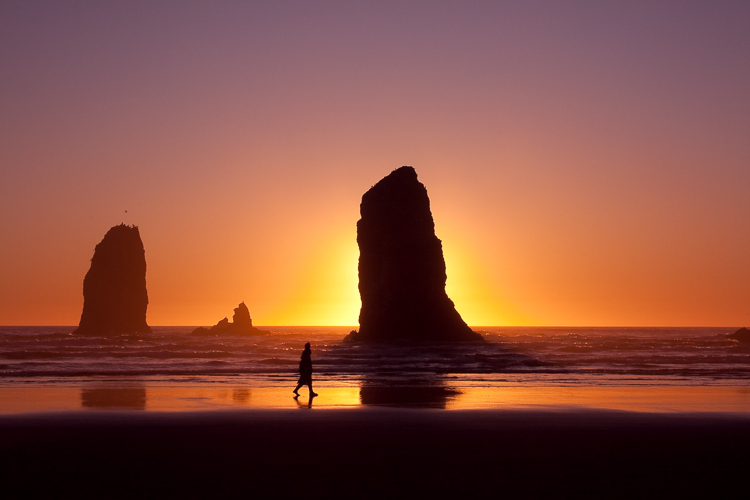
Canon Beach, Oregon, by Anne McKinnell - better photographer

#1 – Research Locations

Before you set off on your photo shoot, doing a little research can go a long way to making better images. First, think about what potential subjects are available. I like to create a Pinterest board and start collecting images I like from the location. Once you get an idea of what is there, how can you create images that are different from what you have seen? Is there a different perspective you want to check out? Or maybe a night shot? Don’t forget to take note of the direction of light in the images you see. Imagine what it would look like at a different time of day.

Once you get an idea of what is there, how can you create images that are different from what you have seen? Is there a different perspective you want to check out? Or maybe a night shot? Don’t forget to take note of the direction of light in the images you’ve seen. Imagine what it would look like at a different time of day.

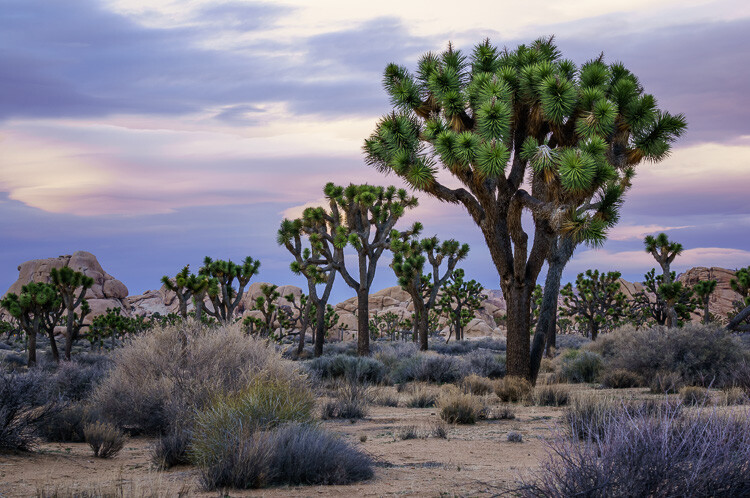
Joshua Tree National Park, California, by Anne McKinnell - habits better photographer

This is the location where the Joshua Trees are the densest in Joshua Tree National Park, California.

The second part of your research should be looking at maps and figuring out where exactly the best subjects are located and how to get there. Is the location close to the road or will you have to hike there? How long will it take?

#2 – Watch the Weather

Keeping a close eye on the weather forecast will dramatically affect your photos. Remember, bad weather is usually a good thing for photography! Storms bring the potential for seeing dramatic clouds, wet leaves, and even rainbows. You’ll get photos with fewer people in them too.

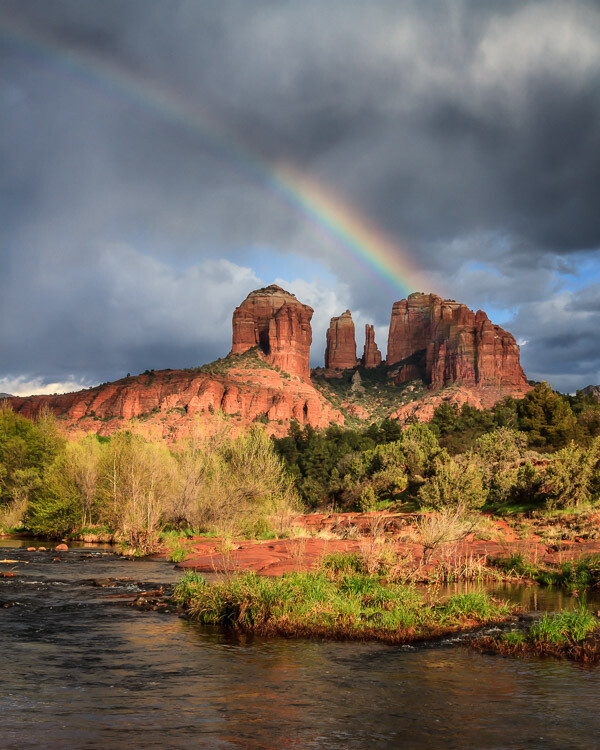
Red Rock State Park, Sedona, Arizona by Anne McKinnell - habits better photographer

Waiting for a break in the weather resulted in this rainbow at Cathedral Rock, Arizona.

When I was visiting Cathedral Rock in Sedona, Arizona, I noticed that there were a lot of people around and it was difficult to get a photo without a lot of tourists in it. Then it started to rain and everyone left. I waited in my truck for 45 minutes during the downpour. Mine was the only vehicle in the parking lot, and when the rain began to die down, I headed out and was rewarded with a beautiful rainbow. I had the location all to myself.

If a clear sky is in your forecast, instead of photographing your scene with a plain blue sky, you might have the potential for a great night shot.

While you’re at it, don’t forget to check when the sun rises and sets and when the moon rises and sets. If you’re going to be on the beach, tides are also important.

#3 – Carry Less Stuff

Whether you choose to go out with your camera and only one or two lenses or switch your whole system to a lightweight mirrorless system, you’ll undoubtedly find that you can hike farther and get to more remote locations with less weight on your shoulders. The potential for finding unique subjects and unique compositions increases the farther away you get from the beaten track.

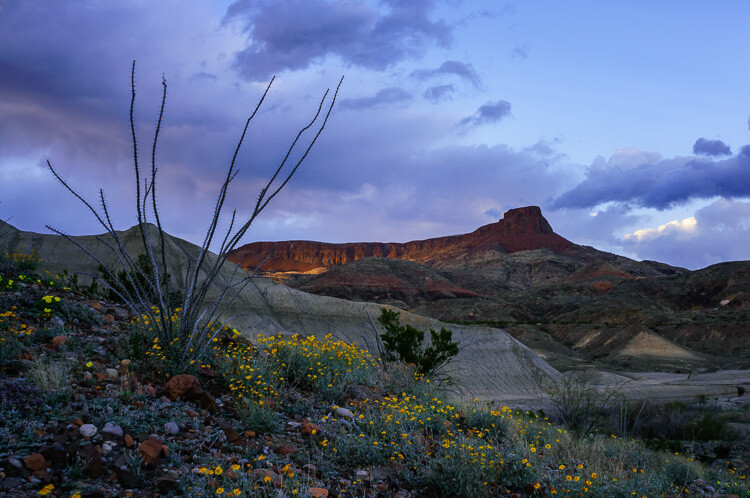
Big Bend Ranch State Park, Texas, by Anne McKinnell - habits better photographer

I don’t think I would have made it this far up the hill if I had carried all of my heavy gear.

#4 – Don’t Forget the Comfort Essentials

Despite the last tip about carrying less stuff, it’s equally essential that you carry the right stuff to allow you to stay out there longer. Anything that makes you uncomfortable in the field will probably cause you to leave earlier than otherwise.

Thirst, hunger, being cold or wet, getting bitten by bugs and looming darkness are just a few things that can make you leave a location too soon. A few things on my “always carry” list are food, water, rain jacket, sweater, bug spray, and a headlamp. These items will get you more potential shots than that extra lens.

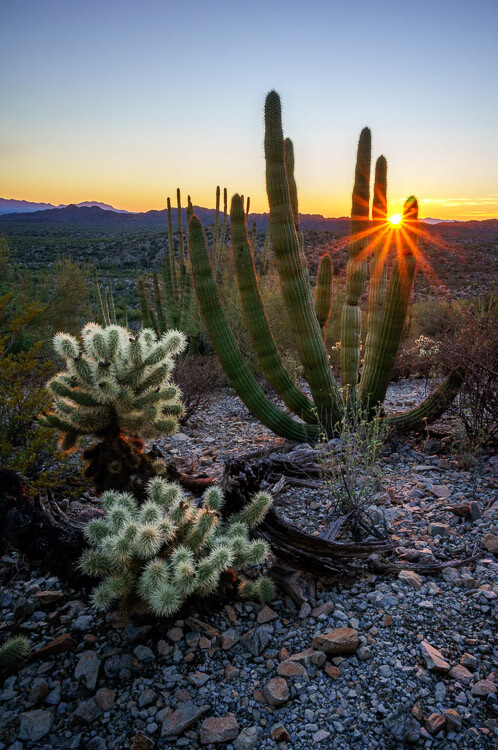
Organ Pipe Cactus National Monument, Arizona, by Anne McKinnell habit better photographer

I probably wouldn’t have this photo if it were not for my trusty headlamp that I used to make my way back through the cacti in the dark.

#5 – Hike With a GPS

Getting lost is one of my fears when I’m out exploring, so I have started hiking with a handheld GPS. It took me awhile to get used to it because it’s not the fancy kind with built-in maps. All I do is mark a waypoint where I park my truck and then it tracks me as I walk. No cell signal or internet required. I can always figure out the direction to get back to my waypoint, or even follow my tracks to go back using the exact route I took to go out. It’s worth it to carry a couple of extra batteries for it too.

Now that I have the GPS, I am more willing to go off the trail and explore new things. It’s a whole new level of freedom!

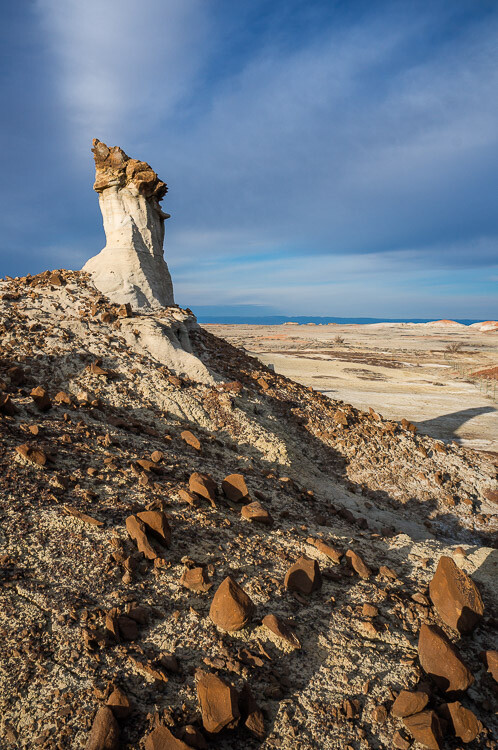
Bisti Badlands, New Mexico, by Anne McKinnell - habits better photographer

At Bisti Badlands, New Mexico, it is very easy to get lost with no trails and strange rock formations in every direction. My GPS was a lifesaver.

Conclusion

These tips should help you figure out where to go when to get there and make sure you are comfortable in the field so you can stay as long as you like to get that special shot. Sometimes photography is a waiting game, but if you are comfortable you can be patient and wait for the magic moment to happen.

The post 5 Surprising Habits That Will Make You a Better Photographer by Anne McKinnell appeared first on Digital Photography School.


Digital Photography School

 
Comments Off on 5 Surprising Habits That Will Make You a Better Photographer

Posted in Photography


6 Steps To Better Photography

19 May

A few weeks ago I received an email from a new photographer who asked, “How do I make my images better?” At first, I chuckled, realizing that question has resulted in the production of thousands of articles here at dPS, and uncountable books, websites, and magazines. There is just SO MUCH information on how to do better photography that it’s easy to get lost in the sea of advice, photo tips, and expert opinion.

better photography

In my response to that struggling photographer, I sketched out six things and quickly sent the email. My answer was off the cuff, but the more I thought about it, the more I realized that my advice was actually pretty darn good. These six things really will help you improve your photographs. Some are easy to accomplish and some reach to the core of the art of photography. All of them, however, will push you further into your process and lead you a bit closer to the images you’ve always wanted to create.

Better photography

Aerial image of the Hula Hula River in the Arctic National Wildlife Refuge, Alaska.

1. Know Your Camera

This is the easiest one to tackle. One of the places where I’ve noticed new photographers stumbling is having a poor understanding of their camera. Know what each setting means, what it does to your image, and how to quickly change from one to another. Know the five essential camera settings backward and forwards, how to set them, and what impact they will have on your final image.

Better photography

Understanding how bright, snowy conditions will impact your image, and your camera’s ability to meter correctly will allow you to quickly capture fleeting light like this, when others may stumble.

But don’t stop there. Spend some time in the menus and custom settings. Know things like focus and metering modes, and how those relate to different shooting situations.

I recently added a new camera system to my quiver (Panasonic Lumix) and am having to re-learn all these things for a new camera brand. It is daunting, but it is also extremely important. Get friendly with your camera until you understand it intimately. Then, when you are in the field and need to make changes quickly, you won’t have to think twice, or god-forbid, have to look it up while your opportunity slips away.

2. Learn the Rules

Better photography

Rule of thirds composition. It’s a “rule” because it usually works.

If you’ve spent much time reading about photography online, you’ll have read the words “Break the rules!” so often it’s become a platitude. Everyone is pushing you to break rules, but there is very little discussion about the rules themselves, what they mean, and why they should be broken. The fact of the matter is that the “rules” of photography are guidelines for a reason – they often work.

better photography

The “rule of thirds” for example, is effective because it results in a pleasing composition. (There is a mathematical reason for this, but a complete discussion of the topic is beyond the scope of this article.)

Proper focus, exposure, and color balance are all “rules” because they result in a pleasing image. Know how to effectively achieve these in your images again and again in a variety of shooting situations. Once you’ve mastered the “rules”, you can move beyond them (see #6 below).

3. Study Images Until You Know WHY They Work

As you are browsing through images on the internet, in magazines, or books, take a few minutes to study the photos that catch your eye and consider:

  1. What did you first see that captured your interest? Was there an action, color, or story that was compelling?
  2. How does your eye move through the image? At what point do you lose interest?
  3. What colors or points of contrast are interesting?
  4. Is there a story being told? What is it?
better photography

What about this image catches your eye? Is it something else that causes you to linger?

Images can be effective alone, in groups, or as part of a larger story being told in the surrounding text. Social media has a tendency to raise up stand alone images, but I encourage you to go farther. Good images are often a part of stories, and stories need to go somewhere. Sometimes that’s to the next photo in the series, sometimes it’s integrated into the text.

Successful photographers know this, and will cater their images to reflect the context. Magazines like National Geographic are very good at it, and many of the images in their pages do not stand alone well, but work beautifully within the context of the story being told.

better photography

Consider the images carefully, how they do, or do not integrate with their surroundings, and then try to reverse engineer them. How did the photographer create the photo? Is there artificial light? What exposure was likely used? Often there is a reason why successful photographer’s images look a certain way. See if you can suss that out by looking.

4. Make Lots and Lots of Photos

There is an old adage about becoming a good writer, “Write every day.” It’s no different with photography. Practice is vital. Make images, waste pixels. Delete lots, but make images, one way or another.

better photography

An atypical composition on a bright, flat-light day. The almost upside-down composition makes this image successful despite the poor light.

When you have successful images, study them as I recommended above in #3 to find out why they worked, and what you could have done to make them even better. Honest self-critique is tough. We can almost always find a way to justify our errors or to overlook the mistakes we make. We have a tendency to like our own images because they remind us of our experiences creating them, but our viewers don’t share those memories. The experience of viewing the images has to be sufficient.

Try to look at your photos as an outsider would, take note of the distracting elements, the clumsy balance, or off-kilter compositions. Consider would could be better, and work toward that goal your next time you’re out with your camera.

5. Travel

Getting away from our home environment is a great way to find inspiration. That can be a trip to some photogenic destination a world away, or simply driving to a different part of town. The trick is to break out of your rut, and make some new images.

better photography

When you come eye to eye with a grizzly bear, it’s easy to get overly excited and screw up your images. But, if you have the fundamentals of photography and your camera controls mastered, your odds of success improve dramatically.

New places also tend to inspire, but I caution you here. More than once, at a new place, I’ve been so enthusiastic to make images, oohing and aahing at the sights I’m seeing, that I failed to pay attention to the basics (See #1 and #2). I have utterly blown entire mornings of beautiful light because I was so caught up in the excitement that I didn’t notice my compositions were wonky, or my exposures were blown out.

Escape your normal routine, but always remember the fundamentals of photography.

6. Become Your Own Photographer

better photography

Storm light, shadows, and the sun, play across the northern foothills of Alaska’s Brooks Range. It isn’t a classic composition, yet I knew this image would work when I made it.

Much of the advice I’ve shared here relies on comparing your own work to that of others. This is a great way to learn, but eventually, you run the risk of stagnating, or worse, imitating others.

better photography

Every shooter is inspired by the work of other photographers. We all have gone through stages where we want to make similar images (or even identical) to what others have made. That’s why some sites are so famous: the Firefall in Yosemite, the bears catching salmon in Katmai National Park, the Tetons over the Snake River. Photographers crowd these locations, trying desperately to emulate, imitate, or re-create famous images they’ve seen before. This can be a great way to learn, but please don’t stop there.

better photography

Nothing about the lighting in this image follows the rules. It was blistering hot, midday, washout light. If I had followed the rules, I would never have lifted my camera.

Once you’ve mastered the basics and have a strong understanding of what makes an image succeed or fail, it’s time to break out on your own. Make images for yourself, compositions that are a-typical, weird, strangely composed and focused. Take the rules of composition, focus, and exposure and push their limits. Here is where the rules can be bent and broken. This is where you experiment, play, and most of the time – fail utterly.

But sometimes you won’t fail. Sometimes, that strange composition, that weird exposure, will work, and work beautifully.

better photography

Make images because they speak to you, not because you think your Instagram followers will like them. When you break away from what you think is expected, and to what you care about, your images will become your own. For me, this took a long time, but once I found my groove, my own style, I started enjoying the art of photography even more.

better photography

Caribou in winter on the arctic coastal plain of northern Alaska. Nothing typical about the lighting or composition of this image, yet it’s one of my favorite wildlife images. I’ve never seen another image like this, and that’s a big part of what I like about it.

Conclusion

Don’t try and please everyone. If you do, your work will appear generic and it will not push you to excel. In other words, be willing to fail. A willingness to fail will eventually lead to success.

Do you follow these six tips? Do you have any others that you would suggest to beginners to help them do better photography? Please share in the comments below.

The post 6 Steps To Better Photography by David Shaw appeared first on Digital Photography School.


Digital Photography School

 
Comments Off on 6 Steps To Better Photography

Posted in Photography


Sony a9: Why being better might not be enough

24 Apr

The Sony a9 is an impressive looking camera. At 20 frames per second, its able to shoot much faster than either of the professional sports cameras from the two big DSLR makers.

The Sony is also smaller and lighter than these cameras (even with a battery grip added, to get nearer to matching their battery endurance), and has autofocus coverage across a much wider region of the frame than a DSLR AF system can offer. On top of this, it’s $ 1500 cheaper than Canon’s EOS-1D X II and $ 2000 less than Nikon’s D5.

And, most importantly, my colleagues who’ve shot with the camera say that the AF performance is within the realms of that offered by the current generation of pro DSLRs.

So, game, set and match, Sony?

Our initial impressions, as well as the underlying specifications, suggest Sony’s a9 is a highly capable piece of kit. But is that enough for it to elbow its way to the sidelines of the world’s sports pitches?

Well, not necessarily. For moneyed enthusiasts, the Sony looks like a pretty competitive option. Though, of course, the cost isn’t just about buying the body. If you have to make a switch to a completely new system, the costs extend to every item you need to replace.

However, there are a number of factors that make it more difficult for a working professional to change systems. We spoke to a couple of photojournalists at The Seattle Times about the factors beyond sticker price that might stand in the way of switching (not specifically to Sony but to any other system).

Lenses

Lenses are one of the biggest factors in deciding whether to swap systems. Not only are lenses every bit as important as cameras themselves when making images but also, especially at the pro and sports end of the market, can easily cost more than a camera body. Often the bulk of the cost of changing systems lies in the need to sell your existing lenses and buy new ones, with the precise cost depending on which lenses you need.

Lens availability is another significant hurdle. Sony has been making strides with its GM lens series but there’s a distinct lack of the long and fast telephoto lenses that sports shooters depend on.

‘Go to any sporting event: the Olympics, the Super Bowl and it comes down to the same basic configurations: short zoom, long zoom, super telephoto’

‘Go to any sporting event: the Olympics, the Super Bowl and it comes down to the same basic configurations: short zoom, long zoom, super telephoto. Essentially a 16-35, 70-200 and 400 mm F2.8,’ explains Seattle Times photographer Dean Rutz.

‘What all these companies lack is the super prime telephoto,’ he says: ‘I can’t logically make the switch without a 400mm F2.8 or equivalent. At least a 300mm F2.8. A 70-200 equivalent isn’t sufficient.’

Bettina Hansen, Rutz’s colleague at the Seattle Times agrees: ‘for sports I use a 16-35, 70-200 and one of either the Canon 200-400, 400 F2.8 or 500 F4.’

Sony has introduced a 100-400mm F4.5-5.6 GM alongside the a9, but that’s not the same as having a 400mm F2.8 available.

Then, of course, there’s the issue of who owns the lenses. If your employer has spent money on a particular lens system or the rental house with which you have an account and a working relationship only supports certain systems, then this can become a significant barrier to switching.

This is certainly the case for Rutz: ‘my employer provides a generous amount of Canon gear for my work, which is predominantly sports related.’

‘The Times owns everything [I use],’ says Hansen. ‘Changing isn’t totally impossible, though. Our boss did say: “let us know what you want, next time we have to replace gear,” but we tend to replace bodies one year and lenses the next. Those super-telephotos are used on a pool basis, so you can’t necessarily change while everyone’s on another system.’

Sony has clearly looked at the needs of a range of pros, with the inclusion of features such as an Ethernet connector. ‘That’s how the wires do big events,’ says Hansen: ‘Olympics, World Series, etc – the shooters sit in designated spots and images transmit instantly to editors as they are shot via Ethernet.’

The short flange-back distance of the a9 leaves enough room to fit an adapter to allow the mounting of any DSLR lens, but there’ll be a significant change in performance associated with this. Sony only promises 10 frame per second shooting when adapting its own A-mount lenses, and we’re told that both subject tracking (Lock-on AF) and Eye-AF will be unavailable when using non-native mount lenses (this has always been the case even with previous a7 bodies).

‘Performance reportedly will degrade with the adapter,’ says Rutz: ‘I’d need to see the practical application of it before committing.’ 

Accessories

As well as bodies and lenses, changing systems incurs a range of associated expenses, Hansen points out.

‘Rain gear is important for sports like football,’ she says: ‘We use Think Tank Hydrophobia rain gear, which isn’t cheap. That’s pretty popular among photojournalists.’

‘The other thing is cards: we’ve invested heavily in Compact Flash,’ she says. ‘That might not seem like much, but we have nine photographers at the moment, so it really adds up. Then there’s cases. We’ve got bags that are designed to perfectly fit a pro level DSLR and everything you need to shoot a football game and get it on a plane. Are we going to have to replace those, too?’

Some of these expenses are likely to be small, but it’s all a question of unknowns.

Support

Professional gear tends to be built pretty tough, but it’s not indestructible. Focus motors fail, lenses get dropped, sensors need cleaning. Working professionals, particularly photojournalists and sports photographers need a good degree of support if anything goes wrong: since neither the news nor a big game will wait for their gear to get fixed.

This is what the competition looks like: Canon Professional Service’s loan stock for the 2016 Rio Olympics.

As a results, Canon, Nikon and Sony all have ‘Pro’ support schemes that promise a certain level of service, usually including a defined repair period and loan equipment being available in the meantime.

‘CPS is huge to us,’ Hansen stresses: ‘For instance, say I am shooting a Seahawks game, I break a lens, shear it off at the lens mount or it gets stuck on the camera: I can send it in and have a loaner pretty quick. Canon also has a rep in Seattle so we can just go to him if we need something, he’ll often come to the games.’

Sony’s Pro Support program has been expanded to include more countries, but can it offer the degree of service that pro sports shooters have come to expect?

Sony has said it’s beefing-up its Pro support system, opening two walk-in support centers and extending coverage to Canada. The program is also available in Australia, Japan, Hong Kong, Germany, Switzerland, Austria and the United Kingdom, though the service level may differ across territories.

This is a key requirement, says Rutz: ‘the challengers need better pro services and outreach, as well as big primes, to be able to push the other companies off their perch.’ One thing in Sony’s favor? If you mostly use the electronic shutter, your mechanical shutter will have a longer life. That’s something, at least.

Familiarity

Then, beyond the practical concerns, there are the personal aspects. Canon and Nikon’s pro cameras have been carefully iterated, generation to generation, so they include the improvements asked for, while also maintaining backwards-compatibility so that users who have spent years with one brand will find the latest model immediately familiar.

Rutz gives just a small example: ‘I think most sports photographers rely on back-button focus to balance framing and frame rate in a rapid-fire sequence. Canon has a big, fat button on the back of their cameras that’s easy to find, on the fly but most other cameras have made that button too flush to be as instinctive. That’s an area that needs to be addressed.’

Interestingly, Hansen highlights exactly the same thing: ‘Back button focus is one of the first things you learn when you’re getting into photojournalism and sports photography.’

Sony has clearly heard about this need and has added a dedicated AF-On button on the a9, so it’ll be interesting how our pros get on with it, once they’ve had a chance to use the camera.

The Sony a9 has a dedicated AF-On button, but is it pronounced and well-positioned enough to ensure your thumb hits it without having to think?

That said, if the performance gain is sufficient, most pros will take the time to learn new tricks and work around any oddities. ‘The quirks of these new systems can be mitigated – honestly – if there’s less difference in fundamental performance than what you’re already used to,’ says Rutz.

‘It does take time to get used to these new cameras,’ he says: ‘but most [professionals] I know are geeks and they’re more than willing to play with the assets until they get the swing of it.’

Hansen, having already moved from Nikon to Canon, agrees: ‘If you’re in the field, you’re always experimenting. Learning a new system isn’t so hard. You find the menus that are important to you and you learn those.’

‘Familiarity helps, though,’ Rutz says: ‘At a point photography is reflexive and the camera has to fit into that, versus you having to adapt to the camera.’

A question of inertia

Overall, then, there are a series of factors beyond just the cost that contribute to the inertia that acts against working professionals changing systems. As such, being better might not be enough for Sony’s a9 to make a significant dent in the pro sports market.

Articles: Digital Photography Review (dpreview.com)

 
Comments Off on Sony a9: Why being better might not be enough

Posted in Uncategorized