RSS
 

Posts Tagged ‘Best’

Umbrellas versus Softboxes – Which are Best?

09 Aug

By Andreas-photography

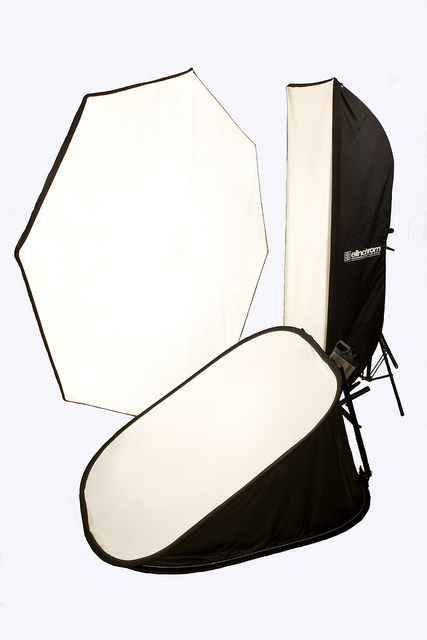
There are many different types of light modifiers on the market. The two most common are umbrellas and softboxes. So when might you choose each?

These videos will give you a look at the umbrella versus softbox debate and information on the difference between the two, what they do, and which one to use.

This first one by Phlearn shows a few options and talks about the relative size and distance to your subject as well.

Next up is Michael from Smoking Strobes with a video from an outdoor workshop where he talks about the pros and cons of umbrellas versus softboxes when working on location outdoors.

If you want to check out some options for both head to Adorama.com:

  • Umbrellas
  • Softboxes
  • Light stands
  • For you DIY folks, how to do it on a budget

So which do you use? Do you use them both? Why? Tell us in the comments below.

The post Umbrellas versus Softboxes – Which are Best? by Darlene Hildebrandt appeared first on Digital Photography School.


Digital Photography School

 
Comments Off on Umbrellas versus Softboxes – Which are Best?

Posted in Photography


The Secret to Capturing the Best Image Quality with Your Digital Camera

16 Jul

Many modern digital cameras boast incredible ISO speeds. Where ISO 400 or 800 was the top speed in the film era, usually accompanied by grain the size of golf balls, today’s digital cameras can give you top ISOs of 6400, 12,800, 25,600 or even higher. Camera makers boast of these high speeds and use this information to increase camera sales.

Photodune 2896107 digital camera xs

Inexperienced photographers will be tempted to jack up the ISO on their new cameras, and keep it there. However, just because the feature is there doesn’t mean you should use it all the time. In fact, the best practice is to keep your camera set at its lowest ISO setting by default so you will capture the best possible image.

With experience you will learn that higher ISO settings are more appropriate when shooting sports, street photography, photojournalism, and low-light situations where you need to stop action. Low ISO images will be cleaner (no digital noise), have a wider dynamic range (more shadow and highlight details), and produce better color depth (smoother color transitions). This is a better choice for travel, landscape and portrait photography, where good detail and accurate skin tone are important.

Let’s geek out

There are two ways you can understand the effect of low versus high ISO on digital images: by reading lab test results, and by looking at sample images. DxOMark Labs is a great resource for sensor tests. It’s an independent lab that tests most current digital camera sensors and publishes the results on their web site. For sample images, you can make your own. Continue reading to learn more.

Digital noise

Run any number of digital cameras through a battery of image quality tests and you’ll see a clear pattern emerge. At the lowest ISO setting, the signal to noise ratio, expressed in decibels (dB), is highest. That’s good, it indicates the lowest digital noise. As you increase ISO, the dB level decreases. The lower the dB level, the higher the digital noise, which degrades the image.

By lmvphoto

Example: If a Canon EOS 70D has a 41dB result at ISO 100, 30dB at ISO 1600 and around 17dB at its top ISO of 25,600, the image with the higher dB will have less noise than an image with a 17dB measurement.

Note: keep in mind that most images when viewed at the recommended distance will appear clean as low down as 30dB.

Dynamic range

Similarly, the dynamic range of a digital camera is widest at its lowest ISO. Depending on the camera, that range can be anywhere from 9 stops to around 14. Typically, with DSLRs, it is around 11-12 stops. In carefully exposed high-contrast scenes, both highlights and shadows will have more detail at low ISOs than at high speeds. In test result charts, dynamic range starts to decrease in more of a curve than a straight line; typically the first few ISO settings are acceptable, but once you pass ISO 800 or 1600 (depending on the camera) the range becomes more limited.

Dynamic range is acceptable at 10 stops or higher. Below that number shadows and/or highlights will become blocked up, especially in contrasty scenes.

Tip: RAW image capture is best for dynamic range. You can use the shadow and highlight sliders in your RAW image editor to reveal even more details in both the shadows and highlights, effectively stretching your camera’s dynamic range. The better your image’s dynamic range is, the more information you can reveal this way.

Tone and color

You may have noticed that some images that show the sky or other areas that should have smooth, subtle transitions, instead show subtle strips of color as the shading changes. This is called banding, and that’s what happens when the tonal range is limited. This is usually an artifact from compressing an image too much when preparing it for web use, but it happens in a more subtle form in photos that come straight out of the camera and, as above, this phenomenon is more apparent in high ISO images, but is imperceptible in low ISO photos.

A camera’s ability to capture subtle changes in tone and color (both expressed in bits) is best at its lowest ISO, and decreases steadily throughout the ISO range. Most DSLRs have a 21-24-bit maximum for color sensitivity, and it can degrade to half of that. Tonal range usually peaks at around 8-10 bit.

Testing your camera in the real world

Enough of the geeky stuff, let’s look at some pictures to see how this plays out in the real world. While the images here were shot with a Canon 7D, you can run your own tests:

  • With the camera on Program mode, take a sequence of photos
  • Start with your lowest ISO and work your way up to the highest
  • Mount the camera on a tripod to avoid shake, which is an unwanted additional variable, and turn off the anti-shake feature (Image Stabilization IS on Canon or VR on Nikon)
  • Shoot both landscapes and people pictures so you can see the effects ISO has on each
  • Make prints at your largest print size and see if you notice the distance at a typical viewing distance

Here are two image comparisons at a range of ISO settings.

Portraits show the difference

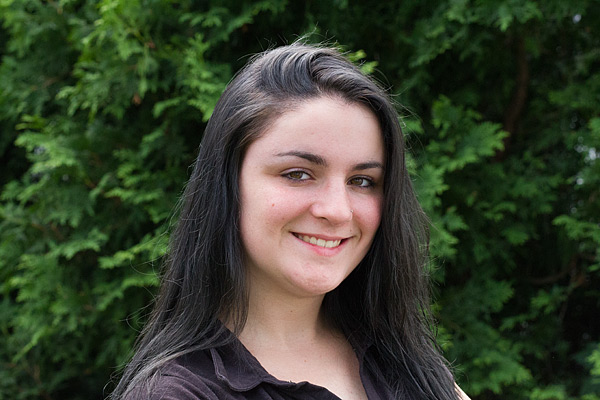
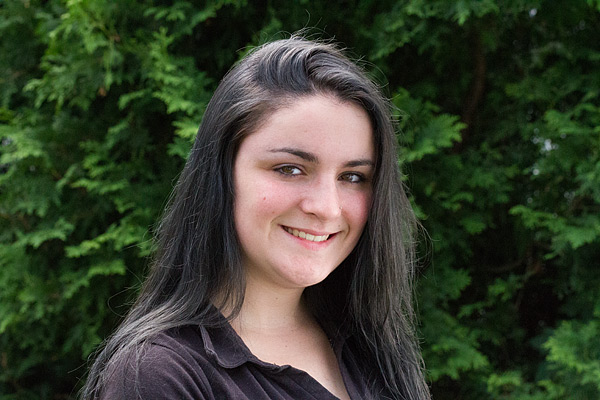
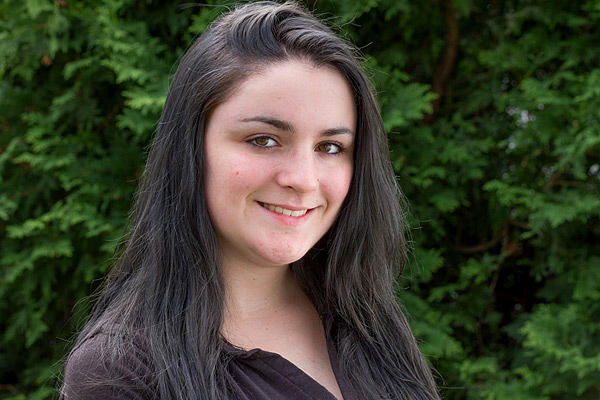
The effect of changing ISO is most obvious when you photograph people. In this example, the model was photographed on a sunny day while holding a reflector, against a low-key (darker) background. As the ISO setting is raised, the effect on her skin becomes obvious. Camera: Canon 7D with Canon 85mm f/1.8 lens.

ISO100 portrait full 600

ISO 100

ISO100 portrait detail 600

ISO 100

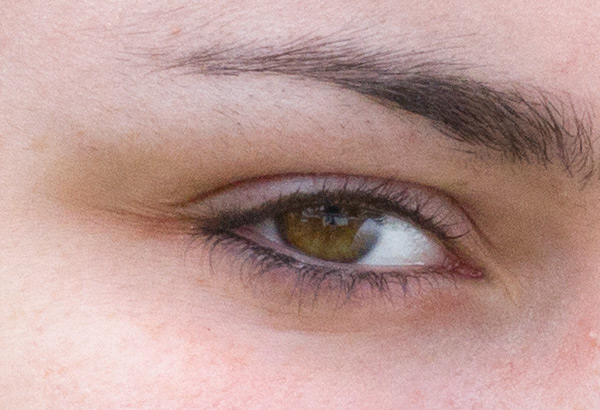
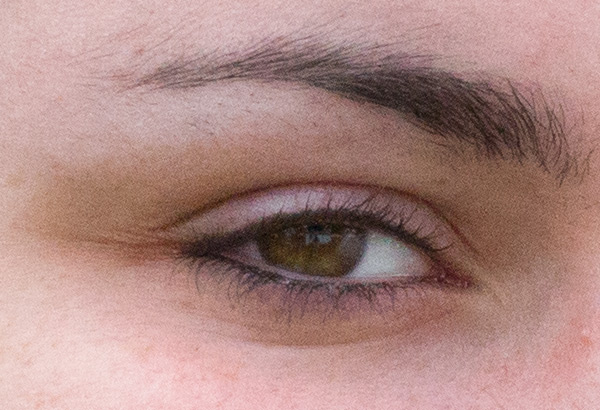
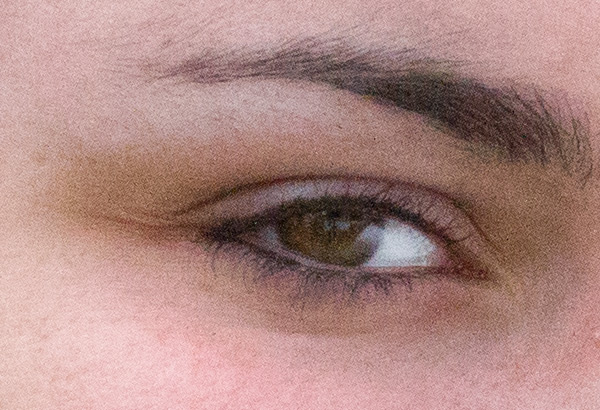
At ISO 100 (above), skin tone is accurate, with good contrast. In the 100% detail shot, there’s good, natural falloff of light, showing a wide range of tonality and good detail in the darker areas. You can especially see this in the eyes.

ISO800 portrait full 600

ISO 800

ISO800 portrait detail 600

ISO 800

At ISO 800 there is a subtle increase in contrast, an indicator that dynamic range has decreased slightly. Noise has not yet become apparent in the detail photo.

ISO1600 portrait full 600

ISO 1600

ISO1600 portrait detail 600

ISO 1600

By ISO 1600 there is a little more contrast, but again, it is a subtle change. However, you can see the noise in the blow-up, and the smooth gradation from light to shadow is starting to become a bit rougher, indicating that the tone has degraded.

ISO3200 portrait full 600

ISO 3200

ISO3200 portrait detail 600

ISO 3200

ISO 3200, at screen resolution it may still be hard to see the change when you compare this image to the one shot at ISO 100, but by ISO 3200 there is a pronounced decrease in highlight and shadow detail, and rougher color and light transitions.

ISO6400 portrait full 600

ISO 6400

ISO6400 portrait detail 600

ISO 6400

By ISO 6400, the Canon 7D’s highest resolution setting, even at screen resolution a difference is visible. If you look in the details of the shirt and hair, you can see that shadows are more blocked up. A quick glance at the 100% detail is all you need to see the graininess and reduced range of color and tone.

Bonus pointer: The advantage of shooting RAW

ISO100 portrait optimized 600b

Optimized

You can increase an image’s dynamic range by using your RAW image editor’s shadow and highlights sliders, which reveals more information in the highlights, and especially in the shadows. Compare this version of the ISO image with the ones above and notice how much more detail is visible in the shadows, thanks to tweaks done in the RAW image editor.

Landscape subtleties

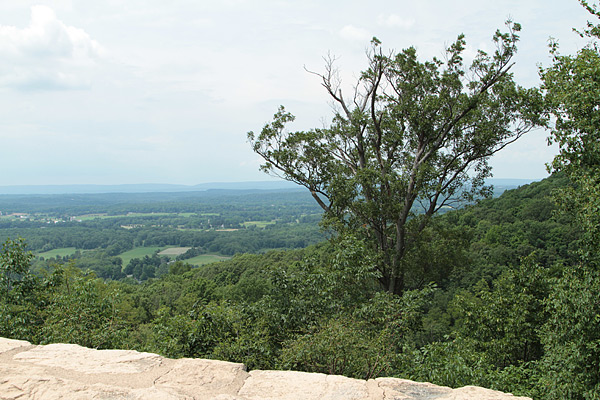
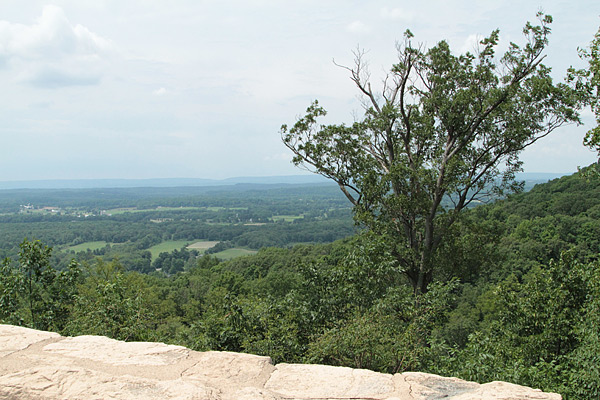
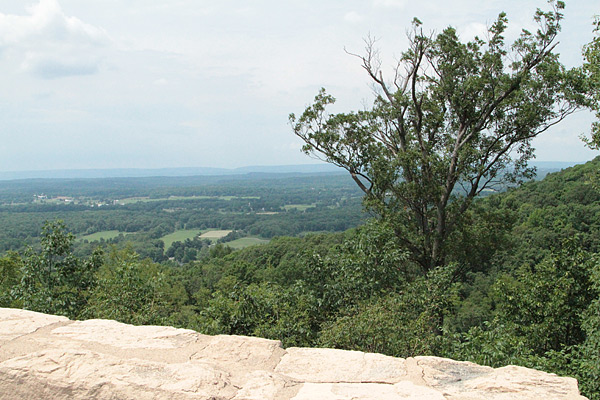
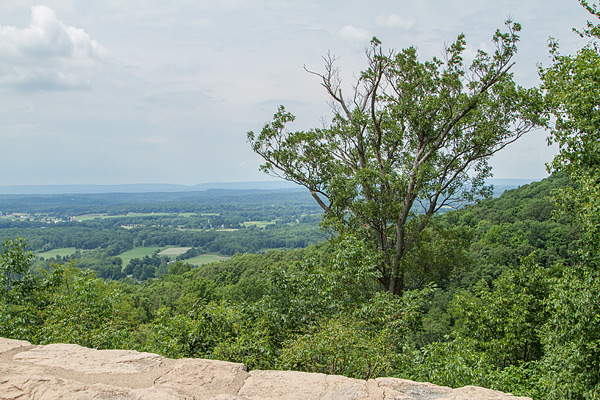
A scenic lookout in western New Jersey, shot in the middle of the day, at ISO 100, 800, and 3200 with a Canon 7D and Canon 24-70mm f/2.8L II USM zoom lens. While the dynamic range, tone and color only show minor differences here, the level of noise deteriorates at the faster speeds. After looking at these examples, you may wonder why anyone in their right mind would want to shoot above ISO 100 on a bright, sunny day. All samples are straight out of the camera.

ISO100 landscape sooc 600

ISO 100

At ISO 100, this is the full scene.

ISO100 landscape detail 600

ISO 100

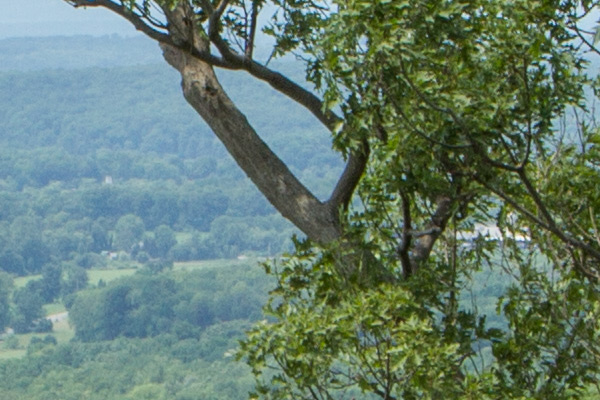
In this detail of a 100% blow-up of the ISO 100 image, there is no apparent digital noise, as expected.

ISO800 landscape sooc 600

ISO 800

ISO800 landscape detail 600

ISO 800

At ISO 800, digital noise has started to become apparent in this 100% blow-up detail.

ISO3200 landscape sooc 600

ISO 3200

ISO3200 landscape detail 600

ISO 3200

By ISO 3200, digital noise is obvious, and the overall image quality has deteriorated. The graininess covers up the loss of color quality and tonality somewhat.

ISO100 landscape raw 600

While the samples above are unadulterated JPEGs, what happens if you try to coax more detail out of a shot in RAW? You get more detail in the shadows and highlights. Compare this shot to the original and you’ll see more detail in the sky (highlights) and in the bark and branches of the tree (shadows) on the right.

Bottom line

The bottom line? There may be times when you must pump up your ISO settings, and it’s nice to know that you have that option. But when you are shooting in daylight under normal shooting conditions, you will bring back higher quality images when you shoot at, or near, your camera’s lowest ISO settings.

The post The Secret to Capturing the Best Image Quality with Your Digital Camera by Mason Resnick appeared first on Digital Photography School.


Digital Photography School

 
Comments Off on The Secret to Capturing the Best Image Quality with Your Digital Camera

Posted in Photography


Insiders Only: 70+ Best Online Marketing Tools for Photographers

16 Jul

As a beginner photographer with over 5-year background in the Internet Marketing, I understand the importance of establishing a firm online presence. I surely need to master my shooting and retouching skills, but I also pay attention to the business side of my hobby to ensure that there’s a market for my product and it’s growing along with the quality Continue Reading

The post Insiders Only: 70+ Best Online Marketing Tools for Photographers appeared first on Photodoto.


Photodoto

 
Comments Off on Insiders Only: 70+ Best Online Marketing Tools for Photographers

Posted in Photography


36 of the Best Online Tools to Boost Your Photography Business

04 Jul

As a beginner photographer, I put most of my time and energy into the product side of my business. I need to practice, improve my shooting and post processing skills, and just grow as a photographer. However, I have a strong intention to make photography my full-time job and be successful in it, which is hardly possible without a business strategy. Besides, with over five years of experience in social media and content marketing, I know for sure that establishing a sound online presence and effective marketing channels may not show you the money today, but it will shape your business in the long run.
35 photography marketing tools

In this article, I’m sharing the results of my recent research on the online marketing and workflow organizing tools for photographers. I use some of these services on a daily basis; others are carefully stored in my bookmarks, eagerly waiting for the moment to come in handy. Each tool category includes several noteworthy options (both big players and lesser known tools), so that you can use this article as a catalog to refer to in your marketing pursuits.

Photography Website Builders

1. MotoCMS

Since I was looking for a self-hosted solution with no additional costs for the tools I don’t need just yet, this one worked perfectly for me. For $ 139, I got a modern website template based on the quite powerful MotoCMS. Among the key features are advanced drag-and-drop website editor, SEO & social media tools, e-commerce widget, etc.

2. Squarespace

Squarespace offers 25 modern-looking templates with e-commerce integration, custom domains (no self-hosting, though), mobile-ready websites and support. There’s no free plan, but prices start from $ 8 per month, and you have 14 days to give it a try for free.

5. Portfoliobox

There’s a free account option allowing you to select a clean template and fill it with up to 40 images. A $ 6.90/month Pro plan (paid yearly) with Portolfiobox includes more design and marketing options, as well as a custom domain name and email.

6. Wix

The free plan includes a wide gallery of templates, unlimited pages and hosting. Premium plans start from $ 4.08/month, but your website will carry Wix brand ads both on desktop and mobile.

7. Pixpa

Pixpa offers hosted portfolios with private galleries, ec-ommerce with Fotomoto, custom domains, social media sharing and other features. All-inclusive plans start from $ 4.00/month (billed annually) with a 50% discount available for students.

8. Portfolio Lounge

A custom domain is included in Portfolio Lounge’s free plan, which is nice! Upgrading to the Pro ($ 7.99/month) and Max ($ 16.99/month) will get you extra storage space. This is quite a simple service with no pricing gimmicks and overwhelming feature sets.

9. Folio Websites

Folio Websites templates are based on WordPress, which is quite a benefit these days. There’s just one plan available – $ 175/year, and your decision to sign up may only be based on examples and promises since there’s no trial period offered.

10. Carbonmade

Carbonmade is a kinda hipster among portfolio builders – its design is funky, the words are fun, and the service is on trend. Opting in for the free “Meh” plan, you get a 35-image portfolio on the carbonmade.com domain. Upgrade to the $ 12/month “Whoo!” plan, and you get 500 images and 10 video slots, domain binding, ad-free site, private projects and tech support.

10b. Zenfolio (added by the Editor)

Editor’s note: I personally use Zenfolio for my portfolio, and have for several years. The benefits of choosing something like Zenfolio over just a portfolio site is that they also offer a way to sell your images, preview them for clients, have locked or private galleries and even a blog element. Their Basic Plan is only $ 30/year but if you want unlimited uploads, and the ability to price your own work go for the Premium at $ 140/year. This can also act as you backup as well with unlimited storage of images. They do offer a free trial.

By DAVID MELCHOR DIAZ

Have you ever wondered why crappy photographers do better than you? It’s because they know that both creative and business sides of photography are critical for success.

Cloud Storage and Media Library

11. Flickr

With a colossal 1TB of free storage on the table, Flickr remains a first-class service for photographers of all levels. I’m using it to store my photos, too. However, I really hope their sluggish interface will be updated very soon.

12. Streamnation

Streamnation supports a pile of photo file formats, including RAW and C2R – a feature any photographer would appreciate. 20GB of storage is free. The price varies from $ 4/month for 100GB to $ 19/month for unlimited space biled annually.

13. Dropbox

While Dropbox’s experience for photographers still feels half-baked, it’s definitely a solution to consider since, unlike your average cloud hosting startup, the established service provides welcome peace of mind.

14. Google+

You can store up to 15GB in Google+ Photos, Gmail, and Google Drive for free and then pay for additional storage (up to 16TB) as your account grows. A neat thing about Google’s offer is that, unless your photos exceed 2,048 pixels by width, Google won’t count them against your total amount of available space.

15. Crashplan

A neat feature about Crashplan is that you can recover a deleted file no matter how much time has passed. Prices for unlimited online backup to the Crashplan cloud start at $ 5/month with annual billing.

16. Zoolz

Unlike most cloud hosting services, Zoolz is a long-term storage unit designed for storing your data on the cloud for a lifetime. With a 5-year subscription you can have your photos reside on reliable Amazon AWS servers for as low as $ 2/month.

16b. Zenfolio

Editor’s note: see above for Zenfolio info under the website section, also works for image backup.

By Anca Mosoiu

Image Proofing and Selling Prints

17. Pixieset

Pixieset is my number one tool to create beautiful client galleries. It has all the key features to help you deliver, proof, and sell your work (unlimited galleries, proofing system, instant download, password protection, audio, just to name a few). The best part is that all this is available in their free plan. If you’d like more space and a custom domain, you can upgrade your plan (prices range from $ 8/month for 10GB to $ 40/month for 1TB).

18. Nextproof

Nextproof a pay-as-you-go service with a $ 0 plan (1GB of space and a 15% transaction fee) on the table and a free 30-day trial available for every paid plan (ranging from $ 9-99/month).

19. OnlinePictureProof

There’s a single, $ 29/month plan you can buy. Among the key features are slideshows, mobile app and a shopping cart. Online Picture Proof is a simple yet professional picture proofing and sales solution.

20. ProofBuddy

If your website runs on the WordPress platform, you can make use of this free WP plugin, ProofBuddy, to activate a fully-functional proofing system built to show your proofs and accept orders from clients.

21. ShootProof

With ShootProof, you can create public or private galleries that work equally well on desktop and mobile devices. The great feature is that each visitor’s activity is displayed in detail to you. ShootProof has a flexible payment plan (commission-free $ 10-50/month) as well as a free plan allowing up to 100 uploads.

20b. Zenfolio

Editor’s note: see above for Zenfolio info under the website section, also works for image proofing and sales.

By zizzybaloobah

Scheduling

22. Setmore

Getting started with Setmore is very easy thanks to a clean, intuitive interface and wizard-like design. Standard features are free to use and include unlimited appointments, services and customers, as well as the ability to add up to 20 staff members to your account. Upgrading to $ 25/month brings you to the premium level with Google Calendar sync, unlimited SMS (text) reminders and recurring appointments.

23. Ubooq

Ubooq makes it easy for clients to schedule an appointment with an easy-to-use, online reception page. Appointment ticket and reminders help avoid no-shows. You can schedule up to 30 appointments in Ubooq for free, and then, if you like it, pick a plan that suits your needs. There is a 5-grade plan system, with prices starting at $ 19 for the monthly service.

24. BookedIn

A pretty cool feature in BookedIn, that I didn’t see on similar services, is that you can add a booking app to your Facebook timeline. Payment plans include a pay-as-you-go model (you purchase a block of booking for 50 cents each) and a monthly plan costing $ 20/month. You can try out the complete set of features for free during 30 days.

Note: other free options: Calendly and TimeTrade (also have a paid version for more appointments)

By keso s

CRM (Customer Relationship Management) System

25. Simply Studio

For $ 29/month (billed annually) with Simply Studio you get a full-fledged, web-based CRM system with client-money task management, accounting, invoicing and bookkeeping, online proofing, polls and email marketing. All features are included in a free trial version available for 15 days. My workflow of a newbie obviously does not require such software yet, but I surely love the features-price ratio of Simply Studio, as well as the simplicity of its interface. So Simply Studio is already in my bookmarks waiting for my photography business to grow and call for it.

26. StudioCloud

StudioCloud is free desktop software for photography studios. Standard features include cloud syncing, a client database, scheduling, billing, order management and other business-management tools. While the basic functionality (which is quite rich, though), is free to download, some extra tools, such as multiple users, online proofing and automatic client reminders, will cost you between $ 10-60 per month.

27. ShootQ

ShootQ offers the most comprehensive list of management tools, which naturally reflects in pricing. There are three all-inclusive and monthly plans to choose from, and prices range from $ 39.95 to $ 79.95 depending on the desired number of users, pages and amount of storage.

Organization and Automation

28. IFTTT

This brilliant service saves me lots of time for shooting. Using IFTTT’s straight-forward formula, you can automate a variety of tasks, such as tweeting your new blog posts or notifying you of the latest dPS posts.

29. Buffer

A dead simple, yet useful tool, to schedule your social media posts. If you’re a heavy social network user, Hootsuite might work for you better, but if you just don’t want your Twitter and Facebook get dusty while you’re on vacation, Buffer has you covered.

30. Nutcache

Nutcache enables you to easily create unlimited number of invoices, do estimates, and track time. Great tool to operate your photo business in the cloud. It’s also multilingual.

By Staffan Scherz

You won’t believe how many tasks you can manage with some organization and system put in the process.

Mobile Client Galleries

31. Myphotoapp

Myphotoapp boasts the widest library of tools among mobile photo gallery builders. Client email collection, integration with MailChimp and advanced app analytics are some really neat features that make this service my number one choice. I hope, though, the usability of the administrative panel will be soon revised towards a simpler and more intuitive interface.

32. StickyAlbums

Create mobile photo apps that your clients can save on their iPhones, iPads and most Android devices using Sticky Albums. Features include custom branding, built-in Facebook sharing, password protected albums, photo album hosting and sharing via SMS. Prices start at $ 19/month with a free, 14-day trial available.

33. ProImageShare

If you’re a Lightroom diehard, it’s an easy winner here. ProImageShare lets you publish and host your own web app that can be downloaded on iOS devices with the appearance of a custom app. With a one-time payment of $ 69, you can publish as many apps as you want to your own unlimited, shared-web host.

Photograph Rings on her toes by Vanessa Kay on 500px

Rings on her toes by Vanessa Kay on 500px

Brides will definitely appreciate a custom app with their wedding pictures. Expect referrals to come your way!

Multi-platforms and Services

34. Photoshelter

I bet you’ve heard about Photoshelter, as it’s one of the industry’s “big dawgs”. Portfolio websites, integrated e-commerce, cloud storage and client-proofing system are the tools you can find under this shelter. Prices vary from $ 9.99/month for the basic feature set, to $ 49.99/month for the premium toolbox.

35. Zenfolio

Zenfolio is another giant in the field of digital marketing for photographers. The number of features here is impressive, too. One of the recently added ones is Photo Books (order and sell). Prices start from $ 30/year with a free, 14-day trial on hand.

36. Queensberry Workspace

Built around Quensberry’s range of print products, Workspace enables you to create, organize, and market your online presence, as well as order and sell photo books, albums, frames, etc. Its basic version is available for free and you can upgrade from $ 4 monthly.

Editor’s note: once upon a time I was a consultant for Queensberry Albums (for 9 years) and I can attest to their dedication to quality albums, products and software. They also make Photojunction, a powerful album design tool.

Another biggie in this area is SmugMug. Slightly more than Zenfolio with many of the same features.

Last Click

Defrozo

I didn’t include Defrozo on the round-up because currently it’s a private beta, but the features listed on the “coming soon” page make it so worth mentioning.

Website builder, Media Library, Image Delivery and Proofing, Scheduling, E-commerce, CRM system, and Websites for Clients make the initial toolbox Defrozo is going to deliver from the start. Moreover, photo book design tools and retouch services are scheduled to be added to the products’ following updates. How do I know that? Well, I subscribed for early access and received an invitation from the Defrozo team to join the focus group of photographers from 30 countries worldwide. I recommend that you sign up, too, since a new player on the market will likely offer something extraordinary to attract users. There are good chances that it’s gonna be a freemium or at least offer extra benefits to early adopters.

By Pascal

Defrozo seems to have a potential to be the ultimate weapon for your business to reach zen.

What’s in your digital toolbox?

I hope my research will come in handy, and I’m sure there are a lot of other tools and services worth mentioning here that I missed. What do you use to manage your photography workflow and business? Is there any all-in-one tool out there you could recommend? Please share your suggestions and experience in the comments below.

The post 36 of the Best Online Tools to Boost Your Photography Business by Julia May appeared first on Digital Photography School.


Digital Photography School
 
Comments Off on 36 of the Best Online Tools to Boost Your Photography Business

Posted in Photography


Why Aperture Priority Mode Isn’t Always the Best Choice

03 Jul

There are a lot of common mistakes to make in photography, but possibly the most frequent is to shoot in Aperture Priority mode when it’s not the best choice.

There are many situations where shooting in Aperture Priority is ideal, such as when you are using a tripod and your shutter speed does not matter, when you are in strong sunlight, when you are shooting a scene with a wide-angle lens and nothing is moving, or when you want a very shallow depth of field for aesthetic purposes.

However, in most other situations it is beneficial to shoot in Shutter Priority mode (or manual mode).

Lamborghini, SoHo

Lamborghini, SoHo – Shutter Speed priority can be much more effective for Street Photography, where spontaneous shots occur frequently, and freezing motion is very important.

I see this problem most often when people are traveling. They will stick their camera on Aperture Priority for the entire day, forgetting that the light sometimes will not be strong enough to yield a shutter speed fast enough to offset camera shake or to freeze moving subjects, particularly if their lens aperture does not go below f/4 or f/3.5.

The result is that they will come home and many of their images will be blurry, when they didn’t have to be.

Your shutter speed is the first line of defense for creating a sharp image. The rule of thumb is that the shutter speed should be at least one over the focal length of the lens to offset handheld camera shake. I like to add a little extra speed to that to be safe, so if you are shooting at 50mm on a full frame camera, I would keep the shutter speed at least at 1/80th. On a cropped sensor however, such as an APS-C camera, a 50mm might be the equivalent of an 80mm view, so I would shoot at least at 1/100th of a second.

You can see, especially if you are using a telephoto focal length, how quickly and easily your shutter speed can go below this threshold when on Aperture Priority and not in strong, direct light.

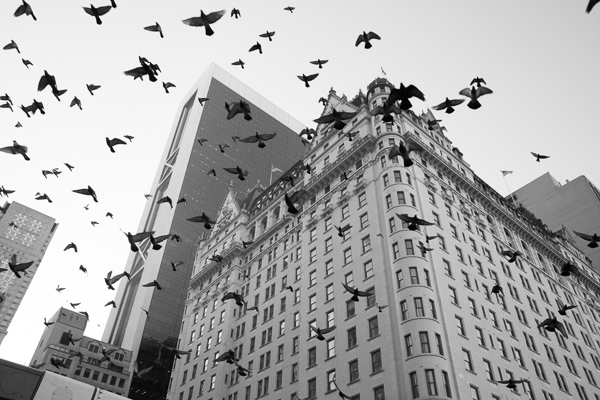
Plaza Hotel

The Birds and Plaza Hotel. A spontaneous shot on Shutter Priority at 1/500th and ISO 800.  On Aperture Priority there is a much stronger chance that I would have yielded too slow of a shutter speed, especially since it was overcast and late in the day.

When there are moving subjects in a scene such as people, 1/320th or 1/250th is often a good shutter speed to freeze their motion. So when traveling, I use 1/320th as my baseline shutter speed and will lower it for the situations where there is no motion or when the light is extremely low. This guarantees that no matter what I capture, it will be sharp, including the spontaneous moments. Often, because I shoot this way and prefer to also shoot with an aperture of f/8 or above, I will raise the ISO to 800, 1600, or even 3200 in areas with very low light. This will add more grain/noise to the image, but especially on the newer digital cameras you will quickly notice that the technical quality and sharpness of your images will actually be improved, despite this grain.

Now you might be saying that you are able to shoot in Aperture Priority mode (or Manual mode) all of the time and can pay attention to the corresponding shutter speeds so you never have a problem. That’s great, and in that case, please keep shooting in Aperture Priority. I do not want to stop you from shooting in a way that works well for you. If you know your camera settings well then you can effectively shoot in any situation with any of these modes.

However, I teach a good amount of students and I would guess that about 80 percent of them come in shooting in Aperture Priority. Then, when I look at their photos, for a good portion of these students, way too many of their photos turn out blurry, or have some sharpness issues. They will pay attention to their aperture but then zoom for a shot and not notice that the shutter speed is lower than their focal length, or not notice that is too low to freeze the motion of a subject. I find that switching them over to Shutter Priority for these situations puts the shutter speed in their mind first and then they can pay attention to the corresponding aperture to achieve the largest depth of field possible (if you are purposely looking to create a shot with a shallow depth of field, then Aperture Priority would be ideal.)

Particularly for travel photography in cities or in areas with people, often when I explain to students to try photographing around 1/320th of a second and a higher ISO, they quickly remark about how much sharper their photos become.

Give it a try and see if yours do too.

The post Why Aperture Priority Mode Isn’t Always the Best Choice by James Maher appeared first on Digital Photography School.


Digital Photography School
 
Comments Off on Why Aperture Priority Mode Isn’t Always the Best Choice

Posted in Photography


Phottix Mitros+ Review – the Best Flash System You Have Never Heard of

05 Jun
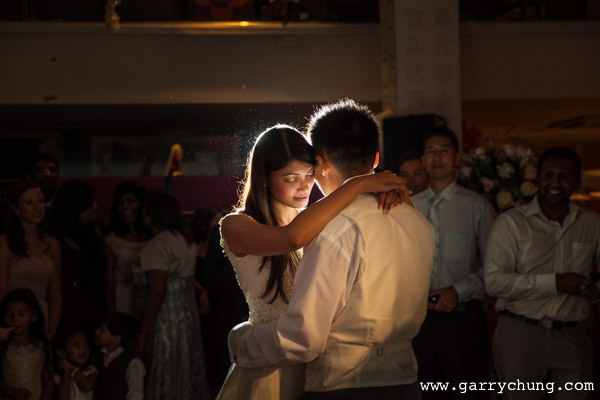
First dance

Photo taken using the Phottix Mitros+ system

As a professional wedding and portrait photographer, I would say the most important accessory in my kit bag besides my main camera and lenses would by my flashes. So when it came to making a decision on what flash system use, I did a lot of research and in the end I opted for the Phottix Mitros+/ Odin system. I don’t normally write gear reviews as I think the internet has enough top quality content. I realized however in my research that the Phottix Mitros+, although sold internationally, is comparatively less well known and not well documented on the web.

Phottix Mitros 107

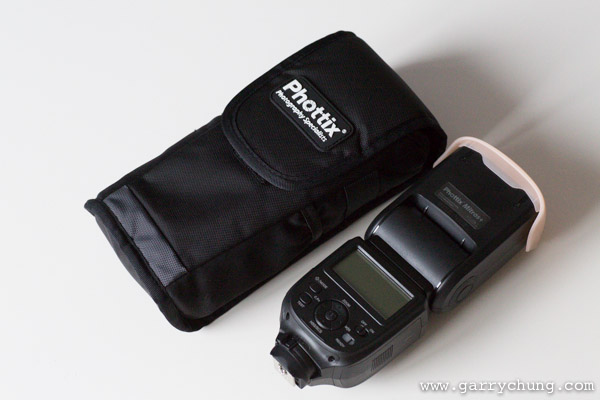
Phottix Mitros+ – comes with carrying case and accessories

I am a big fan of using off-camera flash and as a Canon shooter and have previously been using Canon 580 EX II / Pocket wizard combination for the last 4 years. The Canon 580 EX IIs in all fairness have served me well. They have been dropped many times, and rained on, but never skipped a beat. The problem occurs when I take them off camera. Using the PocketWizard Mini TT1 and TT5 trigger and receiver I have experienced a whole host of reliability problems that eventually was the catalyst for me to look for alternate solution.

I started by looking at the Phottix Odin TTL triggering system, which I have used before and has had excellent reviews. That was when I realized Phottix also sells the Mitros+ flash, that includes the wireless transceiver built into the unit. The “+” denotes that it has radio transceiver built in as they also do a non “+” version with no transceiver. The Mitros+ flash is great for a number of reasons;

  • It’s one less piece of equipment to buy and worry about
  • There is so need to carry more batteries or worry about connection issues between your radio receiver and your flash
  • The Phottix Odin trigger system is also a tried, tested, reliable market leader and so I was confident it would work well

Review – Phottix Mitros+ Flash System

First impressions when you take the Mitros+ out of the box; it comes in a nice pouch and feels solidly built to take a few bumps, which is essential as I will put it though the rigours of professional use. The first thing you notice is that it makes a beep, like studio lights, to tell you the flash is recycled and ready for use. This is especially useful if you are firing at full power, and can be turned off using the custom functions if you don’t like it. I fired off a few successive frames and it seems extremely quick to recycle. This is by no means a scientific test but I set the flash in manual mode 1/2 power and fired consecutive bursts. It seems to recycle at least as fast, if not faster, than a Canon 580 EX II. In the real world, it holds up very well; I tested it all day in different lighting situations and the ETTL worked consistently. The battery consumption seems about the same as the 580 EX II, I did a full day shoot and didn’t need to change batteries, so all in all I am very happy.

The real benefit of the unit however, is taking it off camera. It’s an absolute joy to use; no having to set up the PocketWizard receivers, and no misfires. I don’t have to do my usual five minutes of troubleshooting if the flashes aren’t firing. It just works like it is supposed to. With this system you can also control everything directly from my Odin transmitter, or using another Mitros+ flash. You can alter settings remotely such as TTL exposure compensation, manual power, high-speed sync and even flash zoom level. You can configure three groups of flashes and adjust each one individually. This basically allows you to control everything you need from the camera so no need to walk up and down making adjustments.

Phottix Mitros 101

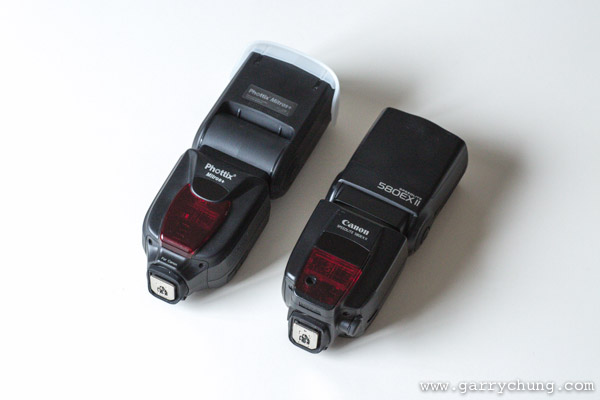
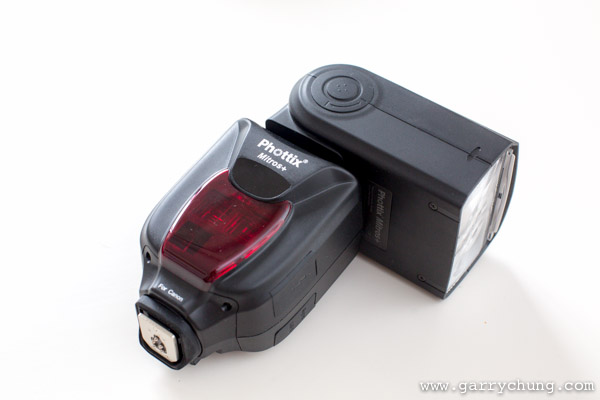
Hands on it’s a quite a large flash as you can see here next to the Canon 580EX II

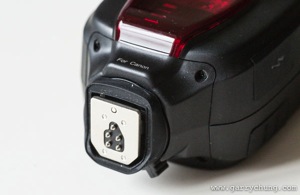
Features (as listed on the Phottix website)

  • E-TTL, M, Multi (Stroboscopic) modes
  • Auto/Manual Flash Head Zoom with 180 degree rotation and 97 degree tilt
  • High Speed Sync and Rear Curtain Sync
  • Flash Exposure Compensation: Manual, Bracketed
  • Fast Flash Mode: with 0.1-2.5 sec. recharge times
  • USB port for upgrades
  • 3.5mm Sync port
  • Canon-compatible IR Wireless Triggering with Master and Slave mode
  • Optical Slave Sync Mode
  • Uses 4 AA batteries
  • Port for external battery pack
  • Compatible with Phottix Odin TTL Flash Triggers for Canon
  • Battery Compartment for 4 AA batteries (below left)
    Phottix Mitros 103 Phottix Mitros 102
  • Rubber seals around metal hot-shoe for weather sealing (above right)
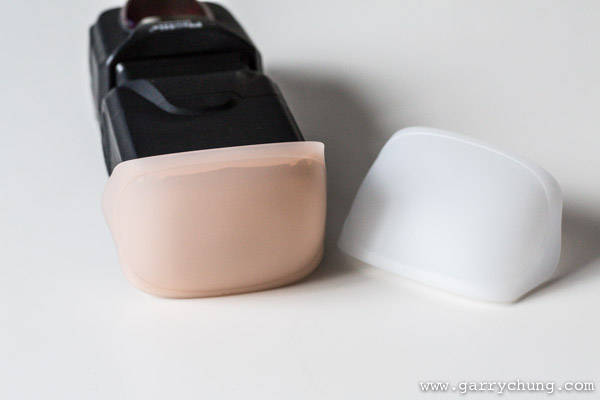
  • Mine also came with a plastic diffuser and 1/2 CTO which will come in handy (below left)
    Phottix Mitros 104 Phottix Mitros 100
  • Swivel and tilt head great for bouncing in all directions (above right)
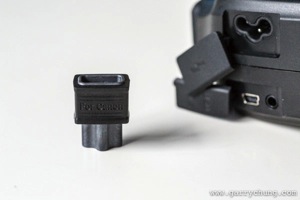
  • Connections for USB power, 3.5mm jack for sync and external power the kit also comes with an adapter to convert the head for Canon’s CP-E4
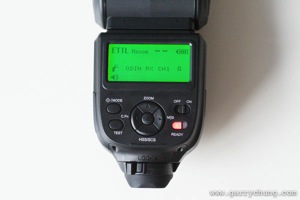
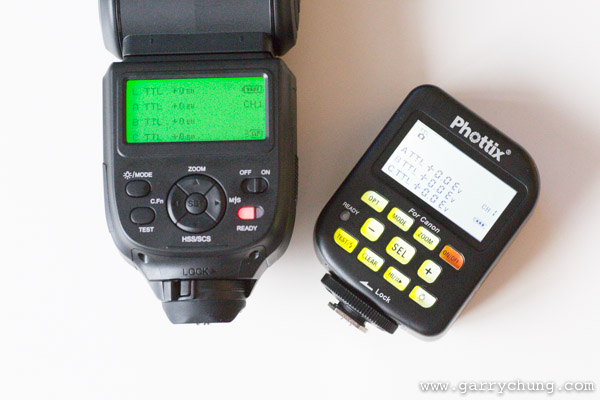
  • The display a the back is large backlit and clear
    Phottix Mitros 106 Phottix Mitros 108
  • Menu System identical to Phottix Odin when set to Trigger Mode

Phottix Mitros 109

The litmus test for me to judge how intuitive a menu system is; if I need to read the manual, it’s probably not that intuitive. I very quickly figured out how switch from ETTL to Manual, activated high-speed sync and got the radio trigger system working. I actually think the menu system is better than the Canon 580 EX II, which took me a long time to figure out. Like the Canon speedlite, you can also control flash exposure compensation from the Canon 5D Mark III’s menu, although this is not recommended by Phottix. An advantage of the Mitros is that it has an indicator to see how much battery life left, which is absent in the Canon 580 EX II.

I recently took the Mitros+ system for an intensive four day shoot on Tinian Island and I am glad to report it has been flawless. I was asked to do a beach shoot at 1 p.m. in the blazing afternoon heat and managed to overpower the sun with three of Mitros+ flashes set up in cluster.

Mitros 100

Final image

Mitros 101

Lit with three Phottix Mitros+ flashes

The determining factors for choosing the Phottix system were twofold

Firstly, it is an open system. Odin can be used to trigger not just the Mitros+ but other studio lights as well. In comparison the latest Canon 600EX–RT flash and Canon ST-E3 trigger are only compatible with each other. I have also bought Phottix Odin receivers to bolt onto my old Canon 580s, so can use them with the Mitros+/Odin system together.

Another positive for Phottix is that it’s more backwards compatible than the Canon 600 EX-RT, which is not fully compatible with pre-2012 models, such as Canon 5D Mark II, which I also own. I read reports that you lose features like HSS, (High Speed Sync) and the sync speed is lowered to 125th/sec but I haven’t tested it myself. It seemed very odd to me that a third party company can get their flash working with older Canon cameras but Canon can’t. I have tested the Mitros+ system with both the Canon 5D Mark II and 5D Mark III. It works fine and it is even compatible using infrared with the Canon 580 EX IIs, so you can use the Mitros+ to trigger the Canon flashes and vice versa. The Mitros+ also has optical slave which is something Canon never put on the 580 EX for unknown reasons.

The final factor is the Phottix retails at $ 399 USD, which offers a significant saving to the Canon equivalent. At time of print, the Mitros+ is $ 150 USD cheaper than the Canon 600EX–RT flash.

I talked about comparisons with Canon in my review as I am a Canon user, but the Mitros+ is available for Nikon now also. It should be quite attractive to Nikon shooters as I think Nikon have yet to release a flash with a built-in radio transceiver.

Conclusion

Things really have moved on for third party flash manufacturers in the last few years. When I first researched into non-proprietary flash systems, they were generally cheaper, but vastly inferior product to the brand name equivalents. The Mitros+ is a great quality product, at a great price. It’s well built, easy to use and packed with features. Phottix as a company feels like they are selling products designed by photographers, and have really listened to their customers. Looking back at reviews of the original Mitros when it came out, customers were just saying “if only it had the Odin radio system built in that would be fantastic”, not long after the Mitros+ was released.

The Phottix Odin radio trigger system fully deserves all the praise it gets. PocketWizard, which has historically commanded such a market dominance in this sector, should be well aware of the new competition – which I think is a good thing. I remember paying nearly $ 500 USD for a PocketWizard TT1 Trigger and TT5 receiver, but had to as there was just no competition at the time. I experienced range issues, reception/connection problems, broken hot-shoe and general unreliability which is unacceptable for such a premium priced product.

The Mitros+ / Odin combination so far has been solid as a rock in terms of reliability. Time will tell if the build quality is as good as it looks but at least Phottix shipped with a two year warranty peace of mind. For those of you looking to either buy your first flash, or add to existing flash system, it’s worth keeping an eye out for products from third party manufacturers such as Phottix. Light is light at the end of the day, and I don’t care what brand name it says on the side as long as it gives me consistently good results and so far my Mitros+ has done exactly that.

Here are a few more images created with the Phottix Mitros+

Buggy 100

Food

Outdoor off camera flash

The post Phottix Mitros+ Review – the Best Flash System You Have Never Heard of by Garry Chung appeared first on Digital Photography School.


Digital Photography School

 
Comments Off on Phottix Mitros+ Review – the Best Flash System You Have Never Heard of

Posted in Photography


The best 50 yet? Our Sigma 50mm F1.4 DG HSM in-depth review

28 May

50mm-news-520.png

The Sigma 50mm F1.4 DG HSM ‘Art’ is a fast normal prime for full frame cameras, with an unusually complex optical design. However at $ 950 / £850 it’s substantially more expensive than either its predecessor, or Canon and Nikon’s 50mm F1.4 lenses. We’ve already published lab test data showing that its optically excellent, but what does this mean in real-world use? Read our detailed review to find out.

News: Digital Photography Review (dpreview.com)

 
Comments Off on The best 50 yet? Our Sigma 50mm F1.4 DG HSM in-depth review

Posted in Uncategorized


DxOMark recommends best lenses for the Nikon D800E

22 May

DxOMark-logo-520.jpg

The Nikon D800E, with its 36MP sensor and ‘cancelled’ anti-aliasing filter, is the highest resolution full-frame SLR on the market. Our friends and collaborators over at DxOMark have been looking into how various lenses score on it, and have now finished testing over 100 different optics from Nikon, Samyang, Sigma, Tamron, Tokina and Zeiss. They’ve picked out the highest-scoring in several categories, and published the results in a multi-part article. Click through to find out more

News: Digital Photography Review (dpreview.com)

 
Comments Off on DxOMark recommends best lenses for the Nikon D800E

Posted in Uncategorized


5 Reasons Why Bad Weather Days are the Best Times for Photography

15 May

Bad Weather Photography Equals High Impact  Photos

Remember those days when you looked out your window and wished that the weather was better so you could get out and take some fantastic photographs? Do rainy, windy, stormy days stifle your photographic ambitions? I’ll give you five reasons why bad weather is not all doom and gloom for photographers.

bad weather photography with dark clouds

The things that keep most people indoors on bad weather days are the very things that have creative photographers heading for the great outdoors. Grab a rain jacket, brave the elements AND take your camera – these can be the best times for photography to capture something memorable.

Let’s look these five reasons to appreciate bad weather, and what they can offer you for photographs that get that second look.

  • Dark and unpredictable clouds
  • Powerful winds
  • Rain and drizzle
  • Snow
  • Fog

#1 CLOUD PHOTOGRAPHY FOR DRAMATIC IMAGES

Clouds can be brooding, moody and sinister – a great backdrop for photographing old buildings, new skyscrapers, and trees. While you’re out in the storm, also think about shooting just the clouds by themselves, to create a “cloud bank” of images to use as drop-ins for compositing with other images. Clear blue skies are pretty boring in most photos. With your catalog of cloud shots you’ll never have a bland sky photo again.

Low hanging clouds can add a really mysterious quality to your images. Think black and white photography when considering ways to take advantage of clouds. You can use post-processing techniques to accentuate the various layers of the cloud formations to add even more drama to your images.

In this shot of a storm moving in over the Bugaboo mountain range, I used Google Nik Silver Efex Pro and the Structure setting to add tonal definition to the clouds to create atmosphere.

bad weather photography stromy clouds

#2 WIND PHOTOGRAPHY FOR ARTISTIC EXPOSURES

bad weather photography- windy daysWindy days provide you with all you need to make excellent motion studies for long exposures – tall grasses flowing like waves, tress swaying wildly, leaves trembling and dancing full of motion. Waves on lakes become whitecaps, perfect for those milky long exposure waterscapes.

Even though still photographs capture a single moment, you can achieve great impact when you capture the residue of motion in a single frame. High impact daytime long exposure photographs need movement to be successful, and when the wind is blowing, things are moving. Capture this in a single frame and you have an instant “wow” shot.

Use a neutral density filter to slow your shutter so that it captures the motion created by the breeze. Use a tripod for your wind shots to make sure that whatever is not moving in your image stays nice and sharp. The contrast of solid and fluid is a powerful creative technique.

#3 RAINY DAY PHOTOGRAPHY FOR COLOR AND SPECIAL EFFECTS

badweatherphotography-rainstreaks

Rain is awesome for artistic and creative photos.

When it’s wet outside, colors become deeper, richer and more saturated. This provides you with a way to look at the great outdoors in a “different light.”  Observe how flat and lifeless colors appear on an overcast day. But add some rain and the colors really pop!

Rain photography gives you hundreds of subjects for creative artistic photos using reflections and ripples in puddles, lakes and other water bodies. A wet rainy day gives you macro photography opportunities, by providing you with drops, ripples, and rivulets, perfect in the flat, even light of a rainy day. Use rain streaks on windows as art effects to make high impact abstract images.

badweatherphotography-raindrops

badweatherphotography-rainclouds

#4 SNOW PHOTOGRAPHY

Gently falling snowflakes in photography can add an additional element of emotion to add more impact to your images – who hasn’t felt a little shudder in the blustery cold? It can be used to create a sense of realism in a photo, especially in street photography.

Heavy falling snow adds an instant texture to your images. Colors appear softer, and less vibrant as they compete with the white of the flakes. I find it adds an instant painterly effect to most images – especially those with lots of natural colors.

badweatherphotography-snow

#5 FOG PHOTOGRAPHY

Fog – moody and high impact scenic shots, great for storytelling, and it can be used as a “backdrop” to hide distracting backgrounds to isolate your subject.  I especially like fog photography because it adds an instant pastel effect to your images, which can make for stunning fine art photography.

badweatherphotography-fog

SURPRISE BENEFITS OF BAD WEATHER PHOTOGRAPHY

If you’ve endured the rain and the wet, chances are you’ll be rewarded handsomely for your efforts and patience.  You’ll have captured some rare and uncommon moments that most people never attempt. Because luck favors the prepared mind, you may also get really lucky. You’re outdoors, you have all your gear, and you are shooting. In amongst all those dramatic bad weather photographs you capture, you may find something truly wondrous in the very next frame.

badweatherphotography-opportunity

If you have any questions or comments please leave them below, and do share your bad weather stories and images as well.

The post 5 Reasons Why Bad Weather Days are the Best Times for Photography by Alex Morrison appeared first on Digital Photography School.


Digital Photography School
 
Comments Off on 5 Reasons Why Bad Weather Days are the Best Times for Photography

Posted in Photography


Juxtaposer: The Best Layering App Ever

08 May
Extra photos for bloggers: 1, 2, 3

Want to be a game piece in Candyland? Want to ride a roller coaster down the Rocky Mountains?

Now you can do it all! … Well, you can make it look like you did it all.

Juxtaposer is the best app for creating fun photomontages. Cut out a piece of one photo and stick it onto another. We can’t stop playing with it!

We’re going to show you the ins and outs of this app and turn you into a pro user. Because everyone needs to know how to make a photo of themselves swimming in a tub of ice cream.

Create Fun Photomontages Using Juxtaposer

(…)
Read the rest of Juxtaposer: The Best Layering App Ever (654 words)


© Lauren for Photojojo, 2014. |
Permalink |
No comment |
Add to
del.icio.us

Post tags:


Photojojo

 
Comments Off on Juxtaposer: The Best Layering App Ever

Posted in Equipment