RSS
 

Posts Tagged ‘Beach’

A Day At The Beach: Photographing Seaside Landscapes

29 Oct
Photographing Seaside Landscapes

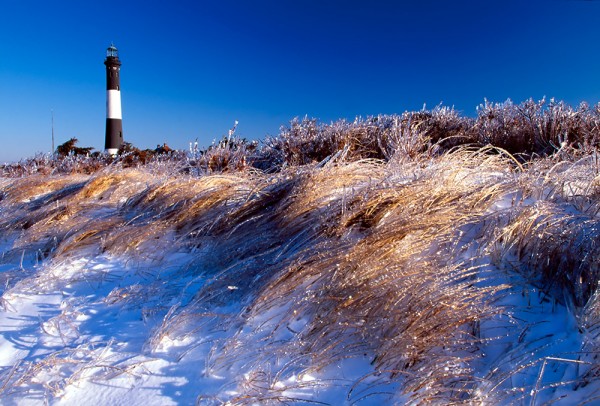
This shot was taken just after a January snow storm. The ice glistening on the dune grass made for an excellent foreground while the lighthouse towered in the background. A polarizer was used to help darken the sky. Taken with the EOS 5D Mark II and EF 16-35mm f/2.8L II. ISO 100, 1/250 at f/16.

Living on the east coast of the United States, I have easy access to any number of beaches to use as subjects for my photographic purposes. While many of these beaches may not be as dramatic as those on the west coast, they offer many photographic opportunities and shouldn’t be overlooked.  Most people think of the beach as being a summer destination, but I’ve found it to be an excellent location all year round for a variety of reasons.
Photographing Seaside Landscapes

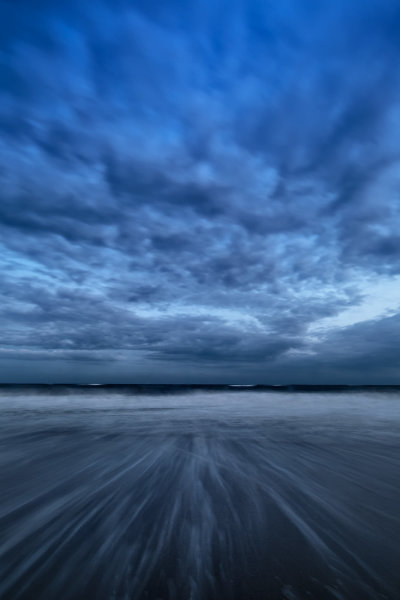
Dramatic skies and rushing water can make even the simplest composition interesting. I used a low point of view and a slower shutter speed to capture the water rushing straight at the camera, ready to grab the tripod if the water knocked the tripod over. The clouds eliminated any bright sunlight and created an almost monochromatic image.  EOS 5D Mark III with EF 14mm f/2.8L II. Exposure was 8 seconds, f/20, ISO 100.

Photographing Seaside Landscapes poses a number of problems for the photographer. There’s wind, sand, and water to contend with, and keep out of your equipment.  There are some precautions you can take to minimize the chances of disaster striking. 

First, I usually spread a blanket out and put my camera bag down on that. It helps prevent sand from getting the seams of the bag, and it also lets the flap of my backpack rest somewhere other than sand.  I speak from experience when I say that resting that lid on the sand and then flipping it up to close it is a good way to get sand inside the bag.

The next issue is the water. Obviously, the most basic rule is to keep your bag as far away from the water as possible. Pay attention to the tides and watch that the waves aren’t coming closer to where you’ve stashed your gear. But that’s only half the issue. Generally when I’m at the beach, water is at the very least a major part of what I’m shooting.  I tend to take a few chances here.  I like low angles, and dramatic shots.  That tends to put my camera right in harm’s way.  If I’m not on a tripod, I ensure that the strap is always around my neck to keep it from falling.  If I’m on a tripod, I tend to keep my hand ready at all times to grab it and move if a big wave comes. If it helps you feel more secure, you can always use a rain cape to protect from splash, or if submersion may be possible, an underwater housing might be called for.  I don’t personally use any of these items and just use a lot of care when near the water, but I have heard many horror stories of cameras that went swimming.

Sunrise and sunset are my favorite times for the soft warm light they provide.  I use graduated neutral density  filters when they are called for, depending on the light, as well as standard neutral density filters to help control my shutter speed to determine how I render water.

I find myself going back to the same beaches over and over. By their nature, they change often, as weather erodes them, tides build them back up, and secrets beneath the sand are revealed.  Often after a storm is the best time, as the combination of wind and rain will create patterns in the sand and pools of water which create beautiful reflections.

Where do you find yourself visiting over and over to fulfill your photographic urges?
Photographing Seaside Landscapes

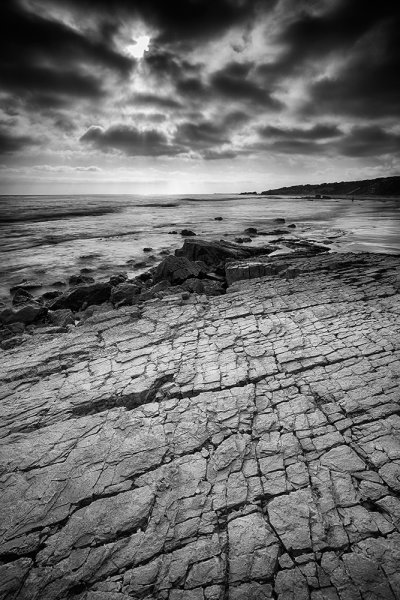
This shot is actually a west coast beach- Pelican Point in Laguna, California. A 4 stop ND grad was used to darken the sky. The foreground is a large rock with a beautiful pattern of cracks for interest. EOS 5D Mark III with EF 16-35mm f/2.8L II. 1 second at f/16, ISO 400.
Photographing Seaside Landscapes

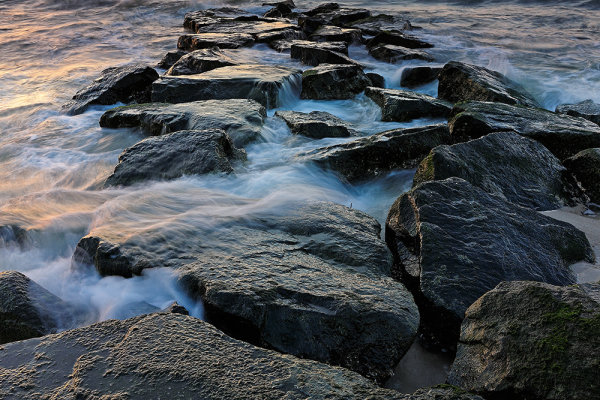
This shot was taken at sunrise, as the tide was coming in. Water continually washed over the jetty, and the light playing on the water and rocks captured my interest. EOS-1D X with EF 16-35mm f/2.8L II. Exposure was .4 seconds at f/16, ISO 100. A 3 stop neutral density filter was also used.

Have you had any success with Photographing Seaside Landscapes? Share your images and tips in comments below.

Post originally from: Digital Photography Tips.

Check out our more Photography Tips at Photography Tips for Beginners, Portrait Photography Tips and Wedding Photography Tips.

A Day At The Beach: Photographing Seaside Landscapes

The post A Day At The Beach: Photographing Seaside Landscapes by Rick Berk appeared first on Digital Photography School.


Digital Photography School

 
Comments Off on A Day At The Beach: Photographing Seaside Landscapes

Posted in Photography


7 Secrets to Capturing Awesome Beach Photographs

12 Aug

To be on the beach in summer is relaxing, fun and beautiful. It is also a great idea to capture those happy moments in the photographs but if you are not sure where to begin from, you can actually fall victim to the stress. Therefore, you need to prepare well in advance about what you are going to do while Continue Reading

The post 7 Secrets to Capturing Awesome Beach Photographs appeared first on Photodoto.


Photodoto

 
Comments Off on 7 Secrets to Capturing Awesome Beach Photographs

Posted in Photography


Sandcastle Suburbs: Beach Buildings Form Fragile Sprawl

19 Jul

[ By WebUrbanist in Art & Installation & Sound. ]

sand castle suburb

If castles of sand are ordinarily creative (if childish) works of artistic expression, then these are their opposite – boring and relentless repetition of identical houses inspired by postwar suburbia and deployed on an incongruous grid.

sand house installation art

This piece of Master Plan is (or rather: was) the first small and temporary installation of an ongoing series by Chad Wright (photography by Lynn Kloythanomsup of Architectural Black). The project is intended as a personal reflection on his own history as well as commentary on the American Dream in light of recent history, particularly the housing crisis. Much like market shocks (metaphorically) or the passage of time (literally), each incoming wave cracks and erodes the constituent buildings in a relentless yet unpredictable fashion.

san suburb water destruction

About the artist and how his history is intertwined with this work: “I was raised in Orange County—a sprawling suburb of Southern California built by disciples of Levittown. We lived in a tract house, a symbol of the American Dream, just like our neighbors. Dad, a realtor, and mom, a preschool teacher, met while working at JCPenneys in 1970. We spent our summers in Breezy Point, New York, at the yellow beach bungalow that my grandma Stella bought with war bonds, unknown to grandpa who was stationed in Iwo Jima soon after they eloped. As children, my big brother Christopher and I would build cities in the sand, beneath the bungalow’s slatted porch floorboards. Phase One [of Master Plan] focuses on the mass-produced tract house, re-examining it as symbol for the model American Dream.

Share on Facebook


[ By WebUrbanist in Art & Installation & Sound. ]

[ WebUrbanist | Archives | Galleries | Privacy | TOS ]


WebUrbanist

 
Comments Off on Sandcastle Suburbs: Beach Buildings Form Fragile Sprawl

Posted in Creativity


Fury, Asilomar State Beach – Diving Into Digital Medium Format

29 May
Fury - PAsilomar State Beach, California

Fury – Asilomar State Beach, California

This weekend I went out with some new gear to test, namely the Hasselblad H5D medium format DSLR and Hasselblad 300mm f/4.5 lens via BorrowLenses.com. The location of choice was Asilomar State Beach. The H5D has roughly twice the resolution as my Canon 5D Mark II with a whopping 40 megapixels per image.  I had been curious to find out if Hasselblad’s reputation was hype or not. To cut to the chase I’ll tell you that the reputation is justified.  Focusing just on resolution for the sake of this post I’ll tell you that working with a 40 megapixel image is breathtaking especially when Hasselblad optics reveal so much sharp detail.

Fury - Asilomar State Beach, California

Fury – Asilomar State Beach, California

Above is the original image I took (7304 x 4578 pixels) before cropping it down to a ~2:1 ration (7304 x 3539 pixels). This particular composition I knew ahead of time I’d crop down into a panoramic format as much of the extreme background and foreground were uninteresting and unnecessary to include.

Fury - Asilomar State Beach, California - Detail

Fury – Asilomar State Beach, California – Detail

Above is a tighter crop into the image to highlight the sharpness Hasselblad lenses provide.  This particular image was cropped down to 2604 x 1953 pixels and below is a 1 to 1 crop of the original image.

Fury – Asilomar State Beach, California - Hasselblad H5D 1-to-1 crop

Fury – Asilomar State Beach, California – Hasselblad H5D 1-to-1 crop

In case you were curious this was the setup for the previous test shots. Expect a few more photos and thoughts on my experience with Hasselblad in the near future.

Hasselblad H5D and 300mm f/4.5 Auto Focus HC Lens

Hasselblad H5D and 300mm f/4.5 Auto Focus HC Lens

Photo Details:
ISO 100, f/13, 1/350 sec, 300mm on a H5D-40

Copyright Jim M. Goldstein, All Rights Reserved

Fury, Asilomar State Beach – Diving Into Digital Medium Format

The post Fury, Asilomar State Beach – Diving Into Digital Medium Format appeared first on JMG-Galleries – Landscape, Nature & Travel Photography.


JMG-Galleries – Landscape, Nature & Travel Photography

 
Comments Off on Fury, Asilomar State Beach – Diving Into Digital Medium Format

Posted in Equipment


5 Quick Ways to Improve your Beach Photography

26 Mar

According to NOAA, over 50% of the American population live within 50 miles of a coastline.  Which means more than half of us are only a day-trip away from the beach.  For photographers, this presents a ton of great photo ops. Living half a mile from one of the top-rated beaches in the country myself, I’ve spent plenty of time Continue Reading

The post 5 Quick Ways to Improve your Beach Photography appeared first on Photodoto.


Photodoto

 
Comments Off on 5 Quick Ways to Improve your Beach Photography

Posted in Photography


Formula Drift Long Beach 2011 Compilation

06 Feb

April 9, 2011 Formula Drift X Slammed Society Showcase First round of Formula Drift in 2011 Congrats to Justin Pawlak, Matt Powers, Dai Yoshihara ENJOY! Video – iPhone 4 Images – Nikon D80 Produced with Apple iMovie 2010 Song Credits Nujabes ft. Cise Starr and Akin – Feather Wiz Khalifa – The Thrill Special Thanks – Nikki Chan
Video Rating: 4 / 5


Miami & South Beach Night Tour

23 Jan

This video takes you around the streets of Downtown Miami and in the South Beach district of Miami Beach. Along the way, you’ll see the Rickenbacker Causeway, Brickell Financial District, American Airlines Arena, Art Deco District, and the MacArthur Causeway. Music: Believer (Summer of Pride Mix) by Freemasons (ft. Wynter Gordon)


Bomba Estereo Live at the North Beach Bandshell

13 Jan

Nacional recording artist Bomba Estereo performing at the Heineken Transatlantic Festival,April 9,2010 at the North Beach Bandshell Miami Beach, FL. Presented by the Rhythm Foundation video shot handheld on Nikon D90 SLR with an 85mm 1.8 lens by Edwin Cardona
Video Rating: 4 / 5


Beach Pinups: A Strobist Tutorial

11 Jan

Another Behind the Scenes Video and Beginners Strobist Tutorial by conceptual photographer and cinematographer, Ben Sant of BTS Photography. This video discusses balancing off camera lighting with the available ambient light on a beach front as the sun goes down. Learn tips and tricks in location lighting as well as see some eye catching images of a retro swimwear pinup theme. See more of my work at www.BTSphotography.com
Video Rating: 4 / 5

CLICK HERE TO SIGN UP FOR MY MONTHLY NEWS LETTER: eepurl.com Pick up an “OH SNAP” T-Shirt! kreativevuetv.spreadshirt.com Follow me on these social outlets: www.un-WIREDTV.com http www.twitter.com www.instagram.com KreativeTechLA.blogspot.com http ================================================= Today’s video will explain Exposure Compensation and its affect it has on your images. Although you may have never thought to use Exposure Compensation previously, your ongoing attempts to produce better images will inevitably lead you to explore this features ability. The first thing you need to know about Exposure Compensation is that it is NOT available in all pro shooting modes (ie M,AV,TV,P). To be more specific this feature is not available in “Manual” mode. So what does Exposure Compensation do? This feature will allow you to adjust the exposure manually when your camera tends to underexpose or overexpose your image, since shooting in these modes may often give you an improper exposure. As a point of interest, each expert shooting mode on your “Mode Dial” takes away one ability that manual mode would otherwise give you full control of. For example, “AV” mode allows you the ability to dial your aperture and ISO to what ever setting you wish, allowing your camera to judge what shutter speed to use automatically. Whereas “TV” mode will allow you to adjust your shutter speed and ISO to whatever setting you wish and allow your camera to adjust the aperture automatically. This is
Video Rating: 4 / 5


Eric Clapton I’ve Got My Mojo Workin’ 6.5.08 Jones Beach

08 Dec

Eric Clapton at Nikon at Jones Beach Theater performs I’ve Got My Mojo Workin’ with Robert Randolph (Encore)
Video Rating: 4 / 5

 
Comments Off on Eric Clapton I’ve Got My Mojo Workin’ 6.5.08 Jones Beach

Posted in Nikon Videos