RSS
 

Posts Tagged ‘Basics’

Photographing fireworks: The basics and then some

04 Jul

Photographing fireworks

Here in the U.S. there’s a major summer holiday coming up – one that is celebrated with colorful explosions in the sky. The Fourth of July is traditionally celebrated with grilled meats, red-white-and-blue popsicles and of course, fireworks. If you’ve ever taken a terrible photo of a fireworks display and wondered what went wrong, we’ve got some ideas for you – from the very basics to some simple tips that will help you capture all the majesty of those ‘bombs bursting in air’.

Photographing fireworks

First things first: get your hands on a tripod. You’ll need to steady your camera by any means necessary otherwise the long exposures – anywhere from 2s to 10s or more – needed to capture the fireworks trails will just results in a blurry mess. Something else that can blur your photos is pressing the shutter release button, so a remote release of some sort, whether a cable, remote or smartphone will do the trick.

Next, you’ll want a lens or two that give you a variety of framing options. Depending on where you set up and what obstructions are in your path, a zoom lens will allow you to get your composition just right. It’ll also afford you variety with respect to story-telling: a telephoto focal length allows you to compress city elements with the fireworks as we’ve done here, while a wide-angle field of view will allow you to include different context in your framing, such as the viewers in this shot at the end of our slideshow.

Photographing fireworks

Shooting fireworks can be challenging from the perspective of camera settings. First, we recommend you place your camera on a tripod, so you can use the lowest ISO possible. This helps your camera capture as much light as possible, minimizing noise and maximizing dynamic range. Raising the ISO simply brightens tones so much as to often blow the fireworks to white. If you wish to raise dark tones, like the skies and cityscape, it’s better to selectively brighten them in post-processing, rather than increase the ISO which raises the exposure of all tones in your image.

Which gets us to our next point: shoot Raw. This affords you the most post-processing flexibility with respect to exposure of tones, and colors of various tones, including white balance adjustment.

Exposure latitude, and therefore dynamic range, is important when it comes to photographing fireworks. The fireworks are bright, so you don’t want to overexpose and blow them out, while the rest of the city and sky are dark, which you don’t want to clip to black. In fact, some lingering blue color in the sky adds a nice touch to the imagery. Larger sensor cameras, with higher dynamic range, allow you maximum flexibility in post, if you shoot Raw of course. This allows you to recover colors in the bright fireworks, brighten dark blue tones in the sky, and to set White Balance perfectly to balance the warm colors of the fireworks and the blue colors of the sky.

Photographing fireworks

But what settings should you shoot with? After setting your camera to the lowest ISO (usually ISO 100), set your Drive mode to Manual Bulb, then F8 (equivalent) for enough depth-of-field, and to ensure that the initial launch of the fireworks itself doesn’t register too brightly in your final photograph. Trigger the shutter with your remote when no action is occurring, to allow the camera to start accumulate background exposure to capture some of the sky blue and city lights. Once the fireworks explode, continue to capture some of the trails, then end the exposure with your remote. That’ll allow you to capture enough of the fireworks to get a pattern against a well exposed deep blue sky. Any other exposure adjustments to balance the sky, foreground, and fireworks can be saved for post-processing of the Raw.

This method will allow you to to capture just the right amount of fireworks for the effect you desire. Here, for example, we stopped the exposure rather early, to capture some of the interesting paths the fireworks initially took. When the finale rolls around and fireworks are going off all over the place, you’ll want to end the exposures earlier on (shorter shutter speeds), otherwise you’ll get a blown-out mess.

And by the way, the earlier you start shooting, the less mess of clouds and gas from previous explosions you’ll have in your final photograph – there’s already quite a bit of smoke in this photograph!

Photographing fireworks

Photo: Dale Baskin Photography

Move away from the show

Now that you’ve got a handle on the basic principles, here are a few easy tricks you can try out to bring your fireworks photo game up a level.

There’s a natural tendency to want to get close to, or directly underneath, a fireworks show. This works well if your goal is to capture closeups of the fireworks, but without other visual cues a firework over Seattle looks the same as a firework over London. Try moving away from the show and using a telephoto lens to frame fireworks against a city skyline or landscape to provide some context to your photos and to provide a sense of place.

Photographing fireworks

Photo by John Cornicello

Try something tricky

Racking the zoom or adjusting focus while shooting a longer exposure can offer up a creative and new way to photograph fireworks. One way to go about doing this is to throw the focus at the beginning of a 1 or 2 second exposure and quickly refocus after the initial explosion. This will give your images a flower or even sea creature-like look.

Photographing fireworks

Don’t forget video

You can also opt to forget stills for the night. Try shooting high frame rate video if your camera offers it and slowing it down later. Whether you’re watching professional fireworks or simply lighting off roman candles in your backyard, slow-motion video is a simple way to get some very cool shots. Many modern cameras can shoot video at 60 or even 120 fps. And still some cameras, like to Sony RX100 IV used to capture the video below, can shoot as fast as 960 fps.

Photographing fireworks

Capture the human element

For another view, think of capturing the human element instead of the action: Firework photos can frankly be a tad cliche. Don’t shoot the same boring shot as everyone else, instead turn your camera to 180 degrees and capture those watching. Try looking for people displaying an emotional response to the show. And because most folks will be mesmerized by what they’re watching, it should be pretty easy to go unnoticed while you shoot.

Photographing fireworks

Photo by Jonah Cohen

Move away from the show and capture the human element

Alternatively, take a step back and frame the human element, with the fireworks in the background. Here the people are an integral part of the framing, so a small aperture was used for loads of depth-of-field to get both the viewers and the fireworks in focus. You can also get closer to the viewers to create more separation between them and the fireworks, and use a fast aperture to throw either them or the fireworks out-of-focus for creative effect.

Either way, if you’re putting people into the frame, a wide-angle lens will allow you to include a large group of people, as well as create separation, or depth, between the people in the foreground and fireworks in the background. The shot above was taken at 26mm equivalent, for example.

Have any favorite tips or tricks for photographing fireworks? Share them in the comments!
Articles: Digital Photography Review (dpreview.com)

 
Comments Off on Photographing fireworks: The basics and then some

Posted in Uncategorized


Stock Photos That Don’t “Suck”: the Basics of Stock Photography

20 May

As a freelance stock photographer, I have to admit I am insulted when I see articles written about how horrible the market is for stock photography. Has the bar been lowered so far that we are forcing consumers to seek out photographs that simply “don’t suck”? I don’t think so. Some people feel that the proliferation of digital cameras and Continue Reading

The post Stock Photos That Don’t “Suck”: the Basics of Stock Photography appeared first on Photodoto.


Photodoto

 
Comments Off on Stock Photos That Don’t “Suck”: the Basics of Stock Photography

Posted in Photography


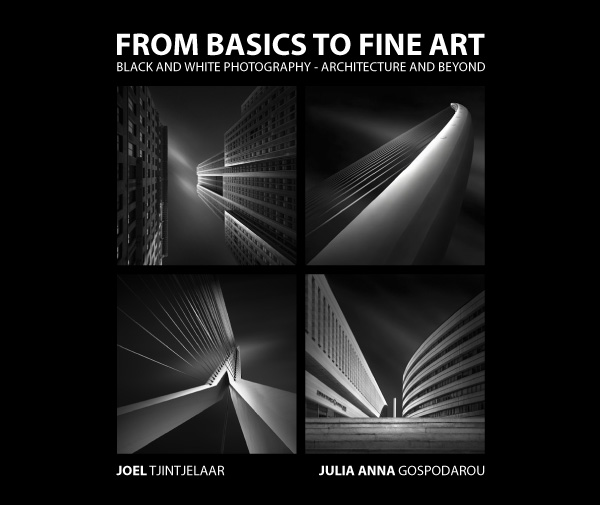
Ebook Review – From Basics to Fine Art Black and White Photography

07 Jul

Ebook Review: From Basics to Fine Art

If you’re interested in black and white photography, the names Joel Tjintjelaar and Julia Anna Gospodarou will probably need no introduction. The work of both photographers has helped define, and push the boundaries of long exposure photography, a relatively new genre in the fine art world.

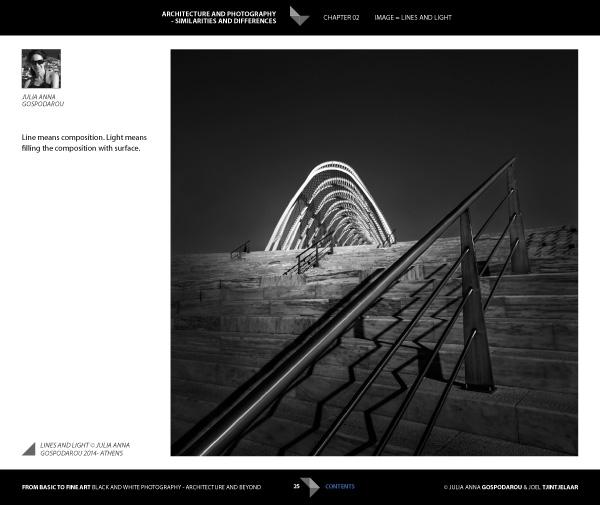
Julia and Joel have joined forces to write a new ebook called From Basics to Fine Art: Black and White Photography – Architecture and Beyond. It is principally aimed at photographers interested in using long exposure techniques to photograph buildings, with some chapters being more general and having a wider appeal.

Ebook Review: From Basics to Fine Art

The contents

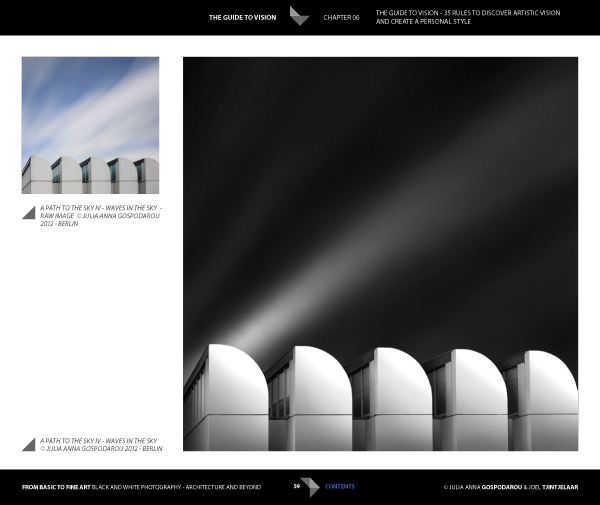
The ebook starts with personal statements from the authors exploring their interpretations of the word vision as it relates to architectural black and white photography. For me, the most interesting concept here is expressed by Joel. He talks about long exposure black and white photography as being several steps removed from reality. It is an interpretation, not a reproduction. The intent is not to capture the scene as it looked to the eye, but to present it in a way that represents the artist’s vision.

This theme is continued in the later chapters where Joel explains his post-processing techniques. Take a good look at his photos (follow the link to see some) and think about whether you could achieve similar results. The likely answer is no, because Joel has developed his processing techniques beyond the level that most photographers achieve. Be warned – Joel takes a long time to process his photos and this section of the ebook reflects that. If you’re looking for quick fixes or shortcuts you will need to look elsewhere.

Ebook Review: From Basics to Fine Art

But if you’re looking for a detailed explanation of black and white post-processing techniques that you won’t find anywhere else, then you’re in the right place. Joel explains his workflow, demonstrating how he uses Lightroom and Photoshop, along with plug-ins such as Silver Efex Pro. Most importantly, he shows you how to use what he calls Iterative Selective Gradient Masks, a technique he developed himself, to create the unique look of his black and white images.

He also explores fairly complex techniques modelled on what the calls: the 10 monochromatic commandments for good black and white photography. The idea is that you can create presence and depth in photographs by altering contrast, tonal relationships and defining edges in a way that adds volume, depth and luminosity to the subject.

Don’t be surprised if you don’t understand what this means as it’s an intricate topic that represents a fairly new way of looking at black and white photography. Joel is ahead of everybody else in this respect so you won’t find this information anywhere else. However, the examples in the ebook, and the clear presentation, makes it simple. By the way, the 10 monochromatic commandments I just mentioned are essential reading for anybody interested in black and white photography, regardless of genre.

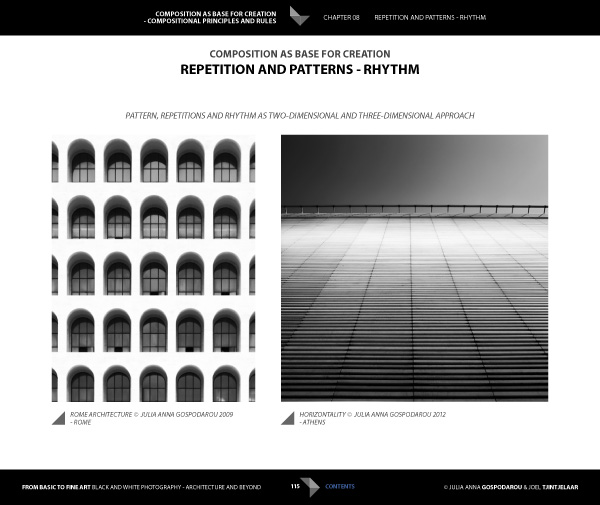
For me, the aspects covered in the previous paragraphs are the most interesting part of the ebook. There’s more, including some interesting thoughts from Julia (a trained architect) on using light to render the form and volume of buildings. She draws on techniques used in drawing and applies them to photography to get you thinking in a new way about rendering three-dimensional objects in photography.

Ebook Review: From Basics to Fine Art

There’s also an extensive chapter from Joel about long exposure photography, and the equipment (including a detailed look at neutral density filters) and techniques required to get results.

Included is more of the usual stuff that you would expect from a book about architectural photography, including composition, the practical aspects of photographing architecture and a chapter on using tilt-shift lenses. There’s also a useful chapter on pricing your work that will be of interest to professionals (or aspiring professionals).

A niggle: the discussions about composition contain a heavy emphasis on rules that continues throughout the ebook. I’m always suspicious of anybody that claims a certain way of things is a rule, and I’m certainly not convinced of the veracity of using (just to give an example) Fibonacci spirals and then stating that there’s a rule attached to it. I’m a strong believer in principles, rather than rules, and I don’t think Fibonacci spirals are going to help readers improve their composition. This minor complaint aside, there is plenty of good and practical information in this ebook.

Ebook Review: From Basics to Fine Art

Conclusion

I came away from reading this ebook with mixed feelings. On one hand, you have two photographers whose work I admire immensely explaining how they create their images, from their general philosophy to the specifics of long exposures and post-processing.

If you’re ever looked at their photos and wondered how they achieved the results they do then this ebook has the answers. It’s a tremendous act of generosity and sharing. No one else seems to be doing this stuff yet, or at least doing it and teaching it, so that makes some of the content unique. If you’re a fan of either of these authors, and want to learn the secrets behind their work, then it’s a must buy.

Ebook Review: From Basics to Fine Art

My main misgiving comes from the price. It’s an expensive ebook and it would be a shame if this information reaches a limited audience because of that. I realize that expense is a relative concept; the ebook is much cheaper than taking a workshop and you will learn things here that you wouldn’t from any other source. It’s a unique resource, and ultimately the buying audience will decide whether it has a fair value.

I have to admit that what I’d really like to see is a print version of this ebook, properly designed to give precedence to the photos of both authors. Their images would be better enjoyed on the printed page, and a book has the potential to become a lasting testament to their body of work and teachings.

From Basics to Fine Art: Black and White Photography – Architecture and Beyond

You can learn more about or buy From Basics to Fine Art: Black and White Photography – Architecture and Beyond by clicking the link. The price is €49 for those of you in the Eurozone, £39 for anybody in the UK and $ US59 for the rest of the world.

The post Ebook Review – From Basics to Fine Art Black and White Photography by Andrew S. Gibson appeared first on Digital Photography School.


Digital Photography School

 
Comments Off on Ebook Review – From Basics to Fine Art Black and White Photography

Posted in Photography


Camera Basics 101 The Exposure Triangle

08 Jun

One of the first things you will want to get your head around in photography is understanding exposure. To do that you will need to learn some camera basics and master:

The Exposure Triangle

If this term has of yet eluded you, or you’re not quite ready to claim full mastery here are 3 video tutorials to help you understand the basics of the exposure triangle including:

  • ISO
  • Aperture
  • Shutter speed

In this first video the host Mark Wallace (with Adorama TV) goes through all three of these elements and explains each briefly, and how they work together:

Mark also mentions this book in the video as a good starting point for learning more about exposure.

Next up is Shoot in Manual Mode Pt. 1 – Aperture, Shutter Speed and ISO – by photographer Sean von Tagen

Lastly is this video by a host whose name I couldn’t find. If you can get past his really monotone voice, the information is really good and should be easy to understand and follow.

If you want more reading, try these:

  • Exposure Triangle – Not just about more/less light
  • Understand Exposure in Under 10 Minutes
  • Getting off Auto – Manual, Aperture and Shutter Priority modes explained
  • Photo Nuts and Bolts – Know your camera and take better photos – a dPS eBook

The post Camera Basics 101 The Exposure Triangle by Darlene Hildebrandt appeared first on Digital Photography School.


Digital Photography School

 
Comments Off on Camera Basics 101 The Exposure Triangle

Posted in Photography


All You Have to Know to Master the Basics of White Balance

04 Jan

As an amateur photographer, you can go a long, long time without knowing what white balance is or why knowing how to adjust it even matters. I had my first DSLR (my current DSLR is a Canon EOS 450D) for five years before white balance entered my photography glossary, and it took another few months until it felt necessary—or at Continue Reading

The post All You Have to Know to Master the Basics of White Balance appeared first on Photodoto.


Photodoto

 
Comments Off on All You Have to Know to Master the Basics of White Balance

Posted in Photography


Mastering the 6 Absolute Basics of Digital Photography

04 Dec

They say that you should walk before you run, and before that, you should crawl before you can even walk. So, too, with digital photography: You have to understand the very bare essentials of the craft before you can even hope to become anything close to a seasoned pro. The biggest mistake that most photographers commit is they think they’re Continue Reading

The post Mastering the 6 Absolute Basics of Digital Photography appeared first on Photodoto.


Photodoto

 
Comments Off on Mastering the 6 Absolute Basics of Digital Photography

Posted in Photography


DEAL: 30% Off Phil Steele’s Photoshop Basics Online Course

29 Aug

NewImageOver on our sister site – SnapnDeals – we have a great offer running right now – it gets you 30% off Phil Steele’s Photoshop Basics for Photographers course.


Many of your have taken Phil’s other courses and will be familiar with his helpful videos so will know that he always delivers great training for photographers.

Over 13 easy to understand modules this course will teach you how to take your photos to the next level with some simple post production techniques in Photoshop.

Normally the course is $ 47 but with this Snapn’ Deal it is just $ 33.

Check out full details of what’s included here.

PS: if you’re interested in weekly promotions like this just add your email address to the field below and we’ll send you a weekly update of all new deals.

It’s free, we don’t share your details with anyone and you’re welcome to unsubscribe any time if you don’t find the deals to be for you.

Post originally from: Digital Photography Tips.

Check out our more Photography Tips at Photography Tips for Beginners, Portrait Photography Tips and Wedding Photography Tips.

DEAL: 30% Off Phil Steele’s Photoshop Basics Online Course


Digital Photography School

 
Comments Off on DEAL: 30% Off Phil Steele’s Photoshop Basics Online Course

Posted in Photography


The Basics of Using ND Grads to Improve Your Landscapes

02 Jul
For this image, I used a 4-stop hard-edged ND grad to hold back the sky.  I also used a 5-stop ND filter to slow the exposure enough to get the water silky smooth. 6 seconds, f/16, ISO 100. EOS 5D Mark III with EF 16-35mm f/2.8L II.

For this image, I used a 4-stop hard-edged ND grad to hold back the sky. I also used a 5-stop ND filter to slow the exposure enough to get the water silky smooth. 6 seconds, f/16, ISO 100. EOS 5D Mark III with EF 16-35mm f/2.8L II.

As I’ve written before, the hardest part of landscape photography is retaining detail in a bright sky with a darker foreground.  There are several ways to deal with this issue. The newest ways involve various post-processing techniques in Photoshop or Lightroom, or using High Dynamic Range photography to blend several exposures together, retaining both shadow and highlight detail from these exposures.  There is nothing wrong with these techniques, and in fact there are times where these may be the best method for keeping detail in the sky. There are issues with both blending and HDR.  HDR tends to have a very processed look to it when not done well, and blending takes time to do well. I am not one who likes to spend much time in Photoshop with my images.  In addition, you still need to be sure that you somehow capture enough information in the sky that you are not simply darkening down white pixels.

On the left is a 2-stop, hard-edged ND grad.  On the right is a soft-edged 2-stop ND grad.

On the left is a 2-stop, hard-edged ND grad. On the right is a soft-edged 2-stop ND grad.

To ensure you’re capturing enough detail, the use of graduated neutral density filters is needed. Graduated Neutral Density Filters (ND grads, for short), are pieces of glass or photographic resin that are half clear, and gradually gets darker as it moves to the other end.  This darkening begins in the middle of the piece of glass.  First of all, these filters come in two forms.  The first of which is a typical screw-on filter that screws onto the front of the lens. While this style is fine for polarizers or skylight filters, it’s problematic for ND grads, because the horizon can’t be repositioned.  The other way these filters come is in 4×5 or 4×6 inch glass or resin.  These pieces of glass are then placed in holders, and the horizon can be repositioned as needed. The biggest advantage these filters have over the screw-in kind is the fact that they allow you freedom of composition to put the horizon where you want.   The most popular holders and systems for this type of filter are the Cokin systems, which come in various sizes, and the Lee system, which typically accepts a 4″ wide filter.  The Cokin systems tend to be a bit cheaper both in terms of cost of the holder and cost of the filters.  The Lee system is a bit more expensive on both fronts.

Once you’ve decided on which system to use, there is then the choice of which ND grads to choose. There are several companies that manufacture these filters, from  Cokin for their systems, to Lee, to to Formatt Hi Tech, to Schneider Optics, among others.  The prices vary, depending on whether you’re buying photographic resin or glass.  Resin filters tend to be cheaper while glass is most expensive. Resin doesn’t break when dropped but can scratch more easily than glass does. ND grads are available in various densities, including  2 stops, 3 stops, and 4 stops.

The selection doesn’t stop there, however. In addition to choosing which density you need, you also must choose how gradual the density is. Graduated neutral density filters come in both hard-edge and soft-edge graduations.   You would use hard-edge filters when you have a clear horizon and no object in the foreground intersects it.  You would use soft-edged filters when there is an object that intersects the horizon.  Soft-edge filters have a much smoother gradation, which allows it to look more natural when used in a photo.  A hard-edged filter will create a more definitive line between light and dark in the image.

These filters have become some of the most important tools in my bag when creating landscape photos. If you’re just starting out, get an inexpensive set of filters- there is no “one size fits all” to ND grads.   However, if you can only start with one, I’d suggest a soft-edged three stop ND grad. The hard-edged can be limiting at times, and two stops never seems to be enough on its own.  I often stack ND grads to get the effect I’m looking for.

Happy shooting!

Because Haystack Rock stood above the horizon line, and was quite a bit darker than the sky behind it, I had to use a 3-stop, soft-edged ND grad filter here. 1/20, f/16, ISO 100. EOS 5D Mark III with EF 16-35mm f/2.8L II.

Because Haystack Rock stood above the horizon line, and was quite a bit darker than the sky behind it, I had to use a 3-stop, soft-edged ND grad filter here. 1/20, f/16, ISO 100. EOS 5D Mark III with EF 16-35mm f/2.8L II.

Post originally from: Digital Photography Tips.

Check out our more Photography Tips at Photography Tips for Beginners, Portrait Photography Tips and Wedding Photography Tips.

The Basics of Using ND Grads to Improve Your Landscapes


Digital Photography School

 
Comments Off on The Basics of Using ND Grads to Improve Your Landscapes

Posted in Photography


Photoshop Basics: Working with Layers

05 Apr

Photoshop.  For photographers, web developers and graphic designers alike, its the go-to program for creating and editing professional grade graphics.  And like every beloved piece of software, it has to have a strong foundation to build upon; a base system that supports all other operations.  For Photoshop, it’s layers. Operations we describe here are performed using Adobe Photoshop CS5, but Continue Reading

The post Photoshop Basics: Working with Layers appeared first on Photodoto.


Photodoto

 
Comments Off on Photoshop Basics: Working with Layers

Posted in Photography


The Basics of a One Light Setup: A Lighting Tutorial

15 Mar

Lately we’ve had a lot of readers asking for advice about simple lighting techniques for shooting portraits. Here’s a good video from TheSlantedLens that gives some good basic information on how to set up a one light setup.

Further Reading

  • 6 Portrait Lighting Patterns Every Photographer Should Know
  • Studio Portraits – Getting Started with One Light
  • 5 Classic Lighting Positions for Portrait Photography

Post originally from: Digital Photography Tips.

Check out our more Photography Tips at Photography Tips for Beginners, Portrait Photography Tips and Wedding Photography Tips.

The Basics of a One Light Setup: A Lighting Tutorial


Digital Photography School

 
Comments Off on The Basics of a One Light Setup: A Lighting Tutorial

Posted in Photography