Owners of Sony SLT, NEX and R-series cameras with Multi Interface Shoes now have a couple more flash options. Two flash units offered by Metz, the mecablitz 44 AF-1 digital and 52 AF-1 digital, are now available for the Sony Multi Interface shoe. Read more
Tag: Available
-
Adobe Camera Raw 8.5 and DNG Converter 8.5 now available

Update: Amidst a slew of announcements yesterday, Adobe also made final release versions of Camera Raw and DNG Converter 8.5 available for download. A few new cameras are now supported including the Canon Powershot G1 X Mark II, Olympus OM-D E-M10, Panasonic GH4 and Sony Cyber-shot RX100 III. Camera Raw 8 users with Photoshop CS6 will get new camera support, lens profiles and bug fixes, but a few new features are added for Photoshop CC subscribers. Read more
-
Adobe Lightroom Mobile now available for iPhone

Adobe has announced that Lightroom Mobile – first released for the iPad back in April – is now available for the Apple iPhone. Available for owners of Lightroom 5 for desktop, Lightroom Mobile essentially allows you to work on images on an Apple iPad or iPhone and sync adjustments between mobile and desktop versions of the software. Click to read more at connect.dpreview.com
-
Alien Skin Software’s Exposure 6 now available

Alien Skin Software has launched an update to its popular photography effects software, Exposure. Announced in April, Exposure 6 has a new processing engine for instant image effect previews, a new user interface for a faster workflow and tools for ‘Bokeh.’ It’s available for download now at $ 149 for new users and as a $ 69 upgrade for existing users. Read more
-
Nikon Coolpix A firmware 1.11 available

Nikon has issued a firmware update for the Coolpix A. Version 1.11 decreases minimum focus distance (in normal focus mode) and boasts improvements to autofocus acquisition. Other improvements are minor, including better battery performance during interval shooting. Get the update
-
Adobe Camera Raw 8.5 and DNG Converter 8.5 release candidates available

Adobe has made Camera Raw and DNG Converter 8.5 release candidates available for download. A short list of cameras are added for ACR support including the Canon Powershot G1 X Mark II, Olympus OM-D E-M10 and the Panasonic GH4 (with preliminary support). Camera Raw 8 users with Photoshop CS6 will get new camera support, lens profiles and bug fixes, but a few new features are added for Photoshop CC subscribers. Read more
-
Leica M Monochrom now available in grayscale (sort of)

Have you been lusting after a Leica Monochrom but anxiously hoping for its release in a new body finish? Well your long, nightmarish wait is over. Leica has announced that its M Monochrom, first announced in 2012, is now available in a new limited silver chrome ‘color version’. Click through for (not much) more information, or just to take part in the inevitable comments debate about whether chrome and /or black really count as ‘color’ options.
-
onOne Software’s Perfect Effects 8 available for free

onOne Software is offering its Perfect Effects 8 Premium Edition plugin for free for a limited time. It gives you hundreds of creative presets, fully customizable filters and ability to combine effects. Perfect Effects 8 works as a standalone application (Windows or Mac) or integrates with Adobe Lightroom, Aperture and Photoshop. Go to the onOne Software site to get this fully licensed version – worth $ 99.95 – for free. Learn more
-
Finding and Working with Available Light
I don’t use a flash for my photography, it’s a personal preference. Available light, in its many forms, is both challenging and rewarding so I rarely find a need to turn to creative lighting.
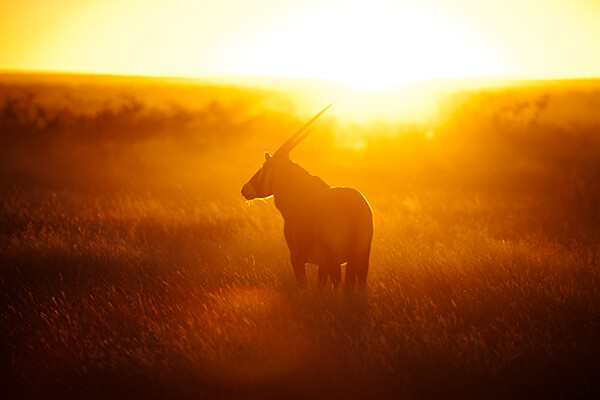
Natural light, golden hour
What is ‘available light’?
Let’s be clear on definitions first. As a street photographer my preferred source of light is sunlight, more specifically, natural light. Available and ambient light refer to any and all light sources the photographer did not introduce for their photograph; light bulbs, candles, fire, neon, to name a few.
The available light around us is a great opportunity for our photography and photographers should be passionate about making best use of this light when capturing a photo.
George Eastman said, “Light makes photography. Embrace light. Admire it. Love it. But above all, know light. Know it for all you are worth, and you will know the key to photography.”
On a basic level we all recognise the beautiful sprawling vista before us looks wonderful bathed in the rays of the setting sun, and less so beneath an overcast grey sky. I refer to this as the quality of the light.
What are the different qualities of light?
Starting with the obvious, the sun, the qualities of its light are wildly variable.

Natural light, sunset
Direct sun
The sun is warmer and softer at each end of the day. Shadows are long and also soft. These two periods, at sunrise and sunset, are referred to as the Golden Hour and many landscape photographers won’t recognise any other part of the day. Quick tip: when the skies are a glorious combination of oranges and reds, set your white balance to Sunny. Set to auto white balance, the camera often attempts to compensate for, what it believes are, overly warm tones.
During the day when the sun is high, the light is bright and harsh and shadows will be short. The principal challenge here is how to properly expose where there is a massive range of exposure between areas of light and shadow.

Harsh direct sun
Indirect sun
This covers areas of shade, reflected sunlight, side lighting through a window and that pallid grey diffuse light from cloud cover.
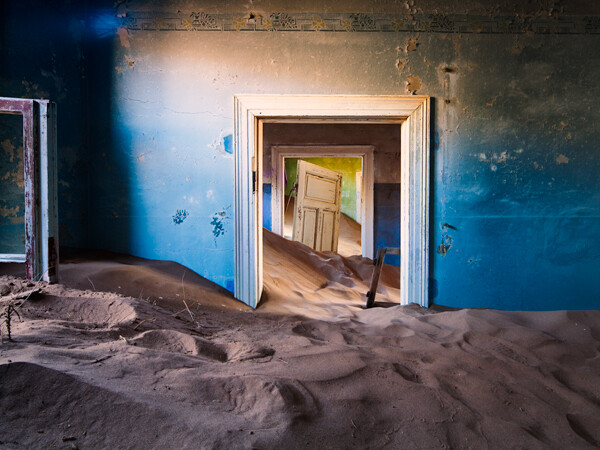
Indirect sun from a side window
Artificial light
Ignoring light from the night sky, what remains to light our photography is artificial light. No less challenging to work with, artificial ambient lighting can vary in brightness from a candle to stadium lighting, and can be located on ground level to anywhere overhead. There could be multiple sources and, if all this wasn’t bad enough, some of those light sources could be moving!
What is the quality and direction of light?
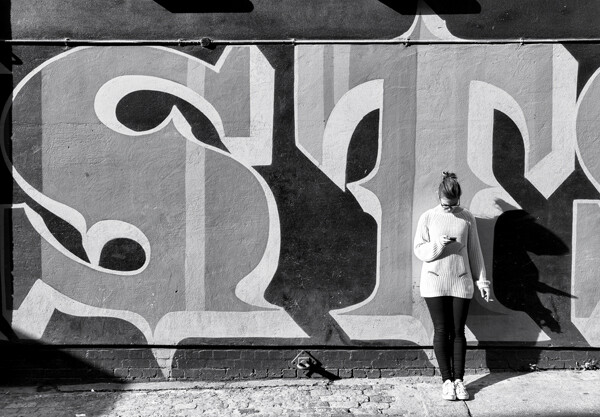
Direct sun, nearly overhead casting short harsh shadows
Direct overhead sunlight
Taking a portrait in direct overhead sunlight is tough going. The light is bright and harsh, the shadows equally so. I’m a street photographer, so there’s no option to move subject(s). In this scenario I have to weigh up the contrasts between bright and dark areas, especially with faces. The subject’s clothes will affect the exposure, dark materials losing texture to the shadows more quickly. Backgrounds should be considered too. For example, a small portion of bright sky in the frame can horribly distract when the rest of the photo is a fairly balanced exposure.
If you can move your subject, the effects of the direct sun can be mitigated when you consider placing the person next to a light coloured wall, or other reflective surface. Very much along the lines of a subtle fill using the reflected light. These light and shadow areas will all be softer and your subject won’t be squinting. Moving to a wholly shaded area will result in a flat lighting with little or no shadow. Yes, exposure will be easy but your image will take on a decidedly flat look.
Open shade
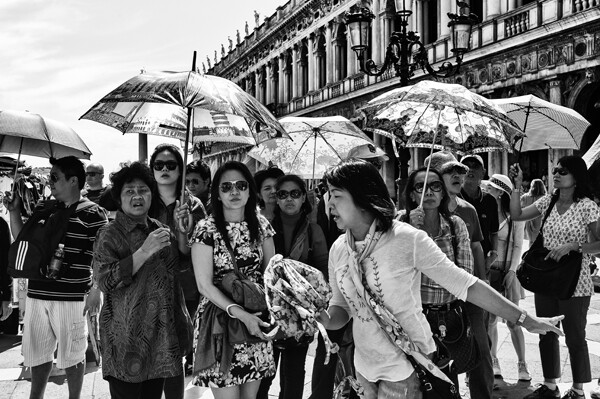
Open shade, combination of sun and shade
These areas are great opportunities to introduce depth into your images with portions of direct sunlight as well as shadows cast from the shaded area, all within the frame. Trees are the obvious candidates for partially shaded areas, but also consider open doorways and alleys. The example above takes advantage of the shade cast by several umbrellas.
Side light or window light
Making use of light from the side, open windows or low sun late in the day, also generates images with a real sense of depth. The side lighting will reveal the smallest textures. The dynamic range of light to dark in these scenes is much reduced. Pay attention to the contrast play now on a more horizontal plane than you would see with overhead light sources.
Diffuse light
With little or no discernible direction, diffuse light from a shaded area or overcast sky introduces problems with colour temperature and a general lack of depth in images. I don’t let this bother my street photography, however this is a challenge for a scheduled shoot.
I have generally been referencing available light from the sun. Working in environments with artificial light you are faced with the same factors, though problems can be amplified. Unnatural light frequently complicates exposures with off colour temperatures and much lower levels of light.
On one occasion, I was commissioned to photograph an event where all the lighting was eye level and against the walls! There are only so many silhouette shots you can get away with and I spent a large part of the evening against a wall to be able to shoot with the light.
How much light do you have to work with?
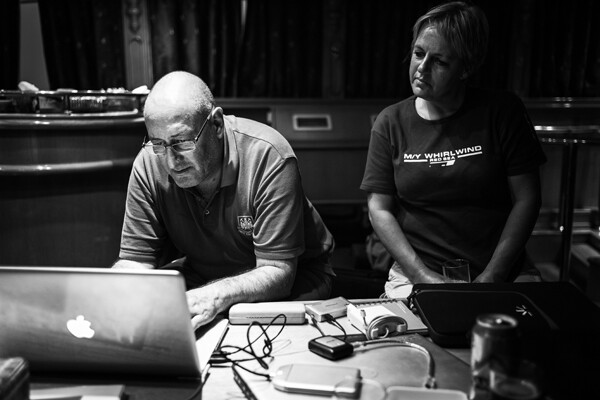
Indoor artificial low light
Whatever the quality and level of the light, reflective surfaces are useful to make the best of the ambient levels. For planned shoots, particularly with models, metallic reflectors are an excellent method of manipulating light onto a subject. Even nature photographers carry fold up reflector discs to reduce the silhouetting effects of shooting into the sun. No reflector, and no alternate light sources? I suggest white walls, shiny floors, glass surfaces.
Low available light situations are challenging for photographers and this is one area where the right gear will enable you to take a better photograph. Capturing a well exposed image requires as much light as the sensor can get. Static subjects will allow a longer exposure. Events, concerts, parties, weddings all rely on photographers obtaining shots quickly. This means fast glass and, where needed, increased sensor sensitivity or ISO. I recommend a lens capable of f/2 for very low lit scenes. If you are shooting hand held, you will probably still need to increase your ISO to prevent a blurred exposure.
It frustrates me terribly to see so many people constantly using their smart phone, however, the light from the screens always helps illuminate faces. It is precisely this kind of observation that will help you find light where you need it.
Notes on exposure
Exposure is influenced by aperture, shutter speed and ISO and your camera’s metering programme will wiggle those three factors to attempt to capture an evenly exposed scene. In reality, you are the principal metering programme; your ability to see where the light falls, the points of reflection and those areas of dark shadow.
My camera is set to spot metering and I pick an area of the scene to meter against and therefore influence the exposure. In bright sunlight, I might meter on the subject’s light coloured jacket to reduce the effects of the bright sun. At an event, I am likely to meter near to the ground to elevate overall exposure. Less commonly, and for balanced light situations, I will meter against the subject’s face. You will become more practiced with reading light levels and metering to control your exposures.
Don’t be fooled into thinking Auto White Balance will save your scene. Also, shooting RAW affords you the maximum dynamic range your camera is capable of and, though White Balance is an attribute, you still need to consciously set it. Carry white balance cards and custom white balance!
One final suggestion. Shoot RAW and set your camera to Black & White. Reviewing your images in monochrome will allow you to view only the luminosity in the scene and see where the light play is. You can set your image back to its original colour at a later stage.
Where would your photography be without light?! There are so many situations to which only practise reveals the solution, so please discuss available light questions and issues in the comments and I will do my best to answer.
The post Finding and Working with Available Light by Michael Walker-Toye appeared first on Digital Photography School.
-
Adobe Camera Raw 8.4 and Lightroom 5.4 now available

Camera Raw 8.4 is now available as a final release for Photoshop CS6 and Photoshop CC. Lightroom 5.4 is also now on Adobe.com and available through the update mechanism in the application. The updates include bug fixes, new features and support for a number of new cameras such as the Nikon D4s and D3300, Canon PowerShot G1 X Mark II, Olympus OM-D E-M10 and Fujifilm X-T1. Learn more