RSS
 

Posts Tagged ‘Asking’

NASA is asking the public to use their smartphones to help track light pollution caused by satellites

06 Mar

A newly launched NASA project called Satellite Streak Watcher aims to assess the night sky light pollution caused by low-Earth orbit satellites using images captured by the public. On its SciStarter project page, NASA asks anyone interested in participating to ‘Photographically record satellite streaks across the night sky to monitor this form of sky pollution.’

The space agency explains its concerns related to the satellites, stating, ‘As more satellites are placed into orbit, they will become an increasing problem to astronomers on the ground.’ Participants can use the Heavens-Above website to determine when and where satellites will pass over their local sky; images are uploaded and shared on the project’s website.

The new public science project follows announcements from a number of companies that have launched — or plan to launch — large numbers of small satellites into low-Earth orbit.

The most notable example of this comes from SpaceX, which has spent the past few years working on its Starlink mission. The private space company expects to ultimately launch thousands of small satellites into very-low Earth orbit (VLEO) in order to provide Internet access around the world. As of March 1, 2020, the company has delivered 302 of these satellites into space with plans to launch more throughout the year.

Critics have expressed concerns that Starlink and other projects like it will have a negative impact on the night sky, introducing light pollution that will disrupt astronomy. These satellites also impact astrophotography by adding thin, bright streaks of light to long-exposure images, prompting complaints from photographers who increasingly struggle to deal with light pollution.

DPReview reader Guido Forrier shared the below image in our Astrophotography forum, showing a series of fifteen Starlink satellites flying across the sky in one of his night sky photographs. When we asked what his thoughts on the matter, he said ‘I am surprised and incensed that apart from the already high light pollution, those satellites [have] also come to disturb. [There’s] a lot of rubbish is already flying in space and I see it regularly burning in the atmosphere.’

Photograph by Guido Forrier, shared with permission.

Until now, most efforts to combat light pollution have focused on the ground, not the sky. Light produced by street lamps, billboards, parking lot lights and more is reflected in the night sky, making it hard to see and photograph stars, particularly in regions close to big cities. The problem has spurred the creation of a number of Dark Sky Reserves throughout the world; these are regions of public and private land with ample natural darkness and starkly visible stars.

However, experts have expressed concerns over light pollution that results from satellites launched into low-Earth orbit, as well as more ridiculous future concepts like an artificial moon and space billboards. Because this type of light pollution comes from the sky rather than the planet’s surface, traveling to Dark Sky Reserves won’t help photographers avoid the issue.

According to Astronomy.com, the Starlink satellites are particularly disruptive to the night sky due to their shallow orbit, which is necessary for delivering Internet service to people on Earth. More than 40,000 of these small satellites may eventually be launched under the Starlink mission, and though SpaceX is experimenting with anti-reflective coating on the satellites, it is unclear whether that will be sufficient for reducing the disruption caused by the spacecraft.

MIT Technology Review points out that satellites depend on their reflective nature to help keep them cool; the experimental anti-reflective coating may cause thermal issues for the Starlink satellites. SpaceX applied the coating to the bottom of one of the 60 satellites it launched in December 2019 in order to test its potential impact on performance.

Harvard-Smithsonian Center for Astrophysics astronomer Jonathan McDowell had told Technology Review at the time that while the reflective coating is ‘worth a try,’ he fears it ‘will be offset by the fact that they are moving the constellation to a lower orbit.’

NASA anticipates its Satellite Streak Watcher operating as a long-term project in order to gather data on satellite light pollution over time. The project currently has 136 members and 20 images, which include shots ranging from bright dots on the night sky to several long streaks of light bunched together. Though NASA says citizen scientists can use a basic tripod and most newer smartphones to capture the images, astrophotographers who have more capable camera systems are also welcomed to share their images.

Articles: Digital Photography Review (dpreview.com)

 
Comments Off on NASA is asking the public to use their smartphones to help track light pollution caused by satellites

Posted in Uncategorized


Flickr CEO sends out email asking users to help ‘keep the Flickr dream alive’

21 Dec

In a very candid email sent out to users last night, Flickr (and SmugMug) CEO Dan MacAskill shared the current state of the Flickr platform, detailing the struggles the SmugMug team is facing regarding the financial situation of the photo-sharing network.

The email opens up by saying ‘Flickr—the world’s most-beloved, money-losing business—needs your help.’ In the full email, which we’ve embedded below, MacAskill explains how the SmugMug team has done its best to optimize the platform from both a user and financial standpoint, but it hasn’t been enough. According to MacAskill, Flickr is ‘still losing money,’ despite its new owners’ best efforts to streamline overheard and bring on hundreds of thousands of new Flickr Pro subscriptions.

Put simply, MacAskill says ‘We need more Flickr Pro members if we want to keep the Flickr dream alive.’ MacAskill doesn’t specifically state how long the ‘Flickr dream’ can stay alive in its current state, but such a letter wouldn’t be written if things weren’t heading towards dire.

In conjunction with the letter, MacAskill also announced Flickr’s end-of-the-year promotion that will get you 25-percent off an annual Flickr Pro subscription, a push to bring even more users on board to support the platform. He wraps up the letter saying:

If you value Flickr finally being independent, built for photographers and by photographers, we ask you to join us, and to share this offer with those who share your love of photography and community.

After reading through the letter, we had a few questions, so we contacted MacAskill with a few questions regarding the future of Flickr. Specifically, we asked the following:

In response, MacAskill responded with:

After the above response from MacAskill, we inquired further about the ‘follow-up contingency plans,’ but are yet to receive a response. We will update this article accordingly if MacAskill responds.

The email is an interesting one. MacAskill is known for his candor, so seeing this transparency is far from out of character for him. At some level, the email inspires would-be Flickr Pro members to subscribe to the premium version of Flickr. However, it also instills fear in current Flickr Pro members, who effectively see this email as the writing on the wall for their images and the network they’ve built on the platform. Proof of this dichotomy is clearly visible in the Reddit thread regarding this email, where users strike a balance of respect for MacAskill and the SmugMug-owned version of Flickr while simultaneously showing concern for the future of the platform in the comments.

Full email:

Dear friends,

Flickr—the world’s most-beloved, money-losing business—needs your help.

Two years ago, Flickr was losing tens of millions of dollars a year. Our company, SmugMug, stepped in to rescue it from being shut down and to save tens of billions of your precious photos from being erased.

Why? We’ve spent 17 years lovingly building our company into a thriving, family-owned and -operated business that cares deeply about photographers. SmugMug has always been the place for photographers to showcase their photography, and we’ve long admired how Flickr has been the community where they connect with each other. We couldn’t stand by and watch Flickr vanish.

So we took a big risk, stepped in, and saved Flickr. Together, we created the world’s largest photographer-focused community: a place where photographers can stand out and fit in.

We’ve been hard at work improving Flickr. We hired an excellent, large staff of Support Heroes who now deliver support with an average customer satisfaction rating of above 90%. We got rid of Yahoo’s login. We moved the platform and every photo to Amazon Web Services (AWS), the industry leader in cloud computing, and modernized its technology along the way. As a result, pages are already 20% faster and photos load 30% more quickly. Platform outages, including Pandas, are way down. Flickr continues to get faster and more stable, and important new features are being built once again.

Our work is never done, but we’ve made tremendous progress.

Now Flickr needs your help. It’s still losing money. Hundreds of thousands of loyal Flickr members stepped up and joined Flickr Pro, for which we are eternally grateful. It’s losing a lot less money than it was. But it’s not yet making enough.

We need more Flickr Pro members if we want to keep the Flickr dream alive.

We didn’t buy Flickr because we thought it was a cash cow. Unlike platforms like Facebook, we also didn’t buy it to invade your privacy and sell your data. We bought it because we love photographers, we love photography, and we believe Flickr deserves not only to live on but thrive. We think the world agrees; and we think the Flickr community does, too. But we cannot continue to operate it at a loss as we’ve been doing.

Flickr is the world’s largest photographer-focused community. It’s the world’s best way to find great photography and connect with amazing photographers. Flickr hosts some of the world’s most iconic, most priceless photos, freely available to the entire world. This community is home to more than 100 million accounts and tens of billions of photos. It serves billions of photos every single day. It’s huge. It’s a priceless treasure for the whole world. And it costs money to operate. Lots of money.

Flickr is not a charity, and we’re not asking you for a donation. Flickr is the best value in photo sharing anywhere in the world. Flickr Pro members get ad-free browsing for themselves and their visitors, advanced stats, unlimited full-quality storage for all their photos, plus premium features and access to the world’s largest photographer-focused community for less than $ 5 per month.

You likely pay services such as Netflix and Spotify at least $ 9 per month. I love services like these, and I’m a happy paying customer, but they don’t keep your priceless photos safe and let you share them with the most important people in your world. Flickr does, and a Flickr Pro membership costs less than $ 1 per week.

Please, help us make Flickr thrive. Help us ensure it has a bright future. Every Flickr Pro subscription goes directly to keeping Flickr alive and creating great new experiences for photographers like you. We are building lots of great things for the Flickr community, but we need your help. We can do this together.

We’re launching our end-of-year Pro subscription campaign on Thursday, December 26, but I want to invite you to subscribe to Flickr Pro today for the same 25% discount.

We’ve gone to great lengths to optimize Flickr for cost savings wherever possible, but the increasing cost of operating this enormous community and continuing to invest in its future will require a small price increase early in the new year, so this is truly the very best time to upgrade your membership to Pro.

If you value Flickr finally being independent, built for photographers and by photographers, we ask you to join us, and to share this offer with those who share your love of photography and community.

With gratitude,

Don MacAskill
Co-Founder, CEO & Chief Geek

SmugMug + Flickr

Use and share coupon code 25in2019 to get 25% off Flickr Pro now.

Articles: Digital Photography Review (dpreview.com)

 
Comments Off on Flickr CEO sends out email asking users to help ‘keep the Flickr dream alive’

Posted in Uncategorized


The FAA is asking for input for its recreational drone test

17 Aug

Recently, the Federal Aviation Administration (FAA) granted recreational drone pilots access to Low Altitude Authorization and Notification Capability (LAANC). This removed a huge bottleneck for the pilots as they were extremely restricted on where they could legally fly. Understandably the public wanted to know if they’d be held to the same standards at Part 107-certified commercial remote pilots, who are required to pass a knowledge exam.

The FAA has officially responded by issuing a Request for Information (RFI) this week. They are currently looking to identify and work with stakeholders in the industry on the administration of a new aeronautical knowledge test for recreational drone pilots. Thanks to significant technological advancements over the past few years, operating a drone is relatively easy to the point where they can be flown safely with minimal knowledge. By updating Section 349 of the FAA Reauthorization Act of 2018, the government agency plans to educate current recreational pilots and bring them into the fold of safe, responsible small unmanned aircraft system (sUAS) culture.

The amended law will require recreational pilots to pass this newly constructed aeronautical knowledge and safety test, to demonstrate they understand the rules. The FAA is currently developing the testing material with stakeholders.

The amended law will require recreational pilots to pass this newly constructed aeronautical knowledge and safety test, to demonstrate they understand the rules. The FAA is currently developing the testing material with stakeholders. They are currently looking for third-party entities, testing designees, to collaborate with on administering the knowledge training and test content across various FAA-approved platforms.

Testing designees should have the ability to reach the widest audience possible and also develop a standard electronic record that will be issued immediately to the pilot upon successful completion of the test. They will also provide necessary documentation, similar to what a newly-minted Part 107 remote pilot receives, that can be shown to the FAA or local law enforcement if required.

Those interested in participating are encouraged to review the RFI and respond by September 12, 2019.

Articles: Digital Photography Review (dpreview.com)

 
Comments Off on The FAA is asking for input for its recreational drone test

Posted in Uncategorized


Jackson Hole Travel and Tourism Board is asking visitors to stop geotagging photos

08 Dec

In Wyoming, United States, the Jackson Hole Travel and Tourism Board has launched a campaign imploring visitors to stop the use of geolocation tags when sharing photos of their outdoor adventures online.

As Vox recently pointed out in a video titled What happens when nature goes viral, geotagged photos have become a major issue for landmarks around the world. When photos posted to Instagram, Facebook, and other social networks are geotagged, knowingly or otherwise, it makes it easier than ever for new people to seek out the exact same location and have their own turn at taking a photo, only adding to the problem.

While it might not seem like a problem, the influx of visitors to many of these locations has caused a dramatic change in the environment, physically and otherwise. In Vox‘s example, Horseshoe Bend outside of Page, Arizona, United States, has seen an increase in visitors it isn’t capable of sustaining — at least not without dramatic physical changes to improve the safety of the growing number of spectators.

It’s this same issue the Jackson Hole Travel and Tourism Board is trying to address with its new campaign. ‘Every time someone captures stunning scenery and tags the exact location, crowds follow,’ says the narrator in the above video. ‘The traffic causes unintended harm to pristine environments, plants, and animal habitats.’

To protect and preserve the two National Parks near Jackson Hole, the video implores visitors to use the new, vague location titled ‘Tag Responsibly, Keep Jackson Hole Wild.’ In addition to tagging the more general location, the Jackson Hole Travel and Tourism Board has also created a series of posters advising against using specific location tags.

$ (document).ready(function() { SampleGalleryV2({“containerId”:”embeddedSampleGallery_5031542318″,”galleryId”:”5031542318″,”isEmbeddedWidget”:true,”selectedImageIndex”:0,”isMobile”:false}) });

Sometimes users are completely unaware that their images are being tagged. Most phones nowadays feature automatic geotagging and although a number of image hosting sites and social networks strip the metadata, there are others that use it by default. If you feel called to be a part of the campaign, be sure to check whether or not the information is being automatically uploaded — and if it is, remember to use more general location tags when traveling around.

Articles: Digital Photography Review (dpreview.com)

 
Comments Off on Jackson Hole Travel and Tourism Board is asking visitors to stop geotagging photos

Posted in Uncategorized


Why Asking What Camera Settings Were Used is Not as Helpful as You Think

10 Mar

When you view an image that you love, do you find yourself asking, “What camera settings did the photographer use?” This is a common question, that overlooks other important aspects which would have helped to create that image, such as the lighting conditions, and any post-processing techniques involved. As you become more experienced, and progress in your journey as a photographer, you may begin to realize that the things you originally obsessed over, may not be as important as you once thought.
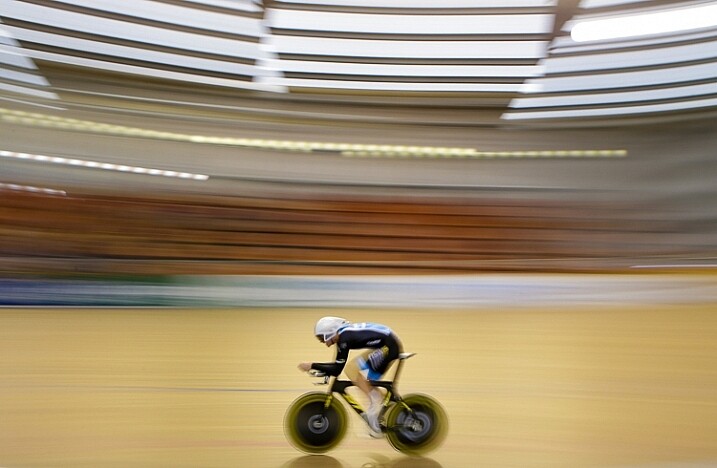
Fig 4

For this image I used a shutter speed of 1/5th, as this would blur out the background quite nicely, as I panned with the rider to make him pop out more. This meant I had to increase my aperture to f/10, and could also decrease my ISO to ISO 320, too. © Daniel Smith / Getty Images.

A topic that many photographers are caught up in, is knowing which camera settings were used; more specifically, aperture, shutter speed and ISO. Any photographer will tell you that these three elements of exposure are very important in creating the desired image. If you use the wrong combination of these in any given environment, you could very well end up with undesired results. Keeping that in mind, it is completely understandable why new photographers obsess over knowing exactly which camera settings were used.

In theory, this should help you to recreate that particular image, right? Unfortunately this may not be the case. Images are created from much more than just the correct combination of aperture, shutter speed and ISO. These three fundamentals do more than just control the exposure; they also give us a creative language to use in our images.
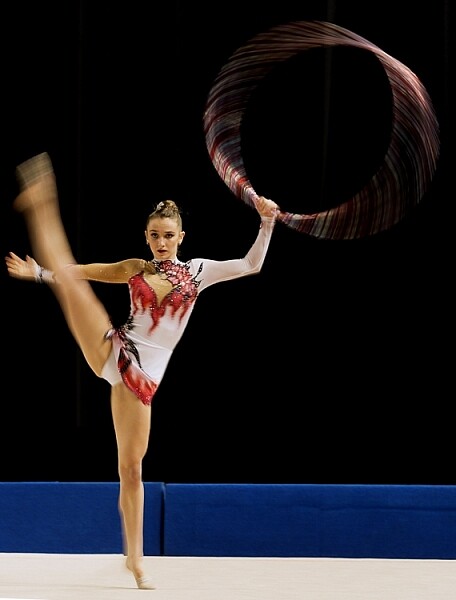
Fig 2

In this image, I wanted to show some motion in the gymnast’s movements, rather than taking another frozen frame. To do this I lowered my shutter speed from 1/1000th to 1/15th. This reduction meant I could also lower my ISO from ISO 3200 to ISO 500 and increase my aperture to f/7.1.

But before diving into this further, let’s explore the two different perspectives of this question; firstly from the point of view of a beginner, who would hope to replicate this imagine. They may assume that by knowing the exact camera settings, and dialling them into the camera, that they will somehow magically achieve the same result. Looking at this from an experienced photographer’s perspective, they may ask this question but with a different scope in mind. It may be when they are perplexed as to the techniques behind a particular image, or in relation to a very specific genre in photography, such as astrophotography, where knowing the settings may help provide a breakthrough.

So why is the question unhelpful?

This question will not always equip you with the knowledge you need, to recreate that image, or with your endeavours of becoming a more successful photographer. There is a lot more to creating an image than just the camera settings. By focussing on camera settings alone, you are missing out on a lot more information as to why those settings were used.

Settings are only a small part of what makes up that image. Lighting conditions, post-processing and the outcome the photographer wants to achieve, are just some of the factors that will dictate what settings the photographer uses. It’s akin to having the correct ingredients for a cake, but not knowing the method behind making it, or the reasons behind that method. Relying on camera settings alone does not tell you anything about the environment the image was taken in, nor does it give you an indication of what the lighting conditions were like.

To freeze the action here I used a shutter speed of 1/1000sec. To keep my ISO as low as possible, but still have a little more depth of field than what /2.8 would offer, I used an aperture of f/3.5. I then set my ISO to ISO 3200 to give me the correct exposure. Being indoors, the ISO is a little higher. © Daniel Smith / Getty Images.

To freeze the action here I used a shutter speed of 1/1000th. To keep my ISO as low as possible, but still have a little more depth of field than what f/2.8 would offer, I used an aperture of f/3.5. I then set my ISO to 3200 to give me the correct exposure. Being indoors, with low light conditions, the ISO is a little higher. © Daniel Smith / Getty Images.

Deciding what camera settings to use is a result of knowing how you want the image to look. For the above image, if I told you that I used a shutter speed of 1/1000, aperture f/3.5 and ISO 3200, and you were to go out and dial in the same settings, it would be highly unlikely that you will get the same result. Why? Because the chances of the lighting in your environment, compared to where this image was taken, being the same is highly unlikely.

The reason I chose these particular settings was simple; I needed a fast shutter speed to freeze the action, so I used 1/1000th of a second. I also wanted to use a wider aperture that would allow me to isolate the subject more. A bi-product of this, is that it allows me to maintain a fast shutter speed, but also helps me use a lower ISO. I then use whatever ISO needed to create the correct exposure – in this case it was ISO 3200. The settings you that you require could be 1/2000th, f/4 and ISO 800. The exposure may come out the same, but the settings used are different, and tailored to the specific lighting conditions.
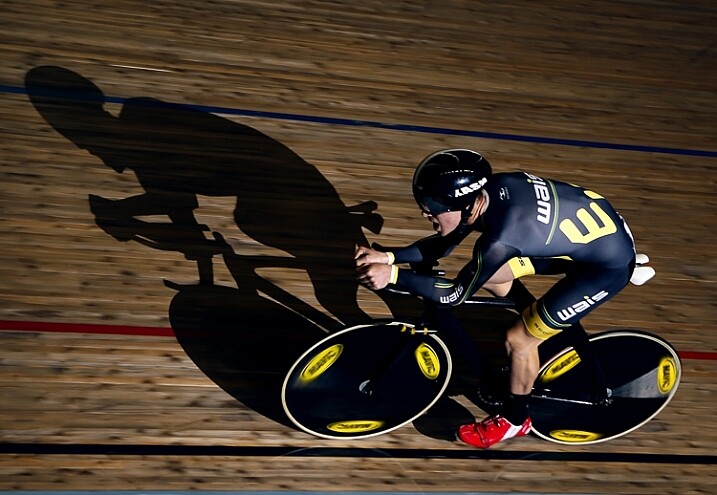
1/160, f/2.8 ISO 100 © Daniel Smith / Getty Images.

1/160th, f/2.8 ISO 100 © Daniel Smith / Getty Images.

Consider the image above. If you ask me what the camera settings for this image were, I will gladly tell you that this was shot at 1/160th, f/2.8 and ISO 100. But what this doesn’t tell you is that I had a speedlight on the ground, off to camera right, at full power. The majority of the light in this image is coming from the flash, with very little ambient (available light) influencing this image at all. Knowing just the settings will not help you to understand how this image was made. There is more to the image than just the camera settings.

The camera settings here are geared more toward the speedlight, as it is quite a distance from the rider. The slower shutter speed is just below sync-speed, which allows for more power of the flash to affect the image (high-speed sync decreases the flash output range) and it also adds a slight blur to the wheels, which gives a nice sense of speed to the image. I used f/2.8 again to aid in the power of the flash, because my ISO was low to reduce the amount of ambient light. The flash is also freezing the majority of the action here.

Knowing why those settings were used, is far more important than just knowing the settings by themselves. It’s knowing the why, that will help you in your journey as a photographer. As the saying goes, “Give a man a fish and you feed him for a day; teach a man to fish and you feed him for a lifetime.” The same principle is at work in photography. Even if I was with you, and told you the settings to use, what will you do when you are alone? You need to understand why those settings have been used.

Reading an image

When looking at an image, understanding what and why you like it, will be of great benefit to you. This is something that you will develop more and more, as you mature as a photographer. Just a hint, it’s not the camera settings that made an image great. It could be the location, the lighting (time of day is very important), composition, perspective, focal length, any editing techniques used, etc., that all worked together to make the final piece. Each one of these is no more or less important than the next, and they all need to be considered.

For me, moving from obsessing over camera settings, to these other factors that influence a photo, was somewhat of an epiphany for me, and made me realize that photography may not be as simple as I once thought it was!
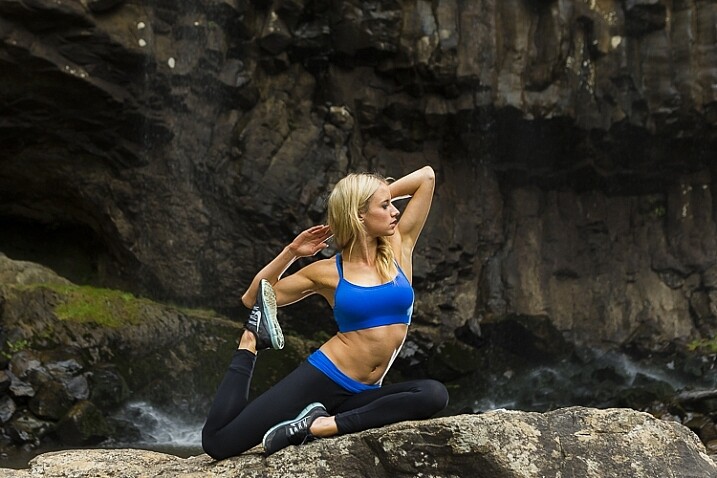
With this image, I used 1/160sec, f/4 and ISO 400. I also have two flashes fired remotely; one camera-right just behind the model giving the rim light on her front side and arms etc. I also have my key light placed at camera left and at ~ 45-degree angle facing the model. Both lights are un-modified (bare-head, or bare-bulb).

With this image, I used 1/160th, f/4 and ISO 400. I also have two flashes fired remotely; one camera-right just behind the model, creatng the rim light on her front side and arms. I also have my key light placed at camera left and at approximately a 45-degree angle, facing the model. Both lights are un-modified (bare-head, or bare-bulb).

As you advance in photography, you will slowly develop a skill that is often referred to as reading an image. This is were you look at an image, and begin to work out how it was created.

For instance you will be able to have a rough idea of the position of the camera, any lighting setups that were used, etc. This is something that you will build upon as you become more experienced. Unfortunately, this is where the magic of photography seems to end. At first, you are in awe of what you captured, when you didn’t quite know how you got it; it all seemed to work like magic. But as you begin to read images, and dissect how they were crafted, that magic can seemingly disappear.

Here I used 1/1000sec to freeze the action, f/3.5 to give less depth of field and ISO 6400 to fill in the exposure gap. The ISO is quite high as this is at a night game. © Daniel Smith / Getty Images.

Here I used 1/1000th to freeze the action, f/3.5 to give less depth of field, and ISO 6400 to fill in the exposure gap. The ISO is quite high as this was a night game. © Daniel Smith / Getty Images.

But before you being to to read photos, you must first be very comfortable with not only the three exposure elements (aperture, shutter speed and ISO), but also how they visually affect images. Once you fully understand each element, you will be able to look at an image and say, “They’ve used a fast shutter speed for this” or, “The aperture used was very wide”.

You may not be able to determine the exact camera settings, but you will be able to put yourself in a much better starting point than when you first begun, when you had no idea where to begin! This illustration gives a very quick visual representation of how shutter speed, aperture and ISO affect the look of an image.
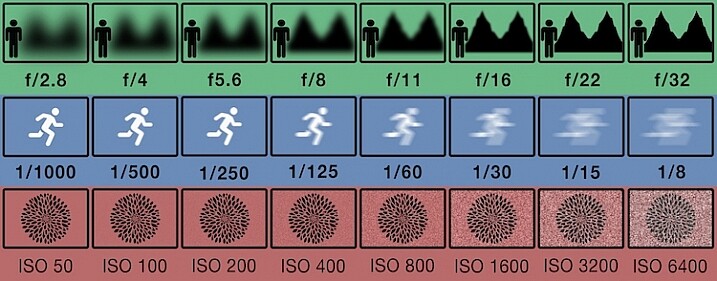
This illustration gives a visual guide to how aperture, shutter speed, and ISO affect an image. *this is just an illustration and does not necessarily give exact representation for each.

This illustration gives a visual guide to how aperture, shutter speed, and ISO affect an image. *Note: this is just an illustration and does not necessarily give exact representation for each.

Conclusion

So you now know why asking, “What camera setting did you use?” is not the most helpful. But rather than leave you there, let’s look at some alternative questions you can ask, while you develop your image reading skills, and get some education under your belt:

  • How did you create this image?
  • What post-processing methods did you use?
  • How did you achieve (whatever part you are most intrigued about)?
  • What camera/lens combination did you use?
  • Why did you use that specific camera/lens combination?
  • Why did you use those particular settings?
  • What was the lighting like?

Now you are armed with some alternative questions to ask that will give you a better insight to how it was made, when you see an image you like.

With this in mind, what questions would you ask about this image? Would you still ask for the camera settings, or how this image was created?
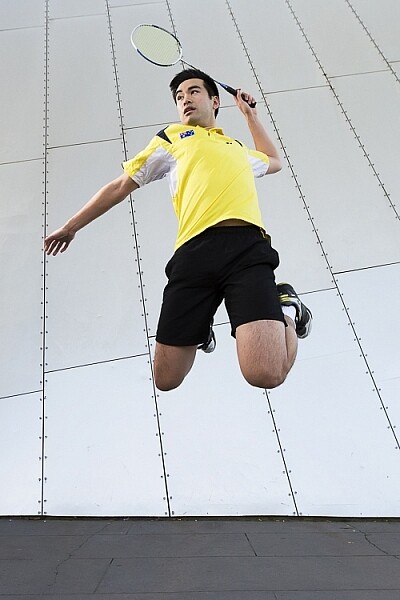
Fig 9

googletag.cmd.push(function() {
tablet_slots.push( googletag.defineSlot( “/1005424/_dPSv4_tab-all-article-bottom_(300×250)”, [300, 250], “pb-ad-78623” ).addService( googletag.pubads() ) ); } );

googletag.cmd.push(function() {
mobile_slots.push( googletag.defineSlot( “/1005424/_dPSv4_mob-all-article-bottom_(300×250)”, [300, 250], “pb-ad-78158” ).addService( googletag.pubads() ) ); } );

The post Why Asking What Camera Settings Were Used is Not as Helpful as You Think by Daniel appeared first on Digital Photography School.


Digital Photography School

 
Comments Off on Why Asking What Camera Settings Were Used is Not as Helpful as You Think

Posted in Photography


Become a Better Photographer By Asking One Simple Question

06 Dec

A Guest Post By: John Davenport

Let’s be honest whether it is coming up with portrait posing ideas, photographing the stars, or avoiding danger in the field we all have a common goal here – gain more knowledge and put it to use in our photography – but there comes a time when we must be our own teachers.
We must venture out away from the tutorials, the guidebooks and those YouTube videos to simply do something for ourselves, without fear, and without guidance. Just with the knowledge that we already have in our heads. My friend, that is what this question is all about. 

What Happens When I Do This?

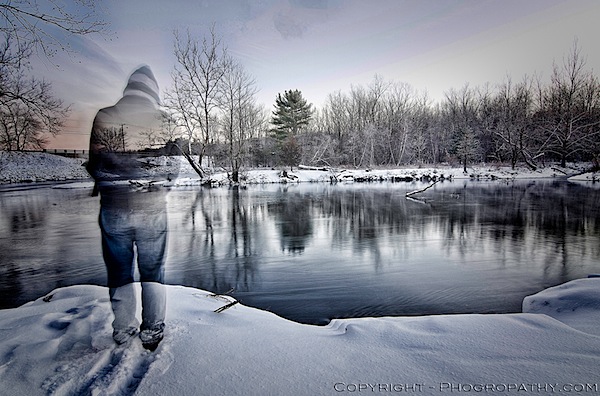
Image One.jpg

If I had not tried something different, something out of my comfort zone, I wouldn’t have been able to capture this photograph. I was attempting to create an HDR composite, but I wanted to see if I could create one with me in the frame. I’d never done this, I hadn’t even attempted it, so I just set my camera up to capture the brackets, put it on a timer, and walked into where I thought would be a good place to stand. However, while the camera was still taking the shots, I left the scene before the shutter had closed for the final time, and thus – a ghostly figure.

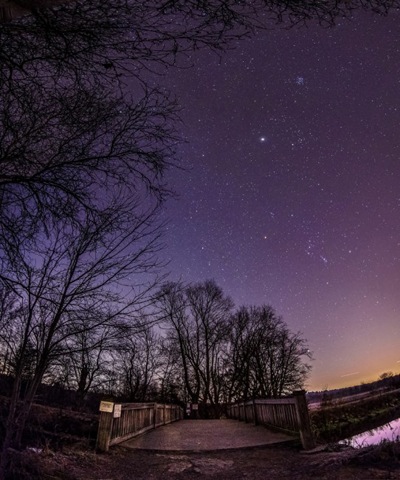
Image Two.jpg

Another example is this photograph of the night sky. It actually consists of four separate landscape orientated images stitched together to create a vertical panorama with a fisheye like effect to boot. I talk in a bit more detail about how I created this vertical panoramic image on my own site, but if you’re listening to the message of this post, you probably shouldn’t have clicked on that link ;) .

It Takes Courage

Tutorials and guides make life easy. Follow the steps and you’ve got a great photograph, but is it original?
It takes courage to be able to do this style of learning and even more so to share your photographs with the world. You have to accept the fact that you’re going to make mistakes, you’re going to feel like you’ve wasted some time, and you’re going to have people tell you that you’ve done it all wrong, but to that I say all this is part of a good learning process.

Don’t Stop With Taking the Photo

Apply this no-holds-bars-experimentation-attitude to all aspects of photography and yes, maybe even to life as well.

Whether you’re using Instagram or Photoshop to edit your photographs asking, what happens if I do this?, is key to creating something different. Sure there’s a lot more to experiment with in the latter, but if you’re always using the same filter and the same blur effect in Instagram are you really learning anything?

What Do You Think?

Is it more important to get out in the field and forget the books once you’ve got the basic knowledge or should you stay up-to-date with all the knowledge that’s being shared on the web every-single-day and miss the possible shot of a lifetime?

John Davenport is an enthusiastic amateur photographer and blogger who shares daily photos on his site Phogropathy. You can also find him on Facebook and Twitter.

Post originally from: Digital Photography Tips.

Check out our more Photography Tips at Photography Tips for Beginners, Portrait Photography Tips and Wedding Photography Tips.

Become a Better Photographer By Asking One Simple Question


Digital Photography School

 
Comments Off on Become a Better Photographer By Asking One Simple Question

Posted in Photography


Microsoft PowerPoint 2010 – Stop Asking to Save Ink Annotations!

06 Aug

Prevent PowerPoint 2010 from even asking to save ink annotations after a presentation.

When you give presentations with Microsoft PowerPoint 2010, you might choose to use the Pen or Highlighter tools. These can draw attention to a portion of a slide, draw shapes, write text, etc.

After exiting a presentation, PowerPoint 2010 asks if you want to save these ink annotations. However, if you give the same presentation to multiple audiences, the annotations may only be for the benefit of one group of people and do not need to be kept. So why have PowerPoint ask you this when you can configure an option that automatically discards them?…

Read more at MalekTips.
New Computer and Technology Help and Tips – MalekTips.Com

 
Comments Off on Microsoft PowerPoint 2010 – Stop Asking to Save Ink Annotations!

Posted in Technology


Windows Live Mail 2011 – Stop Asking to Send Read Receipts

29 Jan

Configure Windows Live Mail 2011 to ignore read receipt requests instead of prompting you each time.

You may occasionally receive an e-mail via Windows Live Mail 2011 that comes with a Read Receipt request. This is done by the sender to help ensure their messages actually make it to their destinations.

While there are many valid reasons for people to ask for read receipts, you may be concerned about privacy and never want to answer these requests. Thus, instead of always responding no to read receipt requests, you can quickly configure the software to ignore these silently:…

Read more at MalekTips.
New Computer and Technology Help and Tips – MalekTips.Com

 
Comments Off on Windows Live Mail 2011 – Stop Asking to Send Read Receipts

Posted in Technology