RSS
 

Posts Tagged ‘Around’

Nail House: Holdout Building Had Highway Built Around It

21 Jun

[ By WebUrbanist in Abandoned Places & Architecture. ]

nail house highway

China is full of strange stories of so-called ‘nail houses’ – homes of people who refuse to move to make way for a large development project. Still, this one was particularly unique: its owners held out while a whole major motorway was constructed on all sides.

nail house demolition ruins

Situated in Wenling, its owner Luo Baogen refused the compensation deal offered to him and the owners of over 400 nearby properties.  After a full year of waiting with his wife as they were hemmed in by highway, they finally accepted an improved offer from the government and moved.

nail house china mall

In another similar situation, owner and occupant Wu Ping refused an offer (one out of nearly 250 in that case) to move, and found herself surrounded by a sunken pit as shopping mall developers began excavating prior to constructing a new shopping center. Structures in this situation are dubbed ‘nail houses’  because, like a nail wedged deep into a board, they can be stubborn and difficult to remove.

Share on Facebook


[ By WebUrbanist in Abandoned Places & Architecture. ]

[ WebUrbanist | Archives | Galleries | Privacy | TOS ]


WebUrbanist

 
Comments Off on Nail House: Holdout Building Had Highway Built Around It

Posted in Creativity


Sigma 18-35mm F1.8 DC HSM available in July for around $799

14 Jun

sigma18_35.png

Sigma has announced its 18-35mm F1.8 DC HSM Art lens for APS-C DSLRs – the world’s first constant F1.8 zoom -will be available from July at a cost of around $ 799. The lens covers a 27-52.5mm equivalent range, and will be available in Canon, Nikon and Sigma mounts. The lens will offer the depth-of-field equivalent of a constant F2.7 on full-frame, and allow the use of lower ISO settings in low light, which may under-cut the need for some photographers to change formats.

News: Digital Photography Review (dpreview.com)

 
Comments Off on Sigma 18-35mm F1.8 DC HSM available in July for around $799

Posted in Uncategorized


Constellation Portraits: Thread Wrapped Around Nails

03 May

[ By Steph in Art & Drawing & Digital. ]

Kumi Yamashita Nail Art 1

A single, unbroken sewing thread is wrapped around a grid of carefully placed galvanized nails to bring human faces to life in stunningly intricate detail. Artist Kumi Yamashita, best known for light and shadow art, has crafted a series of portraits just as beautifully wrought as any made with more conventional media.

Kumi Yamashita Nail Art 2

Kumi Yamashita Nail Art 7

Kumi Yamashita Nail Art 3

Entitled ‘Constellation,’ for the visual effect of the nails and thread, the series is created on wooden panels painted solid white. Thousands of small silver nails are set into the wood, and Yamashita carefully winds the thread around them, sometimes using an entire spool for a single portrait.

Kumi Yamashita Nail Art 4

Kumi Yamashita Nail Art 5Kumi Yamashita Nail Art 6

Based in New York City, Yamashita was born in Japan and received her Master of Fine Arts degree from Glasgow School of Art. The Constellation series continues Yamashita’s transformation of everyday materials into visually arresting images that challenge the way we perceive these items.

Share on Facebook


[ By Steph in Art & Drawing & Digital. ]

[ WebUrbanist | Archives | Galleries | Privacy | TOS ]


WebUrbanist

 
Comments Off on Constellation Portraits: Thread Wrapped Around Nails

Posted in Creativity


Sleeping Around: Pop-Up Hotel in a Shipping Container

11 Apr

[ By Steph in Boutique & Art Hotels & Global. ]

Sleeping Around Hotel 1

Do you want to spend a night on a river bank, a cliff, a meadow or a busy urban street? The ‘Sleeping Around’ pop-up hotel concept can go virtually anywhere you like, setting up quickly in locations where static architecture isn’t possible or practical. Made from four recycled 1950s shipping containers, this traveling hotel opens up possibilities for travelers who want more than just a night of comfort.

Sleeping Around hotel 2

Sleeping Around consists of six shipping containers – four are individual hotel rooms, one serves as a sauna and the sixth is a breakfast and lounge area. Each of the hotel rooms has a floating bed, spacious rain shower, iPod docking station and air conditioning system.

Sleeping Around Hotel 3

The hotel has already spent a few weeks on the banks of the Scheldt in Antwerp, where the containers were procured, and is now on the move. Travelers interested in staying there can track its location on the website, and put in requests for future spots. It can be set up and ready to go within five hours of arriving.

Sleeping Around Hotel 4
This hotel may not be quite as mobile as the super-compact Hotello, which is basically a self-contained hotel room setup in a wheeled trunk, but it opens intriguing possibilities for the future of travel accommodations. If you could choose any location to set up a temporary hotel, where would it be?

Share on Facebook


[ By Steph in Boutique & Art Hotels & Global. ]

[ WebUrbanist | Archives | Galleries | Privacy | TOS ]


WebUrbanist

 
Comments Off on Sleeping Around: Pop-Up Hotel in a Shipping Container

Posted in Creativity


Finding Your Way Around the Mode Dial

11 Feb

This is the first in a series of articles by Andrew S Gibson, the author of Understanding EOS: A Beginner’s Guide to Canon EOS cameras.
01

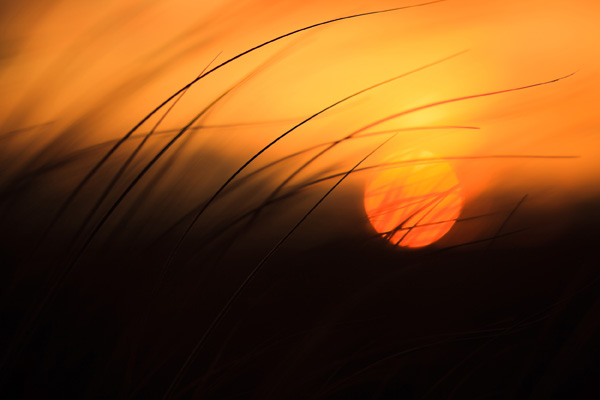
Your camera’s Mode Dial is the gateway to its exposure modes. Knowing which exposure mode to use, and why, is the key to creative photography, and to taking photos like the one above.

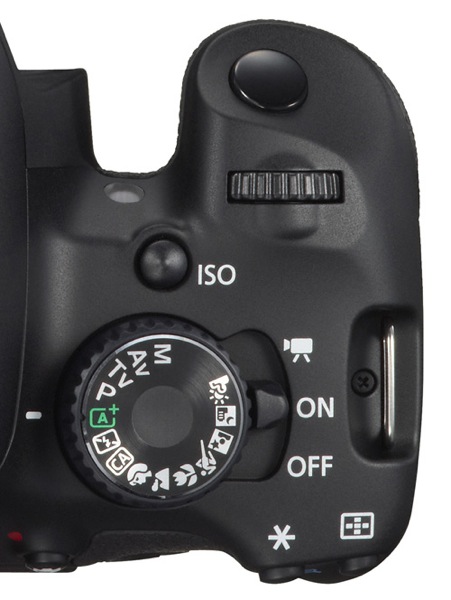
If you want to create beautiful images then you need to know how to control your camera’s settings. It all starts with your camera’s Mode Dial (not all cameras have a Mode Dial, but most do). Here’s what the Mode Dial from the EOS 650D (or Rebel X4i if you’re in North America) looks like. It’s fairly typical of many SLR cameras:
02

As you can see, there are a lot of icons. This can be confusing, especially for newcomers to photography. If you’re new to using an SLR, then how do you know which mode to select?

Let’s start by looking at Full Auto. It’s depicted by the green A+ icon on the Mode Dial of the EOS 650D (the precise term for the fully automatic mode on this camera is Scene Intelligent Auto). With other camera brands the Full Auto mode is also clearly marked by using an icon of a different colour to the rest (Nikon uses green, Pentax and Sony blue).

Full Auto mode is aimed at photographers who don’t know how to use the camera’s more advanced controls. If you’ve just picked up a digital SLR for the first time you can set it to fully automatic and start taking photos even if you know nothing about photography.

03

There are several other fully automatic modes on the EOS 650D’s Mode Dial (see above). Not all cameras have these modes (they are noticeably absent on many models aimed at semi-pro and professional photographers). They have names like portrait, landscape, close-up mode etc.

They are also aimed at photographers who don’t know how to use the more advanced controls on their camera. Their use is straightforward. If you’re taking a portrait, for example, then just set the camera to portrait mode. You don’t need to know anything about the camera or how it works to do this.

Fully automatic modes are very helpful for photographers that don’t know much about how their camera works. But they are too restrictive to be useful to creative photographers. On Canon EOS cameras, for example, you can’t change the white balance, Picture Style, autofocus mode or shoot in Raw in the fully automatic modes. Neither can you override the camera’s selected aperture, shutter speed and ISO settings. You can’t even use exposure compensation. You are locked into the settings the camera selects, and there’s nothing you can do about it. The fully automatic modes on other manufacturer’s cameras have similar restrictions.

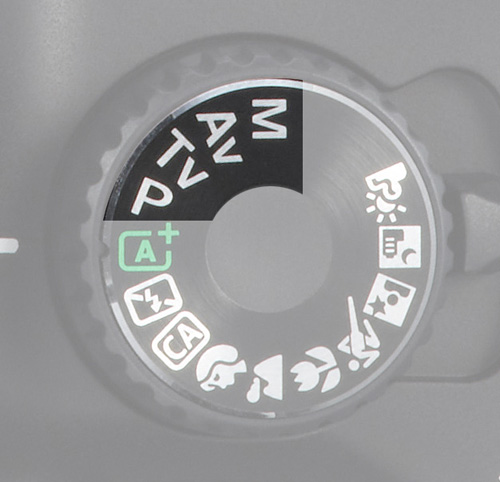
The creative half of the Mode Dial
04

Now, these are the modes that creative photographers are interested in! They are Program Auto Exposure (P), Aperture Priority (Av on Canon EOS cameras), Shutter Priority (Tv on Canon EOS cameras) and Manual (M).

I’m a great believer in keeping things simple. You’ll find the only exposure modes you need in this section of the Mode Dial.

If you’re new to photography, your task as a creative photographer is to move away from the fully automatic modes and start using Program, Aperture Priority or Shutter Priority as soon as you can.

Once you’re comfortable with using these modes, you can also consider using Manual mode. There are some compelling reasons for doing so (I discussed them in another article here).

Let’s take a brief look at the benefits of Program, Aperture Priority and Shutter Priority modes:

Program Auto Exposure (P)

Often overlooked, Program is a surprisingly useful exposure mode. It works like this: you set the ISO and the camera sets the shutter speed and aperture according to the reading from its built-in exposure meter.

Many cameras now also let you use Auto ISO. With Auto ISO activated, the camera also selects the ISO. You can usually restrict the upper (and sometimes the lower) end of the ISO range available to the camera so that it doesn’t set an ISO that is too high.

At first glance, Program seems nearly the same as Full Auto. But the differences are crucial. You retain full control over settings like image quality (ie Raw or JPEG), white balance and Picture Style. You can use exposure compensation to override the camera’s exposure settings. And if you don’t like the aperture/shutter speed combination selected by the camera, you can use Program Shift (that’s Canon’s term, check your manual if you have a different brand of camera) to nudge the selected settings one way or the other.

In other words, while the camera is in an automatic mode, you stay in control of the settings. This is crucial for creative photography.

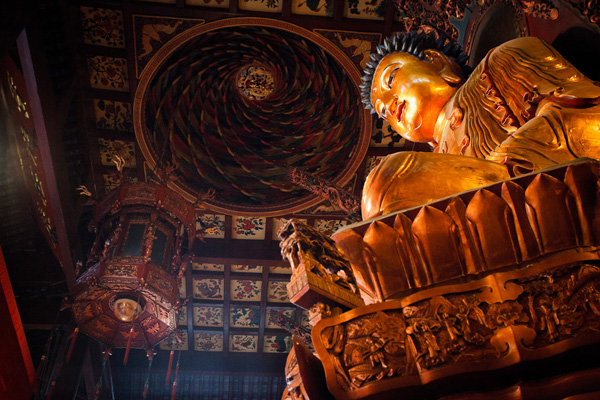
This is the sort of photo you might take in Program mode. Neither the aperture nor the shutter speed are particularly important:
05

The next two exposure modes really let you get creative:

Aperture Priority (Av)

I’m sure plenty of readers are already aware of the effect of aperture on the photo. For those of you who aren’t, here’s how it works. There are three approaches to using aperture:

06

1. You use a wide aperture to take a photo with shallow depth-of-field. You know those beautiful portraits you’ve seen with the background completely out of focus? That’s the sort of thing you can achieve with a wide aperture. Some photographers buy prime lenses (which have wider maximum aperture settings than zoom lenses) just to take advantage of this characteristic. I created the above portrait with an 85mm lens set to f1.8.
07

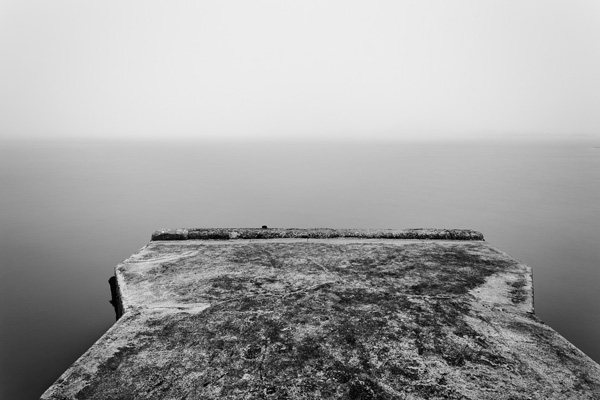
2. You use a small aperture to ensure that the entire scene is in focus from front to back. This is the opposite approach and one often used by landscape photographers who want everything within the scene to be rendered sharply. It’s the opposite to the first approach. I selected an aperture of f16 to create the above landscape image.

08

2. You use a middle-of-the-road aperture, that is one somewhere in the middle of your lens’s aperture range, to create a photo where part or most of the scene is in focus. Parts of the background may be out of focus, even if you have to look closely to see it. This is the sort of approach you would take when you want the background to be recognisable, but it’s not important for it to be completely sharp. The above photo is a good example, taken with an aperture of f5.6.

Aperture Priority works very simply. You set the ISO and the aperture, and the camera sets the shutter speed required to give the correct exposure.

Shutter Priority (Tv)

You use Shutter Priority when you want to set a certain shutter speed to record any movement within the frame a certain way. Again there are three approaches:

09

1. Set a fast shutter speed to freeze motion. This is what sports photographers do when they freeze the motion of athletes in mid-leap. I used a shutter speed of 1/2000 second for the above photo.
10

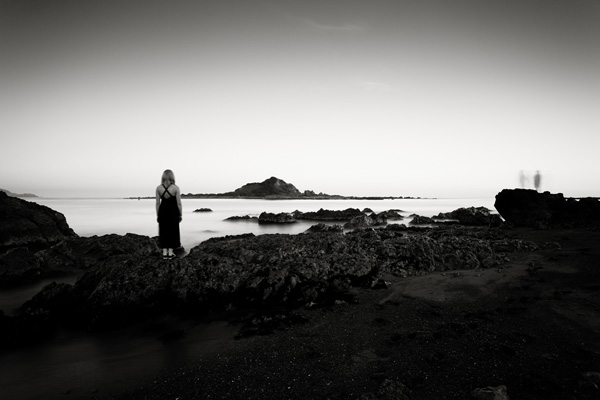
2. Set a slow shutter speed to blur any movement within the scene. You would normally set the camera on a tripod to support it when you do this, although you can also use creative techniques like panning if you are hand-holding the camera. I used a shutter speed of 30 seconds and asked my model to stand still to create the photo above.

3. Set a middle-of-the-road shutter speed that freezes most motion and lets you take a photo free from camera shake. This is the typical approach that many photographers take most of the time. But exploring fast and slow shutter speeds is fun and creative.

Shutter Priority also works very simply. You set the ISO and the shutter speed, and the camera sets the aperture required to give the correct exposure.

Conclusion

There are only three modes you really need to use on your camera: Program Auto Exposure, Aperture Priority and Shutter Priority (some of the others, such as Manual or Bulb mode, will come in useful as your skills develop). But as for the fully automatic modes on your camera, it’s best to forget about them completely. They will hold you back, and prevent you from getting the full potential out of your camera.

This article is the second in a series. The next one will take a close-up look at your camera’s colour and contrast controls.

11

Understanding EOS

Andrew S Gibson is the author of Understanding EOS: A Beginner’s Guide to Canon EOS cameras. The use of the Mode Dial is one of the topics discussed in-depth within the ebook.

Post originally from: Digital Photography Tips.

Check out our more Photography Tips at Photography Tips for Beginners, Portrait Photography Tips and Wedding Photography Tips.

Finding Your Way Around the Mode Dial


Digital Photography School

 
Comments Off on Finding Your Way Around the Mode Dial

Posted in Photography


Let Them Run Around: Photographing Children

16 Jan

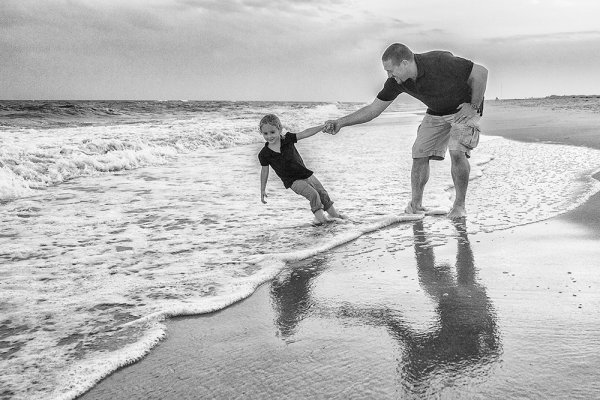
The girl in this photo was like the Energizer bunny- she wouldn't sit still! This photo was taken as part of a family portrait session. The posed shots were challenging because three young children didn't want to sit still. Once we allowed her to play in the surf a little, we got much better shots of her.

I am often asked by people, “What can I do to get my children to sit for a photo?” Children can be among the most compelling of subjects to photograph, and as a professional, one of the most profitable.  But children have this odd tendency to want to move around, and not sit still.  This can at times be frustrating when looking for that perfect portrait.  To combat this, as a photographer, a change in mindset is in order. Rather than trying to force the child to sit still, try allowing the children to move around.  Let them get involved in exploring their surroundings. No, you won’t get the traditional portrait of the subject sitting in front of the camera, but you may just get something better, more natural, and more fitting with the child’s personality.

Children can sometimes be the hardest subjects to photograph because they become self conscious in front of the camera.  The worst thing I’ve ever heard a parent say to a child when being photographed is something along the lines of “Let’s see a REAL smile!”  Parents think they are helping but saying such things makes the child wonder what’s wrong with the smile they just gave, and the next one will invariably be worse.  By putting children in their own element, allowing them to explore, to play, you elicit a more natural response that shows their true personalities.

This shot was taken in the child's own home. She was shy around the camera and wouldn't sit still for me. By allowing her to roam around, talk to me, get to know me, she let her guard down, and I was able to get some candid shots of her.

One of the ways to encourage children to be themselves is to put them in a setting that they’ll want to explore. A studio setting, while great for the photographer, can be a nightmare for children.  The lighting, the stands, the backgrounds are at times intimidating and at others distracting.  If a child is going to be distracted, have them be distracted by something that will make a great picture. Often, when I am approached by people to photograph their children, I’ll suggest a setting like a beach, a park, or even their own bedroom. These types of settings put them at ease. Once they are at ease, a variety of shots, including the traditional portrait, can be captured.

Another tack to take would be to schedule the session to specifically be a play session.  In the winter, with snow on the ground, a hillside with sleds can be an ideal setting for capturing children.  Bring a couple of sleds and let them have fun! Build a snowman! Have a snowball fight! In the summer, at the beach, playing in the water and in the sand provides a wonderful glimpse into children’s personalities. A pool will work just as well. Any park setting with a jungle gym is a great starting point for a children’s session. Let them climb, let them swing, let them get dirty.

Get the kids out and let them play!  Just be sure you are ready with the camera when they do.

In the winter, a snow-covered hillside can be the perfect setting for a children's session.


Post originally from: Digital Photography Tips.

Check out our more Photography Tips at Photography Tips for Beginners, Portrait Photography Tips and Wedding Photography Tips.

Let Them Run Around: Photographing Children


Digital Photography School

 
Comments Off on Let Them Run Around: Photographing Children

Posted in Photography


Wandering Around Hong Kong: A friday in Mong kok

29 Dec

Please Like, Rate, Comment and Favorite:) It doesn’t really have a story again, like my other vids. but yeh:P This was just put together out of pure boredom. This was filmed on a friday in mong kok with gabrielle salonga and prisca ng. All footage’s were filmed in Mong Kok, Kowloon, Hong Kong This collection of video’s were filmed with my Nikon D300s paired with a Nikkor MF 35mm f/2 lens. Song: Over The Pond- By The Album Leaf


DSLR Tips – Choosing an “All around” lens

15 Dec

The process of deciding on a “walkaround” – “carry around” lens is different for everyone but here is some talk on the subject.


Rock Crawler playing around at Stillwell

11 Dec

302 Ford, propane, 44s, D60, Corp 14, Stak T-case

#5326/5328/5335 |SUBSCRIBE/RATE VIDEO TOO =)! MABSTOA GUN HILL BUS Aftermath of the 2010 Blizzard in EAST TREMONT, THE BRONX ENJOY! Video Taken: Dec 28, 2010

 
Comments Off on Rock Crawler playing around at Stillwell

Posted in Nikon Videos


Shops Pop Up Around Basement Windows in Urban Sofia

04 Dec

[ By Steph in Global & Travel & Places. ]

Once the Berlin Wall came crashing down in 1989, many surrounding nations – including Bulgaria – began to escape the grip of communism. But the ability for Bulgarian people to start businesses of their own in the capital city of Sofia was hampered by the high rents of urban storefronts. That’s when these enterprising people began opening ‘klek’ shops – small pop-up stores organized around basement windows.

Artist Ivaylo Getov has documented many of these fascinating little storefronts in a series on DeviantArt. The photos depict a variety of cases displaying examples of the wares found inside, or simply posters printed with their images. Customers crouch to view the selection of drinks, snacks, cigarettes and other small items.

Twenty-three years after klek shops were borne of necessity, they’re beginning to disappear, remaining in small numbers mostly for the benefit of tourists. While visitors from other countries, including America, are likely accustomed to vendor carts and other sidewalk shops in their hometowns, the sight of these makeshift shops – which fold closed and lock like shutters when business hours are over – is still unusual and intriguing.

See the whole series at DeviantArt.


Want More? Click for Great Related Content on WebUrbanist:

Top Pop-Up Shops: 14 Temporary Retail Stores

Literally erected overnight, pop-up shops can appear just about anywhere and aim to dazzle onlookers with unusual exteriors and stunning interior designs.
10 Comments – Click Here to Read More »»


Fresh Blends: 12 Cool Multi-Functional Coffee Shops

Multi-purpose ‘combo’ coffee shops combine a beverage bar with other services like washing clothes, printing documents or getting a pedicure from a tank of fish.
101 Comments – Click Here to Read More »»


Share on Facebook


[ By Steph in Global & Travel & Places. ]

[ WebUrbanist | Archives | Galleries | Privacy | TOS ]


WebUrbanist

 
Comments Off on Shops Pop Up Around Basement Windows in Urban Sofia

Posted in Creativity