RSS
 

Posts Tagged ‘Architecture’

How to Make an Architecture Space Look and Feel Natural in a Photo

24 Feb

The New Age of Architectural Photography

Gone are days of interior photos looking like furniture showrooms. So, too, are the days of exterior photos being full of uplighting accents and HDR effects.
NewAge2

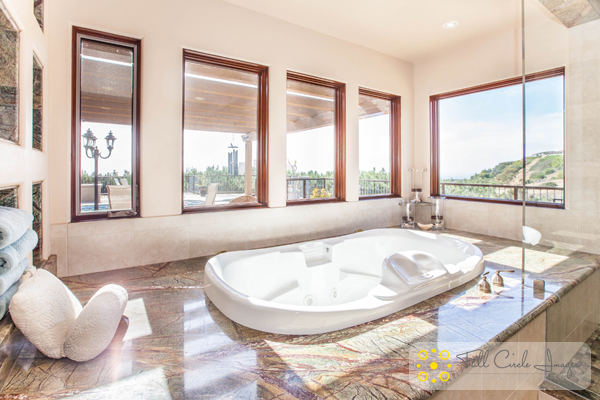
Today, architectural photography is all about lifestyle. The appeal of luxury has shifted away from the material luxury and flashy spaces of high society to an intangible luxury that transpires during quiet moments with loved ones. It’s more about quality of life than quality of goods.

When shooting interiors, your goal as photographer is to create a space that makes the viewer want to be there. You want them to imagine themselves in that space, and most importantly, to escape to it.

As a photographer, you not only have to read a space for its light, material, and flow, but you also need to feel the space. Consider a sleek urban condo in a downtown high-rise versus a historic Victorian house in family neighborhood versus a new construction in a suburban development. Each architectural development stirs up different feelings, and these are what you want to capture in your photography.

So how do you transfer these feelings into your images? Here are four steps to get you started.

1. Set the Stage

Focus on the personality and live-ability of the space. Luxurious bouquets of roses set in an empty room at sunset won’t do the trick. Instead, emphasize the day-to-day moments — an open book and some cushions on the seat of a bay window, a comfy throw blanket draped over the couch, or jewelry laid out on the dresser of a walk-in closet.

NewAge1

2. Mixing Cleanliness with Reality

Yes, the space should be clean. Yes, it should be cleaner than usual. However, it shouldn’t feel sterile. You want it to feel lived in, but not dirty.

All flat surfaces should be wiped down and cleared, except for staging items. Every light fixture should be in working order since they’ll be turned on to ensure the space has adequate lighting. Floors should be mopped or vacuumed. Any areas where the carpet or hardwood floors look old and worn, such as in high traffic areas, should be covered up with inexpensive area rugs. Be aware of any clutter that we get used to in our day-to-day life. A small pile of clutter goes a very long way in photos, and so all those stacks of mail, magazines, and books should be tucked away out of sight.

NewAge3 2

3. Use Optimal Lighting

A well-lit space is crucial! You want to create a look that feels natural, happy, and real, so use all of the light resources available to you. Photos should be shot during the day so you can take advantage of any soft sunlight that pours in.

As a secondary light source, be sure to turn on all of the lights. Yes, all of them. They’ll be turned on to give the space a warm and inviting feel. Long exposures shot on a tripod help brighten up shadows a bit, but you can also use a flash to bounce light off walls and ceilings to fill in shadows.
NewAge4

4. Vary the Photo Set

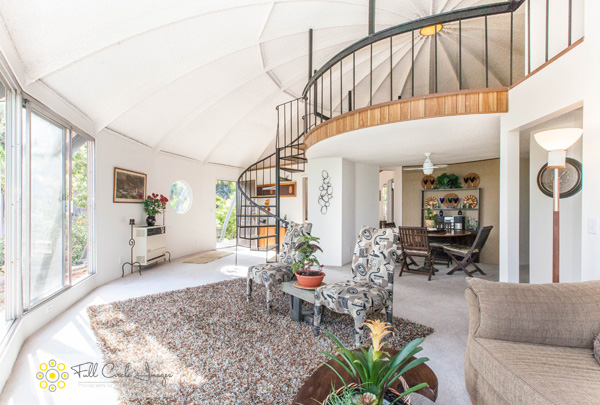
Wide shots are vital and dramatic and show the overall space well. However, details can be just as compelling.

Materials and traditional luxuries themselves are not important to show in detail. Rather, you must show the personality in the details. Staged items are perfect for shooting close-ups and setting the tone.

That pen and paper on the desk. The pastry and coffee cup on the side table next to an arm chair. The puzzle in progress by the bay window with a view. The tea kettle steaming with boiling water on the stove. These touches take your shots from a simple set of interior photos to the story of a lifestyle.

What are your tips for giving architectural photography a natural look and feel? Share your thoughts and photos in the comments section below.

googletag.cmd.push(function() {
tablet_slots.push( googletag.defineSlot( “/1005424/_dPSv4_tab-all-article-bottom_(300×250)”, [300, 250], “pb-ad-78623” ).addService( googletag.pubads() ) ); } );

googletag.cmd.push(function() {
mobile_slots.push( googletag.defineSlot( “/1005424/_dPSv4_mob-all-article-bottom_(300×250)”, [300, 250], “pb-ad-78158” ).addService( googletag.pubads() ) ); } );

The post How to Make an Architecture Space Look and Feel Natural in a Photo by Natalia Robert appeared first on Digital Photography School.


Digital Photography School

 
Comments Off on How to Make an Architecture Space Look and Feel Natural in a Photo

Posted in Photography


Brutal London: Paper Miniatures of Concrete Architecture

14 Feb

[ By Steph in Drawing & Digital. ]

brutal london 1

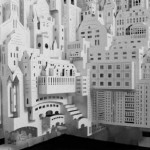
Rendered in minute detail right down to curtain colors, satellite dishes and graffiti, these paper miniatures mimic London’s iconic Brutalist buildings, including the Balfron Tower and Space House. Two housing blocks that have been at least partially demolished are among the 3D cut-out models celebrating and preserving these oft-maligned concrete structures.brutal london 2

brutal london 3

Zupagrafika design studio carefully studied each building, taking photographs from all angles to capture the smallest details. The collection of five models is available for €5 each at their webshop, arriving in a flat pack so you assemble the components yourself. The kits include short notes on the architects, the year of construction and the location of each building.

brutal london 4

brutal london 5

brutal london 6

The studio previously created paper cut-out models of modernist buildings in Warsaw as well as notable elements of the urban fabric throughout Poland that were first designed in the ’60s or ’70s, including advertising columns, cars, traffic lights and ticket validators.

brutal london 7

brutal londo 8

brutal london 9

Brutalist architecture is one of the 20th century’s most controversial styles, criticized for being too cold and confrontational and nearly always made of raw concrete. Maybe it’s not for everyone, but anyone with a soft spot for its harsh angles and unapologetically utilitarian nature can now create their own little cityscapes on a table or shelf.

Share on Facebook


[ By Steph in Drawing & Digital. ]

[ WebUrbanist | Archives | Galleries | Privacy | TOS ]


WebUrbanist

 
Comments Off on Brutal London: Paper Miniatures of Concrete Architecture

Posted in Creativity


Project Sprawl: Mesmerizing Algo-Generated Game Architecture

28 Dec

[ By WebUrbanist in Gaming & Computing & Technology. ]

world building architectural model

Facing down the difficult challenge of creating an ever-changing urban gaming environment, this digital designer went with a cheap alternative that is aesthetically compelling and could have impacts beyond cyberspace.

world building generative algorithm

The game, Project Sprawl, is something of a cross between the Grand Theft Auto series and classic roll-playing games, but most critically: its metropolitan context needs to be dynamic and full of surprises, evolving over time like a real city.

game buildings brutalist urbanism

Low on funds and looking for cheaper and easier world-building solution than stock skylines or fully-custom options could provide, Cedric Kerr “decided to develop software that could auto-generate complex cities, from street maps to skyscraper architecture, for his characters to inhabit.”

game building stretch animation

As these animated illustrations show, there are rules to the way the generative algorithm constructs buildings – starting with a simple baseline, windows and doors, cantilevers and split facades morph and evolve in mesmerizing ways.

gaming architecture stretch pull

From Wired, “The solution to Kerr’s urban planning problem came in the form of Unity, a game engine often used to design game worlds from the size of a room to entire solar systems. The result was a set of building blocks that could be pulled and stretched in any direction with facades that would update in real time. Kerr could quickly sketch an outline of a foundation and in seconds have a unique building automatically populated with windows, doors, and other architectural details.”

game building city grids

The result of this project is a kind of architectural vocabulary that could be useful for deconstructing architecture, creating simulations or generating backdrops for conceptual projects. From Kerr: “the idea is that each building is decomposed into a set of rules forming a grammar that describes each stage of the process. These rules are hierarchical so a building is made up of facades, facades are made up of floors, floors are made up of tiles, tiles contain windows and so on.”

Share on Facebook


[ By WebUrbanist in Gaming & Computing & Technology. ]

[ WebUrbanist | Archives | Galleries | Privacy | TOS ]


WebUrbanist

 
Comments Off on Project Sprawl: Mesmerizing Algo-Generated Game Architecture

Posted in Creativity


Future Materials: Lightweight Carbon Fiber Architecture

11 Dec

[ By Steph in Conceptual & Futuristic & Technology. ]

carbon fiber architecture 3

The buildings of the future might just look as lightweight as a spiderweb, seeming as if they could blow away at any moment, while actually being incredibly strong. In the past, architects had to choose between delicate looks and durability, but the development of new composite materials unveils all sorts of possibilities. The c-LITH research project demonstrates the strength of digitally fabricated carbon fiber filaments stacked in small sections.

carbon fiber architecture 2

carbon fiber architecture 6

The team created a prototype that’s 14 feet tall and 8 feet wide at the base, yet uses only 30 pounds of material. It’s made of 143 wound carbon fiber filament ‘bricks’ that can be scaled up for architectural production. The use of carbon fiber has been fairly limited in architecture, as it usually comes in panels like those used for airplanes, and isn’t exactly cost-effective.

carbon fiber architecture 4

carbon fiber architecture 5

Michigan-based architecture firm Area used inexpensive cardboard molds to create the sections using carbon fiber filament pre-pregnated with epoxy resin to keep it malleable until baked. They built their own low-heat oven to cure the sections at 260 to keep the cardboard from catching fire. Once finished, the pieces were soaked in water so the cardboard could be removed.

carbon fiber architecture 7

The resulting bricks are stacked into a tetrahedral geometric shape, and pins connect the components, making them easy to assemble and disassemble. The designers see the possibilities as virtually endless, and it’s fun to imagine what could be made with this material at a larger scale.

Share on Facebook


[ By Steph in Conceptual & Futuristic & Technology. ]

[ WebUrbanist | Archives | Galleries | Privacy | TOS ]


WebUrbanist

 
Comments Off on Future Materials: Lightweight Carbon Fiber Architecture

Posted in Creativity


Chinese President Calls for End to “Weird Architecture” Trend

25 Oct

[ By WebUrbanist in Architecture & Public & Institutional. ]

oma strange shaped building

After years of both importing famous designers and copying strange structures from abroad, Xi Jinping, the leader of China’s Communist Party has declared an end to offbeat construction projects going forward. Translated from a two-hour speech on the subject, he was recently quoted as saying: “No more weird architecture.” As yet, it remains unclear whether this is a statement of official policy direction or a tacit warning to developers to play it safe stylistically and work within more conventional cultural styles and typologies.

headquaters china penis shaped

Iconic buildings in the country have been coming under attack for quite some time, but the phallic look of the 500-foot headquarters of the Chinese state newspaper, the People’s Daily, sparked particular outrage, likely leading to his more vocal objection. Crasser comparisons aside, various spheres, donuts and other shaped deemed odd by the party leader have also been critiqued both domestically and on the international social web.

donut shaped structure

bridges river china

Other designs prompting problems for the government in the press include the CCTV headquarters in Beijing by Rem Koolhaas. Still, the theme of genitalia shape comparisons in paritcular, as in the case of the bridges (above) in Chongqing, have caused state media to start censoring search results related to some projects. They are also not fans of advertising their surreal replicas or ghost cities, also unusual byproducts of the recent construction boom. There may be a larger political message at work as well – China’s relatively recent new leadership has been cracking down on decadence and corruption in various other forms.

cctv tower headquarters

cctv tower china

Speaking recently, Xi maintained that Fine art works should be like sunshine from the blue sky and the breeze in spring that will inspire minds, warm hearts, cultivate taste and clean up undesirable work styles.” Sadly for some, his response comes at a time when architecture in China is also drawing a great deal of positive attention, some copycat scandals aside.

Share on Facebook


[ By WebUrbanist in Architecture & Public & Institutional. ]

[ WebUrbanist | Archives | Galleries | Privacy | TOS ]


WebUrbanist

 
Comments Off on Chinese President Calls for End to “Weird Architecture” Trend

Posted in Creativity


Shape-Shifting Architecture: Material Morphs with Heat & Air

10 Oct

[ By WebUrbanist in Conceptual & Futuristic & Technology. ]

flexible-material-modular-p

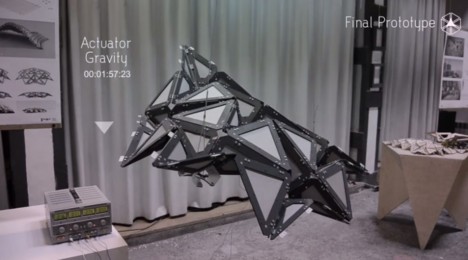
This project asks a question that goes to the heart of how we think of buildings, asking: what if architectural shapes and structures could be more than just stable but also smart, responsive and flexible?

gravity actuated prototype design

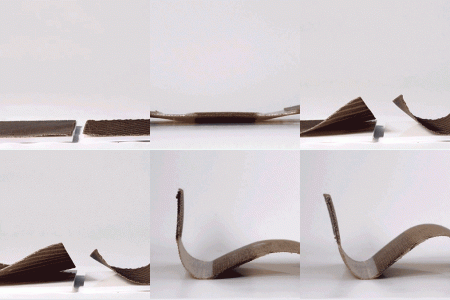
Translated Geometries “is a performative prototype which exploits the Shape Memory Polymer (SMP) properties in order to generate responsive architectural behaviors” – it explores how heat, light, air and humidity can be utilized to deform and reform architectures. For instance, at higher temperatures the material is made more fluid, hardening into a new (or reverting to an original) shape when cooled.

shape shfiting form demo

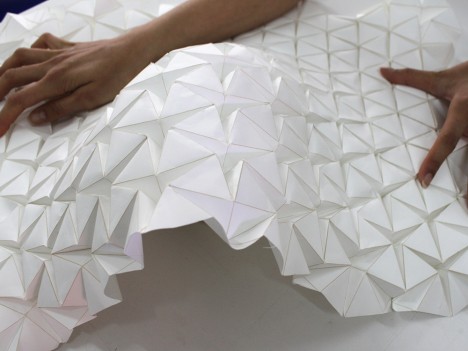
A project of IAAC (the Institute for Advanced Architecture of Catalonia) students, tutors and faculty, this origami-like demonstration model uses triangular modules and responsive intersections to expand a surface to more than four times its original area.

A very early-stage iteration to be sure, there are many possible applications yet to be explored, perhaps first in larger demo versions then eventually in architectural facades and structures. Imagine buildings (or doors), for instance, that opened up naturally by day and closed at night, or let in light and heat when cool but converted to passive cooling via wind when too warm.

Share on Facebook


[ By WebUrbanist in Conceptual & Futuristic & Technology. ]

[ WebUrbanist | Archives | Galleries | Privacy | TOS ]


WebUrbanist

 
Comments Off on Shape-Shifting Architecture: Material Morphs with Heat & Air

Posted in Creativity


Rebel Architecture: 6-Part Series on Global Guerilla Urbanism

23 Sep

[ By WebUrbanist in Architecture & Cities & Urbanism. ]

architecture spider

In a series of six superb videos, Al Jazeera explores the gritty reality of architects and urban designers as activists in destinations from Vietnam and Nigeria to Pakistan and Brazil. Five of these 25-minute episodes are embedded in full as videos below, with summaries to let you see which you may wish to view – that said, each of the six is well worth watching!

abandoned warehouse spain

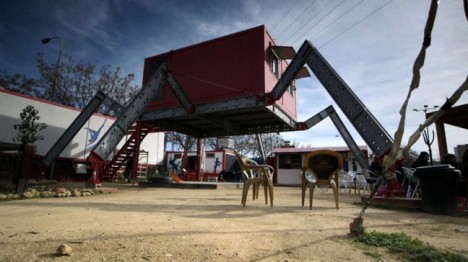
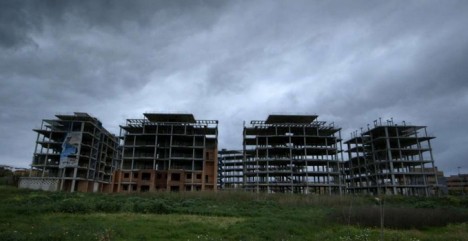
In Guerrilla Architect, Santiago Cirugeda, an architect from Seville who has dedicated his career to reclaiming urban spaces for the public, deals with difficult realities in “austerity-hit Spain, where the state has retreated and around 500,000 new buildings lie empty.”

Fortunately, he notes: “In times of crisis, people come together to find collective solutions.” One of his challenges, as covered in this mini-documentary, is converting an abandoned half-finished factory into a vibrant new cultural center.

architecture of violence

In The Architecture of Violence, Eyal Weizman “explains architecture’s key role in the Israeli occupation of Palestine and the evolution of urban warfare.” He explains that “architecture and the built environment is a kind of a slow violence. The occupation is an environment that was conceived to strangulate Palestinian communities, villages and towns, to create an environment that would be unliveable for the people there.”

In this episode, local Israelis and Palestinians explain in candid interviews “how it feels to live in a landscape where everything, from walls and roads, terraces and sewage, to settlements and surveillance are designed to ensure the separation of the two peoples, while simultaneously maintaining control.”

Next Page – Click Below to Read More:
Rebel Architecture 6 Part Series On Global Guerilla Urbanism

Share on Facebook


[ By WebUrbanist in Architecture & Cities & Urbanism. ]

[ WebUrbanist | Archives | Galleries | Privacy | TOS ]


WebUrbanist

 
Comments Off on Rebel Architecture: 6-Part Series on Global Guerilla Urbanism

Posted in Creativity


LEGO Architecture: 12 Sets Explore Buildings Brick by Brick

21 Aug

[ By Steph in Art & Sculpture & Craft. ]

LEGO Architecture Main

Whether official or fan-created, LEGO architecture sets enable wannabe builders to understand just how some of the world’s most iconic structures come together in terms of architectural elements, form and lines. The brand has created an architecture series exploring “the fascinating worlds of architecture, engineering and construction,” and LEGO enthusiasts – including architects – have come up with a few of their own.

Monochromatic Architecture Studio Set

LEGO Architecture Monochromatic 1

LEGO Architecture monochromatic 3

LEGO Architecture Monochromatic 2

Luring in architects with its monochromatic color scheme that enables the focus to be on form and shape, the LEGO Architecture Studio set is an all-white series containing over 1,200 pieces. An accompanying 268-page book includes the work of famous architecture firms like Sou Fujimoto, MAD Architects and Safdie Architects and covers principles like modules and repetition, creating surfaces, working in context and symmetry. Not only can it strengthen design skills in an average person, it can actually be used by working architects to create 3D models.

Limited Edition Marina Bay Sands Hotel

LEGO Architecture Marina Bay Sands

Rumored to be set for release only in Asia, the limited edition Marina Bay Sands Hotel set recreates Singapore’s striking cantilevered resort. It’s unclear exactly when this set, which was teased in the back of a LEGO instruction booklet, might be available to the public. Marina Bay Sands is the world’s most expensive building and contains a hotel, convention and exhibition facilities, theaters, restaurants and a 150-meter infinity pool on the roof (which is replicated with translucent blue bricks in this set.)

LEGO Towers by Bjarke Ingels Group

LEGO Architecture Bjarke Ingels 1

LEGO Architecture Bjarke Ingels 2

An architecture concept that was inspired by LEGOs is fittingly rendered in the little plastic bricks with this model from Bjarke Ingels Group (BIG.) The model uses conventional LEGO bricks to show off the design for LEGO Towers, a proposal for a residential, retail and hotel development in Copenhagen. It’s at 1:50 scale, uses 250,000 bricks and took five weeks to build.

Fallingwater

LEGO Architecture Fallingwater LEGO Architecture Fallingwater 2

Perhaps the most well-known private residence in America created by an iconic architect, Fallingwater seems like it was made to be recreated in LEGOs, with its blocky stacked silhouette. Frank Lloyd Wright’s most famous design was completed in 1937 and is considered a feat of engineering, its cantilevered floors jutting out over a waterfall.

Next Page – Click Below to Read More:
Lego Architecture 12 Sets Explore Buildings Brick By Brick

Share on Facebook


[ By Steph in Art & Sculpture & Craft. ]

[ WebUrbanist | Archives | Galleries | Privacy | TOS ]


WebUrbanist

 
Comments Off on LEGO Architecture: 12 Sets Explore Buildings Brick by Brick

Posted in Creativity


6 Tips to Take Your Architecture Photography to the Next Level

18 Jul

Liams Seattle

Architectural photography may seem like an incredibly boring subject, but there is lots of creativity involved with shooting buildings, not to mention it’s a rather lucrative way to make a side income as a photographer. However, the rules of photographing a building versus a person are quite different. Whether you are a relatively seasoned architectural photographer looking to refine your approach, or a budding photographer curious about how to create impactful architectural photos, these tips should help take your photography to another level. This post is written for a photographer approaching an official architectural photography assignment, but the tips also apply to casual shooters.

1. Do your homework and see if there are any photos of the space online

Most buildings in the world have been photographed at least once thanks to Google. A quick Google Image search of the space you’re looking to shoot should pull up a variety of photos by both professionals and amateurs. Use the work of others to your advantage. Check to see what angles other photographers may have already shot, and which ones they haven’t. Examine the photos for any potential challenges that may arise, such as tall interiors or exteriors, or areas that look better when naturally lit by a sunset. Do what you can to anticipate your needs on site before you arrive.

Puerto Vallarta

2. Know the geographical aspect of your building

Speaking of natural light, this can be your friend or your foe. Many modern buildings today are being built with lots of features that offer natural light such as floor-to-ceiling windows and skylights. While these may seem great for the actual building occupant, these features can make or break your architectural photo shoot. More than ever, it is important to know the geographical aspect of the building you are shooting. Is it east-facing or west-facing? Depending on the time of day, it truly matters. Be sure to consider the geographical aspect in relation to the time of day you choose to shoot.

3. Always walk through the space first

There are a couple reasons why a walk through is essential. First, it is much easier to remove any clutter or unorganized elements. Two things to always look out for are trashcans and wrinkles in fabrics such as curtains or bed spreads. These are two things that are much easier to remove before you shoot rather than in post-production. Second, think of the walk through as your scouting mission. Look for any “special access” places such as nooks and crannies or elevated spaces, that you may be able to squeeze yourself into to get an alternative view of the space. In this day and age where just about everyone has a camera, capturing stand out photos is about finding the angles of a space that aren’t so obvious.

Hecho Seattle

4. See if the space has been styled

Before you walk through the space, check with your photography coordinator to find out if the space has been staged or styled by a designer. If so, you’re in luck! Staged spaces tend to look like they’re straight out of a magazine with furniture, artwork, and props carefully placed in the area, making your job much easier. If the space hasn’t been staged, you will have to put in more effort to figure out the architectural importance of the space and have these elements shine through in your images. Ask yourself, “without furniture, what is it about this space that makes it special?”. Perhaps it’s the exposed brick and wood beams, or the floor-to-ceiling windows. Whatever it is, make sure these elements become the focal points of your photos.

5. As you begin shooting, watch for vertical lines

When shooting architecture, you almost always want to use a wide-angle lens such as a Canon 16-35mm, but these lenses have a tendency to cause converging verticals. This happens when two parallel lines in an image appear as if they are leaning in towards each other. To make your photos appear more professional, and the architectural subject appear more structurally sound, it is important to correct these converging verticals. The easiest way is to simply change your perspective. Take a few steps away from your architectural subject, or elevate yourself until your vertical lines appear more parallel. Other ways to correct for converging verticals is to fix it in Photoshop, or if you have the budget, invest in a perspective control or tilt-shift lens.

Fairwinds Seattle

6. Elevate yourself

There are two main reasons why you want to get to higher ground while shooting a building. The first is to correct for converging verticals as mentioned above. The second reason is to strive for a different photographic perspective. If you’re lucky, the space you’re photographing may come with a balcony, staircase, or natural element that lets you rise several feet for a taller perspective. However, keep in mind that again this is an obvious element that many other photographers will make a beeline for. This is why in 90% of architecture photography situations it pays to have a foldable, portable ladder or step stool and a monopod with you always. Having these two relatively cheap and lightweight items will help you achieve different, elevated perspectives of interiors and exteriors from atypical angles. Keep them in the trunk of your car; you never know when they will come in handy.

EMP SFM Seattle

Architectural photography at face value may not seem like an interesting subject, but think of it this way: when you travel, how many buildings do you see that you end of taking a photo of? Use these tips not only for approaching a real estate photo job, but whenever you plan to take semi-professional photos of buildings or just for yourself.

Have any other tips you want to share, please do so in the comments below.

The post 6 Tips to Take Your Architecture Photography to the Next Level by Suzi Pratt appeared first on Digital Photography School.


Digital Photography School

 
Comments Off on 6 Tips to Take Your Architecture Photography to the Next Level

Posted in Photography


Experimental Architecture: 14 Boundary-Pushing Pavilions

03 Jul

[ By Steph in Architecture & Public & Institutional. ]

Experimental Architecture Pavilions

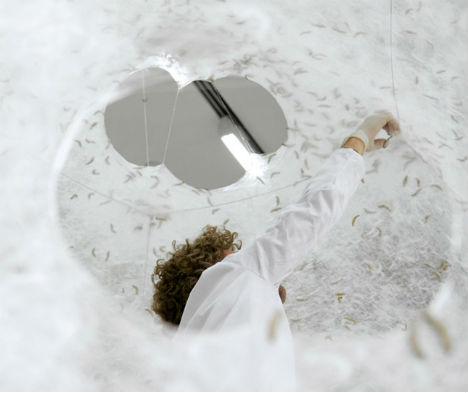
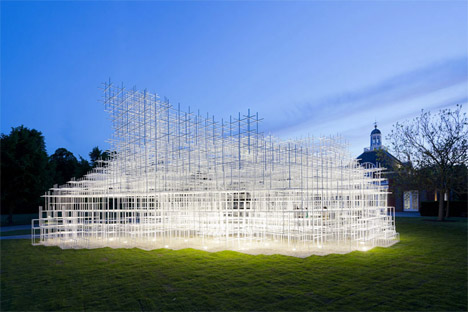
Before a new form of architecture can be executed on a large scale, it has to be demonstrated through smaller structures, making temporary pavilions an ideal way to experiment. These 14 pavilions represent novel and often radical designs and construction methods, from carbon fiber structures woven by robots to living architecture made by silk worms.

Evolving Pavilion Made by Silk Worms
Pavilions Silkworm 1
Pavilions Silkworm 2

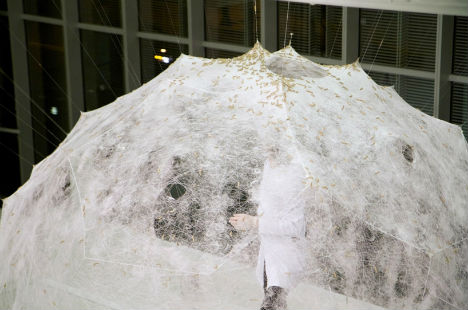
Nature and technology work together on a pavilion that grows and transforms like a living organism. The Silk Pavilion by the MIT Media Lab features a basis of silk threads made by a CNC machine, which grows into a cloud-like structure with the addition of natural netting from dozens of silk worms. The worms were essentially deployed as a biological ‘printer’ to create the secondary structure on top of the geometric base. If the sculpture were to remain in place indefinitely, it could reproduce on its own, with new generations of silkworms constructing up to 250 additional pavilions.

Serpentine Pavilion by Sou Fujimoto
Pavilions Fujimoto 1

Pavilions Fujimoto 2

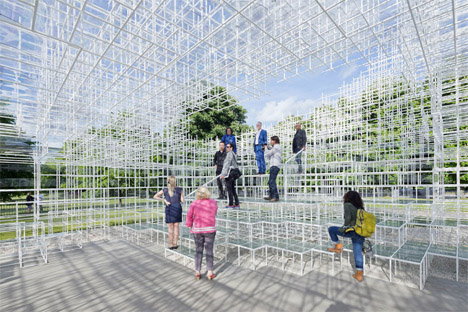
This 2013 Serpentine Gallery Pavilion by Sou Fujimoto is a contradiction in form, translucent yet solid. 20mm pipes are arrange din a lattice form to create a cloud-like appearance, inviting visitors to enter and climb the framework.

Abstracted & Faceted Bloomberg Pavilion
Pavilions Bloomberg 1

Pavilions Bloomberg 2

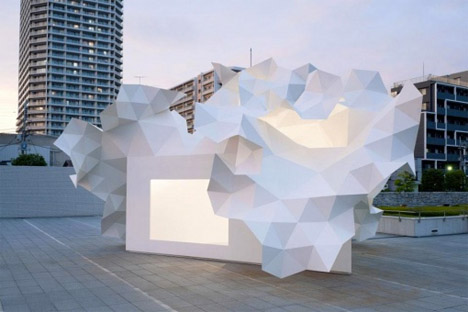
Looking like an oversized piece of paper origami, the Bloomberg Pavilion by Akihasa Hirata is actually inspired by a tree and constructed from pleated metal. “I wondered what would happen if the walls were to keep growing upwards and present an uneven surface like ‘pleats’. Pleats resemble a tree in the way that they spread out and capture the sun and I felt that they would produce a bright, impressive exterior. I also thought that the space beneath this surface would present a relaxed atmosphere, similar to that of tree shade that would be an ideal quality for an exhibition space.”

Carbon Fiber Pavilion Based on Beetle Shells
Pavilions Beetle Shell 1

Pavilions Beetle Shell 2

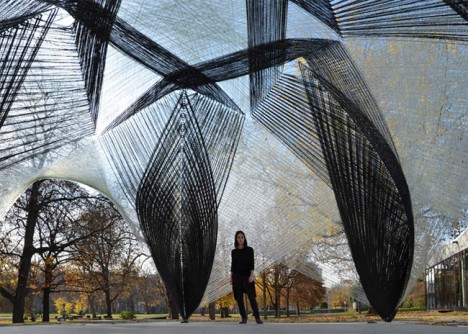
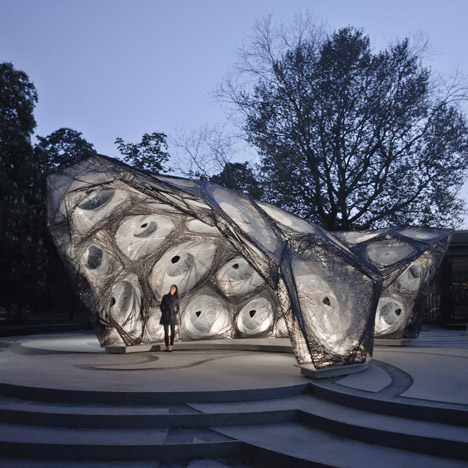
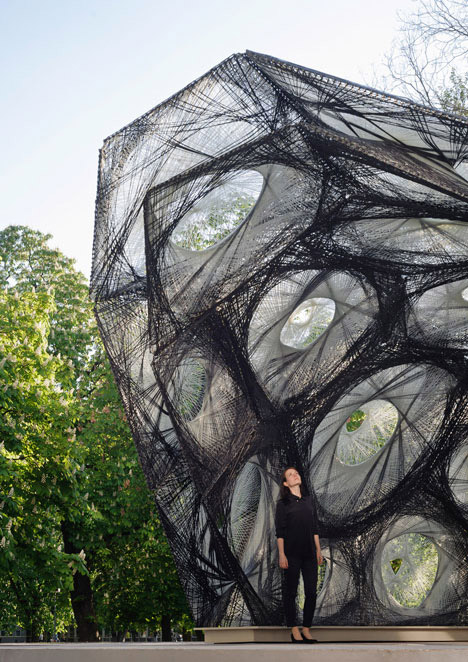
This incredible carbon fiber pavilion inspired by the lightweight shell encasing the wings and abdomen of a beetle was woven by a robot. Installed at the University of Stuttgart, the ICD/ITKE Research Paviliion 2013-14 was fabricated using a custom-built system of robotics used to create a series of modular fiber-composite components. Says team member Marshall Prado, “”It offers not only a unique architectural expression and spatial experience, it is also extremely lightweight and resource efficient.”

Next Page – Click Below to Read More:
Experimental Architecture 14 Boundary Pushing Pavilions

Share on Facebook


[ By Steph in Architecture & Public & Institutional. ]

[ WebUrbanist | Archives | Galleries | Privacy | TOS ]


WebUrbanist

 
Comments Off on Experimental Architecture: 14 Boundary-Pushing Pavilions

Posted in Creativity