RSS
 

Posts Tagged ‘Airports’

FAA expands LAANC capabilities to 100+ new airports

24 May

At the beginning of this month, the Federal Aviation Administration’s (FAA) Acting Deputy Administrator, Carl Burleson, announced that Low Altitude Authorization and Notification Capability (LAANC) would be made available to an additional 109 contract towers. The government agency has acted quickly since the news broke at AUVSI Exponential’s keynote presentation.

The FAA has expanded LAANC to increase access for commercial drone pilots in controlled airspace. Still in beta, LAANC was introduced to the public in November, 2017. Applications such as Kittyhawk, AirMap, and Skyward give qualifying remote pilots approval in real-time to access controlled airspace. Without LAANC, the process of getting approval via a waiver could take up to 90 days.

Approximately 600 airports are now covered by the LAANC capability. The FAA also mentions that the list of facilities taking part in LAANC will change. Some airports will drop it altogether. The full list airports added today can be viewed here.

Some major Class B, C, and D airports were added today including the following:

  • Austin-Bergstrom International (AUS)
  • Hartfield-Jackson Atlanta International (ATL)
  • Nashville International (BNA)
  • Bob Hope (BUR)
  • Denver International (DEN)
  • Dallas-Fort Worth International (DFW)
  • Detroit Metro Wayne Co (DTW)
  • Fort Lauderdale/Hollywood International (FLL)
  • John F. Kennedy International (JFK)
  • McCarran International (LAS)
  • Los Angeles International (LAX)
  • Orlando International (MCO)
  • Chicago Midway International (MDW)
  • Memphis International (MEM)
  • Miami International (MIA)
  • Minneapolis-St. Paul International/Wold-Chamberlin (MSP)
  • Louis Armstrong New Orleans International (MSY)
  • Metro Oakland International (OAK)
  • Ontario International (ONT)
  • Chicago O’Hare International (ORD)
  • Portland International (PDX)
  • Philadelphia International (PHL)
  • Phoenix Sky Harbor International (PHX)
  • San Diego International (SAN)
  • Seattle Tacoma International (SEA)
  • San Francisco International (SFO)
  • Salt Lake City International (SLC)

Articles: Digital Photography Review (dpreview.com)

 
Comments Off on FAA expands LAANC capabilities to 100+ new airports

Posted in Uncategorized


DJI brings its Geospatial Environment Online 2.0 system to airports in 32 European countries

13 Feb

DJI has launched its Geospatial Environment Online (GEO) 2.0 system in 32 European countries, the company has announced. Under this expansion, DJI has brought its more advanced bow tie-shaped runway safety zones as a replacement for its previous circle-based geofences. The drone company has tapped Altitude Angel as its partner for geospatial data on airports, Temporary Flight Restrictions, and other ‘sensitive areas.’

DJI first revealed its updated geofencing system for US airports in October 2018. With this version of the software, DJI’s system enables airports to better protect their runways and other sensitive areas from unwanted drones, helping avoid future incidents like the UK’s holiday airport shutdowns.

As the company previously explained, GEO 2.0 offers 3D safety zones with bow tie shapes, including low, medium, and high risk models that accommodate different security needs. Of the 32 European countries covered by this expansion, 19 weren’t previously included in DJI’s 2016 launch of its original GEO system; the other 13 countries were using its older software.

According to DJI, European countries will start getting access to GEO 2.0 this month. DJI drone owners in these countries will need to update their drone firmware and DJI GO 4 app to accommodate the new geofencing technology.

Articles: Digital Photography Review (dpreview.com)

 
Comments Off on DJI brings its Geospatial Environment Online 2.0 system to airports in 32 European countries

Posted in Uncategorized


DJI updates geofencing system to better protect airspace around airports

24 Oct

DJI has announced Geospatial Environment Online Version 2.0 (GEO 2.0), a geofencing update for its drones that improves their ability to avoid restricted airspace near airports. The improvements are “based on a more finely-tuned evaluation of risks associated with aircraft approaching and departing different types of airports,” according to Brendan Schulman, DJI VP of Policy & Legal Affairs.

The update will arrive in phases starting in November for airports and airspace in the US. DJI indicates similar upgrades will arrive in other regions, but doesn’t provide a timeline, saying only that they “will follow in due course.”

DJI explains that its new system enables Geospatial Environment Online to create a 3D “bowtie” safety zone around airport runway flight paths; the update also adds complex polygons for placement around non-runway facilities deemed sensitive.

The update also adds restrictions for the final approach corridor of active runways, which are designated as “runaway exclusion zones” by the FAA Reauthorization Act. DJI has dropped AirMap and selected PrecisionHawk as its new North America data provider. The company collaborated with the American Association of Airport Executives (AAAE) and the Aircraft Owners and Pilots Association (AOPA) to get guidance on GEO 2.0 from general aviation pilots and airports.

DJI drone owners will need to update their drone firmware and the DJI GO 4 flight control app to access the changes.

Articles: Digital Photography Review (dpreview.com)

 
Comments Off on DJI updates geofencing system to better protect airspace around airports

Posted in Uncategorized


How to take more Photography Gear through Airports

23 Sep

Have you ever wondered how you can get more gear onto a plane without paying an excess baggage fee?
We found this interesting video from photographer Peter Leong, a wedding photographer in Japan who travels regularly for overseas weddings, describing how he carries camera gear on board.

Have you worn a photography vest before? What has your experience been when traveling with photography gear and taking it through airport security?

googletag.cmd.push(function() {
tablet_slots.push( googletag.defineSlot( “/1005424/_dPSv4_tab-all-article-bottom_(300×250)”, [300, 250], “pb-ad-78623” ).addService( googletag.pubads() ) ); } );

googletag.cmd.push(function() {
mobile_slots.push( googletag.defineSlot( “/1005424/_dPSv4_mob-all-article-bottom_(300×250)”, [300, 250], “pb-ad-78158” ).addService( googletag.pubads() ) ); } );

The post How to take more Photography Gear through Airports by Darlene Hildebrandt appeared first on Digital Photography School.


Digital Photography School

 
Comments Off on How to take more Photography Gear through Airports

Posted in Photography


Photographing in Airports

20 Nov

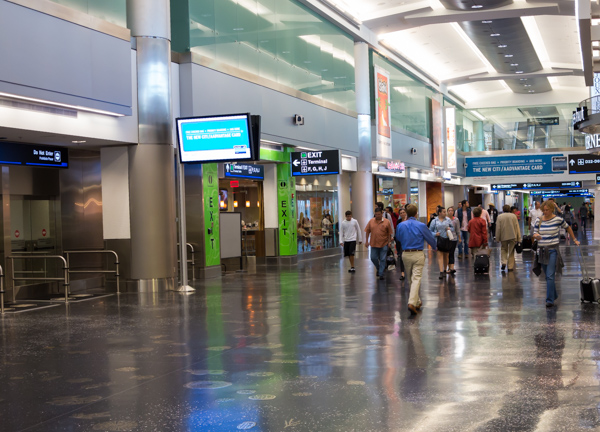
Miami International Airport Terminal

Ahh, the joy of travel photography, who doesn’t love that? But like everything in life, all that glitters is not gold. For travel photography, you actually need to travel, and in many circumstances, air travel and lengthy waits in airports are common.

Nobody likes being stranded in a terminal for hours, or experiencing delays, missed or long connections, all of which happen pretty often. But it can be different for us, the ones who embrace photography. Instead of just sitting there doing nothing, we can have some fun doing what we enjoy the most. At least, that’s what I do – and believe me, the time goes by much quicker when you are there with your camera in hand.

New American Airlines terminal in Miami

Despite the obvious of not photographing in prohibited areas, you shouldn’t encounter any problems wandering and snapping away. I was a bit skeptical the first time, especially in the US, however, I’ve never had any issue.

Perhaps you are thinking that there are not interesting things to photograph in airports. Well, think again. These can be rather compelling places; they come in all forms, shapes and colors.

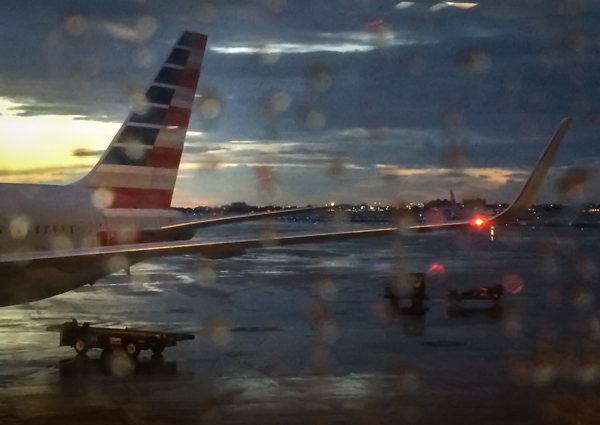
There are always appealing activities around the tarmac and you can shoot through a window. Just be on the lookout for opportunities. The image below was shoot with an iPhone. I didn’t have my camera handy that day and I was rushing to the gate; it was raining and I thought the water drops on the glass made it somehow exciting.

IMG_0701

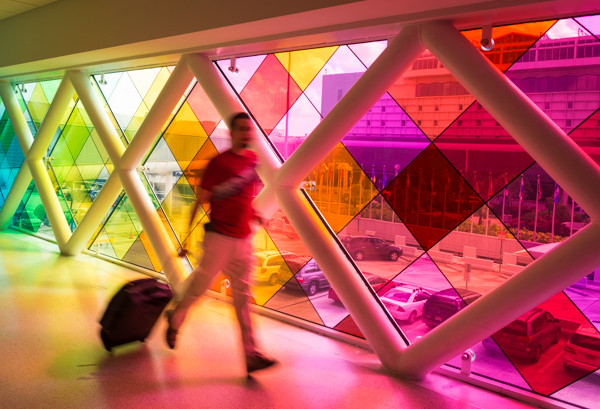
Watch out for unique architectural features. It could be a modern place, a recently built structure, or just a small terminal on a remote exotic destination. Walk around slowly and try to find what makes that place different, sui generis. This colorful skybridge in Miami called “Harmonic Convergence” is a good example of an art installation that is unique to the airport and can’t be found anywhere else. When you spot a space like this, take your time, try different angles, and if necessary wait for the right moment to happen.

Person rushing out in airport

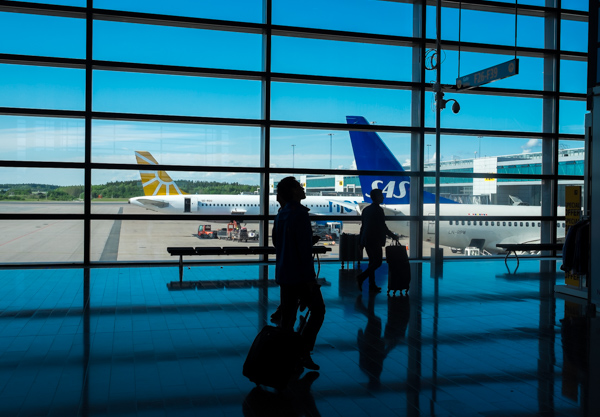
Massive glass walls are most likely to be present in contemporary terminal halls and waiting areas. These are wonderful to work with and you stand a chance of getting great photos. Just meter the light to get a good exposure of the exterior during daytime and the interior will be probably e dark or underexposed. This juxtaposition creates a great contrast; it is then possible to play with forms and figures of people standing or walking by. Silhouettes against a brighter background are always fascinating.

20140525_untitled_0002

You can also think of hallways, food courts, waiting areas and shopping areas. You can really do a lot and it will be much better than just sitting there doing nothing and getting bored. After all, you’ll be fastened to your flight seat for some hours, so what better way to kill the painful wait by just having some fun photographing the airport?

There you have it – next time you need to spend some time at the airport, just pull out the camera and fire away. It will be fun, I promise.

Editor’s note and disclaimer: the suggestions made in this article are by the author and you need to be aware of the legalities and possible issues of taking photos in an airport, as different rules may apply in different countries. It is not a public place so you do not automatically have blanket approval to take any person’s photo. You could possibly be asked to stop, have your camera seized or be restricted from getting on your flight. Practice with extreme caution. dPS is not responsible for any damages resulting from following these tips.

The post Photographing in Airports by Daniel Korzeniewski appeared first on Digital Photography School.


Digital Photography School

 
Comments Off on Photographing in Airports

Posted in Photography


Taken by the TSA: 13 Strange Items Confiscated at Airports

14 Jul

[ By Steph in Culture & History & Travel. ]

TSA Confiscated items main

If you think you can smuggle a sword cleverly concealed inside a cane, a lipstick that’s actually a taser, pigeons wrapped in newspaper or nylon bags full of snakes onto an airplane, think again. The Transportation Security Administration has truly seen and confiscated it all, as documented on both their blog and their Instagram. Here are 13 of the weirdest and most disturbing items that the TSA has discovered during the security screening process.

Snakes on a Plane

TSA Confiscated Snakes on a Plane

TSA screeners monitoring a body scanner at the Miami International Airport in 2011 were puzzled by what looked like bulbous growths attached to a man’s legs. Pulling him aside, they discovered that the man’s pants were full of snakes and tortoises wrapped in nylon bags. Had they not caught him, he would have walked onto the plane with seven snakes and three tortoises, likely bound for the illegal pet trade.

A Chastity Belt

TSA Confiscated Chastity Belt

Says the TSA of this unusual discovery, “And while it isn’t prohibited, a passenger wearing a chastity belt alarmed the body scanner at one of our checkpoints. I’m sure you can imagine where an undergarment such as this might be a problem at a security checkpoint. Especially if there is no key.”

Daggers Disguised as Hairbrushes & Combs

TSA Confiscated Dagger Hairbrush TSA Confiscated Comb Dagger

Do some quick internet browsing and you can find knives and other weapons disguised as all sorts of clever things. That doesn’t mean you should try to take them on a flight. Screeners don’t take it lightly when they find hairbrushes, combs and other everyday items concealing potentially deadly daggers.

Mickey Mouse Full of Guns

TSA Confiscated Mickey Mouse Guns

Would it ever occur to you that a stuffed Mickey Mouse clutched in someone’s arms was filled with firearms? Maybe that depends on who’s holding it. Mickey is just one of many stuffed animals that have been used to smuggle guns and ammunition at the airport.

A Bag of Eels & A Whole Lot of Fish

TSA Confiscated Bag of Eels

Referring to the incident as a “nomadic aquarium for people on the go,” the TSA pulled aside a passenger who was attempting to transport 163 tropical fish, 12 ‘red sliders,’ 22 invertebrates, 24 live coral species, 8 pieces of Scleactinina with mushroom polyps and 8 pieces of soft coral from Miami to Maracaibo. “We’re not in the business of looking for marine life, but you can probably imagine how odd this looked on our monitor.”

Next Page – Click Below to Read More:
Taken By The Tsa 13 Strange Items Confiscated At Airports

Share on Facebook


[ By Steph in Culture & History & Travel. ]

[ WebUrbanist | Archives | Galleries | Privacy | TOS ]


WebUrbanist

 
Comments Off on Taken by the TSA: 13 Strange Items Confiscated at Airports

Posted in Creativity