RSS
 

Posts Tagged ‘action’

Leaked: GoPro to reveal entry-level ‘HERO’ action cam this week, will cost $200

27 Mar

A major leak earlier today confirmed what rumors have been claiming for over a week: GoPro is preparing to release an entry-level version of its HERO action cam. The new camera—ostensibly just called the GoPro HERO—will feature the same styling as its high-end HERO6 sibling but, thanks to some pared down specs, is allegedly priced between $ 180-$ 200.

According to this leaked PDF courtesy of Nokishita, the GoPro HERO will shoot 1080/60p and 1440/60p video as well as 10MP stills at up to 10fps, can capture timelapse video at 0.5 second intervals, is waterproof to 10m (~33 feet) out of the box, and features a 2-inch touchscreen on the back.

The PDF (which is in French) also specifies that the camera features WiFi and Bluetooth connectivity, voice control, and compatibility with GoPro’s one-touch Quik Stories highlight video creation in the GoPro app.

The leak does not cover price or release date; however, Photo Rumors is reporting that the new HERO camera—also seen in the leaked images above—will cost between $ 180 and $ 200, and Nokishita writes that the HERO will be announced on March 30th. If that turns out to be the case, be sure to check in with DPReview this Friday for the official details.

Articles: Digital Photography Review (dpreview.com)

 
Comments Off on Leaked: GoPro to reveal entry-level ‘HERO’ action cam this week, will cost $200

Posted in Uncategorized


Modular PITTA camera transforms into drone, action, and security cameras

04 Jan

$ (document).ready(function() { SampleGalleryV2({“containerId”:”embeddedSampleGallery_5360811256″,”galleryId”:”5360811256″,”isEmbeddedWidget”:true,”selectedImageIndex”:0,”isMobile”:false}) });

PITTA, a modular ball-shaped 13MP camera that transforms into a drone, is currently blasting its way through a campaign on Kickstarter. The small, sphere-shaped modular camera launched on the crowdfunding platform with a $ 50K goal, but as of this writing it has already raised well over a quarter million dollars.

Eyedea, the company behind PITTA, describes its product as a multi-purpose device:

It’s not just aerial, not just handheld, not just wearable or mountable, it’s all of these. It’s a complete system packed into a single device.

Here’s a quick intro video from the company’s Kickstarter:

In its most basic form, PITTA looks like a simple black sphere, which is the 200g/7oz camera body. The sphere-shaped body features a 13MP sensor, support for 4K/30fps recording, and “software image stabilization.” Additionally, the body contains various sensors including GPS/GLONASS, gyroscope, accelerometer, barometer, magnetometer, object detection and visual tracking hardware, and optical flow positioning sensors.

Joining that is an Action Cam Module, Charging Cradle, and Drone Module. When docked in the Charging Cradle, PITTA can be used as a stationary security camera or livestreaming camera.

When used with the Action Module, PITTA can be attached to a tripod or other mount and used as an action camera that supports burst shot, 60fps slow-motion recording, livestreaming, and time lapse, as well as direct sharing to the major social media platforms.

The Drone Module, meanwhile, transforms the camera sphere into a drone via a snap and twist-to-lock design. The resulting camera drone is controlled using a smartphone and companion app, which itself offers several operation modes. PITTA as a drone supports taking panoramas, hovering in place, orbiting around the operator, auto-following the operator, as well as a “Come Back Home” function, terrain awareness, auto-landing, and GPS. The slow-motion and time lapse functions aren’t available in drone mode.

$ (document).ready(function() { SampleGalleryV2({“containerId”:”embeddedSampleGallery_0862783015″,”galleryId”:”0862783015″,”isEmbeddedWidget”:true,”selectedImageIndex”:0,”isMobile”:false}) });

PITTA is being offered to Kickstarter backers who pledge $ 290 for a Kickstarter Exclusive Basic Kit or $ 320 for a Kickstarter Exclusive Full Package, though other pledge packages are also available. Shipments to backers are expected to start in May 2018, though as with any crowdfunding campaign, plans could change, so proceed with caution.

To learn more or pledge for your own, head over to Kickstarter by clicking here.

Articles: Digital Photography Review (dpreview.com)

 
Comments Off on Modular PITTA camera transforms into drone, action, and security cameras

Posted in Uncategorized


2017 Buying Guide: Best cameras for sports and action

10 Dec

Are you a speed freak? Hungry to photograph anything that goes ‘zoom’? Or perhaps you just want to get Sports Illustrated-level shots of your child’s soccer game. Keep reading to find out which cameras we think are best for sports and action shooting.

Articles: Digital Photography Review (dpreview.com)

 
Comments Off on 2017 Buying Guide: Best cameras for sports and action

Posted in Uncategorized


DJI AeroScope demo shows drone tracking tech in action

21 Nov

In October, DJI introduced a new technology called AeroScope that makes it possible for law enforcement and other officials to track drones that broadcast info. The system was launched to address growing concerns about drones being operated in forbidden locations, such as near airports or over wildfires. AeroScope works by picking up telemetry and ID data broadcast by DJI drone.

The Verge recently shared a video showing AeroScope in action.

The system, which is a box-shaped device that includes a touchscreen display, issues an alert when it detects a drone nearby. Officials can pull up the ID and telemetry info the drone is broadcasting and potentially use that to identify the operator. A explained in the video, AeroScope shows the operator’s email address, which officials can message for direct contact.

Speaking to DIY Photography, DJI said that email addresses were displayed to users in a beta version of the AeroScope software, and that such abilities won’t be included in the final version.

There are some limitations to the AeroScope system. For example, drones that aren’t registered won’t provide info that helps officials identify the operator. As well, the system is localized, meaning it can only detect drones within a couple miles of the device. DJI previously explained that it chose this localized tracking method to prevent drone data from being easily amassed in government databases.

Articles: Digital Photography Review (dpreview.com)

 
Comments Off on DJI AeroScope demo shows drone tracking tech in action

Posted in Uncategorized


Shooting an Olympic sailor in action using remote high speed sync

12 Nov

This article was originally published on Luminous Landscapes, and is being republished in full on DPReview with express permission from Terry McDonagh.


In January of last year, I was commissioned to shoot some dramatic action shots of an Olympic sailor; however, I did some image research and wasn’t overly impressed by any images I found, so I decided that a good approach would be to try and light the subject and by doing so I could afford to underexpose the available light.

This would help add to the drama, plus in doing so I would be able to get some light into the water spray coming off the boat. In order to get this shot, I needed to freeze the action using a high shutter speed and combine that with flash, so how was I going to achieve all that?

Obviously, I needed to use flash, but I knew I would be shooting at a high shutter speed, so it had to be high-speed sync (HSS). The beauty of HSS is that it allows you to shoot at a high shutter speed whilst still syncing the flash, which was unheard of a few years ago.

I decided that I would use two flashes, both for the extra power and to avoid any redundancy due to the high risk of this particular situation. I was attaching a flash to a boat which could easily capsize, and I was doing it in January when, due to it being 3°C, the batteries weren’t going to last too long. In other words: I was only getting one chance to nail this job, so I had to minimize the chances of anything going wrong.

Flashes facing Starboard

I had used HSS before, but never remotely and not on the water, which was all a bit daunting.

To prepare, I did a bit of research on trigger systems and decided on a Phottix Laso trigger for a couple of reasons. Firstly, it would trigger my Canon 600EX-RT directly, via the built-in radio on the flash. Second, it came with a separate receiver for my Canon 580 EX-ll, which meant I could control both units remotely from one base unit. And finally, the receiver had a metal hot-shoe mount, which I wanted, as I knew that the gear was going to get bounced around out there so I wasn’t risking any plastic hot-shoe mounts.

Flying along flashes pointing to starboard

The next part of the jigsaw puzzle was the batteries, as HSS is really hard on batteries and the faster the shutter speed, the higher the power drain. I did some more research and came across some ‘Panasonic Eneloop pro rechargeable’s’, apparently the best. I purchased a few sets of them, tested them in the cold, and found they were amazing.

Which brought me to my next major problem: waterproofing the flash units. There was a strong chance that they would be submerged if the boat capsized, and having sailed a Lazer, the boat that I would be shooting, a few times, I knew that these boats flip over very easily. To counter this issue, I developed a triple bagging system using some freezer bags.

When I submerged the flash in a bucket of water to test, it stayed watertight: Happy Days!

The trick was to place one bag over the complete unit and then mount it to the hot-shoe. Then I placed another bag over this, but upside down, and a third one over the spigot so that it was completely sealed.

Flashes bagged up and tethered.

Then it was just a matter of pushing the spigot into the Manfrotto clamp which was attached to the boom of the boat.

Flashes pointing to port.

I headed down to the yacht club to do a technical recce and try to attach the gear to the boat and figure out all my settings.

I settled on mounting the units upside down, firstly so that the sail would not damage them, and also because I was afraid they might rotate with any impacts, plus I reckoned there would be fewer forces on them if they were not top heavy. I used a Manfrotto super clamp as it has a secondary safety lock, so I was able to instruct Annalise how to open the clamp and rotate the speed-lights.—every time she did a tack she rotated the units so they were always facing her, and she was brilliant at doing it. Her sailing wasn’t too shabby either.

Total control

So, I had designed a system that I could remotely fire, adjust exposure and rotate, and it was waterproof… pretty cool! Next thing was to get out there and see how it all worked.

On the day of the shoot, conditions were perfect: overcast, but with some nice contrast. I was getting a light reading of around 1/640 @ F3.2 iso 500. I underexposed by around two stops to try and get some drama into the images but without making it look too much like nighttime.

We headed out to sea about 4 km out as that’s where the wind was and I wanted little or no background buildings etc. in the images. To preserve the batteries I left the units off until we reached our destination, This proved to be a bit of a mistake as the boats were dancing around a lot, so much so that I almost fell in trying to locate the switches on both speed-lights and the receiver, and through the Ziploc bags it proved very tricky.

Luckily my very quick-witted boatman spotted this and grabbed me at the last moment, otherwise I honestly would have gone into the water with a 5DSr and a 70-200mm lens plus my phone etc. Thank god is all I can say.

We shot for approximately an hour, as that was long enough for both Annalise and me, and the batteries were getting very low on energy. I reckoned I had the images I needed in the bag.

Annalise loving the conditions.

I was shooting on a Canon 5DSr with a 70-200mm lens. Final settings were 1/640 @F3.2 and iso160. I had considered using a faster camera but the flash wouldn’t have kept up with it so I just stuck with the higher 50MP camera, which was important as we were using the image on billboards etc. so the higher the quality the better.

The shoot worked out brilliantly. The hardest bit was trying to maintain focus on Annalise, and trying to keep the horizon level; plus, watching all the other elements meant that after an hour of this type of thing you’re pretty burnt out.

When we finished, Annalise nearly fainted when she heard that there was approximately €2k worth of gear attached to her boat. She said had she known she wouldn’t have sailed so hard! I didn’t believe that for one minute.

Wind just died, time for home.

Based in Dublin, Terry works for leading advertising, design and architectural agencies throughout Ireland and often abroad in the areas of industry, architecture, products, people and food.

He provides a fast and reliable digital retouching and manipulation when required, and shoots live action commercials too. Feel free to contact Terry for more information.

Articles: Digital Photography Review (dpreview.com)

 
Comments Off on Shooting an Olympic sailor in action using remote high speed sync

Posted in Uncategorized


Casio launches intense-looking GZE-1 action cam that’s waterproof to 50 meters

13 Oct

Casio just announced an action camera that it claims is drop-, water- and freeze-proof, and comes with a 13mm f/2.8 equivalent lens. It’s called the GZE-1, and it’s the first of a new line of Gz EYE models that are aimed at extreme sports enthusiasts.

The camera is said to use G-Shock technology borrowed from the Casio’s sports watch brand, and can be controlled either by a Casio Pro Trek watch, a smart phone or the dedicated (and optional) remote controllers, one of which has a LCD screen that allows users to see the action live. The camera itself doesn’t have a viewing screen.

CD controller “GEC-10” PRO TREK Smart “WSD-F20”

Despite having a 21.14-million-pixel 1/2.3-type backlit CMOS sensor, the GZE-1 turns out only 6.9MP still images and FullHD video. It can, however, record frame rates of up to 240fps, and allows users to vary the frame rate during a clip to mix slow-motion with normal motion in the same sequence. This allows action moments to be shown in slow-motion without users having to record the whole sequence at a high frame rate, or having to combined multiple clips of different speeds in post-processing.

Three-axis electronic image stabilization helps to keep movie footage smooth (though it does nothing for stills) and over-sized buttons make the camera easy to control with gloves on. A resin body coating and a urethane bumper helps the camera withstand drops from 4 meters, high pressure blasts from waves, and water in general to depths of up to 50 meters. The body is also IP 6X dust-proof and can operate in temperatures as low as -10°C.

No price has been released yet but the Casio GZE-1 is due to go on sale at the end of the month in Japan… we’re still waiting to see if it becomes available elsewhere in the world.

For more information, see this translated version of the Casio GZE-1 product page.

Articles: Digital Photography Review (dpreview.com)

 
Comments Off on Casio launches intense-looking GZE-1 action cam that’s waterproof to 50 meters

Posted in Uncategorized


Playful Kirigami: Touch-Activated Paper Animals Pop into Action

12 Oct

[ By WebUrbanist in Design & Products & Packaging. ]

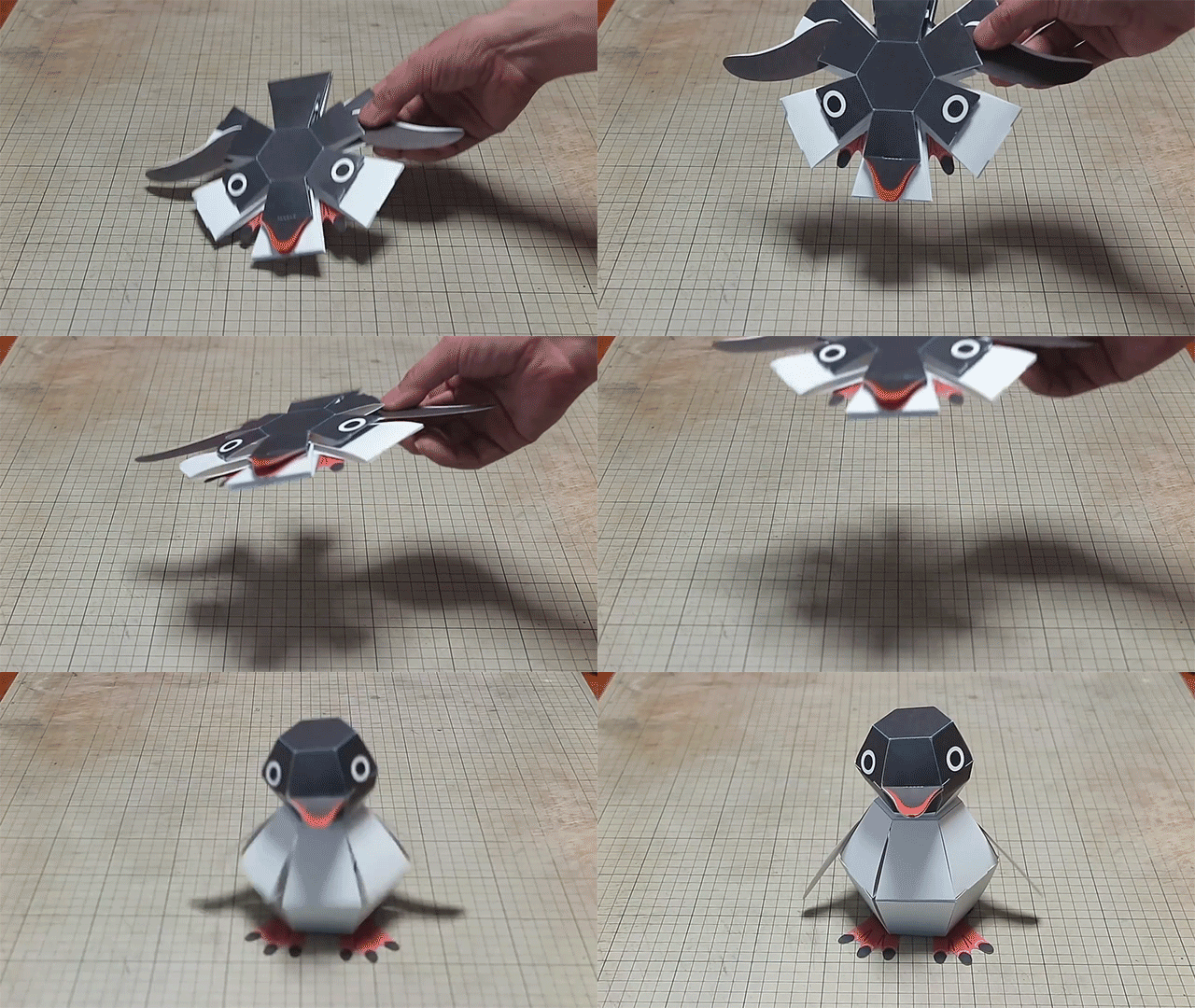
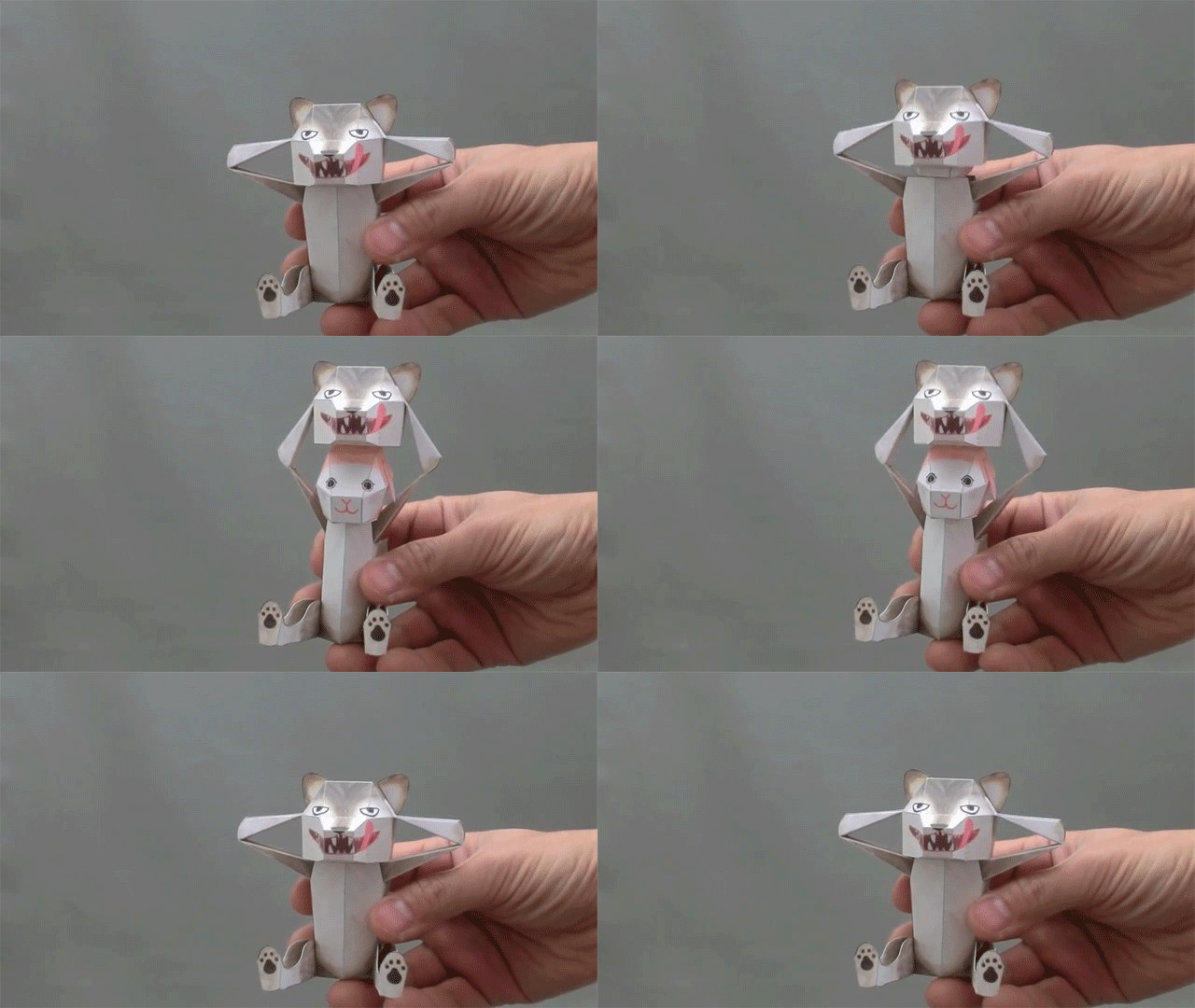
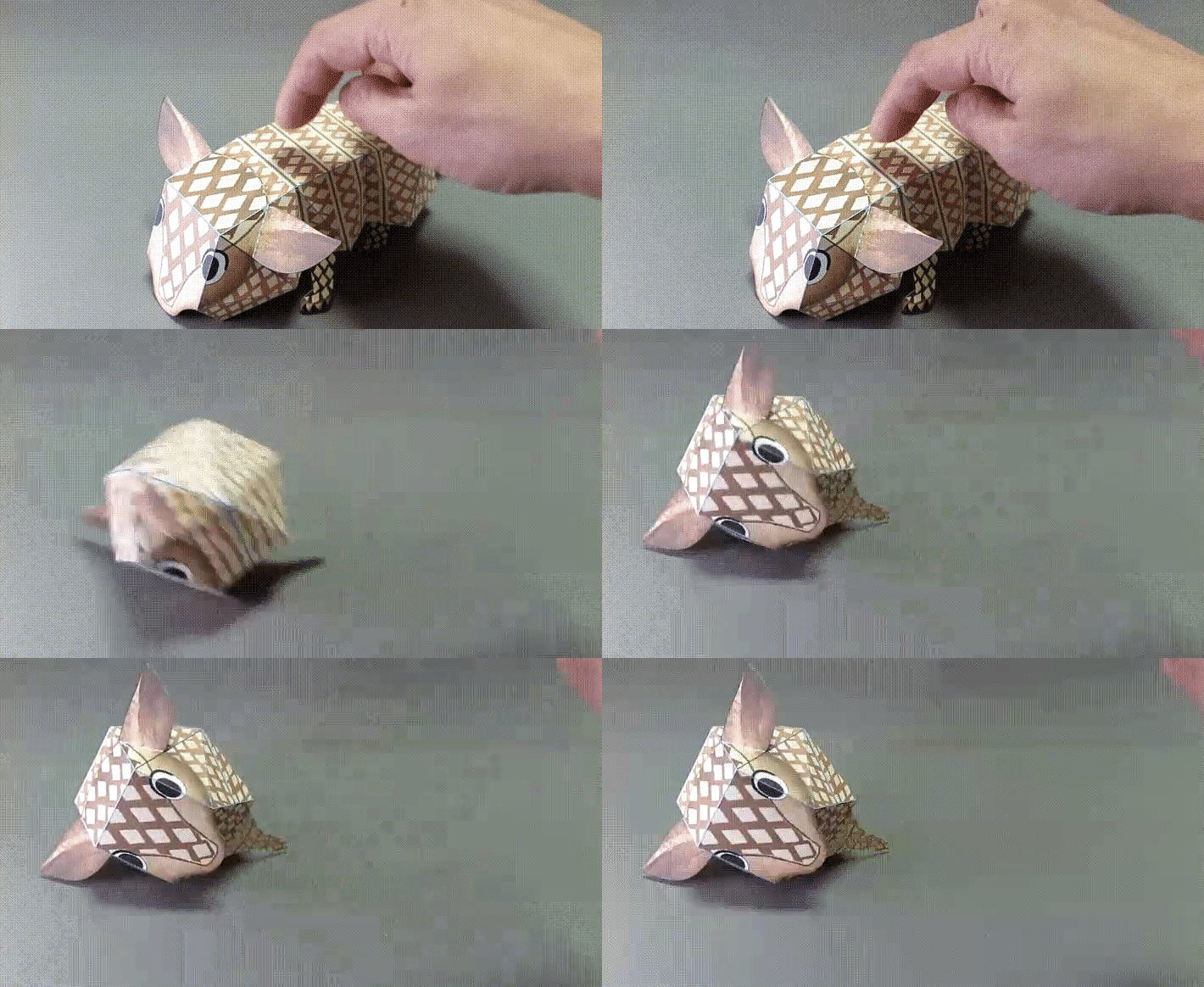
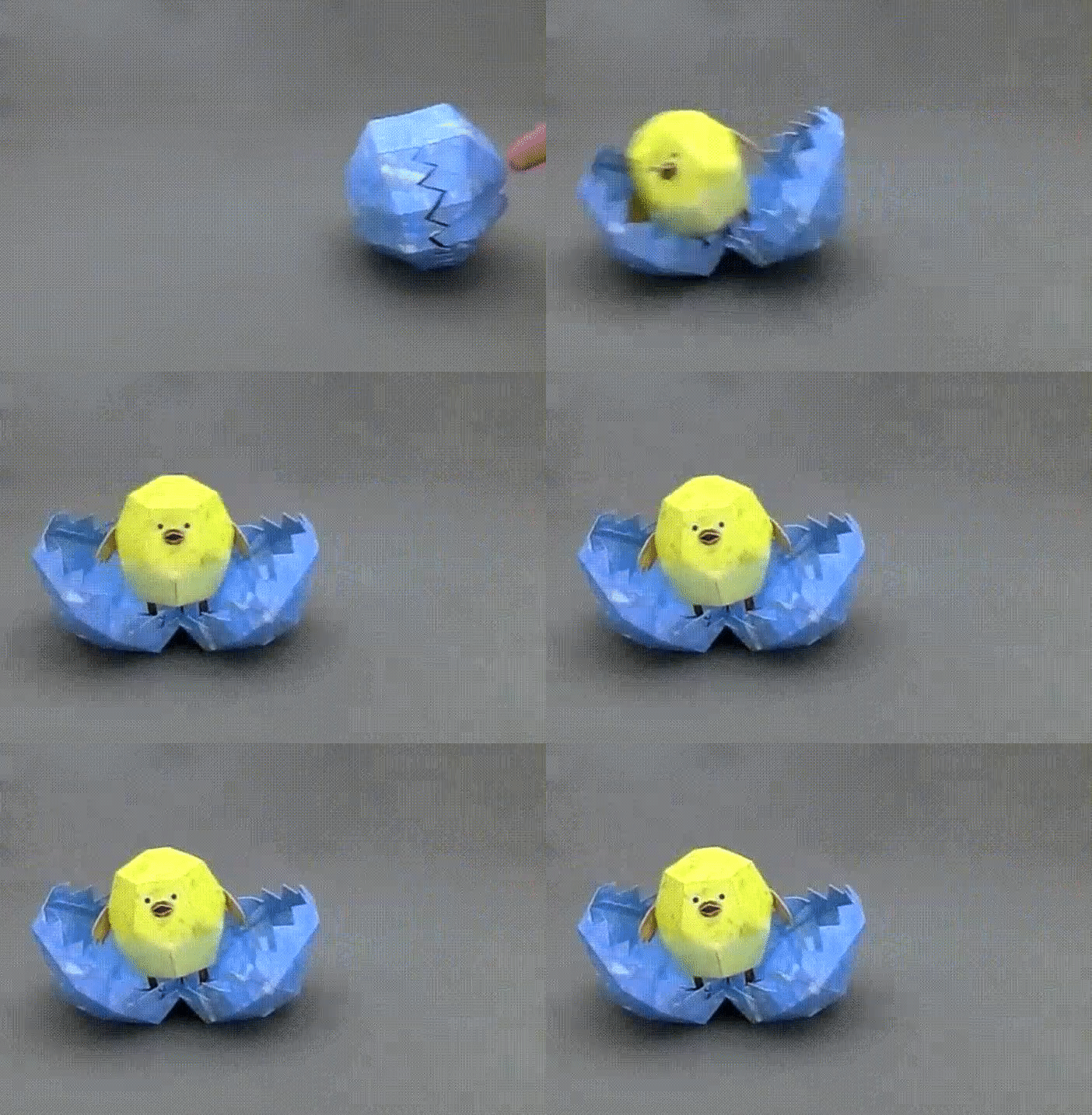
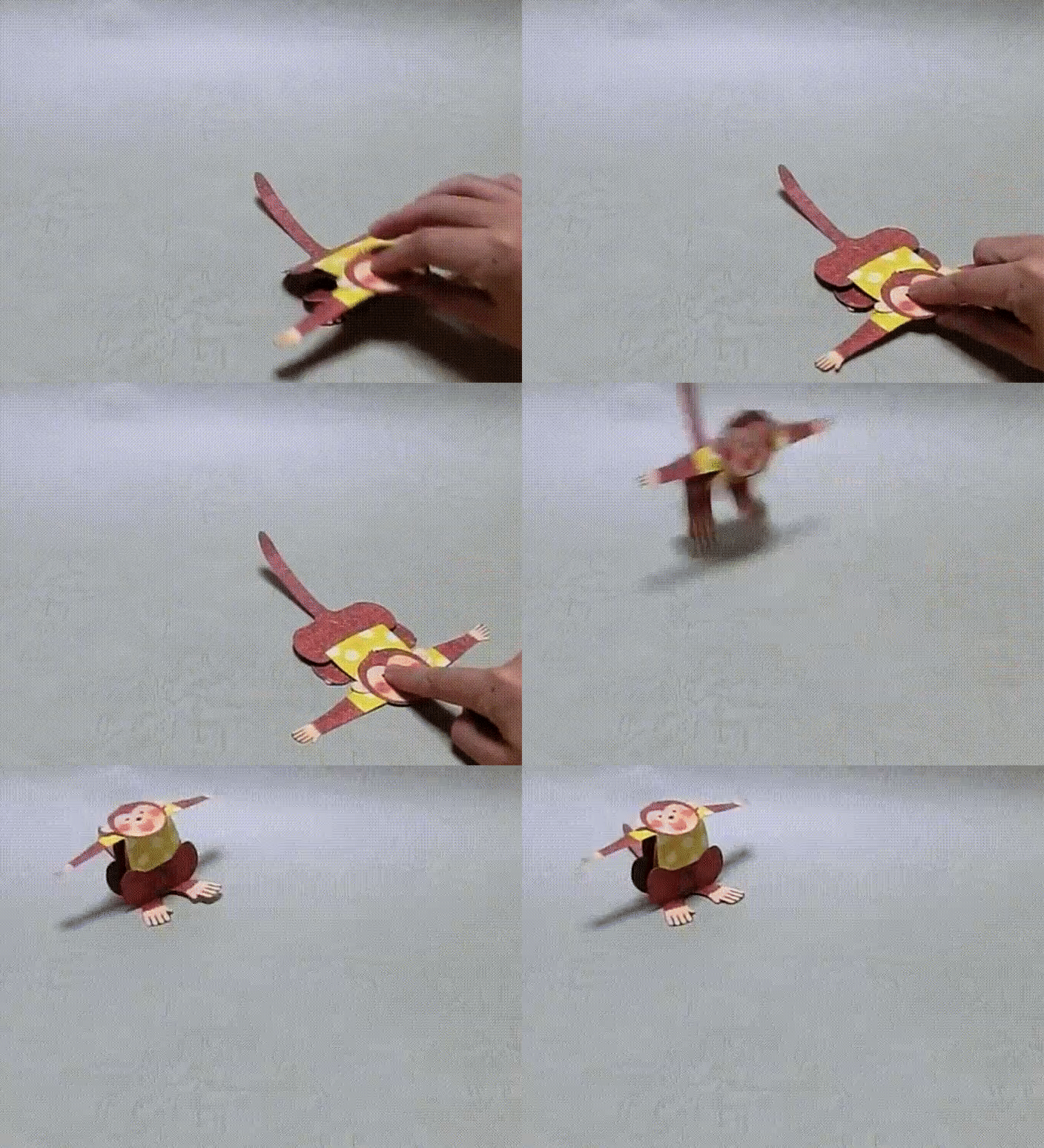
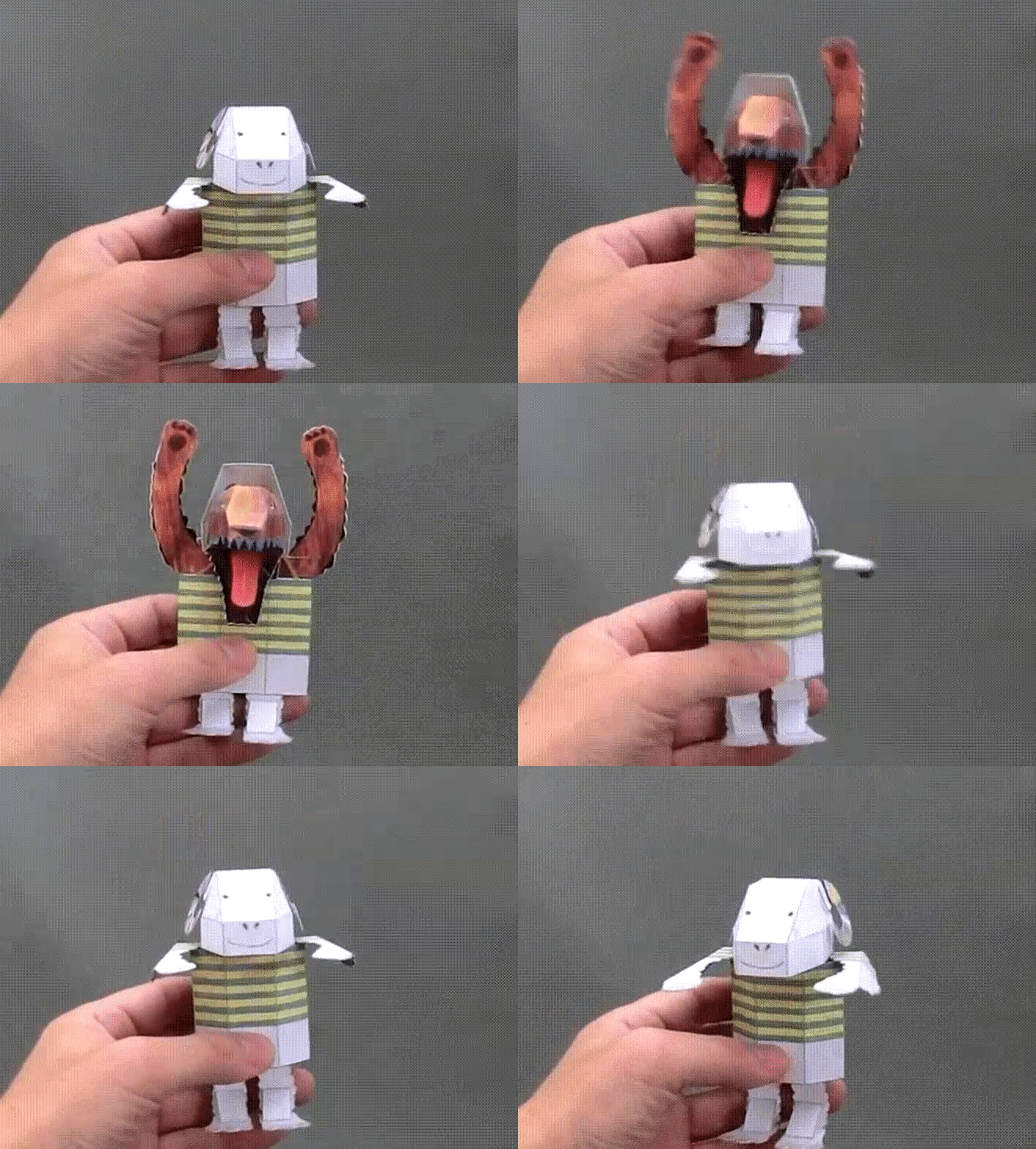
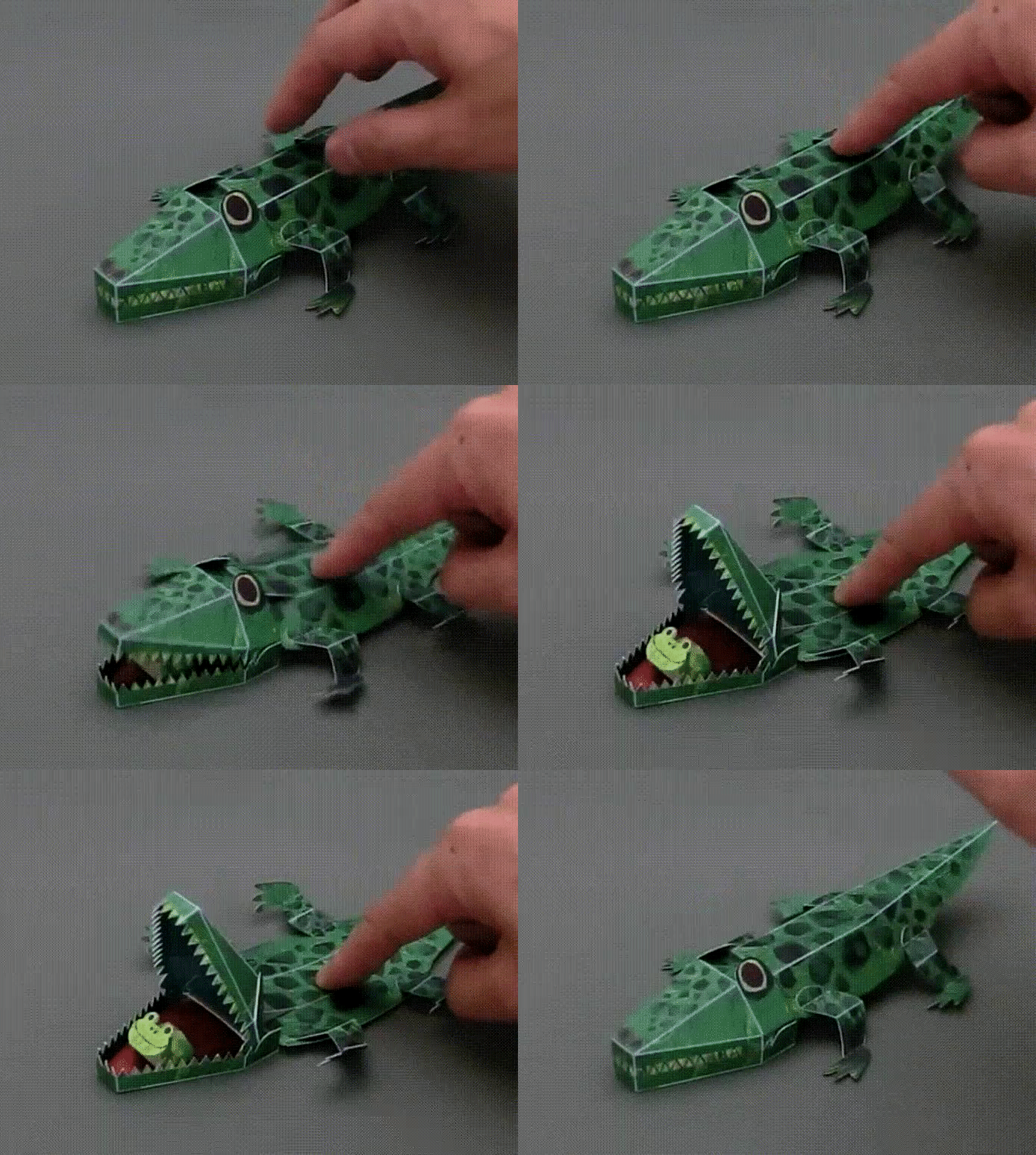
Acting out scenes from storybooks or animating real activities, these deceptively simple-looking, folded-paper toys leap, bounce, roll and hatch into action when played with.

Japanese designer Haruki Nakamura was inspired by the ancient art of kirigami, a variation on origami that involves cuts as well as folds, but takes it to the next level with his playful animals.

The specific behaviors of the toys often follow the natural reactions of a given animal, like an armadillo rolling itself up for protection when threatened.

Combining kirigami with karakuri, the art of mechanical puppets actived by touch, led him to these neat hybrid creatures that one can poke, prod, press or drop into action.

In some cases, the activities are innocent and entertaining, like a turtle popping into its shell or a chick hatching from an egg. Others are humorously sinister, showing wolves in sheep’s clothing or a tortoise being eaten by an alligator. For now, alas, these works are only available in Japan.

Share on Facebook


[ By WebUrbanist in Design & Products & Packaging. ]

[ WebUrbanist | Archives | Galleries | Privacy | TOS ]


WebUrbanist

 
Comments Off on Playful Kirigami: Touch-Activated Paper Animals Pop into Action

Posted in Creativity


How to Take Better Action Photos of Dogs

24 Sep

If you enjoy photographing your pets, and dogs, in particular, this article will help you take better action photos of dogs. Learn what camera equipment to use, the best settings, and general tips for success.

How to Take Better Action Photos of Dogs

The Camera Body

If you want to take better action photos of dogs, I recommend a camera body with a fast burst rate. From my experience, five frames per second is the minimum. If your camera has a faster frame rate than that, you are going to increase your keeper rate as long as your approach and technique are on point, which we will get to shortly. I personally use Nikon’s D610 and D7000 and have great success with photographing dogs in action.

The Camera Lens

How to Take Better Action Photos of Dogs

I recommend long and fast lenses. I’ve tried to photograph action shots with the 50mm f/1.8, and the Tokina 100mm f/2.8, with very little success. While both of these lenses are incredibly sharp, they are soft wide open and do not focus well on moving subjects.

Longer lenses with fixed apertures generally focus on moving subjects much faster than shorter lenses. They also keep you and your camera gear safer. Think about it. If you have a 45 point Border Collie running full speed right at you, you need to get the photograph and get out of the way quickly.

A longer lens will give you the time you need to move once the dog starts to fill the frame. I personally use the Nikon 300mm f/4 and sometimes I’ll even throw a teleconverter on it for extended reach and cleaner bokeh.

Camera Settings

How to Take Better Action Photos of Dogs

Setting Your Autofocus

I recommend locking your autofocus directly in the center of the frame. When photographing action shots of animals you don’t have time to be moving the focus point around. I also suggest using AF-C (Continuous focus mode, called Servo on Canon), which may also be called autofocus continuous, AF-Continuous. This is the setting I always use when trying to get action shots of dogs.

Set your Camera to Burst Mode

How to Take Better Action Photos of Dogs

Make sure you check your camera drive setting. I know it’s common sense, but make some kind of reminder, though, a checklist you look at before capturing action shots. I’ve been photographing animals for over a decade, and still screw this up sometimes. It wastes time if you don’t have your camera set to burst mode and also wastes the dog’s energy. Dogs can only run for so long and you need every opportunity you can get within that time frame.

Photographing Running Dogs

When I photograph dogs running, I aim to get them looking straight into my camera lens. I want the dog running directly toward me, and I focus on as much eye contact as possible. So to consistently get great photographs of dogs running in this manner, you’re going to need some help.

How to Take Better Action Photos of Dogs

What I do to accomplish this is have the dog owner or an assistant stand fairly far away from me. I will then position myself on my belly, using my camera bag to stabilize the lens. I try and keep my back to the sun when outdoors. This will help me get the shutter speed that I want to photograph the dog running. I shoot for 1/1250th of a second to 1/2000th.

I’ll first take a test shot to make sure my exposure is right. Then I have the assistant throw a tennis ball right at me. I usually tell them to try and hit me with the tennis ball. This sends the dog running full speed, right at me. I will also instruct the assistant to quickly move to the left or right as soon as the ball is thrown. This saves me tons of time later in post-processing by not having to remove them from the background with Photoshop.

Photographing Dogs Catching Frisbees

How to Take Better Action Photos of Dogs

This is a little trickier and complicated to pull off compared to photographing running dogs. The goal is to get the dog in mid-air right before he is about to bite down on the Frisbee. I use pretty much the exact same camera settings and approach that I do for photographing dogs running.

I do change one thing, though, and that’s the camera shooting angle. I like to shoot from the hip. Meaning the camera is around my hip level. I’m not actually shooting from the hip, but kneeling down on one knee. Following the dog chasing the Frisbee, I bump the focus until the dog is close to the target. Then holding down the shutter button, I burst out some shots until the buffer gets filled.

Photographing Dogs Jumping

How to Take Better Action Photos of Dogs

This is simpler than capturing the two types of dog action shots mentioned previously. It definitely requires an assistant to pull off consistently, though. You also don’t need a lens as fast or long to photograph docs jumping compared to the other types of action shots. Although, I prefer using long lens simply because it makes a smoother, more out of focus background.

Here’s how to do it. Position yourself so the dog is in only one-third of the camera frame or less. Check your exposure. Have an assistant hold up a toy, a tree branch, or whatever the dog is interested in enough to jump up and grab. Have the assistant hold it up high, with their arm extended as long as they can. This is incredibly helpful when it comes to post-processing.

Look out for the Safety of the Dog

How to Take Better Action Photos of Dogs

You can photograph a dog all day just lying around and looking cute. When dogs are running and chasing Frisbees, they get tired. If you are doing a pet photography session and want action shots, this is going to happen incredibly fast.

The dog owners don’t always prepare for it, but I’ve done this many times, and I always prepare. I keep several bottles of water on me, along with a collapsible drinking bowl. If the dog is panting heavily, give them a rest. If they drink a 16-ounce bottle of water in less than a minute, you may want to wait a while before attempting more action shots.

Some factors that you need to consider when shooting action shots are how hot it is, the dog’s age, and the breed. Certain dog breeds handle heat better than others. This is also true for exercise needs. If you are a professional pet photographer, you should be well aware of what the dog’s exercise needs are as well as how well they handle the heat.

Conclusion

So I hope that you find these tips helpful for taking better action photos of your dogs, or those of your clients. Any action photography takes some practice so keep at it and you’ll start to have more keepers over time. Please share your dog action photos in the comments below, we’d love to see them.

The post How to Take Better Action Photos of Dogs by Dave Spates appeared first on Digital Photography School.


Digital Photography School

 
Comments Off on How to Take Better Action Photos of Dogs

Posted in Photography


French President Macron takes legal action against photographer over invasion of privacy

19 Aug
Photo: Kremlin.ru

French President Emmanuel Macron has filed a legal complaint against a photographer over allegations that he violated the presidential couple’s privacy while they were on a holiday vacation. According to UK newspaper The Telegraph, Macron and his wife were on a private holiday in France when an unnamed photographer failed to honor their request for privacy.

The photographer is accused of stalking the president and his wife during their stay in the French city of Marseille, having at times acted in ‘a risky and perilous manner’ while ignoring warnings from Macron’s security personnel to back off. None of that got him arrested, however; it was the photographer’s alleged unauthorized entrance into the couple’s private property that led to the cops being called and a legal complaint being filed.

The unnamed photographer reportedly told French newspaper VSD that he was subjected to a police search, which included having officials search his bags and gear. He complained of being treated like a criminal and being forced to remove his watch and shoelaces, and characterized the police officers’ search of him as ‘totally illegal.’

Articles: Digital Photography Review (dpreview.com)

 
Comments Off on French President Macron takes legal action against photographer over invasion of privacy

Posted in Uncategorized


Paralenz is an underwater action cam for scuba divers

15 Jun

Action cameras and compatible underwater housings have been available for any budget for years but now Danish company Paralenz is taking a new approach by designing an action cam specifically for underwater use by scuba divers.

The Paralenz can go to 200 metres depth without any additional housing and automatically corrects color, using a pressure sensor to detect the depth you’re diving at. Conventional action cams typically require the use of filters to correct for underwater light conditions.

In addition the Paralenz can act as a dive computer. The camera logs your dive, and an accompanying app then generates a dive profile with photos and videos registered at the time and depth they were taken at. The camera can capture 8MP still images or 1080p 30fps video recording for 3.5 hours and 4K footage for 2 hours and 15 minutes. Images are stored on a 128GB microSD card. The Paralenz underwater action cam can now be ordered for €649 ($ 728) on the Paralenz website.

Articles: Digital Photography Review (dpreview.com)

 
Comments Off on Paralenz is an underwater action cam for scuba divers

Posted in Uncategorized