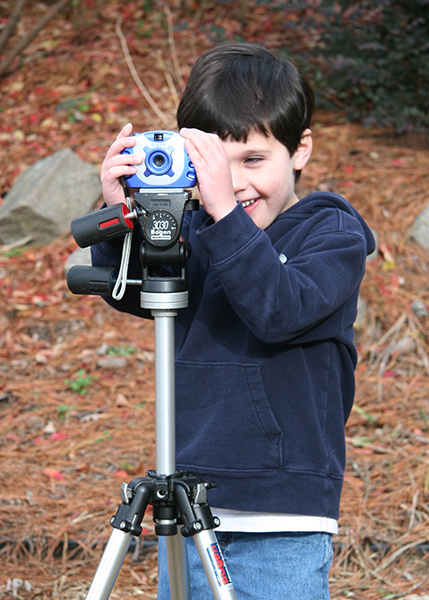
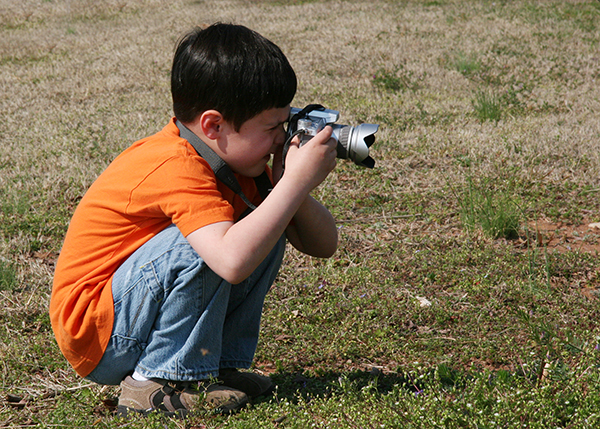
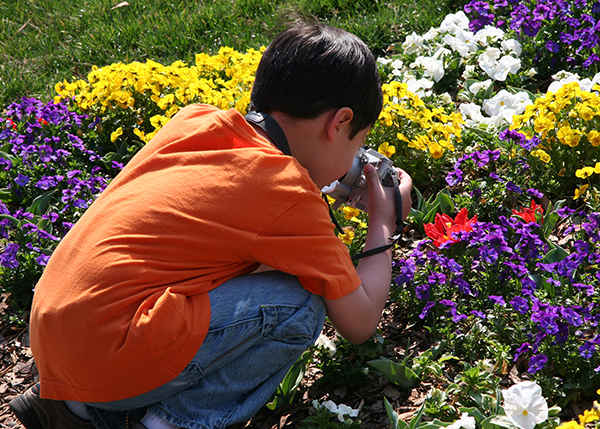
RSS
 

Posts Tagged ‘About’

All About Flash [Book Review]

15 Sep

All About FlashIf there’s one thing that flummoxes many of us, it’s flash. Onboard or off camera.

Mark Cleghorn’s book gives away the techniques he’s learned over the course of nearly 30 years as a photographer, well-known in Europe and the US.

Beginning with a single on-camera flash effectively and creatively, then moving all the way up to four or more units in multiple wireless groups, he describes how to shoot the best images possible in a variety of situations.

He outlines the methods in minimising distracting details in an image with a single flash; he shows how to diffuse and spread the light by using a number of flash accessories; then, a method of illuminating the background with a second flash; described is an unusual ‘sandwich’ trick with two flash units pointing towards each other; finally, a method of establishing a basic studio set up on location using only three accessory flash units.

Some photographers begin sweating and shaking at the slightest talk of using flash. The trick is to use flash for the right reasons and with the right approach. The approach is to use it for the right reason, not out of habit!

Early on in the book a question is posed: is flash really necessary? Now that top end DSLR cameras can capture high quality images at high ISO settings, with fast lenses, image stabilisers and slow shutter speeds, we can shoot almost round the clock both outdoors and indoors.

Despite this benefit, you still need quality light of the right quality and appropriate strength pointed in the right direction. That is not to say that tonnes of light will answer the need.

As Cleghorn says: ‘I have always had to control the light in some way, whether to increase the amount to record an accurate skin tone, or perhaps to use a desired aperture setting to control the depth of focus.’ His underlying message is ‘control’. Which is right about where most budding, ambitious photographers go wrong.

Then, the question is posed: what is flash good for?

Most will use it as a fill light, which is arguably the best use of onboard flash illumination; this is optimised further if you can lower/lift the flash’s output.

Some will use flash as a key light, some will use it as a catch light for the eyes and others will deploy flash as means of separating the planes in a subject, to lift background information, create a mood of drama, add an accent or introduce modeling into the subject.

Then there are the special talents of flash that no other lighting can rival: one is to freeze motion, with or without the use of first or second shutter curtain sync.

Another use is to add light to a scene where there is no other light, by bouncing it off a wall or ceiling or by taking the flash off camera and increasing the amount of shadow in the image.

Types of flash are listed: all the way from portable accessory units to portable strobes and all the way up to powerful (and not so portable) studio strobes.

More topics: how flash works; output consistency of different units; the role of ISO, lens aperture and shutter speeds.

A subject which often baffles many is the role of a flash meter. These can accurately measure the balance between ambient light and flash output. Cleghorn emphasises that he has used a meter throughout his career and, while he has changed cameras and flash units over the years, use of a meter has remained constant.

The book moves onto info on using wireless flash, the role of accessories such as umbrellas, soft boxes, bounce cards, gels etc.

There are ample illustrations throughout, making the book a rare beast on the photographic bookshelf.

Top book for a tricky subject.

Author: M Cleghorn.
Publisher: Pixiq.
Distributor: Capricorn Link.
Length: 112 pages.
Size: 28x22x10mm.
ISBN: 13 978 1 4547 0244 3.
Price: Get a price on All About Flash at Amazon.

Post originally from: Digital Photography Tips.

Check out our more Photography Tips at Photography Tips for Beginners, Portrait Photography Tips and Wedding Photography Tips.

All About Flash [Book Review]


Digital Photography School

 
Comments Off on All About Flash [Book Review]
Posted in Photography


American Society of Media Photographers warns about new Facebook T&Cs

08 Sep

fb_icon_325x325.png

Another day, another controversial change to Facebook’s terms of service. The American Association of Media Photographers has warned its members to ‘beware’ Facebook’s proposed new terms of service, which – the A.S.M.P claims – would allow the social media giant to ‘exploit your name, likeness, content, images, private information, and personal brand by using it in advertising and in commercial and sponsored content – without any compensation to you’. Click through for more details. 

News: Digital Photography Review (dpreview.com)

 
Comments Off on American Society of Media Photographers warns about new Facebook T&Cs

Posted in Uncategorized


103 Things I’ve Learned About Street Photography

31 Aug

By Street Photographer Eric Kim

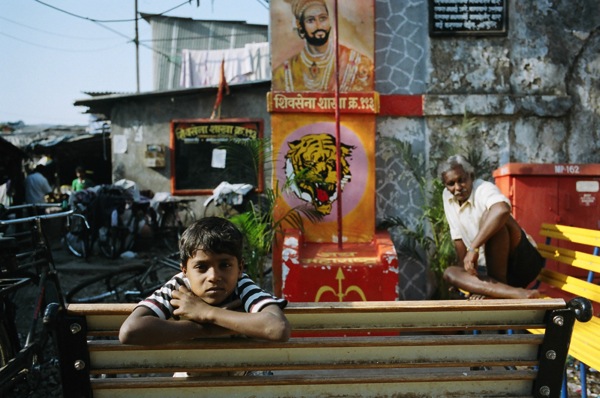
Calcutta 2013 2

  1. A good photo asks more questions than provides answers
  2. 35mm as a focal length is generally ideal for most street photographers. 28mm is too wide (most people don’t get close enough) and 50mm is too tight.
  3. My keeper ratio : one decent shot a month, one shot I am proud of in a year.
  4. “When in doubt, click.” – Charlie Kirk
  5. When in doubt, take a step closer.
  6. You will become a better photographer by asking people what they don’t like about your shots (rather than what they like).
  7. A harsh and constructive critique is better than a pat on the back.
  8. A good photo critique needs (at least) 4 sentences online. Preferably 8 sentences or more.
  9. It isn’t the quantity of social media followers you have that matters, rather then quality of followed you have that matters.

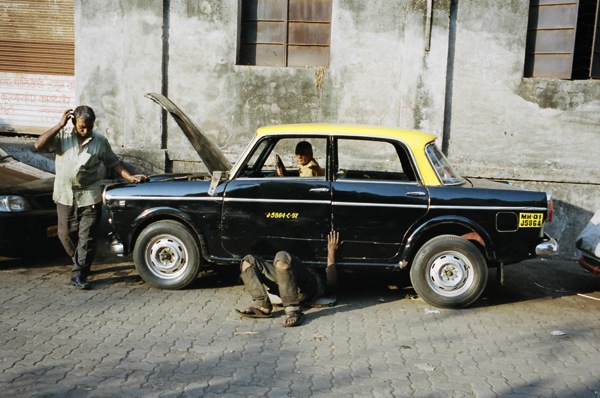
Calcutta 2013 1

  1. Be consistent : stick with one camera, lens, film, or post processing approach to develop your style.
  2. Great photography projects generally take at least 5-10 years.
  3. Buy books, not gear.
  4. The only way money will make you happier in photography if you invest it into experiences (travel, workshops, teachers) rather than material things (cameras, lenses, gear).
  5. The best camera bag in street photography is no camera bag.
  6. “The decisive moment” is a myth. Even Henri Cartier-Bresson took at least 5 photos of scenes he found interesting and worked the scene to get the one memorable shot.
  7. Most famous photographers are only known for their 1-3 most popular images after they die. If you accomplish the same, you have done your job as a photographer.
  8. When shooting film, it is better to over expose than underexpose (film has more details in the highlights).
  9. When shooting digital, it is better to unexpose than overexpose (digital has more details in the shadows).
  10. Street photos of people just walking by billboards is boring.
  11. To become a great street photographer you must first understand what a great street photograph is. Study the masters.

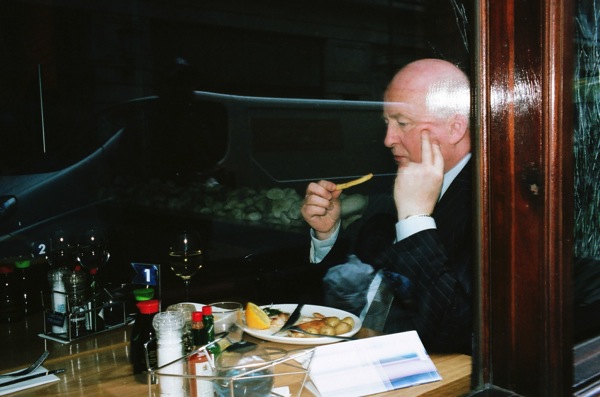
Eric Kim Color 1

  1. When shooting street photography with a DSLR, micro 4/3rds, or a compact and you don’t want to worry about technical considerations, just use “P” mode at ISO 1600.
  2. Projects are more meaningful than single images.
  3. Creating a photo book is the ultimate expression of a photographer.
  4. Shoot as if each day were your last.
  5. One camera, one lens is bliss.
  6. Grain is beautiful, noise is ugly.
  7. My favorite films are Kodak Tri-X (for black and white) and Kodak Portra 400 (for color).
  8. Bokeh in street photography is overrated. Shoot at f8-16
  9. With film, your first 10,000 photos are your worst. With digital, it is more like your first 1,000,000 are your worst.
  10. The secret of a memorable street photograph : capturing emotion.
  11. A street photograph without emotion is dead.
  12. No amount of post processing will make a crappy photograph into a good photograph.
  13. Wait at least 6 months to a year before uploading your images to the Internet, to truly understand if is a good photograph or not.
  14. When it comes to editing, remember to “kill your babies.”
  15. Cheesy titles in street photographs don’t make them any better.

Calcutta 2013 11

  1. Watermarks in street photographs ruin the viewing experience for your audience.
  2. Buying a more expensive camera won’t make you a better street photographer.
  3. Shooting film will teach you more discipline in street photography (and may lead you to become a better photographer).
  4. Street photography is the most challenging genre of photography out there.
  5. A great street photograph needs strong content (what’s inside the frame) and form (composition).
  6. Shoot for yourself, not others.
  7. Spend less time on gear review sites and more time on Magnumphotos.com
  8. You can never spend too much money on photo books.
  9. You are your worst critic. Always get critique from others, they will help spot the holes in your photography.
  10. Sticking with one focal length for a long time will help you better pre visualize your shot and master framing.
  11. You are only as good as your worst (public) street photograph.
  12. Secret to good multi subject shots : don’t overlap your subjects and look for emotional gestures.
  13. How to improve your framing : don’t crop for a year.
  14. How to become a better editor : don’t upload photos to social media for a year.
  15. Try to shoot at eye level (or extremely above or below) your subjects. So crouch when taking photos of people sitting down, shorter than you, or kids. Or shoot from a very high vantage point.

Eric Kim Color 6

  1. 99% of street photographs are ruined by messy backgrounds.
  2. To get cleaner street photographs, first find a clean background and then wait for your subjects to enter the scene.
  3. If your mom likes your street photographs, your photos are probably generic and boring.
  4. Always carry a camera with you.
  5. Street photographs don’t have to have people in them (but generally are more interesting with them in it).
  6. You don’t need a Leica to shoot street photography. Be grateful for what you have and use what you got.
  7. Spend 99% of your time editing your photos (choosing your best images) and only 1% of your time post processing them.
  8. Style in street photography is a combination of having consistent equipment (camera and focal length) as well as “look” (film or post processing style) and content (the subjects you generally photograph).
  9. It is better to over shoot a scene then under shoot a scene.
  10. “Shoot from the gut, edit with the brain” – Anders Petersen
  11. It is always nice to have a shooting partner when out on the streets.
  12. “Shoot who you are.” – Bruce Gilden
  13. Taking a photo of an interesting character isn’t enough. Try to capture them in an interesting context or with a good gesture.
  14. Don’t take photos of homeless people and street performers. They rarely make good photos.
  15. Don’t worry if your photos qualify as “street photography” or not. Just aim to make meaningful and memorable images.

Eric Kim Color 2

  1. Telling the truth isn’t the job of a street photographer (it is for the photo journalist).
  2. Don’t be afraid to interact with your subjects when shooting on the streets. Not all of your photos have to be candid.
  3. You can make interesting posed street photographs. But don’t pretend to your audience that they are candid.
  4. There is no one “right” definition of street photography. Define it personally for yourself and just shoot.
  5. You often can’t control the scene when you are shooting in the streets, but you can control whether you share the image or not. Case in point : don’t make excuses for the small failures in your photos, just edit out those shots.
  6. Don’t respect the critique of other photographers unless you have seen their portfolio.
  7. Zoom lenses will prevent you from becoming a great street photographer (you will never master one focal length). Stick to primes (preferably a 35mm full frame equivalent). 28mm and 50mm are okay too (if you can use it well).
  8. A single photo can’t tell a story (it doesn’t have a beginning, middle, or an end). Only photo series or projects can do that.
  9. The photos you take are more of a reflection of yourself (than of the people you photograph).
  10. The importance of looking at great photos : you are what you eat. Fine french cuisine = great photos in books, galleries, or exhibitions. Junk food = most photos on Instagram, Flickr, Facebook (not always, but mostly).
  11. 99% of people on the Internet don’t know what a great street photograph is. Don’t always trust the comments, likes, and favorites you get from the Internet on social media sites. Rather, stick around in street photography critique groups (or private ones).
  12. You will find the best street photography opportunities in the least expected places.

Eric Kim Color 4

  1. When you see an interesting person or a scene, don’t just take one photo and move on. Aim to take at least 5 photos (or more if possible).
  2. Beware using telephoto lenses in street photography. Remember, “Creepiness is proportional to focal length.”
  3. Incorporate your own reflections and shadows in street photography. They often make interesting images (look up Lee Friedlander).
  4. Photos shot head on have more energy and drama than photos shot from the side.
  5. A brief list of great street photographers : Garry Winogrand, Lee Friedlander, Henri Cartier-Bresson, William Klein, Daido Moriyama, Diane Arbus, Weegee, Bruce Gilden, Alex Webb, Joel Meyerowitz, Martin Parr, Josef Koudelka,
  6. After taking a photo of a stranger, make it a rule to look at them, smile, and say thank you.
  7. I never regret taking photos. I always regret not taking photos.
  8. It is better to beg for forgiveness than ask for permission.
  9. Be confident while you are shooting and rarely will you have any issues. Be nervous while shooting and you will ruin into many problems.
  10. The only person you should try to impress with your photos is yourself.
  11. The benefit of getting eye contact in your photos : eyes are the windows to the soul.

Eric Kim Color 5

  1. Don’t make photos. Make connections.
  2. The best place to shoot street photography isn’t New York, Tokyo, or Paris. The best place to shoot is your backyard.
  3. See your scenes with your eyes and shoot with your heart.
  4. If you are working on a project and photographers discourage you by saying “it has been done before” ignore them. Nobody has done it like you before.
  5. Street photography is applied sociology with a camera.
  6. If you aim to get recognition for your photography you will never get it.
  7. If someone gets upset when you take their photograph, offer to email them a copy. Carrying around business cards always come in handy.
  8. Don’t just look at photos, read into them.
  9. To double your success rate in street photography, double your failure rate.
  10. The photos you decide not to show are more important than the photos you decide to show.
  11. Rather than creating photos to please your audience, find an audience that will be pleased by your photos.

Eric Kim Color 12

  1. Street photography isn’t a contest about how many followers, viewers, followers, exhibitions, books, cameras, lenses, and fame you have. There are no winners and losers. Collaborate with one another instead of competing with one another.
  2. Giving away my prints and cameras has brought me more joy than selling it for money.
  3. The friendships I have made through street photography is mode valuable than any of the photos I have ever taken.
  4. Luck is when preparation meets opportunity – Seneca. Make your own luck.

Check out more from Eric Kim at his Blog, Facebook, and Twitter.

Post originally from: Digital Photography Tips.

Check out our more Photography Tips at Photography Tips for Beginners, Portrait Photography Tips and Wedding Photography Tips.

103 Things I’ve Learned About Street Photography


Digital Photography School

 
Comments Off on 103 Things I’ve Learned About Street Photography

Posted in Photography


7 Crazy Theories About Life, The Universe & Everything

19 Aug

[ By Steph in Conceptual & Futuristic & Technology. ]

Mind Blowing Theories Universe main

Our universe is located inside the black hole of another universe – or it’s just a holographic projection – or it’s all one big computer game being played by bored super-intelligent aliens. Or not. These scientific and philosophical theories about the origin and nature of existence can be major head-scratchers, but there are at least a handful of physicists around the world who support each one.

Multiverse Theory: We All Have a Doppelganger

Mind Blowing Theories Multiverse Doppelgangers

(image via: kevin dooley)

It’s highly unlikely that we live in the sole existing universe. We’re probably in one of many. Physicists have theorized that there could be infinite universes existing next to each other in a sort of giant patchwork quilt, that the Big Bang led to the generation of many other ‘bubble universes’ and that parallel universes hover just outside of our own. Columbia University physicist Brian Greene, author of the book ‘The Hidden Reality: Parallel Universes and the Deep Laws of the Cosmos’ says the latter theory supports the idea that we all have doppelgangers.

“The argument for doppelgangers is pretty straightforward. Assuming that space goes on infinitely far, in any finite chunk, matter can only arrange itself in a finite number of ways, like cards in a deck. You and I are just a configuration of particles, so sooner or later we’re going to repeat. Matter can almost repeat its configuration but not repeat it identically. Your physical body may repeat, but your mental configuration can be a little bit different, so there might be an evil version of you, and a version that loves skydiving.”

Our Universe Could Be in a Black Hole

Mind Blowing Theories Universe Black Hole

(images via: wikimedia commons)

Our universe might be so small and insignificant in the grand scheme of things, that it’s hidden inside the black hole of another universe, totally unbeknownst to theoretical sentient beings in that universe. And that means all the black holes so far found in our own universe could also contain doorways to alternate realities. This theory is based on new mathematical models of the spiraling motion of matter falling into a black hole.  The matter absorbed by black holes isn’t necessarily destroyed – it could be expelled, to become the basis for new galaxies, stars, and planets. This could explain the mystery as to how the universe could have started with a singularity in the Big Bang theory – instead of just existing with no explanation, it was birthed by a white hole, the hypothetical escape hatch for matter at the other end of a black hole.

The Ekpyrotic Scenario: Universes Colliding

Mind Blowing Theories Universes Colliding

(image via: western paradigm)

Did our universe actually come about due to a collision of two three-dimensional worlds? The ekpyrotic scenario is a cosmological model of the origin and shape of the universe that illustrates it as a giant, stretched rubber band that could fly back into our faces at any moment. It contradicts the Big Bang theory, in which time and space began when something created a bubble of energy from nothing – a bubble that blew up into what we now know as the universe in a tiny fraction of a millisecond. Based on string theory (which suggests that once you get smaller than an atom, everything is a 2D unit called a quantum string – an attempt to marry Einstein’s theory of relativity with quantum physics), it’s highly controversial, but intriguing all the same.

In the ekpyrotic scenario, two three-dimensional worlds (branes) collide in a space with an extra (fourth) spatial dimension. It amends the earliest point of the Big Bang theory, stating that rather than beginning with nearly infinite temperature and density, the universe began cold and nearly vacuous.

“The hot expanding universe we know came as a result of a collision that brought the universe up to a large but finite temperature and density,” says Paul Steinhardt of Princeton University, who came up with the concept. “The rest of the story is as the Big Bang model would have it, but the beginning is different.”

“Quantum effects cause the incoming three-dimensional world to ripple along the extra-dimension prior to collision so that the collision occurs in some places at slightly different times than others. By the time the collision is complete, the rippling leads to small variations in temperature, which seed temperature fluctuations in the microwave background and the formation of galaxies. We have shown that the spectrum of energy density fluctuations is scale-invariant (the same amplitude on all scales). The production of a scale-invariant spectrum from hyperexpansion was one of the great triumphs of inflationary theory, and here we have repeated the feat using completely different physics.”

Next Page:
7 Crazy Theories About Life The Universe Everything

Share on Facebook


[ By Steph in Conceptual & Futuristic & Technology. ]

[ WebUrbanist | Archives | Galleries | Privacy | TOS ]


WebUrbanist

 
Comments Off on 7 Crazy Theories About Life, The Universe & Everything

Posted in Creativity


What to Teach Your Kids about Photography

10 Aug

A Guest Post by Jeff Guyer.

001

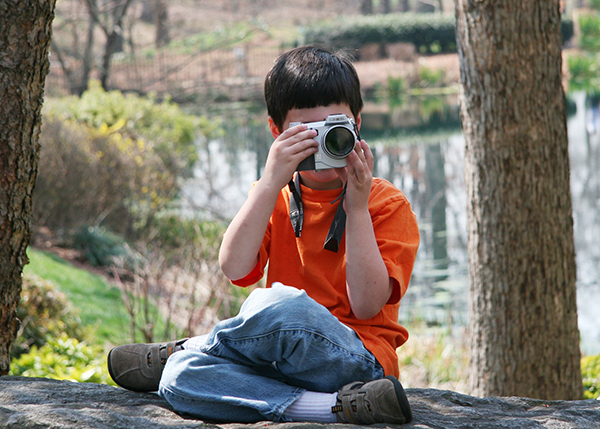
We love photography. We love our kids. So, it would stand to reason that if we can find a way to combine photography and spending time with our kids it’s a big win, right? Of course it is. If your kids are anything like mine, however, they’ve either already reached a point where they vanish into thin air the moment they even sense a camera coming out of a bag, or will reach that point soon enough. So, how do we enjoy our cherished hobby without abandoning our kids for hours or days at a time? If they’ve grown weary of their time in front of your camera, maybe it’s time to help transition them from test subjects and guinea pigs to budding photographers themselves.

STEP 1 — WHERE TO START…COMPOSITION & AUTO MODE

002

I know– the mere mention of Auto Mode makes you cringe. Ordinarily I’d agree, but it’s time to get over it (at least for a little while). I’ve been teaching a kids photography class for three years, and I can state with absolute certainty that if I tried teaching my own son the way I teach my students, he would most likely never pick up a camera again. In the classroom, I start each semester with a demonstration. We talk about the exposure triangle (aperture, shutter speed, ISO).

To illustrate, I pull out an old, 1972 Pentax Spotmatic and do something that would be impossible with any of today’s DSLR’s– I open it up. I take off the lens. I open up the back. I show them how the shutter stays open longer at slower shutter speeds. I demonstrate how the aperture ring works on older lenses. Let them see what’s going on from front to back. I show them how these concepts work on a practical, visual level. From exposure, we work our way to composition, to lighting, etc. It’s a logical progression and it works. An effective classroom approach, however, won’t often be the same recipe for success when we try it on our own kids. Why?

Because our kids just want to spend time with us and take nice pictures. They spend enough time in school learning nuts and bolts. If you are going to get (and keep) them interested in photography, you’re going to have to teach them without teaching them.

006

Huh?

You’ve taught your kids all kinds of things without sitting them down and making a formal lesson out of it. This is no different. But whereas in the classroom I start with the technical, with my son I start with composition and let the technical fall into place later.

We all know that composition consists of the placement of our subject and other elements within the boundaries of the frame. What you have to remember, though, is that your child views the world from a much lower vantage point than you do. So, start by getting down on their level and see things as they do. It may also help at first to leave the big guns at home and use a point & shoot or even an iPhone. The iPhone is an amazing compositional tool. A live view that you can share with your kids will be a huge help in guiding them towards alternate angles and helping them get what they see with their eyes within the confines of the frame.

This is where they will start expressing themselves creatively. It also gives you a chance to get inside their heads and maybe even let them teach you a thing or two about creativity. In some ways, pressing the shutter button is almost secondary at this point.

STEP 2 – SUBJECTS & LOCATIONS

003

Start by thinking about what frustrates you most about basic photography and make sure to remove as many of these stumbling blocks as possible. The more you do to create a successful environment for them, the better your chances for successfully instilling a love for photography. Stationary subjects like landscapes are a great place to start, as are pets, toys, or even cracks in the sidewalk for that matter.

As long as you are helping them select relatively stress-free subjects on their visual level, you increase their chances of success. Remember also, that creativity does not usually fall too far from the tree. Free from our adult notions of creativity, your kids might very well have some pretty awesome creative visions of their own. Be open to those visions and be sure to give them a chance to guide the journey as well.

Once they get more comfortable with capturing their vision in a box, you can start introducing games, challenges, and scavenger hunts. You’ve got their interest and attention. Now hold onto it by making it fun and exciting. Shooting themes (e.g., “Lines,” “Red,” “Doors,” “Reflections,” etc.) is a great way to both engage their imaginations and expand how they see the world around them.

STEP 3 — CAN WE FINALLY TALK ABOUT EXPOSURE NOW?

004

As children become more and more comfortable with the ideas of composition and choosing their subjects, they will be in a better position to not only start asking questions about why their photos are too light or too dark, but to understand the answers as well. By now you are hopefully comfortable with your own grasp of exposure, as well as the interplay and symbiotic relationship between the three elements. Once again, it’s all well and good, but your 8-year-old is going to get a glassed-over look in her eyes and expel the biggest yawn you’ve ever seen the moment she starts hearing things like “depth of field,” “stopping down,” and shooting “wide open.” So what do we do? We teach it visually by example.

Imagine a room with a large single window covered with a curtain. Congratulations– you’ve just stepped inside a camera. The window and curtain combine to act as your shutter and aperture. If your kids can get their heads around the concept simply by way of discussion, great. If not, pick a room of your house and demonstrate. If I open the curtain just a little, I have a smaller aperture. If I open it wider, I have a larger aperture. If I open and close the curtain very quickly, I have a faster shutter speed, and if I open and close it more slowly I have a longer, slower shutter speed. Demonstrate this with various combinations, showing them how their choices affect how much light enters the room and for how long.

Once they have a handle on aperture and shutter speed, you can add ISO to your demonstration with the use of sunglasses. Technically, ISO is a measure not of the light entering your camera, but of your camera’s sensitivity to that light. For purposes of this discussion, starting with sunglasses on and taking them off will be comparable to raising the ISO. The light entering the room has not changed, but it obviously becomes brighter with the removal of the sunglasses.

STEP 4 — ARE WE HAVING FUN YET?

005

I suppose my most important piece of advice is to make sure you keep all of this in perspective. We love our kids first and photography second. “You’re doing it wrong,” or any variation of it is strictly off-limits. Allow for mistakes and imperfections. Celebrate and embrace them. Just remember, though, that your kid can read you like a book. The second they realize you’re getting pushy or not having fun, it’s over. You didn’t just wake up one morning an accomplished photographer. You worked at it. If you guide them right your kids will work at it, too.

And one day they might even take a killer, life-altering photo and thank you for it.

Jeff Guyer is a photographer based in Atlanta, GA. In addition to shooting portraits, architecture, sports, weddings, and just about anything else that pauses in front of his lens, he also teaches a Digital Photo Challenges class for kids. Follow him on Facebook at http://www.facebook.com/guyerphotography or on Twitter @guyerphoto

Post originally from: Digital Photography Tips.

Check out our more Photography Tips at Photography Tips for Beginners, Portrait Photography Tips and Wedding Photography Tips.

What to Teach Your Kids about Photography


Digital Photography School

 
Comments Off on What to Teach Your Kids about Photography

Posted in Photography


No compromise? Zeiss blogs about its new lens line and the 55mm F1.4

07 Aug

1_4_55_ZEISS_detail.jpg

Zeiss has posted a blog article that talks about the inception and development of its latest line of lenses, led by the 55mm F1.4 that was first shown at Photokina last year. Titled ‘No Compromise’, it explains how the company is aiming to meet the demands of the latest high resolution sensors, to satisfy the needs of both professional photographers and ambitious hobbyists. Click through to read more, and the link to the original article.

News: Digital Photography Review (dpreview.com)

 
Comments Off on No compromise? Zeiss blogs about its new lens line and the 55mm F1.4

Posted in Uncategorized


6 Lessons the Square Format Can Teach You About Composition

29 Jul

Square format composition

In another article I wrote that one of the main attractions of the square format for me is composition. Today I’m going to elaborate on that idea.

Composition in the square format is a different process than within a rectangular frame. The benefit of understanding of why that is so is that you will be able to apply the lessons learnt to improving the composition of your images in any aspect ratio. Even if you never intend to use it in earnest, it’s worthwhile playing around with the square format for this reason alone.

Let’s take a look at some of these factors:

1. Balance

A square is a perfectly balanced shape. Each side is equal in length. Using the square format encourages the eye to move around the frame in a circle. This is different to the rectangular frame, where the eye is encouraged to move from side to side (in the landscape format) or up and down (in the portrait format). There are many factors that influence the way the eye moves around a photo, including the use of line, texture, colour, selective focus and negative space. But the shape of the frame is a major factor.

In this landscape, composed within the 3:2 aspect ratio of my 35mm camera, the eye is encouraged to move from side to side by the shape of the frame and the horizontal lines:

Square format composition

In this square format photo, the eye is encouraged to move around the frame in a circle:

Square format composition

2. Space

Negative space is the term used to describe the empty space in an image around the subject. Composition is often improved by getting closer to the subject. But sometimes you can create atmosphere or emphasise the shape of the subject by including negative space around it. In the rectangular frame, this can be difficult to do as it results in a lot of empty space. But it can be very effective in the square format.

Here is a photo that I took of a lizard in the 3:2 aspect ratio:

Square format composition

And here is the same photo cropped to a square:

Square format composition

Which do you prefer? There is no right answer – it’s entirely subjective. But it’s interesting how the dynamic of the image is changed by a single crop.

3. Simplicity

The square format lends itself to a simple approach. There is less room within the square frame than the rectangular one, therefore simplifying the composition becomes a necessity.

Creating a simple composition is often much harder than it seems. But it’s a very useful exercise. For your photos to have impact, you want to eliminate as many distractions as possible. The focus should be on your subject. If there are other elements within the frame that pull the viewer’s eye away from the subject that can lessen the strength of the image.

The composition of this image is about as simple as it is possible to get:

Square format composition

4. Shape

How many shapes can you see in the images below? There are circles, squares, diamonds, rectangles and triangles within these photos. The square format lends itself to this style of composition. I think that’s because the square is such a powerful shape in itself, that it emphasises other shapes within it. Linked with this are the ideas of balance and simplicity. Simplifying the composition emphasises shape, and so does placing shapes within a square frame. Converting to black and white emphasises them further.

Square format composition

5. Central composition

In the square format you can often place the subject in the centre of the frame for an effective composition. Generally speaking, many photographers tend to avoid place the subject off-centre for a more interesting composition.The rule-of-thirds is a reminder of this. But in the square format that doesn’t apply.

It’s even more true when the image is simple. The less distractions there are in the frame, the more effective a central composition becomes. If the subject has a strong shape, the empty space around it emphasises the shape. And the square format provides the perfect, balanced frame:

Square format composition

6. Black and white

Take away colour and what do you have? An image that relies on tonal contrast for impact and that emphases visual elements such as line, texture and shape. The square format and black and white seem made for each other, which perhaps explains its popularity with fine art photographers.

Take another look at the photos in this article. Do you prefer the colour images or the monochrome ones? The answer may give you an idea for future photo projects.

Final thought: Have fun

Whether you shoot with the intention of utilising the square format, or go back over old images to see whether they can be improved by cropping to a square, the most important thing is to have fun with the process. Enjoy the challenge of getting to grips with the square format and its implications for composition. Don’t take it too seriously. You’ll create some beautiful images and the lessons you learn about composition along the way will help you create better images in the future.


Post originally from: Digital Photography Tips.

Check out our more Photography Tips at Photography Tips for Beginners, Portrait Photography Tips and Wedding Photography Tips.

6 Lessons the Square Format Can Teach You About Composition


Digital Photography School

 
Comments Off on 6 Lessons the Square Format Can Teach You About Composition

Posted in Photography


Start Feeling GOOD About YOUR Photography

24 Jul

As I’ve begun teaching others how to edit their photos I’ve begun to realize that a lot of new photographers lack the confidence in their own work. I get questions like “Why don’t my photos look like this?” or “Should I buy a D800 so I can take better photos?” all the time and I’m starting to wonder if it’s simply because people don’t feel good about the work that they do create.

I’ll be the first to admit that I’m my hardest critic, but I do always feel good about the photographs that I share, even if I wish I’d done something differently I am always happy that I got a result and gained some experience in the process.

Dragonfly-Watching-Sunset-518x650

Of course, it can be pretty obvious why people might feel this way when you think about it. After all the internet is filled with amazing photographs, just look at any of these inspirational posts on DPS and unless your one of the featured photographers you might wonder how you too could get to that level.

The simple answer is… First you have to feel good about your photography, because the instant you start doubting your own work, your work will start to suffer.

Of course that’s easier said than done, so confronted with these questions about confidence, I decided I’d take the time to come up with five little nuggets of inspiration that everyone should keep in mind. By doing so I think you will start to feel good about your photography no matter who or where you are in your journey.

Compare Yourself to Yourself Three Months Ago – Not To Art Wolfe

No matter who you are the best benchmark for improvement is yourself in the past. Take a minute and dig through your archives look back at the photos you took three months ago, a year ago, or even further.

When I do this task I’ll notice that my composition and my choice of settings continue to improve. I make smarter choices for focal points and I get better and better at picking the right exposure in camera. Whatever you do don’t compare your photography to another photographer’s work – good or bad – it’s not a fair benchmark and you won’t be helping yourself appreciate your work.

Defeat Gear Envy

Gear envy is something we all struggle with from time to time and unless you’ve been blessed with that mythical tree made of money you’re going to be doing more wanting and less buying. Don’t let the idea that a better camera, lens, accessory, gadget or what-have-you will make you a better photographer – it won’t – and worrying about it won’t help either.

Be happy with what you have and spend your time learning to get the best photos that you can out of this equipment instead of daydreaming about your dream machine – your wallet will thank you later.

Out-in-the-Backyard-520x650

Beat the Critics By Remembering Your Fans

Even if the only fans you have are your friends and family let them be your motivation to continue to produce more work and better quality work. Let them move you beyond the point your at now and push you to where you want to be. Be happy with every like they give you on Facebook or every comment they leave on your site – or even – every time your mom tells you that she got your newsletter and loved the photo of that flower that you took at her house last weekend.

Fans are why I do what I do and I still remember when my Facebook page had less than 30 likes and almost no interaction. It takes time and a lot of work to grow, but if you’re consistent, true to yourself, your fans, and always remember it’s not a race you’ll start to feel good about what you’re doing and then the rest will fall into place.

Know Why You’re Photographing

Are you taking photos because you want to pass time on the weekends, record family moments, or are you trying to make a career out of it? There many reasons why we take photos and before you can truly be happy with the results you capture you should define why you’re picking up the camera in the first place.

A-Fantasy-World-521x650

Share Your Work

And finally – this is probably the most important one – share what you do. Open yourself up to the world and let others see the what you’ve captured. Take the critiques with dignity and class and revel in the compliments from your fans and family.

If you need a stiff kick of inspiration here are some tips to help you get the confidence to share your photos I wrote for my own site a few months ago. The truth of the matter is the more you share the more you’ll improve and the more you improve the more you’ll be able to look at step number one and say – “Wow, look at how far I’ve come!”.

And that is what feeling good is all about.

Post originally from: Digital Photography Tips.

Check out our more Photography Tips at Photography Tips for Beginners, Portrait Photography Tips and Wedding Photography Tips.

Start Feeling GOOD About YOUR Photography


Digital Photography School

 
Comments Off on Start Feeling GOOD About YOUR Photography

Posted in Photography


Misho Baranovic: 50 lessons I’ve learned about mobile photography

19 Jul

eyeem3.jpeg

We love this 50 Things I’ve Learned About Mobile Photography List (and iPhone Photography) by Misho Baranovic, an accomplished mobile photographer and Connect contributor. You’ll find some universal truths in there and maybe a few things you disagree with, but Baranovic’s list is guaranteed to get you thinking, and laughing, too. Click through for some extracts and a link to the full article. 

News: Digital Photography Review (dpreview.com)

 
Comments Off on Misho Baranovic: 50 lessons I’ve learned about mobile photography

Posted in Uncategorized


Photo Gift Ideas That Every Photographer Should Know About

15 Jul

When it comes to exchanging gifts with friends or family members, we really are spoiled for choice. Ironically, this abundance of novel ideas makes it near impossible to hone in on that one perfect gift for a loved one. Whatever you chose, it is always the thoughtful and personal gift ideas that are the most touching and well received. And Continue Reading

The post Photo Gift Ideas That Every Photographer Should Know About appeared first on Photodoto.


Photodoto

 
Comments Off on Photo Gift Ideas That Every Photographer Should Know About

Posted in Photography