RSS
 

Posts Tagged ‘Abandoned’

7 Abandoned Wonders of Institutional Architecture

14 Jan

[ By Steph in Abandoned Places & Architecture. ]

Abandoned Institutional Buildings Main

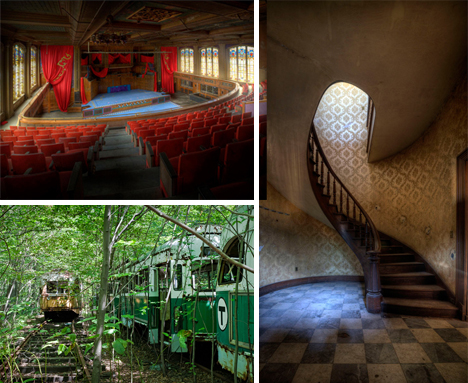
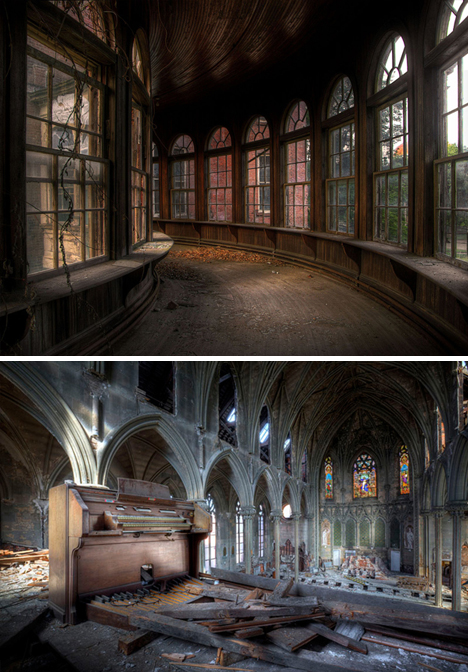
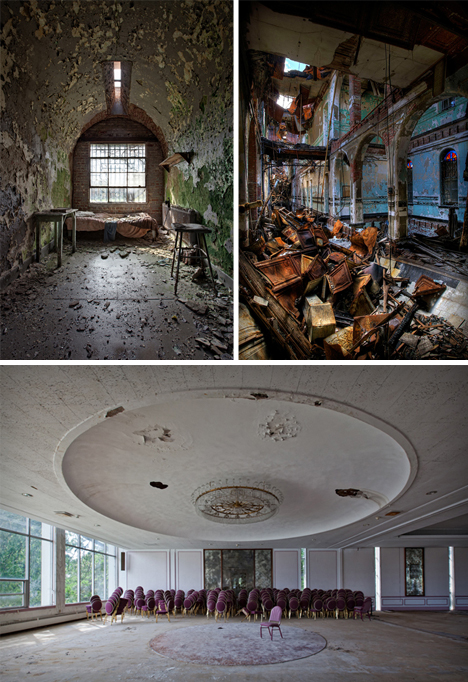
Churches, prisons, psychiatric hospitals and courthouses given over to the elements can sometimes taken on a mythic significance, given a haunting, creepy beauty by the passage of time. Removed from their former functions, these institutional buildings become both architectural skeletons and snapshots of human activity, frozen in time. In their emptiness, the echoes of past patients, prisoners and parishioners seem louder than ever.

Carabanchel Prison, Spain

Abandoned Carcel Prison Spain

Abandoned Carcel Prison Spain 2

(images via: alex//berlin_alexander stübner)

One of the biggest prisons in Europe until its closure in 1998, Madrid’s Carabanchel Prison was built by political prisoners after the Spanish Civil War between 1940 and 1944. During the ten years of its abandonment, the prison was inhabited by homeless people and other marginal groups, and covered in elaborate graffiti. Despite its historical significance and the protests of many locals, the prison was demolished in 2008.

It represented one of the most impressive examples of the repressive panopticon design, which allows a watchman to observe all inmates without them knowing when they’re being watched. The panopticon arrangement was initially envisioned not just for prisons, but also for hospitals, sanitariums and daycares.

St. Agnes Church, Detroit
Abandoned St. Agnes Church Detroit 1

Abandoned St. Agnes Church Detroit 2

(images via: memories_by_mike 1 2, erik_mauer)

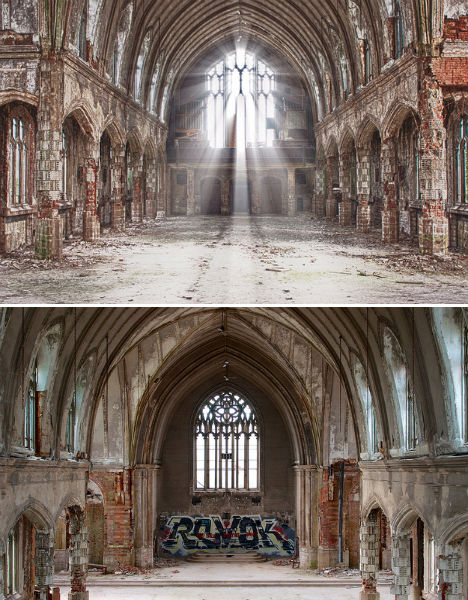
Abandoned in 2006 due to financial troubles, Detroit’s St. Agnes church remained in fairly good condition for three years, though it had been stripped to its bare bones. Even once all of the organ pipes, chandeliers and stained glass windows were gone, the church displayed much of its old grandeur.

But the structure underwent a striking transformation in 2009, when leaks in the roof led to extensive water damage and mold, causing the masonry to crumble. Textural details are revealed in stark contrast by a black grime of dirt and mold. Today, the church looks like much of the rest of Detroit; it has been looted and vandalized to the point of being unrecognizable.

Gartloch Mental Hospital, Scotland

Abandoned Gartloch Hospital Scotland 2

Abandoned Gartloch Hospital Scotland 1

Abandoned Gartloch Hospital Scotland 3

(images via: strike4th, bigcagwell, justified sinner, skin-ubx 1 + 2)

In service for over a century, Gartloch Hospital is a sprawling Victorian complex located just outside the city of Glasgow, Scotland. From the time of its opening in 1889, it served as an asylum for the poor people of the city. Though its primary purpose was as a psychiatric hospital, it temporarily served as an emergency medical facility during World War II. It was the subject of many a Scottish ghost story long before it closed in 1996, and today its dark, empty hallways feel more haunted than ever.

Hellingly Asylum, Sussex

Abandoned Hellingly Asylum 1

Abandoned Hellingly Asylum 2

Abandoned Hellingly Asylum 3

(images via: howzey)

Has any creepy old mental hospital ever been more fittingly named? Hellingly Asylum in Sussex, England opened in 1903 to relieve overcrowding at other institutions during a time in which people could be thrown into hospitals for the rest of their lives for being gay or having a child out of wedlock. Located on 400 acres, the complex included sex-separated wards, a villa for ‘mentally defective’ children, and a small isolation hospital for infectious diseases, which stood in the woods at some distance from the rest of the buildings. The hospital even had its own electric tramway.

Hellingly closed in 1994 and most of its buildings fell into rapid decline. Fires, vandalism and theft took their toll. Medical equipment and furniture could still be seen among the ruins during the years in which the only people who ever entered were urban explorers, graffiti artists, photographers and people with questionable intentions.

Today, only a few buildings remain. Most have been demolished to make way for new housing.

Next – Pripyat Schools, Bronx Borough Courthouse and Gary, Indiana’s City Methodist Church

Next Page:
7 Abandoned Wonders Of Institutional Architecture

Share on Facebook


[ By Steph in Abandoned Places & Architecture. ]

[ WebUrbanist | Archives | Galleries | Privacy | TOS ]


WebUrbanist

 
Comments Off on 7 Abandoned Wonders of Institutional Architecture

Posted in Creativity


7 Abandoned Wonders of Commercial & Industrial Architecture

07 Jan

[ By Steph in Abandoned Places & Architecture. ]

Abandoned Commercial buildings main

These castle-like structures, skeletal high-rises and rusting remains of the golden age of industry are monuments to themselves, still standing despite decades of neglect. Formerly factories, offices, corporate headquarters and industrial facilities, these 7 commercial and industrial sites contain clues to their former purposes among all the rubble, overgrown greenery, peeling paint and other effects of abandonment.

Abandoned High-Rises and Factories of Detroit, Michigan

Abandoned Detroit Factories Skyscrapers Buildings

Abandoned Detroit Mills Factories

Abandoned Detroit Factory

(images via: bob jagendorf, meeshypants, nitram242, davescaglione, joguldi 1 + 2)

When it comes to Detroit, how can you choose just one standout abandonment? The city is, in and of itself, a jaw-dropping wonder of architectural decay. Once it lost its identity as a manufacturing mecca, Detroit also lost a large number of its residents, leaving block after block abandoned, with few signs of life in between. Once the fourth-largest city in the United States, Detroit is now filled with towering structures that have been left as they were when last used, often full of the ephemera of life. These include a number of high-rises – the most notable being Michigan Grand Terminal, pictured above with an overgrown lawn – and burned-out factories.

In 1950, Detroit had a population of nearly two million; today, while similar cities have grown exponentially, this one is down to less than 900,000. The fact that the city has become something of an urban Wild West doesn’t exactly encourage new residents to purchase decrepit properties and return them to their former glory. The number of abandoned buildings standing in the city currently numbers around 70,000.

Bethlehem Steel Factory, Pennsylvania

Abandoned Bethlehem Factory

Abandoned Places Bethlehem Steel Factory 1

Abandoned Bethlehem Steel Factory 2

(images via: bob jagendorf, a.strakey, dandeluca, the seafarer, dave scaglione)

Once the second-largest steel producer in the United States, Bethlehem Steel began work on a large facility in Bethlehem, Pennsylvania in the 1860s that was at the forefront of manufacturing innovation at the time. Its towering facilities made it a symbol of the industrialized future of America. During World Wars I and II, it was a major supplier of armor plate to the U.S. Armed Forces, making components of weapons like large-caliber guns. But by the 1990s, America’s steel industry began to decline, and companies like this could no longer compete with cheap foreign labor.

When Bethlehem Steel closed its local operations, it laid out a plan for its 163-acre site for cultural, recreational, educational, entertainment and retail development, to reduce economic impacts on a city that had long relied on steel manufacturing for prosperity. However, the company went out of business and the land was sold to a developer that has turned it into a casino. Ironically, the casino had difficulty coming up with the 16,000 tons of steel needed to build its new $ 600 million complex, so it only finished one building. Some of Bethlehem Steel’s old manufacturing structures were demolished, but furnaces and gas blowing engine house still stand.

Hasard Cheratte Abandoned Coal Mine, Belgium

Abandoned Hasard Cheratte Coal Mine 1

Abandoned Hasard Cheratte Coal Mine 2

(images via: wikimedia commons, intermayer 1 + 2)

One of the most popular abandoned sites in Europe among urban explorers, the Hasard Cheratte Coal Mine in Belgium looks a bit like a crumbling castle. The facility dates to the 1860s, and was formerly one of many such mines in the coal basin of Liege. Make your way inside and you’ll find the hulking remains of industrial equipment and heavy mining machinery and lots of long, dark brick-lined passageways. Abandoned since 1977 and now a protected heritage site, the complex still contains such small items as books and work gloves. The largest ‘castle tower’ sits over the deepest mine shaft at the facility, which plunges a mind-boggling 1,574 feet into the ground. See photos of the interior at 28 Days Later.

Abandoned Chemical Factory, Poland

Abandoned Chemical Factory Poland 1

Abandoned Chemical Factory Poland 2

(images via: mlociny)

You probably don’t want to go inside this complex. The abandoned fluorescent light factory in Warsaw, Poland once manufactured mercury lamps; it was in the midst of renovation when astronomic mercury contamination levels put its modernization to a halt. Pools of mercury had collected under the floors, poisoning many workers. The factory was also occupied by the Nazis during World War II and used to produce transceiver equipment for submarines, tanks, and aircraft. During the Warsaw Uprising in 1944, Polish insurgents took it back.

As dangerous as it is, urban explorers have still made their way inside to photograph the peeling paint, rusted fixtures, rotting wood and broken glass. Documents, blueprints and bottles still full of chemicals are still scattered all over the building’s ten floors and basement level. The more valuable items, like toilets and sinks, are long gone.

Szkieletor Tower, Poland

Abandoned Skyscraper Szkieletor

(images via: joannaj, wikimedia commons)

Named after the He-Man villain Skeletor for its skeletal and arguably sort of evil appearance, Szkieletor Tower in Krakow, Poland has stood like a bleak lookout over the city since 1981. Construction began in 1975 on what was supposed to be the regional office of the Main Technical Organization, but halted six years later due to economic constraints, political unrest and the imposition of martial law in Poland. This history combined with its looks give Szkieletor an ominous feel. Though little more than a shell, it remains the tallest building in the city at 24 stories.

This tower was supposed to have a twin, and together they would have acted as a gateway to a skyscraper district in Krakow known as ‘Polish Manhattan.’ The original deadline for the entire project of Polish skyscrapers was 2005, but hopes for its future glory faded in the 1980s. Passing from one owner to the next, the building never seems to get past planning stages for renovation. A 2010 plan to turn it into a hotel has fallen flat. Instead, the building remains covered in massive billboards, a ham-fisted attempt to improve its looks and capitalize on its continued existence.

Warehouse B, Brussels, Belgium

Abandoned Warehouse B Brussels

Abandoned Warehouse B Brussels 2

(images via: abandoned-places.com)

Known locally as ‘The Prison’, Brussels’ Warehouse B is just one part of a sprawling multi-purpose transport center that was built in the early 20th century to house the Customs Administration, a railway station and a number of companies trading goods like tobacco, wine and beer. While some of these buildings are still maintained and occupied, Warehouse B has remained empty despite its beauty and historical worth. Serving as a warehouse for customs, the brick and stone building was used until 1987 for Customs storage, including confiscated goods.

The looks of the interior, including courtyards, metal security grates and many small, dark rooms, made it look a bit like a prison – so perhaps it’s no surprise that it was temporary used for this purpose by the Germans during World War II.

The Domes, Casa Grande, Arizona

Abandoned Domes 1

Abandoned Domes 2

Today, ‘The Domes’ of Casa Grande, Arizona look like the remains of some sort of sci-fi movie set. Any one of these round buildings could suddenly lift off the ground and zoom away into the atmosphere like a UFO. Built for computer manufacturing in the early 1980s for a facility that was never completed, they’ve just sort of been left to rot in the desert. InnerConn planned to build circuit boards here, and spent about $ 150,000 on each of the polyurethane and concrete domes. The idea was that they’d be more insulated in the desert climate, leading to lower maintenance costs.

According to local wisdom, you just shouldn’t go out there – cue obligatory whispers about ghosts and Satanic rituals – but judging by all the graffiti, many people go anyway. Many of the ceilings are falling in, and The Domes were an illegal dump site for years, making them a pretty dangerous site.

Share on Facebook


[ By Steph in Abandoned Places & Architecture. ]

[ WebUrbanist | Archives | Galleries | Privacy | TOS ]


WebUrbanist

 
Comments Off on 7 Abandoned Wonders of Commercial & Industrial Architecture

Posted in Creativity


Matthew Christopher: Photographer of Abandoned Places

24 Dec

[ By WebUrbanist in Abandoned Places & Architecture. ]

Some of the locations have storied histories, and others remain a mystery – photo shoots of spaces that must remain off the map to avoid disturbing delicate or dangerous ruins, or trespassing on private property.

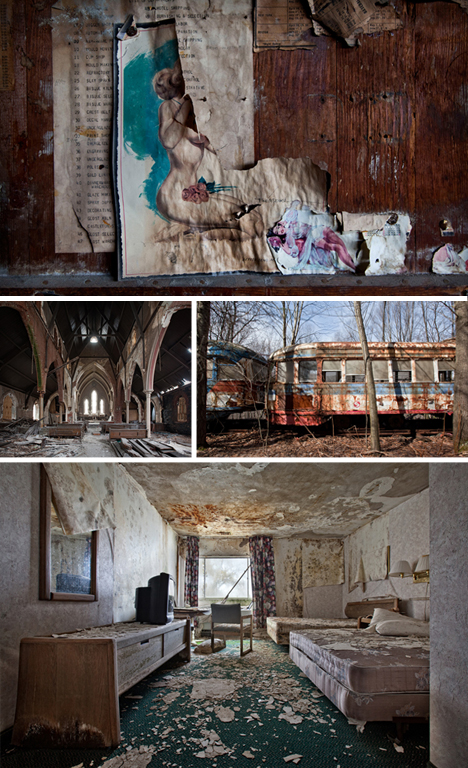
Matthew Christopher has taken pictures of it all, from prisons and hospitals to churches with basement meth labs to deserted transportation infrastructure and now-demolished architecture. When he got in touch with WebUrbanist, a balance had to be struck between secrecy and revelation.

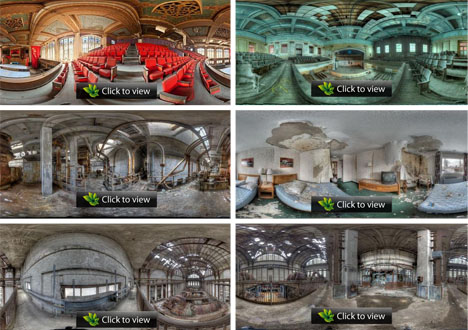
But beyond simple still images, he has escalated his photography to fully-interactive, (click here to see them embedded on his website:) three-dimensional online panoramas – these compelling variants are part film, part photo, and provide an really impressive sense of spatial immersion (hint: be sure to go full-screen for the full effect – these are high-resolution!).

Some of these places are in the middle of preservation battles as well, their futures as uncertain as their histories. A few are publicly known, leaving Matthew able to discuss them, like this prison and this state hospital. He also has both prints and books available at this store on his website.

Share on Facebook


[ By WebUrbanist in Abandoned Places & Architecture. ]

[ WebUrbanist | Archives | Galleries | Privacy | TOS ]


WebUrbanist

 
Comments Off on Matthew Christopher: Photographer of Abandoned Places

Posted in Creativity


High & Dry: 8 Amazing Abandoned Aquariums

16 Dec

[ By Steve in Abandoned Places & Architecture. ]


Recreating the sea on land is no easy task, especially when a stable and viable marine ecosystem is the crux of the plan. When things go wrong, however, the life leaves and what’s left looks especially out of place – a fish out of water as it were. These 8 amazing abandoned aquariums illustrate what happens when the artificial environments of yesterday go apocalypse now.

Coral World – Nassau, The Bahamas

(image via: Williams Family)

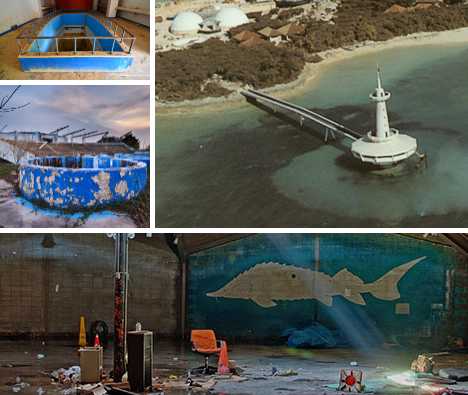
Coral World Bahamas is a combination aquarium and beach resort that opened in 1987. Its signature lighthouse-like tower observatory was built on an artificial island and is linked to the mainland of Nassau via an elevated causeway.

(images via: Worldnews.com and Ambertq)

Coral World suffered severe damage from Hurricane Floyd in 1999 and although the UFO-esque tower remains as an easily recognizable landmark, the cessation of any maintenance by owners Coral World International is allowing rust and weathering to inexorably take their toll.

Sea-Arama Marineworld – Galveston, Texas, USA

(images via: SixFlagsHouston Forums and Artificial Owl)

Sea-Arama Marineworld opened in 1965 and was Galveston’s most popular attraction for decades. Times change, however, and when Sea World Park opened in San Antonio the more modern facility began scooping too many of Sea-Arama Marineworld‘s potential visitors for the aging facility to remain profitable – it closed its doors for good in 1990.

(images via: Abandoned But Not Forgotten (ABNF))

Sea-Arama Marineworld was completely demolished in 2006 but thanks to the efforts of photojournalists both amateur and professional, we can appreciate the sad beauty of the former 25-acre complex as it silently molders away.

Lal Bagh Botanical Garden – Bangalore, India

(image via: Mohammed Absar)

Captured in the midst of ongoing decay in mid-June of 2010, the abandoned aquarium at the otherwise open-for-business Lal Bagh Botanical Garden in Bangalore, southern India puts on a brave front against the irresistible force of passing time. Though the garden as a whole dates back to 1760, the aquarium building is of much more recent vintage.

Saikaibashi Public Aquarium – Sasebo, Japan

(images via: Tee-Photo and Abandoned Kansai)

The Saikaibashi Public Aquarium opened sometime in the mid-1960s and operated for about 30 years. Its remains can be found in the city of Sasebo, near Nagasaki in western Japan.

(images via: Forbidden Kyushu)

The two-story aquarium was anything but grandiose – passage between the two levels was via stairs, not an elevator or escalator – but it did boast a four times daily dolphin show.

(image via: Forbidden Kyushu)

The aquarium’s decaying remnants are surprisingly free from graffiti though most of the building’s windows have been broken. Considering the area’s humid summer climate and frequent summer storms it’s probable the Saikaibashi Public Aquarium will be taken over by mold and mildew unless a demolition crew doesn’t demolish it first.

Old Cleveland Aquarium – Cleveland, Ohio, USA

(images via: Realbruts! and What My Eyes Have Seen)

Overshadowed by the Greater Cleveland Aquarium that’s housed in a fully renovated abandoned power plant, the old Cleveland Aquarium was a modest structure free of bells and whistles.

(images via: Kingtycoon and Mobius Faith Imaging)

The elderly brickwork building was used for police K9 training for a time after the aquarium closed but both cops and dogs have hightailed it outta there as well.

Dolphin Island – Okinawa, Japan

(images via: 28DaysLater)

Dolphin Island, or “Hiikuu Island” in half-Japanese is located a stone’s throw off the coast of Okinawa. When the surprisingly large restaurant/aquarium was built several decades ago a causeway was constructed to provide easy access. Nowadays any intrepid explorers must wade across at low tide – stay too long and you’ll be spending the night alone with only spiders and fire ants for company!

(image via: Gakuran)

The remnants of Dolphin Island‘s small aquarium can be found within the forlorn building; all of the tanks (and their occupants) are long gone however.

It’s not known why the place’s owners saw the need for an above-ground aquarium when the surrounding waters are a scuba-diver’s paradise but maybe that’s one reason the island is deserted today.

Abandoned Water Park – Dead Sea, Israel/Jordan

(image via: Foto8)

The frequency of tourism to Israel’s border regions may be described as boom or bust… the former typically leading to the latter. It’s not certain why the colorful water park complex above gave up the ghost in 2010 but lets just say the life preserver at the bottom of the pool had no takers.

Atlantis Marine Park – Two Rocks, Australia

(images via: Tumblr, Crafted By Ben and Escobar.ID.AU)

Japan’s Tokyu Corporation had high hopes when they opened the Atlantis Marine Park in December of 1981. Located in the small town of Two Rocks a few miles north of Perth, the park encompassed 14 hectares (more than half of them artificial lakes) and boasted an Oceanarium, a Seal Pool, a Dolphin Pool and a Children’s Adventure Park. Six dolphins were caught nearby and three more were born at the park in 1988.

(image via: Tumblr)

Thought the dolphins liked Atlantis Marine Park enough to start settling down and producing offspring, the Australian government had a few issues – mainly, the park’s dolphin tank was now too small and would have to be expanded or a larger one built.

(images via: WAtoday and Tumblr)

Faced with an expensive renovation bill and mindful of declining profits, Tokyu Corporation decided to cut their losses, release their dolphins and close the park. Old King Neptune was/is not amused though appearances may indicate otherwise.


(image via: EnglishRussia)

Several sources state the Russian building above is an abandoned children’s summer camp building, not an abandoned aquarium. You’ve gotta love the design, whatever it is, even in its currently decrepit state. When Great C’thulhu and his minions finally awake and reclaim their old stomping grounds, this is what it’s gonna look like.


Want More? Click for Great Related Content on WebUrbanist:

Amazing Aquariums and Fish Tank Designs

Here’s a selection of some of the coolest (and in some cases bizarre) fish tanks and aquariums for your favorite fish.
21 Comments – Click Here to Read More »»


Holy Water! 24 Amazing Aquariums and Fish Tanks

True aquarium aficionados know a beautifully designed fish tank can be like a work of living art. Here are 24 of the wildest examples.
8 Comments – Click Here to Read More »»


Share on Facebook


[ By Steve in Abandoned Places & Architecture. ]

[ WebUrbanist | Archives | Galleries | Privacy | TOS ]


WebUrbanist

 
Comments Off on High & Dry: 8 Amazing Abandoned Aquariums

Posted in Creativity


Abandoned No More: New Lives for 13 Disused Spaces

19 Nov

[ By Steph in Abandoned Places & Architecture. ]

While many abandoned places are ultimately demolished (and sometimes temporarily serve as settings for unexpected art installations), some get a second chance at life with restoration projects that transform them for new purposes. These 13 abandoned places, including zoos, bath houses, military compounds, railways and factories, now serve as libraries, galleries, offices, arts centers and private homes.

Contemporary Library in a Turkish Bath House

(images via: archdaily)

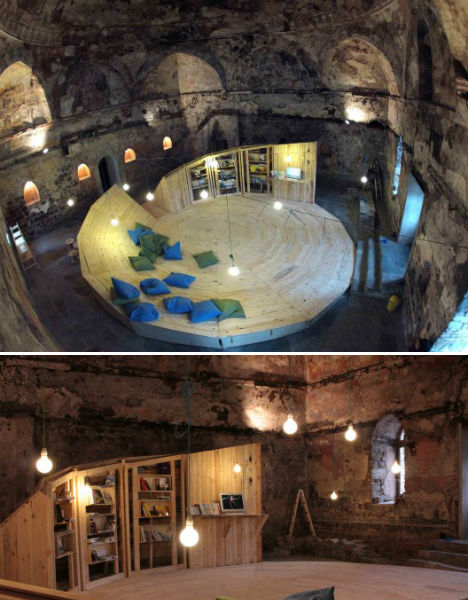
A beautiful rounded wooden library reminiscent of a seashell has been temporarily installed inside a once-abandoned Turkish bathhouse in Bulgaria. the ICONITemporary Library by Studio 8 1/2 contains nothing but books about contemporary art, with comfortable places to lounge, flip through the pages and gaze at the 16th century architecture.

Abandoned Walmart Turned America’s Largest Library

(images via: mcallenlibrary.net)

Empty retail stores can be quite an eyesore, sitting vacant for months or even years. One such building has been completely transformed from a vacant Walmart in McAllen, Texas, to America’s largest library. Measuring 124,500 square feet, the single-floor library was painted in bright colors and renovated to include glass-enclosed spaces.

Zoo Turned Graffiti Gallery

(images via: street art museum)

An old zoo in Torino, Italy has become the Street Art Museum, with the former animal enclosures painted with often-surreal scenes. It’s part of the Border Land Project, an urban regeneration initiative that helps utilize and raise awareness about neglected spaces.

Gentlemen’s Club Turned Stylish Home

(images via: yatzer)

The Harmony Club was built in 1909, and operated as a social club for the Jewish community in Selma, Alabama, including a restaurant, a ballroom and an exclusive men’s lounge. It was turned into headquarters for the Elks Club in the 1930s, and boarded up in the ’60s. Today, it’s a luxurious home that retains many of the historical details, making it truly one-of-a-kind. See more photos at Yatzer.

Stable to Family Home

(images via: enpundit)

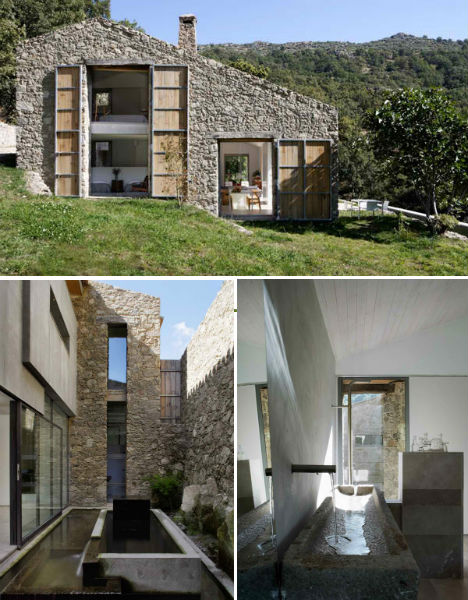
Architecture firm Abaton took a crumbling, centuries-old stone barn in the Spanish province of Caceres and rehabilitated it into a beautiful family home, with the haylofts becoming bedrooms. The large doors – two stories tall, in one case – were glassed in to create massive windows.

Catholic Chapel to Modern Home

(images via:  zecc architects)

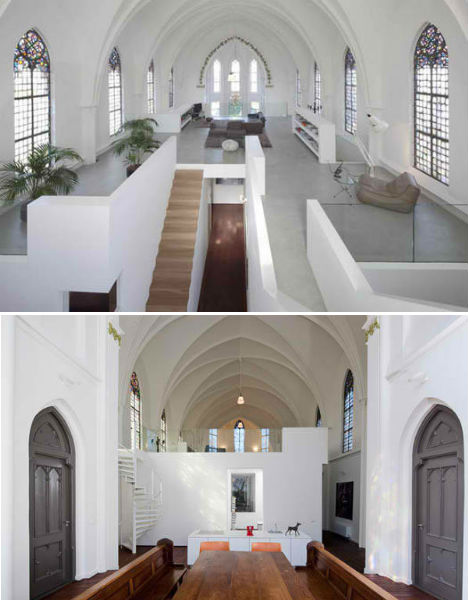
An abandoned Catholic church is now a spacious, modern residence in Utrecht, The Netherlands. Zecc Architects carefully preserved the dramatic aspects of the church’s architecture with soaring ceilings, stained glass windows and even a dining table made from the preserved pews.

Taiwanese Military Barracks to Rainbow Village

(images via: riowang)

The local council in Taichung, Taiwan had decided to demolish the remains of an abandoned 1940s military encampment on the outskirts of its suburban community, but an elderly resident named Huang Yunfu had another idea. He covered the entire site in colorful pairings, turning it into an outdoor gallery. It’s now called ‘Rainbow Village.’

Beret Factory to Multimedia Center

(images via: inhabitat)

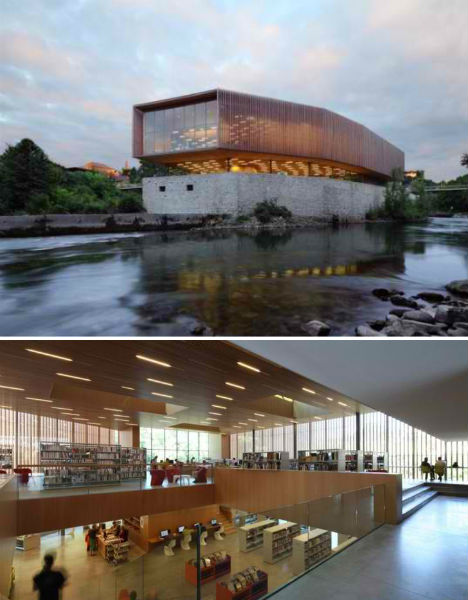
Would you guess that this incredibly modern-looking facility was once an abandoned beret factory? A riverside site that was recently little more than an industrial wasteland on the edge of the Pyrenees mountains in France is now a two-story multimedia center built on the original stone foundation with skylights and green terraces.

Garage to Madrid Hub Offices

(images via: fast co design)

Madrid architects Churtichaga + Quadra + Salcedo (CH +QS) turned an abandoned garage in the center of the city into a timeshare office, preserving the industrial character of the place while adding comfortable semi-private nooks, including an informal living room made of wood crates.

Silo to Climbing Gym

(images via: inhabitat)

After losing a competition to transform an abandoned sewage treatment silo in Amsterdam into a climbing gym, NL Architects may get a second chance. Developers in the area think that a third abandoned silo could be ideal for the project. The ‘Siloo O’ concept would create a world-class climbing and mountaineering facility that could become a major tourist attraction for climbers around the world.

Warehouse to Advertising Firm Headquarters

(images via: wk.com)

Ad firm Wieden + Kennedy turned an old warehouse in Portland, Oregon into its new world headquarters, holding several hundred employees. Portland architecture firm Allied Works gave the building a new concrete interior and new stories, preserving some of the original timber.

Steel Factory to Arts Center

(images via: artsquest.org)

Once the largest steel-producing facility in America, the old Bethlehem Steel building in Pennsylvania closed its doors in 1995 and remained abandoned for more than a decade. Spillman Farmer Architects converted the 68,000-square-foot space into the ArtsQuest Center, an art campus where the industrial aspects of the building are accented by the warmth of native Pennsylvania ash wood.

Railroad to Recreational Promenade

(images via: archdaily)

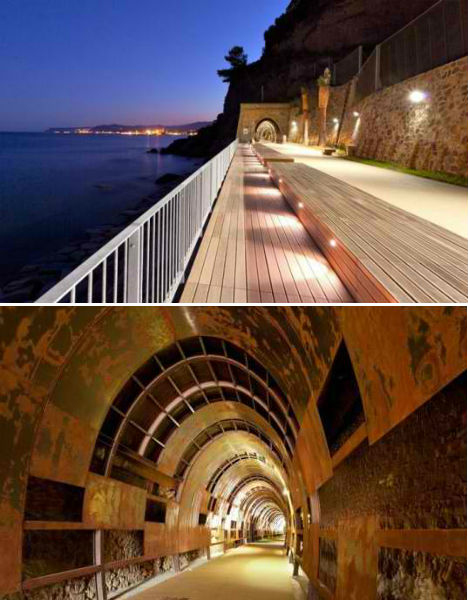
A retired railway between the towns of Albisola Superiore and Celle Ligure on the coast of Italy left a large stretch of the shoreline unused. 3S Studio and Voarino Cairo Voarino transformed the old promenade into a walking path using low-impact materials for a small environmental footprint.


Want More? Click for Great Related Content on WebUrbanist:

Remembered Spaces: Abandoned Buildings Transformed Into Art

When buildings are abandoned, they are often demolished and their parts sent to a landfill. One artist dismantles them piece by piece and preserves them in art.
6 Comments – Click Here to Read More »»


Abandoned Walmart is Now America’s Largest Library

A sprawling abandoned Walmart in McAllen, Texas has been transformed into the nation’s largest public library, with self-check-out kiosks and an art gallery.
20 Comments – Click Here to Read More »»


Share on Facebook


[ By Steph in Abandoned Places & Architecture. ]

[ WebUrbanist | Archives | Galleries | Privacy | TOS ]

WebUrbanist

 
Comments Off on Abandoned No More: New Lives for 13 Disused Spaces

Posted in Creativity


Empty Pews: 7 More Amazing Abandoned Churches

12 Nov

[ By Steve in Abandoned Places & Architecture. ]


Abandoned churches may symbolize to some the weakening of religion in the modern age but that’s far too simplistic an explanation – people can move, churches not so much. These 7 amazing abandoned churches stand as testaments to the power of faith and the construction skills of motivated craftsmen though their congregations have forsaken them.

Augustinian Church of Blessed Virgin Mary of Consolation, Vilnius, Lithuania

(images via: Wikipedia/Alma Pater, Foje64 and Panoramio/Dainius63)

The six-story Church of Blessed Virgin Mary of Consolation in Vilnius, Lithuania, had its heyday long ago when the Polish–Lithuanian Commonwealth was one of Europe’s largest and most populous states. Tough times were in the making for Vilnius, however, and the years 1710 through 1711 when the city lost approximately half its population due to an outbreak of bubonic plague were especially trying.

(image via: Keith Ruffles)

Like most large churches and cathedrals, the Church of Blessed Virgin Mary of Consolation was built to last and last it has, through wars, plagues, communism and more. The appearance of trees and shrubs that have taken root on the roof of the lowest floor indicate that the old gal has at least some life left on her, if not in her.

Woodward Avenue Presbyterian Church, Detroit, MI, USA

(images via: Urban Ghosts, Verybadfrog.com and Waymarking)

Known as “St. Curvy” by parishioners due to the spectacular sweep of its wooden upper balcony, the Woodward Avenue Presbyterian Church in Detroit, Michigan was dedicated in June of 2011 after nearly three years of construction. The English Gothic-style church’s fortunes rose and fell along with the city of Detroit and only its addition to the National Register of Historic Places in 1982 kept it from the wrecker’s ball.

(image via: Rick Harris)

“This splendid building… stands as one of the most handsomest churches in the country,” wrote the Detroit Times on June 10th of 1911. Attendance declined in the mid-1950s and drastically accelerated following the 1967 race riots. After an unsuccessful stint as the Abyssinia Interdenominational Church, the building and its contents were sold to new owners unwilling to pay for its upkeep. A proposal in 2010 to turn the church’s cavernous carcass into a homeless shelter seems not to have gained traction and in the current grim economic climate it’s doubtful “St. Curvy” can hold out against vandals, the elements and time itself much longer.

Church of San Juan Parangaricutiro, Mexico

(images via: Artificial Owl)

Located in the Mexican state of Michoacán, the remains of the Church of San Juan Parangaricutiro, rise from a still-warm lava field expressed by the Paricutin volcano in 1944. After suddenly erupting from a farmer’s cornfield the previous year, Paricutin expelled waves of molten lava that breached the church’s cemetery walls in 1944 and quickly subsumed most of San Juan Parangaricutiro’s centuries-old cathedral.

(image via: Panoramio/Panamon-Creel)

Only one tower, sections of supporting walls and the so-called “Altar de los Milagros” remain visible under solidified lava up to 40 feet thick. The church and alter are popular tourist attractions as it is said the lava’s stopping just short of the alter was a miraculous occurrence.

Agnus Dei Church, Belgium

(images via: Bestarns and Jan Hoogendoorn)

Agnus Dei is a combination church and retirement home abandoned in 2005 after a devastating fire. The carnage was mainly restricted to the residential wing, however, leaving the liturgical areas comparatively unscathed.

(image via: Haikyo.org)

A more severe fire would have resulted in Agnus Dei’s exquisite stained glass windows being blown out, melted or both – they seem to have survived just fine. The relative isolation of the buildings has also helped keep vandals and graffiti “artists” at bay, which is why Agnus Dei’s precise location will remain unmentioned in this post.

Cottam Chapel, Yorkshire, UK

(images via: Mr Wobble, Nathan.Horner and 28DaysLater)

Red brick Cottam Chapel (or Holy Trinity church) dates from 1890 though it looks much older than that. The crumbling structure is all that remains of a village that stood at the site for nearly 1,000 years. Services were held annually at the chapel around harvest time into the 1930s but the building has been unmanned and unmaintained since then.

(image via: Grangefirth)

The Cottam Chapel was slated to be demolished in 1990 but through the efforts of Arthur Mason of Cottam House, the Church Commissioners were persuaded to leave the structure in place, as-is. Nowadays the chapel is a popular stop for hikers in Yorkshire and it’s proved to be a boon for photographers after that quintessentially English composition combining the forces of time and the themes of pastoralism.

Methodist Church, Bodie, CA, USA

(images via: Not Over The Hill and KYCheng)

Dedicated on September 15th of 1882, the Methodist Church in the boomtown of Bodie was a case of too little too late: the town’s population had suffered a decline of roughly 70% over the previous year as the gold-mining boom was rapidly turning to bust. Like many of the town’s buildings, the church was made from wood which has held up remarkably well in the arid climate 8,379 feet (2,554 m) above sea level at the California-Nevada border.

(image via: Wikipedia/Thomas Fanghaenel)

Designated a National Historic Landmark in 1961 and a State Historic Park the following year, Bodie’s small but resilient Methodist Church remains in a state of “arrested decay”. Visitors are not able to enter the building but its door is open, literally, to those interested in how religion in a two-church town was able to coexist with over 60 saloons.

Church of Hvalsey, Qaqortoq, Greenland

(images via: Britannica, Judith Lindberg and J.S. Aber)

The remnants of the Church of Hvalsey near the modern town of Qaqortoq, Greenland may look a little worse for wear but hey – how would YOU look after standing for 600-odd years in southern Greenland’s not-so-balmy weather? The most recent records concerning the church date from the year 1408 when a wedding was performed there. At that time the church was already over 400 years old, having been built shortly after Norse colonists from Iceland established the Eastern Settlement in the year 985. Skeletal remains of some of the colonists have been recovered from burial places just outside the church walls.

(image via: ArcticPhoto/Troels Jacobsen)

Qaqortoq means “the white place” in the language of the local Inuit people. Archaeologists surmise that the walls of the Church of Hvalsey were originally plastered with mortar made from crushed seashells though the plaster has completely weathered away. The church also featured windows which were small on the outside and large on the inside, a sign of advanced construction techniques employed by the “rough” Vikings.


(image via: Prima Games Author Blog)

Call ‘em creepy, spooky or just plain possessed but abandoned churches just seem to exude a certain vibe whether one is personally religious or not. Fictional representations such as the snap from Fallout 3 (above) can merely match the unsettling atmosphere of these monuments to monotheism; adding a neglected graveyard doesn’t hurt either. Take the time to visit an abandoned church sometime in your travels… you won’t be the first but you just might be the last!


Want More? Click for Great Related Content on WebUrbanist:

Faith Alone: 7 Stunning Abandoned Churches

When it comes to architecture, churches have always had some of the most awe-inspiring, beautiful designs.
14 Comments – Click Here to Read More »»


Modern Religion: 13 Contemporary Churches & Chapels

Unlike the intricate spires and scrolls of traditional churches, these modern church designs focus on minimalism to enhance the beauty of natural light.
4 Comments – Click Here to Read More »»


Share on Facebook


[ By Steve in Abandoned Places & Architecture. ]

[ WebUrbanist | Archives | Galleries | Privacy | TOS ]


WebUrbanist

 
Comments Off on Empty Pews: 7 More Amazing Abandoned Churches

Posted in Creativity


Abandoned in Space 3D

10 Nov

You must have red/cyan glasses to properly view the 3D. You can view it in 2D by clicking the 3D button and then clicking “turn off 3D”. We began production in 2009 when I was a senior in the film program at Brigham Young University. We finished it in April 2012. We shot the movie with two cameras on a homemade 3D mirror rig that we developed in the months leading up to the shoot.
Video Rating: 4 / 5

Part 6 – www.youtube.com Hey guys if could take the time to watch me play Call OF Duty i would really appreciate. And stay subscribed if you enjoyed. Thanks ( link to COD – youtu.be ) Mortal Kombat 9 – Story Mode Walkthrough Game Info: After centuries of Mortal Kombat, Emperor Shao Kahn has finally defeated Raiden and his allies. Faced with extinction, Raiden has one last chance. To undo the Emperor’s victory, he must strike Shao Kahn where he is vulnerable…The Past. Making a big return to mature presentation and classic 2D fighting engine Captivating storyline that rewrites the history of the Mortal Kombat Tournament State-of-the art technology showcasing stunning 3D environments and characters Re-invigorating the franchise with new multiplayer components First fighting game to be displayed in Stereoscopic 3D TAGS: Mortal Kombat 9 MK9 Story Mode Challenge Tower Missions Fight Ladder Arcade Ending Krypt Fatality Tutorial Nether Realm Studios RolandGamingHD
Video Rating: 4 / 5

 
Comments Off on Abandoned in Space 3D

Posted in 3D Videos


Life-Sized Dollhouse: Abandoned Home to Giant Playhouse

08 Nov

[ By WebUrbanist in Abandoned Places & Architecture. ]

In what may be the world’s strangest residential renovation, an artist-in-residence took this long-deserted and severely-dilapidated house, and restored it into what may be the world’s largest handmade dollhouse.

Canadian artist Heather Benning found this home while staying in Redvers, Saskatchewan, with hints of color that only a creative mind could see as inspiration for a full-scale remodel into a brightly-colored playhouse.

But lest you think she got off easy, simply installing some old furniture and painting the place: the roof needed to be re-shingled, rooms needed to be re-plastered and sections of the structure required shoring up even though the purpose was display and not occupation.

One whole side, of course, also had to be removed to complete the effect, so that (like a scale dollhouse) people can see all aspects of the inside from the outside. The result somehow manages to be both charming and slightly creepy at the same time. Benning, meanwhile, continues to work with site-specific landscape-and-architecture pieces.


Want More? Click for Great Related Content on WebUrbanist:

Wall Art Gone Wild: Fantastic Life-Sized Room Sketches

With some of her works it is hard to tell where the two-dimensional art ends and 3D objects begin, blending as they do into one semi-continuous surface.
1 Comment – Click Here to Read More
»»


Minitecture: 15 Ultra-Modern Dollhouse Designs

Dollhouses aren’t just for kids, and they don’t only come in the frilly Victorian variety. These modern dollhouse designs will please kids and parents alike.
12 Comments – Click Here to Read More »»


Share on Facebook


[ By WebUrbanist in Abandoned Places & Architecture. ]

[ WebUrbanist | Archives | Galleries | Privacy | TOS ]


WebUrbanist

 
Comments Off on Life-Sized Dollhouse: Abandoned Home to Giant Playhouse

Posted in Creativity


Light’s Out: Seven More Eerie Abandoned Lighthouses

04 Nov

[ By Steve in Abandoned Places & Architecture. ]


Is a lighthouse still a lighthouse when the light goes out and no one’s left to call it home? These 7 scenic sentinels slowly succumbing to the endless onslaught of wind and waves stand – barely – as solitary reminders of a time when fog-piercing lighthouse beams guided wayward mariners from the cold clutches of the devil and the deep blue sea.

Mys Aniva, Sakhalin, Russia

(images via: Flavorwire and English Russia)

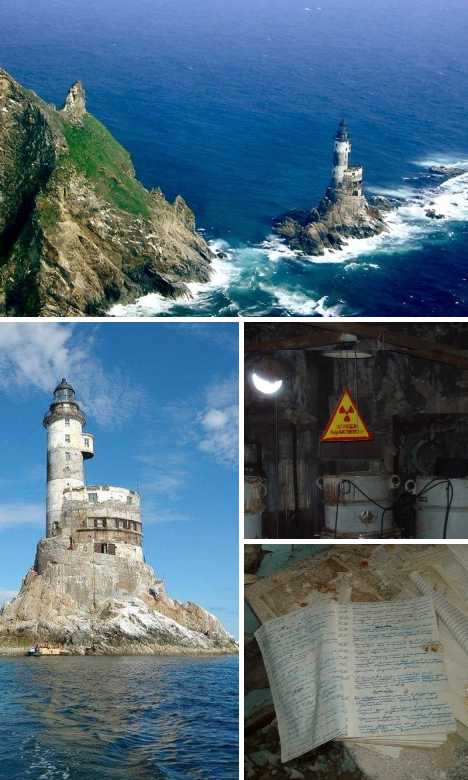
Built under extremely difficult conditions on a formerly jagged rock just off the southeastern-most cape of Sakhalin island, the Mys Aniva lighthouse has seen a lot of history over its 3/4 of a century lifespan. Japan ordered the lighthouse built in the late 1930s when Sakhalin was divided between that country and the USSR. Sometime after the Soviets seized the whole of Sakhalin at the end of World War II, they installed an RTG (Radioisotope Thermoelectric Generator) to supply electricity to the lamp – yes, this was a nuclear-powered lighthouse!

(image via: Remembering Letters and Postcards)

The fall of communism in the early 1990s led to a decade of near-chaos with funds for all purposes in short supply. The Mys Aniva lighthouse, isolated though it was and is, has been looted and ransacked for its metal fittings though luckily its RTGs were removed before the unofficial salvage crews arrived.

Grand Harbor Lighthouse on Fish Fluke Point, Canada

(images via: National Geographic, Lighthouse Friends and Robert Williams Photography)

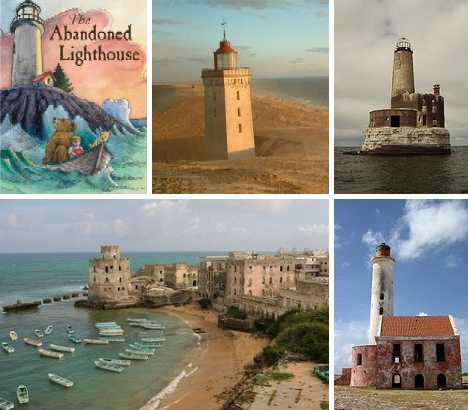
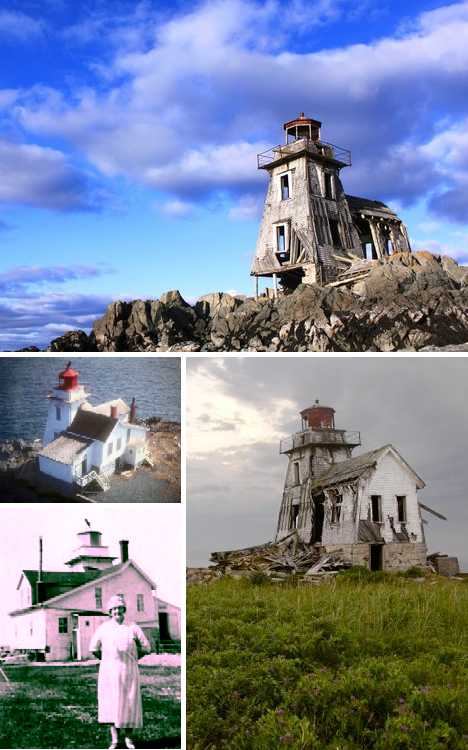
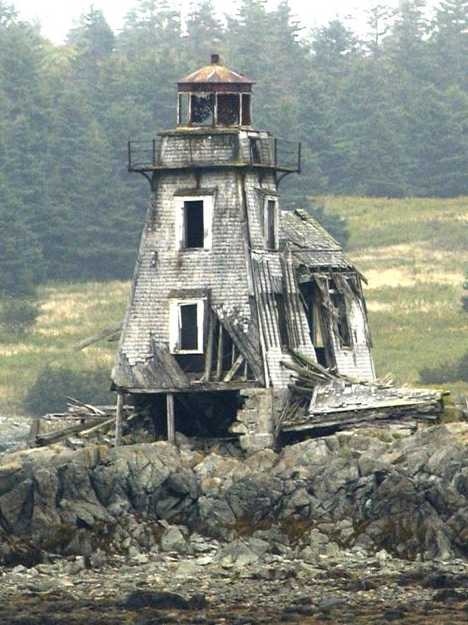
The Grand Harbour Lighthouse and attached keeper’s house at Fish Fluke Point on Ross Island, New Brunswick, Canada has been in a state of slow-motion collapse since 1963 when the station was closed. The once-picturesque lighthouse’s degeneration was accelerated by the great Groundhog Day Gale of 1976 but though it may make an excellent setting for a horror movie the lighthouse itself refuses to implode.

(image via: Swallowtail Keeper’s Society)

Opened in the fall of 1879, the Grand Harbour Lighthouse was a low-budget affair from the get-go: one of the early keepers was issued a hand-operated foghorn to be used as required. Cheap or not, the wood-framed complex has lasted longer than many stone structures of similar age. At this point it’ll take a superstorm of, say, Sandy-like intensity to finally knock its lights out for good.

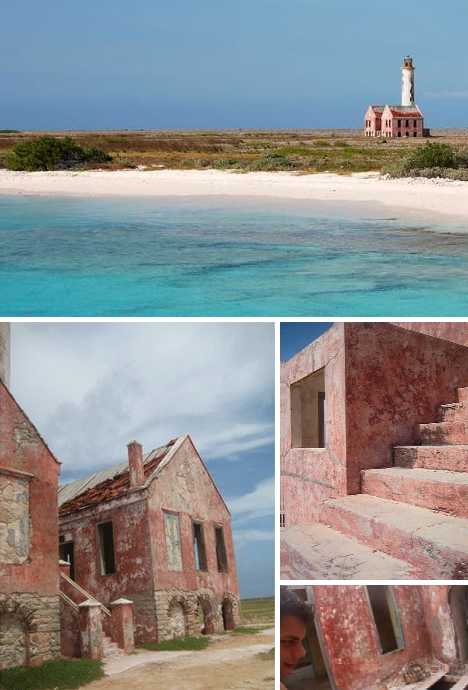
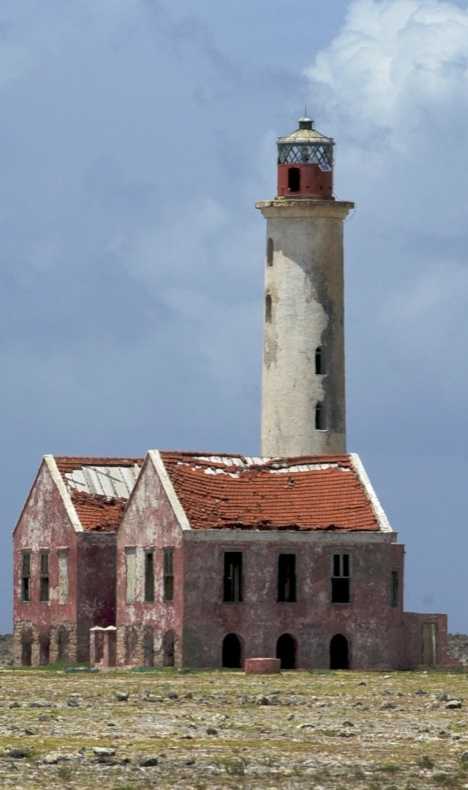
Klein Curacao Lighthouse, Curacao

(images via: Curacao-TravelGuide.com, Debi van Zyl and Foter)

The Caribbean island of Curacao bore witness to the golden age of exploration, pirates, treasure-ships and more – and it’s got plenty of shipwrecks to prove it. In 1850 a lighthouse was constructed on the tiny, (3 km2 or 1.2 square mile) island of Klein Curacao situated 10 kilometers (6.2 miles) south-east of the mother island.

(image via: Gordon_C)

In 1877 a powerful hurricane destroyed the original lighthouse and in 1879 a stronger replacement was built. This lighthouse was subsequently storm-damaged and repaired again in 1913. Though the lighthouse had been abandoned decades ago and had been left to decay, the light itself was recently reactivated and an automatic solar-powered LED beacon was installed.

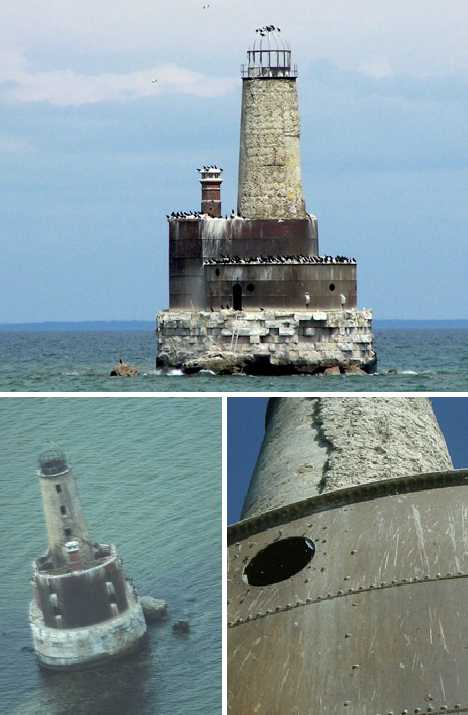
Waugoshance Light, Michigan, USA

(images via: Waugoshance Lighthouse Preservation Society and Beaver Island Jewelry)

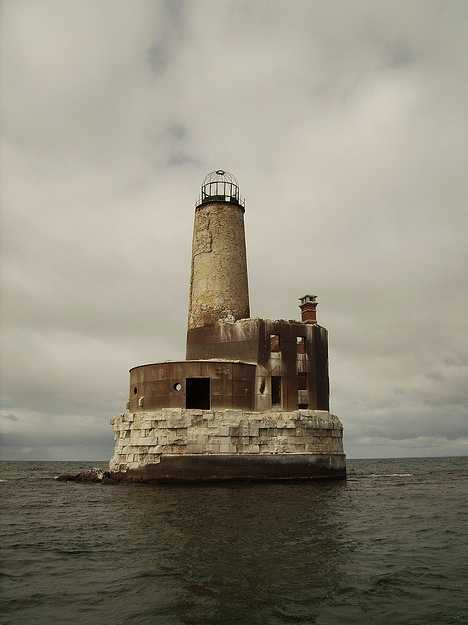
Not all lighthouses stand on the seashore; lakes need lighthouses too! Especially great lakes like, er, the Great Lakes where shipping (and shipwrecks) have been commonplace for several centuries. Take the late, great Waugoshance Light for instance. Built in 1851 to replace a lightship guiding ships through a treacherous area of the Straits of Mackinac, the Waugoshance Light was the first Great Lakes lighthouse to be surrounded on water on all sides.

(image via: Divemi)

The Waugoshance Light was built of brick and covered with iron plating – built to last, it was. Unfortunately, the creation of deeper draft ships that had to use the Gray’s Reef passage saw the building of the White Shoal Light and the Grays Reef Light. The Waugoshance Light was decommissioned in 1912 and was used as a gunnery target by the U.S. Navy during World War II. That anything still remains of this rugged feat of engineering after more than 160 years is remarkable to say the least.

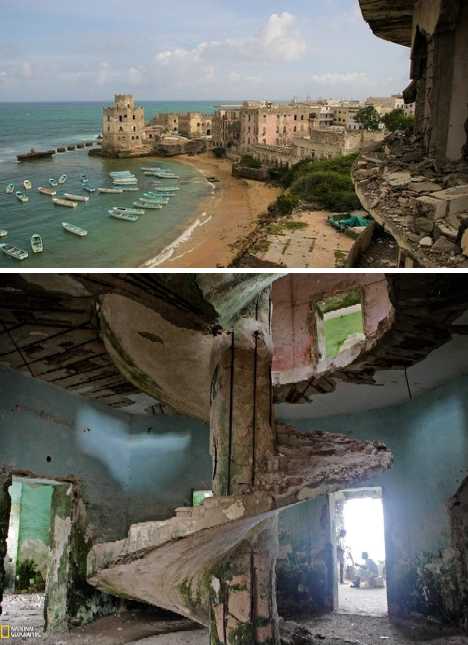
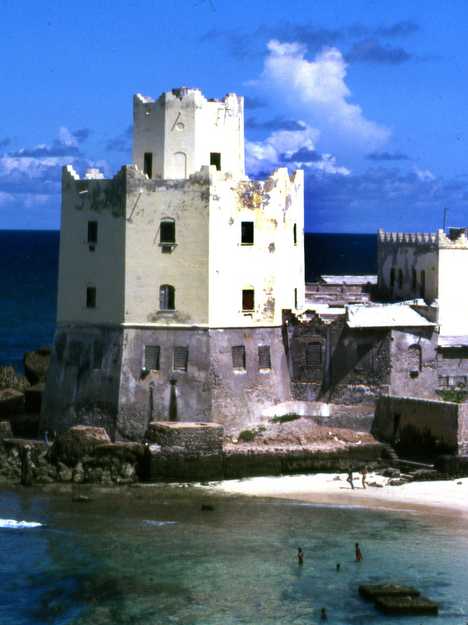
Mogadishu Lighthouse, Somalia

(images via: Dissident Nation and National Geographic)

Though shattered by two decades of on & off civil war, the Somali city of Mogadishu has a long and prosperous history based on sea trading. The country’s network of ports appealed to Italian colonizers during the latter quarter of the 19th century and with the establishment of Italian Somaliland extensive infrastructure was built. One of the outstanding and surviving examples is the Mogadishu Lighthouse, or the ruins thereof.

(image via: Frankkeillor)

Its light long dimmed and its open spiral staircase on the verge of collapse, the lighthouse serves these days as a shady retreat for fishermen, gamblers and partakers of the aromatic stimulant shrub called qat.

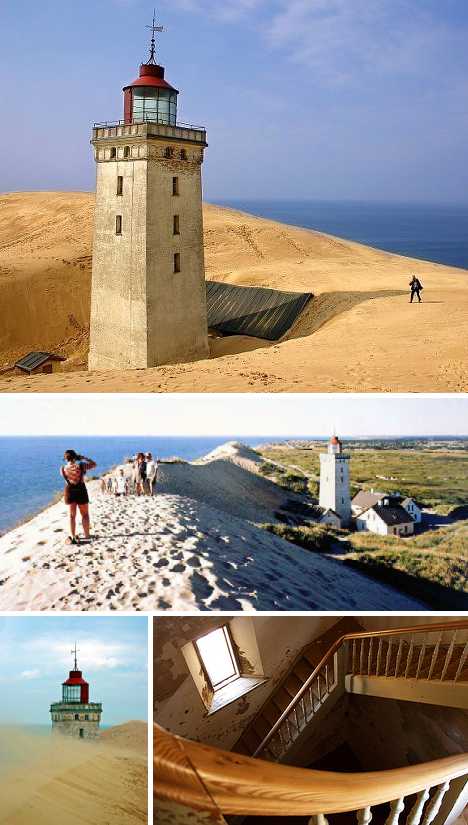
Rubjerg-Knude Fyr, Denmark

(images via: Environmental Graffiti/Anders Hollenbo, CIB W78 and ForoCoches)

When the Rubjerg Knude Lighthouse in Jutland, Denmark first fired up its lamp on December 27th of 1900, its builders were confident its location atop Lønstrup Klint 60 meters (200ft) above sea level would keep it out of the reach of windblown sand dunes that had made any seaside construction untenable. Though in time the dunes would not be denied, it would take almost 70 years for the lighthouse to be rendered inoperable and a further 35 for all the buildings in the complex to be abandoned altogether.

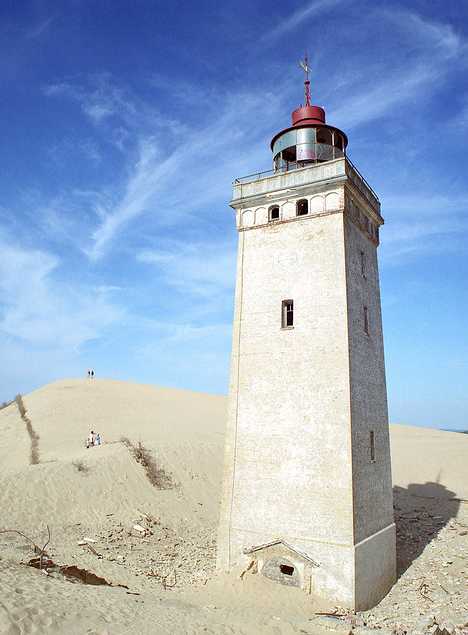
(image via: Mariorei)

One might think a lighthouse nearly subsumed by sand dunes would be located in the Middle East, North Africa, basically anywhere but Denmark! Live & learn, constant readers and potential lighthouse builders. It’s somewhat ironic a lighthouse constructed to help those who sail the waves would be wrecked by windblown waves of sand.

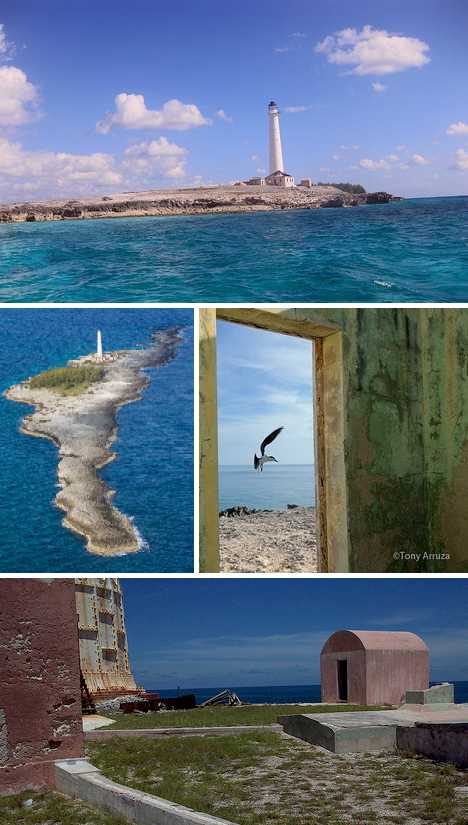
Great Isaac Cay Lighthouse, the Bahamas

(images via: Megali.ST, FKA, Tony Arruza Photography and Joyous!))

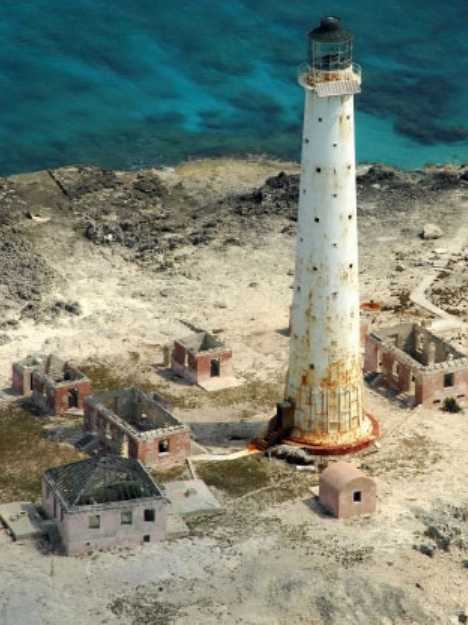
The Great Isaac Cay Lighthouse was built in 1859 on tiny Great Isaac Cay in the Bahamas. The 152ft-tall tower is surrounded by a small group of decrepit and decaying outbuildings abandoned after the lighthouse’s last two keepers mysteriously vanished in 1969.

(image via: Artificial Owl)

The lighthouse still functions using an automatic lighting mechanism as it is still needed as a navigational aid. That’s just as well – the lighthouse has acquired a reputation for being haunted by the ghosts of shipwrecked ship passengers. It’s said that when the full moon shines, the spectral shades of a mother and child shipwrecked off the island in the late 19th century can be heard bemoaning their fate.


(image via: Michael John Grist)

The first to go were the keepers, made redundant by automated power generators. Next were the lighthouses themselves, relegated to superfluousness when GPS navigation offered ship captains accurate positioning any time of day, whatever the weather. Often built in isolated locations beset by the harshest of environments, these relics of a more romantic age are gradually giving up the ghost, ravaged by the same seas they sought to make safer for sailors. Last one to leave, please shut the door and turn out the light.


Want More? Click for Great Related Content on WebUrbanist:

Lost at Sea: Seven Beautiful Abandoned Lighthouses

These seven abandoned and inactive lighthouses represent marine history, and stand as tall, quiet beacons to what once was.
20 Comments – Click Here to Read More »»


14 Amazingly Beautiful and Historic Lighthouses From Around the World: Part Seven in an Eight-Part Amazing Houses Series

What is it about lighthouses that captures our attention? Is it the history behind these relics of a less technologically-advanced age? Is it the quaint charm of the towers?
8 Comments – Click Here to Read More »»


Share on Facebook


[ By Steve in Abandoned Places & Architecture. ]

[ WebUrbanist | Archives | Galleries | Privacy | TOS ]


WebUrbanist

 
Comments Off on Light’s Out: Seven More Eerie Abandoned Lighthouses

Posted in Creativity


Surf ‘n Siege: Huge Abandoned Island Fortress in Florida

17 Oct

[ By Steph in Abandoned Places & Architecture. ]

70 nautical miles off the coast of Key West in Florida is a series of seven islands set among a graveyard of over 200 ships, crowned with a massive 19th century fortress that lay abandoned for nearly a century. The Dry Tortugas once hosted Spanish explorer Ponce de Leon and an influx of marauding pirates; today it’s a bird and wildlife sanctuary and a national park.

(top image via: nps.gov; above images via: ricsae 1, 2, 3)

In 1513, Ponce de Leon became the first European to discover the island, naming it ‘Tortugas’ for the many green, hawksbill, leatherback and loggerhead turtles he found there. He and many pirates after him relied on the turtles for meat and eggs. Between the 1600s and the 1800s, hundreds of ships wrecked on the surrounding reefs and shoals, and word ‘Dry’ was added to the islands’ name on maps to warn mariners of the lack of fresh water.

(images via: vladeb 1, 2, 3)

Construction began on the 45-foot-high, hexagonal Fort Jefferson on Garden Key in the late 1840s when U.S. Army strategists became concerned about the security of shipping lanes in the Gulf of Mexico, and it was still unfinished 30 years later. It was briefly used as a prison for Union deserters in the Civil War, but was besieged in later decades by yellow fever, hurricane damage and the fact that its cannons had become obsolete. It was permanently abandoned in 1907.

(images via: evragasa, bruce tuten 1 + 2)

Fort Jefferson and the rest of the 64,700-acre Dry Tortugas were officially established as a national park in 1992. Fort Jefferson remains the largest all-masonry fort in the United States. While restoration efforts have helped preserve it, the forces of nature and time continue to take their toll. The islands can be accessed by a three-hour boat ride from Key West, or a 45-minute plane ride.


Want More? Click for Great Related Content on WebUrbanist:

12 Historic Abandoned Boats, Ships and Docks

These abandoned and forgotten ships, boats and docks stand as proof of a bygone era where water transportation was used in every industry.
15 Comments – Click Here to Read More »»


Anti-Zombie Fortress: Japan’s Abandoned Shime Tower

Zombie Apocalypse? Bring it on! I’ll be safe and sound above the fray in the partially moss-covered concrete winding tower at Japan’s abandoned Shime coal mine.
3 Comments – Click Here to Read More »»


Share on Facebook


[ By Steph in Abandoned Places & Architecture. ]

[ WebUrbanist | Archives | Galleries | Privacy | TOS ]


WebUrbanist

 
Comments Off on Surf ‘n Siege: Huge Abandoned Island Fortress in Florida

Posted in Creativity