It hasn’t even entered production yet, but Samsung’s S 300mm f/2.8 ED OIS telephoto lens is certainly shaping up to be a very nice addition to the NX line. We were fortunate enough to be allowed access to a pre-production engineering sample of this new lens for a few hours. As a result we’ve put together a small gallery of images which should give some idea about the lens’s likely performance once it becomes available. See gallery
Tag: 300mm
-
Nikon introduces lightweight FX 300mm f/4 and updated DX 55-200mm f/4.5-5.6 ED zoom
Nikon has taken the wraps off of two new versions of existing lenses in its NIKKOR lineup. The AF-S DX NIKKOR 18-55mm f/3.5-5.6G ED VR II and AF-S NIKKOR 300mm f/4E PF ED VR are introduced for the Consumer Electronics Show 2015, underway tomorrow in Las Vegas. Read more
-
Lens Review Canon 300mm f4 Lens for Sports Photography
Recently I went to a Little League baseball game and shot with my Canon 5D Mark III and my newly purchased, 300mm f/4 L IS. It was the first time shooting sports with my new camera, so I was eager to see how the body would perform as well as the lens.
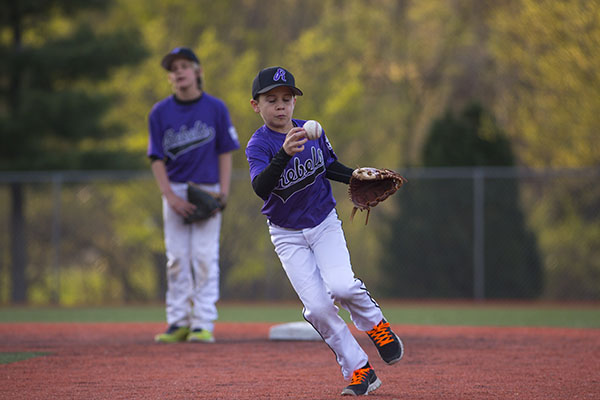
The 300mm is touted as one of Canon’s best sports lenses, so I was counting on it to deliver some quality images. The 5D Mark III, while not specifically a sports camera, is often considered a viable option by sports photographers because of its new autofocus system. I was eager to try it out, and see if I could handle shooting sports on a full-frame camera.
But this post is about the 300mm, not the 5D Mark III. So let’s get to the good stuff – review Canon 300mm f4 lens.
300mm f/4L IS – weight and handling
When I first purchased the 300mm f/4L IS, I was surprised by how small and light it was. Bigger than my 70-200 f/4, yes – by a large margin. But it wasn’t a beast like I was expecting. If you’re familiar with the 70-200 f/2.8 IS, the 300mm is similar to that lens in size and weight. But it’s certainly not overwhelming, like the 300mm f/2.8. It’s actually comfortably hand-holdable.

I brought my monopod to the game, thinking I would use it with the 300mm, but I never needed it. I handheld the 300mm comfortably the whole game, and I’m not super strong. I was pleasantly surprised by how easy it was to handle the lens. It fits perfectly in my camera bag’s long-lens compartment, and I can carry it over my shoulder when I’m walking around. During the game, I ended up sitting on the ground (I explain why here), holding the camera and lens up to my eye, for most of the game.
 Tip: If your arms get tired from holding your camera up so much, a monopod will be your best friend.
The feel of this lens is like all Canon L-series lenses – solid. It’s all metal construction, and feels substantial in your hand. It features a built-in lens hood that you can expand and twist to lock. The lens hood doesn’t come off – when you’re not using it, unscrew and slide it back onto the lens.
Summary: Pleasantly surprised by the 300mm’s relatively light weight and easy handling.
Reach
300mm turned out to be the perfect focal length for the game I was shooting. As I mentioned above, reach was not a problem. I had anticipated wanting more reach than my full-frame sensor offered, so I brought along a Canon Rebel T3i too, but didn’t use it. For youth sports, 300mm was perfect. Of course, it depends on the sport you’re shooting – if you’re at a big soccer field, maybe you’d want to use 300mm on a crop sensor camera, while you might want a 70-200 if you’re doing something close like basketball. Could I have gotten lots of great shots with the 300mm on a crop sensor camera at this game? Of course. But many of the players were perfectly framed with 300mm on the full-frame.

Now, if you have a crop sensor (APS-C) camera, I would still recommend the 300mm f/4L IS, but it depends greatly on your sport. If you’re not sure, I might start out with a cheaper 70-300 zoom lens and see what focal lengths you use most. If you find yourself always using the long end of the zoom, then that’s a pretty good indication that the 300mm f/4L might be a great choice for you.
At my game, I think 300mm on crop (480mm) would have been a bit long, but I could have always shot the farther action. If I had been using a crop sensor, a 70-200mm would probably have worked better. But the bokeh at 300mm f/4 was so nice compared to my 70-200 f/4, I don’t know if I could have gone back. The reach, power, and feel of the 300mm felt so far ahead of my 70-200 f/4L. I felt like a beast using it all night.
Summary: 300mm on full-frame was perfect for closer subjects. It also definitely works if you have a crop sensor. Think about the sport you’re shooting and how far away you’ll be from the action.

Autofocus
The 300mm f/4L IS is an L-series lens, so it should come as no surprise that the autofocus is fast and snappy. The lens has USM, which stands for Ultra Sonic Motor – Canon’s fast autofocus motor. The USM autofocus on the 300mm is excellent, quiet and instant. Tracking is fast and it keeps up with the action.
The fast autofocus at 300mm is sort of a luxury to me. I have a bad habit of setting up for a specific shot (like the pitcher throwing the ball), getting the shot, then putting my camera down to look for the next shot. When a play happens, my instinct is to put my camera down and watch (bad, I know). But during the game, when I realized this was happening, I made a point to try to shoot spontaneously during plays. There was one play where I put my camera down but then saw a shot about to appear. Thanks to the fast autofocus, I simply framed the shot, focused, and snapped the photo in a few moments. I came out with this shot:

Summary: I love the fast autofocus on the 300mm f/4. It responds to my every command, instantly.
Image Stabilization
I don’t have much to say on Image Stabilization (IS). I used it throughout the game, but I don’t think it was necessary. I was using a fast enough shutter speed to freeze the action. There’s really no need for IS when shooting action, because IS only helps with camera shake from your hands. You still need a fast shutter speed to freeze action, which means camera shake isn’t a problem at that point either.
Summary: Next time I’ll leave IS off. It’s not a necessary feature for sports shooters.

Final Thoughts
Honestly, the 5D Mark III and 300mm f/4L IS was an amazing combination for shooting sports. The camera was nice and the lens performed flawlessly. It made sports photography a lot easier for me than previously, when I shot with the 70-200 f/4.
Overall, I highly recommend the 300mm f/4L IS as a sports lens. It’s the perfect focal length for medium to far distances. The autofocus is snappy and reliable, and the lens is easy to handhold. If you need a new telephoto lens for sports photography, I can wholeheartedly recommend the Canon 300mm f/4L IS.
The post Lens Review Canon 300mm f4 Lens for Sports Photography by James Trent appeared first on Digital Photography School.
-
Samyang announces ‘AE’ 35mm F1.4 for Canon, and 300mm F6.3 for DSLRs

Samyang has announced five new manual focus lenses, including a revised ‘AE’ version of its Canon-mount 35mm F1.4 which allows electronic aperture setting from the camera body. Meanwhile the Reflex 300mm F6.3 UMC CS is a mirror lens designed for APS-C SLRs, which will be available in Canon, Nikon, Sony Alpha and Four Thirds mounts. Finally there are three cinema versions of existing photo lenses – a 10mm T3.1 for APS-C SLRs, a 12mm T2.2 for mirrorless cameras, and a 7.5mm T3.8 fisheye for Micro Four Thirds.
-
Olympus developing 7-14mm F2.8 and 300mm F4 ‘Pro’ lenses

When Olympus announced the high-end OM-D E-M1, it promised that it would be making a wideangle zoom and super-telephoto prime in its matching ‘PRO’ line of lenses. Now it’s given a few more details for those products. The M.Zuiko Digital ED 7-14mm 1:2.8 PRO shares many design features with the current 12-40mm 1:2.8 PRO, while the M.Zuiko Digital ED 300mm 1:4 PRO offers a 600mm equivalent angle of view. Both lenses are dust- and splash-proof, and will be available next year. Click through for more details and pictures of the lenses
-
Samyang announces 16mm f/2.0 and 300mm f/6.3 Reflex lenses

Samyang has announced two manual focus lenses for cameras with APS-C or Four Thirds type sensors, a 16mm f/2.0 wideangle for SLRs and mirrorless, and a 300mm f/6.3 for mirrorless. The 16mm f/2.0 ED AS UMC CS offers a 24mm-equivalent angle of view with an unusually bright maximum aperture, and comes in a wide range of mounts to fit almost every brand of camera. Its RRP is €395, or €435 for the Nikon mount ‘AE’ version. Meanwhile the Reflex 300mm f/6.3 ED UMC CS is a compact catadioptric or ‘mirror’ lens to fit Micro Four Thirds, Canon, Sony and Fujifilm models, and comes in a choice of silver or black for €259. Both will be available in July.
-
Nikon 300mm f/4 effects of not having 39mm drop in filter.
This is the information off of Ken Rockwell’s website. ” The internal filter should remain in place because the presence or absence of the filter changes the effective (optical) distance to the film plane by a tiny amount. Don’t worry about this, but please leave the filter holder in place. The change in effective path length is the thickness of the filter x ([the filter glass’ index of refraction] -1 ). A typical index of refraction is about 1.5, so you change the effective distance to the film by about half the thickness of the filter. Of course the same effect happens with filters in front of your lens, but no one notices when you change the distance to a subject by a millimeter. In lens design, moving the film plane a mm can make a difference, but not much with telephotos. You can confirm this effect if you focus on a distant object and note the indication on the focus scale. Now remove the internal filter, refocus, and you will note that the focus scale indicates a different distance when focused on the same object. ” All information is copyrighted by Ken Rockwell at www.kenrockwell.com
??? ?????? ????? ??????? ?????? ???? ??????? ???? ??? ??? ?? By Tau ??????? ????????? = www.mediafire.com ……………………………………………………………………………………………………………………………………. Design By Tau =Ali Mohamed For More Hacks Go www.facebook.com/groups/tauandd3x Murder Hack Team =============ADMIN============= Tau And D3X =============================== .,, Have Fun ///////////////// Product by \\\\\\\\\ ==================================== TauGFX = FB.ME/Tau2GFX MurderTeam = facebook.com/Groups/Tauandd3x www.murderteam.weebly.com ====================================
Video Rating: 3 / 5 -
Nikon 300mm ƒ/2.8G AF-S ED-IF N VR2
Questions? Go here: www.youtube.com Hands-on review on Nikon 300mm ƒ/2.8G AF-S ED-IF N VR2. Autofocus available on all DSLRs.
tommymarz.com Get the single here itunes.apple.com Faith – Tommy Marz – George Michael Cover From his new album Rival 2012 Recorded between November 11th and November 13th, locations include Royal Oak, Mi. Special thanks to The General Store Royal Oak, Mi. Camera: Nikon D5100 DSLR Lens: Nikkor 50mm 1:1.8 Film Spec: 720p 24fps Edited with Adobe Premiere Actor: Tommy Marz (www.tommymarz.com) Trista Grenke Director: Jason Tucker Camera: Jason Tucker Production: Jason Tucker and Tommy Marz Wardrobe courtesy of www.showtimedetroit.com Album cover art www.bradjendza.net RIVAL and “Faith” recorded at Planet4 Studios in Sterling Heights, mixed by Jason Tucker, mastered by Tommy Marz. Video editing done at UnearthlyGlow http Productions in Commerce. Song copyright 2011 Tommy Marz and Stagefiend Records, video copyright 2011 Jason Tucker and UnearthlyGlow. All rights reserved.
-
14 August, 2012 – Tokina 300mm Mirror Lens for MFT – A Hands-On Review
Mirror lenses have been around since the 1950’s. Some are better than others, but they never are really up to the quality of a good prime of comparable focal length, or even a decent zoom.
But their small size and comparative low cost keep them popular among some photographers, and their unique "drawing" ability appeals to some.
Lens maker Tokina had just released a 300mm F6.3 Macro Mirror lens for Micro Four Thirds, and I have just field tested this new lens on my Olympus OM-D E-M5. My review is now online.
This Contest Ends August 15

Sales always slow down in the summer. We wanted to do something to motivate you to spend a bit, here on your favourite web site.
So, we’re doing a give-away. Every order for one of our download videos – tutorials as well as Video Journals, entitles you to a chance to win a new Olympus O-MD E-M5 camera, one of the hottest cameras of the year.
This contest is open to anyone, anywhere in the world. All you need to do is purchase something. Come on. Don’t just sit there – make a purchase and become eligible to win!
-
14 August, 2012 – Tokina 300mm Mirror Lens for MFT – A Hands-On Review
Mirror lenses have been around since the 1950’s. Some are better than others, but they never are really up to the quality of a good prime of comparable focal length, or even a decent zoom.
But their small size and comparative low cost keep them popular among some photographers, and their unique "drawing" ability appeals to some.
Lens maker Tokina had just released a 300mm F6.3 Macro Mirror lens for Micro Four Thirds, and I have just field tested this new lens on my Olympus OM-D E-M5. My review is now online.
This Contest Ends August 15
Sales always slow down in the summer. We wanted to do something to motivate you to spend a bit, here on your favourite web site.
So, we’re doing a give-away. Every order for one of our download videos – tutorials as well as Video Journals, entitles you to a chance to win a new Olympus O-MD E-M5 camera, one of the hottest cameras of the year.
This contest is open to anyone, anywhere in the world. All you need to do is purchase something. Come on. Don’t just sit there – make a purchase and become eligible to win!