RSS
 

Posts Tagged ‘2017’

2017 Roundup: Compact Enthusiast Zoom Cameras

24 Apr

The enthusiast compact market has exploded over the last couple of years, with several manufacturers offering a product with 1″-type sensors. Most of these cameras are small (and sometimes pocketable) and feature fast (but short) lenses. They also vary in terms of design, control points, video specs and whether they have an EVF, so you’ll have some decisions to make. In this roundup, we’ll try to help.

Here are the cameras that we’ll be covering in this article:

  • Canon PowerShot G1 X Mark II
  • Canon PowerShot G5 X
  • Canon PowerShot G7 X Mark II
  • Canon PowerShot G9 X Mark II
  • Panasonic Lumix DMC-LX10
  • Panasonic Lumix DMC-LX100
  • Panasonic Lumix DMC-ZS100/TZ100
  • Sony Cyber-shot RX100
  • Sony Cyber-shot RX100 II
  • Sony Cyber-shot RX100 III
  • Sony Cyber-shot RX100 IV
  • Sony Cyber-shot RX100 V

As mentioned above, the majority of offerings in this category utilize 1″-type sensor, however two cameras offer even larger sensors. The Canon PowerShot G1 X Mark II is built around the largest sensor of the bunch at 1.5″-type, while the Panasonic Lumix DMC-LX100 uses most of the area of a slightly smaller Four Thirds chip.

Sensor size tends to be a major indicator of potential – particularly low light – image quality. Also, cameras with larger sensors will generally allow for much more control over depth of field.

LensEquivalentApertures([“Equivalent focal length (mm)”,”Sony RX100″,”Canon G1 X II”,”Sony RX100 III”,”Panasonic LX100″,”Panasonic ZS100″,”Canon G7 X II”,”Panasonic LX10″,”Canon G9 X II”], [[24,null,””,3.84,”Canon G1 X II at 24mm: F3.8″,4.90909090909091,”Sony RX100 III at 24mm: F4.9″,3.7434,”Panasonic LX100 at 24mm: F3.7″,null,””,4.90909090909091,”Canon G7 X II at 24mm: F4.9″,3.8181818181818183,”Panasonic LX10 at 24mm: F3.8″,null,””],[25,null,””,4.224,”Canon G1 X II at 25mm: F4.2″,5.454545454545455,”Sony RX100 III at 25mm: F5.5″,3.9636,”Panasonic LX100 at 25mm: F4.0″,7.6363636363636367,”Panasonic ZS100 at 25mm: F7.6″,null,””,4.0909090909090917,”Panasonic LX10 at 25mm: F4.1″,null,””],[26,null,””,4.8,”Canon G1 X II at 26mm: F4.8″,6.0000000000000009,”Sony RX100 III at 26mm: F6.0″,4.1838,”Panasonic LX100 at 26mm: F4.2″,7.9090909090909092,”Panasonic ZS100 at 26mm: F7.9″,null,””,4.90909090909091,”Panasonic LX10 at 26mm: F4.9″,null,””],[27,null,””,5.3759999999999994,”Canon G1 X II at 27mm: F5.4″,null,””,4.404,”Panasonic LX100 at 27mm: F4.4″,8.1818181818181834,”Panasonic ZS100 at 27mm: F8.2″,null,””,5.454545454545455,”Panasonic LX10 at 27mm: F5.5″,null,””],[28,4.90909090909091,”Sony RX100 at 28mm: F4.9″,null,””,6.8181818181818183,”Sony RX100 III at 28mm: F6.8″,4.6242,”Panasonic LX100 at 28mm: F4.6″,null,””,null,””,6.0000000000000009,”Panasonic LX10 at 28mm: F6.0″,5.454545454545455,”Canon G9 X II at 28mm: F5.5″],[29,null,””,null,””,null,””,null,””,null,””,null,””,6.8181818181818183,”Panasonic LX10 at 29mm: F6.8″,null,””],[30,null,””,6.144,”Canon G1 X II at 30mm: F6.1″,null,””,4.8444,”Panasonic LX100 at 30mm: F4.8″,8.7272727272727284,”Panasonic ZS100 at 30mm: F8.7″,null,””,null,””,null,””],[31,null,””,null,””,null,””,null,””,null,””,null,””,7.6363636363636367,”Panasonic LX10 at 31mm: F7.6″,6.8181818181818183,”Canon G9 X II at 31mm: F6.8″],[32,null,””,null,””,7.6363636363636367,”Sony RX100 III at 32mm: F7.6″,null,””,9.0,”Panasonic ZS100 at 32mm: F9.0″,6.0000000000000009,”Canon G7 X II at 32mm: F6.0″,null,””,null,””],[33,null,””,null,””,null,””,null,””,null,””,null,””,null,””,7.6363636363636367,”Canon G9 X II at 33mm: F7.6″],[34,7.6363636363636367,”Sony RX100 at 34mm: F7.6″,null,””,null,””,5.0645999999999995,”Panasonic LX100 at 34mm: F5.1″,9.2727272727272734,”Panasonic ZS100 at 34mm: F9.3″,null,””,null,””,null,””],[36,null,””,null,””,null,””,null,””,9.5454545454545467,”Panasonic ZS100 at 36mm: F9.5″,null,””,null,””,null,””],[37,null,””,null,””,null,””,5.2848,”Panasonic LX100 at 37mm: F5.3″,null,””,null,””,null,””,8.7272727272727284,”Canon G9 X II at 37mm: F8.7″],[39,null,””,null,””,null,””,null,””,null,””,6.8181818181818183,”Canon G7 X II at 39mm: F6.8″,null,””,9.5454545454545467,”Canon G9 X II at 39mm: F9.5″],[40,null,””,6.72,”Canon G1 X II at 40mm: F6.7″,null,””,null,””,null,””,null,””,null,””,null,””],[41,null,””,null,””,null,””,5.505,”Panasonic LX100 at 41mm: F5.5″,null,””,null,””,null,””,null,””],[43,8.7272727272727284,”Sony RX100 at 43mm: F8.7″,null,””,null,””,null,””,null,””,null,””,null,””,null,””],[44,null,””,null,””,null,””,5.7252,”Panasonic LX100 at 44mm: F5.7″,null,””,null,””,null,””,null,””],[46,null,””,null,””,null,””,null,””,null,””,null,””,null,””,10.90909090909091,”Canon G9 X II at 46mm: F10.9″],[52,null,””,null,””,null,””,6.1655999999999995,”Panasonic LX100 at 52mm: F6.2″,null,””,null,””,null,””,null,””],[53,9.5454545454545467,”Sony RX100 at 53mm: F9.5″,null,””,null,””,null,””,null,””,null,””,null,””,12.272727272727273,”Canon G9 X II at 53mm: F12.3″],[54,null,””,null,””,null,””,null,””,null,””,7.6363636363636367,”Canon G7 X II at 54mm: F7.6″,null,””,null,””],[65,null,””,null,””,null,””,null,””,null,””,null,””,null,””,13.363636363636365,”Canon G9 X II at 65mm: F13.4″],[66,10.90909090909091,”Sony RX100 at 66mm: F10.9″,null,””,null,””,null,””,null,””,null,””,null,””,null,””],[70,null,””,null,””,7.6363636363636367,”Sony RX100 III at 70mm: F7.6″,null,””,null,””,null,””,null,””,null,””],[72,null,””,null,””,null,””,null,””,null,””,null,””,7.6363636363636367,”Panasonic LX10 at 72mm: F7.6″,null,””],[75,null,””,7.4879999999999995,”Canon G1 X II at 75mm: F7.5″,null,””,6.1655999999999995,”Panasonic LX100 at 75mm: F6.2″,null,””,null,””,null,””,null,””],[81,12.272727272727273,”Sony RX100 at 81mm: F12.3″,null,””,null,””,null,””,null,””,null,””,null,””,null,””],[84,null,””,null,””,null,””,null,””,null,””,null,””,null,””,13.363636363636365,”Canon G9 X II at 84mm: F13.4″],[94,13.363636363636365,”Sony RX100 at 94mm: F13.4″,null,””,null,””,null,””,null,””,null,””,null,””,null,””],[100,13.363636363636365,”Sony RX100 at 100mm: F13.4″,null,””,null,””,null,””,null,””,7.6363636363636367,”Canon G7 X II at 100mm: F7.6″,null,””,null,””],[120,null,””,7.4879999999999995,”Canon G1 X II at 120mm: F7.5″,null,””,null,””,null,””,null,””,null,””,null,””],[144,null,””,null,””,null,””,null,””,15.818181818181818,”Panasonic ZS100 at 144mm: F15.8″,null,””,null,””,null,””],[157,null,””,null,””,null,””,null,””,16.090909090909093,”Panasonic ZS100 at 157mm: F16.1″,null,””,null,””,null,””],[250,null,””,null,””,null,””,null,””,16.090909090909093,”Panasonic ZS100 at 250mm: F16.1″,null,””,null,””,null,””]])

To further help you pick the right camera in this class, we’ve also created the chart below, which breaks down the equivalent aperture for each camera, as you work your way through the zoom range. Our article here explains the concept of equivalence, but at a high level all you need to know is that the lower the line is on the graph below, the blurrier the backgrounds you’ll be able to get and typically, though not always, the better the overall low-light performance.

The camera that stays the ‘fastest’ longest is the Panasonic LX100, due both to its F1.7-2.8 lens and Four Thirds sensor (which it uses a crop of). A number of cameras sit in the middle, including the Canon G1 X II and G7 X II as well as the Sony RX100 I/II. The Panasonic ZS100 is the slowest of the bunch, but it also has the longest reach by a decent margin.

On the following pages, you’ll find what we liked and didn’t like about each camera, links to our test scenes for image quality comparisons, and real-world galleries to give you a sense of how each performs outside the lab. Given that there are five Sony RX100s in this comparison, you might find this article helpful in making a decision between those. 

Articles: Digital Photography Review (dpreview.com)

 
Comments Off on 2017 Roundup: Compact Enthusiast Zoom Cameras

Posted in Uncategorized


Frederik Buyckx named Sony World Photography Awards 2017 Photographer of the Year

21 Apr

$ (document).ready(function() { SampleGalleryV2({“containerId”:”embeddedSampleGallery_7331693783″,”galleryId”:”7331693783″,”isEmbeddedWidget”:true,”standalone”:false,”selectedImageIndex”:0,”startInCommentsView”:false,”isMobile”:false}) });

Belgian photographer Frederik Buyckx has been named the Sony World Photography Awards 2017 Photographer of the Year. Buyckx is a freelance photographer for the Belgian newspaper De Standaard and will receive the $ 25,000 prize for his winning series of images entitle ‘Whiteout’, which was shot in the Balkans, Scandinavia and Central Asia, all remote areas where people often live in isolation and in close contact with nature.

“There is a peculiar transformation of nature when winter comes, when snow and ice start to dominate the landscape and when humans and animals have to deal with the extreme weather,” Buyckx says. “The series investigates this struggle against disappearance.”

Chosen from the winners of the Awards’ 10 Professional categories, Chair of Judges Zelda Cheatle said of Buyckx’s images: “I have chosen a series of landscapes so that we may return to the essence of looking at photography. Landscape is often overlooked but it is central to our existence. These are beautiful pictures made by a serious photographer, and they are to be enjoyed.”

This year the contest received more 227,000 entries from 183 countries, making it the world’s largest photography competition. An exhibition of all winning and shortlisted images and a selection of rare photographs by British photographer Martin Parr, who is this year’s recipient of the Outstanding Contribution to Photography prize, will run at Somerset House in London from now until 7 May. 

The annual Sony World Photography Awards are free to enter and open to all photographers. The 2018 Sony World Photography Awards open for entries on 1 June 2017. You can find the full list of of this year’s winners below and see a selection of shortlisted and winning images on the World Photography Organisation website. 

Professional  Category Winners and Finalists

An expert panel of international judges were challenged to find the best photography series (between 5-10 images) across the ten Professional categories. The winning and finalist photographers are:

Architecture winner: Dongni, China
2nd – Julien Chatelin, France / 3rd – Diego Mayon, Italy

Conceptual winner – Sabine Cattaneo, Switzerland
2nd – Gao Peng, China / 3rd – Alexander Anufriev, Russian Federation

Contemporary Issues winner – Tasneem Alsultan, Saudi Arabia
2nd – Li Sony, China / 3rd – Lorzenzo Maccotta, Italy

Current Affairs & News winner – Alessio Romenzi, Italy
2nd – Joe Raedle, United States / 3rd – Ivor Prickett, Ireland

Daily Life winner: Sandra Hoyn, Germany
2nd – Christina Simons, Iceland / 3rd – Alice Cannara Malan, Italy

Landscape winner: Frederik Buyckx, Belgium
2nd – Kurt Tong, United Kingdom / 3rd – Peter Franck, Landscape

Natural World winner: Will Burrard-Lucas, United Kingdom
2nd – Ami Vitale, United States / 3rd – Christian Vizl, Mexico

Portraiture winner: George Mayer, Russian Federation
2nd – Romina Ressia, Argentina / 3rd – Ren shi Chen, China

Still Life winner: Henry Agudelo , Columbia
2nd – Shinya Masuda, Japan / 3rd – Christoffer Askman, Denmark

Sport winner: Yuan Peng, China
2nd – Eduard Korniyenko, Russian Federation / 3rd – Jason O’Brien, Australia

OPEN PHOTOGRAPHER OF THE YEAR – Alexander Vinogradov, Russia
YOUTH PHOTOGRAPHER OF THE YEAR – Katelyn Wang, US
STUDENT PHOTOGRAPHER OF THE YEAR – Michelle Daiana Gentile, Argentina

Articles: Digital Photography Review (dpreview.com)

 
Comments Off on Frederik Buyckx named Sony World Photography Awards 2017 Photographer of the Year

Posted in Uncategorized


Trends to watch at NAB 2017

21 Apr

Trends to watch at NAB 2017

Next week is the annual National Association of Broadcasters show, or NAB, in Las Vegas, Nevada. NAB is primarily an industry conference, and isn’t generally focused on consumer products, but we go to NAB because it often gives us a window into the future. Tools and technologies created for Hollywood or the broadcast industry have a funny way of tricking down to everyman products over the next few years, and that’s usually a good thing (3D television being a notable exception, in my opinion).

So, let’s take a look at a few of the product categories we’ll be watching at NAB next week that have the potential to impact us not-named-Spielberg types in the coming years.

Tools for Emerging Filmmakers

The filmmaking industry has changed a lot in the past few years: technology has become better, costs have come down, and tools suitable for serious content creation are now accessible to anyone with a dream of producing films and the passion to make it happen. This transformation has ushered in an explosion of what are often referred to as ’emerging filmmakers.’

These are people who often started making films with DSLRs or mirrorless cameras, but have grown their skills or businesses to the point where they need better, dedicated tools. They include independent filmmakers, small businesses working for commercial clients, or any number of other filmmaking roles. Some things they have in common are that they care about creating high quality content, have high expectations for production value, and they don’t have upwards of $ 20,000 to buy a single cinema lens.

This category has grown large enough that we’re seeing more companies which have historically catered to the high end cinema market now looking to meet emerging filmmakers’ needs. Whether it’s to drive revenue or create brand loyalists, we’re seeing more tools designed and priced for these users. By way of example, in the past year we’ve seen cinema lenses such as Cookes and Fujinons with sub-$ 5,000 price points. We expect to see even more products aimed at emerging filmmakers at NAB. 

Virtual Reality (VR)

Virtual reality is a technology that everyone, from manufacturers to content creators, seems to want to succeed, but which hasn’t quite managed to do so. There’s clearly a lot of unrealized promise, and even Hollywood executives will tell you they’re spending a lot of money trying to figure out how to make it work. Will this be the year VR makes the leap?

NAB will once again feature a dedicated Virtual and Augmented Reality Pavillion where the VR community can show off its latest technology. And there are clearly a lot of businesses betting big money on it, ranging from consumer-focused companies like Yi Technologies, which plans to announce VR capture devices at the show, to the likes of 360 Designs, whose Flying EYE drone system will livestream 360º 6K content from miles away for a cool $ 75,000. 

The big question is whether any of the VR products or technologies we see at NAB this year will be enough to get significant traction in the market, or collectively move the needle toward wider adoption of VR by consumers, but the industry isn’t giving up on this one yet.

8K Technology

We actually saw 8K display technology for the first time at NAB a couple years ago. And yes, it’s good bleeping amazing. Last year, Canon had an 8K reference display in its booth with a magnifying glass next to it, teasing you to try to see the pixels. After all, with 8K you’re collecting about the same number of pixels as a Nikon D810. In bursts of 24 or 30 frames. Every second. Think of the memory cards you’re going to need… but I digress…

What does 8K mean for photographers, videographers, and emerging filmmakers? Right now, not a lot. In fact, it’s unlikely we’ll even see 8K TVs being widely marketed to consumers for a number of years. But on the content creation side, there’s a lot to be said for 8K. With 4K quickly moving in the direction of becoming a standard for viewing content, 8K will give content creators the same advantages that 4K acquisition has for creating 1080p content. Right now we’re still talking about very expensive, high end pro cinema and broadcast equipment, but what we see at NAB is often a preview to what we’ll see in less expensive gear a few years down the road.

And 8K technology may come faster than we expect. We’ve seen 4K gain fairly wide adoption very quickly, and most of the industry seems hell-bent on a collision course between full 8K broadcast and the 2020 Tokyo Olympics (having already demonstrated it at London 2012 and run test broadcasts from Rio 2016). Some of this 8K goodness (or massive data storage overhead, if you’re the glass-half-empty type) may start filtering its way into our cameras in the next few years.

HDR Video

HDR video is pretty much what it sounds like: high dynamic range video that lets us see brighter brights, darker darks, and more shades in between. It’s like HDR photos, but with motion, and done well it can look pretty amazing. From a consumer perspective, most talk about HDR video these days relates to TVs, but the market is still sorting itself out. As the old adage goes, ‘The great thing about standards is that we have so many to choose from.’ Between HDR10, Dolby Vision, and Hybrid Log-Gamma, there’s plenty of room for the marketers to fight it out and educate consumers on the jargon.

But what we’re most interested in is content creation, or HDR video capture. Admittedly, there’s not a lot here for the enthusiast or prosumer at the moment. But… (and you know there’s always a ‘but’) Panasonic has already told us to expect Hybrid Log-Gamma to be included in the mother of all firmware updates – or, as we affectionately know it, MOAFU (really rolls off your tongue, doesn’t it) – that’s coming for the Panasonic GH5 in summer 2017. We look forward to testing it. Once we figure out how to test it.

Drones

Love ’em or hate ’em, people are going to use drones for all kinds of things. (At least until Skynet, and we all know how that ends.) Of course, what we care about at DPReview is aerial imaging, whether it’s still photography or video. The drone industry has exploded in the past few years, with tools ranging from octocopters that nonchalantly ferry around RED and Arri cameras to consumer products you can buy off the shelf and use to make your own movies.

As with other video categories, what started out as technology available only to well-funded production studios has quickly started to filter down to the emerging filmmaker or prosumer level. In fact, less than six months ago DJI introduced the Inspire 2 drone and Zenmuse X5S camera. That combo uses a Micro Four Thirds camera to shoot 5.2K CinemaDNG Raw video with a bit rate of 4.2Gbps. All for the price of a Canon 1D X II. This is Hollywood-level stuff. They even got cinematographer Claudio Miranda, ASC (Life of Pi) to make a film with it, though he had to carry it around in his hands for some shots.

Why do I bring up a product that was announced a few months ago? First, because it’s an indication of where the technology is going, and competitors will need to find a way to respond. We’ll be watching to see if that happens at NAB. And second, because for the love of God, DJI, can you please put this combination of tech into a regular camera? I don’t care if it’s a Micro Four Thirds camera the size of a Canon 1D X II, I will write you a check tomorrow.

Such is my plea.

Live Streaming

It used to be that we recorded home movies which we then forced our friends and family to watch over Thanksgiving. Later came the internet, so we could just send aunt Mabel a Vimeo link, or start a YouTube channel about cats with millions of followers.

Today that’s no longer adequate. Things must be on the internet, and they must be on now! Whether it’s Vloggers broadcasting live from a tradeshow floor using their iPhones, or sites like DPReview doing live webcasts from a studio, live streaming has gained a lot of momentum, and viewers are demanding higher quality live streams as time goes on.

We’ve already seen products to meet this need at a consumer level, whether it’s a DJI Osmo that uses your phone to broadcast on Facebook Live, or the Blackmagic Web Presenter, which allows you to turn virtually any high quality camera into a streaming broadcast camera. We’ll be on the watch for other products and technologies that will fuel our live streaming future. Though we can’t promise to stream them to you live.

Articles: Digital Photography Review (dpreview.com)

 
Comments Off on Trends to watch at NAB 2017

Posted in Uncategorized


Collecting Inspiration: 3 Must-See Data Artists & Designers at Eyeo 2017

20 Apr

[ By WebUrbanist in Art & Drawing & Digital. ]

Jenny Odell collects and organizes all kinds of things, from meticulously sorting digital finds on Google Maps to tracing the origins of everything she used, wore, ate or bought on one particular day in 2013.

Her work often pulls objects out of context, aggregating and arranging something like a set of pools against a neutral backdrop (as seen above) or taking an entire industrial complex and carefully stripping it of its surroundings (like the facility below).

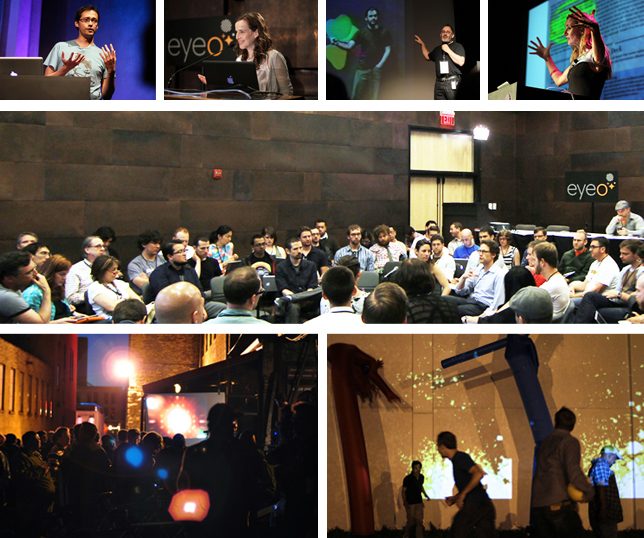
On June 26th, she will join an assortment of other unusual, curious and brilliant creatives — experts in the realms of art, design, interaction and information — as a speaker at the annual Eyeo Festival in Minneapolis, MN.

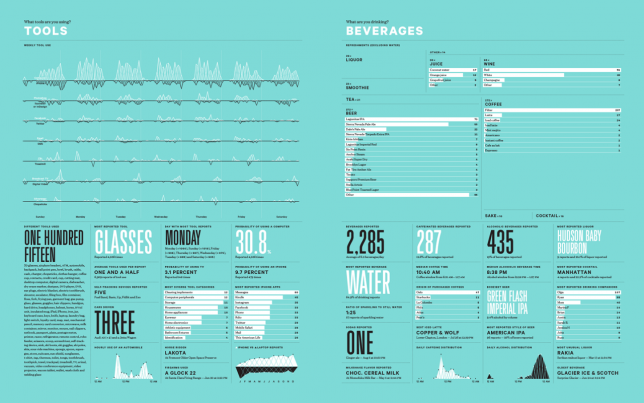
Designer, entrepreneur and artist Nicholas Felton, creator of the famously detailed and introspective data visualizations, will be back this year as well to talk about his recent work. His numerous personal annual reports condense the events of a year into a tapestry of maps, graphs and statistics.

Artist and programmer Gene Kogan will bring his interest in “generative systems, artificial intelligence, and software for creativity and self-expression.” He has collaborated on various open-source software projects, working at the “intersection of code, art, and technology activism.”

Others include: a smell researcher and artist with a collection of over 7,000 scents, a designer and software designer pursuing machine learning and news automation, and dozens of other fascinating folks from all over the world.

Eyeo asks: “What data is, where it comes from, and how we utilize it, looks different than ever before. What can we do with it all? What can’t we do? Artists, designers and coders build and bend technology to see what’s possible. What’s next with interaction, what’s revealed by the data. Eyeo brings together the most intriguing and exciting people in these arenas today.” If you haven’t been, this is as good a year as any to go for the first time — it is a wonderful and unique experience. Get tickets here.

Share on Facebook


[ By WebUrbanist in Art & Drawing & Digital. ]

[ WebUrbanist | Archives | Galleries | Privacy | TOS ]


WebUrbanist

 
Comments Off on Collecting Inspiration: 3 Must-See Data Artists & Designers at Eyeo 2017

Posted in Creativity


Visionary High-Rises: Winners of the 2017 eVolo Skyscraper Competition

20 Apr

[ By SA Rogers in Architecture & Cities & Urbanism. ]

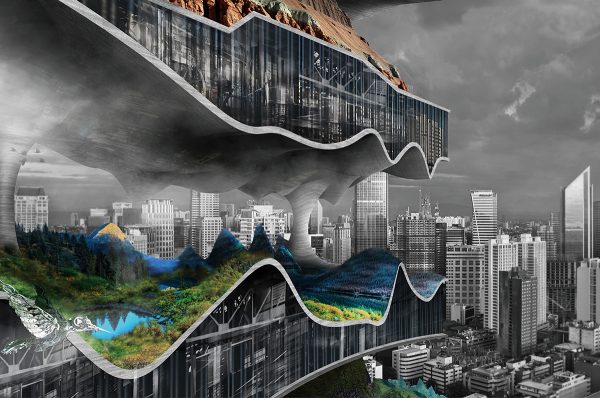
The way we design and engage with our built environments will rapidly change as we grapple with climate change and develop new technological innovations, and in some cases, radical new ideas will be required. The annual skyscraper design competition held by eVolo recognizes visionary ideas for high-rise projects that challenge our understanding of vertical architecture and its relationship with both nature and existing cities. Here are this year’s winners along with 7 honorable mentions, including an Antarctic skyscraper attempting to reverse global warming, research facilities housed in the trunks of Sequoia trees, and vertically stacked factories sharing smart waste disposal and recycling techniques.

First Place: Mashambas Skyscraper

Based on the Swahili word for ‘an area of cultivated land’ often including the dwelling of the farmer, ‘Mashambas’ by Polish designers Pawel Lipinksi and Mateusz Frankowski aims to bring the green revolution of expanded harvests to the poorest people so they can produce surplus food for themselves and their neighbors, helping to eradicate poverty and hunger in their communities. The skyscraper itself is a “movable educational center” providing education, training on agricultural techniques, cheap fertilizers, modern tools and a local trading area, and it’s made of simple modular elements that can expand or disassemble as needed.

Second Place: Vertical Factories in Megacities

In decades past, prior to a round of improvements that made them far less noisy and polluting, factories were often relegated to land outside cities, requiring workers to commute long distances or move to suburban areas. But we don’t exactly want them taking up valuable square footage in urban areas, either. This concept by Tianshu Liu and Linshen Xie stacks them on top of each other like a towering sandwich so they can all take advantage of the same modern technologies for waste removal, potentially even transforming those waste products into clean heat, electricity, fertilizer and water.

Third Place: Espiral3500

In ‘La Albufera,’ a coastal area of Spain located within a natural agricultural park, a rapid increase in tourism during the summer has led to speculation-based development, threatening the very characteristics that make it so attractive in the first place. Population increases up to 1000% in some areas during high tourist season, and they empty out in winter. The Espiral3500 concept aims to meet the needs of tourists while protecting the natural resources of the territory via vertical growth, packing private and public spaces into a skyscraper with an ‘inverted street’ system. Visitors can wind their way up to the top, enjoying a wide range of shops, restaurants and hotels while taking in the view.

Honorable Mention: Arch Skyscraper

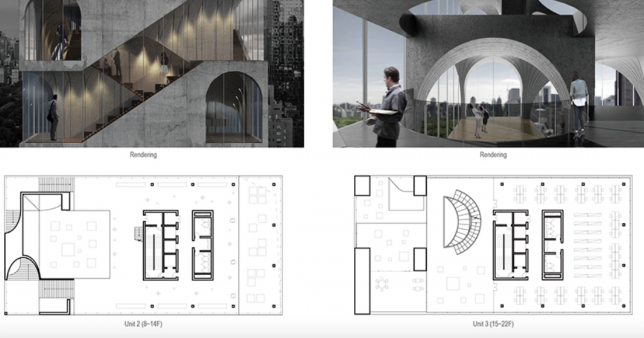
The basis of the Arch Skyscraper is envisioned as “an arch that undergoes transformations through the changes of light, human behavior, and other factors to form different spaces/units, which overlap one another vertically to form the final design.” Double-layer arches inspired by those found in medieval cathedrals and ancient Chinese pagodas are combined with vertical transportation, creating a series of vaulted spaces that are fun to explore.

Honorable Mention: The Forgotten Memorials

Noting that in the past, older architecture was often demolished to make way for the new in the constant cycle of urbanization, the designers of The Forgotten Memorials skyscraper concept propose requiring every generation to construct new buildings underneath the older ones. This could help preserve the past while accommodating the future on limited land. “They gradually, generation by generation, penetrate the clouds and become memorials beyond the sky.”

Next Page – Click Below to Read More:
Visionary High Rises Winners Of The 2017 Evolo Skyscraper Competition

Share on Facebook


[ By SA Rogers in Architecture & Cities & Urbanism. ]

[ WebUrbanist | Archives | Galleries | Privacy | TOS ]


WebUrbanist

 
Comments Off on Visionary High-Rises: Winners of the 2017 eVolo Skyscraper Competition

Posted in Creativity


CP+ 2017: Olympus interview: ‘We chose to be bold’

15 Apr
Masamichi Handa, Executive Officer and Head of the Imaging Business Unit of Olympus Corp, pictured at the CP+ show, in Yokohama, Japan. 

DPReview attended the 2017 CP+ show in Yokohama, a few weeks ago, and during the show we made time to sit down with senior executives from several major manufacturers. One of them was Mr. Masamichi Handa, head of Olympus’s Imaging Business Division. We spoke to Mr. Handa about reaction to the E-M1 Mark II, his ambitions for the future of mirrorless cameras, and the effect of last spring’s earthquake on production.

The following interview has been edited slightly for clarity and flow.


How has reaction been to the E-M1 Mark II?

I was a bit afraid after the earthquake that we’d have to delay launch. Originally we had intended to start sales straight after the launch at Photokina. But we had to delay by a few months. We don’t like doing that, because there’s so much excitement at launch. But we started sales in December, so we’re in the middle of the initial wave of sales now, and feeling quite comfortable.

What was the exact impact of the earthquake?

There was a device shortage, so straight after the event we talked to the device manufacturer, who we had been collaborating with on the E-M1 Mark II’s customized sensor. The shortage lasted until around September, but we had some inventory, so we kept the factory running, and then we increased the volume of production in October.

Some people think the E-M1 Mark II is priced a little high. How do you justify its cost?

We have a target group of customers and a target group of competitor cameras in the APS-C format range. So the current pricing matches that price band. We opted for a price that would allow us to achieve higher performance levels and offer higher value to the customer. We had many discussions, and we chose to be bold and aim for a hit a higher consumer value point.

The Olympus OM-D E-M1 Mark II is a tough, fast Micro Four Thirds camera, aimed at enthusiast and professional photographers that need speed and durability in as small a camera as possible.

Cameras in the $ 1799+ price bracket aren’t aimed at [price-point conscious shoppers], they’re high-value products. Sales and marketing people talk a lot about ‘price points’ but our obligation is to provide a high value product. 

‘we’re mainly a stills business’

When you were planning the E-M1 Mark II, how important was video specification to its concept?

That discussion started around the time the E-M5 Mark II was introduced. We discussed which way we should go – more stills features, or more movie features, or both. We came to the conclusion that we shouldn’t get mixed up. Olympus wants to provide good stills cameras. Of course we should meet demand for movie shooting capabilities, but we’re mainly a stills business. Obviously we added image stabilization technology to the movie function, but it’s mainly supplemental.

It’s really good, for being supplemental!

Of course. The technology is always developing. But we’re mainly focused on the stills business. This is very important to the R&D people too. Once we start to muddle up our direction, that [affects them]. Because they might take 3-5 years for development [of a technology], so if we make a mistake when it comes to direction, they get mixed up.

So the E-M1 Mark II is primarily a stills camera. What are the challenges of integrating video features into a camera like this?

We’re still learning. We listen to various voices when we start to design a product – mainly professional stills-oriented photographers. But when we talk to professionals on the video side, they give us very different requirements, [not all of which we can realize]. But the more information we receive in this way, the more we can [incorporate this feedback in product design]. One important point that we’re incorporating is our image stabilization technology. That’s what we’re good at. This camera is very competent. As far as IS technology is concerned, we’re quite confident. But we need to listen more to comments and ideas from movie professionals.

‘We’ve had some good feedback from videographers’

Technically, the major challenge is heat management. This is a stills-oriented camera, primarily, and that’s one of the reasons why time is limited to 30 minutes. If we wanted to provide a more video-oriented product, we’d have to overcome heat. And image-quality wise, which tone-curve we should choose is completely different between stills and video capture. It’s a different mindset. Our engineers are stills-oriented, and we have a lot to learn from the professional movie camera industry. We’ve had some good feedback from videographers, so we’re on our way.

Do you know how many people are buying the E-M1 Mark II to shoot video?

Right now, we’ve only been shipping for a couple of months so [at present] our main customers are core Olympus users. And they’re mostly stills-oriented.

Do you think that Olympus will ever make a dedicated video camera?

We should never ignore [a potential audience] but right now, we have no plans. Talking about Panasonic, the GH5 is a really nice video camera. The E-M1 Mark II is more of a stills camera. Other video manufacturers make very nice lenses, and 35 manufacturers have now joined the Four Thirds standard. This is a very good thing for users.

Panasonic’s new DC-GH5 is in some respects the closest competitor to the OM-D E-M1 Mark II, but it offers a much more developed video feature set. According to Mr. Handa, Olympus’s main focus remains on satisfying the needs of stills photographers. 

Our R&D team is working about 3 or 4 years ahead. We’ve recently introduced very good autofocus technology, image stabilization technology and new lenses. We can do more – autofocus speed, AF tracking performance and so on – we can always do more. But our R&D people have to work hard. We want to improve image stabilization technology, too, so our users can use longer lenses without needing a tripod, for instance. Which is a lot of work. So [perfecting our existing technologies] is more important than changing direction.

professional support ‘a headache’

The 2020 Olympics isn’t too far away – when do you expect to see mirrorless cameras in the hands of professionals at major sporting events?

Obviously, we get asked this question a lot, and there is a certain expectation. From a business point of view, [if we were represented at Tokyo 2020] not only would we need to [provide products capable of professional shooting] but we would also need to offer professional support. And that’s a headache. You saw at the Rio olympic games, the amount of equipment that Canon took for professional support, and the amount of people for support, and maintenance… it’s not our business model.

We will provide equipment for professional photographers at sporting events, but [we don’t plan on] having a team to support photographers at events like that. It’s not our strength.

Do you have an idea of the demographic breakdown of your audience?

Users of the PEN series are mostly male, and the E-PL series is more female oriented, and they’re younger.

The E-PL series has been popular among female camera buyers, according to Mr. Handa, and attracts a younger customer base than its OM-D products. 

What’s your approach to attracting this kind of market?

Again, these are high-value products, so it’s about design, and supporting selfie functions, and adding Wi-Fi and so on. Our marketing is designed to focus on younger, style-conscious users.

Do you have any sense of how many of your customers use Olympus lenses, as opposed to lenses from Panasonic, or third-parties?

In the early days, our lens lineup was pretty limited, and some of our customers purchased Panasonic lenses. But these days, that number is smaller and smaller.

On Panasonic: ‘we’re essentially competitors’

Do you work with Panasonic to ensure compatibility of technologies across the M43 system, such as Panasonic’s DFD?

We only collaborate on the [Four Thirds] standard. To make sure the standard works perfectly across different lens and camera manufacturers. Sometimes we have to compete with each other, from a technical point of view, but that’s a good engine for developing new technologies. We’re essentially competitors.

Where are the biggest opportunities for Olympus right now, in the camera market?

Right now, the biggest opportunity for our mirrorless camera department is to increase the amount of technology [in the segment], to stimulate demand. The market for conventional DSLRs is shrinking, and the ILC market is going down, the CSC [compact system camera] is doing OK, although there’s still some decline.

Although the OM-D E-M1 Mark II offers a significantly smaller sensor, Olympus sees it as competing against similarly-priced APS-C offerings, and hopes it will attract ‘conservative’ DSLR users as a potential second body.

Current Canon and Nikon users may not switch entirely, because they’ve already got a system, but they might purchase an additional camera for vacations, or for [outdoor recreation], and that could be a good opportunity for us. By continuously developing technology, we hope to stimulate demand and show DSLR users that mirrorless cameras are [equally capable].

How do you get that message across to DSLR users?

Current E-M1 Mark II purchasers are probably 80% existing Olympus users. But after we’ve satisfied this first wave of demand, we want to provide opportunities for new users to touch and try our products. All over the world, those people [DSLR users] are relatively old. They prefer small size, and they prefer light weight. Often it’s only when they touch our cameras that they realize they’re good. So creating touch and try events, globally, is very important. Also we want to talk more to professionals. Some younger people have no trouble going straight to mirrorless, but a majority of professional people might say ‘aaah, we want to stick to Canon and Nikon’. But when they touch and try the cameras, it’s a different story. We have a rental program for professionals in Japan, and almost every rental ends in a purchase. We want to expand this globally.

‘If we can continue to develop this kind of technology, even very conservative DSLR users will notice’

Also, if we continue to make innovative mirrorless products, once they [DSLR users] notice the potential of the technology we’ll [attract more users]. The big benefit of mirrorless is that we can use information read out from the sensor in many ways. Autofocus speed, subject recognition, and so on. If we can continue to develop this kind of technology, even very conservative DSLR users will notice. 

What are the biggest challenges facing Olympus right now in the camera industry?

The market is decreasing. The compact market will continue to decrease in terms of value, but the mid-range and high-end market will remain. We have a challenge in that we want to spend more money on R&D, but we have to control costs, which means we have to select the most important technologies [to develop].


Editors’ note:

Olympus is an interesting company to report on. Despite its relatively small market share, Olympus consistently surprises us. And no product has been more surprising than the OM-D E-M1 Mark II. We knew a Mark II was on the way, but we didn’t expect it to outperform its predecessor so roundly, or be aimed so squarely at pro-grade APS-C and full-frame competitors. The downside, of course, is price. The E-M1 Mark II is a pricey camera considering its format, and as Mr. Handa admits, it’s mostly being purchased (for now) by the company’s existing users. From the point of view of customer retention, this is great, but it’s not how you grow your user-base.

To do that, Mr. Handa needs to tempt ‘conservative’ DSLR users away from their cameras of choice and towards the Olympus M43 system. This won’t happen overnight. As he pointed out, it took Canon years to wrestle back a meaningful portion of the professional market from Nikon, and Olympus is a much smaller, and more resource-limited company, which hasn’t enjoyed a significant share of the professional photography market for decades.

It’s not impossible though. According to Mr. Handa, professional loan programs in Japan have resulted in a lot of professional photographers buying into the OM-D system, even if they don’t switch their allegiance entirely or immediately. This makes sense. There are things that today’s professional DSLRs do that the E-M1 Mark II can’t, and vis-versa. Likewise their manufacturers. Olympus is under no illusions about its inability to provide true professional support, compared to well-established Canon and Nikon networks. For now, like Sony, Olympus simply cannot compete in this regard. As Mr. Handa told us, ‘it’s not our business model’.

So what is Olympus’s business model? It seems that the company is hoping that by marketing as much differentiating technology as it can (in-body stabilization and high frame-rate capture being the most obvious examples), DSLR users will notice, and take interest in the OM-D system. Perhaps they won’t sell their existing gear overnight, but we’ve met professionals that shoot some jobs on the E-M1 Mark II, and take their Canon EOS-1D X Mark II or Nikon D5 kits out for other kinds of work. 

It was interesting, if not entirely surprising, to learn that Olympus continues to regard video as essentially supplementary to its OM-D line. Despite Mr. Handa’s insistence that his engineers are stills-focused, the E-M1 Mark II is a very capable video camera. Whether it achieves widespread adoption among videographers is of course another matter. They should certainly pay attention though – ultra-stabilized 4K footage from the E-M1 Mark II is quite something. 

Articles: Digital Photography Review (dpreview.com)

 
Comments Off on CP+ 2017: Olympus interview: ‘We chose to be bold’

Posted in Uncategorized


2017 Pulitzer Prize winners for photography announced

11 Apr

The winners of the 2017 Pulitzer Prize for photography have been announced, which illustrate violence in two locations on opposite sides of the world.

The award for breaking news photography went to freelancer Daniel Berehulak, whose work published in The New York Times showed the violence in the Philippines during a government crackdown on drug dealers and users.

The other finalists include the AP Photography Staff and freelancer Jonathan Bachman.


The Chicago Tribune’s E. Jason Wambsgans won the award for feature photography. His photos document the story of a 10-year-old boy and his mother as they try to recover from the child’s shooting in Chicago.

The other contenders in this category were Katie Falkenberg of the LA Times and Jake May of The Flint Journal.

Each prize winner receives a $ 15,000 prize as well as the famous Pulitzer medal.

Via: The Pulitzer Prizes

Articles: Digital Photography Review (dpreview.com)

 
Comments Off on 2017 Pulitzer Prize winners for photography announced

Posted in Uncategorized


CP+ 2017 – Sony interview: ‘We need to offer new imaging experiences’

04 Apr
Yasuyuki Nagata – Senior General Manager Business Unit 2, Digital Imaging Group Imaging Products and Solutions Sector, Sony Corporation. Pictured at CP+ 2017 in Yokohama, Japan. 

Earlier this year, we traveled to the CP+ trade show in Yokohama, Japan. At the show, we met with senior executives from several major manufacturers, including Yasuyuki Nagata of Sony. During our interview we discussed the future of the a7-series, Sony’s strategy for growing the 1-inch camera segment, and the new a99II.

Please note that this interview has been edited slightly for clarity and flow.


Nikon recently canceled the DL series, which would have competed with the RX100-series. Is this good or bad for Sony?

It’s both good and bad. If Nikon had achieved a high-quality wide lens camera with a 1 inch sensor, that would have been a very competitive product. So in that sense, it’s good for us. But actually, from the perspective of driving the 1 inch sensor market, we want to stimulate this market and that means multiple manufacturers.

What is your general strategy for FE lenses in the future?

We’re launching products based on customer feedback – especially professionals. When we started the Alpha a7 series we only had three full-frame mirrorless (FE) lenses, but after we launched the a7R II, a lot of professionals started to use it. So their voices [became more important]. For example they wanted a 24-70mm F2.8, which is why we prioritized that model. So basically our strategy is to listen to our customers.

The GM 24-70mm F2.8 was a lens that Sony’s professional full-frame users wanted the company to make, according to Mr Nagata. 

In the past, we’ve heard that Sony wants to create some longer sports optics. is that something that is being planned in the future?

If a lot of professional photographers [want those lenses] we will have to create them. But for now, our main professional user base is portraits and landscape photographers.

Do you aspire to having a base of professional sports photographers in future?

Maybe. Of course it’s not just the lens, it’s the body as well.

The Olympics in Tokyo is three years away – would you like to see Sony lenses in the arenas alongside Canon and Nikon?

Of course, that’s our dream. And we won’t give up on that. But it’s hard to make a specific comment on future products.

How long will it be before mirrorless products represent the majority of cameras at large sporting events?

I don’t know! Historically, I believe it took Canon 7-10 years to become the dominant brand at professional sports events. It’s not easy. But a lot of professional photographers have already switched from DSLR to mirrorless. Maybe in some cases, we are already satisfying the needs of some sports photographers.

The Sony a7R II is a capable stills camera, but fits equally as easily into a professional 4K video workflow. 

Speaking about the a7-series lineup, how does your customer base divide up in terms of stills photographers versus videographers?

We don’t divide our customers in this way. Most of our customers shoot both video and stills, currently. Until a few years ago, video and stills shooters were totally different, but recently, portrait and wedding photographers have started shooting video too.

We always consider both kinds of users at every stage of development.

Moving on to the RX series, there are a lot of products now, and you’re leaving older models in the lineup – what is your aim with this strategy?

It depends on the region. By adding RX100 models 1-5, we expanded the 1 inch sensor market, and in most regions we enjoy #1 market share. The 1 inch sensor market was developed by Sony, and then other competitors started joining us.

[As such] we started with 100% market share, but even now we enjoy 60-70% market share in most regions. And our high-technology models like the RX100V drives some of that, but for the cost of one Mark V, you can buy three of the original RX100. So the cost factor is also important. With both entry-level and high-end RX models, we hope to be able to drive the 1 inch sensor market and remain at number 1.

The Cyber-shot RX100 V packs a lot of features into its pocketable form-factor, but Mr Nagata insists that older RX models still have their place in the market. 

We understand some of the comments we get from dealers, that because of this strategy they have to carry all five models, which might not be efficient for them, but realistically, those dealers ‘cherry pick’ the models they want to carry. Maybe in an area like the US it doesn’t make sense to [sell] all five models, but in developing countries, the Mark I and Mark II are crucial.

The earthquake last May caused a good deal of disruption – what was the effect on the camera division?

From a supply point of view, we had a month or so’s worth of product in stock. So the effect on our supply chain didn’t really kick in until the June, July timeframe, depending on the model. One inch sensors are easier to make than full-frame sensors, which require at least 2 months to manufacture, so the effect was more profound on full-frame sensors than one-inch. But it was all back up and running by the end of 2016.

What kind of feedback do you get from professionals that have switched from DSLRs to mirrorless?

Some professional photographers have said that G Master lenses were a trigger for switching, and also the [new] STF 100mm lens. Thanks to the short flange-back distance, a lot of E mount customers can use their own lenses with a7 cameras. That’s a benefit of the system. And after they’ve switched to an a7 body, people tend to switch over completely and buy Sony lenses.

Smaller body size is a big factor, and silent shooting is important too.

Is the lens attachment rate different from an a6500 to an a7-series camera?

It’s totally different. Even from the a7 to the a7R II, the attachment rate [with the a7R II] is almost double. From the a6000 to the a6500, again it’s completely different.

What are your plans for developing your pro support network?

We’ve started pro support, but we’re still learning. Professional photographers travel all over the world, so how to provide consistent support not just in their home country, but globally is very important for us.

Sony has ambitions to expand and improve its PRO Support network for professional alpha users. 

Was the choice of a smaller, lower-endurance battery in the a7 series made deliberately to keep the camera size small?

We are fully aware of this feedback. Right now, we’re not getting any negative commentary about the size of our a6000-series and a7-series cameras, so there’s probably no need to make them any smaller. There’s a balance between the size of the body and lens, too. So just making the body smaller doesn’t make much sense. And I’m afraid I can’t comment on how we will tackle this issue without commenting on future products, so I can’t say anything more.

Is Sony interested in joining the 360 imaging market?

We already have an action camera lineup, and it’s a similar category. The market itself is kind of shrinking, so instead of having one camera for 360, we’d probably prefer to support professional users, making 360 imaging using our a7-series and a rig. Rather than chasing after the consumer segment.

Do you see more growth in the high-end of the market in general?

I believe so. Which is why pro support is getting more important for us. But of course it cascades down to lower-end models too, and we don’t deny the important of the entry-level segment.

What’s the most important thing that Sony has to do to maintain its position in the next few years?

We need to offer new imaging experiences. We made the NEX series – APS-C mirrorless. That was a new experience. The RX100, the full-frame a7-series, G Master lenses – STF, too. It’s a new imaging experience. Sony is by far the number 1 sensor manufacturer, and the advantage of this is that is allows us to work together with sensor engineers to create the best image sensor for a specific model we are developing. so we’re aware of the sensor development schedule for the next two or three years. So we know what kind of future is coming, in terms of sensors, so we can plan ahead – what kind of bodies will be required, and what kind of lenses will required. We can take advantage of that.

When it comes to core technologies, we’re making lenses sensors, we’re making imaging sensors, we’re making LSIs and we have a software division. Some of our customers couldn’t believe we made an autofocus STF lens. It’s not easy. But we know light travels through lenses, and we know how light is detected on the sensor. So the total combination [of these technologies] means we can make that product.


The recently-announced a99 II is proof that the A-mount is still a going concern. According to Mr Nagata, Sony needs to maintain the A mount alongside the E mount. 

In the SLT lineup, development is slower than the a7-series. Where will that line go in the future?

Having options is really important, especially for high-end amateurs and professionals. If we just had the same cameras and lenses [as our competitors] the results would be the same. Some people want A-mount, some want E-mount, and depending on the situation, some customers might want both. Having that variety of bodies and lenses is key.

We need both A mount and E mount. Some people thought that Sony was only developing the E mount, until we introduced the a99 II. You’ve seen it, it’s a serious camera. There is a huge number of lenses for A mount, from Sony and Minolta, and we want to maintain a good relationship with those customers by providing great A mount bodies with no compromises compared to the E mount system. But we can start capturing new customers with the E mount. We we need both.

In the long term, do you want those A mount customers to come over to E mount?

That depends on them.

Will we see more A mount lenses, specifically designed to get the most out of the A99 II’s autofocus technology?

We have to prioritize. It’s not easy developing new lenses. Our customers’ expectations are very high, especially after we launched the G Master series. So we can probably only launch a few lenses a year!


Editors’ note:

It was interesting to speak to Mr Nagata in February. This month he is celebrating his 31st year with Sony, and during the course of three decades he has worked in various divisions, from robotics to Handycams. Clearly, he is not afraid of something that Sony has often been criticized for – having ‘too many’ products in the market. Every product has its place, from the high-end a99 II to the old, but still current, CyberShot RX100 Mark I, and Sony appears intent on introducing even more ‘new imaging experiences’ in the future.

Although understandably cautious about giving anything away, it is possible to glean some insights from Mr Nagata’s responses to certain questions. Firstly, it doesn’t look like the Alpha mount is going anywhere for now, although we would expect the relatively slow pace of development to be a continuing feature of that range, compared to the company’s mirrorless ILCs.

Secondly, reading between the lines, we’re optimistic that bigger batteries are coming to the next generation of Sony’s alpha range of mirrorless cameras. As Mr Nagata pointed out (although not in so many words), there’s not much point making a camera really small if you intend it to be used with large, high-quality lenses. And for videographers especially, the limited endurance of the a7R II and a7S II in some conditions is a real frustration – one that Sony is clearly very aware of. 

Sony is also aware that it needs to get better at catering to the needs of professionals in a more general sense – not only when it comes to the spec sheet of their cameras. Post-sales support for professionals is something that Canon and Nikon have perfected over decades, and is one of the main reasons why major news outlets and picture agencies still generally stick with one or the other. It’s early days for Sony’s PRO Support network, but we’d expect the company to put a lot of energy into improving and expanding it on the run-up to the 2020 Olympics – when all eyes will be on Tokyo, and Sony will be hoping for some professional representation on the world’s biggest stage. 

Articles: Digital Photography Review (dpreview.com)

 
Comments Off on CP+ 2017 – Sony interview: ‘We need to offer new imaging experiences’

Posted in Uncategorized


PDN announces its 30 emerging photographers of 2017

08 Mar

$ (document).ready(function() { SampleGalleryV2({“containerId”:”embeddedSampleGallery_3599555540″,”galleryId”:”3599555540″,”isEmbeddedWidget”:true,”standalone”:false,”selectedImageIndex”:0,”startInCommentsView”:false,”isMobile”:false}) });

PDN has announced its annual list of 30 emerging photographers to watch, chosen from a pool of almost 300 photographers. To qualify, photographers must have been working professionally for five or less years. Among the photographers included in the list PDN Senior Editor Conor Risch sees themes that reinforce the importance of finding meaningful personal work, and the value of creative problem solving to keep clients coming back. 

Take a look above at a few of our favorite images from these emerging photographers, and visit PDN’s 30 2017 site to see the full list.

Articles: Digital Photography Review (dpreview.com)

 
Comments Off on PDN announces its 30 emerging photographers of 2017

Posted in Uncategorized


CP+ 2017: a taste of the show

02 Mar

It’s a bird! It’s a camera! It’s actually both and it’s really giving us the creeps. Camera pigeons and other odds and ends we found at CP+ 2017 are all highlighted here for your amusement.

Check out all of our CP+ 2017 coverage

Articles: Digital Photography Review (dpreview.com)

 
Comments Off on CP+ 2017: a taste of the show

Posted in Uncategorized