RSS
 

Posts Tagged ‘18135mm’

Sony E 18-135mm F3.5-5.6 OSS sample gallery

17 Jan

$ (document).ready(function() { SampleGalleryV2({“containerId”:”embeddedSampleGallery_3207546459″,”galleryId”:”3207546459″,”isEmbeddedWidget”:true,”selectedImageIndex”:0,”isMobile”:false}) });

Sony hosted us for a few days in Hawaii to shoot with the company’s newest E-mount lens, the 18-135mm F3.5-5.6 OSS. It’s been more than four years since Sony introduced an E-mount APS-C lens, emphasizing that its design maximizes corner-to-corner sharpness. We put it to work capturing Honolulu’s vibrant Chinatown and the spectacular landscapes that the Aloha State is known for.

See our Sony E 18-135mm F3.5-5.6 OSS sample gallery

Articles: Digital Photography Review (dpreview.com)

 
Comments Off on Sony E 18-135mm F3.5-5.6 OSS sample gallery

Posted in Uncategorized


Sony introduces E-mount 18-135mm F3.5-5.6 OSS lens for APS-C bodies

05 Jan

Sony has introduced an optically stabilized 18-135mm F3.5-5.6 zoom lens that is ‘an ideal fit’ for its a6000 series of mirrorless cameras. The lens, equivalent to 27-202.5mm on APS-C bodies, features 2 ED and 1 aspherical elements, a minimum focus distance of 45cm and a weight of just 325 g.

The 18-135mm F3.5-5.6 OSS will be available in February for $ 599/£570. We wouldn’t be at all surprised to see this lens kitted with the a6300 and a6500 at some point in the future.

Press Release

New Compact, Lightweight E 18-135mm F3.5-5.6 OSS Features Outstanding Sharpness and Fast, Precise, Quiet AF for a wide variety of still and video applications

Sony, a worldwide leader in digital imaging and the world’s largest image sensor manufacturer, today announced its 46th E-mount lens. This new APS-C lens features a versatile 18-135mm focal length, aperture range of F3.5-F5.6 And Optical SteadyShot™ stabilisation.

The new lens (model SEL18135) features a compact, lightweight design measuring only 67.2mm x 88mm and weighing in at a mere 325g, as well as a high magnification 7.5x optical zoom that covers the wide-ranging focal length of 18-135mm on APS-C or 27-202.5mm in 35mm equivalent focal length. The lens is an ideal fit for Sony’s popular APS-C sensor cameras including ?6500, ?6300 and ?6000, and is an extremely useful tool for a wide range of shooting situations ranging from daily life to portraiture, landscape, nature and travel photography.

The E 18-135mm F3.5-5.6 OSS produces outstanding corner-to-corner sharpness throughout the entire zoom range thanks to its advanced design featuring one aspherical lens and two Extra-low Dispersion glass elements that minimise aberrations. This lens also allows photographers to produce close-up images with pleasing ‘bokeh’ or background defocus as a result of its maximum magnification ratio of 0.29x and minimum focus distance of 0.45m. It also offers built-in optical image stabilisation to support handheld shooting.

Additionally, the 18-135mm F3.5-5.6 Zoom lens offers fast, precise, quiet AF performance thanks to a linear motor, making it a perfect complement to the high speed shooting and impressive video capabilities of many of Sony’s mirrorless cameras.

Pricing and Availability

The SEL18135 will be available from February 2018, priced at approximately £570.

Sony E 18-135mm F3.5-5.6 OSS specifications

Principal specifications
Lens type Zoom lens
Max Format size APS-C / DX
Focal length 18–1325 mm
Image stabilization Yes
Lens mount Sony E
Aperture
Maximum aperture F3.5–5.6
Minimum aperture F22–36
Aperture ring No
Number of diaphragm blades 7
Optics
Elements 16
Groups 12
Special elements / coatings 1 aspherical + 2 ED elements
Focus
Minimum focus 0.45 m (17.72)
Maximum magnification 0.29×
Autofocus Yes
Motor type Linear Motor
Full time manual Yes
Focus method Internal
Distance scale No
DoF scale No
Physical
Weight 325 g (0.72 lb)
Diameter 67 mm (2.64)
Length 88 mm (3.46)
Sealing No
Colour Black
Zoom method Rotary (extending)
Power zoom No
Zoom lock No
Filter thread 55 mm
Hood supplied No
Tripod collar No

Articles: Digital Photography Review (dpreview.com)

 
Comments Off on Sony introduces E-mount 18-135mm F3.5-5.6 OSS lens for APS-C bodies

Posted in Uncategorized


The Fuji XF 18-135mm – a Versatile Travel Lens

10 Feb

From one article comes another – One plus of being a Fuji X Photographer is that Fuji will lend you gear to try. When I did an overview of the 18-55 Kit lens, a commenter asked about the difference between it and the Fuji XT 18-135mm. I don’t own that lens, but through my Fuji connection, I was able to borrow one for a short while and give it a go. So thank you to the commenter that allowed me to find out I could borrow stuff to test!

Fuji XF 18-135mm sunrise

The sunrise on New Years Day. I had no hesitation using the lens, over lenses I own already, to capture this image.

First thoughts on the Fuji XF 18-135mm lens

Straight up, I think this is a great travel lens, despite the issues with the lens that are common to most kit lenses. But, these issues are outweighed by the usefulness of this lens. The weight and size were fine in general use, and I never felt that I was being let down by the lens. When I got the lens, I did a walkabout locally where I familiarized myself with it.
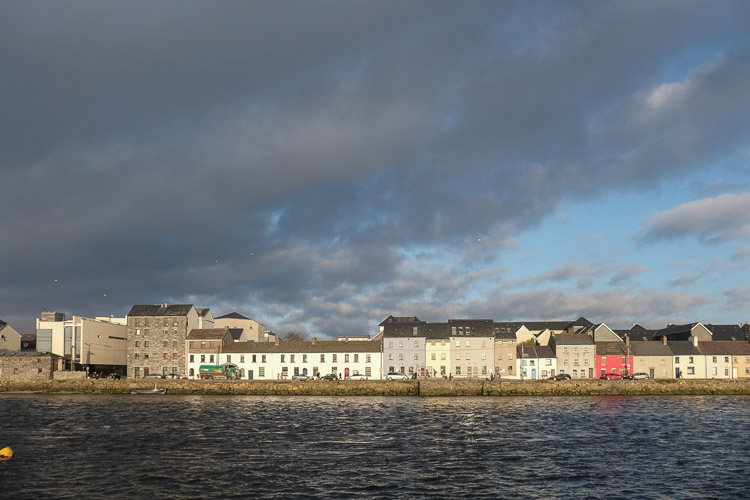
Fuji XF 18-135mm

A wide shot of Long Walk in Galway. The Museum is on the left of the shot.
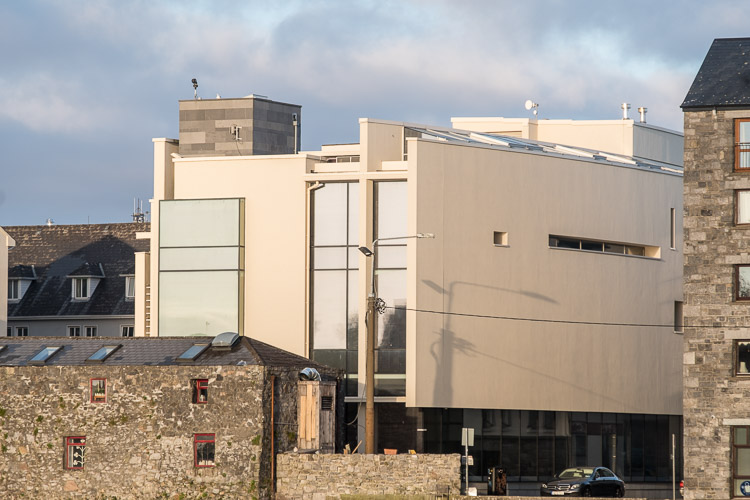
Fuji XF 18-135mm

Here’s the Museum from the same position at 135mm.
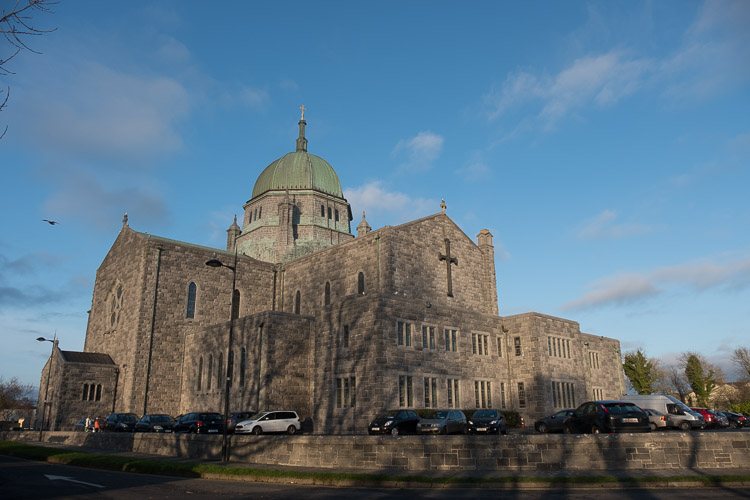
Fuji XF 18-135mm

Galway Cathedral at 18mm.

Fuji XF 18-135mm

A detail shot of the roof to the left of the some at 135mm.

Fuji XF 18-135mm

Salthill with the sun setting near Blackrock Diving Tower.

Fuji XF 18-135mm

I moved slightly to frame the sun in the tower, but still roughly the same distance away, zoomed in to 135mm.

Fuji XF 18-135mm

The sunset didn’t quite pan out, but I used the 135mm end of the lens to frame it with the diving tower.

Specs of the Fuji XF 18-135mm lens

The Fuji XF 18-135mm weighs 409 grams (just shy of one pound). It’s not lightweight, but it’s not heavy compared to similar lenses in this class. Aperture runs from f/3.5 at 18mm to f/5.6 at the 135mm end. The full frame equivalent is 27-200mm. I owned the Canon 28-200mm for a while and sold it because of the softness. This Fuji 18-135mm, while not as sharp as the XF 18-55mm, is not as soft as the Canon version.

The lens extends in length as you zoom it. The lens barrel doesn’t rotate, so attached filters remain in the same relative position. It comes with a plastic lens hood, and the filter ring is 67mm. As with the 18-55mm, the lens has OIS to reduce camera shake. Fuji claims that this offers up to an impressive 5-stops of camera shake reduction. It’s in the WR (Weather Resistant) range of lenses also, meaning you can use it out in the rain, something I did when visiting London.
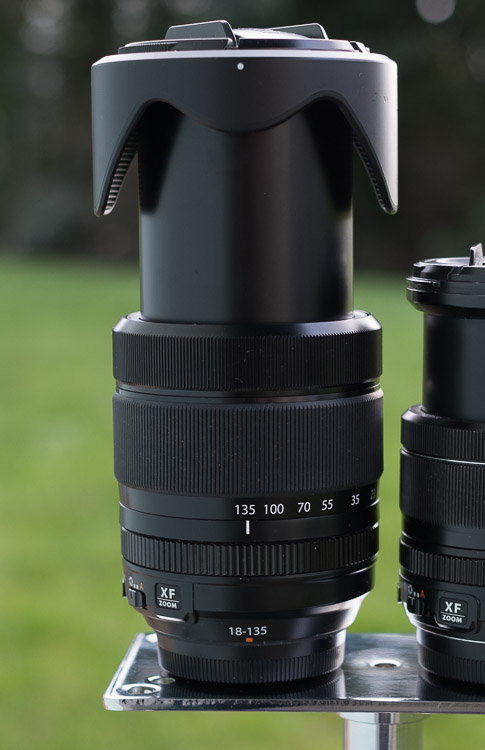
Fuji XF 18-135mm

Travel and the Fuji 18-135mm lens

Super zooms, by and large, make for great travel lenses. The width is usually good enough for any situation. If you need more, it’s easy to shoot two overlapping shots and create a panorama later. The longer focal length means you can easily capture street portraits or zoom in to get details. Wide shots often have to include other tourists, especially when handheld. Detail shots can give a better flavor of an attraction, and give you something not everyone else thinks to shoot. The best part? Not having to change your lens to get both shots.

The weight of the lens isn’t a cause for concern, even carrying around all day. With a small messenger bag like the Think Tank Retrospective 10, you can use the lens mounted on a Fuji X-T2, while carrying a bottle of water and all your accessories. When traveling I had this combo, a 35mm f/1.4, a flash and trigger set, along with a small shoot-through umbrella. Also in the bag were an iPad mini, a power bank, and a foldable bluetooth keyboard. I never felt like I was weighed down and was quite productive with this setup. Whenever a shot presented itself, I simply grabbed the camera and was ready to go.

London

During the time I had the lens, I was at The Societies convention in London. It was a perfect chance to use the lens as a tourist. Some of the attendees organized a night shoot down by the river Thames. We walked along South Bank to the Millennium Bridge, shooting along the way.
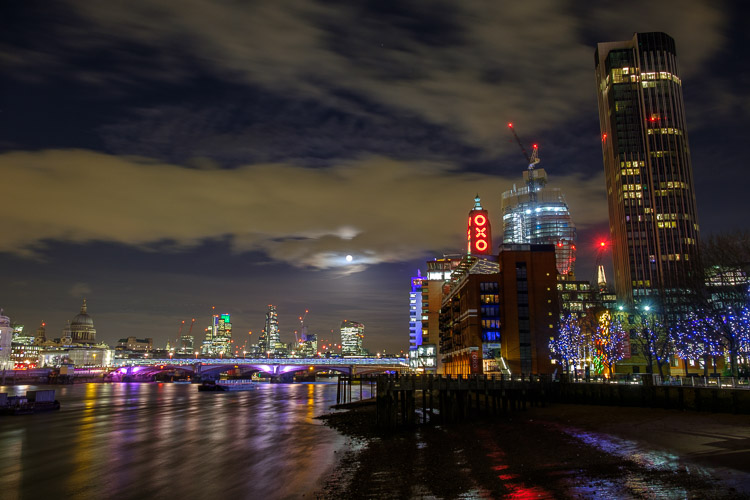
Fuji XF 18-135mm

A shot of the London night skyline showing the OXO tower and St Pauls’ Cathedral.
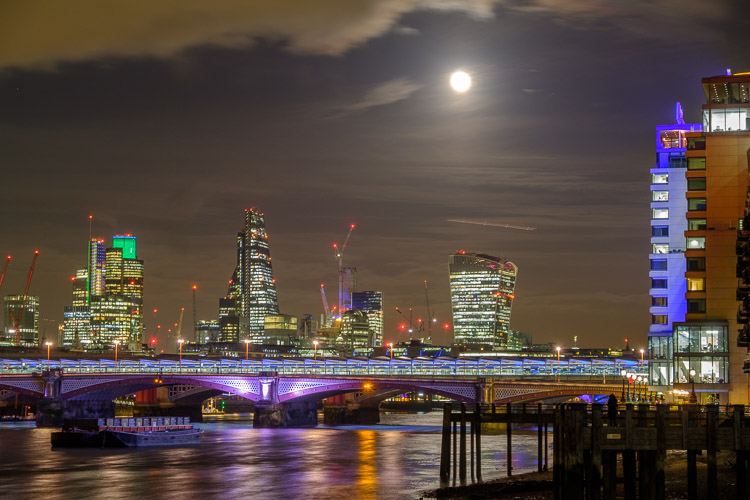
Fuji XF 18-135mm

The same view at 53mm

Fuji XF 18-135mm

And again at 70mm, longer than the 18-55mm could do.

Fuji XF 18-135mm

The Millenium Bridge and St Pauls.

Fuji XF 18-135mm

Under the Millenium Bridge I light painted the beams with a torch (flashlight) to get a little more detail into them.

Fuji XF 18-135mm

A wide view of the river showing the Moon and the Shard
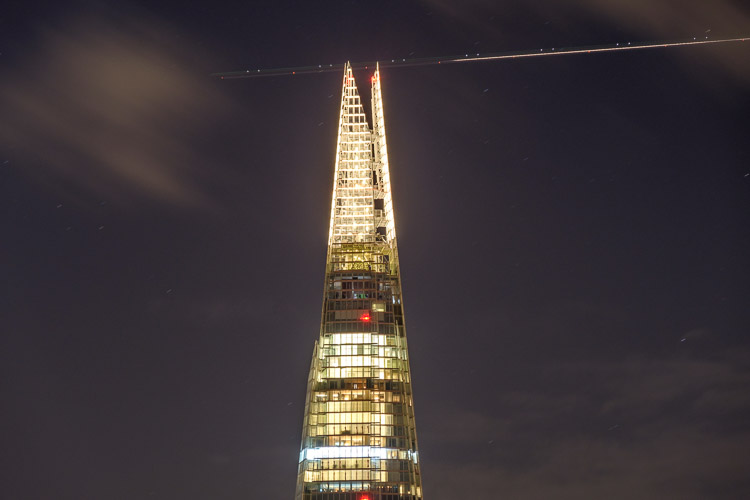
Fuji XF 18-135mm

A 135mm zoomed-in view of the Shard with a plane flying past.

I also did a little walkabout the morning I was leaving. It was raining, but I kept the lens in the bag when not in use and it performed perfectly. Knowing it was weather sealed also made me more inclined to shoot in these conditions.
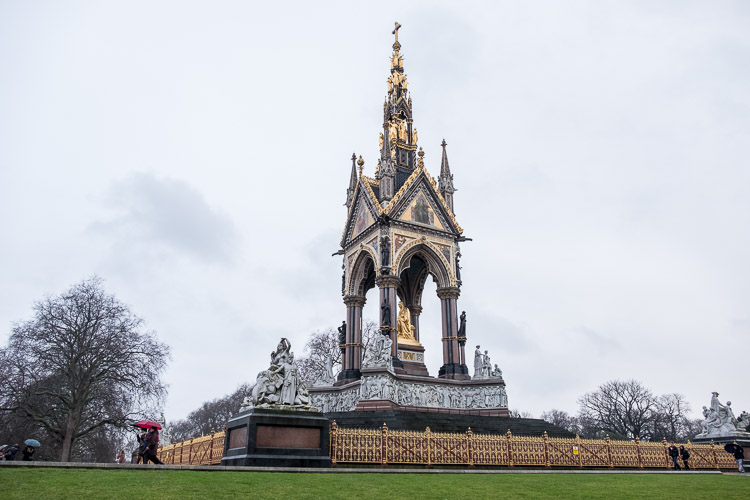
Fuji XF 18-135mm

The Albert Memorial, complete with tourists.

Fuji XF 18-135mm

The Asia Group visible in the bottom left of the previous image at 135mm.
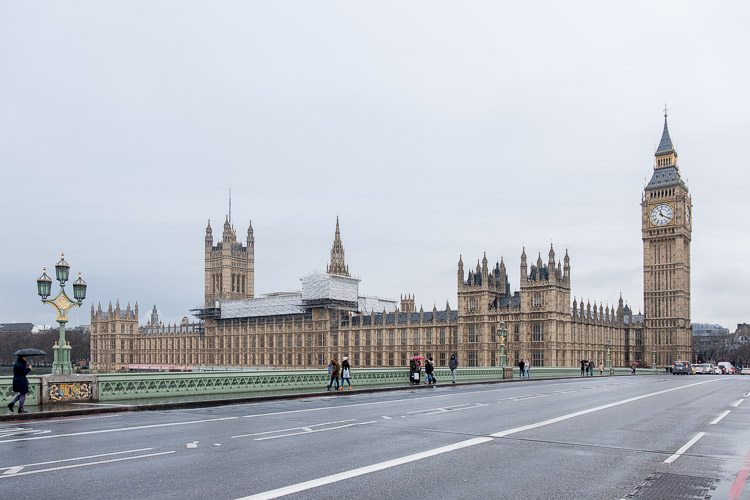
Fuji XF 18-135mm

The Houses of Parliament from Westminster Bridge. Technically the bell is called Big Ben, not the clock tower.
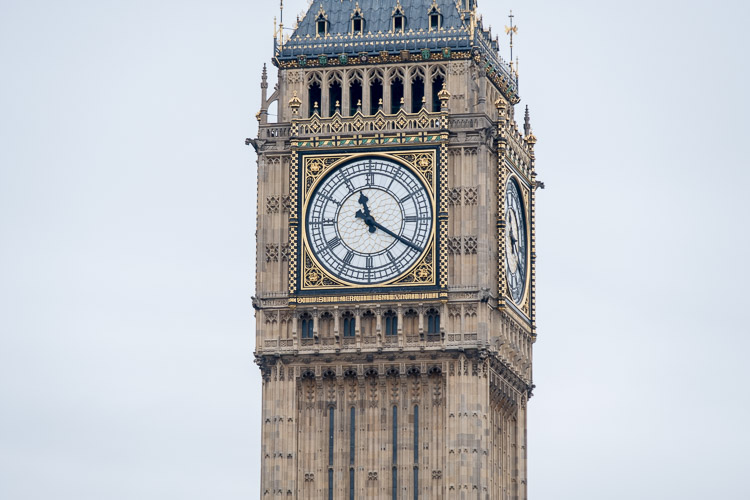
Fuji XF 18-135mm

The clock tower that houses Big Ben.

People

I also made use of the lens in the studio, where it performed equally well. Shooting in studio tends to be around f/8-f/11, which is the sweet spot of most lenses. The Fuji XF 18-135mm lens didn’t disappoint.

Fuji XF 18-135mm

A model shot taken in the studio.

Issues

The main problem with the lens is that shots are a little soft. It’s simply a function of producing the zoom range to a price point. This isn’t really a problem, as the files can be sharpened in Lightroom or another raw converter as a batch process.

Versus the Fuji 18-55mm lens

As both the 18-55mm and the 18-135mm are offered as kit lenses, you may wonder which is better for you. The 18-135mm is larger, heavier, and slower than the 18-55mm. It’s also not as sharp. If a smaller size and faster aperture are important to you, go for the 18-55mm. If you want more reach and don’t want to bring two lenses while traveling get the 18-135mm. Here’s what the two lenses look like side by side.
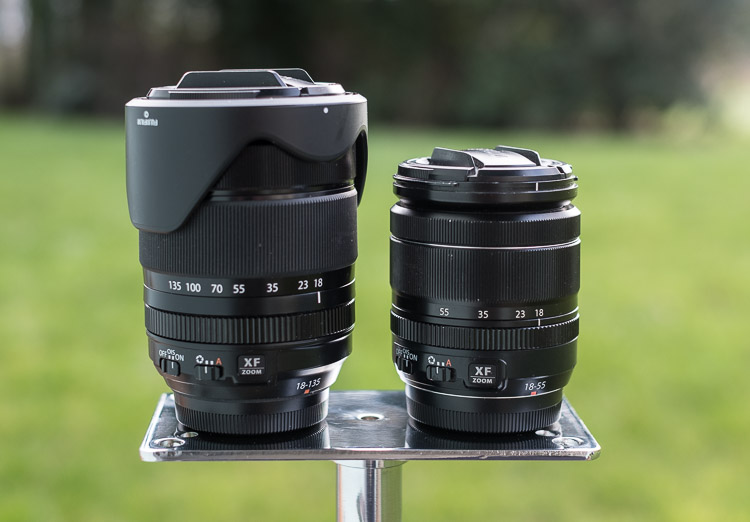
Fuji XF 18-135mm

The Fuji XF 18-135mm lens with the XF 18-55mm.

Here’s the full extension on both lenses. I had to tape the back of the 18-55mm to stop it from slipping (zoom creep) for this shot. The 18-135mm was solid the whole time.
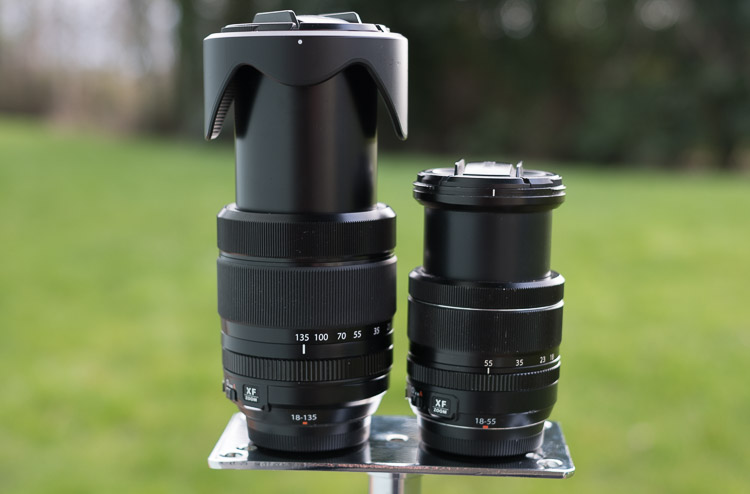
TheFuji XF 18-135mm lens with the XF 18-55mm, both at full extension.

Verdict on the Fuji XF 18-135mm lens

This is a great travel lens that needs a little post-processing to bring out its best. Despite already owing the 18-55mm, I would consider getting this lens specifically for travel

Pros

  • Great reach (zoom or focal length range).
  • You only need one lens for travel making it really convenient.
  • It’s still compact compared to full frame equivalents, like the Canon 28-200mm or 28-135mm IS.
  • The built-in OIS (stabilization) is great for handheld shots.
  • It’s Weather Resistant.

Cons

  • It’s still heavier than the 18-55mm lens.
  • This lens is a  little softer than other Fuji lenses, especially at 135mm.
  • The edges of the frame are a little softer than the centre.

Shop for this lens on Amazon.com or on B&H Photo’s website.

googletag.cmd.push(function() {
tablet_slots.push( googletag.defineSlot( “/1005424/_dPSv4_tab-all-article-bottom_(300×250)”, [300, 250], “pb-ad-78623” ).addService( googletag.pubads() ) ); } );

googletag.cmd.push(function() {
mobile_slots.push( googletag.defineSlot( “/1005424/_dPSv4_mob-all-article-bottom_(300×250)”, [300, 250], “pb-ad-78158” ).addService( googletag.pubads() ) ); } );

The post The Fuji XF 18-135mm – a Versatile Travel Lens by Sean McCormack appeared first on Digital Photography School.


Digital Photography School

 
Comments Off on The Fuji XF 18-135mm – a Versatile Travel Lens

Posted in Photography


The Fuji XF 18-135mm – a Versatile Travel Lens

08 Feb

From one article comes another – One plus of being a Fuji X Photographer is that Fuji will lend you gear to try. When I did an overview of the 18-55 Kit lens, a commenter asked about the difference between it and the Fuji XT 18-135mm. I don’t own that lens, but through my Fuji connection, I was able to borrow one for a short while and give it a go. So thank you to the commenter that allowed me to find out I could borrow stuff to test!

Fuji XF 18-135mm sunrise

The sunrise on New Years Day. I had no hesitation using the lens, over lenses I own already, to capture this image.

First thoughts on the Fuji XF 18-135mm lens

Straight up, I think this is a great travel lens, despite the issues with the lens that are common to most kit lenses. But, these issues are outweighed by the usefulness of this lens. The weight and size were fine in general use, and I never felt that I was being let down by the lens. When I got the lens, I did a walkabout locally where I familiarized myself with it.

Fuji XF 18-135mm

A wide shot of Long Walk in Galway. The Museum is on the left of the shot.

Fuji XF 18-135mm

Here’s the Museum from the same position at 135mm.

Fuji XF 18-135mm

Galway Cathedral at 18mm.

Fuji XF 18-135mm

A detail shot of the roof to the left of the some at 135mm.

Fuji XF 18-135mm

Salthill with the sun setting near Blackrock Diving Tower.

Fuji XF 18-135mm

I moved slightly to frame the sun in the tower, but still roughly the same distance away, zoomed in to 135mm.

Fuji XF 18-135mm

The sunset didn’t quite pan out, but I used the 135mm end of the lens to frame it with the diving tower.

Specs of the Fuji XF 18-135mm lens

The Fuji XF 18-135mm weighs 409 grams (just shy of one pound). It’s not lightweight, but it’s not heavy compared to similar lenses in this class. Aperture runs from f/3.5 at 18mm to f/5.6 at the 135mm end. The full frame equivalent is 27-200mm. I owned the Canon 28-200mm for a while and sold it because of the softness. This Fuji 18-135mm, while not as sharp as the XF 18-55mm, is not as soft as the Canon version.

The lens extends in length as you zoom it. The lens barrel doesn’t rotate, so attached filters remain in the same relative position. It comes with a plastic lens hood, and the filter ring is 67mm. As with the 18-55mm, the lens has OIS to reduce camera shake. Fuji claims that this offers up to an impressive 5-stops of camera shake reduction. It’s in the WR (Weather Resistant) range of lenses also, meaning you can use it out in the rain, something I did when visiting London.

Fuji XF 18-135mm

Travel and the Fuji 18-135mm lens

Super zooms, by and large, make for great travel lenses. The width is usually good enough for any situation. If you need more, it’s easy to shoot two overlapping shots and create a panorama later. The longer focal length means you can easily capture street portraits or zoom in to get details. Wide shots often have to include other tourists, especially when handheld. Detail shots can give a better flavor of an attraction, and give you something not everyone else thinks to shoot. The best part? Not having to change your lens to get both shots.

The weight of the lens isn’t a cause for concern, even carrying around all day. With a small messenger bag like the Think Tank Retrospective 10, you can use the lens mounted on a Fuji X-T2, while carrying a bottle of water and all your accessories. When traveling I had this combo, a 35mm f/1.4, a flash and trigger set, along with a small shoot-through umbrella. Also in the bag were an iPad mini, a power bank, and a foldable bluetooth keyboard. I never felt like I was weighed down and was quite productive with this setup. Whenever a shot presented itself, I simply grabbed the camera and was ready to go.

London

During the time I had the lens, I was at The Societies convention in London. It was a perfect chance to use the lens as a tourist. Some of the attendees organized a night shoot down by the river Thames. We walked along South Bank to the Millennium Bridge, shooting along the way.

Fuji XF 18-135mm

A shot of the London night skyline showing the OXO tower and St Pauls’ Cathedral.

Fuji XF 18-135mm

The same view at 53mm

Fuji XF 18-135mm

And again at 70mm, longer than the 18-55mm could do.

Fuji XF 18-135mm

The Millenium Bridge and St Pauls.

Fuji XF 18-135mm

Under the Millenium Bridge I light painted the beams with a torch (flashlight) to get a little more detail into them.

Fuji XF 18-135mm

A wide view of the river showing the Moon and the Shard

Fuji XF 18-135mm

A 135mm zoomed-in view of the Shard with a plane flying past.

I also did a little walkabout the morning I was leaving. It was raining, but I kept the lens in the bag when not in use and it performed perfectly. Knowing it was weather sealed also made me more inclined to shoot in these conditions.

Fuji XF 18-135mm

The Albert Memorial, complete with tourists.

Fuji XF 18-135mm

The Asia Group visible in the bottom left of the previous image at 135mm.

Fuji XF 18-135mm

The Houses of Parliament from Westminster Bridge. Technically the bell is called Big Ben, not the clock tower.

Fuji XF 18-135mm

The clock tower that houses Big Ben.

People

I also made use of the lens in the studio, where it performed equally well. Shooting in studio tends to be around f/8-f/11, which is the sweet spot of most lenses. The Fuji XF 18-135mm lens didn’t disappoint.

Fuji XF 18-135mm

A model shot taken in the studio.

Issues

The main problem with the lens is that shots are a little soft. It’s simply a function of producing the zoom range to a price point. This isn’t really a problem, as the files can be sharpened in Lightroom or another raw converter as a batch process.

Versus the Fuji 18-55mm lens

As both the 18-55mm and the 18-135mm are offered as kit lenses, you may wonder which is better for you. The 18-135mm is larger, heavier, and slower than the 18-55mm. It’s also not as sharp. If a smaller size and faster aperture are important to you, go for the 18-55mm. If you want more reach and don’t want to bring two lenses while traveling get the 18-135mm. Here’s what the two lenses look like side by side.

Fuji XF 18-135mm

The Fuji XF 18-135mm lens with the XF 18-55mm.

Here’s the full extension on both lenses. I had to tape the back of the 18-55mm to stop it from slipping (zoom creep) for this shot. The 18-135mm was solid the whole time.

TheFuji XF 18-135mm lens with the XF 18-55mm, both at full extension.

Verdict on the Fuji XF 18-135mm lens

This is a great travel lens that needs a little post-processing to bring out its best. Despite already owing the 18-55mm, I would consider getting this lens specifically for travel

Pros

  • Great reach (zoom or focal length range).
  • You only need one lens for travel making it really convenient.
  • It’s still compact compared to full frame equivalents, like the Canon 28-200mm or 28-135mm IS.
  • The built-in OIS (stabilization) is great for handheld shots.
  • It’s Weather Resistant.

Cons

  • It’s still heavier than the 18-55mm lens.
  • This lens is a  little softer than other Fuji lenses, especially at 135mm.
  • The edges of the frame are a little softer than the centre.

Shop for this lens on Amazon.com or on B&H Photo’s website.

googletag.cmd.push(function() {
tablet_slots.push( googletag.defineSlot( “/1005424/_dPSv4_tab-all-article-bottom_(300×250)”, [300, 250], “pb-ad-78623” ).addService( googletag.pubads() ) ); } );

googletag.cmd.push(function() {
mobile_slots.push( googletag.defineSlot( “/1005424/_dPSv4_mob-all-article-bottom_(300×250)”, [300, 250], “pb-ad-78158” ).addService( googletag.pubads() ) ); } );

The post The Fuji XF 18-135mm – a Versatile Travel Lens by Sean McCormack appeared first on Digital Photography School.


Digital Photography School
 
Comments Off on The Fuji XF 18-135mm – a Versatile Travel Lens

Posted in Photography


Canon offers EF-S 18-135mm F3.5-5.6 IS USM, power zoom adapter and directional microphone

19 Feb

$ (document).ready(function() { SampleGalleryV2({“containerId”:”embeddedSampleGallery_4897863870″,”galleryId”:”4897863870″,”isEmbeddedWidget”:true,”standalone”:false,”selectedImageIndex”:0,”startInCommentsView”:false,”isMobile”:false}) });

Introduced alongside the Canon EOS 80D is an updated 18-135mm F3.5-5.6 IS USM, offered separately and as a kit with the camera. The 18-135mm offers a new ‘Nano USM’ motor and boasts between 2.5x (wide-angle) and 4.3x (telephoto) faster performance compared to the previous STM version. 

Canon has also announced the PZ-E1 Power Zoom Adapter for the lens, a detachable device that can smoothly and silently operate the zoom at 10 different speed levels. The adapter can also be used remotely with Canon’s Camera Connect app.

Emphasizing the 80D’s appeal to video enthusiasts, Canon has introduced its first external microphone for use with DSLRs, the Canon Directional Stereo Microphone DM-E1. It ships with a wind screen and offers a response range of 50Hz to 16kHz. 

The EF-S 18-135mm F3.5-5.6 IS USM will ship in March for $ 599.99. The PZ-E1 Power Zoom Adapter will be sold for $ 149.99 and the DM-E1 Directional Microphone will be offered at $ 249.99; both will be available in June.

Press release:

SHARE YOUR PASSION THROUGH IMAGES USING
THE NEW EOS 80D DSLR CAMERA AND EF-S 18-135mm NANO USM LENS

Designed to Help Unleash the Creative Potential in Us All, New Imaging Technology
Will Help You Shoot & Share Amazing Images and Video

MELVILLE, N.Y., February 17, 2015 – Artists looking to turn their passion into popular online videos or to show the world their unique perspective through social networks now have a new tool available to them that helps them tear down creative barriers and produce dynamic visual content for both still and video.  Canon U.S.A., Inc., a leader in digital imaging solutions, is proud to introduce the new Canon EOS 80D Digital SLR camera, featuring an new 45-point AF system1, 24.2 megapixel CMOS sensor for crisp images with fine detail. For the budding videographer or online video star, the camera features Dual Pixel CMOS Autofocus (DAF) technology coupled with an intuitive touchscreen capability for easy focusing when shooting video.

Canon is also introducing a new EF-S 18-135mm f/3.5-5.6 IS USM lens optimized for high-speed autofocusing when shooting stills and quiet and smooth zoom when shooting video. The lens is also compatible with Canon’s new Power Zoom Adapter for smooth cinematic ‘pulls’ when changing focal length on a subject, and responsive adjustments at the push of a button for stills or video.

Updated features in Canon EOS 80D DSLR Camera include: 

  • New 45-point all cross-type AF system 
  • Intelligent Viewfinder with approximately 100% viewfinder coverage 
  • Newly Developed 24.2 Megapixel (APS-C) CMOS sensor
  • DIGIC 6 image processor for enhanced image quality
  • Improved Dual Pixel CMOS AF for smooth, fast and accurate autofocus with video and stills 
  • Built-in Wi-Fi®2 and NFCTM2 capability for easy transfer of images and movies to compatible mobile devices
  • 1080/60p Full HD video to capture brilliant results in MP4 format for easy movie sharing on select social networking sites
  • Vari-angle Touch Screen 3.0-inch Clear View LCD II monitor enables flexible positioning and clear viewing even outdoors 

“In today’s world, where everyone is a photographer or videographer, we at Canon are looking to provide the tools and features that help creative-minded people stand out from the pack and get noticed. The right technology cannot make someone creative, but it will help bring a creative vision to life,” said Yuichi Ishizuka, president and COO, Canon U.S.A., Inc. “The right combination of camera and lens helps those with a vision stand out and be recognized. We look forward to seeing what this new generation of passionate artists will create with these new tools.” 

New AF System and Dual Pixel CMOS AF
The 45-point all cross-type viewfinder AF system in the new Canon EOS 80D DSLR camera, compared to 19-points in the Canon EOS 70D DSLR camera, is now wider both horizontally and vertically for easier compositions with off-center subjects. Low light AF performance has been improved all the way down to EV-3 at the center point to achieve sharp results even in extreme low-light situations. The camera’s AI (Artificial Intelligence) Servo AF II autofocusing system utilizes color tracking with a 7,560-pixel RGB+IR metering sensor that automatically detects skin tone and colors to enhance tracking sensitivity, even with moving subjects that are rapidly changing pace or direction.  Enhancing the ease-of-use of the new AF system is the Canon EOS 80D’s new Intelligent Viewfinder which features approximately 100% viewfinder coverage. The full coverage helps prevent photographers from missing objects that are in the corners of the scene, which can reduce the need to crop images later on. 

Dual Pixel CMOS AF employs a new Canon CMOS sensor with which all of the effective pixels are able to perform both still imaging and phase-detection AF simultaneously to achieve dramatically improved AF performance during Live View and video shooting. The Dual Pixel CMOS AF technology in the Canon EOS 80D camera features enhanced tracking sensitivity and is compatible with the full line of Canon EF Series lenses, including the new Canon EF-S18-135mm f/3.5-5.6 IS USM  standard zoom lens. 

High-Quality Still and Video Image Performance
Featuring a new 24.2 megapixel APS-C Canon CMOS sensor and Canon’s superb DIGIC 6 Image Processor, as well as an improved still image ISO range of 100–16000 (Video ISO range 100–12800, both expandable to 25600), the Canon EOS 80D DSLR camera is capable of producing sharp, detailed images and videos even in low-light conditions. High-speed continuous shooting up to seven frames per second (fps) combined with the 45-point all cross-type AF allows photographers to capture fast moving subjects easily and accurately, while the camera’s Scene Intelligent Auto Mode delivers optimized photos and offers outstanding scene detection for amazing results even when shooting in low light. HDR mode provides creative filter effects, such as natural, art standard, art bold, art vivid and art embossed. For added convenience, the Canon EOS 80D camera features Anti-Flicker shooting, similar to that found in the EOS 7D Mark II DSLR camera. Anti-Flicker shooting produces consistently high-quality results even when shooting in areas with fluorescent lighting or other flickering light sources by detecting the flicker cycle of the light source and shooting when brightness is near its peak. 

When users select the EOS Movie mode, the Canon EOS 80D DSLR camera offers the ability to shoot in 1080p Full HD video up to 60 fps, compared to 30 fps in the Canon EOS 70D, in MP4 format and in either ALL-I or IPB compression modes with optional embedded time code. For expanded creativity the Canon EOS 80D DSLR camera features HDR movie and Time-Lapse movie modes and Movie creative filters like fantasy, old movie, memory, dramatic monochrome and miniature. Movie Servo AF custom settings allow users to speed up or slow down focusing speeds, enhancing creativity and artistic expression. For added flexibility, the Canon EOS 80D digital SLR camera also features a built-in headphone jack, a built-in stereo microphone with manual audio level adjustment, and an additional stereo microphone jack.

News Lens, Power Zoom Adapter, and Directional Stereo Microphone Enhance Video Quality
In addition to the new Canon EOS 80D DSLR camera, Canon U.S.A., Inc., is also introducing the Canon EF-S18-135mm f/3.5-5.6 IS USM Lens, a newly designed lens with a premium exterior design that will serve as the kit lens for the new Canon EOS 80D camera. This the first Canon lens equipped with Nano USM, a new type of focusing motor that combines the benefits of a ring USM (ultrasonic motor) for high-speed AF during still photo shooting and lead-screw type STM (stepping motor) for smooth and quiet movie AF, and improved AF speeds up to 4.3x (Tele) and 2.5x (Wide) faster than the previous model. The Canon EF-S18-135mm f/3.5-5.6 IS USM Lens also provides up to four stops of optical image stabilization. A new lens hood, the EW-73D, is included with the new lens.

To further enhance the ease-of-use when shootings movies with a Canon DLSR or Cinema EOS cameras, Canon is introducing the Power Zoom Adapter PZ-E1, specifically constructed to be compatible with the design of the new Canon EF-S18-135mm f/3.5-5.6 IS USM Lens. The Canon Power Zoom Adapter PZ-E1 is the world’s first detachable zoom adapter that provides silent and smooth zoom and can adjusted incrementally to 10 different levels of zoom speed3. Additionally, the PZ-E1 can be controlled remotely using the Canon Camera Connect app4.  

In addition to the new lens and power zoom adapter, Canon is introducing the first Canon-branded external microphone for the EOS system, the Canon Directional Stereo Microphone DM-E1. This new accessory microphone will help improve sound quality while shooting video, allowing users to rotate the direction of the microphone up and down from 90 to 120 degrees depending on the shooting situation. The DM-E1’s durable shock mount construction helps to reduce camera operation noise and lens drive sounds and is built to withstand the rigors of a variety of shooting situations. Featuring a frequency response range of 50Hz to 16kHz, the DM-E1 comes with a wind screen to help limit peripheral sound from wind and other outside factors, allowing shooters to utilize the microphone in a broad amount of shooting situations. Featuring a built-in power supply from a single “button-type” lithium cell battery, the DM-E1 also has a power indicator lamp allowing users to easily check its battery level. 

Availability
The Canon EOS 80D Digital SLR camera and EF-S18-135mm f/3.5-5.6 IS USM Lens are currently scheduled to be available in March 2016 for an estimated retail price of $ 1,199.00 for the body only, $ 1,799.00 with the new EF-S18-135mm f/3.5-5.6 IS USM Lens and $ 599.99 respectively. 

The Canon Power Zoom Adapter PZ-E1 and Directional Stereo Microphone DM-E1 are currently scheduled to be available in June 2016, for estimated retail prices of $ 149.99 and $ 249.99 respectively.  

For more information visit, www.usa.canon.com/eos.

1 The number of AF points, cross-type AF points and dual cross-type AF points vary depending on the lens used.

2 Compatible with iOS® versions 7.1/8.4/9.0, AndroidTM smartphone and tablet versions 4.0/4.1/4.2/4.3/4.4/5.0/5.1.  Data charges may apply with the download of the free Canon Camera Connect app. This app helps enable you to upload images to social media services. Please note that image files may contain personally identifiable information that may implicate privacy laws. Canon disclaims and has no responsibility for your use of such images. Canon does not obtain, collect or use such images or any information included in such images through this app.

3 As of 2/17/ 2016.

4Data charges may apply with the download of the free Canon Camera Connect app. This app helps enable you to upload images to social media services. Please note that image files may contain personally identifiable information that may implicate privacy laws. Canon disclaims and has no responsibility for your use of such images. Canon does not obtain, collect or use such images or any information included in such images through this app.

Canon EF-S F3.5-5.6 IS USM specifications

Principal specifications
Lens type Zoom lens
Max Format size APS-C / DX
Focal length 18–135 mm
Image stabilisation Yes
Lens mount Canon EF-S
Aperture
Maximum aperture F3.5 – F5.6
Minimum aperture F22.0 – F38.0
Aperture ring No
Number of diaphragm blades 7
Optics
Elements 16
Groups 12
Special elements / coatings One UD and one aspherical elements
Focus
Minimum focus 0.39 m (15.35)
Maximum magnification 0.28×
Autofocus Yes
Full time manual Yes
Focus method Internal
Distance scale No
DoF scale No
Focus distance limiter No
Physical
Weight 515 g (1.14 lb)
Diameter 77 mm (3.03)
Length 96 mm (3.78)
Materials Plastic barrel, metal mount
Sealing No
Colour Black
Zoom method Rotary (extending)
Power zoom No
Zoom lock No
Filter thread 67.0 mm
Hood supplied Yes
Hood product code EW-73D

Articles: Digital Photography Review (dpreview.com)

 
Comments Off on Canon offers EF-S 18-135mm F3.5-5.6 IS USM, power zoom adapter and directional microphone

Posted in Uncategorized


An Introduction to DSLR Photography, the Canon EOS 70D and EF-S 18-135mm f/3.5-5.6 IS STM Lens

26 Oct

Just Wait Until Midnight

The very first Canon DSLR I ever purchased, about a decade ago, was the Canon EOS 10D. The very first Canon lens I bought was the EF 28-135mm f/3.5-5.6 IS USM zoom lens.

While my photography has advanced considerably over the past decade, this was an excellent starter set up for me. It was a decent DSLR for me (for the time) with a lens, which gave me a very wide range. Ultimately I upgraded bodies and got into more expensive Canon L series prime lenses, but this early set up gave me an opportunity to really experiment and try to figure out if this was a pursuit that I was going to invest more time and energy into.

About the same time I bought my original EOS 10D and EF 28-135mm lens I also purchased a set of Ping golf clubs. I thought golf was going to be something that I’d end up being interested in. I paid too much for what at the time were top of the line clubs. Unfortunately, I never did take up golf seriously and I have a very expensive set of unused Ping golf clubs that sit in my basement today. Maybe someday one of my children will take up golf.

The point of that story is, that if you are starting out with digital photography, you need something that is solid and good enough to take awesome photos, without investing $ 10,000 into your new hobby. This is why I suggest the EOS 70D and EF-S 18-135mm STM lens as an entry point for people starting out. The EOS 70D is one of Canon’s most popular DSLRs, but it’s much cheaper than the primary body I use, my EOS 5D Mark III. Although I do encourage people to use prime lenses, most people starting out don’t want to buy 5 different prime lenses with 5 different focal distances — that can get very expensive quickly.

The EF-S 18-135mm lens is a strong, high quality lens that you can use with the EOS 70D and shoot everything from wide angle landscapes, to telephoto shots of your kid’s baseball game or school play. With just a bit more range than my first EF 28-135mm lens, it’s a great way to start out. Although I don’t personally shoot a lot of DSLR video, many people do and it’s nice to have such high quality video as another option with this set up.

The photos in this post were all taken with this camera and this lens on my recent trip to Las Vegas.

A Joy You Could Not Measure

Through the Years

Because the EOS 70D is a cropped sensor, this lens actually has even more reach than a 135mm lens on a full frame. A cropped sensor is 1.6x times smaller than a full frame sensor — full frame sensors are the same size as traditional 35mm cameras.

Practically speaking, what you see when you look through a camera with a cropped sensor at 50mm would be equivalent to what you would see at 80mm on a camera with a full frame sensor. For this reason, if you are shooting sports or wildlife or other subject matter where you want longer reach, the cropped sensor delivers more reach.

Full frame sensors, in my opinion, do better in low light and at high iso settings and are preferable, but they are also more expensive and might not be as necessary for someone starting out.

Sunrises Are Best in Las Vegas

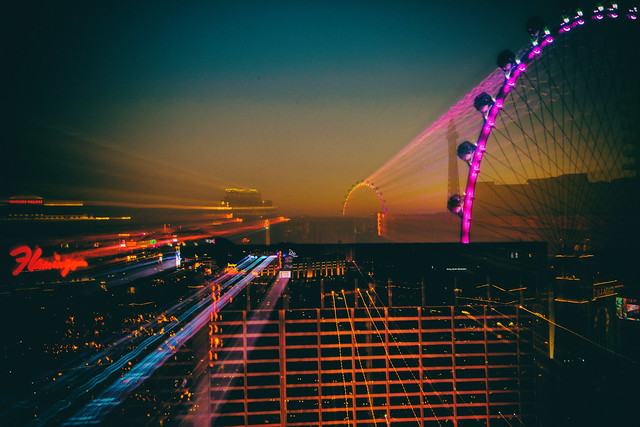
One of the fun things that I like doing with a zoom is zooming while my shutter is open on a long exposure shot. This creates an interesting double exposure zoom sort of effect that I use in some of my photographs. The disadvantage of this zoom is that it is not as fast (low aperture number) as some of the prime lenses.

If you end up starting with this sort of a combo, you might also want to consider the excellent value you get from a Canon EF 50mm f/1.8 II or EF 50mm f/1.4 USM prime lenses. Both of these lenses represent excellent value and are some of the least expensive prime lenses you can buy. You’ll have no problem using the EF-S 18-135mm lens during the day, but at night, or in a much lower light situation, you’ll appreciate being able to put on a faster 50mm prime lens that will work better in less light.

For many photographers the EOS 70D is all the camera you will ever need. Some of the best photographers I know are content to shoot with this body and never upgrade from here. To see some of the best work done with this camera body, check out these photos on Flickr all taken with the EOS 70D. Because this camera will be enough for some folks, I think this is a good place to start.

I personally use my EOS 70D as a second camera — a good backup to use in case something goes wrong with my EOS 5D Mark III and a camera I can keep at my office in case I feel like taking a break during the day and walking around town and shooting. I think it works especially well for street photography given the range you can get with the EF-S 18-135mm lens.

As your passion for photography grows though you will want to consider upgrading to a Canon EOS 5D Mark III and some of the prime lenses that I will review in some upcoming blog posts.

As a reminder, my analysis of my Canon gear is being done in partnership with Canon and I am receiving compensation for this work with them.

Better Lines

Boulevard Poolside

Lay Out

Just Wait and See

A Joy You Could Not Measure

A Joy You Could Not Measure

Through the Years

Through the Years


Thomas Hawk Digital Connection

 
Comments Off on An Introduction to DSLR Photography, the Canon EOS 70D and EF-S 18-135mm f/3.5-5.6 IS STM Lens

Posted in Photography


Fujifilm XF 18-135mm F3.5-5.6 R LM OIS WR samples gallery

25 Aug

The Fujifilm XF 18-135mm F3.5-5.6 is a weather-resistant lens designed as a companion to the weather-resistant Fujifilm X-T1. Covering a 27-200mm equivalent range, it claims to offer the world’s most advanced image stabilization system, using gyro sensors for a gain of up to five stops. Is it the ideal pair for the X-T1? We took it out for a spin. See gallery

Articles: Digital Photography Review (dpreview.com)

 
Comments Off on Fujifilm XF 18-135mm F3.5-5.6 R LM OIS WR samples gallery

Posted in Uncategorized


Fujifilm launches weather-resistant XF 18-135mm F3.5-5.6 R LM OIS WR

16 Jun

18135-news520.png

Fujifilm has announced its first weather-resistant lens, the Fujinon XF 18-135mm F3.5-5.6 R LM OIS WR, which is designed to match the high-end X-T1 mirrorless camera. Offering a versatile 27-200mm equivalent zoom range, the lens claims to have the world’s most advanced image stabilisation system, which uses high precision gyro sensors to give a claimed 5 stop benefit. It also has an air ventilation system to help prevent dust being sucked into the lens by the zoom operation. It’ll be available in July for £749.99 / $ 899.95.

News: Digital Photography Review (dpreview.com)

 
Comments Off on Fujifilm launches weather-resistant XF 18-135mm F3.5-5.6 R LM OIS WR

Posted in Uncategorized


Unboxing Canon EOS 60D DSLR Camera 18-135mm Kit

31 Dec

Follow: www.twitter.com In this video I unbox the Canon EOS60D DSLR Camera. This is my first dslr camera and will be the camera that I will be using for all of my further reviews except the review of the 60D itself because it cant film itself :-P. I’m hoping that it will give a more professional look to my videos with the manual focus and blur effect on the background. I did purchase it for 00 from a local store. It does come with an 18-135mm lens. Please Thumbs Up, Comment, & Subscribe!
Video Rating: 4 / 5