The post Tamron 70-300mm for Sony Review: A Compact, Well-Priced Telephoto Lens appeared first on Digital Photography School. It was authored by Suzi Pratt.
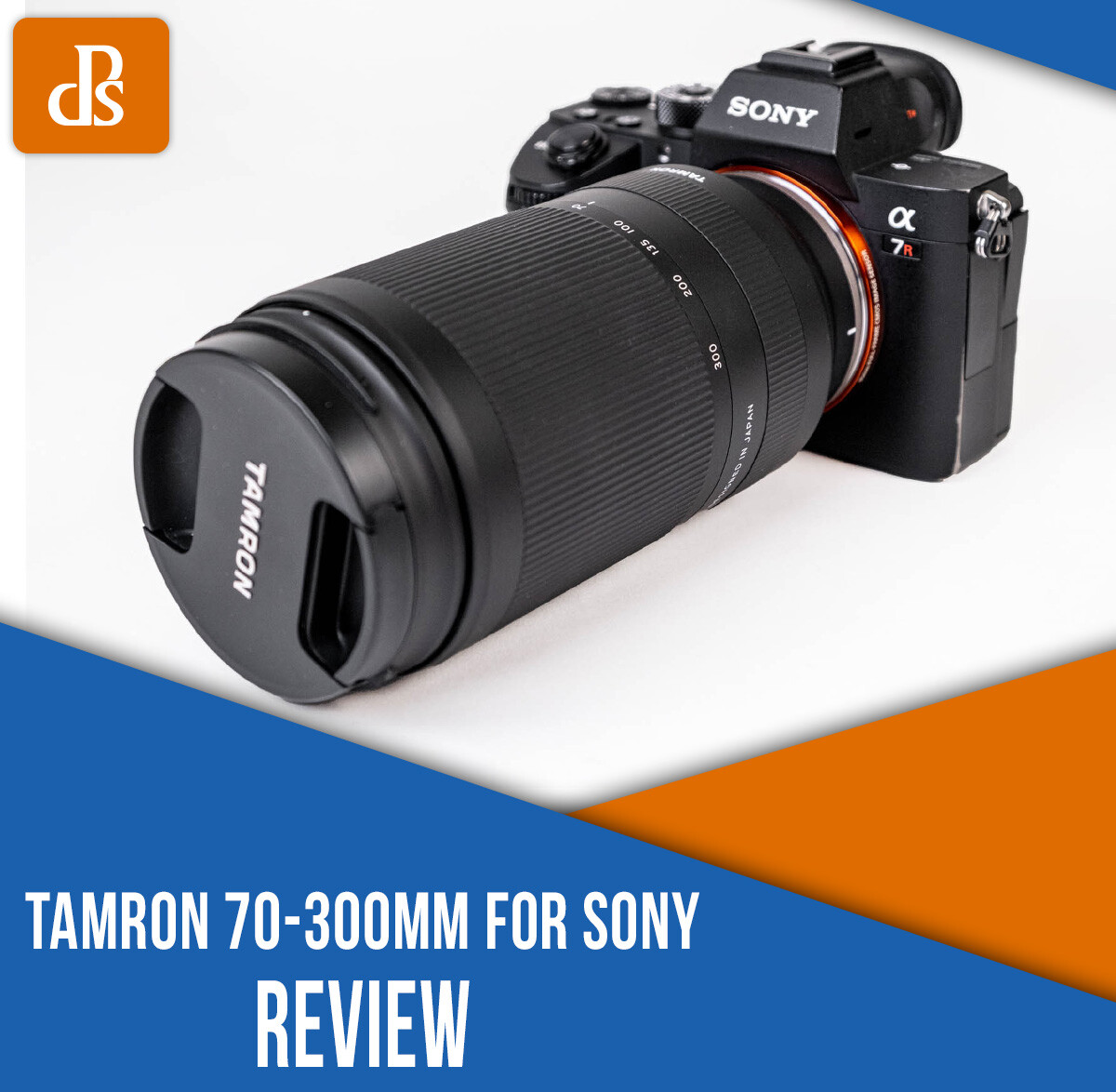
The new Tamron 70-300mm f/4.5-6.3 lens is the “world’s smallest telephoto zoom lens for Sony E-mount full-frame mirrorless cameras.”
But does this lens live up to the hype?
Let’s find out in this Tamron 70-300mm for Sony review!

Tamron 70-300mm for Sony: Overview
The Tamron 70-300mm is made to be used on a full-frame camera, but you can also mount it on an APS-C camera; the equivalent focal length just gets cropped to 105-450mm. This can be an advantage if you prefer getting more zoom out of your lens.
Besides its compact and lightweight build (more on that below!), the biggest appeal of this lens is the price. At just $ 550 USD, the Tamron 70-300mm is more than half the price of the Sony alternative.
For comparison’s sake, the Sony FE 70-300mm f/4.5-5.6 has a slightly faster f-stop and also comes with image stabilization. But it is larger, heavier, and more expensive than the Tamron model. So if budget, size, and weight are a concern, the Tamron 70-300mm is the way to go!
- Released: September 2020
- Focal Length: 70 to 300mm
- Maximum Aperture: f/4.5 to f/6.3
- Minimum Aperture: f/22 to f/32
- Lens Mount: Sony E (full-frame)
- Minimum Focus Distance – 31.5″/0.8 m
- Focusing: Autofocus
- Image Stabilization: No
- Filter Size: 67 mm
- Dimensions: 5.8” x 3″/148 mm x 77 mm
- Weight: 19.2 oz/545 g

Lens design
The Tamron lens follows on the coattails of some impressive Tamron releases, such as the 28-200mm f/2.8-5.6. And if you’ve used any recent Tamron lenses, the 70-300mm will feel very familiar in your hands. It has a similar look and feel to other Tamron lenses, and it takes a 67 mm front filter, just like many other Tamron lenses.
While the build is mostly plastic, the lens is weather-sealed with a dust- and moisture-resistant construction. This makes the 70-300mm ideal for shooting in a variety of outdoor conditions. I wouldn’t take the lens out in pouring rain, but a light drizzle is totally fine.
Aside from its low price point, the biggest advantage of the Tamron 70-300mm is its compact size. With a weight of just 545 g (1.2 lb) and a length of 5.8 in, it’s easy to forget that you’re hauling a rather long-range telephoto lens. The small size also makes it easier to hold the lens for long periods of time, especially compared to bigger lenses like the Sony 100-400mm.

Ease of use and performance
The Tamron 70-300mm is a very straightforward lens. There’s a zoom ring and a manual focus ring with no additional buttons or switches on the lens.
It would be nice to have a lock switch to prevent the zoom barrel from sliding out when you use the lens – and while it’s not a dealbreaker, the lack of a lock is something to be aware of.
All Sony autofocus modes (including Eye AF) are as snappy as they’d be if using a native Sony lens. If you have any concerns about using a third-party lens, rest assured that all modern Tamron lenses work flawlessly with Sony E-mount cameras.
Image quality

Photos on the 70-300mm Tamron are razor sharp. Color rendition is also accurate, with absolutely no chromatic aberration or distortion.
While this lens doesn’t have a fast f/2.8 or f/1.8 aperture, beautiful bokeh can still be achieved with sufficient distance between the subject and the background. The bokeh is pleasing and smooth. The lens’s sweet spot seemed to be between f/4.5 and f/11.
The lens also has a nice minimum focusing distance of 31.5 in (0.8 meters) when shooting at 70mm. This allows you to get pretty close to your subject and still get crisp shots.

Best uses
Given its focal range and features, the 70-300mm is best used as a complementary lens to a wide-angle or mid-range zoom, such as the 24-70mm.
Shooting purely at 70-300mm may suit some photography styles, but most photographers will want to occasionally get a shot wider than 70mm, which is when a wider second lens will come in handy.

However, you can use the Tamron 70-300mm as your sole lens and get some great wildlife, landscape, and portrait shots. Just make sure you have enough light or a camera that can shoot at high ISOs because of the narrower maximum lens aperture. If you plan to shoot indoors or in low light, the Tamron 70-180mm f/2.8 will better suit your needs.
The Tamron 70-300mm can also work as a great video lens. Just note that it lacks image stabilization (IS), so it is best used on a tripod or a gimbal stabilizer if shooting video.
Tamron 70-300mm for Sony review: Conclusion
For the budget-conscious photographer, or for those wishing to have the smallest and lightest camera kit, the Tamron 70-300mm is a bargain of a lens.
One of the only reasons why you may not opt for this lens is if you prefer the all-in-one Tamron 28-200mm lens. The 28-200mm is smaller and slightly more expensive, and it gives you a much wider focal range at the expense of not being able to zoom as far as 300mm.
If you are interested in purchasing the Tamron 70-300mm for Sony, you can grab it here.
So what do you think? Would you buy the Tamron 70-300mm, or would you opt for a different lens? Let me know in the comments below!
-

300mm | 1/100s | f/6.3 | ISO 800 -

300mm | 1/8000s | f/6.3 | ISO 1250 -

300mm | 1/6400s | f/6.3 | ISO 400 -

300mm | 1/500s | f/6.3 | ISO 400 -

184mm | 1/320s | f/5.6 | ISO 400 -

300mm | 1/250s | f/6.3 | ISO 400 -

70mm | 1/8000s | f/5 | ISO 400 -

70mm | 1/100s | f/4.5 | ISO 1250 -

97mm | 1/60s | f/8 | ISO 1000 -

70mm | 1/640s | f/6.3 | ISO 800 -

70mm | 1/200s | f/6.3 | ISO 800 -

156mm | 1/80s | f/5.6 | ISO 3200 -

186mm | 1/800s | f/5.6 | ISO 1600 -

239mm | 1/2500s | f/11 | ISO 500
The post Tamron 70-300mm for Sony Review: A Compact, Well-Priced Telephoto Lens appeared first on Digital Photography School. It was authored by Suzi Pratt.




You must be logged in to post a comment.