RSS
 

Archive for January, 2021

PortraitPro 21 Review: A Comprehensive Editor for Portrait Photographers

14 Jan

The post PortraitPro 21 Review: A Comprehensive Editor for Portrait Photographers appeared first on Digital Photography School. It was authored by Carl Spring.

PortraitPro 21 review a comprehensive editor for portrait photographers

It was only a few months ago that I reviewed Anthropics PortraitPro 19, where the ease of use, the speed, and the AI technology really impressed me. Here we are only a few months later, and Anthropics has introduced PortraitPro 21. I was lucky enough to get my hands on a copy to see what has improved, what is new, and whether the updated software is worth the investment.

Also, spoiler alert: We have a special offer at the end of this PortraitPro 21 review, so make sure you take a look!

PortraitPro 21 review

What’s new in PortraitPro 21

As always with Anthropics, there’s a long list of new features that really make PortraitPro 21 stand out. These include:

  • Sky replacement
  • Lighting brushes
  • Clone tool
  • Denoising/Sharpening
  • History tool
  • Color styles
  • Color copying
  • Hair highlights

There are actually even more new features, including a master slider for skin lighting and coloring, layer presets, optimized color-space handling, the ability to move catchlights, SVG backgrounds, new layers, backgrounds and overlays, free stock photos, and new tutorials from the creators.

If I offered an in-depth discussion of every new feature, you would probably be reading this for days. Instead, why not go and download your free trial of the software on the website? That way, you can check out the program for yourself. 

In the meantime, let’s look at some of the new PortraitPro 21 features in greater detail.
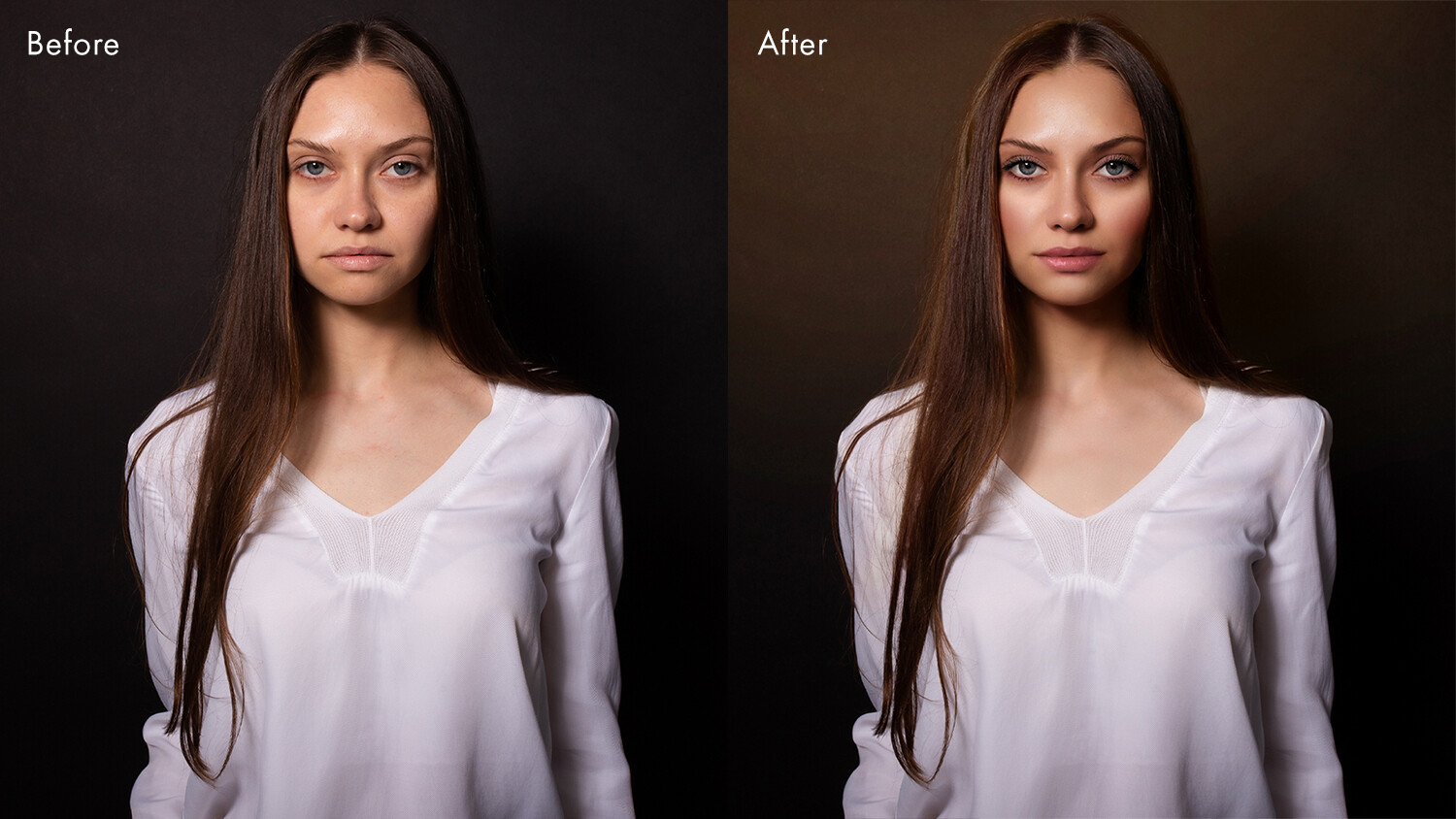
PortraitPro 21 review before and after

Sky replacement

This feature is one that portrait photographers will love. There is nothing worse than capturing amazing shots against a blank sky, knowing you will need to edit them later. Swapping the sky on multiple images can be laborious and time-consuming. But in PortraitPro 21, replacing skies can be done with the click of a button.

Using technology from Anthropics LandscapePro software, this feature does not simply mask and drop in the new background. It also changes the color and tone of the image to match the new sky, giving a more natural result.

PortraitPro has quite a few skies for you to choose from, but if you are looking for something specific, you can always add in your own. 
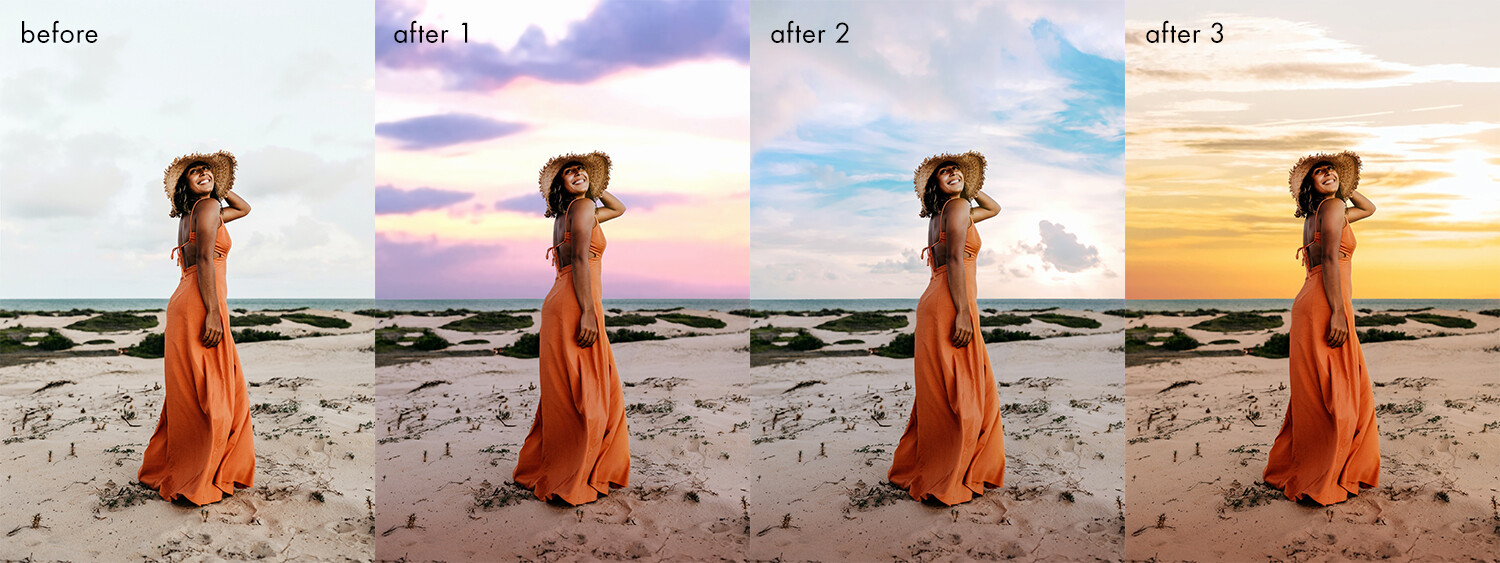
Sky replacement examples

Lighting brushes

PortraitPro 21 includes a series of lighting brushes. These can be used to create specific effects such as light streams or realistic relighting elements. 

You are able to select exact colors and alter the strength of the brushes, which allows you to quickly get the perfect effect. These brushes are able to separate the background and foreground for you, so you can really get creative. 

Lighting brush effects PortraitPro 21

Clone tool

The addition of the Clone tool means you can remove troublesome areas from your photos. And the presence of the Clone tool means there is no reason to use other software to perfect your edits.

As with all tools in PortraitPro 21, the Clone tool is easy to use and allows completely adjustable precision so you can get the exact result you want.

Ultimately, it’s a great addition to the feature set of PortraitPro. And while it is a tool that most will recognize and is not as groundbreaking as others, it’s one that will be hugely appreciated by all users.

Using the clone tool in PortraitPro21

Denoise/Sharpening

Denoise and sharpening tools are another new addition to this version of PortraitPro.

Yes, these tools are available in other editing programs. But as you are probably beginning to see, the addition of these features to PortraitPro 21 means that you have no real need to switch between programs to get your final result – making PortraitPro 21 a more all-in-one editing solution for portrait photographers.

PortraitPro 21 review

History tool

The History tool continues the trend of the Clone tool. It’s a feature that users of other editing software will be well aware of, and it’s highly valuable.

Specifically, it allows you to move back to a specific point in your edit so you can rework an image without needing to start over. 

The history brush in PortraitPro 21

Color styles

Filters will be familiar to everyone who reads this, because we frequently have these in our social media apps.

PortraitPro now includes a series of color styles that can dramatically change your image in just a few clicks.

Color styles examples in PortraitPro 21

Hair highlights

PortraitPro 21 features a variety of new tools for working with hair.

These include tools that add highlights, as well as change hair color and vibrance. And you can fine-tune these to achieve “salon-level” results.

Hair highlights in PortraitPro 21

PortraitPro 21 review: Performance

As always, I spent some time getting to grips with PortraitPro 21. Having used previous versions, I was familiar with the interface. But as with PortraitPro 19, I was amazed by Anthropics’s excellent tutorials. 

In fact, there are many more tutorials in PortraitPro 21, which give new users confidence right away. Even as a previous user of PortraitPro, it was good to go through a series of tutorials on the new features. These allowed me to immediately understand what is possible in PortraitPro 21. 

I started with the hair tutorial, which gave convincing results quickly and easily. From there, I fine-tuned to my liking. 

Hair features
I loved how the tutorials helped me get started, but then I fine-tuned to my own taste.

After that, I experimented with the new sky replacement feature. Due to my lack of outdoor photography over the last 12 months, I used the tutorial image as a starting point for this feature, and the results were impressive.

Changing the sky on the test image highlighted the importance of choosing your replacement sky wisely. Certain skies won’t work on certain images.

However, Anthropics has included so many different skies for you to choose from that, for every situation, there will be a replacement sky that matches your scene. Again, the ability to fine-tune really allows you to dial in the detail and increase the realism. 

Sky replacement in PortraitPro 21
There are so many different sky options built into the software.

Using TIFF files

After working on the many image tutorials, I wanted to use some of my own images. I always feel this is the real test.

And I was hugely impressed.

My images worked exactly the same as those in the tutorials. Everything was fast, and the software’s AI technology picked features out flawlessly. The highest compliment I can pay the software is to say that I didn’t notice any slowdown between the images I used myself and those in the tutorials. 

Face selection AI demo in PortraitPro 21
Even with a shallow depth of field, PortraitPro 21 picked out the face almost perfectly.

To push the software, I used 16-bit TIFF files in the Adobe RGB color space. The images opened fast, and PortraitPro 21 picked out the features flawlessly. Applying presets took a little longer than the test images, but considering I was working on 16-bit TIFF files, I was really impressed. 

I loved the fact that little tips popped up in the bottom corner of the screen, reminding me of how to tweak things. I used an image with an incredibly shallow depth of field to test the feature-finding abilities, and again, I was very impressed.

For the first image I tested, I used the Clone tool to remove a couple of small blemishes. Even though I was editing TIFF files, the software worked perfectly.

With the blemishes cloned out, I simply added a preset and tweaked it to taste. I had a finished image in less than 5 minutes. This was much quicker than when I edited the image manually. One quick and simple export later, I had a beautiful image ready to go.

Before and after retouch
This full retouch only took 5 minutes.

The only thing I will say is that some of the presets are a little more extreme than my personal style. However, the great thing about PortraitPro is that you can create your own presets simply and easily.

In fact, I tend to do this on a shoot-by-shoot basis, starting with a preset and tweaking it to suit the shoot I am working on. I can then apply these presets quickly and easily to the whole set of images from the shoot before sending proofs to a client.

Working with presets is taken to a whole new level with the Studio Max version of PortraitPro 21, where you can batch process several images in seconds.

Batch processing

Setting up a batch of images in PortraitPro
Import images, select your style, and click Go. Batch processing is an incredibly powerful feature in PortraitPro 21.

For a working photographer, the batch processing in Studio Max is a huge timesaver when you need a consistent retouch across a range of images. PortraitPro’s face recognition means that you can trust the software to pick up the face and apply the retouch for you automatically.

To test this feature, I exported full-sized JPEGs from a styled shoot. After creating a look with a single image, I used the batch feature of Studio Max to apply this style to a group of ten images. In less than one minute, all the images had saved and were ready to go. I simply clicked two buttons.

This feature alone changes how I deliver portrait and headshot proofs to clients. For so many working photographers, batch processing is going to be a game-changer. Imagine being able to deliver headshot proofs to clients with such little effort.

batch of images from a wedding photoshoot
A variety of poses didn’t fool the software. Everything was ready to deliver in under a minute.

Who is it for?

In my last review of PortraitPro, I said, “PortraitPro is an amazing tool for those who are new to retouching portraits. It is simple yet incredibly powerful, and gives you pleasing results within seconds. However, it offers much more and encourages you to go back to the software and personalize your retouching.“

So much has changed since then. In fact, PortraitPro 21 has more features that make it even easier for me to recommend. It is possibly the most feature-rich portrait editing software out there. 

If you’ve loved previous versions of PortraitPro, then you will love this even more – especially with the special offer for dPS readers (see below!).

Note that there are three PortraitPro 21 versions: Standard, Studio, and Studio Max.

PortraitPro 21 Standard is great for many people. It is a standalone software that allows you to work with JPEG or 24-bit TIFF files. For many photographers, this will be perfect. 

By upgrading to PortraitPro Studio, you get the Photoshop/Lightroom plugin that so many of you will love, as well as the ability to work with RAW, DNG, and 48-bit TIFF files. It also has color-space conversion. 

Finally, for those who shoot professionally or need the ability to retouch a batch of images in a few clicks, the Studio Max version of PortraitPro 21 will save you so much time (and professionals all know time is money!) that I cannot help but recommend it. 

Sounds amazing! How do I get it?

You can download your free trial of PortraitPro 21 right here.

But if you’re thinking about purchasing the software, note that there is a 50% off launch offer, plus dPS readers get an extra 15% off with the coupon ZC1990. So click here to grab your discounted copy of PortraitPro 21!

Anthropics is a paid partner of Digital Photography School.


The post PortraitPro 21 Review: A Comprehensive Editor for Portrait Photographers appeared first on Digital Photography School. It was authored by Carl Spring.


Digital Photography School

 
Comments Off on PortraitPro 21 Review: A Comprehensive Editor for Portrait Photographers

Posted in Photography


Hands-on with new Sony FE 35mm F1.4 GM

13 Jan

Hands-on with new Sony FE 35mm F1.4 GM

It’s been a long time coming, but Sony has finally announced a G Master series 35mm lens for its full-frame mirrorless system. The new FE 35mm F1.4 GM is Sony’s 39th full-frame E-mount lens, and does not replace the older Zeiss-branded optic. It should and – spoiler alert – does outperform it in most respects, according to our testing.

Click-through for a closer look at Sony’s newest full-frame prime lens.

Size and weight

The Sony 35mm F1.4 G Master handles and looks quite a bit like its 24mm F1.4 GM cousin, which is to say the design is both compact and lightweight. Weighing in at 524g (1.1lbs), the new lens is lighter than its Zeiss-branded predecessor (630g) and smaller, too. The older lens measured 112 x 78.5mm (4.4 x 3.1″) compared to 96 x 76mm (3.8 x 3.0″) for the new ‘GM’. This isn’t a huge difference, but it is noticeably shorter when mounted onto an a9 or a7-series body.

The front filter thread is smaller, too: 67mm compared to 72mm.

Build quality and sealing

Despite its surprisingly lightweight design, this lens feels incredibly well-built. In line with other GM-series lenses, the FE 35mm F1.4 GM is rated as ‘dust and moisture resistant’, which basically means you can take it out into the elements from time to time, though we’d recommend you avoid subjecting it to lengthy exposure to dust, mud or rain (and don’t expect it to work underwater…). A rubber gasket around the mount also helps to protect moisture and gunk from entering the body and getting onto your camera’s sensor. A fluorine coating on the front element should make water or dirt easy to clean off.

Minimum focus

The FE 35mm F1.4 GM boasts a minimum focus distance of 27cm (10.6″), which works out to a maximum magnification of 0.23X. This is about average for a lens of this type, but Sony claims that image quality in its close-up range should be extremely good. Meanwhile, twin XD (‘extreme dynamic’ – Sony really likes adding the word ‘extreme’ to things) linear AF motors are designed to deliver accurate and silent focus across the focus range. Thanks to the combination of these motors and a single focusing group, focus is nearly instantaneous, making the lens suitable for fast and erratic subjects.

Manual focus

For manual focus fans, the response of the manual focus ring is linear, i.e., 5 degrees of movement of the focus ring will always change focus by the same amount, regardless of how fast or slowly you rack the control. The manual focus ring also turns with a nice smooth motion. This is all great news for video, where you need to be able to accurately and repeatedly position focus manually between fixed positions.

A customizable focus hold button on the lens barrel can temporarily disable autofocus – quite useful when paired with ‘touch tracking’ AF in video – but it need not be restricted to this function. It can be assigned to any custom function available to the other custom buttons on Alpha series bodies. The faux mechanical aperture ring can be set to move in fixed ‘clicky’ detents, or ‘de-clicked’ for smoother, stepless adjustment: again, a useful feature for video work. The only downside we could find for video shooters was some noticeable focus breathing when rack focusing.

Optical construction

Sony is proud of the design of this lens, describing it in our briefing as offering ‘overwhelming image quality in a compact and mobile package’. The image quality part of that comes courtesy of a complex optical design, comprising 14 elements in 10 groups, including two ‘XA’ (extreme aspherical) elements, with one such element positioned at the front of the lens. One ED (extra-low dispersion) element, positioned in the middle of the optical layout, helps focus light rays of varying wavelengths (or colors) at the same focal plane. All of this fancy glass should pay off in excellent sharpness across the frame, and very good control of longitudinal chromatic aberration (often seen as purple or green fringing in front of and behind the focal plane, respectively).

Eleven rounded aperture blades provide a near-circular aperture even as you stop the aperture down, which should ensure attractive bokeh and out-of-focus highlights. Meanwhile, Sony’s ‘Nano AR Coating II’ is designed to control flare and ghosting.

Image Quality

We’ve had some time to shoot two copies of the Sony 35mm F1.4 GM and have come away impressed by what we’ve seen. The lens is sharp wide open, resolving hairs with high contrast that are just one pixel wide at F1.4. Longitudinal chromatic aberration (LoCA) is well-controlled but modestly present. While it won’t bother you at an image level, you may notice it upon close inspection at high magnification when shooting wide open. It’s largely a non-issue once you stop down to F2. In this regard it’s far better than many lenses of its type, significantly outperforming the Sony 35mm F1.4 ZA, the Sony 35mm F1.8, and the Sigma 35mm F1.4 Art, but falling behind the industry leading Canon 35mm F1.4L II.

Bokeh, which along with LoCA, was one of the Achilles’ Heels of the 35mm ZA lens, is smooth and pleasing, with circular out-of-focus highlights showing no patterning or onion rings, well-controlled cat’s eye effect, and no mechanical truncation of bokeh at image edges or corners that can otherwise lead to ‘busy’ bokeh in these image areas.

Flare and ghosting are well controlled; we found it hard to induce contrast-killing flare or unsightly ghosts in the image when pointing the lens directly into the sun. Twenty-two point sunstars are well-defined as you stop down. Overall, optical quality is particularly impressive when you consider the size and weight of the lens.

Price and availability

The Sony FE 35mm F1.4 GM will be available in mid-February at an MSRP of $ 1400.

Articles: Digital Photography Review (dpreview.com)

 
Comments Off on Hands-on with new Sony FE 35mm F1.4 GM

Posted in Uncategorized


BCN+R data shows digital camera sales in Japan were down 40% year-over-year

12 Jan

BCN Retail (BCN+R), a Japanese analyst firm that collects daily sales data of mirrorless interchangeable lens cameras from both online and in-person points of sale in Japan, has published (translated) a summary of its 2020 camera sales data, confirming camera sales were down in the Japanese market due to an already-shrinking market further compounded by the ongoing COVID-19 pandemic.

According to BCN+R’s data, digital camera sales dropped 40.4% year-over-year (YoY). This is over double the 16.8 percent drop BCN+R recorded in 2019 (compared to 2018). BCN+R’s data shows digital camera sales were down from the onset of 2020, but dramatic decreases in March and April align with when the first spike in cases of the novel coronavirus started spreading across the globe. The YoY decrease peaked in April and slowly declined until September.

Apologies for the low-quality chart. It’s all BCN+R has shared.

October proved to be the month with the smallest YoY decrease, which could be attributed to the release of numerous mirrorless cameras being released in September and October, most notably the Sony a7C (September 15), Canon EOS M50 Mark II (October 14) and Fujifilm X-S10 (October 15). The original Canon EOS M50 has continuously proven to be the most popular cameras in Japan for quite some time, so it’d make sense its successor would sell well, too.

We’ll wait to see what the end-of-year numbers from less region-specific sources (CIPA, etc.) are before making any comprehensive overviews, but it’s clear from BCN+R’s data that the fallout from the COVID-19 pandemic managed to make a shrinking market even smaller than it was on track to be, even if the Japanese market alone isn’t indicative as to the state of the industry as a whole.

Articles: Digital Photography Review (dpreview.com)

 
Comments Off on BCN+R data shows digital camera sales in Japan were down 40% year-over-year

Posted in Uncategorized


Understanding all the Different Image File Formats

12 Jan

The post Understanding all the Different Image File Formats appeared first on Digital Photography School. It was authored by Kav Dadfar.

image file formats photography

When you take a photograph, the camera is capturing data, which creates a digital image. But there are many different types of image file formats that can be retrieved and edited using post-processing software.

The most commonly-used formats are:

  • JPEG (Joint Photographic Experts Group)
  • TIFF (Tagged Image File Format)
  • RAW
  • DNG (Digital Negative Format)
  • PNG (Portable Network Graphics)
  • GIF (Graphics Interchange Format)
  • BMP (Bitmap Image File)
  • PSD (Photoshop Document)

Choosing the right file format is important and can even be critical, depending on the level of quality – and the level of post-processing – that you require.

Now, to help you better understand the different file formats, and to ensure that you pick the right format for your needs, we’ve put together this comprehensive guide. It covers the pros and cons of using each image file format – so that, by the time you’re finished, you’ll be able to select the perfect format with ease!

JPEG

JPEG is probably the best known of all image file formats, and it’s what many cameras use as the default output.

The thing you should remember is that JPEG files are compressed in-camera, and thus result in a loss of detail and quality. They are essentially set up to store as many images on the memory card as possible.

Some cameras will have options for different JPEG quality levels (e.g., low, medium, and high). The better the photo quality, the less compression the camera will perform on the original photograph.

Generally speaking, JPEGs should be used:

  • When the photos are for personal use, for social media, albums, and small prints, and are not intended for large prints
  • When you don’t intend to enhance or edit the photos much in post-production
  • For sharing images via email

JPEG benefits

  • The small file size means more images can be stored on a single memory card
  • Quicker file transfer times, due to the smaller file size

JPEG negatives

  • Loss of quality due to image compression
  • Less opportunity for image manipulation in photo-editing software

TIFF

TIFF is commonly used in the photography industry; it’s generally requested by publishers. Even if the end file format will be a JPEG, the initial file is often a TIFF.

TIFF files are usually uncompressed, so they offer the opportunity for extensive post-processing. And because TIFFs are uncompressed, they are much bigger files, and will take up a lot of space – both on your memory card and on your computer.

Some cameras offer TIFF as their highest-quality image format.

TIFF benefits

  • Ability to manipulate photos extensively in editing software
  • Option to print at the highest quality and at much larger sizes

TIFF negatives

  • Much bigger file sizes (so more storage is needed)
  • Longer transfer and loading times due to file size

RAW

RAW files are generally available on advanced compact cameras, DSLRs, and mirrorless cameras.

Simply put, RAW is the best option if you want to get the highest-quality files from your camera, and it’s the option preferred by professional photographers. If you don’t use RAW files, then your camera will make adjustments automatically to your images, and these will be permanently embedded into your photos.

RAW files are created using a process that retains all of the information originally captured. This means that adjustments such as white balance, exposure, contrast, saturation, and sharpness can all be altered in image-editing software after the photo has been taken.

Photographing in RAW format requires plenty of memory cards, not to mention considerable post-processing time. It also requires some basic knowledge of image-editing software such as Adobe Lightroom, because files will have to be edited and converted out of the RAW format before they can be used (i.e., before they can be shared online, printed, sent to friends, etc.).

RAW benefits

  • The highest-quality image is captured
  • Extensive options in post-processing

RAW negatives

  • Significant time is needed to convert and edit photos (you must edit RAW files)
  • Bigger file sizes require more storage and longer post-processing times

DNG (Digital Negative)

Just about every camera these days uses a different proprietary format to capture RAW files. Even cameras from the same manufacturer will often use different formats, which means image editing software must be able to read files from all of these different cameras.

As a result, editing software providers face a challenge: how to manage and continuously provide updates for their program so it can read all these different file formats.

Enter the DNG.

This file format, created by Adobe, is an attempt to provide a standard RAW file for all manufacturers and cameras.

The DNG is offered as a main RAW file format, or as an alternative to the manufacturer’s native RAW format. One of the problems with keeping images in the original RAW format is that, several years from now, you may be unable to access these files, because they are specific to cameras and manufacturers.

But using an Adobe DNG Converter means you can also store your RAW files as DNGs for maximum future-proofing.

This does add another step to the post-processing workflow, which takes extra time. However, editing software such as Lightroom can convert large batches of files to DNGs so that it doesn’t have to be done manually.

DNG benefits

  • Ability to use image-processing software such as Lightroom and Photoshop
  • Possibly the safer option long-term, because it guards against the inability to open or access files in the future

DNG negatives

  • Extra time needed to convert camera RAW files to DNGs (if your camera does not have the option to create files in this format)

PNG

Designed in the ’90s as an improvement on the GIF file format, PNG files are ideal for use on the internet.

PNGs are compressed in a lossless format, and therefore retain all detail. But unlike other file formats, PNG quality doesn’t mean big file sizes – and this is useful on the internet, because you need pages to load quickly.

The other benefit of PNG files is that they allow for partial and total transparency, which is ideal for overlays and logos.

PNG benefits

  • Lossless compression makes for good image quality, which isn’t compromised when editing
  • The ability to maintain transparency, which is important for graphics such as overlays and logos

PNG negatives

  • Quality is not good enough for printing at any size

GIF

Like PNGs, GIFs are ideal for use on the internet. Lossless compression means image quality is not sacrificed, and like PNGs, GIFs offer the ability to maintain transparency (though they don’t support partial transparency). GIFs also allow for animation.

However, the limitation of GIF files is that they can only contain a maximum of 256 colors. Therefore, GIFs are not the best choice for photos, but rather for images with a limited color palette.

GIF benefits

  • The small file size makes GIF files ideal for use on the web
  • Files can contain animation

GIF negatives

  • The limited colors make GIFs a poor choice for photos
  • GIFs don’t support partial transparency like drop shadows

BMP

Another lossless file format, the BMP was invented by Microsoft, initially for use on the Windows platform. However, BMPs are now recognized by programs on Macs, as well.

BMPs are large files, as color data is saved in each individual pixel without any compression. As a result, BMPs provide a high-quality digital file, which is great for use in print but not ideal for the web.

BMP benefits

  • Can be used for printing, as the images are high quality

BMP negatives

  • The large file size means a lot of storage is required

PSD

This file type is what Adobe Photoshop uses as a default to save data. The big advantage of the PSD is that it allows for manipulation on specific individual layers, rather than on the main image itself.

This makes PSDs absolutely essential for any sort of extensive manipulation of the original photograph, such as retouching. PSDs give far greater flexibility and the ability to fine-tune an image, because layers can be added, removed, or edited at any time without affecting the original photo.

But remember:

Once a layered PSD file is flattened (this essentially merges all of the layers), it can’t be undone. So make sure you save your file as a PSD before flattening if there’s a chance you might want to rework some of the layers later on.

PSD benefits

  • Ability to manipulate the image extensively on separate layers
  • Once the image is ready, it can be re-saved as any other file format

PSD negatives

  • Layered files can be incredibly large in size due to all of the additional data they store

Image file formats: Conclusion

Now that you’ve finished this article, you know all the common image file types.

Professional photographers generally capture in RAW format (even if the final file needed is a JPEG), convert those files to DNGs, then edit in software such as Photoshop or Lightroom.

But as you can see, choosing the right file format when capturing the original photo – then choosing the right file format when saving the photo later – is absolutely essential.

What’s your favorite image file format? Do you use any formats not mentioned in this article? Share your thoughts in the comments below!

The post Understanding all the Different Image File Formats appeared first on Digital Photography School. It was authored by Kav Dadfar.


Digital Photography School

 
Comments Off on Understanding all the Different Image File Formats

Posted in Photography


Nikon Dropping International Warranty on Lenses and Accessories

12 Jan

The post Nikon Dropping International Warranty on Lenses and Accessories appeared first on Digital Photography School. It was authored by Jaymes Dempsey.

Nikon Dropping International Warranty on Lenses and Accessories

Nikon recently announced its intention to shift away from international product warranties; the company will offer only country or regional warranties for camera equipment, including lenses and speedlights.

Nikon explains, “With the differences in regional laws and safety standards, it has become quite difficult to maintain a single international warranty that is effective around the world…[we] ultimately decided to begin the gradual transition from international warranties to regional warranties for interchangeable lenses and accessories in January of 2021.”

Prior to this move, select Nikon camera gear was guaranteed internationally for a full year after purchase. A travel photographer who purchased their Nikon lens in Britain could get it repaired in the US, and vice versa – but no longer. Once the transition to local warranties is complete, USA-bought equipment will likely only be repairable in the USA, and UK-bought equipment only repairable in the UK.

Nikon clarifies that you can still purchase gear with an existing international warranty, and the company will honor it (so if you were thinking of buying a Nikon lens and are a frequent traveler, then I suggest you move fast!). But regional and country warranties will only be honored within those regions and countries, which makes it much less desirable to purchase Nikon camera equipment abroad, take it back to your home country, and put it through its paces. 

You may be wondering: 

Does this really matter? How often will this affect me?

That depends on you and your photography. Travel photographers and casual photographers may purchase equipment while on vacation overseas – and if that’s you, you may find yourself with a useless warranty when you arrive back home.

Of course, there are also those who purchase photography equipment for lower prices overseas, then bring it back to their home country. If that’s you, then any future warranties will soon be void.

Nikon has not yet released information explaining which areas will be subject to country-wide warranties and which will have regional warranties, so keep an eye out for news from Nikon to see where you stand for future gear.

What do you think about this news? Does it bother you that Nikon is dropping its international warranty? Share your thoughts in the comments!

The post Nikon Dropping International Warranty on Lenses and Accessories appeared first on Digital Photography School. It was authored by Jaymes Dempsey.


Digital Photography School

 
Comments Off on Nikon Dropping International Warranty on Lenses and Accessories

Posted in Photography


Weekly Photo Challenge – Serenity

11 Jan

The post Weekly Photo Challenge – Serenity appeared first on Digital Photography School. It was authored by Sime.

Welcome to the first weekly photo challenge for 2021! We’re starting out fairly calmly with the theme of ‘Serenity’ How will you convey ‘Serenity’ through a photograph?

Tag your photograph #dPSSerenity if you share it on social media.

Naturally, i’m thinking of Bonnie Doon which likely will mean nothing to anyone outside of Australia, but I guess serenity can be many things to many people, to me it’s generally sharing something ‘peaceful’ through a photograph, here are a couple of examples (and yes, we encourage great drone photography too)

Weekly Photo Challenge – Serenity

The serenity in a scene, a single leaf on a tree, a still lake, a calm person, an empty beach at sunrise… SO many options for you to consider and then photograph. Make it your goal to go out and make a new photograph, make it a challenge.

Tag your photograph #dPSSerenity if you share it on social media.

Weekly Photo Challenge – Serenity

Clearly I find my personal serenity at the ocean!

Great! Where do I upload my photos?

Simply upload your shot into the comments field (look for the little camera icon in the Disqus comments section) and they’ll get embedded for us all to see. Or, if you’d prefer, upload them to your favourite photo-sharing site and leave the link to them.

Weekly Photography Challenge – Looking Up

Share in the dPS Facebook Group

You can also share your images in the dPS Facebook group as the challenge is posted there each week as well.

The post Weekly Photo Challenge – Serenity appeared first on Digital Photography School. It was authored by Sime.


Digital Photography School

 
Comments Off on Weekly Photo Challenge – Serenity

Posted in Photography


Long Exposure Fire Photography – 5 Tips for Beginners

11 Jan

The post Long Exposure Fire Photography – 5 Tips for Beginners appeared first on Digital Photography School. It was authored by Dena Haines.

long exposure fire photography tips

Do you want to capture stunning long exposure fire photography?

A long exposure photo can make flames look soft and feathery, capture spark trails, and create a romantic or cozy mood. 

The tips in this article will help you get started taking gorgeous long exposure fire photos, today!

Long exposure fire photography: 5 tips for beginners

A word of caution:

Be careful as you practice your fire photography. Fire can be dangerous, and it’s easy to be careless when thinking more about your photography than the fire. Maintaining a safe distance is important for you and your gear.

tips for long exposure fire photography
5s | f/10 | ISO 100

1. Use a slow shutter speed

To take a long exposure photo, the camera shutter needs to be open long enough to blur motion and light. Here are a couple of ways to ensure that the shutter stays open:

  • Shutter Priority mode: Here, you choose the shutter speed and your camera selects the aperture
  • Aperture Priority mode: Here, the camera chooses the shutter speed, but you can control its choice based on the aperture you select

Fire photography with Shutter Priority

Put your camera in Shutter Priority mode, choose your desired shutter speed, and let the camera do the rest.

This will force your camera to let in light for the amount of time you’ve chosen. Your camera will choose your ISO (if it’s set to Auto) and your aperture.

Shutter Priority will give you different results depending on how much light is available – and shooting this way can be a lot of fun.

When you choose a shutter speed of five or six seconds, you can capture interesting flame shapes and lots of spark trails. In fact, the bonfire and torch photos in this article were captured in Shutter Priority mode.

long exposure fire photo
6s | f/10 | ISO 100

Fire photography with Aperture Priority

You could also set your camera to Aperture Priority, choose a mid-range aperture (f/8-f/11), set a low ISO (100-200), and let your camera choose the shutter speed. If you’re shooting at night (when it’s really dark) and the fire is your main light source, your camera will choose a slow shutter speed. This should give you a photo with a large depth of field, and one that’s relatively free of grain (i.e., noise).

If Aperture Priority causes your shutter to be open for longer than you want, increase the ISO. This will decrease the shutter speed, though it will also start adding noise (fortunately, this can be reduced during editing). 

The card game and match photos in this article were shot using Aperture Priority mode.

long exposure flame photo
1s | f/11 | ISO 100

Anyway, those are just a couple of suggestions to get you started. Long exposure fire photography is all about playing around and having fun! Make sure to try lots of different apertures and shutter speeds. 

If you’re like me, you’ll get excited as you review each shot and see the interesting shapes you’ve captured.

2. Set your camera on a tripod

When capturing a long exposure fire photo, you’ll want to reduce camera shake, which results in blurry photos. 

Camera shake occurs when the camera moves while the shutter is open. Slow shutter speeds (of more than one second) make it impossible to handhold your camera and still get sharp images. 

But using a tripod will keep your camera steady – and therefore prevent camera shake plus the resulting blur.

3. Use a remote shutter release or set the self-timer

A remote shutter release (or the camera’s self-timer) can also help you cut down on camera shake. 

You see, when you press the shutter release, the camera moves slightly – and this can cause blur in your photos.

But when you use a remote shutter release (or you set your camera’s self-timer), you don’t have to worry about this movement.

Using a remote shutter release may seem like a small thing, but it can significantly affect your image sharpness.

long exposure fire spark trails
6s | f/6.3 | ISO 320
Spark trails.

Note that, when capturing match flames, a remote works best. While a self-timer will prevent camera shake, the delay makes it tough to capture that initial burst of flame with any real precision.

4. Choose your subject

Do you want your main focus to be the fire itself? Or are you trying to capture the mood created by the fire? 

When capturing the mood, it can be tricky to get sharp shots of people. It’s not easy for anyone to sit still during a long exposure, and movement will create blur in your photos.

So first identify your subject, and then adjust your camera settings to keep the subject sharp.

The following photos were shot in Aperture Priority mode with an aperture of f/8. For the first photo, I set the ISO to 100, and my camera chose a shutter speed of 5 seconds. That was too long for my daughter to stay still, so the photo turned out blurry.

long exposure fire photography tips
5s | f/8 | ISO 200

For the second photo, I set the ISO to 400, which cut the shutter speed in half (to 2.5 seconds). That made it easier for my subject to stay still, and the photo is sharper.

long exposure fire photography tips
2.5s | f/8 | ISO 400

5. Switch to manual focus

Autofocus doesn’t always work well in the dark. And autofocusing on a moving fire can be tough.

That’s where manual focus comes in.

Now, you don’t need to turn off your autofocus immediately. Instead, try autofocusing on something near the fire, then switch to manual focus to capture the shot you’re after.

How do you do this?

First, shine your flashlight on an object near the fire. Train your camera on the object, and press the shutter button halfway. When the autofocus locks on, turn off the flashlight and switch to manual focus.

Finally, without adjusting anything on the camera, take your shot. Your camera will maintain the same focus point – and you’ll end up with a sharp photo.

Note: You could also try back button focus!

Where will you practice?

Do you enjoy a cozy fire at your campsite or bonfires on the beach? Do you like candle-lit dinners? What about backyard marshmallow roasts? All of these would be great places to practice long exposure fire photography.

long exposure bonfire
6s | f/5.6 | ISO 160

Experimenting with long exposures around a campfire can be a little addictive. The more you practice, the more fun you’ll have.

And don’t forget your flashlight! You’ll need it to see your camera controls, to help with focusing, and to get you safely back to your car.

long exposure fire photography tips
5s | f/16 | ISO 100

Now over to you:

Do you enjoy creating long exposures of fire? Share your tips and photos by commenting down below!

The post Long Exposure Fire Photography – 5 Tips for Beginners appeared first on Digital Photography School. It was authored by Dena Haines.


Digital Photography School

 
Comments Off on Long Exposure Fire Photography – 5 Tips for Beginners

Posted in Photography


How to Use Facial View and Camera Angle to take Flattering Portraits

10 Jan

The post How to Use Facial View and Camera Angle to take Flattering Portraits appeared first on Digital Photography School. It was authored by Darlene Hildebrandt.

How to Use Facial View and Camera Angle to take Flattering Portraits
use face angle and camera angle for flattering portrait photography

How do camera and face angles affect your portrait photography? And how can you use different angles to create gorgeous portraits?

It’s all in this article!

Because today, we’re going to examine facial views and camera angles. I’ll discuss how to use both these concepts to your advantage – and how you can use them to flatter your subject.

Let’s get started!

What is facial view? What is camera angle?

Simply put, facial view is the portion or angle of the face that is showing toward the camera. It’s how the subject’s face is turned or angled relative to the lens.

Your camera angle is where you place your camera in relation to the subject – that is, the height, distance, and angle relative to the subject’s face.

Sounds pretty straightforward, right? It is – but small differences in facial view or camera angle can produce undesirable results. We’ll dig a bit deeper into that in a bit, so stay with me!

Facial views

First, let’s look at the four main facial views used in portraiture. They are:

Full face, where your subject’s nose is pointing directly toward the lens. You’ll see equal amounts of both sides of their face:

Full face view

3/4 view, where your subject turns their face just slightly in one direction until you cannot see their far ear anymore:

three quarter face view

2/3 view, where the subject turns their head until the line of the nose is almost touching the outline of their cheek on the far side. Be careful not to turn them past that point, because you don’t want the nose to break the line of the cheek. This isn’t a rule, but it doesn’t look as flattering.

Note: Check out the subject’s earrings in the image above, and how her right earring is not showing below her jawline. When she turned her face just a little more, the earring looked like it was coming out of her face, so I had her remove it for the image. Watch for things like that as the facial angle changes.

two thirds face view

Profile, where the subject’s face is turned almost exactly 90 degrees from front, so that their nose is basically pointing sideways. In a true profile, you should only be able to see one side of the subject’s face and not the eye on the far side.

Note: Once again, watch for things like earrings and hair hanging down under the chin, which can look a bit odd. I usually brush the hair back and have the subject remove an earring if it doesn’t look right or if it looks like it’s dangling under the chin or neck.

Profile view

Camera angle

Where you place your camera makes a huge difference to how your subject appears in the final image.

However, keep in mind that I can’t offer hard and fast rules here. Instead, use my advice as guidelines and starting points, then use your best judgment – because each person is unique. Portray the subject how they wish to be portrayed. When you learn these tips and see how they work in practice, it becomes easier and easier to know how to approach each portrait.

Here are your camera angle tips:

  • A high camera angle (above the subject’s eye level) will emphasize the face more than the body. This is good for a heavy-set person to help them appear slimmer if that’s desired. (Most women will not get upset if you make them look slimmer!)
  • A low camera angle (below their eye level or even below their chin level) can make a person look taller or make them seem more powerful. But this is not very flattering for most people. You end up looking up their nostrils, and the body appears larger than the head and face, which is generally unflattering.
  • For group portraits, the camera position should be about eye level or slightly lower. This cuts down on distortion of body parts and prevents the subjects from looking oddly proportioned.
  • For a portrait of one or two people, having the camera at eye level or slightly higher is often the most flattering option.

Lenses

In addition to the camera height and angle, the lens you select will change the look of your portrait drastically.

Consider what you know about different lenses:

  • Wide-angle lenses emphasize perspective, distort things, and make scenes seem more three-dimensional
  • Telephoto or long lenses compress things, isolate subjects, and make them look less three-dimensional

That’s all I’m going to tell you about this; I want you to find out what I’m talking about by trying it yourself. Look at my examples below, then find yourself a person to photograph. Use different lenses and see how they change the image.

portraits at different focal lengths and camera angles

What do you notice about the examples here? What changes in each photo?

portraits at different focal lengths and camera angles

How long does it take to master this stuff?

One of the most common questions I get asked by my students is “How long did it take you to learn all this stuff?”

The answer is two-fold: 4 weeks and 25 years!

I say that tongue in cheek, but it’s true. I “learned” all the concepts and guidelines relatively quickly, because I was in a two-year program that immersed me completely in photography. It’s like learning a new language; if you move to a new country and you have to speak the language all the time, you will learn a lot faster than if you only speak it once a month. So the best advice I can give you on how to learn faster is to get out and photograph more often.

The second part of my answer, the “25 years” bit, means that I’m still learning. I’ve learned things from my students and from other photographers and do so continually. Don’t ever expect to suddenly “get” it so that you can stop learning. Photography education is a process and it’s always ongoing. As soon as you think you’ve learned it all, or that you know it all, then it’s time to quit – because you’ve probably lost the passion. That’s my opinion, anyway.

Camera and face angles: Practice at home

This is not an assignment, but rather a suggestion for improvement.

Whenever possible, notice the facial view of your subject and how you can adjust it. If you sit a person by a light source such as a window, you can see that turning their head toward the light will also change the lighting pattern that falls on their face. See how this information can then be used to your advantage.

Different facial views will be flattering for different people. Experiment and see what works best for each person you photograph. Have the person sit and just turn their face, then see how the shape of their face changes and how the light falls on them differently.

While you’ve got your subject for the last exercise, see if you can slip this in, too:

Take five images of your subject from different camera heights. Don’t change the focal length or distance to the subject – just the camera height.

Here are the photos I recommend you take:

  • One slightly below the subject’s chin
  • One slightly below the subject’s eye level
  • One at eye level
  • One slightly above the subject’s eye level
  • One at quite a bit above the subject’s eye level

Then ask yourself:

Which is the most flattering angle for that person? From which angle would they most want to be photographed? Why?

Facial views and camera angles: Conclusion

Now that you’ve finished this article, you should be well on your way to using face angles and camera angles to create stunning portraits.

face angles photography

Just make sure you practice frequently. And before you know it, you’ll be an expert!

What’s your favorite face angle? What’s your favorite camera angle? Do you have any tips for working with these angles? Share your thoughts in the comments!

The post How to Use Facial View and Camera Angle to take Flattering Portraits appeared first on Digital Photography School. It was authored by Darlene Hildebrandt.


Digital Photography School

 
Comments Off on How to Use Facial View and Camera Angle to take Flattering Portraits

Posted in Photography


DPReview TV: Nikon Z7 II review

09 Jan

The Nikon Z7 II has the same great ergonomics as its predecessor, but has more processing power, dual card slots, 4K/60p video, improved autofocus and more. Chris and Jordan tell us why it’s a solid choice for many shooters.

Subscribe to our YouTube channel to get new episodes of DPReview TV every week.

  • Introduction
  • Design and handling
  • Dual memory cards
  • Sample images
  • Displays
  • Autofocus
  • Burst shooting and buffer
  • Image quality
  • New subscriber challenge!
  • Video performance
  • Time-lapse
  • More sample photos!
  • Who's it for?

Nikon Z7 II sample gallery from this episode

$ (document).ready(function() { SampleGalleryV2({“containerId”:”embeddedSampleGallery_9134434139″,”galleryId”:”9134434139″,”isEmbeddedWidget”:true,”selectedImageIndex”:0,”isMobile”:false}) });
Articles: Digital Photography Review (dpreview.com)

 
Comments Off on DPReview TV: Nikon Z7 II review

Posted in Uncategorized


List of Helpful Software For Photographers of Any Level

09 Jan

There is no doubting the fact that this year is going to be very competitive for photographers. This means that if you are not well-equipped with the proper software, there is a chance that your business may suffer. Many photographers don’t know how to remain competitive. They have yet to understand the fact that rendering top services requires some of Continue Reading
Photodoto

 
Comments Off on List of Helpful Software For Photographers of Any Level

Posted in Photography